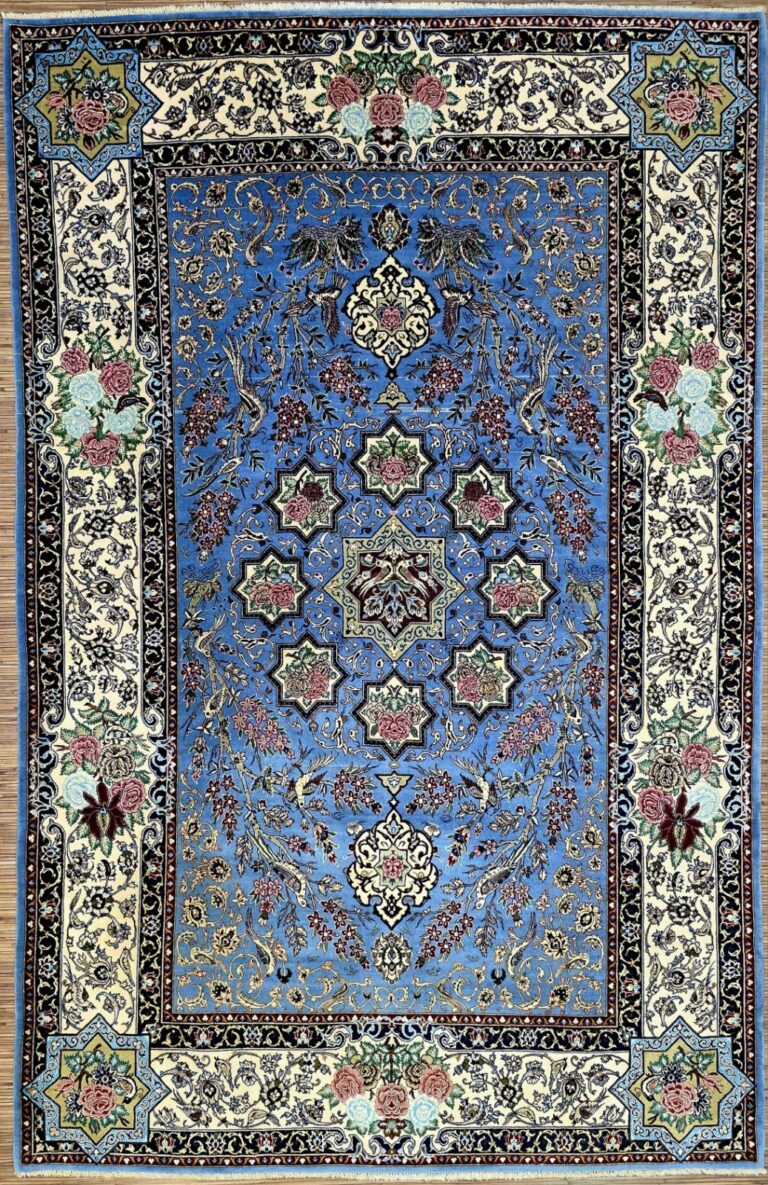
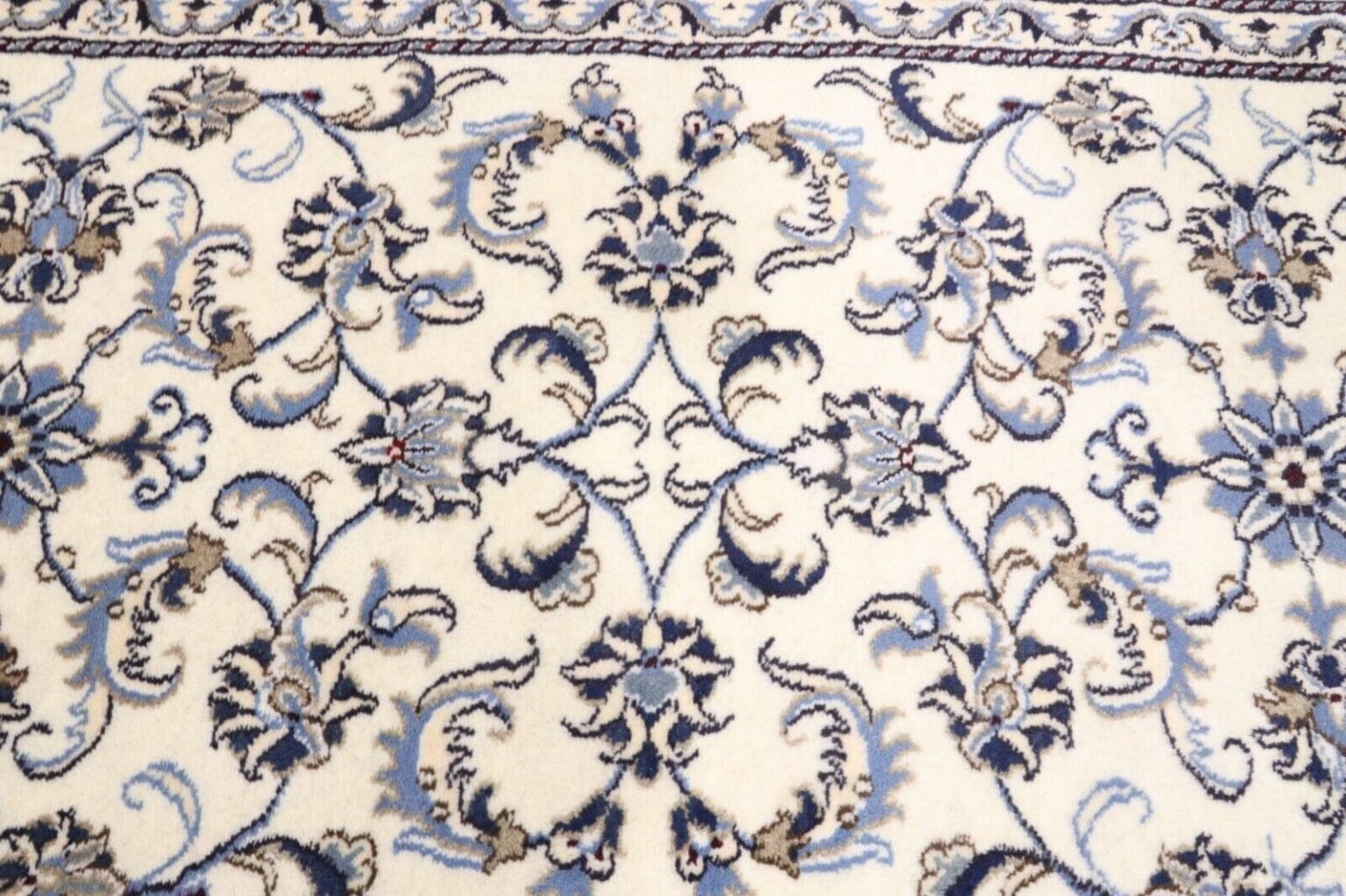
This Persian rug is hand-knotted, with a pile made from 90% virgin wool and 10% silk. The warp is 100% cotton. These fibres bring different qualities together in one construction. Wool gives the surface warmth, resilience and a pleasantly soft handle. It is also known for its ability to absorb and release moisture, which is one reason it has long been used in durable floor textiles. Silk adds a smoother touch and a restrained sheen to the wool pile.
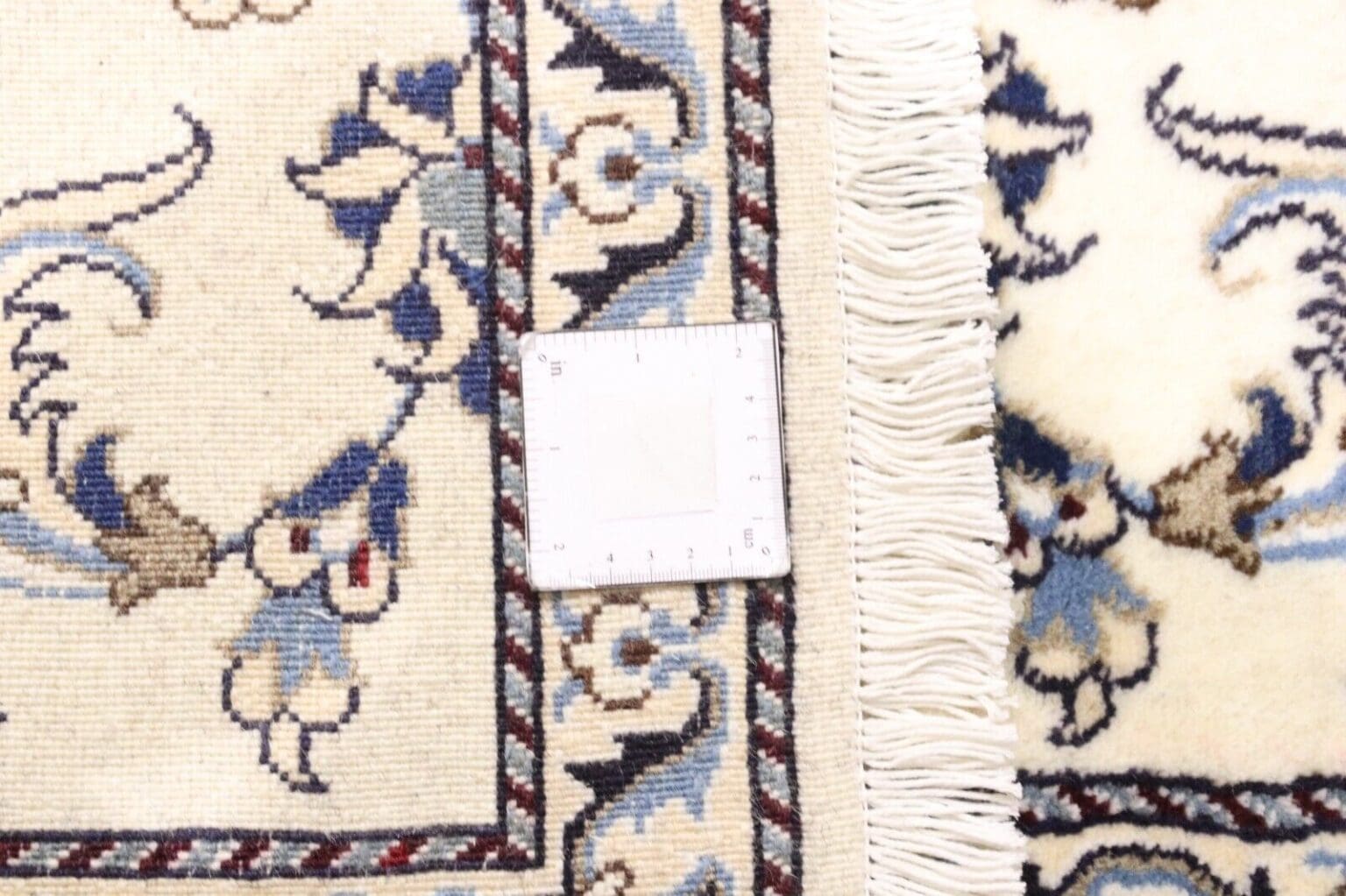
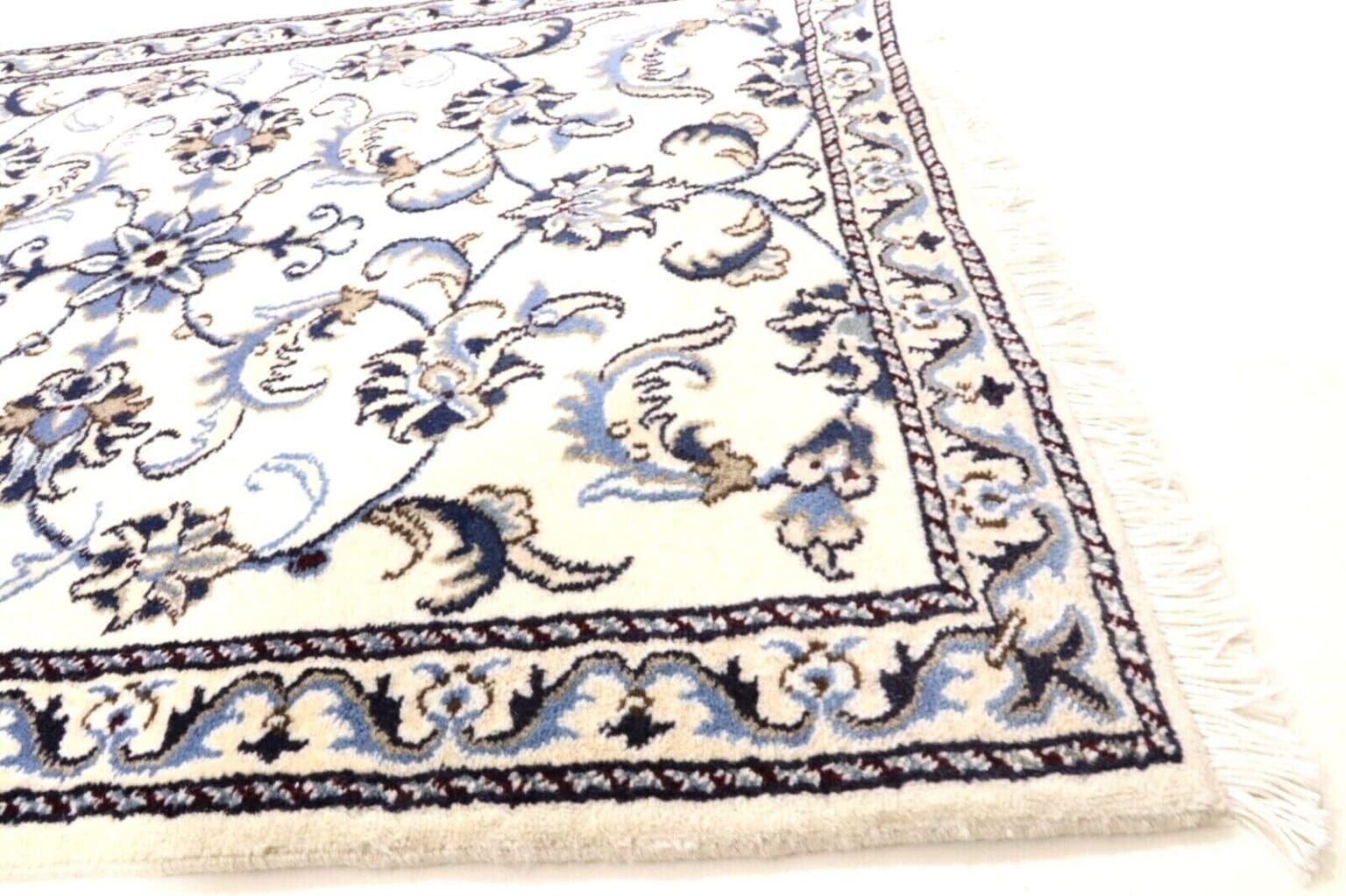
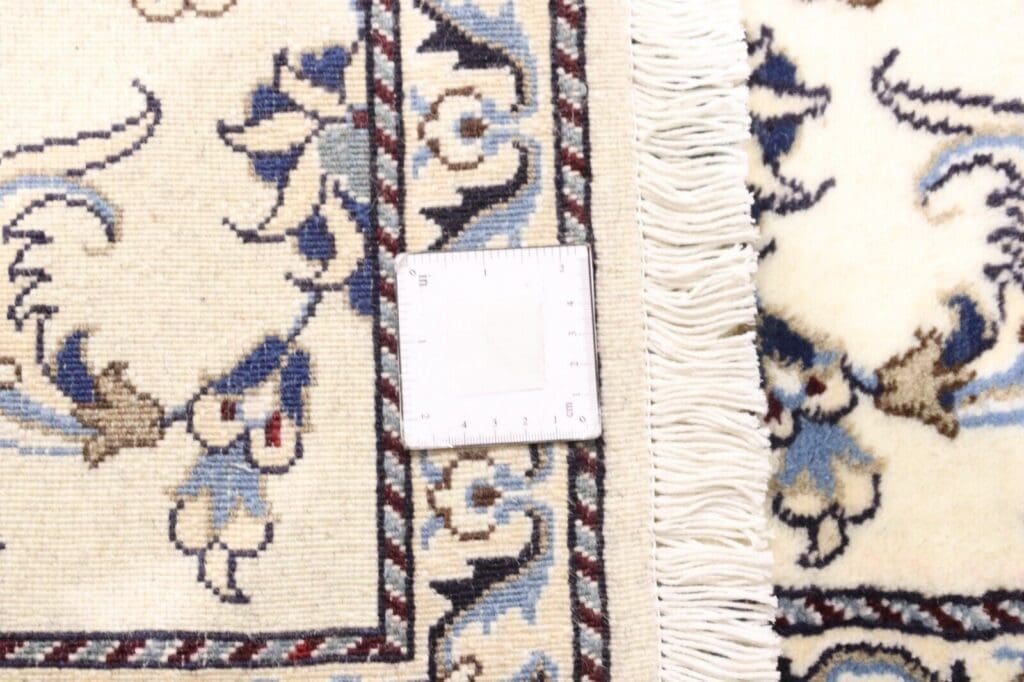
Every knot is worked by hand into the warp and secured through the subsequent weaving process. The pile is then finished to create an even surface. Hand-knotting means that each rug is an individual piece: minor variations in tension, drawing and execution are natural consequences of the work. The stated density of approximately 300,000 knots per square metre indicates a fine construction and supports the precise rendering of detailed motifs.
The cotton warp provides the structural foundation. It holds the longitudinal and transverse elements together and gives the knotted surface stability. Wool and silk form the visible pile, influencing both its touch and its response to light. The blend therefore affects more than appearance; it also determines how the surface feels underfoot. The pile height is approximately 8 mm, creating a compact surface suitable for everyday interior use.
Wool is traditionally valued in rug making because it combines comfort with durability. Silk is used when a smoother fibre and subtle changes in light are desired. Together, the two materials allow the rug to balance a warm textile character with a more refined surface effect. The construction remains a hand-knotted one rather than a mechanically produced textile, and the making process is an important part of its character.
Origin and Tradition
The rug is offered as a Persian rug from Persia. Persian rugs belong to a long-established tradition of Oriental weaving. In Iran, rug making developed over many generations into a craft in which fibre, knotting method, layout and ornament are closely related. Iranian rug tradition reaches back to the sixteenth century. Over time, many regional approaches emerged, each with its own preferences concerning proportion, colour, drawing and technical density.
The name Nain refers to a recognised Persian design tradition. Nain rugs are traditionally associated with careful, fine knotting and a measured, balanced appearance. In commercial usage, Super Nain denotes a particularly fine-looking execution within that stylistic context. Here it forms part of the product name, while Persia is the stated origin. The two terms should therefore be read separately: Nain identifies the stylistic classification, and Persia identifies the country of origin given for the rug.
Traditional Persian weaving uses a firm foundation of warp and weft. The pile is inserted knot by knot, with the weaver maintaining tension and following a planned drawing. In a finely knotted rug, the design is divided into many small units, allowing curves, repeated ornaments and carefully controlled fields to be rendered with precision. The quality of the result depends not only on knot count, but also on regular execution, accurate drawing and the finishing of the pile.
Iranian rugs have traditionally been made in small workshops and specialised family businesses as well as in larger weaving centres. Skills are passed from one generation to the next, while established methods are adapted to different fibres and patterns. Wool is selected for strength and warmth; silk can be introduced for finer outlines, a smoother hand and a discreet reflective quality. This combination reflects a tradition in which practical use and decorative exactness are developed together.
The history of Persian rugs also reflects movement between towns, workshops and regions. Designs and techniques were copied, adjusted and refined, creating a broad vocabulary that includes both geometric structures and flowing vegetal forms. A rug is consequently defined by more than a place name. Its character also comes from the relationship between the foundation, the knotting, the fibre, the drawing and the finishing. With its Super Nain designation, this rug belongs to that wider Persian design tradition, while its stated origin remains Persia.
Nain-related design is often associated with visual restraint and careful organisation. That association concerns the style as a whole and does not add an unstated provenance to this individual rug. The product information identifies the rug as Persian and calls it Super Nain. This makes it possible to discuss the relevant tradition without confusing a design name with a separate claim about a weaving province.
Design and Pattern
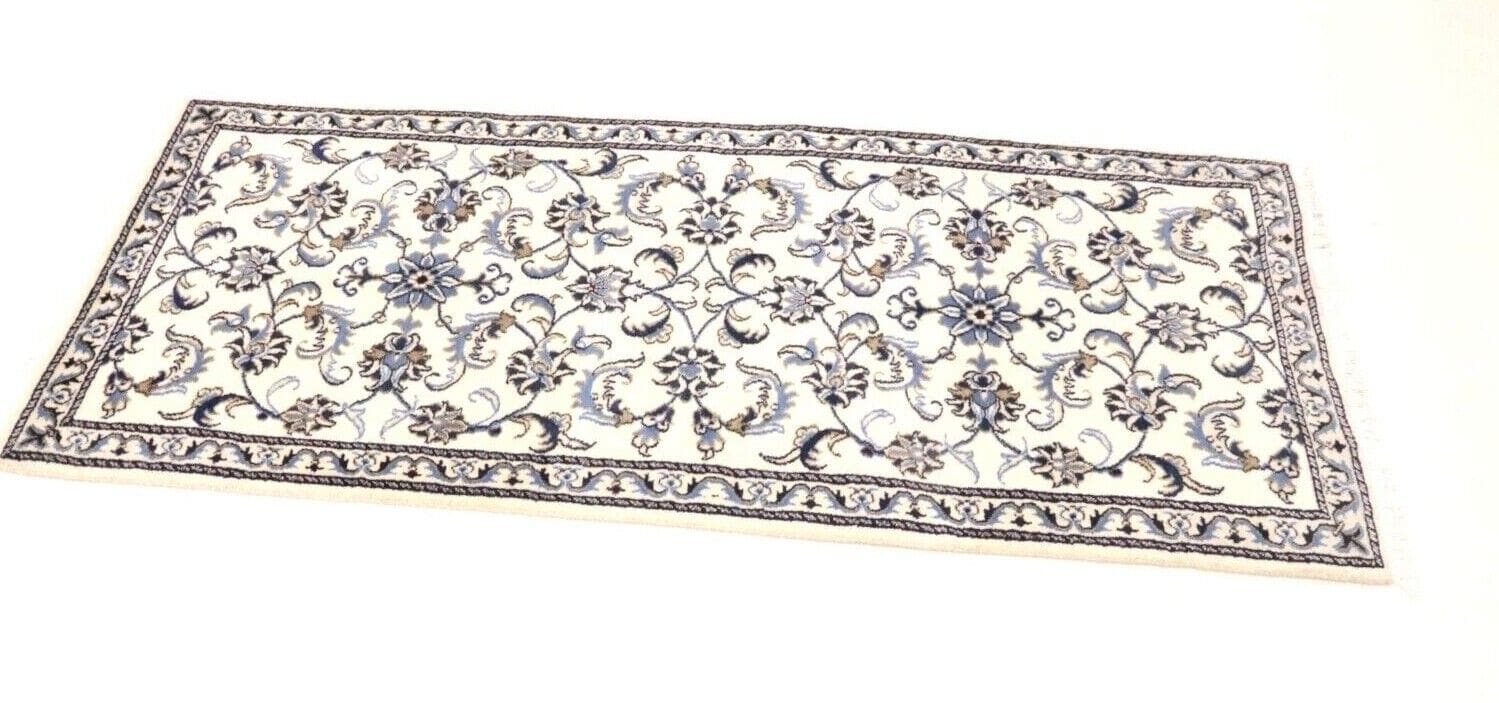
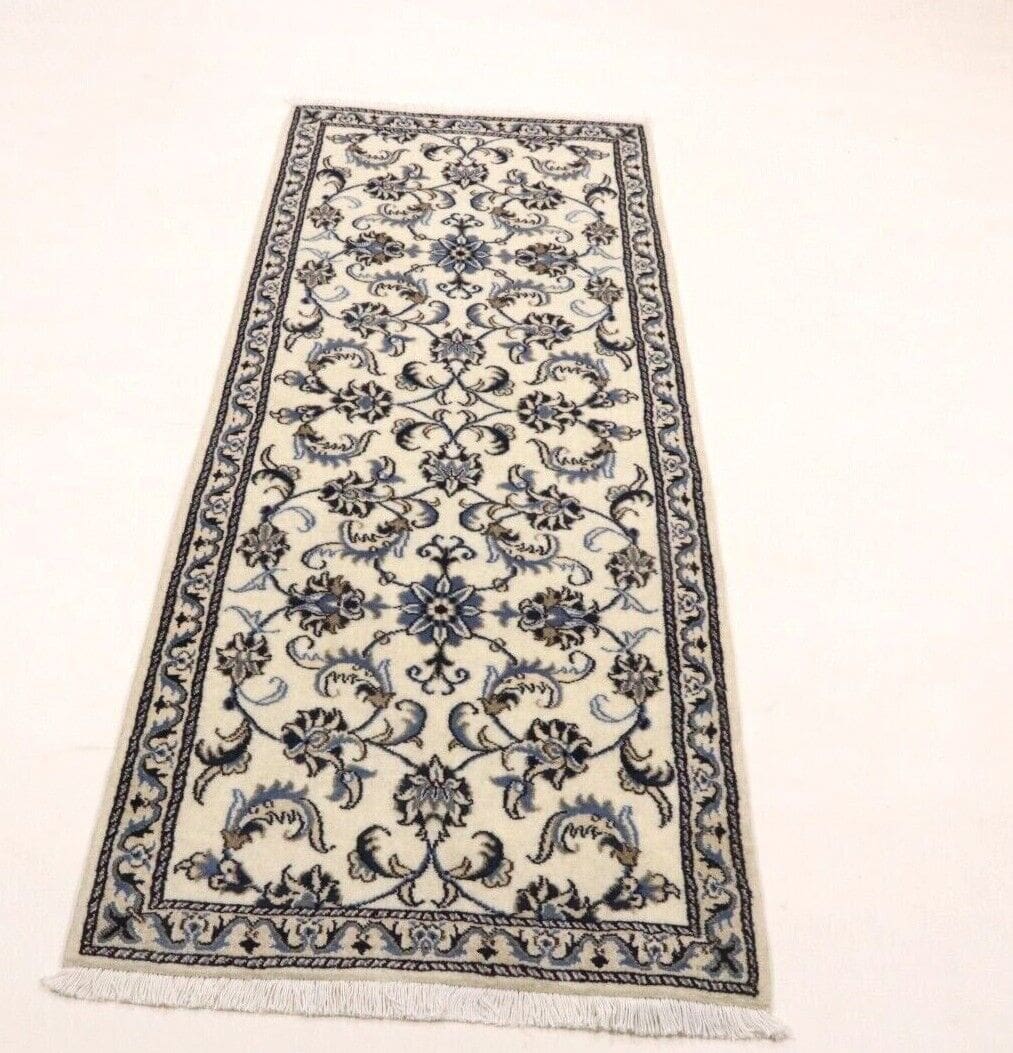
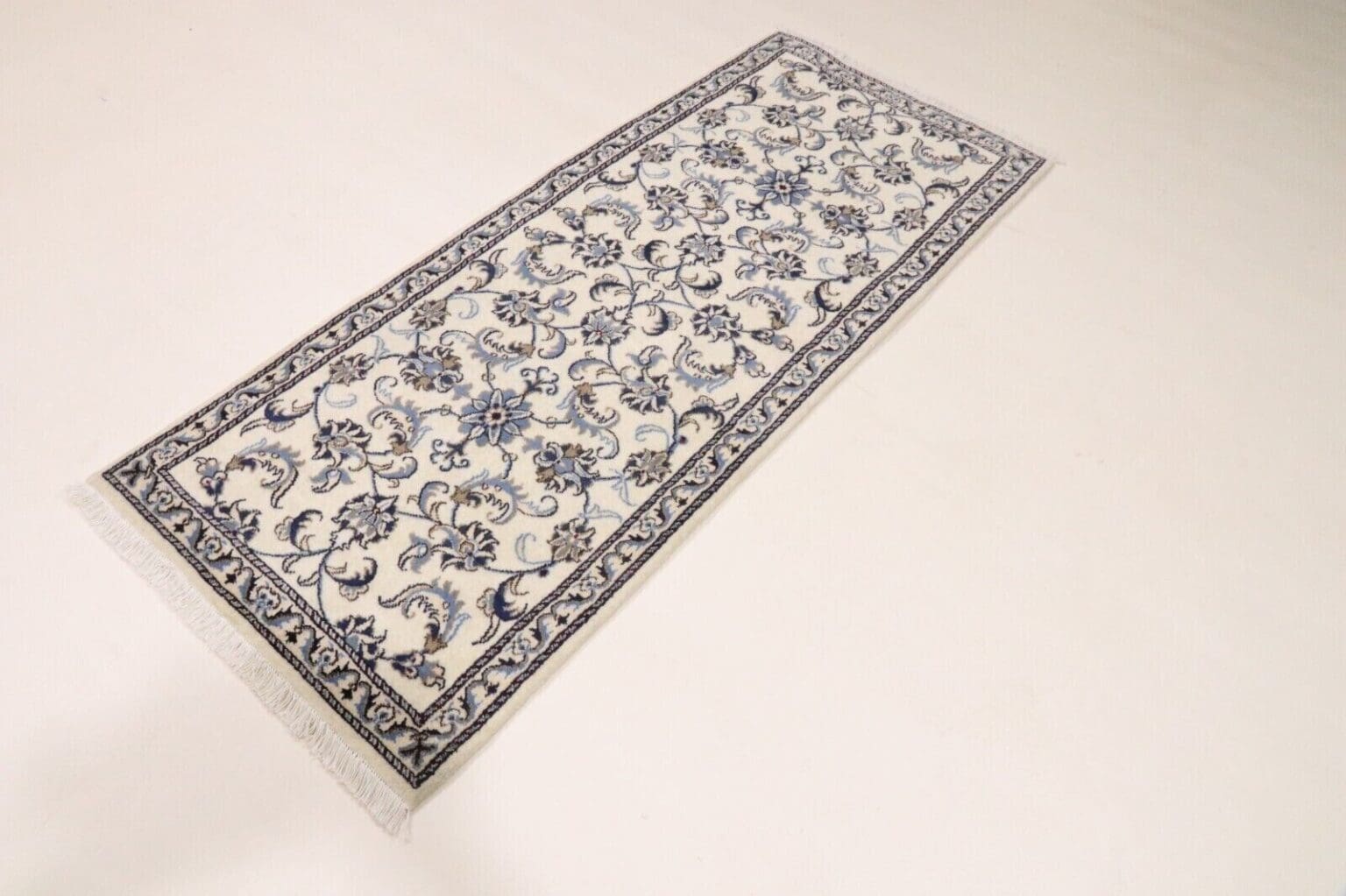
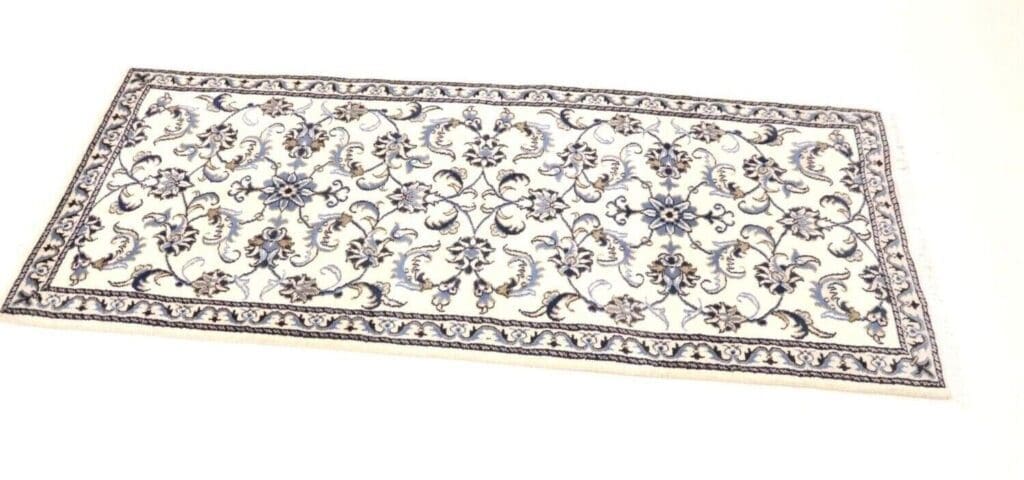
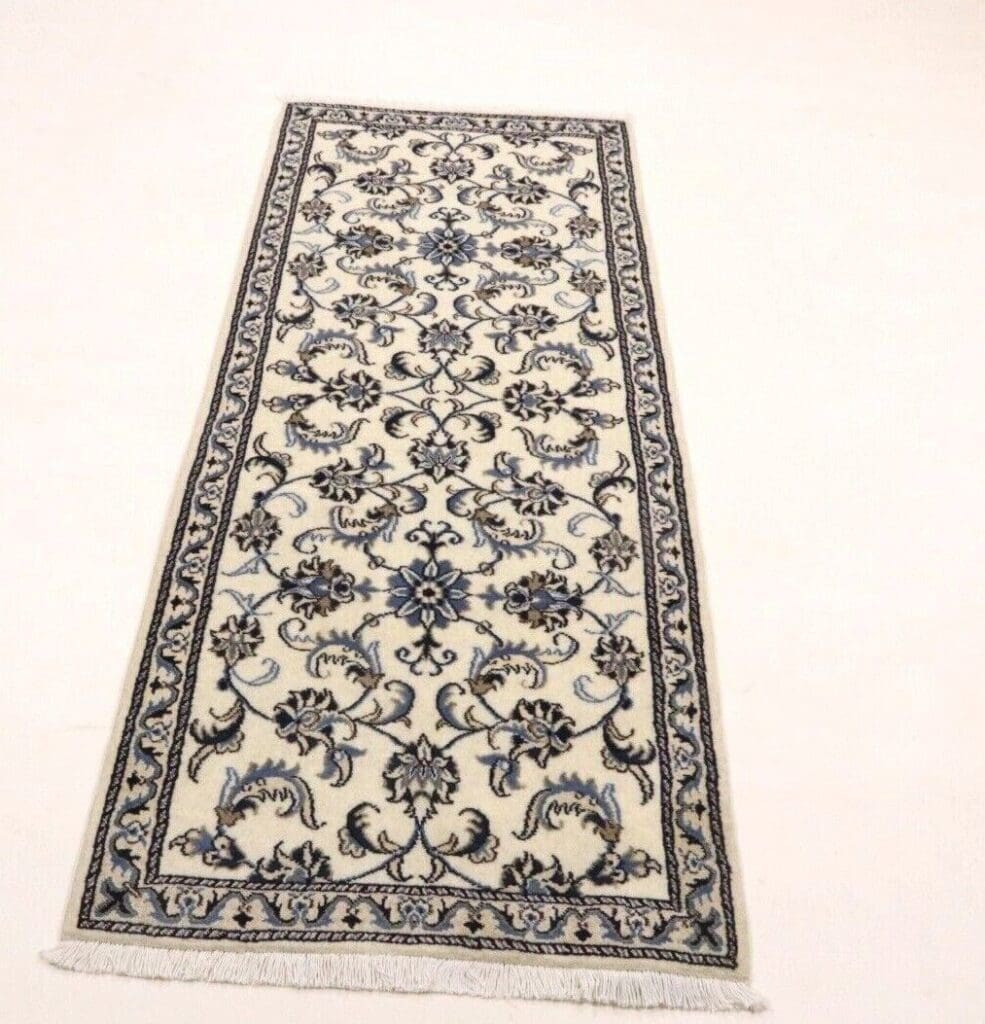
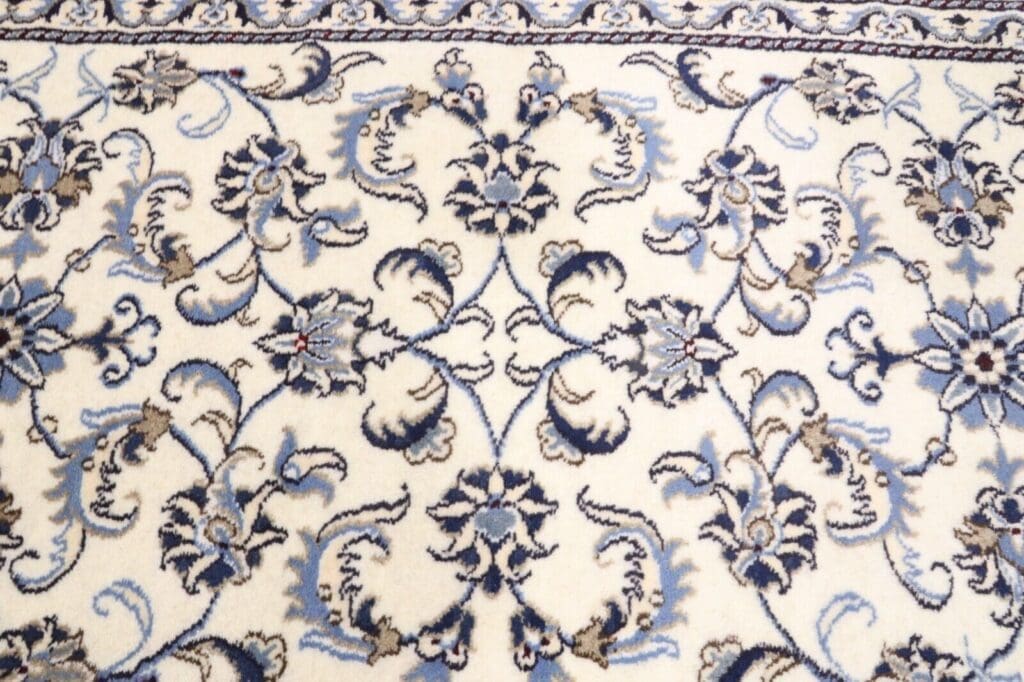
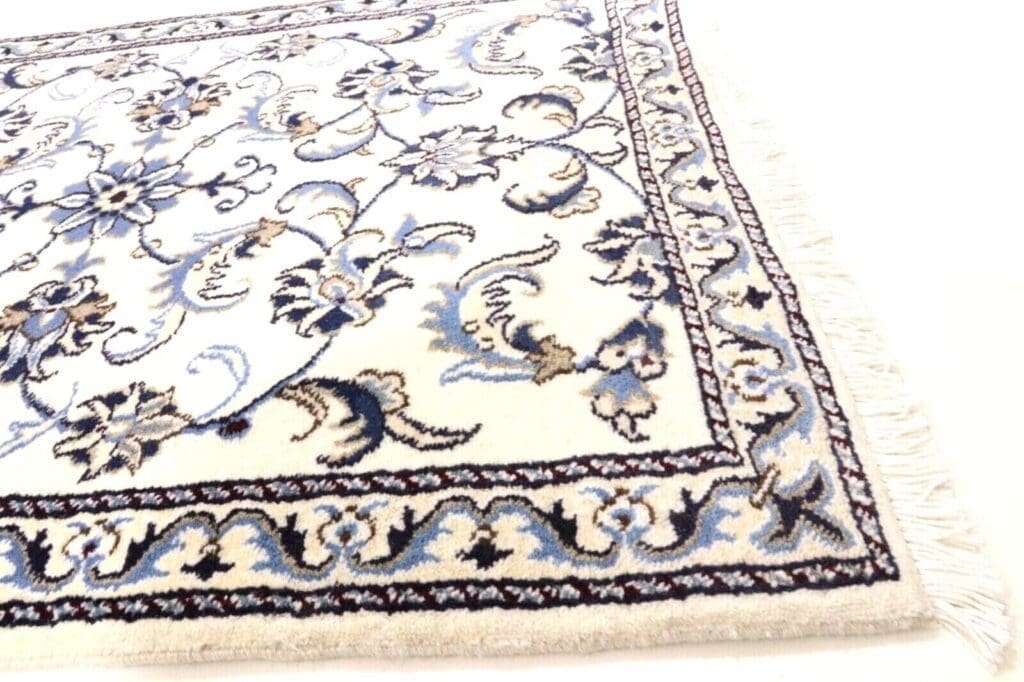
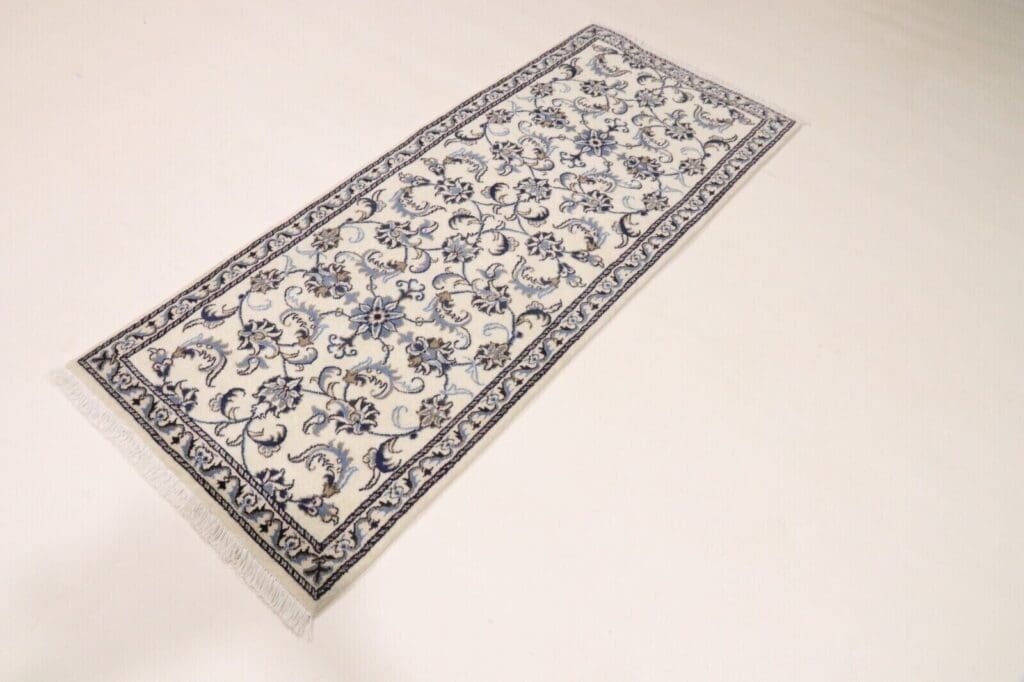
The design is described as elegant and harmonious. Its effect comes from the relationship between the hand-knotted surface, the fine execution and the materials used. A high knot density helps keep small elements legible and supports a controlled drawing. Silk may catch the light with a quiet sheen, while wool gives the surface a softer and warmer visual character. The description does not assign a specific named medallion, border or colour palette to this individual rug.
Oriental rug design often organises a field through a relationship between centre, surrounding elements and borders. A central composition may use a medallion or a more open arrangement, while borders frame the field and establish a visual rhythm. These are general design possibilities rather than claims about every rug. Persian designers have long used proportion, repetition and contrast to guide the eye across a textile surface.
Many motifs in Oriental weaving draw on nature or geometry. Leaves, flowers, vines and stylised branches can suggest growth and fertility. Geometric shapes are often associated with order and balance. Traditional interpretations may also connect certain motifs with peace, protection or continuity. Such meanings form part of a broad symbolic language; they do not mean that every ornament has one fixed interpretation or that an unstated motif should be assigned to this rug.
Fine knotting gives particular importance to line work. Curves are built from many individual knots, while straight lines and angles require consistent tension. Repetition creates rhythm, and the small variations that accompany handwork give each finished piece an individual presence. Wool and silk can make the difference between quiet areas and finer details perceptible through changes in texture and light. The pattern is therefore experienced visually as well as through the surface.
The harmonious appearance can work with several interior approaches. In a traditional setting, a Persian design can relate to other Oriental textiles and furnishings. In a contemporary room, a classic pattern language can provide a structured contrast to simpler forms. The balance between open floor area, surrounding colours and the visual density of the rug influences how it is perceived. As a runner, its elongated format is generally suited to spaces that benefit from a continuous textile accent; this describes the shape and use, not an additional origin.
The Super Nain designation places the rug within a fine Persian design vocabulary, but it does not justify naming a particular motif that is not recorded. What is stated is an elegant, harmonious design with detailed hand-knotted execution. The careful description of the style is preferable to adding a medallion, floral arrangement or border pattern that the product information does not identify.
Special Features
The rug is described as new and in very good condition. Its hand-knotted construction, the blend of virgin wool and silk, and the approximate density of 300,000 knots per square metre are among its recorded features. The pile height is approximately 8 mm. The rug is also described as suitable for underfloor heating and as pet-friendly.
Regular, gentle vacuuming is appropriate for routine care. Strong direct sunlight should be avoided where possible, since prolonged exposure can cause colours to fade unevenly. Dust and loose particles may also be removed by carefully shaking the rug. A suitable rug cleaner can be used for spots, while professional cleaning is the safer choice for a more thorough treatment or when a stain is uncertain. A hand-knotted wool-and-silk surface should not be scrubbed aggressively or exposed to unsuitable products.
Oriental and Persian rugs are often considered in terms of long-term use as well as decoration. Knot density, fibre, design, age, condition and workmanship can all influence an assessment of value. For this rug, fine knotting, wool and silk, handwork, Persian origin and a new, very good condition are recorded. These characteristics may be relevant when assessing it, but they do not constitute a guarantee that its value will increase over time.
FAQ
How should I care for the rug?
Vacuum the rug regularly using a gentle setting suited to a hand-knotted textile. Try to limit strong direct sunlight, as it can gradually fade colours. Dust and loose debris can also be removed by carefully shaking the rug. If a spill occurs, use a suitable rug-cleaning product rather than an aggressive household chemical. For persistent marks, extensive cleaning or any uncertainty about treatment, professional rug cleaning is advisable. Avoid hard scrubbing, excessive moisture and unsuitable tools, since the surface contains both wool and silk. The rug’s suitability for underfloor heating does not remove the need for careful, regular maintenance.
What is the difference between Oriental rugs and Persian rugs?
A Persian rug is a specific type of Oriental rug and comes from Persia, or Iran. Oriental rug is the broader term for hand-crafted rugs associated with several regions of the Orient. These may include Afghanistan, Turkey and the Caucasus, among others. Differences can concern origin, knotting, fibres, colours and design traditions. This rug is identified as a Persian rug from Persia and carries the style name Super Nain. Oriental rug describes the wider cultural category, while Persian rug gives the more specific origin stated for this piece.
Are Oriental rugs a good investment?
Well-made Oriental and Persian rugs are often viewed as furnishings with long-term value. Whether a particular rug increases in value depends on several factors, including age, condition, knot density, materials, workmanship and design. Demand for a certain origin or style can also influence an assessment. This rug has recorded features such as fine knotting, a virgin-wool and silk pile, hand craftsmanship, Persian origin and new, very good condition. Those points may be relevant to an evaluation, but they are not a promise of future appreciation and do not replace an individual appraisal.
To provide the best experiences, we use technologies like cookies to store and/or access device information. Consenting to these technologies will allow us to process data such as browsing behavior or unique IDs on this site. Not consenting or withdrawing consent, may adversely affect certain features and functions.
Functional Always active
The technical storage or access is strictly necessary for the legitimate purpose of enabling the use of a specific service explicitly requested by the subscriber or user, or for the sole purpose of carrying out the transmission of a communication over an electronic communications network.
Preferences
The technical storage or access is necessary for the legitimate purpose of storing preferences that are not requested by the subscriber or user.
Statistics
The technical storage or access that is used exclusively for statistical purposes.The technical storage or access that is used exclusively for anonymous statistical purposes. Without a subpoena, voluntary compliance on the part of your Internet Service Provider, or additional records from a third party, information stored or retrieved for this purpose alone cannot usually be used to identify you.
Marketing
The technical storage or access is required to create user profiles to send advertising, or to track the user on a website or across several websites for similar marketing purposes.

 SECURE PAYMENT
 SHIPPING PARTNERS