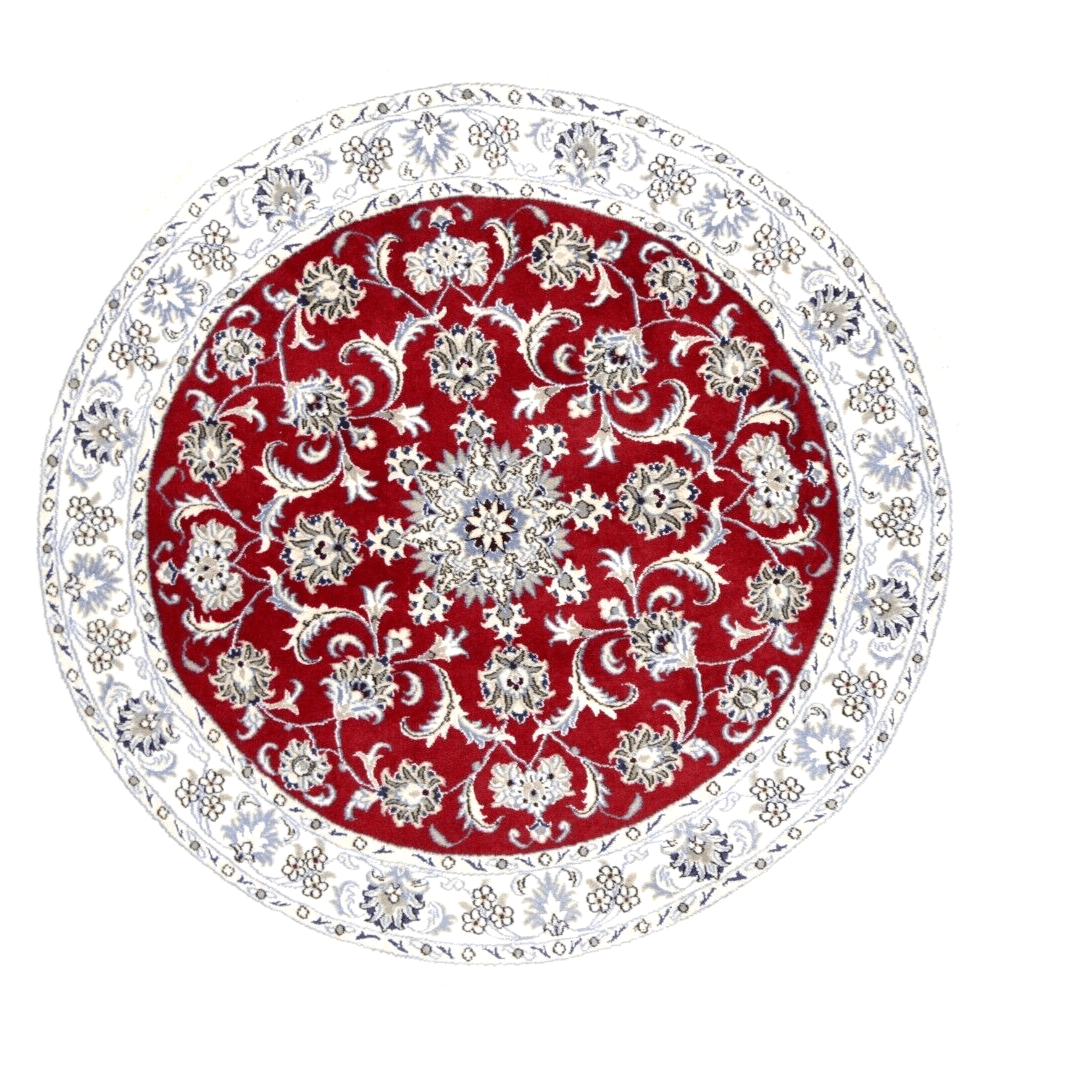
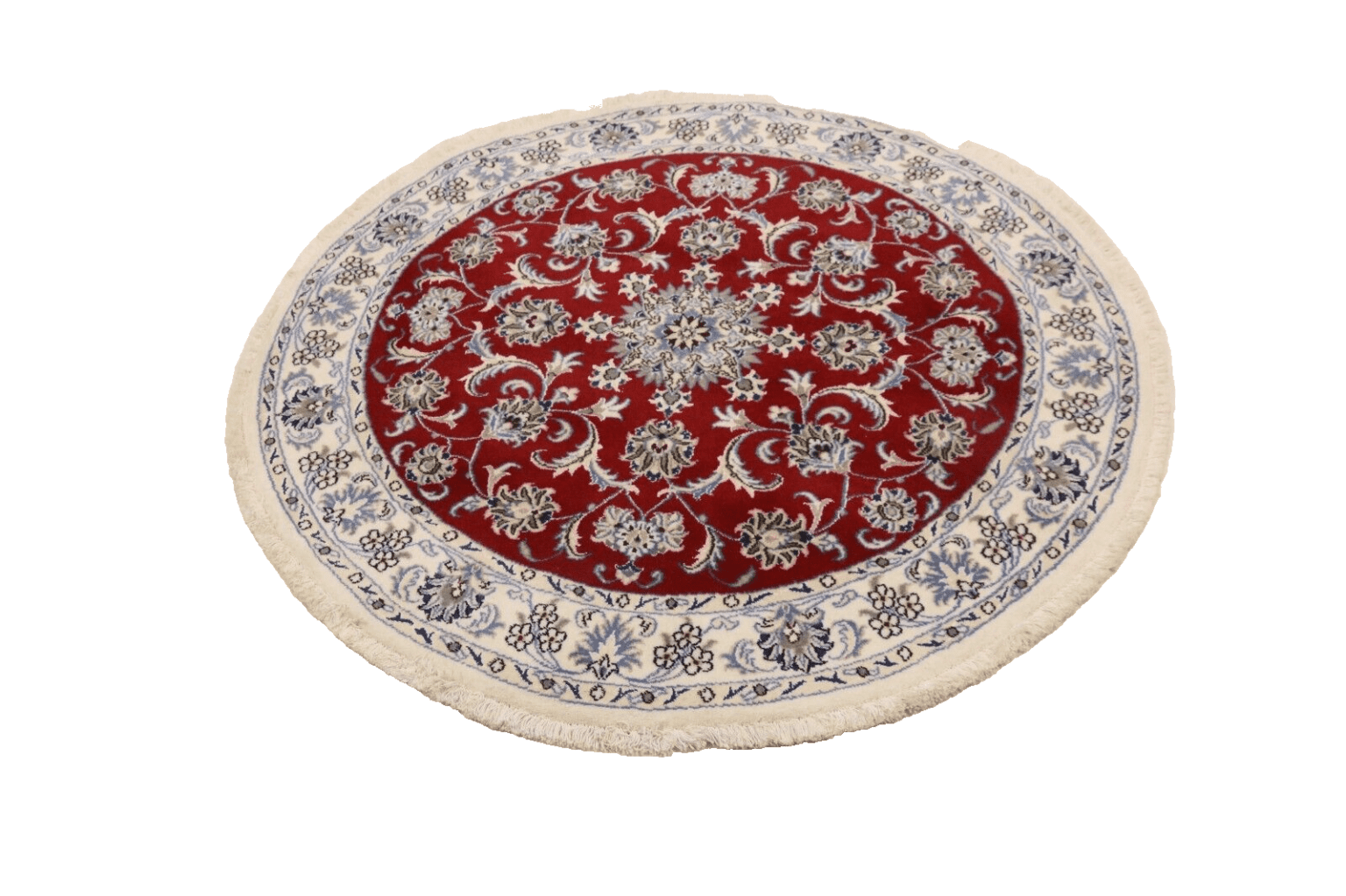
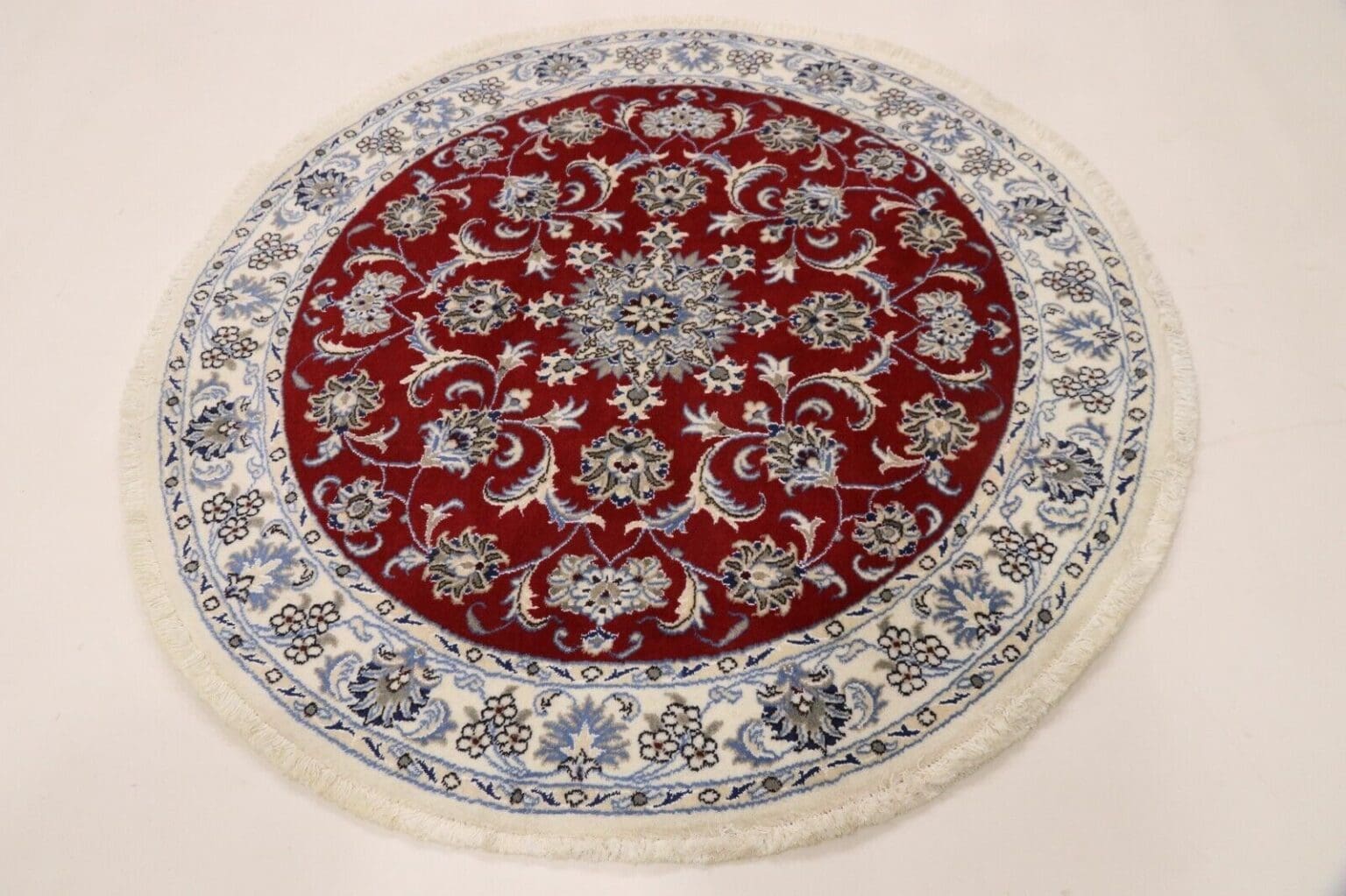
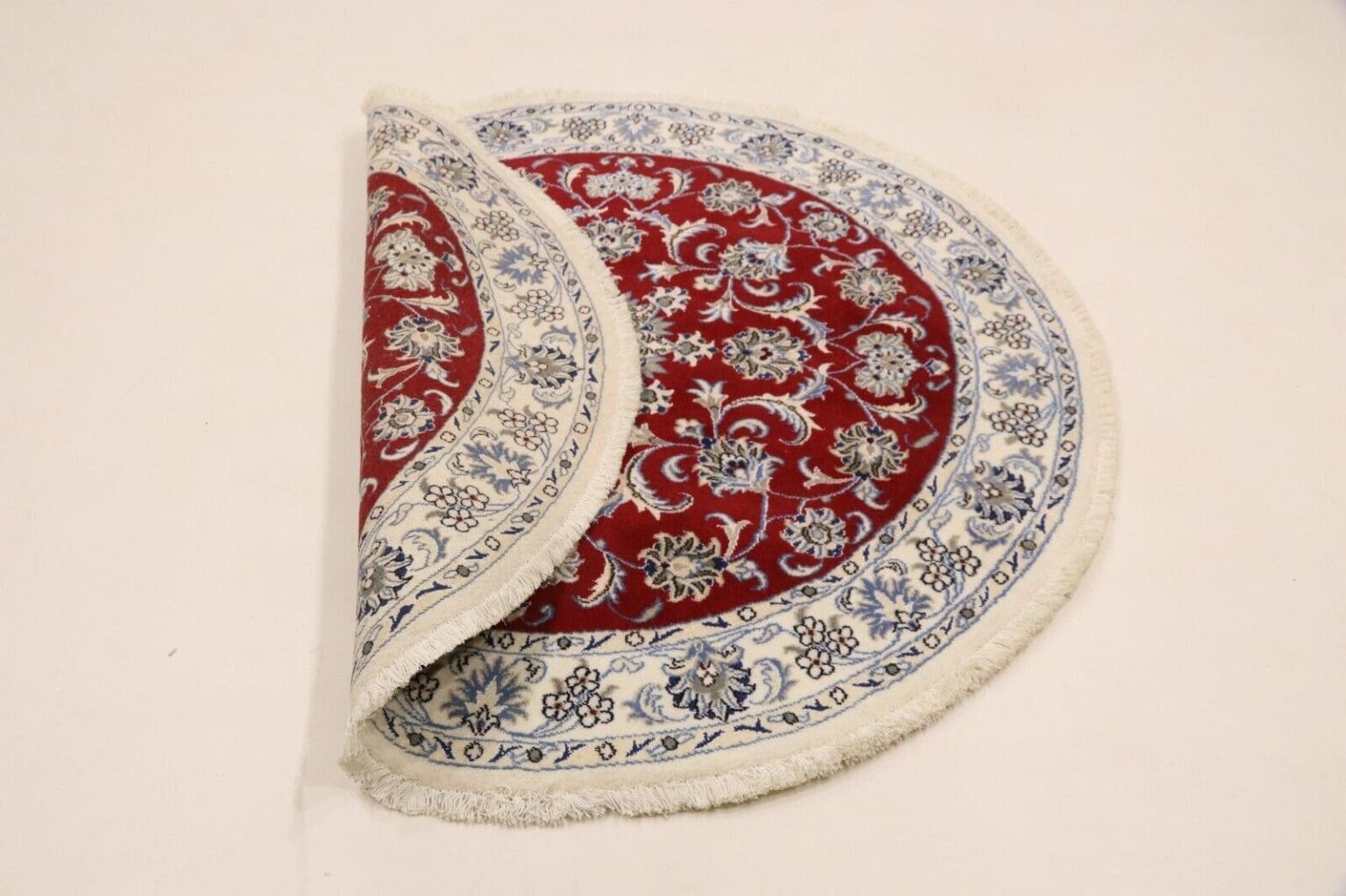
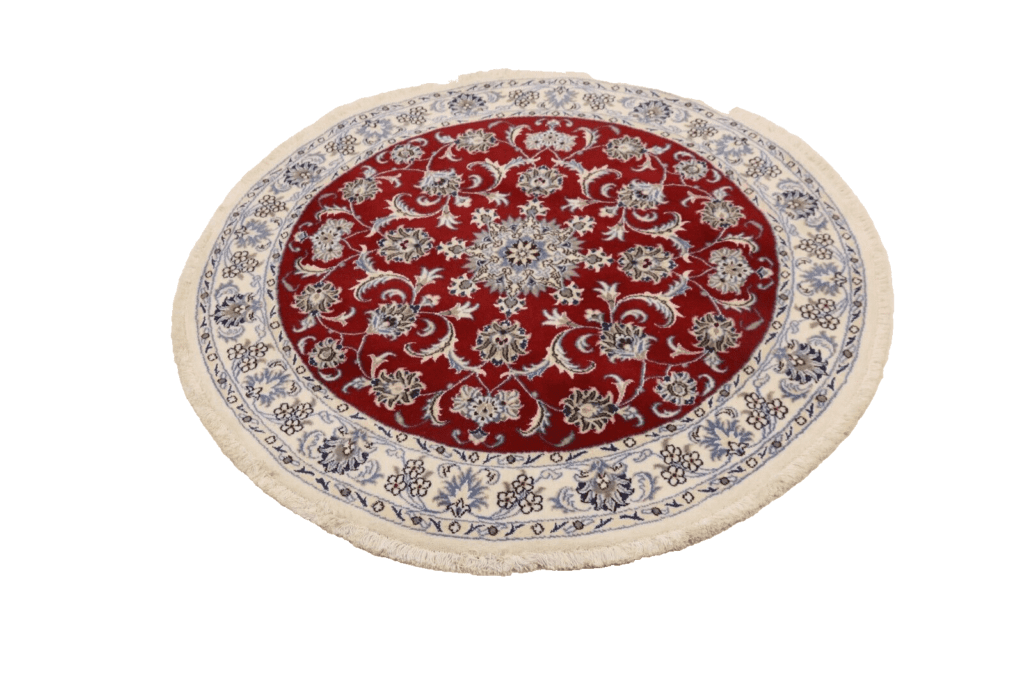
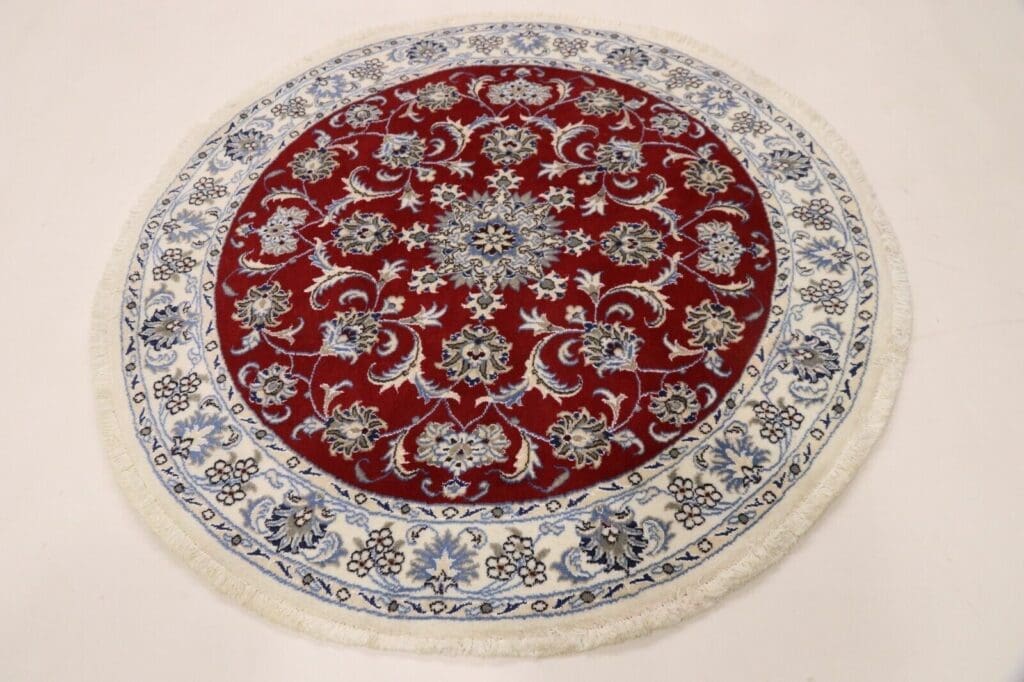
Hand-knotted Nain Persian Rug | Knot density: approx. 300,000 knots/m² | Material: pile 90% virgin wool, 10% silk | Size: 150 x 150 cm | Pattern: traditional Oriental and Persian | Condition: new and unused
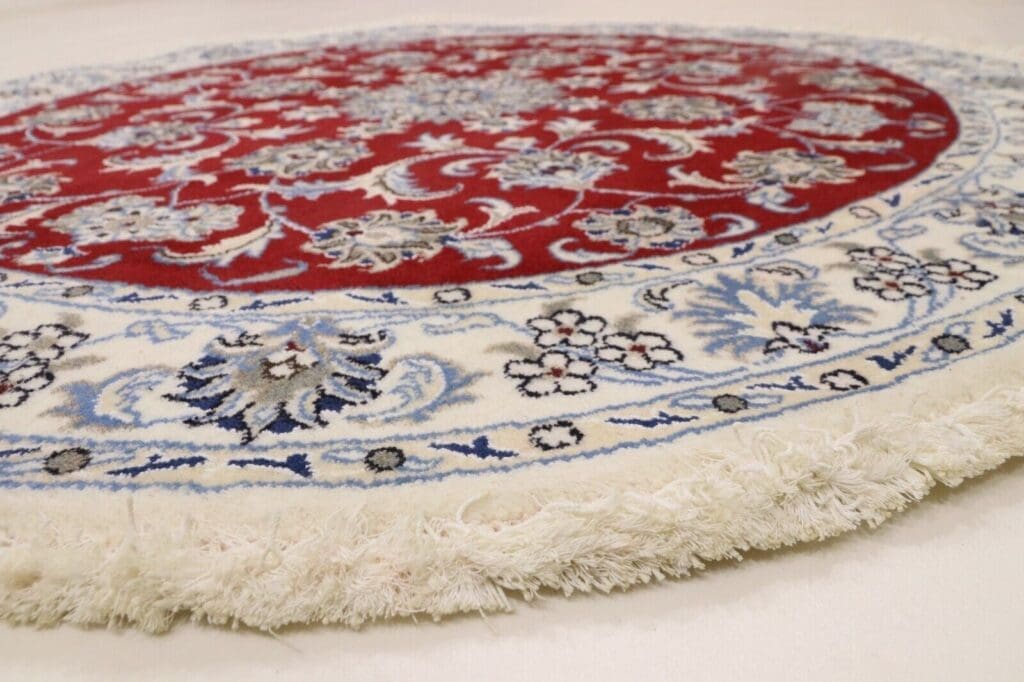
This Nain Persian rug is made from 90% virgin wool and 10% silk. Virgin wool makes up the principal part of the pile. It is valued in traditional rug making for its combination of resilience and softness, as well as for the comfortable feel it gives underfoot. Wool is a natural fibre associated with warmth and a pleasant surface. The silk content adds a finer touch and a gentle sheen. Depending on the light, that sheen may appear more or less pronounced across the pile.
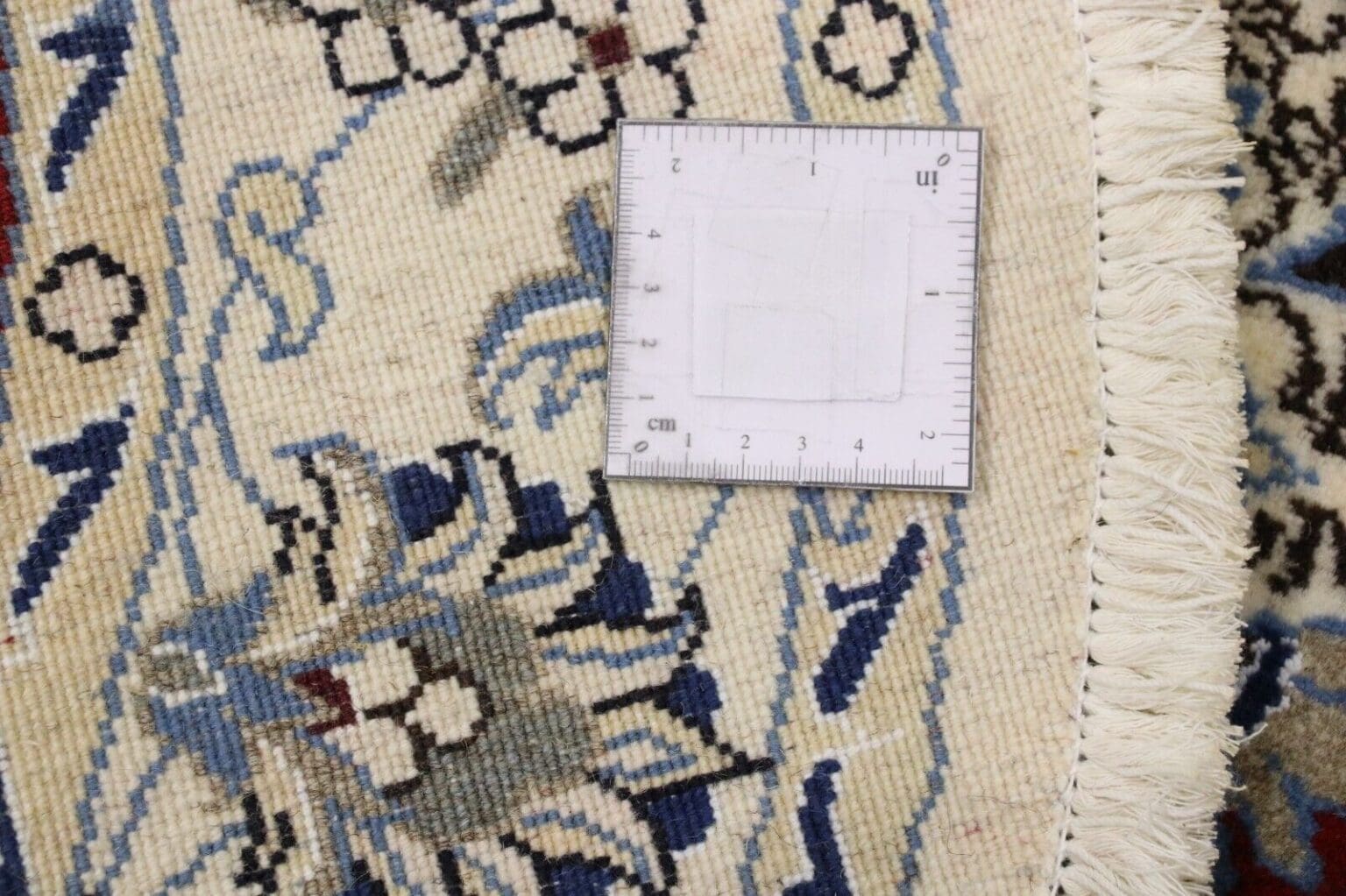
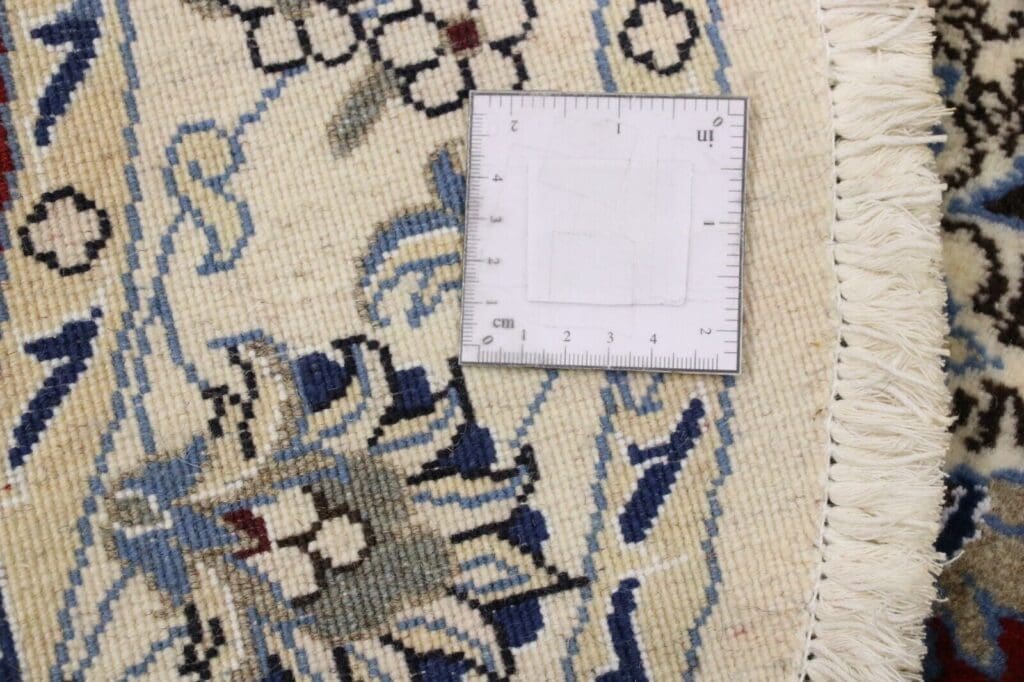
The rug is hand-knotted, which means that the knots are placed individually into the foundation rather than being printed or mechanically applied. This method requires careful work and allows the design to be built knot by knot. The rug has a knot density of approximately 300,000 knots per square metre. Such a fine construction supports detailed drawing and contributes to a dense pile. The making process links the material structure directly with the visible pattern.
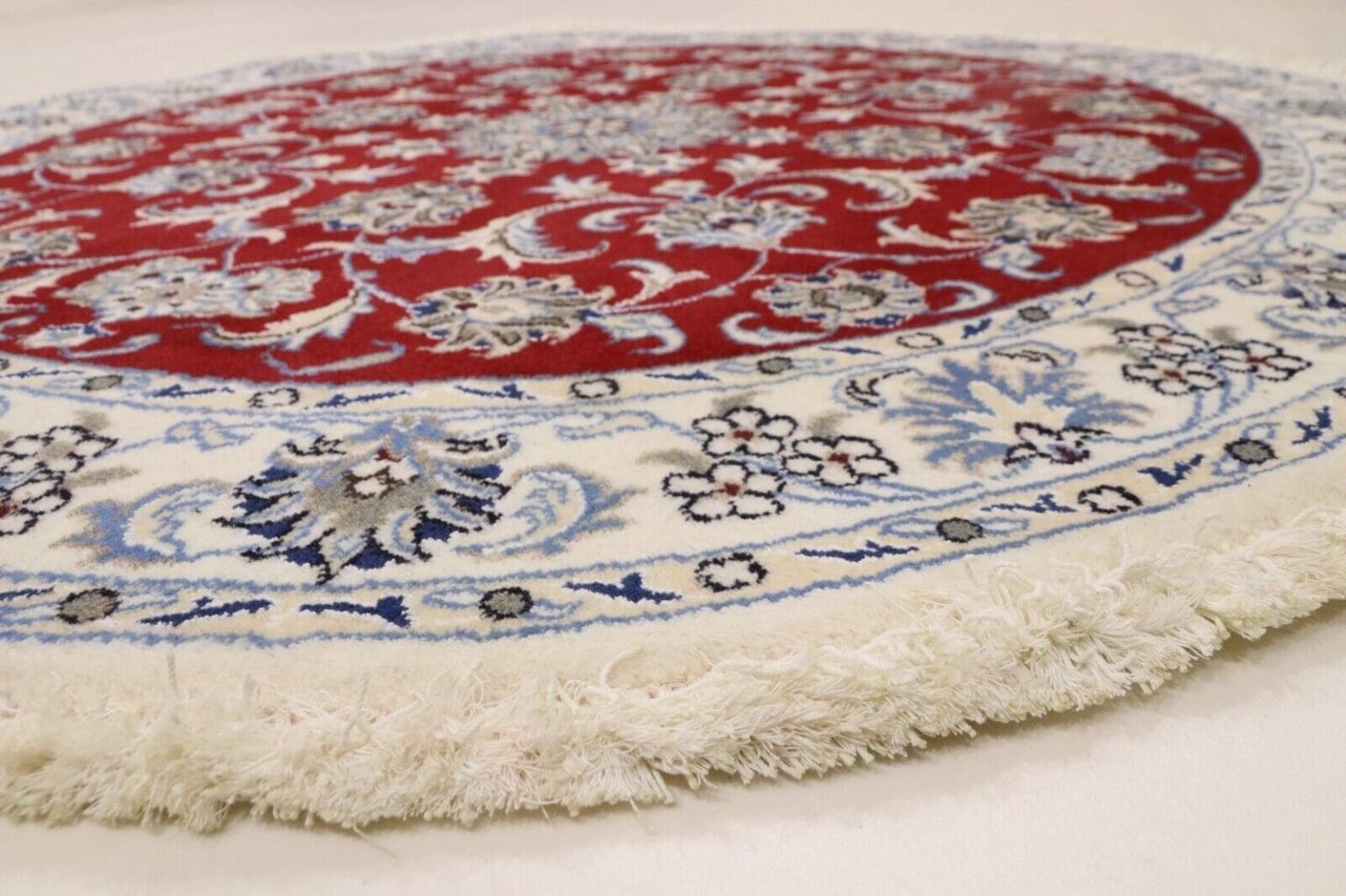
Wool and silk bring different qualities to the finished surface. Wool provides a soft and durable base, while silk can introduce subtle light reflections and a smoother impression in the pile. The hand-knotted construction makes the rug suitable for living rooms and bedrooms. It can also be used over underfloor heating. The rug is described as pet-friendly, adding a practical aspect to its use in the home.
Origin and Tradition
The rug comes from Persia and is identified as a Nain Persian rug. Nain is one of the recognised names within Persian rug weaving. The town and its surrounding area are associated with a tradition of finely worked rugs, where careful knotting and controlled drawing are important parts of the craft. The Nain designation therefore points to a regional style and production tradition within Persian rug culture.
Persian rug making encompasses many regions, each with its own approaches to composition, materials, colour and technique. This regional variety is part of the history of Persian weaving. In many workshops, knowledge of preparing the foundation, inserting knots, shaping outlines and finishing the pile is passed on through practical instruction and long experience. Hand-knotting preserves those methods while allowing each rug to be constructed as an individual textile object.
A hand-knotted rug is not created by applying a finished picture to a surface. The design is formed progressively as individual knots are tied and rows are completed. Weavers work from a design plan and keep track of the relationship between outlines, fields and ornaments. A high knot density permits a finer level of drawing than a coarse construction. It is therefore connected not only with a technical specification but also with the precision that can be achieved in the pattern.
Persian weaving includes formal compositions with orderly fields and borders as well as designs with a more open arrangement. Nain rugs are commonly associated with a clear and balanced approach to design. The origin and the technique provide the cultural setting for this rug. Its use of wool and silk also reflects the long-standing role of natural fibres in Oriental rug production, where texture, durability and the way a surface receives light are considered together.
Traditional rug making combines a functional textile with a carefully organised visual language. Wool can protect the surface and provide a comfortable pile, while silk can be used to add a finer visual accent. These choices affect both touch and appearance. In this rug, the Persian origin, the Nain designation, the hand-knotted method and the natural-fibre composition belong to the same craft context.
Design and Pattern
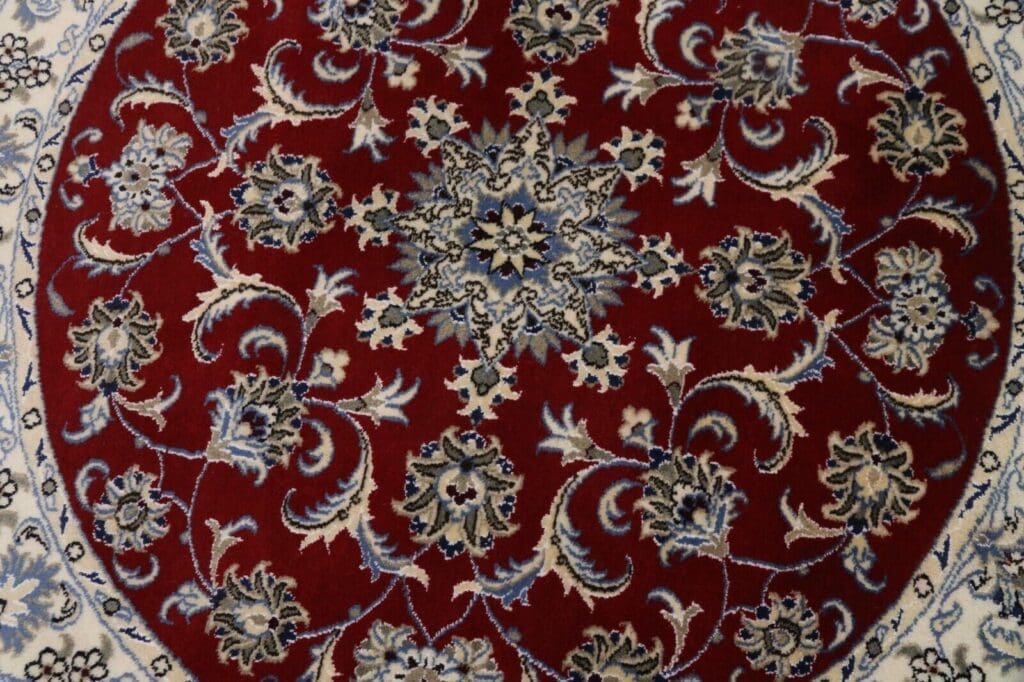
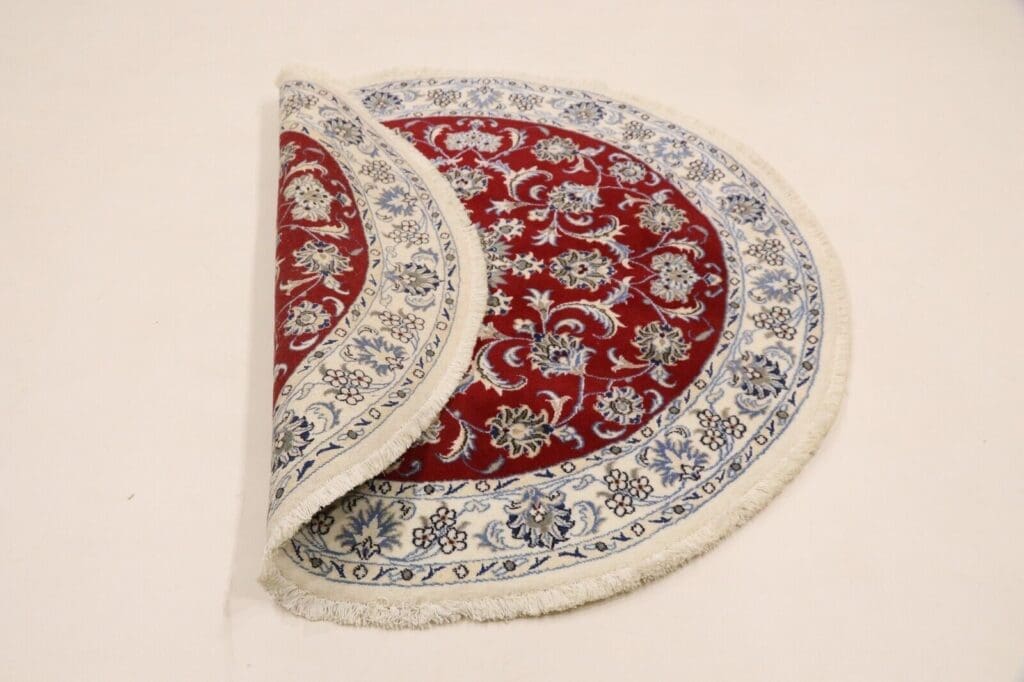
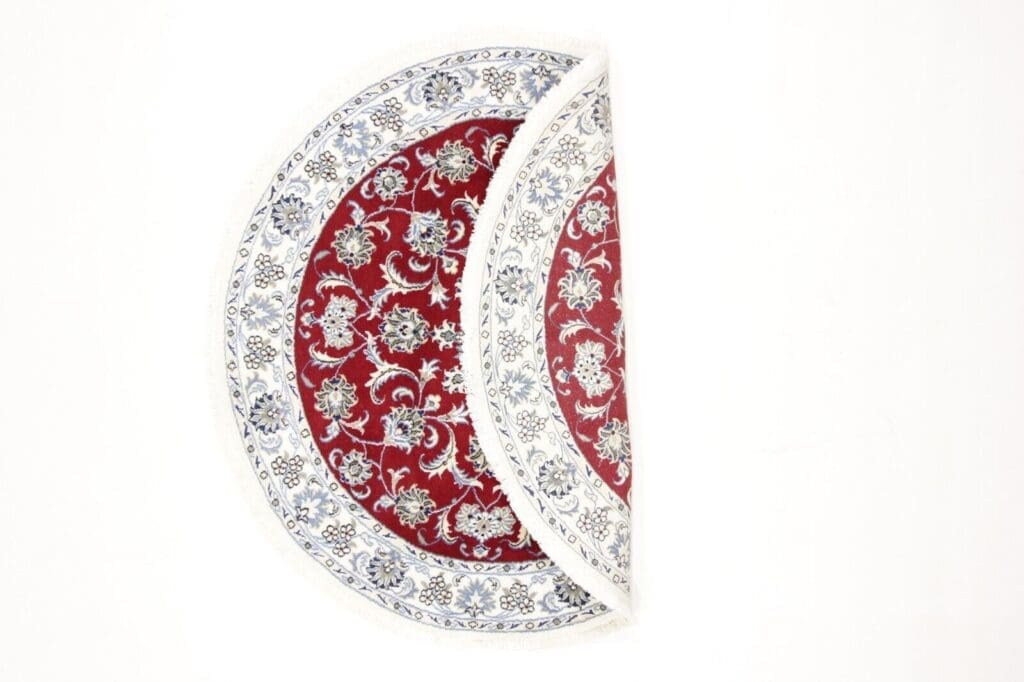
The pattern is described as traditional Oriental and Persian. It has a timeless character with fine lines and elegant colour accents. This description places the rug within a design tradition in which line work, detail and colour relationships create the overall appearance. Rather than following a short-lived decorative trend, the design draws on established Persian approaches to arranging ornament across a textile surface.
Oriental rug designs often establish a relationship between a central field, surrounding borders and smaller repeated elements. Depending on the regional tradition, these elements may include floral motifs, geometric forms or historic symbols. Their meanings can differ between cultural settings. A floral form may refer to nature, a geometric arrangement to order, and a historic symbol to an inherited visual vocabulary. For this rug, the documented design features are its fine lines, elegant colour accents and traditional Persian and Oriental character.
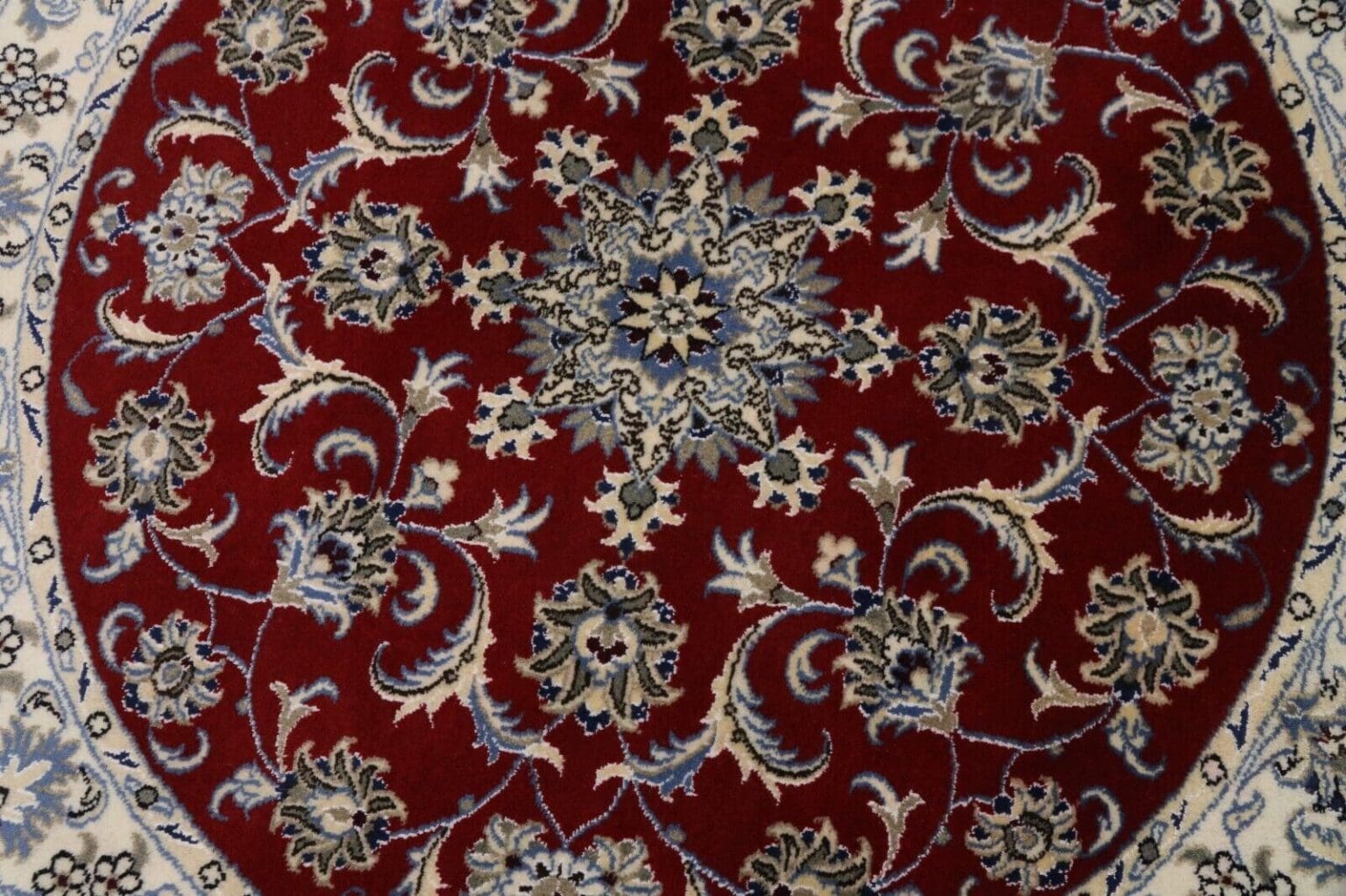
The fine knotting supports a detailed rendering of the pattern. Narrow outlines, changes in direction and small areas of ornament can be arranged with greater control when the construction is dense. The resulting pile gives the drawing a textile depth and keeps the design connected to the structure of the rug. The pattern is therefore part of the woven object itself, not a separate surface decoration.
Persian compositions frequently use repetition and symmetry to create visual order. Repeated ornaments give the eye a stable rhythm, while the handmade process can preserve small variations in the surface. A traditional design can consequently appear both disciplined and rich in detail. The Nain designation points to a style area where precise drawing and a balanced overall arrangement are important reference points.
The materials also influence how the pattern is perceived. Wool offers a softer, more subdued foundation, while silk may catch the light with a mild sheen. As the light changes, the surface can show different levels of reflection without losing the underlying organisation of the design. The rug thus combines a traditional Persian visual language with a differentiated effect created by its wool and silk pile.
Special Features
The rug’s knot density of approximately 300,000 knots per square metre is one of its defining technical features. The dense construction allows the pattern to be worked with fine detail and contributes to a compact, soft pile. This can be noticed in the visual coherence of the surface as well as in the way it feels underfoot. The hand-knotted technique and the combination of virgin wool with silk complement this construction.
The rug is new and unused. It has a rectangular shape and is suitable for use over underfloor heating. It is also described as pet-friendly. These practical details accompany its classification as a traditional Persian Oriental rug and distinguish the item’s intended use without changing its regional and technical identity.
FAQ
How should I care for this Persian rug?
Regular vacuuming without a brush attachment is recommended for removing dust and loose dirt. A brush can place unnecessary mechanical stress on the pile, so a gentle setting is preferable. If a spill or mark occurs, it should be dabbed promptly with a damp cloth. Rubbing can work the substance further into the fibres or affect the surface, whereas careful blotting is the more suitable first response. Professional cleaning every few years is recommended for a thorough refresh and for helping preserve the colours and structure. Because the pile contains both virgin wool and silk, any professional treatment should be suitable for these natural fibres. The rug can be used over underfloor heating, but normal careful maintenance remains important for keeping the pile clean.
Where does this rug come from?
This rug comes from Persia and is identified as a Nain Persian rug. Nain is a recognised regional name in Persian rug weaving, associated with hand-knotting and finely drawn designs. Producing such a rug involves a series of established craft steps: the foundation is prepared, individual knots are tied, the rows are built up and the finished pile is worked into an even surface. Persian origin describes the cultural and weaving context, while Nain adds a regional style designation. Together with the hand-knotted construction and the use of virgin wool and silk, these details place the rug within the tradition of Persian Oriental rugs.
Has the rug been tested for harmful substances?
Yes. This Oriental rug is described as tested for harmful substances and as meeting high quality standards. Its materials are presented as high quality and consist of 90% virgin wool and 10% silk. The testing statement provides additional information about quality and intended use in the home. Regular care is still useful for keeping the pile clean and maintaining the textile structure. The rug is suitable for use over underfloor heating and is described as pet-friendly. Cleaning should take account of the characteristics of both natural fibres, especially the wool pile and the silk content.
To provide the best experiences, we use technologies like cookies to store and/or access device information. Consenting to these technologies will allow us to process data such as browsing behavior or unique IDs on this site. Not consenting or withdrawing consent, may adversely affect certain features and functions.
Functional Always active
The technical storage or access is strictly necessary for the legitimate purpose of enabling the use of a specific service explicitly requested by the subscriber or user, or for the sole purpose of carrying out the transmission of a communication over an electronic communications network.
Preferences
The technical storage or access is necessary for the legitimate purpose of storing preferences that are not requested by the subscriber or user.
Statistics
The technical storage or access that is used exclusively for statistical purposes.The technical storage or access that is used exclusively for anonymous statistical purposes. Without a subpoena, voluntary compliance on the part of your Internet Service Provider, or additional records from a third party, information stored or retrieved for this purpose alone cannot usually be used to identify you.
Marketing
The technical storage or access is required to create user profiles to send advertising, or to track the user on a website or across several websites for similar marketing purposes.
 SECURE PAYMENT
 SHIPPING PARTNERS


