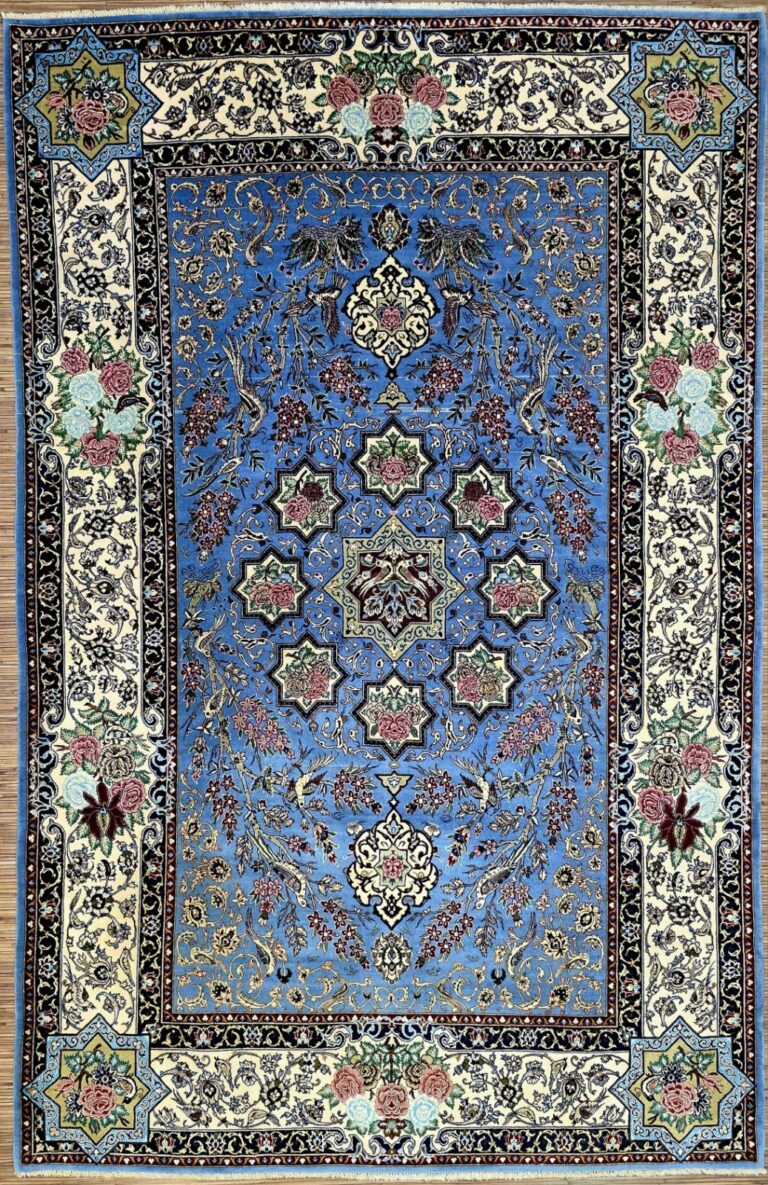
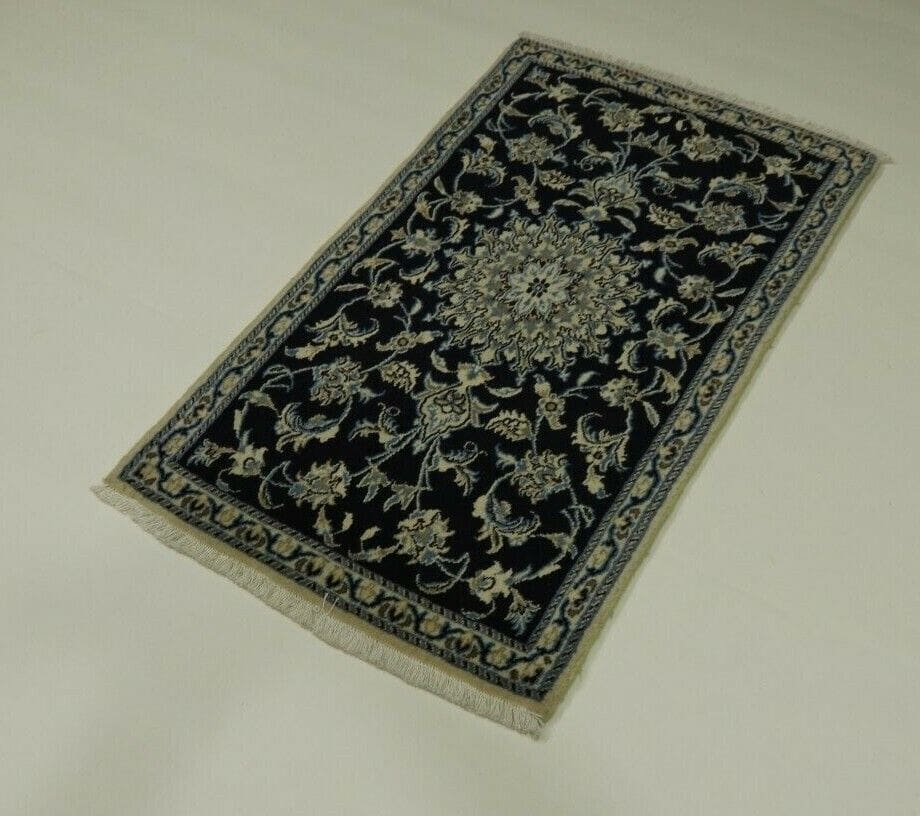
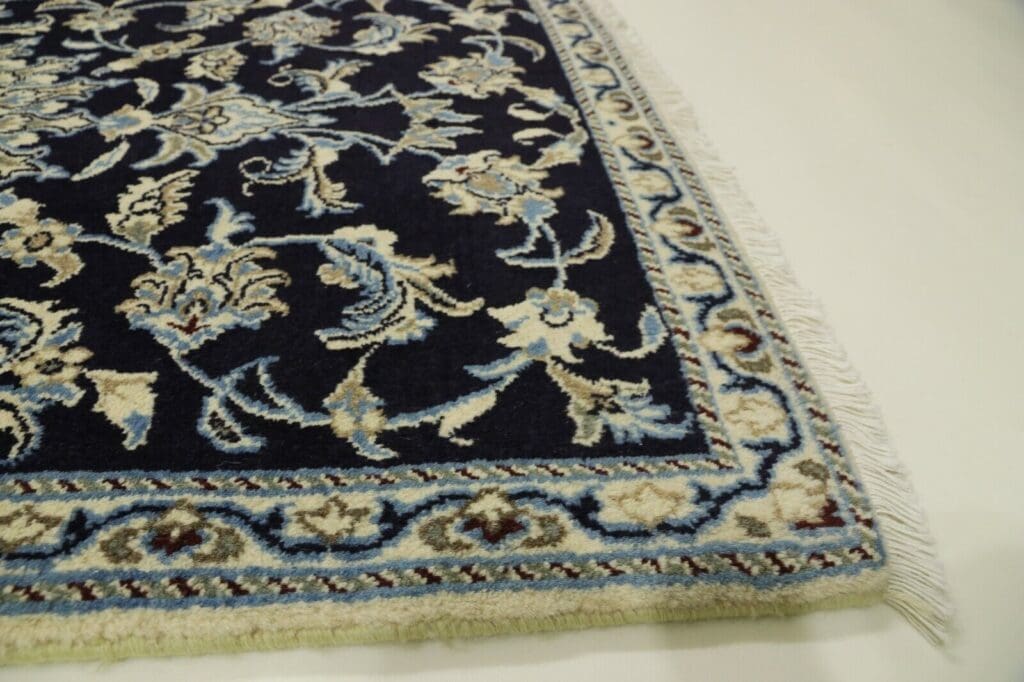
This Super Nain is a hand-knotted Persian rug made with 100% virgin wool. The wool gives the rug a soft surface and a comfortably warm feel underfoot. As a natural material, virgin wool combines the qualities associated with traditional rug making: a pleasant handle, durability and the ability to regulate moisture. The pile is described as soft and warm while remaining suitable for the demands placed on a hand-knotted floor covering.
Hand-knotting is central to the character of this rug. The surface is built knot by knot, creating a dense textile structure in which the design can be worked out with fine detail. This method links traditional manual work with a carefully composed pattern. The material information also lists 100% cotton and 10% silk in addition to 100% virgin wool; the pile itself is specified as 100% virgin wool.
The wool provides a comfortable warmth and a natural sheen. It is described as naturally resistant to dirt, which makes everyday care easier. The hand-knotted construction supports resistance to wear, while proper care helps preserve the rug’s surface and appearance over a long period. Material and workmanship therefore work together to create a textile that is soft to use and carefully structured.
Origin and Tradition
This rug is described as a Super Nain from the Nain region of Iran. Nain is one of the recognised Persian rug regions and is known for hand-knotted rugs with precise, refined workmanship. Its weaving tradition brings together manual accuracy, selected materials and a clear decorative language. The name Nain refers both to the stated origin and to a regional tradition that has developed its own approach to colour, ornament and detailed construction.
Rug making in Nain is rooted in Persian culture. Persian rugs have traditionally served practical as well as decorative purposes: they cover floors, provide warmth, define areas within a room and carry ornamental meaning. Their patterns and techniques are passed through generations of makers. For that reason, a Nain rug is connected not only with a particular surface design but also with a broader history of textile knowledge and regional craftsmanship.
The history of Persian rug art has been shaped by different periods and dynasties. These developments influenced the selection of ornaments, the arrangement of fields and borders, and the use of colour. Within this tradition, Nain is associated with a fine hand-knotted execution and an elegant overall composition. The origin places the rug within Iranian and Persian textile culture while leaving room for the individual character of every one-off hand-made piece.
Nain rugs are often associated with fine wool and silk. Such materials allow weavers to develop delicate details and nuanced surface effects. In this rug, the hand-knotted construction remains the defining technical feature. Its classification as both an Oriental rug and a Persian rug reflects its Iranian origin and its place within the Persian tradition in which Nain designs were formed and refined.
Making a hand-knotted rug requires patience and consistent attention to the planned composition. Each knot contributes to the finished surface, and repeated work gradually establishes the complete image. The result connects regional tradition with the particular rug offered as a unique piece. Nain rugs are therefore more than functional floor coverings: they are textile works in which material, manual skill and inherited design principles meet.
Design and Pattern
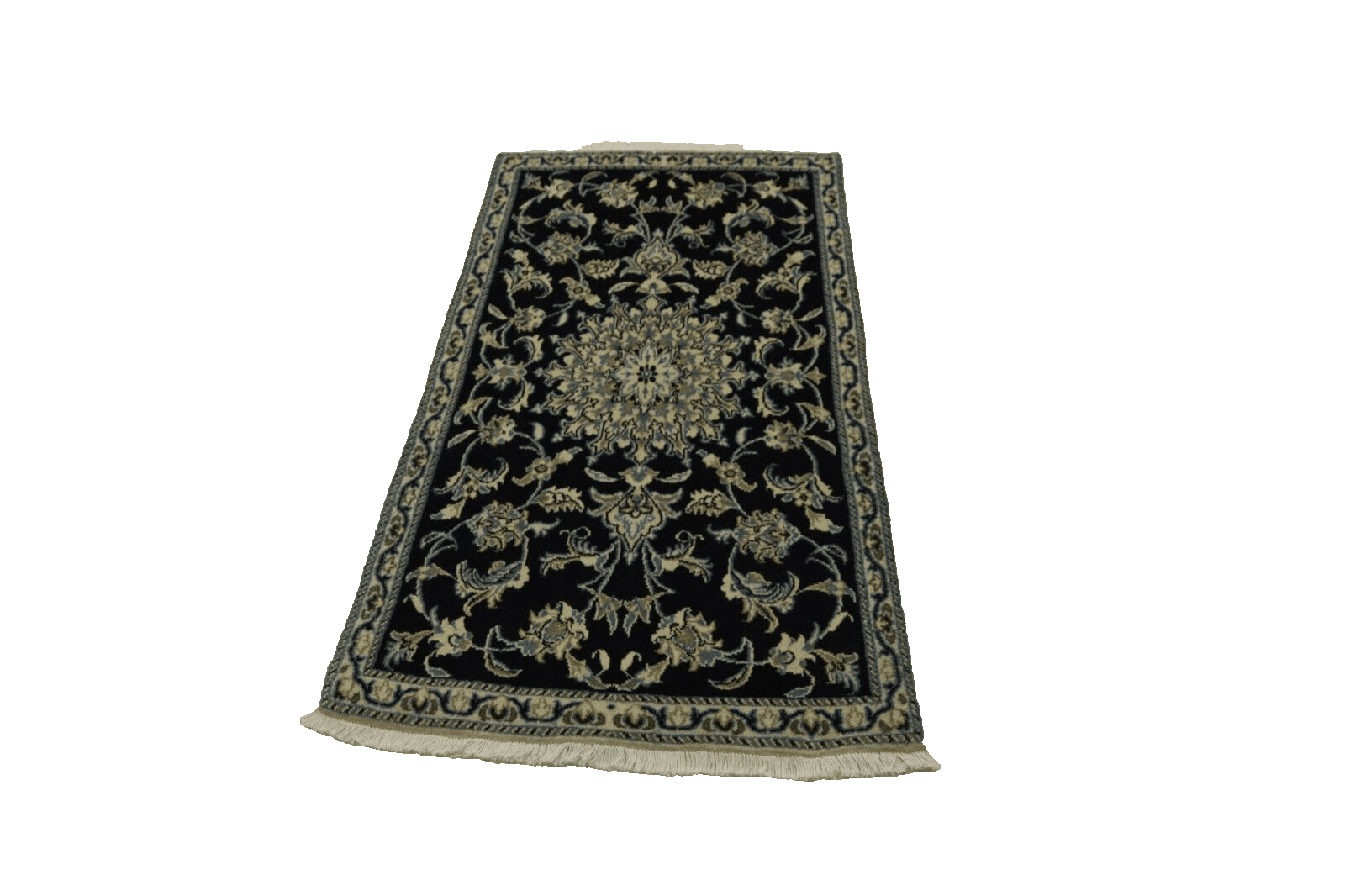
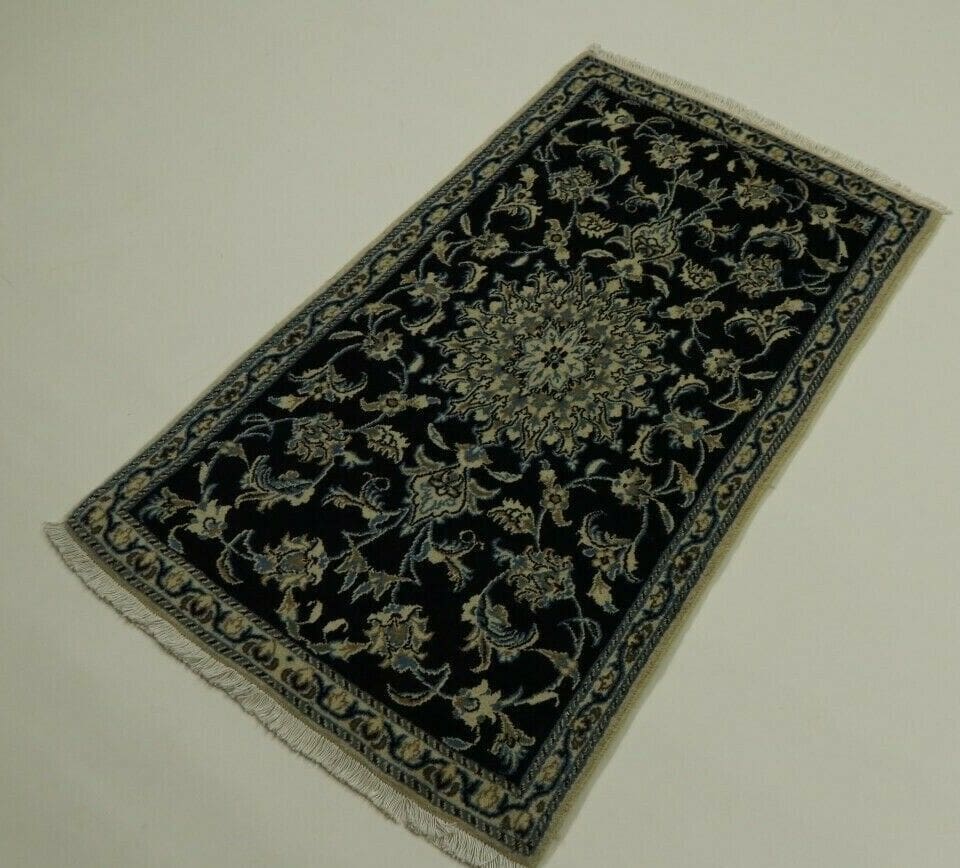
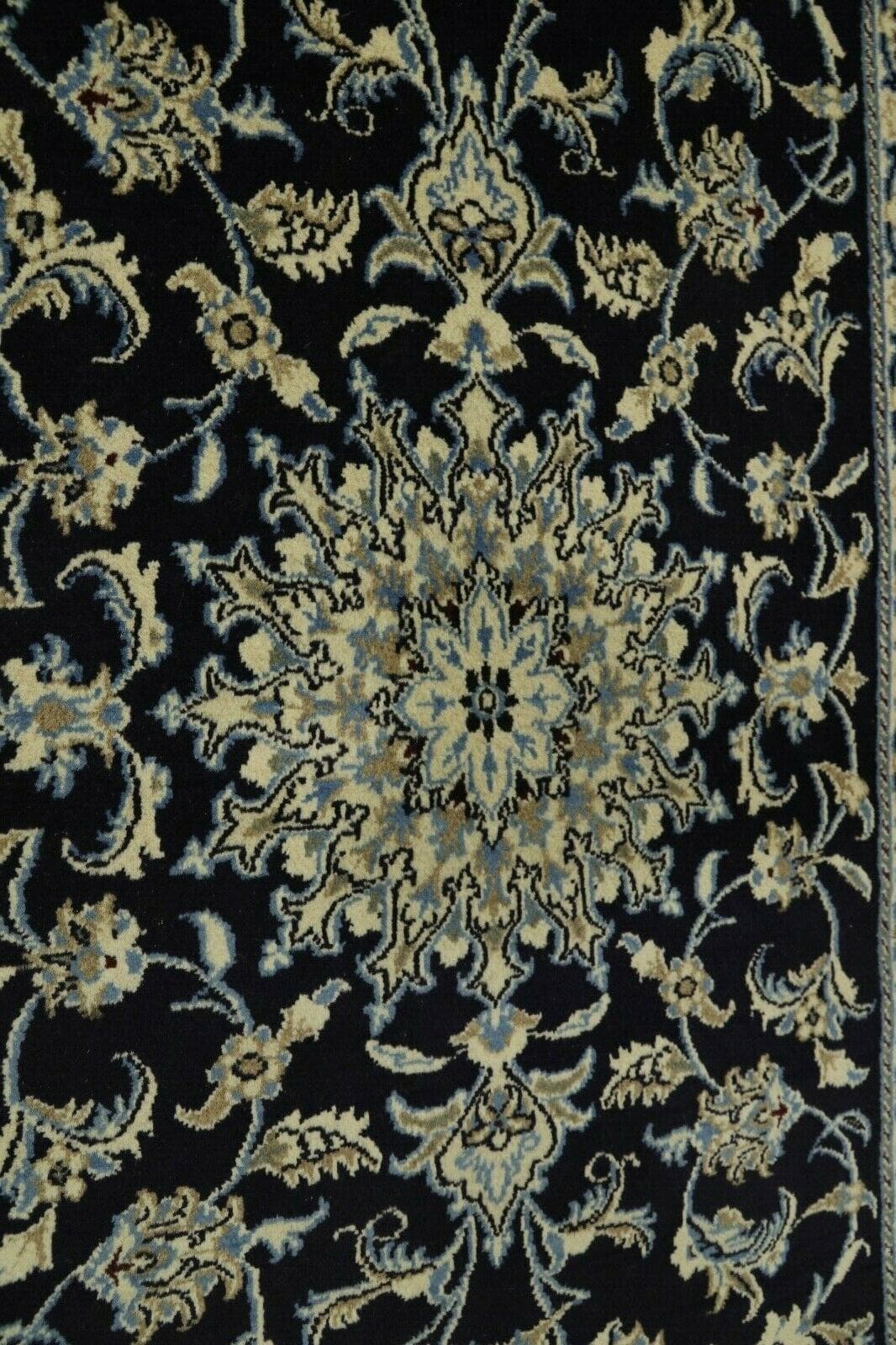
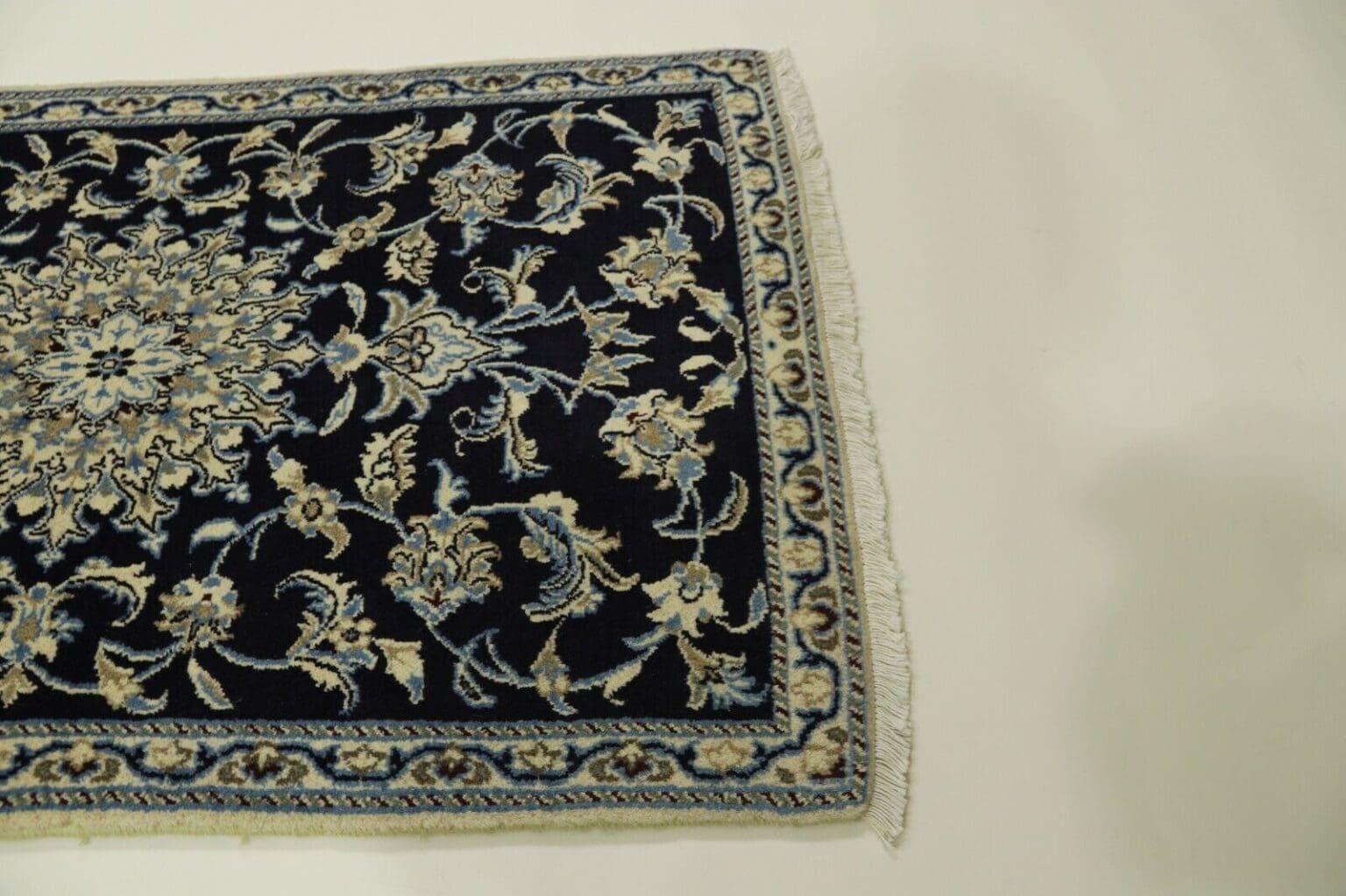
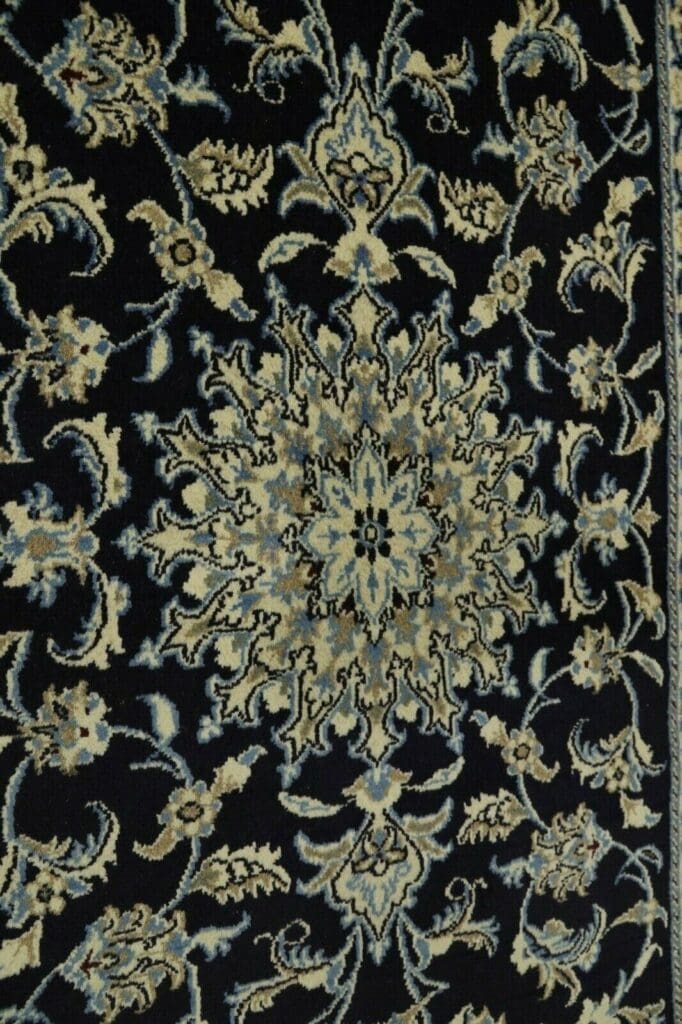
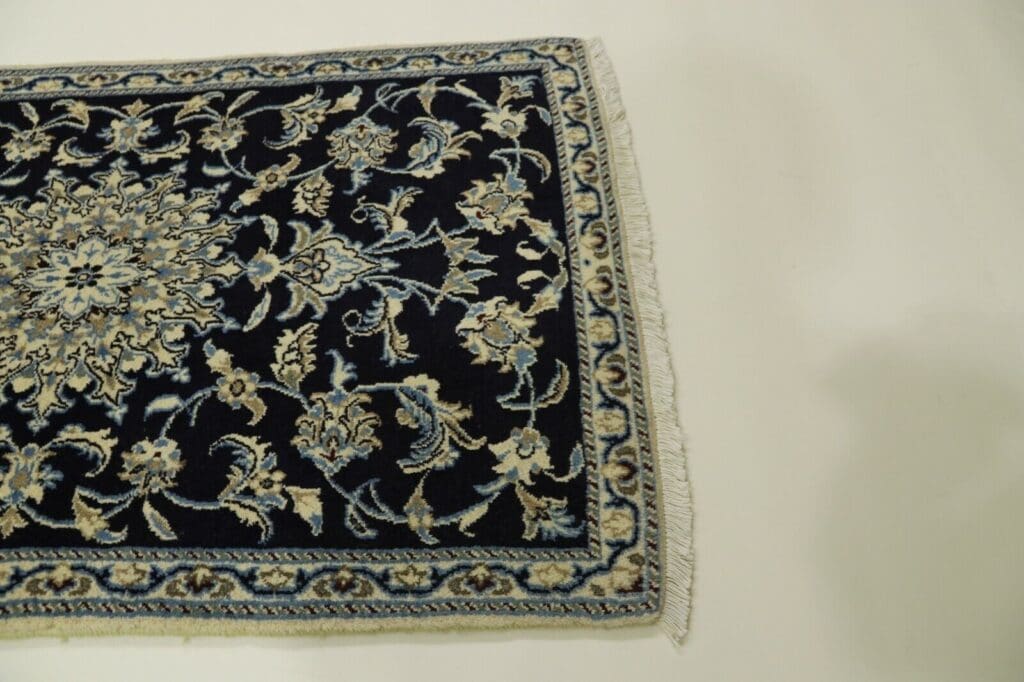
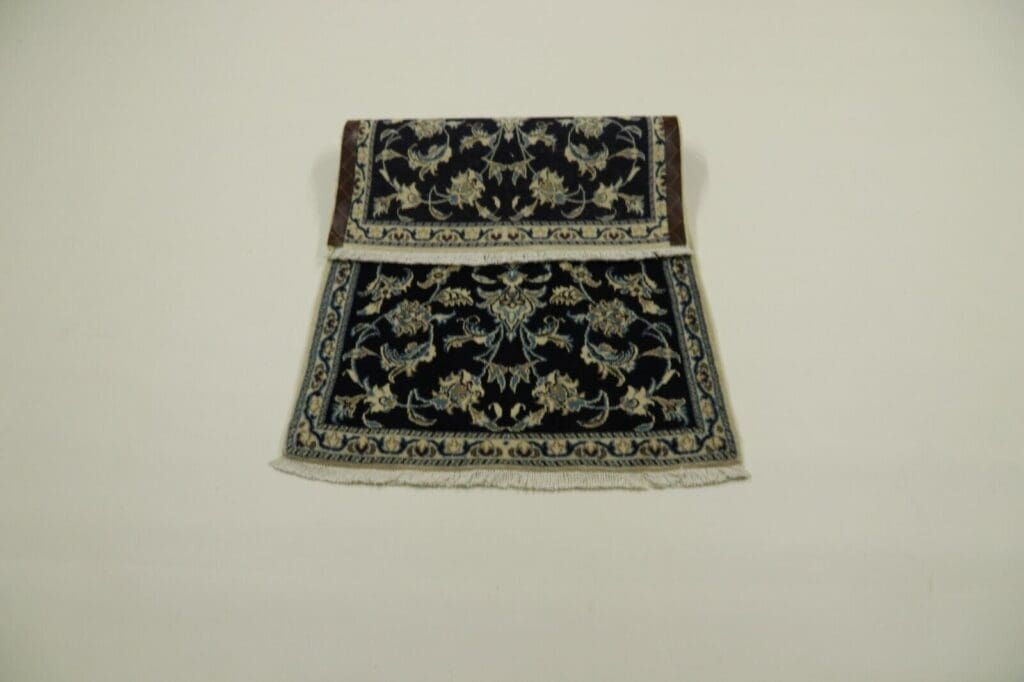
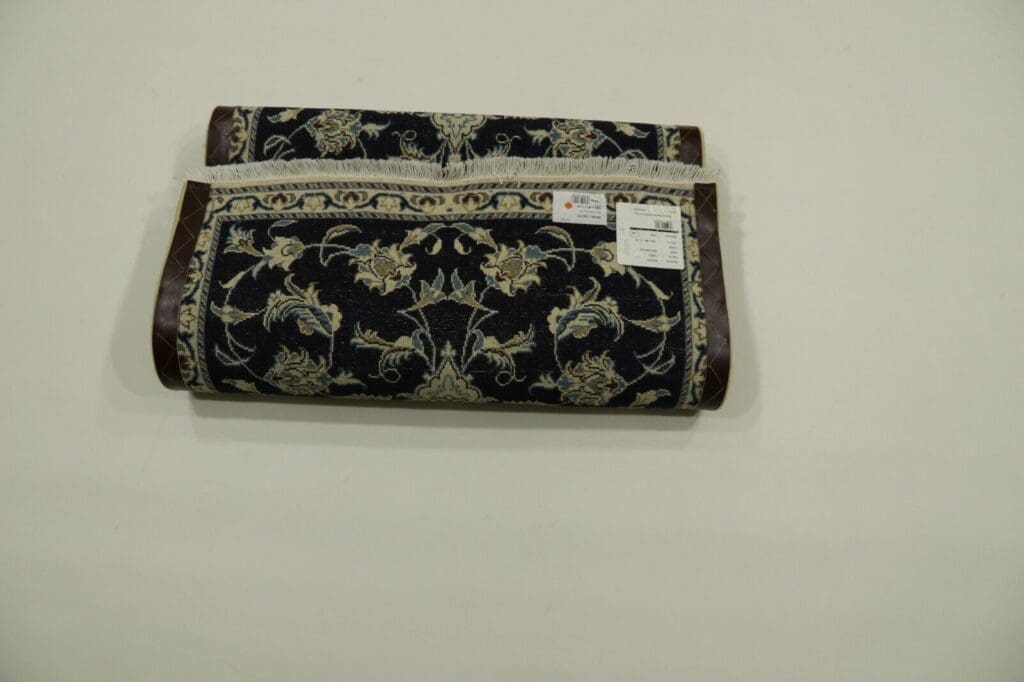
The design of this Super Nain is described as traditionally Oriental and Persian. Nain rugs often draw on traditional Persian motifs in which floral and geometric elements are combined. Floral forms are especially important within this visual language. They can organise the pattern, create transitions between areas and give the surface an organic rhythm.
The combination of floral and geometric elements shows how Persian rug design brings natural forms together with clear structure. Leaves, blossoms and vines suggest an organic vocabulary, while lines and repeated arrangements provide order. Together they form a pattern that is decorative and systematically composed. The motifs are not scattered at random; they follow a visual organisation characteristic of traditional Oriental rugs.
The Super Nain is described as a harmonious composition in soft colours. This restrained palette can keep the motifs legible while contributing to a calm atmosphere. The quieter colour treatment allows the floral elements to remain visible without overwhelming the whole design. It also helps the rug work with different interior styles while retaining its Persian and Oriental identity.
Traditional Persian motifs can carry cultural associations and may preserve stories or ideas from the region in which they developed. In Nain rugs, much of the effect lies in the careful relationship between ornament, repetition and colour fields. The pattern does not tell one literal story; rather, it belongs to a visual language developed within Persian culture over a long period. The prominent floral character gives the rug a lasting and clearly recognisable decorative presence.
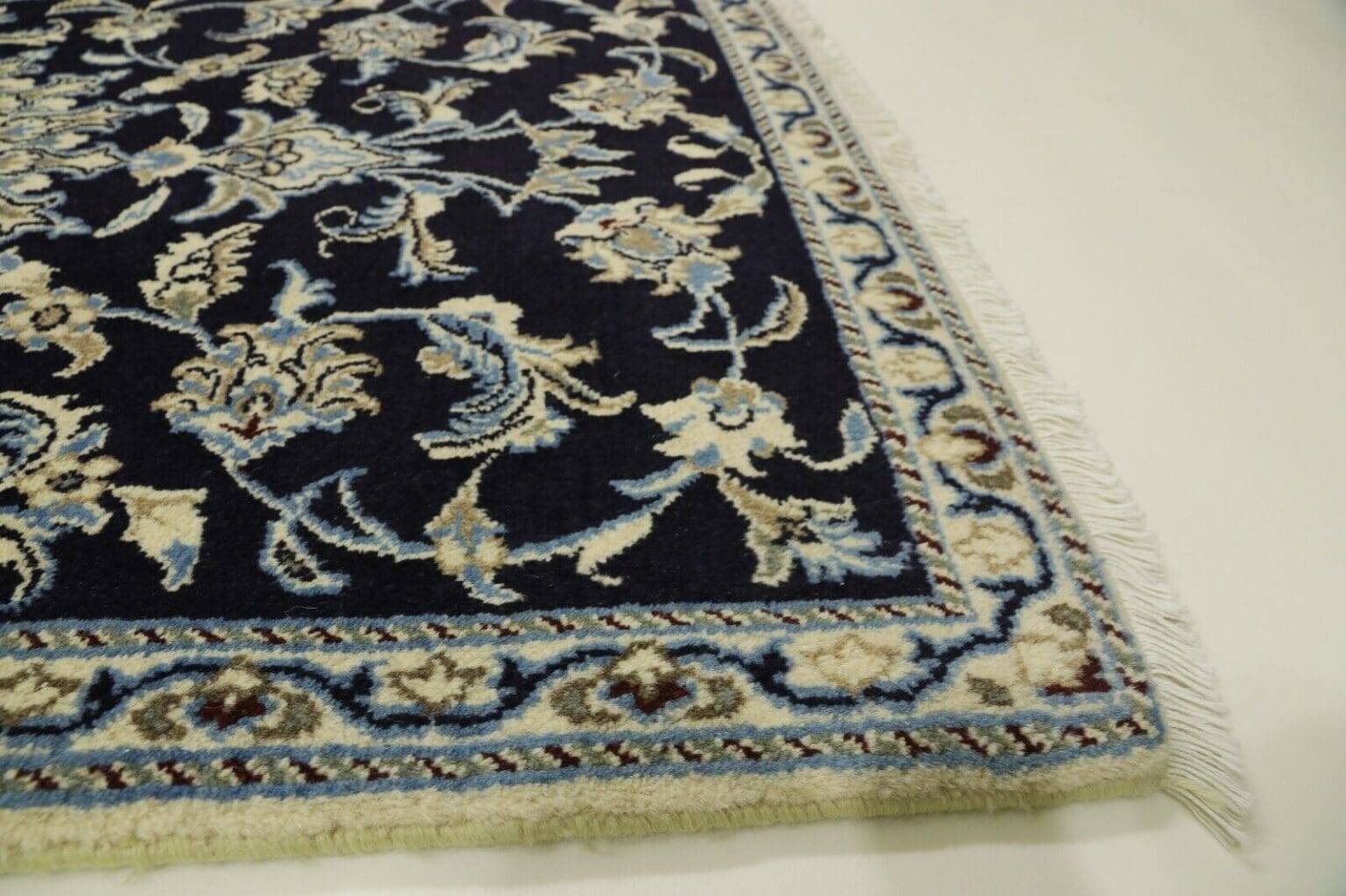
The fine execution supports the detailed presentation of the design. A high knot density allows floral and geometric details to be worked into the composition with precision and helps create controlled transitions between individual elements. The result is read as one connected surface, even though it is made from many separate knots. Hand-knotting preserves the character of traditional work and makes the design part of a single piece that is not reproduced in exactly the same form.
As a decorative floor covering, the rug can complement a living room, bedroom or hallway. Its soft colours and floral pattern can support a calm interior, while the geometric components provide visual structure. The traditional design remains distinctive without being tied to only one furnishing style. The wool surface also receives light with a natural sheen, which supports the visibility of the pattern and adds to the rug’s refined appearance.
Special Features
A defining feature is the high knot density of approximately 300,000 knots per square metre. This density supports a detailed representation of the pattern and gives the surface a fine tactile quality. The figure is not merely a technical specification: it helps explain why floral and geometric details can be rendered with clarity across the composition.
The dense hand-knotted structure also contributes to resistance against wear. Together with the virgin wool, it creates a surface described as robust while remaining pleasantly soft. The wool’s natural sheen adds to the refined appearance without removing the traditional character of the design. Comfort, durability and a differentiated pattern effect are therefore connected through the material and the construction.
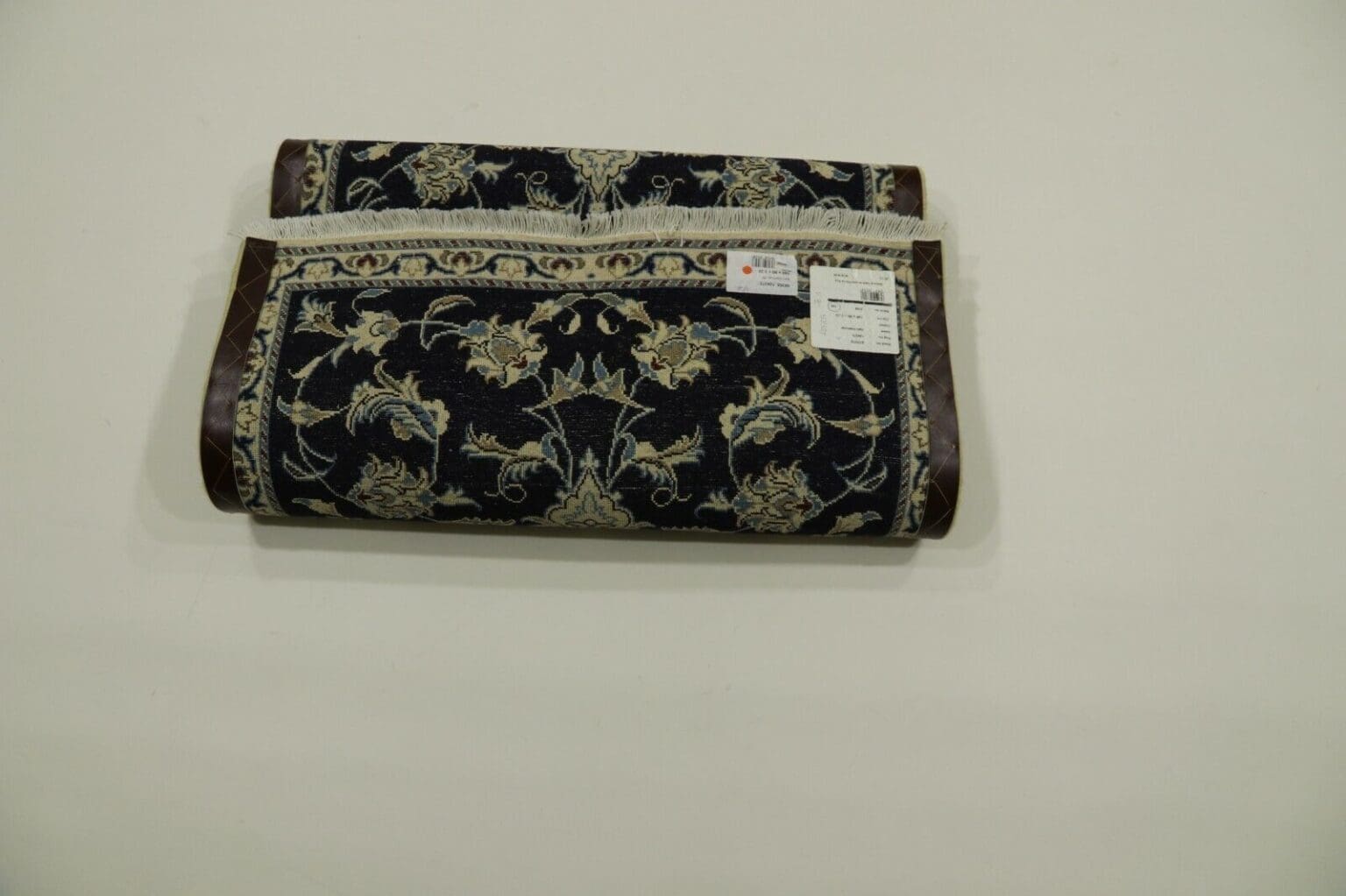
The rug is listed as new with a tag and is described as a unique design and one-off piece. Its special character lies in the combination of hand craftsmanship, high knot density, virgin wool and traditional Nain styling within one individual rug. It brings warmth and comfort to an interior while remaining a distinct example of Persian rug work rather than a mass-produced repeat.
FAQ
How should I care for my Super Nain rug?
Regular vacuuming helps remove loose dust and everyday dirt from the wool pile. The surface should be cleaned evenly and without unnecessary pressure. Light soiling can be wiped carefully with a damp cloth. For persistent stains, professional rug cleaning is recommended. A specialist treatment takes the hand-knotted construction and the properties of virgin wool into account. This helps protect the pile from unsuitable cleaning agents or overly intensive treatment while preserving the rug’s appearance. Gentle, consistent care is useful for maintaining the soft handle, natural sheen and clear pattern definition of the rug over time.
Is the Super Nain suitable for underfloor heating?
Yes. The Super Nain made from 100% virgin wool is suitable for underfloor heating. Wool provides good thermal insulation and contributes to a comfortable room climate. At the same time, the rug remains pleasantly warm and comfortable underfoot as a textile surface. Even heat distribution is useful in everyday use so that the rug can retain its qualities. In this way, the hand-knotted wool pile combines the comfort of a traditional material with a practical option for contemporary rooms equipped with underfloor heating.
Where is the best place to put the Super Nain rug?
The rug can be placed in a living room, bedroom or hallway. In a living room, its traditional Oriental and Persian design can complement a seating area or help define a clearly arranged part of the room. In a bedroom, the soft virgin wool supports a warm and quiet atmosphere. In a hallway, the pattern can create a textile transition between rooms. The soft colours and floral motifs work with different interior styles, while the geometric elements provide order. The most suitable position depends on the existing furnishings and the desired room effect; these three areas are the uses specified for this rug.
To provide the best experiences, we use technologies like cookies to store and/or access device information. Consenting to these technologies will allow us to process data such as browsing behavior or unique IDs on this site. Not consenting or withdrawing consent, may adversely affect certain features and functions.
Functional Always active
The technical storage or access is strictly necessary for the legitimate purpose of enabling the use of a specific service explicitly requested by the subscriber or user, or for the sole purpose of carrying out the transmission of a communication over an electronic communications network.
Preferences
The technical storage or access is necessary for the legitimate purpose of storing preferences that are not requested by the subscriber or user.
Statistics
The technical storage or access that is used exclusively for statistical purposes.The technical storage or access that is used exclusively for anonymous statistical purposes. Without a subpoena, voluntary compliance on the part of your Internet Service Provider, or additional records from a third party, information stored or retrieved for this purpose alone cannot usually be used to identify you.
Marketing
The technical storage or access is required to create user profiles to send advertising, or to track the user on a website or across several websites for similar marketing purposes.
 SECURE PAYMENT
 SHIPPING PARTNERS