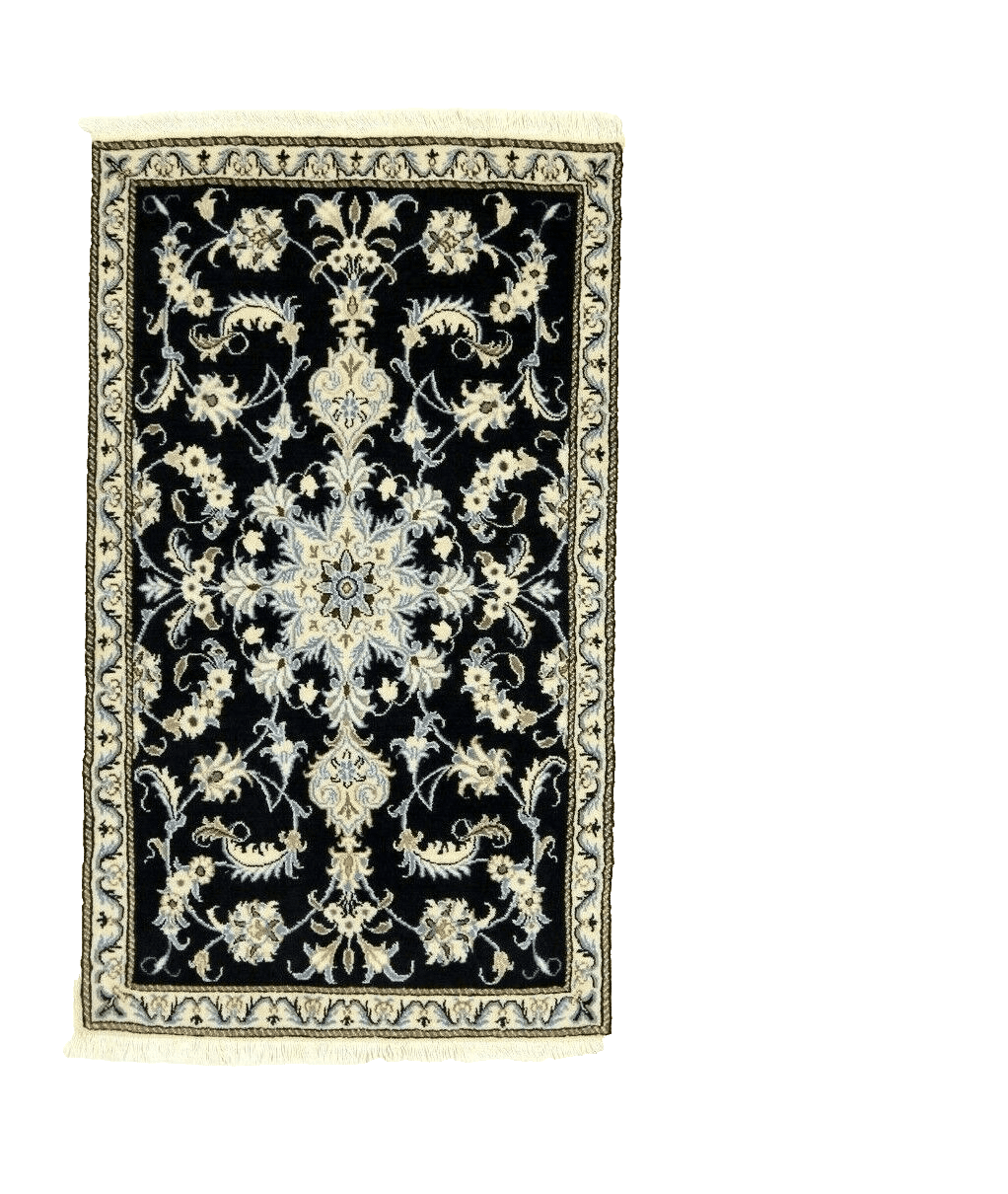
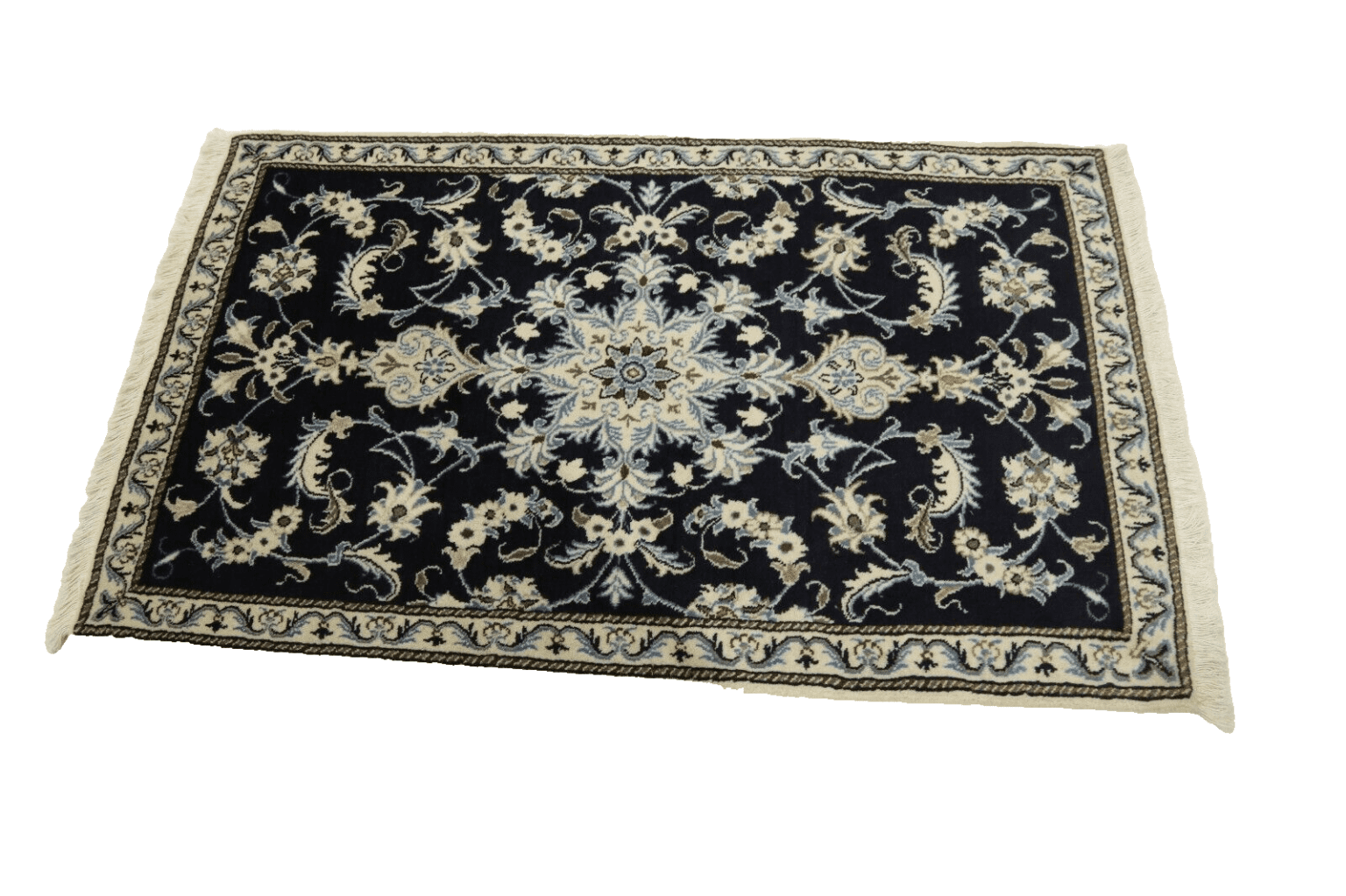
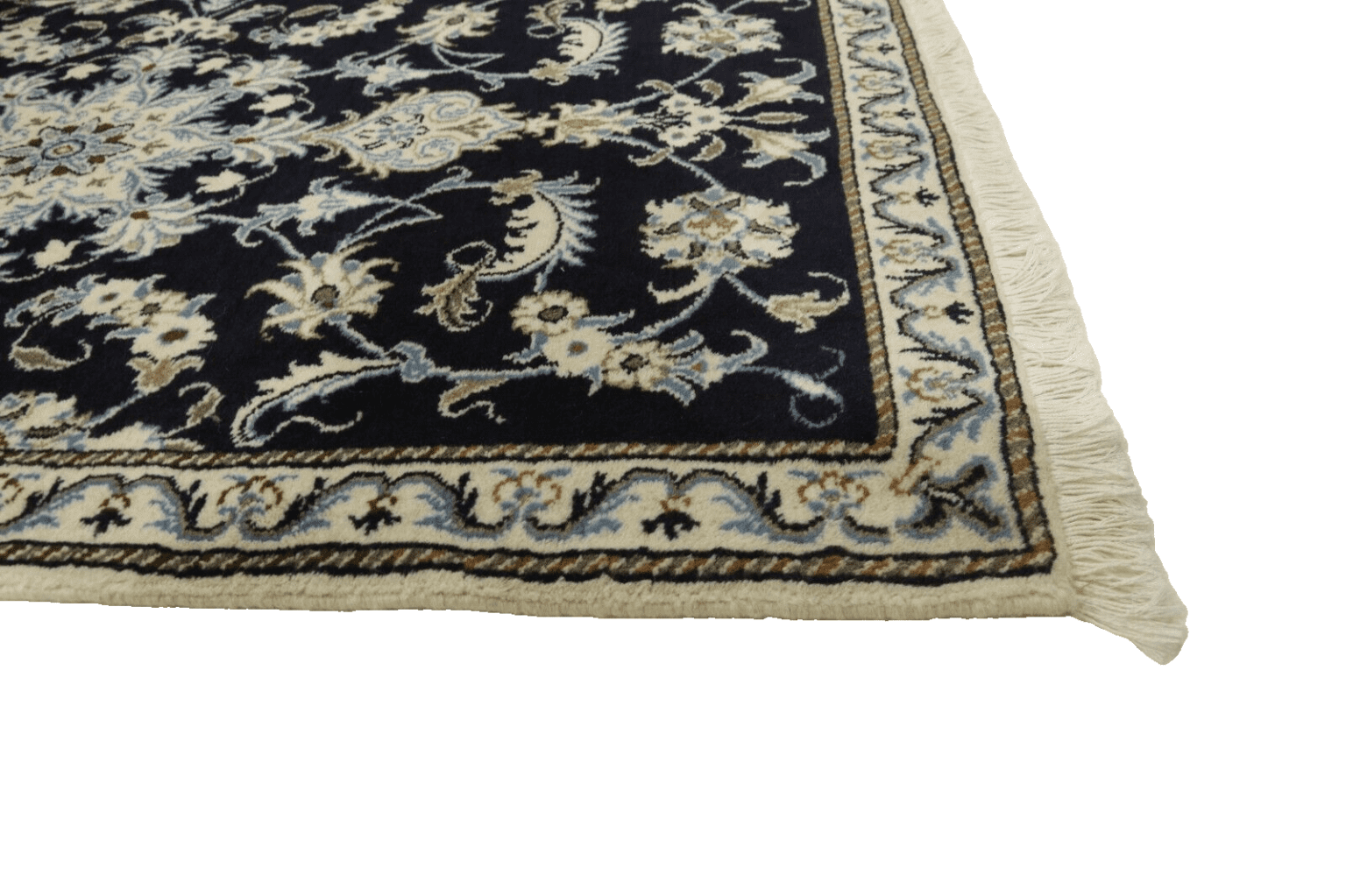
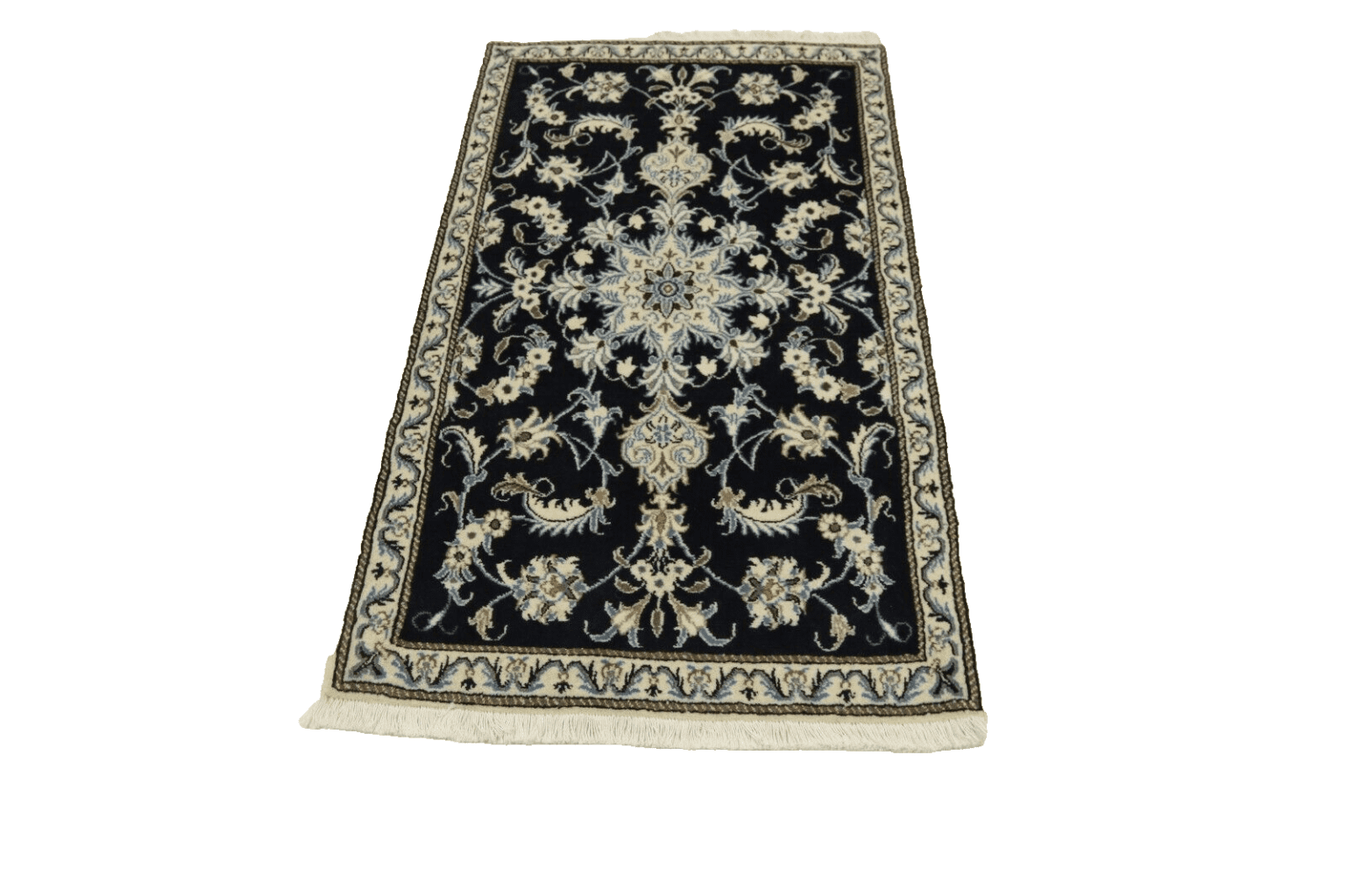
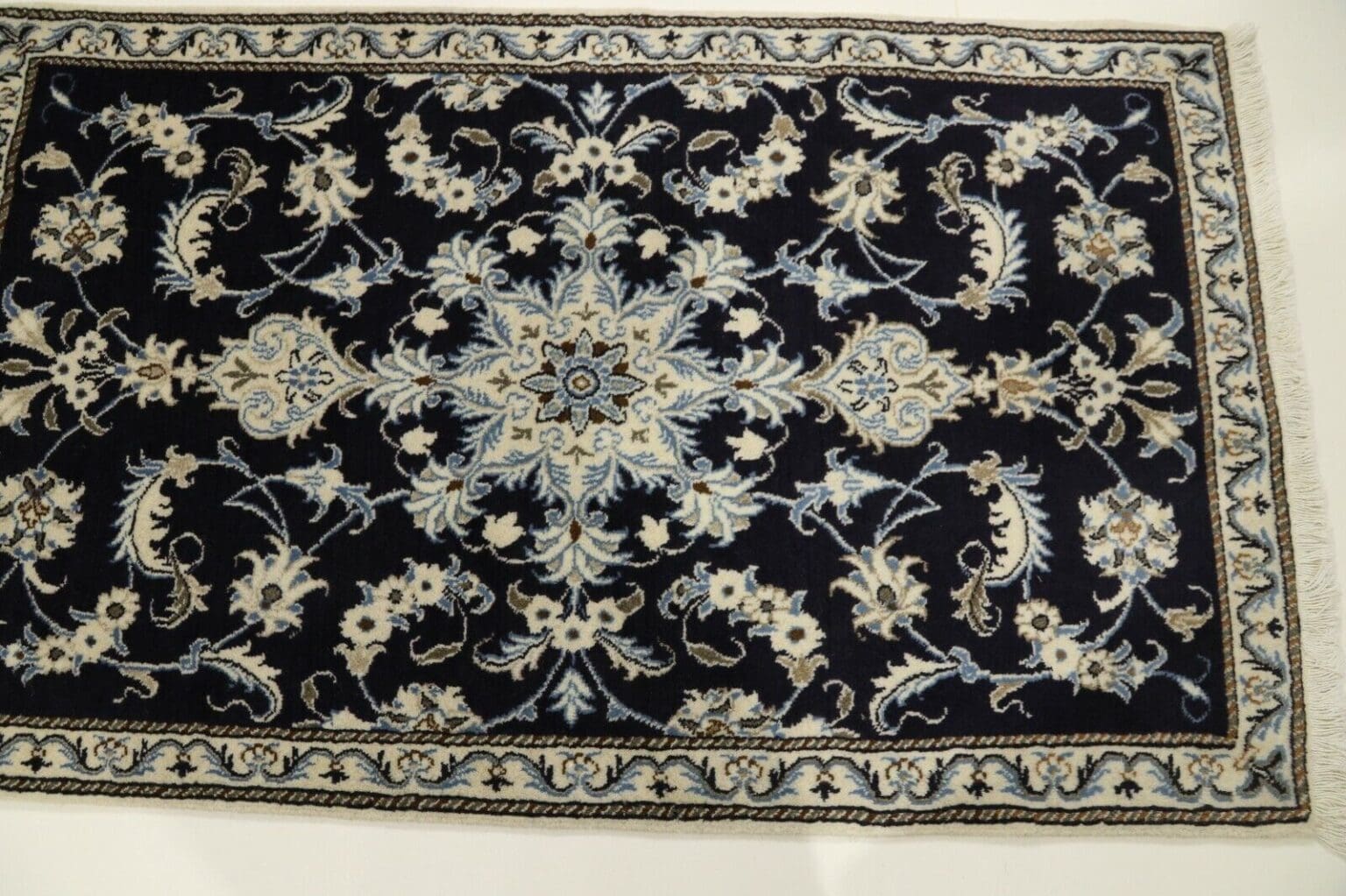
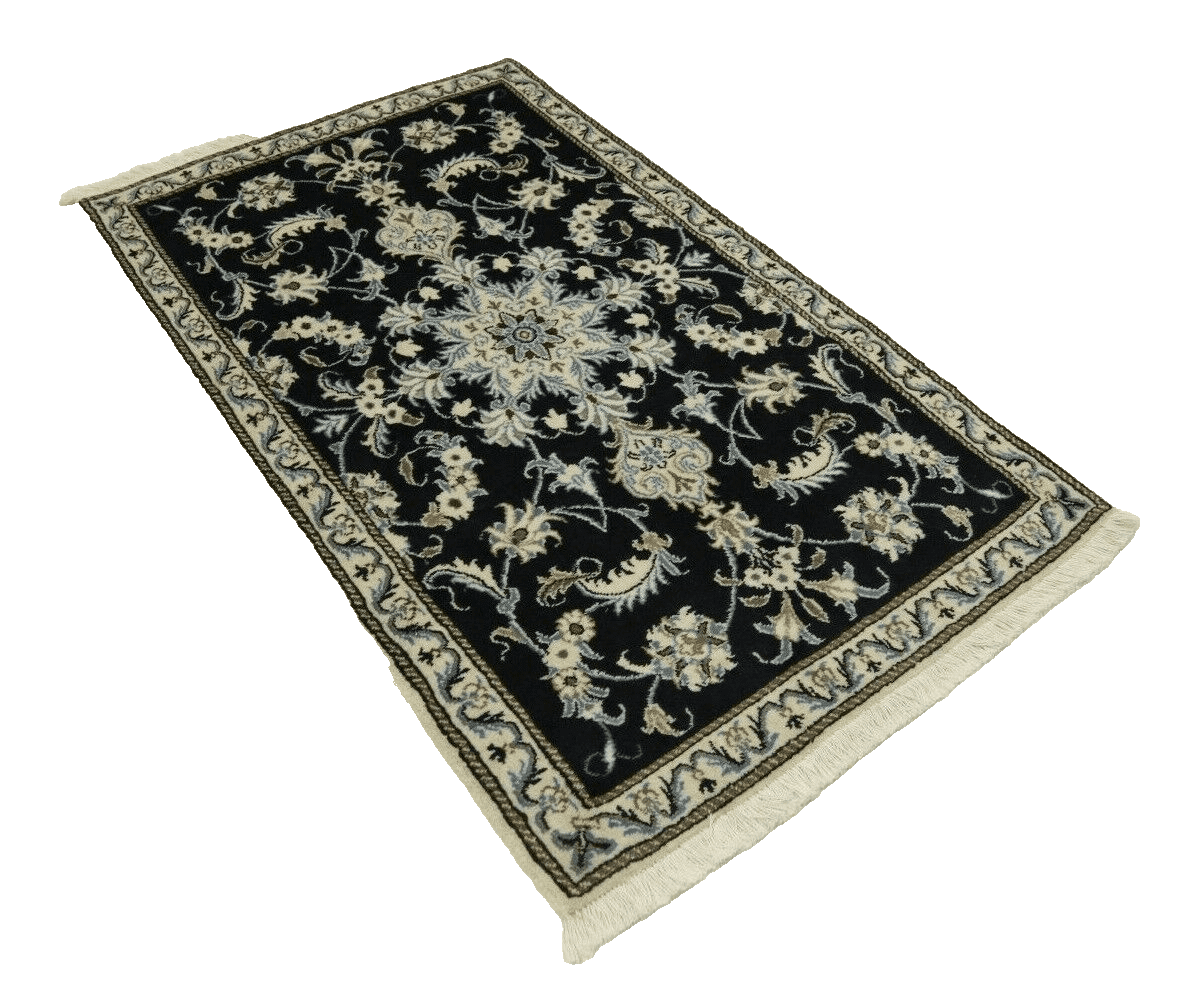
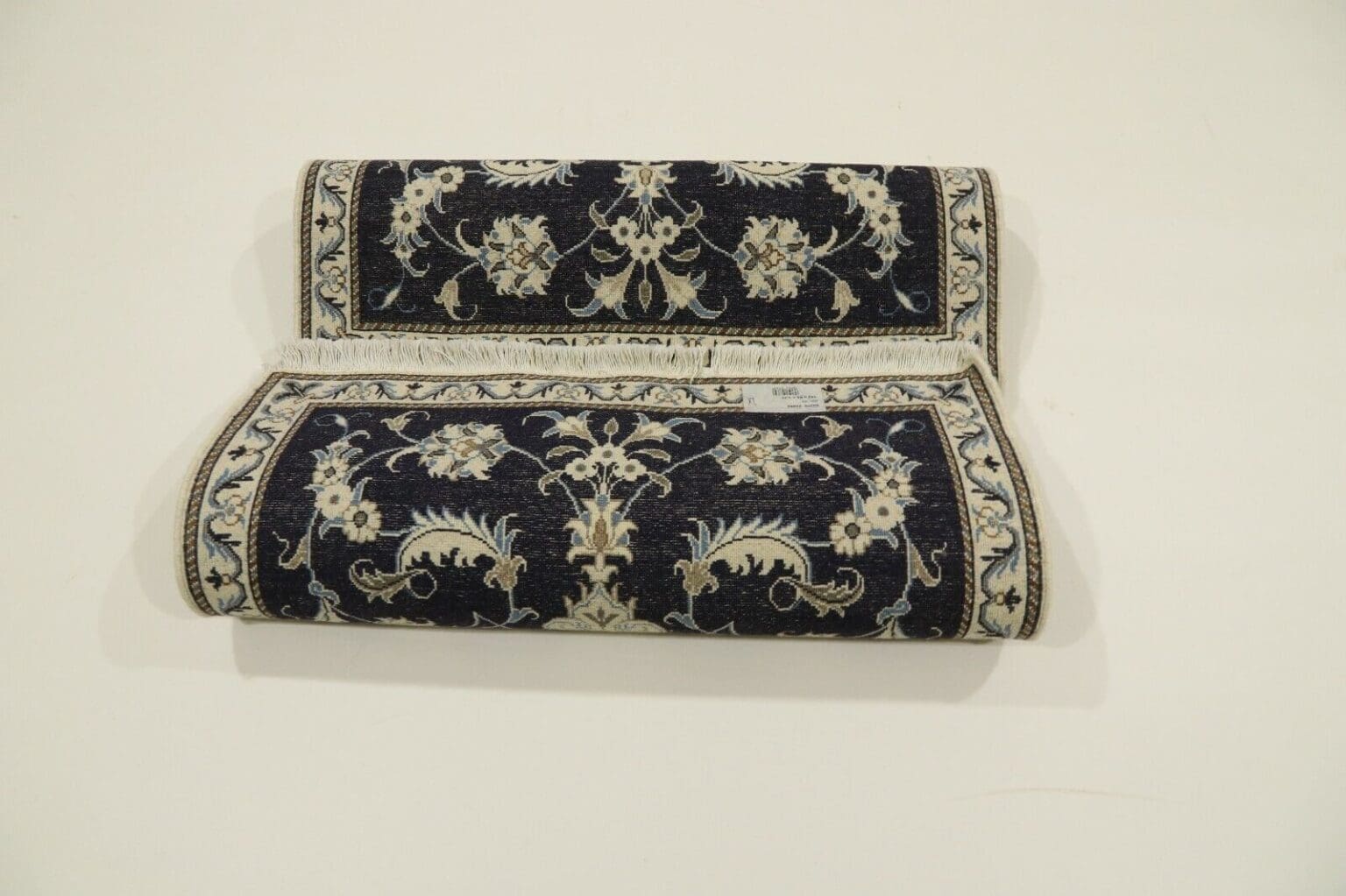
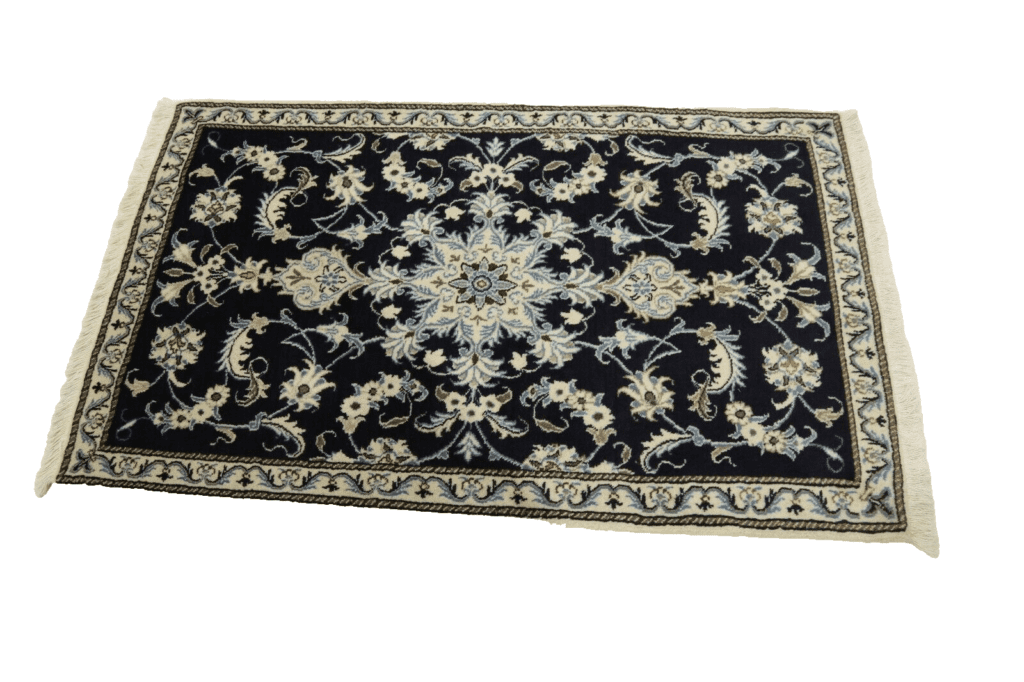
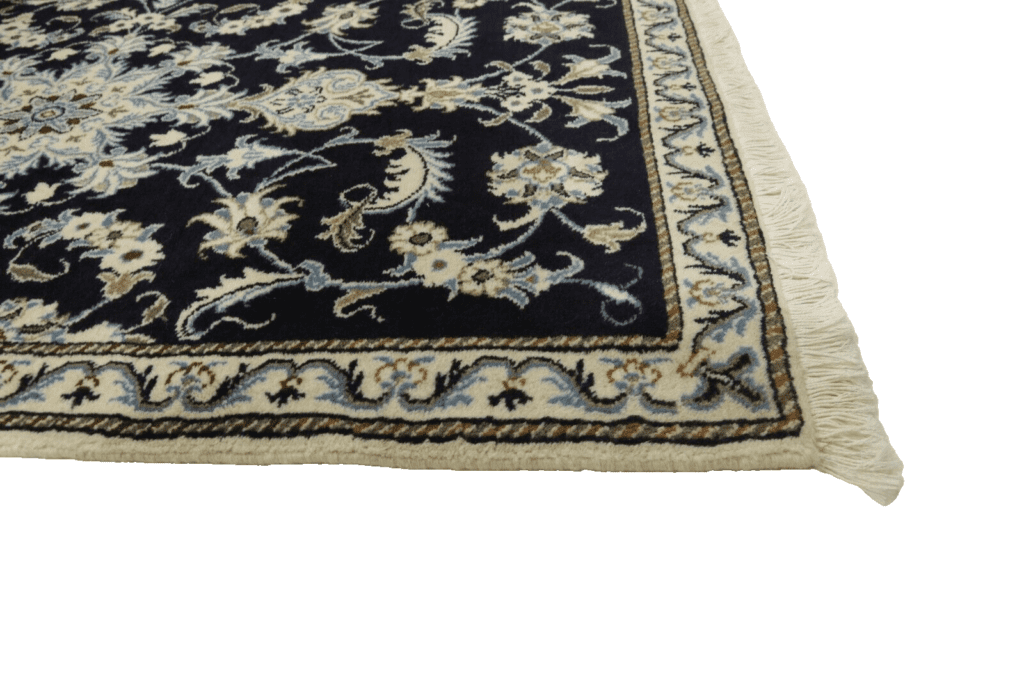
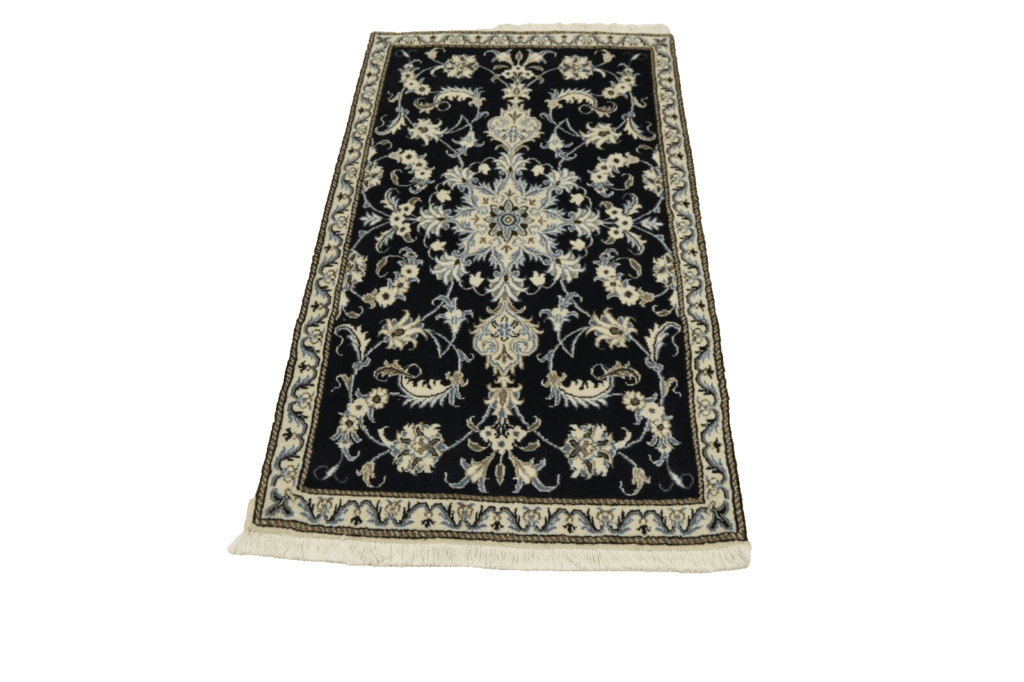
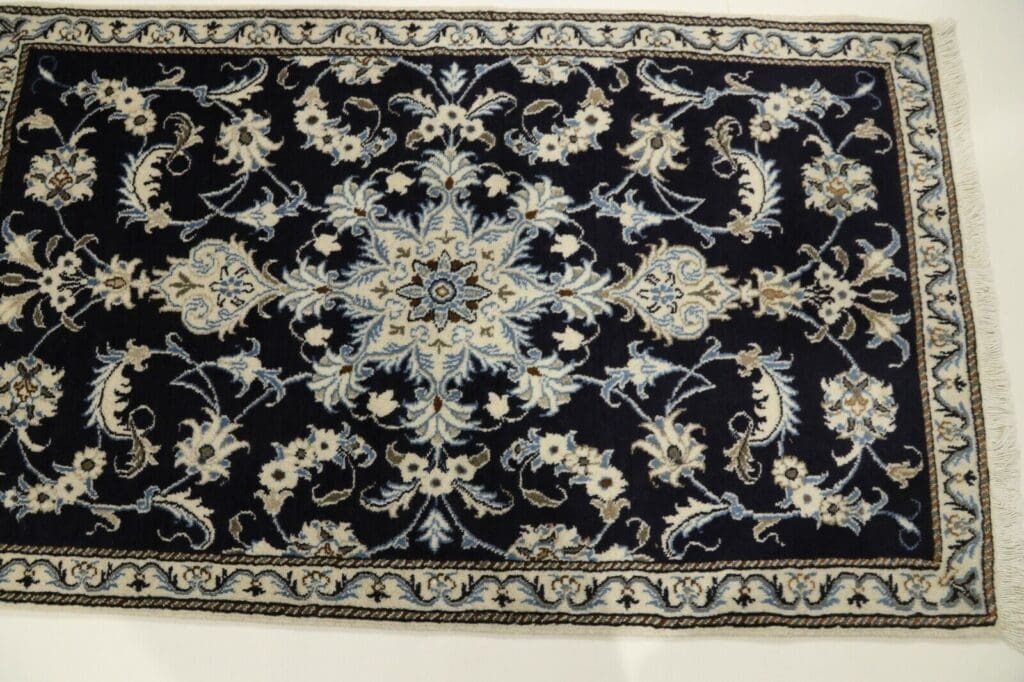
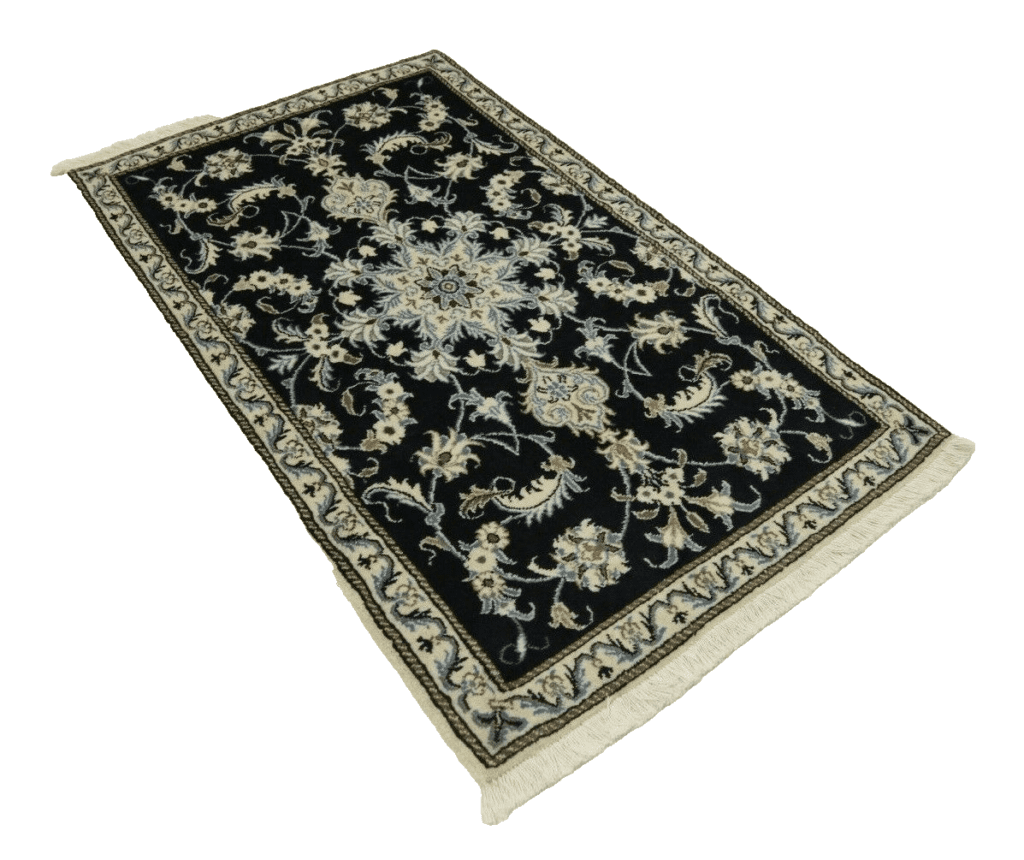
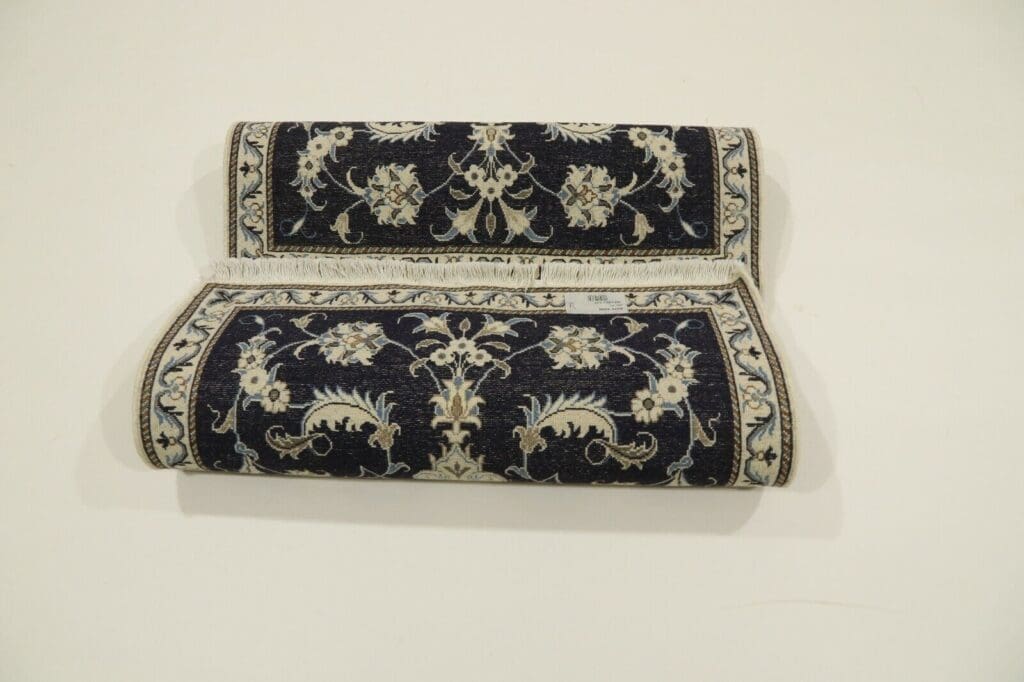
Persian Rug Nain 142 x 85 cm Wool Hand-knotted
€ 472
Hand-knotted Nain Persian rug | Knot density: approx. 300,000 knots/m² | Material: pile 100% new wool, warp 100% cotton | Size: 142 x 85 cm | Pattern: Oriental | Condition: New, very good
1 available
- ✓Free Shipping in EU
- ✓2-5 Business Days Delivery
- ✓14-Day Return Policy
- ✓Worldwide Shipping on request
 SECURE PAYMENT
 SHIPPING PARTNERS
Inventory number: CCF5B207
Description
Nain Persian Rug
Material and Craftsmanship
This Nain Persian rug is hand-knotted, with a pile made from 100% new wool and a warp made from 100% cotton. The combination brings together a natural wool surface and a stable textile foundation. New wool gives the pile a pleasant feel and contributes to a warm, comfortable atmosphere. Cotton is commonly used for the warp of hand-knotted rugs because it provides an even base into which the individual knots can be secured.
The density of approximately 300,000 knots per square metre allows for a finely drawn and detailed design. In hand-knotting, every knot is placed individually around the warp and then secured through the successive rows of the weave. This creates the characteristic compact structure of a knotted rug. The pile height is 8 mm, shaping the tactile surface while allowing the drawn ornament to remain clearly visible.
Wool is a natural fibre with a degree of resilience that suits regular domestic use. It can add warmth to a room and naturally resists dirt and dust, making routine care easier. The use of new wool and the careful knotting technique therefore combine a comfortable surface with a finely structured finish. The material is central to the rug’s character, while the cotton warp supports the form created by the knotting.
Origin and Tradition
Nain is a city in Iran’s Isfahan Province and also the name of an important Persian rug tradition. The city lies in central Iran, in a region shaped by dry plains and a long-established craft culture. Nain rugs are associated with controlled drawing, carefully selected materials and a precise relationship between knotting, ornament and composition.
Rug making in Nain developed into a distinctive expression of Persian weaving. Its rugs are known for refined materials, meticulous workmanship and clearly organised ornament. The tradition rests on the knowledge of local weavers, who have preserved regional design principles while applying them to different interiors and decorative settings.
Persian rugs are understood not only as floor coverings but also through their regional visual languages. Each weaving area has its own approaches to layout, ornament and colour. In Nain work, a measured composition is particularly important. A central field, a carefully developed border and finely branching floral forms may be brought together to create a balanced whole.
Traditional Persian weaving depends on the relationship between warp, weft, pile and drawn design. The design is translated into rows of knots, producing a durable textile surface with a clearly defined pattern. Careful knotting makes it possible to distinguish small flowers, leaves and lines. The name Nain therefore refers to a geographic and stylistic tradition, rather than simply to a general oriental appearance.
Nain belongs to the wider cultural landscape of Isfahan, a region known for the arts, ornament and textile production. Within this environment, a rug style emerged that combines established Persian decorative vocabulary with a calm, finely articulated arrangement. Nain designs are consequently suited to settings where a traditional pattern is intended to sit within an orderly overall interior scheme.
Design and Pattern
The pattern of this rug is described as Oriental. Nain design tradition brings floral motifs together with geometrically organised forms. Flowers, leaves and scrolling vines may move through the field along balanced axes, while the border defines the outer structure. Geometric order gives the composition stability, and the floral details provide a more delicate internal rhythm.
A Nain design is generally planned rather than irregular. The pattern follows a considered relationship between centre, border and recurring ornaments. Such an arrangement can give a room structure without making the visual impression restless. Fine knotting supports the legibility of the design even where many small elements are combined across the field.
Nain tradition often uses gentle, harmonious colour relationships. They allow lines and ornaments to read as a connected composition and create a restrained visual order. Floral forms introduce an organic quality into the geometric framework. This combination is an important part of the regional design language and helps explain why Nain patterns can work in both traditionally furnished rooms and more reduced contemporary interiors.
Oriental patterns usually offer more than one level of viewing. From a distance, the composition can appear as a coherent field with a clearly framed edge. Closer inspection reveals individual flowers, leaf tips, scrolling lines and repeated rhythmic details. The hand-knotted construction gives these differences a tactile presence and joins the visual drawing to the structure of the wool pile.
As a Persian rug, a Nain design can complement furniture, wall decoration and other textiles without being limited to one furnishing style. Its traditional ornament establishes the regional identity, while the ordered arrangement supports versatile use in the home. The balance of the pattern and the careful treatment of its individual motifs remain central to the rug’s visual effect.
Special Features
The rug is described as new and in very good condition. It is identified as a unique one-off piece. Its 100% new-wool pile, cotton warp and hand-knotted construction bring together natural materials, a traditional regional identity and careful textile workmanship.
The wool surface has a pleasant, welcoming character. It is also described as durable and relatively easy to care for. The fine structure and Nain design tradition make the rug suitable for different domestic areas, including a living room, bedroom or entrance area. It may be used as a floor covering or included as a textile decorative element within a room.
A hand-knotted rug is also an independent work of textile craftsmanship. In this one-off piece, the Nain designation, the Oriental pattern tradition and the detailed construction combine to form a recognisable Persian rug character. Its condition and material composition are part of the specific description of this individual rug.
FAQ
What is the best way to clean a Nain rug?
Professional cleaning is generally the safest option for a Nain rug. A specialist can assess the wool pile, the weave and the knotting before selecting a suitable treatment. For routine care at home, the rug can be vacuumed carefully with a gentle brush. Individual stains may be treated with a carpet cleaner intended for wool, following the product instructions. Vigorous rubbing, excessive moisture and harsh chemicals should be avoided because they can stress the fibres and affect the drawn pattern. If a mark cannot be removed gently, professional treatment is advisable.
Can the rug be used in a room with underfloor heating?
Yes, Nain rugs are generally suitable for rooms with underfloor heating. The wool surface provides pleasant insulation and can contribute to a comfortable indoor climate. The rug should lie flat so that heat can be distributed evenly through the room, and the heating system should be operated correctly. A dry, well-ventilated environment is also helpful for the long-term care of wool textiles. In this way, the rug can be used alongside underfloor heating without preventing the system from serving its intended purpose.
How can I identify a genuine Nain rug?
A genuine Nain rug is associated with its regional design language, fine knotting, carefully worked wool and detailed pattern drawing. Even floral and geometric elements, together with the calm balance typical of the tradition, can provide useful indications of Nain style. A label or certificate relating to origin may offer additional information. The assessment should consider the combination of material, knotting technique, pattern and workmanship rather than one feature in isolation. The name Nain should refer to an actual regional tradition, not merely to a broadly Oriental-looking pattern.
Additional information
| Design Style | |
|---|---|
| Color | |
| Size | |
| Shape | |
| Origin | |
| Knot Density | |
| Material |
Related products
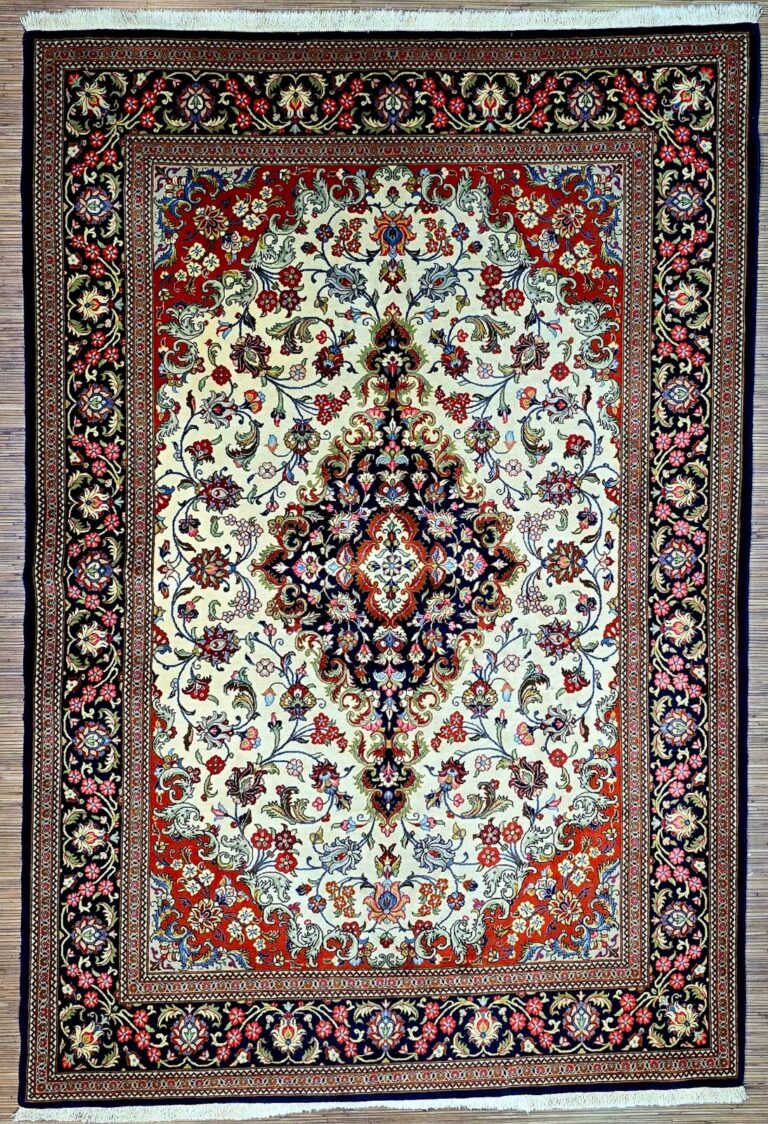
Persian Rug Qom 216 x 142 cm Wool Hand-knotted
€ 990
Persian Rug Kashan 198 x 128 cm Silk Hand-knotted Antique
€ 7249
Oriental Rug Kashmir 405 x 299 cm Silk Hand-knotted
€ 3300
Persian Rug Tabriz 293 x 203 cm Wool & Silk Hand-knotted
€ 3300
Persian Rug Rosenbidjar 222 x 131 cm Wool Hand-knotted
€ 1530
Persian Rug Kashan 211 x 140 cm Wool Hand-knotted
€ 900
Persian Rug Nain 330 x 215 cm Wool Hand-knotted
€ 3600
Persian Rug Tabriz 302 x 204 cm Wool Hand-knotted
€ 3600