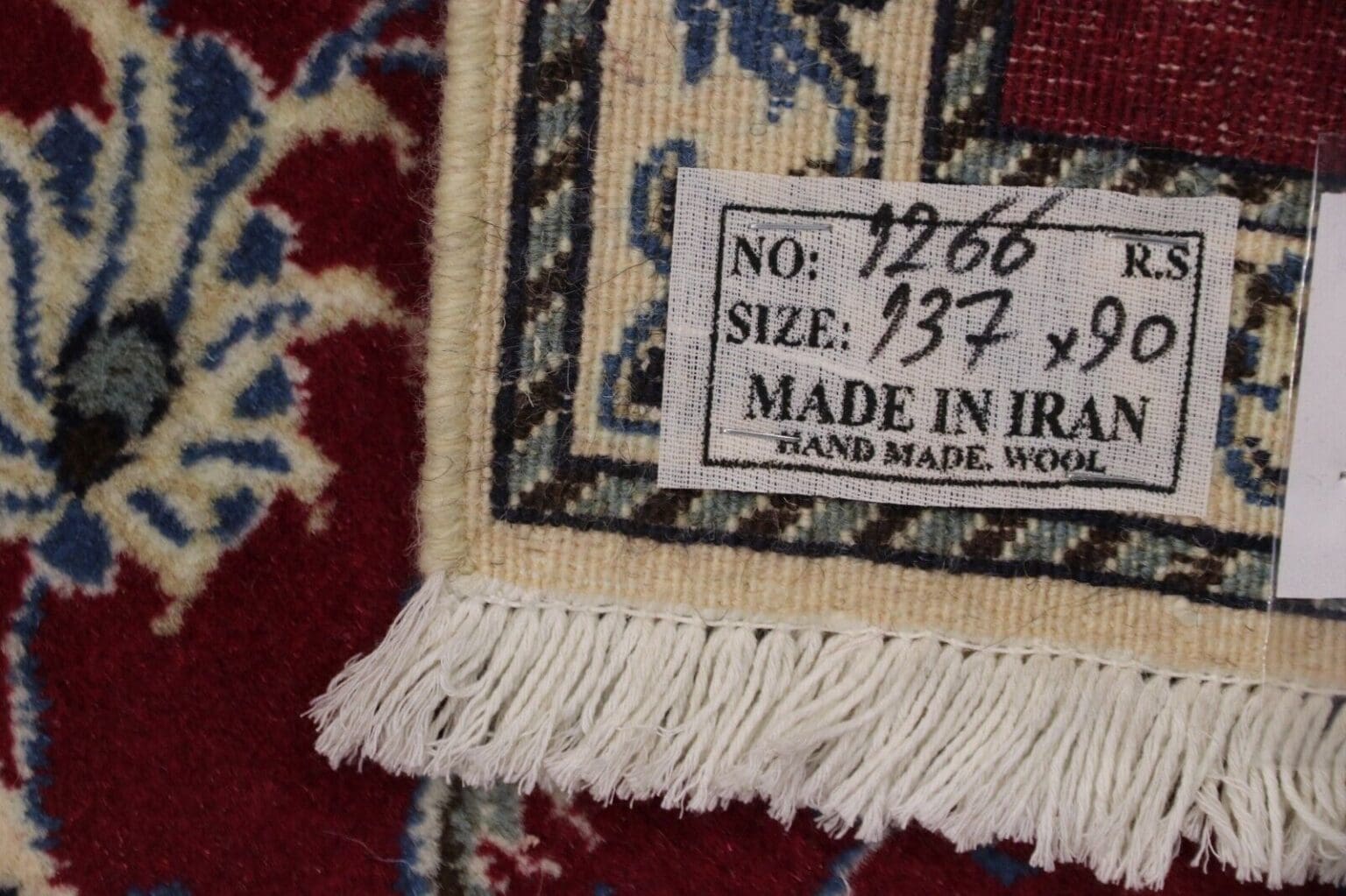
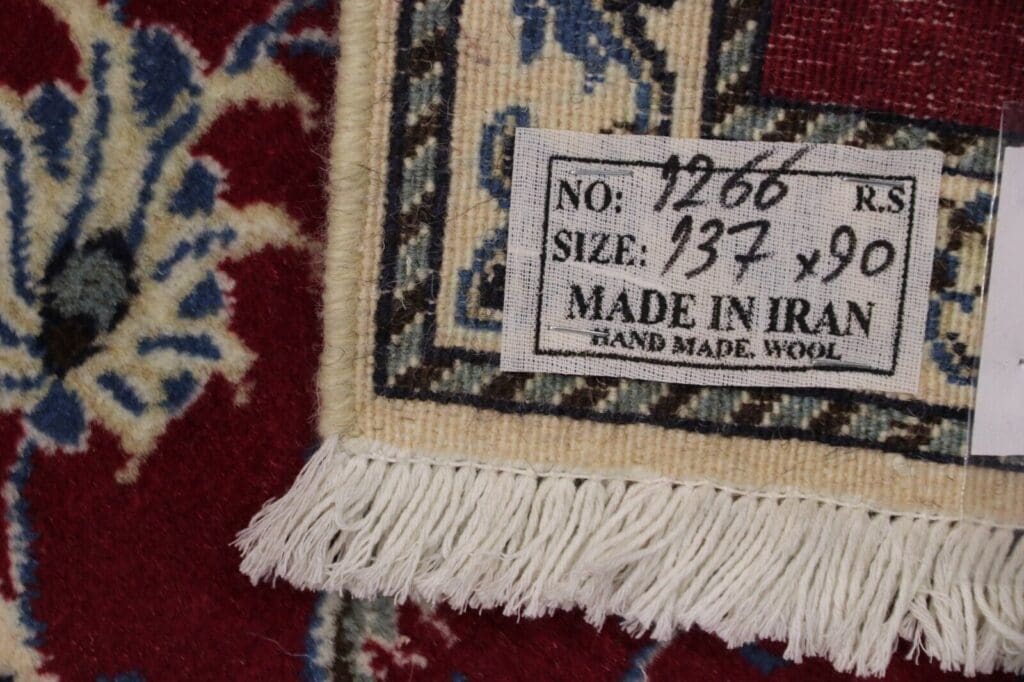
This Nain Persian rug is hand-knotted. In this form of construction, individual knots are tied by hand into the foundation, with each row secured as the pile is built up. The process creates the pattern directly within the rug rather than applying a design to a completed surface. The pile consists of 90% virgin wool and 10% silk, while the warp is made from 100% cotton. This combination gives the rug a predominantly woollen character with silk included in the pile and a cotton foundation supporting the woven structure.
Virgin wool has long been used in hand-knotted rugs because its fibres are resilient and pleasant to the touch. Silk behaves differently from wool on the surface: it can catch the light and add more finely differentiated highlights to a design. The cotton warp forms the lengthwise basis of the rug, to which the knots and weft are attached. Once the construction is complete, much of the foundation is enclosed within the rug, while the pile remains visible as the material that carries the pattern and surface texture.
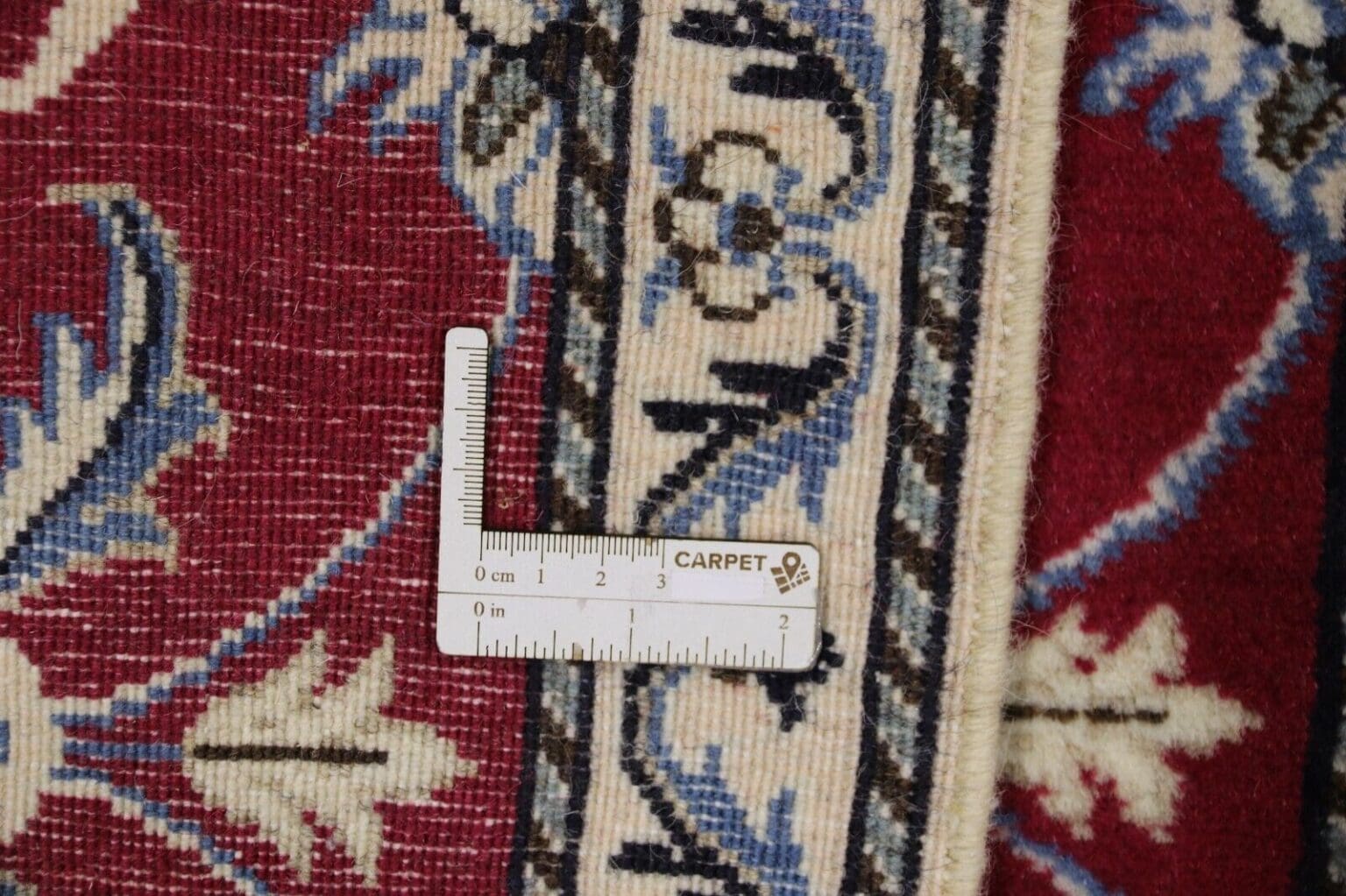
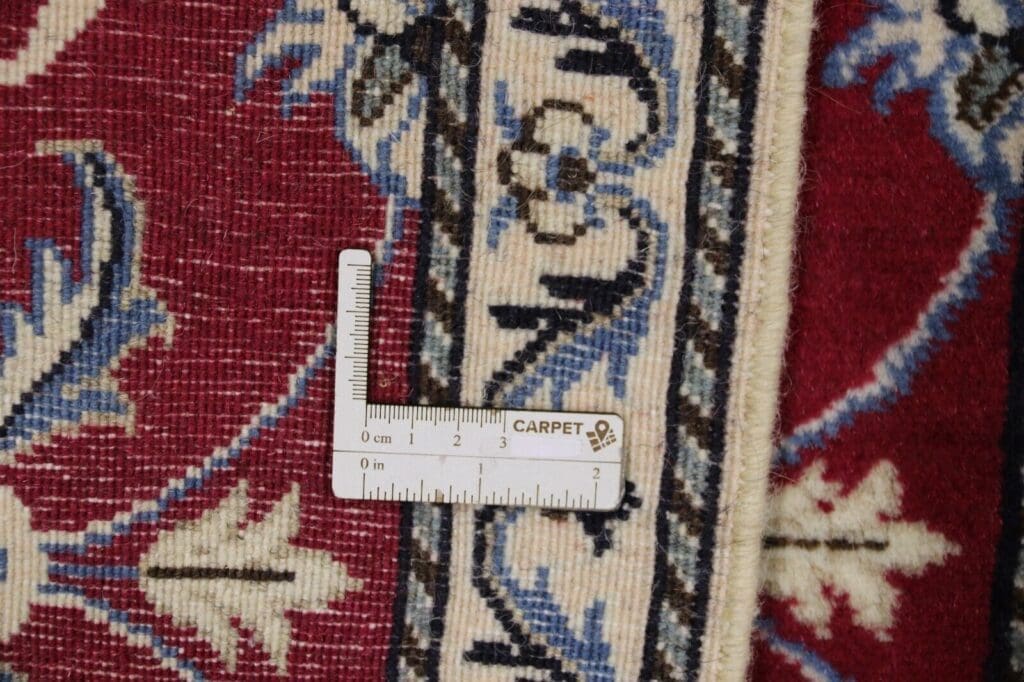
The stated knot density is approximately 300,000 knots per square metre. Fine knotting permits the weaver to render narrow outlines, small ornaments and carefully controlled curves. It also requires consistent tension and close attention throughout the work, since the design is assembled knot by knot. The rug has a thickness of approximately 8 mm. Its condition is new and described as very good.
Origin and Tradition
This rug is identified as a Nain Persian rug from Persia. Nain is a city and weaving centre in central Iran with a recognised tradition of finely drawn carpets. Nain designs are associated with controlled composition, precise ornament and a considered relationship between field and border. Within the wider history of Persian carpet making, the region represents a tradition in which the clarity of the drawing is as important as the quality of the knotting and the balance of the colours.
The making of a hand-knotted carpet begins by arranging the warp threads under tension. Knots are then tied by hand and secured with weft threads as the rows progress. The pile is trimmed so that the design can be read clearly and the surface remains even. In a finely knotted Nain carpet, the weaver must follow the drawing with particular care. A small change in knot placement or row alignment can affect the direction of a line, the edge of a leaf or the symmetry of a larger ornament. Craftsmanship therefore combines repeated technical operations with constant visual control.
Persian carpets are often named for the place or regional tradition with which their designs and methods are associated. Nain is the regional designation used for this rug. It is not simply a general label for an Oriental rug. Other Persian centres, including Tabriz and Isfahan, have their own design vocabularies and working traditions. They illustrate the breadth of Persian carpet culture, but they do not alter this piece’s identification as Nain.
Regional carpet traditions are passed on through drawing conventions, workshop practice and practical knowledge of materials. A design may be organised around a central axis, repeated across a field or framed by several borders. The final character depends on the relationship between warp, weft, knot, pile, trimming and colour placement. In a hand-knotted rug these elements are produced together over the course of the work, so the construction and the visible design remain closely connected.
Design and Pattern
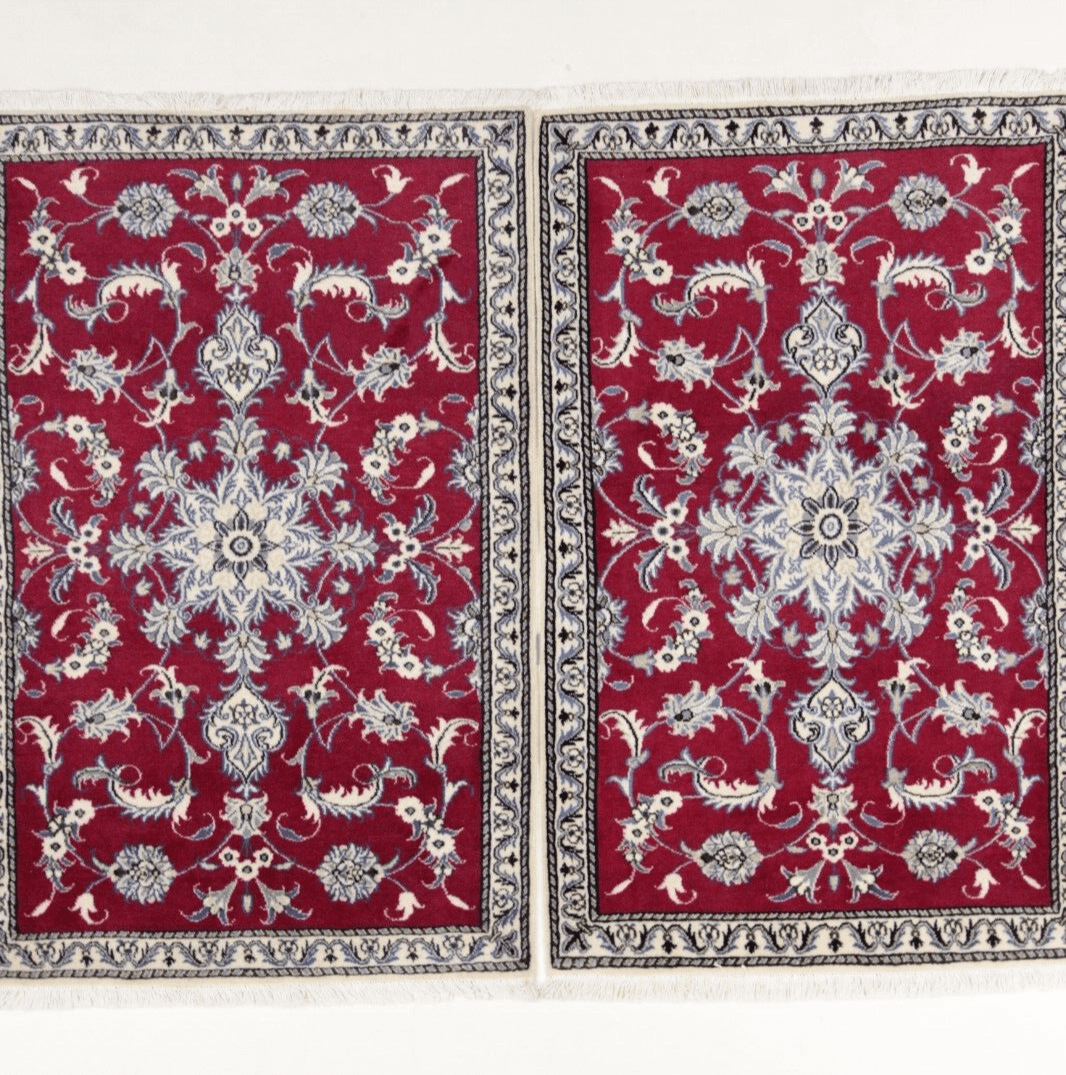
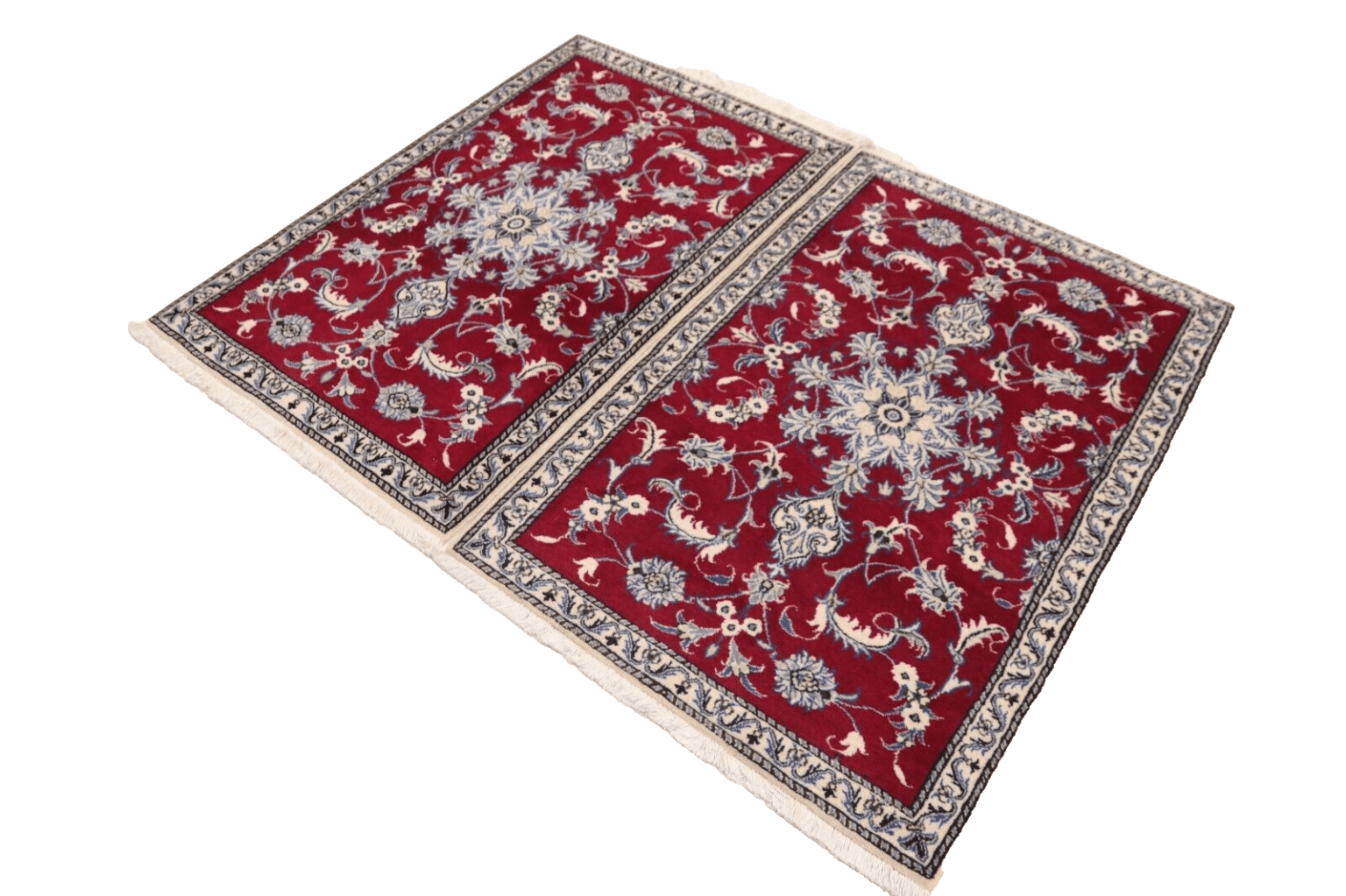
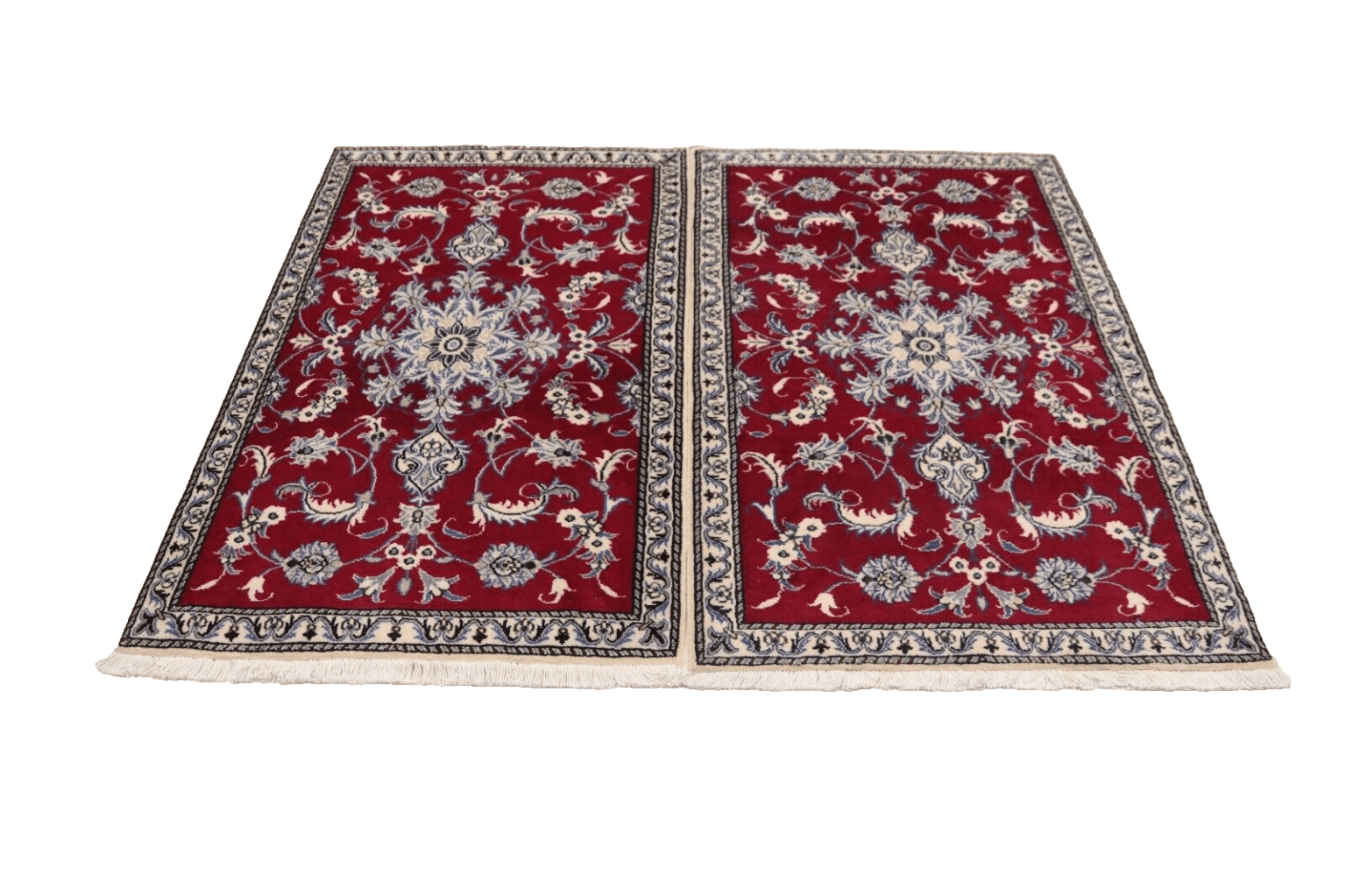
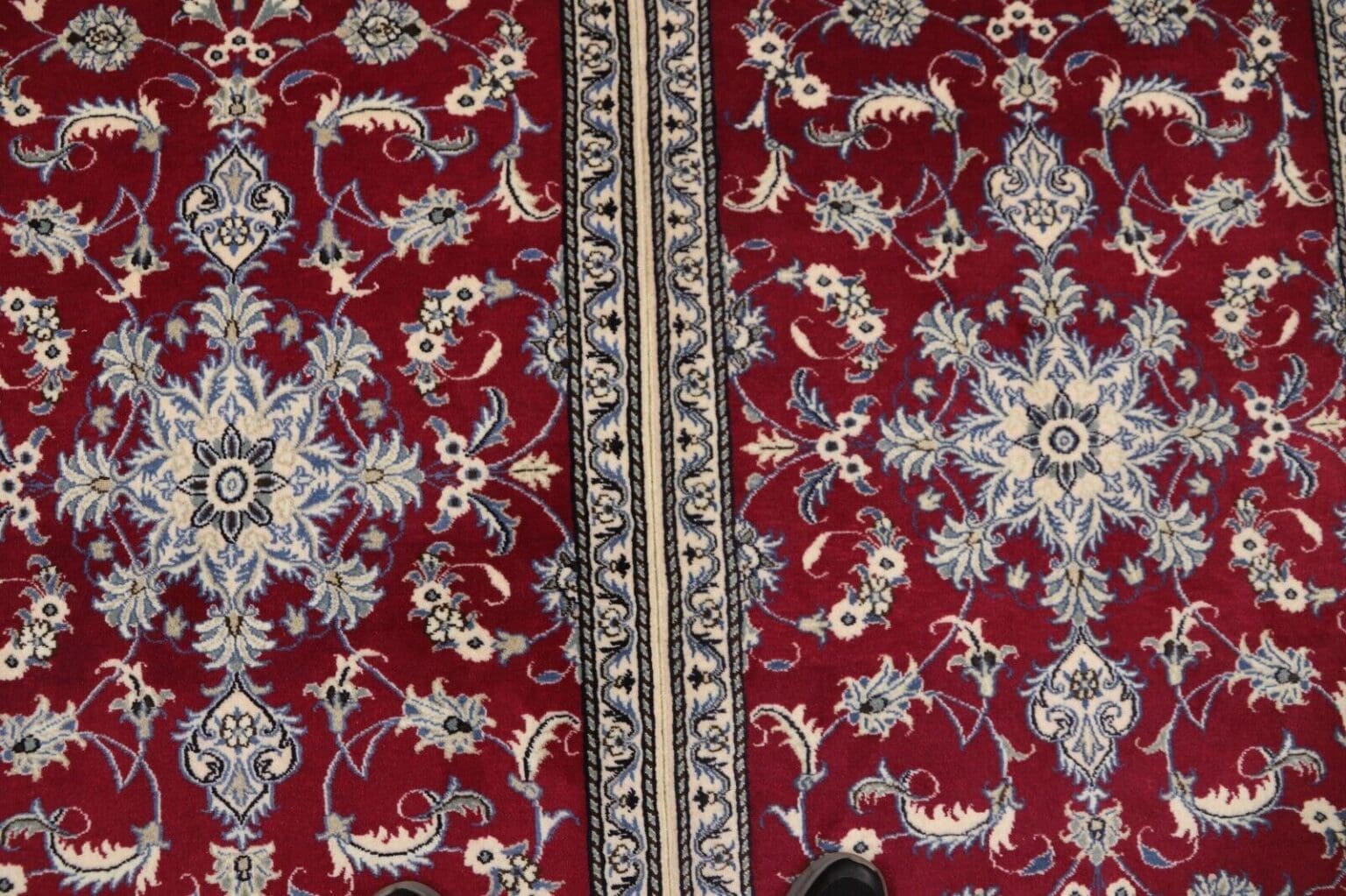
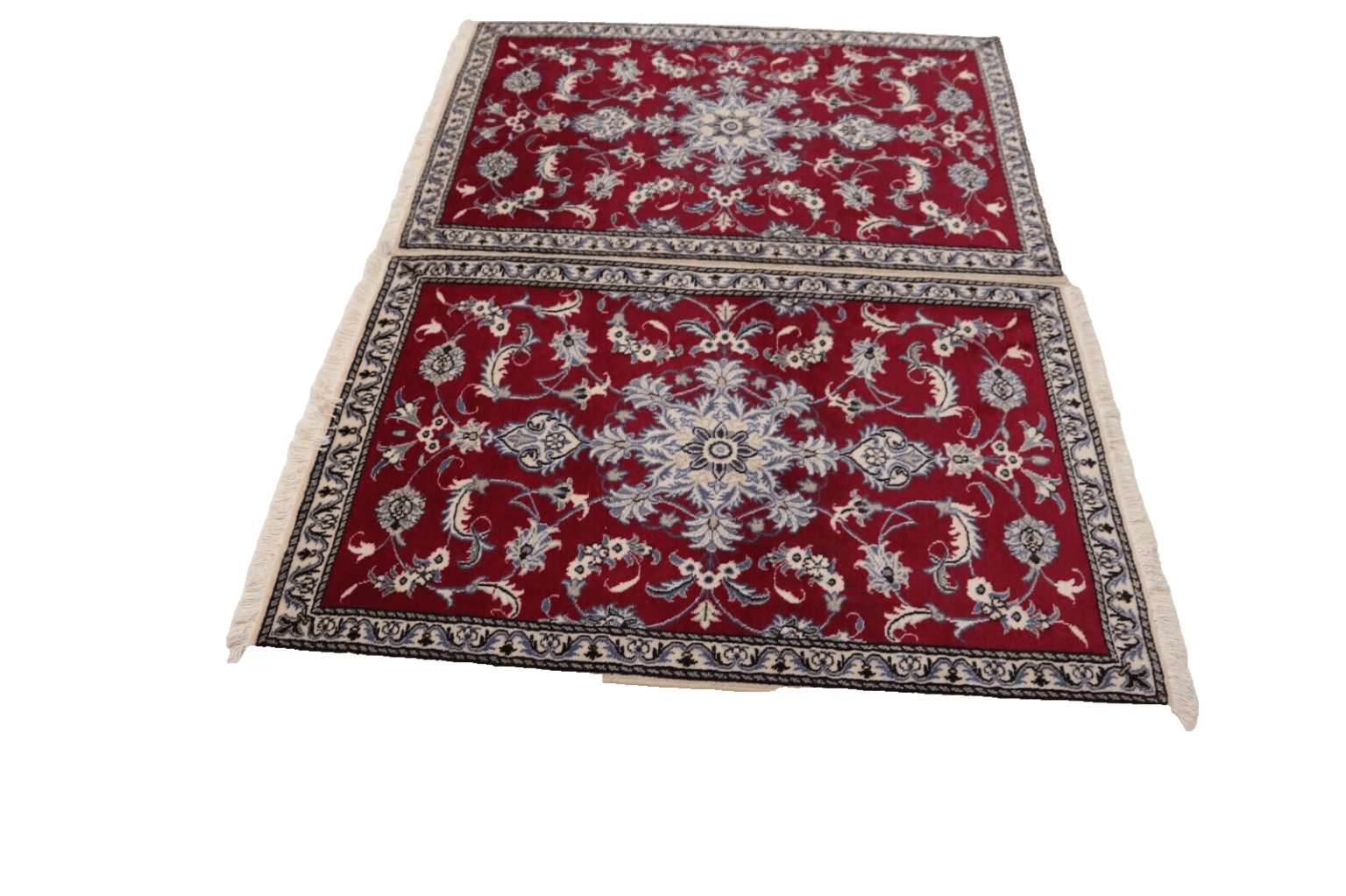
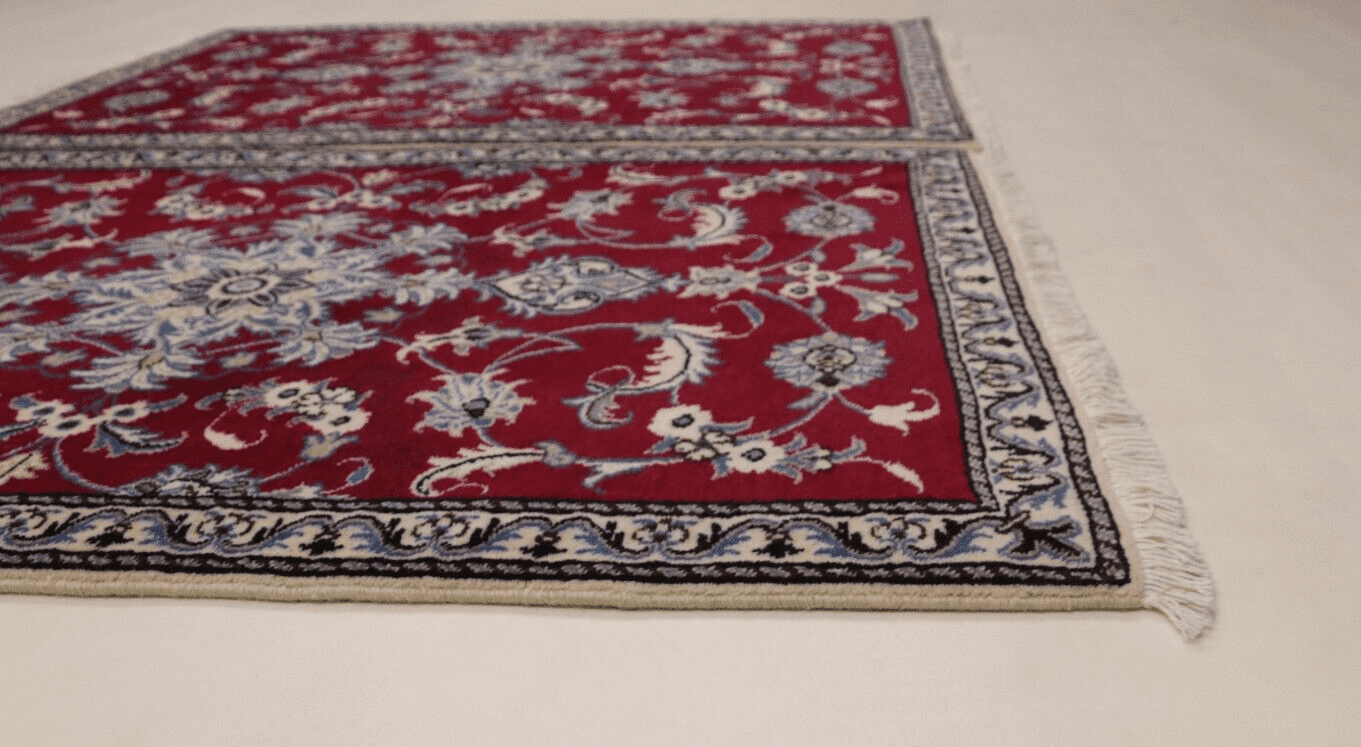
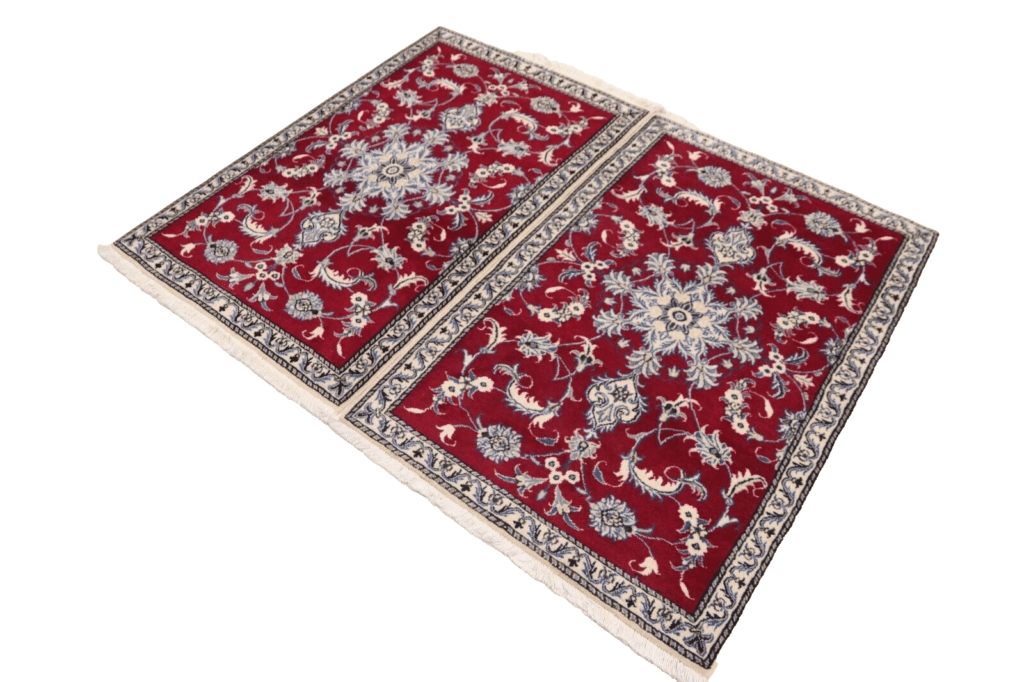
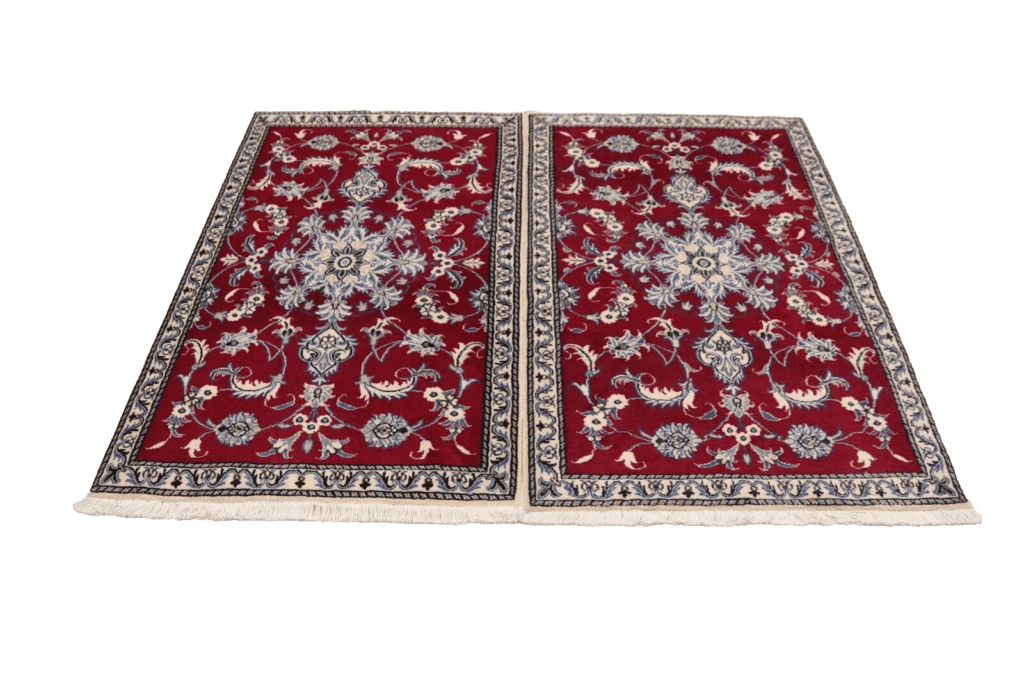
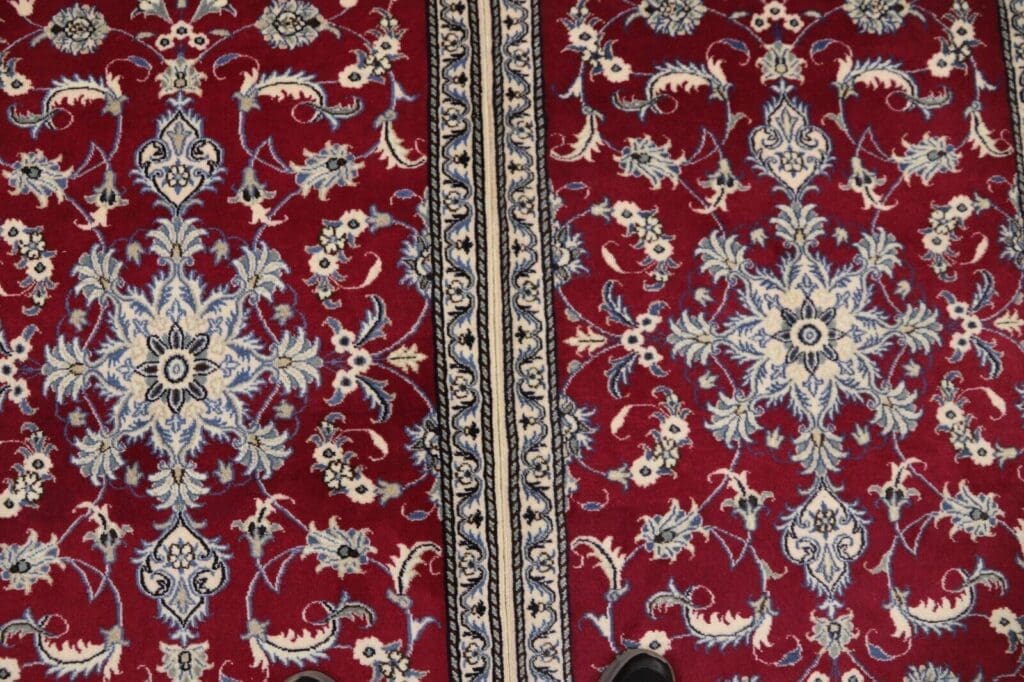
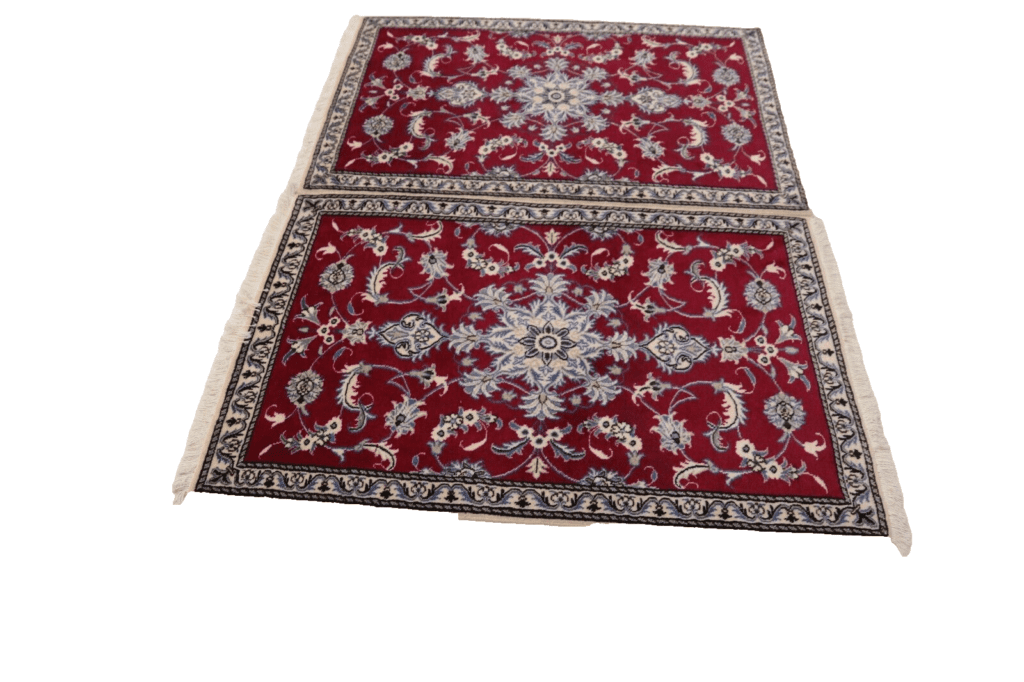
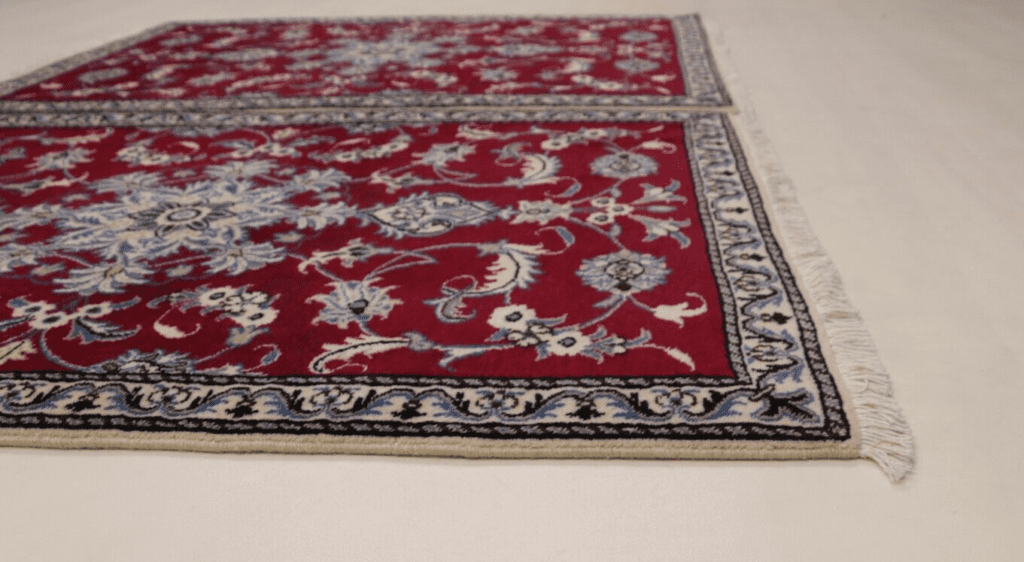
The pattern is described as Oriental. A blue bed border is part of the design and forms a distinct colour frame around the patterned area. A bed border can separate a central field from the surrounding bands and help establish a clear order within the composition. Blue is a longstanding colour in Persian carpet design and may appear in subdued or more pronounced tones depending on its relationship with the other colours. Here, the blue border is specifically identified as a feature of the rug.
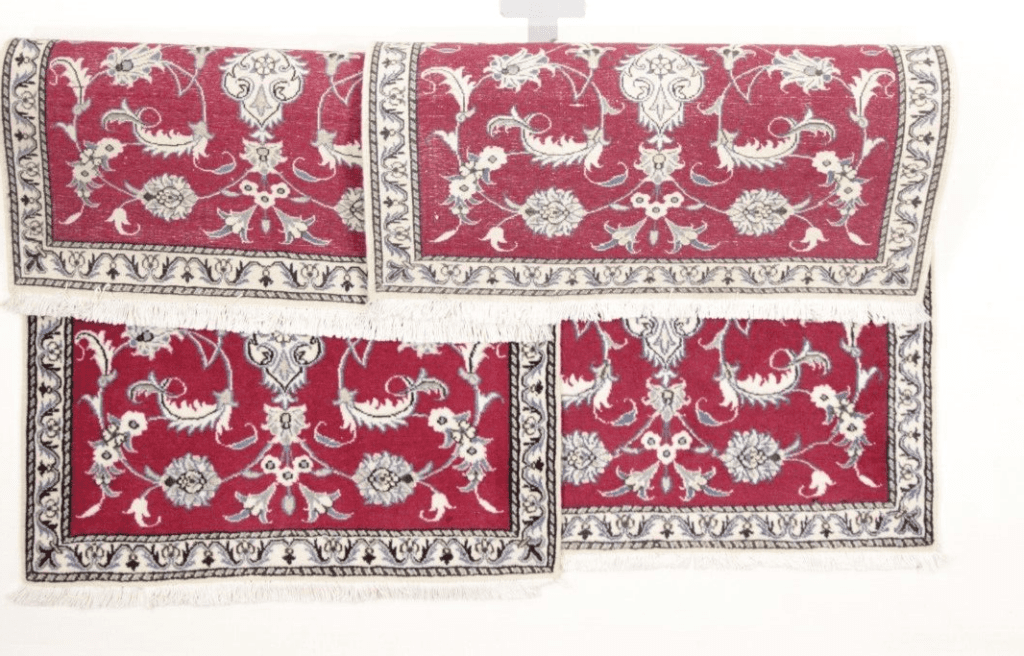
Nain carpets are traditionally associated with floral and geometric elements. Floral ornament may take the form of stylised blossoms, leaves, vines and palmettes. Geometric structure can be expressed through symmetry, articulated borders and carefully controlled axes. These motifs are not necessarily literal depictions of nature. They are simplified, repeated and arranged according to a design system, allowing separate elements to form a coherent overall composition.
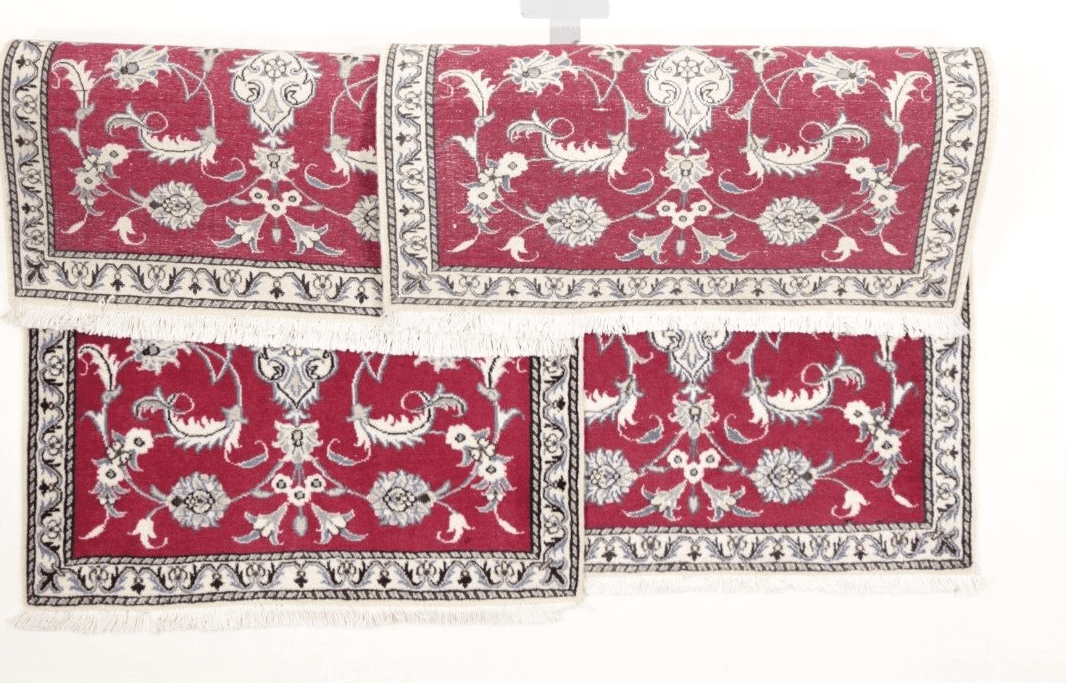
A Persian carpet design is often divided into several visual zones. A central field may be enclosed by one or more borders, with the outer bands providing a transition between the principal motif and the edge. In a design that includes a bed border, the surrounding frame also has a clear colour function. The blue edging gives the composition a defined contour and works together with the Oriental motifs to organise the surface.
Fine knotting supports the rendering of small motifs and clean contours. In a hand-knotted carpet, the appearance of the image comes from the placement and colour of the individual knots. A vine, flower or geometric line is built into the pile as the rows are made. The mixture of virgin wool and silk adds another surface distinction: wool generally offers a softer, more subdued appearance, while silk can reflect light more distinctly. This difference can help separate details within a finely drawn pattern.
The word Oriental describes the pattern language used for this rug. It does not replace the regional designation Nain. Persian carpet design has long combined floral forms, geometric organisation and border structures in many different ways. Some compositions place greater emphasis on a central arrangement, others on repeated vines or clearly divided bands. For this piece, the named design features are its Oriental pattern and blue bed border, set within the Nain Persian tradition.
Special Features
The listed features include hand-knotted construction, a pile of 90% virgin wool and 10% silk, and a warp of 100% cotton. The knot density is approximately 300,000 knots per square metre. The rug is approximately 8 mm thick, new and in very good condition. It is also described as suitable for underfloor heating, easy to care for and pet-friendly. These are stated usage characteristics; care should nevertheless take the natural fibres and the hand-knotted construction into account.
The blue bed border gives the rug a defined colour frame rather than an entirely uniform surface. Together with the Oriental pattern, it creates a clearly structured appearance. The features named for this one-off piece are its Persian origin, Nain designation, hand-knotted workmanship, fine knotting, wool and silk pile, cotton warp, blue border and new condition.
FAQ
What identifies a Nain Persian rug?
Nain Persian rugs belong to the Persian carpet tradition and are known for carefully drawn floral and geometric designs. Their compositions are often arranged with symmetry and may include a central field, surrounding borders or a defined outer frame. This rug combines the Nain designation with an Oriental pattern and a blue bed border. Its fine knotting allows detailed lines and ornaments to be rendered within the pile. The classification as Nain comes from the named regional tradition, not simply from the presence of wool or silk.
How should this rug be cared for?
The rug is described as easy to care for. Regular, gentle vacuuming can remove loose dust without placing unnecessary strain on the pile. Prolonged direct sunlight should be avoided, since light can gradually affect the colours of natural fibres. Spilled liquid should be blotted promptly rather than rubbed into the surface. For more intensive cleaning, a method intended for hand-knotted rugs and natural fibres is appropriate. The rug is listed as suitable for underfloor heating and pet-friendly, but these properties do not remove the need for careful routine maintenance.
What makes hand-knotted rugs distinctive?
A hand-knotted rug is built by tying the pile knot by knot, with the design developing directly from the sequence of the rows. The pattern is therefore not printed onto a finished carpet. Its production depends on steady warp tension, secure weft insertion and careful control of the drawing as the work progresses. The fine knotting of this Nain rug supports detailed floral and geometric forms. Because the construction is carried out by hand, each rug is an individual piece. Here, the handwork is combined with virgin wool, silk and a Persian design tradition to define the rug’s material and craft character.
To provide the best experiences, we use technologies like cookies to store and/or access device information. Consenting to these technologies will allow us to process data such as browsing behavior or unique IDs on this site. Not consenting or withdrawing consent, may adversely affect certain features and functions.
Functional Always active
The technical storage or access is strictly necessary for the legitimate purpose of enabling the use of a specific service explicitly requested by the subscriber or user, or for the sole purpose of carrying out the transmission of a communication over an electronic communications network.
Preferences
The technical storage or access is necessary for the legitimate purpose of storing preferences that are not requested by the subscriber or user.
Statistics
The technical storage or access that is used exclusively for statistical purposes.The technical storage or access that is used exclusively for anonymous statistical purposes. Without a subpoena, voluntary compliance on the part of your Internet Service Provider, or additional records from a third party, information stored or retrieved for this purpose alone cannot usually be used to identify you.
Marketing
The technical storage or access is required to create user profiles to send advertising, or to track the user on a website or across several websites for similar marketing purposes.
 SECURE PAYMENT
 SHIPPING PARTNERS


