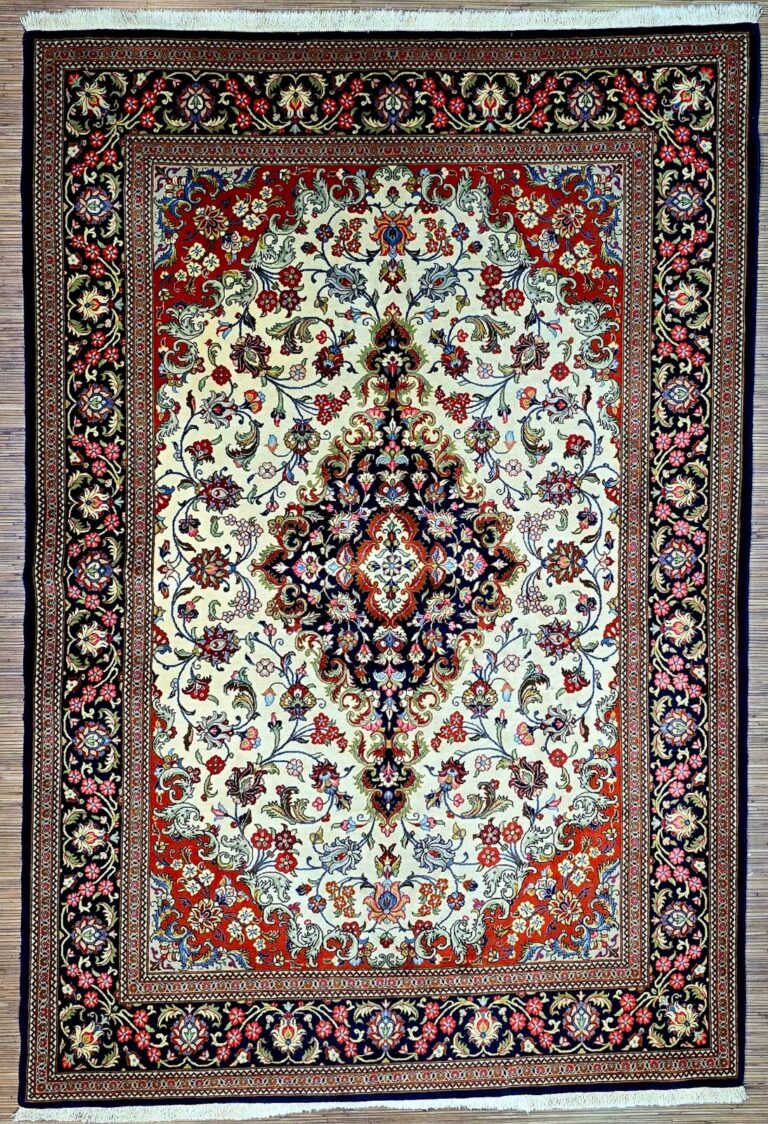
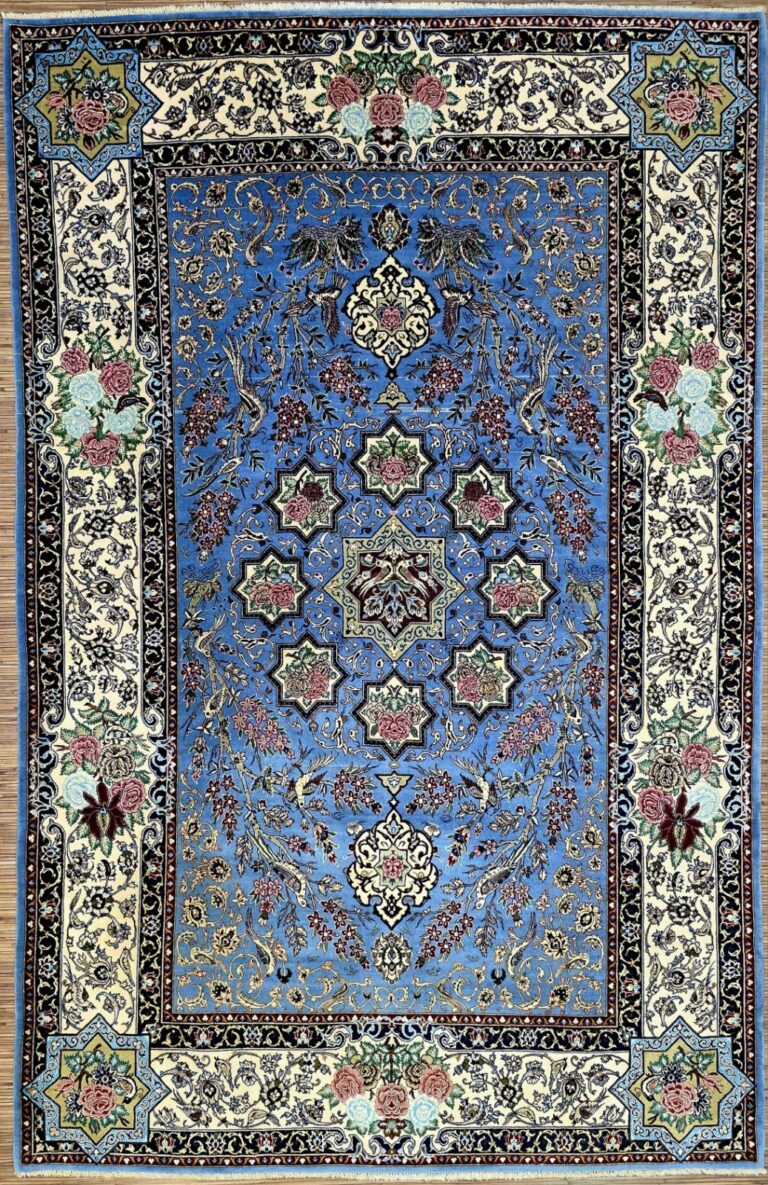
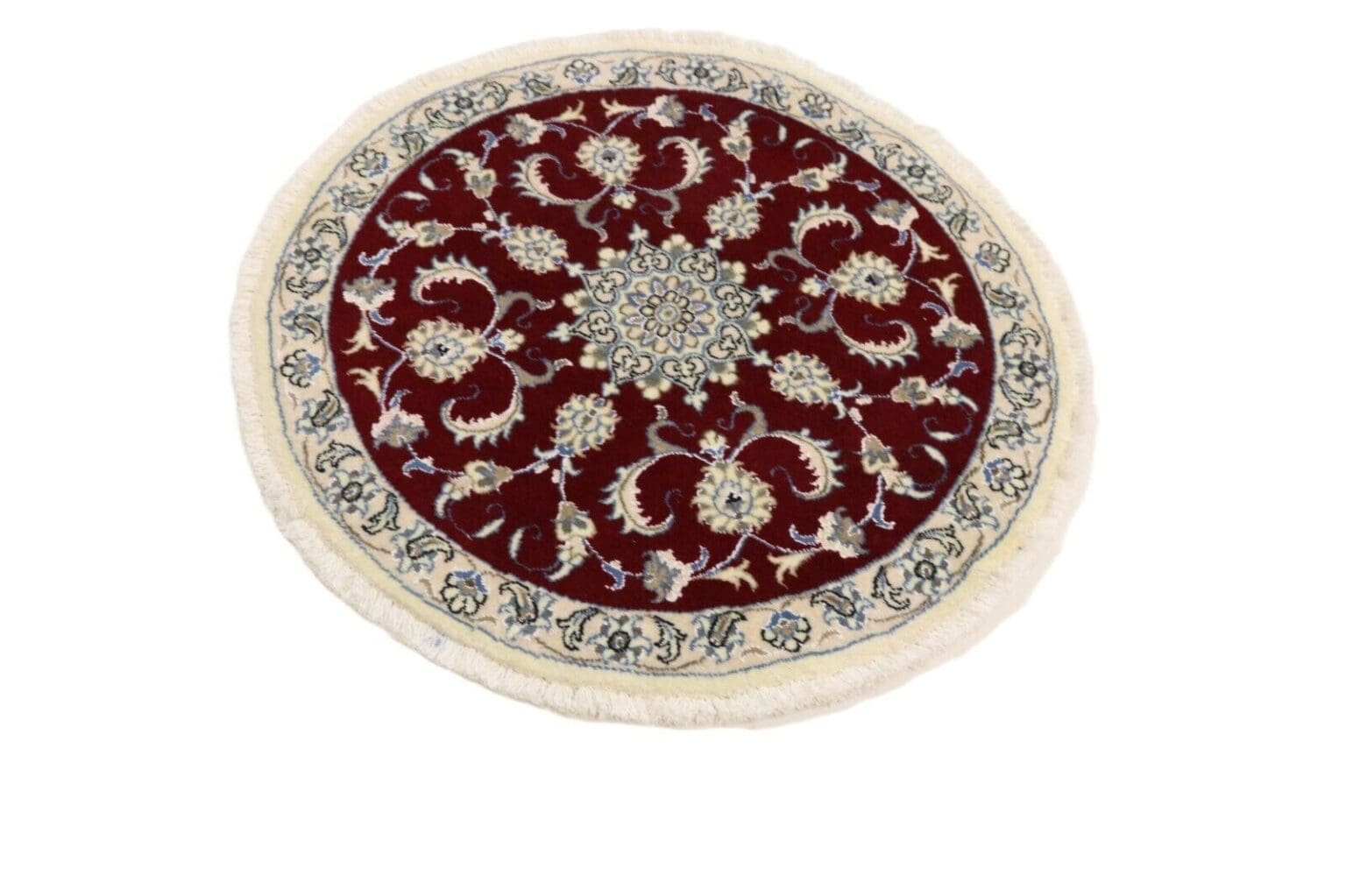
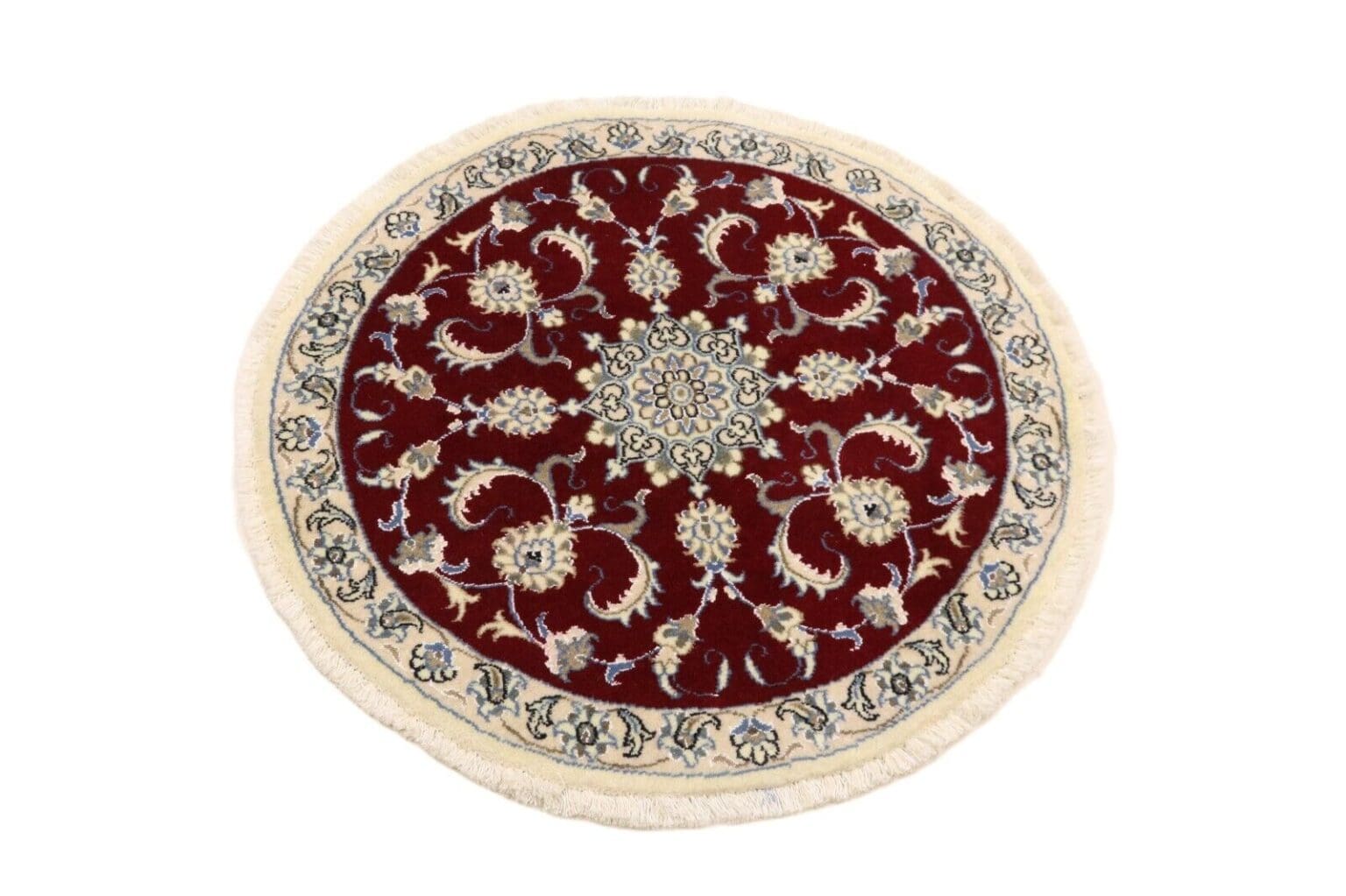
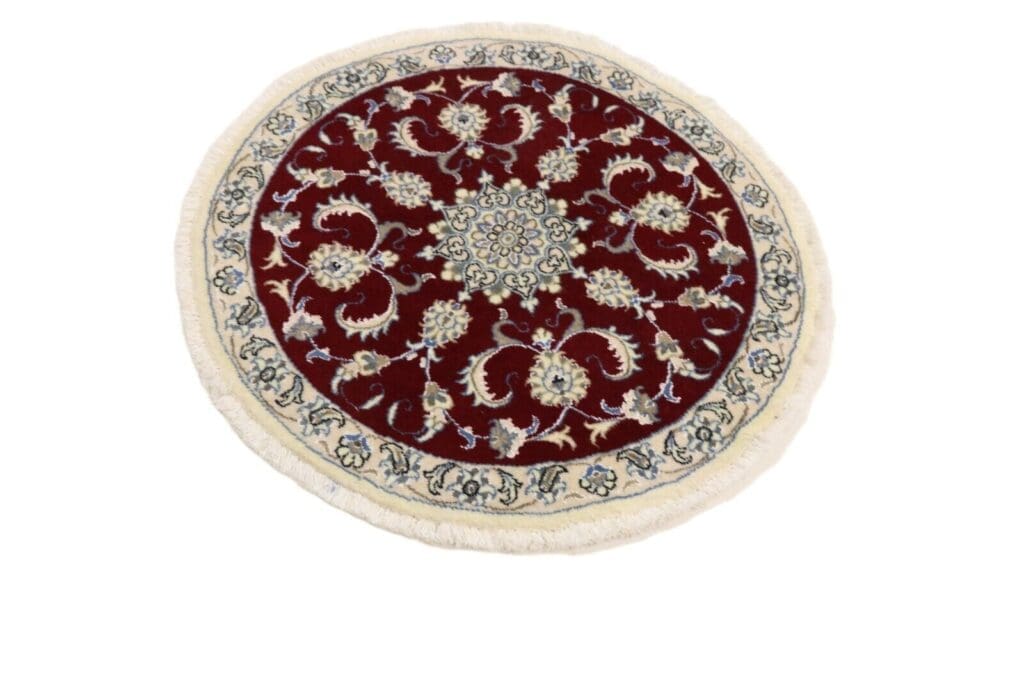
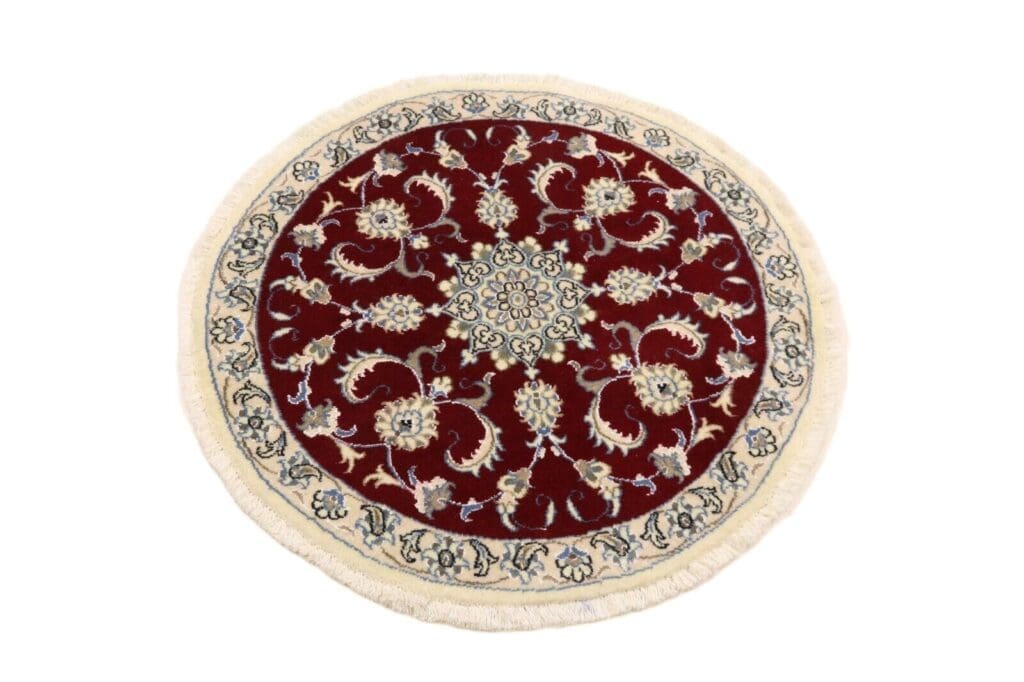
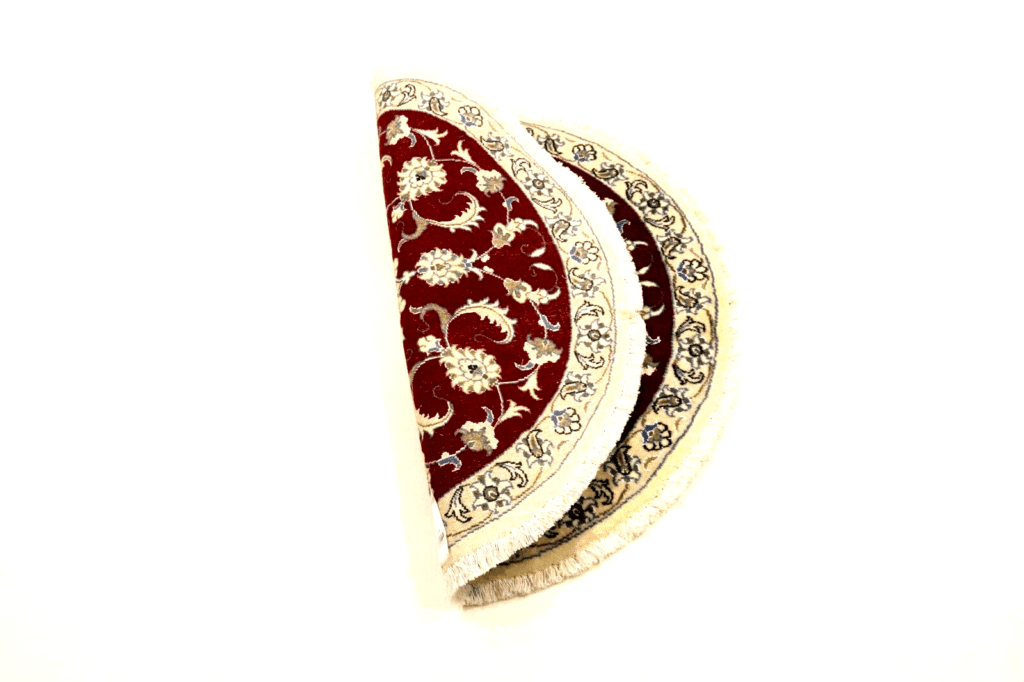
This Nain Persian rug is hand-knotted and made from virgin wool and silk. The two natural fibres bring different qualities to the textile surface. Virgin wool provides a soft, resilient pile and has naturally insulating, temperature-balancing properties. It gives the rug a tactile, grounded character while also supporting everyday use in the living spaces named for this piece.
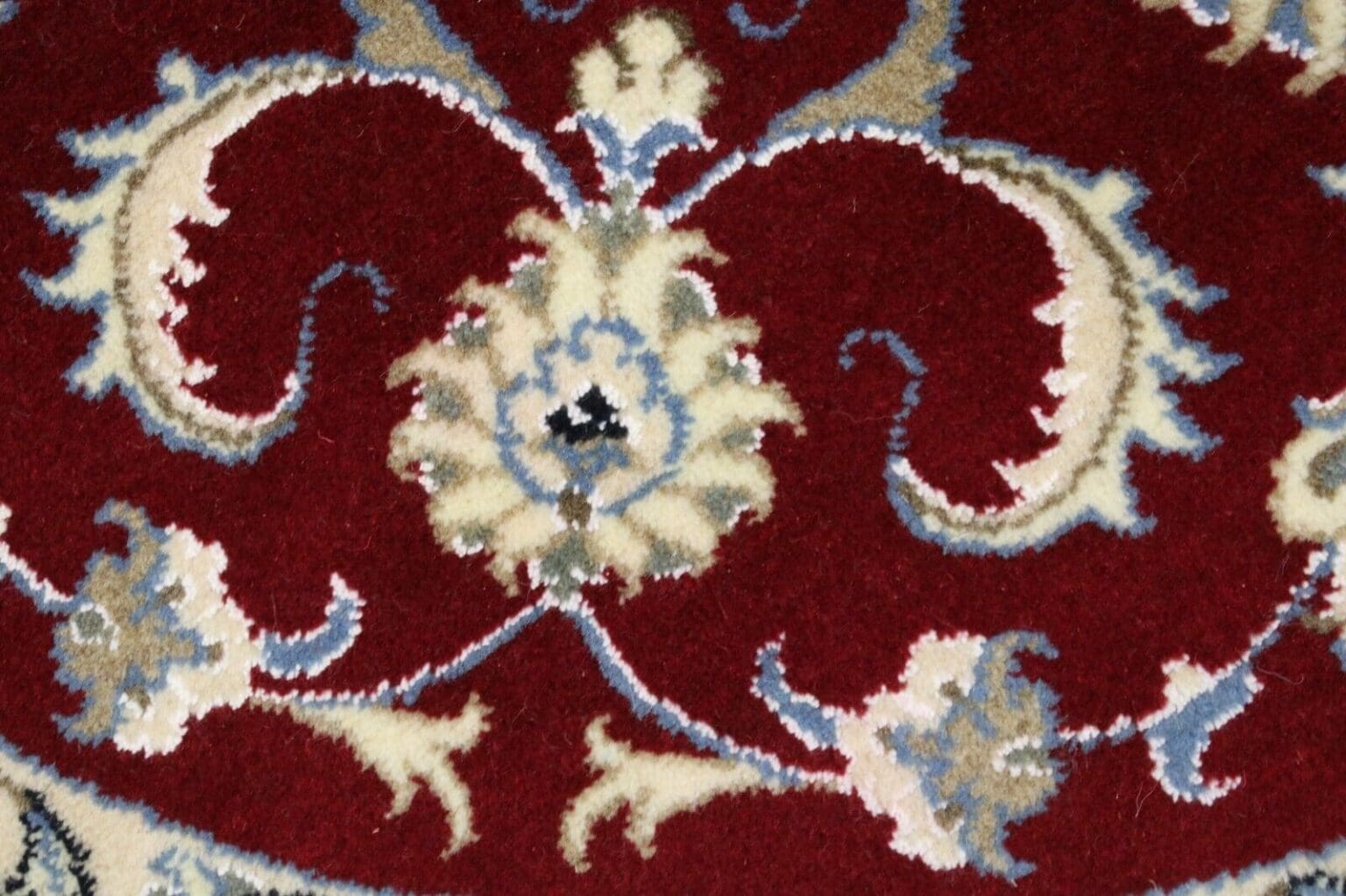
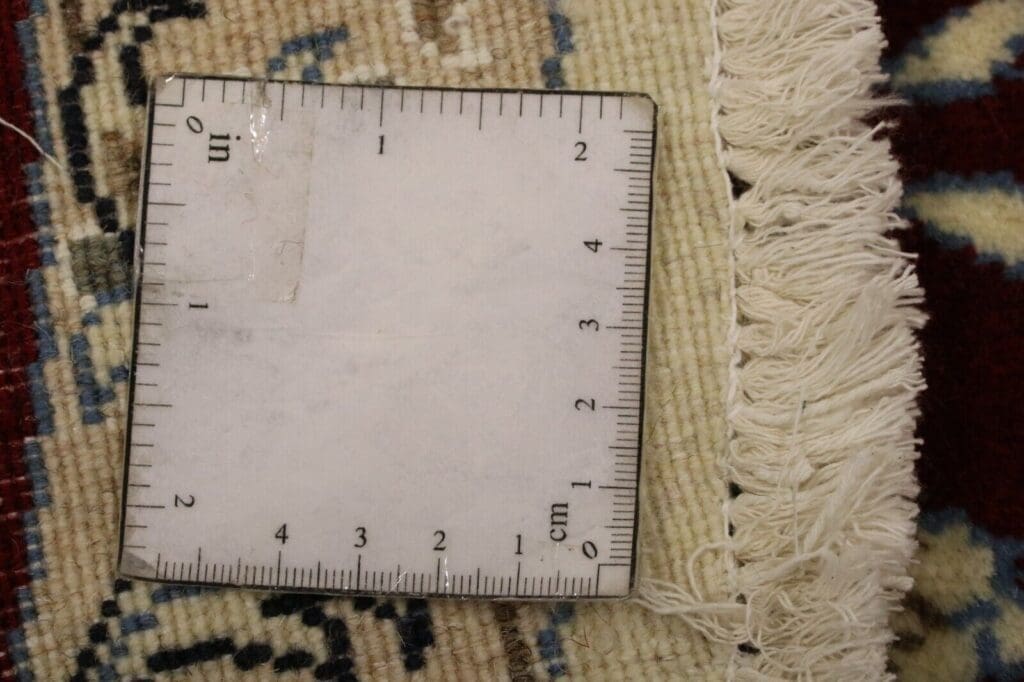
Silk contributes a smoother feel and a restrained sheen. Depending on the light, silk areas can make fine contours and selected details appear more distinct. Hand-knotting means that the pile is formed knot by knot rather than by a machine. The high knot density allows small floral details, narrow lines and geometric accents to be rendered with considerable precision.
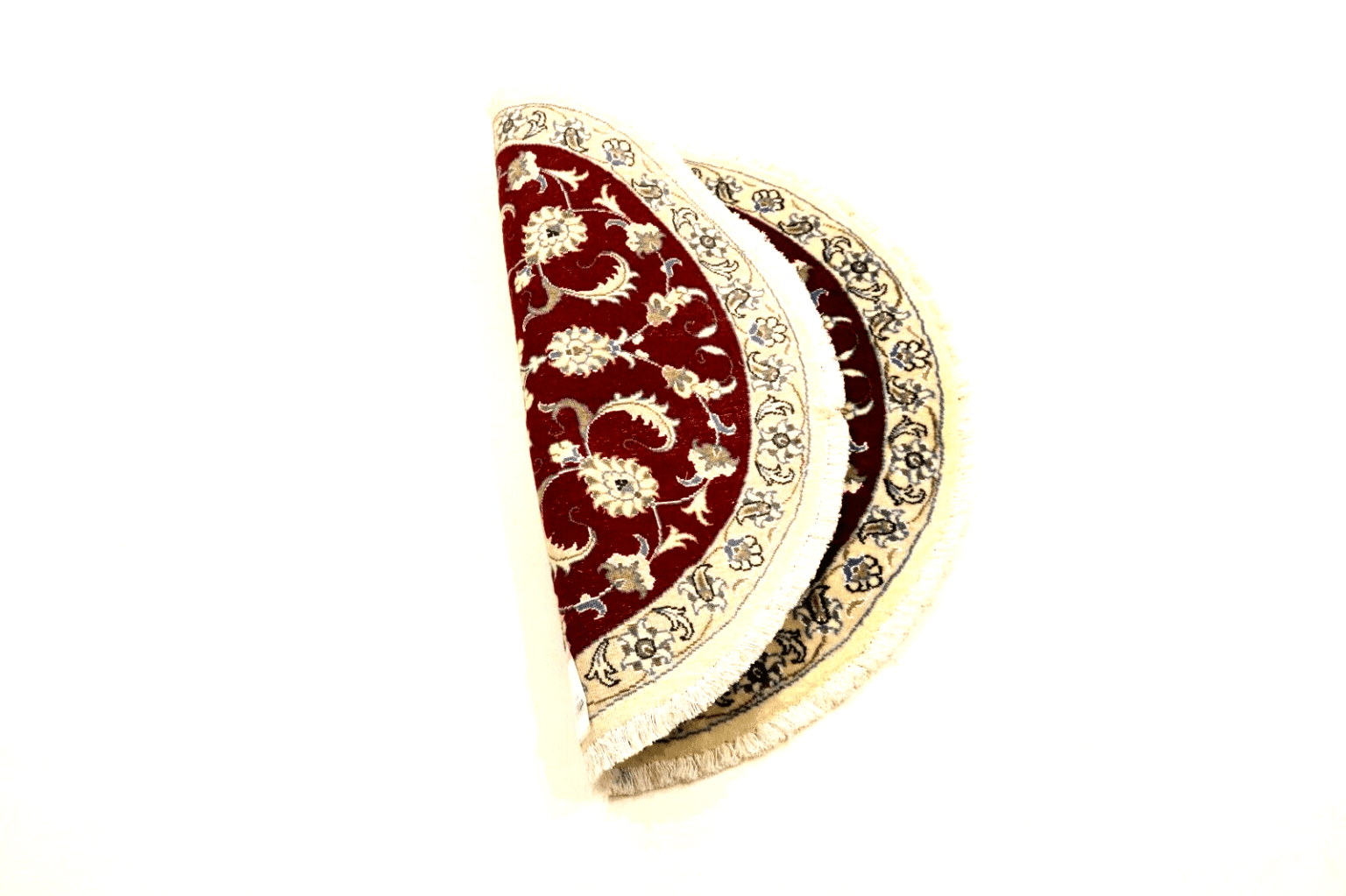
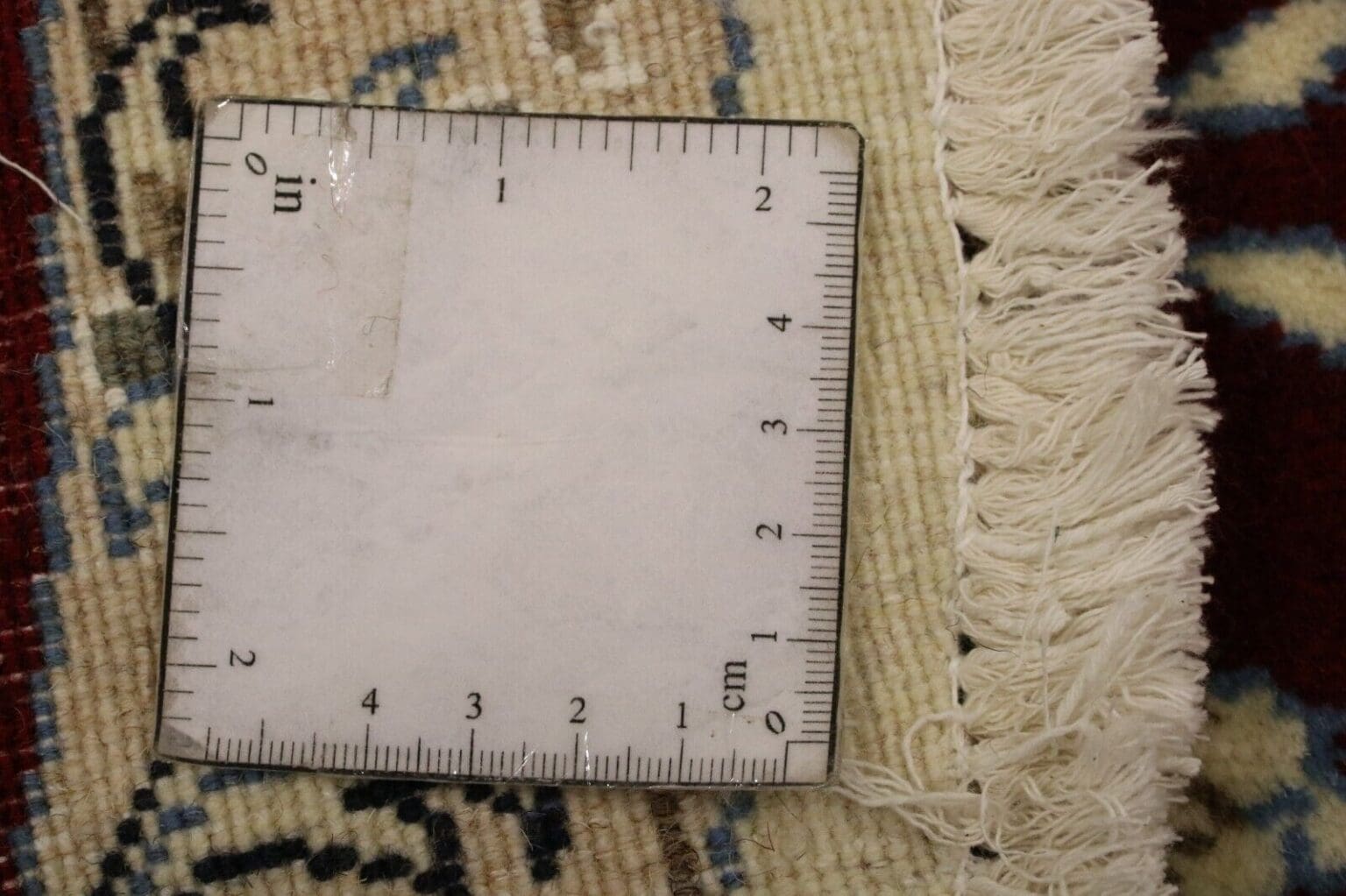
A hand-knotted rug is built on a foundation of warp and weft. Individual knots are tied into the warp, rows are secured with weft threads, and the pile is then trimmed to an even surface. The process calls for control of the drawing, the sequence of colours and the tension of the structure. It is a time-based craft in which the finished textile retains the character of its manual construction.
The combination of wool and silk also affects the way the surface is experienced. Wool tends to appear softer and more subdued, while silk can reflect light more clearly. Together they create a surface with variation in texture and lustre. Proper care is important because natural fibres respond differently to moisture, abrasion and cleaning agents.
Origin and Tradition
Nain is a city in Iran, located near Isfahan, and is recognised for its fine carpet production. It lies in the central Iranian landscape, where carpet making developed as part of a broader Persian artistic and craft tradition. Nain rugs are associated with careful execution, balanced colour schemes and finely organised ornament. The name therefore refers not only to a place, but also to a regional approach to design and weaving.
The carpet-making tradition in Nain reaches back to the sixteenth century. Over time, weaving knowledge and artistic design became closely connected with the culture of the region. Techniques were passed on, adapted and refined through successive generations. Such knowledge includes more than tying knots: it covers the preparation of fibres, the planning of a design, the placement of colours and the controlled construction of the rug.
Persian carpet construction relies on the relationship between warp, weft and pile. The warp establishes the lengthwise structure, while weft threads secure successive rows of knots. The visible pile carries the design. A dense knotting structure permits a more differentiated drawing, including small leaves, curling vines, blossoms and geometric borders. The quality of a composition depends on the cooperation of structure, material and pattern.
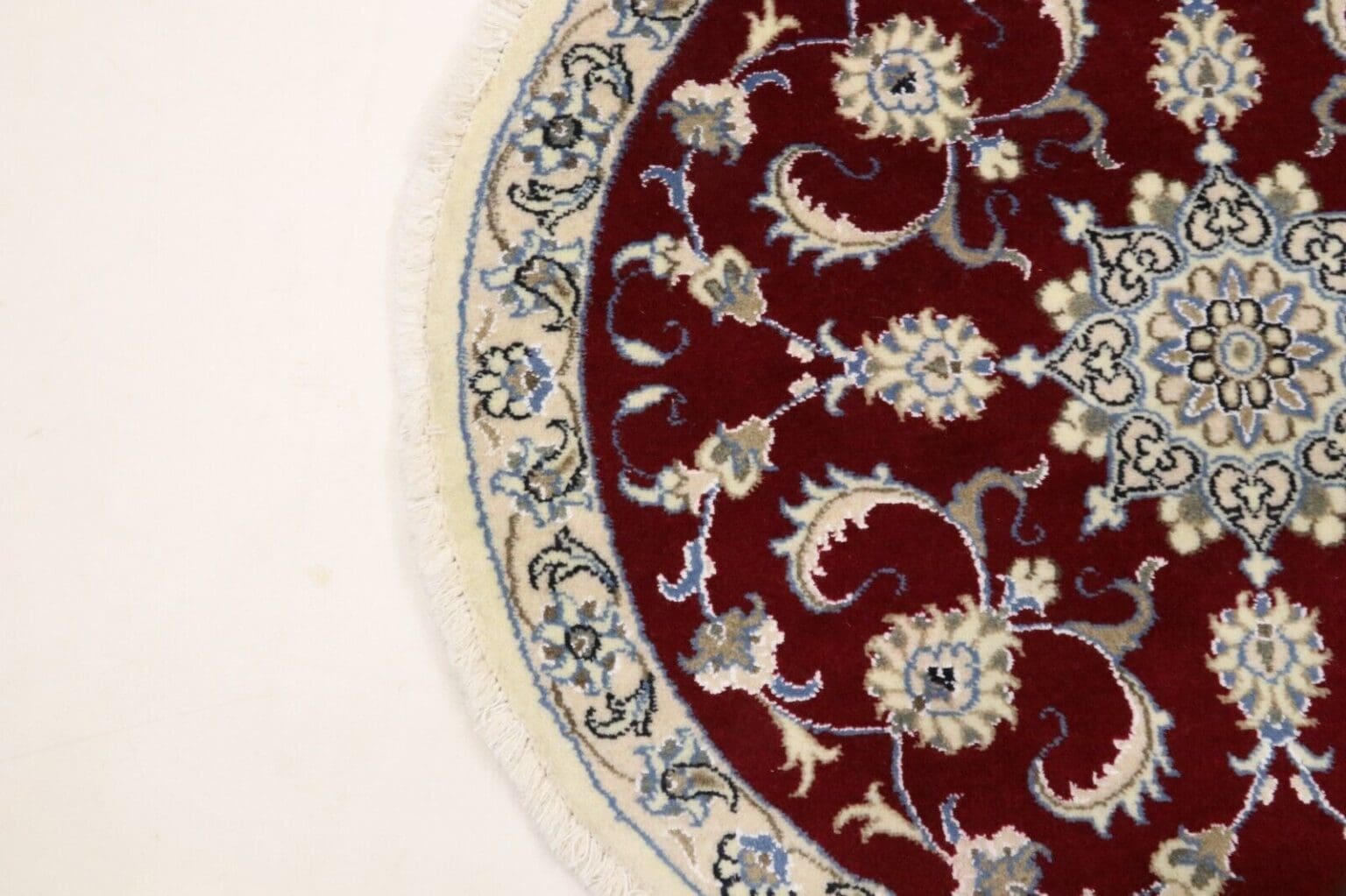
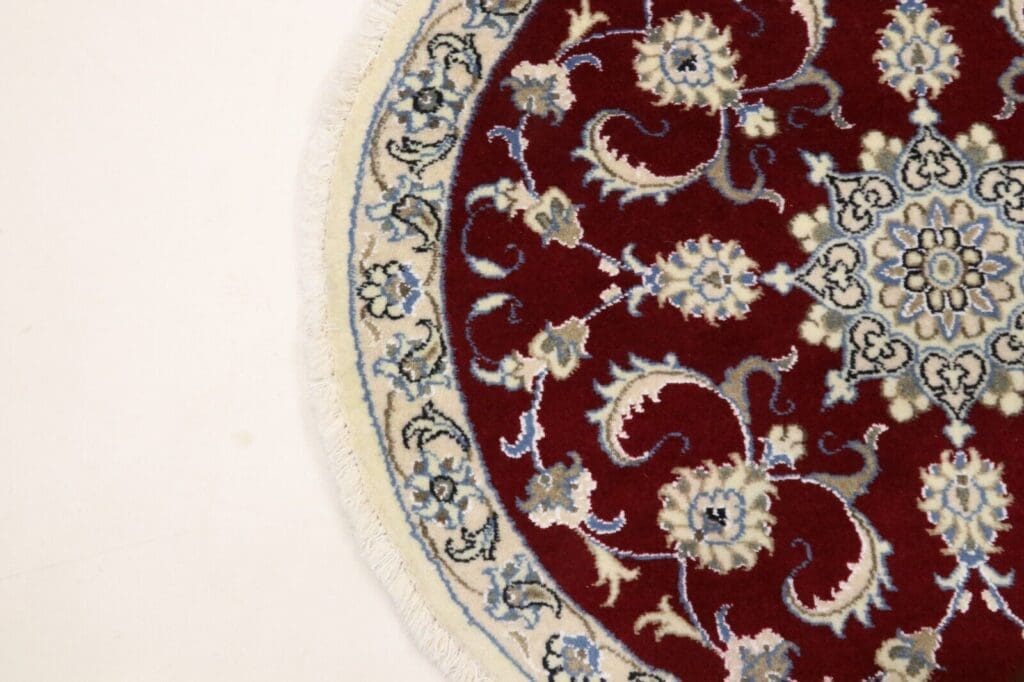
Nain designs are often associated with an ordered central arrangement, a surrounding frame and delicately drawn floral ornament. Vines, leaves and blossoms may be balanced by symmetrical divisions or by carefully repeated geometric devices. These motifs form part of a long Persian decorative vocabulary. They are not limited to one fixed symbolic meaning; rather, they provide a visual language through which rhythm, balance and continuity are created.
The regional tradition also places importance on harmony. Colours are selected to work together across the field and the borders, while fine outlines separate one motif from another. The result is a design in which detail and overall order remain connected. This relationship between precision and balance is one reason Nain is associated with finely executed Persian rugs.
This rug is identified as a Nain rug from Persia, or Iran. Its hand-knotted construction, wool-and-silk material combination and fine knotting belong to the context of that Iranian tradition. The regional background explains the craft and design vocabulary; it does not add a separate provenance beyond the stated origin.
Design and Pattern
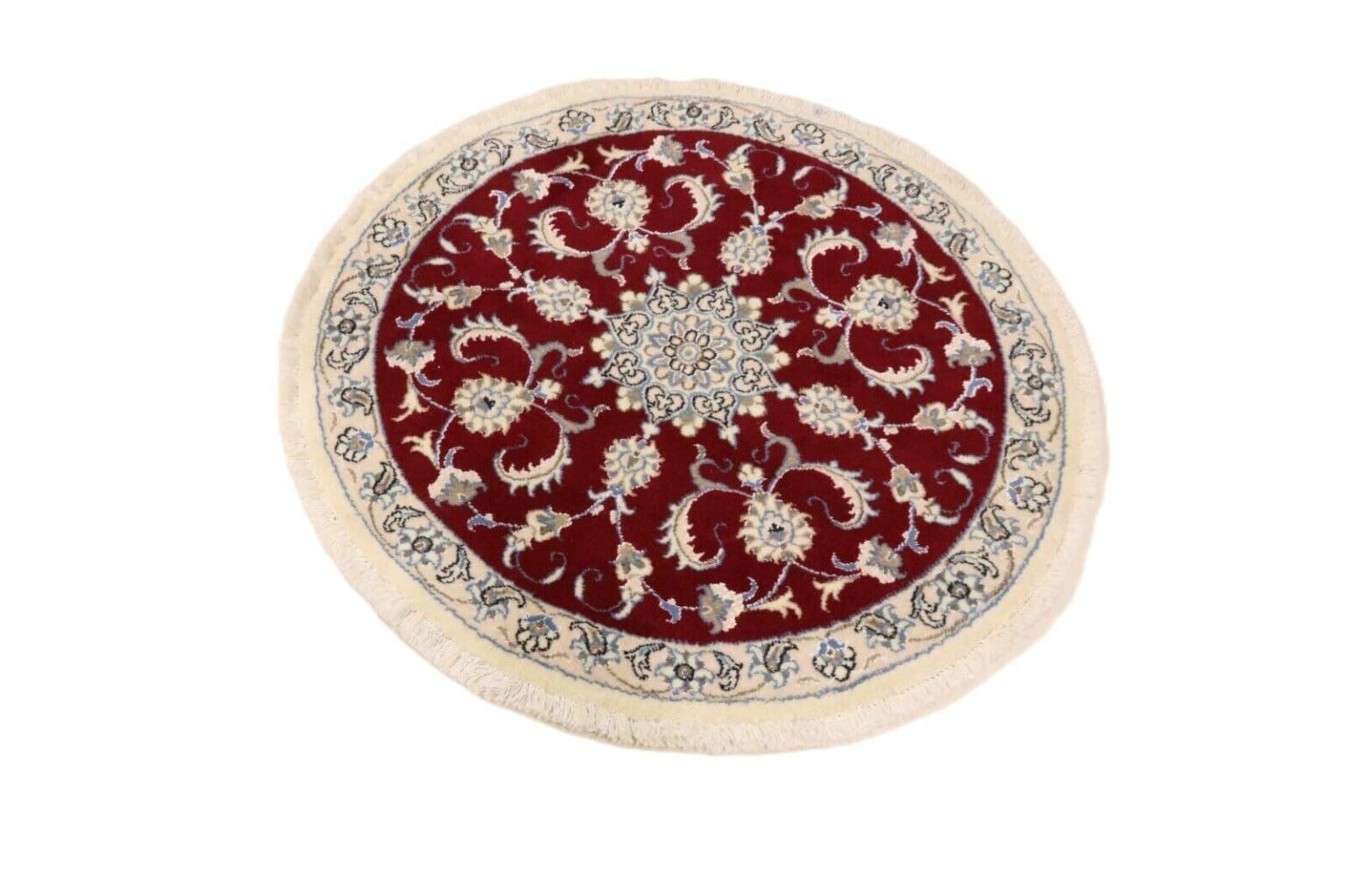
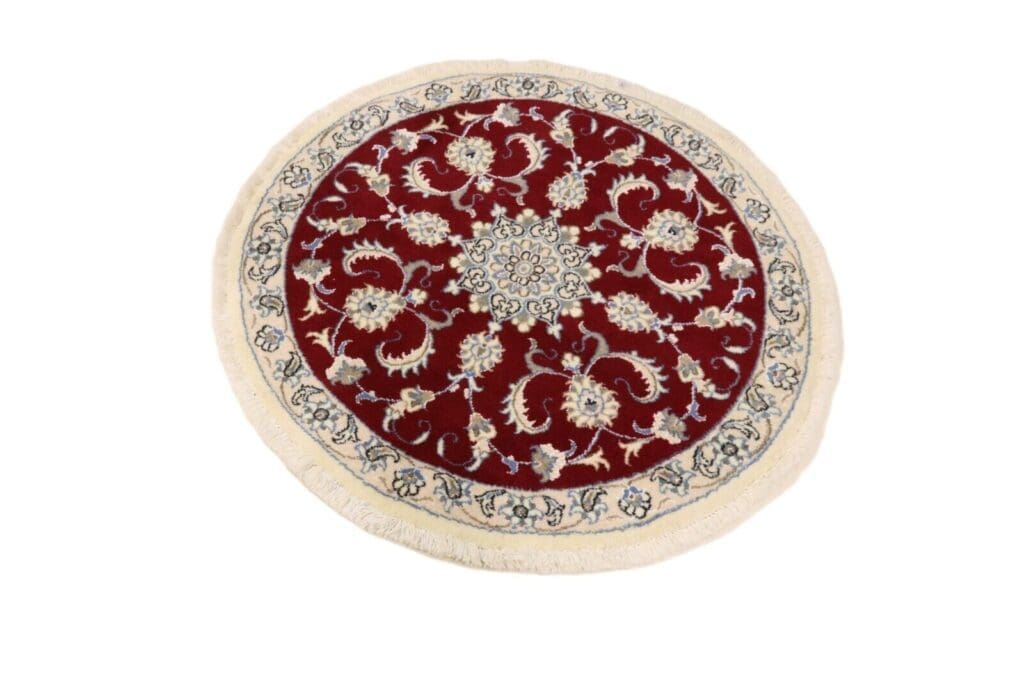
The design of this rug is described as traditional Oriental and Persian. Red is the stated colour, supported by earthy tones and livelier accents in the described palette. Red can provide the principal visual field or bring emphasis to selected ornamental areas. The result is a colour arrangement rooted in the established vocabulary of Persian rugs.
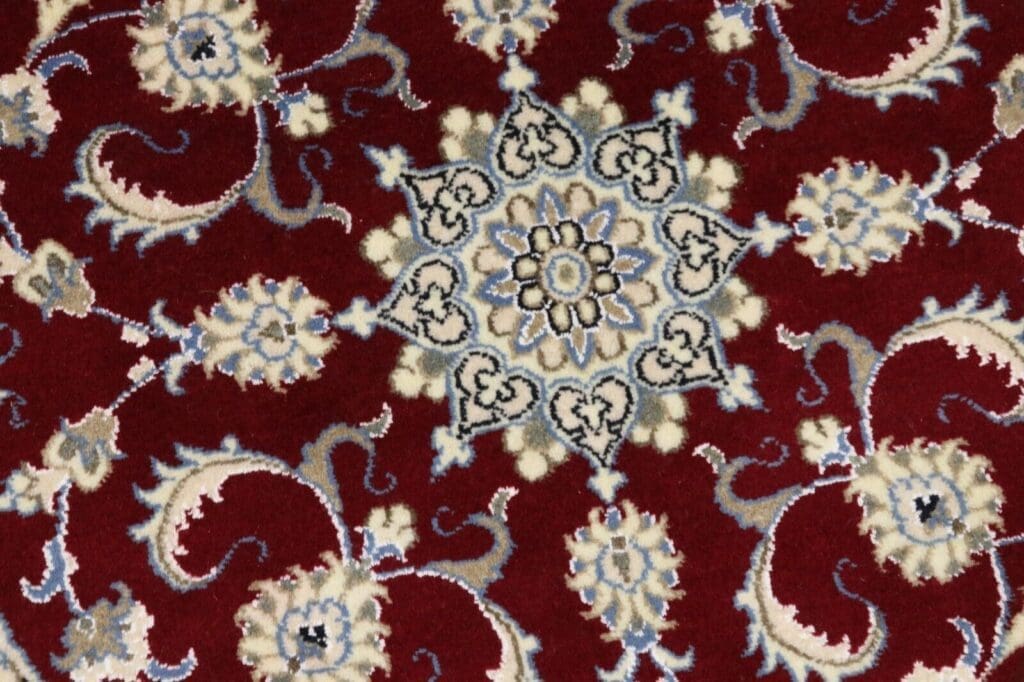
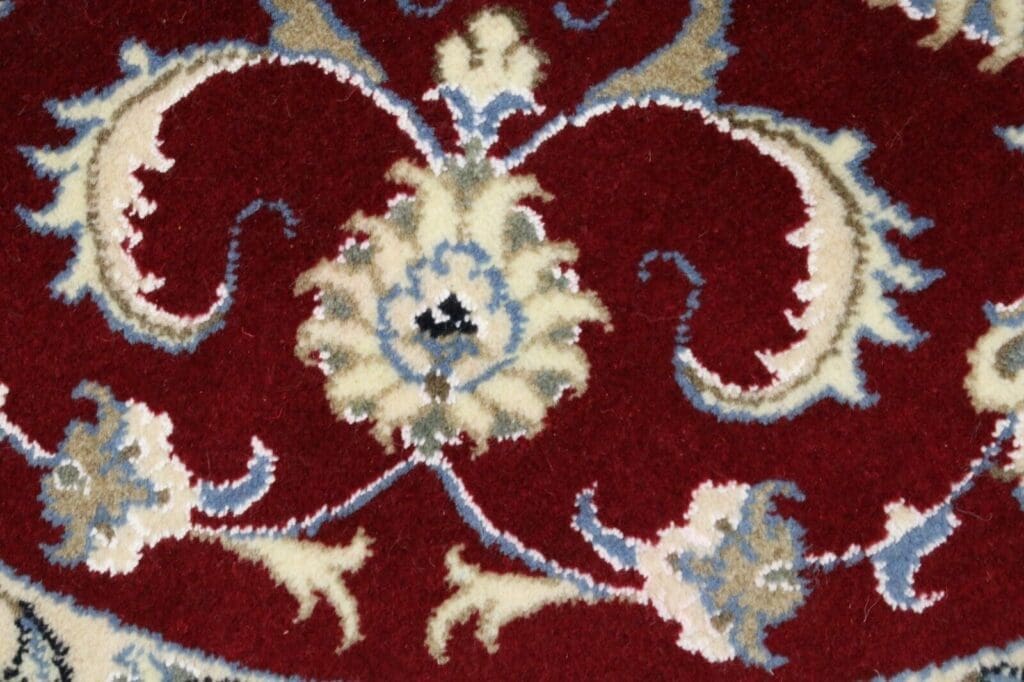
The pattern combines delicate floral and geometric elements. Floral details may take the form of blossoms, leaves or scrolling vines, while geometric components introduce axes, repetition and symmetry. In Nain-inspired compositions, these two families of forms are commonly coordinated rather than treated as unrelated decorations. Fine lines help connect individual motifs into a coherent surface.
Repetition is central to many Persian carpet designs. A motif is placed within a wider system of borders, intervals and corresponding elements. Larger fields can be framed by bands containing smaller ornaments, while transitional details connect the centre with the surrounding structure. This creates visual continuity and allows the eye to move through the composition without losing its overall order.
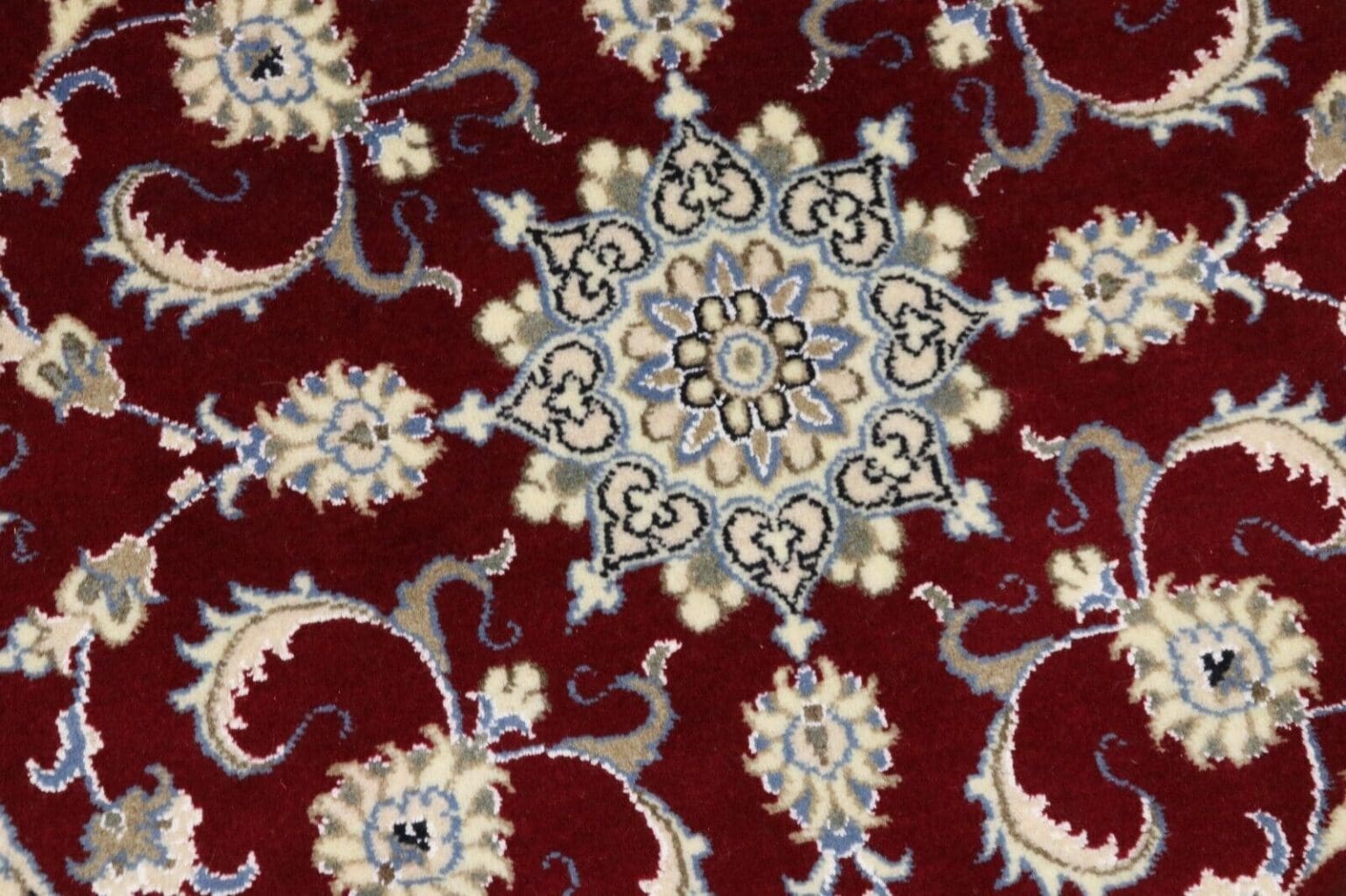
The high knot density supports the depiction of fine contours and small-scale ornament. Narrow vines, pointed leaves and geometric edging can be distinguished more clearly when the drawing is built with closely placed knots. Viewed closely, the rug reveals the texture of its hand-knotted construction. From farther away, the individual details combine into the unified effect of the design. Wool and silk may also respond differently to light, adding a measured change between softer and more reflective areas.
The traditional character of the pattern can sit alongside both classic and more restrained interiors. In a traditional room, the Persian ornament relates directly to other established furnishings. In a simpler setting, the red colouring can act as a defined accent while the floral and geometric drawing introduces a regional craft reference. These are design relationships rather than claims about a particular room.
The rug is also described as round. This shape differs from the usual rectangular format and gives the composition a more contained outline. The interaction of the circular form, red colour and finely drawn Persian ornament is part of the rug’s stated design character.
Special Features
The notable features of this rug are its hand-knotted construction, high knot density and combination of virgin wool with silk. The dense knotting supports detailed pattern work. Wool supplies a soft, resilient feel, while silk adds a smoother touch and sheen. The rug is described as new and perfect in condition.
This rug is suitable for underfloor heating and is described as pet-friendly. The use of natural fibres makes careful maintenance appropriate. Regular, gentle care helps protect the pile, colours and silk areas. The stated suitable settings include living rooms and bedrooms, as well as less heavily used hallways and guest rooms.
FAQ
How should I clean my Nain Persian rug?
For routine care, use a vacuum cleaner without a rotating brush attachment. This removes loose dust while reducing unnecessary mechanical stress on the pile. For deeper soiling, consult a professional carpet cleaner. Professional treatment is appropriate for a wool-and-silk rug because the two fibres can react differently to moisture, friction and cleaning products. Strong household cleaners should not be applied without specialist advice.
Is the rug suitable for underfloor heating?
Yes. This Nain Persian rug is suitable for underfloor heating. Its wool-and-silk composition is expressly described as compatible with this type of heating. Underfloor heating can distribute warmth across the floor, while the rug adds a textile surface underfoot. Appropriate cleaning and care remain important for maintaining the materials over time.
How can I make sure that my rug is genuine?
Knot density and materials can be examined when assessing a Persian rug. A hand-knotted rug made from natural fibres can also be recognised through the structure of its handmade construction. For a dependable assessment of authenticity and origin, consult a qualified rug expert. For this piece, the Nain designation, its Persian or Iranian origin, hand-knotted technique and stated wool-and-silk composition correspond to the described form.
To provide the best experiences, we use technologies like cookies to store and/or access device information. Consenting to these technologies will allow us to process data such as browsing behavior or unique IDs on this site. Not consenting or withdrawing consent, may adversely affect certain features and functions.
Functional Always active
The technical storage or access is strictly necessary for the legitimate purpose of enabling the use of a specific service explicitly requested by the subscriber or user, or for the sole purpose of carrying out the transmission of a communication over an electronic communications network.
Preferences
The technical storage or access is necessary for the legitimate purpose of storing preferences that are not requested by the subscriber or user.
Statistics
The technical storage or access that is used exclusively for statistical purposes.The technical storage or access that is used exclusively for anonymous statistical purposes. Without a subpoena, voluntary compliance on the part of your Internet Service Provider, or additional records from a third party, information stored or retrieved for this purpose alone cannot usually be used to identify you.
Marketing
The technical storage or access is required to create user profiles to send advertising, or to track the user on a website or across several websites for similar marketing purposes.

 SECURE PAYMENT
 SHIPPING PARTNERS