Persian Rug Metzger 293 x 193 cm Wool Hand-knotted
€ 1660
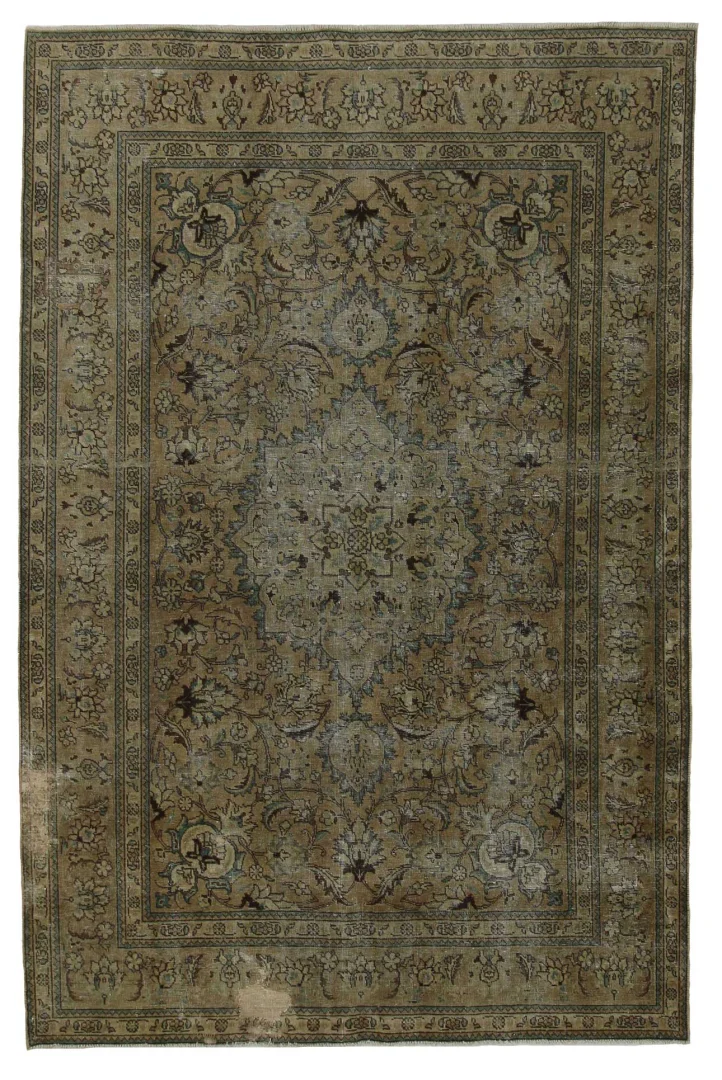
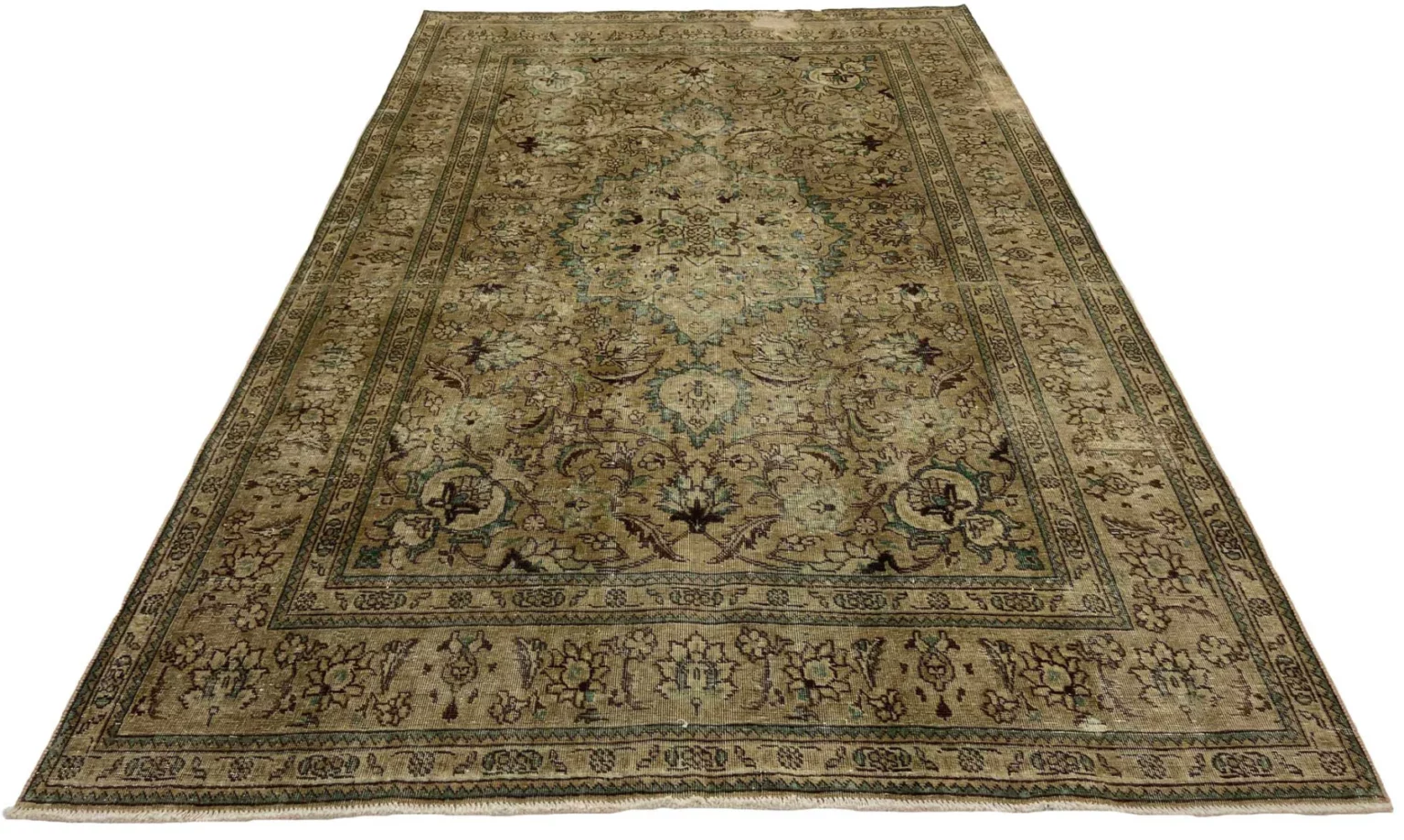
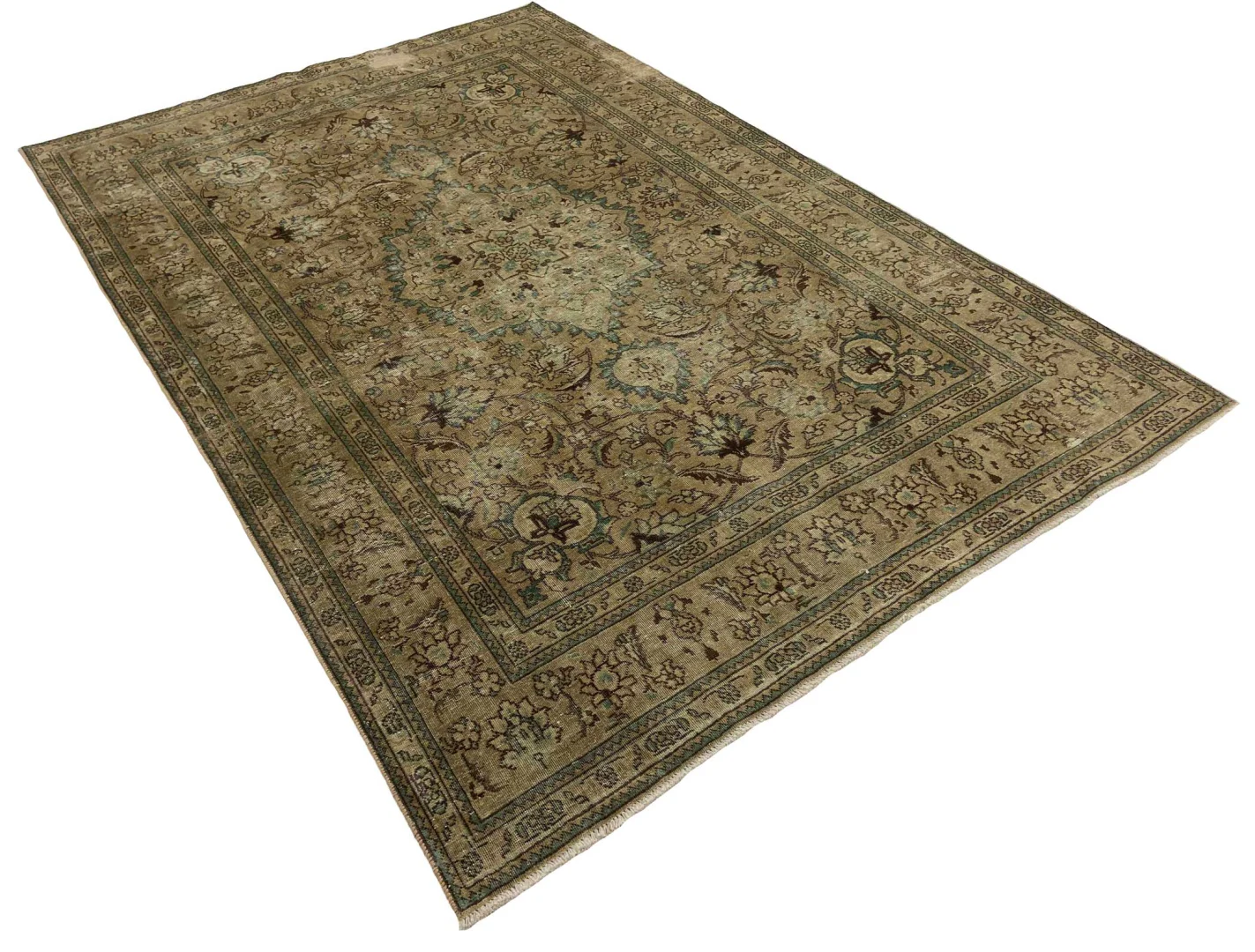
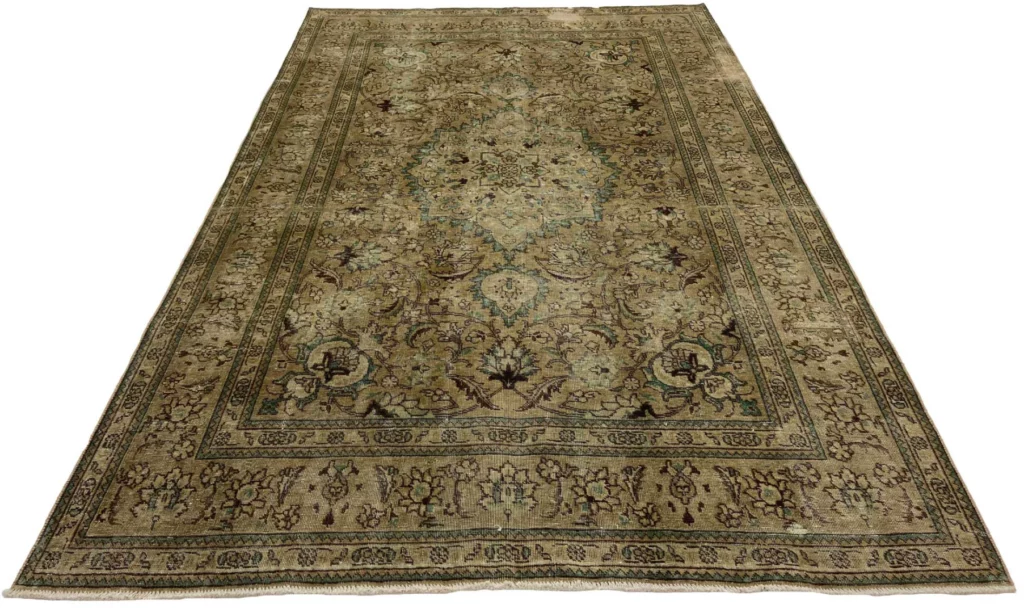
Hand-knotted Metzger Persian rug | Material: Wool pile | Size: 293 x 193 cm | Pattern: Modern design with classic ornaments and geometric patterns | Condition: Very good
This vintage Persian rug is hand-knotted and made of pure wool. Wool is one of the established materials of Persian rug making. It combines a durable character with a pleasant hand feel, giving the surface a natural textile quality. This differs from the uniform surface of a printed or industrially produced floor covering.
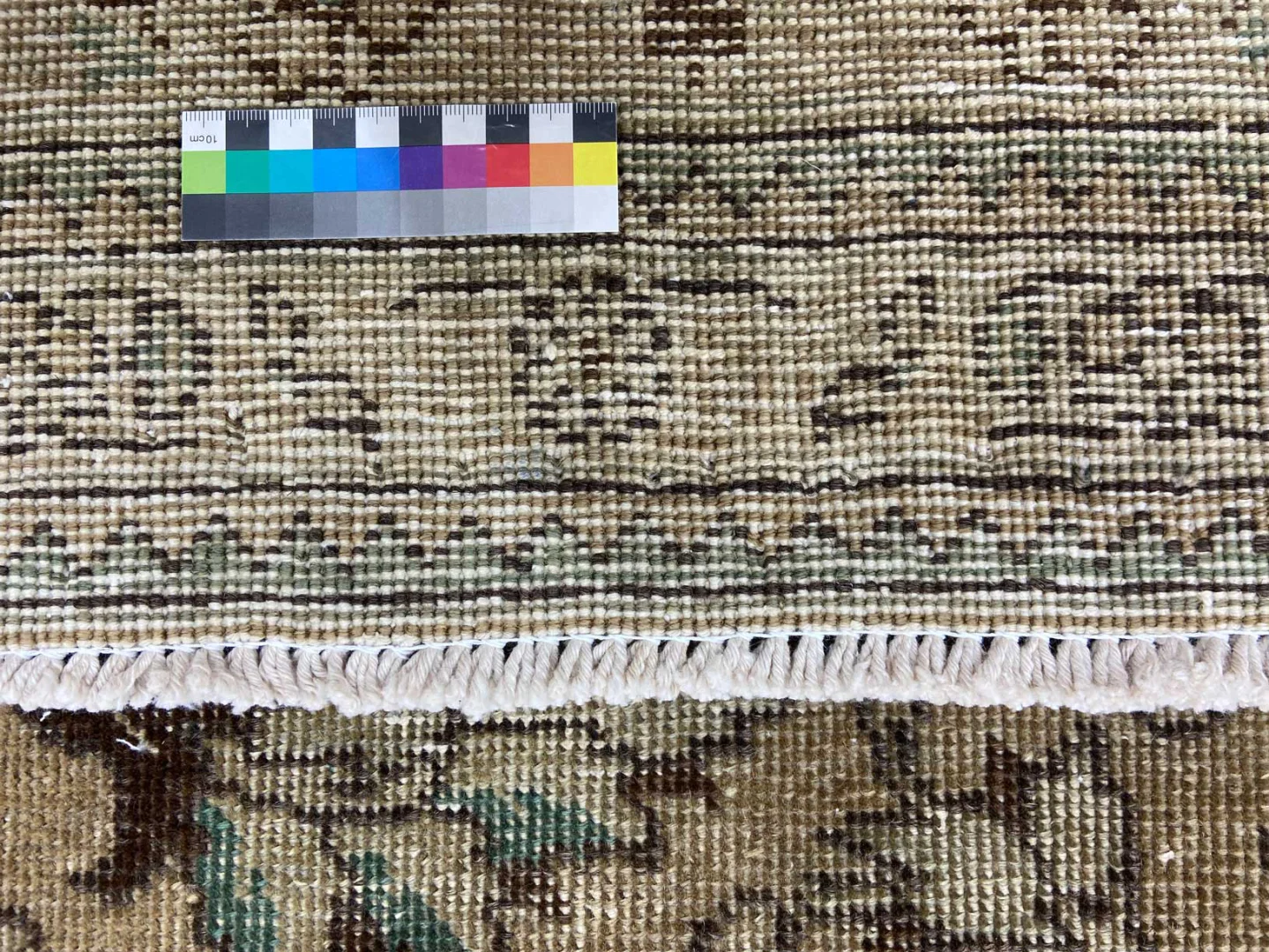
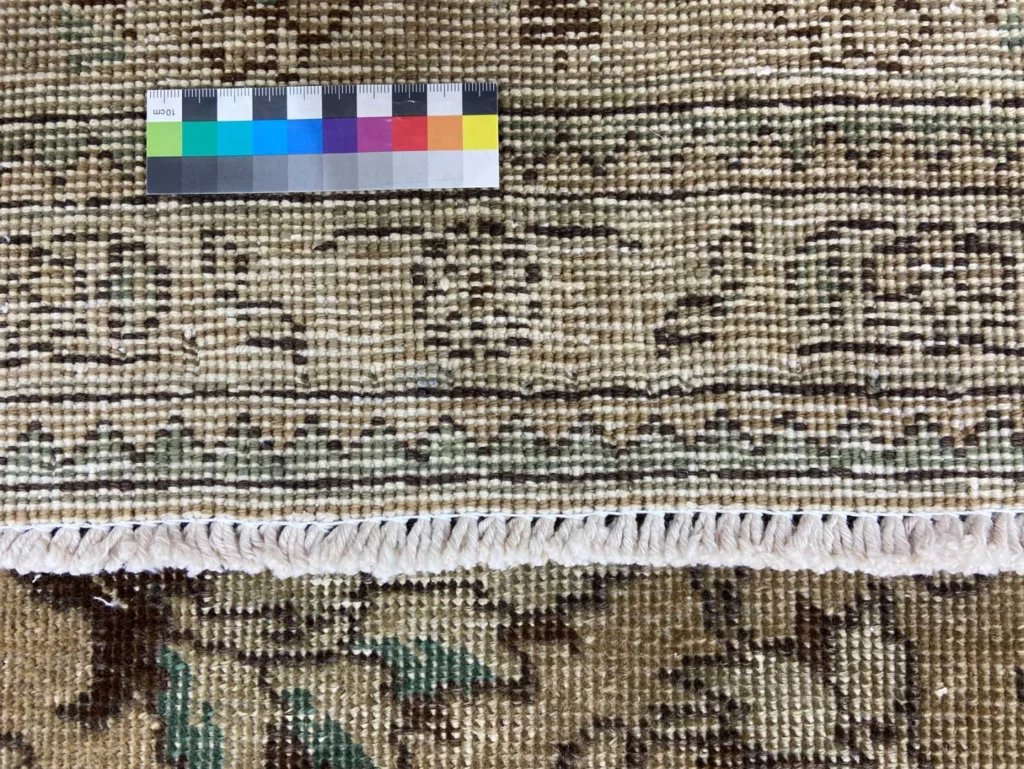
The rug was made by hand rather than as a fully uniform series product. The structure is built gradually through the placement of individual knots. Careful workmanship and attention to detail are identified as part of its construction. The wool forms the pile, while the knots provide the foundation for the rug’s structure and stability.
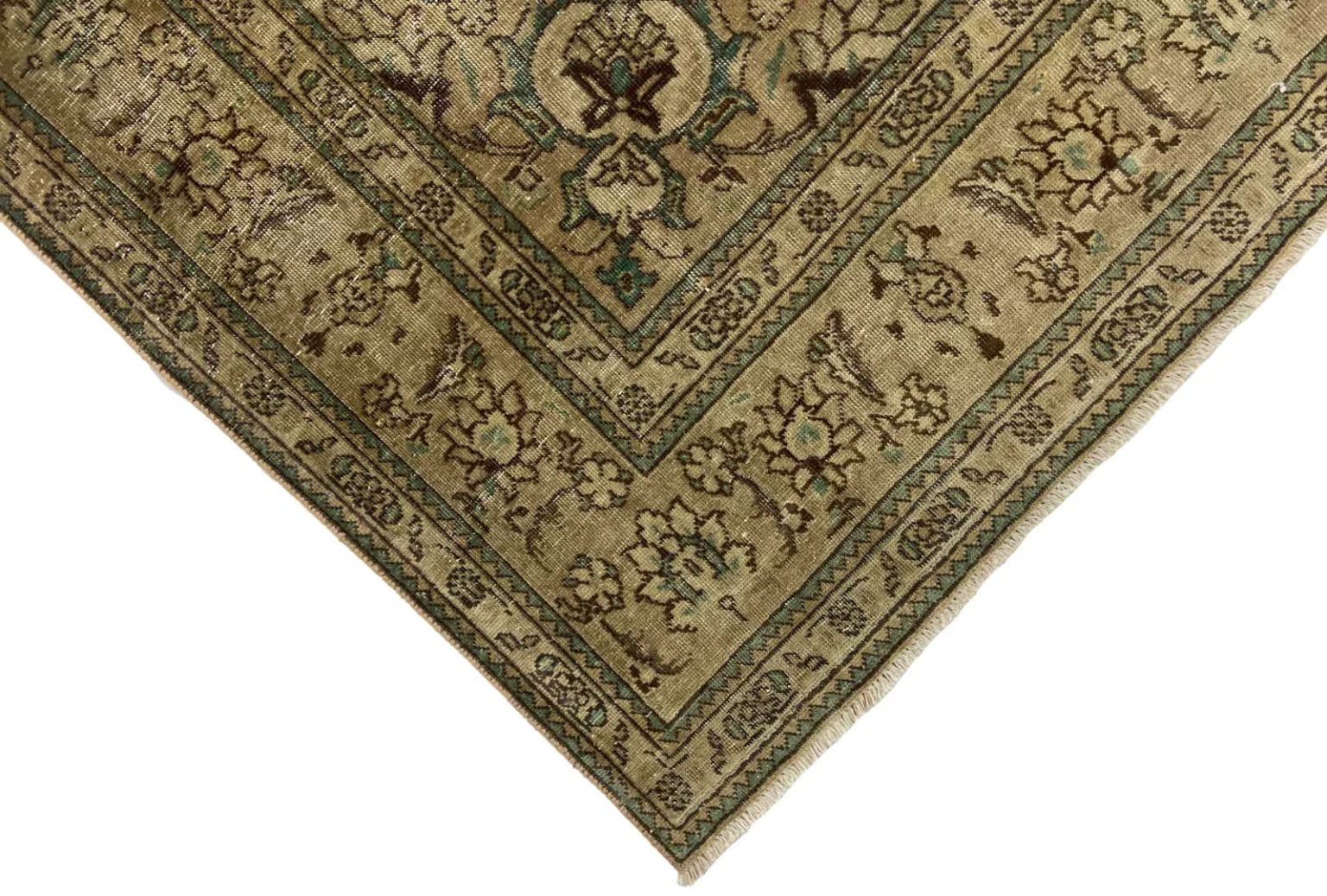
The rug has also undergone extensive reworking. Small imperfections were repaired, and the original design was restored during this process. The restoration is therefore part of the history of this vintage piece. It gives the rug renewed usability while retaining its character as an older hand-knotted textile.
The wool, professional workmanship and hand-knotted construction are described as contributing to a robust and durable result. Its texture is described as pleasant, and the rug is considered suitable for use over many years. No details are provided about the warp or about a numerical knot density, so no further material specification is added here.
Origin and Tradition
The rug is described as a Persian rug from Iran and is assigned to the Metzger region. It therefore belongs to the tradition of Iranian rugs, where practical use, manual skill and regional approaches to design are closely connected. The regional attribution is part of the description of this rug. No additional information about a particular workshop, town or knotting family is given.
Persian rugs have a long cultural significance in Iran. Their production brings together the practical purpose of a floor covering and the planning of a textile composition. Colours, ornaments and repeating forms are arranged as part of the weaving tradition. Hand-knotting requires time, concentration and a consistent process, from preparing the material to building the surface knot by knot.
In a hand-knotted rug, the design is not printed onto a finished surface. It develops as the knots and coloured wool are placed according to the intended composition. This construction is one reason hand-knotted rugs are regarded as textile works with their own structure. Minor variations may arise from the manual process in general, although no individual production details beyond the stated hand-knotted technique are recorded for this rug.
Iranian rug making has been shaped over centuries by the transmission of techniques and pattern arrangements. Such knowledge includes preparing the fibres, planning a repeat, tying the knots, trimming the pile and completing the surface. The relationship between ornament and colour is also important. These general features provide the cultural context for this rug without adding an unsupported account of its specific makers or date.
The term vintage indicates that the rug’s present appearance is connected with earlier use and later restoration. In this type of textile, the original knotting is only one part of the object’s history. The subsequent work also matters. In this case, small imperfections were repaired and the original design was restored, creating a renewed basis for use while preserving the described vintage character.
Iranian rugs are known internationally for combining regional design traditions with manual production. Their compositions may be geometric, ornamented or based on more flowing forms. The meaning of an individual motif cannot be established solely from the presence of a pattern. For this rug, the stated design elements are a modern design, classic ornaments and geometric patterns; no specific symbolic interpretation is supplied.
Design and Pattern
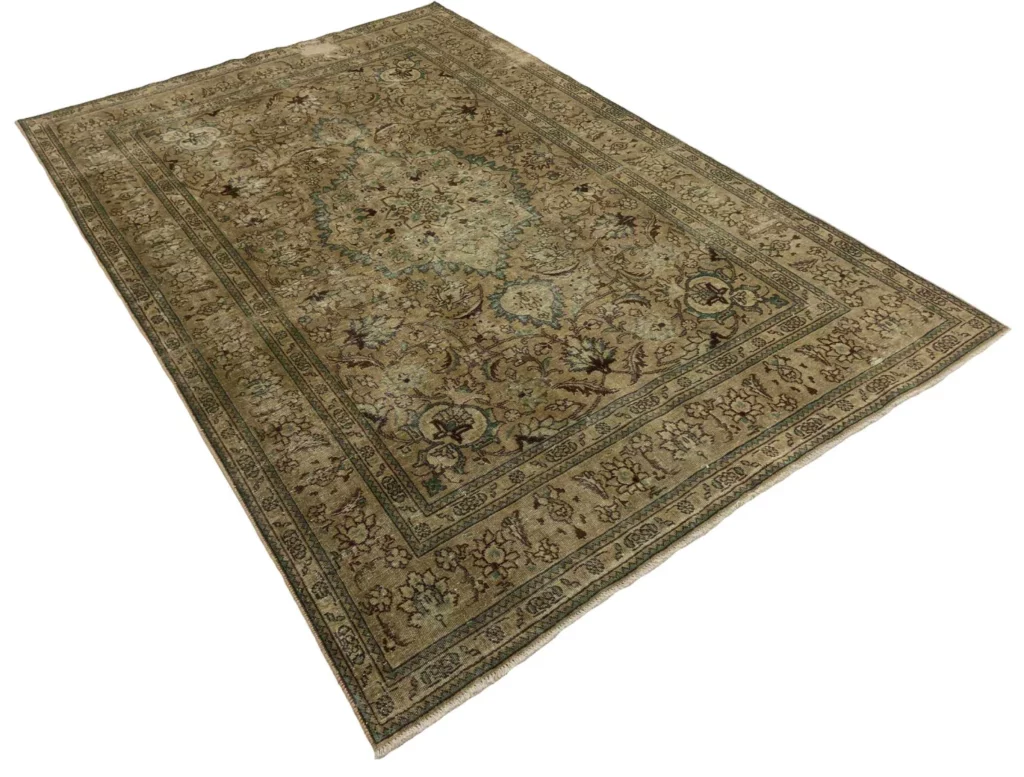
The design combines a modern appearance with classic ornaments. It is therefore not presented as purely traditional or purely contemporary. The classic forms connect the composition with Persian rug design, while the modern approach gives the overall arrangement a current visual reading. This combination allows the rug to work with both classic and modern interiors without removing its traditional reference.
Geometric patterns are also part of the stated design. Geometric compositions use clearly organised shapes, lines, repeated elements and areas of colour. In a hand-knotted rug, these forms are built through the arrangement of knots and coloured wool. Their outlines may be regular and rhythmic while still reflecting the fact that the surface was produced by hand. Geometry gives the pattern structure and makes the organisation of the field visible.
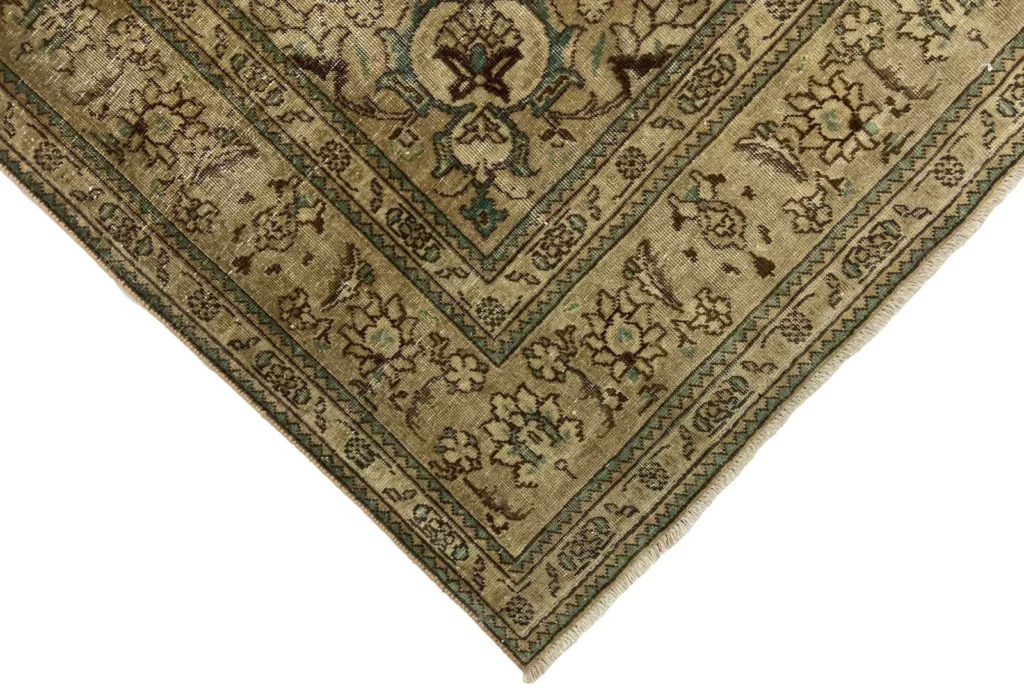
Classic ornaments can serve as organising elements within Persian rugs. They may appear individually, in rows or as parts of a larger composition. No particular ornament names are provided for this rug. The description therefore remains with the documented elements: classic ornaments are combined with geometric patterns and a modern design rather than being assigned a specific motif or symbolic meaning.
The colour arrangement is described as a harmonious interaction between warm and cool tones. Warm colours can give parts of a composition visual closeness or weight, while cool tones can create a different type of balance. The relationship between the two colour groups affects the way the ornaments and geometric forms are perceived. The colours are described as carefully selected, but no specific colour names or codes are supplied.
The overall design is intended to read as a coherent composition. Individual ornaments are considered together with the surrounding fields, repetitions and colour relationships. In a hand-knotted rug, this unity results from the interaction of the pile, knot structure and colour planning. The pattern is thus not separate from the material construction; both contribute to the way the surface appears.
The modern design with classic ornaments and geometric patterns is described as suitable for classic as well as contemporary living environments. The living room, bedroom and hallway are named as possible settings. In these spaces, the rug can add colour and visual movement while also serving as a floor covering. It is not tied to one particular interior style.
The restored surface also forms part of the rug’s present appearance. Restoring the original design preserves its visual foundation, while the reworking gives the piece a renewed presentation. The result brings together the history of a vintage rug, the classic ornamentation, the geometric organisation and the modern design approach in one hand-knotted surface.
Special Features
The extensive reworking is a defining feature. Small imperfections were repaired, and the original design was restored with attention to detail. The work gives the vintage rug renewed usability while keeping its earlier textile character recognisable.
The rug is described as being in very good condition. At the same time, its vintage designation and restoration indicate that it is not an untouched new product. It is a previously existing, hand-knotted rug that has been worked over to support further use.
Pure wool, hand-knotting and professional workmanship are identified as the basis of its robust character. The description considers it suitable for use over many years. No information is provided about its age, knot density, warp, signature or individual repair locations.
FAQ
How should a vintage Persian rug be cleaned?
Vacuum the rug regularly to remove dust and dirt before they remain in the pile. Treat spills promptly by dabbing them with a damp cloth rather than rubbing them into the surface. Use mild cleaning agents only. Professional cleaning is recommended because specialist treatment can help prevent damage to the wool, colours and restored surface.
Can the rug also be used in a commercial setting?
Yes. The rug is described as robust enough for commercial use. It should nevertheless not be exposed excessively to moisture or direct sunlight. Over time, moisture and strong sunlight can affect the colour and the quality of the material. Appropriate placement and regular care are therefore important when the rug is used in a commercial environment.
Where does this vintage Persian rug come from?
This vintage Persian rug comes from Iran and is assigned to the traditional Metzger rug region. Its hand-knotting belongs to a centuries-old Iranian rug culture. The region’s expertise is associated with high-quality materials and distinctive designs. The description does not provide a more precise place of manufacture or a year of production.
To provide the best experiences, we use technologies like cookies to store and/or access device information. Consenting to these technologies will allow us to process data such as browsing behavior or unique IDs on this site. Not consenting or withdrawing consent, may adversely affect certain features and functions.
Functional Always active
The technical storage or access is strictly necessary for the legitimate purpose of enabling the use of a specific service explicitly requested by the subscriber or user, or for the sole purpose of carrying out the transmission of a communication over an electronic communications network.
Preferences
The technical storage or access is necessary for the legitimate purpose of storing preferences that are not requested by the subscriber or user.
Statistics
The technical storage or access that is used exclusively for statistical purposes.The technical storage or access that is used exclusively for anonymous statistical purposes. Without a subpoena, voluntary compliance on the part of your Internet Service Provider, or additional records from a third party, information stored or retrieved for this purpose alone cannot usually be used to identify you.
Marketing
The technical storage or access is required to create user profiles to send advertising, or to track the user on a website or across several websites for similar marketing purposes.
 SECURE PAYMENT
 SHIPPING PARTNERS


