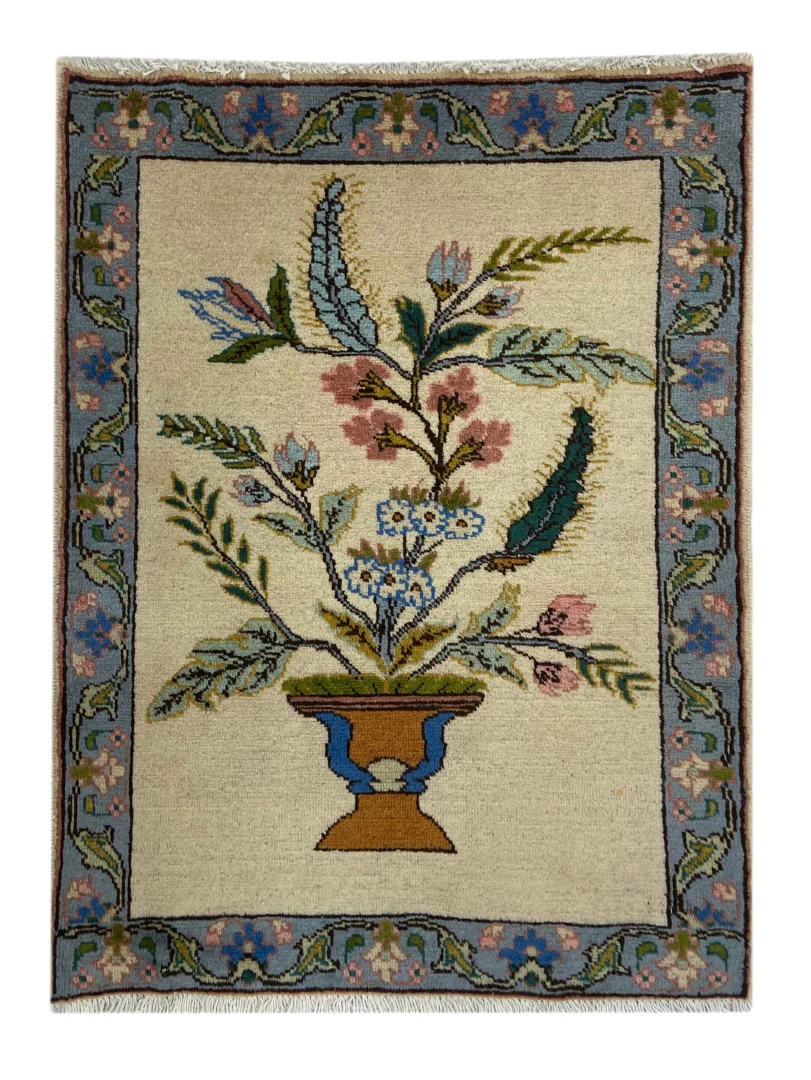
This Meshkin Persian rug is hand-knotted and made from high-quality wool. The wool used for Meshkin rugs comes from the region’s fertile steppes. Wool is a traditional material for this weaving practice because it can combine softness with durability. Its natural surface accepts dyes well and gives the pile a distinct textile texture. The result is a floor covering that feels pleasant in use while remaining suited to regular everyday use.
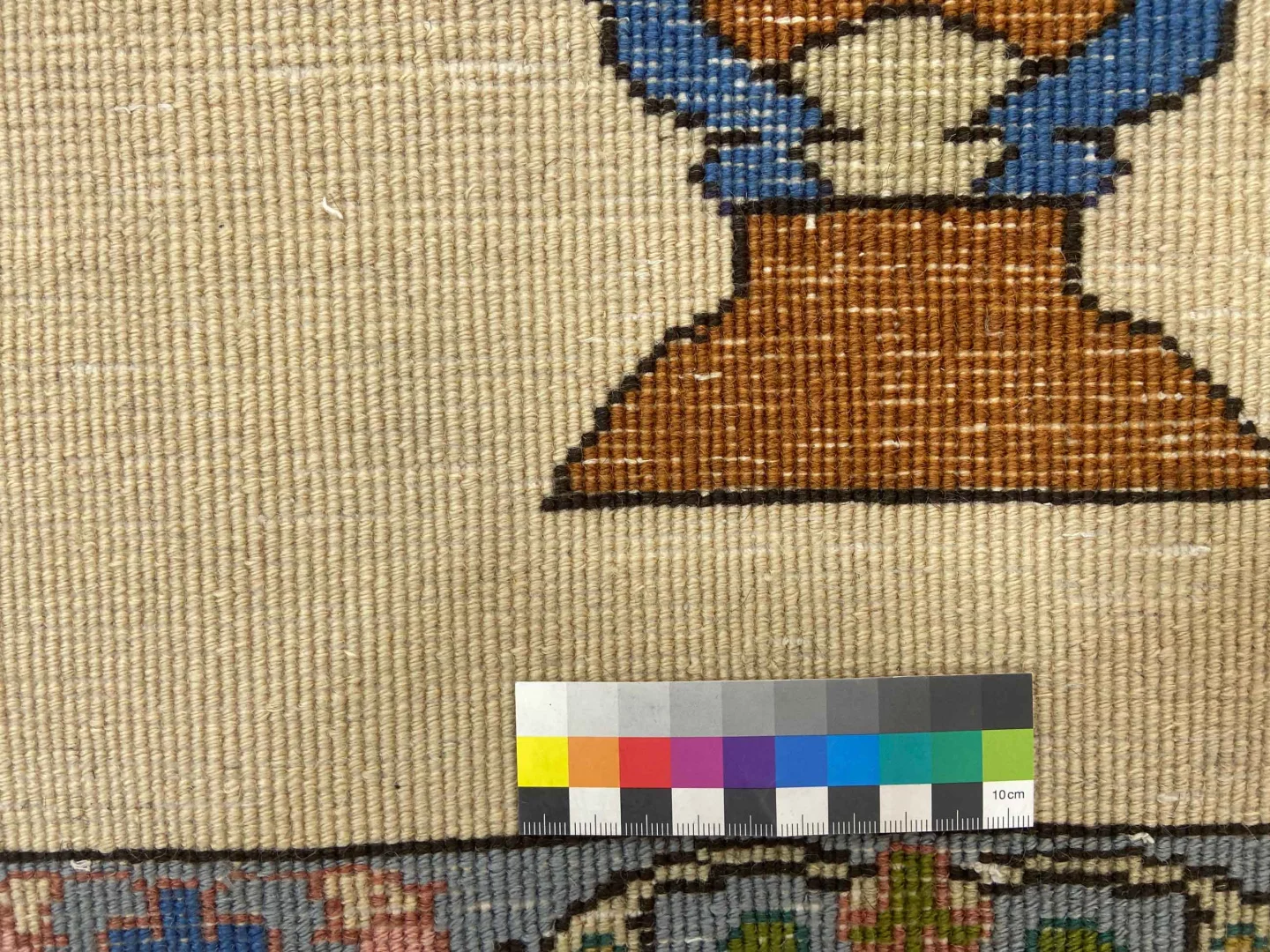
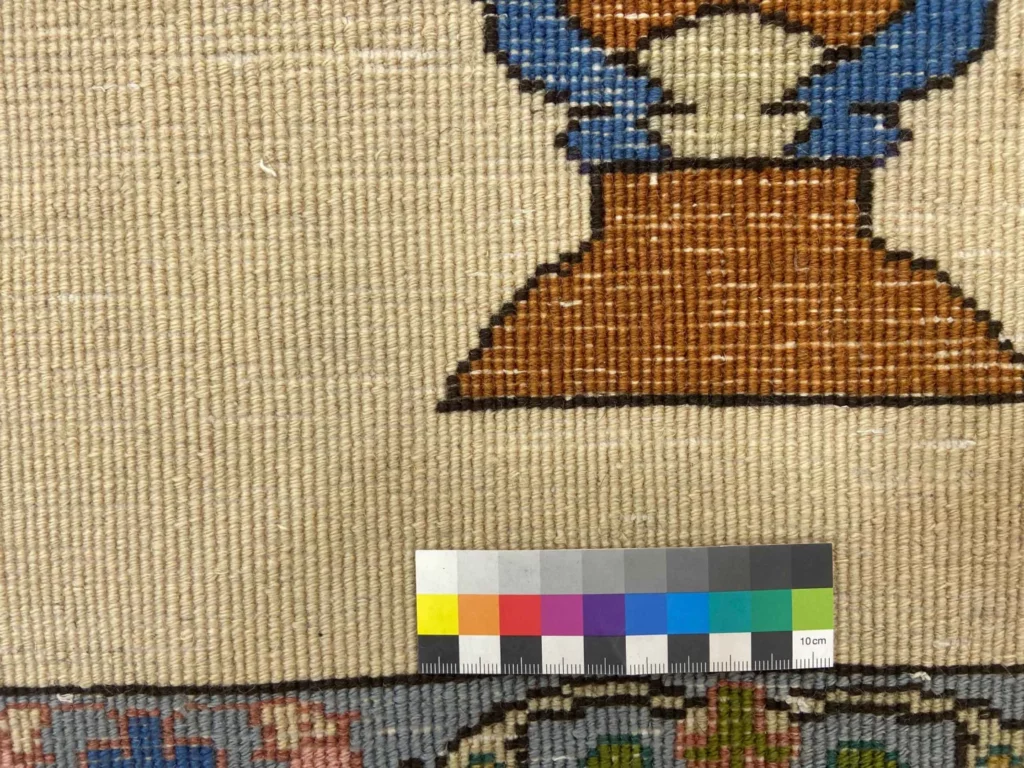
In hand-knotting, each knot is placed individually into the foundation. The knots form the pile, while the underlying structure gives the rug stability. This method requires time, concentration, and consistent workmanship. The fine execution associated with Meshkin rugs is connected with their high knot density. A dense field of knots allows geometric shapes to be drawn with greater clarity and enables small details and transitions to be arranged precisely.
The wool is described as high quality, soft, and durable, and it originates in the fertile steppes around the weaving region. These qualities belong to the material tradition of Meshkin rugs. The piece therefore brings together a natural pile fibre and a manually executed technique. Its appearance is not produced by a printed surface or a machine-made construction. The design is built into the rug as the knotting progresses, which connects the visual pattern directly with the making of the textile.
Origin and Tradition
Meshkin, also known as Meshgin, is located in north-western Iran in Ardabil Province. The name identifies a weaving tradition from a defined area of the Iranian north-west. Meshkin rugs are associated with geometric compositions and careful manual workmanship. Regional origin is an important part of how an oriental rug is understood, since weaving traditions differ not only in colour but also in material choices, working methods, and established forms.
The region is described as having fertile steppes, and the wool used for Meshkin rugs comes from this landscape. Wool has long been a practical material for many rug-making traditions because it is available, resilient, and suitable for forming a substantial pile. Its softness adds a different quality to its practical strength. The combination of a regional raw material with manual knotting is a characteristic element of oriental textile culture.
Iran contains numerous weaving areas, each with recognisable preferences in construction and design. Meshkin is associated with geometric patterns influenced by Caucasian design. This places its visual language apart from the more curved and floral compositions linked with other Iranian centres. Ardabil Province therefore provides more than a geographical label: it establishes a context for the material, the craft, and the formal vocabulary of the rug.
Tabriz rugs are often associated with detailed floral designs and rich colours. Bukara rugs are known for clear lines and strong colours. Nain and Kashan also represent distinct Iranian traditions with their own patterns and high-quality materials. These comparisons illustrate the breadth of Iranian rug culture without changing the origin of this particular piece. It is a Meshkin rug from north-western Iran, in Ardabil Province.
Hand-knotted rugs are both useful textiles and records of regional craft. A traditional design is not simply placed on top of a finished fabric; it is incorporated knot by knot into the structure. The origin is therefore connected with the method of production. Within this tradition, a Meshkin rug brings together regional wool, manual workmanship, and a geometric design language shaped by the area’s historical connections.
Design and Pattern
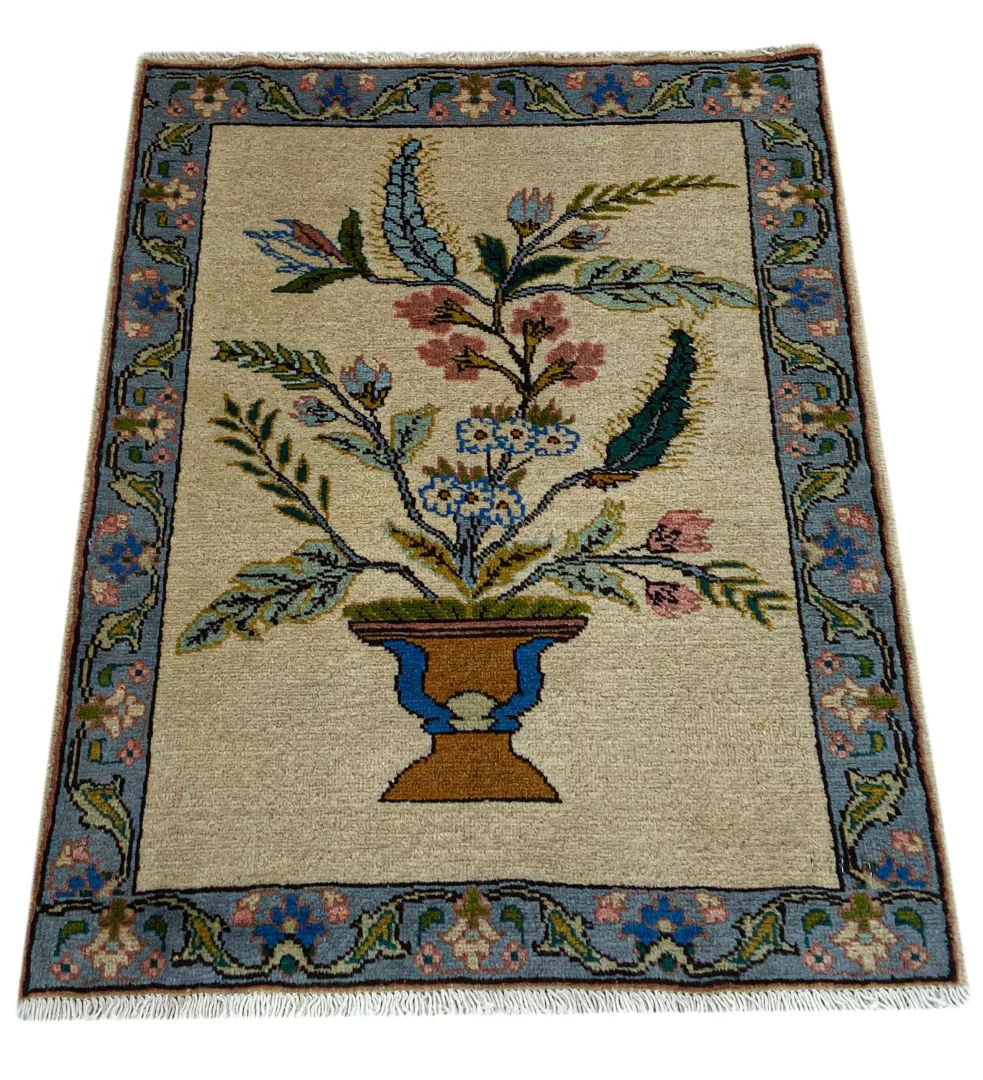
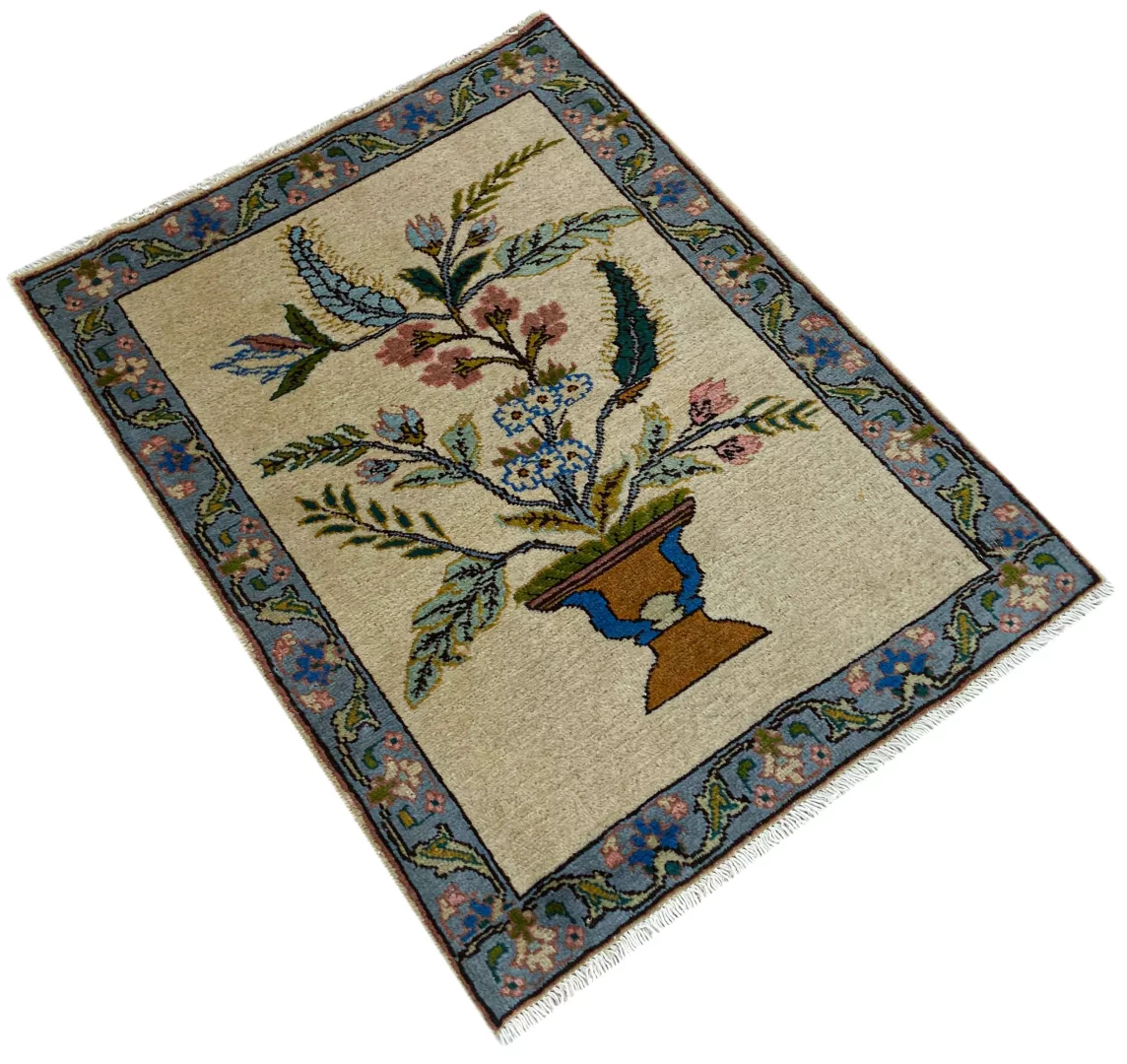
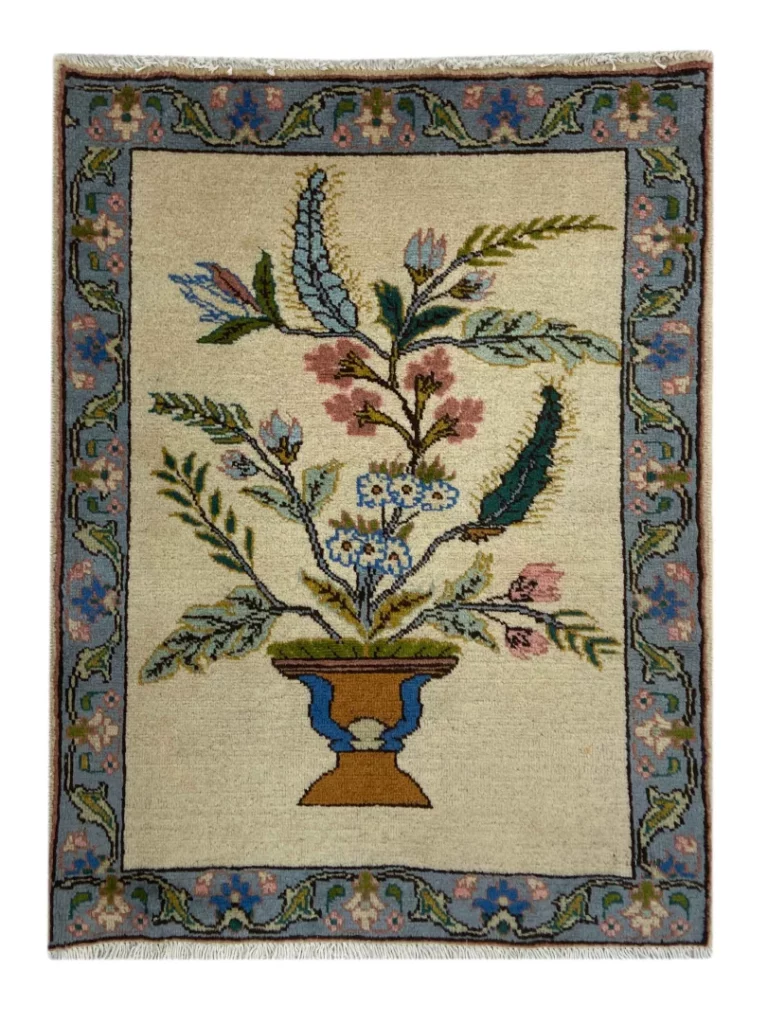
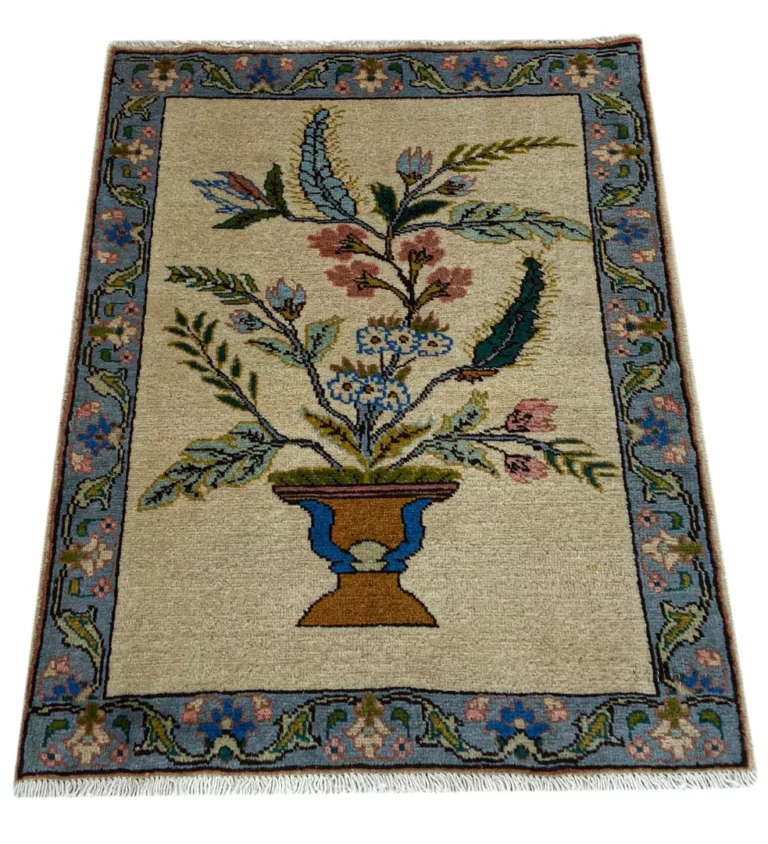
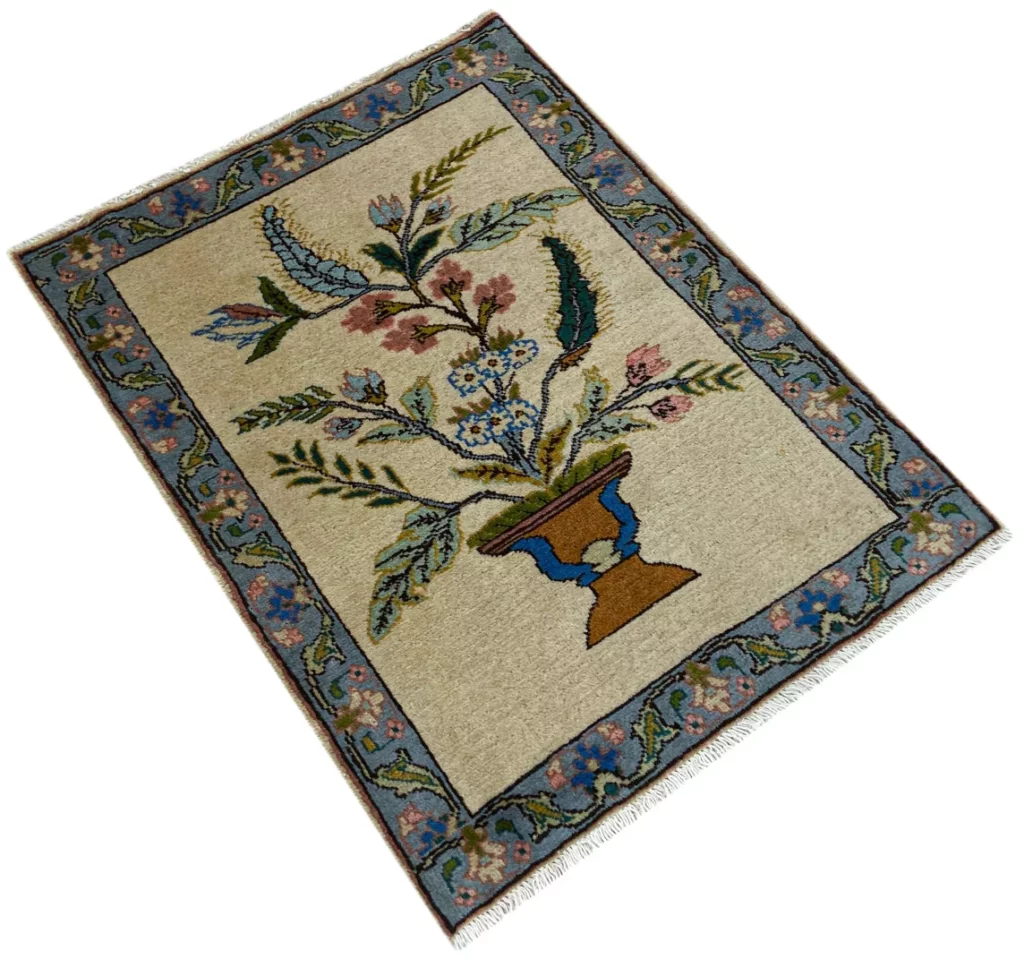
The pattern of this Meshkin rug is described as geometric in a Caucasian design. Geometric rug design relies on defined shapes, straight lines, angles, and measured repetition. Rather than depending on a purely naturalistic image, its visual order comes from the relationship between fields, borders, and individual motifs. The Caucasian influence contributes to the firm and structured character of this design vocabulary.
Geometric compositions may be built from diamonds, polygons, stylised flowers, repeated line formations, or articulated borders. The exact forms present in this individual rug are not specified. What is established is its classification as a geometric design with Caucasian influence. This classification describes the visual language and does not identify a different place of manufacture. A regional motif reference therefore does not replace Meshkin as the origin of the rug.
Deep red, warm brown, and soft beige are described as typical colours of Meshkin rugs. Within the regional tradition, this palette can create a balanced relationship between the main field and the surrounding forms. The colour description refers to characteristic Meshkin design practice rather than serving as a separate inventory of every colour in this individual piece. In a geometric composition, such colour fields can help distinguish borders, central areas, and repeated elements.
The high knot density associated with Meshkin rugs relates directly to the potential precision of their patterns. A dense pile allows lines and smaller shapes to be coordinated closely. The geometry can therefore follow a planned sequence rather than appearing random. At the same time, the clear contours make the design adaptable in its visual reading. Meshkin patterns can sit within classical, modern, or rustic interiors while retaining their regional identity.
Meshkin rugs are also valued as runners because geometric designs can provide direction and visual structure in hallways and entrance areas. This describes a common use within the tradition, not a claim about the placement of this particular rug. Its defining combination remains the Caucasian-influenced geometry, Iranian origin, and hand-knotted construction.
Every hand-knotted rug carries the individual mark of its maker. Minor variations in knots, line work, and colour distribution belong to the character of manual textile production. In Meshkin design, individuality exists within a recognisable regional vocabulary. The result is a distinct textile object whose geometric language remains connected to the Meshkin tradition.
Special Features
The rug is described as being in very good condition. Its specifically stated characteristics include hand-knotted construction, high-quality wool from the fertile steppes of the region, and a geometric pattern in a Caucasian design. The workmanship combines the regional identity of Meshkin with a material described as both soft and durable.
Regular vacuuming and occasional beating are recommended for care. These measures help remove dust and loose particles while supporting the shape of the pile. Professional rug cleaning can be used when necessary. Any treatment should take account of the properties of wool and the structure of a hand-knotted rug. A vacuum cleaner with a brush attachment, a rug beater, and, when needed, a suitable rug-cleaning product are listed as useful care equipment. A rug pad is also advisable because it can help protect the rug from abrasion.
The combination of regional wool, geometric design, and Iranian origin gives this individual piece a clear classification. It is a Meshkin Persian rug from north-western Iran in Ardabil Province, rather than a rug from another origin that merely uses a similar design vocabulary.
FAQ
How can I assess the quality of a Meshkin rug?
The quality of a Meshkin rug can be assessed by considering its knot density, the material used, and the fineness of its pattern. A high knot density supports the precise execution of small geometric details and helps maintain clear lines. Wool quality is equally relevant. Meshkin rugs use high-quality wool from the region’s fertile steppes, and this wool is described as soft and durable. Hand-knotted construction is another important factor because each knot is worked into the foundation individually. Taken together, knot density, wool quality, pattern detail, and craftsmanship provide a useful basis for evaluating quality. This rug is listed with a density of 120.000 to 200.000 knots per square metre and is described as being in very good condition.
What accessories do I need to care for a Persian rug?
For regular care of a Meshkin Persian rug, a vacuum cleaner with a brush attachment is suitable. A rug beater can also be used occasionally to remove loose particles from the pile. Occasional deep cleaning may be carried out with a suitable rug-cleaning product or by a professional rug cleaner. With wool, the method should be appropriate for the natural fibre and for the hand-knotted construction. A rug pad is advisable as well, since it can help protect the rug from abrasion. Regular vacuuming and occasional beating help keep the colours clear and the pile in shape. Strong or specialised cleaning treatments should be performed carefully and by a qualified service when required.
Are Meshkin rugs suitable for allergy sufferers?
Meshkin rug wool is generally considered hypoallergenic and is therefore well suited to allergy sufferers. As with any textile floor covering, regular care is important so that dust and allergens do not remain in the pile. Vacuuming with a brush attachment and occasional beating support routine cleaning. If the rug becomes more heavily soiled, professional cleaning can be appropriate. Suitability also depends on an individual’s sensitivity and on the requirements of the household. The described wool quality, hand-knotted construction, and consistent maintenance provide the basis for keeping a Meshkin rug clean and well cared for.
To provide the best experiences, we use technologies like cookies to store and/or access device information. Consenting to these technologies will allow us to process data such as browsing behavior or unique IDs on this site. Not consenting or withdrawing consent, may adversely affect certain features and functions.
Functional Always active
The technical storage or access is strictly necessary for the legitimate purpose of enabling the use of a specific service explicitly requested by the subscriber or user, or for the sole purpose of carrying out the transmission of a communication over an electronic communications network.
Preferences
The technical storage or access is necessary for the legitimate purpose of storing preferences that are not requested by the subscriber or user.
Statistics
The technical storage or access that is used exclusively for statistical purposes.The technical storage or access that is used exclusively for anonymous statistical purposes. Without a subpoena, voluntary compliance on the part of your Internet Service Provider, or additional records from a third party, information stored or retrieved for this purpose alone cannot usually be used to identify you.
Marketing
The technical storage or access is required to create user profiles to send advertising, or to track the user on a website or across several websites for similar marketing purposes.
 SECURE PAYMENT
 SHIPPING PARTNERS


