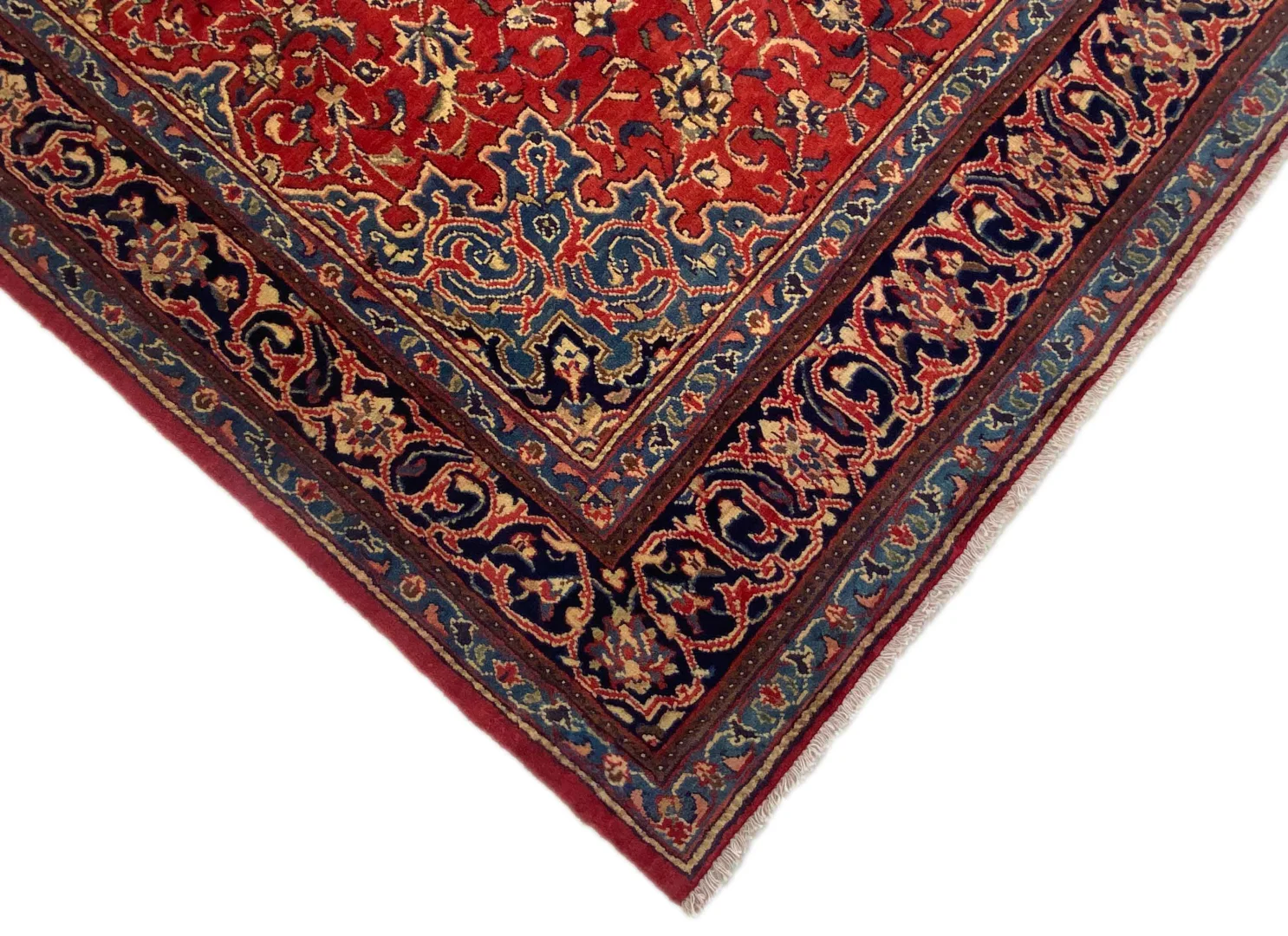
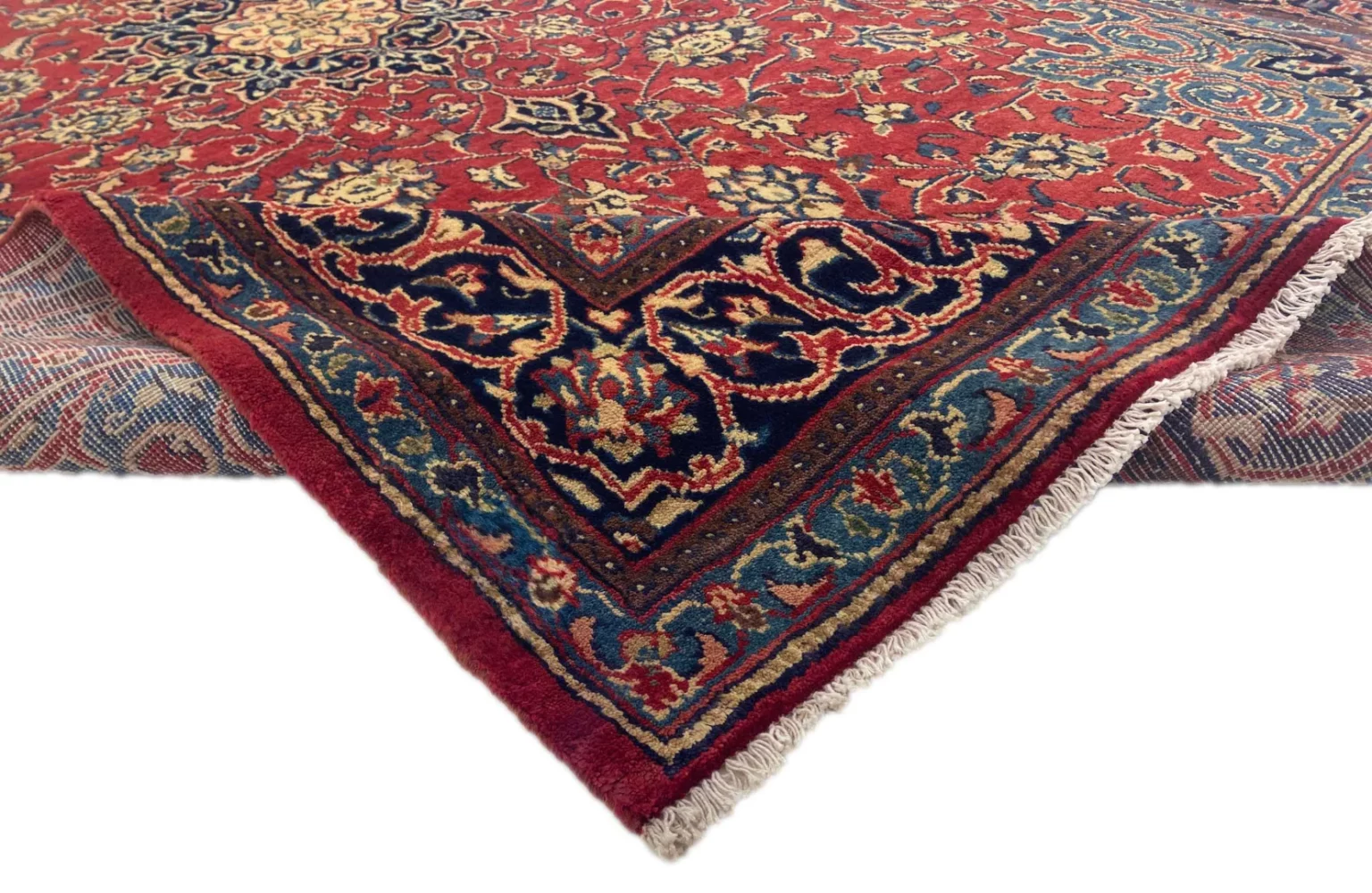
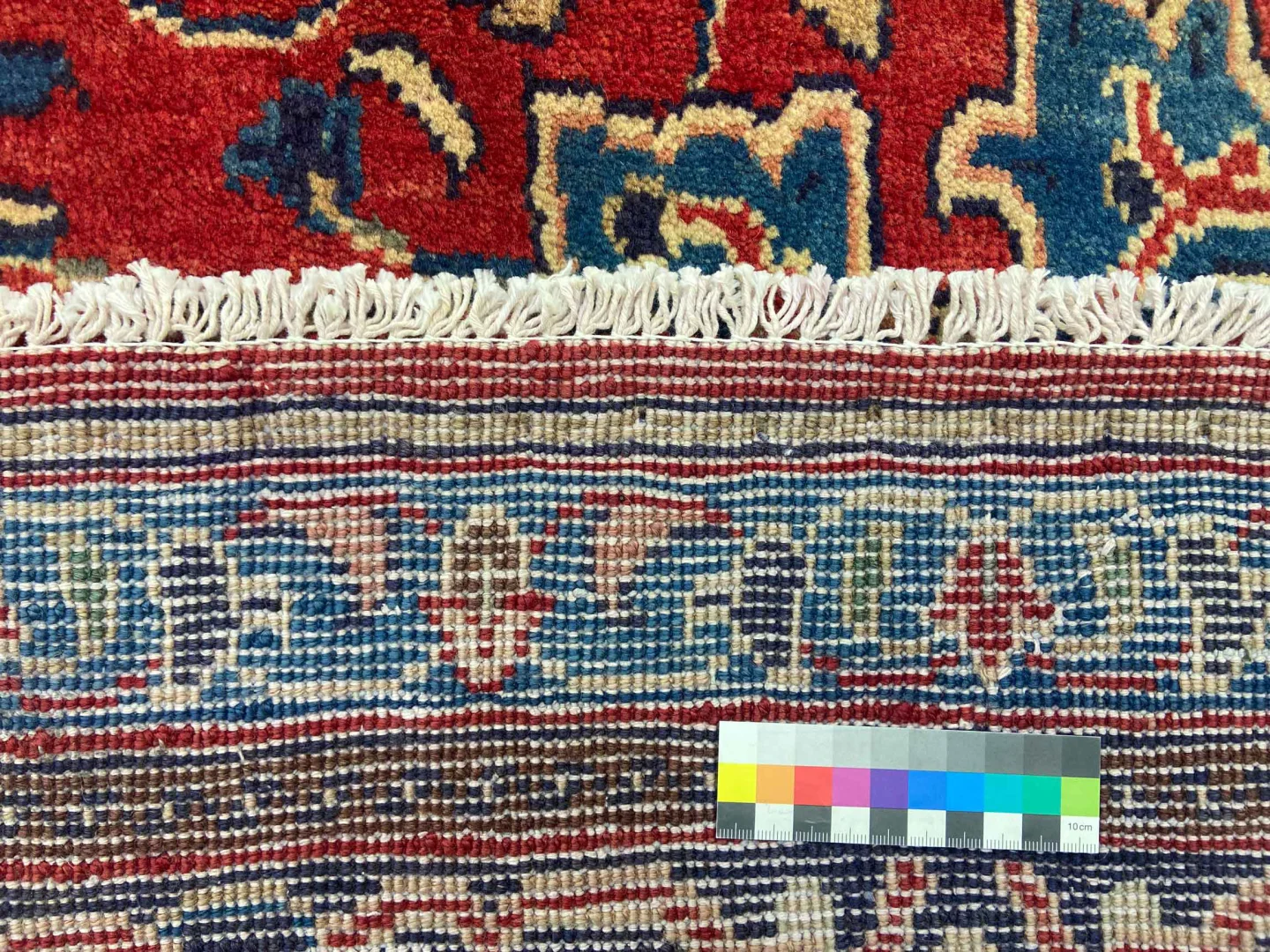
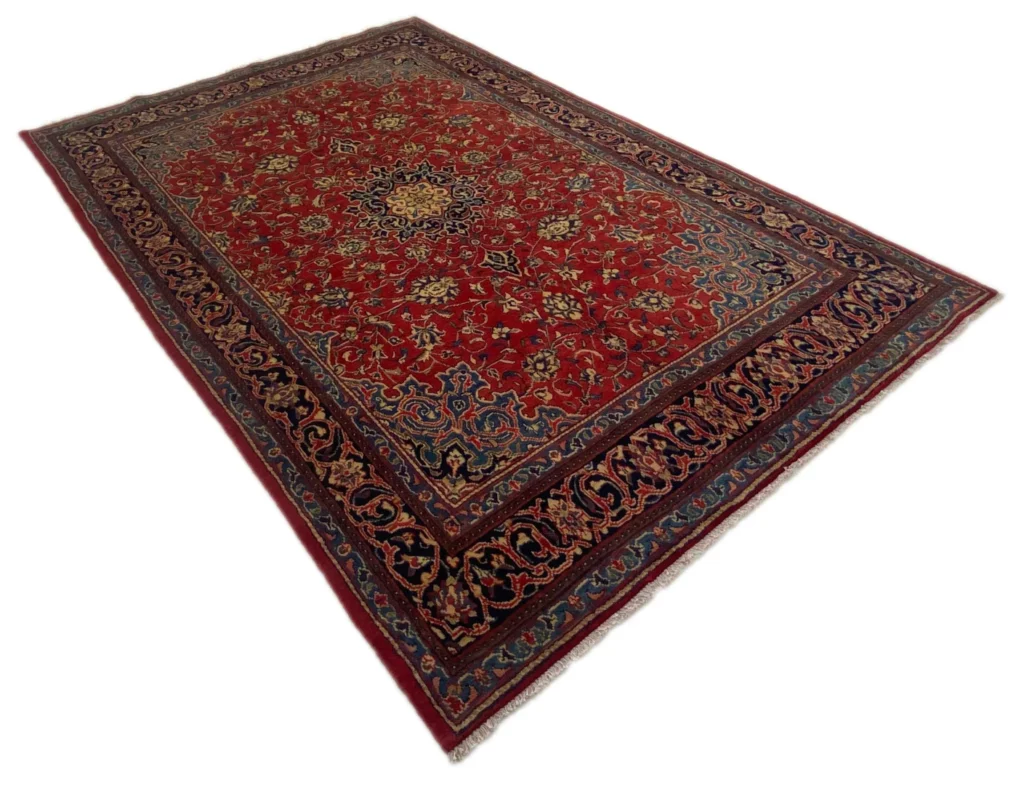
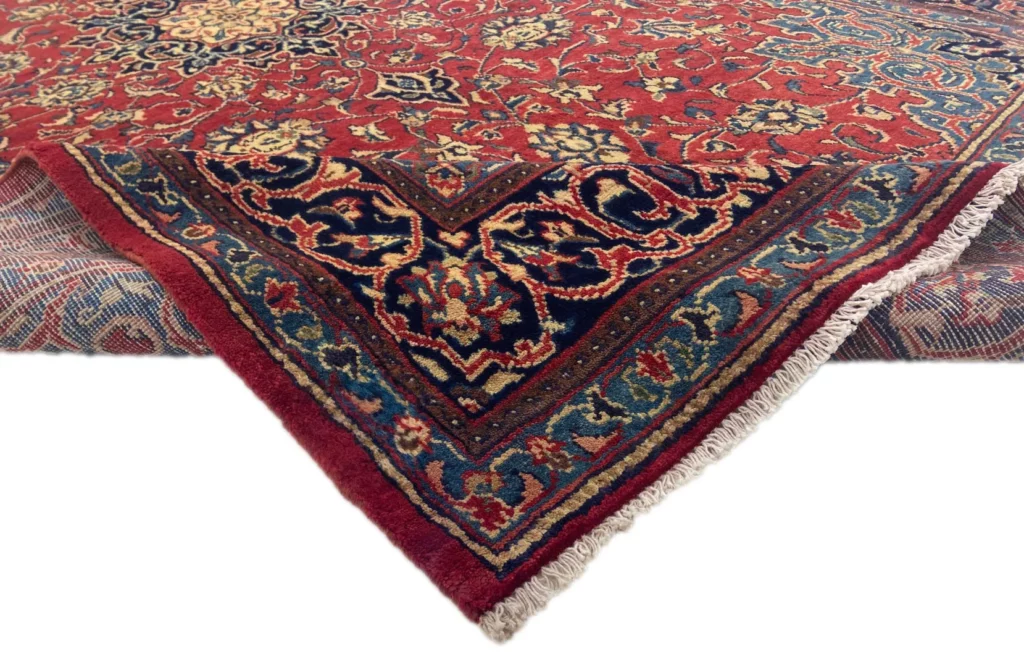
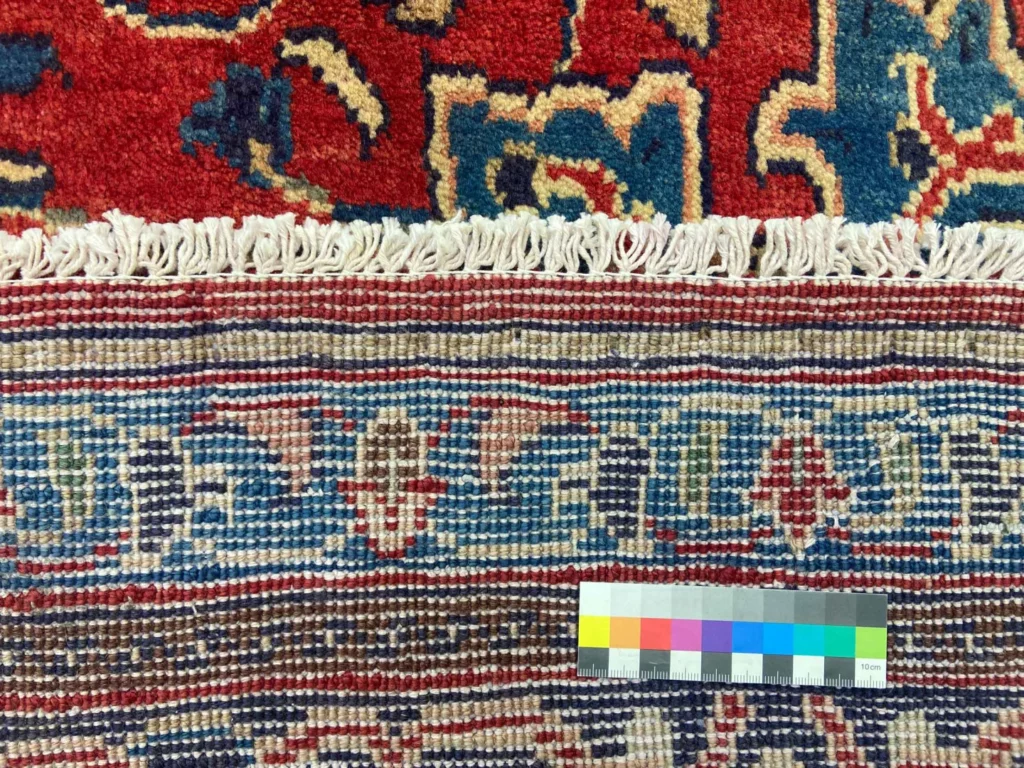
This Mahal Persian rug is hand-knotted and made with high-quality wool. Wool forms the main pile material and is one of the traditional fibres used in Persian rug making. As a natural material, wool has long been valued for its durability and for its suitability for careful handwork. A wool pile also offers a comfortable feel underfoot. In a hand-knotted rug, the design is built knot by knot. The work requires consistent handling of the material and close attention to the intended drawing. This makes it possible to render floral forms through numerous individual outlines, leaves, stems and colour areas. The knot density of this Mahal is between 200,000 and 350,000 knots per square metre. Within the Mahal tradition, this range belongs to finer executions and supports a more differentiated treatment of pattern details. Knot count is closely related to the amount of work involved and to the ability to express smaller distinctions within an ornamental design. The rug is in good condition. Its wool pile, hand-knotted construction and stated knot density therefore define the principal technical features of this individual piece. The material is not merely a surface choice: in a hand-made rug it is part of the relationship between the weaver, the structure and the finished pattern. Wool can be worked into a resilient pile while still accepting the closely arranged forms required by a floral composition. The result is a textile in which practical use and decorative drawing are combined through a traditional process.
Origin and Tradition
This Mahal Persian rug comes from Mahallat in western Persia. Since the eighteenth century, the area has been known for export rugs and has ranked among Iran’s significant rug-making centres. The name Mahal consequently refers both to a regional origin and to a Persian weaving tradition that developed beyond the immediate locality through trade. Rugs made for export had to combine reliable workmanship with a recognisable visual language. Their production belonged to an established textile culture in which practical knowledge, inherited designs and the working of wool all played an important part. Rug making itself consists of many consecutive operations rather than a single act. The foundation is prepared, knots are placed row by row, and the developing surface is checked and worked as the design progresses. The origin in Mahallat places this rug within a western Persian tradition without assigning it to another Persian region. Mahal rugs are known for lively colours and artistic patterns. These qualities reflect the meeting of local design practice with the experience of weavers who produced rugs for different interiors and markets. The tradition includes both compositions centred on a medallion and all-over arrangements. This gives the Mahal category considerable variety. A medallion design establishes a visual centre, while an all-over design distributes its elements across the field. In both cases, floral forms can be organised with leaves, stems, vines and ornamental lines so that individual blossoms become part of a coherent textile surface. The history of Mahallat’s export production also helps explain why Mahal designs are discussed as a recognisable type while still appearing in many variations. A regional tradition does not require every rug to use one fixed layout. Instead, it provides a vocabulary of colour, ornament and construction that can be arranged in different ways by different workshops and weavers. The rug offered here remains specifically associated with Mahallat and with the Mahal tradition. Other Persian rug names, including Kerman and Tabriz, are associated with their own regional histories and design developments. Nain and Isfahan are also recognised for their respective weaving traditions. Those names should not be used as alternative origins for this piece. Mahallat is the relevant place of origin here. Its connection with export rug production reaches back to the eighteenth century and forms the historical setting for the hand-knotted floral rug described in this listing. The regional identity is therefore carried by both the place name and the broader craft tradition in which the rug was made.
Design and Pattern
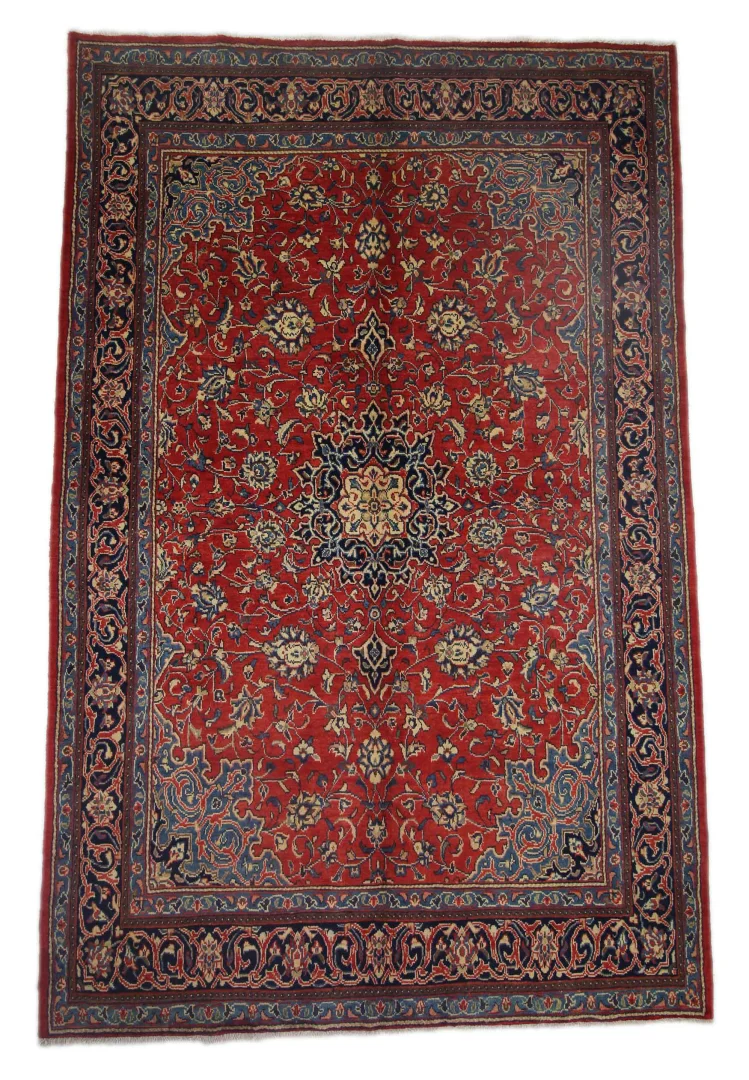
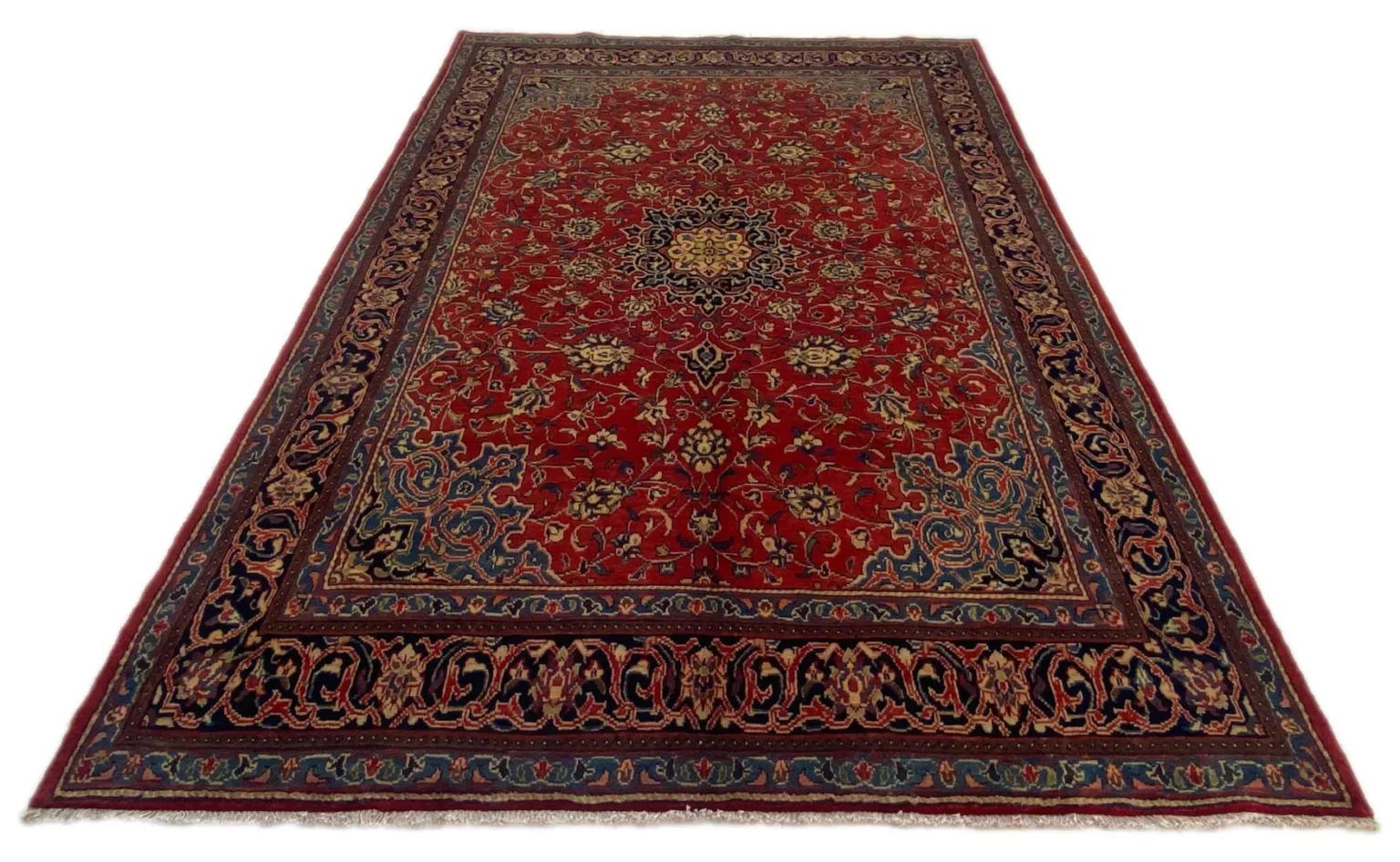
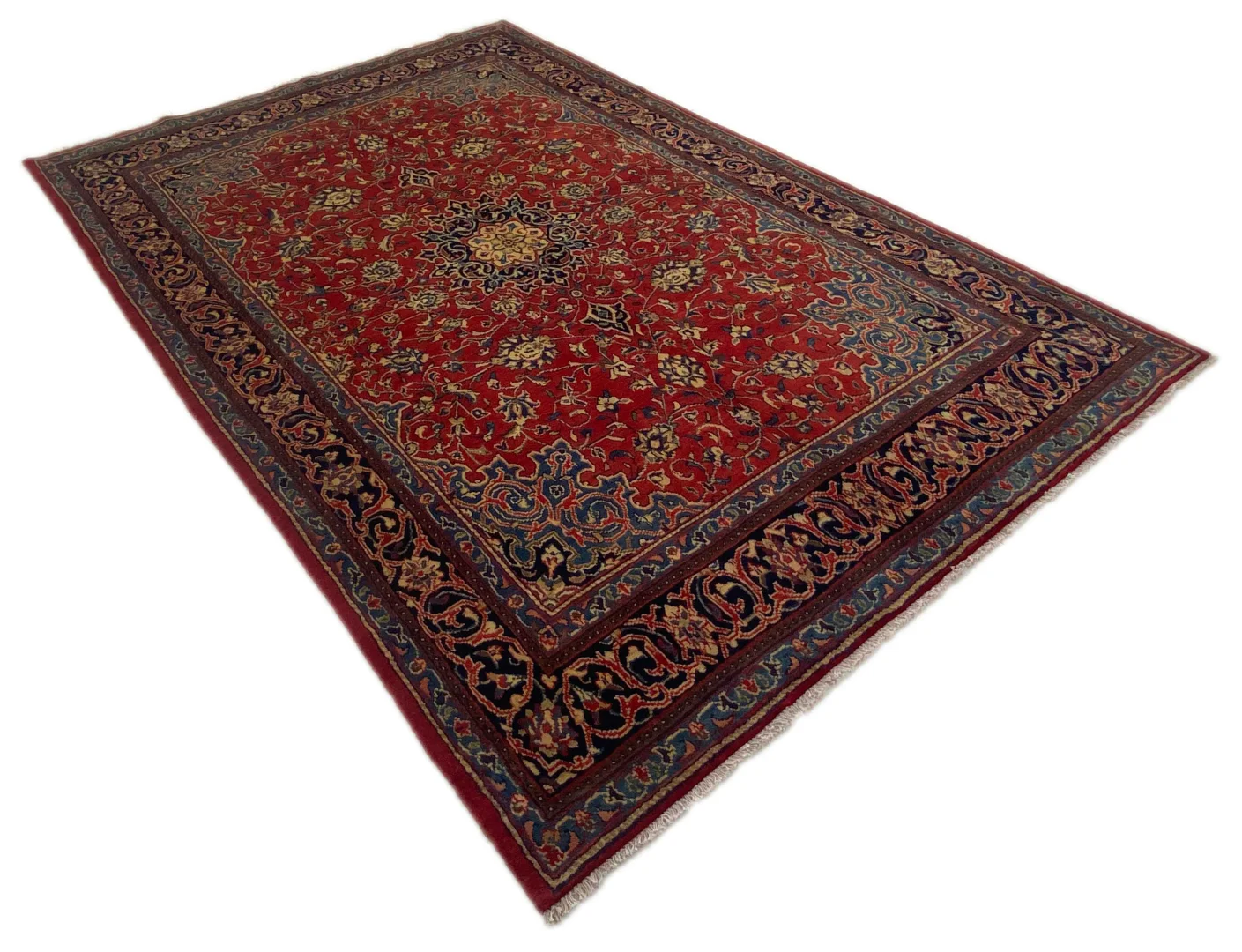
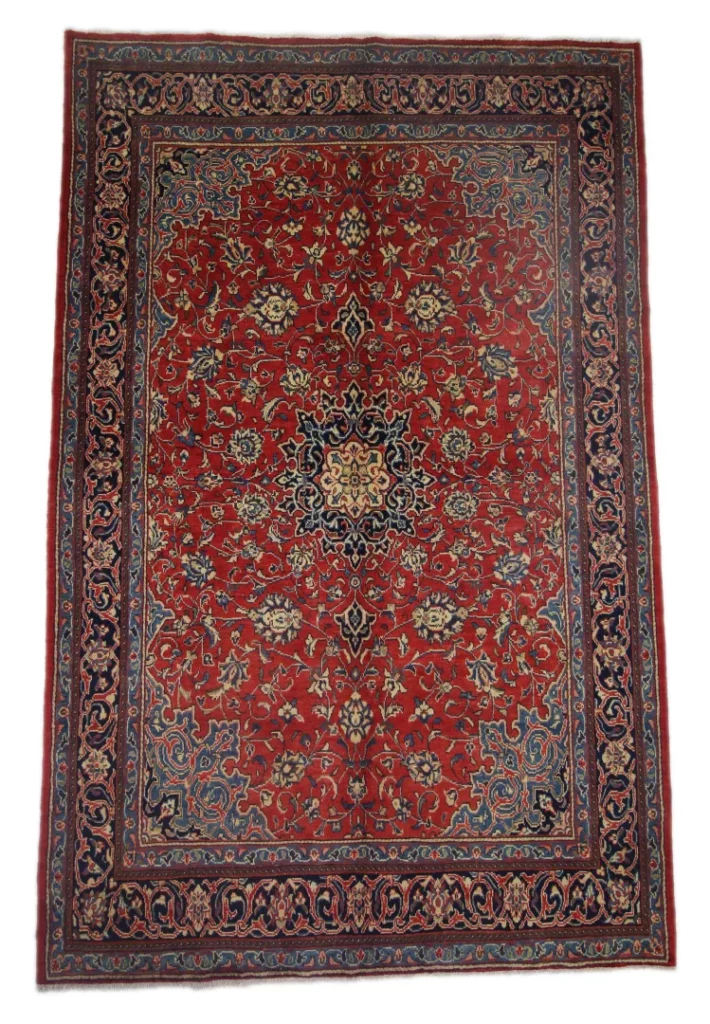
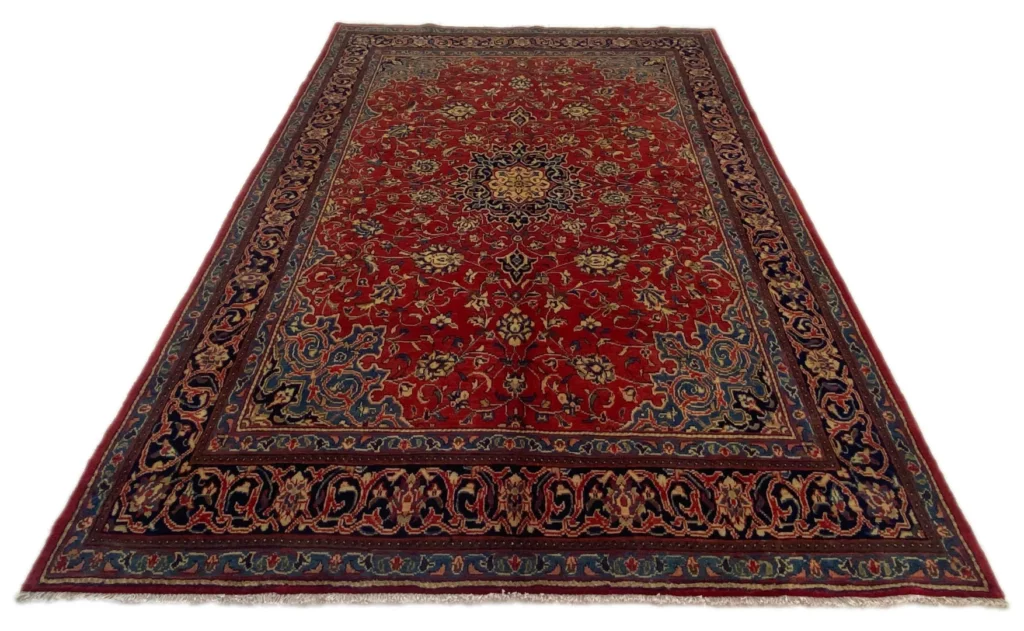
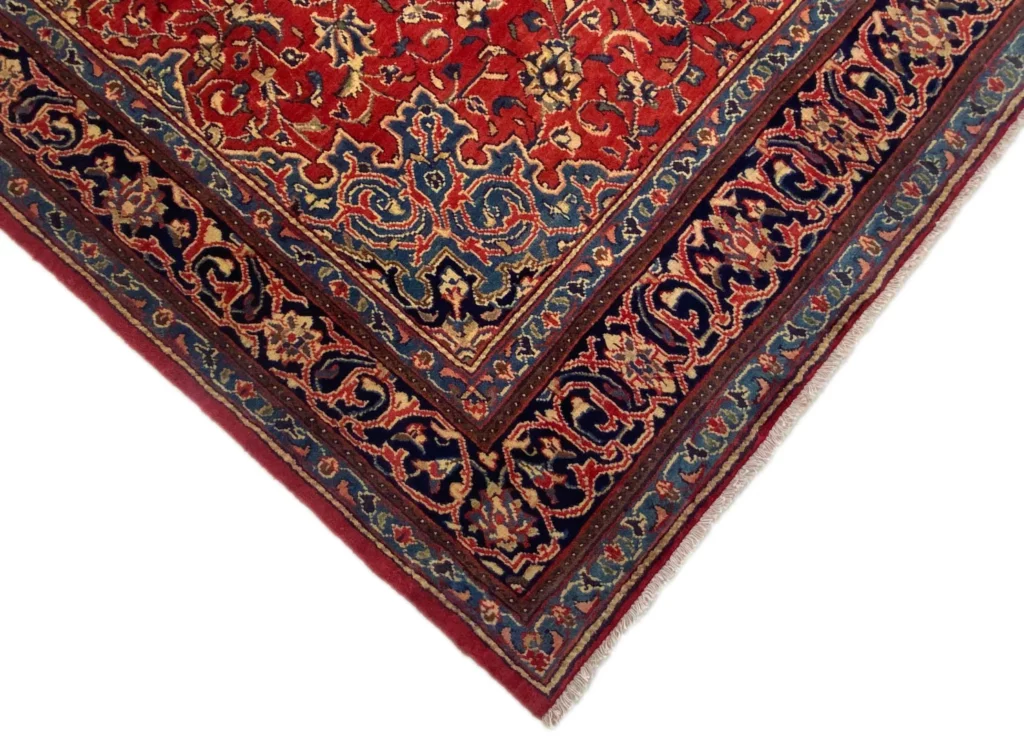
The pattern of this individual rug features large roses and tulips. Both flowers belong to the established floral vocabulary of Persian rug design. Roses may be rendered through layered petals and rounded flower heads, while tulips are often recognisable through their upright blossom and distinctive outline. In a hand-knotted composition, these flowers are not reproduced as a simple naturalistic illustration. They are translated into a textile language of contours, leaves, stems, vines and repeated ornamental shapes. The description of large roses and tulips identifies the central floral subject of this particular rug. Mahal rugs traditionally appear in varied layouts. Some are organised around a central medallion, while others use an all-over pattern in which floral elements continue across the field. These two approaches create different kinds of visual order: the medallion directs attention towards the centre, whereas the all-over arrangement allows the eye to move through the complete surface. Floral ornaments can be connected by scrolling lines, foliage and secondary motifs. Such devices are common ways of turning separate blossoms into a balanced composition. Mahal colour schemes are often associated with dominant reds, accompanied by quieter nuances such as beige or dark blue. Colour in a Persian rug does more than imitate the natural shades of flowers. It separates field, ornament and border, establishes contrast, and gives the composition a clear rhythm. Against a strong ground, the outlines of roses and tulips can become easier to read, while darker or lighter accents help distinguish one form from another. The floral subject is also connected with the cultural and historical richness of Persia. Natural forms are stylised so that they can be repeated and preserved within a durable ornamental system. A woven or knotted floral design is therefore not a temporary image, but part of a pattern tradition that changes through individual execution. Every hand-knotted piece gives inherited motifs its own material presence. The stated knot density supports the detailed treatment of the design by allowing closely placed lines and carefully defined shapes. This does not change the named motifs: the principal pattern remains large roses and tulips. It describes how the floral language of Mahal rugs is expressed through a hand-worked surface, lively colour relationships and an ordered arrangement of botanical forms.
Special Features
The special features of this individual Mahal Persian rug are its origin in Mahallat, its hand-knotted construction, its high-quality wool pile and its knot density of 200,000 to 350,000 knots per square metre. The large roses and tulips give the design a clearly floral identity. Its place of origin connects it with the western Persian tradition of Mahallat, an area known for export rugs since the eighteenth century. The rug is in good condition. Taken together, the origin, material, technique, density and pattern provide a precise description of this one-off hand-made piece within the Mahal tradition. Its character comes from the combination of regional craft, wool workmanship and a floral design rather than from an unrecorded attribution or additional provenance.
FAQ
What makes this Mahal Persian rug distinctive?
Its distinctive features are its Mahallat origin, hand-knotted construction, high-quality wool pile and knot density of 200,000 to 350,000 knots per square metre. The large roses and tulips provide the principal visual theme. Together, these details place the rug within the Mahal tradition while describing the specific workmanship of this individual piece. Its good condition is another stated characteristic.
How should a Mahal rug be cared for?
Regular care can include gentle vacuuming without a brush attachment and occasional beating out. For heavier soiling, professional rug-cleaning services are recommended. A specialist can treat the wool and the hand-knotted surface appropriately and reduce the risk of damage caused by unsuitable products or improper cleaning methods. Care should preserve both the pile and the clarity of the floral design.
Can a Mahal rug be used in different rooms?
Yes. Mahal rugs can generally be used in several areas of a home, including living rooms, dining rooms and hallways. The floral drawing of roses and tulips, together with the lively colours and artistic patterns associated with Mahal rugs, can work with different interior styles. The precise effect will depend on the existing furnishings and on how the rug is positioned in the room.
To provide the best experiences, we use technologies like cookies to store and/or access device information. Consenting to these technologies will allow us to process data such as browsing behavior or unique IDs on this site. Not consenting or withdrawing consent, may adversely affect certain features and functions.
Functional Always active
The technical storage or access is strictly necessary for the legitimate purpose of enabling the use of a specific service explicitly requested by the subscriber or user, or for the sole purpose of carrying out the transmission of a communication over an electronic communications network.
Preferences
The technical storage or access is necessary for the legitimate purpose of storing preferences that are not requested by the subscriber or user.
Statistics
The technical storage or access that is used exclusively for statistical purposes.The technical storage or access that is used exclusively for anonymous statistical purposes. Without a subpoena, voluntary compliance on the part of your Internet Service Provider, or additional records from a third party, information stored or retrieved for this purpose alone cannot usually be used to identify you.
Marketing
The technical storage or access is required to create user profiles to send advertising, or to track the user on a website or across several websites for similar marketing purposes.
 SECURE PAYMENT
 SHIPPING PARTNERS


