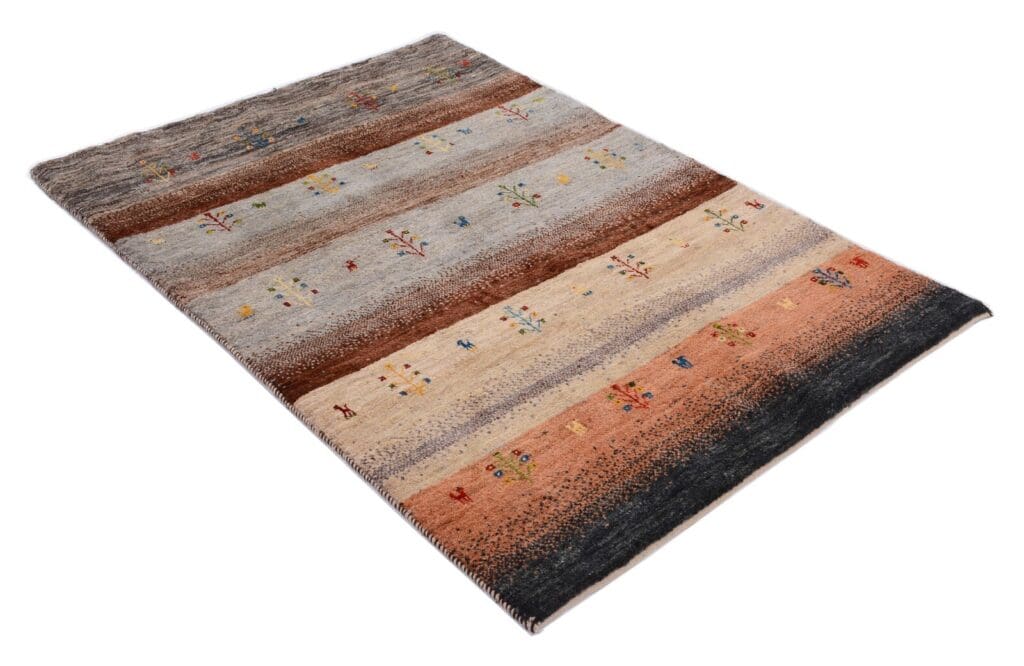
This Loribaft is a hand-knotted Persian rug made from 100% virgin wool. The wool is hand-spun and hand-dyed. The preparation of the yarn and the colouring are therefore both described as manual processes. The rug has a natural wool basis and belongs to a tradition in which the material itself, the preparation of the fibres and the knotting technique all contribute to the finished surface.
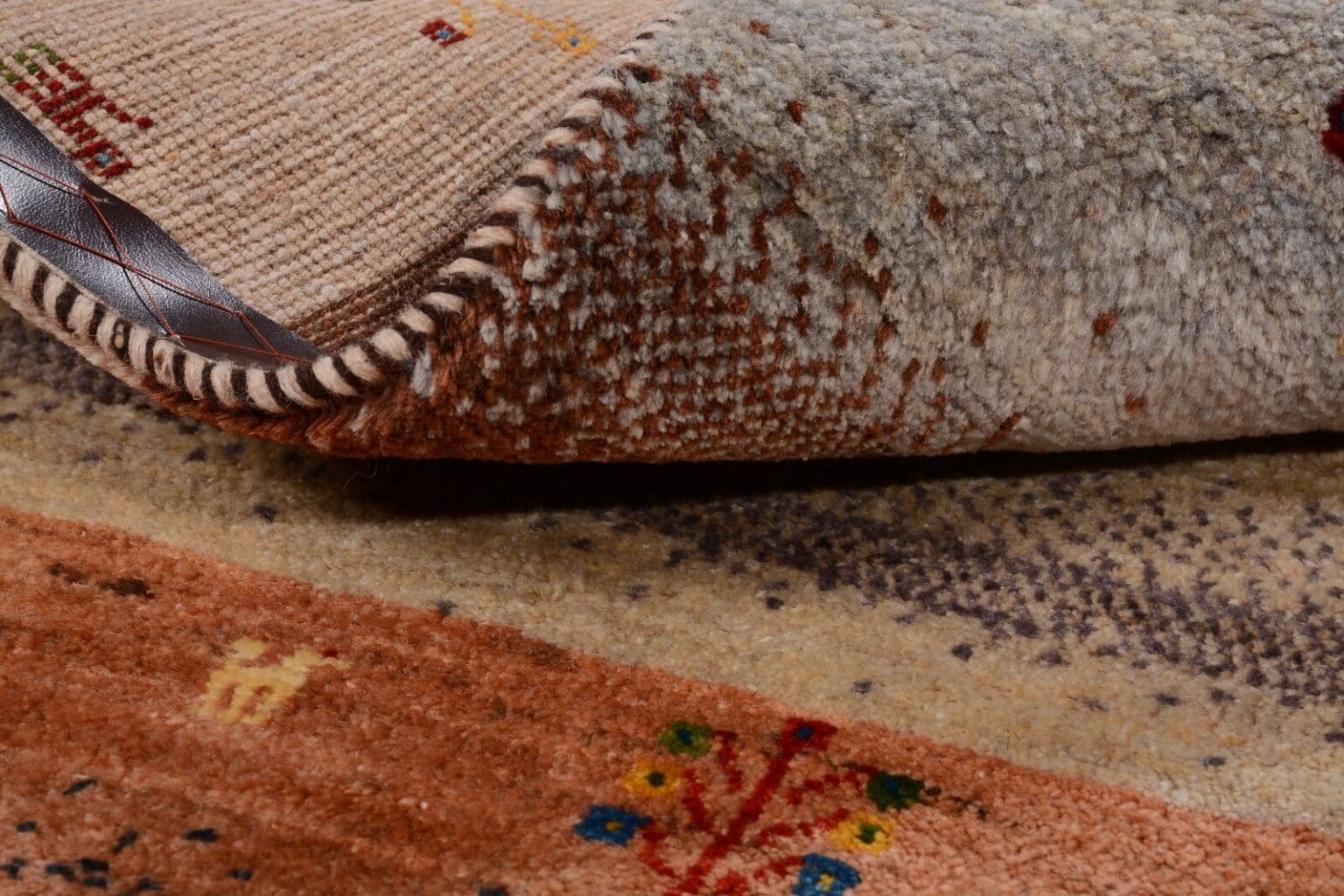
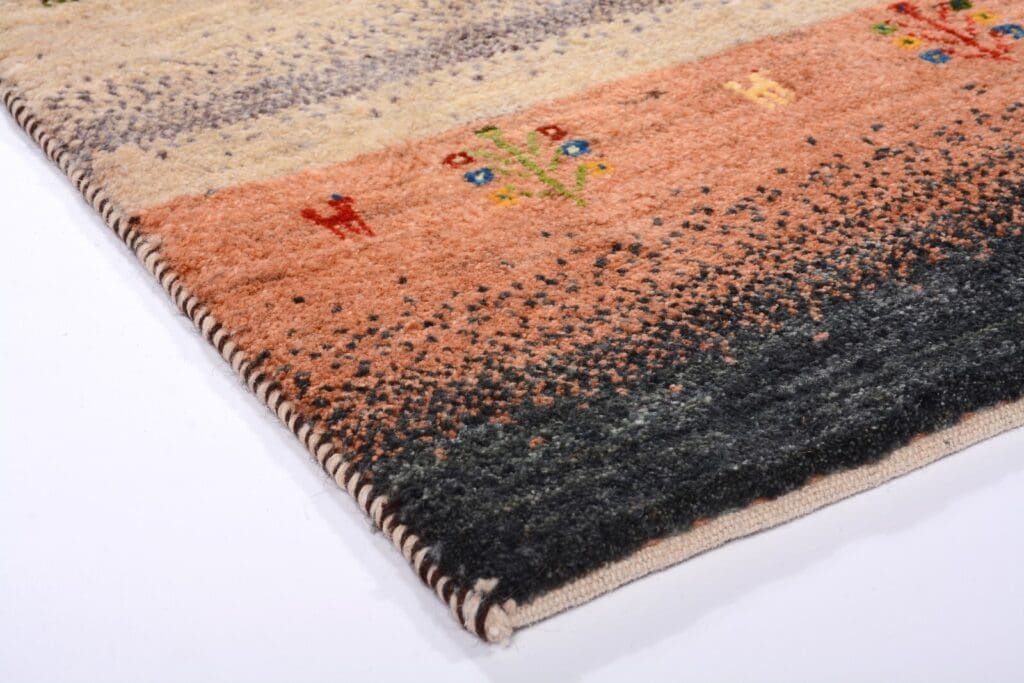
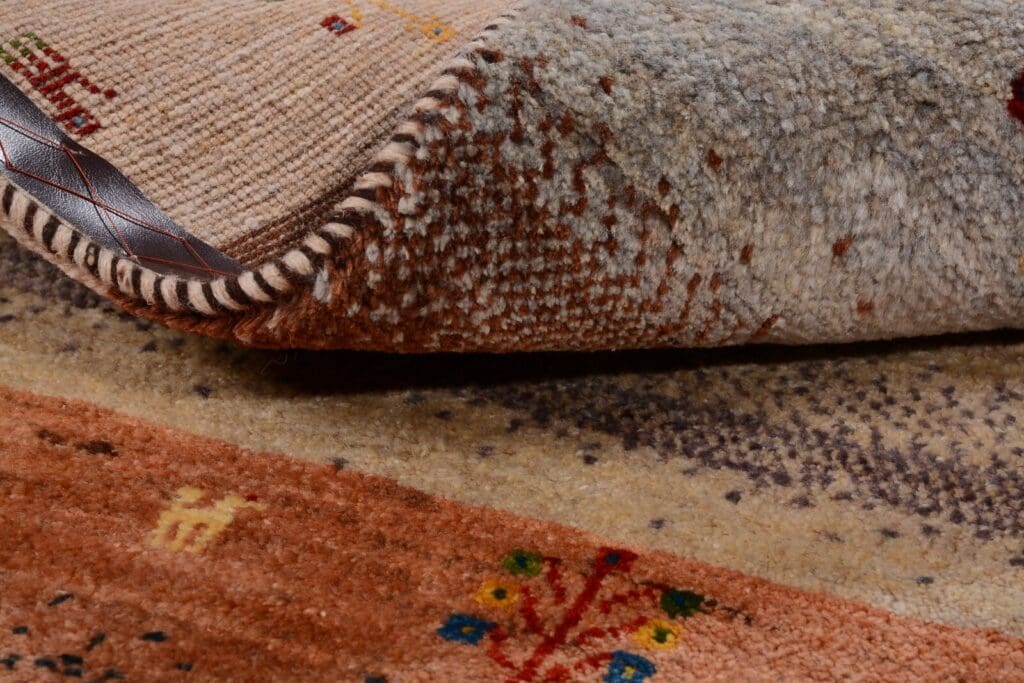
In hand knotting, individual knots are tied into the foundation one by one. The pile is built up row after row, creating a firm textile connection between the warp, weft and pile. Unlike a machine-made rug, the making of a hand-knotted piece follows the rhythm of the weaver’s work. The design is developed directly through the placement of the knots, allowing the pattern to be formed across the surface as the work progresses. Hand-spun wool retains its own tactile character, while the fibres also provide the surface on which the dye is expressed.
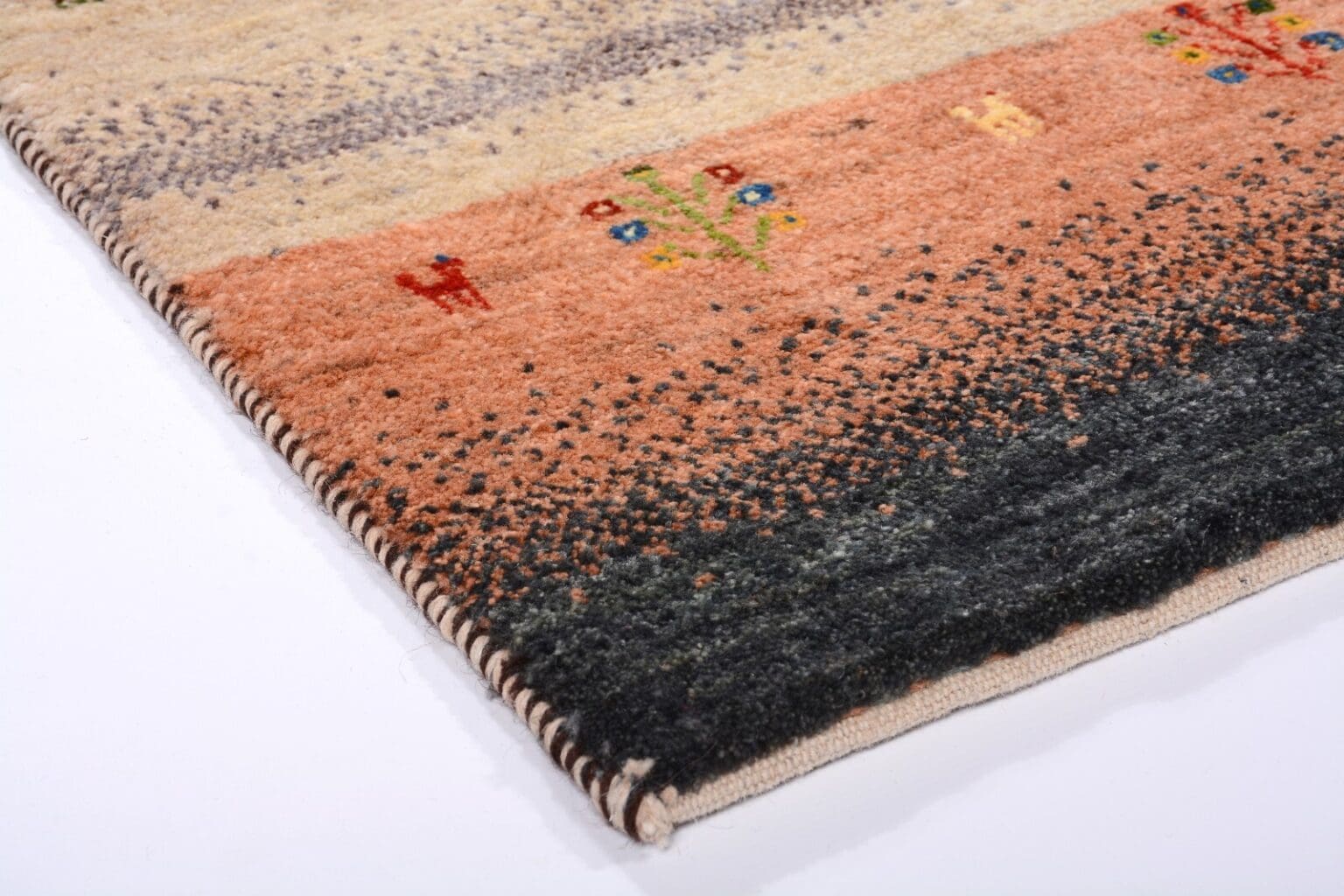
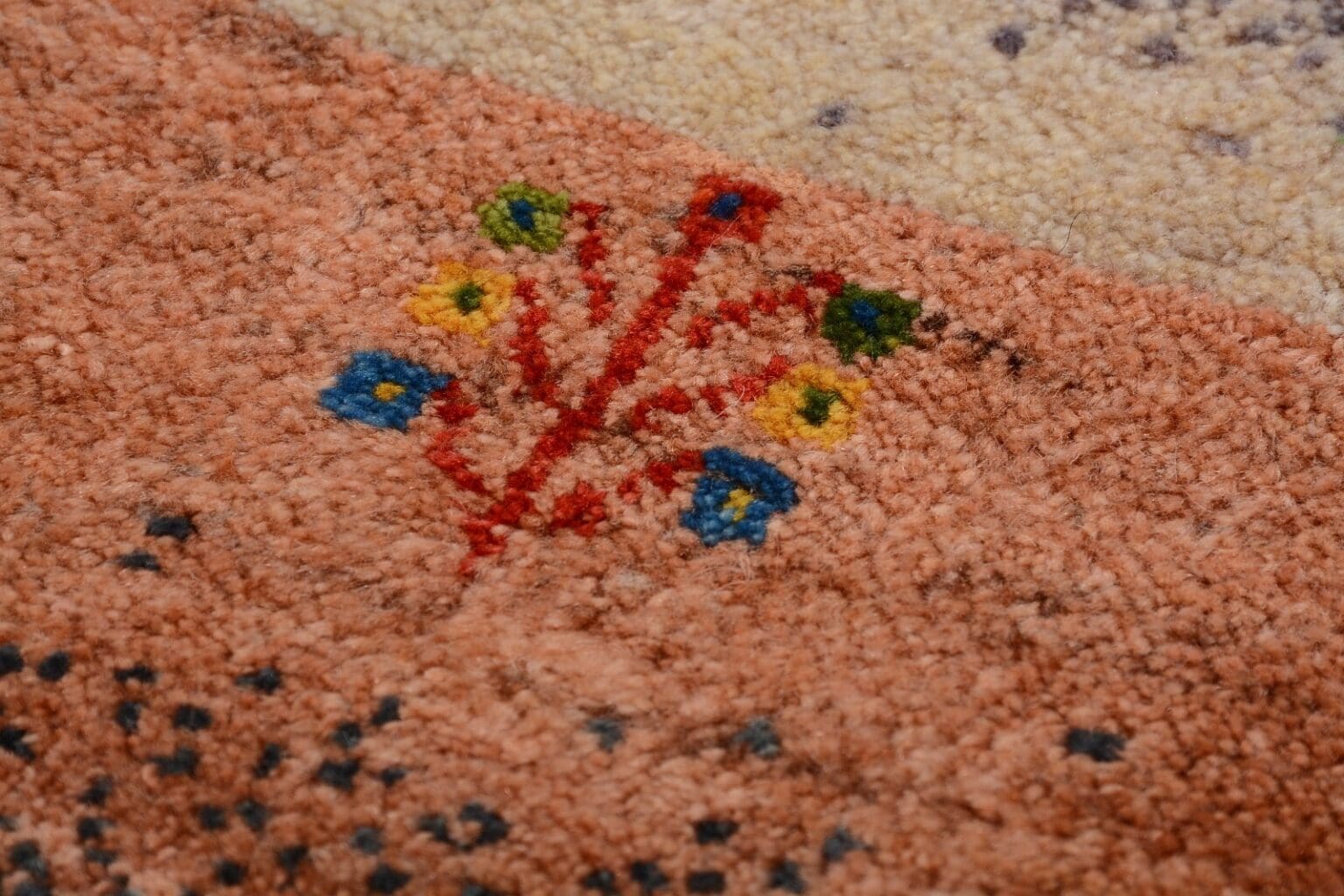
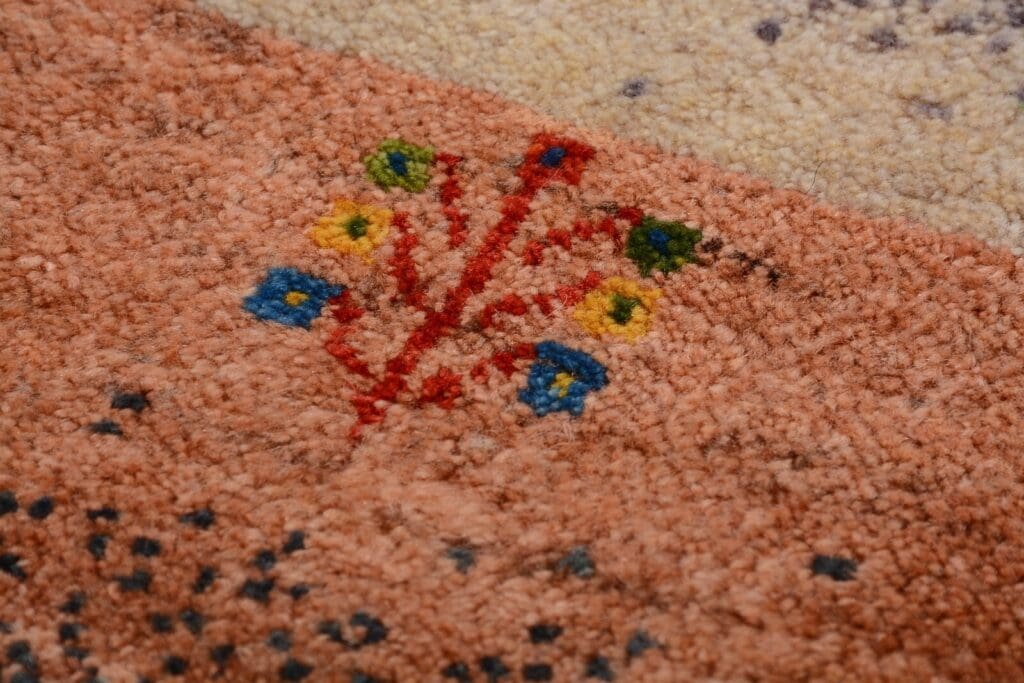
The description gives this rug a high knot density. In general, dense knotting allows lines, stripes and small transitions to be rendered with greater control. At the same time, the wool remains visible as a material, so the result combines a carefully worked surface with the characteristic feel of a wool rug. The pile is described as approximately twelve millimetres thick, and the rug is suitable for use with underfloor heating.
Origin and Tradition
The Loribaft belongs to the Persian rug tradition and is described as a Persian rug from Persia. Rug making has a deeply established place in Iranian craft culture. It brings together the practical use of a floor covering and a distinctive form of textile design. Knowledge of wool preparation, spinning, dyeing, knotting and pattern construction is passed through the craft tradition and is interpreted anew in every hand-knotted piece.
Persian rugs are not made according to one single universal formula. Different regions and weaving traditions have developed their own approaches to layout, ornament, colour, proportion and surface structure. Loribaft is associated with a wool-based, craft-oriented rug tradition. The name identifies a particular design and weaving context, while the appearance of each individual rug is shaped by its own pattern arrangement and by the work of the people who knotted it.
Making a hand-knotted rug requires attention throughout the entire process. The wool first has to be prepared and spun. The yarn is then placed within the textile foundation, and the pile is built knot by knot. Dyeing affects the later appearance of the surface, while knot density helps determine how precisely the design can be developed. These stages make a rug a handmade one-off rather than a surface that can simply be reproduced as an identical industrial series.
Within Persian rug culture, a rug may function at once as a useful household textile, a decorative object and a carrier of cultural design. Patterns organise the field, establish rhythm and give a room a textile structure. A modern striped design can therefore still be understood within a tradition in which the ordering of the rug surface is important. Wool, handwork and a clear graphic arrangement bring traditional production together with contemporary interiors.
Design and Pattern
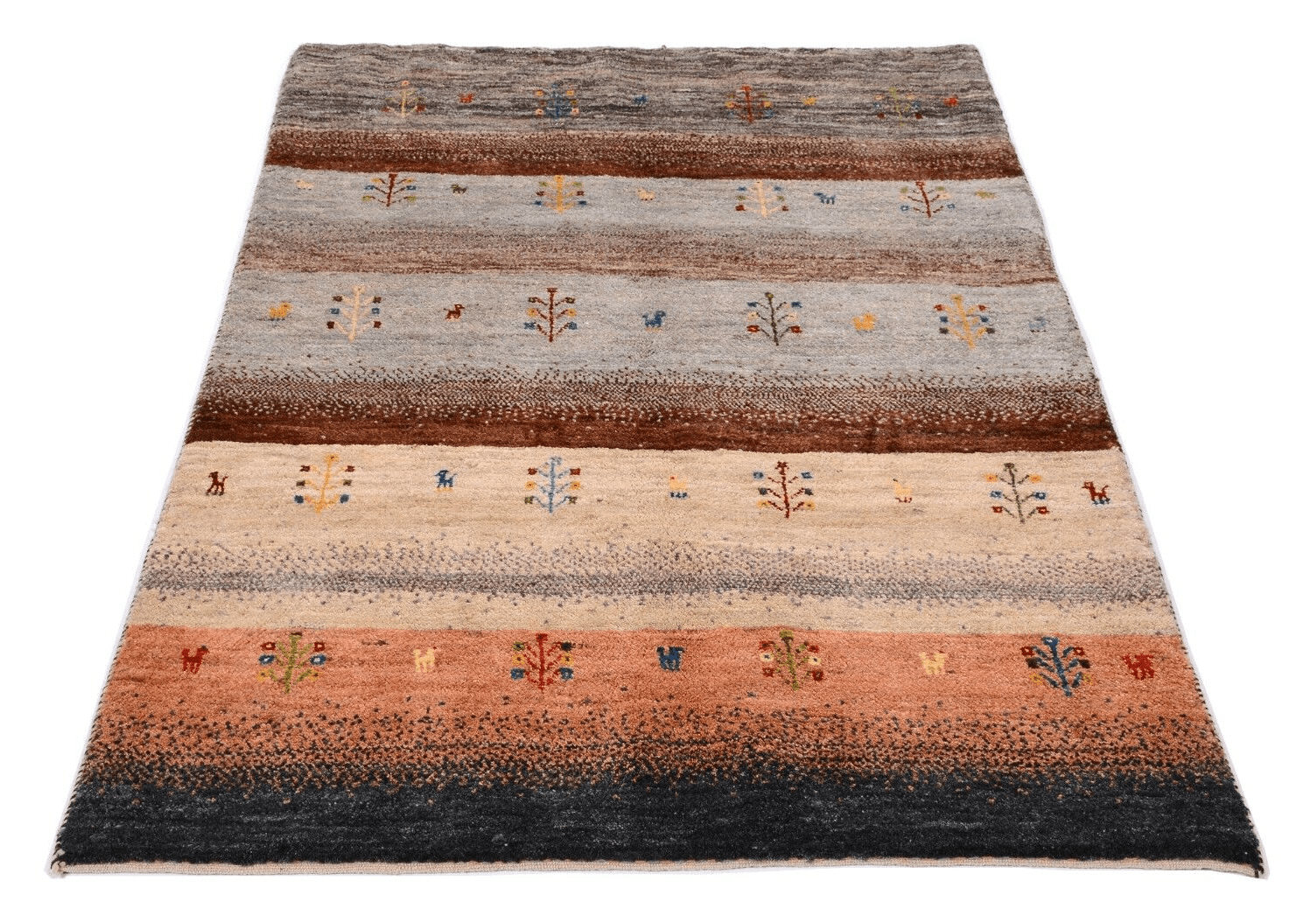
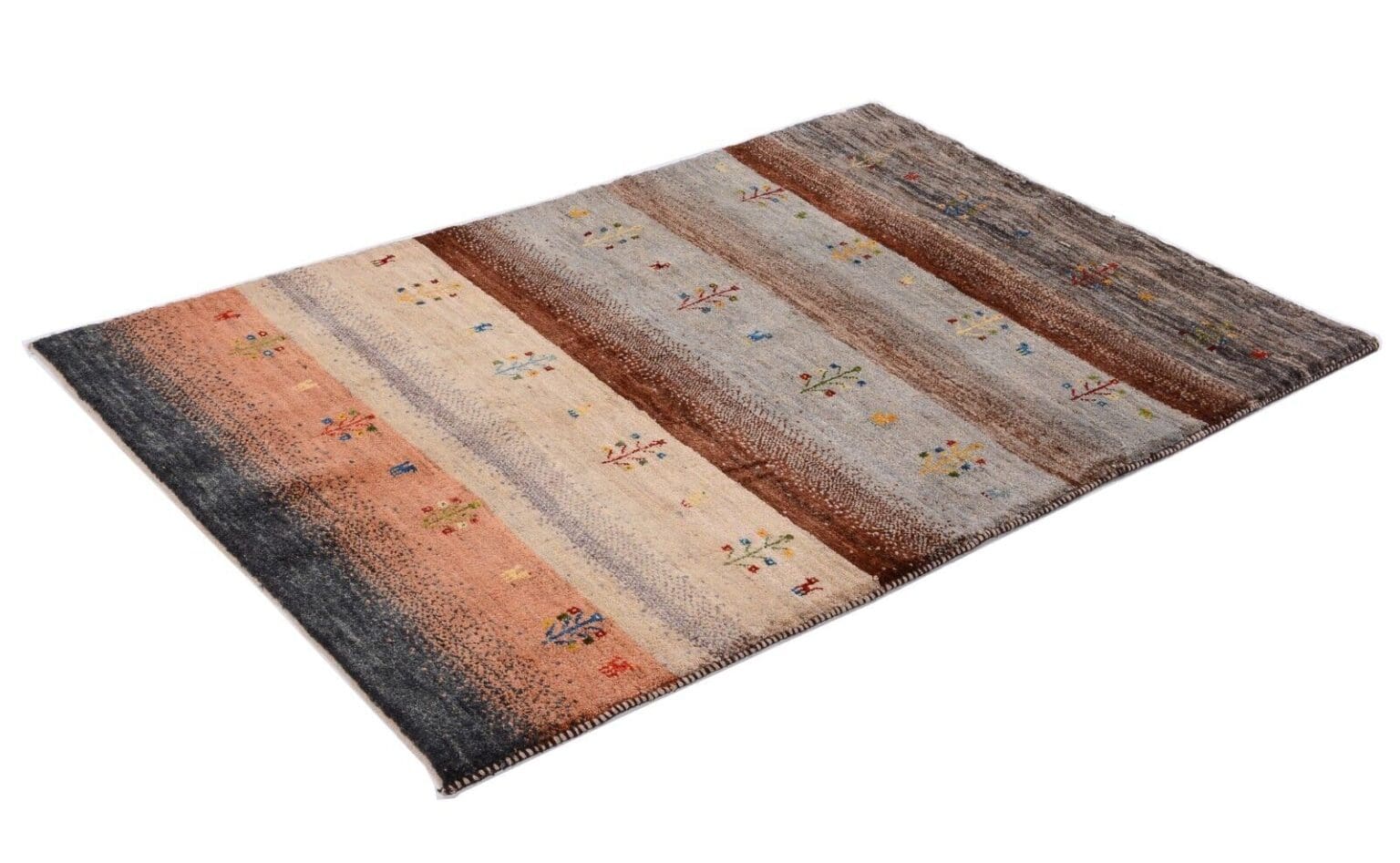
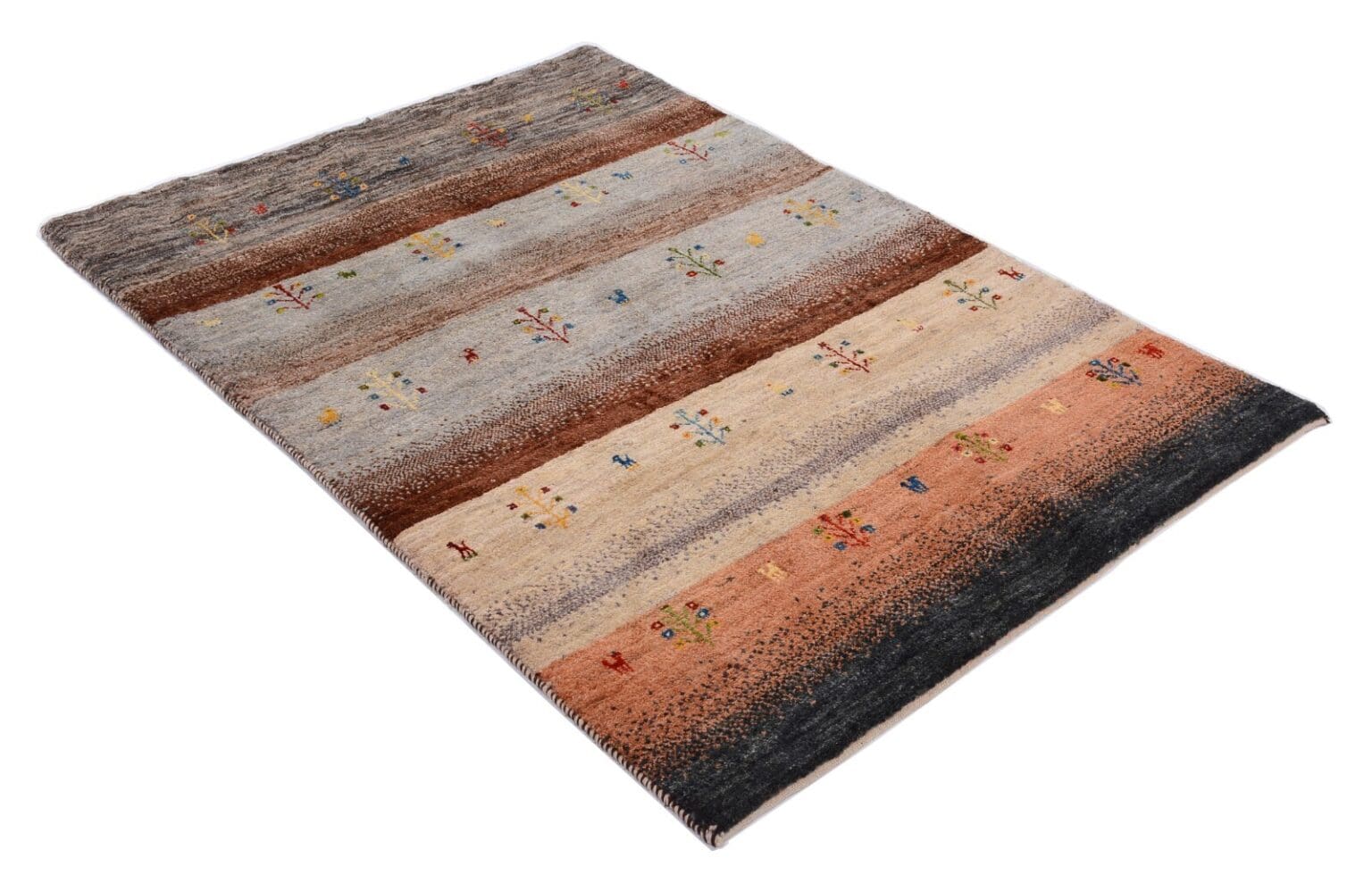
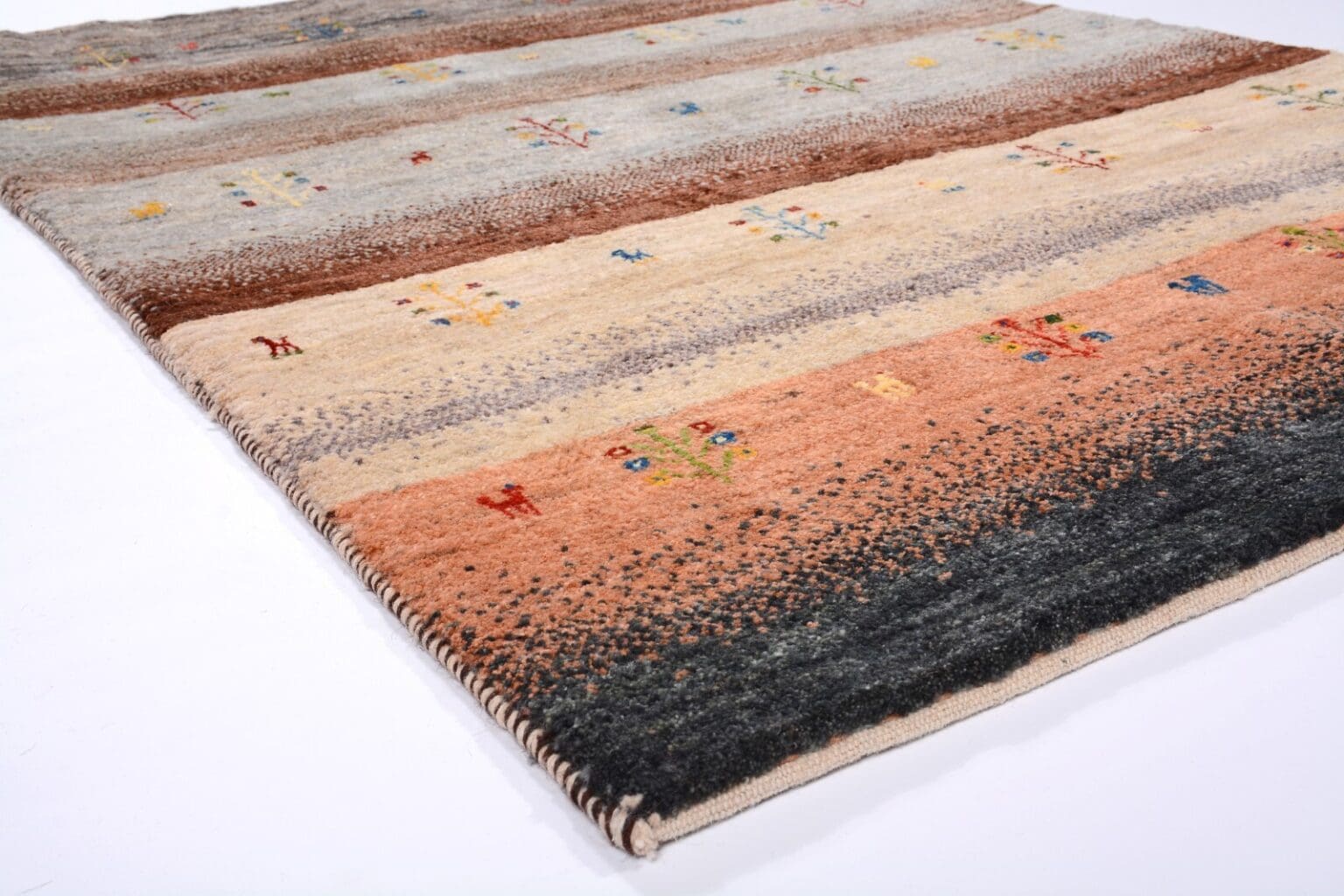
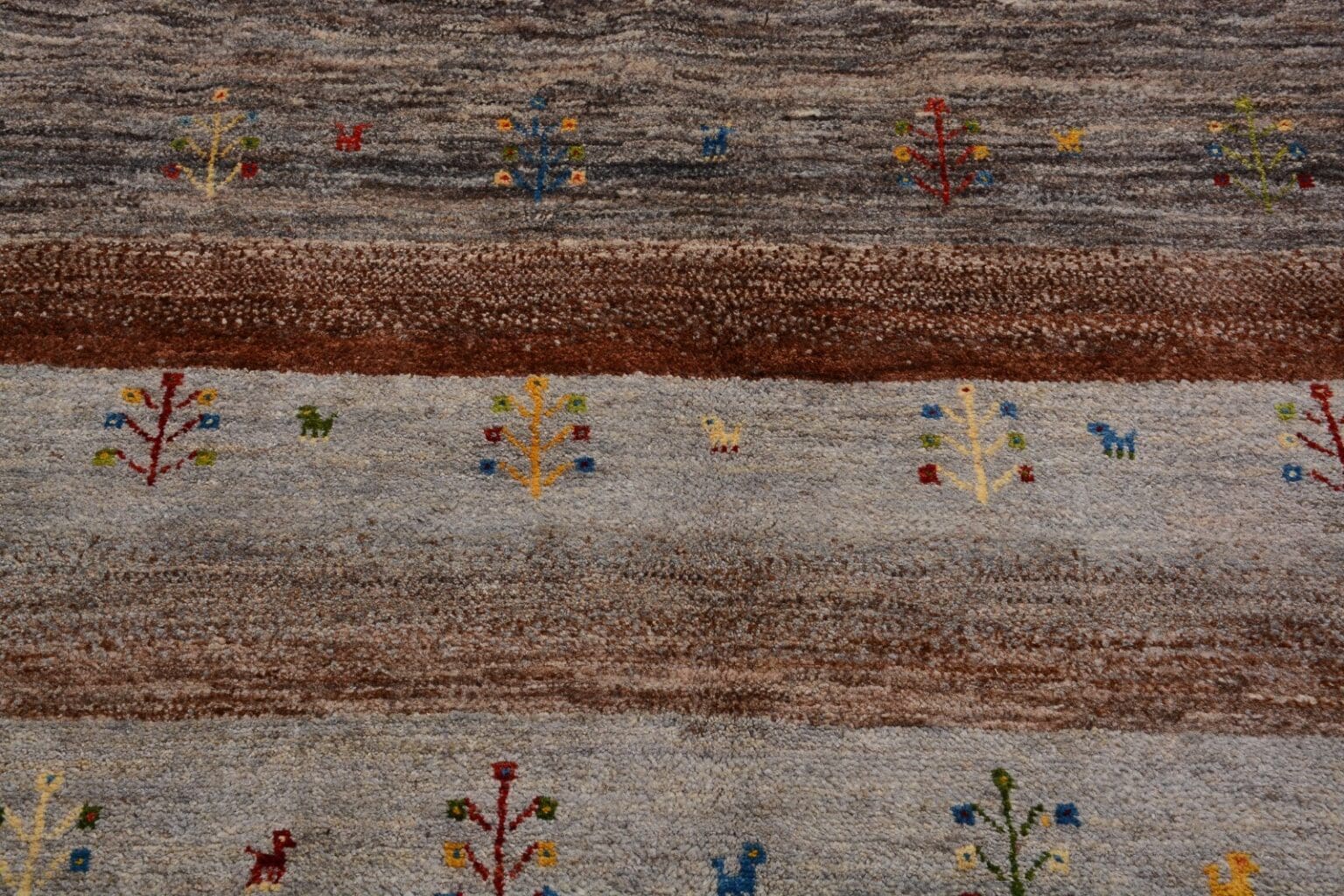
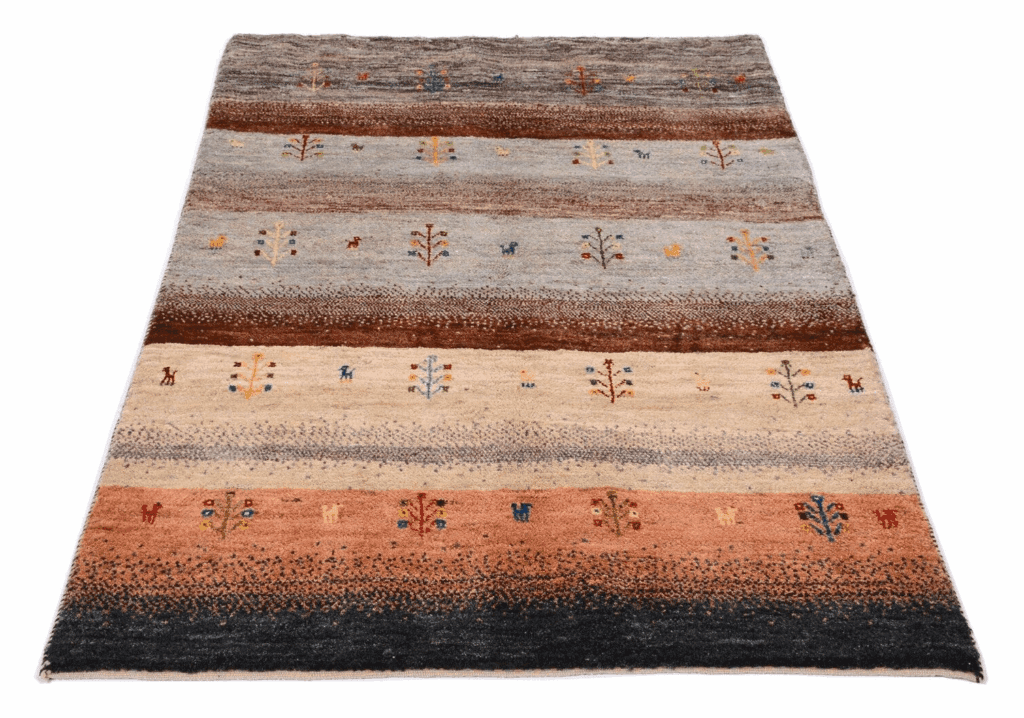
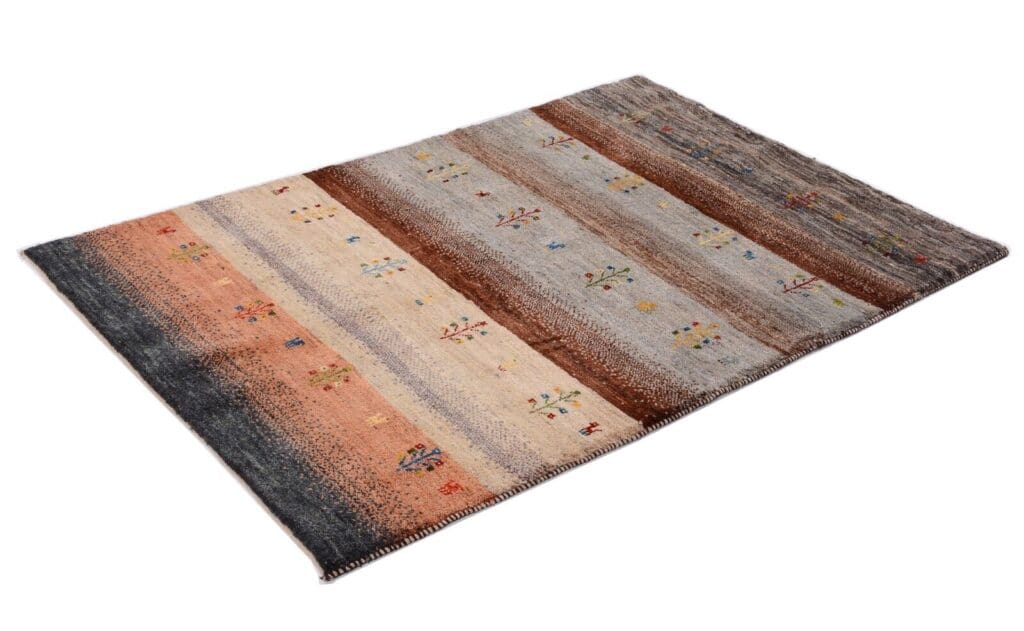
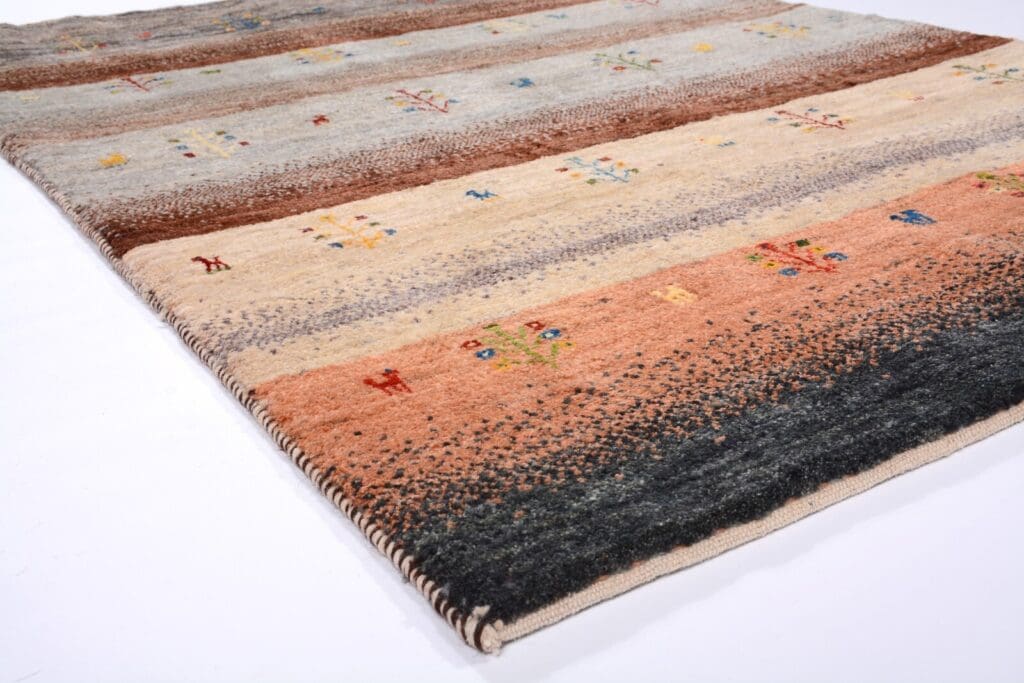
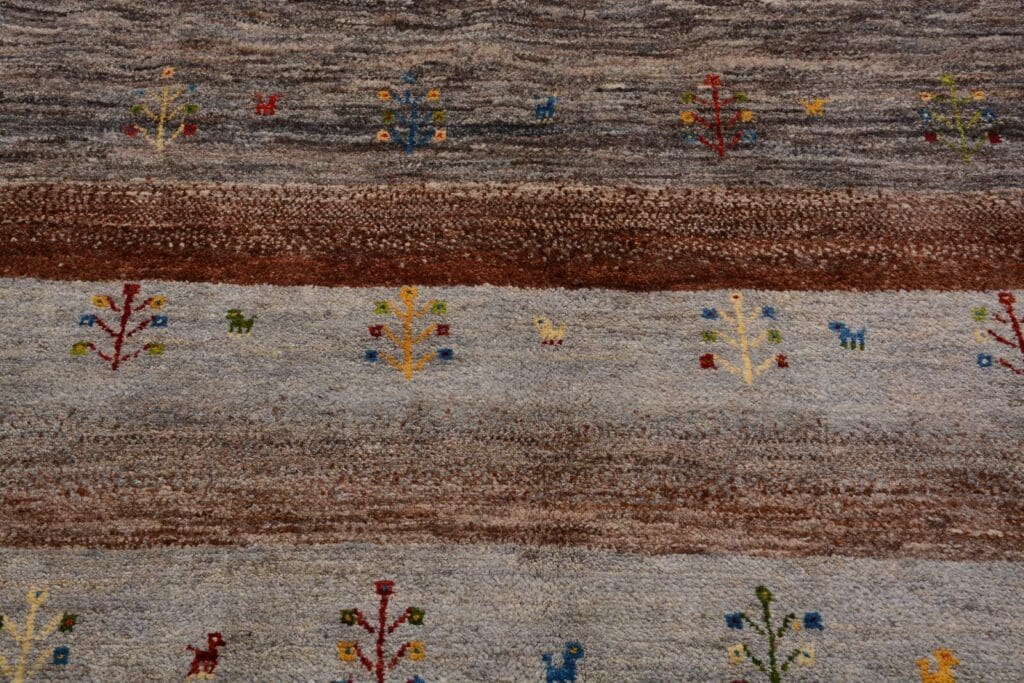
The individual rug has a modern striped design. Stripes are one of the clearest ways to organise a textile field. They may be read as horizontal or vertical bands, or as alternating zones that create a direction across the rug. Rather than relying on a single central image, a striped composition works primarily through repetition, spacing, width and changes between adjoining areas.
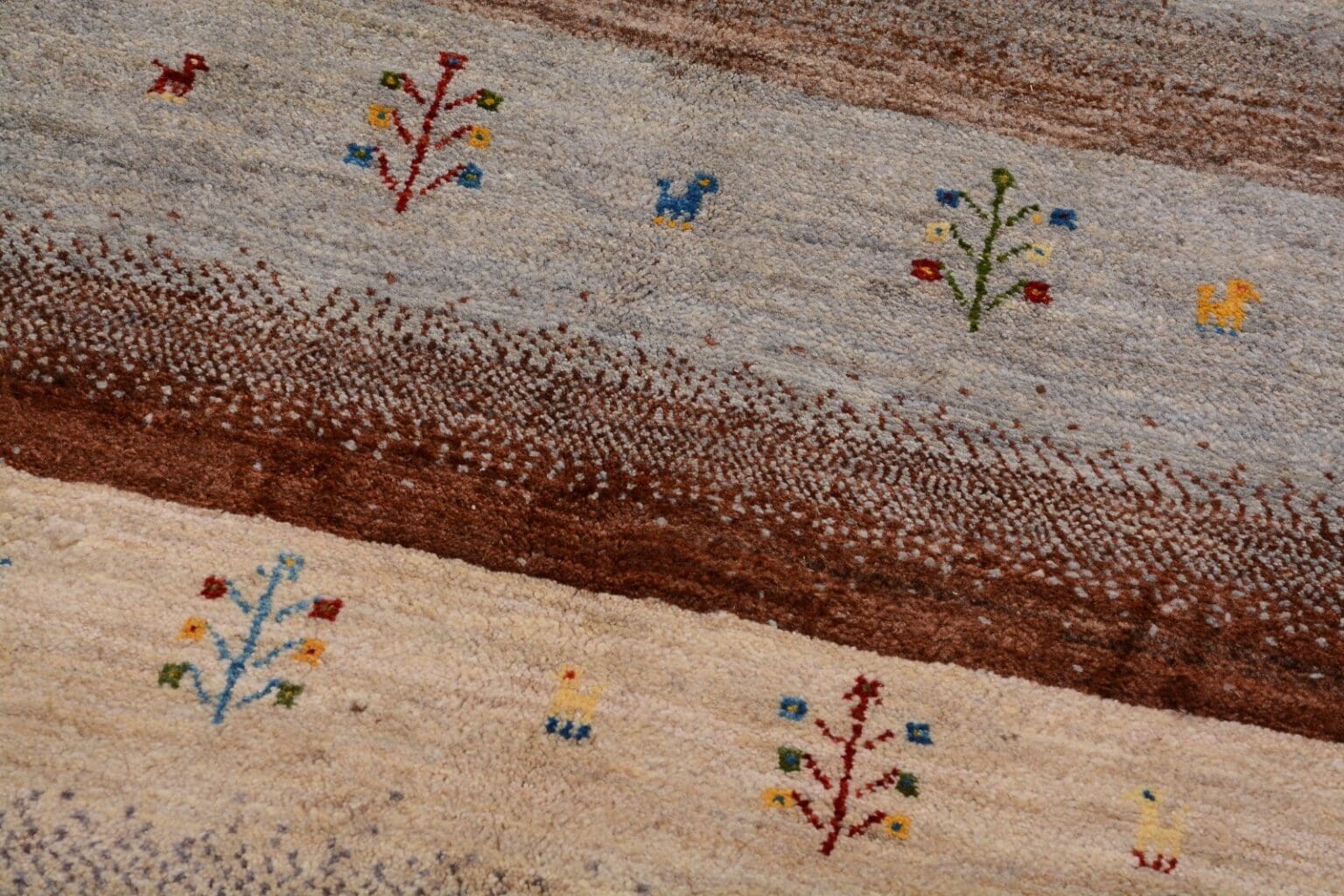
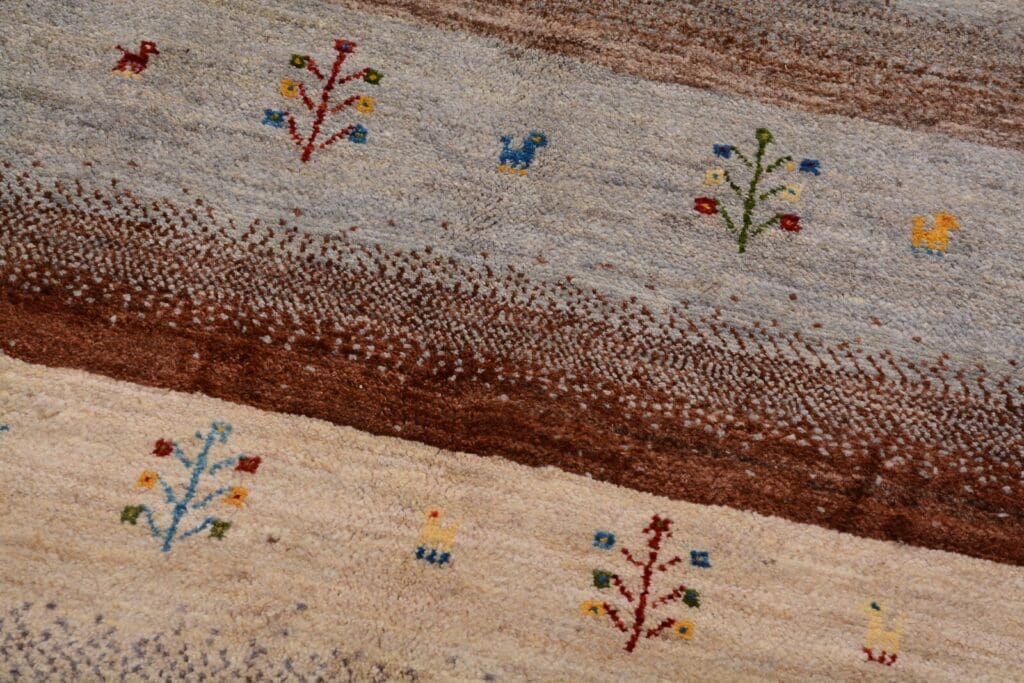
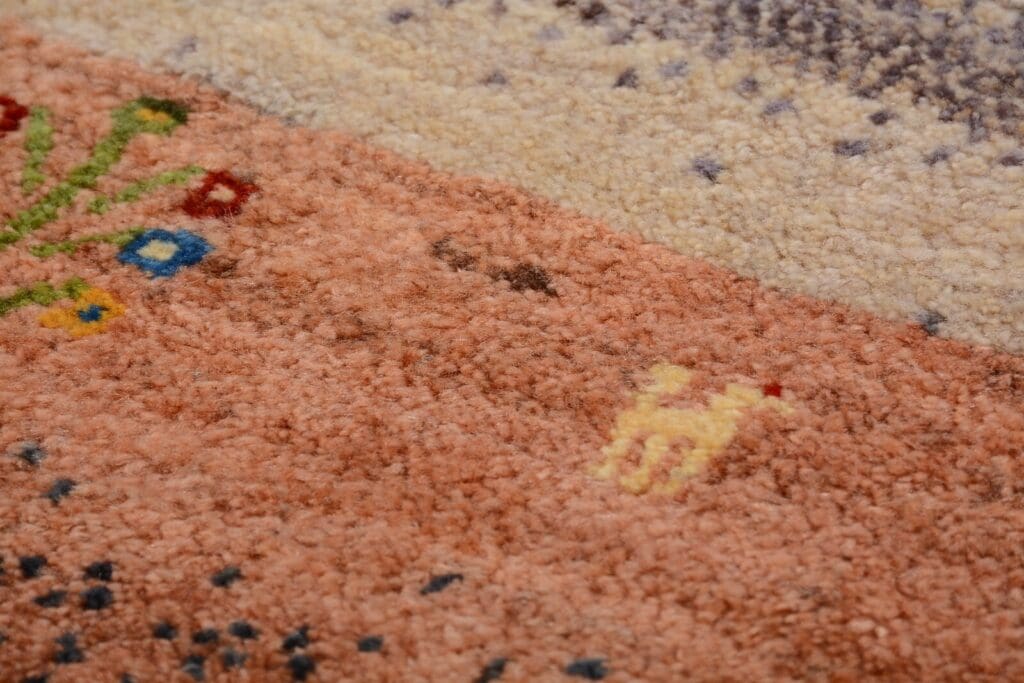
On a hand-knotted rug, these lines are not printed onto a finished surface. They are formed by the sequence of knots and by the placement of differently coloured wool areas. A striped pattern can therefore show the subtle textile variation that comes from handwork. This distinguishes a knotted design from a perfectly uniform mechanically produced surface. The high knot density supports a controlled treatment of the lines and the transitions between them.
The designation Gabbeh Loribaft connects the design with a field of Persian rug making known for expressive wool rugs and a reduced visual language. In general, Gabbeh-related designs may include geometric, stylised or broadly arranged elements. For this particular rug, the stated pattern is a modern striped design. No additional ornaments or specific colours are given, so no further motif or palette is attributed to this piece.
A striped pattern can work in different interior settings because it is not tied to one figurative scene or a single ornamental medallion. The bands can structure a room, accompany furniture or provide a measured contrast to more heavily patterned surfaces. Its effect depends on the actual distribution of colour and on the direction in which the rug is placed. What is established here is the modern striped arrangement, not a particular colour scheme or a named symbolic motif.
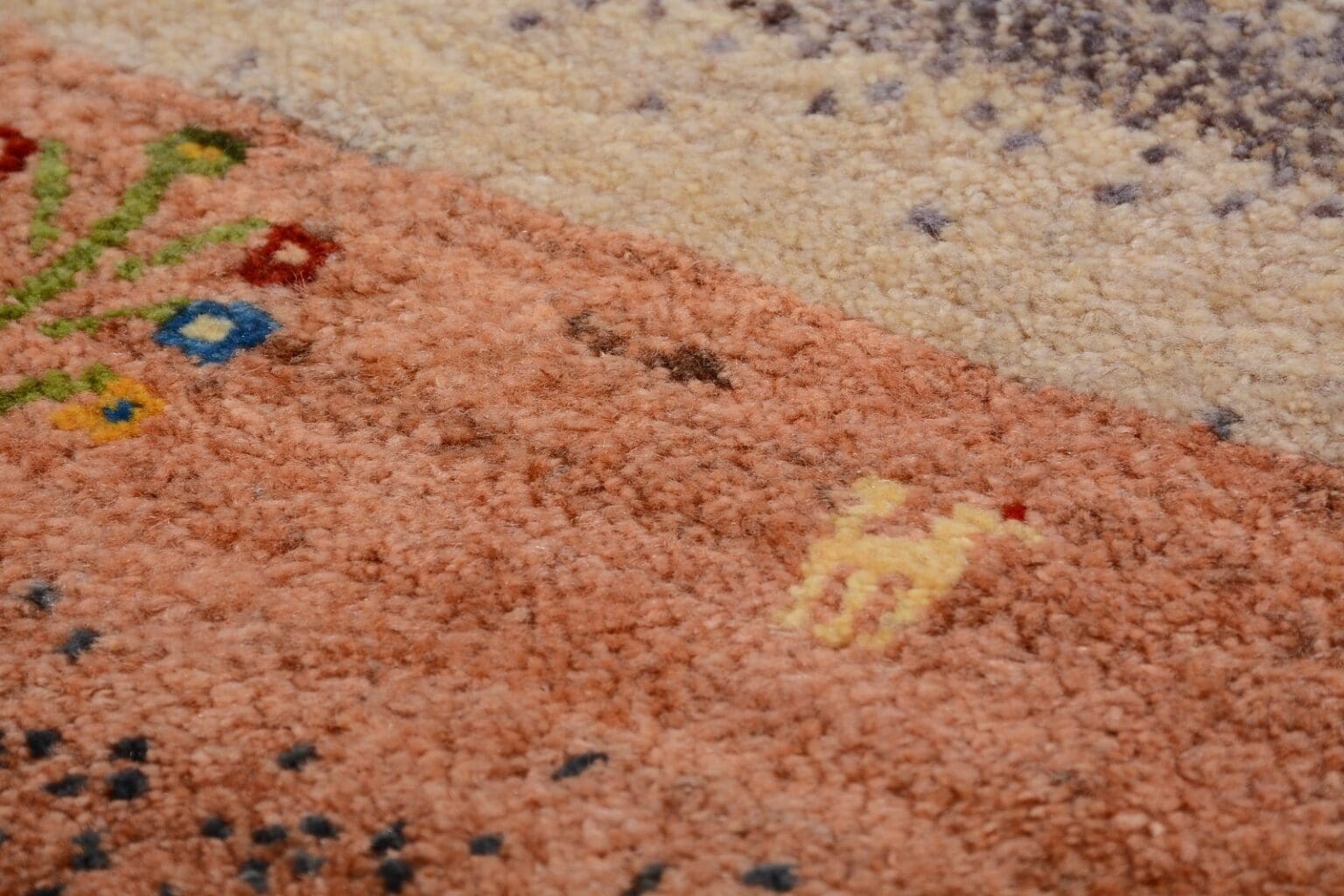
The visual effect also comes from the relationship between pile, wool and knotting. A wool surface receives light differently from a smooth flat-woven cloth. Small changes in the direction of the fibres can affect the way the stripes are perceived and can give the design a textile depth. Hand-spun and hand-dyed wool reinforce the material quality of the pattern, without allowing a specific colour or colour progression to be inferred.
Special Features
The specifically stated features of this rug are its hand-knotted construction, high knot density, hand-spun and hand-dyed virgin wool, and modern striped design. Its condition is described as new and perfect. The rug is also stated to be suitable for underfloor heating. Together, these details describe the individual piece in terms of construction, material, condition and intended use.
Handmade production makes every Loribaft an individual rug. Even a clear striped composition is created through numerous separate manual operations. The weight is given as approximately four kilograms per square metre, and the thickness as approximately twelve millimetres. Combined with the wool and dense knotting, these details describe a textile floor covering that also represents a piece of handcraft rooted in Persian rug production.
FAQ
How should I clean and care for my Loribaft?
For regular care, the rug should be vacuumed gently on a low setting. This removes dust and loose dirt while avoiding unnecessary stress on the wool pile. For isolated stains, use a damp cloth and a mild cleaning product, working carefully so that the surface and the hand-dyed fibres are treated gently. A professional rug-cleaning service can be used when a more thorough cleaning is needed. Strong chemicals, vigorous rubbing and soaking the rug should be avoided, as they can affect the wool and the appearance of the pile.
Is the Loribaft suitable for people with allergies?
Yes. The rug is described as suitable for allergy sufferers because it is made from natural materials. Natural wool has antistatic properties, which can help reduce dust and allergens. Regular, gentle cleaning supports a well-maintained indoor environment. Individual sensitivity can still vary, so personal needs and the general hygiene of the room should be taken into account when using any textile floor covering.
Where can I buy the Loribaft?
A Loribaft can be purchased from specialist rug dealers or through online platforms that focus on hand-knotted rugs. When choosing a seller, it is useful to look for clearly presented information about origin, material, knotting technique, size and condition. A reliable dealer should also describe the features of the particular one-off rug rather than substituting generic information about another rug type. This makes it easier to assess both the quality and the authenticity of the piece being offered.
To provide the best experiences, we use technologies like cookies to store and/or access device information. Consenting to these technologies will allow us to process data such as browsing behavior or unique IDs on this site. Not consenting or withdrawing consent, may adversely affect certain features and functions.
Functional Always active
The technical storage or access is strictly necessary for the legitimate purpose of enabling the use of a specific service explicitly requested by the subscriber or user, or for the sole purpose of carrying out the transmission of a communication over an electronic communications network.
Preferences
The technical storage or access is necessary for the legitimate purpose of storing preferences that are not requested by the subscriber or user.
Statistics
The technical storage or access that is used exclusively for statistical purposes.The technical storage or access that is used exclusively for anonymous statistical purposes. Without a subpoena, voluntary compliance on the part of your Internet Service Provider, or additional records from a third party, information stored or retrieved for this purpose alone cannot usually be used to identify you.
Marketing
The technical storage or access is required to create user profiles to send advertising, or to track the user on a website or across several websites for similar marketing purposes.
 SECURE PAYMENT
 SHIPPING PARTNERS


