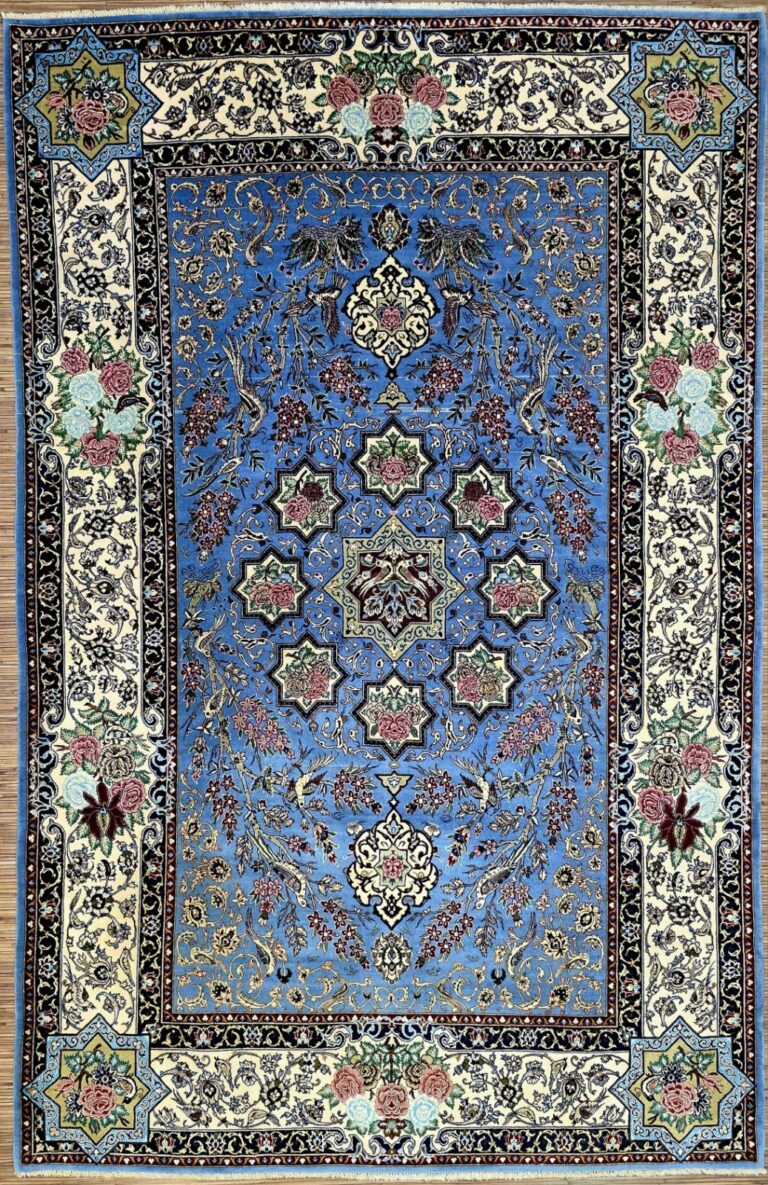
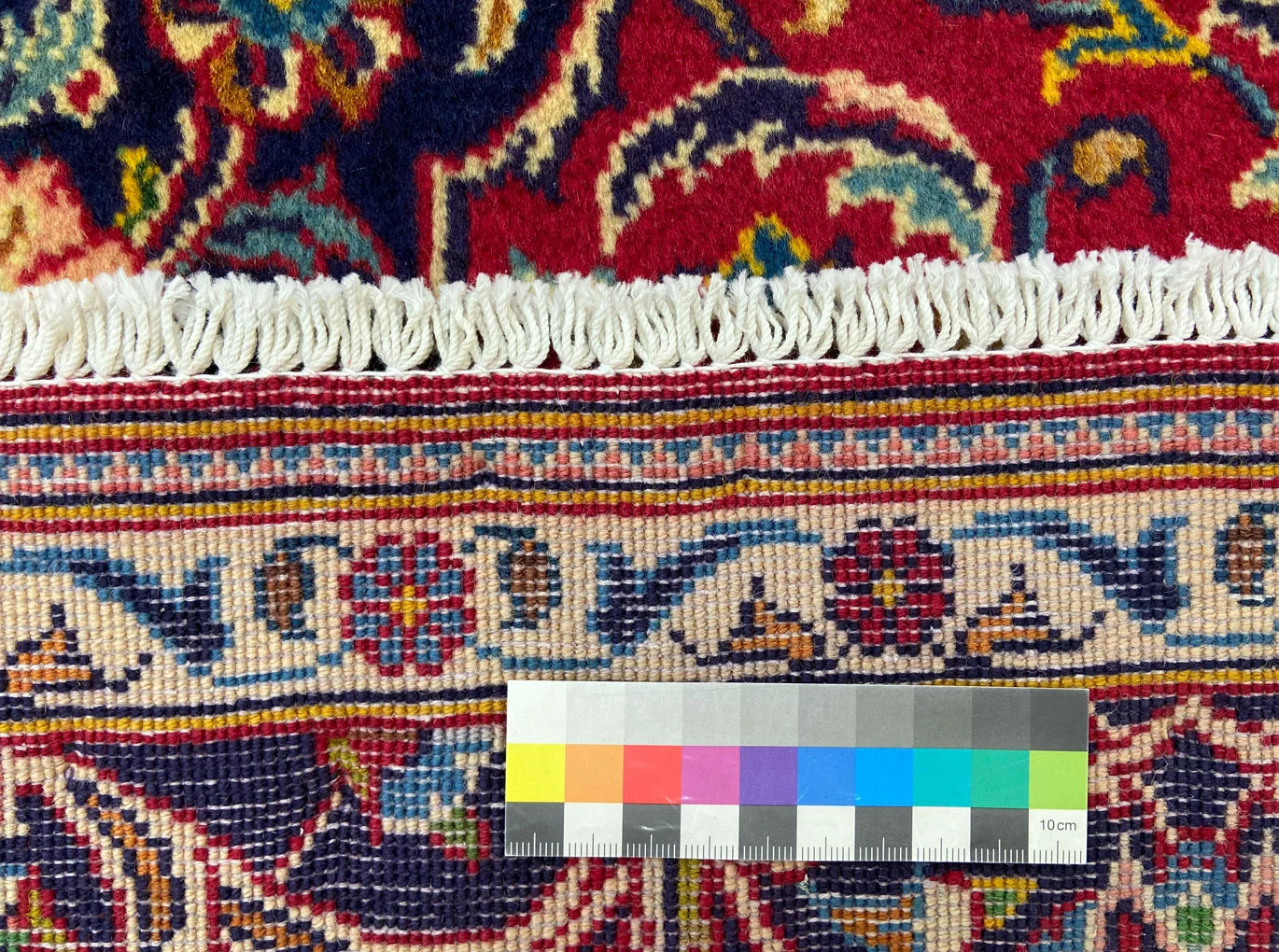
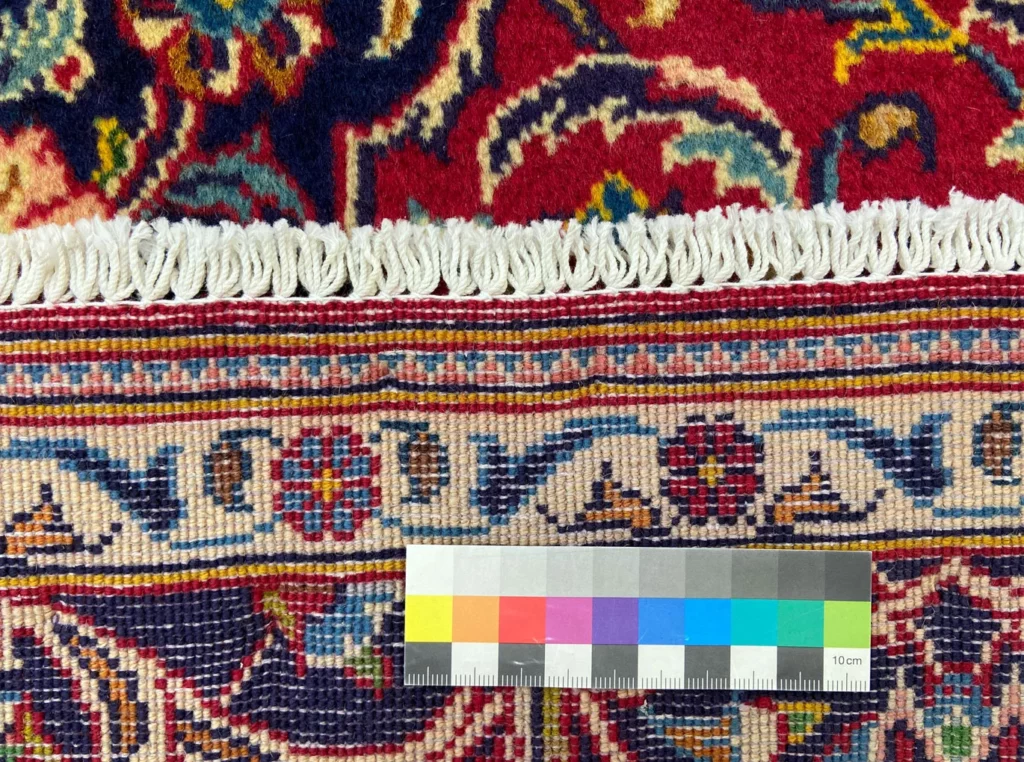
This Keshan Persian rug is hand-knotted from high-quality sheep wool. The wool forms the pile and gives the rug a soft yet durable surface. Its use is characteristic of traditional Persian rug production, in which carefully prepared wool is spun, dyed and tied knot by knot to create a stable textile with a distinct surface structure. The warp and weft are generally made from hard-wearing cotton. This combination of wool pile and cotton foundation provides a practical construction that is both resilient and suitable for detailed pattern work.
The rug has a knot density of 150,000 to 300,000 knots per square metre. Knotting at this level requires considerable manual work, because the design is built through many individual knots rather than through a printed or mechanically repeated surface. The density also supports the fine rendering of floral and geometric elements. The pile is described as short, which makes the surface comparatively straightforward to maintain while preserving the clear definition of the pattern.
Hand-knotting is a gradual process. The foundation is set up first, and the pile material is then inserted in rows according to the intended design. Each completed section is secured before the next one is formed. Traditional tools and repeated finishing work give the textile its structural cohesion. The quality of the result depends on the preparation of the wool, the consistency of the knots, the accuracy of the drawing and the care taken during finishing.
Origin and Tradition
Keshan, also written Kashan in English usage, is a city in Iran with a long-standing carpet tradition. Keshan Persian rugs are associated with refined handcraft, carefully organized compositions and the use of good-quality materials. Their identity is connected not only with the place name but also with a regional culture of drawing, dyeing and knotting that has developed over generations. A Keshan rug therefore belongs to the wider history of Iranian textile production, where practical household textiles and highly detailed decorative carpets were made within established workshop traditions.
Persian carpets are made in many cities and weaving regions, each with its own preferences in drawing, color arrangement and construction. Keshan is recognized as one of the important names within this tradition. The city’s carpets are commonly discussed in relation to balanced layouts, precise ornament and a disciplined approach to workshop production. Designs are transferred from an organized plan to the knotted surface, allowing the weaver to build a complex composition row by row. The result is a textile in which material, structure and decoration are closely connected.
The history of Persian carpet making reaches across centuries. Rugs served practical purposes as floor coverings, but they also carried regional knowledge through their materials, motifs and methods. Patterns could preserve familiar botanical forms, geometric structures and references to cultural narratives. In this context, a Keshan rug represents a continuation of a craft in which visual order and manual skill are passed from one generation to the next. The hand-knotted method makes each individual textile dependent on the work of the people who produced it.
Other Iranian carpet traditions are also known for detailed designs and careful hand-knotting. Isfahan and Tabriz rugs are often compared with Keshan rugs because they likewise combine structured compositions with fine craftsmanship. Nain and Kashan are also recognized for carpets that may use silk threads and elaborate ornament. These names identify distinct regional and stylistic traditions; they should not be confused with the origin of this rug, which is Keshan in Iran. Each tradition has its own cultural and historical context, even when materials or decorative principles overlap.
Many Persian carpets remain in use for long periods because their construction is designed for durability. Some examples that are more than 100 years old are sought after by collectors and can achieve high prices on the market. This does not assign a particular age or market value to this rug. It describes the broader place of well-made Persian carpets within collecting and textile history. Their continuing relevance comes from the combination of manual construction, recognizable regional design and materials selected for repeated use.
Design and Pattern
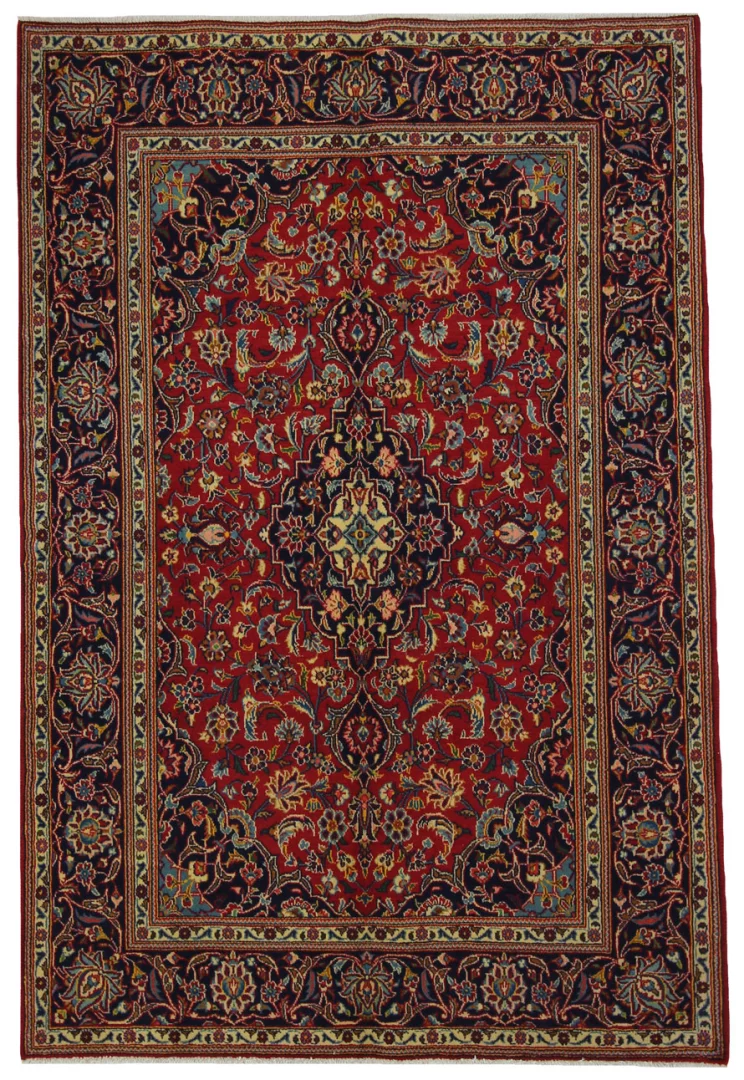
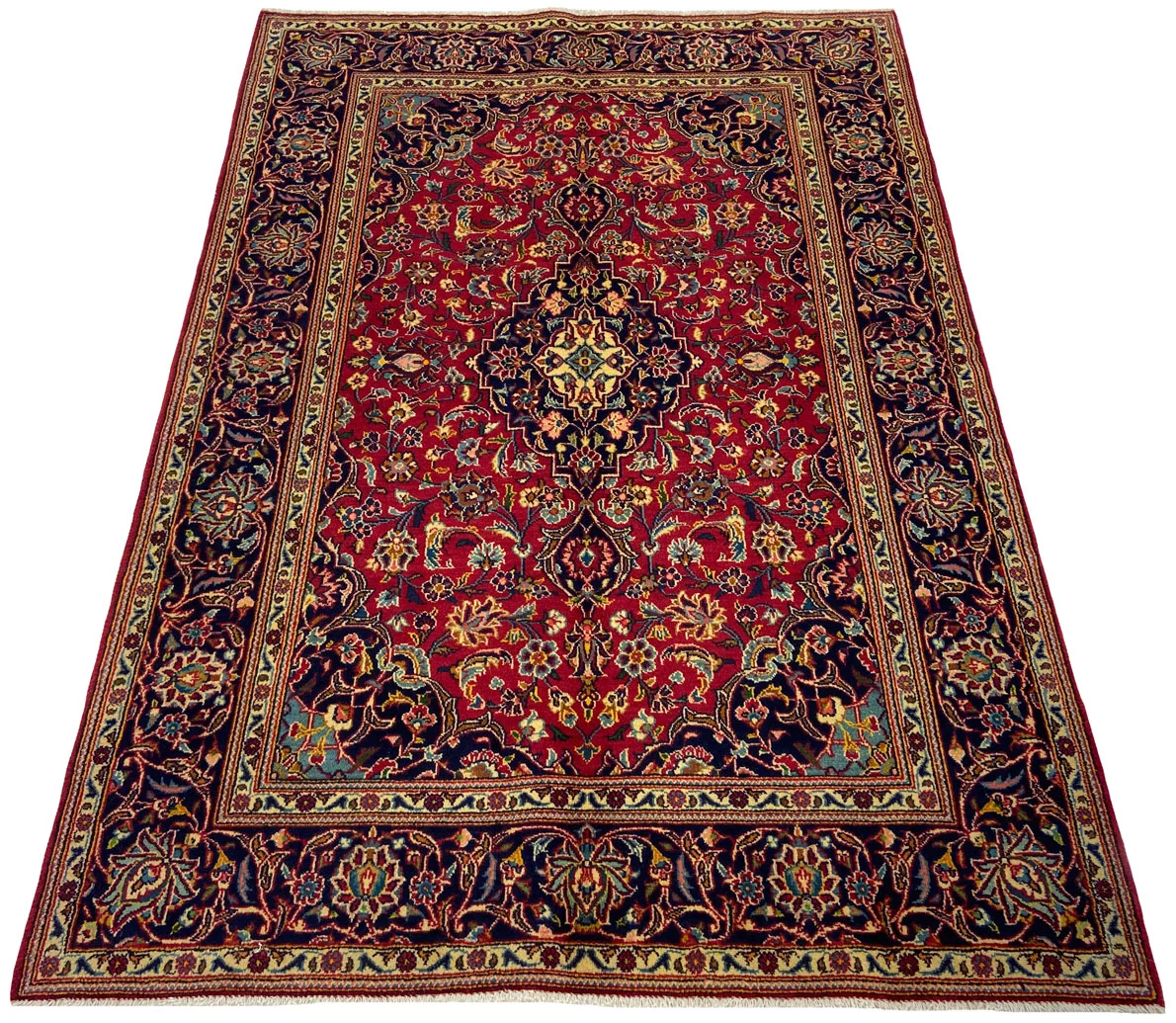
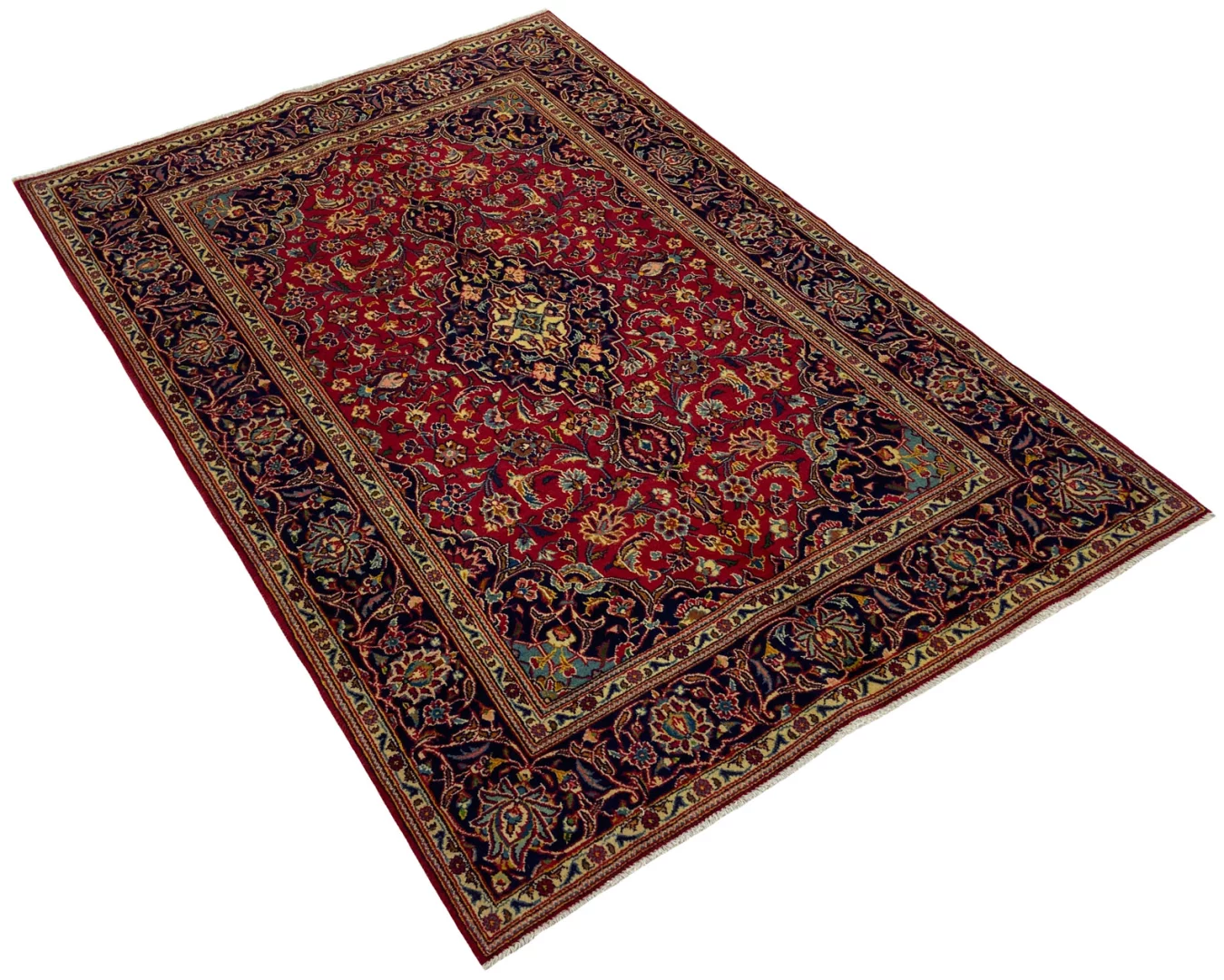
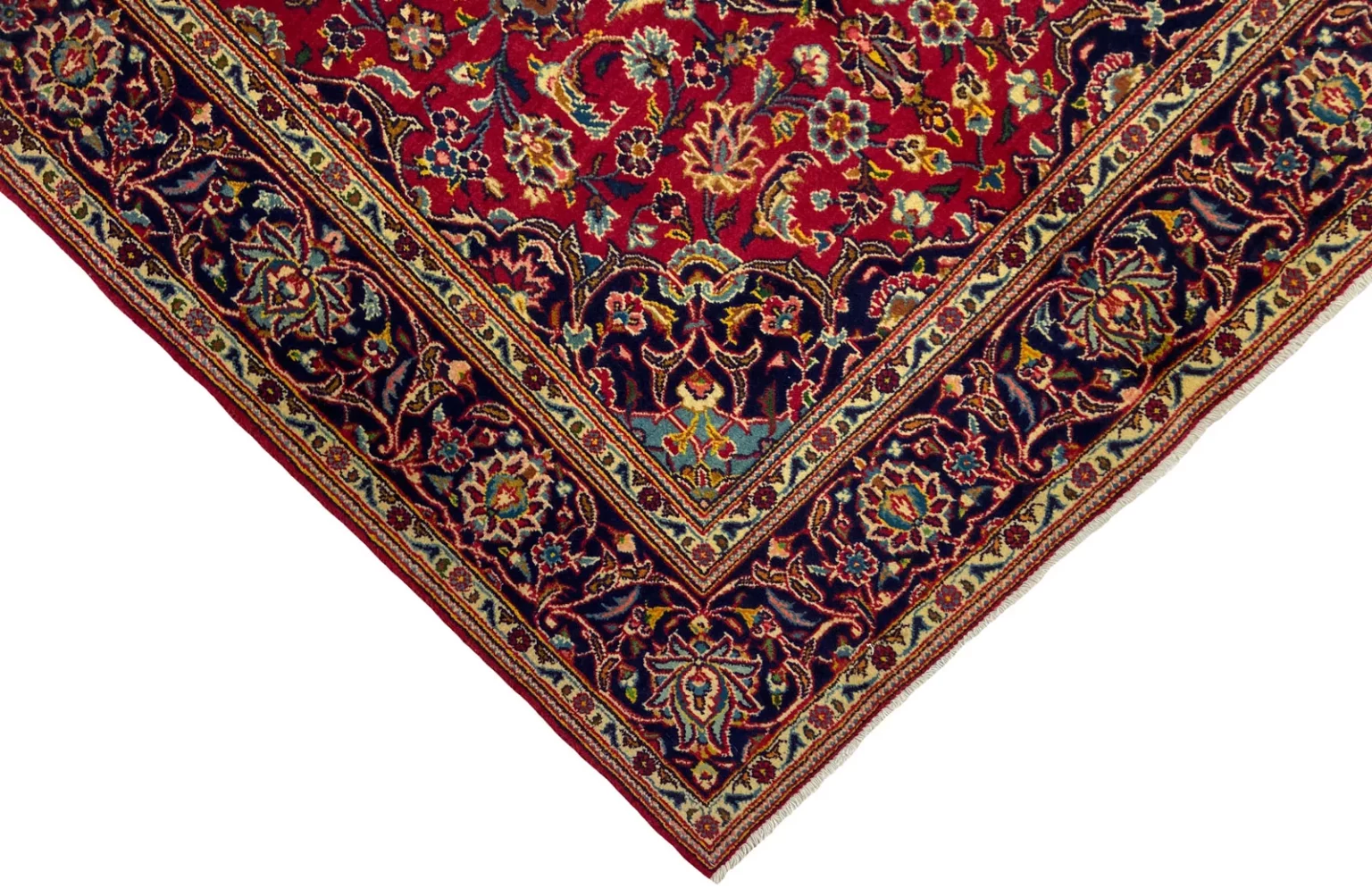
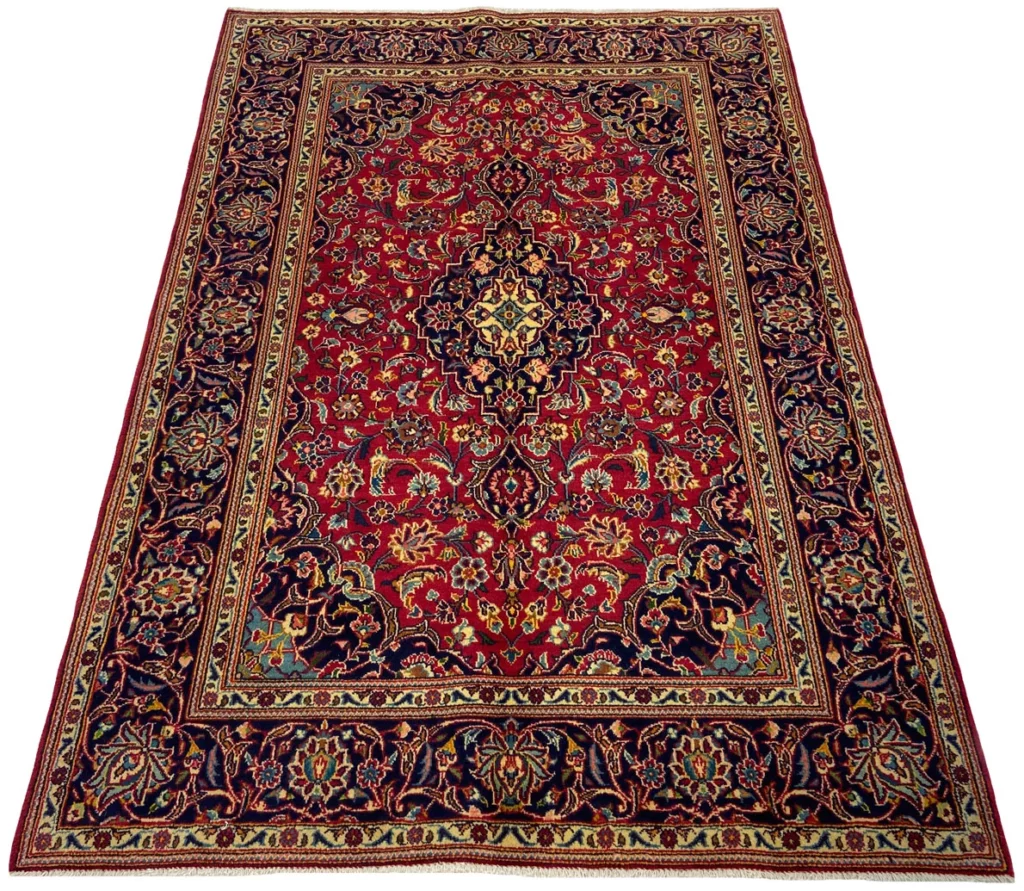
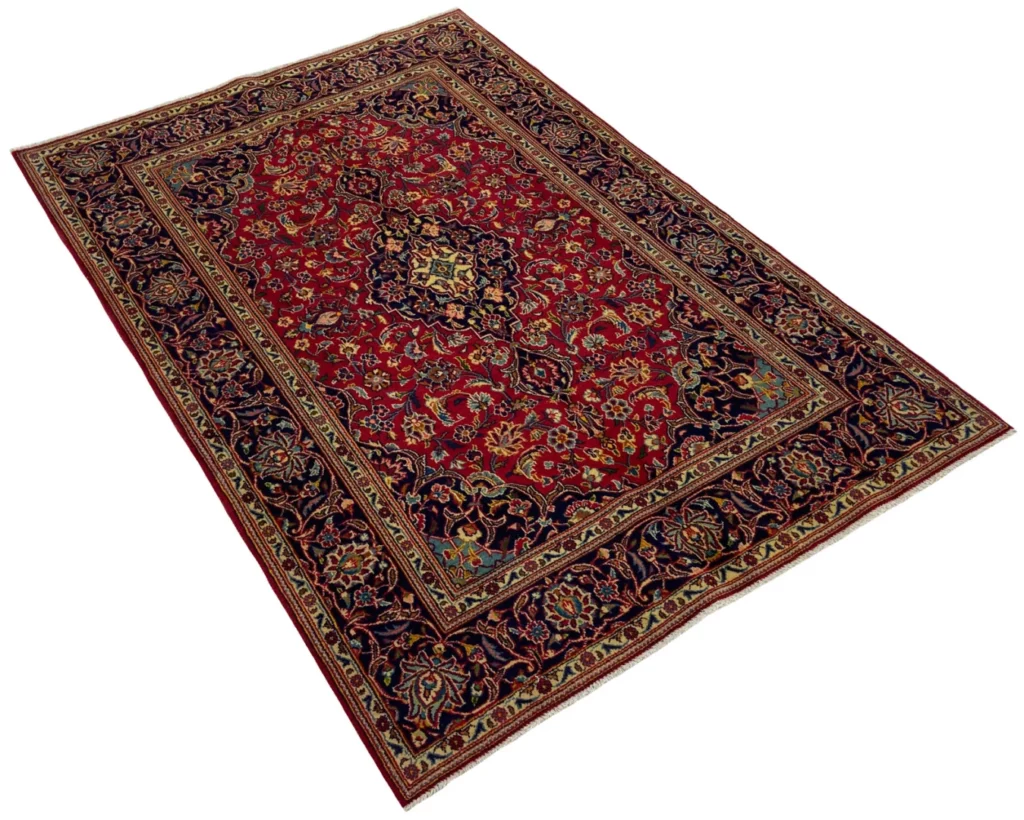
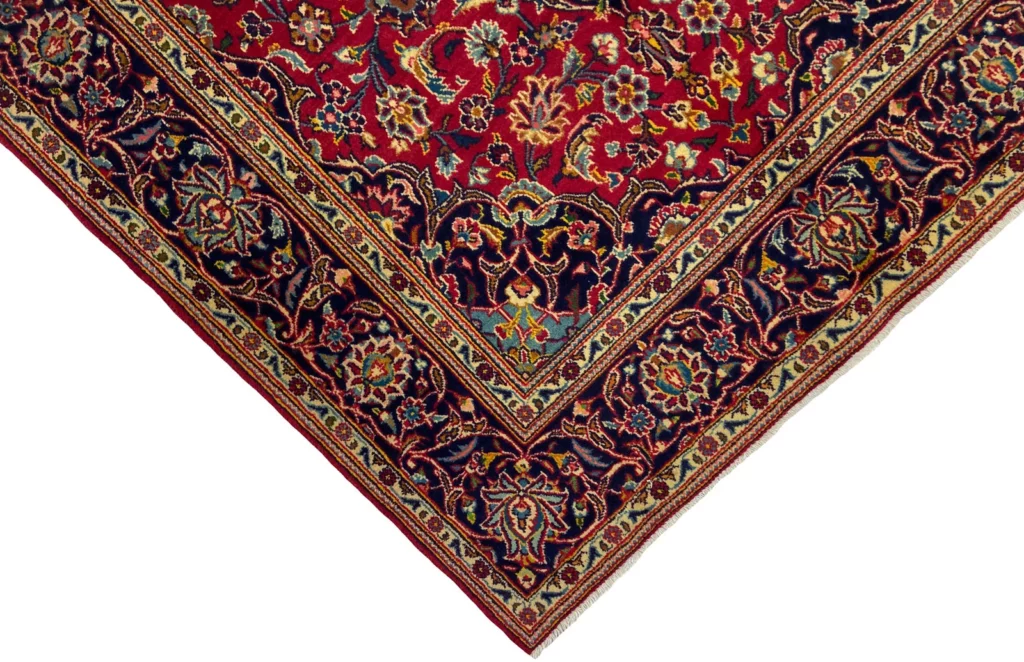
The design of this Keshan rug is characterized by floral and geometric motifs. These two visual languages can be combined in several ways: botanical forms may provide the main ornament, while geometric lines organize the field, borders or transitions between individual elements. The source describes the colors as lively and harmoniously coordinated. The overall effect is therefore based on the relationship between detailed motifs and an ordered color composition rather than on a single plain surface.
Floral ornament is a central part of many Persian carpet traditions. Leaves, blossoms, stems and stylized plant forms can be arranged in repeated sequences or incorporated into a larger balanced design. In a hand-knotted rug, these forms are not applied after weaving; they are created directly through the placement of colored knots. Small changes in the knot sequence can alter the outline of a flower or the direction of a stem, which is why detailed patterns require concentration and consistent workmanship.
Geometric motifs provide a different kind of structure. Repeated shapes, controlled lines and measured intervals can establish rhythm within the composition. They can frame floral ornament, define transitions or give the design a clear visual order. The combination of organic and geometric elements is characteristic of a decorative vocabulary in which nature-inspired forms and abstract organization support one another. The rug’s short pile and substantial knotting allow these details to remain legible on the surface.
Persian carpet patterns are often understood as carriers of cultural memory. Floral and geometric forms may recall the gardens, plants, architecture and ornamental arts associated with Persian history. Traditional designs can also be connected with stories from Persian history and mythology. Such references are part of the wider cultural background of the pattern language; they do not turn every individual motif into a literal illustration. Instead, repeated forms and established arrangements preserve a visual vocabulary that has been adapted by weavers over time.
Color plays an important role in the reading of a patterned rug. Harmoniously coordinated lively colors can separate the field from the border, emphasize the contours of motifs and create continuity across the composition. In traditional production, color is considered together with the drawing and the material, since the same motif can appear different depending on the contrast between neighboring tones. The design is consequently the result of several decisions working together: the placement of knots, the scale of the motifs, the balance of the geometry and the coordination of the colors.
The exact pattern of a hand-knotted rug is part of its individual identity. Even when a design belongs to a recognized Keshan tradition, the finished textile is produced knot by knot and is not identical to every other rug from the same region. Regional tradition provides the framework, while the particular arrangement of motifs and colors defines the individual piece. This is why the study of a Persian rug considers both its broader design language and the specific composition visible on its surface.
Special Features
The rug combines hand-knotting, a sheep-wool pile and a knot density of 150,000 to 300,000 knots per square metre. Its construction is described as durable, and the short pile is comparatively easy to care for. These features belong together: the wool supplies a resilient surface, the cotton foundation supports the structure, and the knotting process creates the patterned textile. The floral and geometric design, together with harmoniously coordinated lively colors, gives the rug its stated decorative character.
The Keshan name also places the rug within an Iranian tradition known for material quality and elaborate pattern work. It is not merely the motif that identifies the piece; its hand-knotted construction and regional design context are equally important. The rug brings together a practical textile structure and a pattern language shaped by Persian history and craft practice.
FAQ
What makes a Keshan Persian rug distinctive?
A Keshan Persian rug is distinguished by the combination of a dense hand-knotted construction, high-quality materials and traditional decorative designs. Floral and geometric motifs are arranged in a harmonious color composition, while the sheep-wool pile provides a durable and soft surface. The pattern language belongs to the long Iranian tradition of carpets that combine detailed ornament with cultural and historical references.
How should a Keshan Persian rug be cared for?
Regular vacuuming at a low setting is recommended for everyday care. Spills and marks should be wiped promptly with a damp cloth rather than left to penetrate the pile. Professional cleaning is recommended when a deeper treatment is required. Care should be carried out gently so that the wool surface and the hand-knotted construction remain in good condition.
Where do the materials for Keshan rugs come from?
The materials used for Keshan rugs are predominantly sourced from the region. The pile consists of high-quality sheep wool, while the warp and weft are generally made from durable cotton. This material combination supports the longevity of the textile and provides a suitable foundation for detailed hand-knotting. The relationship between the wool pile and the cotton structure is part of the traditional construction described for Keshan carpets.
To provide the best experiences, we use technologies like cookies to store and/or access device information. Consenting to these technologies will allow us to process data such as browsing behavior or unique IDs on this site. Not consenting or withdrawing consent, may adversely affect certain features and functions.
Functional Always active
The technical storage or access is strictly necessary for the legitimate purpose of enabling the use of a specific service explicitly requested by the subscriber or user, or for the sole purpose of carrying out the transmission of a communication over an electronic communications network.
Preferences
The technical storage or access is necessary for the legitimate purpose of storing preferences that are not requested by the subscriber or user.
Statistics
The technical storage or access that is used exclusively for statistical purposes.The technical storage or access that is used exclusively for anonymous statistical purposes. Without a subpoena, voluntary compliance on the part of your Internet Service Provider, or additional records from a third party, information stored or retrieved for this purpose alone cannot usually be used to identify you.
Marketing
The technical storage or access is required to create user profiles to send advertising, or to track the user on a website or across several websites for similar marketing purposes.
 SECURE PAYMENT
 SHIPPING PARTNERS