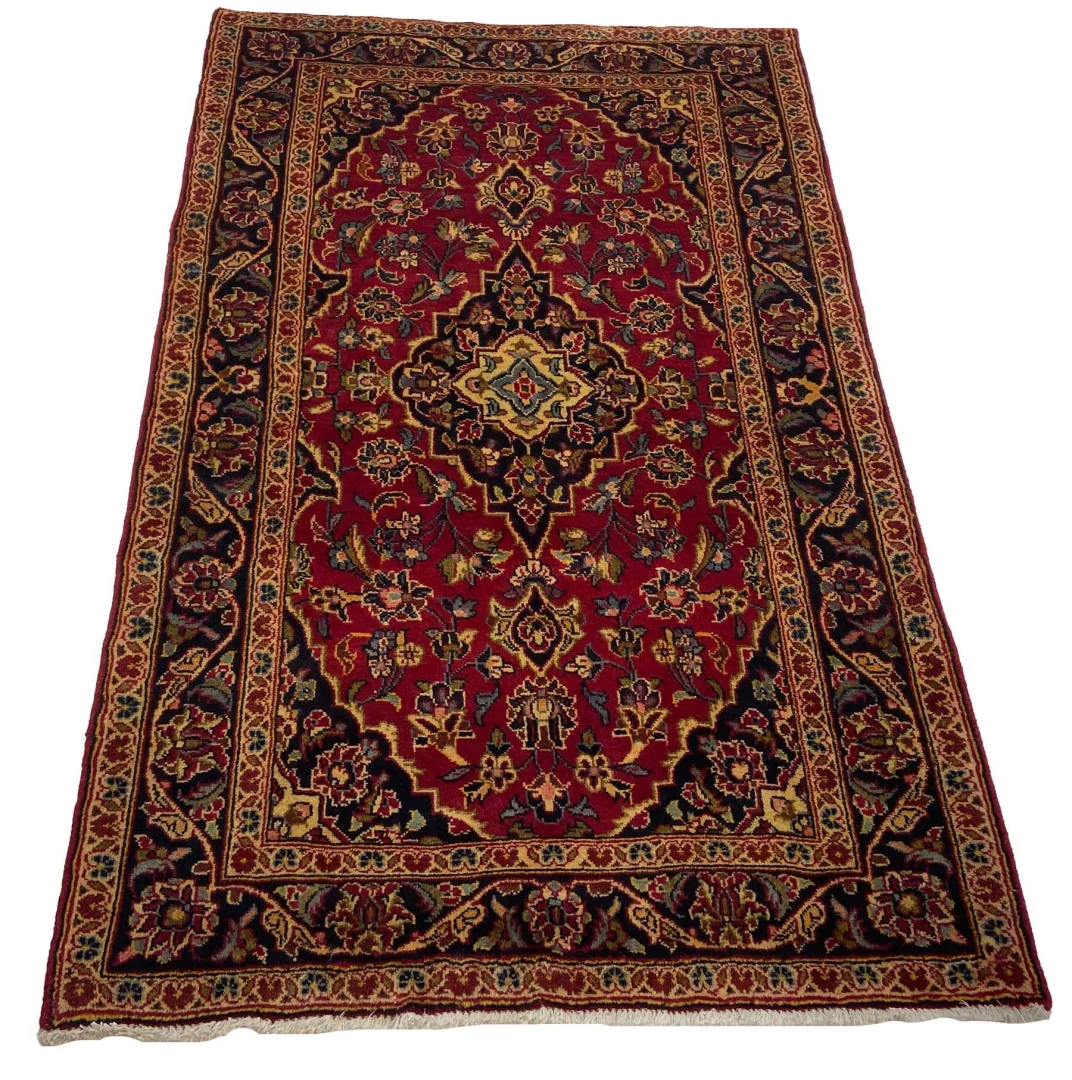
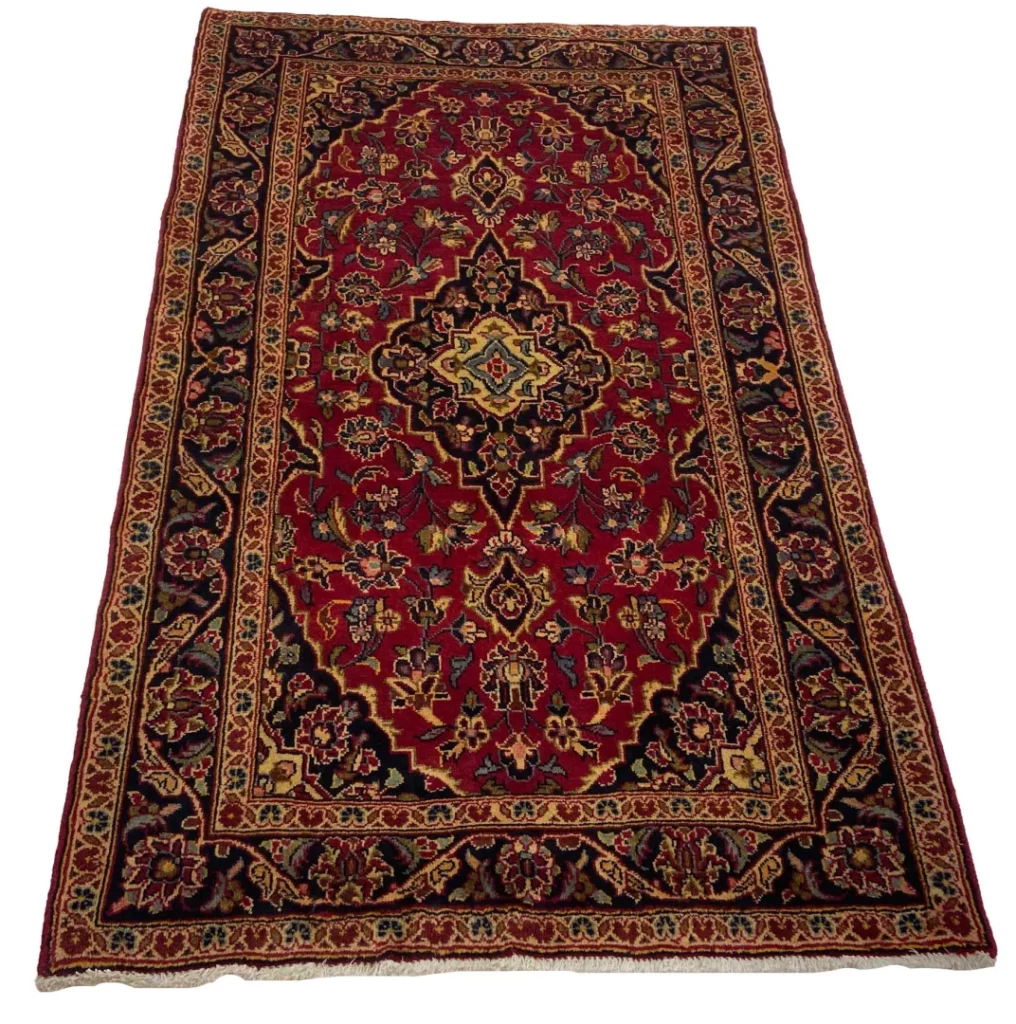
This Keshan Persian rug is hand-knotted. Its pile is made of high-quality sheep wool, while cotton is specified for the warp. The combination of a wool pile and cotton foundation belongs to the established construction methods of Persian rug making. Wool provides a resilient, tactile surface and accepts colour distinctly. Cotton offers firm, even foundation threads from which the rows of knots are built.
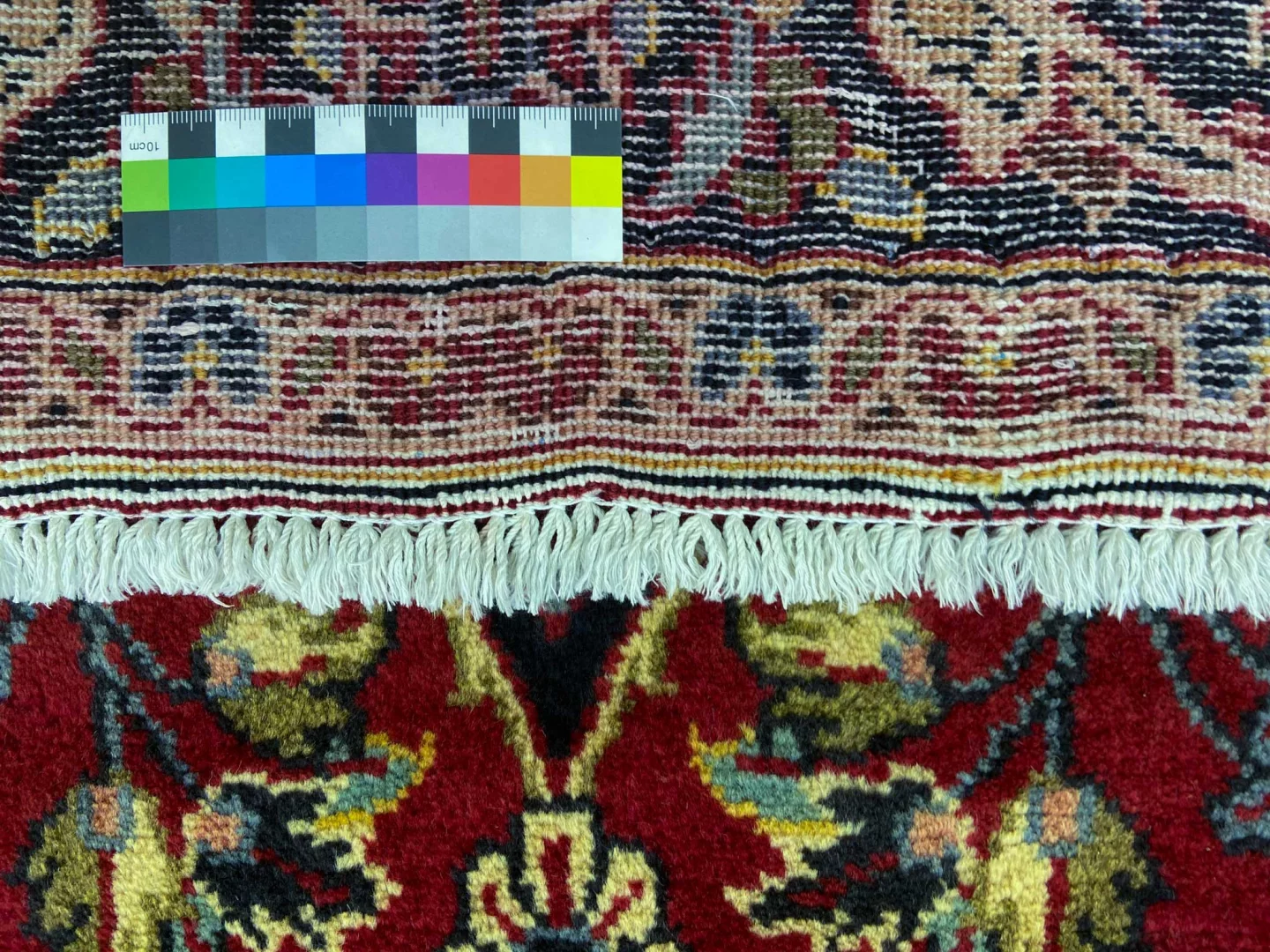
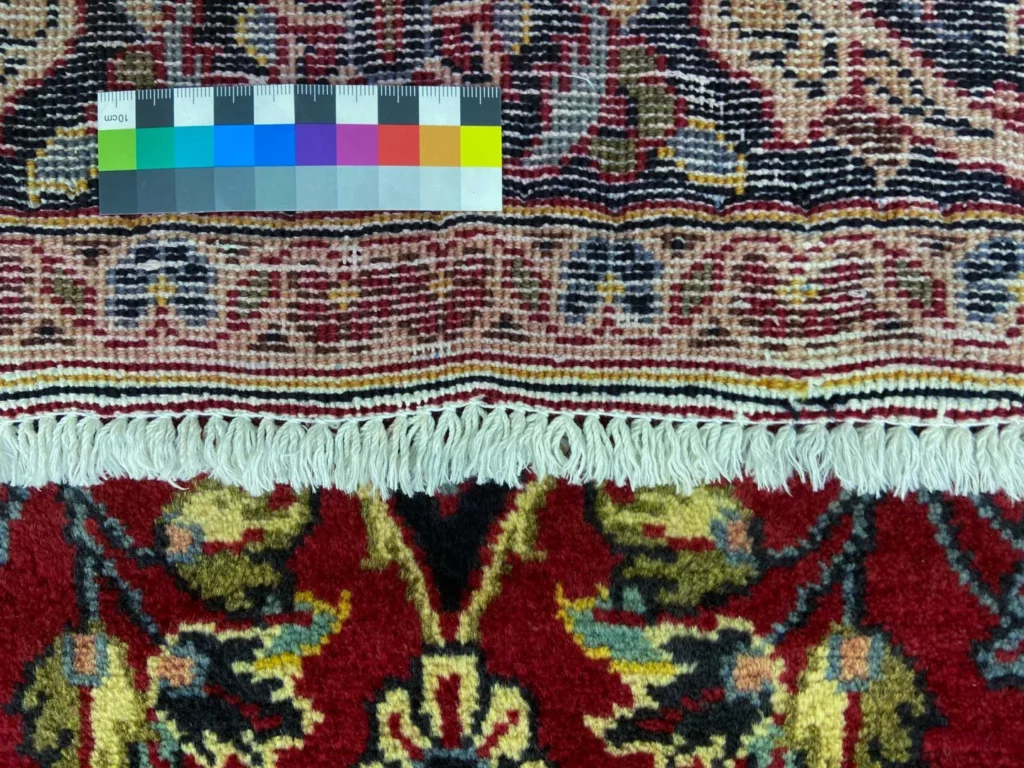
In hand-knotting, each knot is placed individually around the warp threads and then secured with the structure of the next row. The pile develops gradually as the knotter follows the design. Unlike a mechanically produced floor covering, the rug is formed through a manual process that requires control of tension, spacing and pattern placement. The stated knot density for this rug is between 150,000 and 300,000 knots per square metre. Knot density indicates how many knots are set within a given area and is related to the amount of detail that can be represented in the pile.
High-quality sheep wool is well suited to rug pile because its natural fibres are durable and workable. The surface has a distinct textile feel, while the cotton warp gives the construction a stable base. The source description characterises this rug as hard-wearing and very well preserved. These points concern the documented material and condition of this individual Keshan rug; other details, such as a particular wool grade or dye composition, are not specified.
Origin and Tradition
Keshan is a city in Iran with a recognised place in Persian carpet making. Keshan rugs are associated with a refined regional tradition in which careful knotting supports orderly compositions and elaborately drawn ornament. The craft knowledge has been passed through generations of makers. It includes more than the mechanical act of tying knots: the weaver must read the design, maintain the relationship between the field and borders, coordinate colour areas and keep the construction stable as the rug progresses.
Persian carpet production developed distinct regional approaches rather than one uniform style. In Keshan, workshop practice became associated with balanced layouts, floral drawing and a precise handling of repeated motifs. A design may be prepared as a drawn plan or adapted from an established pattern tradition. During production, that plan is translated into rows of coloured knots. The warp establishes the lengthwise framework, the wefts help secure the rows, and the pile gradually turns the plan into a visible textile image.
The identity of a Keshan rug therefore rests on the relationship between place, technique and design tradition. A regional name is not simply a decorative label. It connects the rug with a centre of production and with the methods and visual vocabulary developed there. The knotter must judge proportions and details while working, because the final pattern depends on the consistent placement of many individual knots. A comparatively fine knotting can support small flowers, narrow outlines and compact ornament, although density alone does not define the character of a Keshan rug.
The wool-and-cotton construction reflects a practical principle of Persian rug making. The wool pile creates the visible and usable surface, while cotton in the warp provides an organised foundation for the knot rows. A sound foundation is important when a design contains repeated borders, closely placed floral elements or other detailed structures. The technique is both functional and decorative: it produces a floor covering while also preserving a drawn composition in a durable textile form.
Persian rugs have historically served as household furnishings as well as carefully made works of textile craft. Regional workshops developed patterns that could be adapted to different interiors and formats. Keshan became known beyond its immediate area, while Tabriz and Isfahan developed their own recognised traditions of hand-knotted production and detailed design. Those names refer to different regional backgrounds and should not be treated as alternate origins for this rug. This piece is identified as Keshan and comes from Iran.
The history of Keshan weaving is best understood through continuity of method. Pattern knowledge, material selection and knotting practice work together across generations. The result is not defined by one isolated motif but by a disciplined approach to composition and execution. That background provides context for this rug without adding unrecorded claims about its maker, workshop, date or provenance.
Design and Pattern
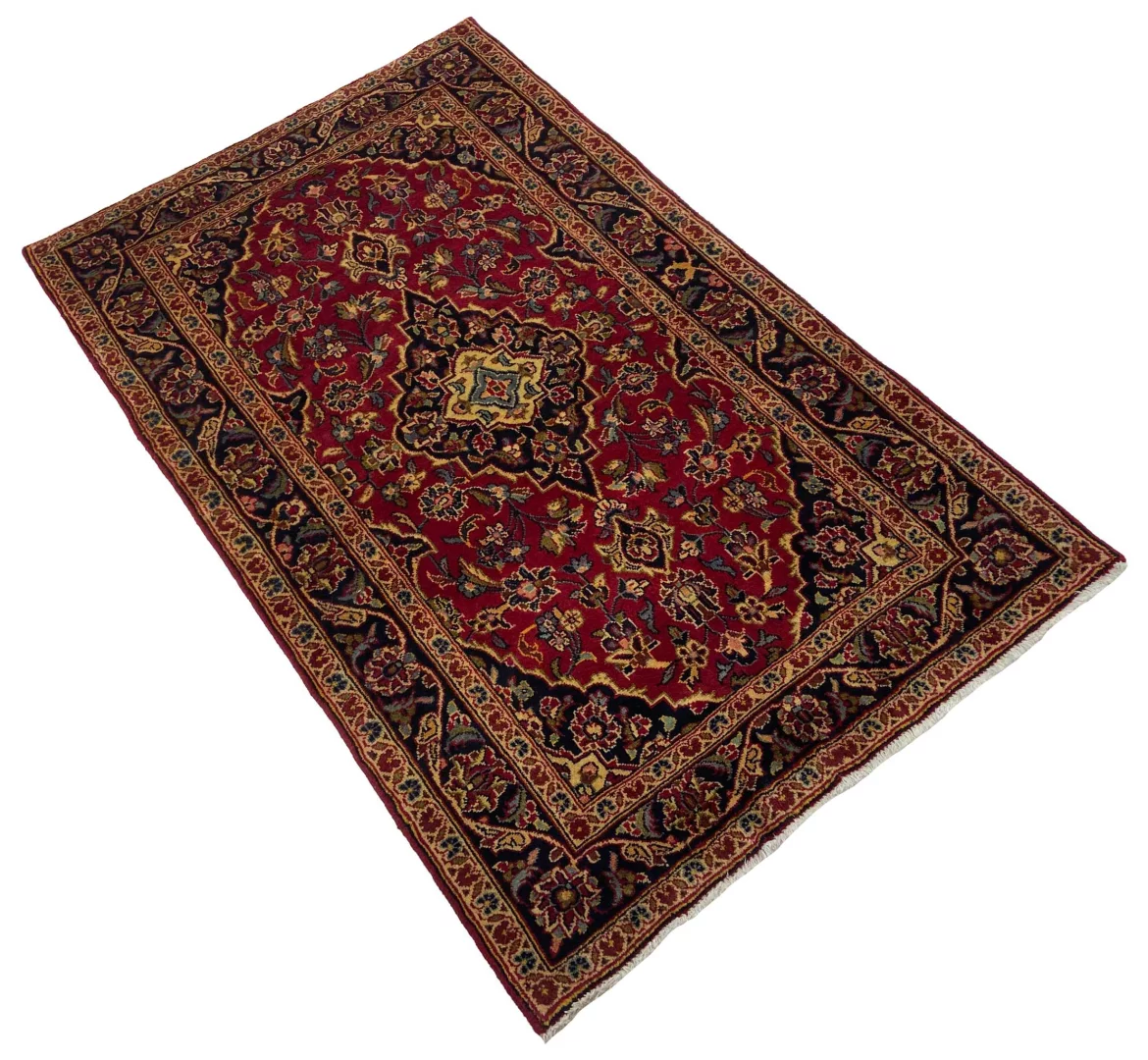
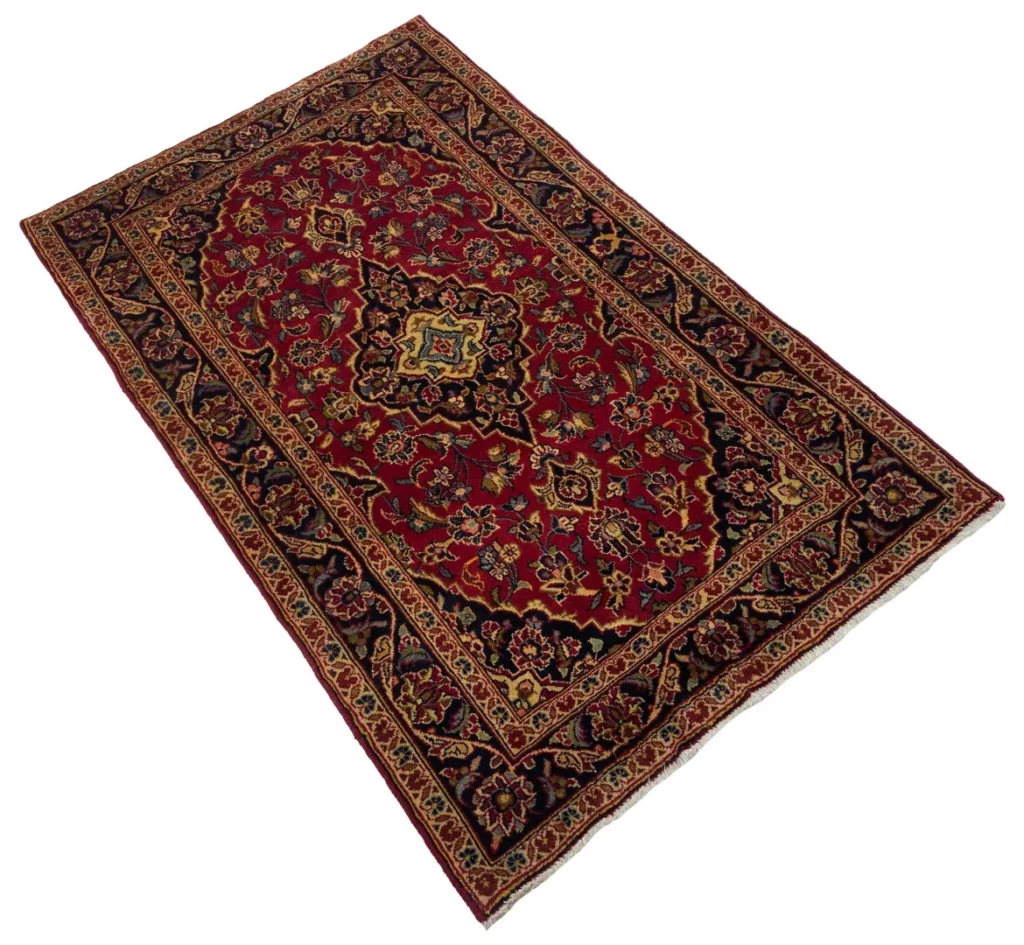
The pattern of this rug is described as a classic hand-knotted design. That wording identifies a traditional decorative character but does not name one specific motif. In the wider Keshan tradition, floral elements and carefully organised geometric forms are common points of reference. Leaves, blossoms, vines and medallion arrangements may be brought together within a structured field. General regional characteristics must be kept separate from the exact pattern details documented for this individual rug.
Floral Persian ornament is often stylised rather than copied directly from nature. Leaves and flowers can be repeated, balanced and connected by scrolling stems so that the pattern remains legible across the woven surface. Geometric forms may establish axes, compartments or ordered intervals. The hand-knotting process builds these elements from small areas of colour, allowing the design to shift gradually from one outline to the next.
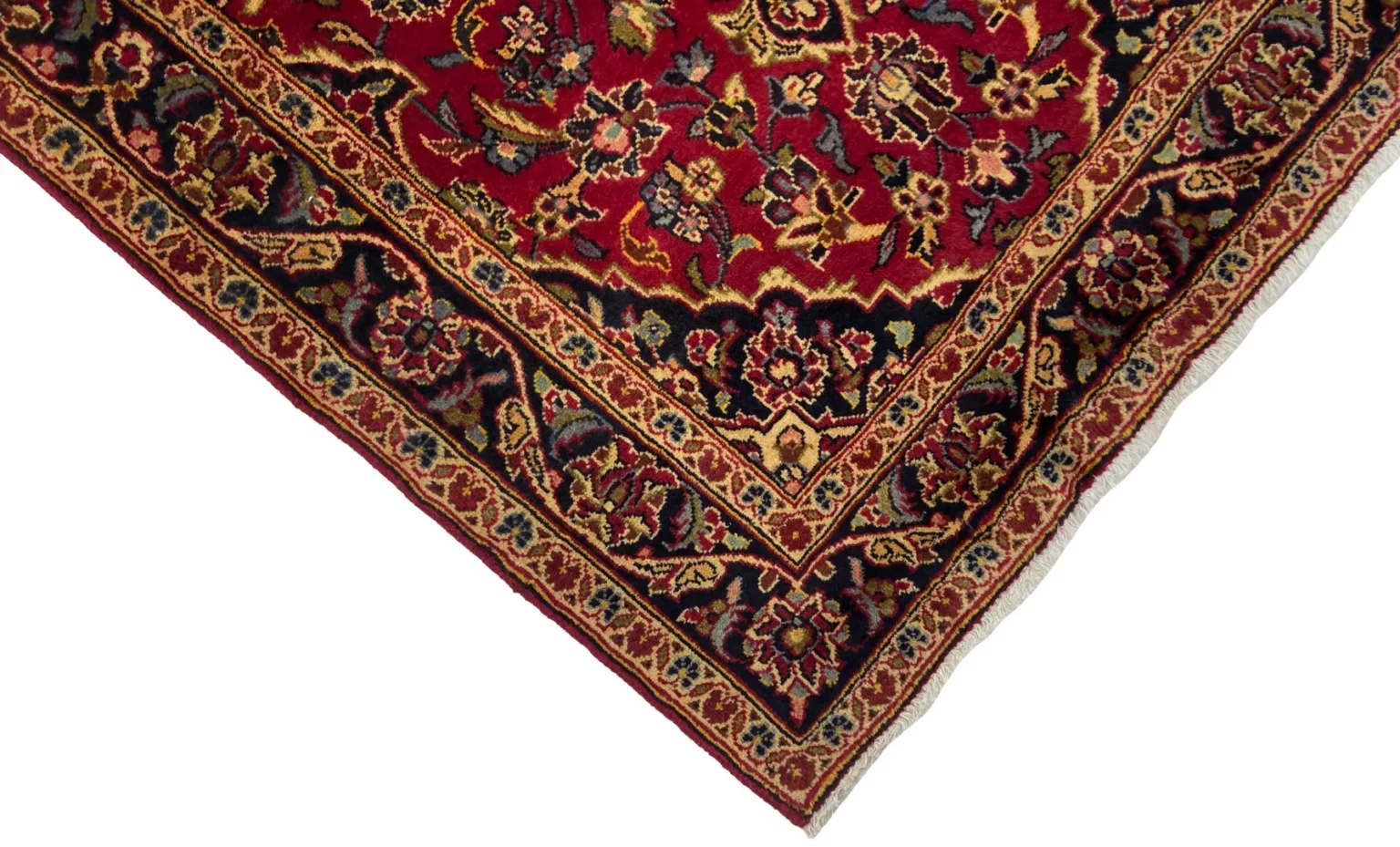
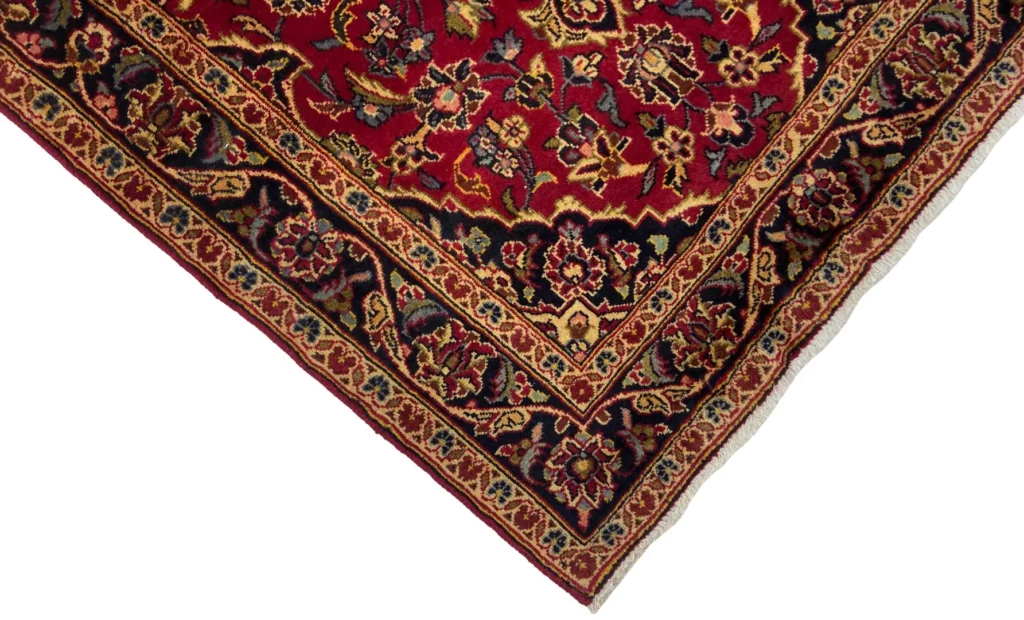
A classical Keshan composition may be organised around a central medallion, or it may use a more continuous arrangement across the field. Broad main borders are often accompanied by narrower secondary borders, creating a visual frame. In a floral layout, vines can link separate blossoms and maintain movement through the field. In a more geometric layout, repeated shapes and measured intervals provide the same sense of cohesion. These are established possibilities within the regional design vocabulary, not additional claims about a motif that has not been individually named.
Keshan rugs are broadly associated with rich, coordinated colour schemes. Deep reds and blues, together with softer beige tones, are part of the palette commonly discussed in connection with the tradition. No specific colour information is recorded for this rug, so those colours are presented only as general background. The documented design statement remains that this is a Keshan rug with classic hand-knotted designs.
The recorded knot density is relevant to the way a detailed pattern can be rendered. A closely arranged field of knots can support small colour transitions, narrow contours and compact decorative passages. It does not, however, replace the work of the design. The proportions of the field, the rhythm of the borders, the balance of motifs and the clarity of the drawing all influence the final appearance. Small variations are also compatible with a manually produced textile and do not turn a hand-knotted rug into a mechanically uniform product.
Keshan pattern traditions are broad enough to include floral, geometric and medallion-based approaches. This range explains why Keshan rugs can appear in varied interior settings while retaining a connection to Persian workshop practice. The regional background gives meaning to the phrase classic hand-knotted design, but it should not be used to invent a particular central motif, palette or border arrangement for this piece. Its documented pattern description remains deliberately concise and factual.
Special Features
The recorded features of this rug are its Keshan origin, its Iranian Persian classification, its hand-knotted construction, its sheep-wool pile and cotton warp, and its stated knot density. It is described as hard-wearing and very well preserved. Together, these details identify a traditionally made rug with a wool surface and a stable cotton foundation. The combination of regional origin and classic hand-knotted design is central to its character.
No signature, production date, certificate, exact colour list or individually named motif is provided. Those details are therefore not added. The particular feature of this piece is the way its documented materials, construction, origin and condition come together within the Keshan tradition.
FAQ
How should a Keshan Persian rug be cleaned?
For routine care, use a vacuum cleaner without a brush attachment. This removes loose dust while avoiding unnecessary mechanical stress on the wool pile. If a spill occurs, act promptly and dab the area with a damp cloth rather than rubbing it. Rubbing can disturb the fibres and affect the appearance of the surface. For a full cleaning, professional rug cleaners are recommended. The method should be suitable for a hand-knotted construction with a sheep-wool pile and cotton warp, and should account for the condition of the individual rug.
How can the authenticity of a Keshan Persian rug be checked?
Authentication is generally based on several features considered together. These include knot density, the quality of the materials and the character of the design. A genuinely hand-knotted rug may show a slightly irregular structure and does not have to be perfectly symmetrical. An attached label or certificate may also provide information about origin and age. No single feature should be treated as conclusive on its own. When a binding assessment is required, an experienced rug specialist can examine the construction, materials and pattern in person.
Where can a Keshan Persian rug be purchased?
Keshan Persian rugs are available from specialist rug dealers, antique shops and online retailers. Buyers should look for a clear description of origin, materials, construction, pattern and condition. Information about knot density, pile and warp makes it easier to compare individual rugs. Because each hand-knotted rug is an individual textile, the seller should distinguish between features documented for the specific piece and general information about Keshan weaving. A reliable description provides those details openly and avoids assigning an unrecorded date, signature, colour scheme or provenance.
To provide the best experiences, we use technologies like cookies to store and/or access device information. Consenting to these technologies will allow us to process data such as browsing behavior or unique IDs on this site. Not consenting or withdrawing consent, may adversely affect certain features and functions.
Functional Always active
The technical storage or access is strictly necessary for the legitimate purpose of enabling the use of a specific service explicitly requested by the subscriber or user, or for the sole purpose of carrying out the transmission of a communication over an electronic communications network.
Preferences
The technical storage or access is necessary for the legitimate purpose of storing preferences that are not requested by the subscriber or user.
Statistics
The technical storage or access that is used exclusively for statistical purposes.The technical storage or access that is used exclusively for anonymous statistical purposes. Without a subpoena, voluntary compliance on the part of your Internet Service Provider, or additional records from a third party, information stored or retrieved for this purpose alone cannot usually be used to identify you.
Marketing
The technical storage or access is required to create user profiles to send advertising, or to track the user on a website or across several websites for similar marketing purposes.

 SECURE PAYMENT
 SHIPPING PARTNERS


