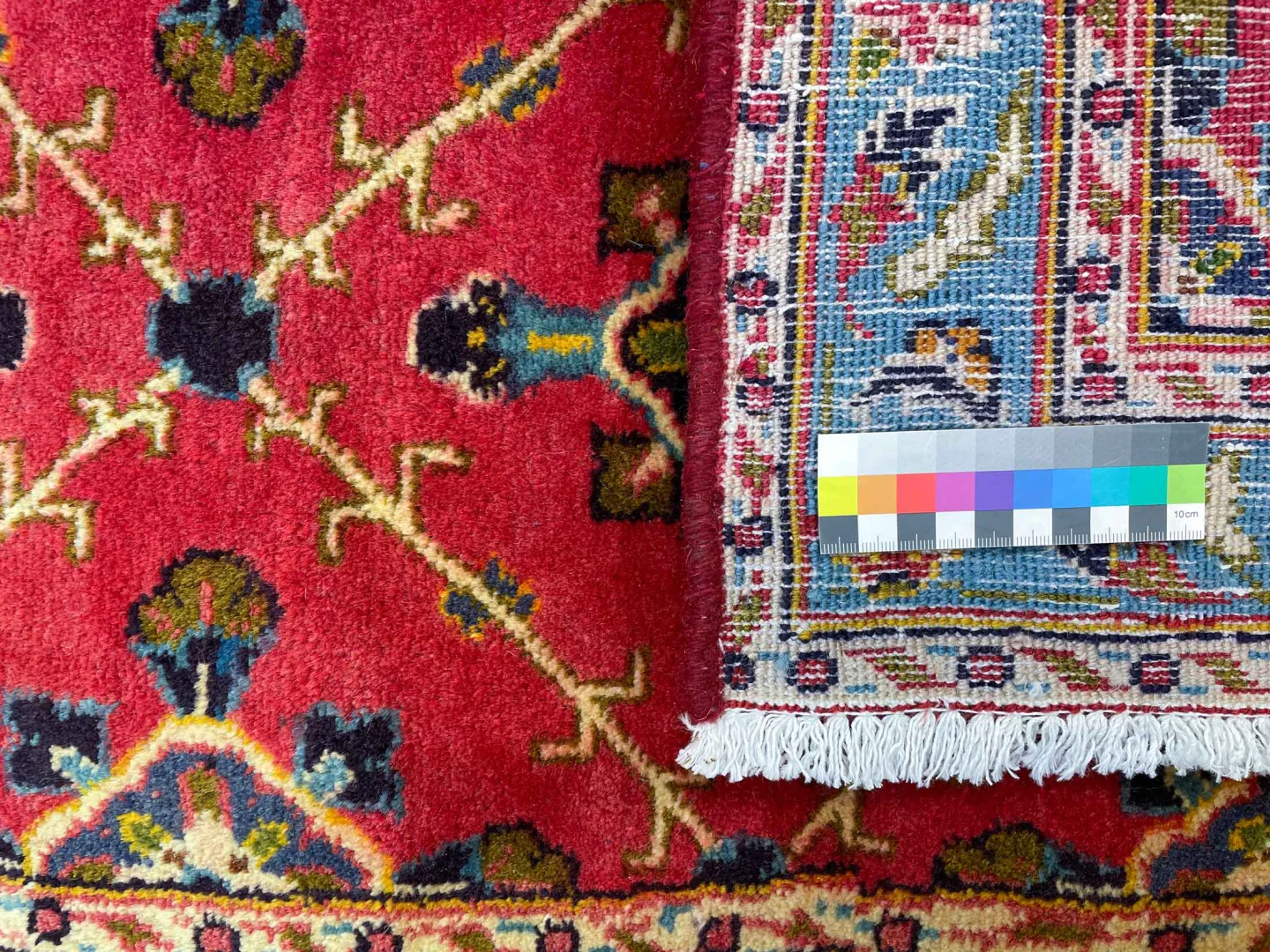
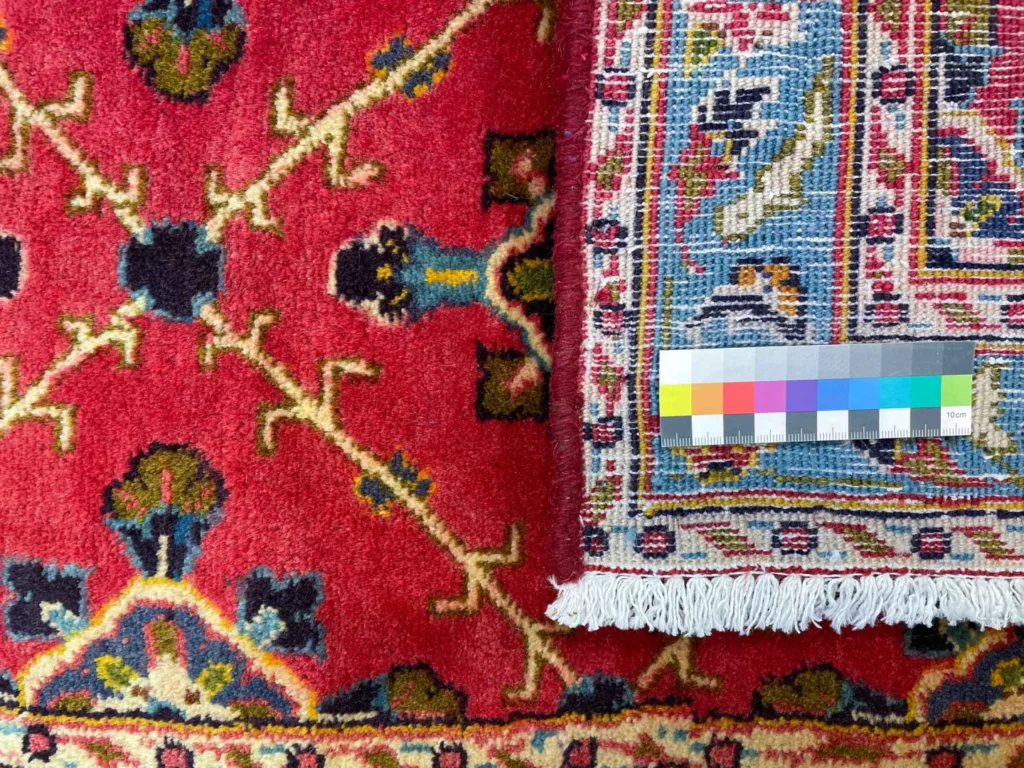
This Keshan Persian rug is hand-knotted and is described as being made from high-quality sheep wool and cotton. Sheep wool forms the principal pile material. It has long been used in traditional Persian rug making because it provides a soft surface together with a resilient textile structure. Cotton is used for the warp in this rug; in the customary construction of this type, it may also be used in the weft. This gives the knotted field a stable foundation and supports the regular progression of the rows.
The listed knot density is between 150,000 and 300,000 knots per square metre. Such density allows a carefully articulated knotted surface and supports the clear arrangement of classic ornament. In hand-knotting, each knot is made individually in a sequence of working stages. Knots are tied around the warp, the weft is inserted to secure each completed row, and the pile is built up gradually across the rug. The resulting structure is a direct record of the weaving process rather than an industrially reproduced surface.
The use of sheep wool together with cotton belongs to the established material tradition of Persian knotted rugs. Wool is selected for the pile for its practical qualities, while cotton provides a firm, even warp. The condition of this particular rug is described as very good. Its named characteristics therefore include the hand-knotted technique, the wool pile, the cotton warp, the stated knot density and the condition given in the description.
Origin and Tradition
This rug comes from Keshan in Iran, historically known as part of Persia. Keshan was an important trading centre on the Silk Road. The movement of goods, ideas and craft knowledge along that route helped bring the region’s rugs to wider attention. The history of Keshan rugs is described as reaching back to the era of the Persian Empire. Their identity is consequently connected to both a specific Iranian place and a long-established tradition of carpet production.
The name Keshan refers here to a regional origin and tradition, not simply to a decorative vocabulary. Workshops in the area developed methods in which careful manual work, ordered designs and selected materials were brought together. Persian rug making also represents the transmission of knowledge from one generation to the next. Preparing the warp, tying the knots, inserting the weft and finishing the pile are separate stages within one continuous craft process. Each stage affects the structure and appearance of the finished textile.
Keshan’s position within historic trade networks helped local forms circulate beyond their immediate surroundings. At the same time, regional identity remained important for classifying the rugs. Keshan is one of the Iranian areas associated with a long tradition of knotting. This is why the rug is identified as a Keshan Persian rug rather than being presented only as a general Oriental rug. The designation joins its Iranian origin with the craft tradition that developed there.
Other well-known Iranian rug traditions provide useful points of comparison. Tabriz rugs are often associated with complex designs and high knot density. Isfahan rugs are frequently recognised for elaborate arabesque ornament. Like Keshan rugs, both are traditionally hand-knotted and represent the range of Iranian rug production. The source also names the workshops of Nain and Kashan among respected Iranian producers. These workshops are associated with rugs that combine long service life with notable aesthetic qualities.
The history of Persian rugs is therefore not a single uniform style. It consists of regional practices, workshop methods and design languages that developed alongside one another. Keshan occupies its own place within that history. Its rugs are linked with the city and its trading past, while the hand-knotted construction and carefully arranged ornament connect the individual piece with a broader Iranian textile heritage.
Design and Pattern
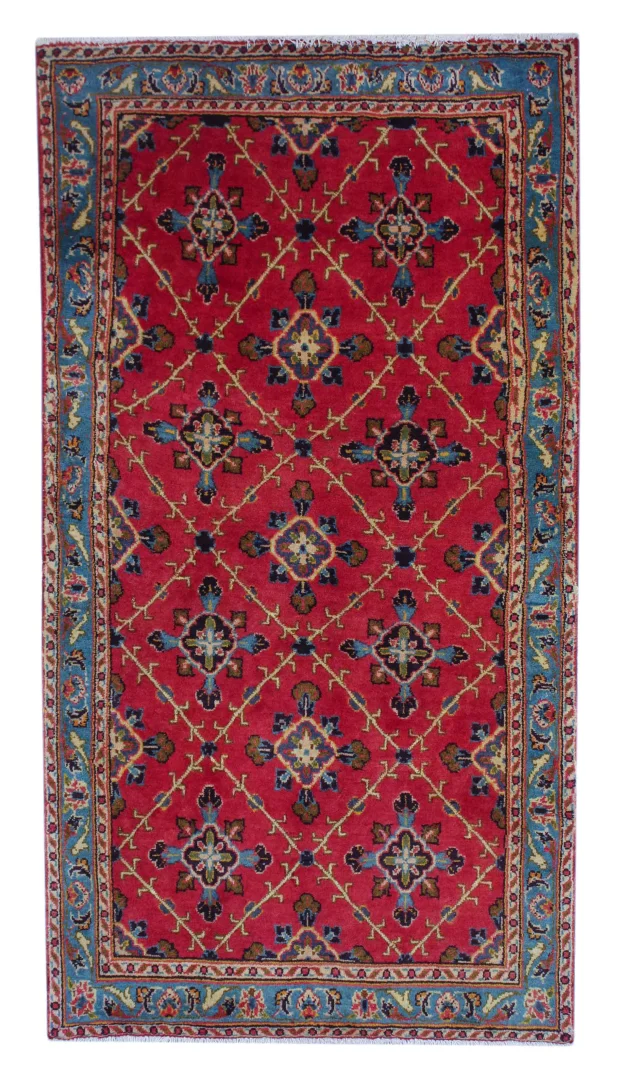
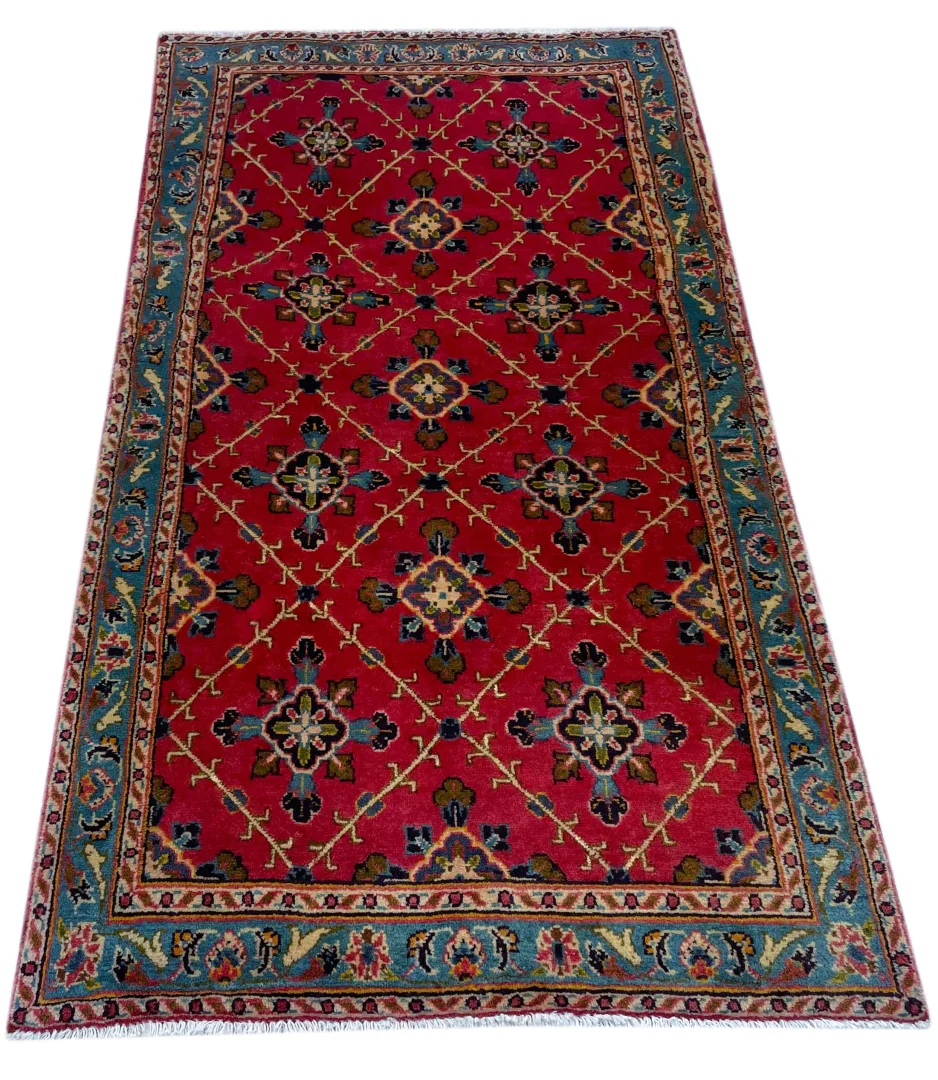
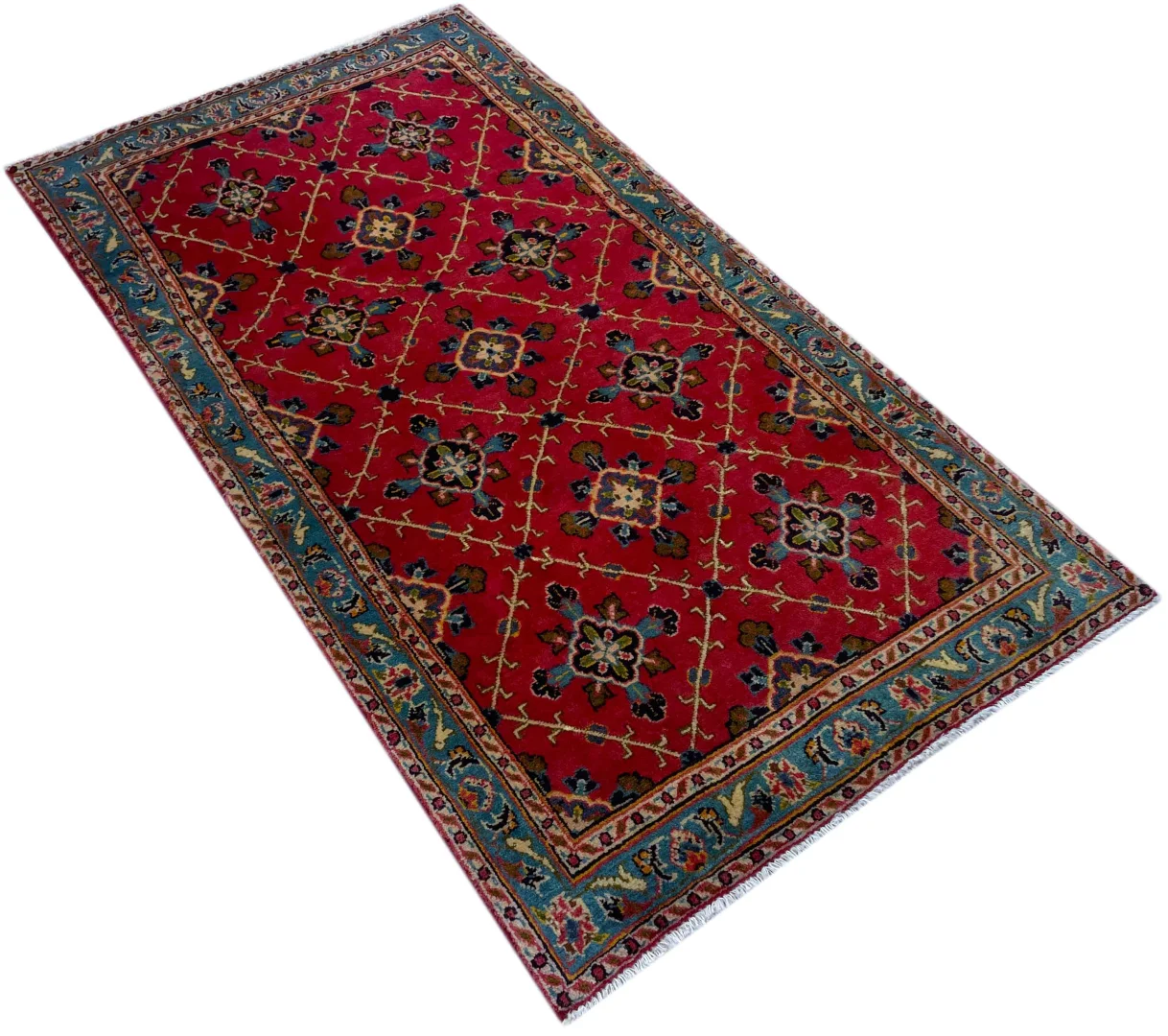
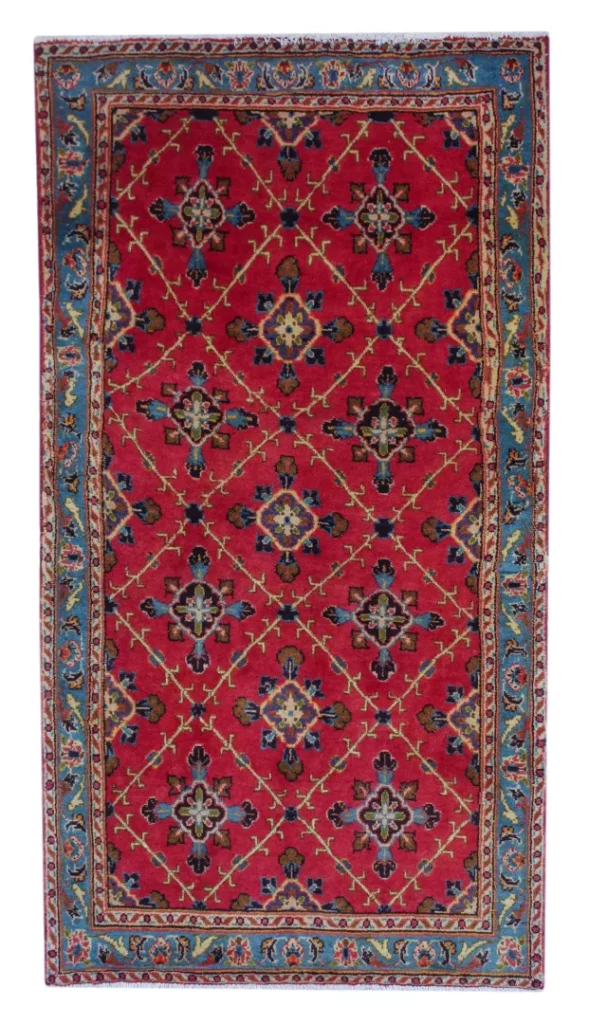
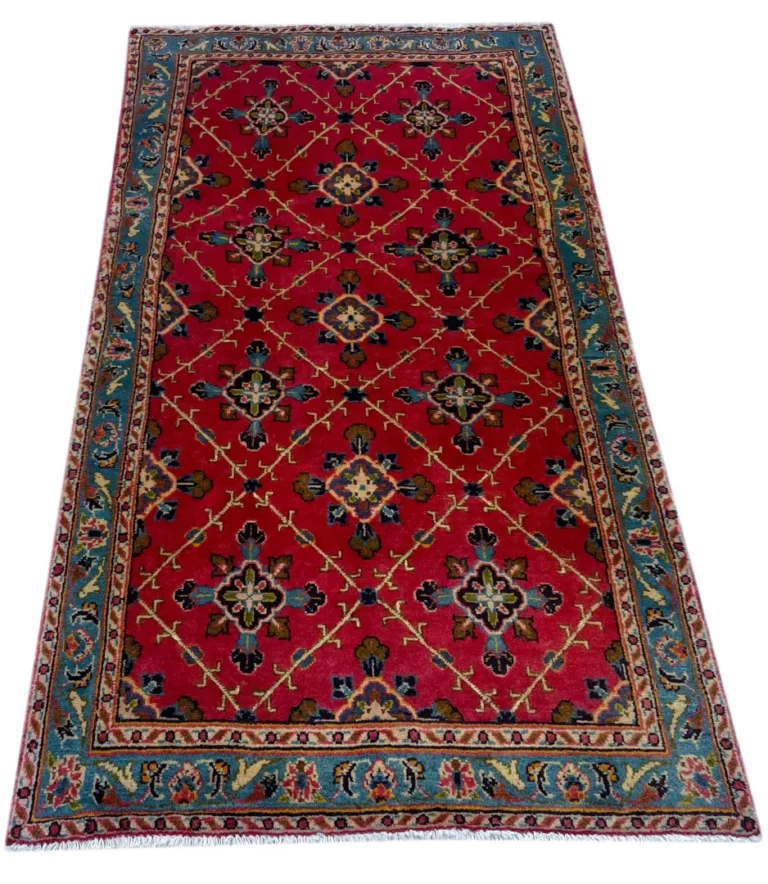
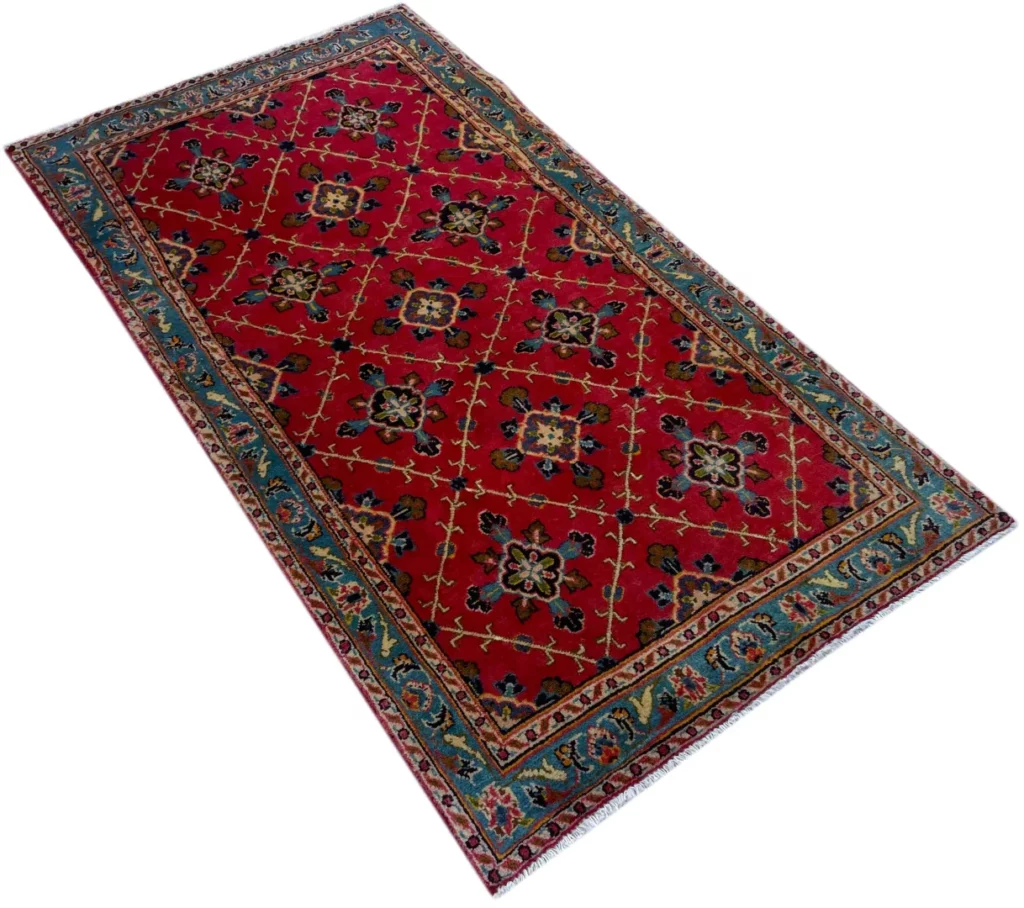
The pattern of this rug is described as a classic design. Traditional Keshan compositions often rely on a clearly organised field in which a central arrangement, surrounding borders and ornamental spaces work together. Such a structure creates visual order while still allowing individual rugs to vary. The relationship between lines, forms, repeated elements and open areas is what gives a classic composition its coherence.
Keshan rug design encompasses a broad range of motifs. Floral forms and geometric shapes are frequently used as principal elements. Leaves, blossoms and scrolling vines can be arranged into a connected ornamental field, while geometric forms establish rhythm and definition. Stylised animals and landscape scenes also occur in the wider design tradition. When present, these images can introduce a narrative dimension and reflect cultural ideas associated with Iran. They remain part of the established design vocabulary rather than being a requirement for every Keshan rug.
Colour is another important part of the traditional Keshan palette. Keshan rugs are often described with rich and lively tones, especially red, blue and beige. These colours may be distributed between the field, the borders and individual motifs. Red can provide a warm foundation, blue can create a cooler counterpoint, and beige can illuminate transitions or lighter ornamental passages. This is background on the regional design tradition; the specific rug offered here is identified in the source as having a classic pattern.
The knotting technique supports the precise treatment of ornament. Small changes in a contour can be built gradually as the knot rows progress, while the repeated structure creates a unified textile surface. Classic Keshan design therefore depends on the interaction of drawing, colour and construction. Floral and geometric elements can be balanced within one composition, and the pattern can remain connected to its regional origin rather than appearing as an isolated decorative label.
Comparisons with other Iranian traditions highlight these distinctions. Tabriz designs are often noted for their intricate arrangements, while Isfahan rugs are frequently linked with elaborate arabesques. These differences show how shared Persian craft foundations produced several regional visual languages. Keshan’s classic design belongs to this wider family but retains its own connection to the city of Keshan, its history and its established approach to ornament.
Special Features
The stated features of this rug are its hand-knotted construction, sheep-wool pile, cotton warp, listed knot density, classic design and very good condition. These details connect a traditional Iranian origin with a clearly identified material and technical structure. The name Keshan also places the rug within the weaving tradition of Keshan in Iran.
A hand-knotted rug is made through a deliberate sequence rather than through the uniform repetition of an industrial process. The design provides a framework, but the surface is built knot by knot. This keeps the material, technique and pattern closely related. For this piece, the relevant distinction is not an added claim about provenance or an unstated feature, but the characteristics specifically described: sheep wool, cotton, hand-knotting, classic design and very good condition.
FAQ
How should I care for my Keshan Persian rug?
Regular gentle vacuuming helps remove loose dust and dirt from the pile. Spills should be addressed immediately by dabbing them with a damp cloth. A careful approach is appropriate so that the surface and the knotted areas are not subjected to unnecessary stress. Professional cleaning every few years is also recommended for long-term care. It should be carried out by a specialist familiar with hand-knotted rugs and materials such as sheep wool.
Where does the Keshan Persian rug come from?
The Keshan Persian rug comes from Keshan in Iran, the historical region known as Persia. Keshan was an important centre of trade along the Silk Road and is known for its rug production. Its place in the history of Persian rug making reaches back, in the tradition described here, to the period of the Persian Empire. Keshan therefore identifies a specific Iranian origin as well as the craft tradition associated with that area.
What sizes are available for Keshan Persian rugs?
Keshan Persian rugs are made in a range of sizes. The selection extends from small runners to large room rugs suitable for living rooms or dining rooms. This range allows rugs from the tradition to be used in different interior settings. Their visual effect depends on the available floor area, the classic design and the arrangement of the motifs. The particular piece offered here is listed with its own size.
To provide the best experiences, we use technologies like cookies to store and/or access device information. Consenting to these technologies will allow us to process data such as browsing behavior or unique IDs on this site. Not consenting or withdrawing consent, may adversely affect certain features and functions.
Functional Always active
The technical storage or access is strictly necessary for the legitimate purpose of enabling the use of a specific service explicitly requested by the subscriber or user, or for the sole purpose of carrying out the transmission of a communication over an electronic communications network.
Preferences
The technical storage or access is necessary for the legitimate purpose of storing preferences that are not requested by the subscriber or user.
Statistics
The technical storage or access that is used exclusively for statistical purposes.The technical storage or access that is used exclusively for anonymous statistical purposes. Without a subpoena, voluntary compliance on the part of your Internet Service Provider, or additional records from a third party, information stored or retrieved for this purpose alone cannot usually be used to identify you.
Marketing
The technical storage or access is required to create user profiles to send advertising, or to track the user on a website or across several websites for similar marketing purposes.
 SECURE PAYMENT
 SHIPPING PARTNERS


