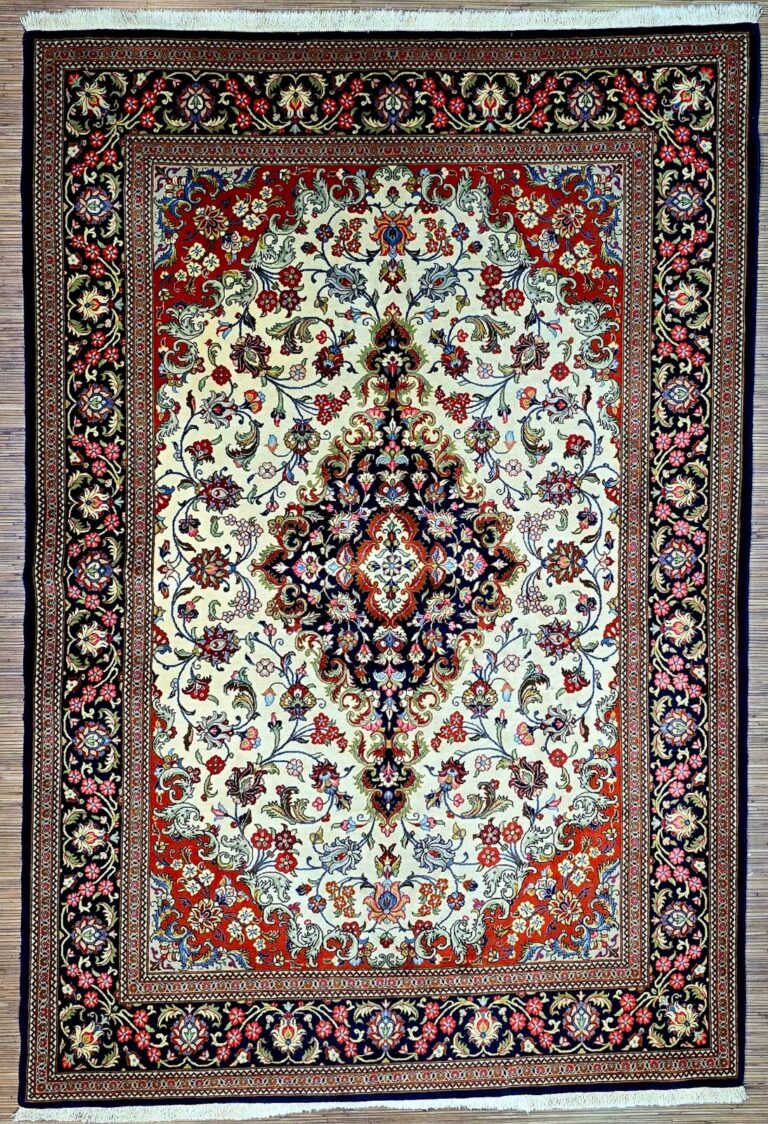
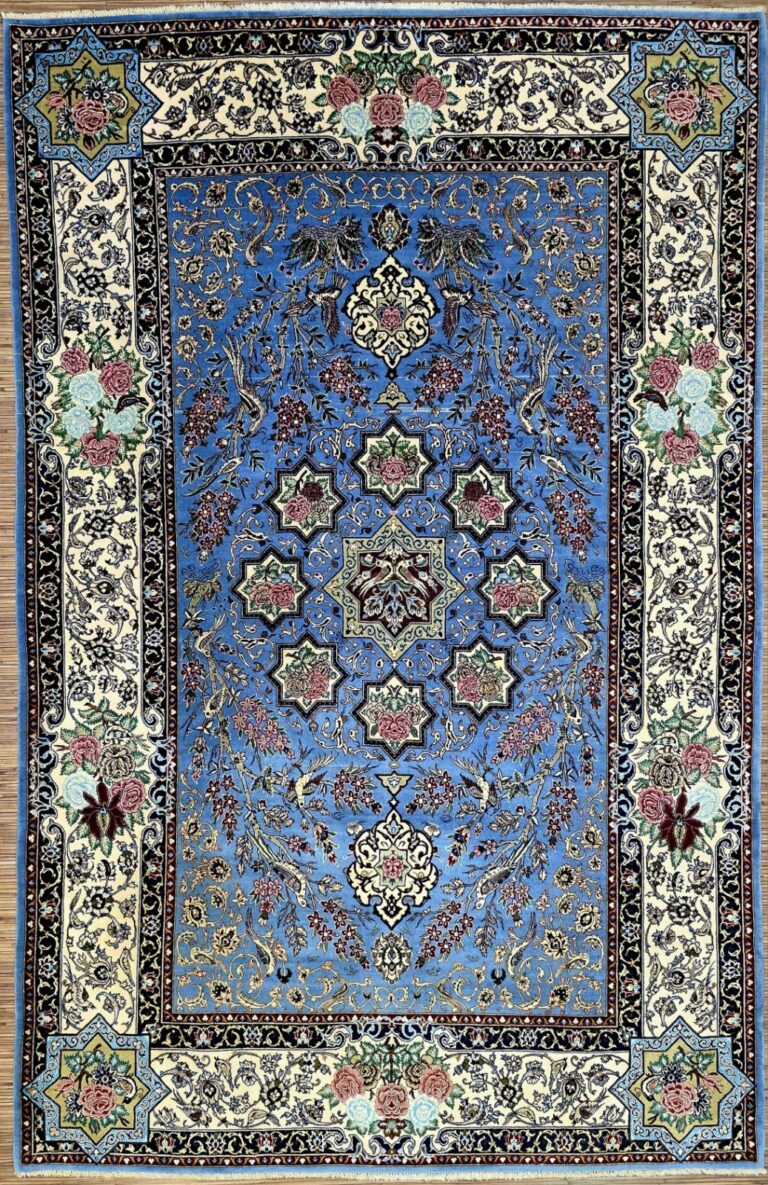
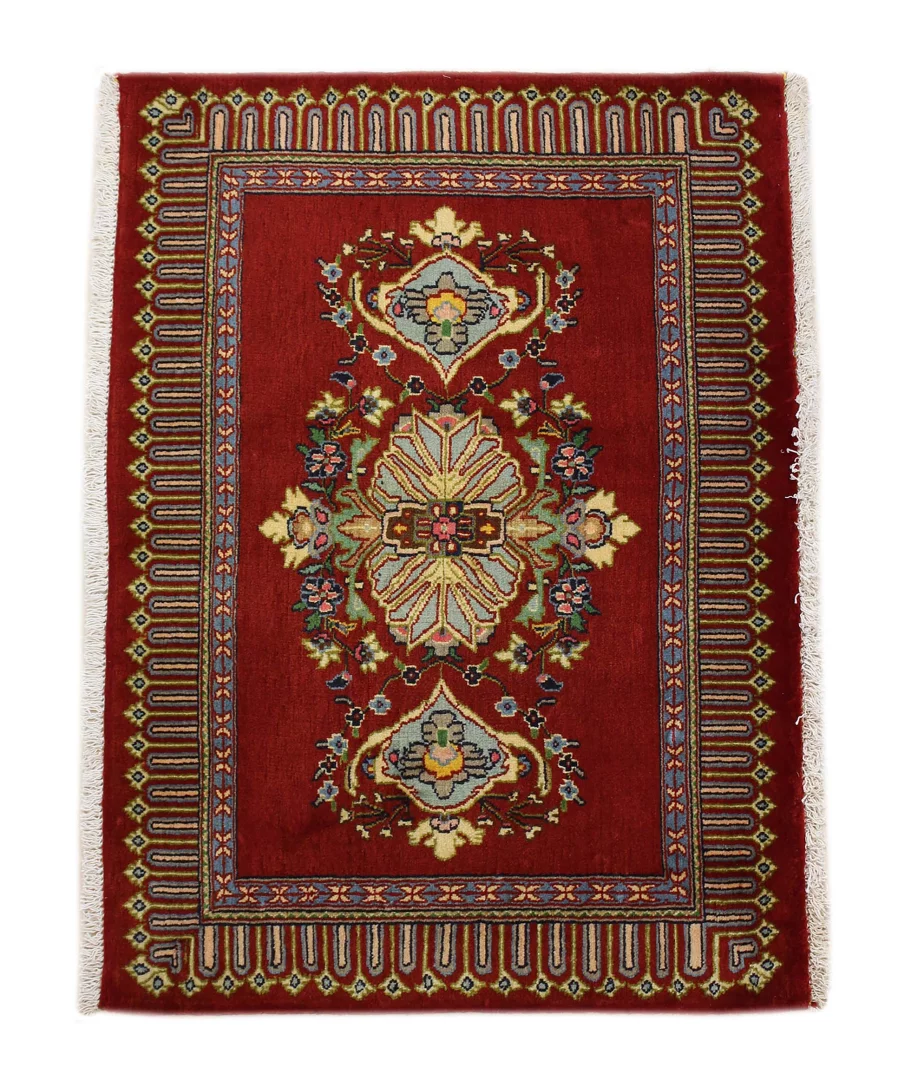
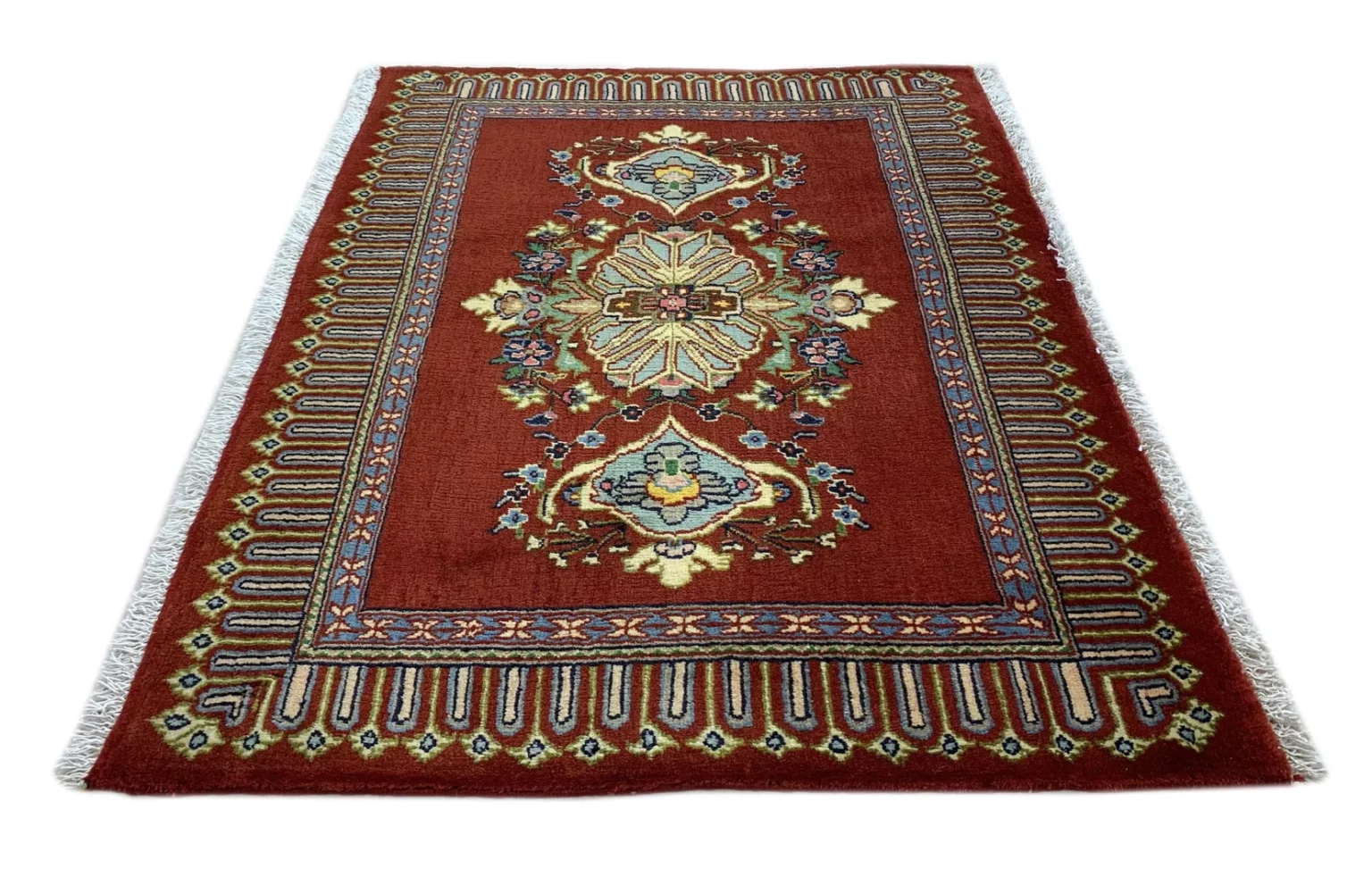
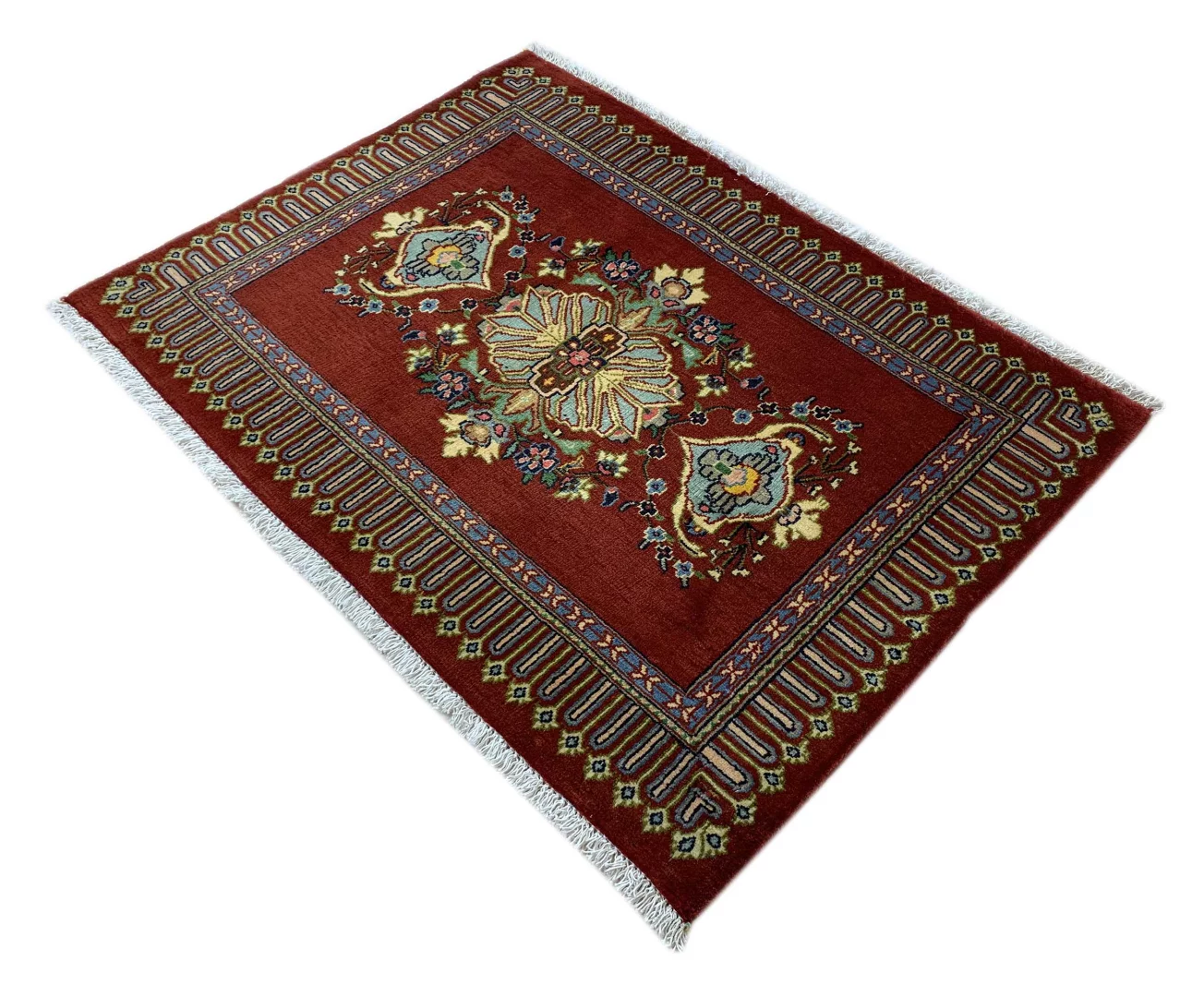
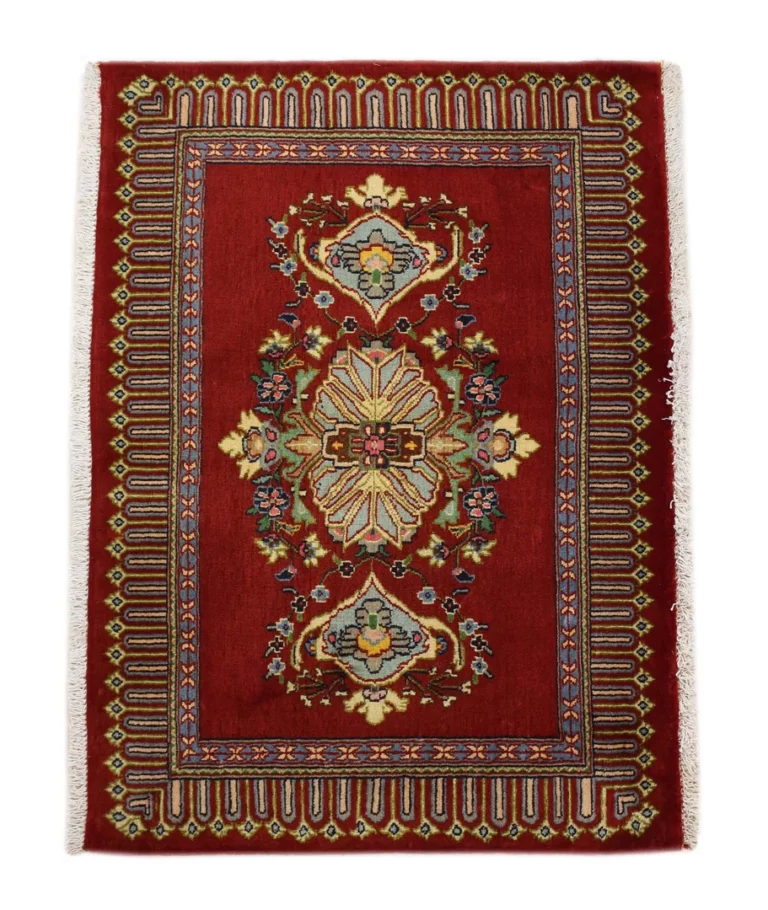
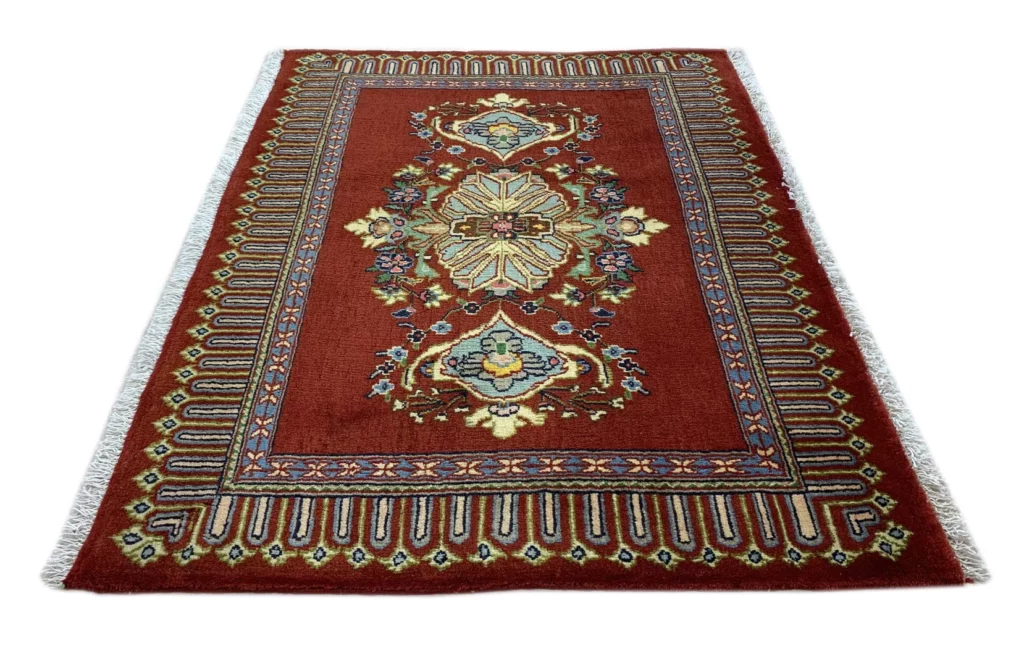
Hand-knotted Keshan Persian Rug | Knot density: 100,000 – 300,000 knots/m² | Material: pile sheep wool, warp and weft cotton | Size: 103 x 73 cm | Pattern: medallion design in red, blue and beige | Condition: Very good, hard-wearing
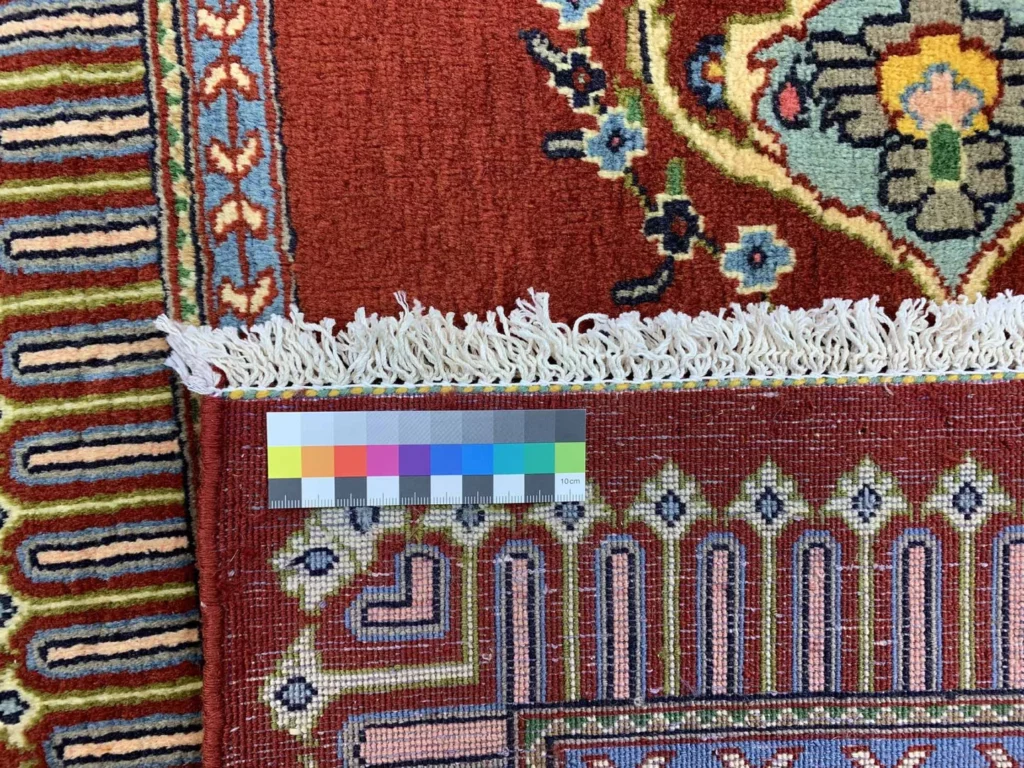
This Keshan Persian rug is hand-knotted and has a knot density of 100,000 to 300,000 knots per square metre. Its dense construction is one of the features associated with Keshan rugs and reflects careful textile workmanship. The pile is made from high-quality sheep wool. The source describes this wool as both soft and robust, giving the surface a pleasant yet durable character.
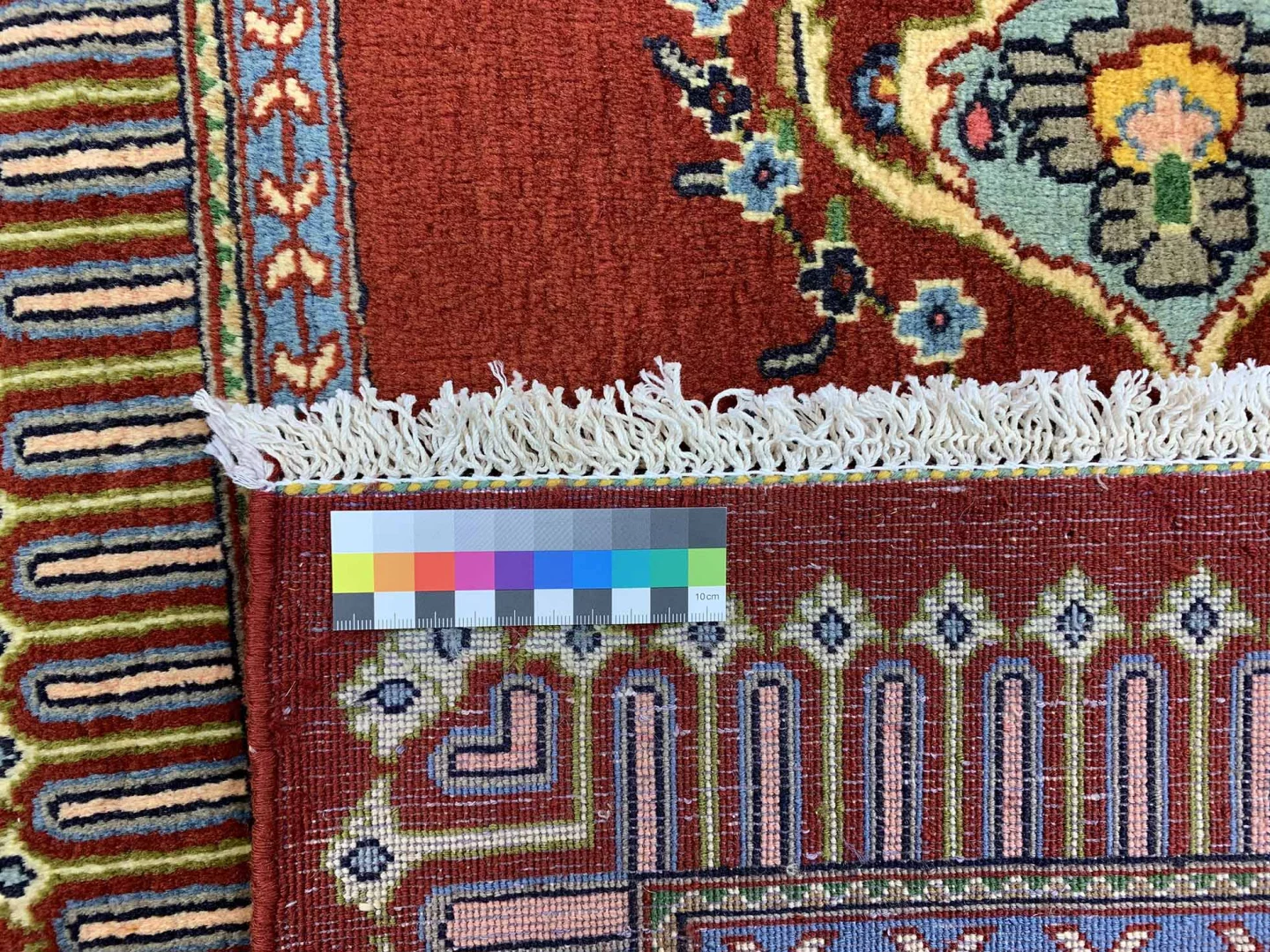
The warp and weft are made from high-quality cotton. This cotton foundation provides additional stability and supports the hand-knotted pile. The combination of sheep wool in the pile with cotton in the warp and weft is described as typical of Keshan rugs. It brings together a tactile wool surface and a firm underlying structure.
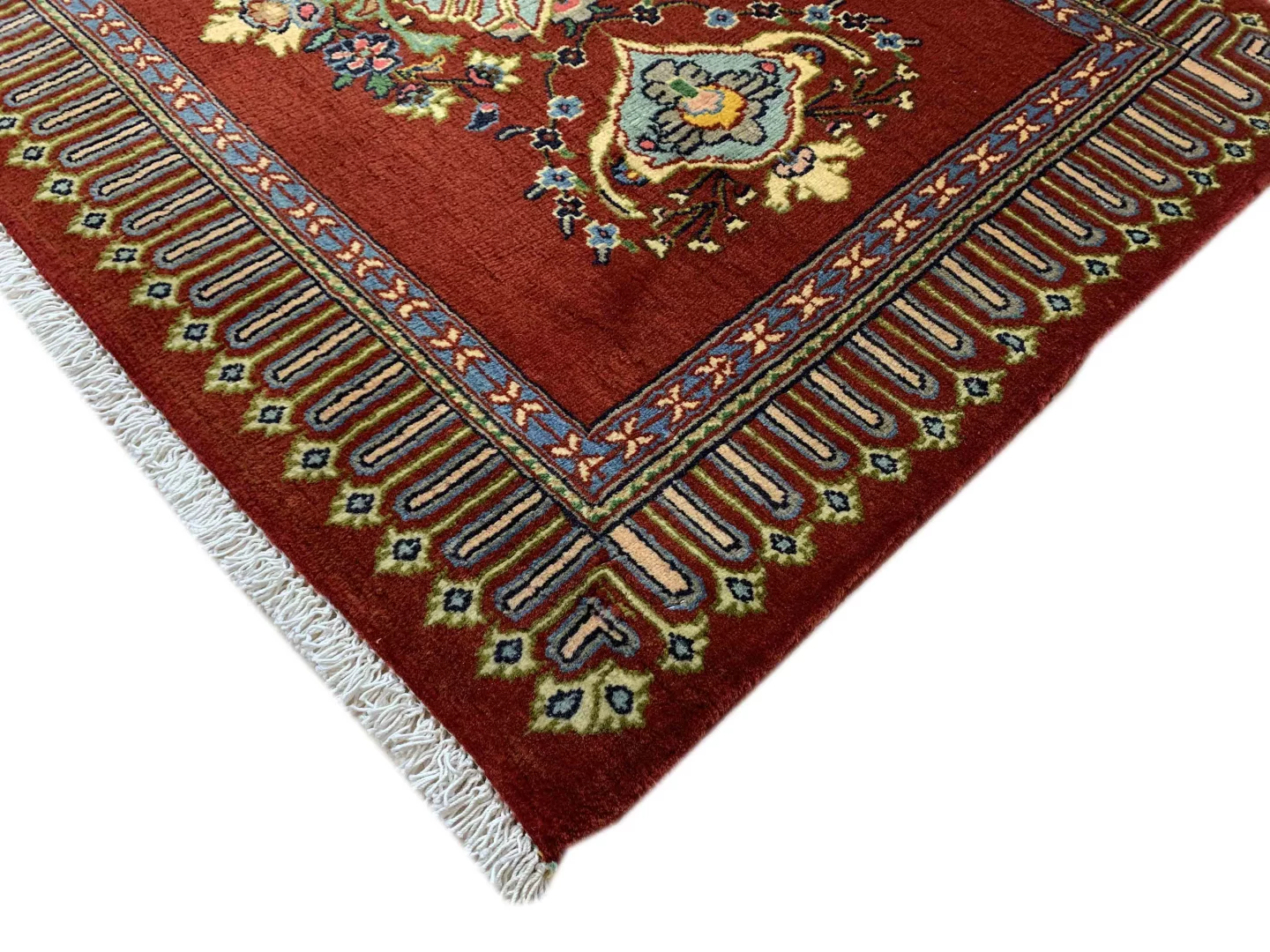
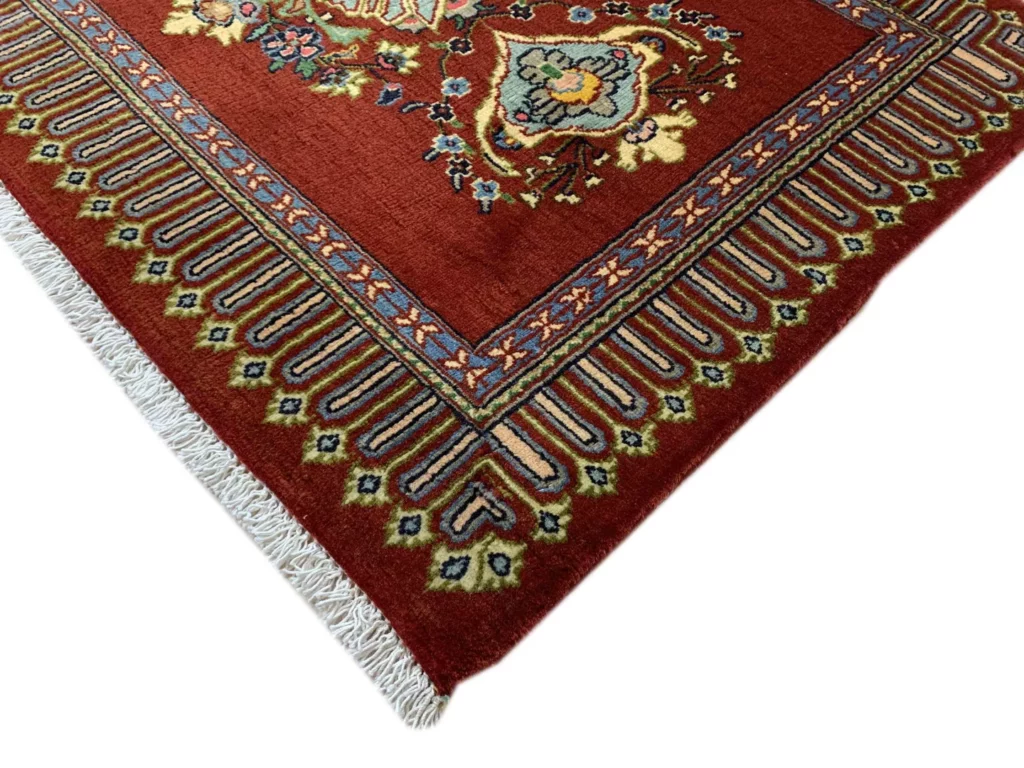
Keshan rugs are made with a short pile. This creates a neat appearance in which the medallion and the colour fields remain clearly visible. A short pile also makes cleaning and care easier. Because the rug is hand-knotted, its design is built knot by knot rather than printed onto a finished textile. The result is a single woven work with a pattern formed directly through the construction.
The stated combination of a high knot density, sheep wool and cotton accounts for the hard-wearing quality attributed to Keshan rugs in the source. This individual rug is described as being in very good, hard-wearing condition. No additional fibre or material is specified, so no further composition is added here.
Origin and Tradition
Keshan, also written Kashan, is in Iran and is named as the origin of this Persian rug. The city is known for carpets, textiles and ceramics. Its history of craft production reaches back a long way and is connected with the period of the Persian Empire. Within this setting, a carpet tradition developed in which careful knotting, balanced ornament and enduring colour arrangements form a coherent whole.
Keshan rugs belong to a strong culture of handmade production. Their construction begins with a textile foundation rather than a printed image. Warp, weft and individual knots are connected step by step, and the design takes shape during the knotting process. Dense knotting allows outlines and ornamental details to be worked with greater differentiation, while the finished pattern remains part of the structure itself.
Keshan’s position on the historic Silk Road contributed to the city’s prosperity and wider reputation. These trade routes carried goods, materials, shapes and ideas between regions. Keshan carpets consequently became known beyond their immediate surroundings and were valued in other parts of the world. Their significance comes from local production as well as from the combination of practical use and ornamental design.
Persian carpet art includes many regional traditions. Keshan represents a distinct group within Iranian weaving. Isfahan and Tabriz are also mentioned in the source as places associated with complex patterns and varied colour schemes. Nain and Kashan are further Iranian place names connected with refined carpets. Each name refers to its own tradition; none changes the stated Keshan origin of this rug.
Historic Keshan carpets more than a century old are sought after by collectors and traded as antiques. This general appreciation reflects the continuing importance of the Keshan weaving tradition. The age of this particular rug is not given. Its documented identity is its origin in Keshan, Iran, and its classification as a hand-knotted Persian rug.
Design and Pattern
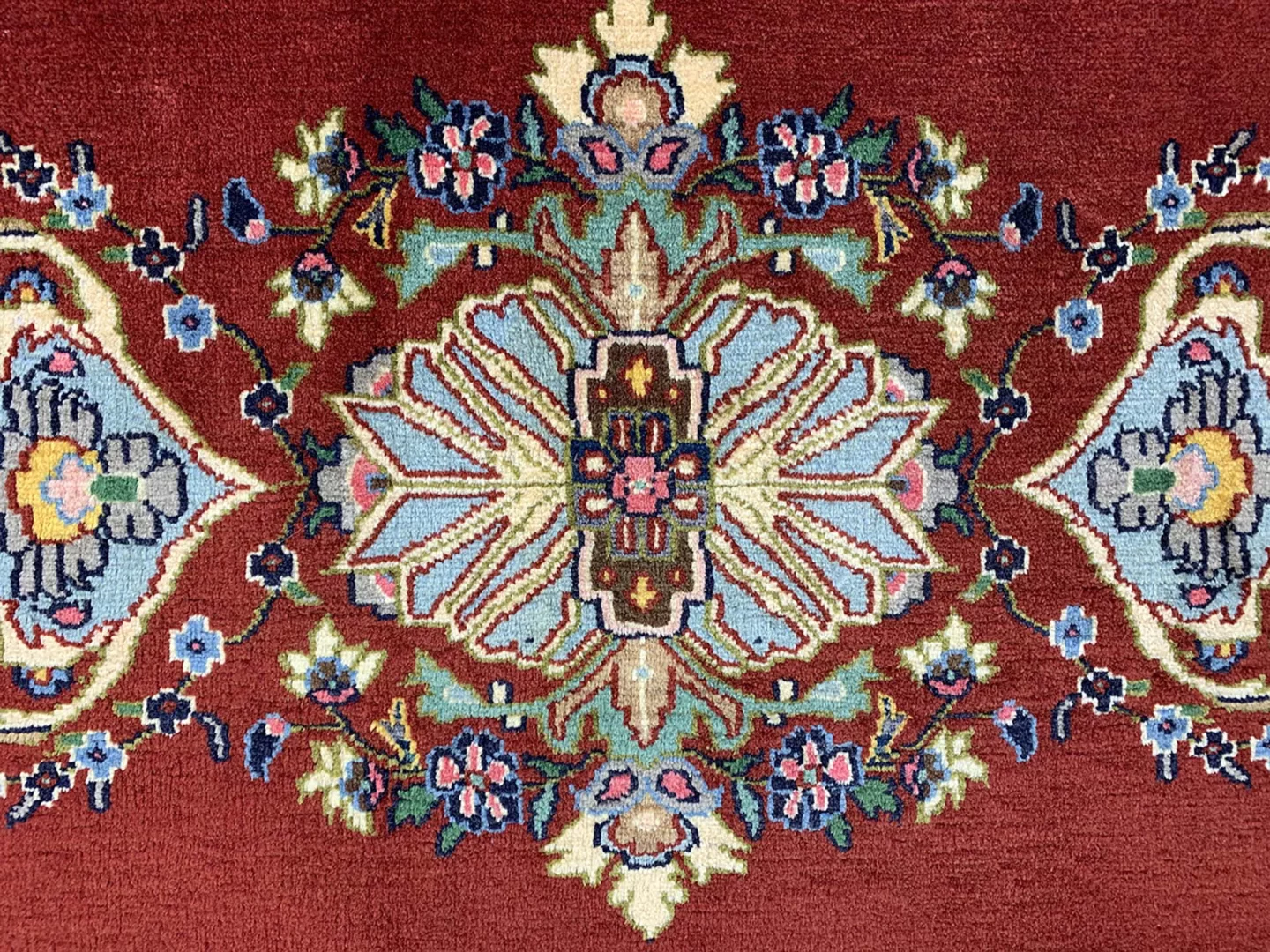
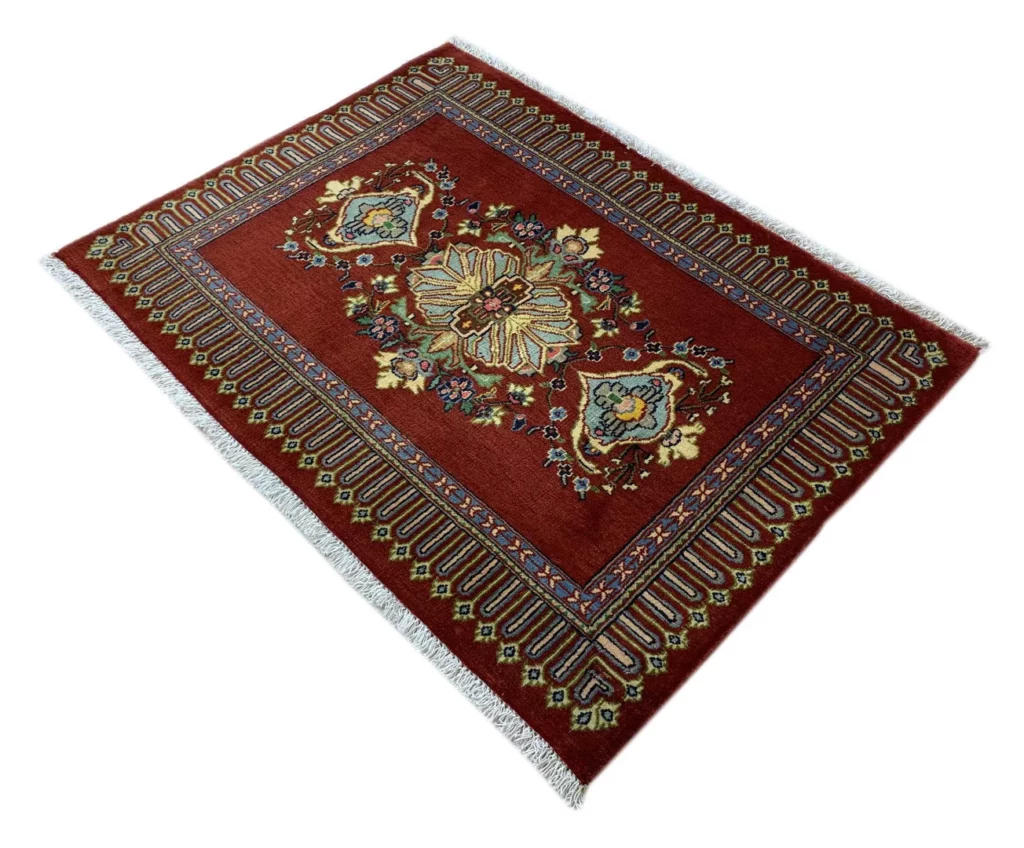
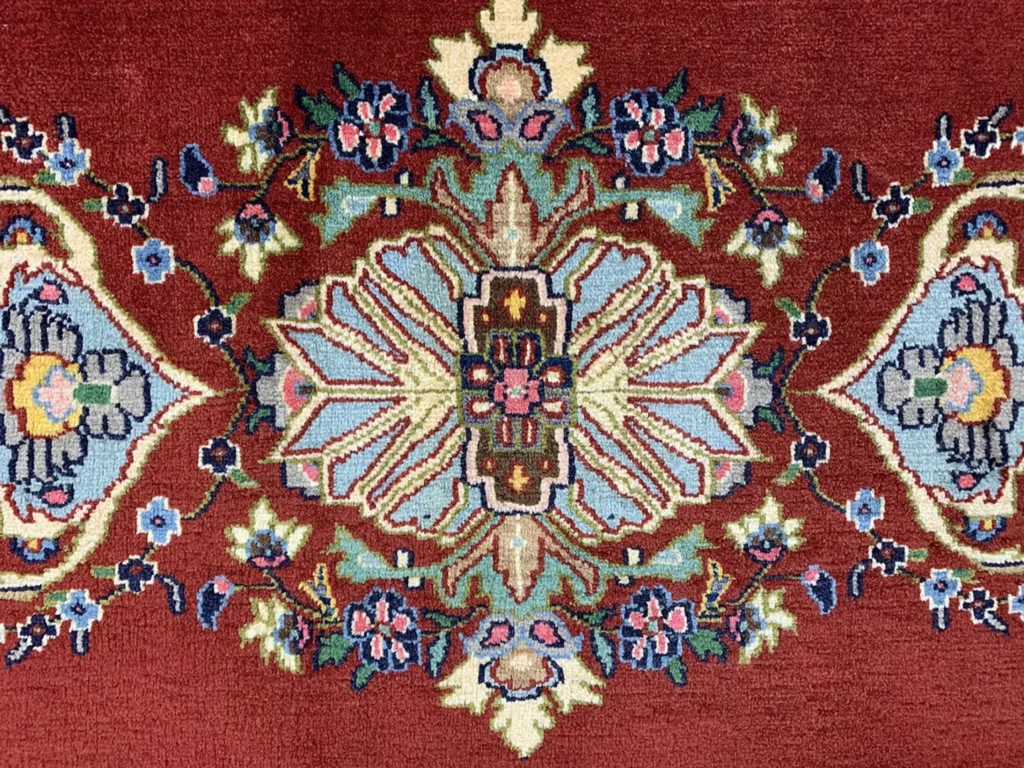
The design of this rug is identified as a medallion design. A central medallion forms the visual focus and organises the surrounding field around an implied centre. This arrangement gives the composition a clear structure and a sense of balance. The orderly layout works together with the hand-knotted construction, so the ornament remains integrated with the textile surface.
The colours specified for this piece are red, blue and beige. In Persian ornament, red may serve as a strong ground or accent, while blue can define contrasting fields and outlines. Beige provides a lighter bridge between the deeper tones. For this rug, these three colour groups are the named elements of the medallion design and no other colour is added as a fact about the piece.
Central medallions are among the established formats of Persian carpet design. They can combine a symmetrical central ornament with supporting field details and border arrangements. Repeated forms create visual rhythm, while contrasting areas separate the different parts of the composition. Keshan rugs are often discussed in connection with this ordered approach and with the fine, dense knotting that can articulate it.
Persian carpet traditions also include floral ornaments, geometric forms and continuous repeat patterns. The source refers to Isfahan and Tabriz as examples of carpets known for complex patterns and colours. Those references illustrate the breadth of Persian design rather than adding motifs to this individual rug. Here, the relevant description remains a medallion design in red, blue and beige.
In more recent interiors, grey, blue and beige versions have also become popular in Europe. This shows how Keshan-inspired colour arrangements can be used in different domestic settings. The palette given for this rug, however, is specifically red, blue and beige. Its appearance is therefore defined by a recognisable central order and a traditional Persian colour combination.
Special Features
The notable features of this rug are its high knot density, its use of high-quality sheep wool and cotton, and its central medallion design. Red, blue and beige provide the clearly stated colour palette. Its origin in Keshan, Iran places the piece within a recognised Persian carpet tradition.
The source describes the rug as being in very good, hard-wearing condition. Together with its dense hand-knotting and the combination of a wool pile with a cotton foundation, this makes it a piece described as suitable for regular use. No age, signature or further provenance is provided, so those details are not assigned to the rug.
FAQ
How should I care for my Keshan Persian rug?
Vacuum the rug regularly to remove dust and dirt before they settle into the pile. Treat spills immediately with a damp cloth. Professional cleaning every few years is recommended for thorough maintenance. The short pile makes routine cleaning and care easier. Any treatment should respect the hand-knotted construction so that the wool, knots and cotton foundation are handled gently.
Where does the Keshan Persian rug come from?
The Keshan Persian rug comes from Keshan, also known as Kashan, in Iran. Keshan is known for high-quality carpets, textiles and ceramics and has a long tradition of carpet weaving. Its location on the Silk Road connected the city with wider trade and cultural exchange. This rug therefore belongs to the Iranian Persian carpet tradition and is not assigned to another regional origin.
What makes a Keshan Persian rug distinctive?
Its distinguishing features include the high knot density, a pile of high-quality sheep wool, and cotton in the warp and weft. The central medallion and the harmonious red, blue and beige palette add to its defined appearance. Hand-knotting, Keshan origin and the stated very good, hard-wearing condition bring together regional tradition, textile construction and a clearly organised design.
To provide the best experiences, we use technologies like cookies to store and/or access device information. Consenting to these technologies will allow us to process data such as browsing behavior or unique IDs on this site. Not consenting or withdrawing consent, may adversely affect certain features and functions.
Functional Always active
The technical storage or access is strictly necessary for the legitimate purpose of enabling the use of a specific service explicitly requested by the subscriber or user, or for the sole purpose of carrying out the transmission of a communication over an electronic communications network.
Preferences
The technical storage or access is necessary for the legitimate purpose of storing preferences that are not requested by the subscriber or user.
Statistics
The technical storage or access that is used exclusively for statistical purposes.The technical storage or access that is used exclusively for anonymous statistical purposes. Without a subpoena, voluntary compliance on the part of your Internet Service Provider, or additional records from a third party, information stored or retrieved for this purpose alone cannot usually be used to identify you.
Marketing
The technical storage or access is required to create user profiles to send advertising, or to track the user on a website or across several websites for similar marketing purposes.
 SECURE PAYMENT
 SHIPPING PARTNERS