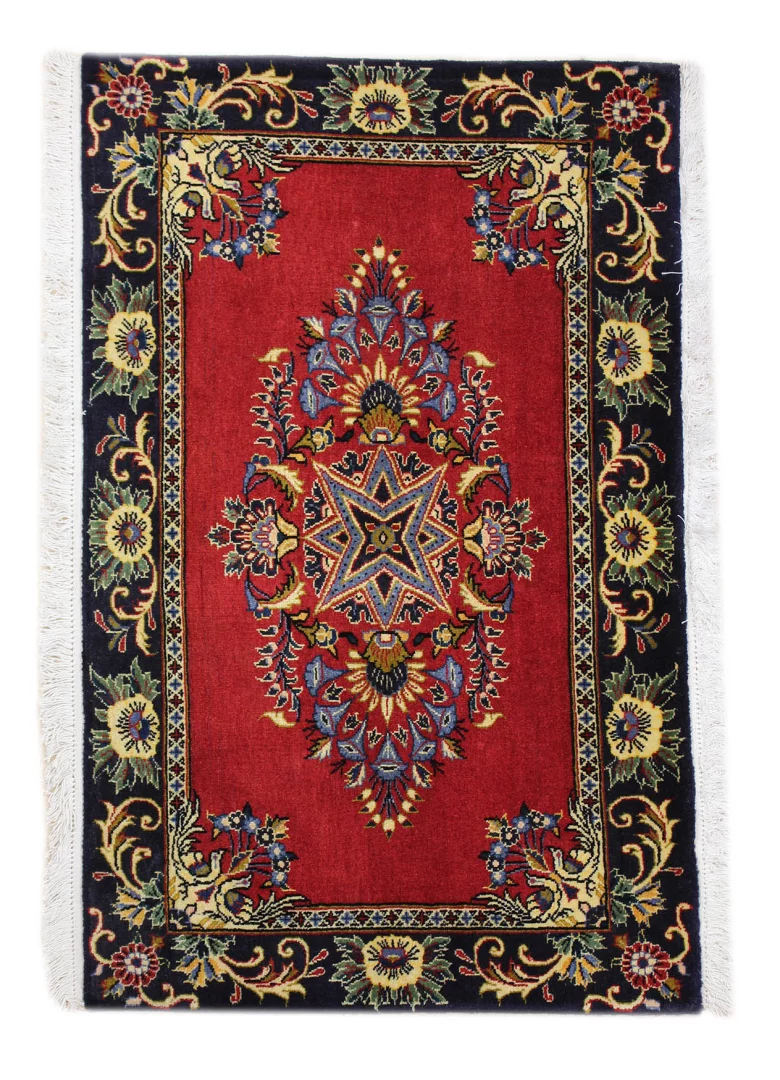
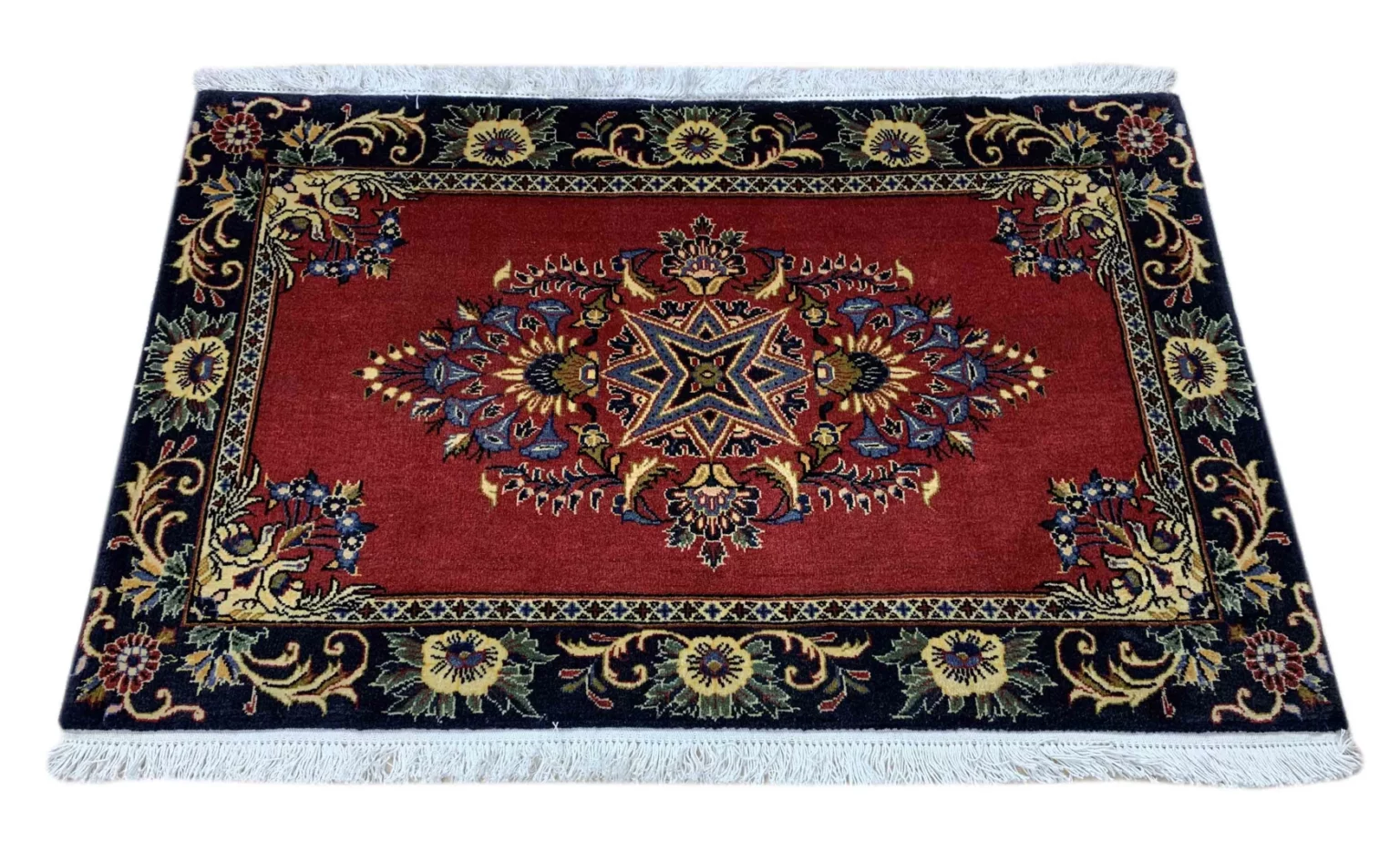
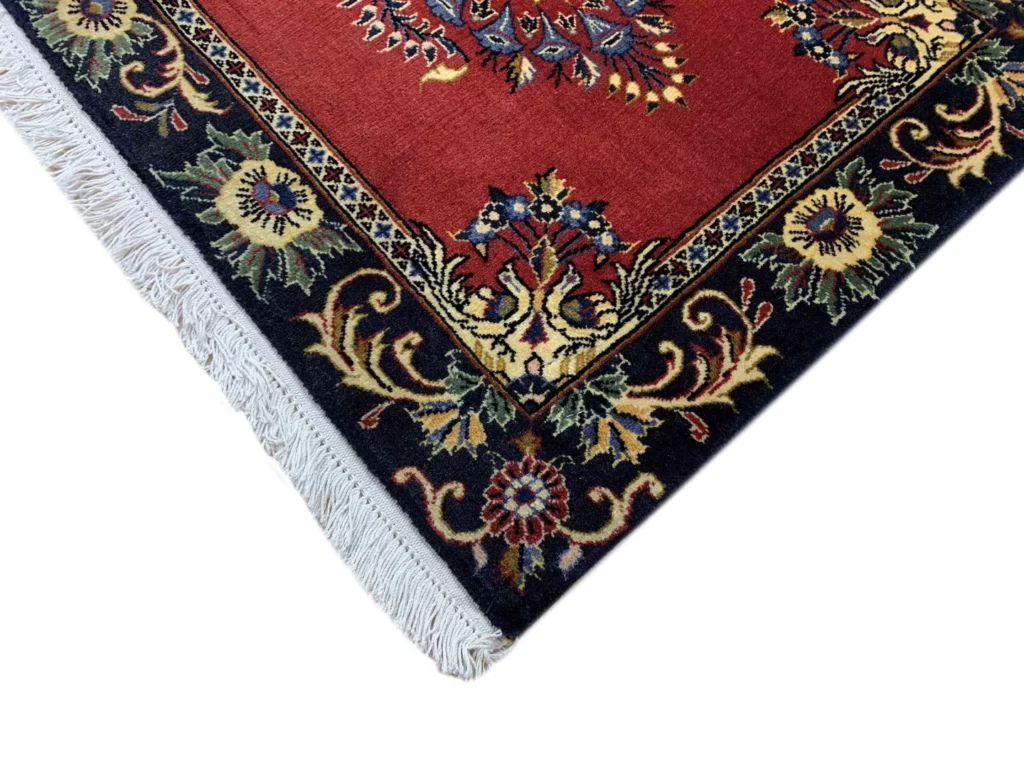
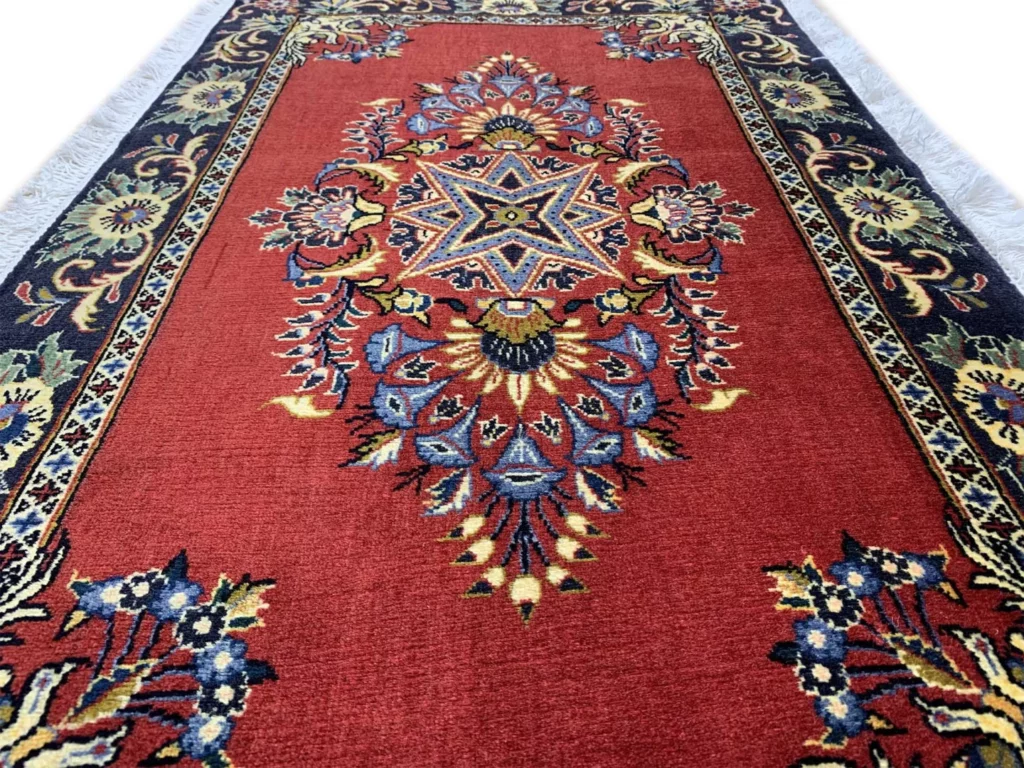
Persian Rug Kashan 100 x 62 cm Wool Hand-knotted
Original price was: € 510€ 448Current price is: € 448
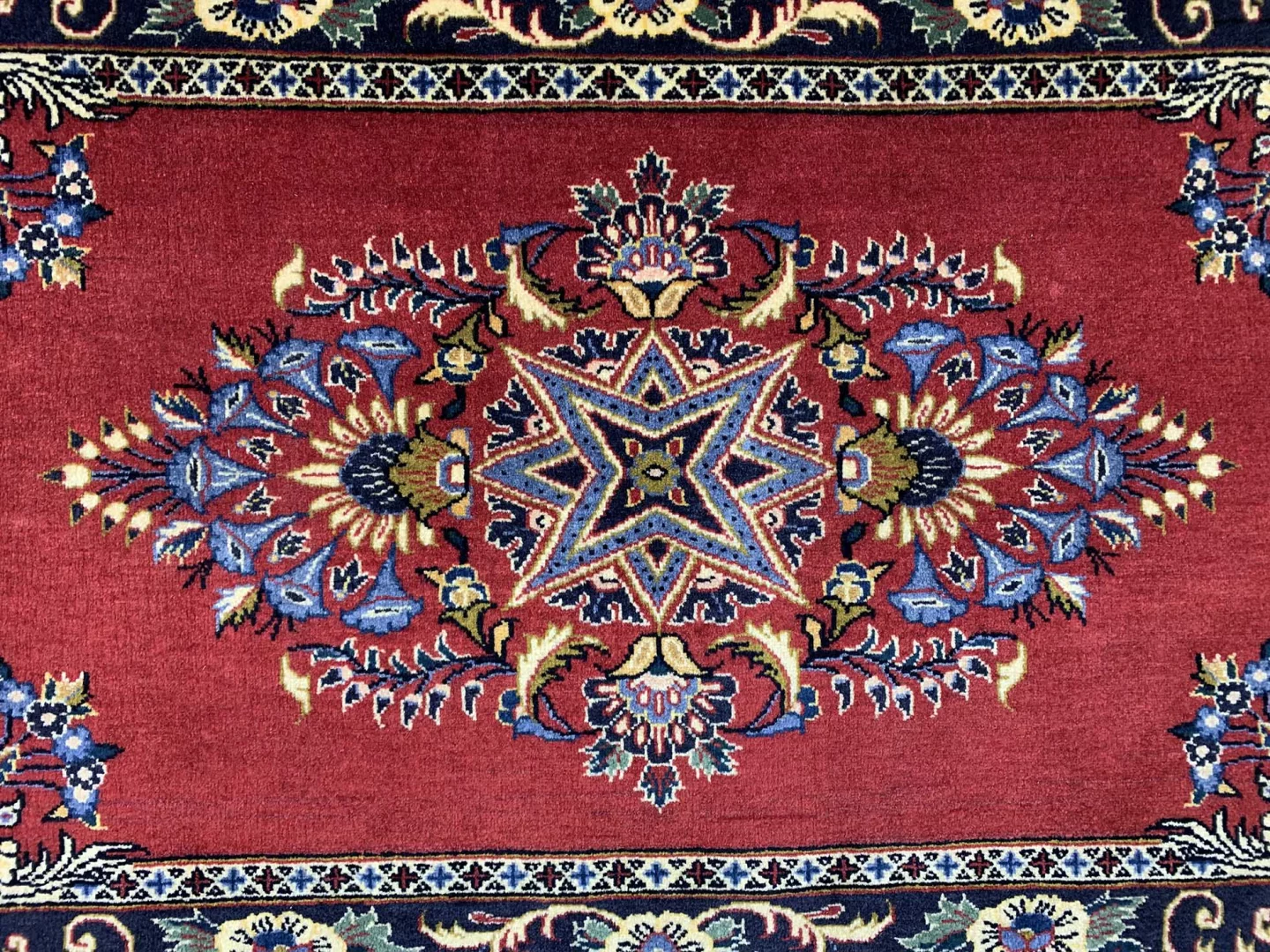
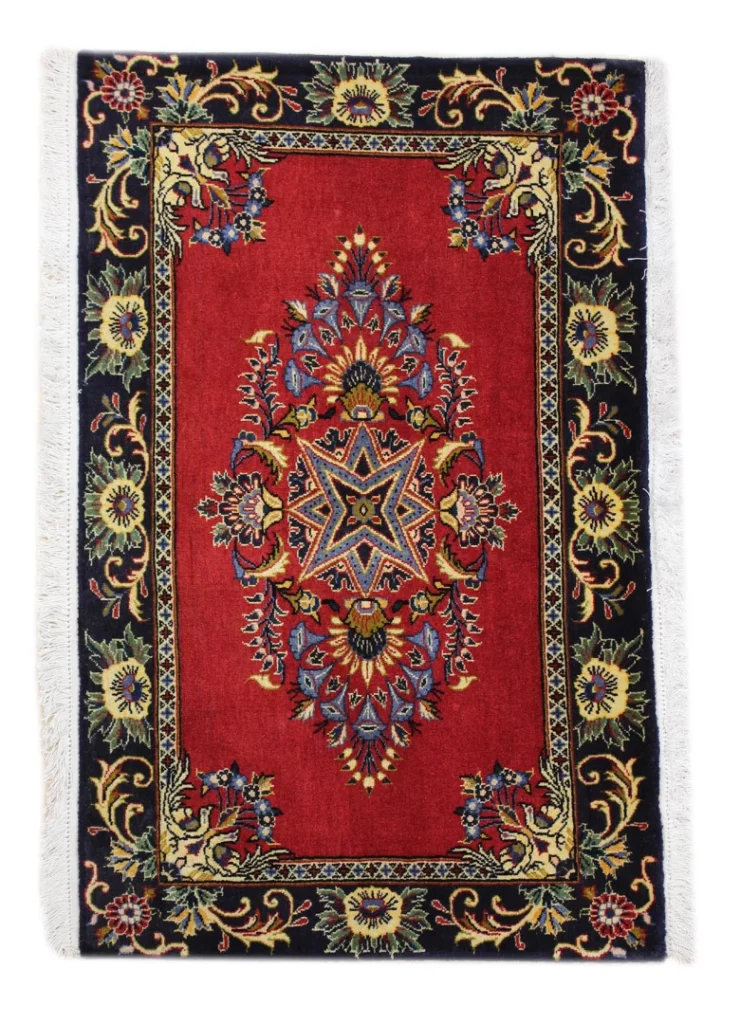
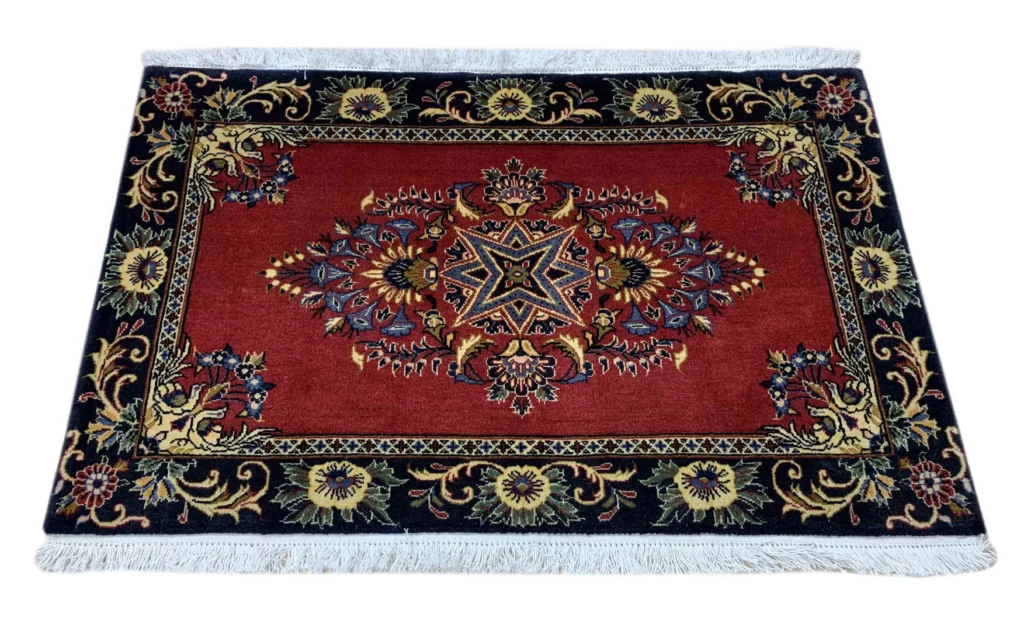
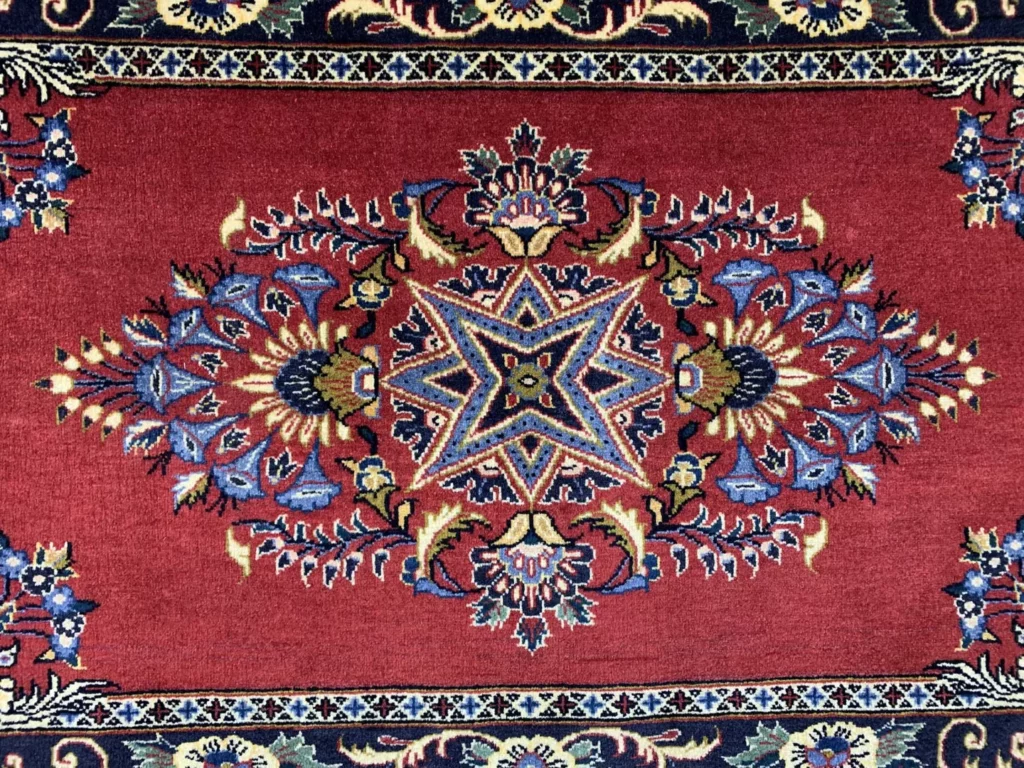
Hand-knotted Keshan Persian Rug | Knot density: 100,000 – 300,000 knots/m² | Material: pile sheep wool, warp cotton | Size: 100 x 62 cm | Pattern: medallion in red, blue and beige | Condition: Very good
1 available
- ✓Free Shipping in EU
- ✓2-5 Business Days Delivery
- ✓14-Day Return Policy
- ✓Worldwide Shipping on request
 SECURE PAYMENT
 SHIPPING PARTNERS
Inventory number: A4CB34B4
Description
Keshan Persian Rug
Material and Craftsmanship
This Keshan Persian rug is hand-knotted. Its pile is made of sheep wool, and cotton is specified for the warp. Together, these materials form a wool pile supported by a stable textile foundation. Sheep wool has long been used in rug making because it can produce a resilient surface while retaining a comfortable hand. Its natural fibre structure also accepts colour effectively and gives traditional designs a clear, even appearance.
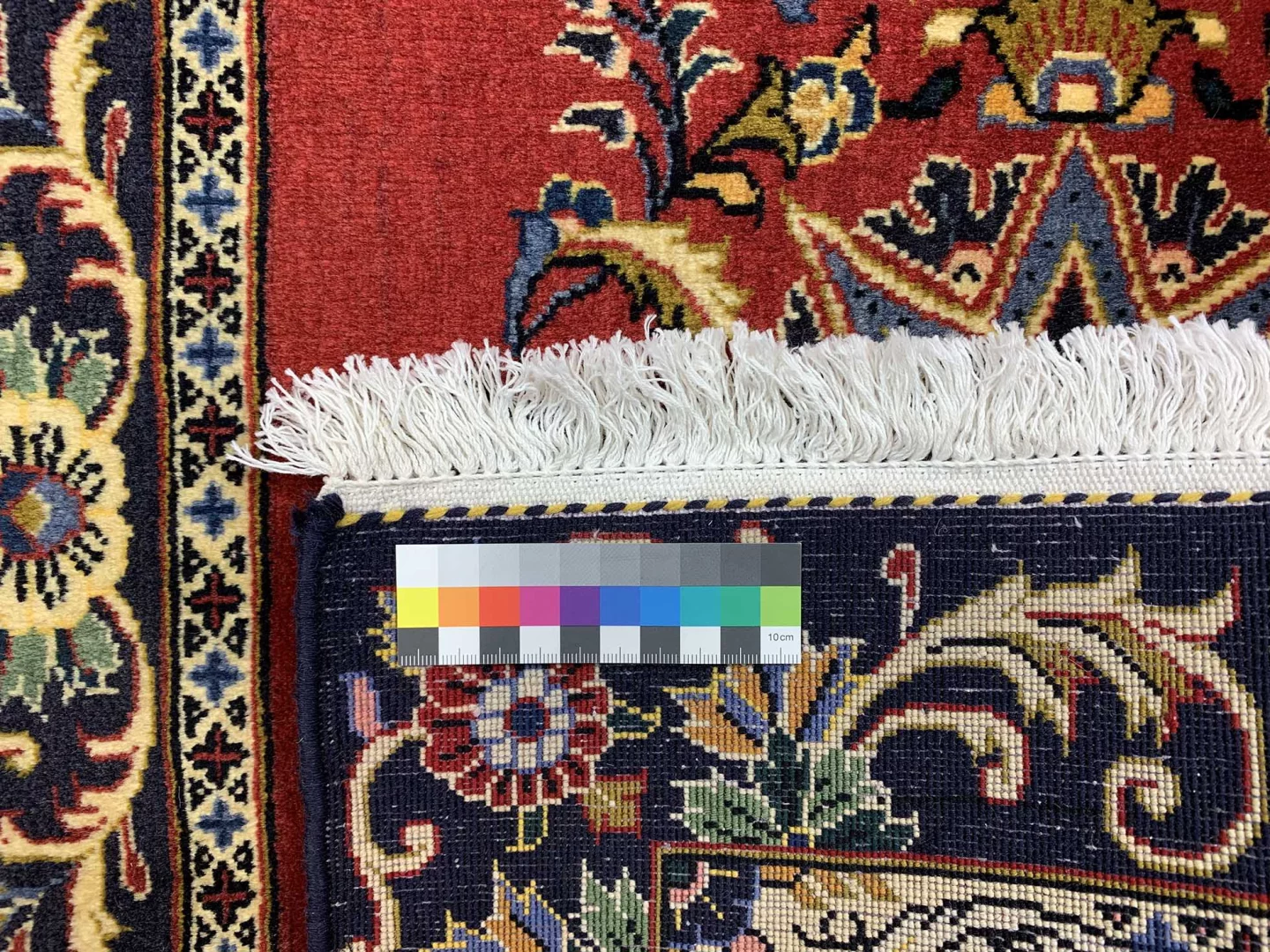
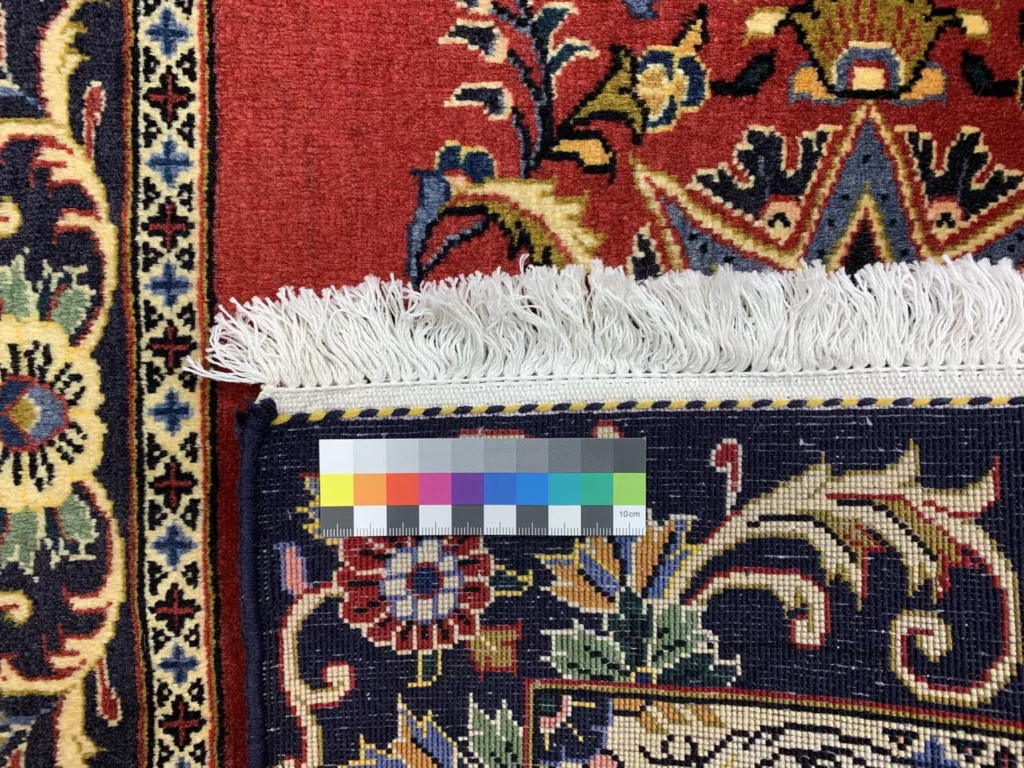
The warp provides the framework into which the knots are inserted. Cotton is used for this part of the construction because it can be prepared with regular tension and a consistent structure. In hand-knotting, the pile is built one knot at a time. The knot density for this rug is given as 100,000 to 300,000 knots per square metre. A dense structure supports detailed drawing and gives the surface a visually compact character.
Hand-knotting is distinct from mechanised production. Each knot is placed individually into the foundation, the row is secured with weft, and the pile is gradually formed across the rug. This process allows outlines, curves and small colour areas to be developed with care. For this particular rug, the recorded construction consists of a sheep-wool pile, a cotton warp and hand-knotting. Its condition is described as very good.
Origin and Tradition
The rug comes from Keshan in Iran. Keshan, also known as Kashan, is one of the established centres of Persian rug production. Located in central Iran, the city has a long textile history and a workshop culture associated with carefully organised compositions. Its position on historic trade routes encouraged the movement of fibres, dyes, pattern ideas and technical knowledge. Over time, these influences were shaped into a regional vocabulary that is often recognised by a balanced field, a strong central organisation and carefully arranged borders.
Persian rug making is closely linked to the transmission of practical skills within families and workshops. Knowledge of preparing the warp, placing knots, securing the rows and trimming the pile is learned through repeated work. In Keshan, these technical skills developed alongside methods for planning a complete design. The drawing, the colour arrangement and the knotting process are therefore connected rather than separate stages. A rug expresses both the physical labour of its construction and a visual tradition that has been adapted by successive generations.
Keshan rugs are commonly associated with orderly designs and a clear relationship between the centre, the field and the surrounding borders. A central arrangement can provide the structure for the rest of the composition, while secondary motifs guide the eye through the open areas. This makes the tradition suitable for interiors with classical furnishings as well as rooms where a textile provides a defined decorative focus. Keshan is not limited to one fixed pattern. Its identity lies in recurring principles of proportion, ornament and craftsmanship, interpreted differently by individual workshops.
The history of Keshan is also connected with trade between different parts of Iran and with routes commonly described in relation to the Silk Road. Such connections allowed materials and design concepts to circulate. Local weavers could absorb outside influences while preserving a recognisable regional approach. The result is a tradition that is historically connected, yet not uniform. Different periods and workshops have produced variations in drawing, colour balance and level of detail, while the underlying connection to Keshan remains important.
Other well-known Iranian weaving centres include Nain, Isfahan and Tabriz. Nain is often associated with light colour schemes and finely divided ornament, Isfahan with complex compositions and the use of silk alongside wool, and Tabriz with a broad range of structured designs. These names do not describe the origin of this rug. They illustrate instead the variety found within Iranian rug culture. Each centre has developed its own approaches to layout, colour and technique, making regional terminology an important part of understanding Persian carpets.
Design and Pattern
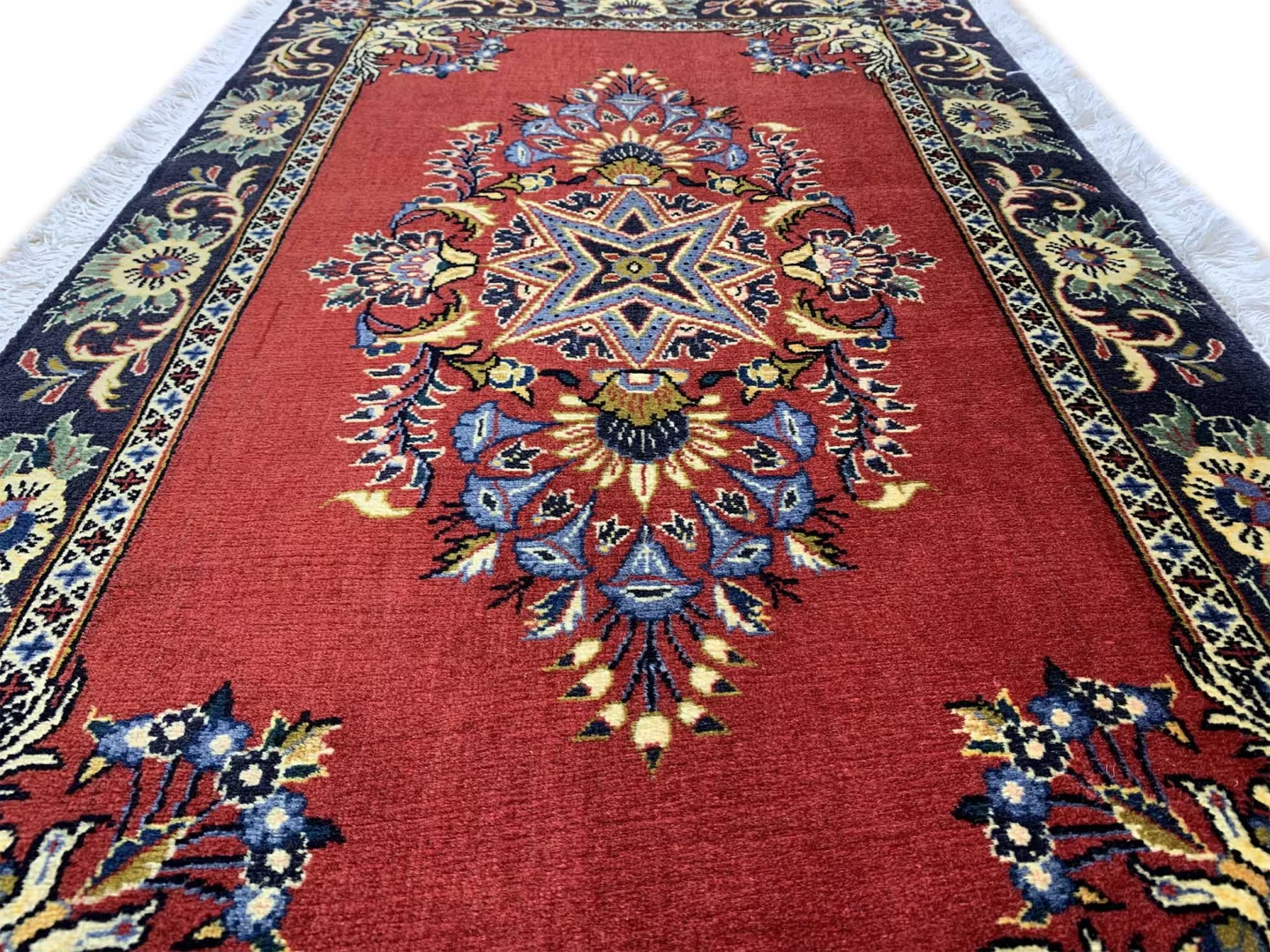
The pattern of this rug is described as a medallion in red, blue and beige. A medallion organises the design around a central form. It may be circular, oval, polygonal or composed of several connected elements. From this centre, the surrounding field is planned in relation to the main shape. The result is a composition with a visible focal point and a considered balance between the inner field and the framing borders. The exact drawing of each medallion varies from one hand-knotted rug to another.
Red, blue and beige create a traditional relationship of warm, cool and light tones. Red can provide the visual weight of a ground or an accent area. Blue introduces contrast and may define outlines, floral elements or connecting lines. Beige opens the composition and makes smaller ornaments easier to distinguish. The character of the palette depends not only on the colours themselves, but also on their proportions, the density of the pattern and the way neighbouring shades are placed beside one another.
In classical Persian design, a medallion is often accompanied by floral, geometric or stylised botanical forms. Vines may connect separate parts of the field, while leaves, blossoms and palmettes fill spaces without disturbing the main order. Geometric details can establish axes and clarify the edges of the central form. These motifs are generally decorative abstractions rather than literal botanical illustrations. Their construction is suited to knotting, where repeated shapes can be built through carefully placed colour changes.
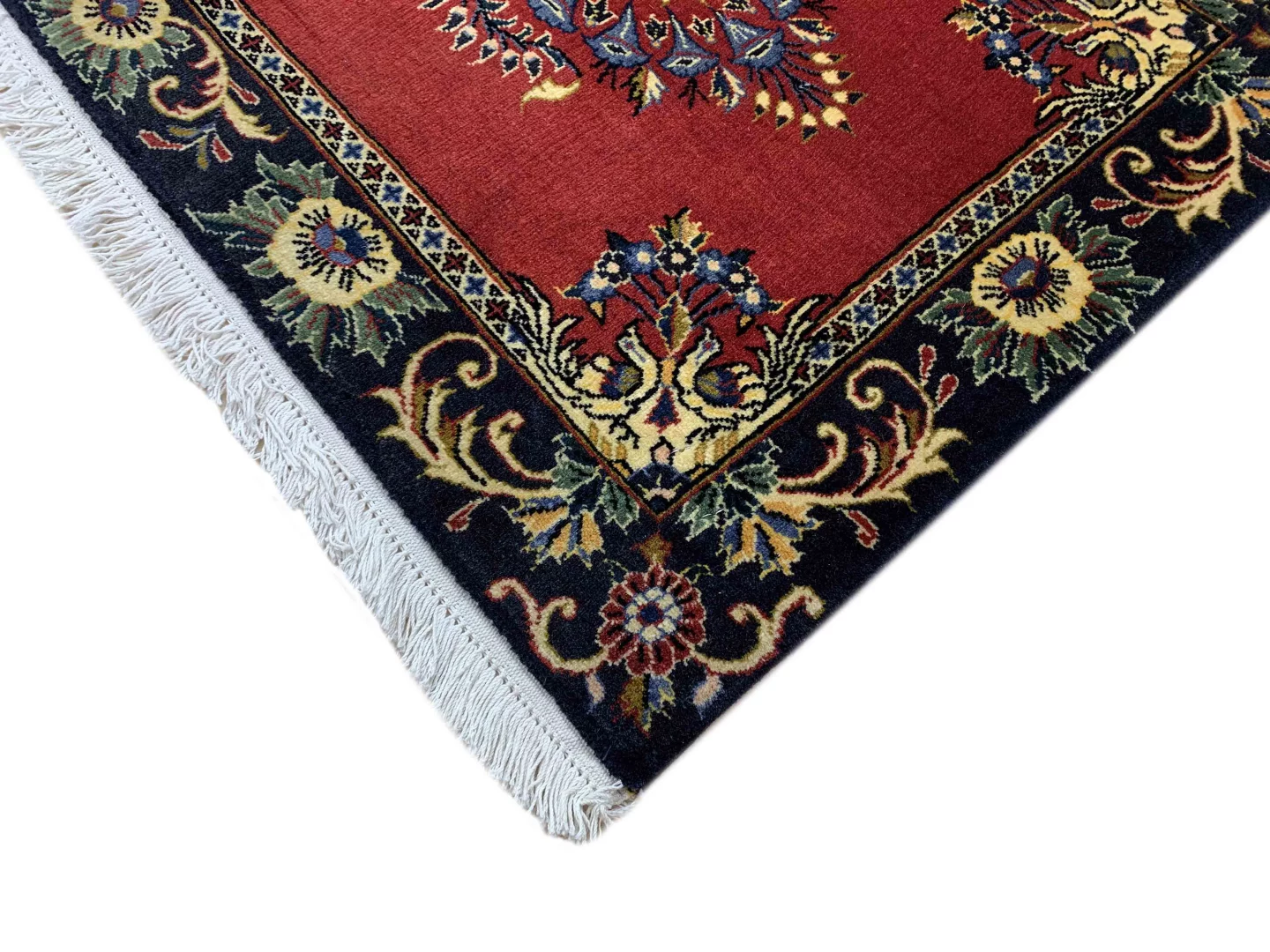
Borders frame the central field and create a transition toward the outer edge. A principal border may contain flowers, vines, rosettes or repeated geometric units, while narrower secondary borders provide additional separation. This framing gives the eye a clear route around the design. The centre offers a point of concentration, and the repeated ornaments in the borders establish rhythm. Such a relationship between focus and repetition is a significant feature of many medallion compositions in Persian rug design.
In a hand-knotted rug, colour is made visible through the arrangement of individual knots. Small areas can require many closely placed knots, while a contour may be created by the meeting of adjacent colours. A high knot density can support fine transitions and closely spaced details. This does not mean that every Keshan design is identical. The regional tradition supplies a set of design methods that workshops combine in different ways, giving each piece its own drawing while retaining a connection to the broader Keshan vocabulary.
The medallion in red, blue and beige gives this rug a central structure and a restrained, clearly readable palette. The colours perform different functions within the composition rather than standing apart as isolated fields. Red can unite larger areas, blue can organise the ornament, and beige can create lighter passages between forms. Symmetry and repetition provide the overall order, while the individual hand-knotting preserves the variations that distinguish one piece from another.
Special Features
This individual rug is distinguished by its origin in Keshan, Iran, its hand-knotted construction and its sheep-wool pile. The warp is cotton. Its central medallion is worked in red, blue and beige, and the knot density is specified as 100,000 to 300,000 knots per square metre. The condition is described as very good. These details identify the materials, construction, design and recorded state of this particular rug.
The combination of a clearly organised medallion and the traditional colour group places the rug within the visual context of Keshan weaving. At the same time, every hand-knotted piece remains individual because small differences in knot sequence, contour, colour distribution and tension cannot be reproduced exactly. Keshan identifies the origin, not merely a pattern name. The regional attribution, the material and the construction should therefore be read together with the specific design of this one rug.
FAQ
What distinguishes a Keshan Persian rug?
Keshan Persian rugs come from a city in Iran with a long-established weaving tradition. They are often associated with organised compositions, including a central medallion supported by floral or geometric ornament. Hand-knotting permits detailed drawing, while a dense knot structure can support fine outlines and small colour areas. This rug combines that regional context with a red, blue and beige medallion, a sheep-wool pile and a cotton warp.
How should a Keshan Persian rug be cared for?
Regular, gentle vacuuming helps remove dust and loose particles from the pile. Strong direct sunlight should be avoided because prolonged light exposure can alter the appearance of textile colours. If a spill occurs, respond promptly with a damp cloth and avoid vigorous rubbing. Professional cleaning may be considered when a more thorough treatment is needed. The appropriate method should take account of the rug’s material, the type of mark and its condition rather than relying on an aggressive universal treatment.
Where do Keshan Persian rugs come from?
Keshan Persian rugs come from Keshan in Iran. The city lies on historic trade routes often associated with the Silk Road and developed a distinct tradition of carpet making. Workshop knowledge concerning design, materials and knotting was passed down through generations. Keshan is therefore both a place of origin and a regional school of Persian rug design. This rug is assigned to Keshan in Iran, rather than to another Iranian weaving centre.
Additional information
| Design Style | |
|---|---|
| Color | |
| Size | |
| Shape | |
| Origin | |
| Knot Density | |
| Material |
Related products

Persian Rug Rosenbidjar 222 x 131 cm Wool Hand-knotted
€ 1530
Persian Rug Nain 330 x 215 cm Wool Hand-knotted
€ 3600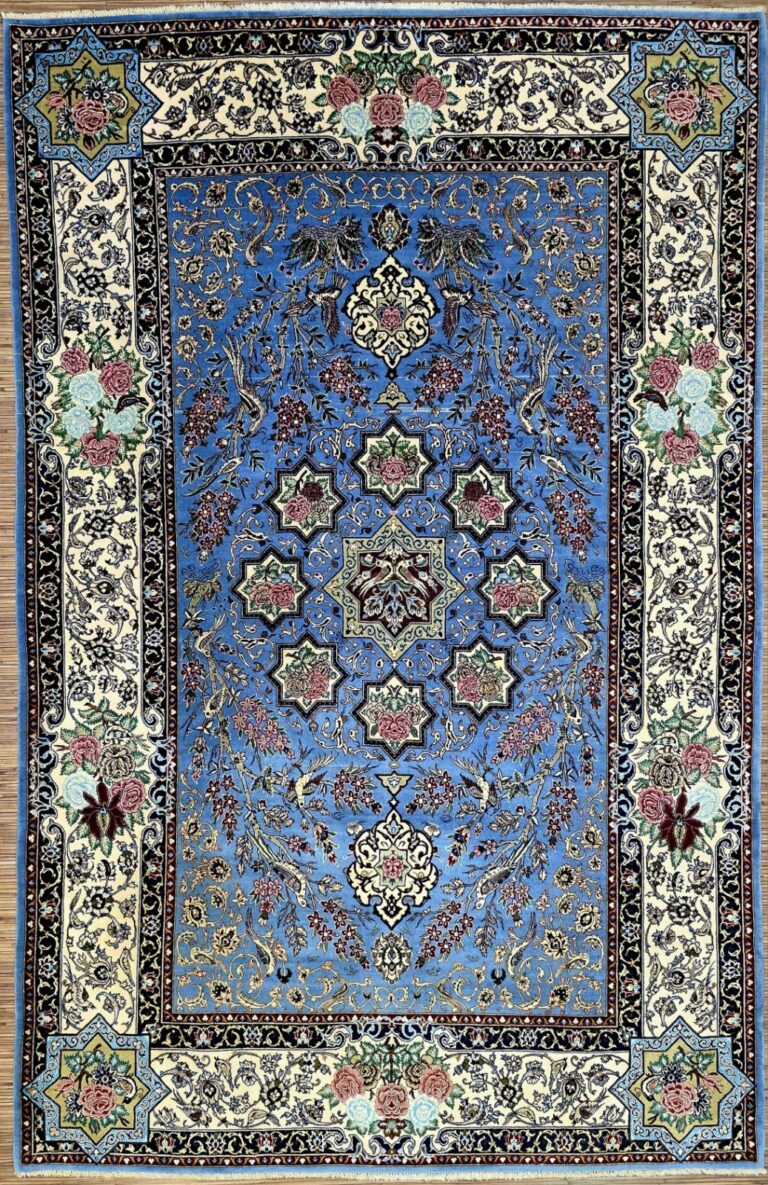
Persian Rug Isfahan 222 x 146 cm Silk Hand-knotted
€ 3905
Persian Rug Kashan 345 x 253 cm Wool Hand-knotted
€ 2910
Persian Rug Tabriz 293 x 203 cm Wool & Silk Hand-knotted
€ 3300
Persian Rug Nain 200 x 129 cm Wool Hand-knotted
€ 2100
Persian Rug Tabriz 353 x 253 cm Wool & Silk Hand-knotted
€ 4200
Persian Rug Kashan 211 x 140 cm Wool Hand-knotted
€ 900