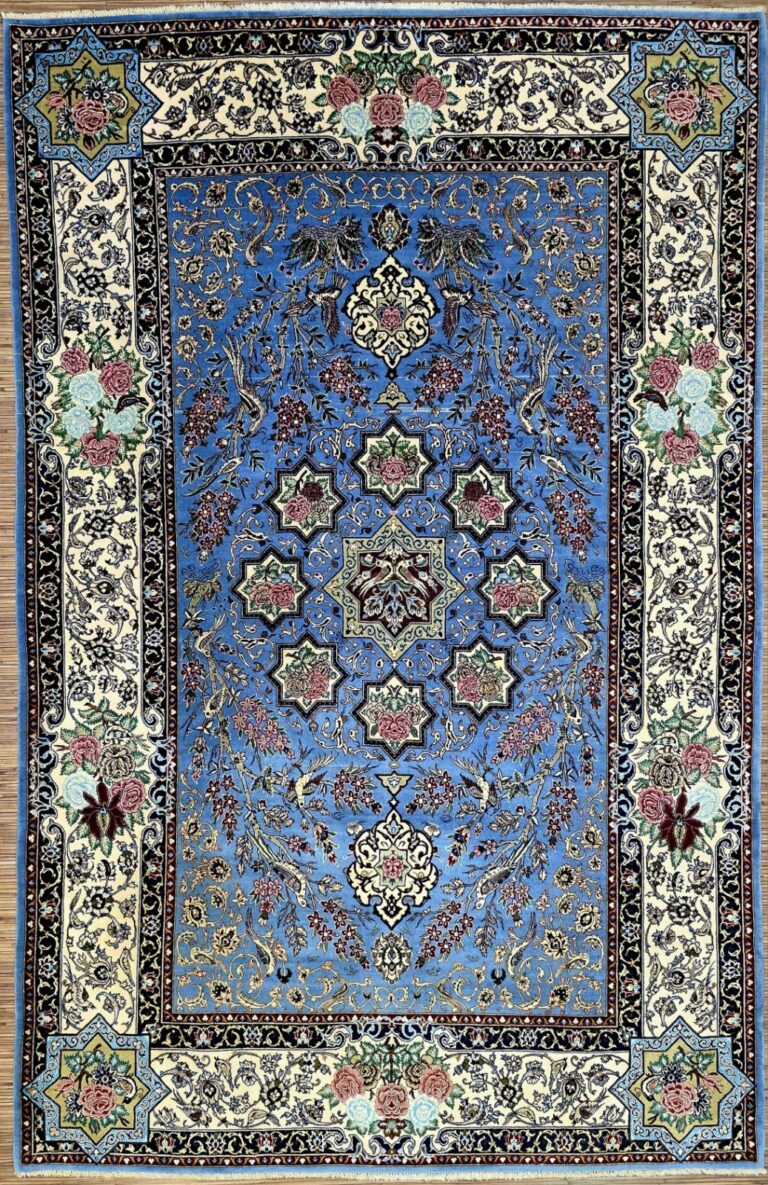
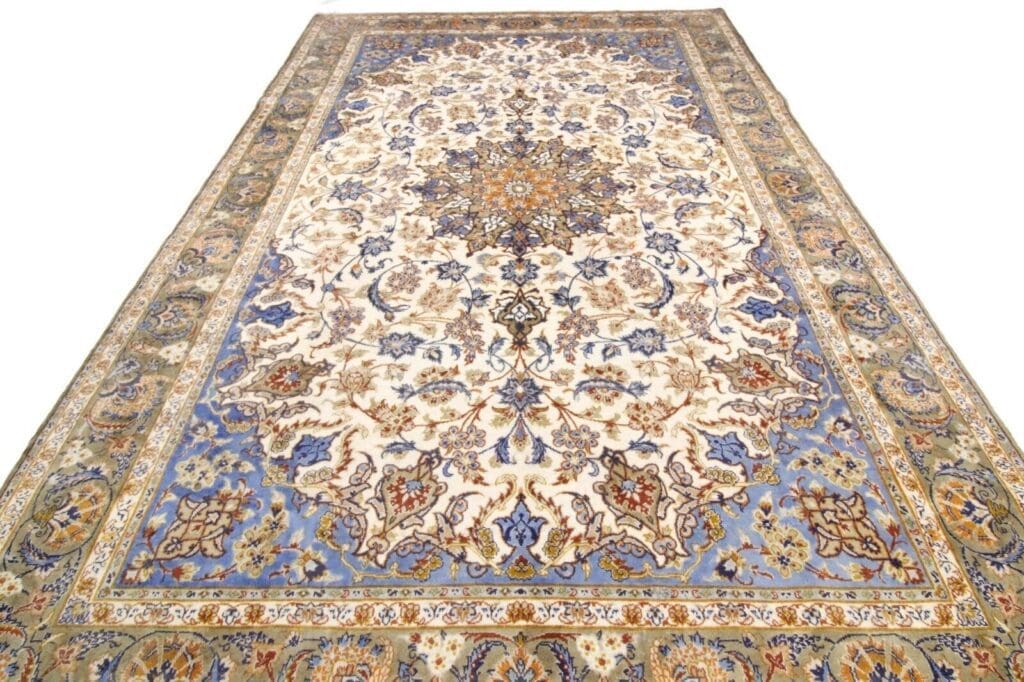
Persian Rug Isfahan 381 x 255 cm Wool Hand-knotted
€ 1875
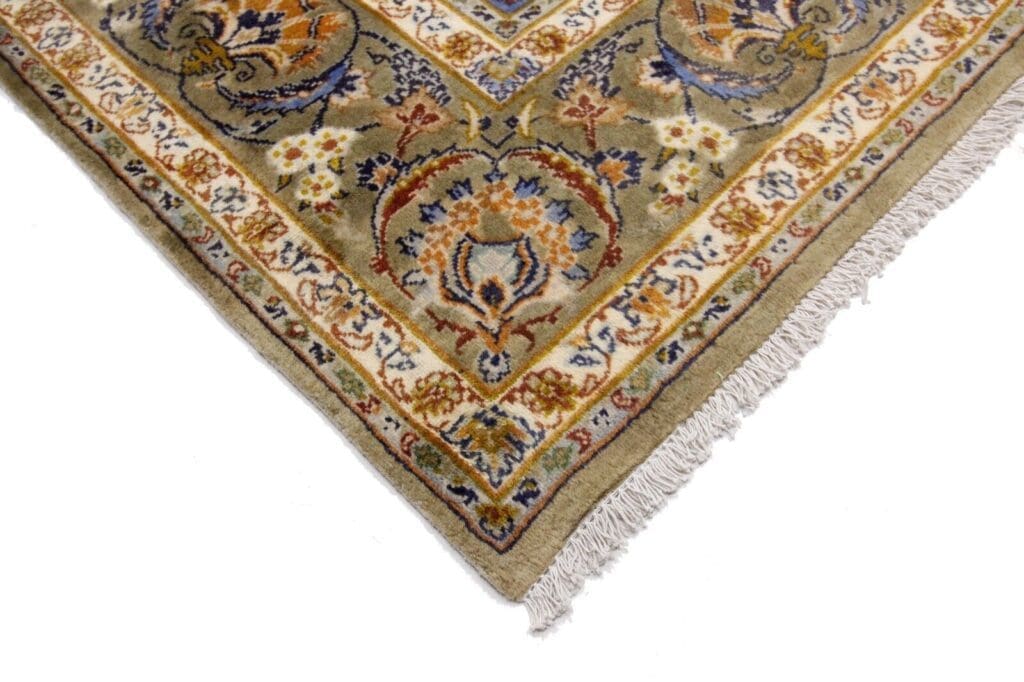
Hand-knotted Isfahan Persian Rug | Knot density: high-quality hand-knotting | Material: 100% wool and 100% cotton | Size: 381 x 255 cm | Pattern: Oriental with floral motifs | Condition: Very good condition, like new
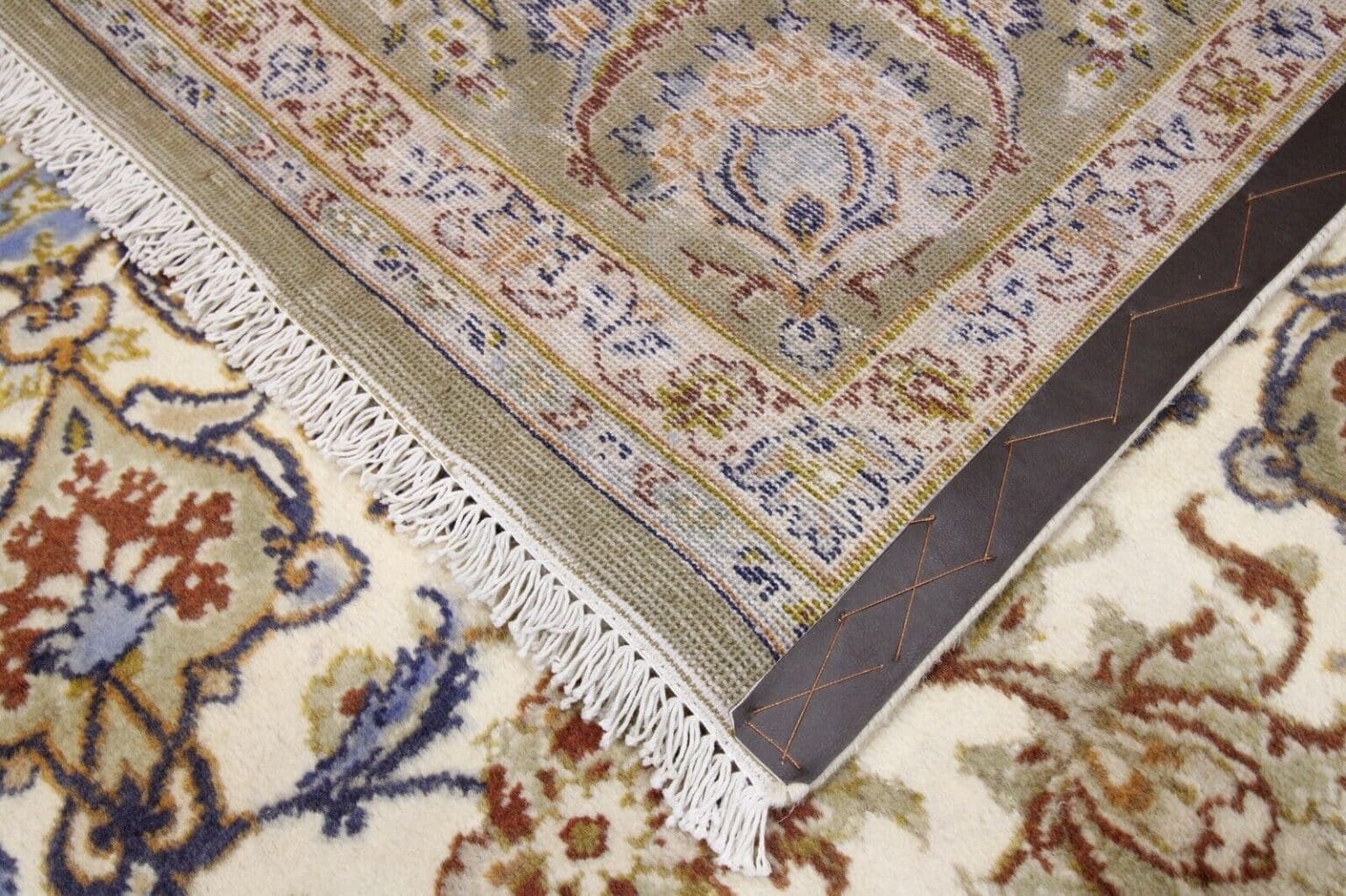
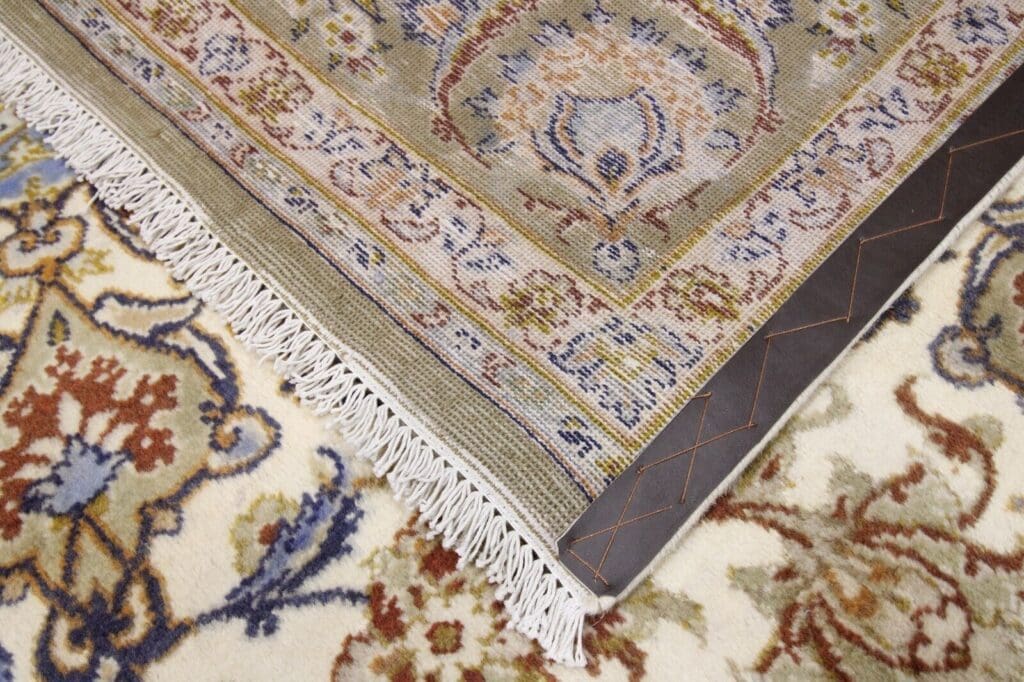
This Isfahan Persian rug is hand-knotted. Hand-knotting is a traditional process in which the pile is built knot by knot. The result is not an industrially uniform product, but a one-off shaped by manual work. Its knot density is described as high-quality hand-knotting. No numerical knot count is provided, so no additional figure is assigned to this rug.
The listed materials are 100% wool and 100% cotton. Wool has long been used in oriental rugs for its hard-wearing and warm qualities. Cotton is also expressly included among the materials of this rug. Using both materials belongs to the established textile practice of rug making, where different fibres can contribute to the construction and handling of a piece.
The pile height is normal. This describes the rug as a textile floor covering with an ordinary pile height, without allowing any further claim about its precise construction. The rug is suitable for underfloor heating. It is also described as anti-slip and environmentally friendly. These details help define its practical use, but do not replace installation or care instructions for a particular room.
Origin and Tradition
This rug comes from Iran, specifically Isfahan. Isfahan is one of the recognised centres of Persian rug art. The city and its surrounding region are associated with an elaborate visual language in which floral ornament, carefully ordered compositions and skilled workmanship play important roles. An Isfahan Persian rug is therefore understood within a long Iranian tradition of weaving and knotting.
Persian rugs are closely connected with the cultural history of Iran. Their production combines everyday use with ornamental design. Motifs have been passed from one generation to the next, adapted over time and shaped by regional workshop traditions. The term Persian rug consequently refers not only to a floor covering, but also to a textile art in which material, technique and pattern function together.
Regional origin influences the appearance of a rug. Isfahan rugs are known for detailed designs and vivid colour effects. Other Iranian centres have different recognised characteristics: Nain is associated with delicate, elegant designs and refined workmanship, while Tabriz is known for a broad range of styles and high knot densities. These comparisons illustrate the diversity of Persian rug traditions; they do not assign another origin to this Isfahan piece.
Family workshops and established weaving centres are also part of the wider Persian tradition. In such settings, knowledge of materials, patterns and manual production can be handed down over time. Kerman and Kashan are mentioned as known locations for hand-knotted rugs. Their place in the broader tradition shows the variety of Iranian rug production. The origin of this individual rug remains clearly identified as Iran, Isfahan.
Hand-knotted rugs are made in many sizes and can be used in living rooms or dining rooms. They can work with traditional interiors as well as contemporary furnishings. Persian rugs are not the only form found within the wider oriental rug tradition. Afghan rugs are often regarded as more robust, while Kilim rugs are flat-woven and recognised for colourful designs. These distinctions mainly concern origin, technique and structure.
Design and Pattern
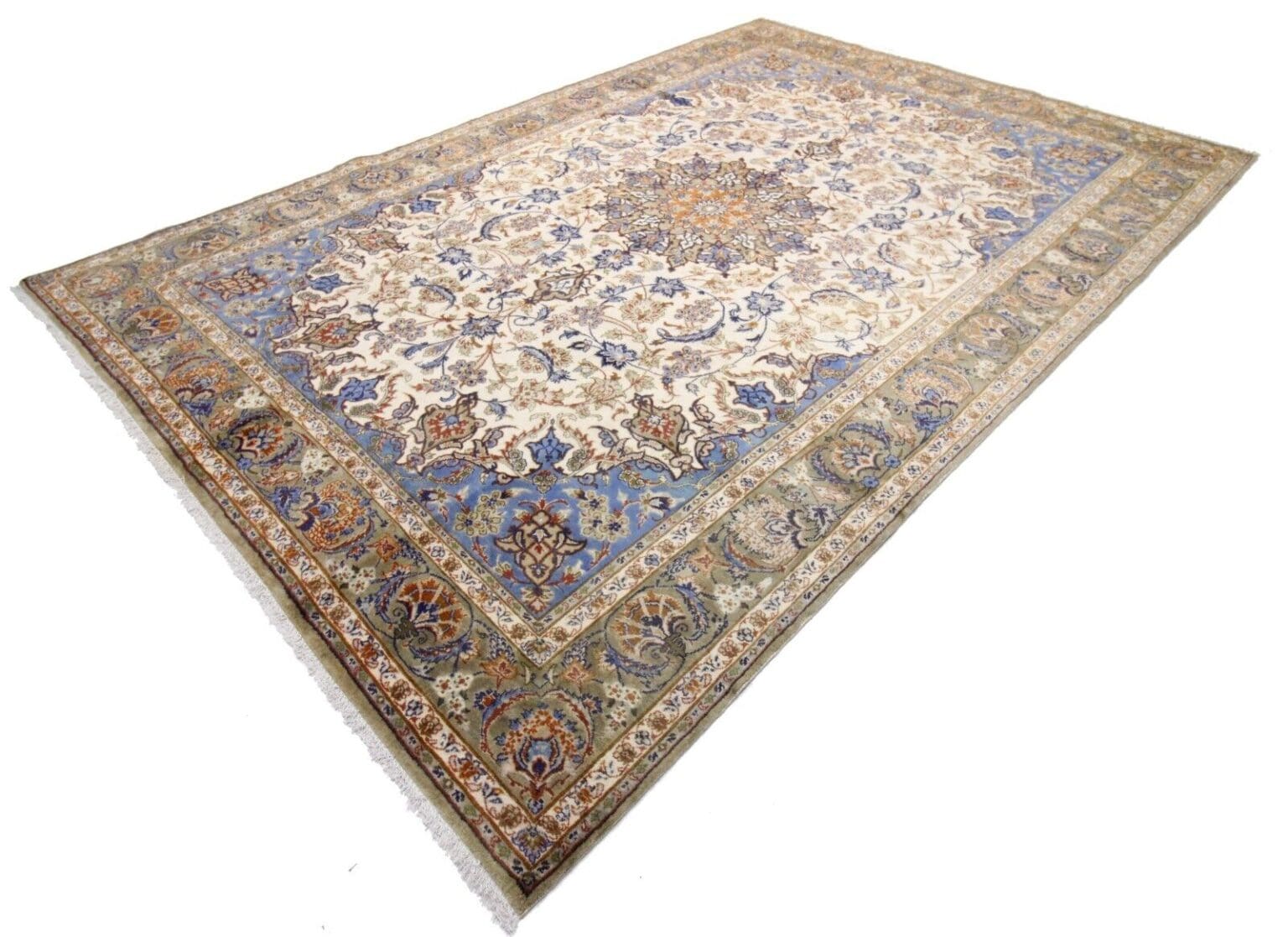
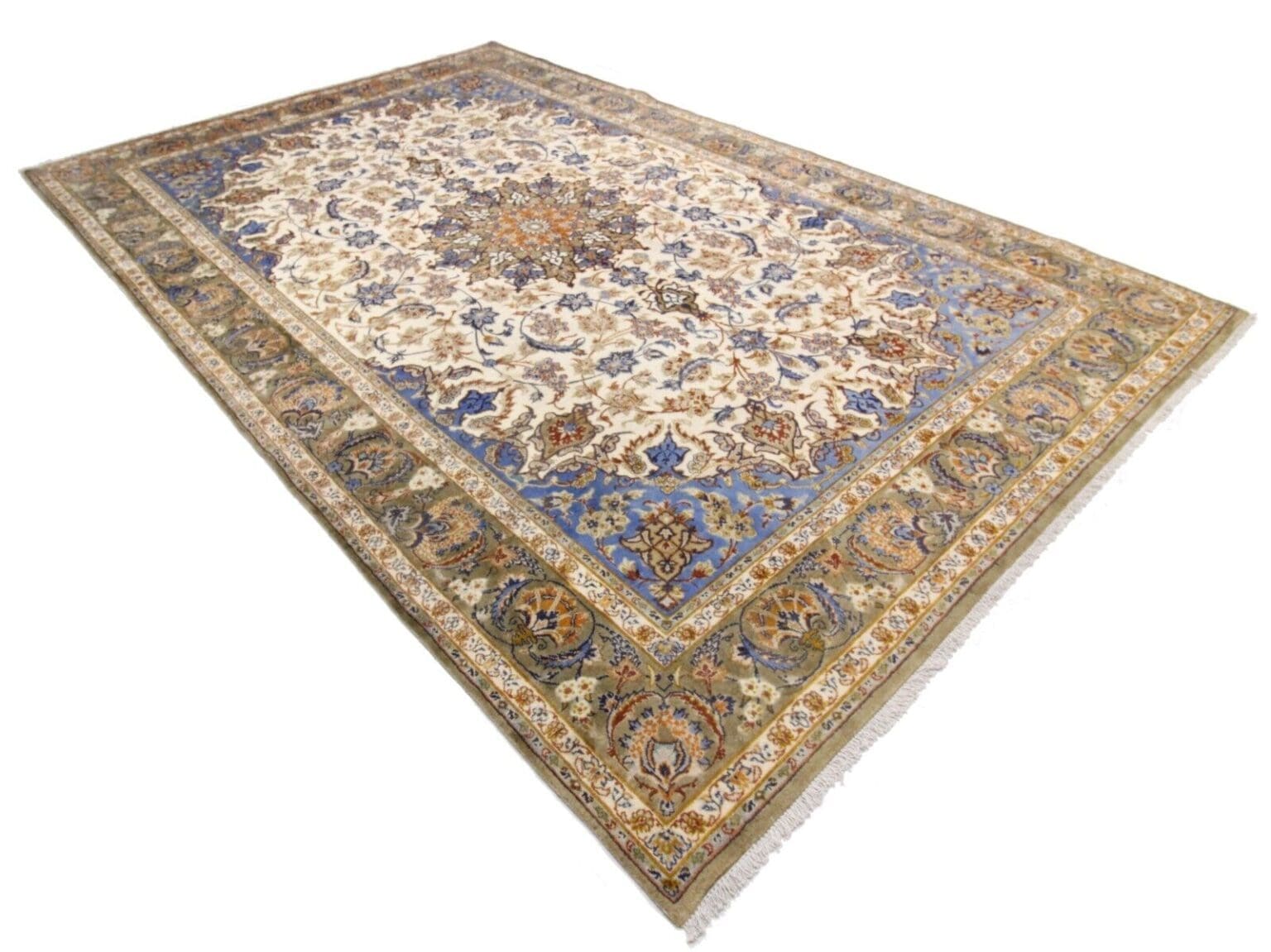
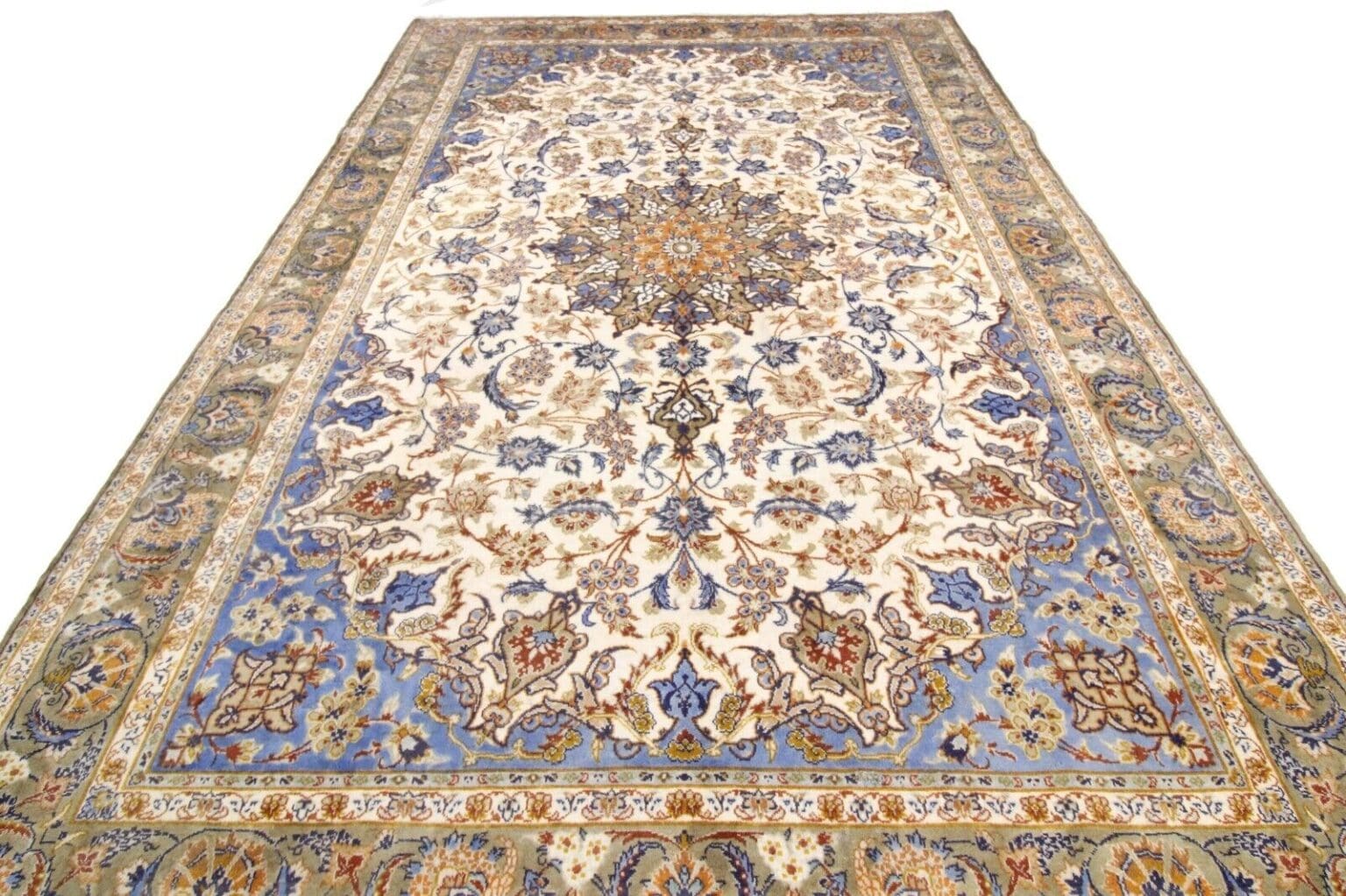
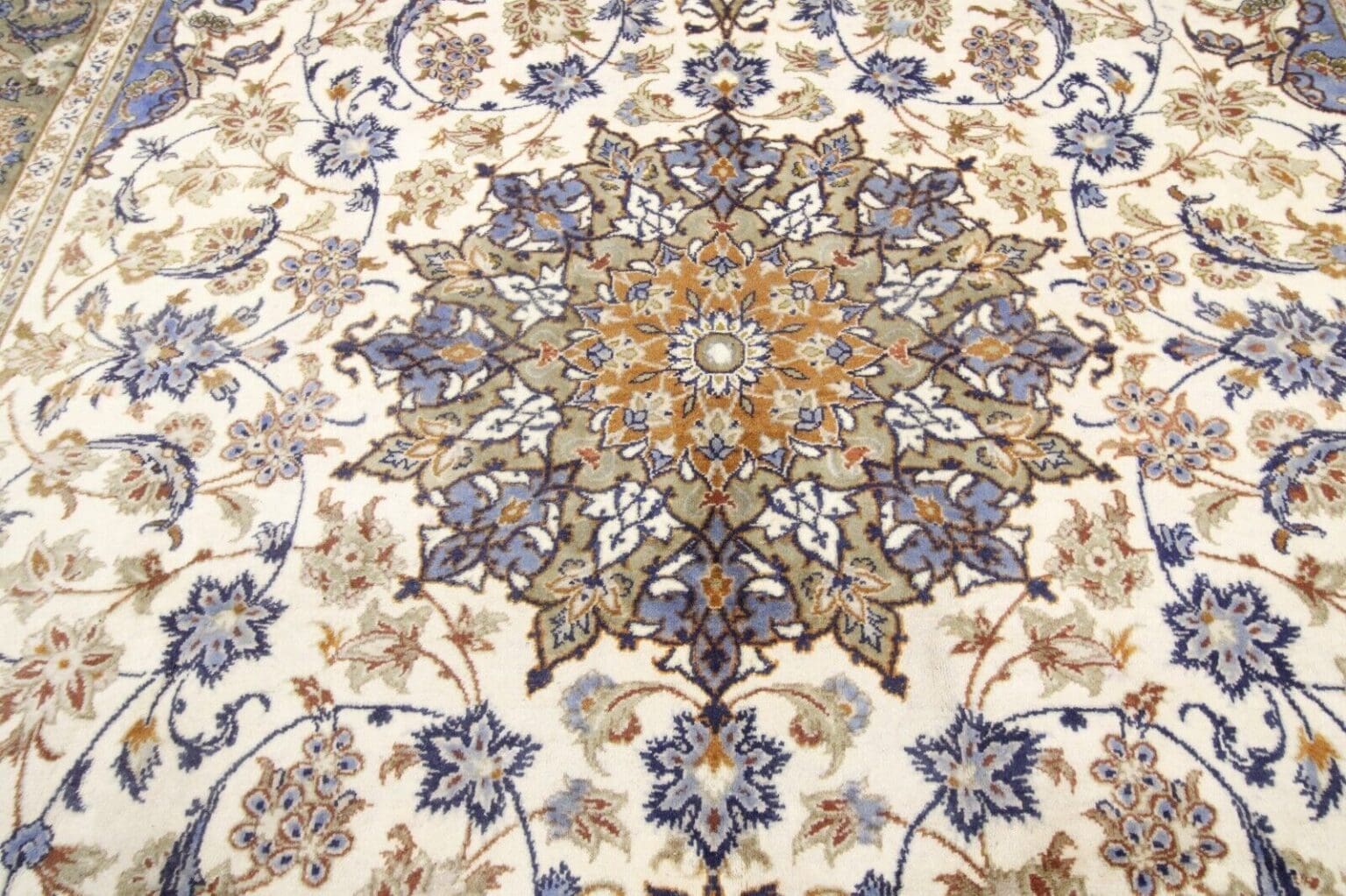
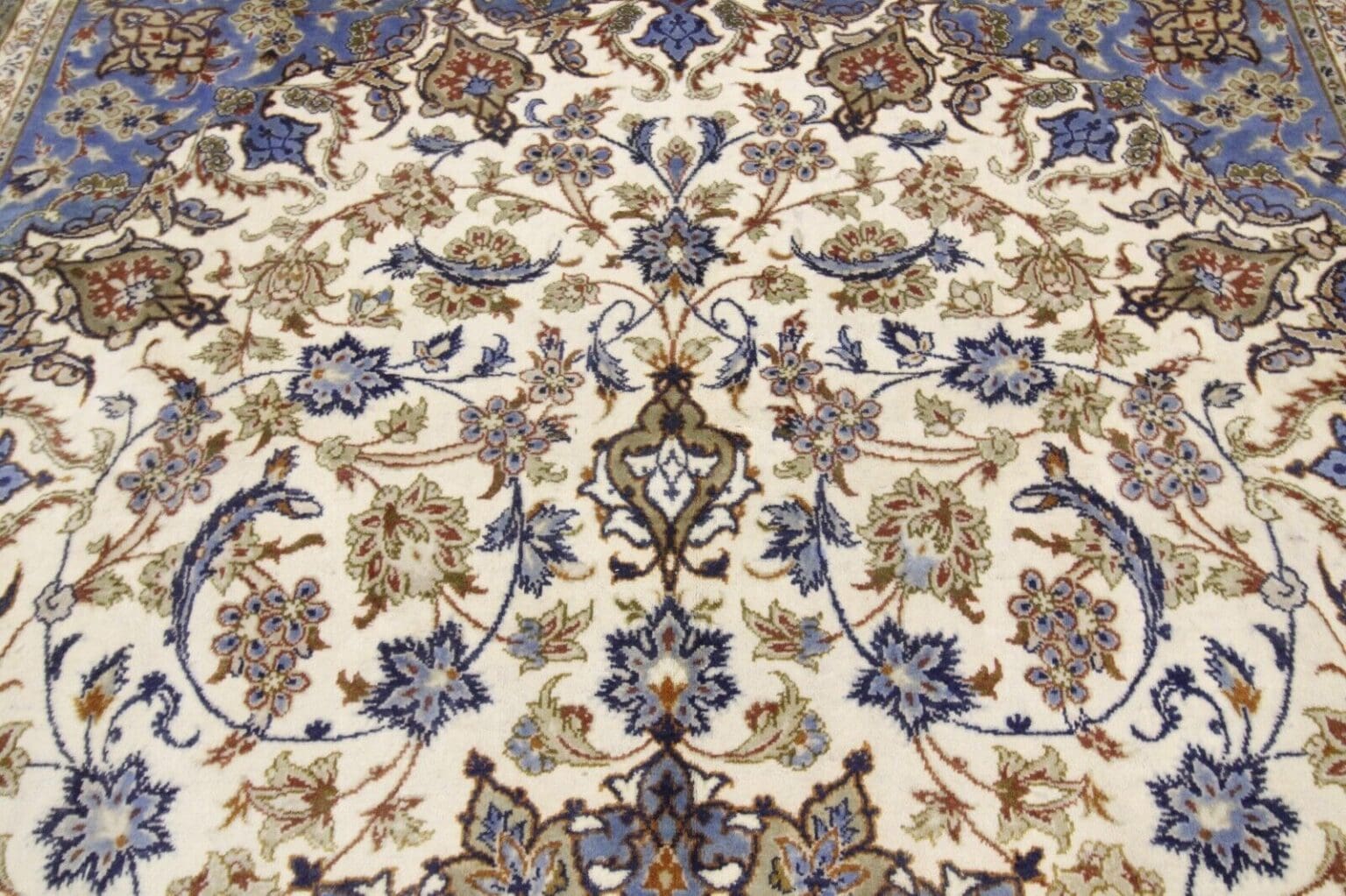
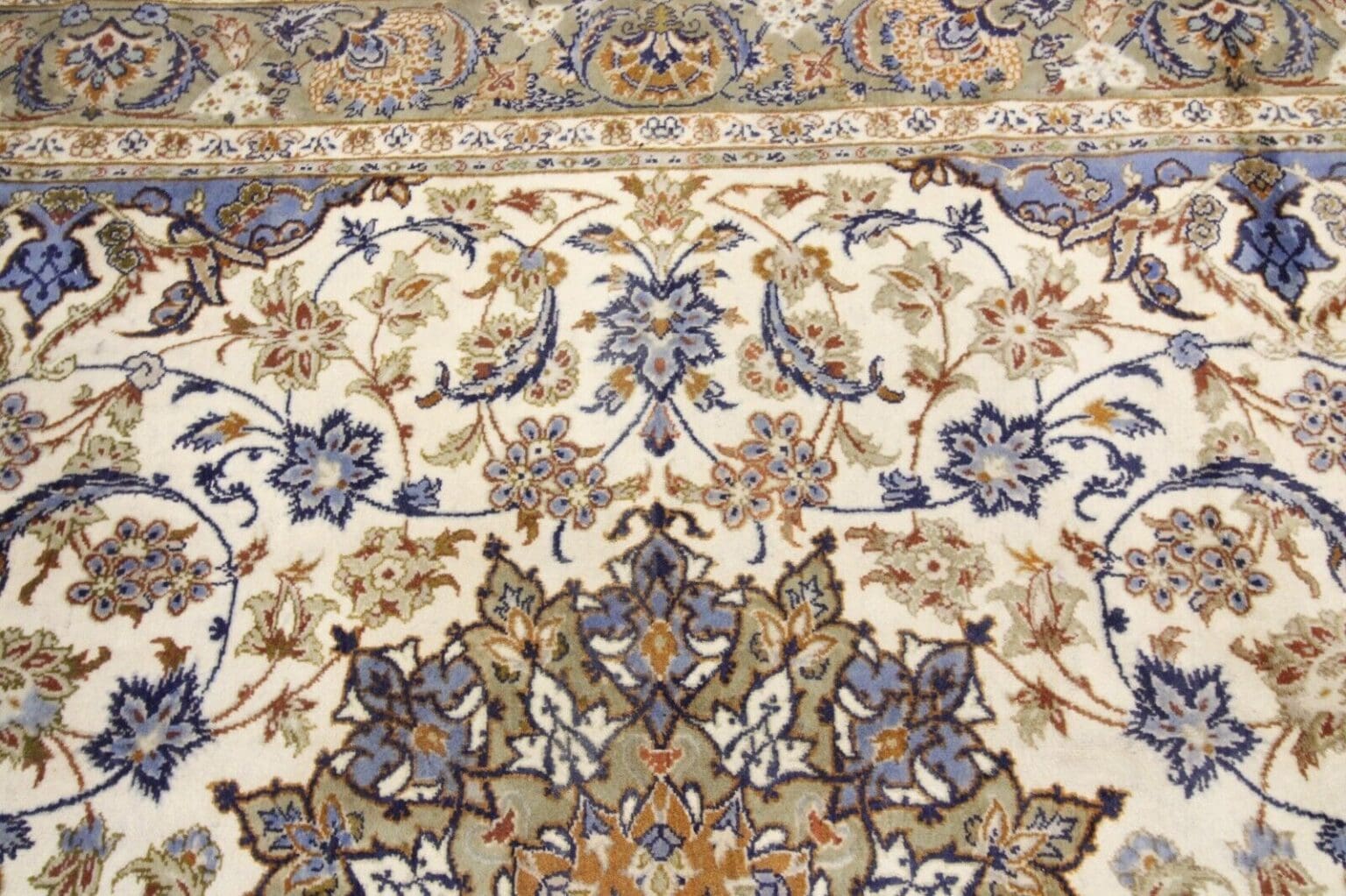
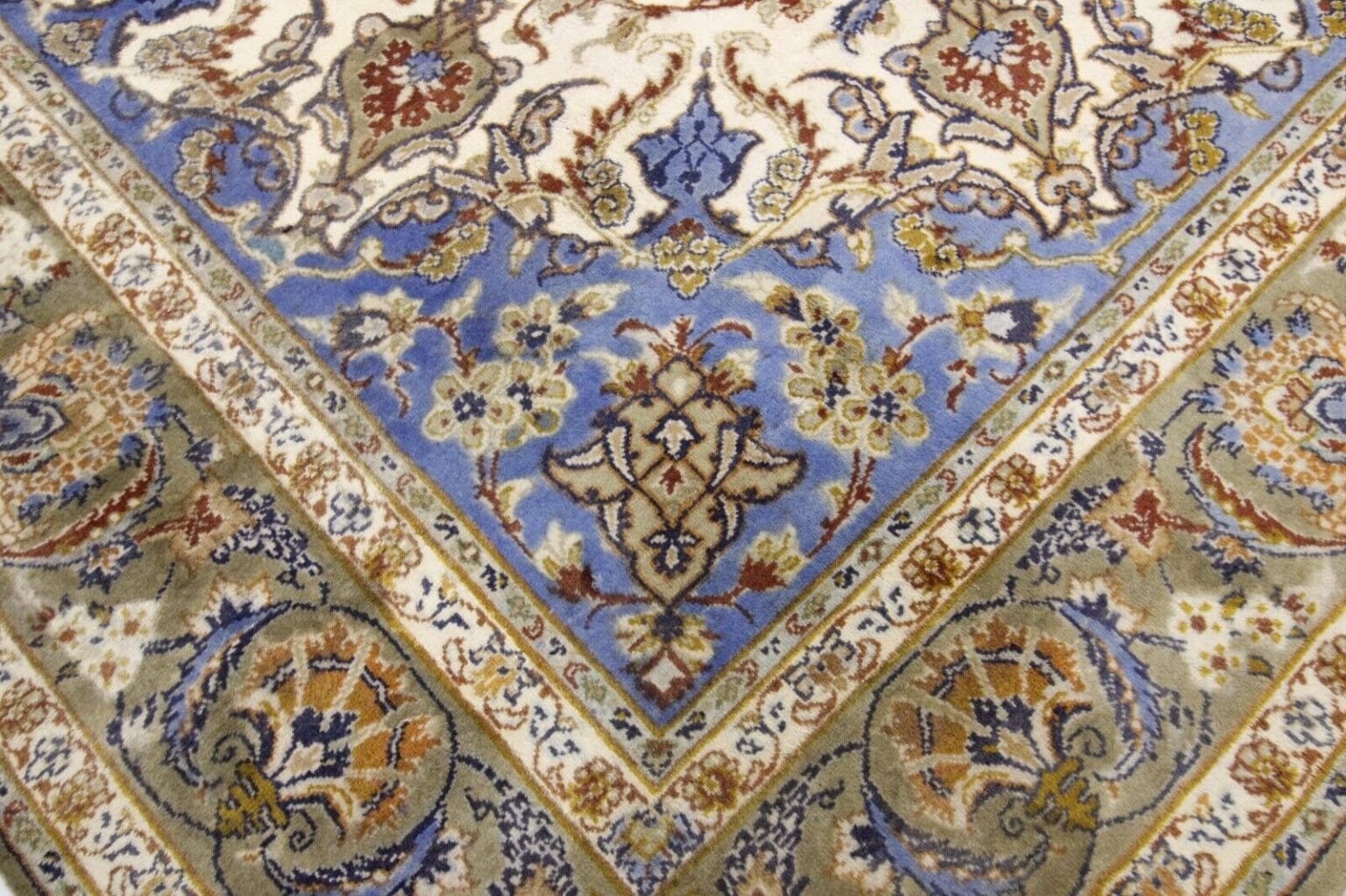
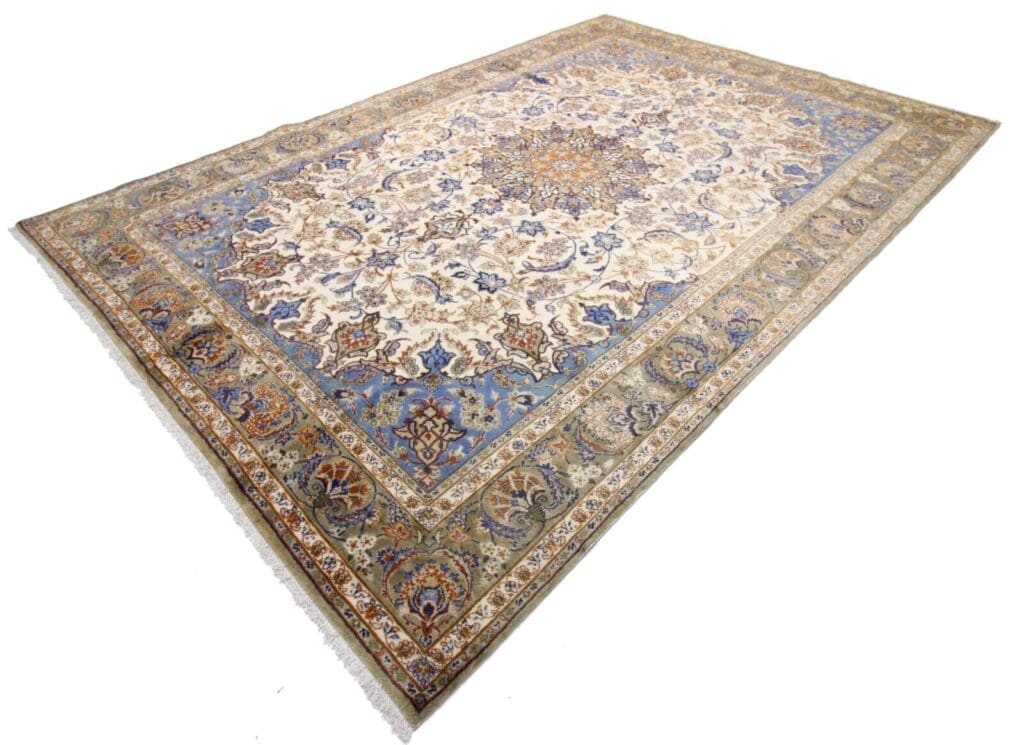
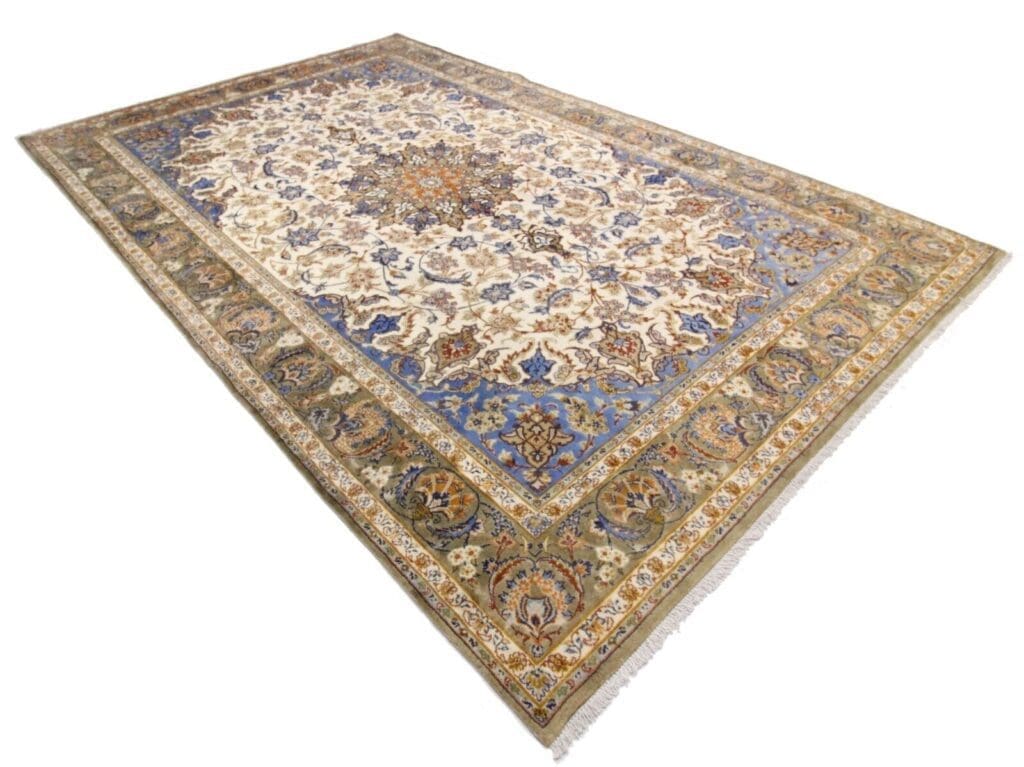
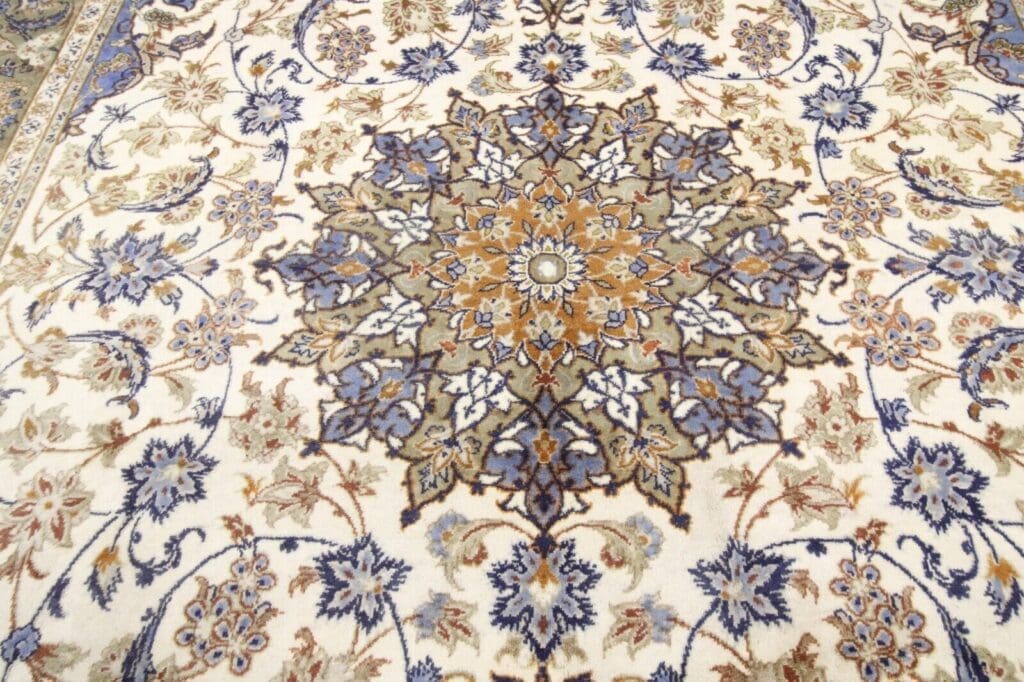
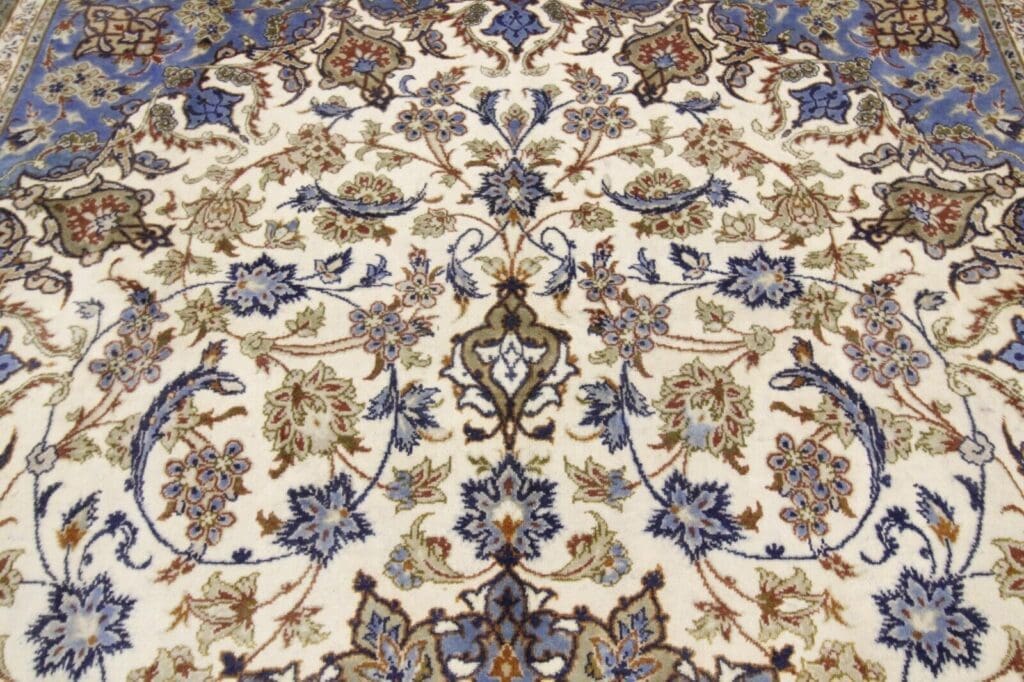
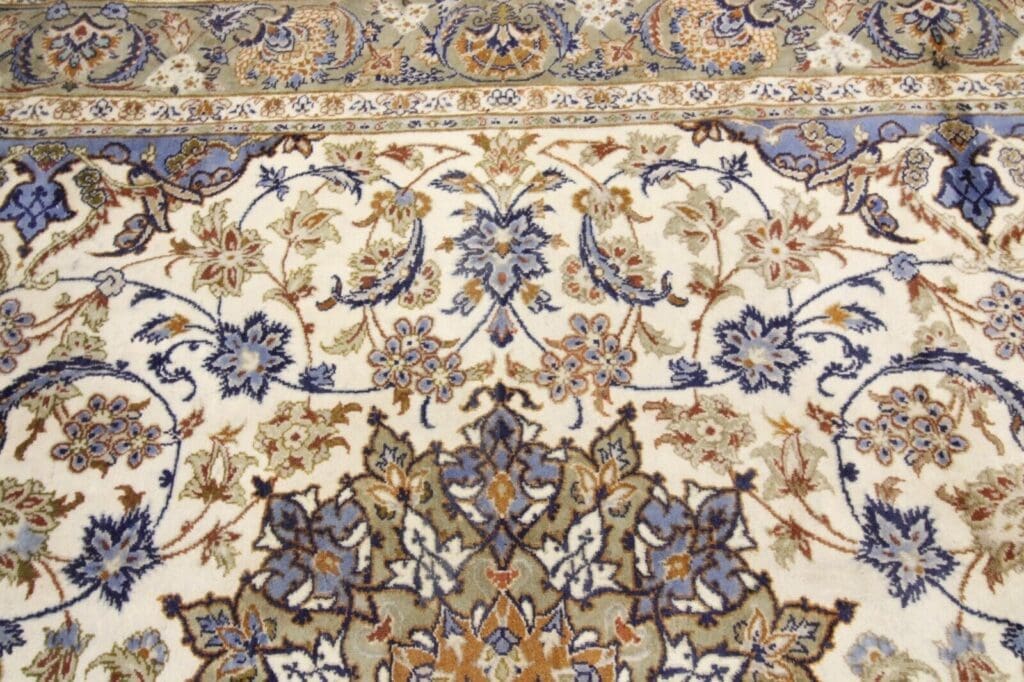
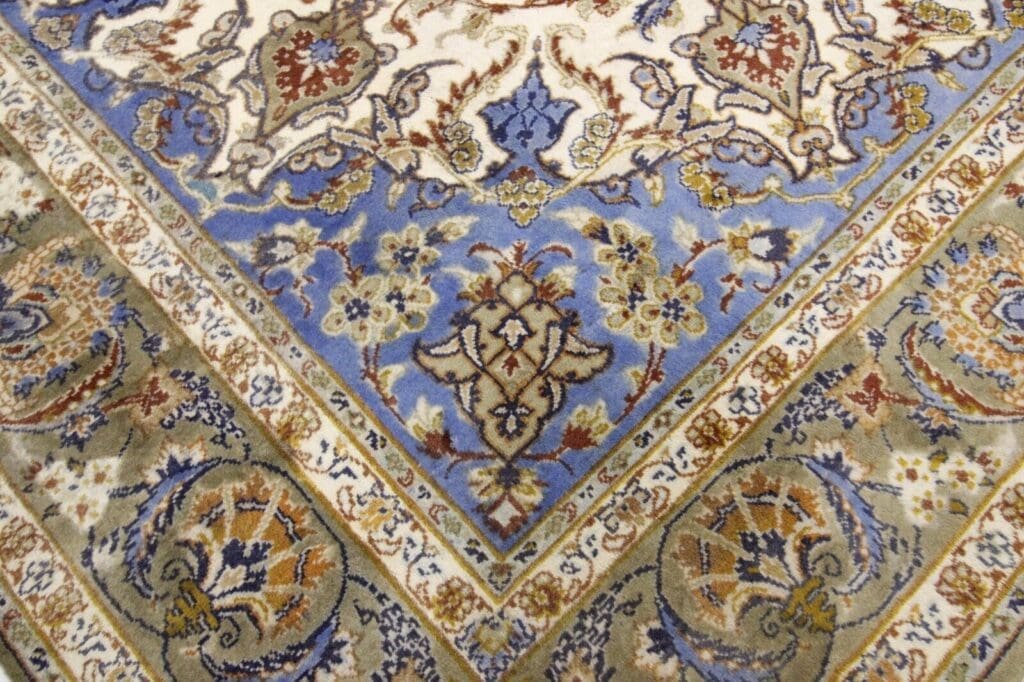
The pattern of this rug is described as oriental with floral motifs. Floral imagery is one of the established themes of Persian rug design. Leaves, blossoms and flowing vines may be arranged into repeated ornament or combined into a balanced overall composition. The specific description confirms floral motifs; it does not name particular plants, colours or a specific border arrangement.
Floral motifs have a long history in rug design. They take forms from nature and transform them into an ordered textile language. Rather than functioning only as literal pictures, such elements are often stylised, repeated rhythmically and integrated into the structure of the entire rug. In this way, floral ornament can establish movement, spacing and visual direction across the surface.
Oriental patterns broadly include both floral and geometric designs. Geometric forms create axes, repetition and clear divisions, while floral forms can produce a more flowing effect. In this piece, the supplied description places the emphasis on floral decoration. The designation design classic places its style within an established and enduring design vocabulary, without claiming a particular historical pattern or period.
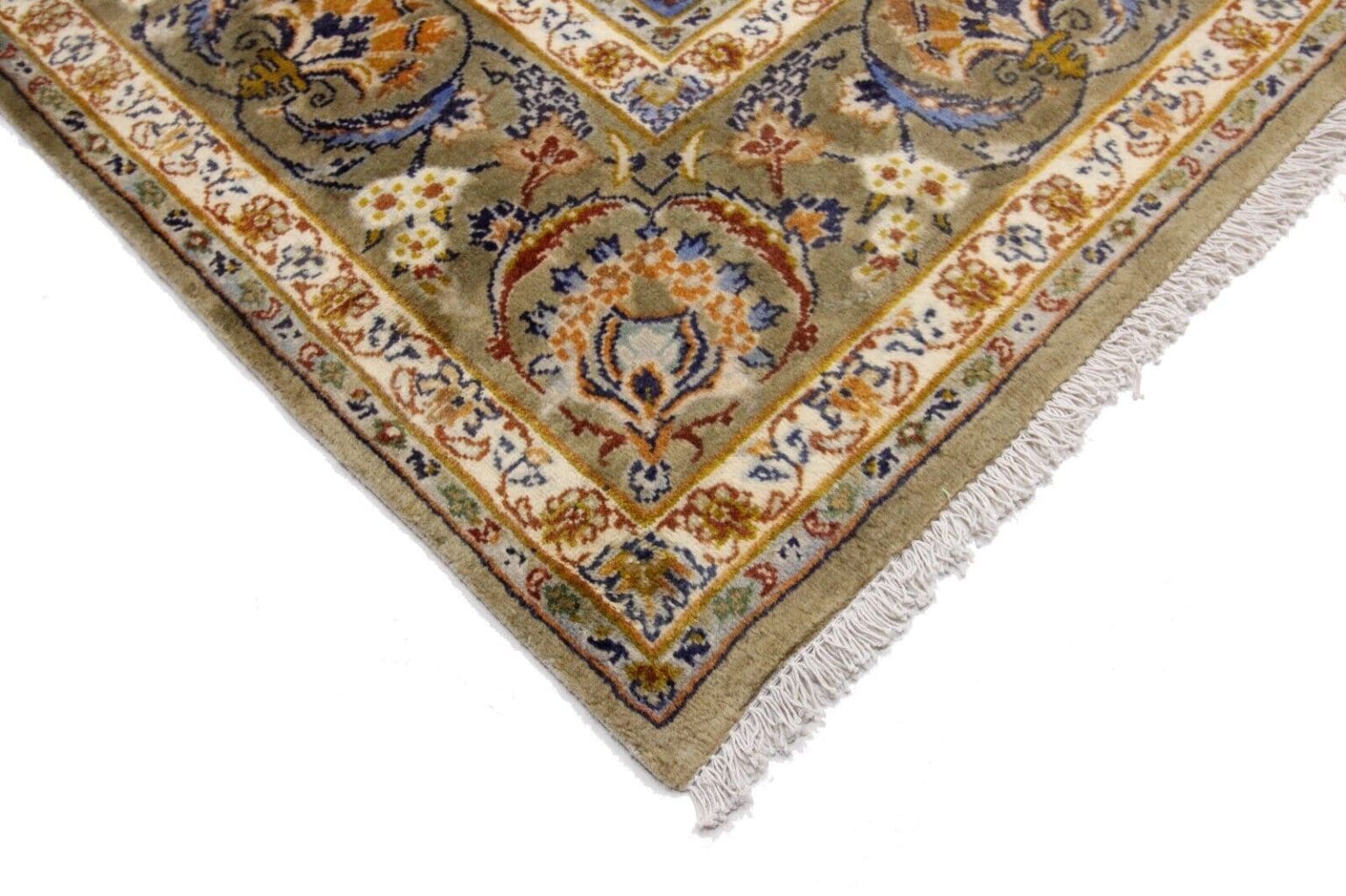
Persian rugs are often organised through a relationship between a central field and surrounding border areas. A field may contain a central ornament or distribute motifs throughout its surface, while borders can frame the composition. It is not specified whether this rug has a medallion, an all-over arrangement or particular borders. The description therefore remains with the confirmed oriental character and floral motifs.
Colour relationships are generally important in Persian rug design. Traditional compositions may combine deep reds and blues with earthy tones or carefully balanced contrasts. No specific colours are given for this one-off rug, however. What is established is its oriental design and floral pattern. This allows its decorative direction to be described accurately without adding an unsupported colour palette.
A floral Persian rug can be placed in a range of interior styles. In a traditional setting, it can continue the room’s ornamental language. In a contemporary room, it can introduce a textile structure alongside simple furniture and restrained surfaces. The hand-knotted construction and floral design bring together the craft tradition of Persian rugs and the description of this piece as a design classic.
Special Features
This rug is described as a one-off and as an original. Its condition is given as very good, like new. That wording presents it as a carefully preserved piece with a like-new condition. No detailed list of individual signs of use, repairs or restoration is provided, so no such details are added.
The rug is also described as suitable for all rooms, anti-slip and suitable for underfloor heating. Its pile height is normal. In addition, it is called environmentally friendly. These points concern its intended practical use and classification. When installing it, the conditions of the particular floor and the requirements of the underfloor-heating system should still be taken into account.
FAQ
How should I care for my Persian rug?
Regular, gentle vacuuming helps remove dust from the pile. Spills should be treated as soon as possible with a damp cloth and a mild cleaning product. Avoid vigorous rubbing and unnecessary saturation of the fibres. Professional cleaning every few years is recommended so that the hand-knotted construction and its materials receive suitable treatment. The appropriate interval also depends on how often the rug is used and how much soil it receives.
How can I assess the quality of a Persian rug?
Important factors include knot density, the materials used and the complexity of the pattern. A higher knot density can support finer detail. Durable materials such as wool or silk are also considered relevant; this rug is listed as 100% wool and 100% cotton. The consistency of the workmanship and the clarity of the design can provide further information about how a rug was made. No single figure is sufficient to assess every aspect of a rug.
Can I use a Persian rug in a modern room?
Yes. A Persian rug can add colour, textile texture and ornamental depth to a contemporary interior. A floral design can be paired particularly well with simple furniture and uncluttered surfaces. This creates a contrast between the rug’s traditional visual language and modern furnishing. This Isfahan Persian rug is also described as suitable for all rooms and classified as a design classic.
To provide the best experiences, we use technologies like cookies to store and/or access device information. Consenting to these technologies will allow us to process data such as browsing behavior or unique IDs on this site. Not consenting or withdrawing consent, may adversely affect certain features and functions.
Functional Always active
The technical storage or access is strictly necessary for the legitimate purpose of enabling the use of a specific service explicitly requested by the subscriber or user, or for the sole purpose of carrying out the transmission of a communication over an electronic communications network.
Preferences
The technical storage or access is necessary for the legitimate purpose of storing preferences that are not requested by the subscriber or user.
Statistics
The technical storage or access that is used exclusively for statistical purposes.The technical storage or access that is used exclusively for anonymous statistical purposes. Without a subpoena, voluntary compliance on the part of your Internet Service Provider, or additional records from a third party, information stored or retrieved for this purpose alone cannot usually be used to identify you.
Marketing
The technical storage or access is required to create user profiles to send advertising, or to track the user on a website or across several websites for similar marketing purposes.

 SECURE PAYMENT
 SHIPPING PARTNERS