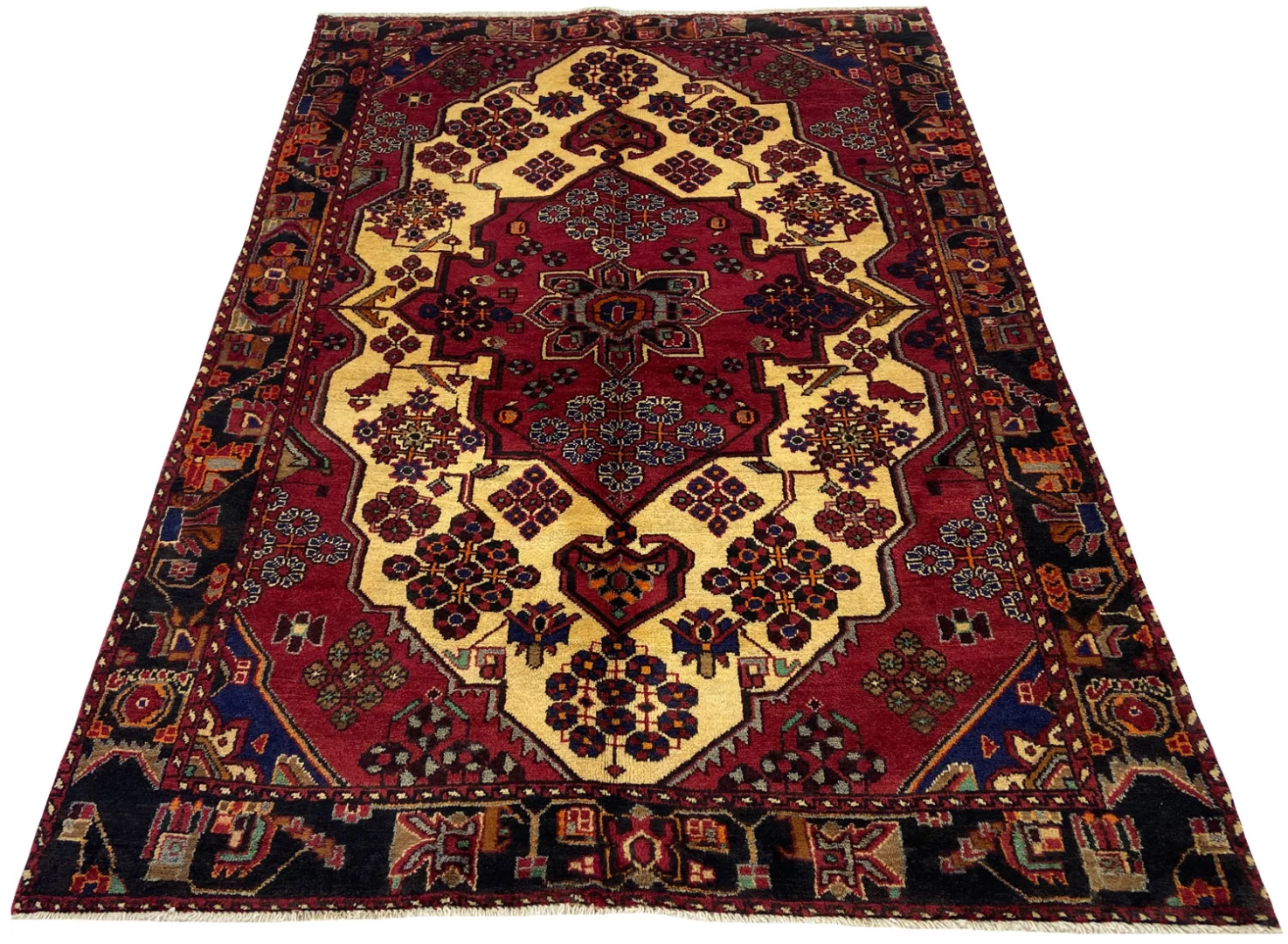
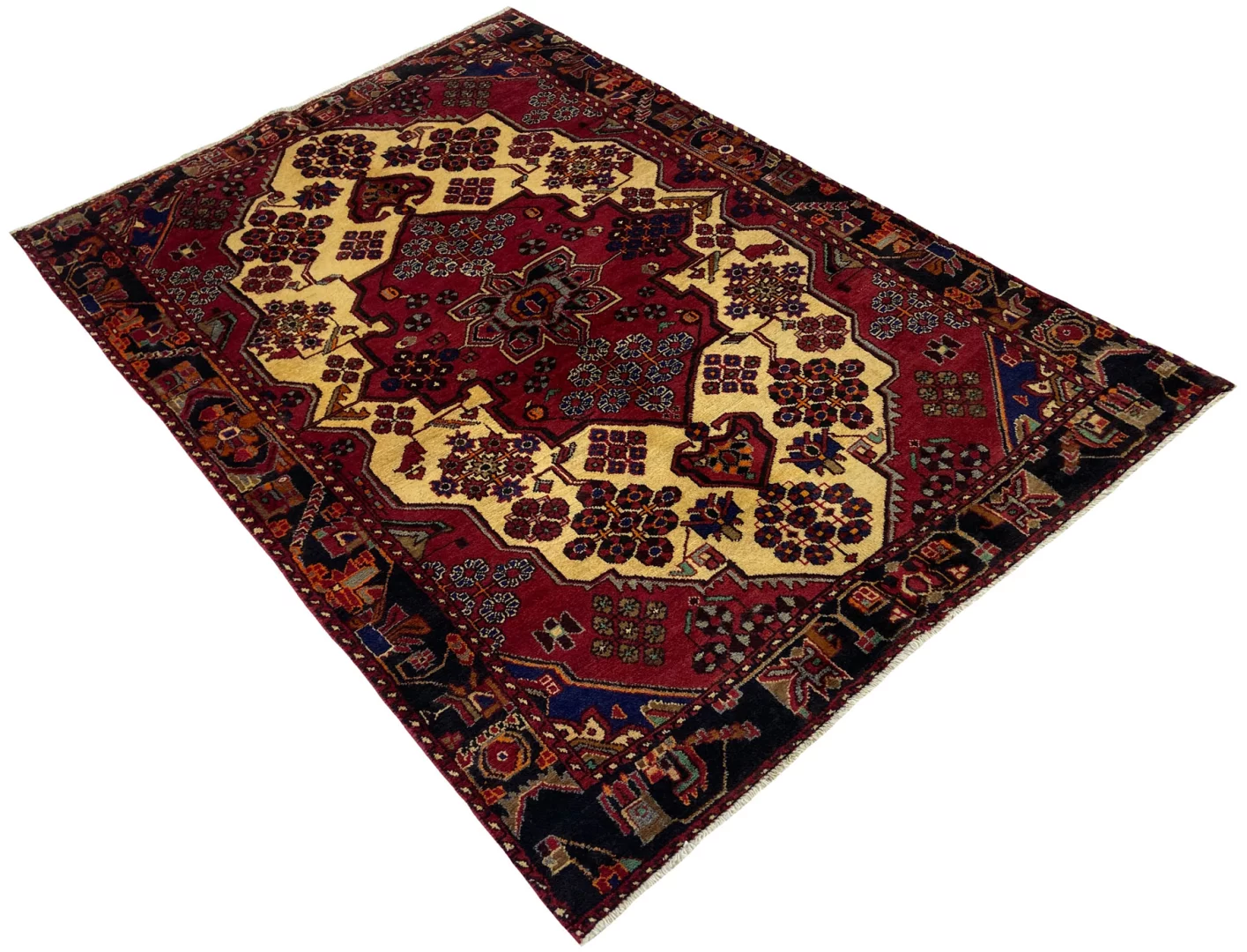
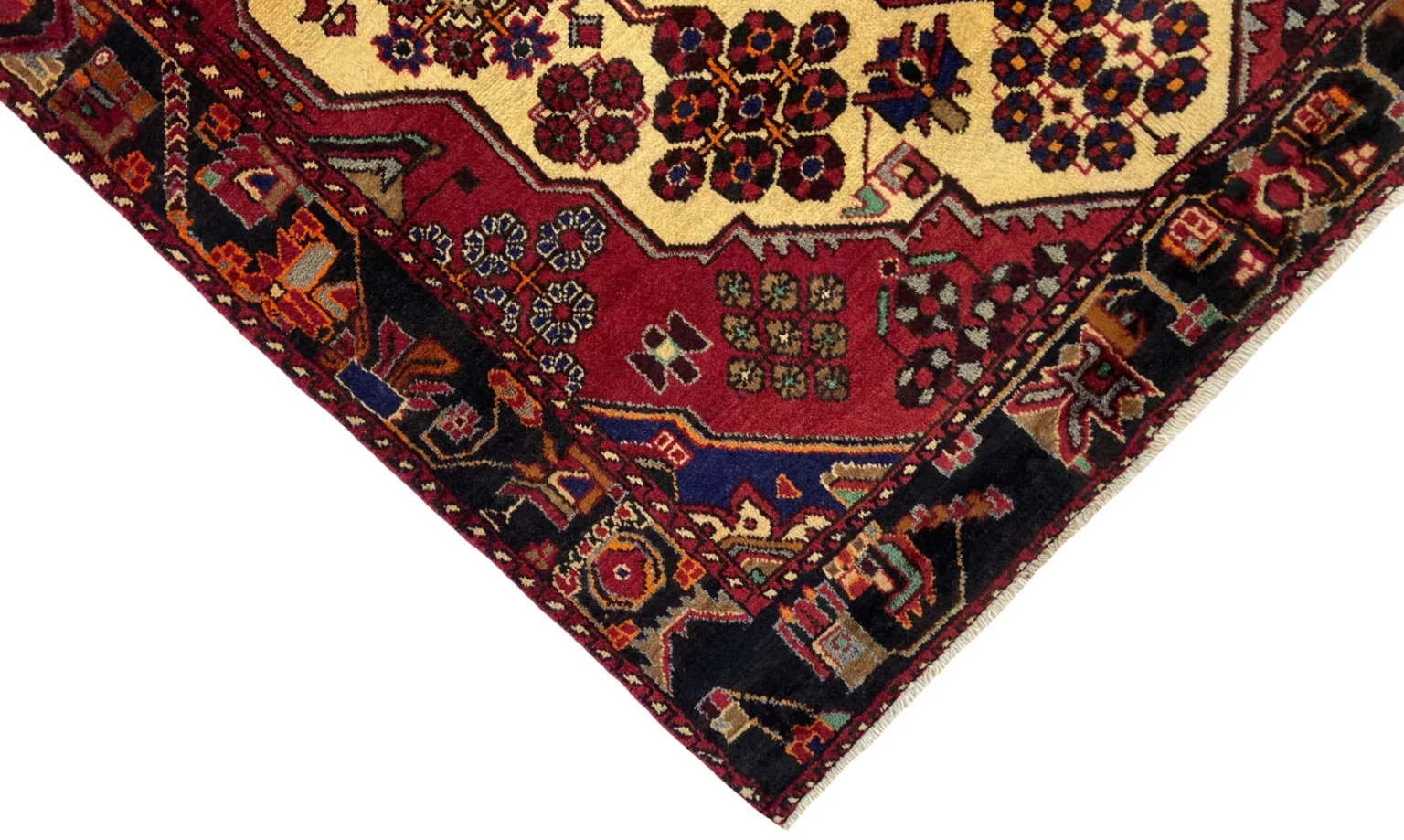
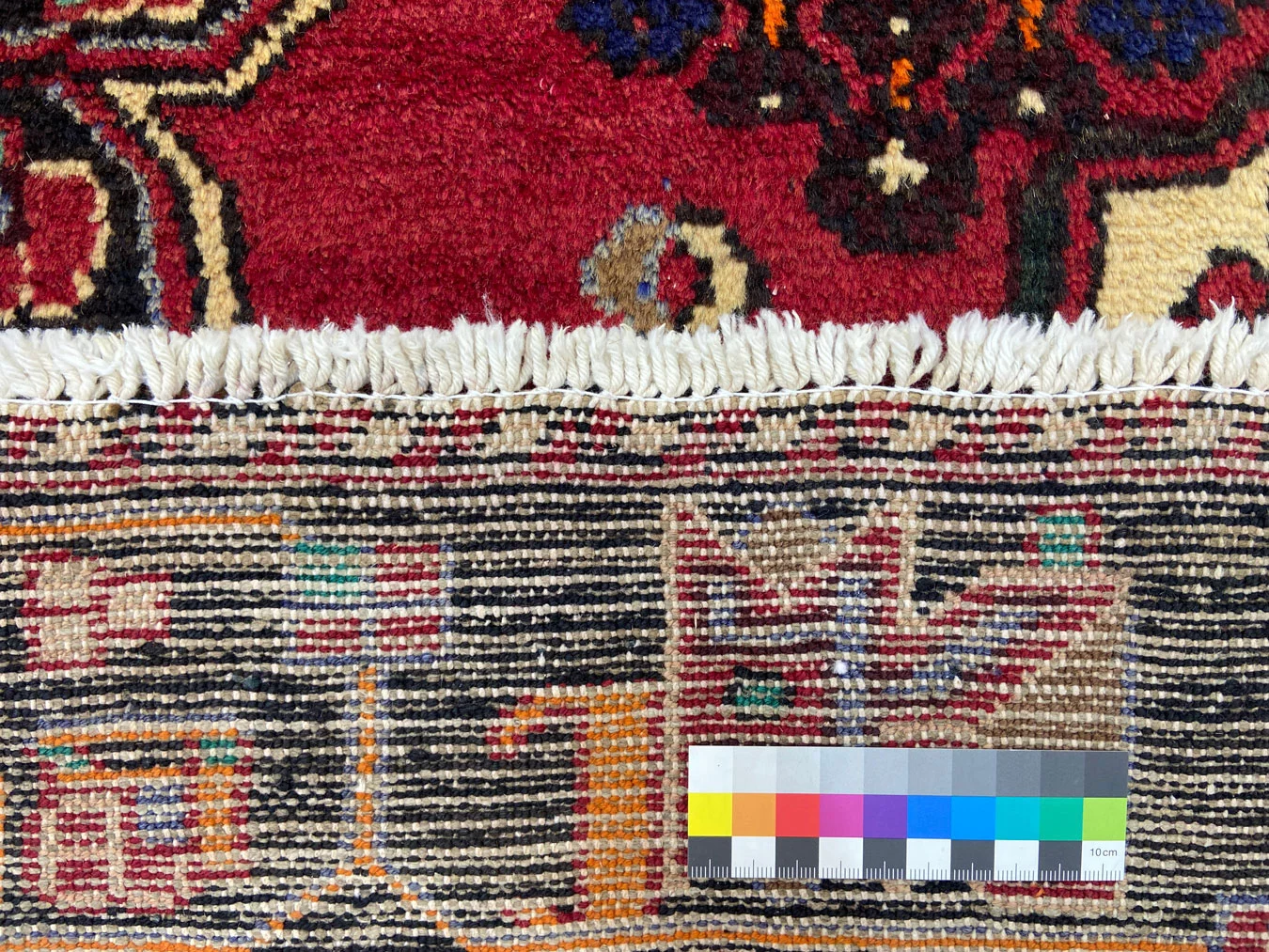
This Hamadan Persian Rug is made from durable wool and was hand-knotted. The wool gives the pile a resilient character while retaining a soft and pleasant surface. Wool has been used for oriental rugs for centuries because it combines practical strength with a tactile textile feel. In this rug, wool is specified as the pile material. No separate warp material is stated for this individual piece, so no additional claim about the warp is made.
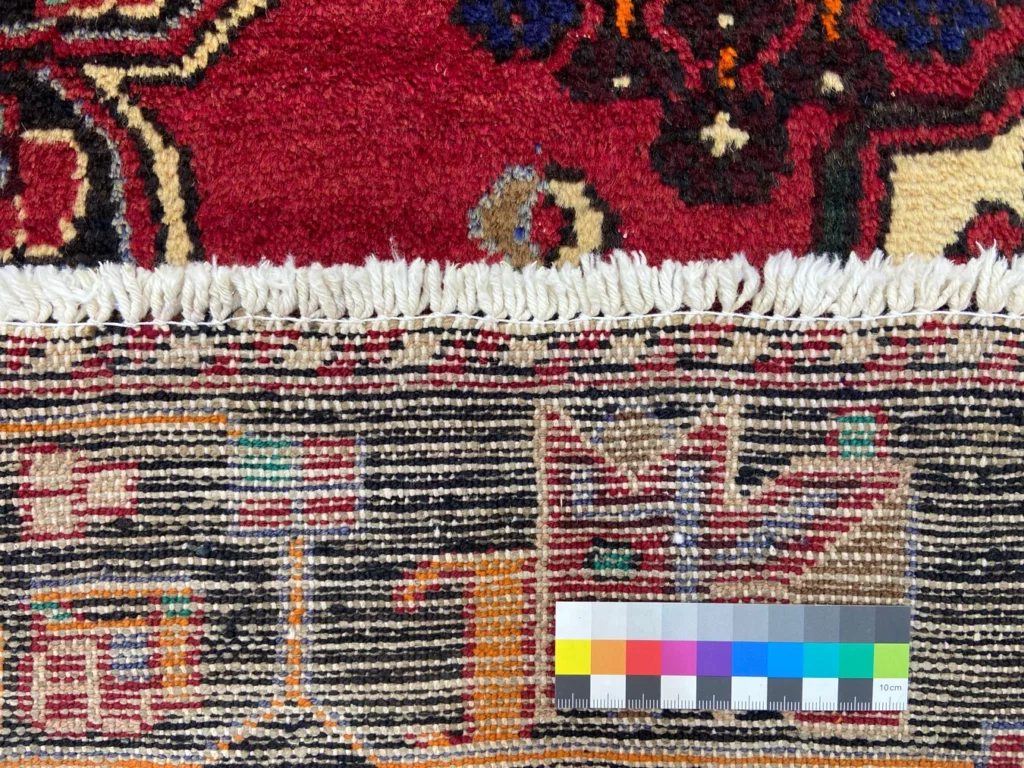
Hand-knotting turns each rug into a one-off work of textile craftsmanship. Knots are inserted row by row into the foundation and then compacted through the subsequent stages of making the pile. The knot density given for this rug is between 100.000 and 350.000 knots per square metre. Knot density records the number of knots within a defined area and provides a technical indication of how the woven surface has been constructed.
The combination of handmade construction and durable wool is associated with Hamadan rugs. The pile is not merely decorative; these rugs are made for use in living spaces as well. This rug is described as easy to care for. Gentle regular vacuuming is suitable for routine maintenance, while spots should be blotted promptly with a damp cloth. Professional rug cleaning can be used when a more comprehensive cleaning is required.
Origin and Tradition
Hamadan is located in northwestern Iran. The city and the surrounding area are recognised centres of Persian rug production. Their weaving and knotting traditions developed over many generations and include a broad range of hand-made rugs. Hamadan therefore refers not to one fixed decorative formula but to a regional group whose examples can differ in pattern, colour and structure.
Rug making in the region was connected with both urban workshops and rural household production. Wool was an important material because it was versatile and suitable for spinning, dyeing and hand processing. The combination of available fibres and inherited skills produced rugs intended for everyday use as well as for more formal interiors. The tradition did not depend on a single unchanging template; instead, it allowed many local variations to develop.
Hamadan rugs are often associated with designs that are clear and easy to read. Their appearance can nevertheless vary considerably from one workshop or nearby weaving area to another. Some examples use geometric layouts, while others feature floral elements or a central medallion. Border arrangements and the scale of the field motifs may also change. This range explains why Hamadan appears in the trade as a regional origin with several distinct visual expressions.
The northwestern Persian tradition belongs to a wider history of rugs used in domestic, religious and formal settings. Motifs were passed on over time, adapted to local preferences and altered through individual working practice. Weavers could retain a familiar outline while changing the rhythm, colour relationships or details of the ornament. A hand-knotted rug is therefore shaped by both established conventions and the practical experience of the people who make it.
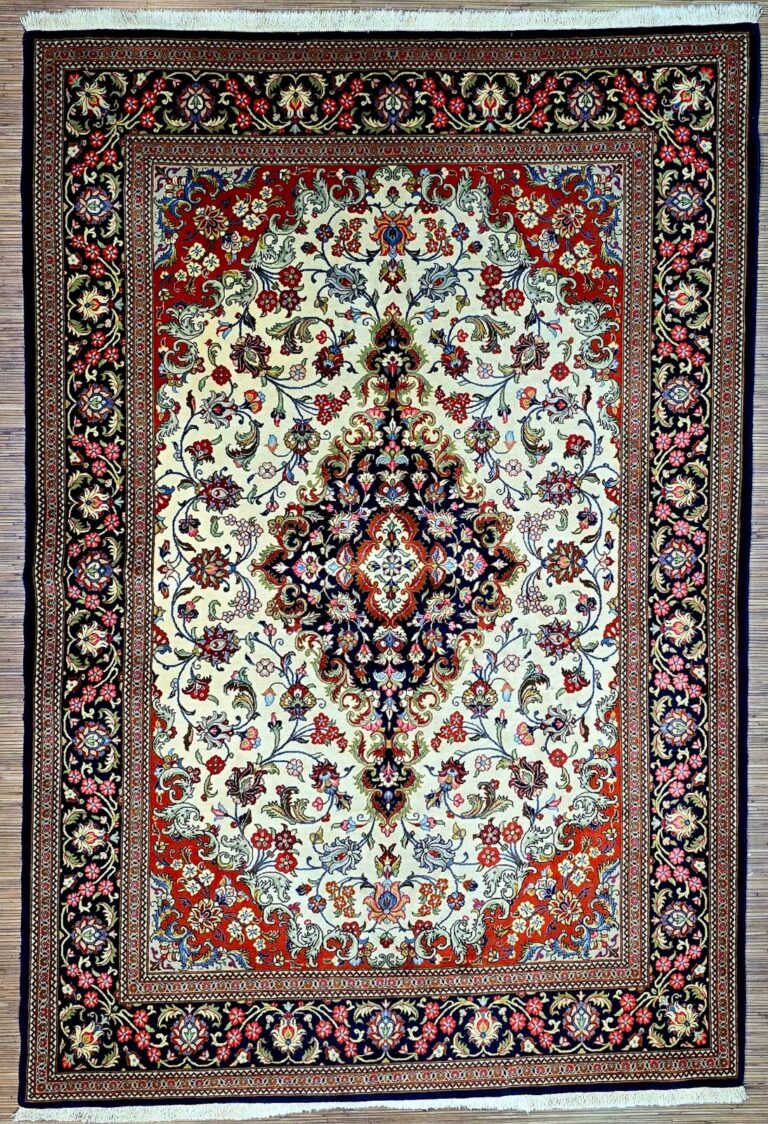
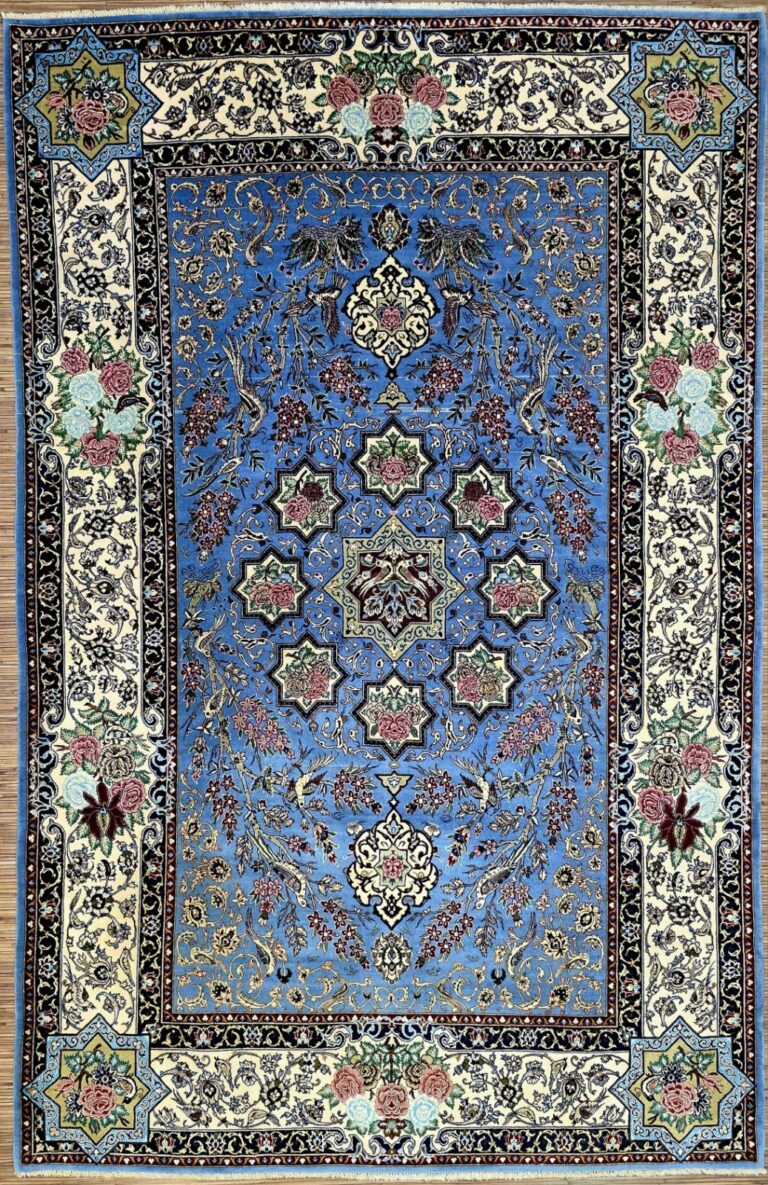
Hamadan is often discussed alongside other Persian rug centres. Kerman is associated with finely drawn, delicate-looking designs, while Isfahan is frequently known for complex floral compositions. Qom is widely connected with particularly fine silk work. These names represent separate traditions and do not describe the origin of this rug. The piece offered here is a Hamadan Persian Rug from northwestern Persia.
Design and Pattern
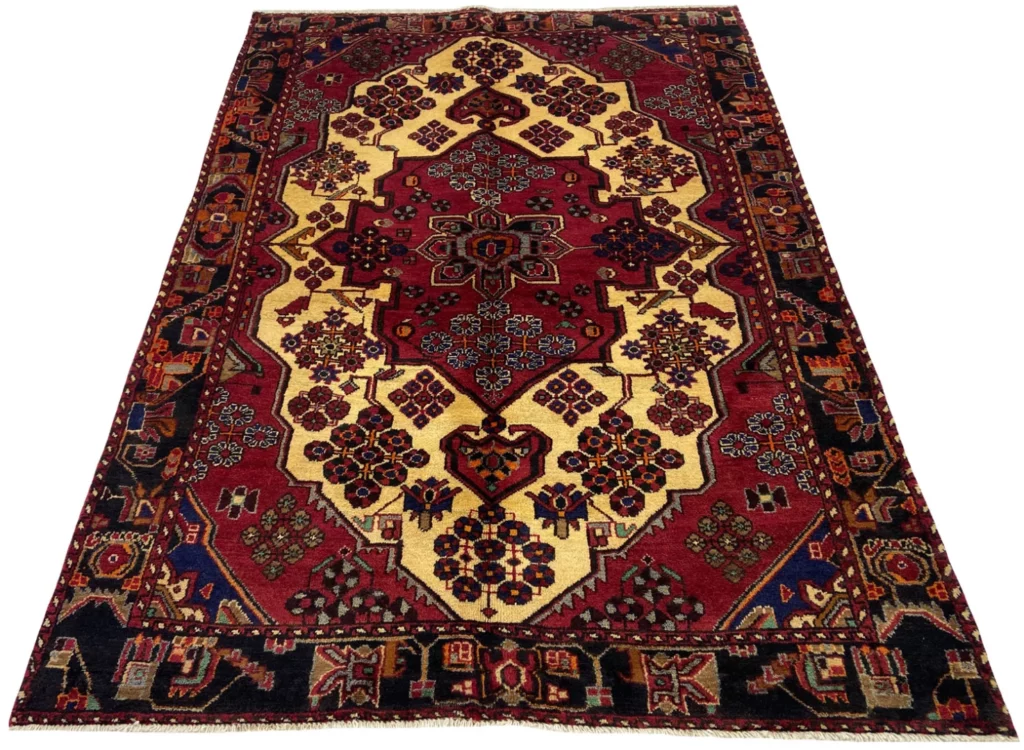
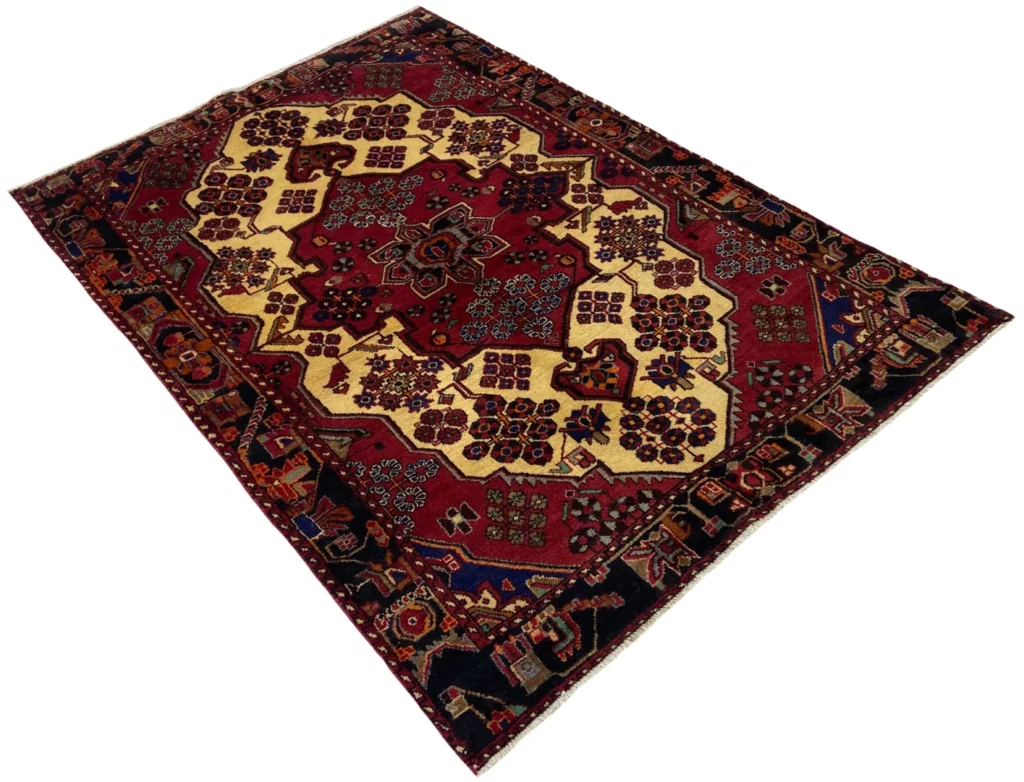
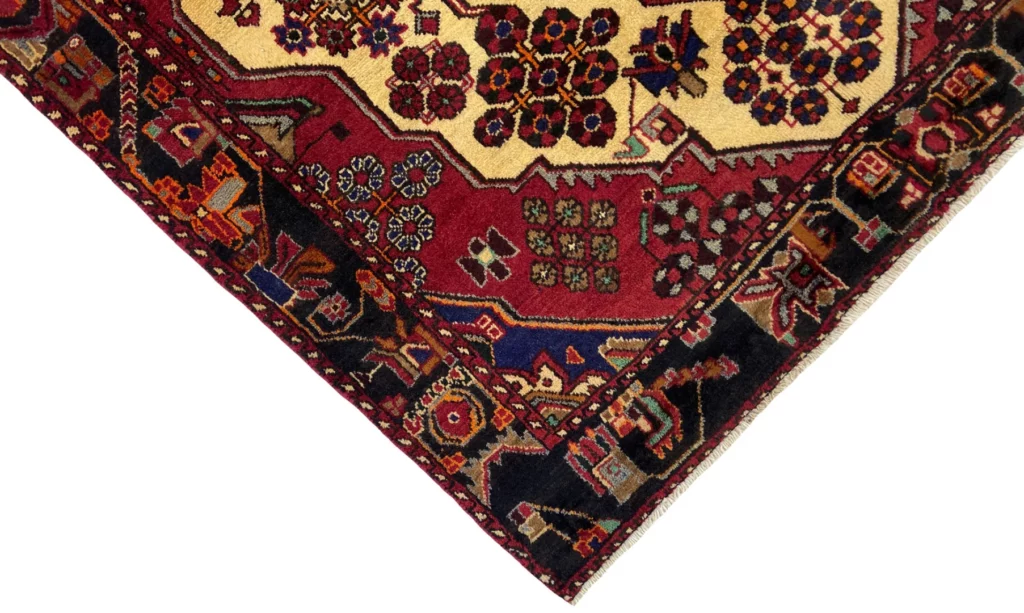
This rug is described as having varied designs. That wording reflects the broad visual range found among Hamadan rugs without assigning an unlisted individual motif to this particular piece. Regional examples include geometric and floral compositions. Geometric layouts may be built from diamonds, stepped forms, hooked shapes, stripes or repeated angles. Floral arrangements may use stylised blossoms, leaves and scrolling stems rather than naturalistic botanical drawings.
The relationship between the field and the borders is one of the central organising ideas in Persian rug design. The field carries the main composition, while the border frames it and creates a visual transition toward the outer edge. Hamadan rugs may use several borders together, with narrow guard borders accompanying a wider main border. This structure gives the design order even when the individual ornaments differ from one rug to another.
Persian rugs use several established compositional systems. A central medallion concentrates the design in the middle of the field. A continuous arrangement distributes the motifs across the surface without relying on a single centre. An all-over design creates a repeated visual rhythm over the entire field. The source does not identify which of these systems appears on this individual rug, so the description remains with its documented variety of designs.
Colour is an important part of Hamadan’s design vocabulary. The regional palette includes deep reds and blues, beige and earthy tones. These colours can be set against one another for contrast or combined in related shades to produce a quieter transition. Colour helps separate the field from the borders and supports the visibility of the ornament. The palette named here describes colours found in Hamadan rug traditions; it is not an added list of exact colours for this one-off piece.
Persian rug motifs often carry the visual memory of a region’s craft tradition. Repetition, symmetry and measured spacing create a rhythm that allows an ornament to cover a surface coherently. In a hand-knotted rug, small variations can occur within that ordered system because the work is performed individually rather than by a machine producing identical copies. The resulting design remains structured while preserving the character of hand workmanship.
The breadth of Hamadan design makes the type adaptable to different interiors. Geometric patterns can work with restrained, linear furnishings, while floral arrangements can relate to more traditional settings. The balance between ornament, colour and surrounding materials determines the overall effect in a room. Its regional identity remains clear, but the range of Hamadan patterns allows the rug type to function in both classic and contemporary living environments.
Special Features
The stated features of this rug are its hand-knotted construction, durable wool pile and broad design variety. The individual piece is also described as being in very good condition. This condition statement applies to the rug offered here. It is distinct from general comments about old or used rugs and should be considered when choosing a suitable care routine.
The knot density of 100.000 to 350.000 knots per square metre records an important part of the rug’s construction. Together with the handmade technique and wool pile, it gives the piece a clearly defined technical profile. The rug is suitable for everyday use and is described as easy to maintain. Gentle vacuuming and prompt blotting of spots support careful handling of the surface.
FAQ
How should I care for this Hamadan Persian Rug?
Regular vacuuming helps remove loose dirt from the wool pile. If a spot occurs, it should be blotted immediately with a damp cloth. Rubbing can place unnecessary stress on the pile and should be avoided. A professional rug cleaning service is suitable when a deeper cleaning is needed. The rug is described as easy to care for; a consistent and gentle routine helps preserve its surface and its very good condition.
What designs are found in Hamadan rugs?
Hamadan rugs are known for a wide range of patterns. This includes geometric compositions with clear lines and stylised forms as well as floral arrangements using blossoms, leaves and scrolling elements. Depending on the regional workshop, examples may feature central medallions, continuous layouts or borders with several levels of detail. This individual rug is described as having varied designs, but no single specific motif is named.
What defines the Hamadan tradition?
Hamadan lies in northwestern Iran and has a rug-making tradition reaching back through many generations. The region is known for hand-knotted wool rugs, different knotting practices and a broad selection of patterns. Designs range from geometric to floral. Its defining feature is therefore not one mandatory pattern, but the combination of regional origin, hand craftsmanship and considerable decorative variety.
To provide the best experiences, we use technologies like cookies to store and/or access device information. Consenting to these technologies will allow us to process data such as browsing behavior or unique IDs on this site. Not consenting or withdrawing consent, may adversely affect certain features and functions.
Functional Always active
The technical storage or access is strictly necessary for the legitimate purpose of enabling the use of a specific service explicitly requested by the subscriber or user, or for the sole purpose of carrying out the transmission of a communication over an electronic communications network.
Preferences
The technical storage or access is necessary for the legitimate purpose of storing preferences that are not requested by the subscriber or user.
Statistics
The technical storage or access that is used exclusively for statistical purposes.The technical storage or access that is used exclusively for anonymous statistical purposes. Without a subpoena, voluntary compliance on the part of your Internet Service Provider, or additional records from a third party, information stored or retrieved for this purpose alone cannot usually be used to identify you.
Marketing
The technical storage or access is required to create user profiles to send advertising, or to track the user on a website or across several websites for similar marketing purposes.

 SECURE PAYMENT
 SHIPPING PARTNERS