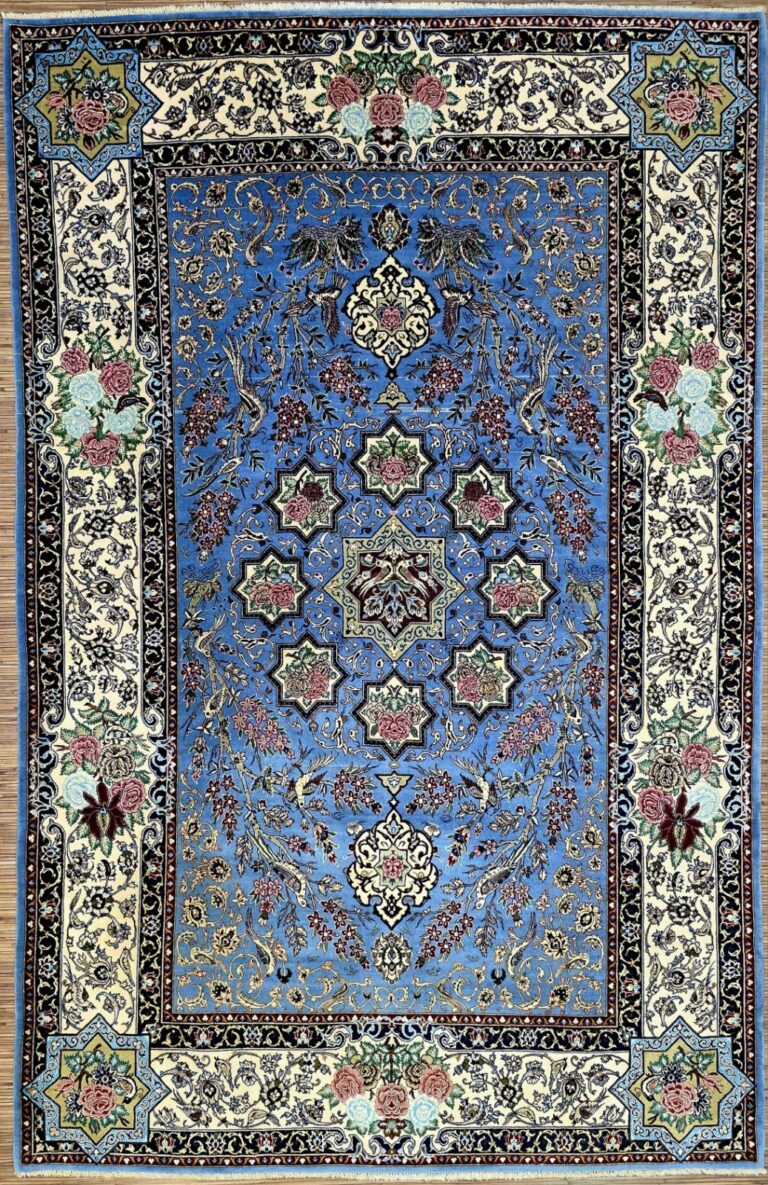
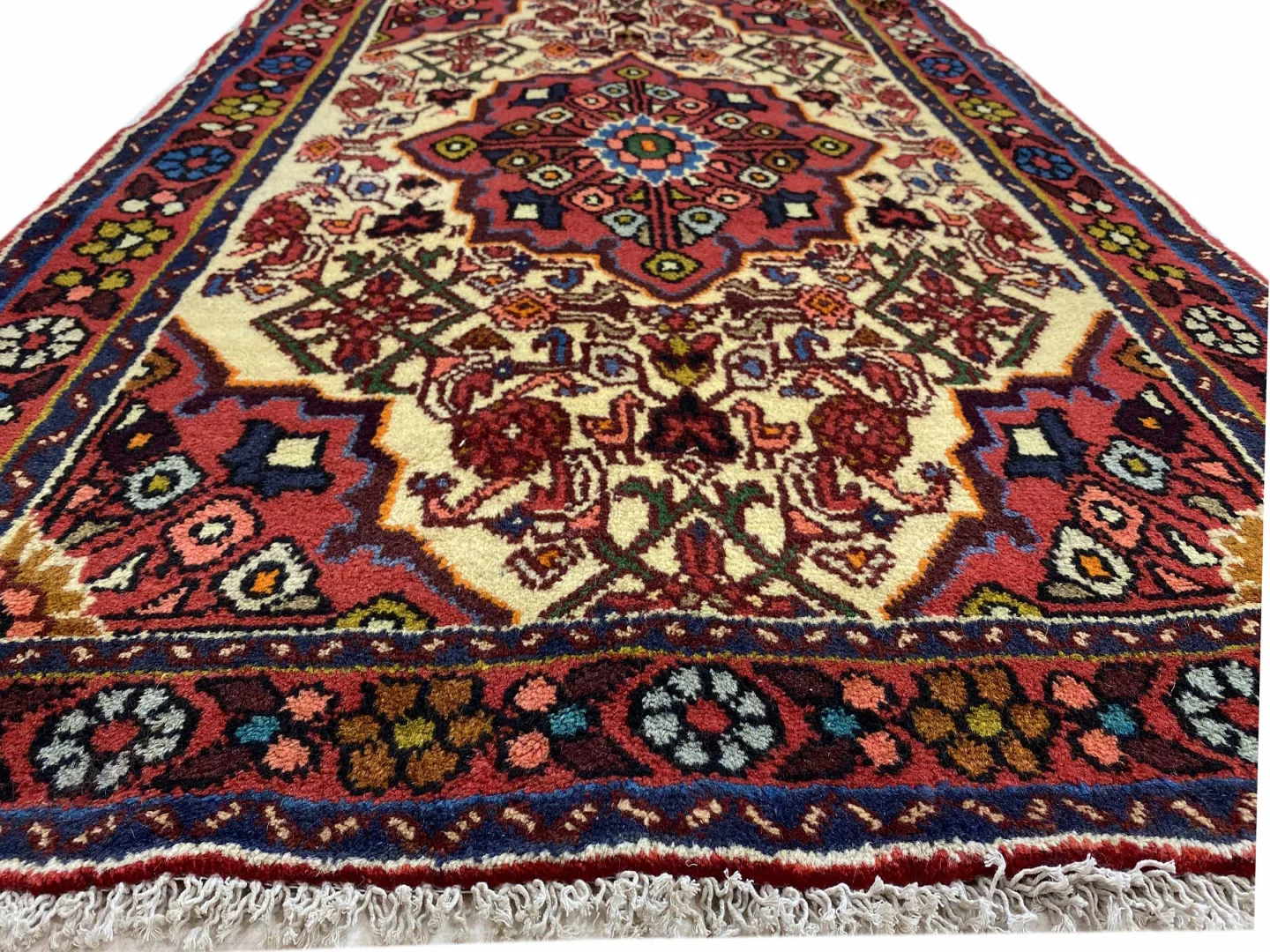
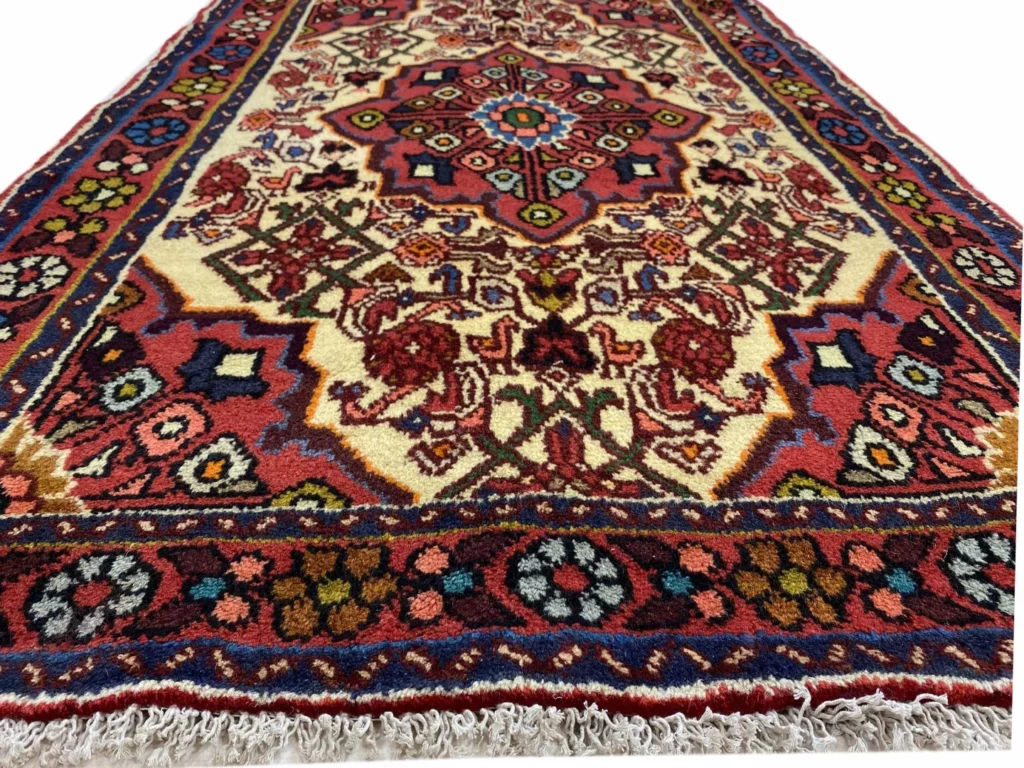
This Hamadan Persian rug is hand-knotted and made from hard-wearing wool. Wool is traditionally used in rugs because it combines resilience with a pleasant tactile quality and suits regular use in a living space. As a natural fibre, it gives the surface a warm, substantial character. The durable wool pile forms the visible and touchable part of the rug, while the hand-knotted construction defines the way it was made.
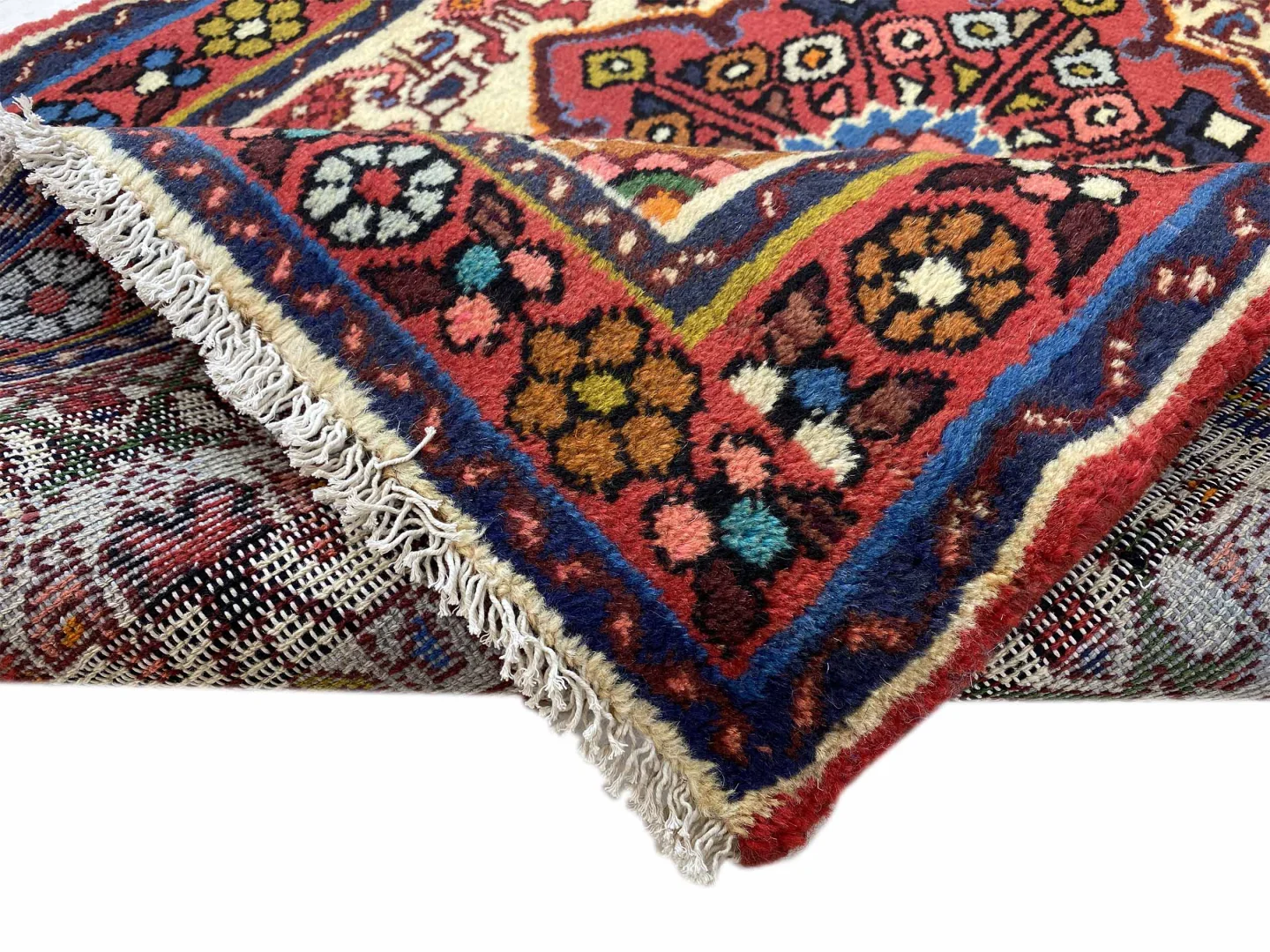
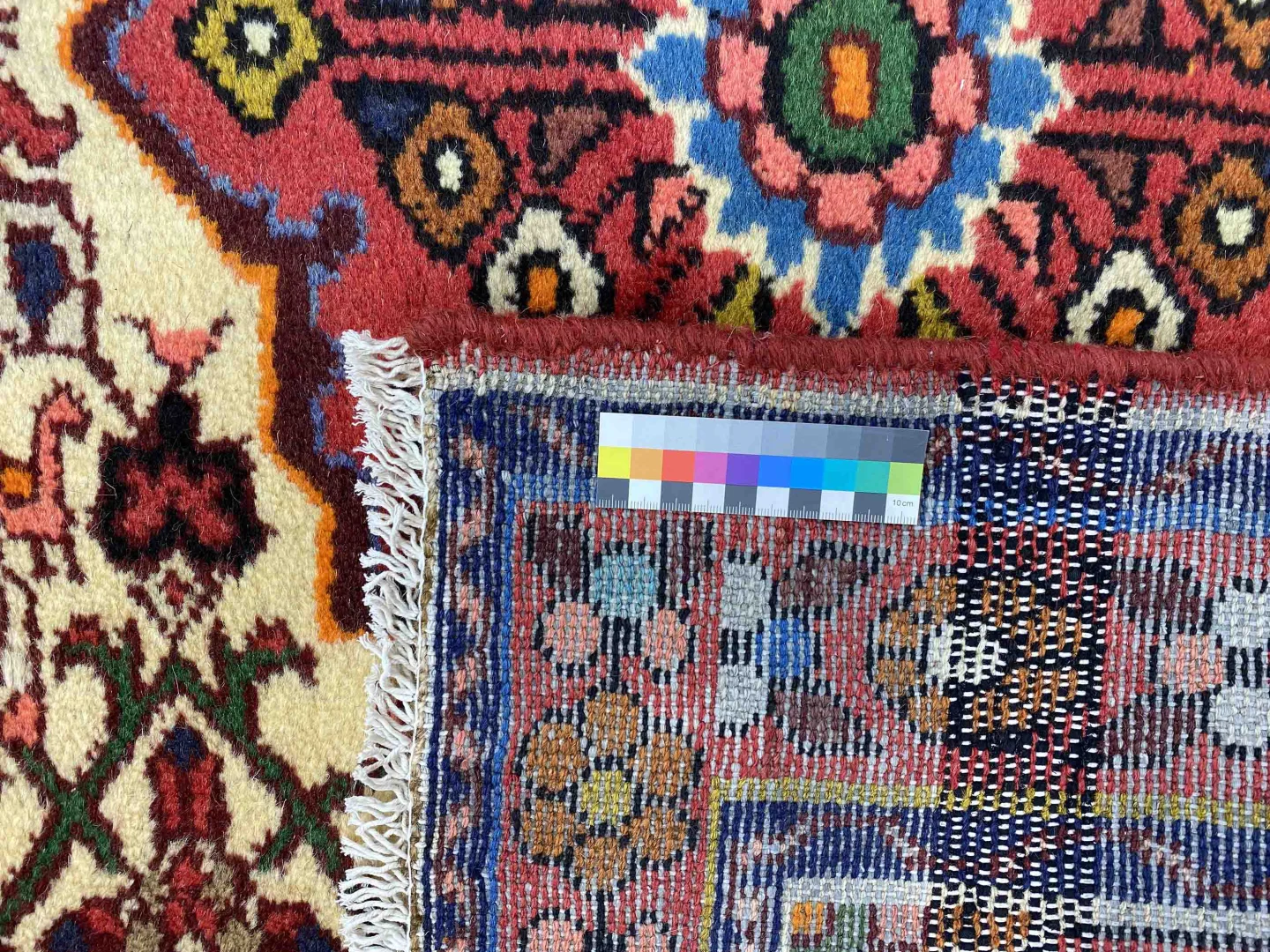
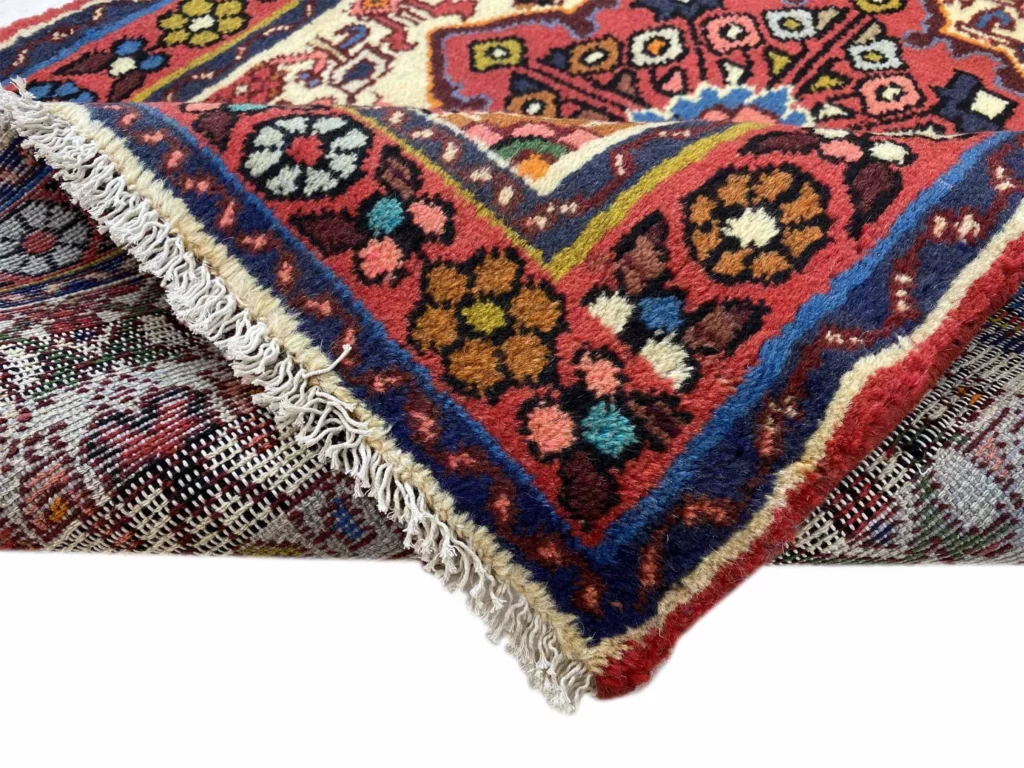
Hand knotting builds a rug one knot at a time. Each stage requires experience, a controlled working method and attention to the arrangement of the design. Unlike an industrially produced textile made as an identical series, a hand-knotted rug is shaped through many individual decisions during the making process. The relationship between pile, colour fields and pattern is therefore part of its craftsmanship. Careful workmanship supports the rug’s stated durability and its suitability for continued use.
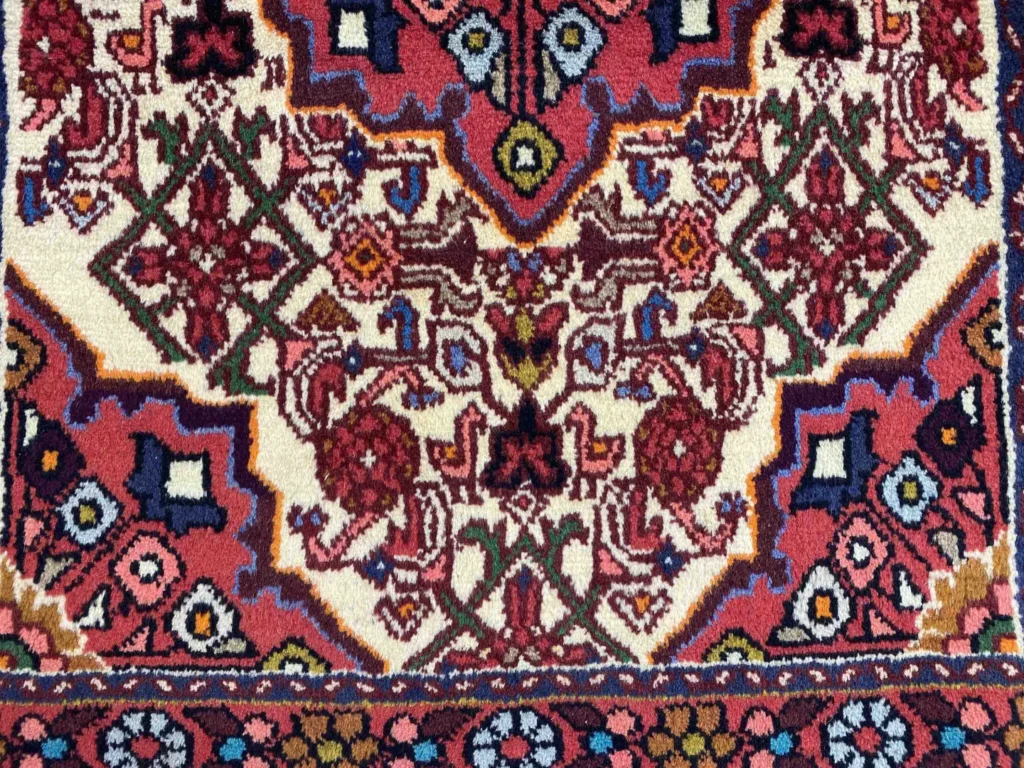
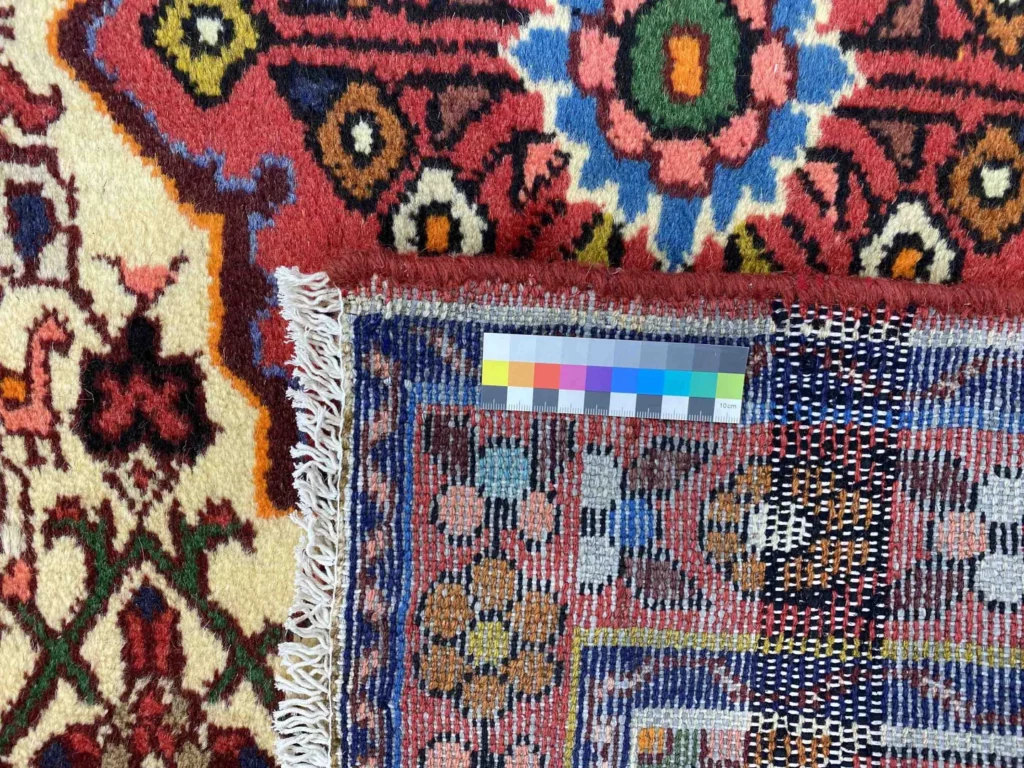
The rug’s knot density also supports the rendering of its design. A dense construction allows floral details, geometric outlines and transitions between pattern areas to be worked with definition. It contributes at the same time to a resilient surface. The wool pile remains the material that gives the rug its tactile presence, while the knotting method creates the structure in which the varied pattern can be developed.
Wool is also associated with a comfortable feel underfoot. Its resilient character allows the surface to function as a practical floor covering while retaining the appearance of a hand-worked textile. Here, the material and the making method belong together: the resistant wool provides the pile, and the hand-knotting gives the rug its traditional construction. The piece is described as being in good condition.
Origin and Tradition
Hamadan lies in north-western Persia and is recognised as an important centre of Iranian rug making. The origin of this rug is given as north-western Persia. It therefore belongs to the tradition of Persian rugs associated with the Hamadan area. The region is known for hand-knotted rugs that bring together geometric structures, floral elements and a broad range of individual pattern arrangements. Hamadan is not limited to one single visual formula; its tradition includes different compositions within a shared regional framework.
The weaving culture of Hamadan developed through knowledge passed down across generations. Skills included preparing the foundation, placing knots, building areas of colour and organising borders or fields. Such knowledge concerns both the practical handling of materials and the visual discipline needed to keep a design coherent. A regional tradition can preserve familiar forms while allowing individual makers to adapt the balance of motifs and colours. This is one reason Hamadan rugs can show considerable variety while remaining connected to their place of origin.
Hamadan is described as one of the oldest rug-producing regions in Iran. The local history of rug knotting reaches back to the nineteenth century. Within that history, the rug is more than a functional floor covering. It represents a textile craft in which patient work, inherited technique and visual memory meet. The repeated act of forming knots turns a drawn or imagined pattern into a durable surface, and the knowledge required for that process has been maintained through regional practice.
Traditional Hamadan rugs may contain symbolic forms and patterns rooted in the history and beliefs of the people who made them. Their motifs can be understood as carriers of stories about daily life, dreams and values. That does not mean that every pattern has one fixed interpretation. Rather, the designs belong to a visual language in which familiar shapes, floral references and geometric organisation can communicate a sense of place and tradition. The rug thus connects practical use with the cultural history of its weaving region.
The regional background also explains the coexistence of different design approaches. Some Hamadan rugs are defined by strong geometry, while others give greater space to floral drawing or to a combination of both. The hand-knotted technique remains a common link, as does the attention given to the arrangement of the surface. This rug’s description as a Hamadan rug with varied designs places it within that broad tradition. Its north-western Persian origin and its hand-crafted construction are the central points of its regional identity.
Hamadan rugs are also associated with a direct, clearly readable approach to ornament. A design can be organised so that individual motifs remain visible while the overall composition maintains balance. The exact appearance varies from rug to rug because colour choices, motif proportions and the arrangement of fields can differ. Such variation is not separate from the tradition; it is part of how regional handcraft combines inherited patterns with the decisions of the maker.
Design and Pattern
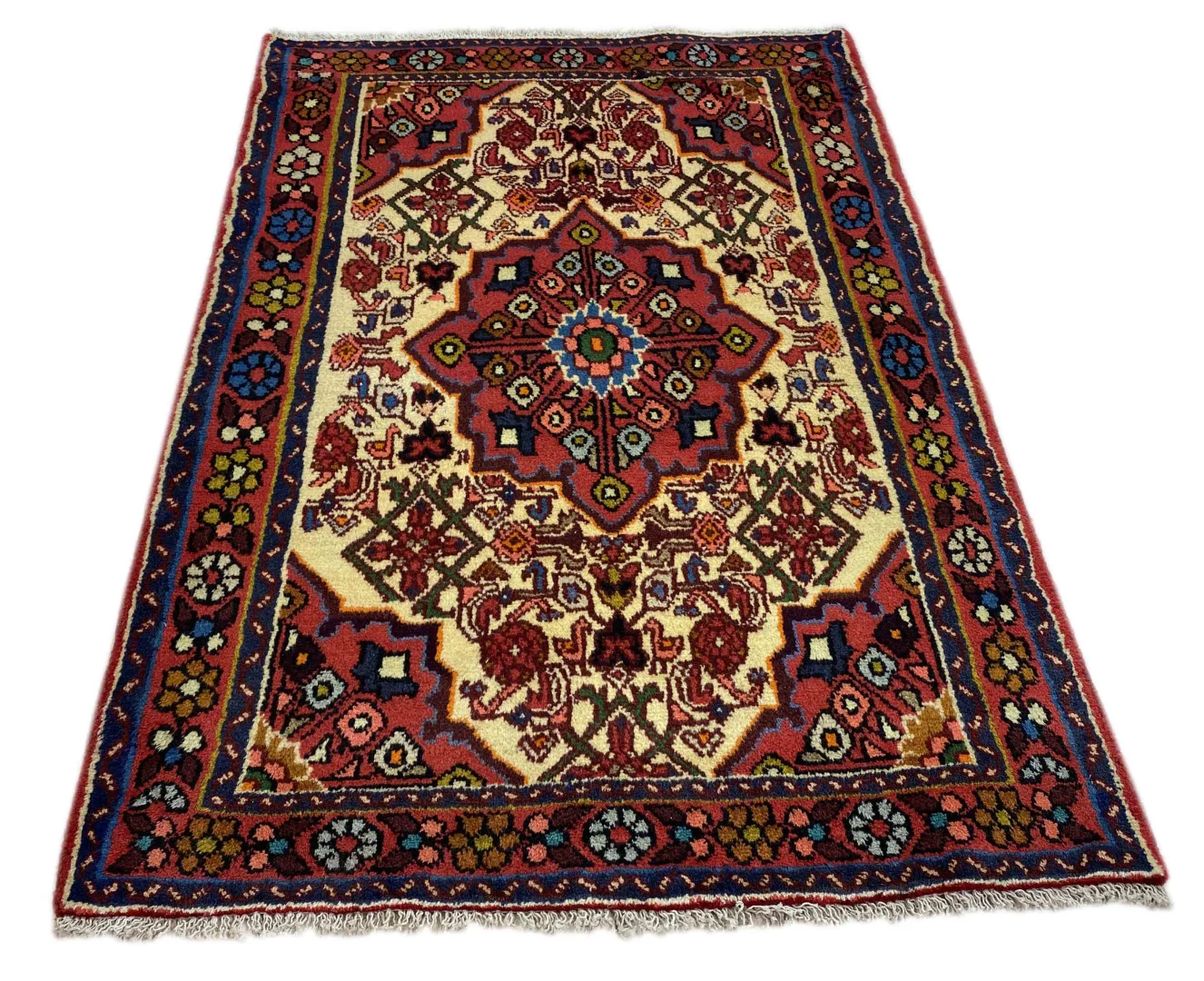
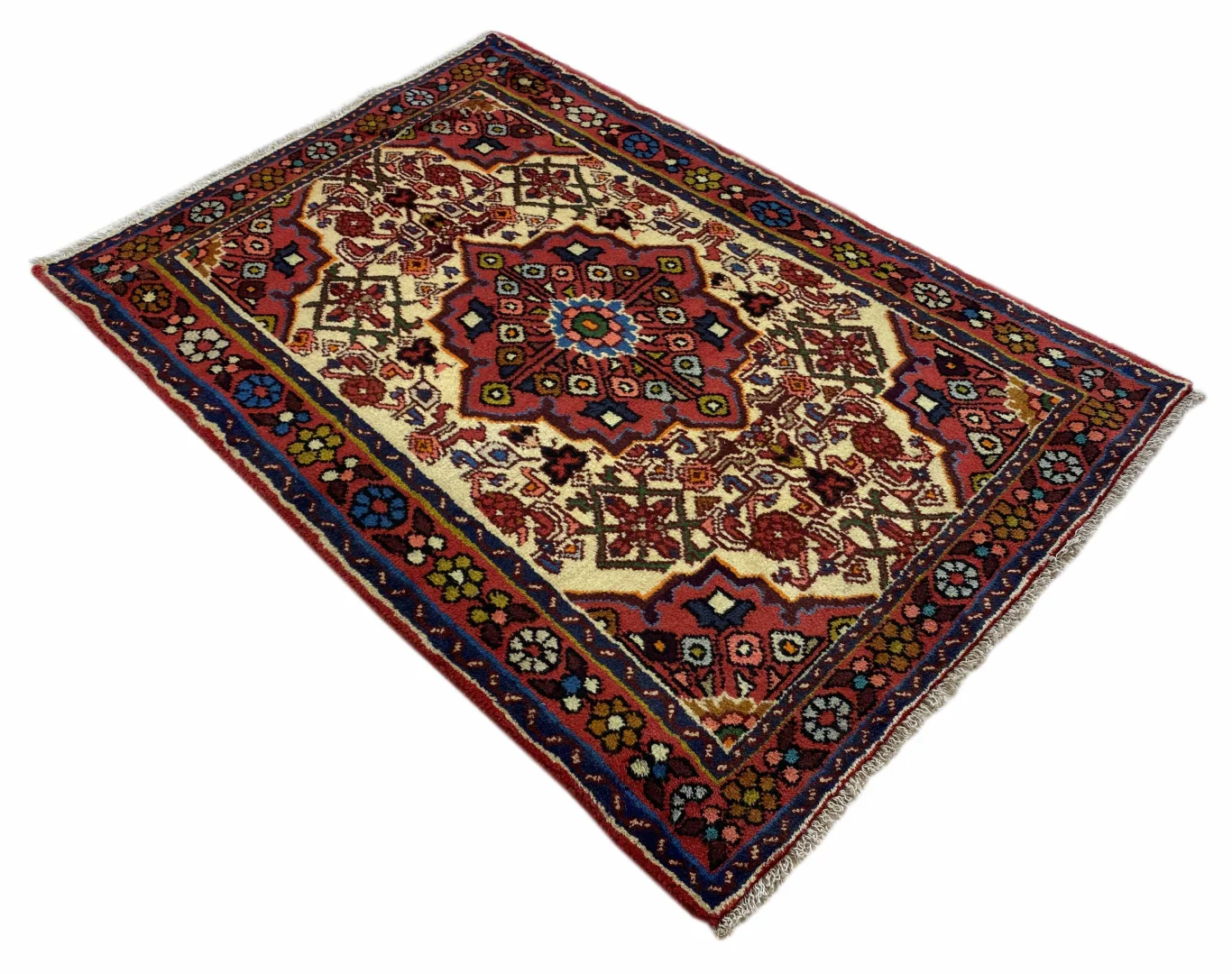
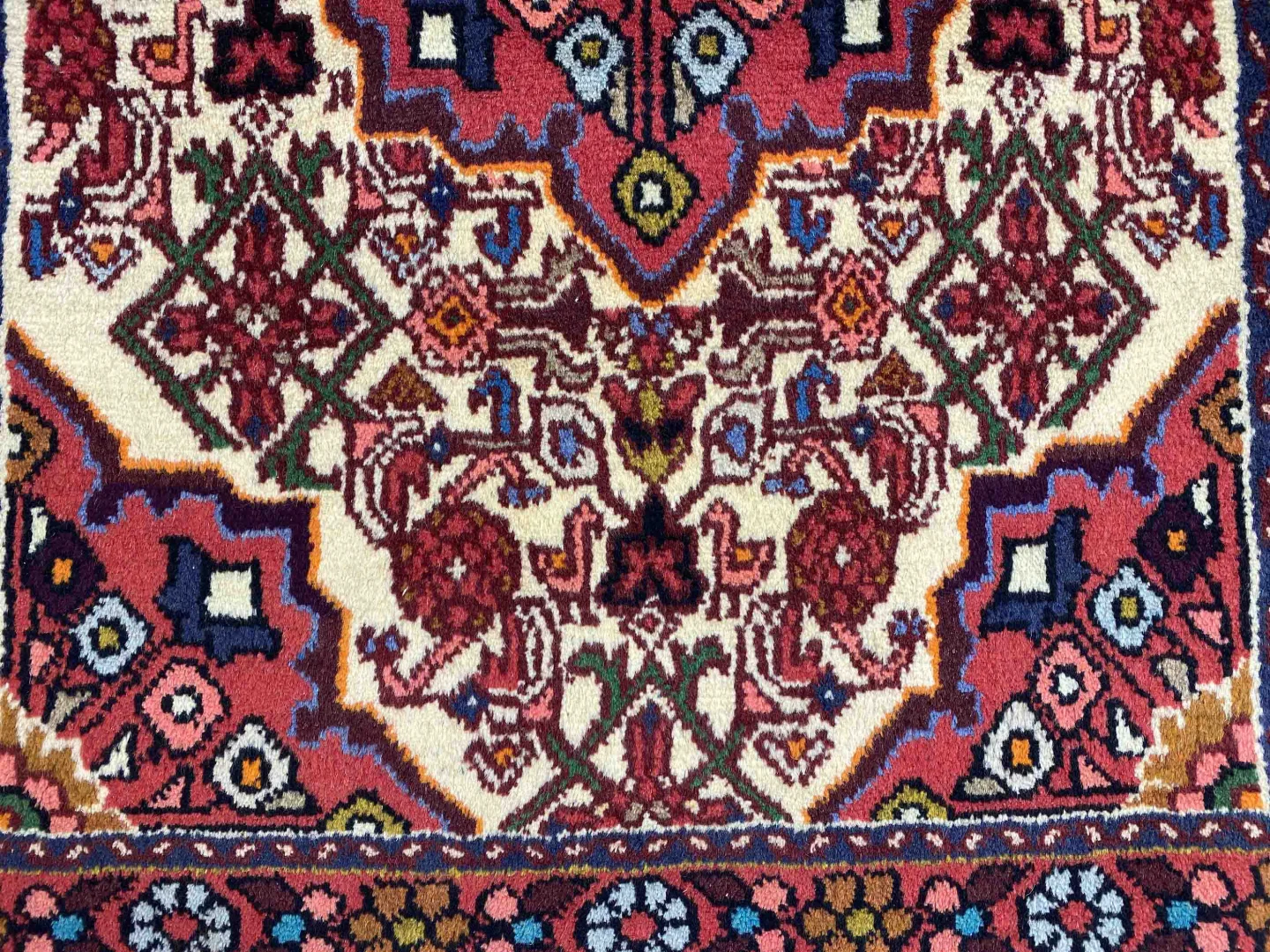
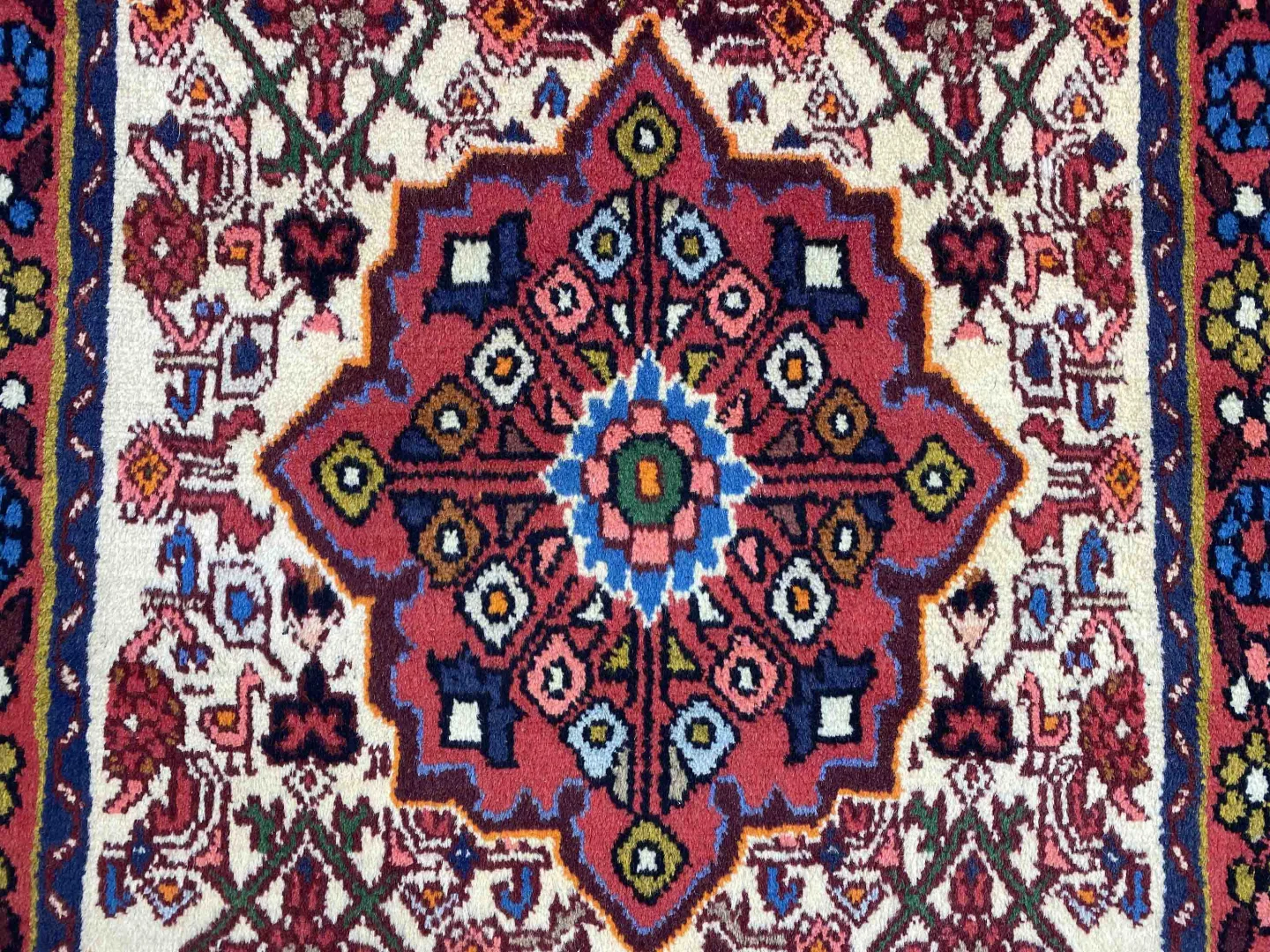
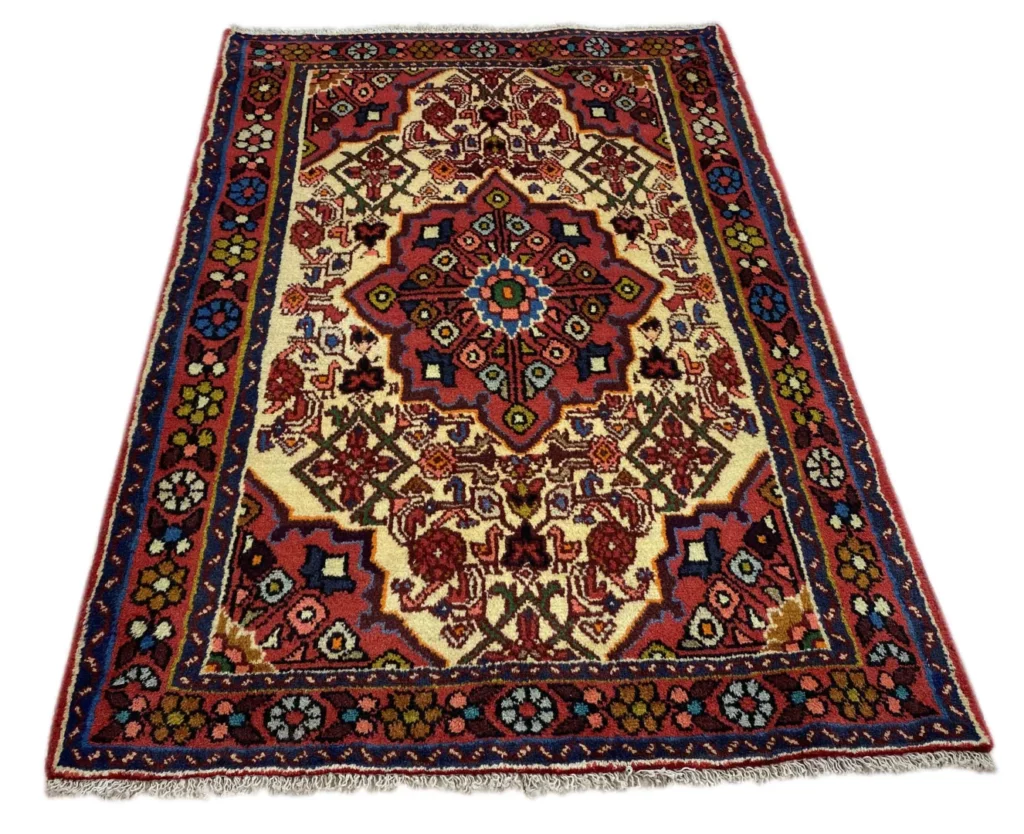
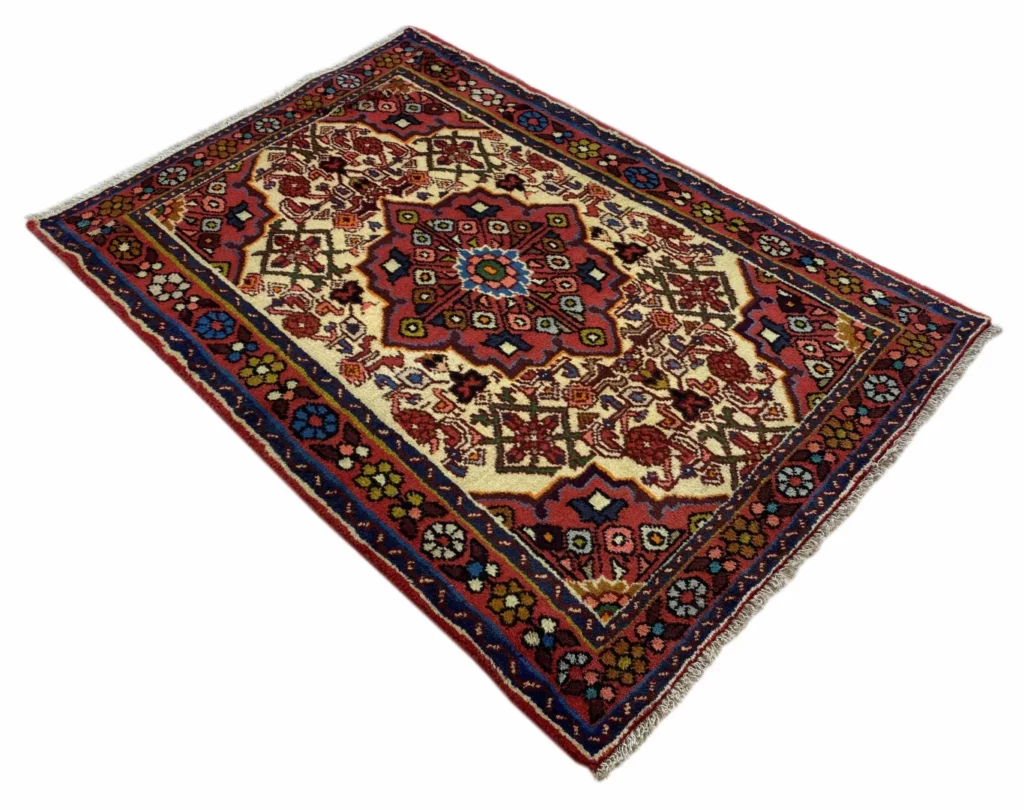
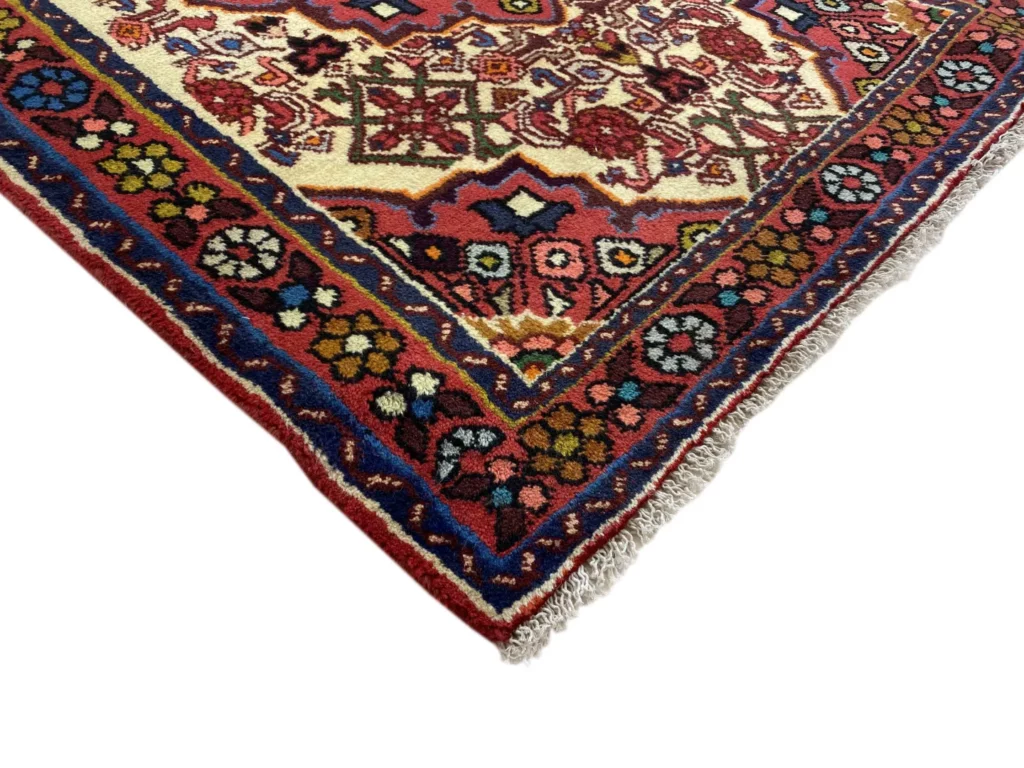
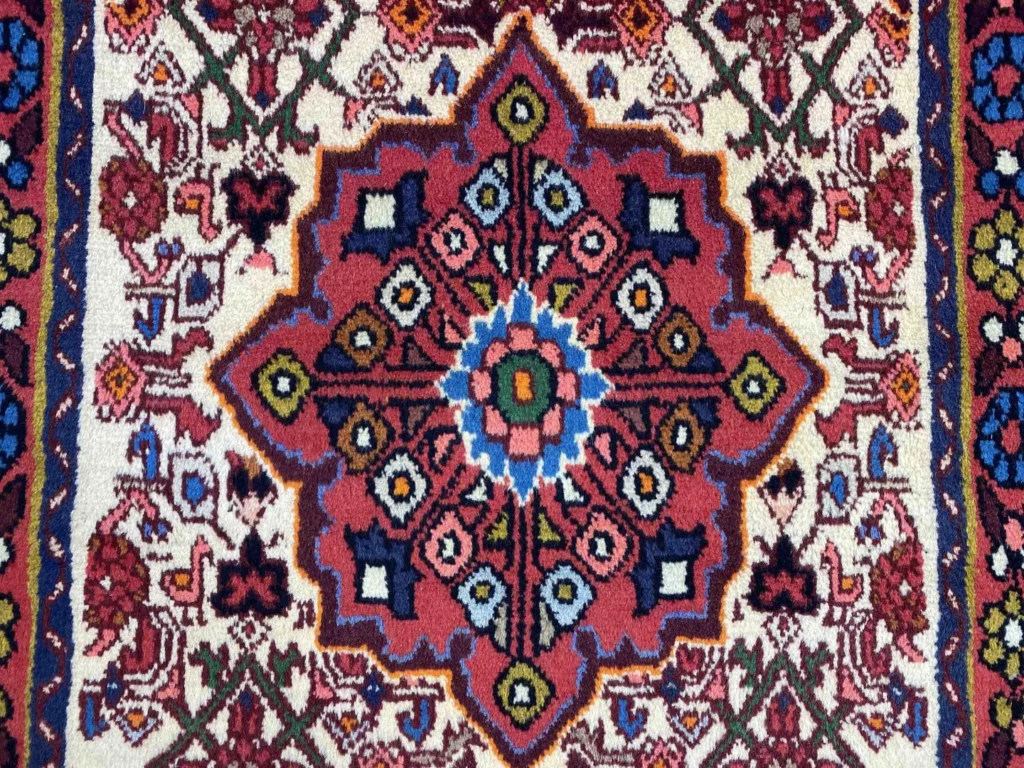
This rug is described as having a versatile design. Its appearance brings together floral motifs, geometric shapes and lively colours. Floral elements can introduce flowing lines and organic movement, whereas geometric forms provide order, rhythm and defined boundaries. When these two types of ornament are combined, the surface gains variety without being confined to a single motif. The design is therefore best understood as a composition of several visual languages used together.
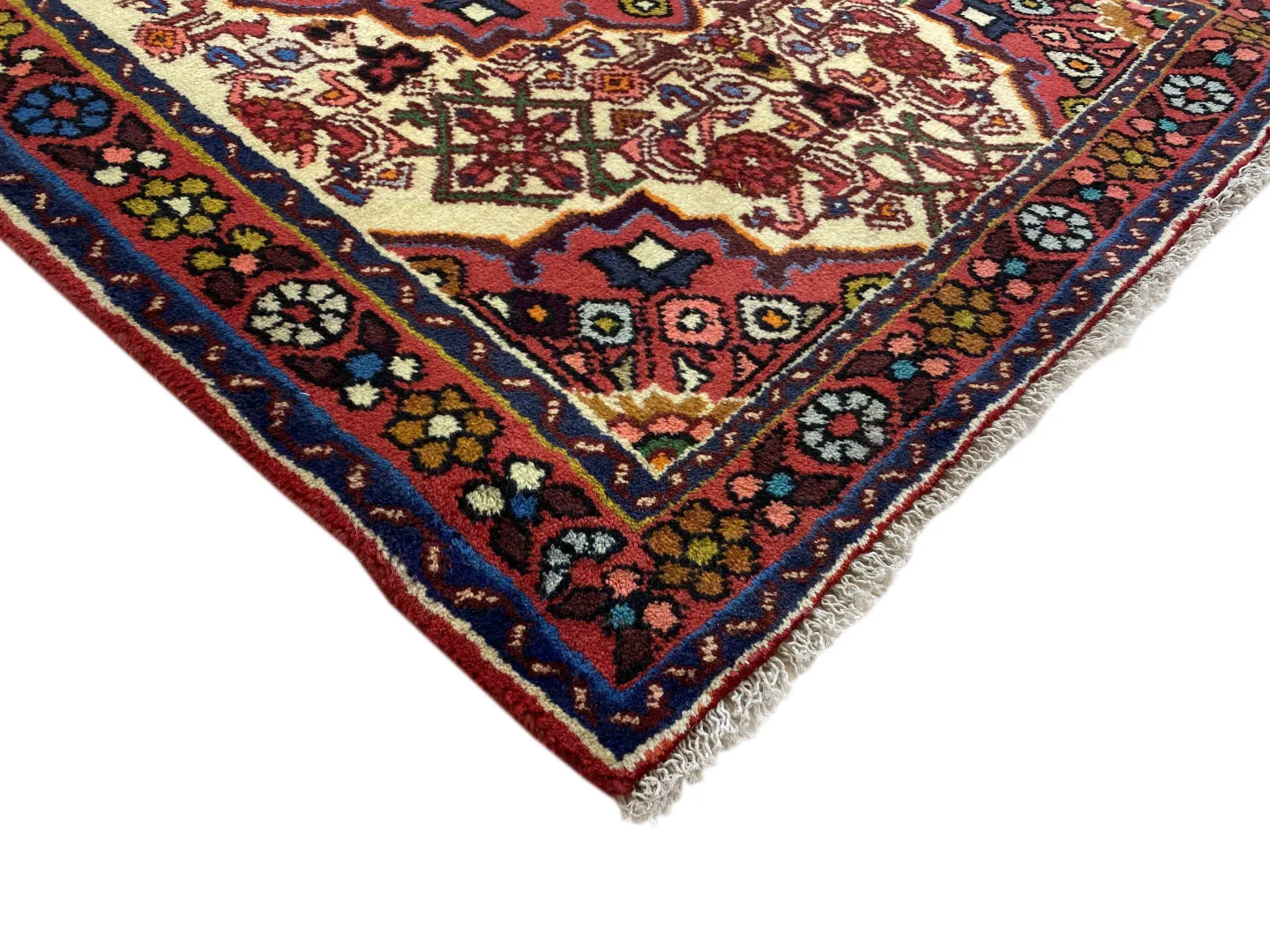
On a hand-knotted rug, the effect of a pattern comes from the relationship between individual knots, lines and colour areas. Small details require careful execution so that contours remain legible and adjoining sections work as one composition. The detailed character of the pattern reflects the skill and creativity involved in knotting it. Density supports this work by allowing the design to be built with a more differentiated arrangement of forms and transitions.
The lively colours are an important part of the described appearance. They reinforce the floral and geometric components and contribute to the warm, welcoming effect associated with the rug. At the same time, the colour palette is described as harmonious. This balance allows the rug to be introduced into an existing interior as either a defining design element or a complementary textile. Its varied pattern can provide visual structure while remaining compatible with different furnishing styles.
The design can be used in several areas of a home. In a living room, it can establish a textile focus through its mixture of colour and ornament. In a dining room, it can accompany the room’s arrangement with a clearly drawn surface. In a hallway, it can work as an accent piece. These applications follow from the combination of a versatile pattern, a warm colour impression and the practical qualities of a wool, hand-knotted rug.
Hamadan design is generally characterised by variation rather than by one compulsory layout. A regional rug may use geometry, flowers or both, and the emphasis can shift from one composition to another. Familiar elements may be arranged in different proportions, with different relationships between field and border. The phrase “varied designs” accurately describes this range. It indicates a pattern language with several possible expressions, while the rug’s own design remains the individual combination of elements created in its hand-knotted surface.
Special Features
A defining feature of this Hamadan rug is its knot density of 100.000 to 350.000 knots per square metre. The density supports detailed pattern work and contributes to the durability of the surface. It also gives the rug a pleasant tactile quality. Together with the wool pile and hand-knotted construction, it creates a textile that serves both a decorative and a practical purpose. The rug combines a varied visual design with the robust qualities associated with its material.
The wool provides a hard-wearing surface and a comfortable feel underfoot. The rug also offers insulation against cold, which can make it pleasant to walk on in different seasons. Its described ease of care supports everyday use. With suitable care, the colours and appearance can be preserved over time. The condition of this particular rug is stated as good, adding a clear point of reference for its present state.
FAQ
How should I clean my Hamadan rug?
For regular cleaning, use a vacuum cleaner without a brush attachment. This removes loose dust while treating the wool pile more gently. If a spill or mark occurs, dab the affected area as soon as possible with a damp cloth. Rubbing can work the dirt further into the fibres and put unnecessary strain on the surface. For deeper or more extensive soiling, professional rug cleaning is recommended. A specialist can select a method suited to wool and to the hand-knotted construction, helping to protect the pile and the pattern.
Can I use the Hamadan rug in a room with underfloor heating?
Yes, the Hamadan rug is suitable for rooms with underfloor heating. Wool can retain warmth and contribute to a comfortable feeling underfoot, while heat from the heating system can pass through the rug. It is sensible to place the rug on a level, suitable surface and to follow the instructions for the particular heating system. This preserves effective heat distribution while allowing the wool rug to provide its textile and insulating qualities.
How can I protect my Hamadan rug?
Avoid direct sunlight to help prevent the colours from fading. Turning the rug regularly helps distribute use and wear more evenly across the surface. A rug pad is also recommended. It protects both the rug and the floor, helps keep the rug in place and can reduce the strain caused by walking on it. Combined with gentle cleaning and careful everyday handling, these measures support the preservation of the wool pile, the colours and the hand-knotted surface.
To provide the best experiences, we use technologies like cookies to store and/or access device information. Consenting to these technologies will allow us to process data such as browsing behavior or unique IDs on this site. Not consenting or withdrawing consent, may adversely affect certain features and functions.
Functional Always active
The technical storage or access is strictly necessary for the legitimate purpose of enabling the use of a specific service explicitly requested by the subscriber or user, or for the sole purpose of carrying out the transmission of a communication over an electronic communications network.
Preferences
The technical storage or access is necessary for the legitimate purpose of storing preferences that are not requested by the subscriber or user.
Statistics
The technical storage or access that is used exclusively for statistical purposes.The technical storage or access that is used exclusively for anonymous statistical purposes. Without a subpoena, voluntary compliance on the part of your Internet Service Provider, or additional records from a third party, information stored or retrieved for this purpose alone cannot usually be used to identify you.
Marketing
The technical storage or access is required to create user profiles to send advertising, or to track the user on a website or across several websites for similar marketing purposes.

 SECURE PAYMENT
 SHIPPING PARTNERS