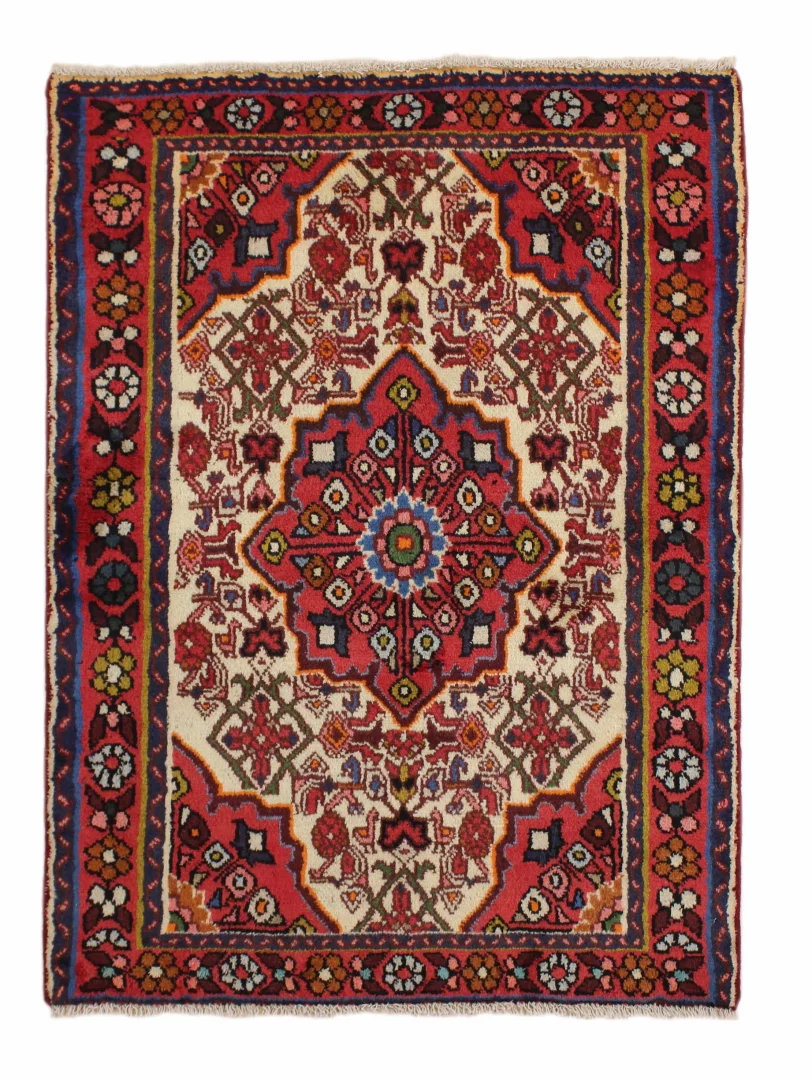
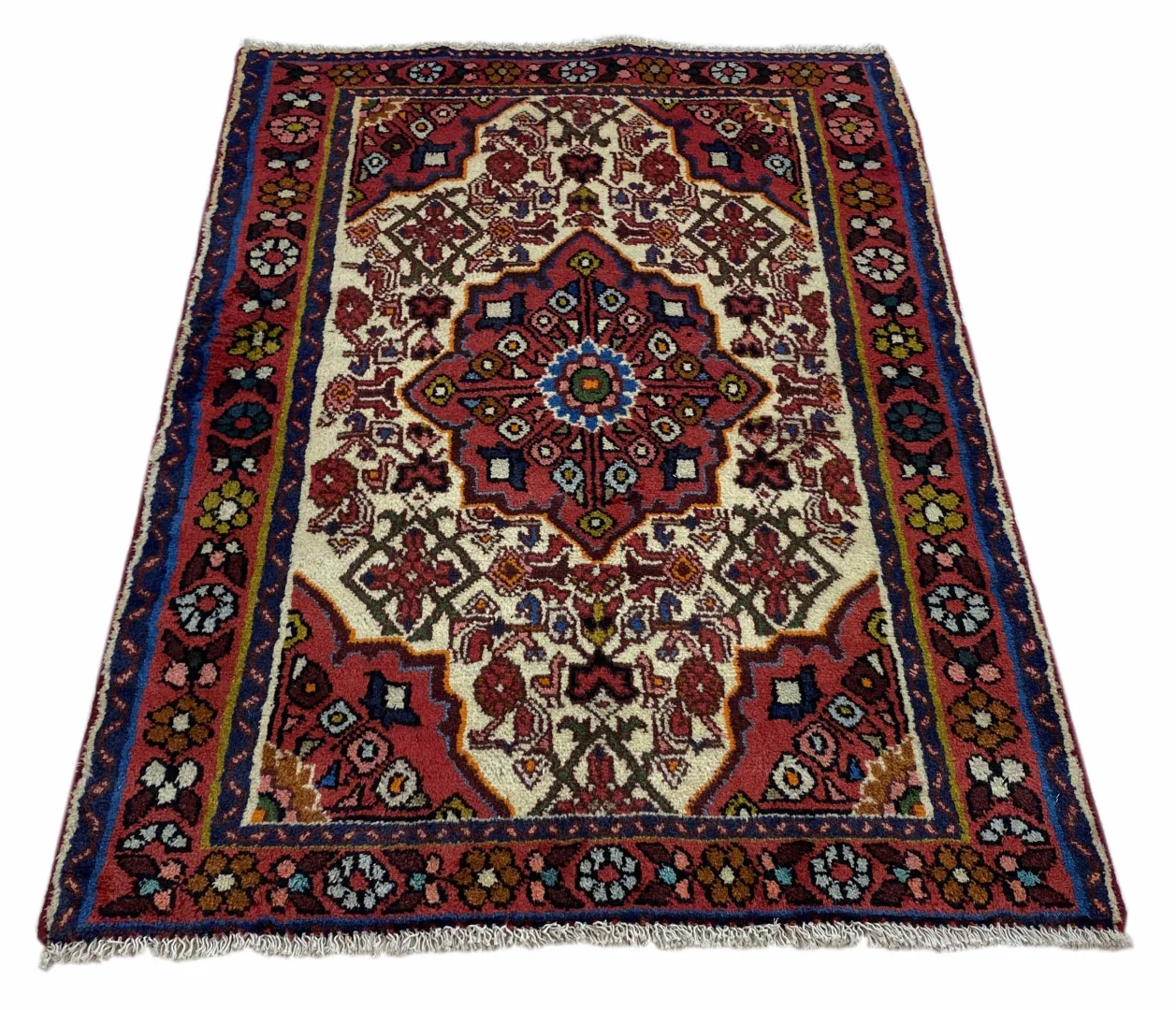
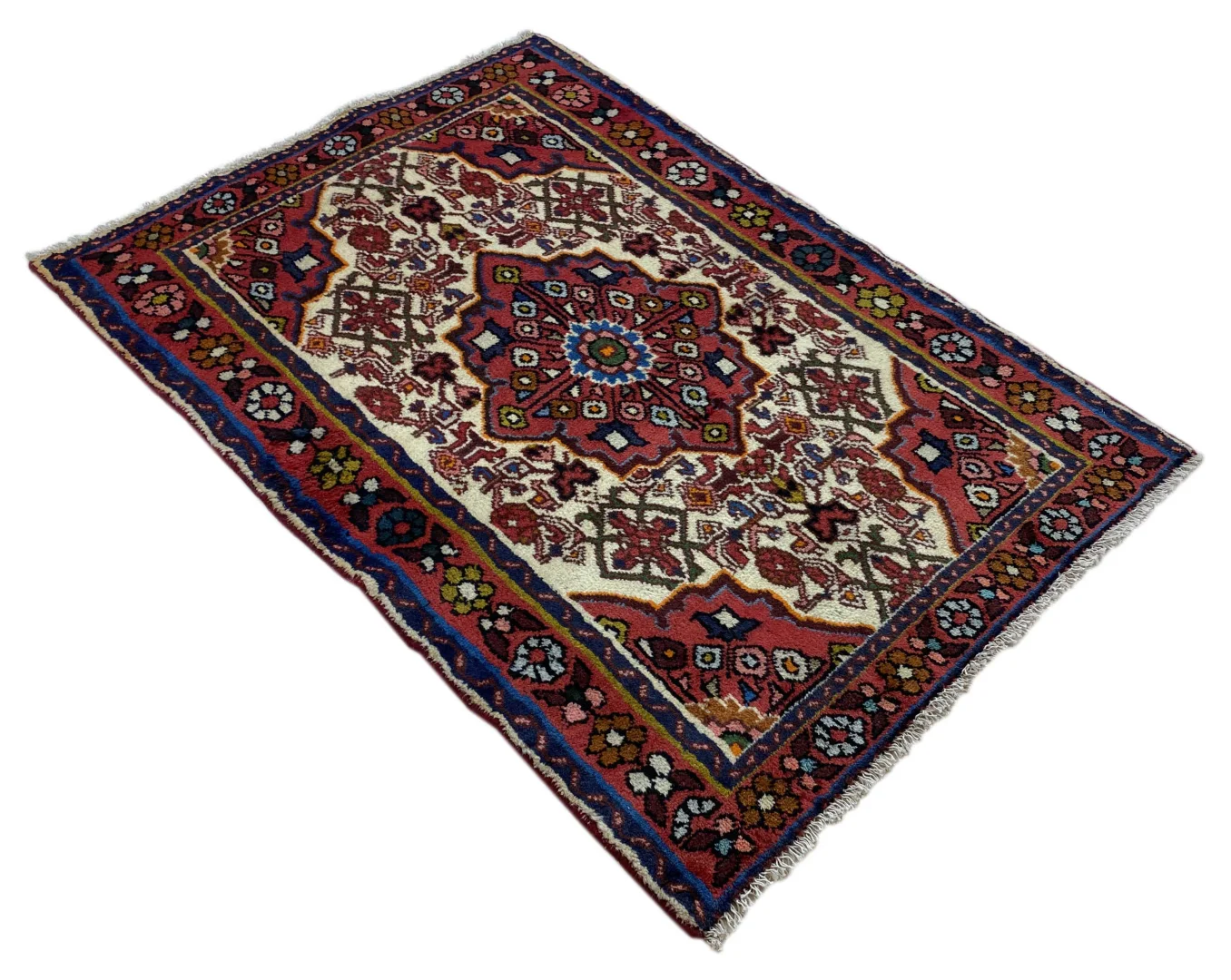
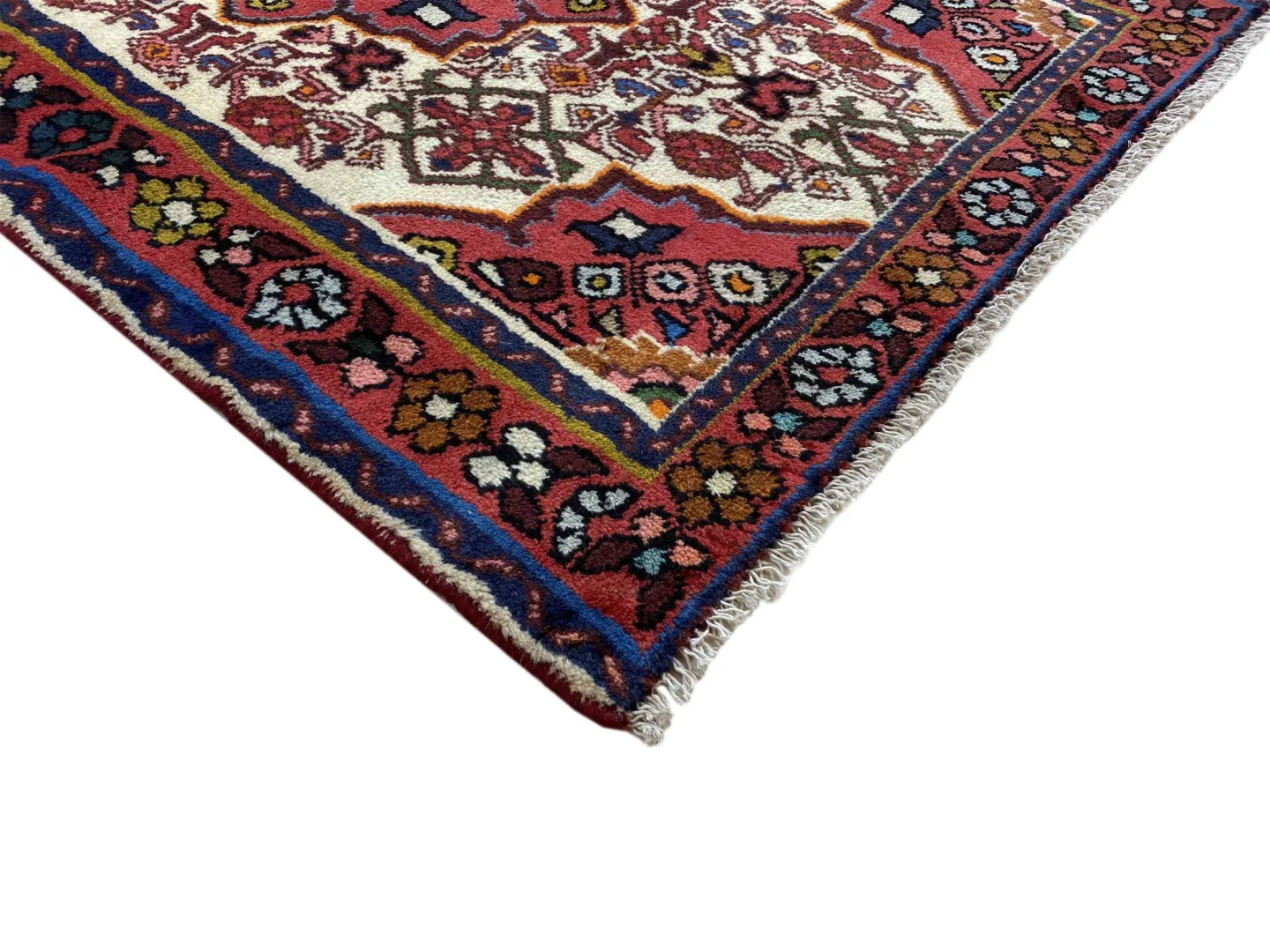
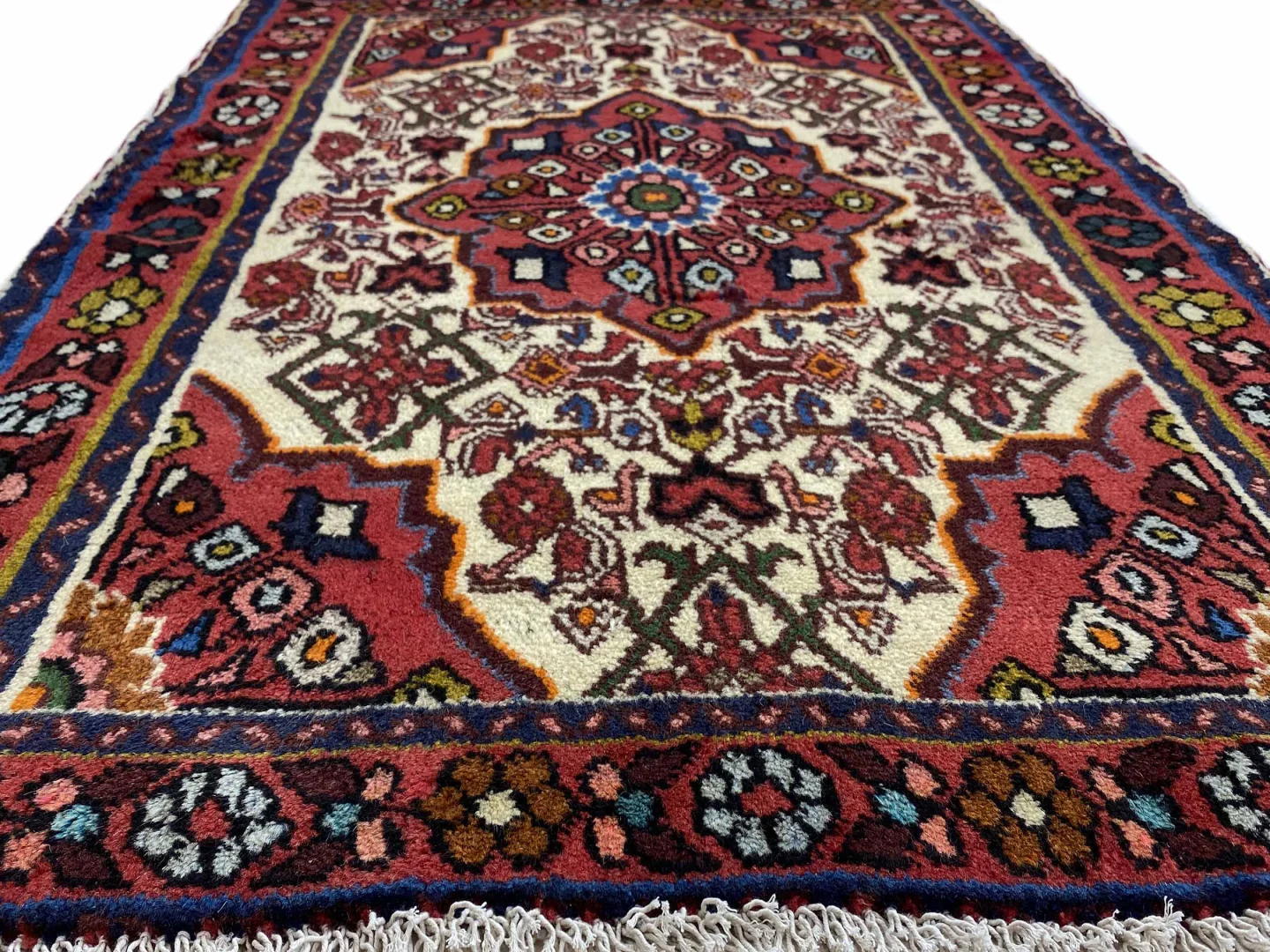
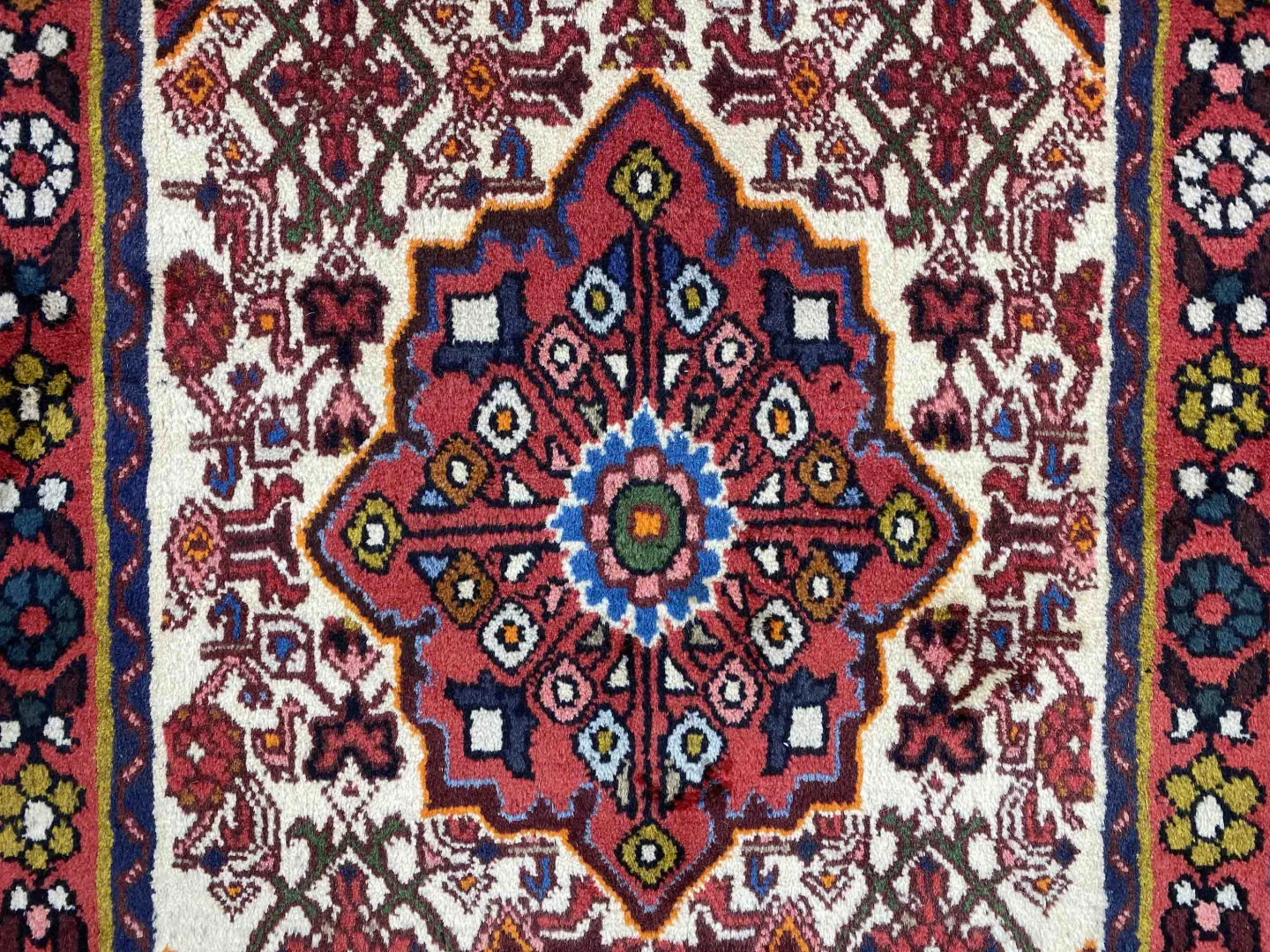
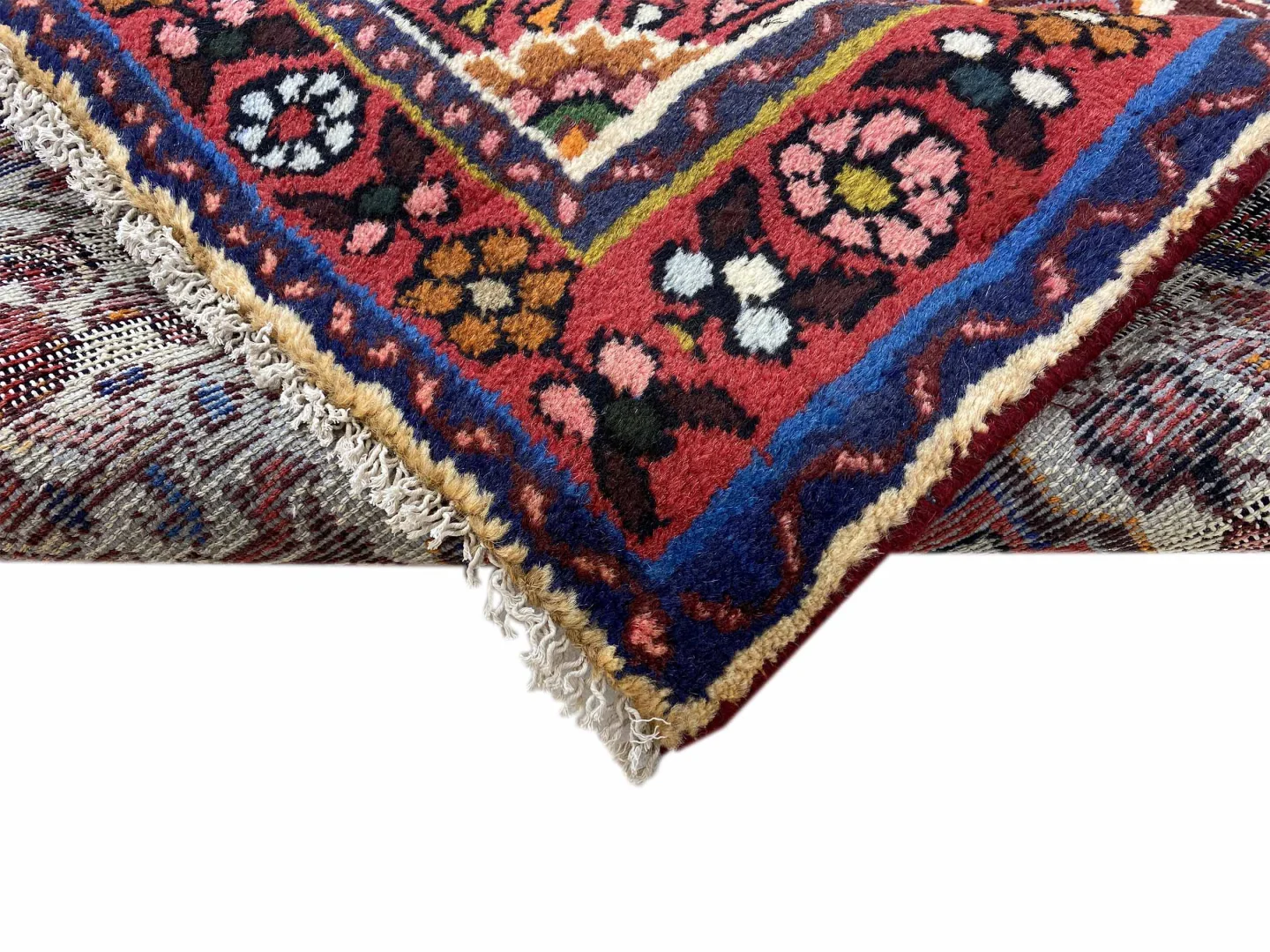
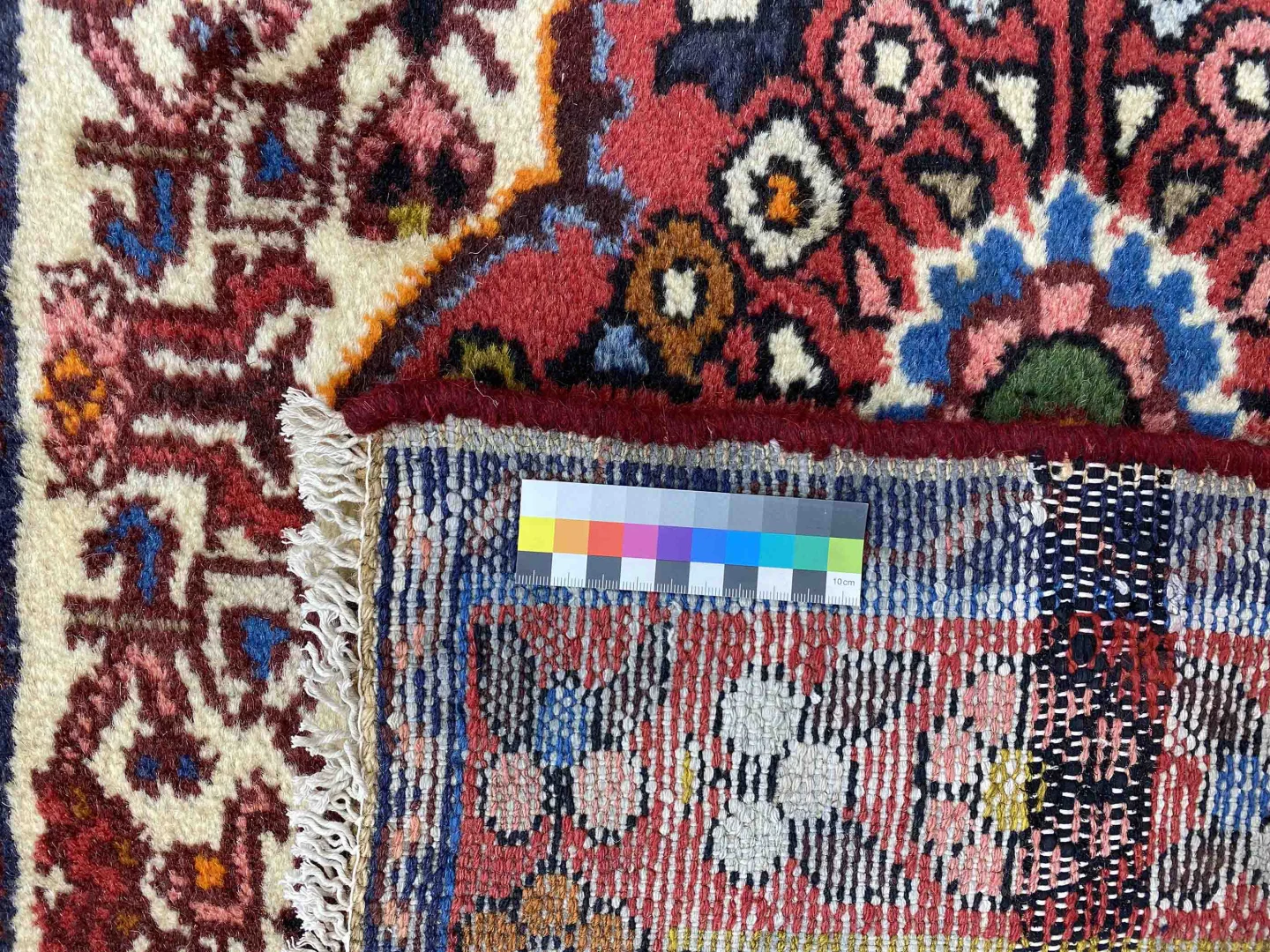

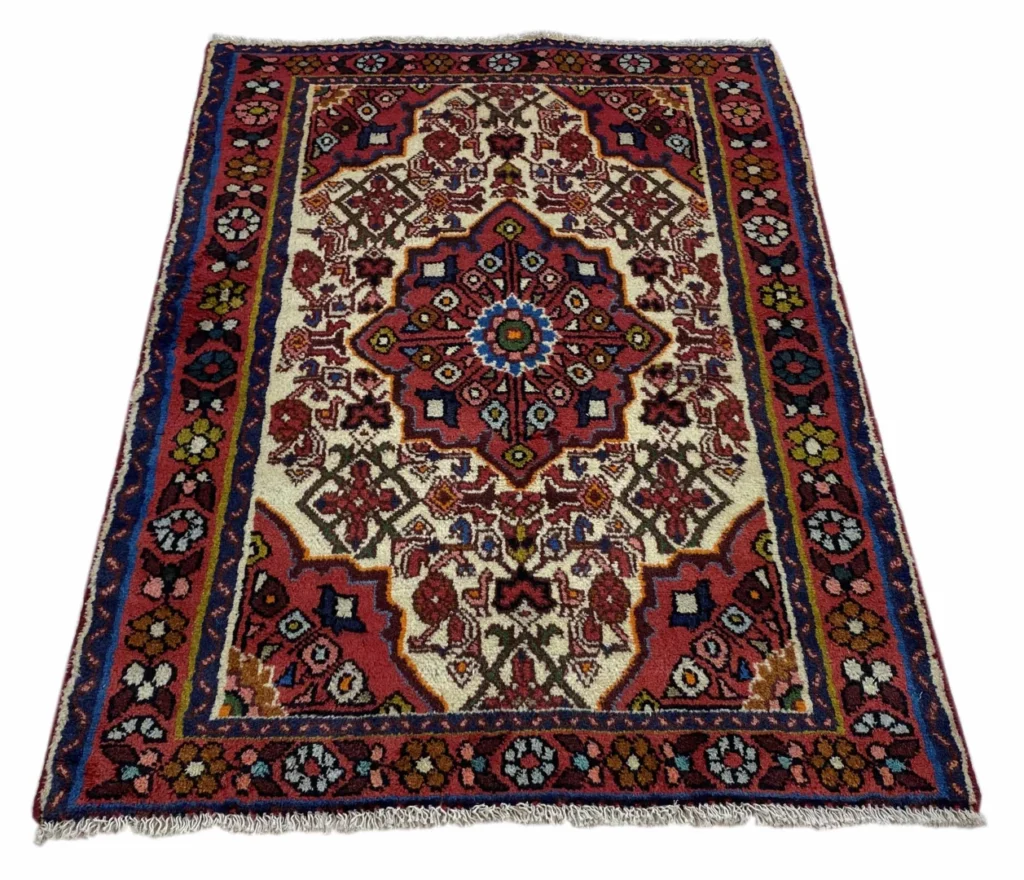
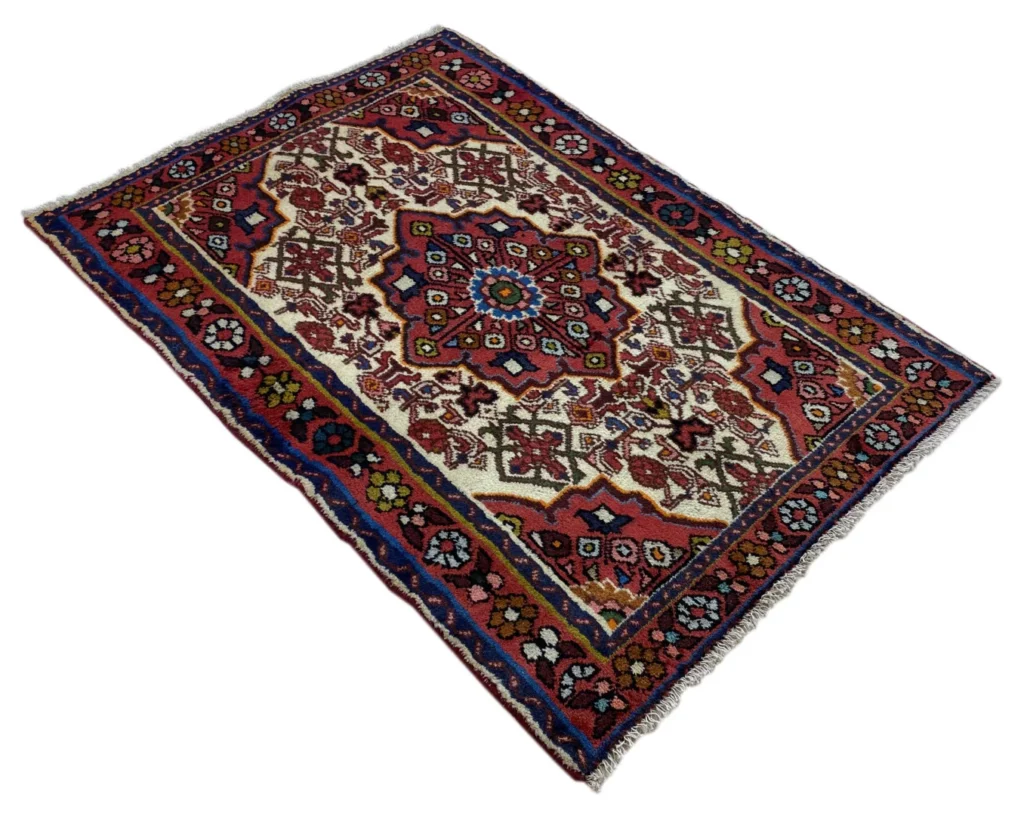
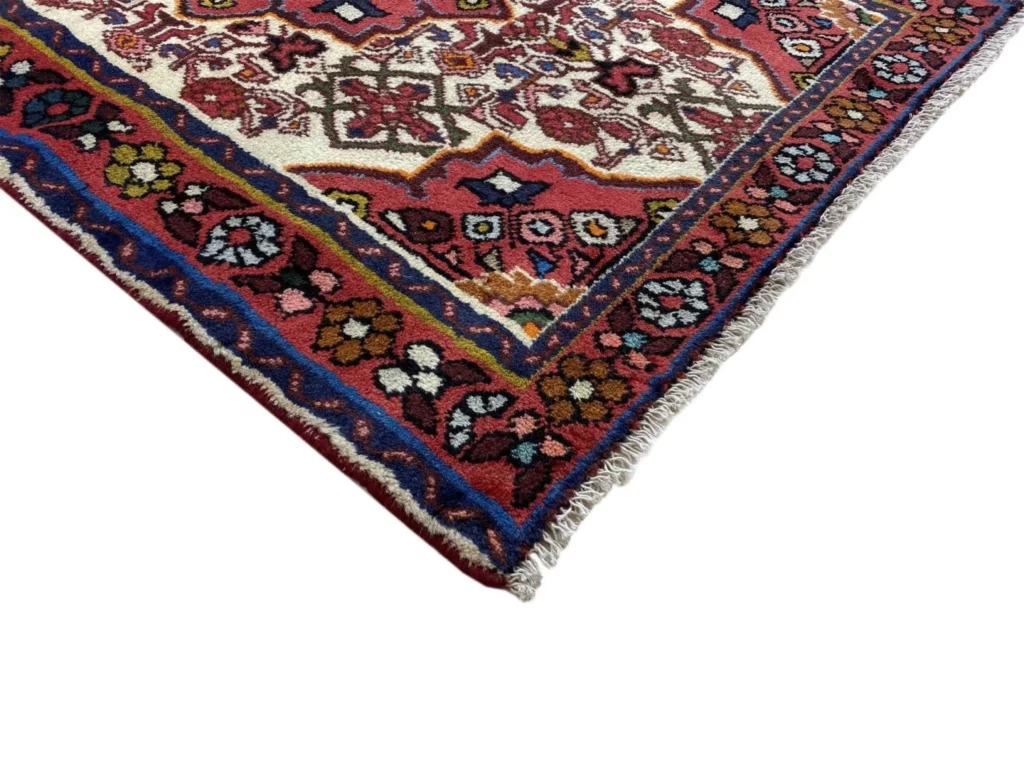
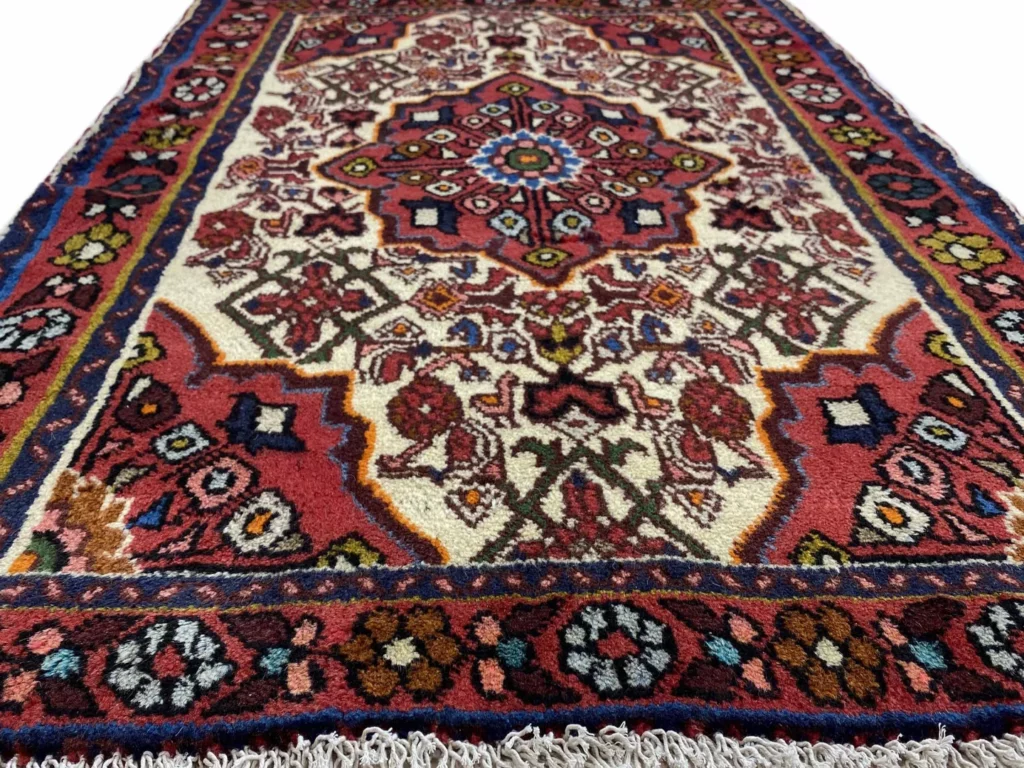
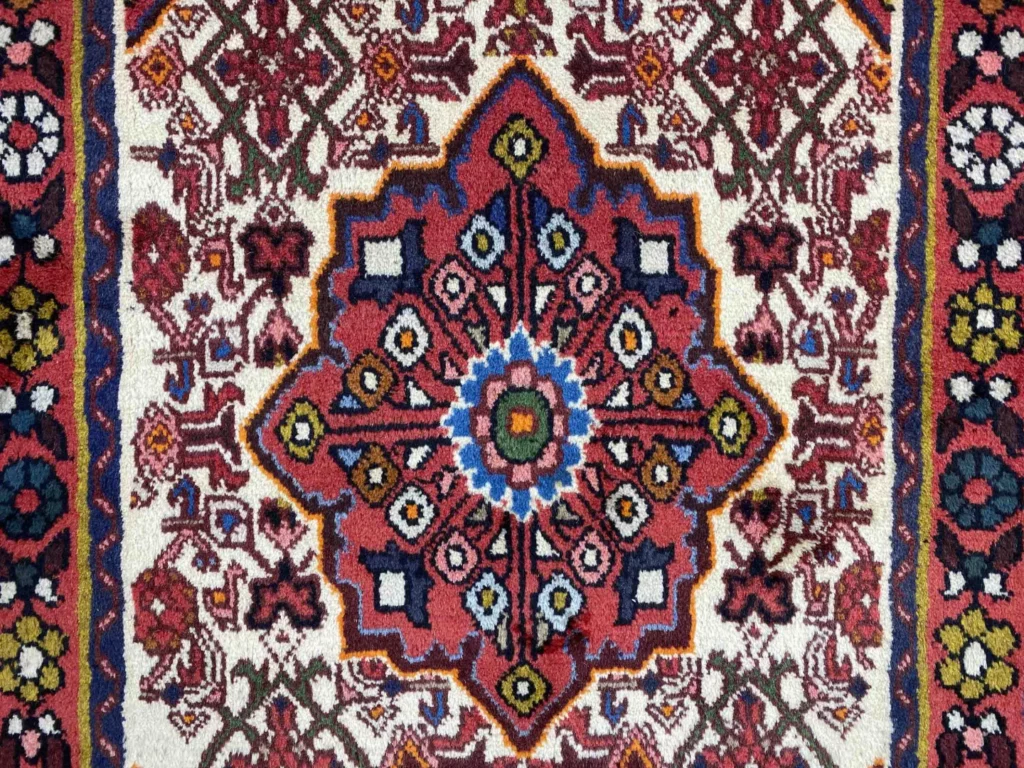
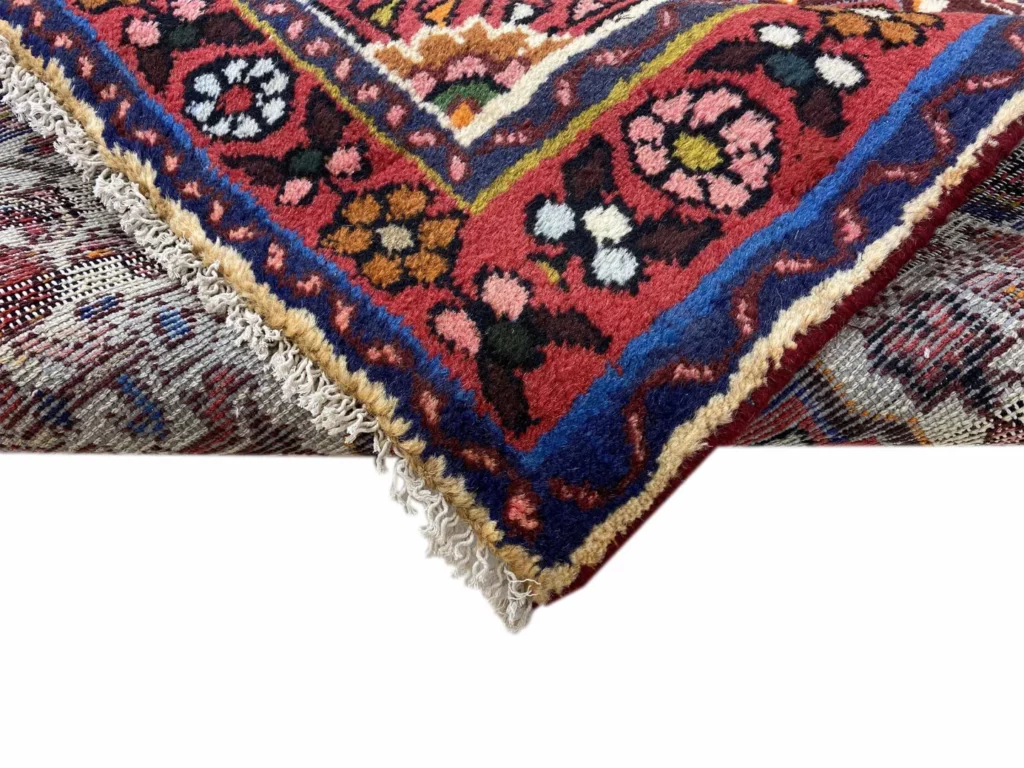
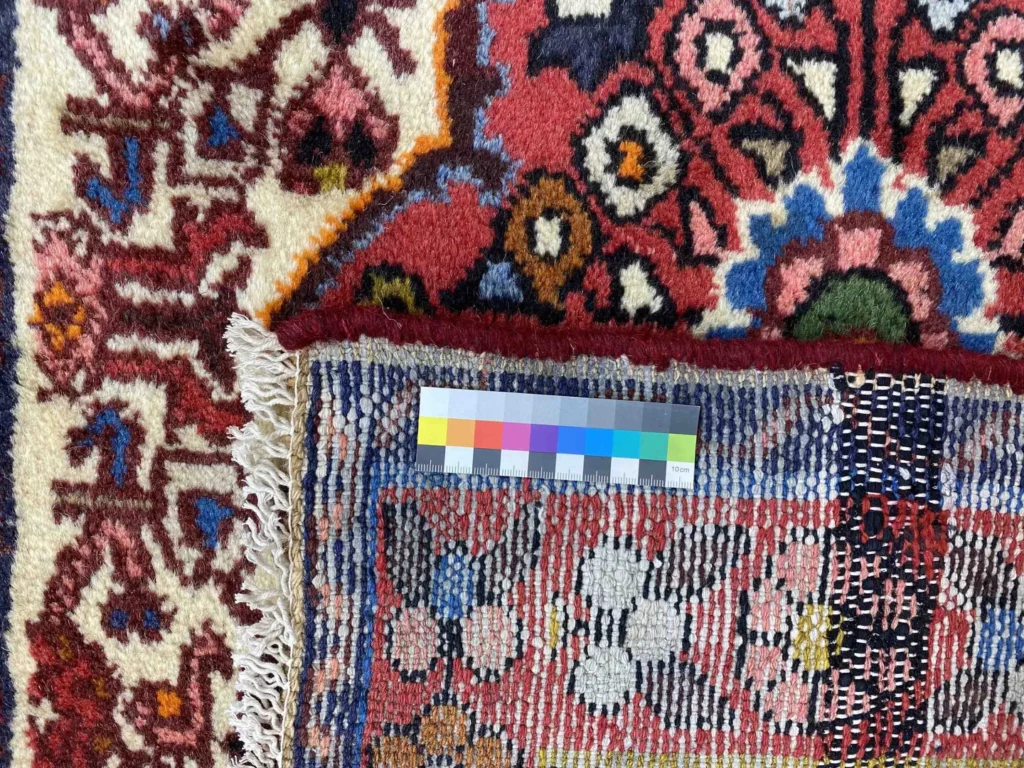
Persian Rug Hamadan 139 x 96 cm Wool Hand-knotted
€ 511
Hand-knotted Hamadan Persian rug from northwest Persia | Knot density: 100,000 – 350,000 knots/m² | Material: durable wool pile | Size: 139 x 96 cm | Pattern: varied designs | Condition: very well preserved
1 available
- ✓Free Shipping in EU
- ✓2-5 Business Days Delivery
- ✓14-Day Return Policy
- ✓Worldwide Shipping on request
 SECURE PAYMENT
 SHIPPING PARTNERS
Inventory number: 37A270B5
Description
Hamadan Persian Rug
Material and Craftsmanship
This Hamadan Persian rug is hand-knotted and made with durable wool. Wool is used in oriental rugs because its fibres can withstand regular use. It forms a hard-wearing pile while also providing the soft surface associated with wool rugs. The material therefore combines practical resistance with a pleasant tactile quality. The rug is described as being in very well-preserved condition.
The rug has a knot density of 100,000 to 350,000 knots per square metre. Knot density affects the way a design can be rendered: a denser structure allows more individual elements, narrower contours and smaller ornamental details to be placed within the woven field. In hand-knotting, the pile is built knot by knot rather than printed onto a finished surface. Each row contributes to the gradual formation of the rug and its pattern.
Hand-knotting is a manual process that links the foundation, the knots and the pile into one textile structure. The weaver follows a planned sequence of colours and motifs while building the field row by row. After the knotting has been completed, the pile is trimmed and the surface is finished. The precise appearance depends on the combination of knotting, wool, colour placement and the regional design tradition.
Wool is well suited to the demands placed on a floor covering. Its natural structure gives the pile resilience, while its softness keeps the surface suitable for everyday living spaces. Regular vacuuming removes loose dust and dirt. Occasional professional cleaning supports the preservation of the colours and the structure. These care measures are relevant to maintaining a wool pile without making claims about any treatment beyond the care information provided for the rug type.
Origin and Tradition
Hamadan is located in northwest Persia and is associated with a broad and varied carpet-making tradition. The name Hamadan does not describe one single, uniform pattern. The surrounding area includes numerous weaving districts and villages whose rugs differ in drawing, colour use and construction. Assadabad, Khamseh and Nahawand are among the villages and regional names associated with Hamadan. This geographical range explains why rugs sold under the Hamadan designation can show markedly different visual arrangements.
Iranian carpet making combines practical use with inherited craft knowledge and local ornament. Designs were passed on within communities, then adapted by individual villages and workshops. A rug from the Hamadan region may therefore use a strongly geometric layout, a floral composition or a more flowing arabesque treatment. The place name identifies a cultural and weaving area, while the particular pattern reflects the variety of its local traditions.
In a hand-knotted rug, the design develops through a continuous sequence of manual operations. Warp threads provide the foundation, and knots are inserted into this structure to create the pile. The process advances across the rug in rows. The weaver must keep the intended order of motifs, borders and colour areas in view, especially when the design includes small repeated forms or clearly divided fields. A higher knot density can provide more scope for fine detail, but the final appearance also depends on the chosen design.
Northwest Persian rugs are often discussed in connection with clearly organised ornament and strong regional variation. Villages and workshops developed preferences for medallions, borders, geometric symbols, vines and floral elements. Hamadan is consequently best understood as a region with many related forms rather than as a single fixed pattern. The description of this rug as having varied designs reflects that characteristic breadth without assigning it a pattern that is not stated.
Other rug traditions from the Iranian cultural sphere provide useful points of comparison. Bakhtiari rugs are associated with lively colours and complex compositions. Qashqai rugs often include animal motifs and floral designs. Kerman rugs are known for detailed workmanship and fine, elegant patterns. Ziegler manufactories are also associated with balanced colour palettes and enduring design arrangements. These are regional or stylistic comparisons only; they do not change the stated Hamadan origin of this rug.
Design and Pattern
Hamadan rugs are known for a wide range of designs. Common design languages include geometric patterns, floral motifs and traditional arabesque forms. Geometric compositions use lines, angles, repeated units and clearly defined areas. Floral designs may refer to leaves, blossoms and scrolling branches, arranged in regular sequences or in a more open structure. Arabesque ornament relies on flowing lines and interlocking shapes to guide the eye across the field.
A regional rug design is often organised in several layers. A central field may be framed by one or more borders, creating a visual transition between the main ornament and the outer edge. Another arrangement may place a medallion in the centre and use smaller motifs around it to balance the remaining space. Hamadan weaving does not depend on one compulsory layout, so these possibilities belong to the broader tradition rather than serving as an unverified description of this individual piece.
Red, blue and yellow tones are frequently associated with Hamadan rugs. They can appear in different intensities, either as contrasts or as related colour groups. Natural dyes have traditionally been used in many oriental rug traditions. They can give colours variation and depth, allowing a field or motif to appear less flat than a single uniform tone. Colour selection is connected to regional practice, the available materials and the way the design is arranged.
The stated knot density is relevant to the rendering of a pattern. Small geometric marks, fine leaf forms and repeated outlines can be worked with greater definition when the knot structure is sufficiently dense. This does not mean that all Hamadan rugs have the same level of detail. The region includes simpler village designs as well as more complex arrangements. Knot density is one technical factor alongside wool, dyeing, composition and the skill of the maker.
The variety of Hamadan design allows different pattern languages to relate to different interiors. A geometric rug may sit naturally within a structured, modern setting, while floral or arabesque ornament can support a more traditional arrangement. This is a general observation about pattern categories, not an additional claim about the furnishing context of this rug. For this piece, the recorded pattern description is simply varied designs within the Hamadan Persian rug tradition.
Special Features
The recorded characteristics are its Hamadan origin in northwest Persia, its hand-knotted construction, its pile of durable wool and its stated knot density. The rug is described as having varied designs and as being very well preserved. Together, these details identify the piece through its region, technique, material, technical specification and condition. They also distinguish the rug from related traditions whose names may appear in general comparisons.
Care for a wool rug is straightforward when carried out regularly and gently. Vacuuming helps remove dust and dirt from the pile. Professional cleaning from time to time can support the preservation of the colours and the structure. Harsh cleaning products and excessive moisture should be avoided because unsuitable treatment can put stress on wool fibres and on the rug structure. A professional cleaner can select a method appropriate to the material and the construction.
Hamadan rugs are made in a range of formats, from small runners to larger living-room rugs. That general variety belongs to the rug tradition; the dimensions of this particular piece are given separately in the product information. The same principle applies to pattern: Hamadan indicates a broad origin and weaving tradition, not one mandatory decorative scheme.
FAQ
How can the quality of a Hamadan Persian rug be assessed?
Useful criteria include knot density, the materials used and the precision of the pattern. A higher knot density can support a more detailed drawing. Durable wool is suitable for a hard-wearing pile. The clarity of the motifs and the way the surface has been finished should also be considered when examining a hand-knotted rug. These factors work together, so no single number or material description gives a complete assessment on its own. This rug is described with a knot density of 100,000 to 350,000 knots per square metre, durable wool and varied designs.
What care does a Hamadan Persian rug require?
A Hamadan Persian rug should be vacuumed regularly to remove dust and dirt from the wool pile. A gentle setting helps limit unnecessary stress on the surface. Occasional professional cleaning is recommended to help maintain the colours and the structure. Spills should not be treated with aggressive products, since wool can react poorly to unsuitable chemicals or excessive moisture. Professional care takes the fibre, the colours and the hand-knotted construction into account.
Where can Hamadan Persian rugs be purchased?
Hamadan Persian rugs are available from specialist carpet dealers and online shops. When comparing pieces, buyers should review the stated origin, material, knot density, pattern description and condition. These details make it possible to distinguish between rugs from different regions and to assess the information provided for an individual piece. Checking the origin and the quality of the workmanship is important when looking for an authentic rug. This piece is described as a Hamadan Persian rug from northwest Persia.
Additional information
| Design Style | |
|---|---|
| Size | |
| Shape | |
| Origin | |
| Knot Density | |
| Material |
Related products

Persian Rug Tabriz 302 x 204 cm Wool Hand-knotted
€ 3600
Persian Rug Tabriz 293 x 203 cm Wool & Silk Hand-knotted
€ 3300
Persian Rug Farahan 235 x 154 cm Wool Hand-knotted
€ 990
Persian Rug Nain 330 x 215 cm Wool Hand-knotted
€ 3600
Oriental Rug Kashmir 285 x 185 cm Silk Hand-knotted
€ 1230
Persian Rug Kashan 345 x 253 cm Wool Hand-knotted
€ 2910
Persian Rug Nain 200 x 129 cm Wool Hand-knotted
€ 2100
Persian Rug Rosenbidjar 222 x 131 cm Wool Hand-knotted
€ 1530