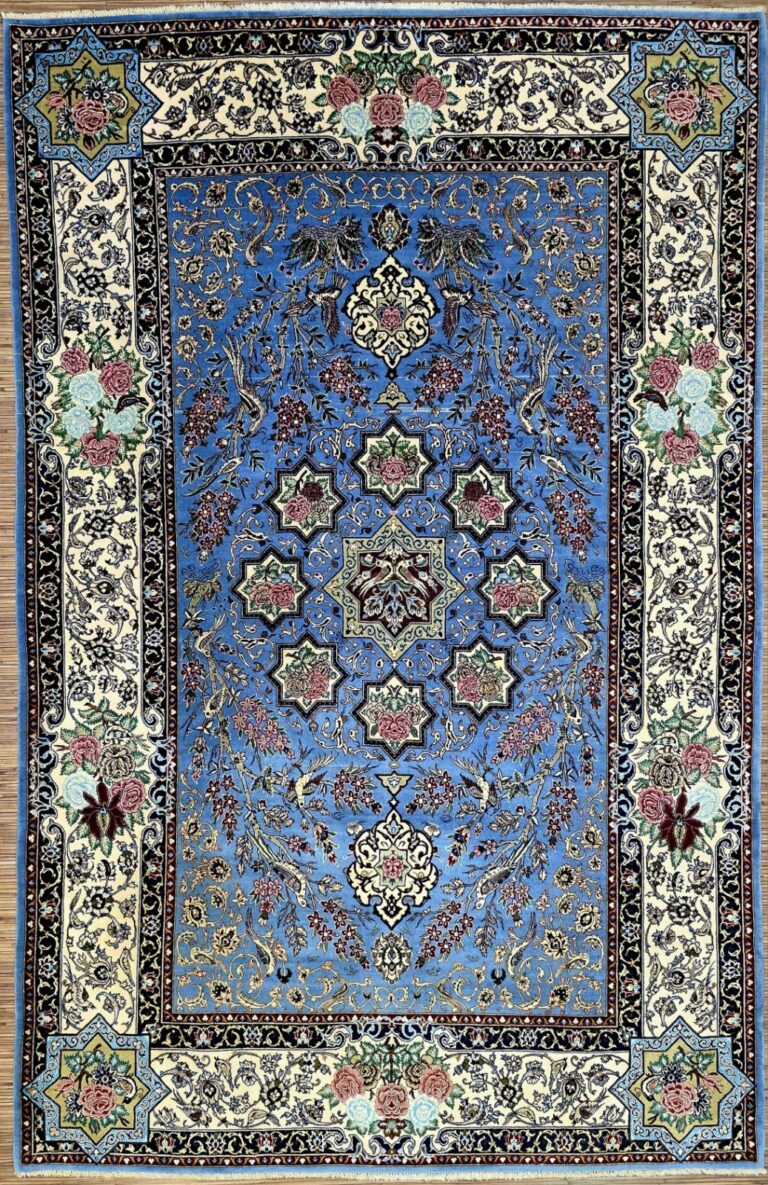
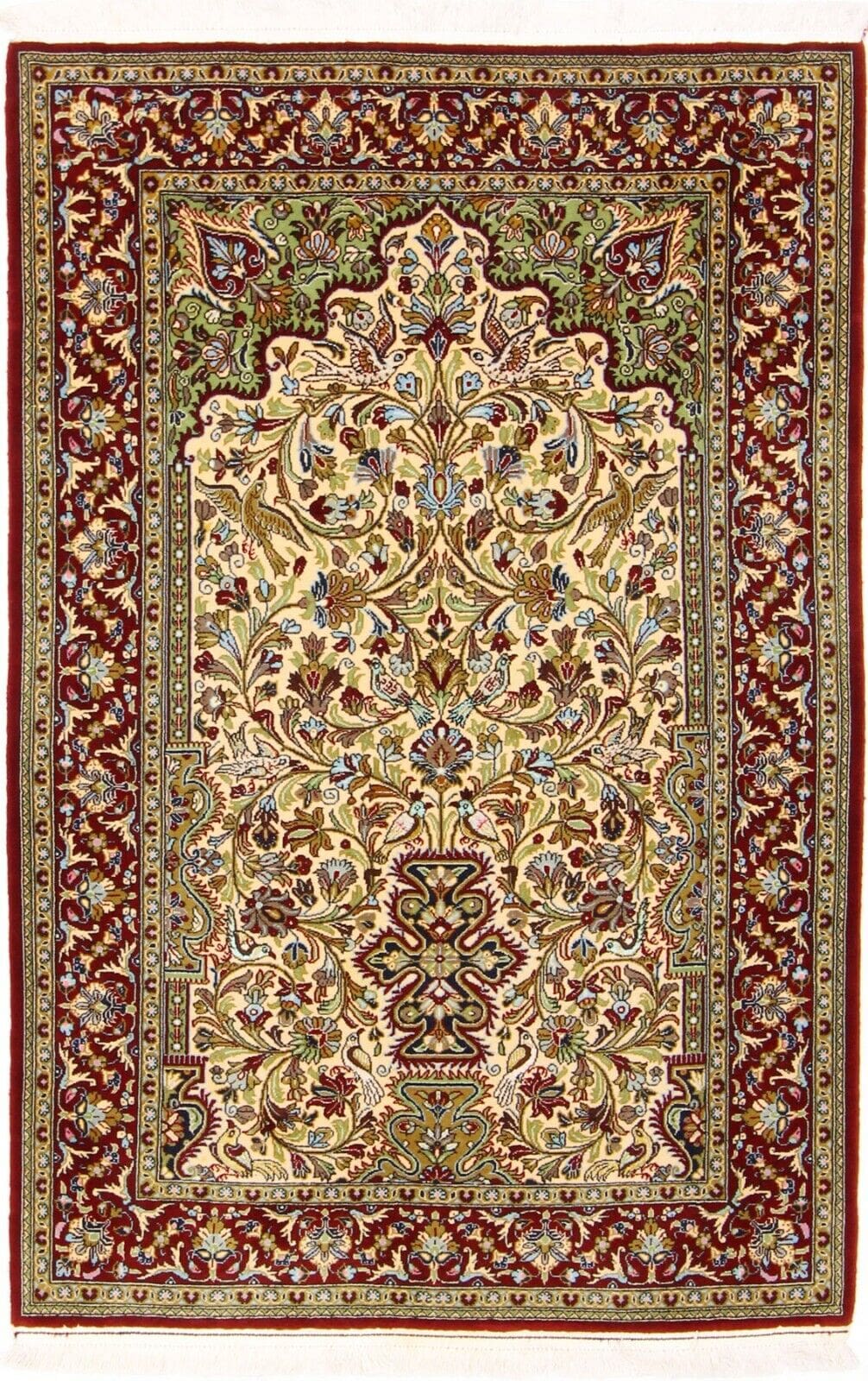
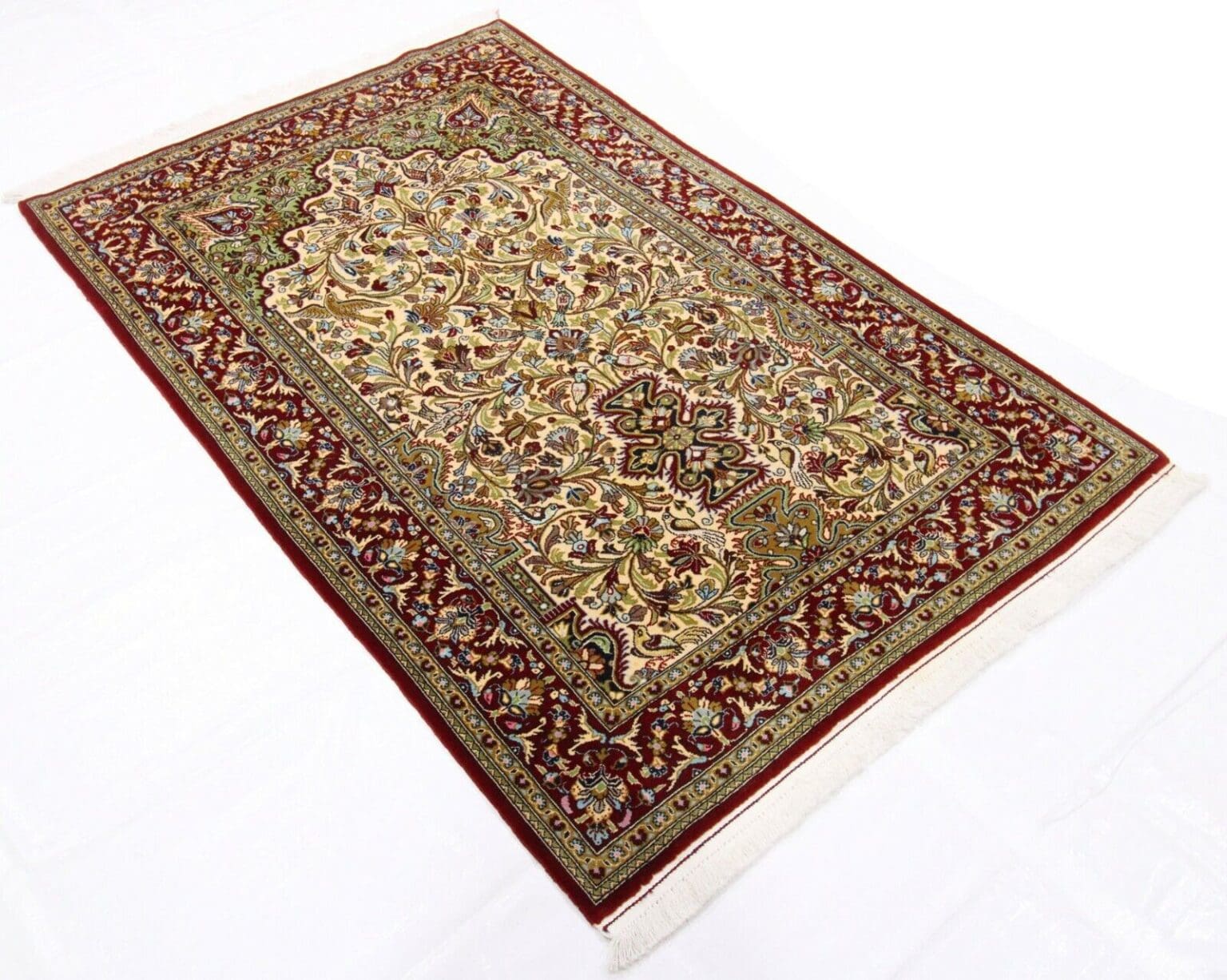
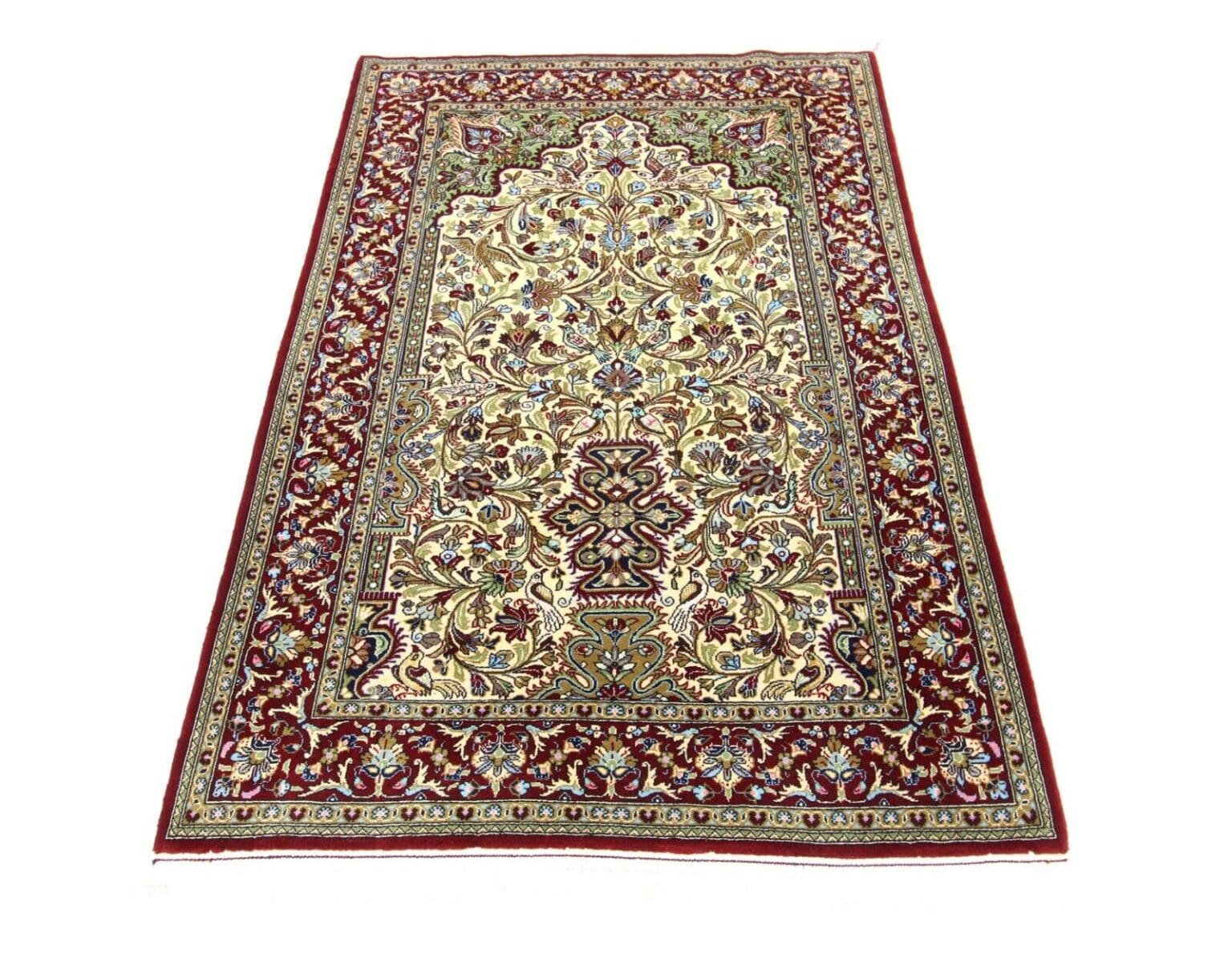
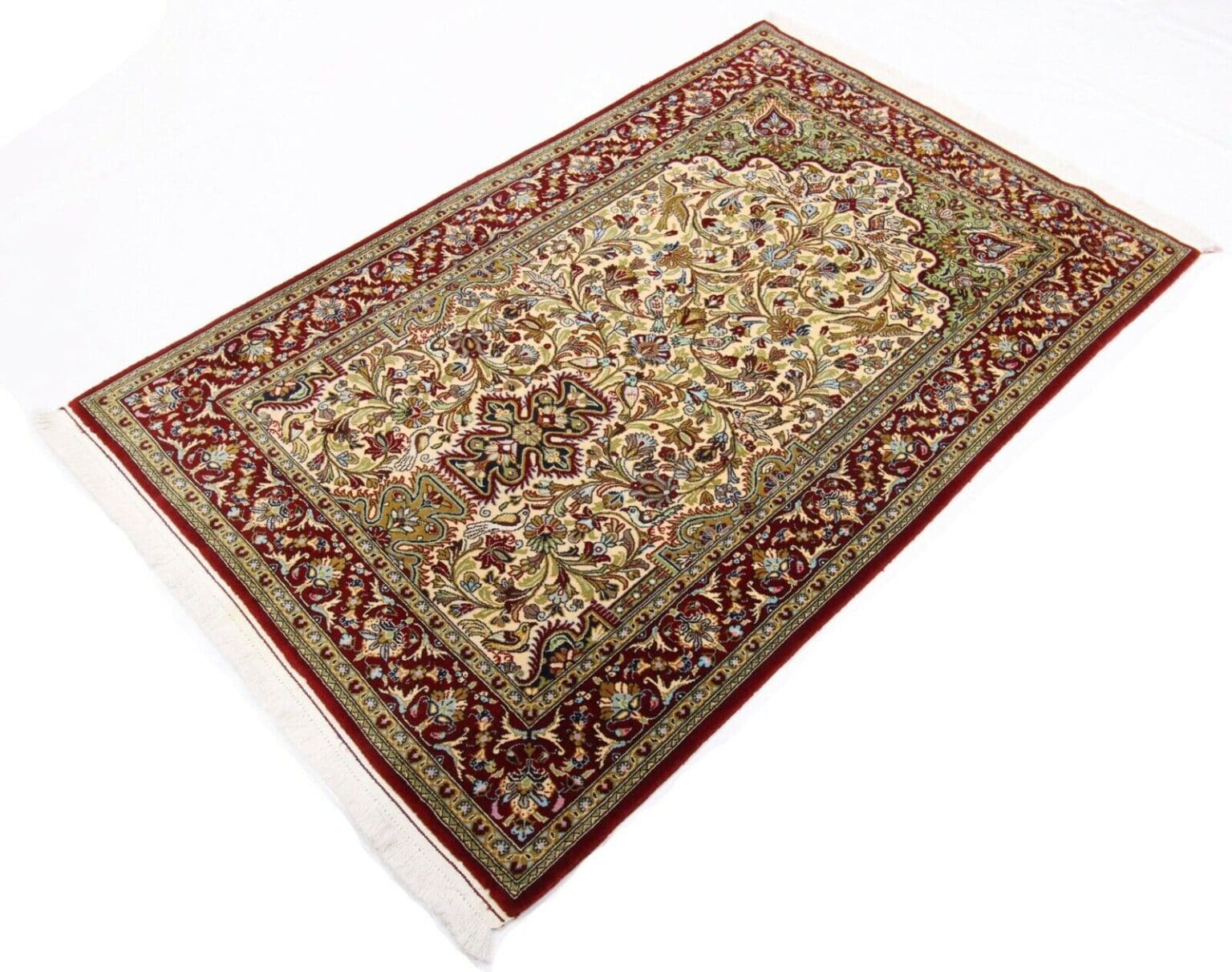
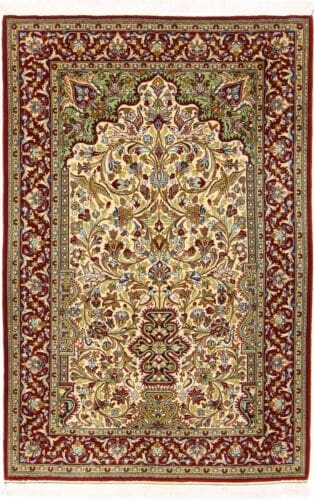
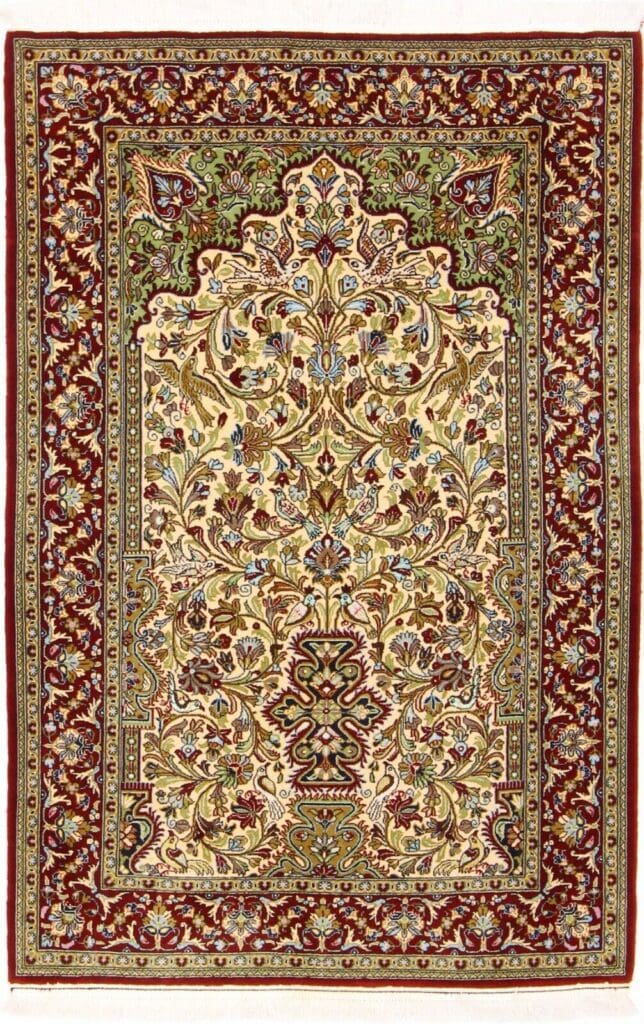
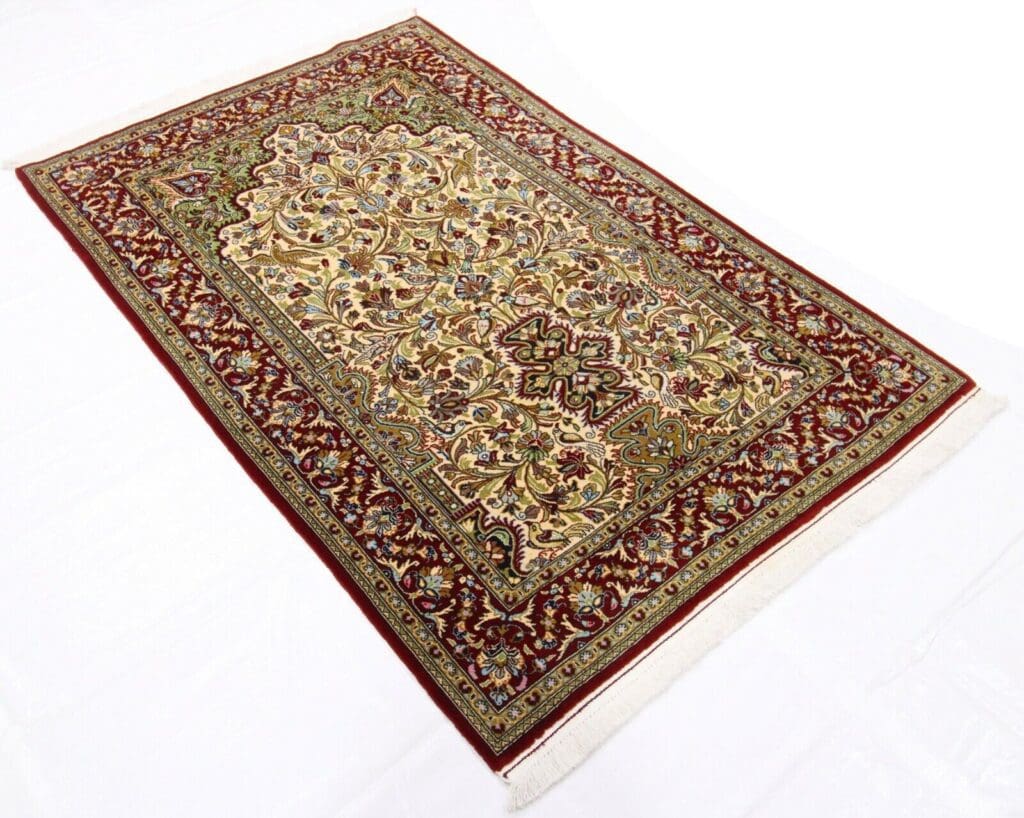
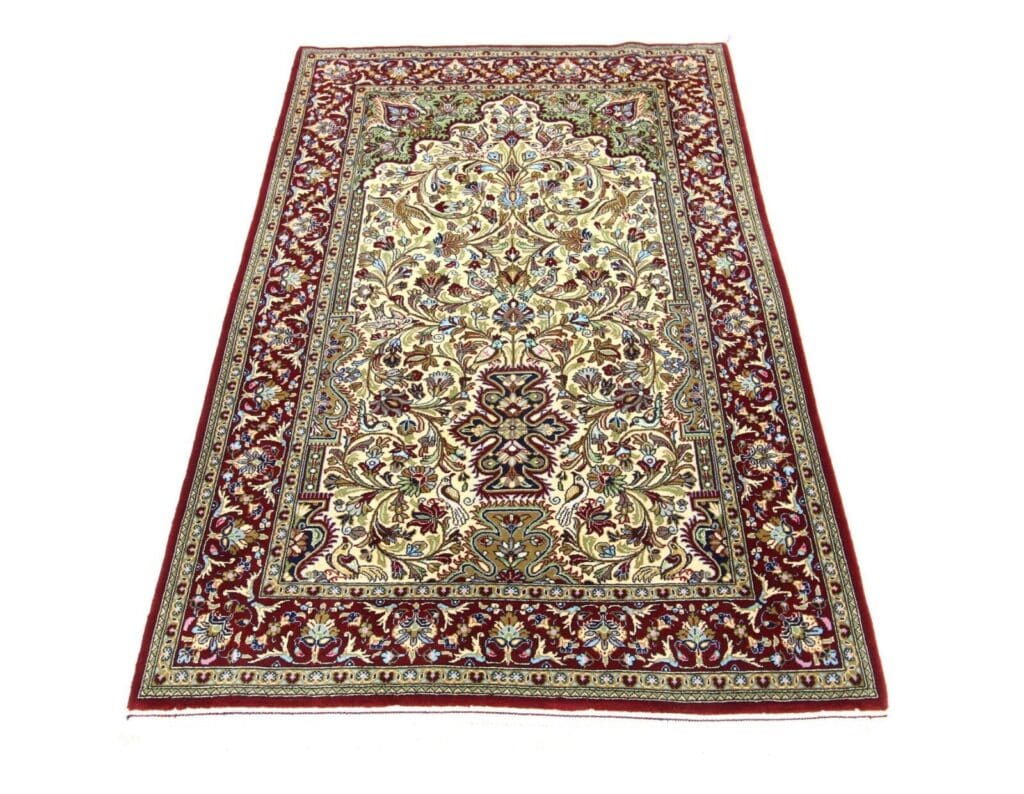
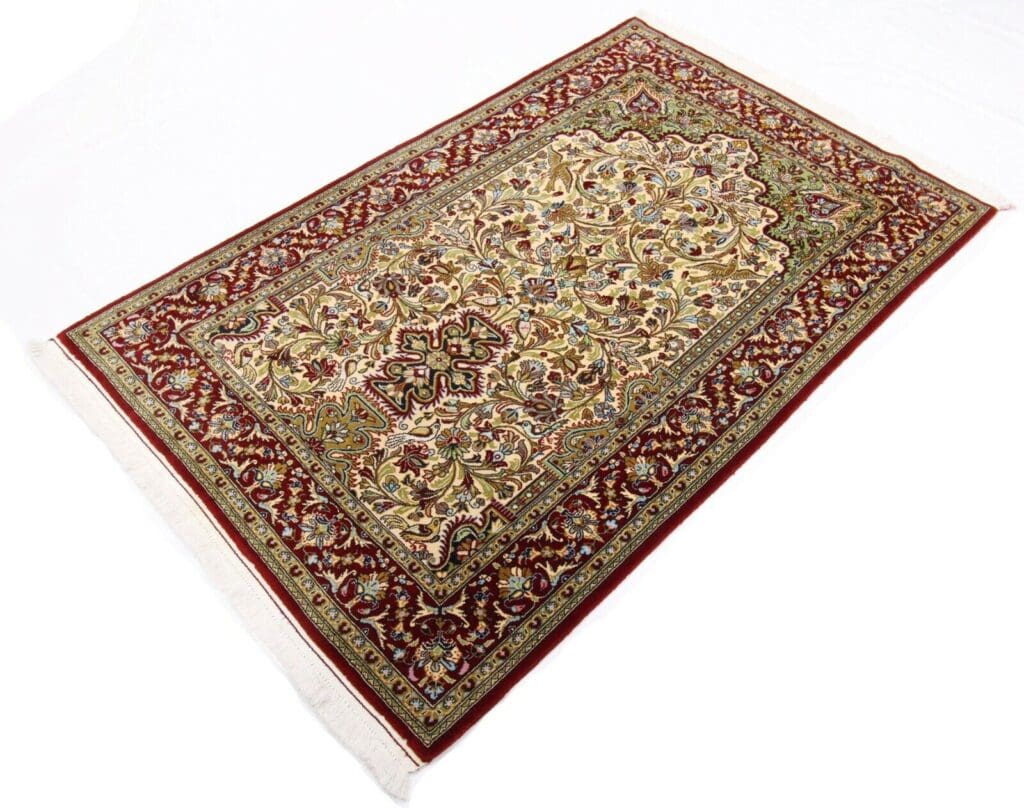
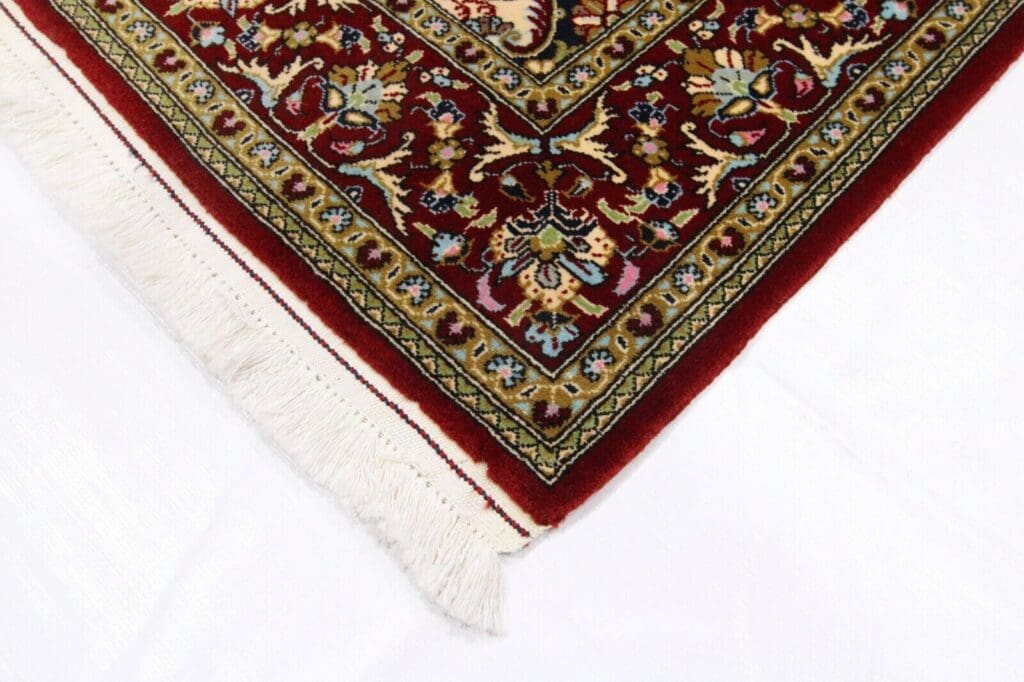
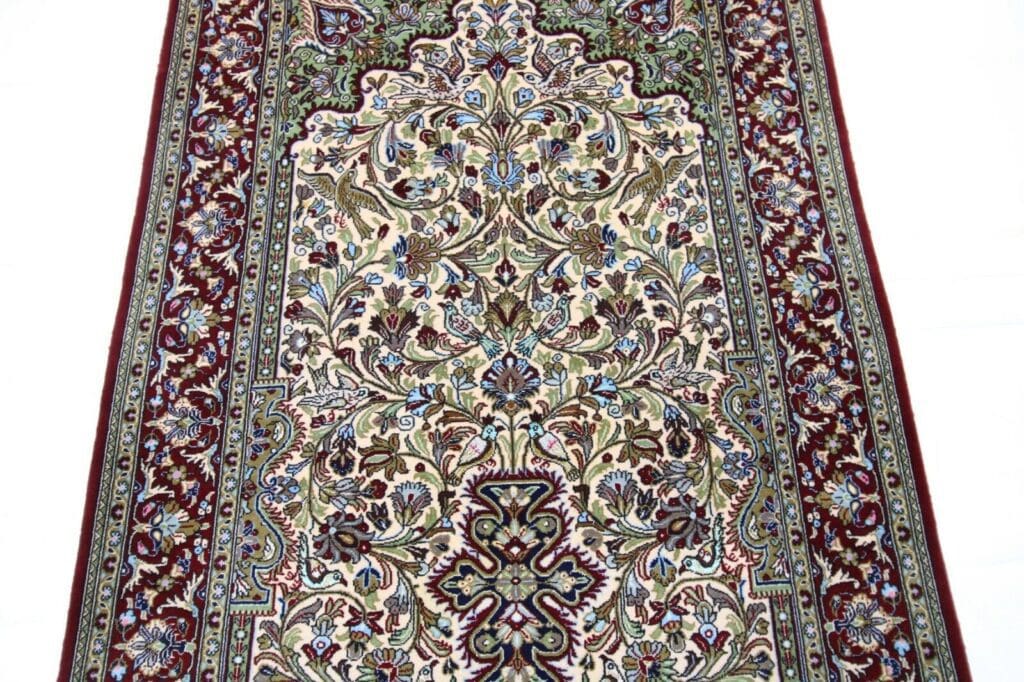
Hand-knotted Ghom Persian Rug | Knot density: high | Material: pile 100% silk | Size: 163 x 110 cm | Pattern: Oriental with floral motifs | Condition: new without label
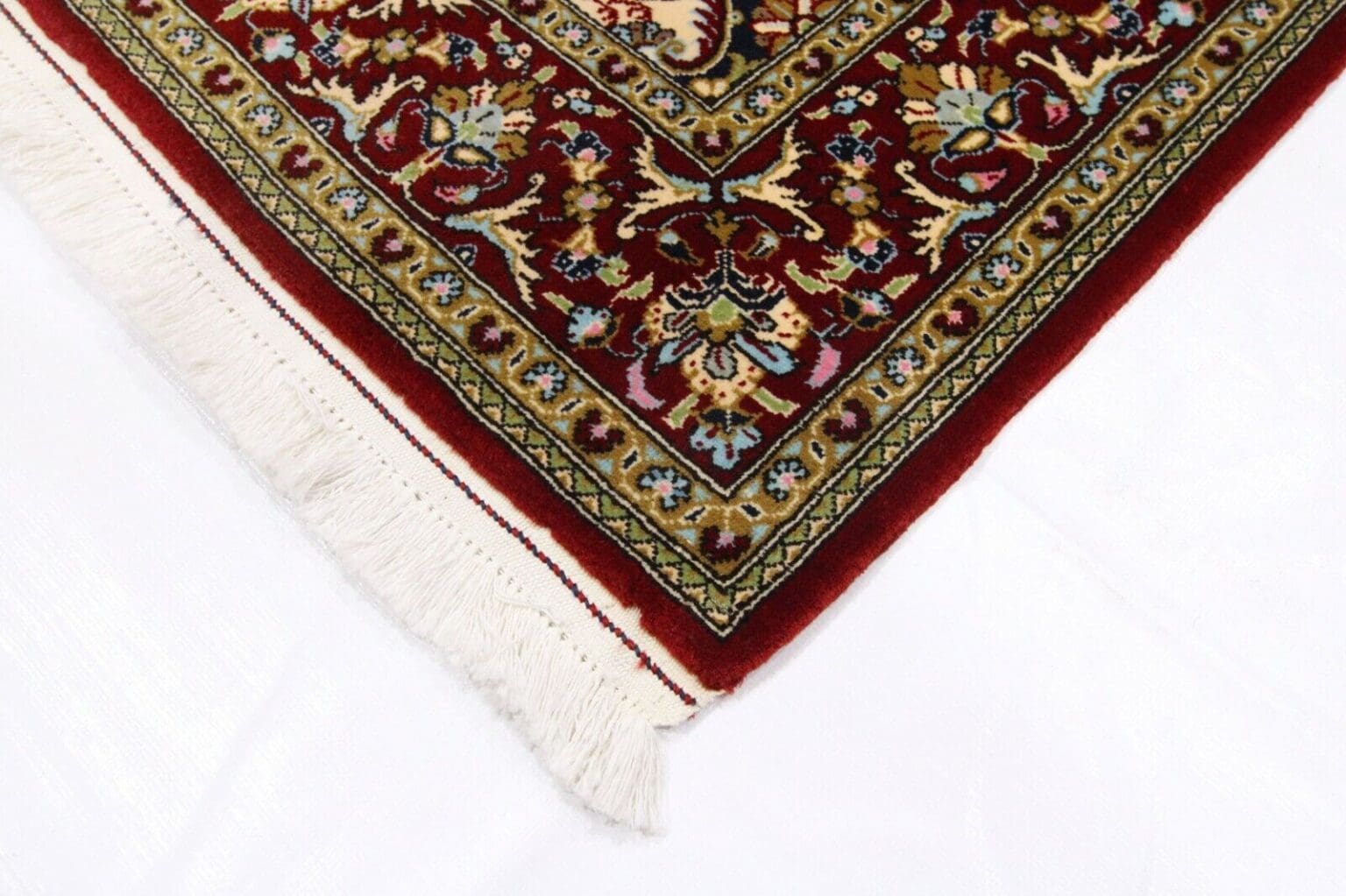
This Ghom Persian rug is hand-knotted and has a pile made of 100% silk. Silk is used in rug making for its smooth surface, fine handle and distinctive sheen. As the light changes, the colours and outlines may appear different from one viewing angle to another. A silk surface therefore has a changing visual character rather than a uniformly matte appearance.
The rug is specifically described as having a high knot density. In hand-knotting, each knot is inserted individually into the foundation and becomes part of the pile design. In general, a high knot density allows small ornaments and delicate lines to be rendered with precision. Here, the hand-knotted construction is combined with a silk pile and an Oriental design with floral motifs.
The rug is described as environmentally friendly and suitable for use with underfloor heating. That suitability is a practical feature for rooms fitted with this type of heating system. Its condition is given as new without a label; the original title also calls it top condition. No further details about the foundation, backing or warp are supplied for this individual rug, so no additional construction claims are made.
Origin and Tradition
The rug comes from Iran and is identified as a Persian rug from Ghom. Ghom, also written Qom, is one of the recognised centres of Persian rug production. The city is located in central Iran and became a place where designs, materials and knotting practices from different parts of the country met in urban workshops. Ghom rugs are particularly associated with carefully drawn, detailed compositions.
Iranian rug tradition developed through the interaction of nomadic, village and urban weaving and knotting practices. In urban workshops, designs are often prepared according to a structured plan. The drawing is organised so that field, borders and individual ornaments relate to one another. Knotters then translate the design into the rug one knot at a time. Technical quality is consequently the result of several coordinated elements: the drawing, the material, the tension of the foundation and the care taken during execution.
Within this tradition, Ghom is associated with a refined and precise visual language. Silk is valued there as a pile and design material because it allows small forms to be represented with clarity. Fine lines can remain distinct, while closely placed ornaments create a nuanced and continuous surface. The name Ghom identifies the Persian regional and stylistic tradition stated for this rug; it should not be confused with the origin information of other rug types.
The classification in the late twentieth century places the rug in a period when Persian workshops continued to produce traditional compositions through hand craftsmanship. Tradition does not mean that every rug has an identical appearance. Regional drawing conventions, the chosen design and the work of an individual workshop all influence the final result. A hand-knotted rug therefore remains an individual piece even when it uses the motifs and organising principles of an established regional tradition.
Design and Pattern
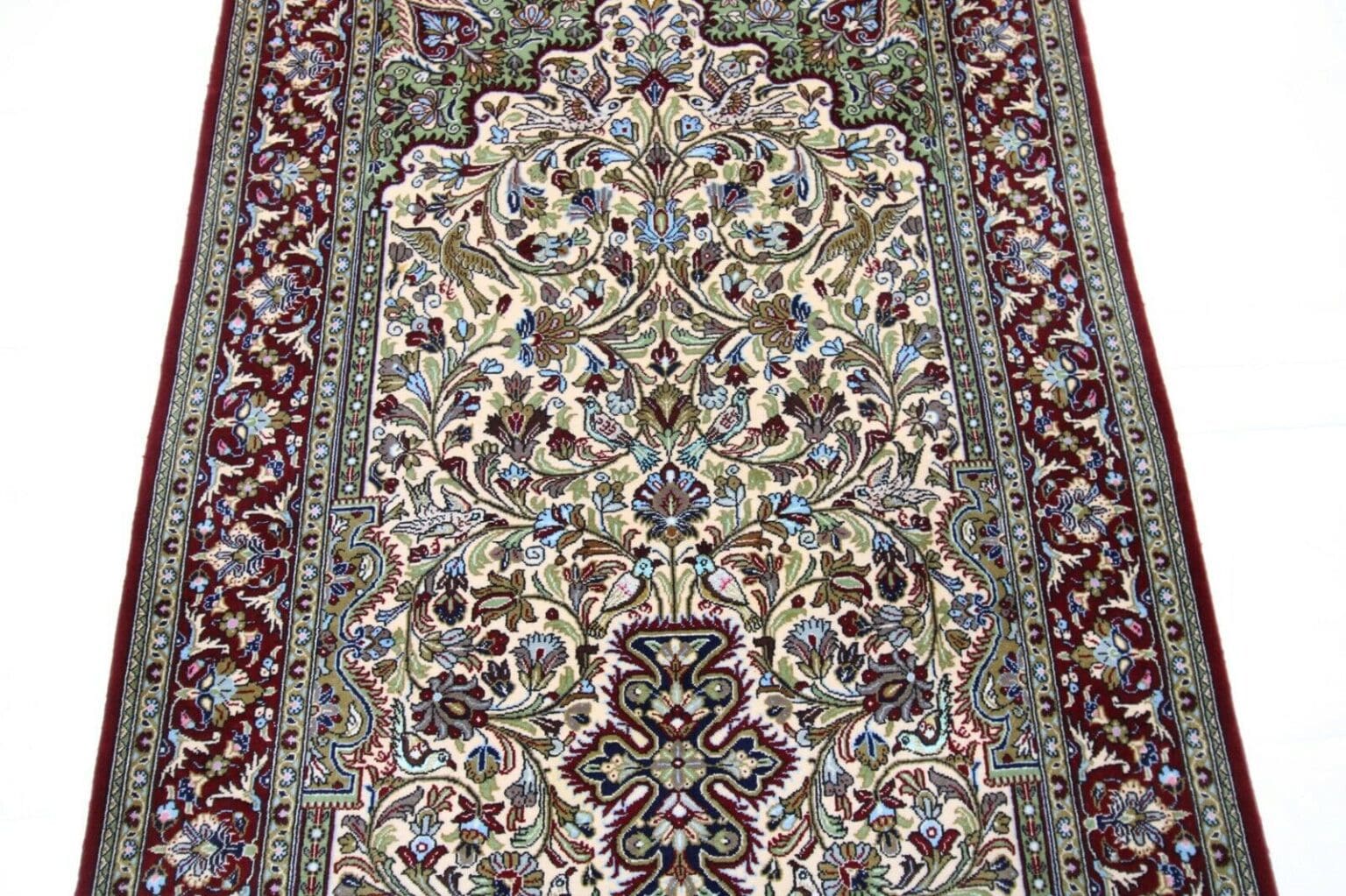
The pattern is described as Oriental with floral motifs. Floral imagery is a longstanding element of Persian rug design. Flowers, leaves and scrolling vines may appear as separate ornaments, grouped forms or a continuous network. Their purpose is not necessarily to reproduce a botanical plant literally. In rug drawing, plant forms are often stylised, rhythmically arranged and connected so that they create a coherent composition across the field.
The distribution of motifs is central to a floral design. Larger blossoms may provide visual points of emphasis, while smaller leaves and vines fill the spaces between them. Repetition establishes rhythm without requiring every detail to be identical. In general, a high knot density supports the rendering of narrow contours and fine transitions in this kind of drawing. On this rug, that technical characteristic meets the silk pile and the stated floral pattern.
Oriental compositions often establish a relationship between a central field and surrounding borders. The field carries the main drawing, while the borders frame it and organise the transition toward the edge. Not every floral design uses the same arrangement, however. Depending on the drawing, flowers may be distributed across the field, grouped around a centre or linked by curving vines. This individual rug is described as Oriental with floral motifs; no more specific naming of individual ornaments is added.
A silk rug also has a particular relationship with light and pile direction. Smooth fibres reflect light differently from duller materials, so lines and blossoms can appear to shift in emphasis as the rug is viewed from different directions. This is a general characteristic of silk in rug making and helps explain why floral details can look especially fine on a silk surface. It is not a substitute for a colour description: the specific colours of this rug are not stated.
The Ghom tradition combines precise drawing with carefully ordered ornament. A design can therefore appear both classical and connected to its period of production. This rug is described as classical and dated to the late twentieth century. Together with its Iranian origin, hand-knotted construction and floral pattern, these facts provide a clear classification without assigning motifs or a composition that has not been documented for this piece.
Special Features
The individual rug is distinguished by its high knot density, pile of 100% silk and hand-knotted construction. It is also described as environmentally friendly and suitable for underfloor heating, with its condition given as new without a label. The original title additionally states top condition. The rug is assigned to the late twentieth century and has a classical Oriental floral design.
The combination of a Ghom origin and silk pile places the rug within a refined Persian design tradition. Because this is a hand-knotted one-off, its characteristics should not be transferred to other rugs. No information is provided about additional materials, the warp, dyes or a signature. The description therefore remains limited to the documented silk pile, Iranian origin and stated features.
FAQ
How should I care for a Ghom rug with a silk pile?
Regular vacuuming is recommended for routine care. Use cleaning products specifically intended for natural materials, and arrange professional cleaning every few years. Silk requires a treatment appropriate to its fine surface. Excessive moisture, harsh agents and unsuitable cleaning equipment may affect the pile and should be avoided.
Where do the materials for this Persian rug come from?
The rug comes from Iran, and its pile is made of 100% silk. In the Persian rug tradition, fine materials are processed through specialised craft methods. No additional material information about the warp or other components is provided for this piece. The material description is therefore limited to the documented silk pile and Iranian origin.
What makes this Persian rug distinctive?
Its hand-knotted construction, high knot density and 100% silk pile are its defining features. The Oriental floral pattern connects it with the classical Ghom tradition. It is also described as environmentally friendly and suitable for underfloor heating. Its condition is stated as new without a label, and it is assigned to the late twentieth century.
To provide the best experiences, we use technologies like cookies to store and/or access device information. Consenting to these technologies will allow us to process data such as browsing behavior or unique IDs on this site. Not consenting or withdrawing consent, may adversely affect certain features and functions.
Functional Always active
The technical storage or access is strictly necessary for the legitimate purpose of enabling the use of a specific service explicitly requested by the subscriber or user, or for the sole purpose of carrying out the transmission of a communication over an electronic communications network.
Preferences
The technical storage or access is necessary for the legitimate purpose of storing preferences that are not requested by the subscriber or user.
Statistics
The technical storage or access that is used exclusively for statistical purposes.The technical storage or access that is used exclusively for anonymous statistical purposes. Without a subpoena, voluntary compliance on the part of your Internet Service Provider, or additional records from a third party, information stored or retrieved for this purpose alone cannot usually be used to identify you.
Marketing
The technical storage or access is required to create user profiles to send advertising, or to track the user on a website or across several websites for similar marketing purposes.
 SECURE PAYMENT
 SHIPPING PARTNERS