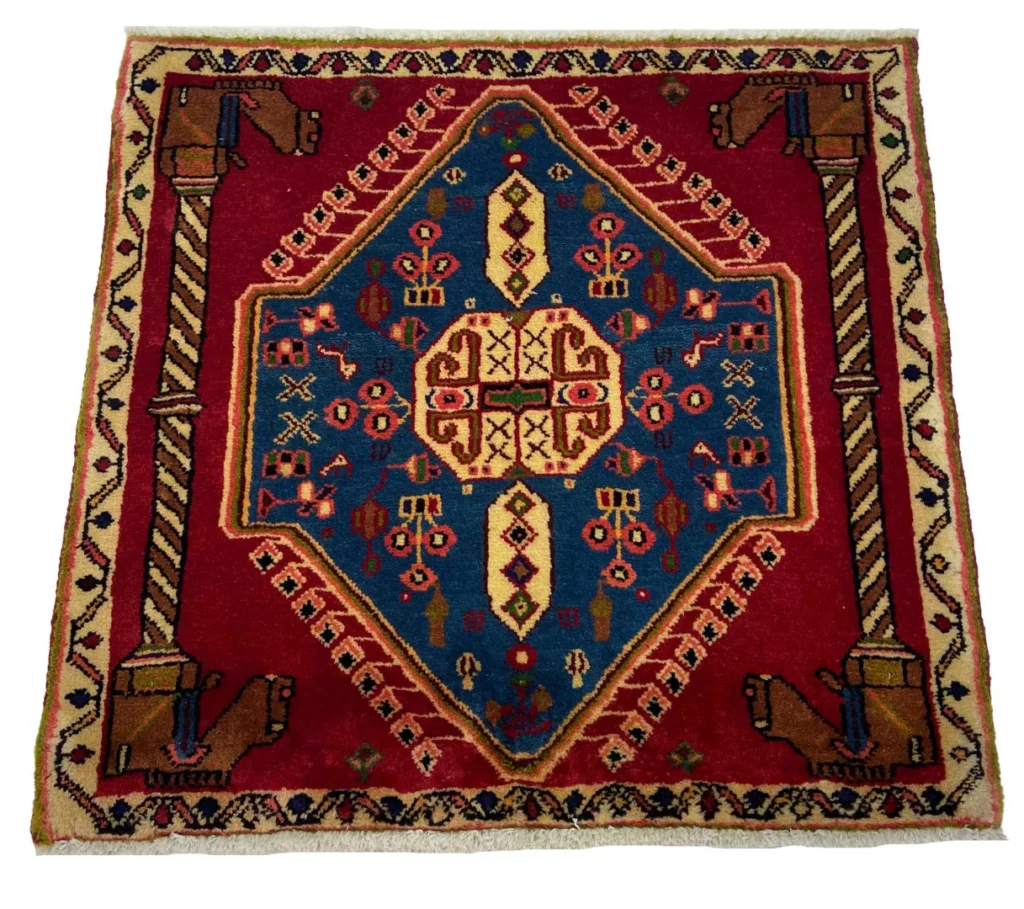
This Ghashghai Persian rug is hand-knotted from natural wool. The wool forms the pile and gives the surface a soft handle. As a natural material, it is part of the traditional textile character of the rug rather than merely a covering applied to a finished object. The hand-knotted construction means that the knots are made individually through a manual process, not by a machine-made method.
The knot density is between 180,000 and 250,000 knots per square metre. Such dense knotting supports the clear rendering of the geometric ornaments and contributes to the rug’s resistance to wear. Natural wool adds a comfortable feel to the living environment. The rug is described as high quality, bringing together a dense construction, natural wool and traditional hand craftsmanship in one individual piece.
Ghashghai rugs are traditionally made outdoors and without complete prior planning. This approach leaves room for the weaver to shape the arrangement during the work itself. The result can therefore have an individual character instead of following a fully standardised industrial pattern. For this rug, the hand-knotted structure and natural wool remain the defining elements of its making.
Origin and Tradition
The rug comes from southern Persia, from Fars Province, and belongs to the Ghashghai tradition. The Ghashghai are a nomadic people of the region. Their rugs are connected with a culture in which textile work is closely related to everyday life, movement through the landscape and the use of natural materials. The Fars origin therefore identifies not only a place, but also the regional setting in which this form of rug making developed.
Southern Persian rug making includes several distinct forms of handcraft. Among the Ghashghai, weaving and knotting are understood as part of an inherited way of life. Working outdoors and without a fully predetermined design allows motifs, colours and proportions to be brought together directly during production. This does not mean that the work lacks structure. Rather, it describes a traditional method in which the maker responds to the developing textile and gives each piece its own character.
The nomadic way of life of the Ghashghai is closely linked to nature. That relationship can be seen in the use of natural wool and in the practical purpose of the rugs. A rug must be suitable for everyday use while also carrying the visual ideas of its makers. The combination of function and ornament is central to the regional tradition. Ghashghai rugs can therefore unite a decorative surface with qualities intended for practical use.
Ghashghai rugs are often discussed alongside other rugs from southern Persia. Shiraz rugs may show related design features, although they are often described as falling behind Ghashghai rugs in quality. Qashqai rugs also come from a geographically neighbouring region. They are particularly associated with vivid colours and floral patterns. These comparisons illustrate the variety of rug traditions found in southern and southwestern Persia, where related influences do not erase distinct regional identities.
Nain and Kashan are also names associated with well-known rug producers and traditions. Their hand-knotted rugs are known for artistic designs and high knot densities, making them possible alternatives for people interested in handmade rugs. They nevertheless represent different traditions from this Ghashghai rug from Fars. The rug offered here is assigned to the Ghashghai tradition through its southern Persian origin, rather than to those other designations.
Design and Pattern
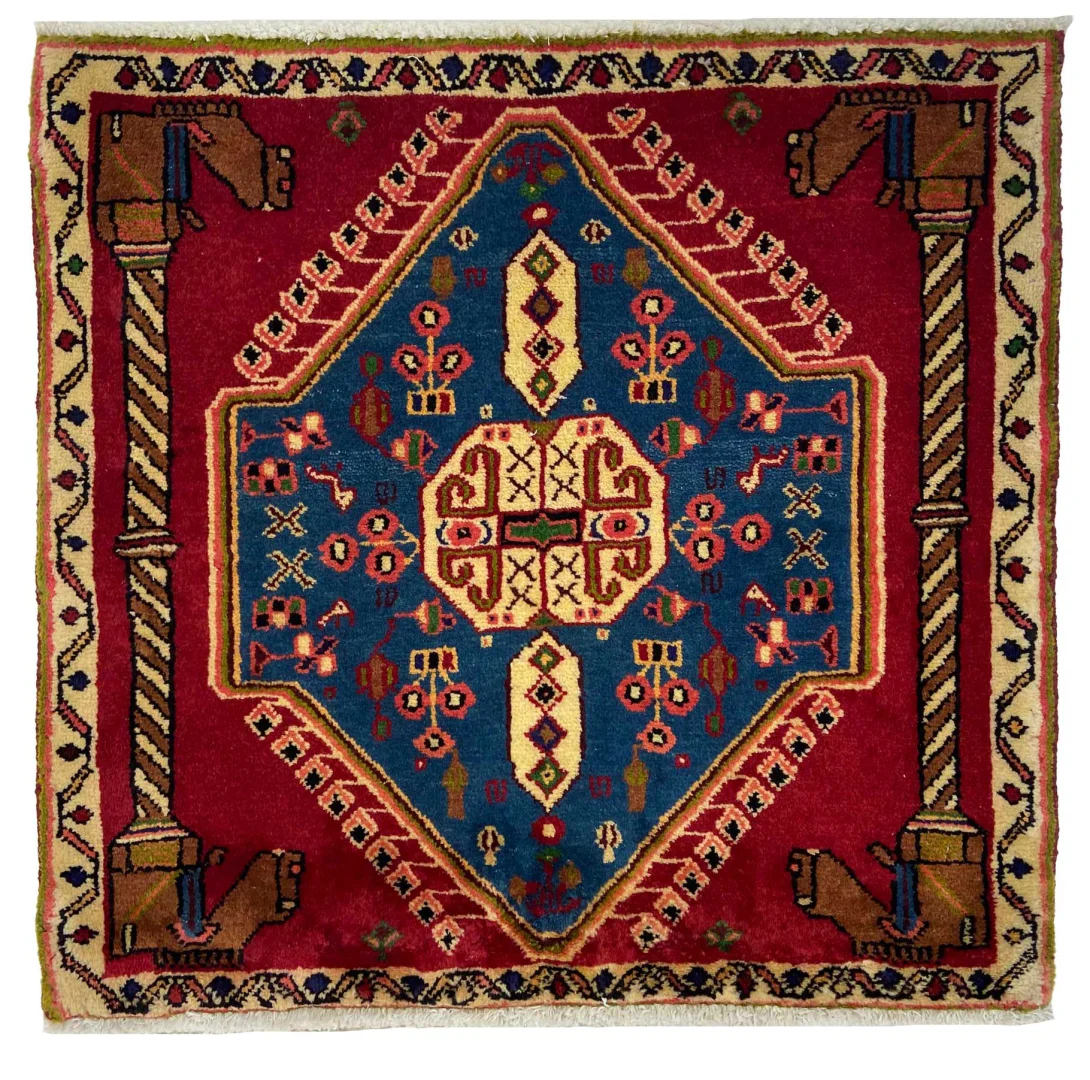
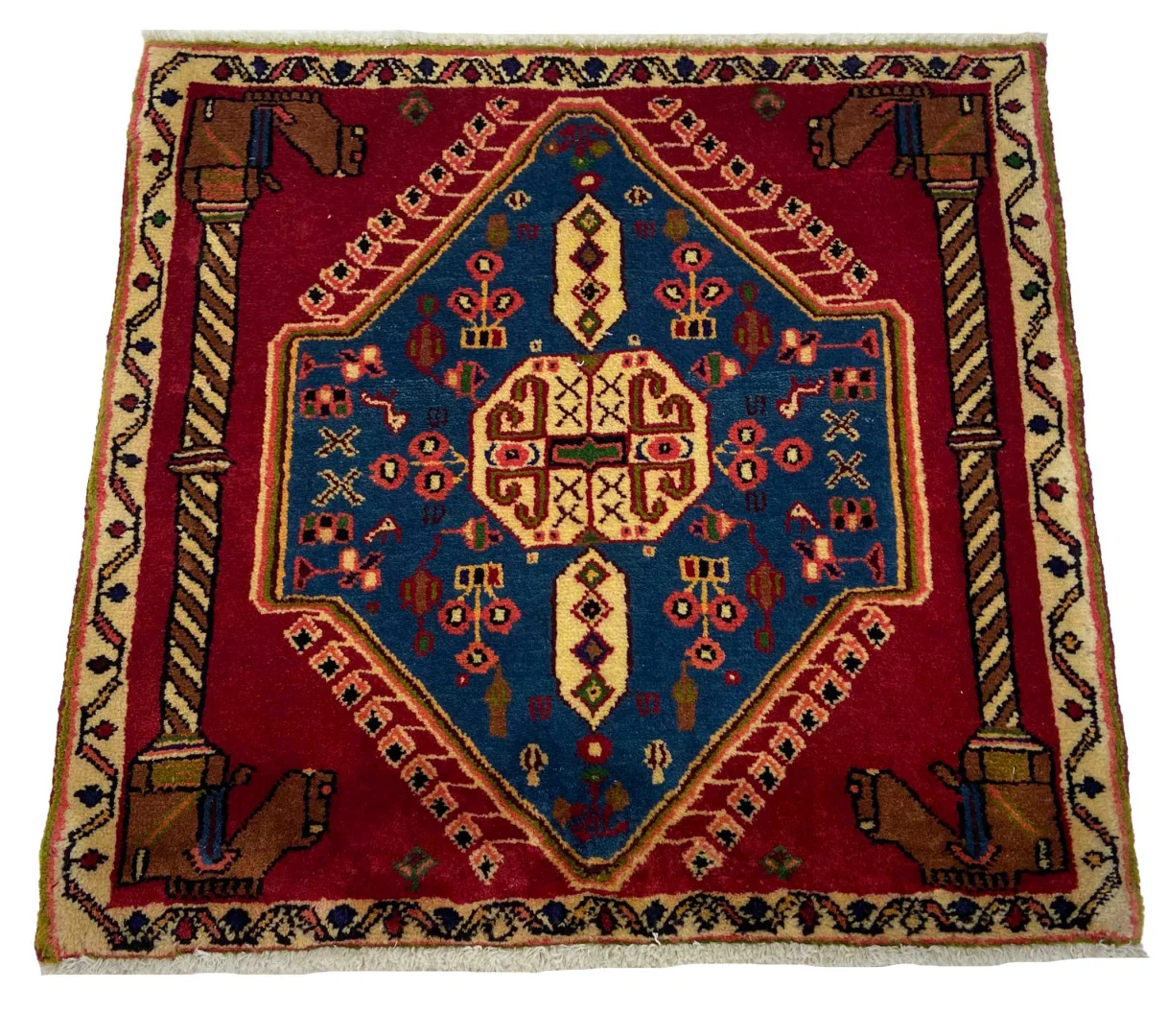
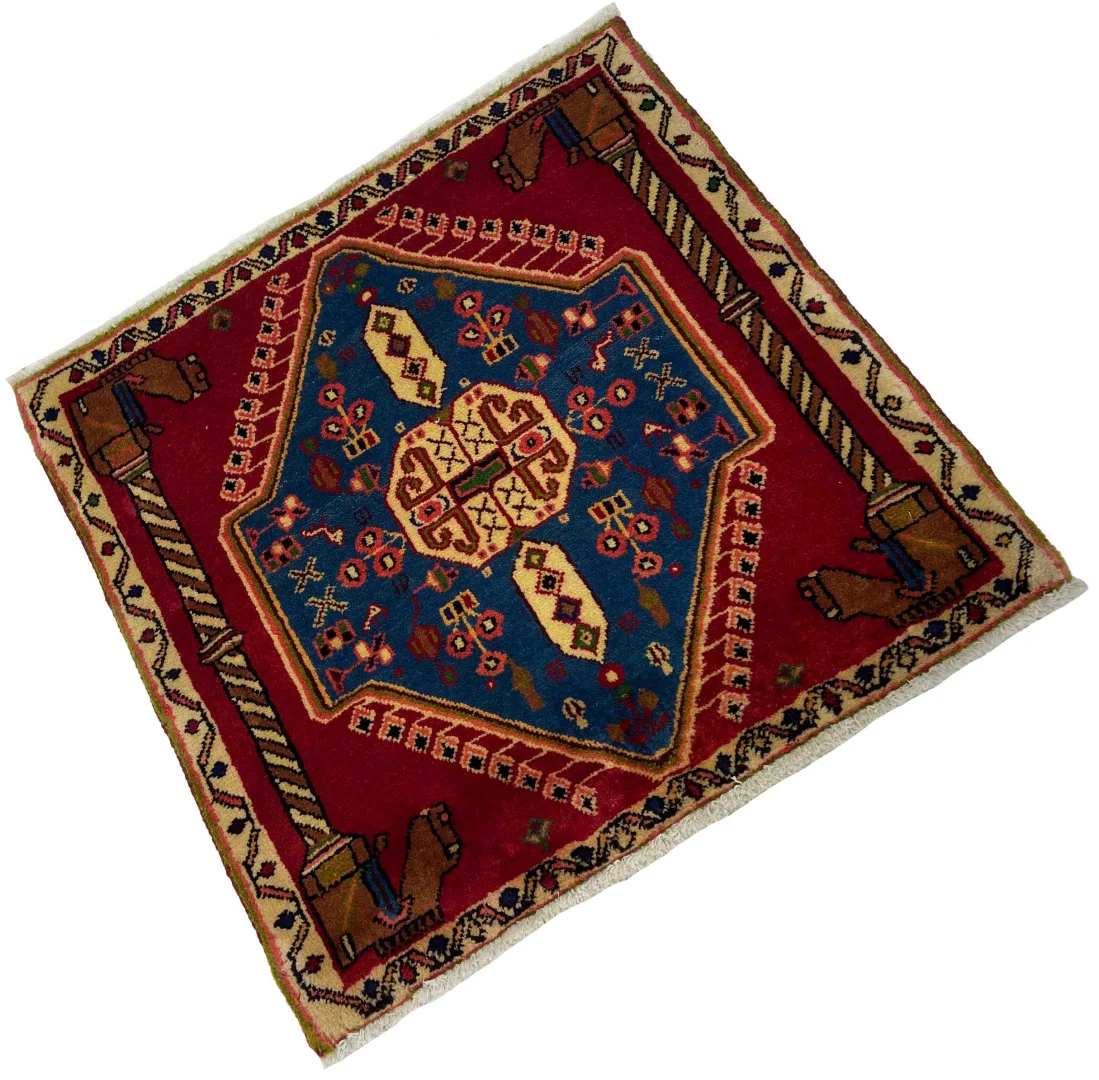
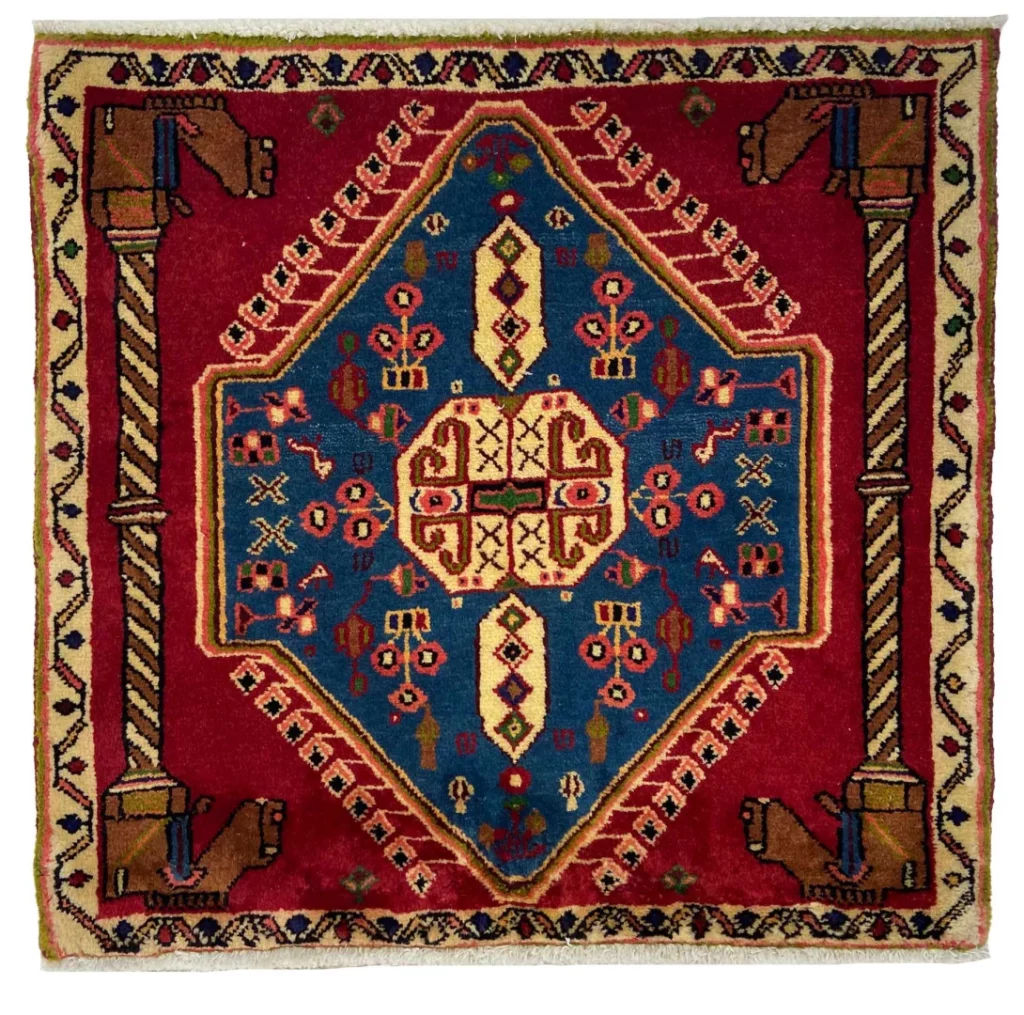
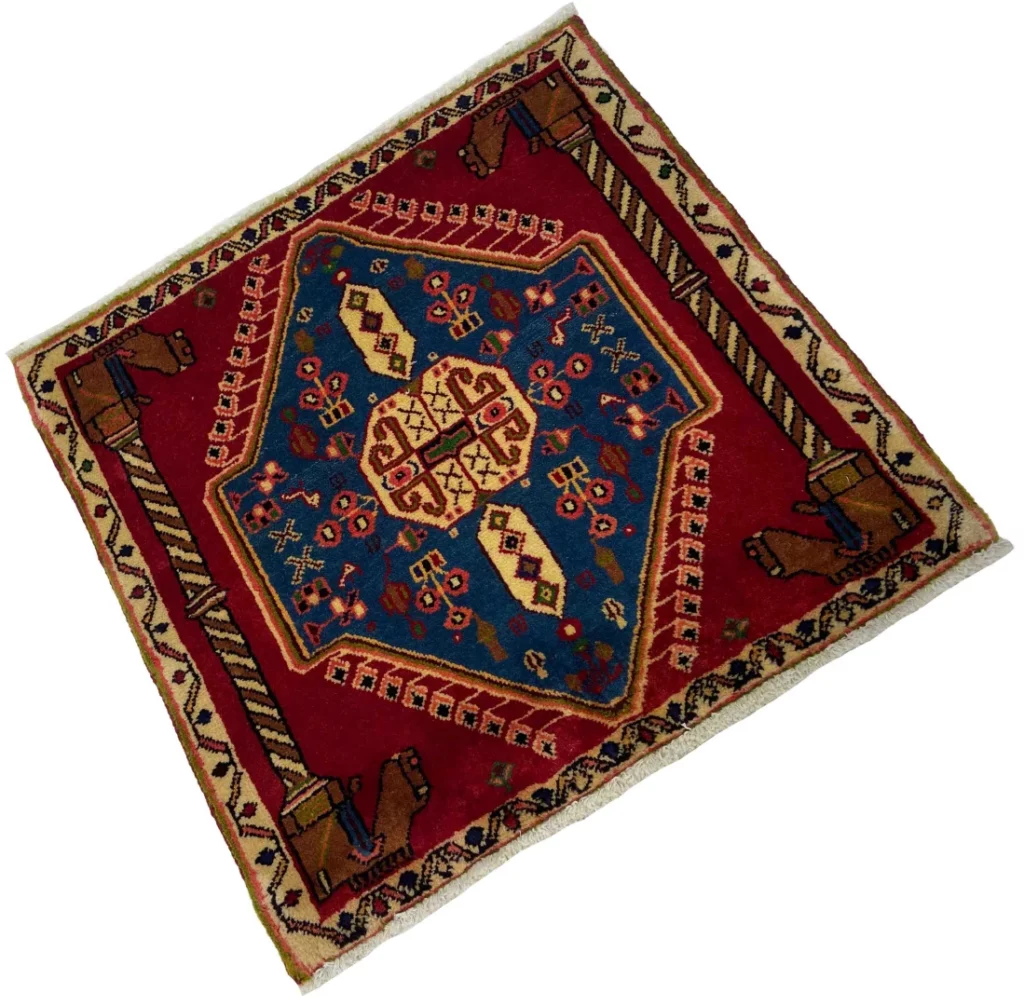
The design of this rug consists of geometric ornaments. Geometric composition is one of the recognisable forms of expression found in many Ghashghai rugs. Lines, angles, diamonds and repeated shapes may be joined into a clearly organised surface. The ornament is not simply a collection of isolated marks. Motifs and the spaces around them are arranged so that the entire field functions as a coherent composition.
The Ghashghai pattern tradition allows a design to remain recognisable while still being freely interpreted. Because the rugs are traditionally made without a fully worked-out plan prepared in advance, individual motifs and their placement can vary from one piece to another. This working method helps explain the individual character of hand-knotted Ghashghai rugs. The geometric vocabulary provides continuity, while the execution preserves the personal contribution of the maker.
Red and brown tones are frequently associated with the regional colour world. They can give the composition a warm presence and form part of the southern Persian rug tradition. A balanced palette helps the geometric ornaments remain legible. Lighter and darker areas can distinguish the outlines of motifs, while repeated colours connect separate parts of the design. Colour and ornament therefore work together rather than functioning as unrelated decorative elements.
The knot density also affects the visual treatment of the pattern. With 180,000 to 250,000 knots per square metre, finer details within geometric forms can be rendered with definition. Knot density is therefore not only a technical description; it also influences how precisely lines, transitions and repeated ornaments appear on the surface. At the same time, the design remains rooted in a textile tradition in which the pattern develops through many repeated manual steps.
Ghashghai rugs are often characterised by the relationship between geometric ornament, natural wool and regional origin. Their designs refer to the culture and way of life of the Ghashghai without requiring every rug to follow exactly the same scheme. The result is a flexible pattern language: it remains identifiable through its geometric forms while retaining the variation expected from a one-off, hand-knotted textile.
Special Features
The special features of this rug include its natural wool, dense knotting and geometric ornaments. It is described as high quality. The dense construction contributes to resistance against wear. Ghashghai rugs are also described as dirt-resistant and easy to care for, making them suitable for rooms that are used regularly.
Traditional production outdoors and without complete prior planning gives the individual piece a distinctive character. This aspect sets hand-knotted work apart from a fully standardised production process. The origin in Fars, the connection with Ghashghai culture and the use of natural wool add a clear regional identity to the practical qualities of the rug.
Ghashghai rugs can be used in living rooms, bedrooms and hallways. Their dirt-resistant qualities also make them suitable for areas with heavier foot traffic. Regular vacuuming is recommended for care. Spills should be wiped immediately with a damp cloth. Professional rug cleaning is recommended to help preserve the colours and structure.
FAQ
What makes this Ghashghai Persian rug distinctive?
Its distinctive character comes from the combination of several features. The rug is hand-knotted, made from natural wool and has a knot density of 180,000 to 250,000 knots per square metre. Its geometric ornaments are characteristic of Ghashghai rugs and reflect the culture and way of life of the Ghashghai people. The traditional method of working outdoors and without a complete design fixed in advance gives the individual piece an individual character as well. Regional origin, manual construction and a clearly recognisable pattern tradition are therefore brought together in one rug.
How should I care for my Ghashghai Persian rug?
The rug should be vacuumed regularly so that loose dirt does not remain in the natural wool. If a stain occurs, it should be wiped immediately with a damp cloth. The surface should not be subjected to unnecessary rubbing or harsh treatment, as this can place stress on the colours and structure. Professional rug cleaning is also recommended. It helps maintain the colours and structure and supports the long-term preservation of the hand-knotted rug.
Where can I use a Ghashghai Persian rug?
Ghashghai rugs are versatile and can be used in living rooms, bedrooms and hallways. Since they are described as dirt-resistant and easy to care for, they can also be used in areas with heavier daily traffic. Natural wool contributes to a pleasant living atmosphere, while the geometric ornaments provide a clearly structured textile element in the room. The choice of placement should take normal use and the recommended care routine into account.
To provide the best experiences, we use technologies like cookies to store and/or access device information. Consenting to these technologies will allow us to process data such as browsing behavior or unique IDs on this site. Not consenting or withdrawing consent, may adversely affect certain features and functions.
Functional Always active
The technical storage or access is strictly necessary for the legitimate purpose of enabling the use of a specific service explicitly requested by the subscriber or user, or for the sole purpose of carrying out the transmission of a communication over an electronic communications network.
Preferences
The technical storage or access is necessary for the legitimate purpose of storing preferences that are not requested by the subscriber or user.
Statistics
The technical storage or access that is used exclusively for statistical purposes.The technical storage or access that is used exclusively for anonymous statistical purposes. Without a subpoena, voluntary compliance on the part of your Internet Service Provider, or additional records from a third party, information stored or retrieved for this purpose alone cannot usually be used to identify you.
Marketing
The technical storage or access is required to create user profiles to send advertising, or to track the user on a website or across several websites for similar marketing purposes.
 SECURE PAYMENT
 SHIPPING PARTNERS


