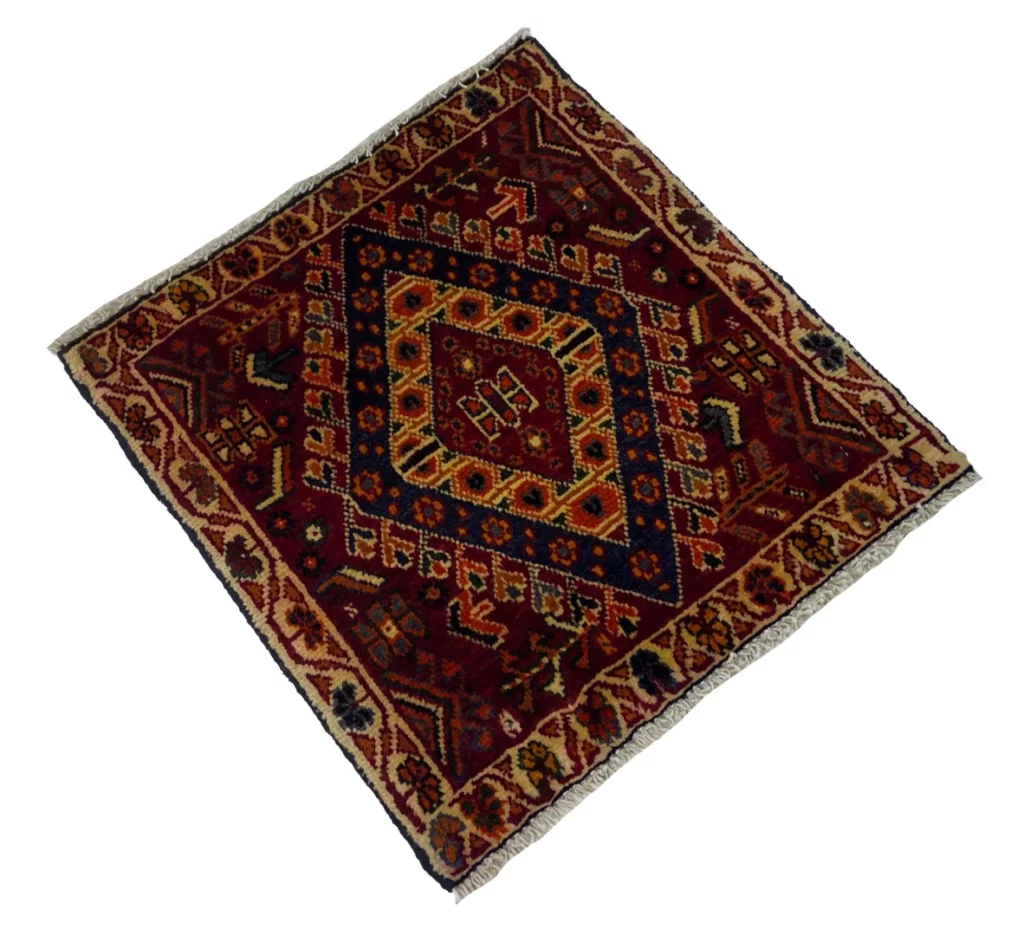
This Ghashghai Persian rug is hand-knotted from natural wool. The combination of a natural fibre and traditional knotting gives the piece its textile character. A hand-knotted rug is built knot by knot rather than produced as a printed or industrially repeated surface. Each finished piece therefore has its own individual identity. This rug is described as having high-quality workmanship, with careful making forming an essential part of its character.
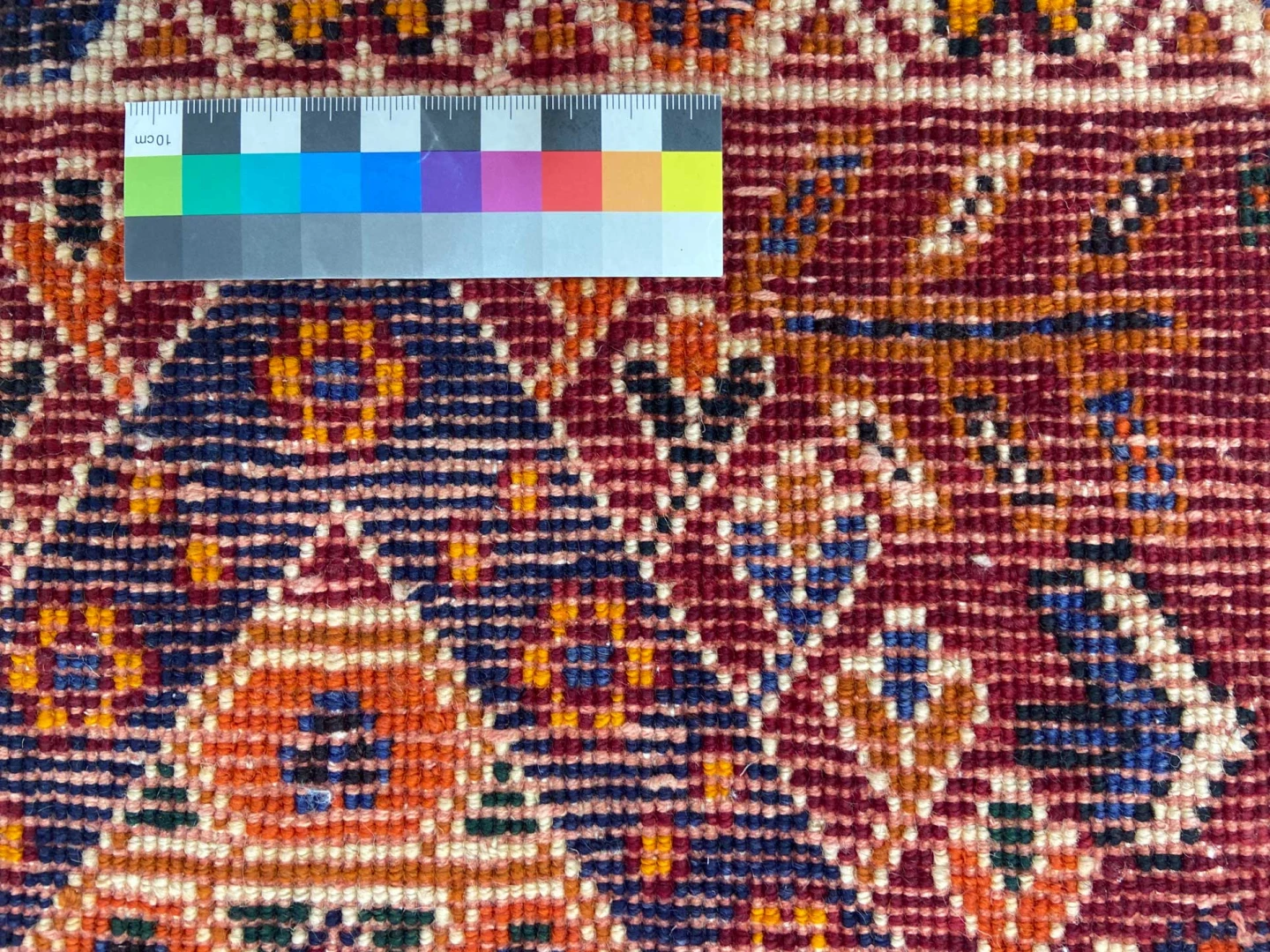
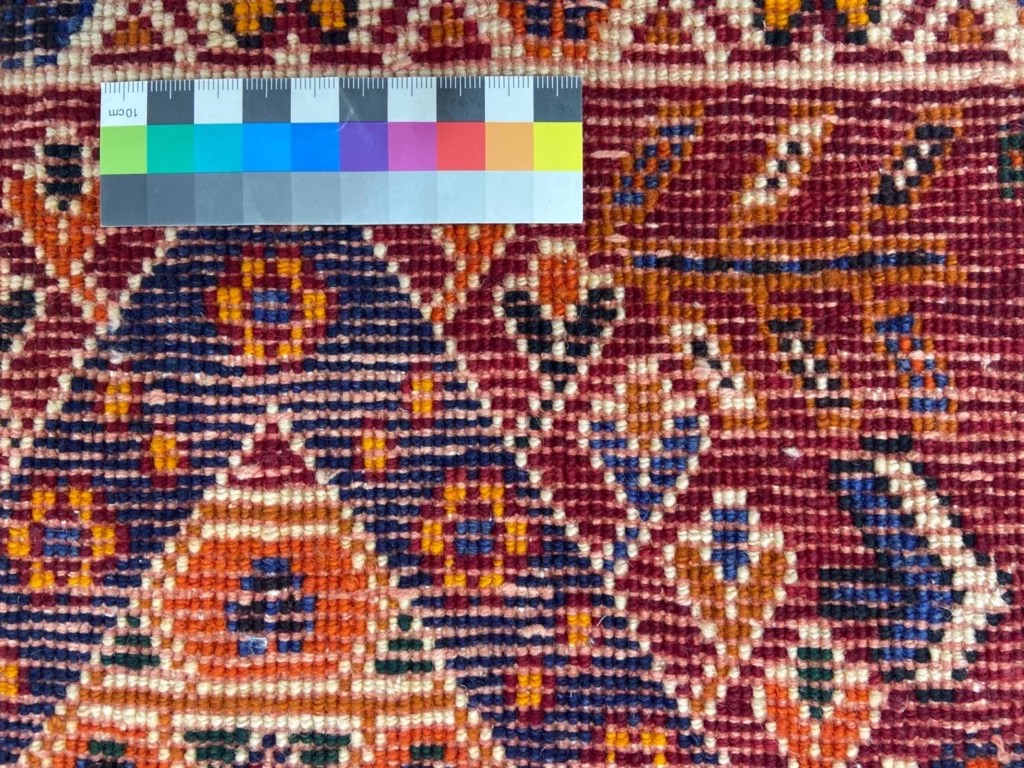
The natural wool provides a soft and pleasant surface. Ghashghai rugs made from this material are also described as dirt-repellent and sustainable. These qualities make wool suitable for rooms that are used regularly. The handwork remains central to the result: it creates the surface, carries the ornament and gives the rug the distinct appearance of a one-off piece. Its knot density is stated as 180,000 to 250,000 knots per square metre. That density supports the detailed rendering of the geometric ornaments and is associated with durability as well as visual precision.
In traditional Ghashghai production, the design is formed progressively during the knotting process. The rugs are made outdoors and without a complete plan laid out in advance. This method is linked to a robust structure and to the practical character of nomadic rug making. Natural wool, manual work and the careful execution of the knots together explain the high quality attributed to this type of rug.
Origin and Tradition
Ghashghai rugs come from southern Persia, specifically from Fars Province. Their name refers to the Ghashghai people, whose nomadic heritage is closely connected with the making and visual language of these rugs. The tradition includes knowledge of wool, colour, pattern and knotting, passed on through practical work. A Ghashghai rug therefore represents both a defined regional origin and a body of inherited craft knowledge.
Fars is one of the recognised rug-producing regions of southern Persia. The area contains several weaving traditions, and individual groups may differ in their patterns, colours and methods. Ghashghai rugs form their own identifiable category within this wider regional context. Their production is connected with the way of life of the Ghashghai people. Knotting outdoors and without a fully predetermined design reflects a process in which experience and remembered motifs guide the work instead of an inflexible industrial template.
In this setting, handwork serves as more than a production technique. It carries cultural memory from one generation to the next. Traditional motifs can be rearranged or developed with different proportions while remaining part of an established visual vocabulary. This allows each rug to have an individual expression without losing its connection to Ghashghai tradition. The robust structure associated with this method also explains why these rugs are regarded as suitable for long-term practical use.
Ghashghai rugs are often discussed alongside other southern Persian groups. Shiraz rugs also originate in this region, although Ghashghai rugs are described here as offering a distinctly higher level of quality and durability. Luri and Bakhtiari rugs are further regional types known for their own traditional designs and high-quality workmanship. Such comparisons show that Fars is home to several different rug cultures. Ghashghai work has its own identity through its nomadic association, hand-knotted construction and geometric ornament.
The tradition remains legible when a Ghashghai rug is placed in a contemporary interior. Its character does not depend on a temporary decorative fashion, but on the relationship between hand knotting, natural wool, regional origin and geometric design. This particular rug is identified as a work from southern Persia and Fars Province. The name Ghashghai therefore describes a specific cultural and geographical tradition rather than a general decorative style.
Design and Pattern
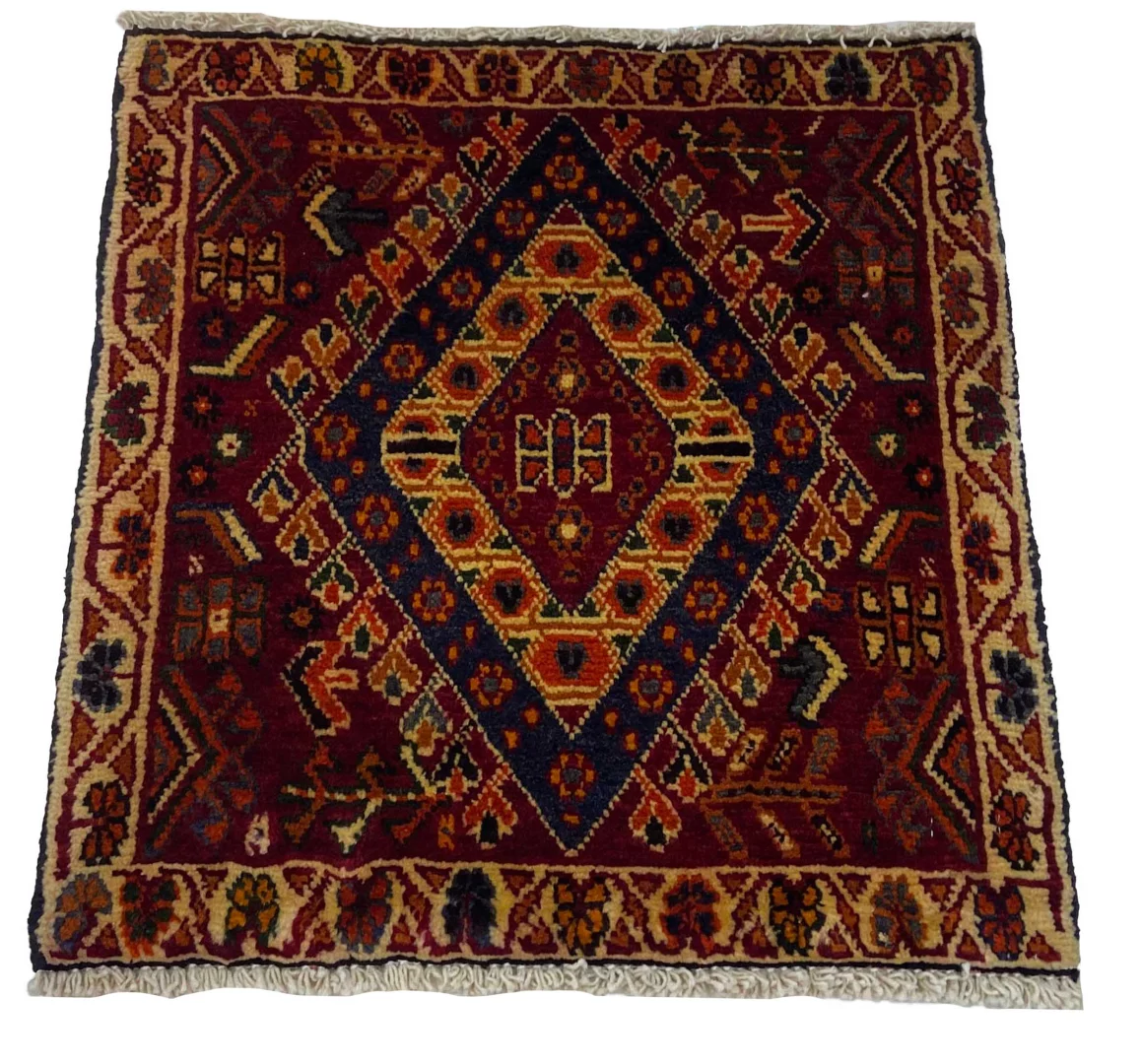
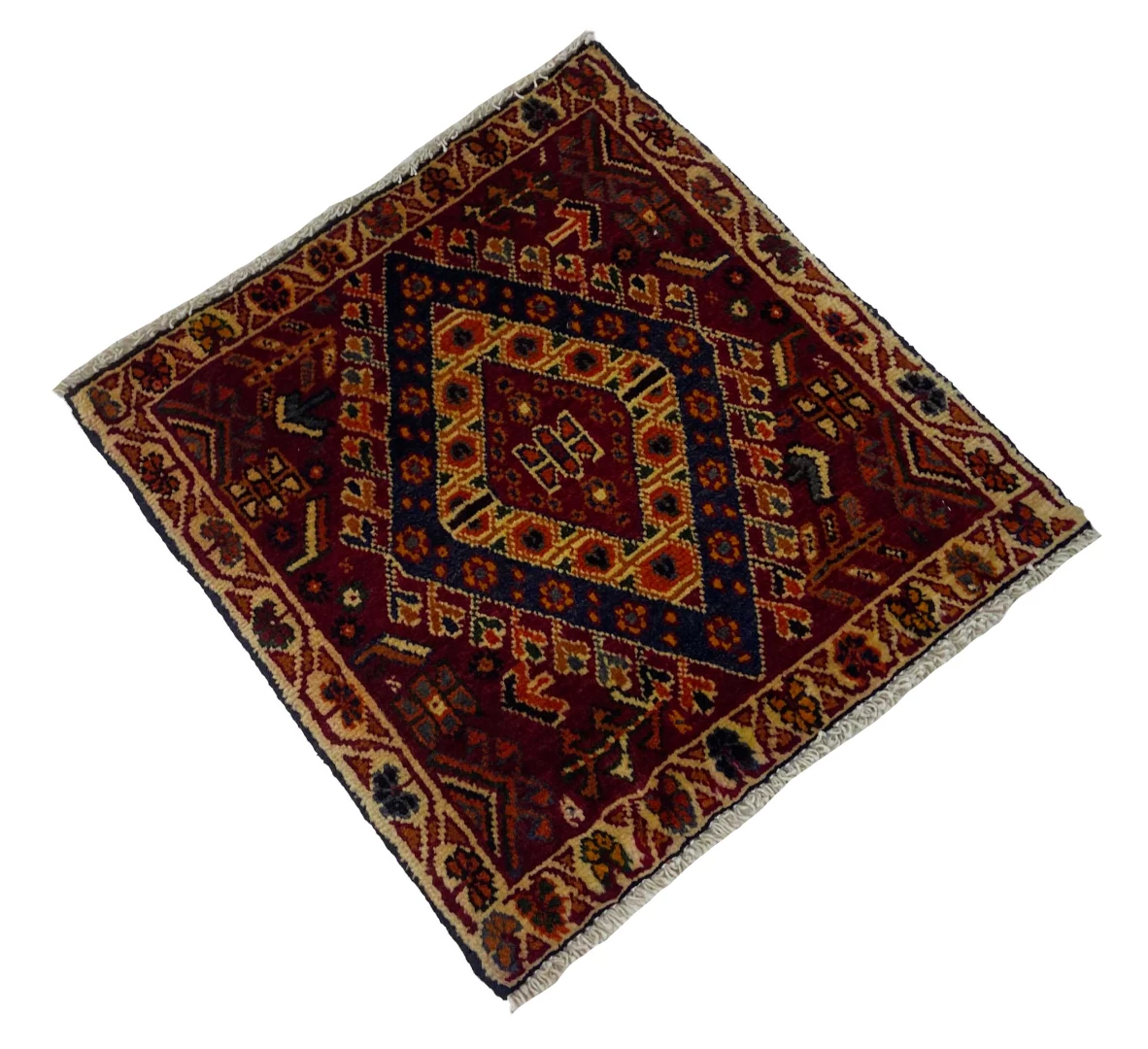
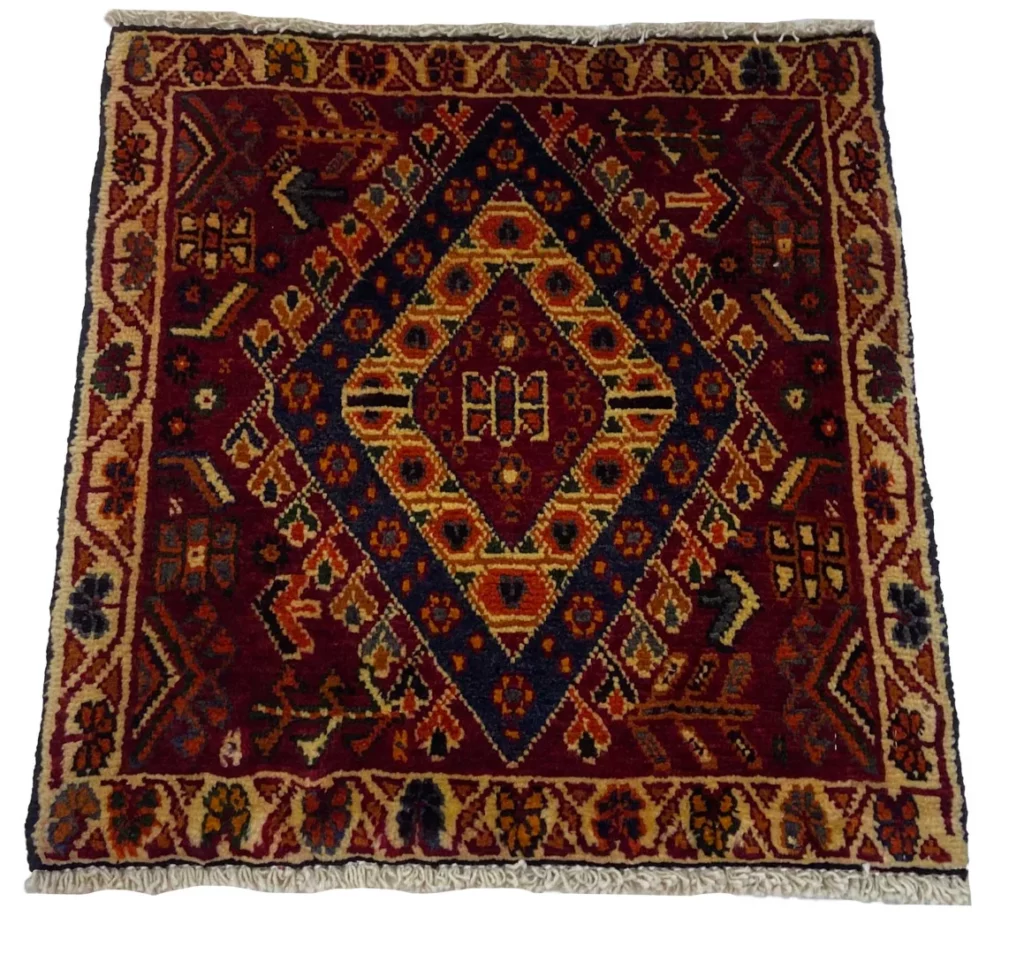
The pattern of this rug consists of geometric ornaments. Clear, structured forms are a characteristic part of Ghashghai design. Geometric compositions may be built from diamonds, angular lines, hooked details, repeated symbols and ordered borders. The regular return of these elements creates rhythm across the surface. Even when the pattern contains many individual signs, the overall impression remains organised and coherent.
Ghashghai pattern language combines inherited forms with an arrangement shaped by the maker. The design is not mechanically transferred from a printed image onto a finished textile. It develops during the act of knotting, drawing on experience, memory and familiar sequences of motifs. For this reason, traditional Ghashghai rugs can be recognisable as a group while still showing individual variations from one piece to another.
The colour treatment is described as lively, with red and brown tones often associated with Ghashghai rugs. These colours give the geometric ornaments a warm presence. Contrasting tones can distinguish the field from the border and make individual shapes easier to read. The exact visual effect depends on how the colours meet the geometry, but the stated palette connects the design with the characteristic warmth of southern Persian rug decoration.
Geometric ornament plays an important role in nomadic rug traditions because it can divide a surface into clearly related zones. A central field may carry the main forms, while borders establish an outer frame and smaller motifs create transitions between the two. Repetition gives the eye a path across the textile. These design principles help explain why a geometric Ghashghai rug can appear both richly detailed and clearly structured.
The relatively high knot density supports the precise execution of the motifs. Smaller elements and finer changes between adjacent forms can be rendered with greater definition. At the same time, the dense knotting is associated with notable resistance to wear. In this sense, design and construction are closely connected: the ornament is created by the knots, and the knots also contribute to the strength of the textile surface.
The visual language of a hand-knotted Ghashghai remains linked to its place of origin. Geometric forms refer to southern Persian tradition and to the heritage of the Ghashghai people, while the personal execution keeps the rug from becoming identical to another example. The result is a one-off object with a recognisable regional character and an individual handmade expression.
Special Features
The defining features of this rug are its hand-knotted construction, natural wool, geometric ornaments and origin in Fars Province in southern Persia. Its knot density falls within the stated range, adding to the detailed appearance of the pattern and to the durable structure associated with Ghashghai rugs. Together, these characteristics make it both a decorative textile and a practical floor covering.
The wool is described as soft, comfortable, dirt-repellent and sustainable. For everyday care, the rug should be vacuumed regularly without using a brush attachment. A damp cloth may be used when necessary. Direct sunlight should be avoided because it can cause the colours to fade. Regular, gentle care helps preserve the freshness and appearance of the hand-knotted surface over time.
High-quality workmanship and quality are given as the condition of the rug. Its compact format, warm red and brown colour associations and geometric design bring together a regional tradition and a usable interior textile. As a hand-knotted Ghashghai piece, it is a unique item rather than identical serial production.
FAQ
What makes a Ghashghai Persian rug distinctive?
Its distinctiveness comes from the combination of several traditional features. Ghashghai rugs originate in southern Persia and Fars Province and are connected with the heritage of the Ghashghai people. They are hand-knotted from natural wool and are known for geometric ornaments and lively colours, often including red and brown tones. The high knot density supports detailed pattern work and is also associated with a strong, durable structure. The rug therefore brings together regional identity, manual craftsmanship and practical use.
How should I care for a Ghashghai rug?
Vacuum the rug regularly with a vacuum cleaner that has no brush attachment. If a local area needs attention, it can be cleaned with a damp cloth. Keep the rug out of direct sunlight, as strong sunlight can fade its colours. Natural wool is described as dirt-repellent and can therefore also be used in areas with frequent traffic. Gentle, consistent care helps retain the surface, colour impression and freshness of the hand-knotted rug for many years.
Where do Ghashghai rugs come from?
Ghashghai rugs come from southern Persia, especially Fars Province. They are associated with the Ghashghai people and with a traditional hand-knotting culture. Their geometric, colourful designs reflect the regional visual language. The rugs are traditionally made by hand and are recognised for their quality. Their origin in Fars places them clearly within the Persian rug traditions of southern Persia while distinguishing them from other groups produced in the same broader region.
To provide the best experiences, we use technologies like cookies to store and/or access device information. Consenting to these technologies will allow us to process data such as browsing behavior or unique IDs on this site. Not consenting or withdrawing consent, may adversely affect certain features and functions.
Functional Always active
The technical storage or access is strictly necessary for the legitimate purpose of enabling the use of a specific service explicitly requested by the subscriber or user, or for the sole purpose of carrying out the transmission of a communication over an electronic communications network.
Preferences
The technical storage or access is necessary for the legitimate purpose of storing preferences that are not requested by the subscriber or user.
Statistics
The technical storage or access that is used exclusively for statistical purposes.The technical storage or access that is used exclusively for anonymous statistical purposes. Without a subpoena, voluntary compliance on the part of your Internet Service Provider, or additional records from a third party, information stored or retrieved for this purpose alone cannot usually be used to identify you.
Marketing
The technical storage or access is required to create user profiles to send advertising, or to track the user on a website or across several websites for similar marketing purposes.
 SECURE PAYMENT
 SHIPPING PARTNERS


