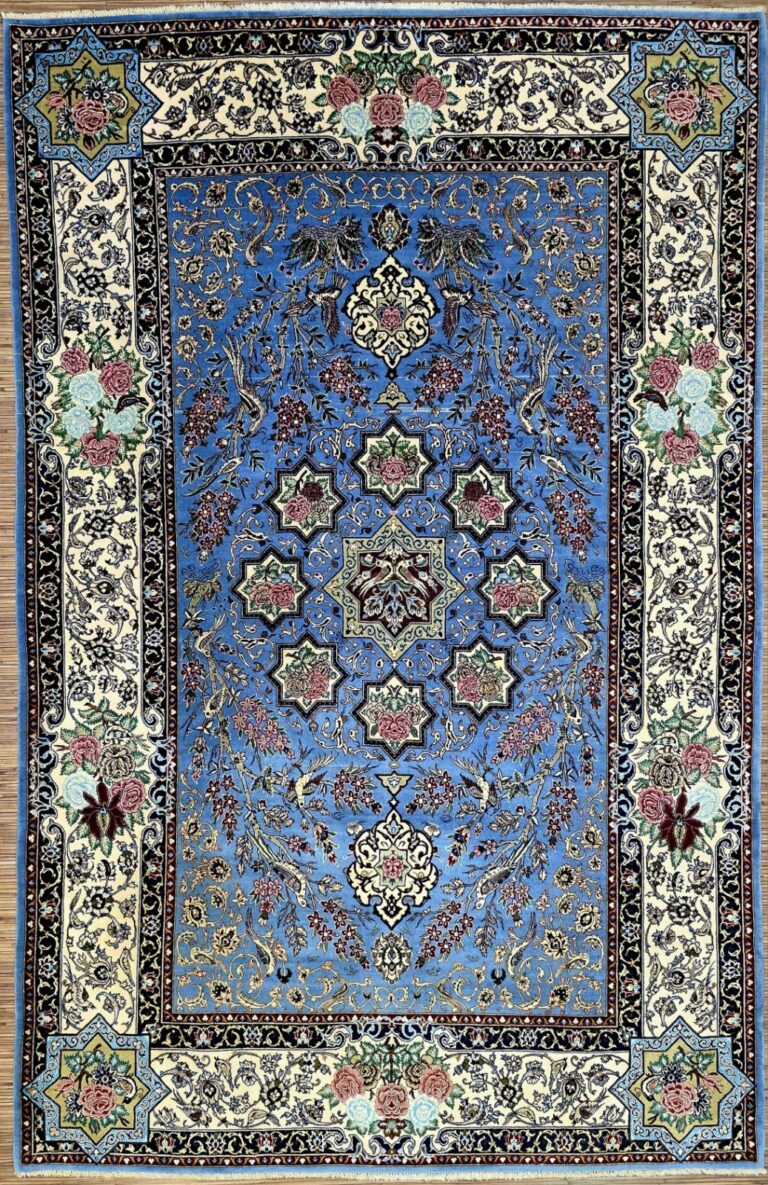
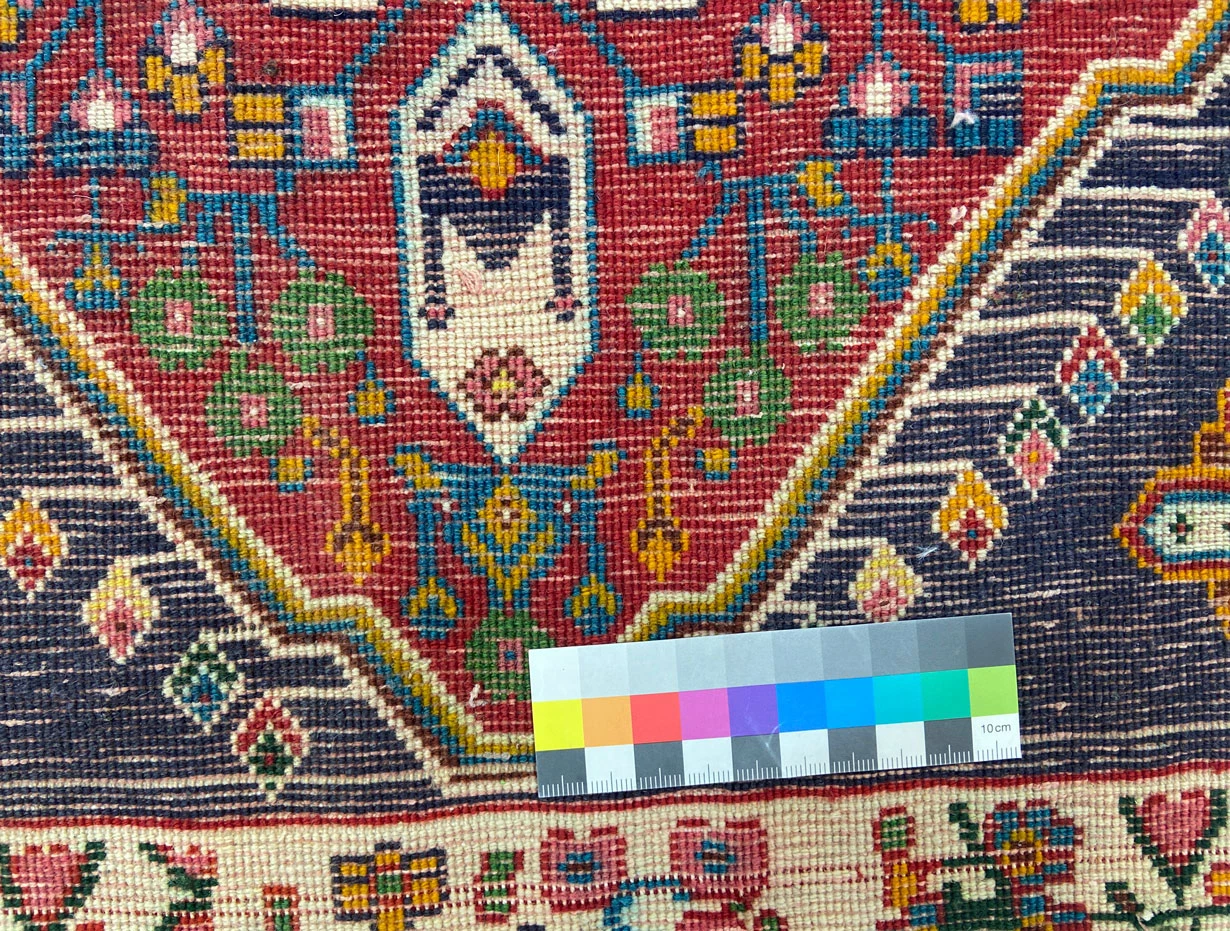
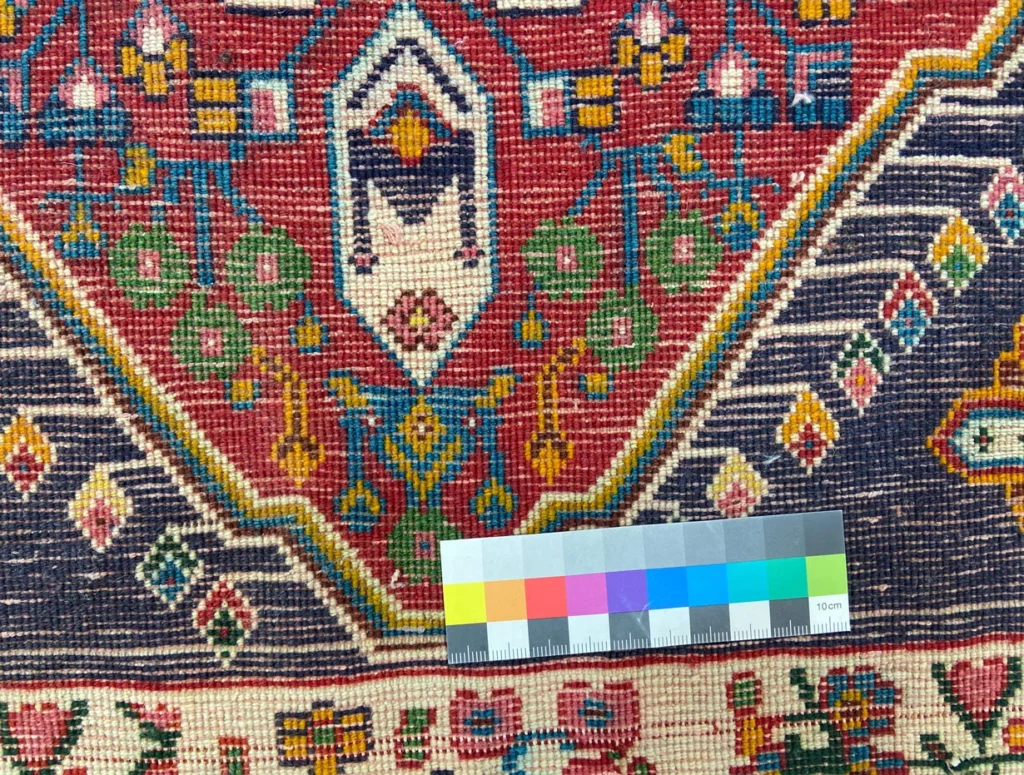
This Ghashghai Persian rug is hand-knotted from natural wool. Handmade construction makes each individual piece a distinct rug rather than a standardised industrial product. The wool forms the pile and gives the surface the characteristic tactile quality associated with this material. In this rug, the woollen pile is combined with a knot density of 180,000 to 250,000 knots per square metre.
Ghashghai rugs are traditionally made by nomadic craftspeople. The work may be carried out in the open air and relies on practical skill together with direct creative decisions made during the knotting process. Instead of repeating a strictly predetermined design, the weaver develops the arrangement through craft knowledge and personal judgement. This approach affects both the execution and the individual character of every rug.
Natural wool is used in Ghashghai rugs for its pleasant handle and its ability to show rich colour. Together with hand-knotting, it creates a textile surface in which traditional making and clearly visible material character are closely connected. The stated knot density indicates a finely worked knotting structure, while the design remains recognisably linked to the Ghashghai tradition.
Origin and Tradition
The rug comes from the Ghashghai region in southern Persia, in Fars Province. Ghashghai rugs are associated with the nomadic Ghashghai peoples, whose textile traditions developed alongside a mobile way of life and practical self-sufficiency. In this setting, rugs and other woven or knotted textiles were more than utilitarian objects. They also provided a surface for inherited signs, personal expression and the continuation of cultural knowledge.
Fars is one of the important carpet regions of southern Iran. Its textile traditions include both nomadic and settled forms of production. Ghashghai work is especially closely associated with the creative flexibility of a mobile craft tradition: designs are not necessarily executed from one rigid pattern used identically in every piece. They may be formed during the knotting process from remembered motifs, established conventions and the weaver’s own ideas. As a result, rugs from the same tradition can share a visual language without being exact copies of one another.
The Ghashghai tradition is often recognised by a direct and expressive use of form. Geometric ornaments suit a knotting process in which recurring motifs, inherited shapes and free variation can be combined. This relationship between tradition and individual execution distinguishes nomadic rugs from strictly standardised production. It also explains why the arrangement of motifs can have its own rhythm and proportions in every one-off piece.
Ghashghai rugs are described as being of high quality in comparison with other carpet types from the region, including Shiraz rugs. This comparison reflects the regard given to their craftsmanship and materials. Their regional identity remains decisive: this is a Persian rug from Fars, connected with the Ghashghai tradition rather than with another Iranian provenance.
The history represented by such a rug does not depend only on its age. It is also present in the continuation of an established way of making textiles. Knotting brings together material knowledge, patience and familiarity with motifs. In a Ghashghai rug, this tradition appears in a form that is both functional and culturally shaped. Its origin in southern Persia and its connection with the Ghashghai peoples provide the essential context for understanding the piece.
Design and Pattern
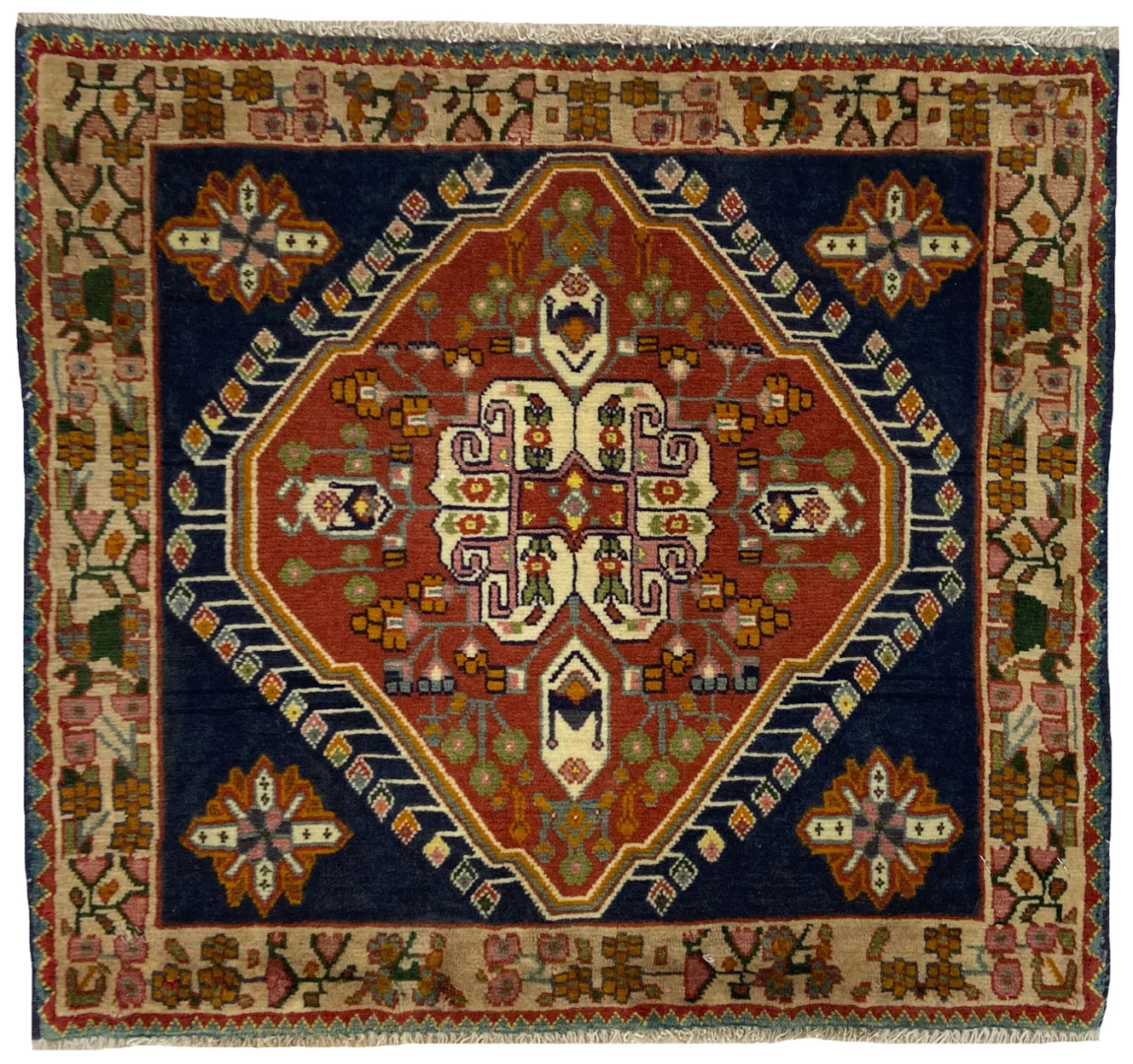
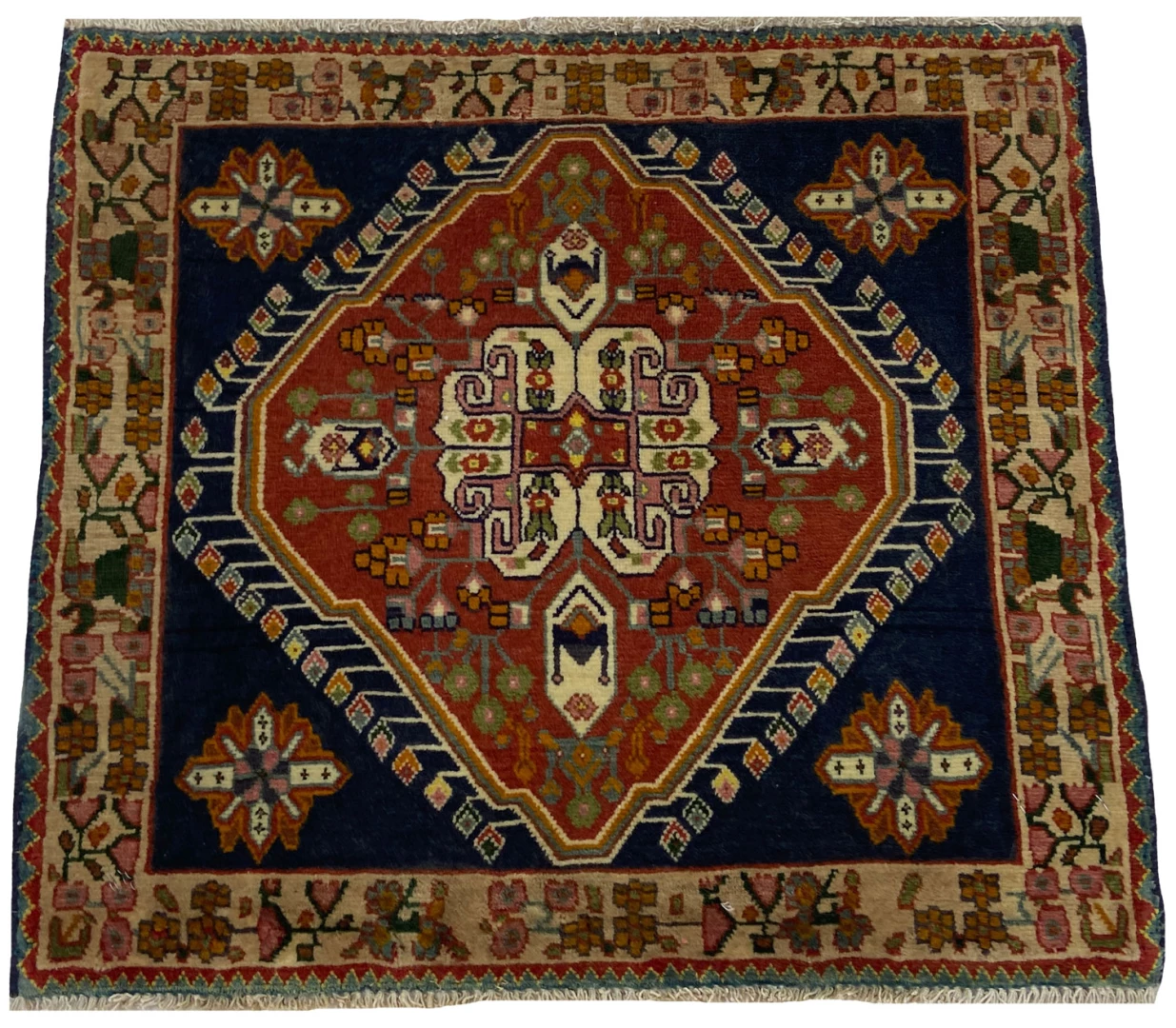
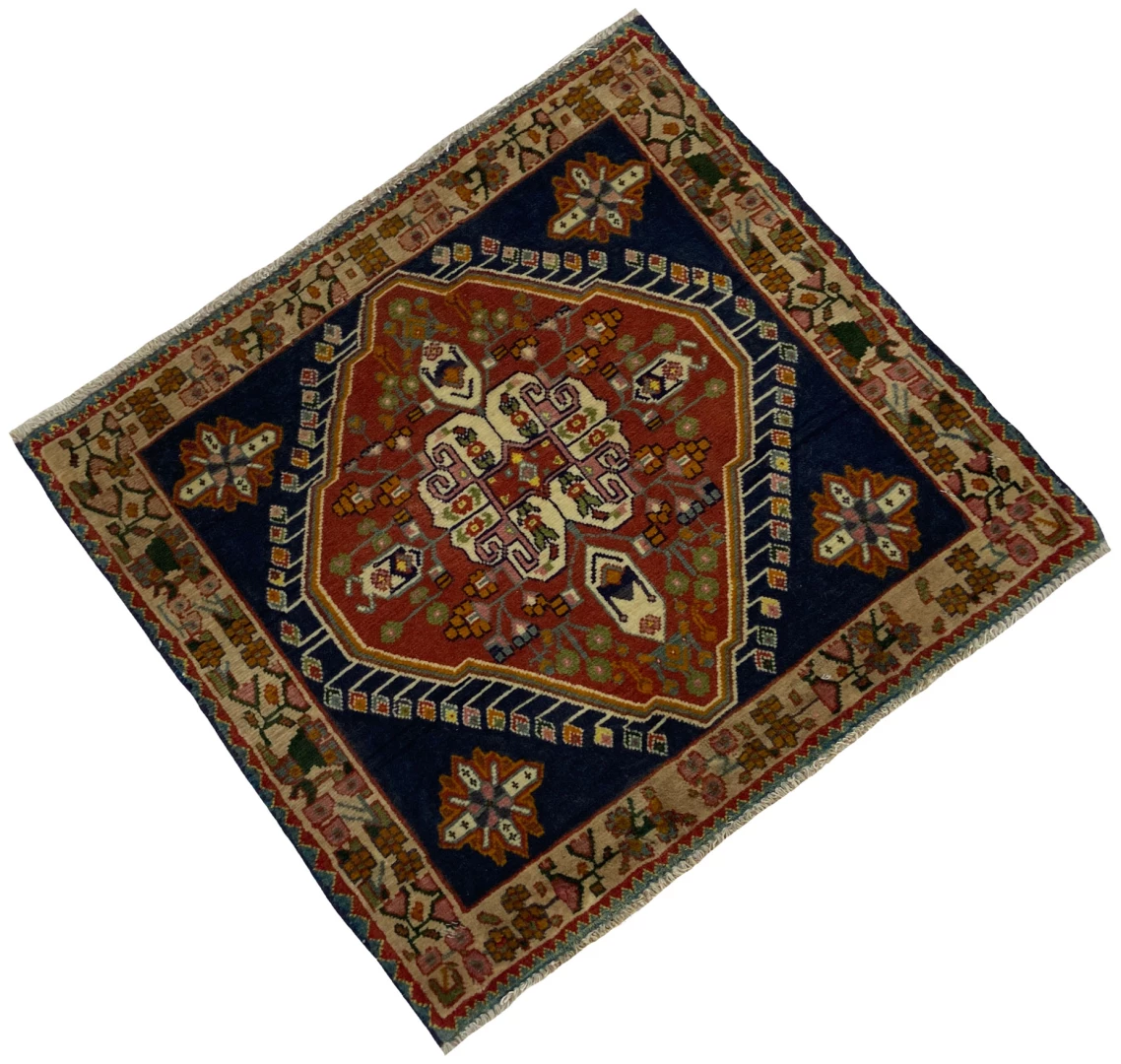
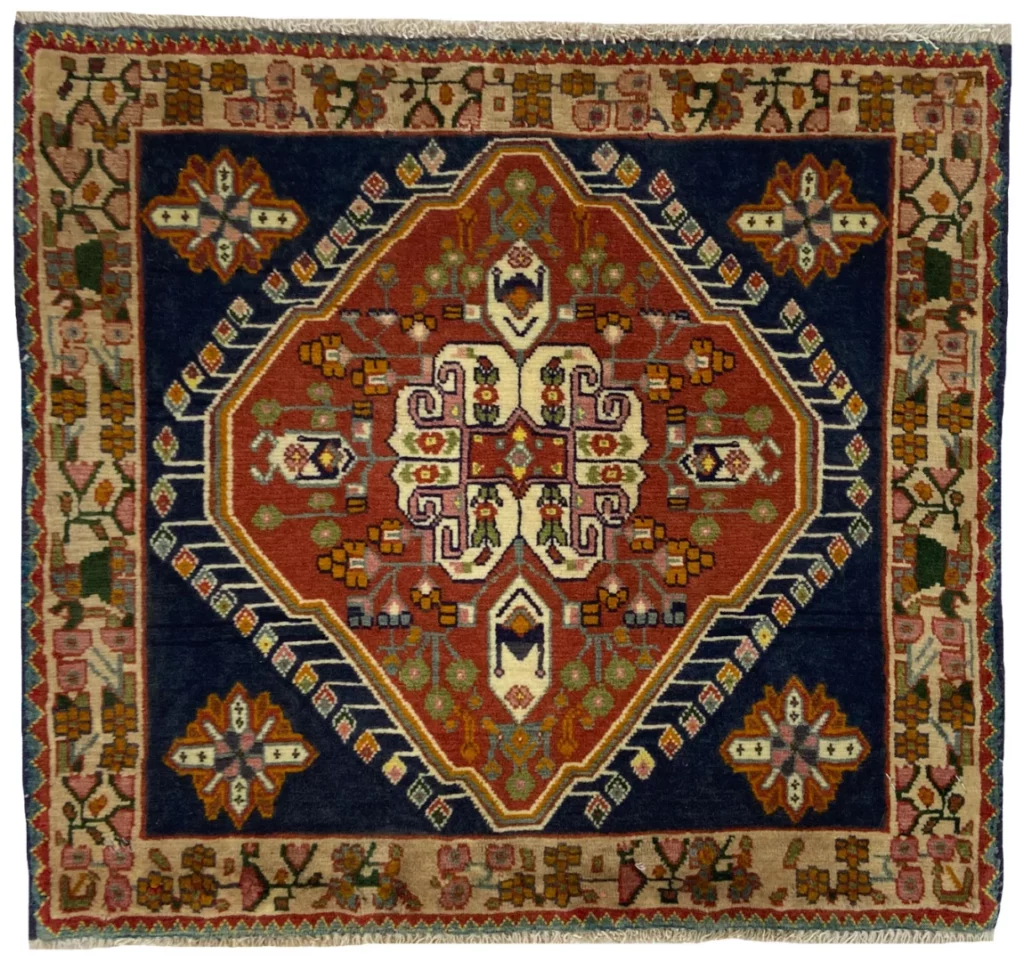
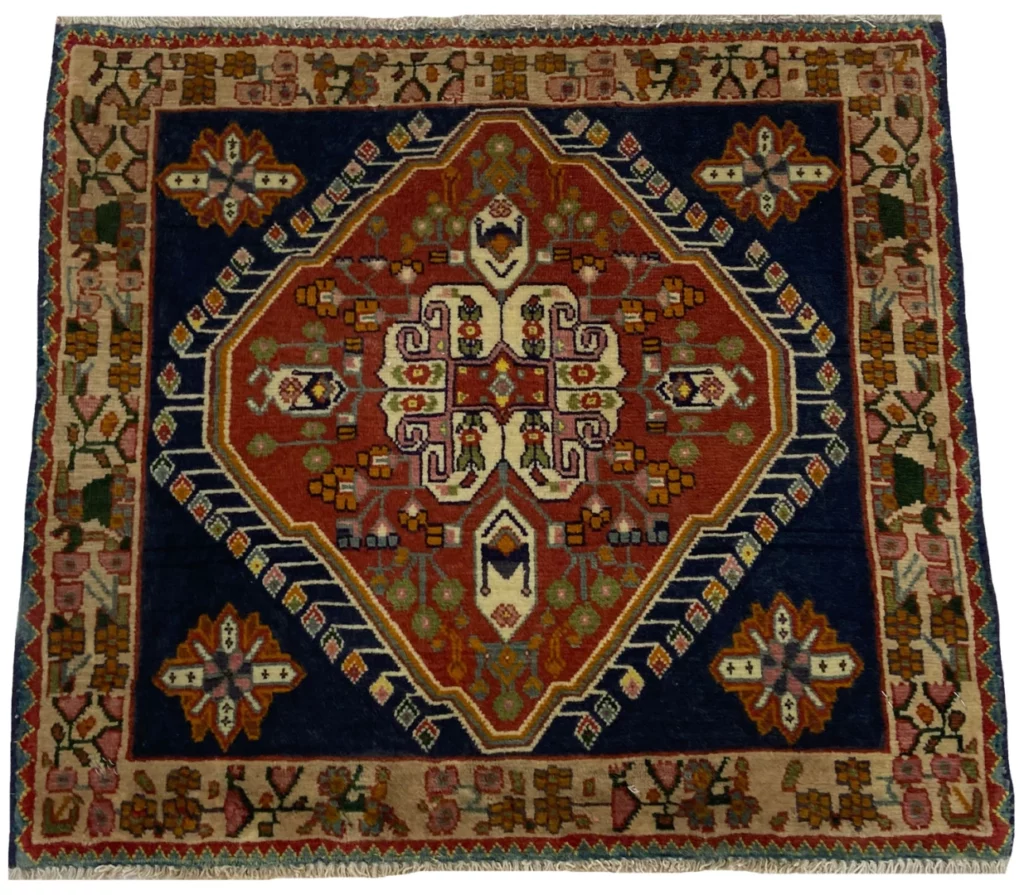
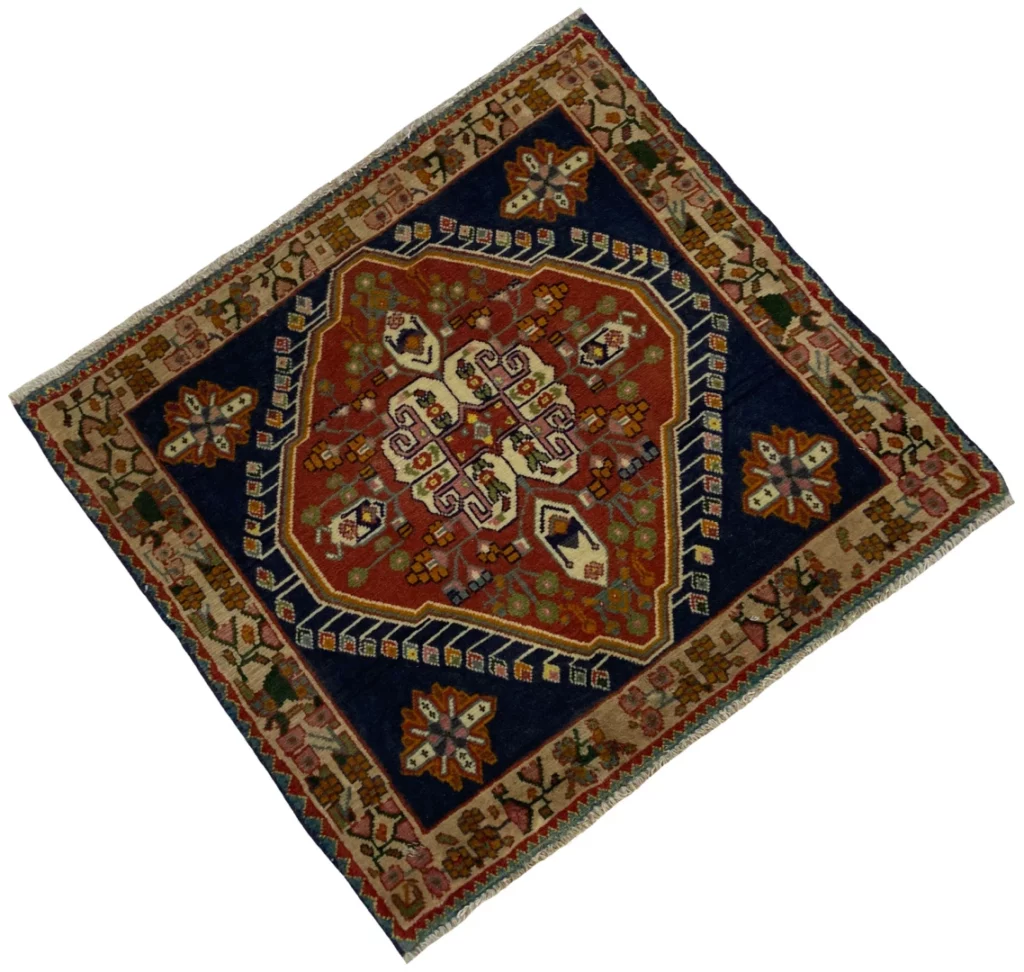
The pattern of this rug consists of geometric ornaments, with a colour palette of reds and browns. The combination creates a warm visual field while keeping the composition clearly structured. The ornaments are not merely decorative additions; they belong to a nomadic design language in which forms are preserved across generations while being adjusted through individual making.
Geometric patterning has an important place in many Ghashghai rugs. Designs may be built from diamonds, angular shapes, stepped lines, hooked forms or other abstract signs. Such elements can be translated into rows of colour and groups of knots during the weaving process. This produces a legible structure without relying on naturalistic representation. For this rug, the supplied pattern description is limited to geometric ornaments; no additional individual motifs or exact border arrangement is specified.
A nomadic ornament can carry several layers of meaning. It may refer to an inherited form, take its place within a symbolic vocabulary, or function primarily as a recognisable element of composition. The meaning of one isolated sign should not be assigned automatically. What can be stated clearly is the connection between the geometric design and the Ghashghai carpet tradition of Fars.
Red and brown belong to a warm group of colours that can set geometric lines and areas apart from one another. Red contributes a vivid, strong component, while brown connects the palette with earthy colour fields. Used together, these tones create a design that can be placed in a traditionally furnished interior as well as alongside simple modern furniture. The source specifically identifies the rug as suitable for both traditional and modern furnishing styles.
The freedom of the making process is an important part of the pattern’s character. When a weaver works without a completely pre-planned design, proportions, repetitions and transitions may vary from one area to another. In a handmade Ghashghai rug, these variations are part of the visual identity rather than a flaw in standardised reproduction. Each piece therefore reflects the identity of the artist who made it.
Unlike the floral designs often associated with Kerman rugs, this Ghashghai rug is defined by geometric ornaments. Tabriz rugs, by contrast, are known for detailed designs and fine workmanship. These regional comparisons help place the Ghashghai visual language in context without assigning the rug to a different origin.
Special Features
The distinguishing features of this rug are its Ghashghai origin, hand-knotted construction, natural wool, and geometric ornaments in red and brown tones. Nomadic production in the open air and the absence of a completely predetermined design contribute to individual pattern arrangements. Each piece is therefore distinct and reflects the identity of its maker.
The rug can be used in a living room, bedroom or hallway. It works with traditional as well as modern interior styles. Its warm palette and geometric pattern give it a clear decorative role, while the wool provides a pleasant tactile surface. The knot density and the wool used are also associated with durability and long service life.
FAQ
How should I care for my Ghashghai Persian rug?
Regular vacuuming supports everyday care. The rug should be protected from direct sunlight. If a spill occurs, treat the affected area carefully with a damp cloth. For a more thorough cleaning, professional rug cleaning is recommended so that the wool and hand-knotted construction can be handled appropriately.
What makes Ghashghai rugs unique?
Ghashghai rugs are made by nomadic craftspeople and may be knotted in the open air. The design develops without a completely pre-planned pattern, which produces individual designs and arrangements. Their high knot density and the use of high-quality natural wool also contribute to their distinctive character.
Where can Ghashghai rugs be used?
A Ghashghai rug can be used in different areas of the home, including a living room, bedroom or hallway. The geometric ornaments and warm red and brown tones can be combined with traditional or modern interior styles. The rug can therefore serve in several rooms as both textile decoration and a functional furnishing element.
To provide the best experiences, we use technologies like cookies to store and/or access device information. Consenting to these technologies will allow us to process data such as browsing behavior or unique IDs on this site. Not consenting or withdrawing consent, may adversely affect certain features and functions.
Functional Always active
The technical storage or access is strictly necessary for the legitimate purpose of enabling the use of a specific service explicitly requested by the subscriber or user, or for the sole purpose of carrying out the transmission of a communication over an electronic communications network.
Preferences
The technical storage or access is necessary for the legitimate purpose of storing preferences that are not requested by the subscriber or user.
Statistics
The technical storage or access that is used exclusively for statistical purposes.The technical storage or access that is used exclusively for anonymous statistical purposes. Without a subpoena, voluntary compliance on the part of your Internet Service Provider, or additional records from a third party, information stored or retrieved for this purpose alone cannot usually be used to identify you.
Marketing
The technical storage or access is required to create user profiles to send advertising, or to track the user on a website or across several websites for similar marketing purposes.
 SECURE PAYMENT
 SHIPPING PARTNERS