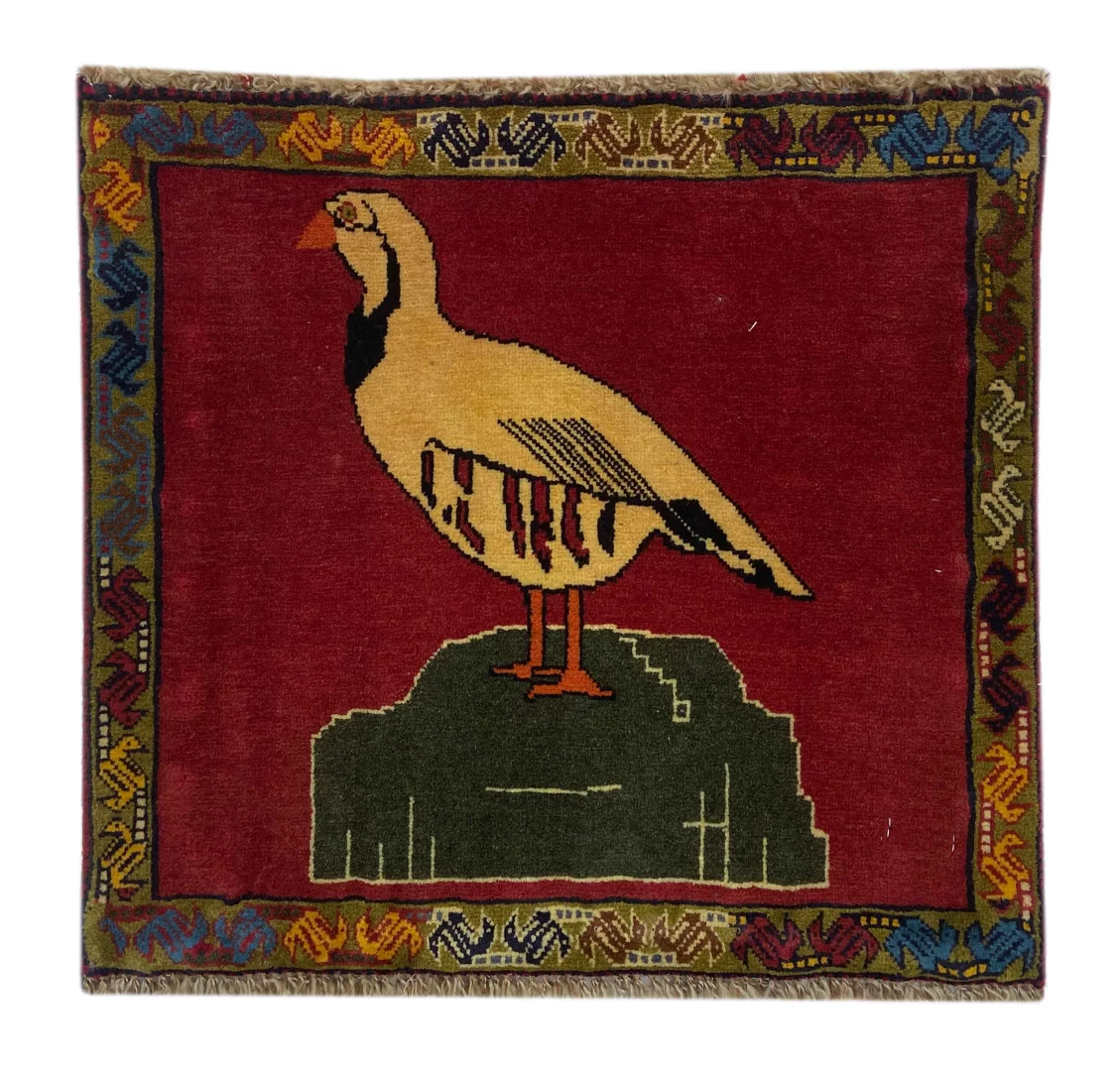
This Ghashghai Persian rug is hand-knotted from natural wool. Wool gives a traditionally made rug a pleasant surface and also offers insulating properties that can support a balanced indoor climate. It is practical for regular use when cared for gently and consistently. The material named for this rug is natural wool, and the pile is formed through traditional hand knotting.
Hand knotting makes the construction a manual process from one stage to the next. Individual knots are worked into the foundation before the surface is finished. Ghashghai rugs are traditionally knotted without a fully predetermined design and often in the open air. This way of working brings together learned technical skill and improvisation. The pattern develops during the making of the rug rather than being transferred entirely from a fixed plan.
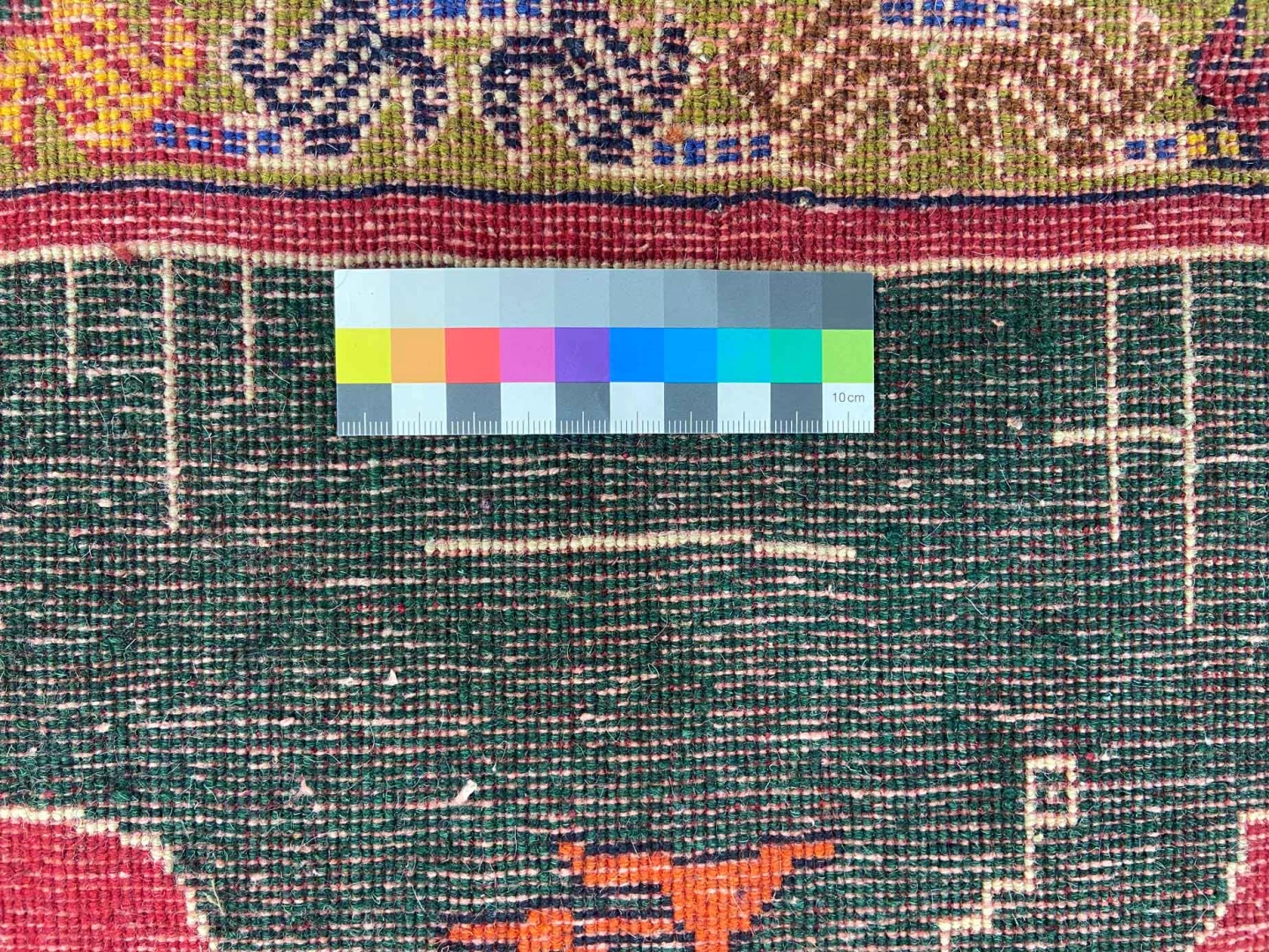
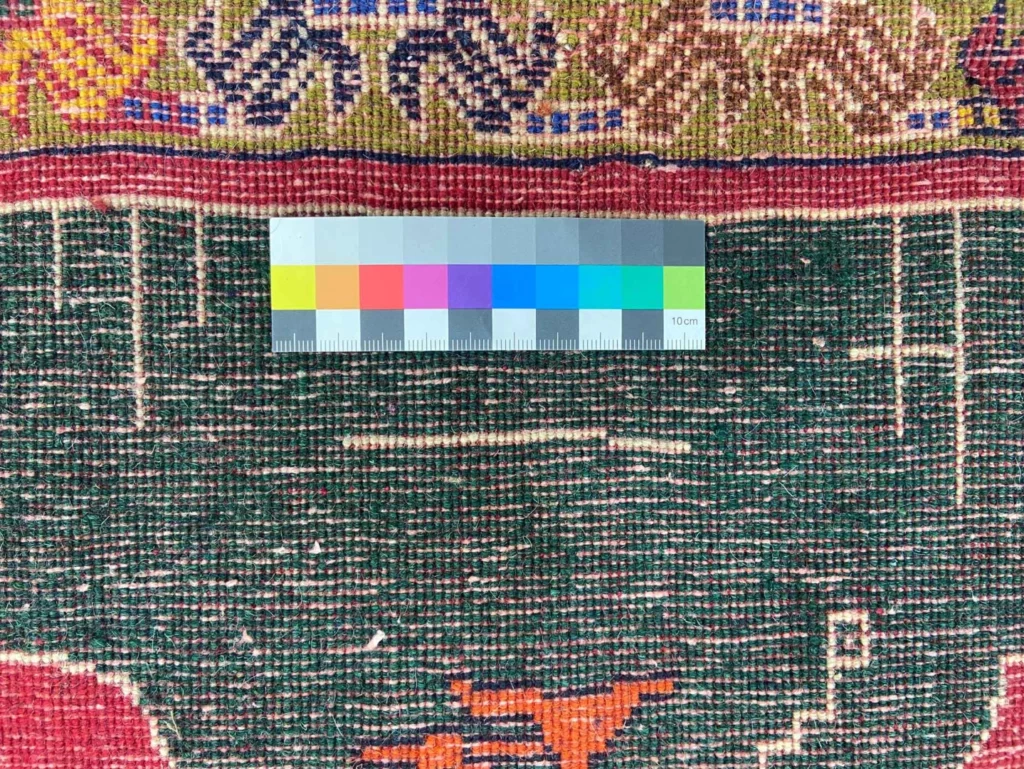
The knot density of this rug is between 180,000 and 250,000 knots per square metre. Within this weaving tradition, such density is associated with a firmly made, durable surface and supports a clearly developed pattern. The rug is new. Its natural wool and hand-knotted construction define the material and craftsmanship described for this individual piece.
Origin and Tradition
Ghashghai rugs come from the Ghashghai region in southern Persia. The region lies in Fars Province in the south of Iran. These rugs are traditionally made by the nomadic Ghashghai tribes. Their textile culture is closely connected with a mobile way of life and with the passing of practical weaving knowledge through the community.
The making of a Ghashghai rug is more than a sequence of technical operations. Wool, knotting, colour and pattern are brought together within a regional tradition. Knowledge of how to construct a rug is learned through practice and handed on from one generation to the next. Hand-knotted production therefore remains connected with the history and daily life of the Ghashghai people.
A less schematic design process is one of the features traditionally associated with this work. Ghashghai rugs are made without a previously completed plan. During the process, the weaver responds to the design as it emerges and develops the composition through experience. This distinguishes the tradition from production in which every element is copied from a fully fixed drawing. Freedom in the process creates variation while preserving a recognisable regional character.
The traditional practice of working in the open air also reflects the nomadic background of Ghashghai weaving. Production was not limited to permanent workshops, but could be integrated into the circumstances of a mobile community. The rug takes shape gradually through material, knowledge and improvisation. This combination helps explain why rugs from the same region can share important characteristics while still differing in their arrangement of forms.
Fars is home to several important rug traditions. Shiraz rugs are also associated with the region and are often distinguished by simpler designs and a lower knot density. Qashqai rugs are often known for floral patterns, while Bakhtiari rugs are associated with complex geometric forms and vivid colours. These neighbouring traditions illustrate the variety of Fars weaving culture; their names should not be treated as interchangeable origins.
Design and Pattern
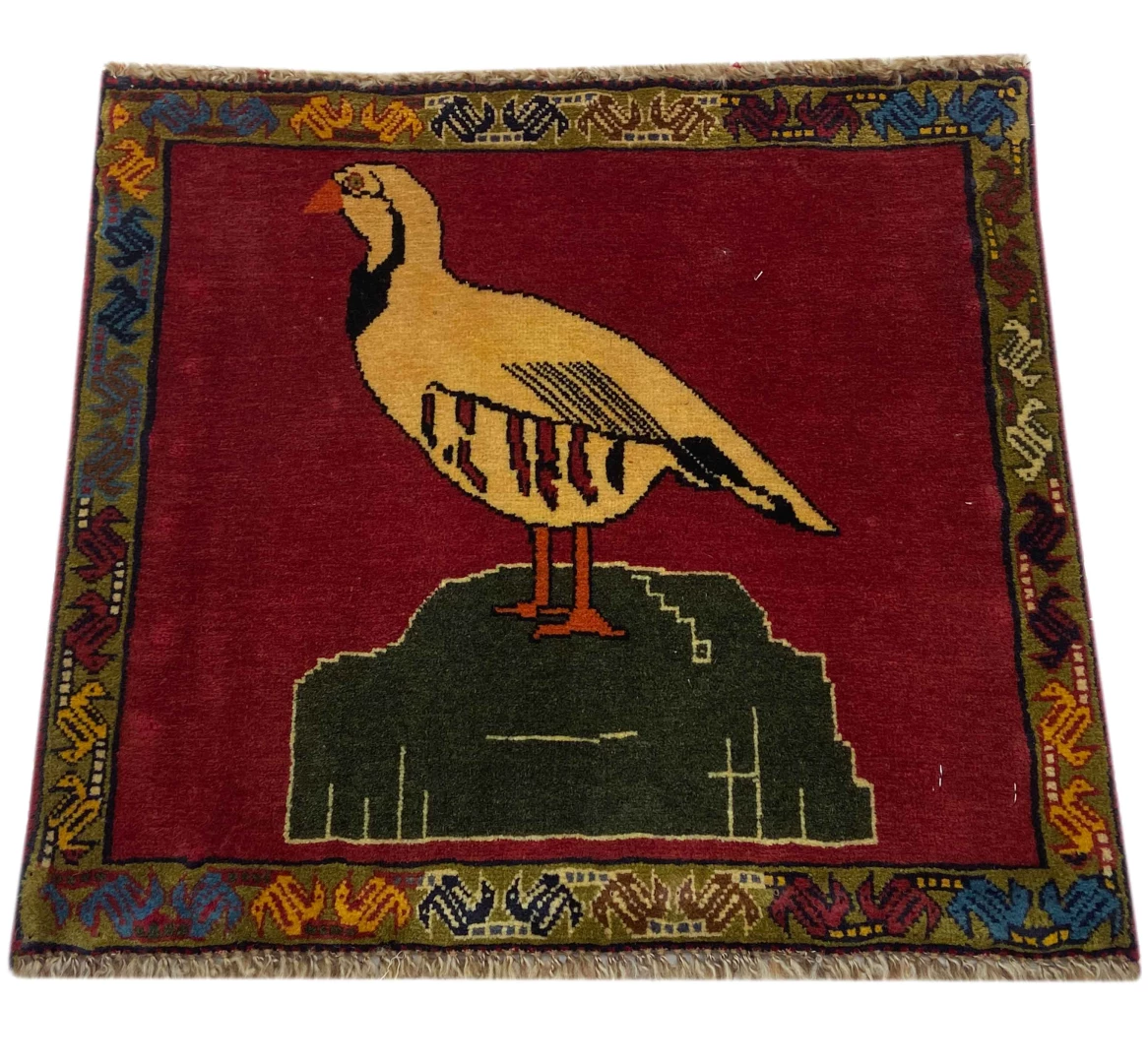
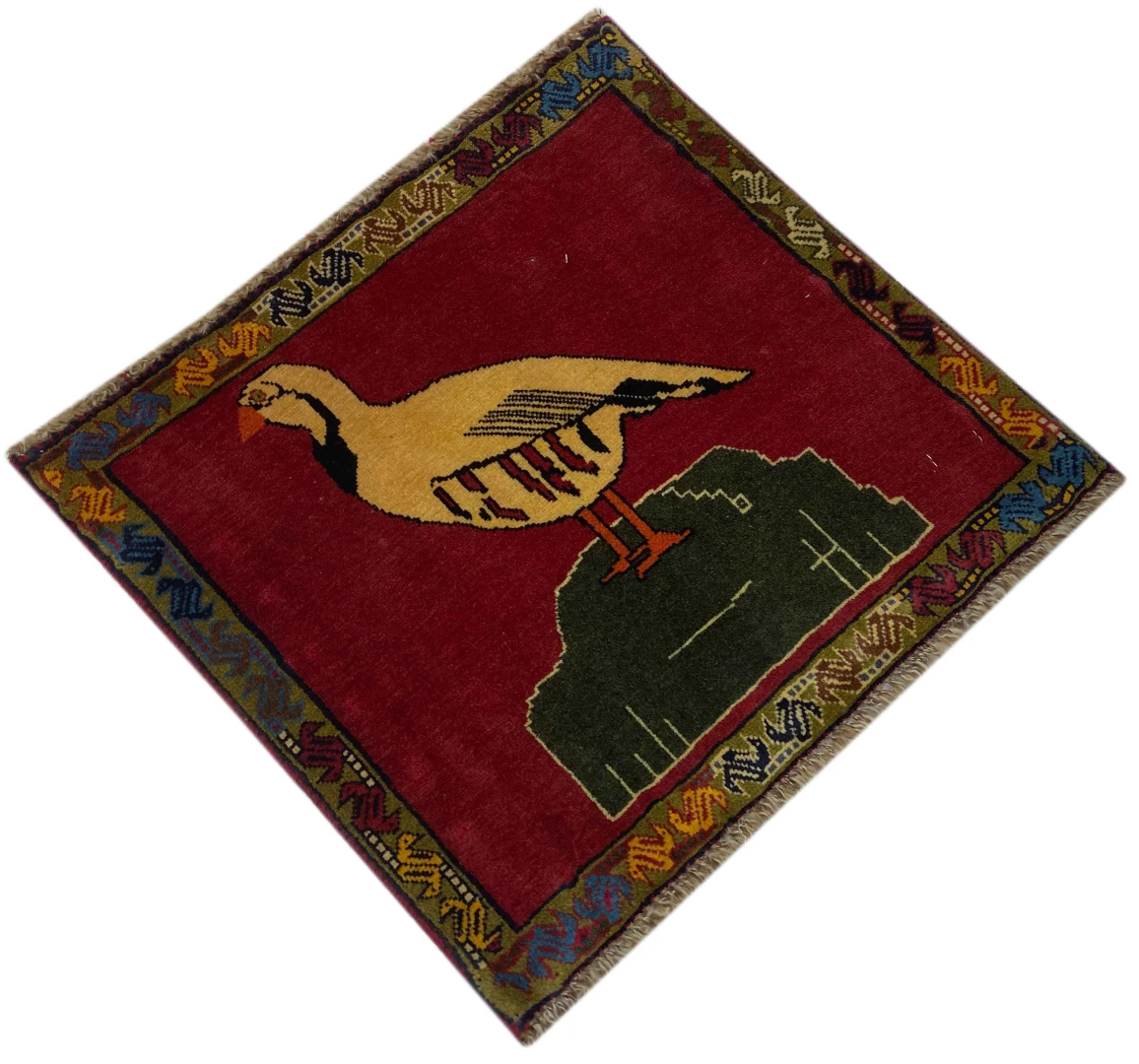
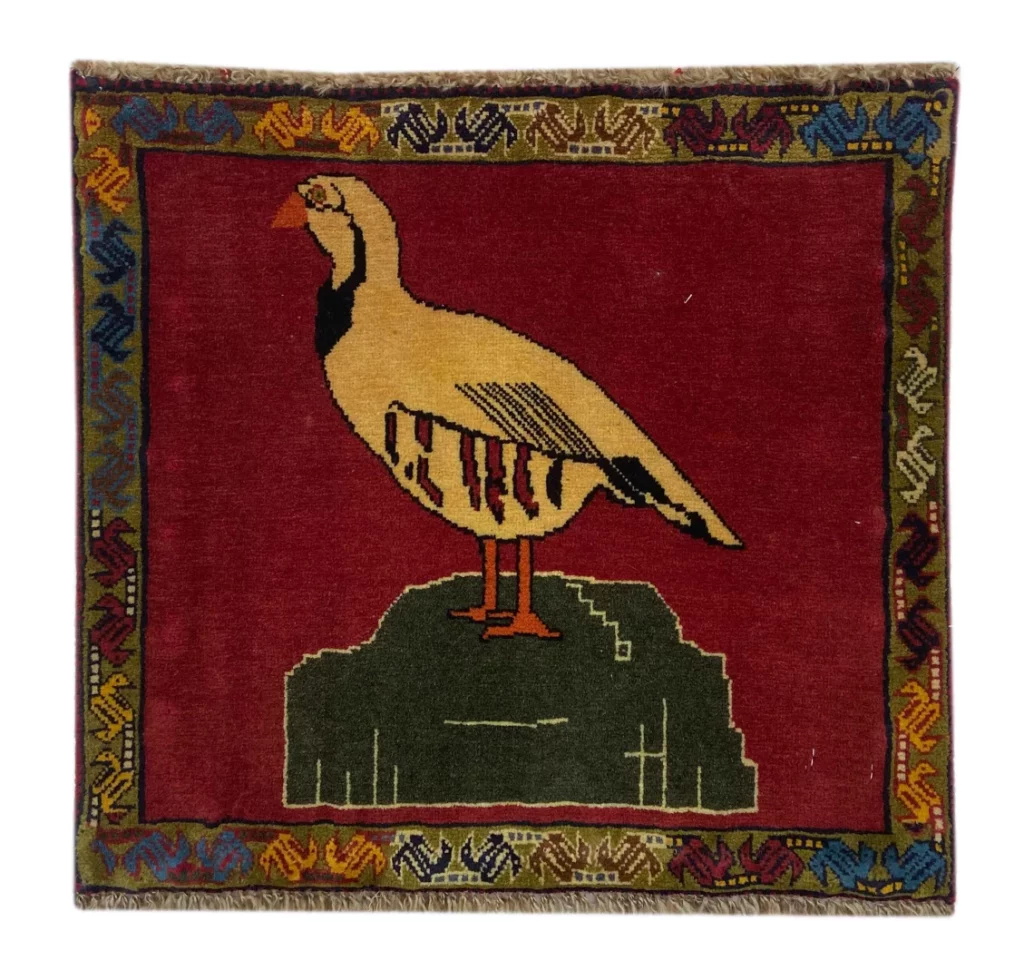
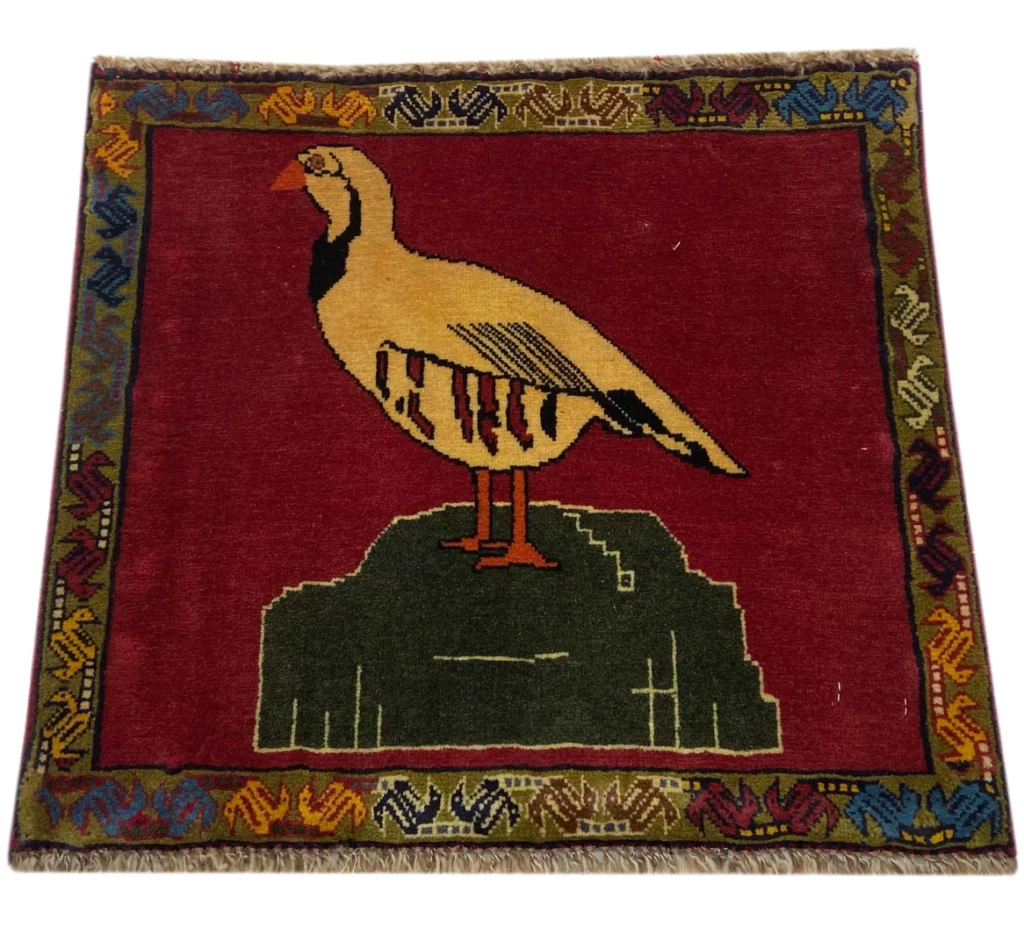
The pattern of this rug consists of geometric ornaments. Geometric design is an important part of Ghashghai weaving. Lines, diamonds, angles, repeated compartments and stylised forms can be arranged into a unified composition. Rather than reproducing a single object naturalistically, this visual language relies on rhythm, balance and the relationship between shapes.
The colours of this rug are red and brown tones. In regional rug design, red may function as a strong ground or accent, while brown creates an earthy visual balance. Together they form a warm palette. In the Ghashghai context described for this rug, these colours are associated with the natural surroundings of southern Persia. Their effect comes from the way they interact with the geometric ornaments, not from either colour alone.
Ghashghai patterning combines repetition with variation. A geometric motif may recur while changing in orientation, scale or position within the composition. Since the rug is traditionally made without a completely predetermined plan, the process allows these differences to appear. The result is not random decoration. It is an improvised arrangement guided by the weaver’s knowledge of regional forms.
Ornament also structures the surface. It divides areas of the design, creates transitions between pattern fields and gives the eye a recurring rhythm. Strong outlines can be set beside smaller forms, while colour contrast keeps the geometry readable. In this rug, the geometric vocabulary and the red-and-brown palette work together to establish its visual identity.
Ghashghai rugs are widely understood as an independent expression of southern Persian nomadic textile tradition. Their patterns are not merely added decoration but part of an inherited visual language. At the same time, hand production leaves room for the individual maker. Each rug can therefore show its own combination of ornaments and colour areas while remaining connected to the Ghashghai tradition.
Special Features
The defining features of this rug are its Ghashghai origin, hand-knotted construction and natural wool. It also has a knot density of 180,000 to 250,000 knots per square metre, geometric ornaments and a colour range of red and brown tones. Its condition is new.
Among Ghashghai rugs, the combination of a substantial knot density, traditional handwork and natural wool is associated with resistance to wear and long service. The free, not fully predetermined approach to design adds another characteristic. It shows that the ornament can grow out of the making process itself, giving the regional tradition both a technical and an individual dimension.
This rug is intended for indoor use. Despite their robust construction, Ghashghai rugs are not suitable for permanent outdoor use. Direct sunlight should be avoided so that the colours and material remain protected over time. Regular thorough vacuuming and careful dabbing of stains are the care measures specified for this type of use.
FAQ
How should I care for a Ghashghai Persian rug?
Vacuum the rug thoroughly on a regular basis so that loose dirt does not remain in the pile. Protect it from direct sunlight, which can affect colours and material over time. If a stain appears, dab it immediately with a damp cloth rather than rubbing the area. Rubbing can put additional stress on the surface. If more extensive treatment is needed, consult a professional rug-cleaning specialist.
How can I assess the quality of a Persian rug?
Knot density, material and the level of detail in the design are important points when assessing a Persian rug. A higher number of knots per square metre can support finer pattern definition. Natural wool is also regarded as an indicator of quality. This Ghashghai rug is described with a knot density of 180,000 to 250,000 knots per square metre, natural wool and geometric ornaments. These characteristics should be considered together rather than in isolation.
Can I use a Ghashghai Persian rug outdoors?
A Ghashghai Persian rug is not suitable for permanent outdoor use. Although its traditional construction is described as robust and durable, outdoor conditions can affect colours and material over time. It should therefore be placed indoors. An indoor setting gives the natural wool and the red-and-brown palette better protection and corresponds to the intended use of the rug.
To provide the best experiences, we use technologies like cookies to store and/or access device information. Consenting to these technologies will allow us to process data such as browsing behavior or unique IDs on this site. Not consenting or withdrawing consent, may adversely affect certain features and functions.
Functional Always active
The technical storage or access is strictly necessary for the legitimate purpose of enabling the use of a specific service explicitly requested by the subscriber or user, or for the sole purpose of carrying out the transmission of a communication over an electronic communications network.
Preferences
The technical storage or access is necessary for the legitimate purpose of storing preferences that are not requested by the subscriber or user.
Statistics
The technical storage or access that is used exclusively for statistical purposes.The technical storage or access that is used exclusively for anonymous statistical purposes. Without a subpoena, voluntary compliance on the part of your Internet Service Provider, or additional records from a third party, information stored or retrieved for this purpose alone cannot usually be used to identify you.
Marketing
The technical storage or access is required to create user profiles to send advertising, or to track the user on a website or across several websites for similar marketing purposes.
 SECURE PAYMENT
 SHIPPING PARTNERS


