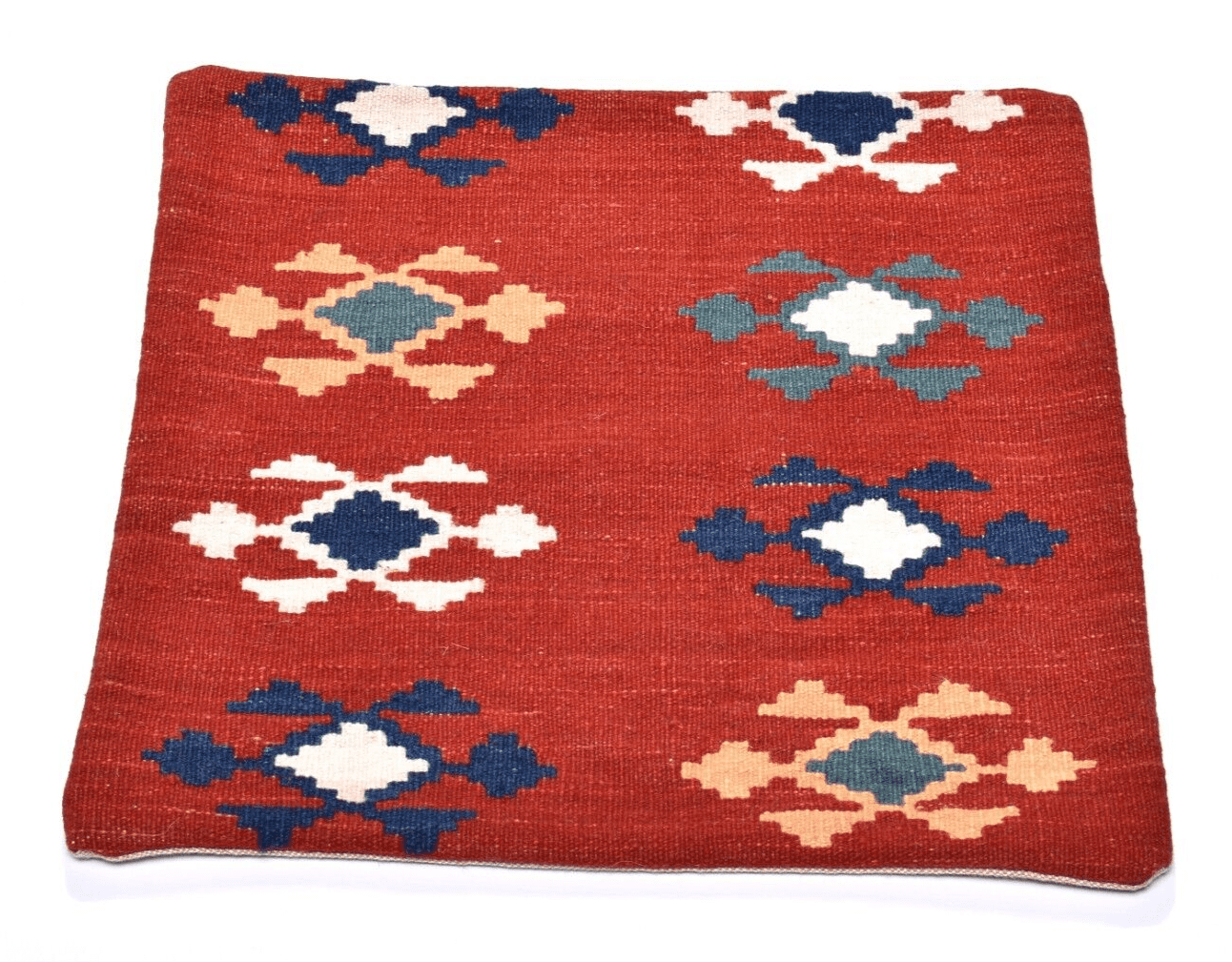
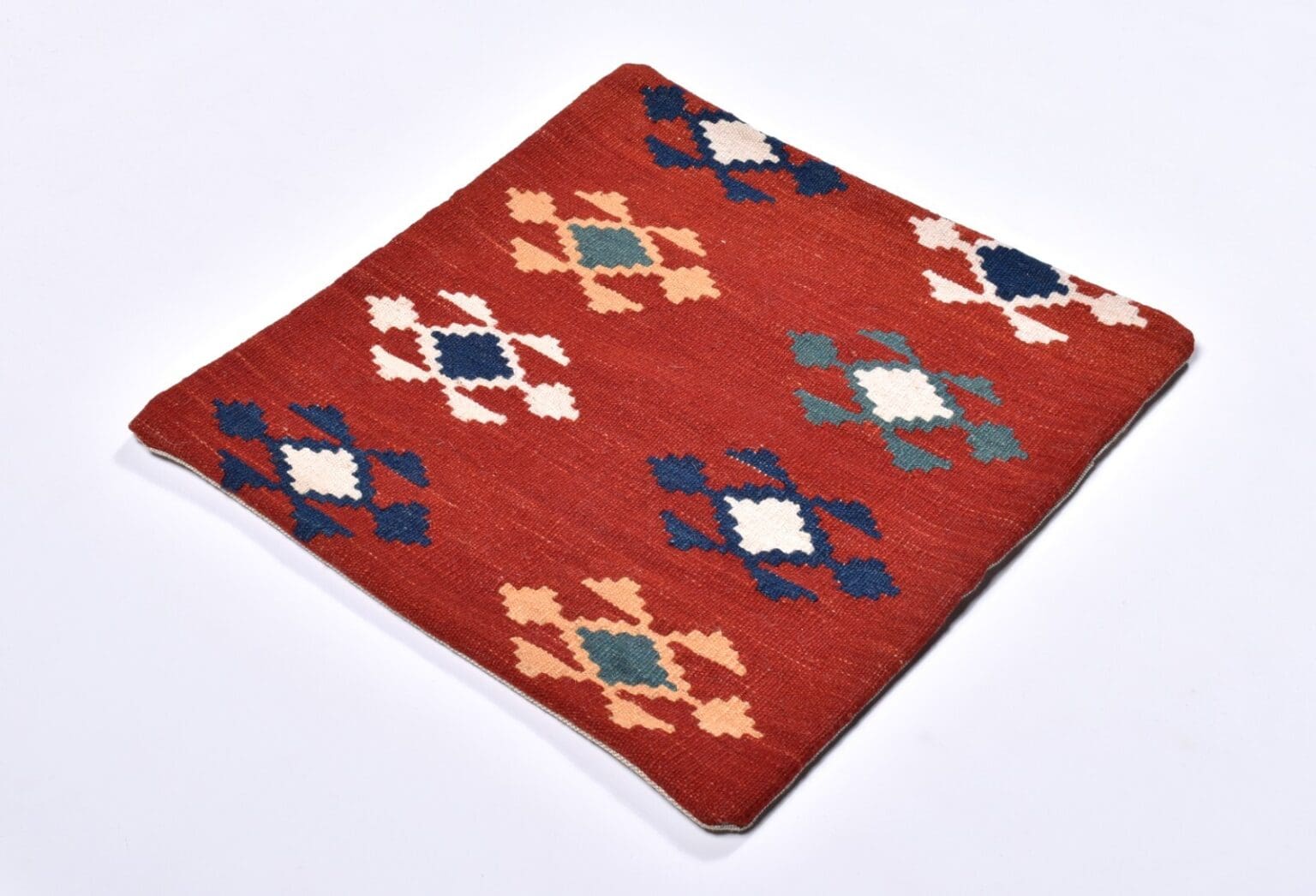
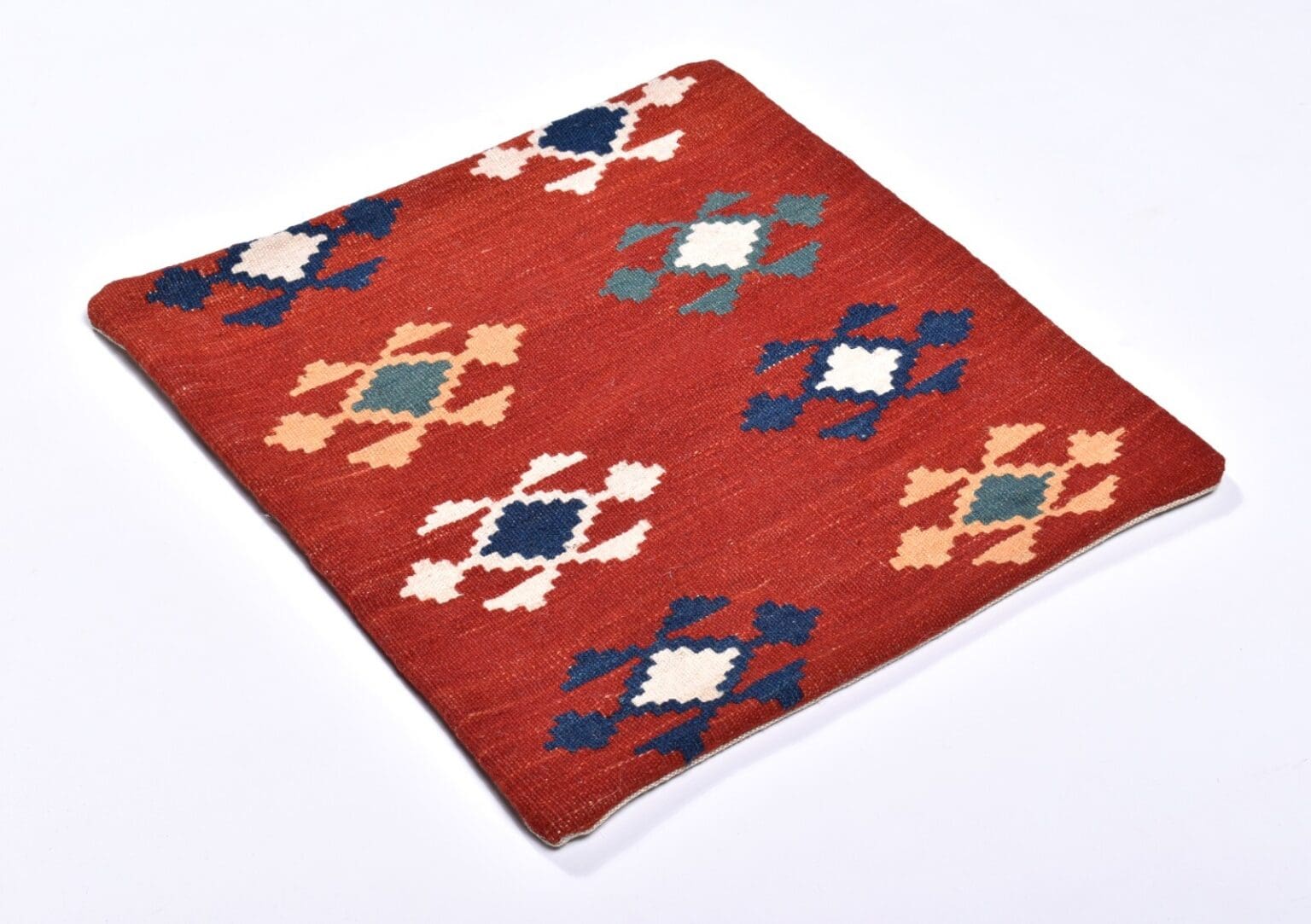
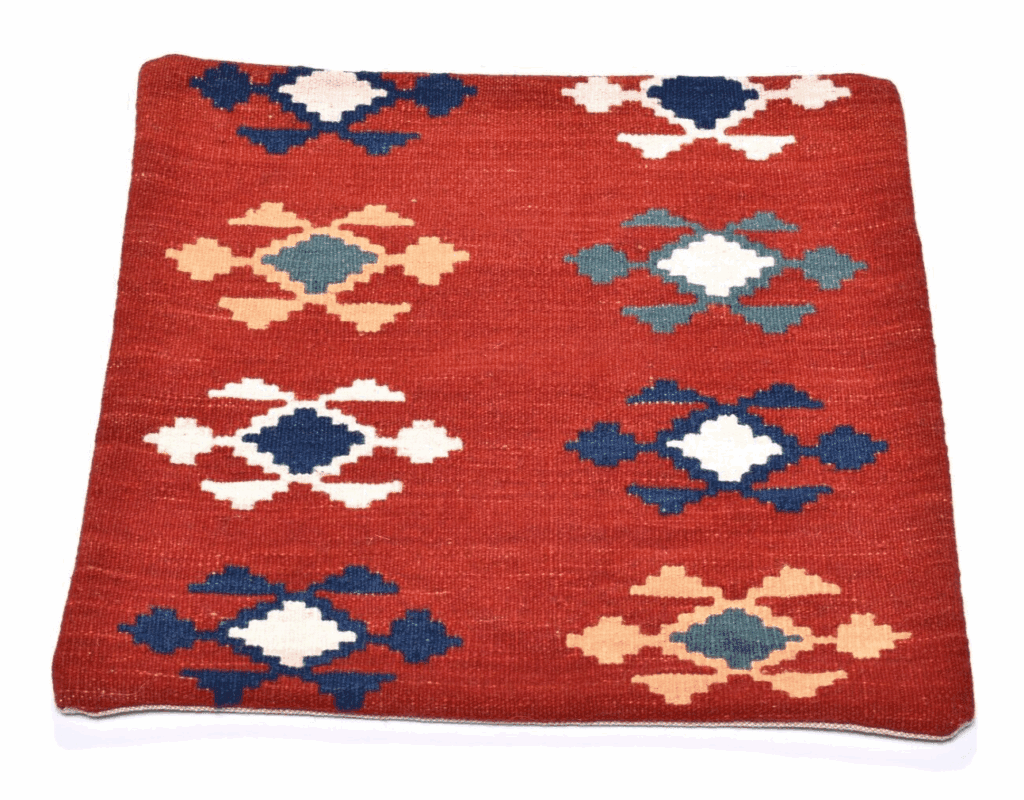
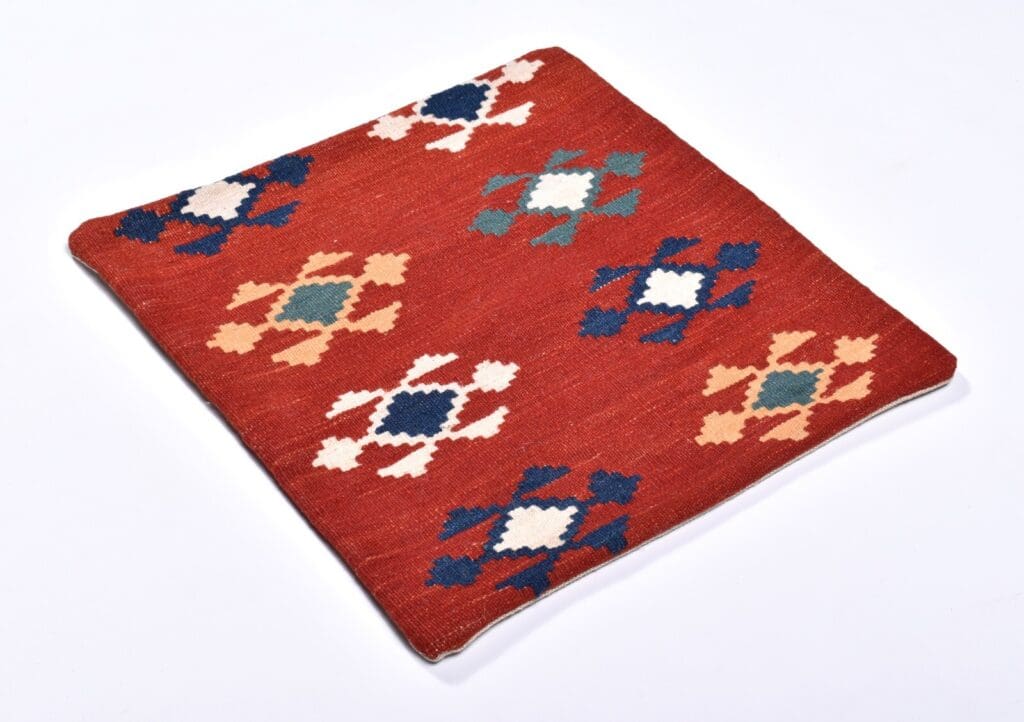
Hand-woven Ghashghai Persian rug | Material: front 100% virgin wool, back 100% cotton | Size: 50 x 50 cm | Pattern: Geometric | Condition: Perfect, unused, 10-20 years old | Origin: Persia, nomadic area
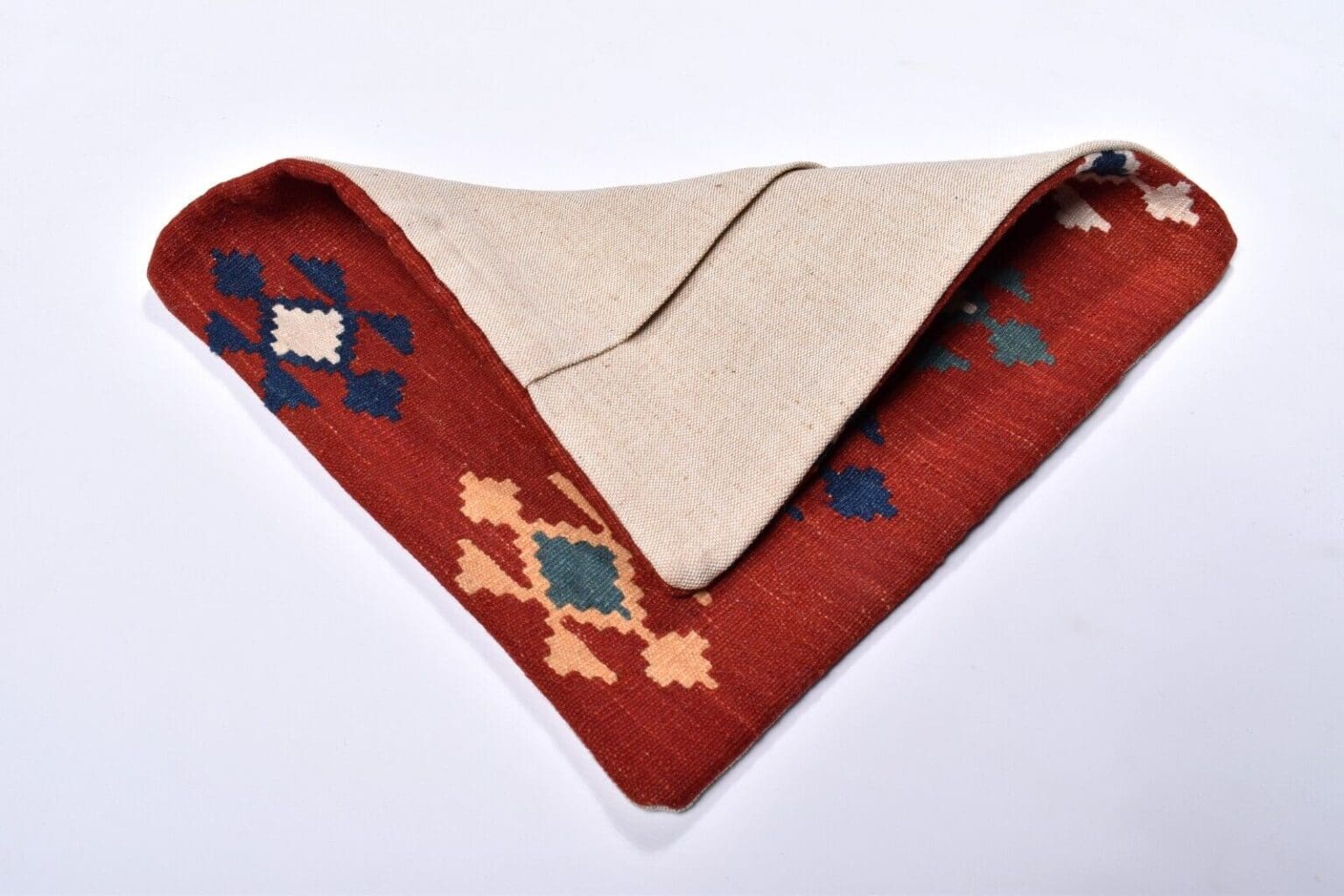
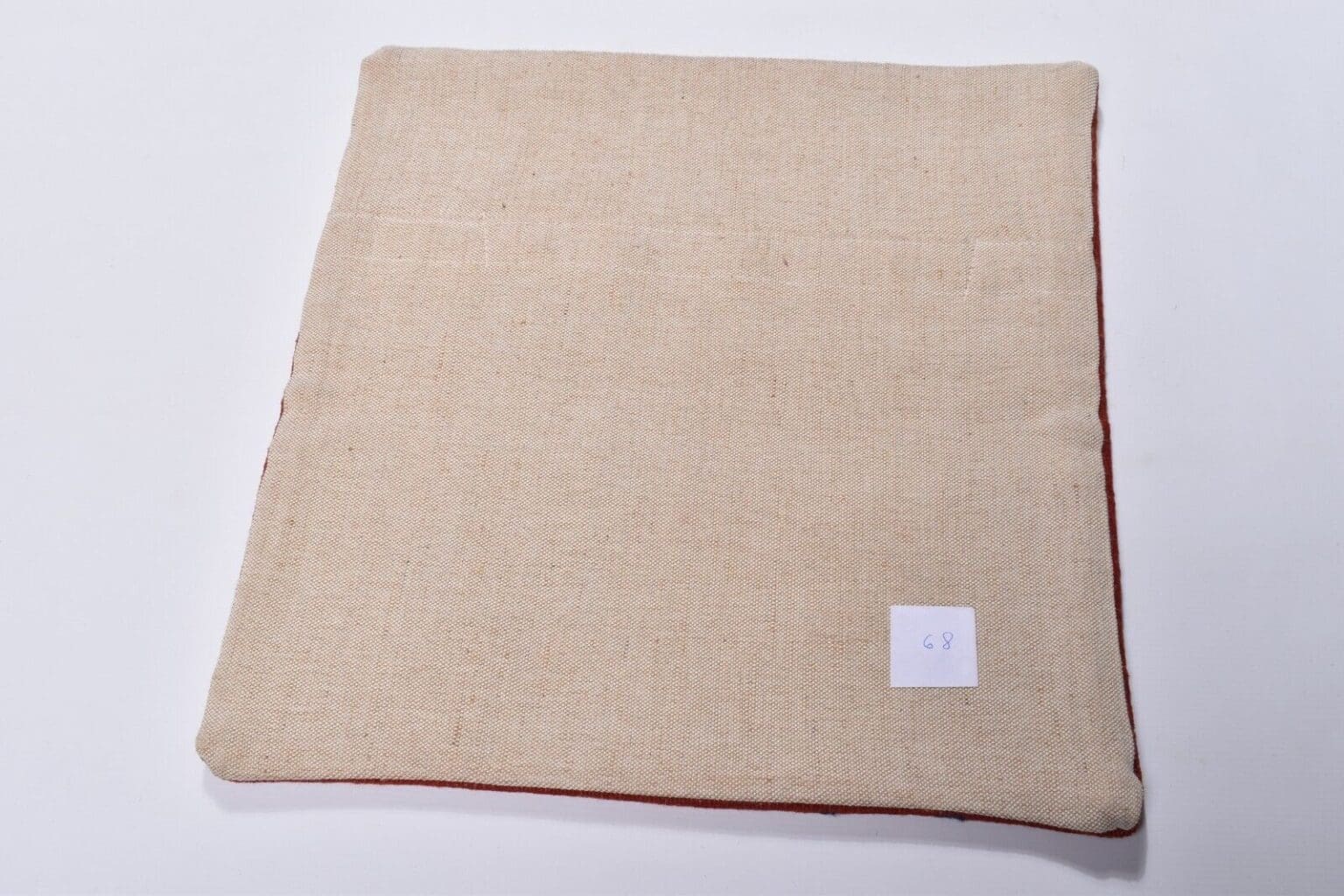
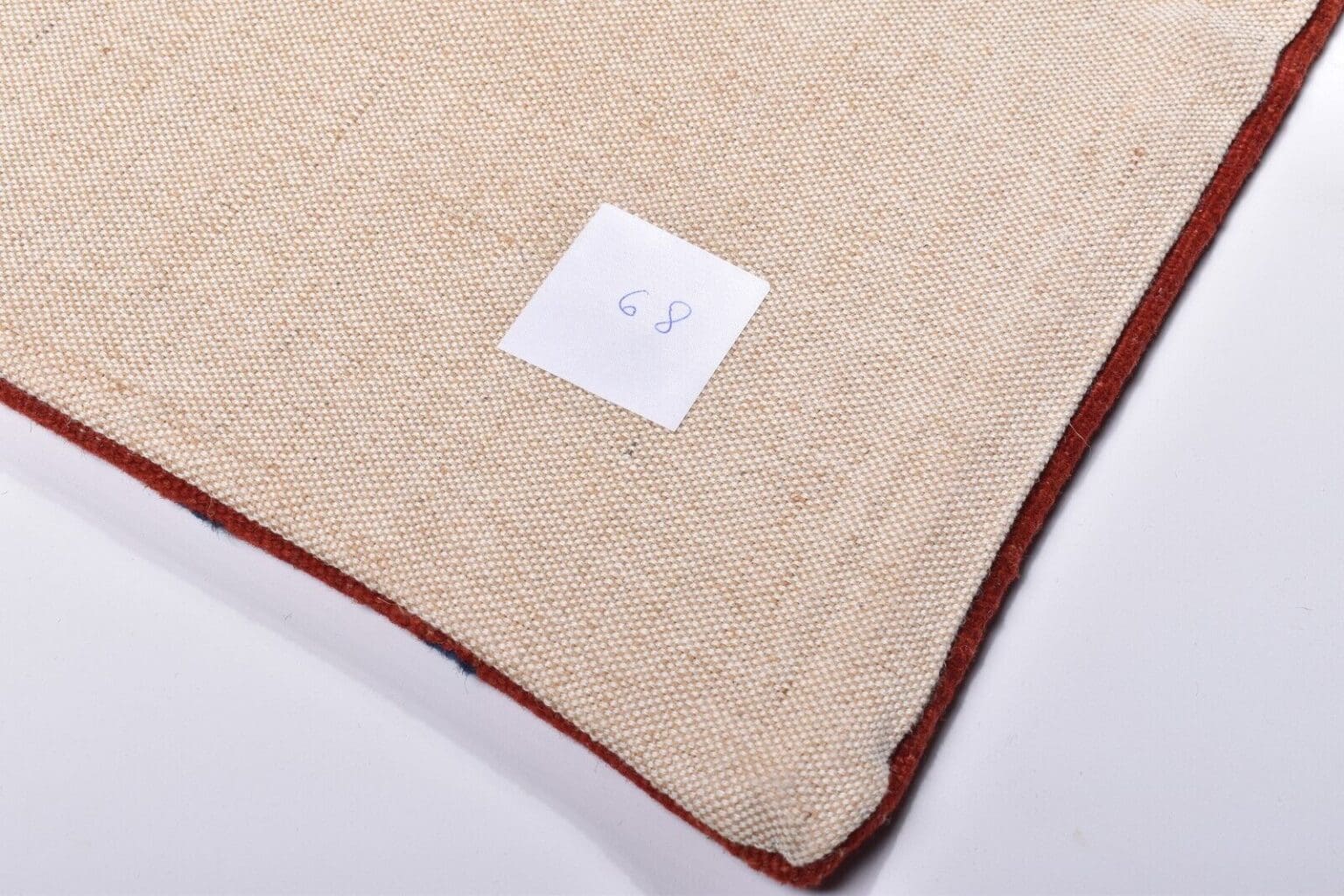
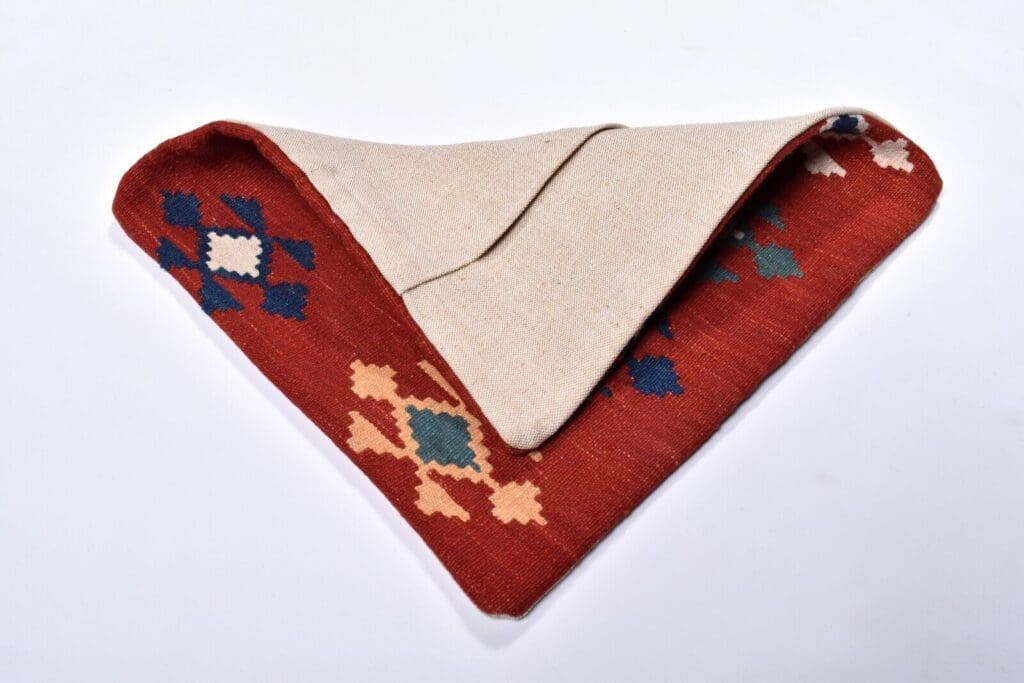
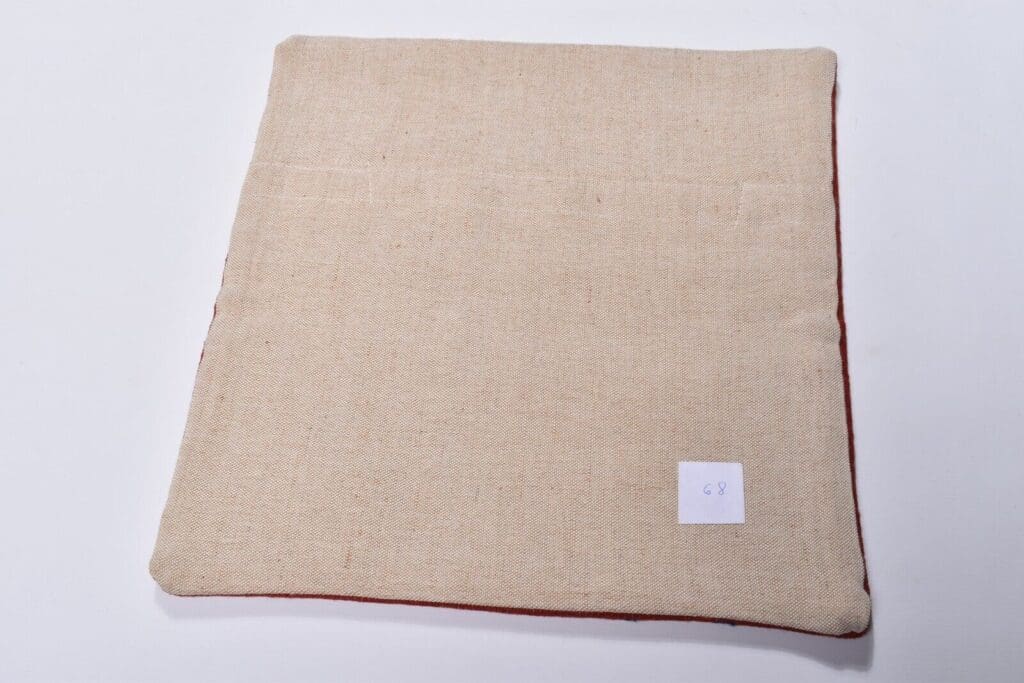
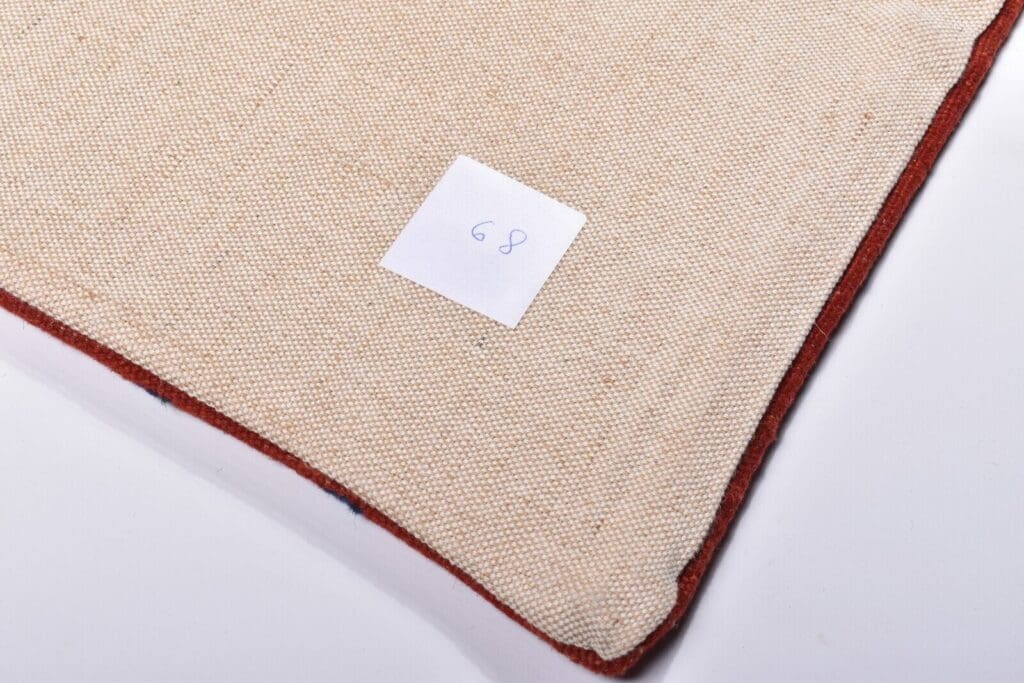
This Ghashghai Kelim cushion is hand-woven and made as a one-off piece. Its front is made from 100% virgin wool, while the reverse is made from 100% cotton. The two materials give the cushion a clearly defined textile construction. Virgin wool forms the visible woven face and connects the piece with the established material tradition of Kelim weaving. Cotton is used on the back, providing a separate textile surface that complements the woollen front.
A Kelim is created by weaving rather than by inserting individual pile knots. Warp and weft threads are interlaced to form a flat textile surface. This method allows the design to be built directly into the structure of the fabric. Because the work is done by hand, the weave can retain individual variations in line, colour distribution and surface character. Such differences belong to the making of a hand-woven piece rather than to industrial uniformity.
The wool fibre on the front is described as both durable and pleasantly soft. That combination suits a cushion that has a decorative role while remaining practical in a living space. The cotton back completes the material arrangement, and the fitted zip adds a functional detail. The cushion is intended for indoor use. Its construction brings a traditional flat-weaving method together with a contemporary cushion format.
Hand weaving also gives the textile a direct relationship with the person who made it. Instead of repeating an identical factory pattern, the work develops through the handling of the threads and the order of the woven sections. The resulting surface can show the character of the particular piece. This cushion is described as perfect and unused, and it is also listed as 10-20 years old. In addition, it is identified as new with tag, so the item combines an unused condition with an attached product label.
Origin and Tradition
The cushion comes from Persia and is assigned to the Ghashghai nomadic area. The Ghashghai are a well-known nomadic people of Iran with a strong tradition of carpet and textile production. The source places the Ghashghai in Fars Province. In this context, Persia refers to the historical and cultural setting in which this weaving tradition developed, while the Ghashghai name identifies the textile tradition associated with the nomadic region.
Fars is known for varied landscapes and a rich cultural heritage. For nomadic communities, woven textiles were connected with daily life as well as with visual expression. Textiles could be used in domestic settings, transported with other belongings and passed on within families or communities. This close relationship between use and making helped shape weaving traditions in which practical construction and decorative design are not separate categories.
Ghashghai textiles are associated with vivid colours and traditional patterns. Geometric forms are particularly important within this visual language. Animal motifs also belong to the repertoire described for Ghashghai rugs and textiles, often appearing in simplified or stylised form. Such motifs may refer to nature, animals, landscapes or familiar aspects of nomadic life. Their effect comes from the relationship of the signs to the surrounding fields, borders and repeated shapes, not necessarily from one fixed interpretation of every symbol.
Flat-woven Kelims have a different construction from rugs with a raised pile. The image is created by the interaction of warp threads and coloured weft threads, so the design becomes part of the fabric itself. This technique is well suited to angular outlines, stepped forms, diamonds, bands and other geometric arrangements. In Ghashghai weaving, the method is associated with an active colour vocabulary and a distinct regional character. Slight irregularities in the ground and subtle variations in colour are typical features of handmade textiles.
The nomadic background helps explain why Ghashghai textiles combine portability, durability and ornament. A woven piece can be useful in everyday surroundings while also carrying a recognisable cultural vocabulary. Skills are transmitted through practice, and each handmade work reflects the particular execution of that process. This cushion brings that tradition into an indoor setting without changing the basic identity of its hand-woven Kelim construction.
Design and Pattern
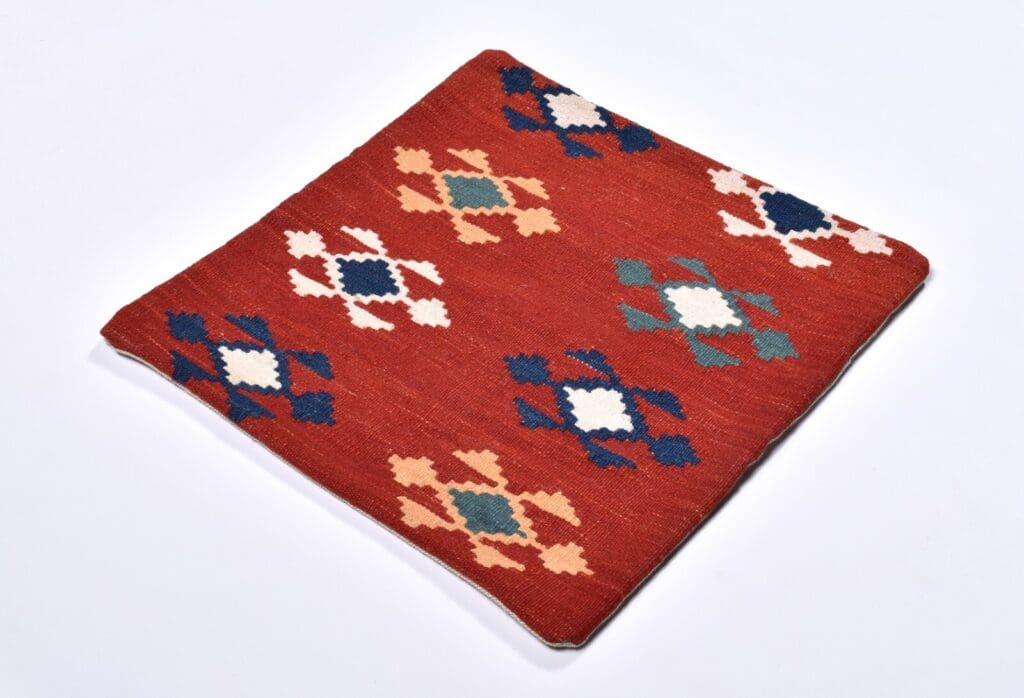
The pattern of this cushion is geometric. That description places its appearance within a central area of Ghashghai textile design, where lines, angles, repeated forms and colour fields create an ordered composition. In a flat weave, geometric shapes can be developed directly through the sequence of coloured weft threads. The resulting image remains close to the structure of the textile and has the clear, two-dimensional quality associated with Kelims.
Ghashghai patterns may combine geometric devices with simplified references to animals, plants, landscapes or nomadic experience. A recognisable figure can be reduced to a few lines, steps or angular sections and then incorporated into a larger arrangement. This allows individual forms to work as part of a rhythm rather than as isolated illustrations. The geometric character of this cushion is therefore understood through the complete relationship of its woven fields and shapes.
Vivid colours are part of the familiar description of Ghashghai weaving. Colour can separate one geometric area from another, emphasise a central form or connect repeated elements across the surface. In a hand-woven Kelim, the colour arrangement is inseparable from the act of weaving. Subtle differences in tone or distribution may remain visible and contribute to the individual appearance of the textile rather than weakening its handmade identity.
The cushion format makes this traditional design suitable for several indoor settings. It can be placed on a living-room sofa or an office chair, and it can also be used on a bed or as a decorative element on a windowsill. In each setting, the geometric pattern introduces a textile surface with a clear regional reference. The source describes the colour palette as harmonious with both modern and classic interior styles, allowing the cushion to be used alongside different kinds of furnishings.
Its one-off character is connected to the way the design has been woven. A machine-made product is normally organised around exact repetition, whereas a hand-woven piece may preserve small distinctions in structure and colour. These distinctions are part of the object’s individual appearance. The Ghashghai reference, the geometric pattern, the vivid colours and the flat-weave technique together define the design language of this particular cushion.
Special Features
The main special feature is the hand-woven one-off construction. This is a single textile piece rather than a machine-produced cushion from a uniform series. Its specific features include a front of 100% virgin wool, a back of 100% cotton and a zip fastening. The zip contributes to the practical construction, while the two-sided material arrangement makes the cushion suitable for use as an indoor furnishing accessory.
The cushion is suitable for indoor rooms and can be used in several decorative settings. It is listed as perfect and unused, as 10-20 years old, and as new with tag. These descriptions are given together: the item has not been used, carries a product label and has the stated age. The estimated specialist retail value is €139. The combination of traditional hand weaving and practical cushion details distinguishes the piece from a purely ornamental textile.
FAQ
How should I care for my Kelim cushion?
Gentle cleaning is recommended to preserve the colours and the texture of the Kelim cushion. Dust and loose dirt can be removed with a vacuum cleaner fitted with a soft brush setting. The surface should be treated carefully, without aggressive rubbing or pulling at the woven threads. If more extensive cleaning is needed, the cushion can be taken to a professional cleaner. Professional care can take account of the hand-woven wool front, the cotton reverse and the zip. A restrained cleaning method helps retain the structure of the textile and its woven appearance.
Where can I use the cushion?
The cushion is intended for indoor use and can be placed in a range of living areas. On a living-room sofa it can function as a woven decorative accent. It can also be used on an office chair, on a bed or as a decorative feature on a windowsill. The geometric Ghashghai pattern can be combined with both classic and modern interiors. Its role may be primarily decorative or may include everyday use as a cushion, depending on the room and the arrangement of the furnishings.
Is the cushion colourfast?
Yes. The Ghashghai Kelim cushion is made with natural dyes described as lightfast and colourfast. This allows the colours to retain their strength during regular use. Careful handling remains useful for preserving the woven surface and its visual effect. As with textiles generally, unnecessary exposure to very intense direct light should be avoided even when dyes are described as lightfast. Gentle cleaning and considered placement support the lasting appearance of the vivid geometric design.
To provide the best experiences, we use technologies like cookies to store and/or access device information. Consenting to these technologies will allow us to process data such as browsing behavior or unique IDs on this site. Not consenting or withdrawing consent, may adversely affect certain features and functions.
Functional Always active
The technical storage or access is strictly necessary for the legitimate purpose of enabling the use of a specific service explicitly requested by the subscriber or user, or for the sole purpose of carrying out the transmission of a communication over an electronic communications network.
Preferences
The technical storage or access is necessary for the legitimate purpose of storing preferences that are not requested by the subscriber or user.
Statistics
The technical storage or access that is used exclusively for statistical purposes.The technical storage or access that is used exclusively for anonymous statistical purposes. Without a subpoena, voluntary compliance on the part of your Internet Service Provider, or additional records from a third party, information stored or retrieved for this purpose alone cannot usually be used to identify you.
Marketing
The technical storage or access is required to create user profiles to send advertising, or to track the user on a website or across several websites for similar marketing purposes.
 SECURE PAYMENT
 SHIPPING PARTNERS


