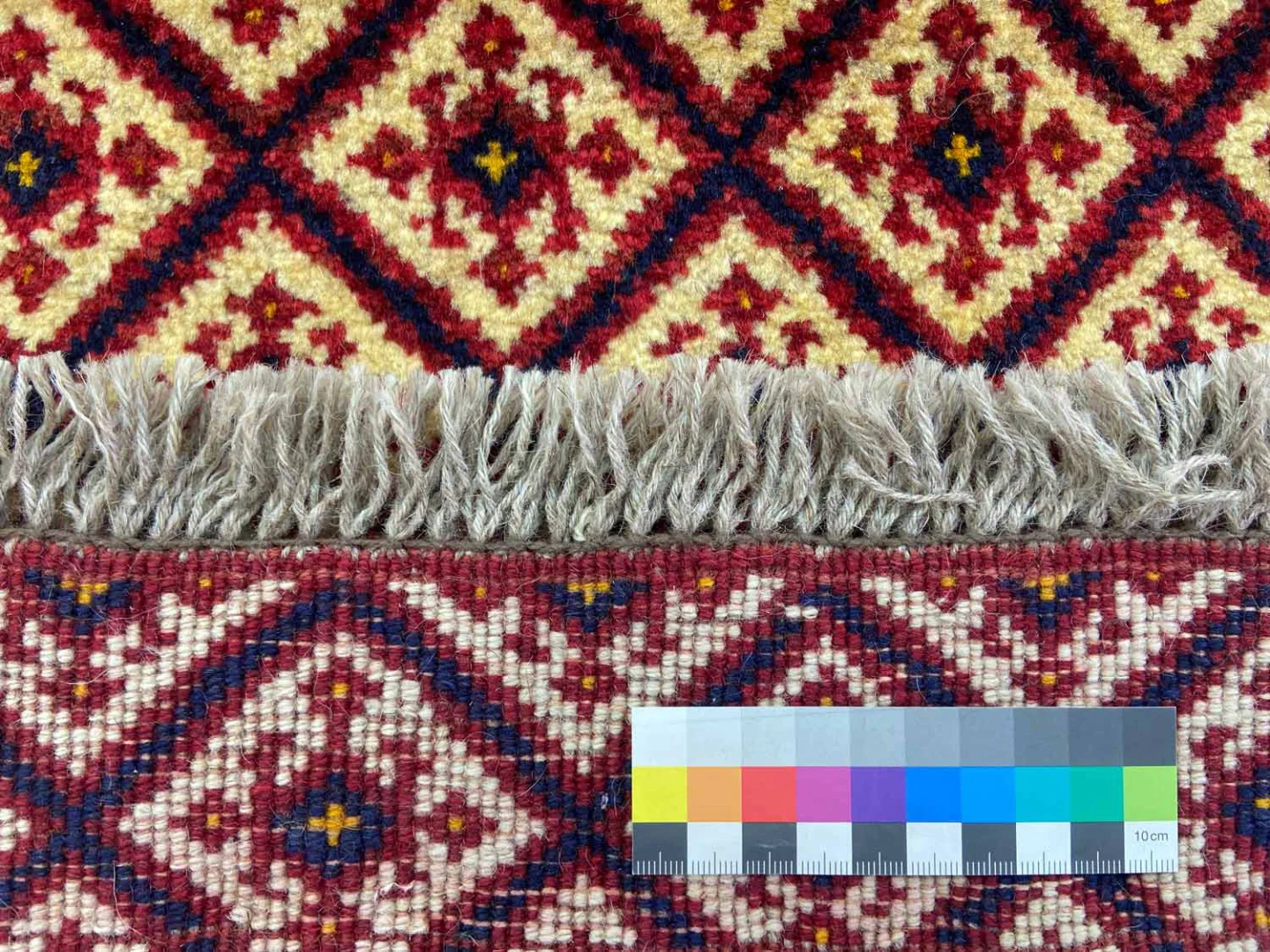
This Gabbeh Shuli is hand-knotted with lustrous virgin wool in the pile. The wool gives the rug its soft and pleasant handle while also providing a hard-wearing material for everyday interiors. The description does not specify a separate warp material, so no additional fibre is assigned to the foundation. The visible pile material is the defining material stated for this piece.
The knot density is given as 90,000 to 180,000 knots per square metre. This range belongs to the described Gabbeh Shuli execution and relates to the way imaginative shapes and distinctive areas can be rendered in a hand-knotted surface. Each knot is part of a manual process, so the finished rug retains the character of an individually made textile rather than a mechanically repeated design.
Gabbeh weaving is associated with a direct and clearly readable approach to pattern. In hand-knotting, the design develops progressively as individual knots are inserted and the pile is formed. Here, the surface is made from virgin wool and the pattern is described as imaginative and distinctive. No information is provided about pile height, backing, warp, dyeing method or any additional construction detail, so those characteristics are not added.
Origin and Tradition
This Gabbeh Shuli comes from the Fars region in southern Persia. Fars is one of the historic landscapes of Persian rug making and is associated with the area around the city of Shiraz. The region represents a long-standing craft culture shaped by both nomadic and settled communities. Within that setting, rugs developed as useful textiles as well as expressions of local design and inherited making traditions.
Gabbeh rugs from Fars are closely connected with the old nomadic tribes of the region. Their designs are not defined only by rigid templates. The Gabbeh tradition also gives the weaver room for personal invention, allowing the arrangement of forms and colours to change from one rug to another. This balance between established handwork and individual choice is central to the identity of Gabbeh Shuli.
Shuli identifies the particular Gabbeh type named for this rug. It belongs to a Persian rug tradition in which an imaginative visual language is valued alongside the practical making of a knotted floor covering. A hand-knotted Gabbeh Shuli is therefore understood as an individual piece rather than as a perfectly identical repeat from a uniform series. Its visual decisions remain connected to the person or community that produced it.
The relationship with Shiraz places the rug within a wider cultural landscape where several weaving traditions exist side by side. Gabbeh Fars is another rug type from the region and shares a related visual character, although it is often associated with more traditional patterns and a somewhat higher knot density. Qashqai rugs are also part of the diversity of Fars and are known for strong colours and traditional motifs. These traditions complement the regional picture without changing the origin of this Gabbeh Shuli.
Ravar is named as another well-known rug producer from the region, recognised for its designs and materials. It represents a different strand of Persian rug production. Gabbeh Shuli remains distinct through its connection with Fars, its imaginative designs and its hand-knotted virgin wool. Mentioning neighbouring traditions helps explain the variety of Persian rug art in the region, but it does not assign this particular rug to another place or another type.
The history of Gabbeh is consequently best understood as a meeting of regional heritage and personal design. The Fars setting supplies the cultural context, while the weaver’s creative freedom allows motifs to remain open, simplified and individual. This is why two Gabbeh rugs can belong to the same tradition without having the same composition. The Gabbeh Shuli designation identifies that tradition and its specific stylistic direction.
Design and Pattern
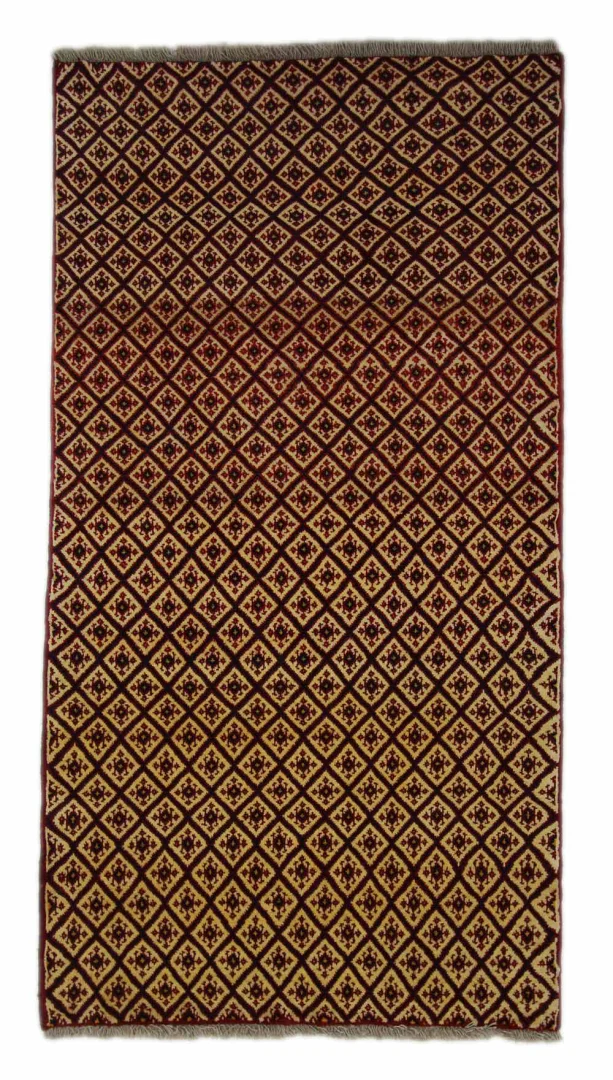
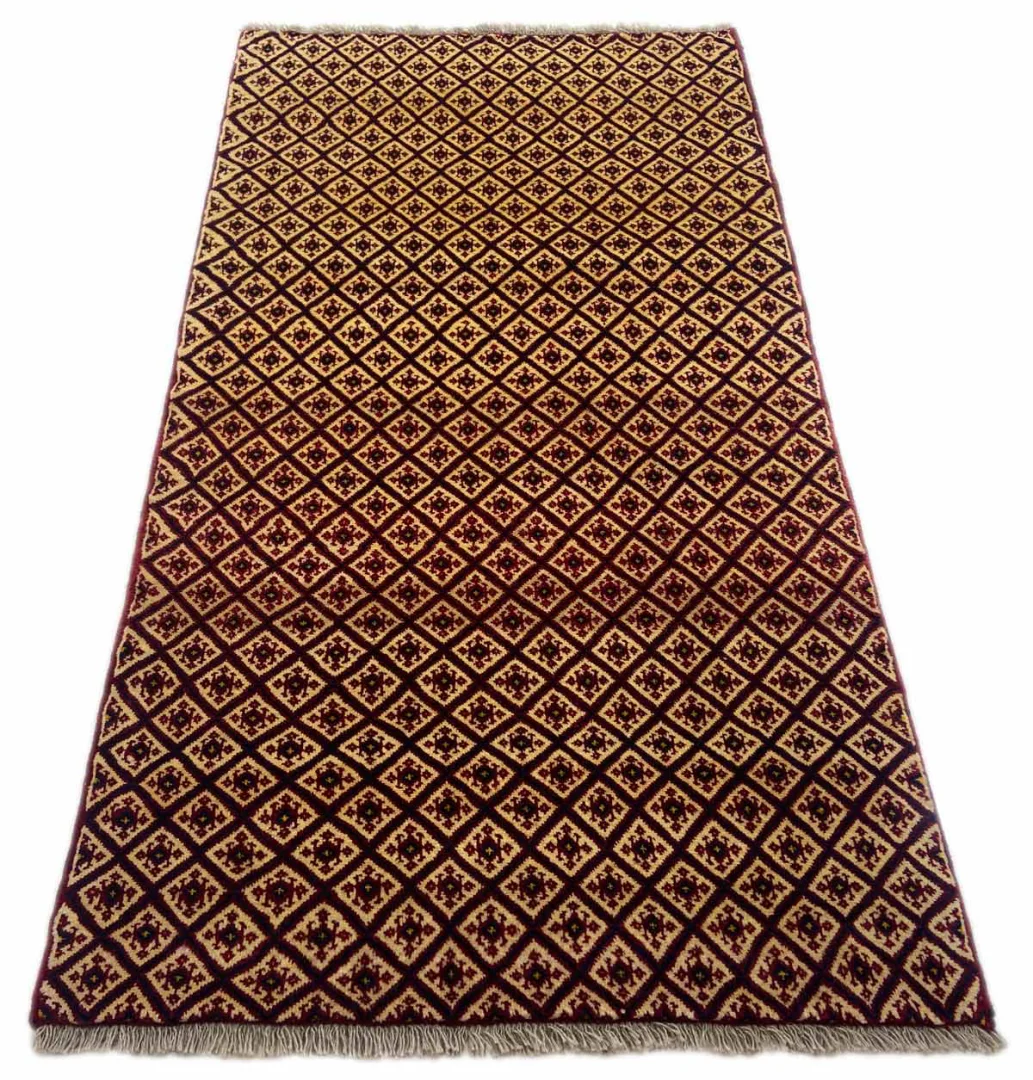
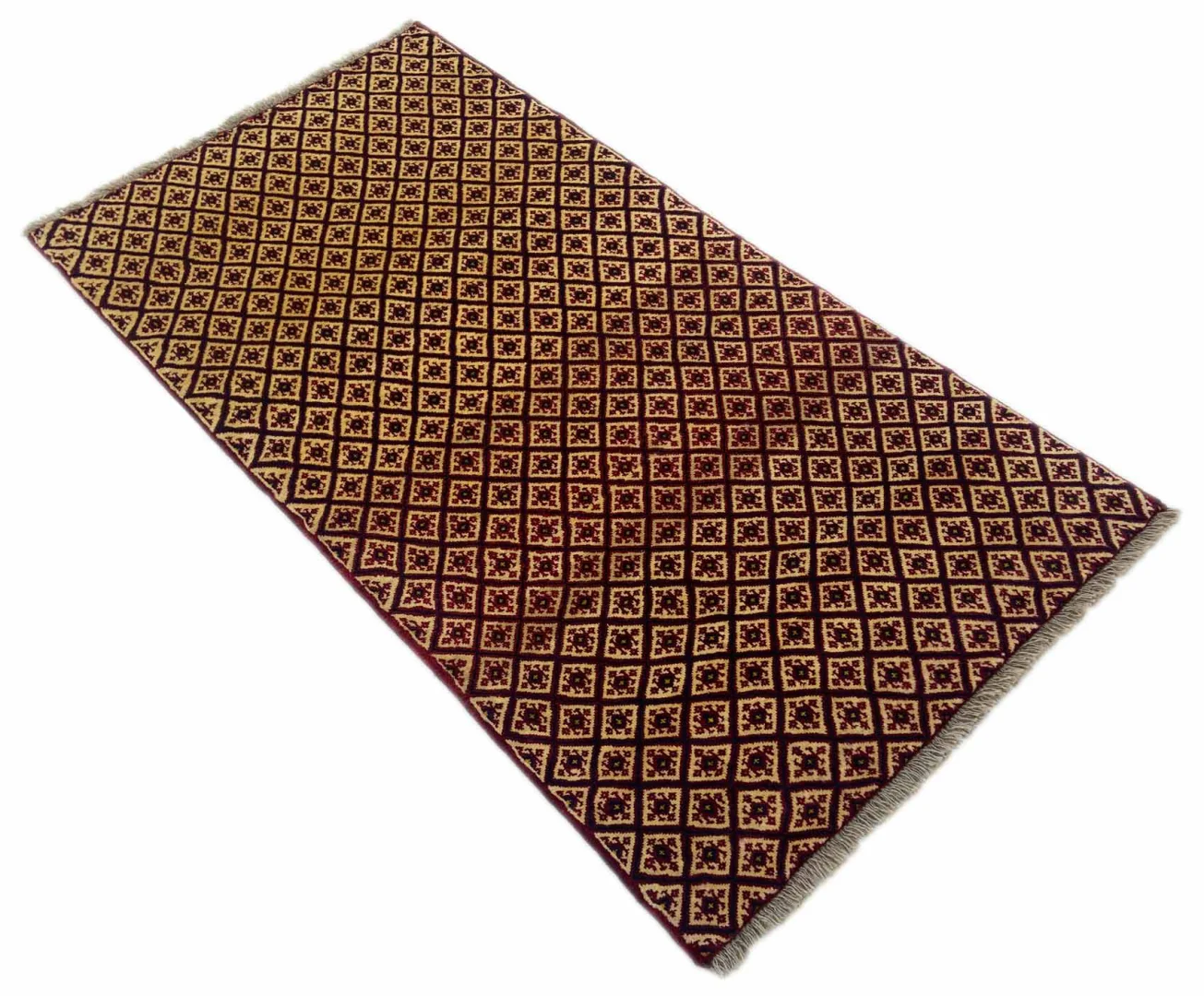
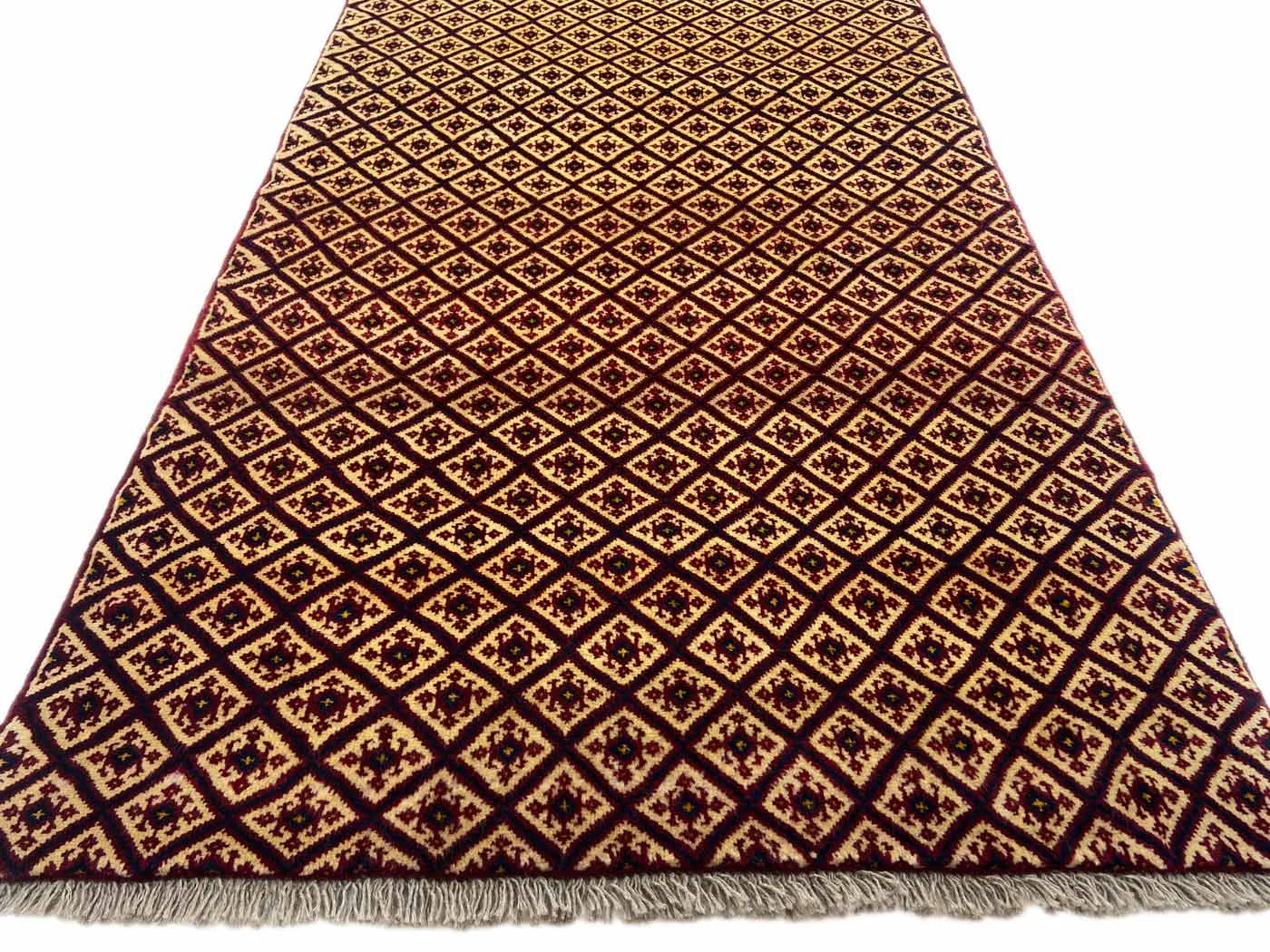
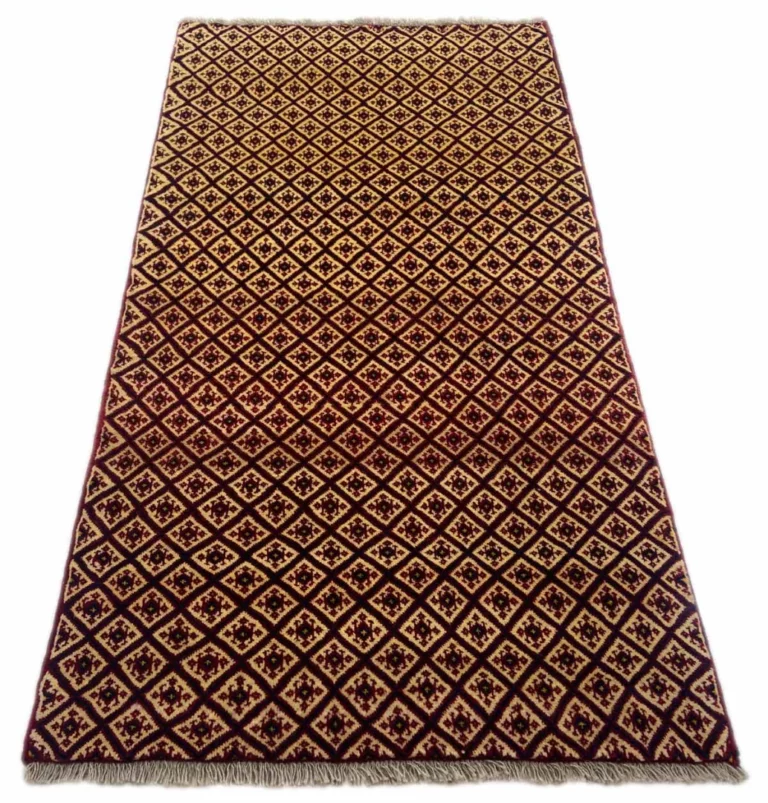
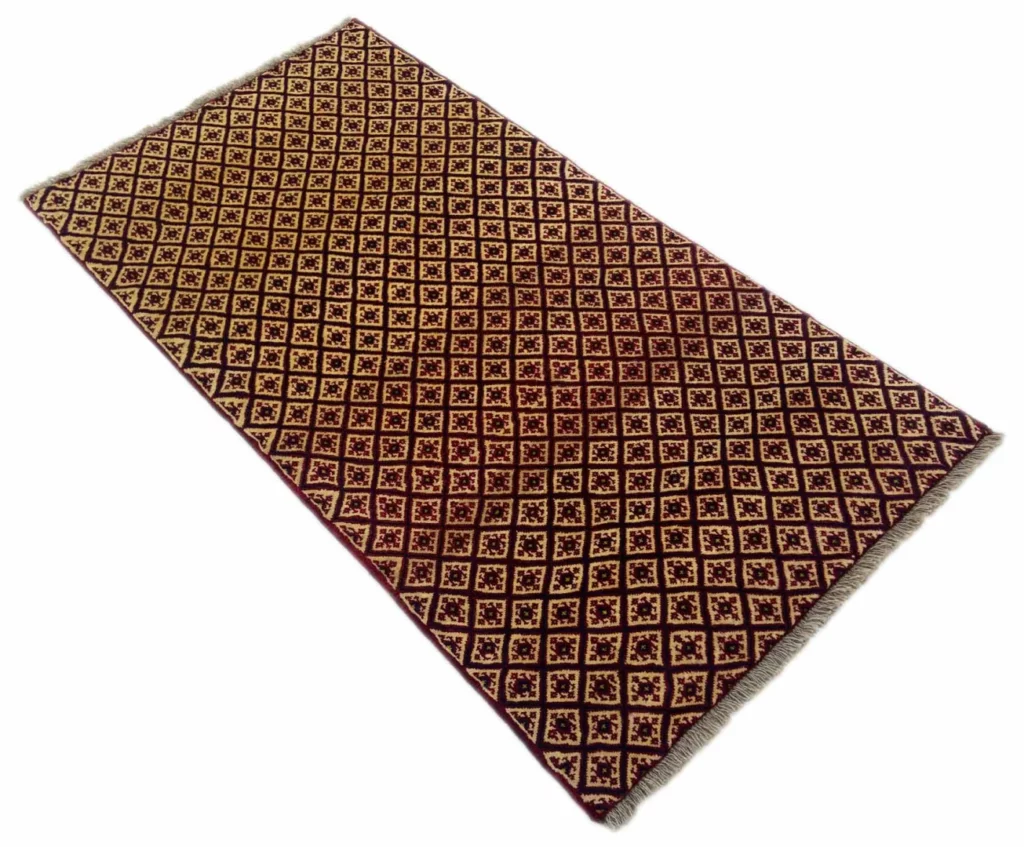
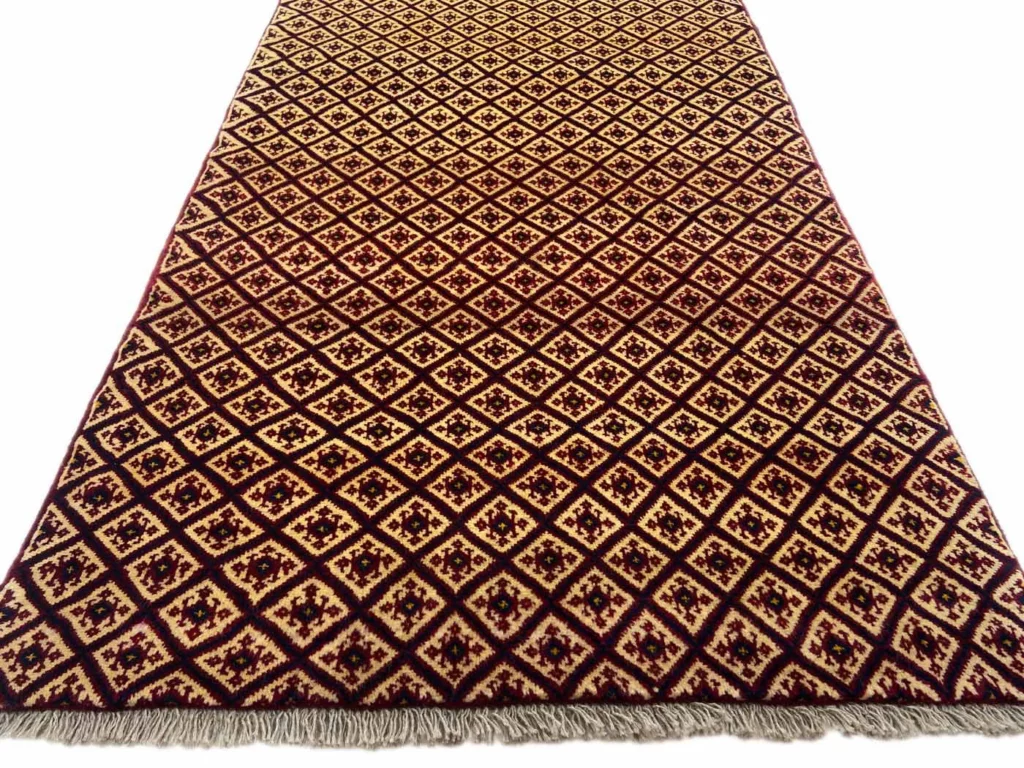
The pattern of this Gabbeh Shuli is described as distinctive and imaginative. It is not presented as a strictly repeated ornamental scheme. Instead, the design allows the knotted surface to carry individual ideas through the arrangement of forms and colour fields. Its visual effect comes from the relationship between the hand-knotted texture and the creative pattern concept associated with Gabbeh Shuli.
Geometric forms and stylised depictions of nature are cited as characteristic elements of Gabbeh Shuli design. These motifs are simplified rather than rendered as detailed naturalistic pictures. A plant, animal or other natural reference can be reduced to a sign-like shape, while geometric elements organise the surrounding field. Such stylisation gives the design a direct visual language that remains easy to read from a distance.
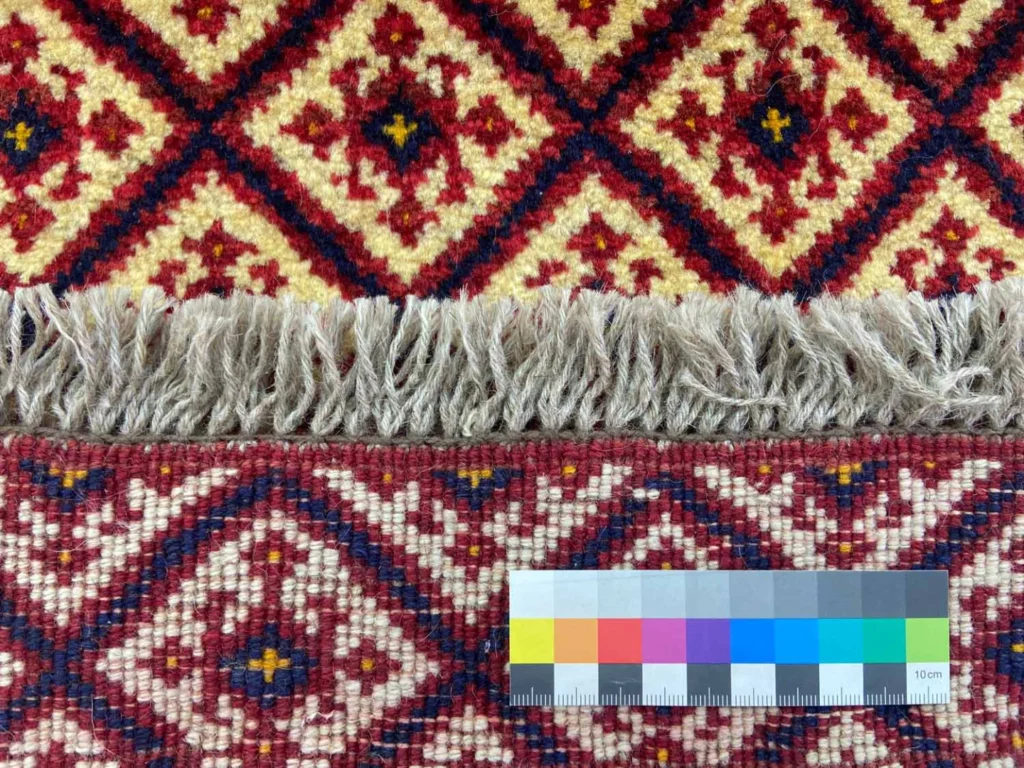
The colours specified for this rug are red, beige, grey and brown. Red provides a strong colour presence, beige introduces a lighter and quieter note, grey adds a neutral shade, and brown contributes an earthy tone. These four colours form the stated palette of the individual rug. No further colours are claimed for this piece.
The combination of vivid and restrained colours supports the open character of the pattern. Contrasts can make geometric forms more apparent, while quieter beige, grey and brown areas can connect them within the overall composition. The colour sequence is not described as a fixed formula; it is part of the individual design of this hand-knotted Gabbeh Shuli. The result remains rooted in Fars while allowing room for an unconventional arrangement.
Compared with many other Persian rugs, Gabbeh Shuli is often described as simpler in its design. Simplicity here does not mean that every Gabbeh follows one identical layout. It refers to a more reduced way of presenting motifs, which can give the type a modern quality while preserving its traditional connection. This rug combines that readable structure with distinctive and imaginative designs rather than relying on a densely prescribed ornamental scheme.
The term Gabbeh should not be mistaken for a separate origin statement. The style name identifies the design tradition, while the rug’s origin is the Fars region in southern Persia. Its connection with Shiraz and with the old nomadic tribes explains the cultural setting. The red, beige, grey and brown palette together with the stylised motifs describes the individual appearance of this particular piece within that setting.
Special Features
This Gabbeh Shuli brings together a hand-knotted construction, lustrous virgin wool and an imaginative pattern language. Its stated knot density ranges from 90,000 to 180,000 knots per square metre. The named colours are red, beige, grey and brown. These points define the principal characteristics of the rug without requiring any additional claim about its construction, age, condition or provenance.
The rug is a one-off piece. The creative freedom associated with Gabbeh weaving means that each example has its own design expression. In this case, the Fars origin, the Persian and old nomadic tradition, the use of geometric and stylised natural forms, and the specified colour palette together explain its identity. It can be used in living rooms, bedrooms or hallways, where it brings warmth and style to the interior.
FAQ
How should I care for my Gabbeh Shuli rug?
Regular vacuuming is recommended to remove loose dust and everyday dirt from the wool pile. Occasional professional cleaning can help preserve the rug’s appearance. Direct sunlight should be avoided because it can cause the colours to fade over time. These care points are particularly relevant to the lustrous virgin wool and to the red, beige, grey and brown palette specified for this rug.
Where can Gabbeh Shuli rugs be used?
Gabbeh Shuli rugs can be used in several areas of the home. Living rooms, bedrooms and hallways are named as suitable settings. In a living room, the imaginative design can provide a defined colour reference; in a bedroom, it can support a warm interior; and in a hallway, it can add warmth and style to a passage or entrance area. The final placement depends on the arrangement of the individual room.
What distinguishes Gabbeh Shuli from other Persian rugs?
Gabbeh Shuli is distinguished by imaginative designs and the use of high-quality virgin wool, described for this rug as lustrous virgin wool. Compared with other Persian rugs, Gabbeh Shuli often uses a simpler design approach, giving it a modern yet traditional character. This rug combines its Fars origin, hand-knotted workmanship, stated colours and individual pattern idea. The Gabbeh tradition remains visible, while the design is not bound to one rigid ornamental template.
To provide the best experiences, we use technologies like cookies to store and/or access device information. Consenting to these technologies will allow us to process data such as browsing behavior or unique IDs on this site. Not consenting or withdrawing consent, may adversely affect certain features and functions.
Functional Always active
The technical storage or access is strictly necessary for the legitimate purpose of enabling the use of a specific service explicitly requested by the subscriber or user, or for the sole purpose of carrying out the transmission of a communication over an electronic communications network.
Preferences
The technical storage or access is necessary for the legitimate purpose of storing preferences that are not requested by the subscriber or user.
Statistics
The technical storage or access that is used exclusively for statistical purposes.The technical storage or access that is used exclusively for anonymous statistical purposes. Without a subpoena, voluntary compliance on the part of your Internet Service Provider, or additional records from a third party, information stored or retrieved for this purpose alone cannot usually be used to identify you.
Marketing
The technical storage or access is required to create user profiles to send advertising, or to track the user on a website or across several websites for similar marketing purposes.
 SECURE PAYMENT
 SHIPPING PARTNERS


