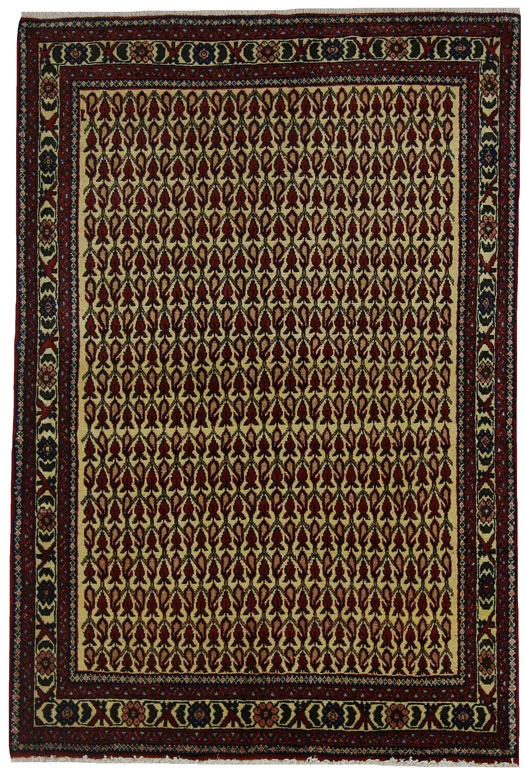
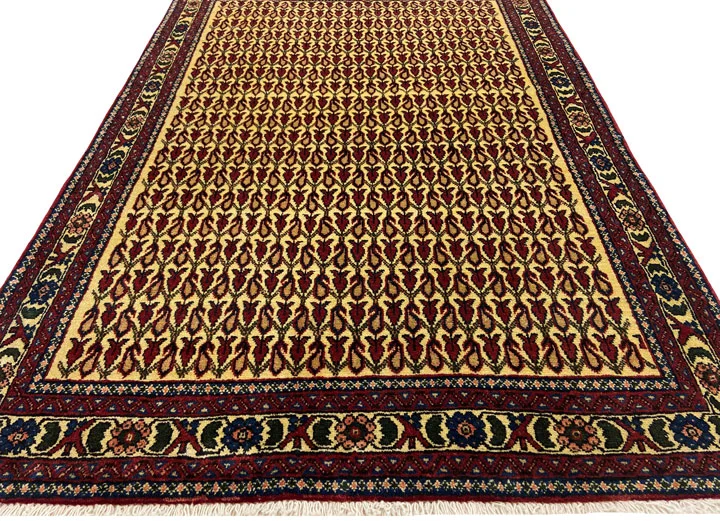
This Gabbeh-Shuli is a hand-knotted Persian rug made from shiny virgin wool. The wool is described as fine and combines a soft feel with the durability required for everyday use. Wool has long been an important material in Oriental rug making because it can be worked by hand and gives the finished surface both resilience and a supple, tactile character. In this rug, the natural presence of the wool works together with the imaginative design rather than serving merely as a functional foundation.
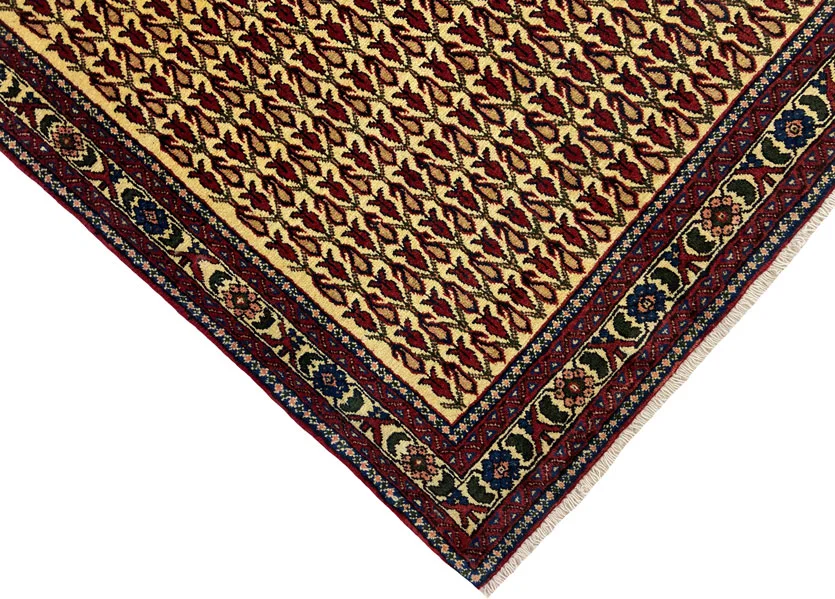
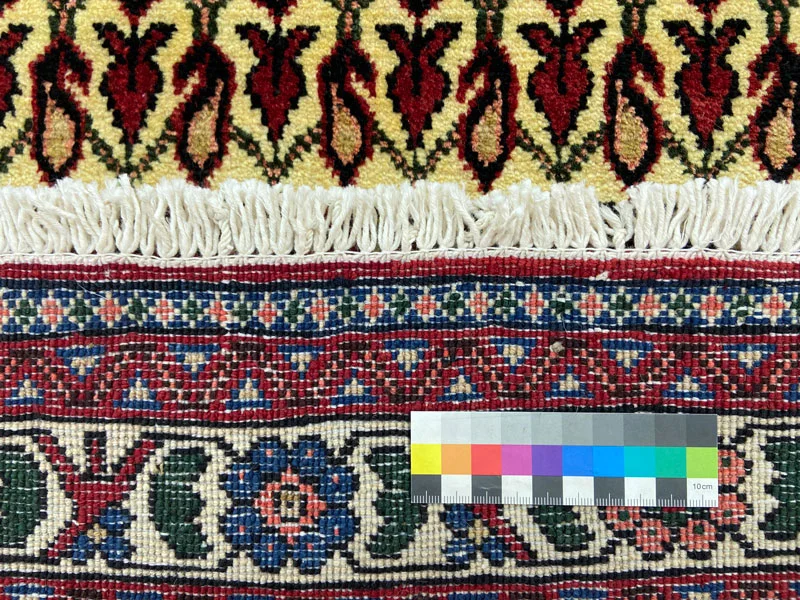
The construction is built knot by knot. This allows the design to be formed as a connected textile surface while the wool gives the pile its visible structure. The rug has a knot density of between 90,000 and 180,000 knots per square metre. This density is described as an indication of quality and precision. It is one of the specific features of this piece and complements the information about its hand-knotted manufacture.
The name Gabbeh-Shuli describes a rug tradition in which handmade construction and individual design are closely linked. This piece is presented as a high-quality work of art rather than as an industrially produced item from a uniform series. Its appearance results from the work of the knotters, who combine wool, colour and pattern to create an individual surface. The sheen of the virgin wool supports the effect of the chosen tones and gives the textile a lively presence.
The qualities of wool make the Gabbeh-Shuli suitable for everyday use. At the same time, care is straightforward: regular vacuuming and occasional beating are given as sufficient measures for preserving its freshness and appearance. Direct sunlight should be avoided so that the colours do not fade. These instructions underline the practical character of the material while the rug remains an independent piece of textile art.
Origin and Tradition
The Gabbeh-Shuli comes from the Fars region in southern Persia, near the historic city of Shiraz. Fars is one of the recognised Persian rug regions and has its own tradition of hand-knotted textiles. The area has produced different forms of weaving and knotting within a varied cultural landscape. The Gabbeh-Shuli belongs to an approach that is not limited to a rigid ornamental order, allowing individual ideas to shape the arrangement of forms and colours.
The connection with Shiraz places the rug within the cultural setting of Fars. Shiraz is known for its traditional rug-making craft and is named as the historic city near the region of origin. Fars therefore functions not only as a geographical designation but also as a reference to an established handcraft culture. Knowledge of wool selection, colour use and rug construction forms part of the wider tradition passed from one generation of makers to the next.
Gabbeh rugs are often associated with nomadic tribes and with the ways of life found in southern Persia. In this context, the influence of nomadic culture is visible particularly in the freedom of the designs and in their direct visual impact. A rug could arise from the practical conditions of a mobile life while still expressing the maker’s personal imagery. The pattern does not have to follow one fixed formula. Simplified, abstract and imaginative forms can be brought together in different ways.
The craft tradition of Fars helps explain the close relationship between material and design in Gabbeh-Shuli rugs. This rug is made from virgin wool and knotted by hand, while its individual character comes from the creative work of the knotters. The process therefore combines an inherited technique with the freedom to arrange patterns and colours personally. That balance between tradition and individual expression is central to the identity of the Gabbeh-Shuli.
Other rug types from Fars, including Gabbeh-Fars rugs, belong to the same regional context. They share related characteristics but can differ in knotting technique and pattern structure. This shows that a rug region does not produce one completely uniform appearance. Several handcraft traditions and visual approaches can exist within the same wider area.
The broader world of Persian rugs also includes pieces from Isfahan and Tabriz. Those rugs are known for fine detail and artistic designs, whereas a Gabbeh-Shuli is more strongly associated with creative, imaginative and often abstract patterning. The different regions and rug types do not represent one identical style, yet they share the importance of material, manual work and inherited knowledge. The Gabbeh-Shuli gains its identity from this particular combination of Fars origin and independent design.
Design and Pattern
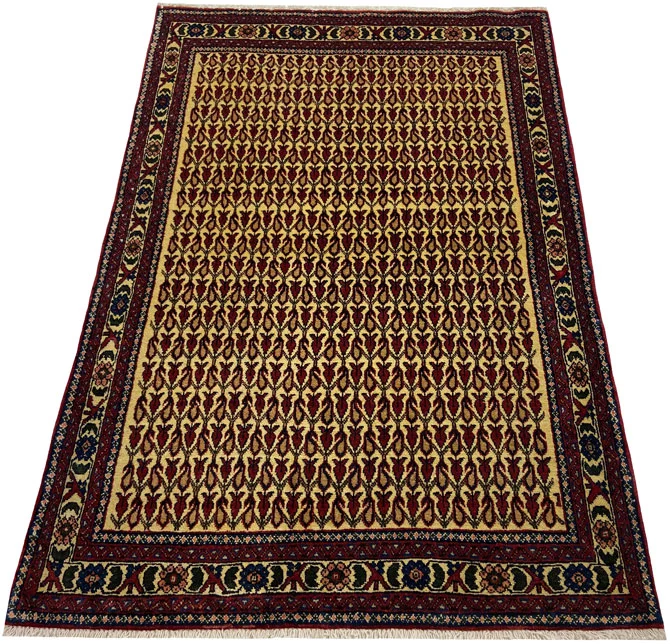
The design of the Gabbeh-Shuli is defined by unusual and imaginative compositions. Its patterns may appear abstract and reflect cultural influences as well as the lives of nomadic tribes. Rather than depending solely on a strict repeating ornament, the design places emphasis on creative interpretation. Simplified forms, open arrangements and lively colour relationships can be used to create a visual language that feels direct and individual.
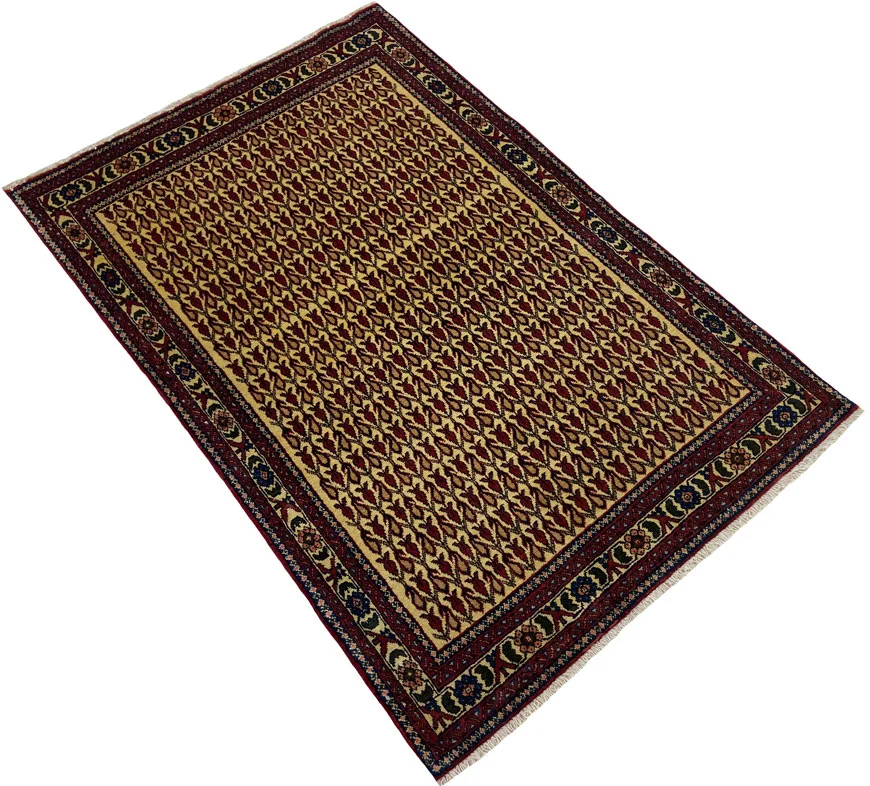
The colours named for this rug are red, beige, grey and brown. Together they form a warm and harmonious palette. Red can provide a clear accent, while beige, grey and brown balance the overall impression with quieter earth-related tones. These colours are part of the specific description of the piece. They support the imaginative design without forcing the pattern into a conventional ornamental category.
Gabbeh pattern traditions are associated with a straightforward language of forms. Abstract elements do not need to reproduce an object naturalistically; they can carry memories, everyday impressions or ideas belonging to the knotter. The design grows out of the relationship between surface, colour and sign. This freedom of interpretation makes each rug distinctive and explains why Gabbeh-Shuli pieces are described as individual works of art.
The pattern does not tell one predetermined literary story. Instead, each rug is described as a unique piece with its own story. This refers to the personal and cultural traces expressed through the design. The knotters are free to follow their imagination, combining creative patterns with vivid colours. The result can deliberately move away from a purely schematic repetition and retain the character of a handmade composition.
In a modern interior, the abstract design can function as an independent textile field. In a rustic setting, the warm colours and wool surface reinforce its handmade character. It can also be combined with traditional furnishings and other decorative textiles. The rug is described as suitable for living rooms, bedrooms and hallways. These uses reflect the adaptable effect of its design rather than a restriction to one particular type of room.
The relationship between pattern and material remains visible throughout the rug. Virgin wool provides a natural textile surface, while red, beige, grey and brown organise the visual field. Hand-knotting ensures that the design is experienced as textile craftsmanship rather than simply as a printed image. In this way, the Gabbeh-Shuli joins a free and imaginative appearance with the regional tradition of Fars.
Special Features
A defining feature of the Gabbeh-Shuli is the combination of shiny virgin wool, hand-knotted construction and unusual design. The rug is described as a high-quality work of art and as a unique piece. Its role is therefore not limited to covering a floor; it also functions as an independent element within an interior. The relationship between material, colour and free pattern conception gives this particular rug its character.
The named colours are red, beige, grey and brown. Their harmonious combination can create a welcoming atmosphere, while the design remains imaginative and abstract. This balance explains why the rug is associated with modern, rustic and traditional furnishing styles. It can be placed in a living room, bedroom or hallway, where its textile surface and individual pattern can contribute to the overall appearance.
Care is uncomplicated. Regular vacuuming and occasional beating are sufficient measures for maintaining the rug’s freshness and appearance. Direct exposure to sunlight should be avoided so that the colours do not fade. This care advice is one of its practical features, alongside the durability attributed to the virgin wool and its suitability for everyday use.
FAQ
How should I care for my Gabbeh-Shuli rug?
Regular vacuuming and occasional beating are sufficient for the routine care of the Gabbeh-Shuli rug. These measures help remove dust and loose particles while preserving the freshness of the wool surface. Direct sunlight should be avoided because it may cause the colours to fade. The recommended care is uncomplicated and helps maintain the appearance of the shiny virgin wool and the rug’s red, beige, grey and brown pattern.
Where does the Gabbeh-Shuli rug come from?
The Gabbeh-Shuli rug comes from the Fars region in southern Persia, near the historic city of Shiraz. Fars is known for its traditional rug-making craft. This regional setting provides the cultural and handcraft background for the combination of hand-knotted virgin wool, imaginative patterns and lively colours. Its Fars origin should be distinguished from the names of patterns associated with other Persian rug regions.
What makes the Gabbeh-Shuli rug unique?
Its distinctive character comes from the creative, unusual and imaginative patterns together with the use of high-quality virgin wool. Each Gabbeh-Shuli is described as a unique piece that reflects the imagination and cultural influences of its makers. The handcraft, the lively palette of red, beige, grey and brown, and the connection with the Fars tradition add to this individuality. The rug is therefore presented as a high-quality work of art as well as a functional floor covering.
To provide the best experiences, we use technologies like cookies to store and/or access device information. Consenting to these technologies will allow us to process data such as browsing behavior or unique IDs on this site. Not consenting or withdrawing consent, may adversely affect certain features and functions.
Functional Always active
The technical storage or access is strictly necessary for the legitimate purpose of enabling the use of a specific service explicitly requested by the subscriber or user, or for the sole purpose of carrying out the transmission of a communication over an electronic communications network.
Preferences
The technical storage or access is necessary for the legitimate purpose of storing preferences that are not requested by the subscriber or user.
Statistics
The technical storage or access that is used exclusively for statistical purposes.The technical storage or access that is used exclusively for anonymous statistical purposes. Without a subpoena, voluntary compliance on the part of your Internet Service Provider, or additional records from a third party, information stored or retrieved for this purpose alone cannot usually be used to identify you.
Marketing
The technical storage or access is required to create user profiles to send advertising, or to track the user on a website or across several websites for similar marketing purposes.
 SECURE PAYMENT
 SHIPPING PARTNERS


