
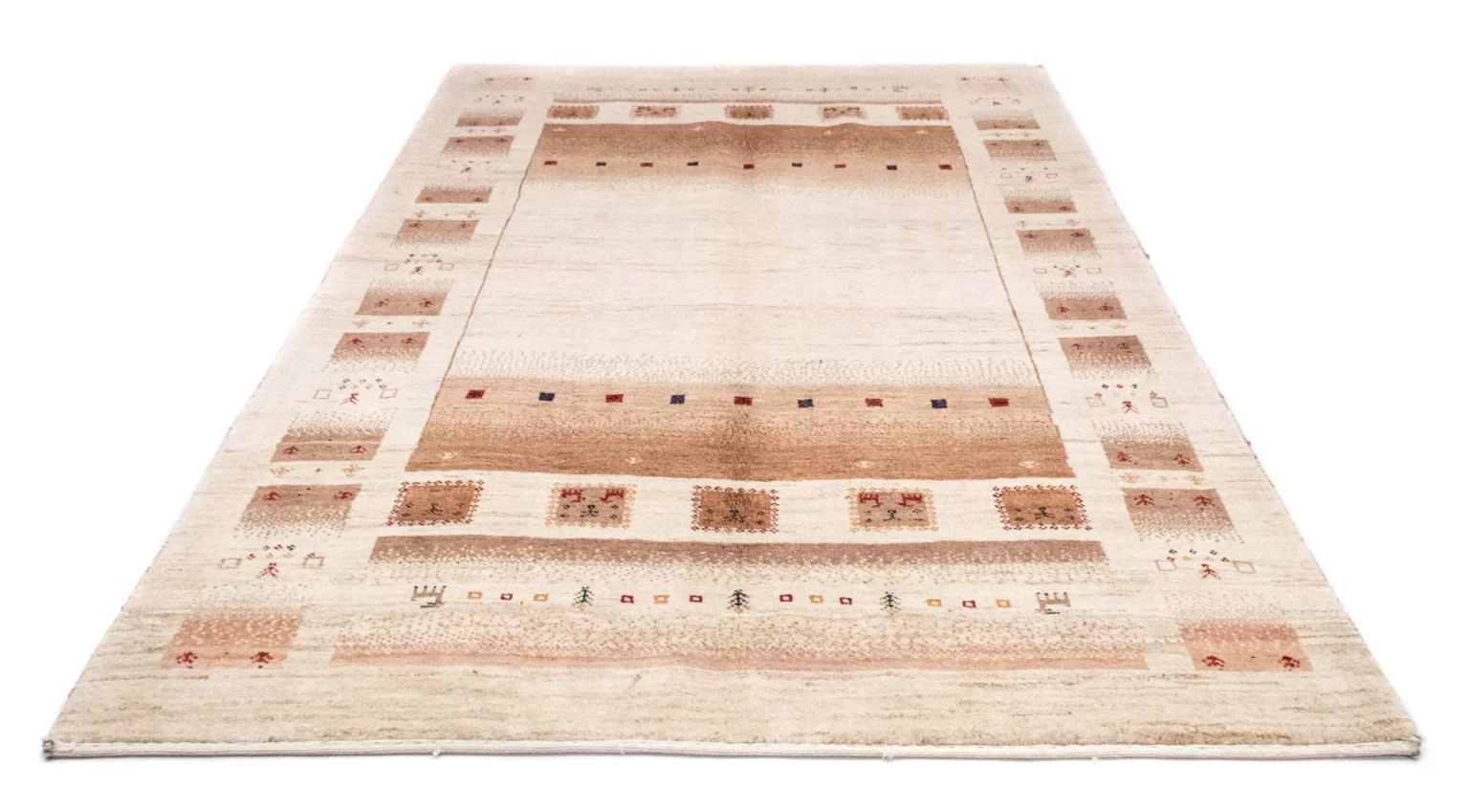
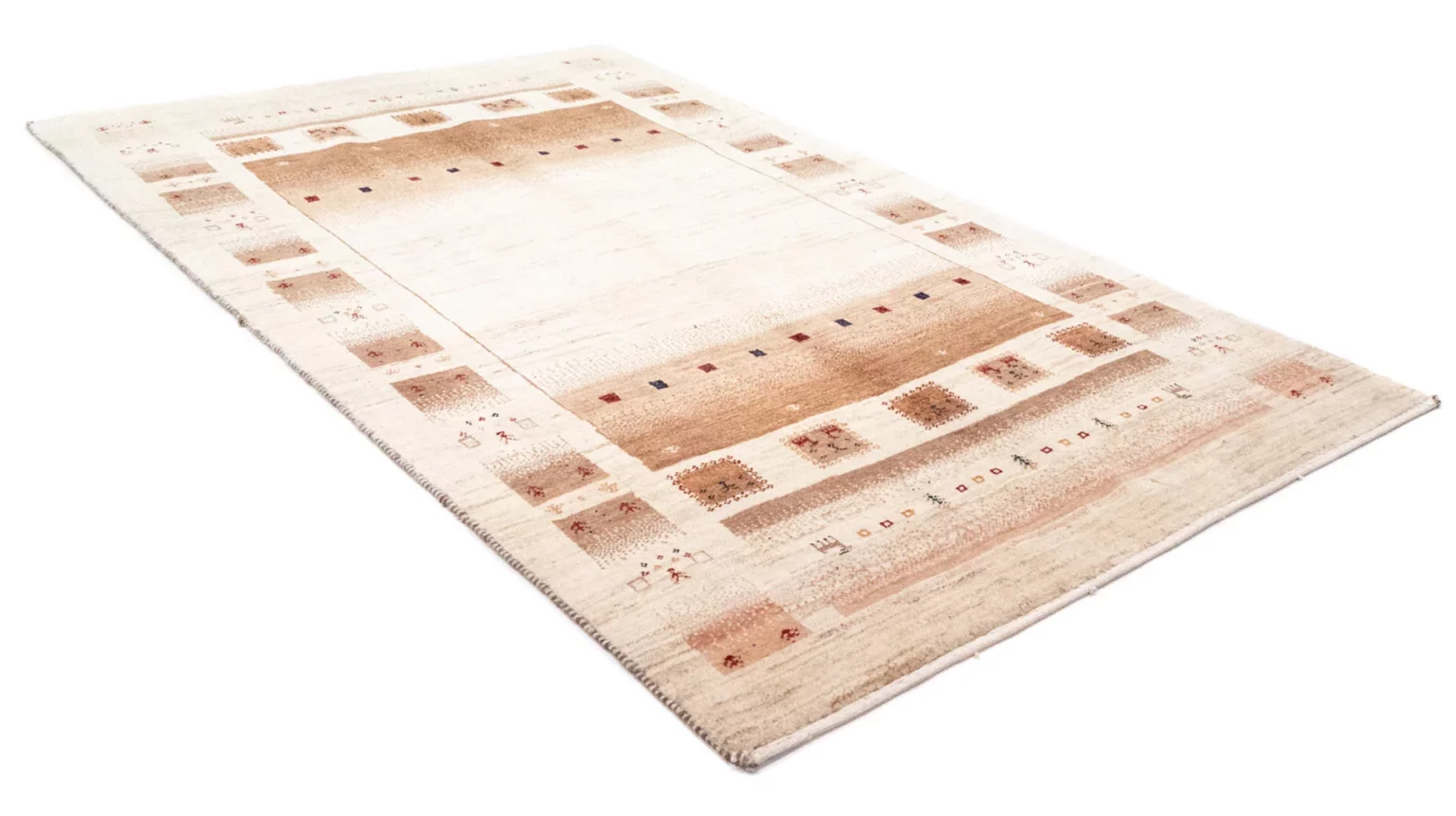
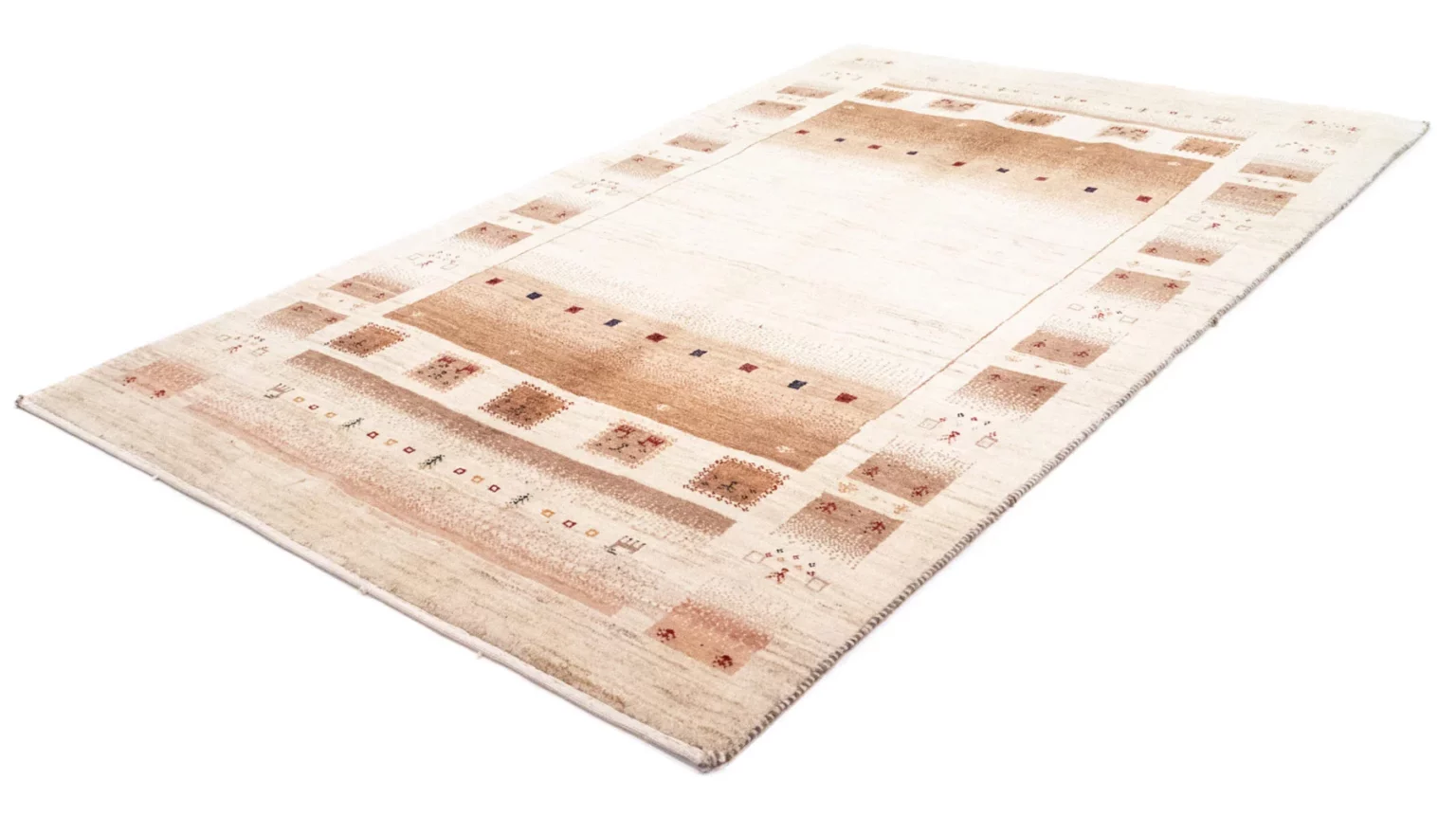
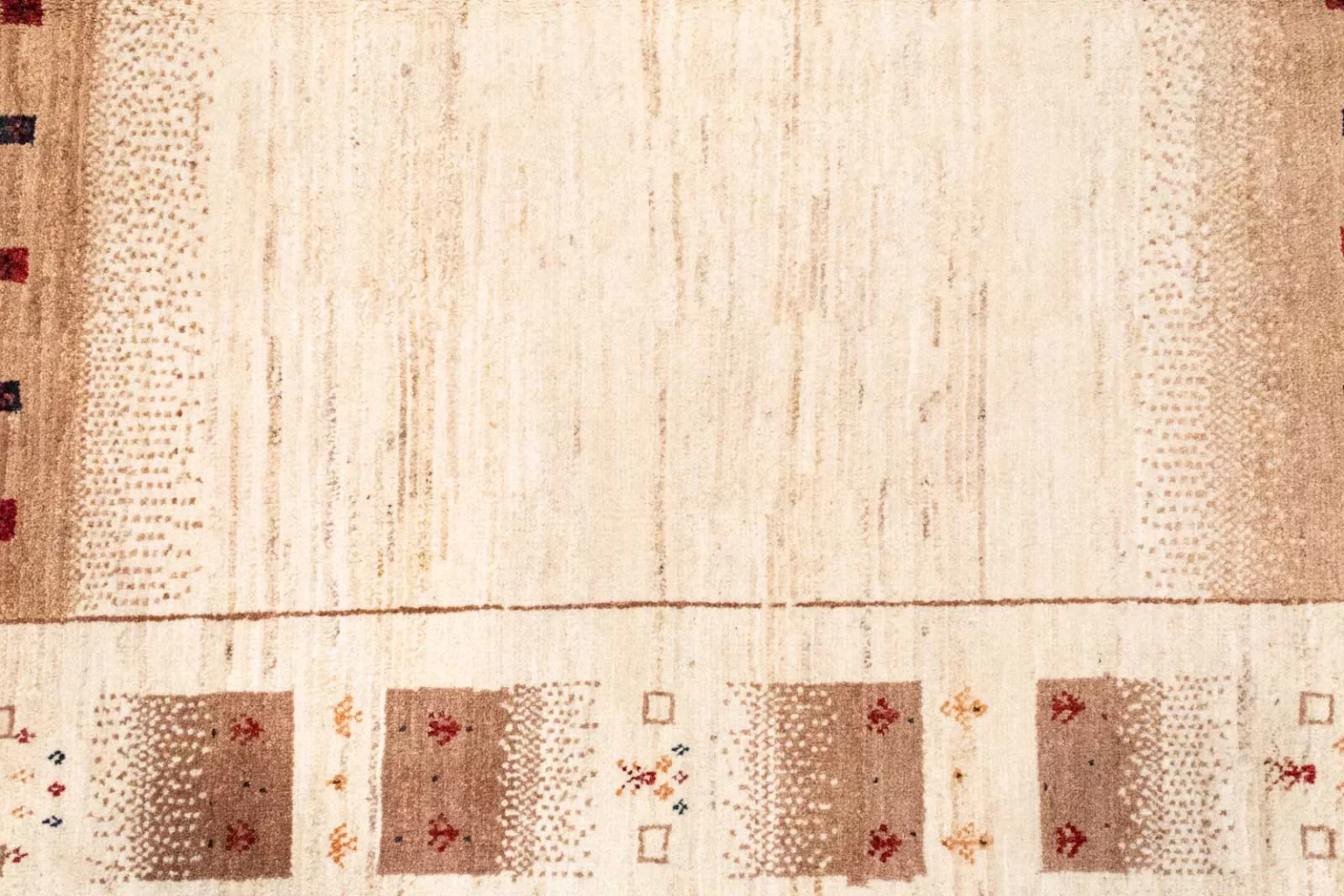
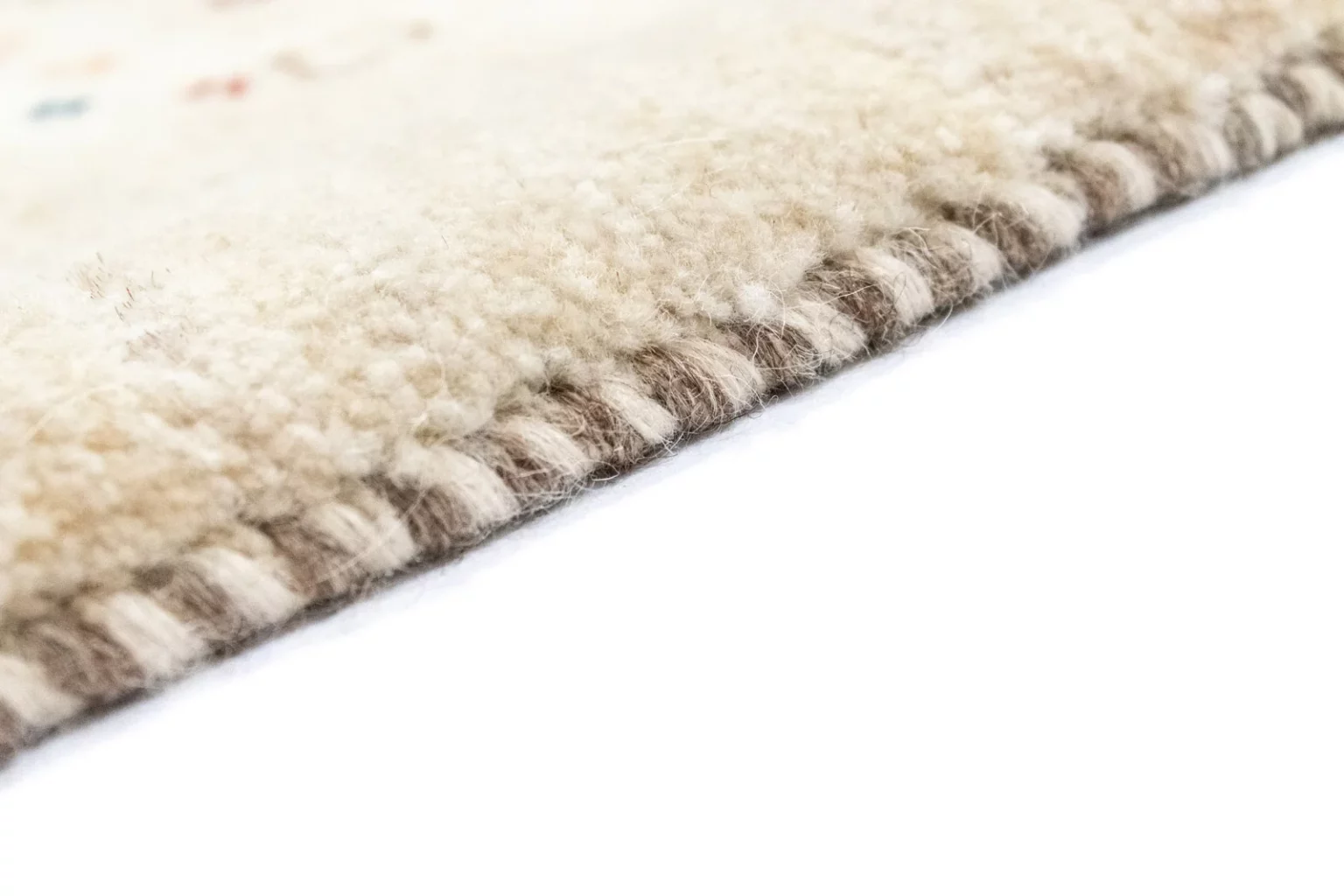
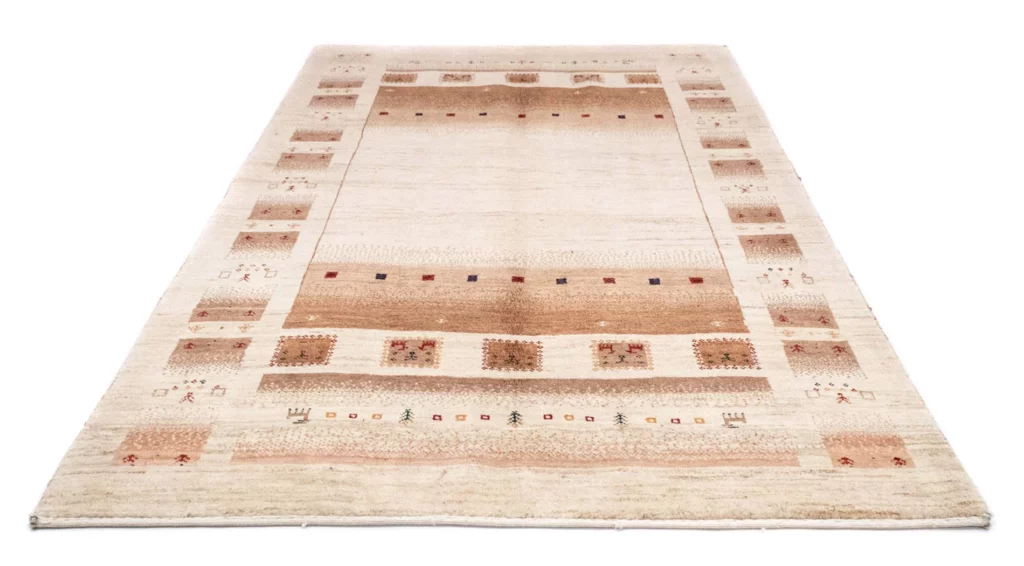
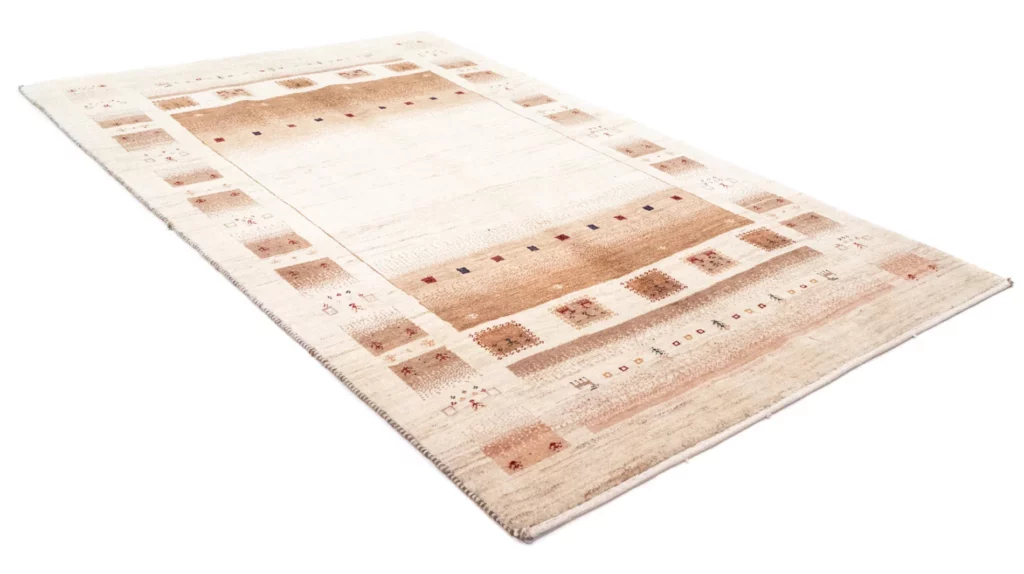
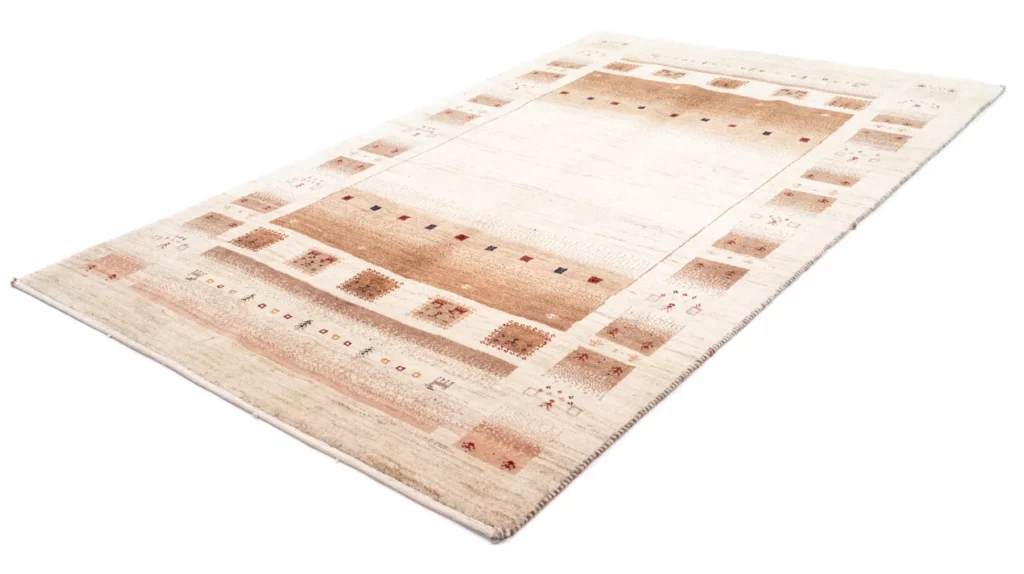
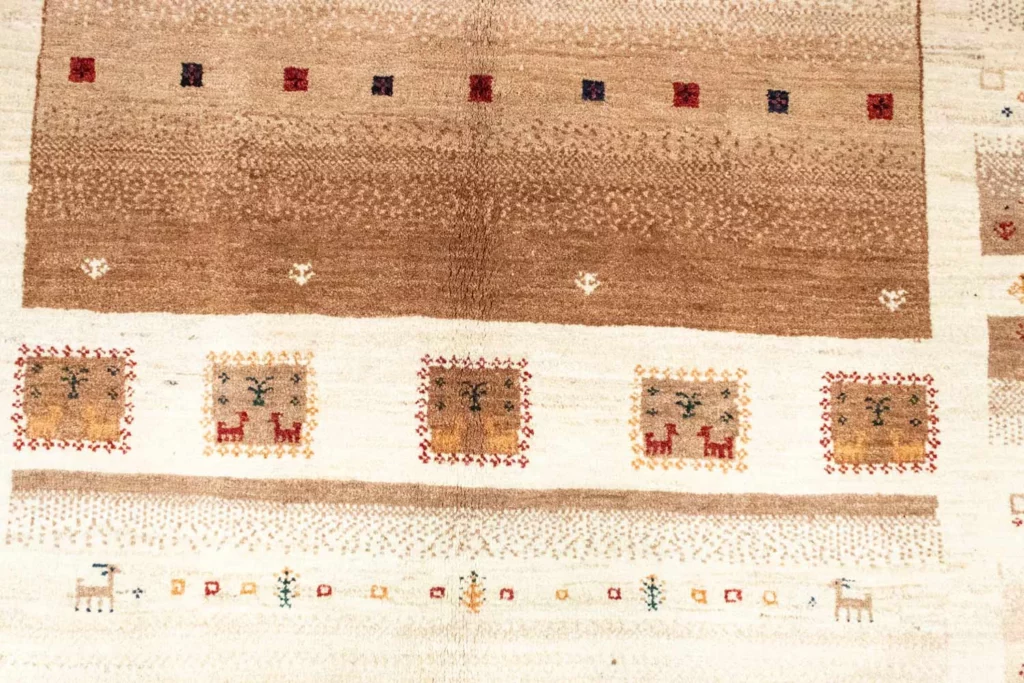
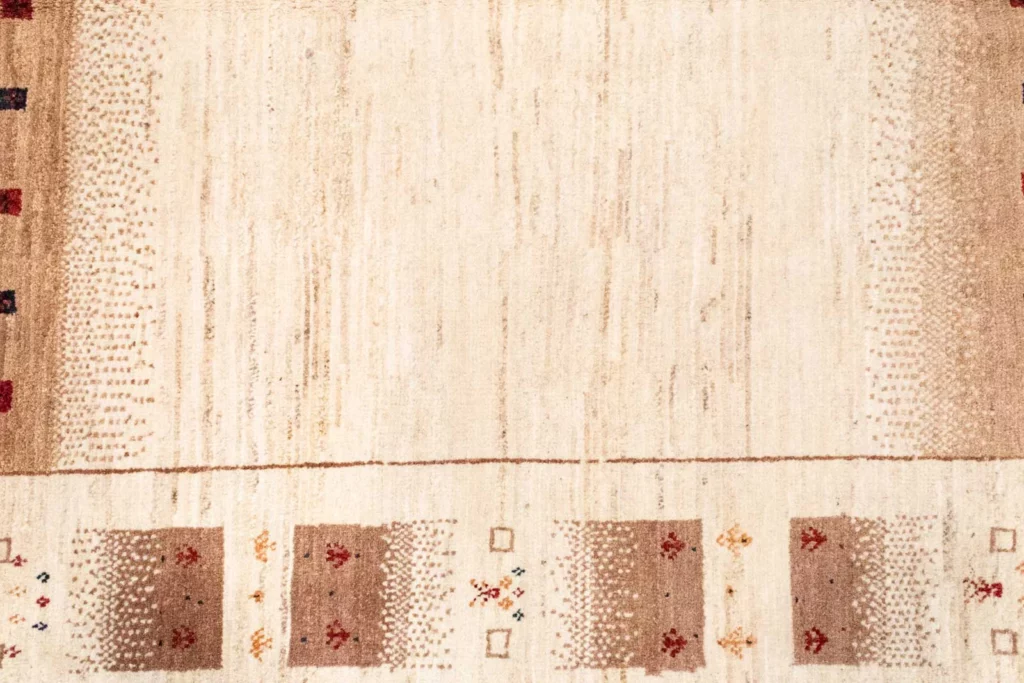
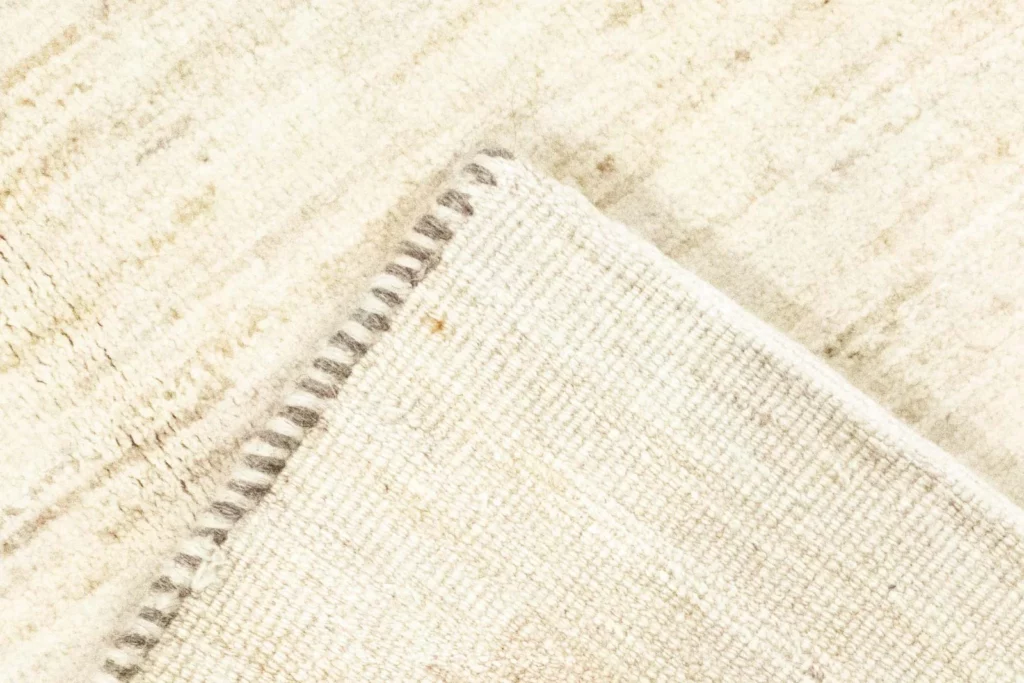
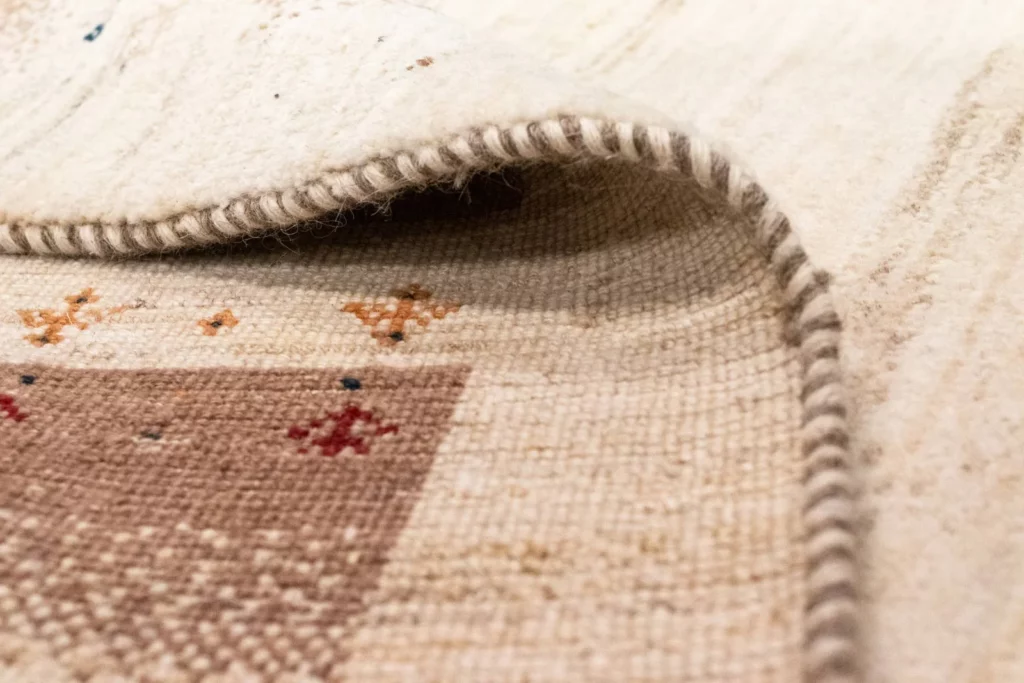
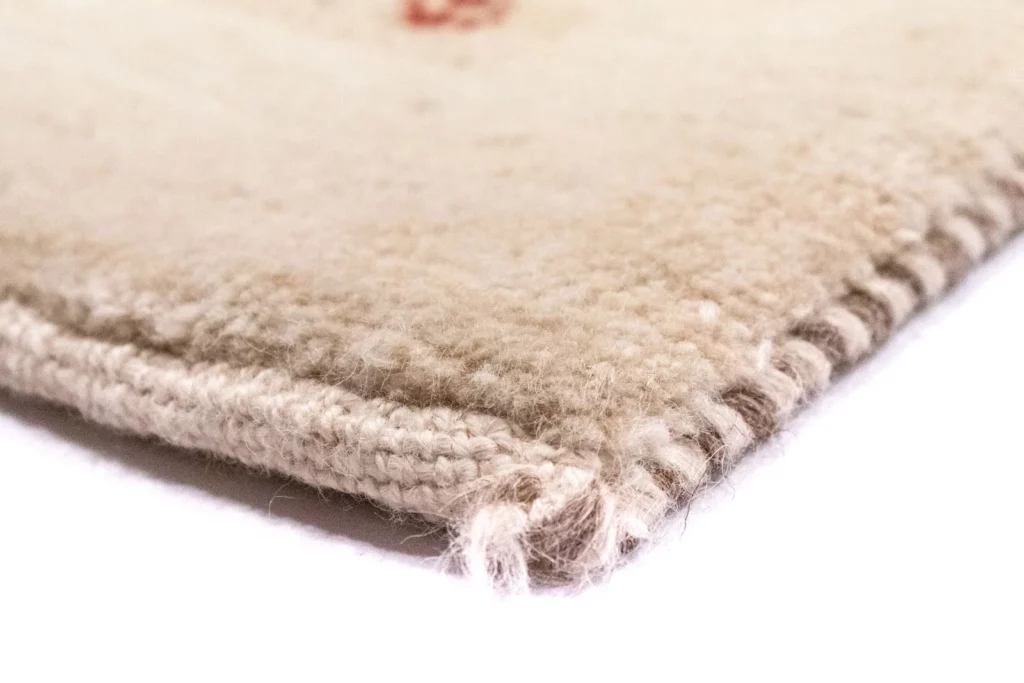
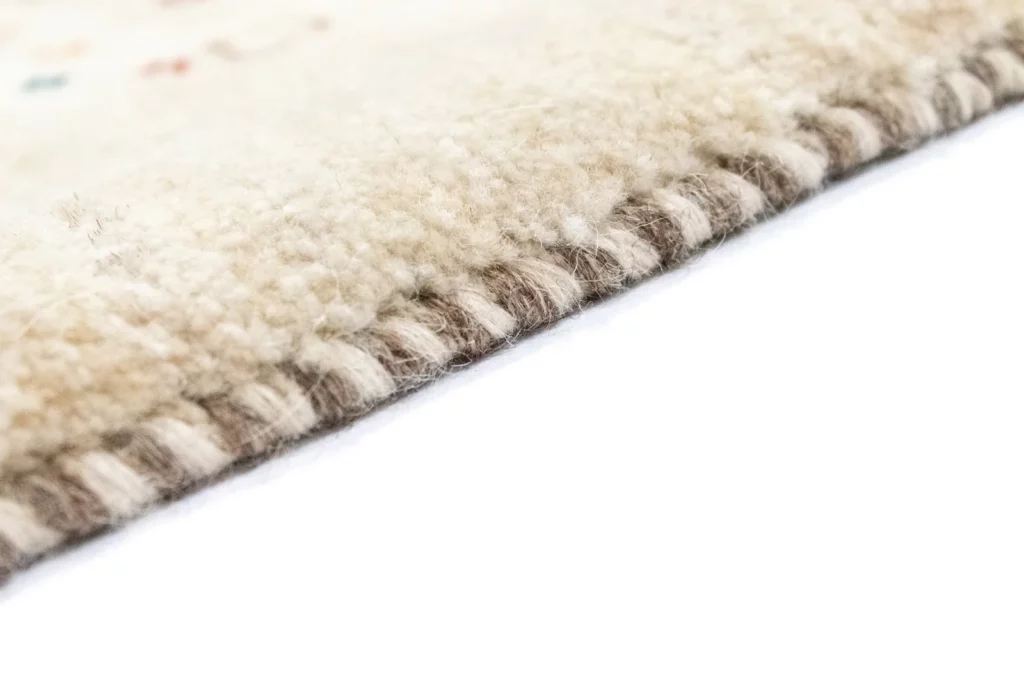
Persian Rug Gabbeh-Loribaft 258 x 154 cm Wool Hand-knotted
€ 2169
Hand-knotted Gabbeh-Loribaft Persian Rug | Knot density: 150.000 – 220.000 knots/m² | Material: hand-spun sheep and goat wool | Size: 258 x 154 cm | Pattern: abstract designs with large colour fields and playful figures | Condition: New
1 available
- ✓Free Shipping in EU
- ✓2-5 Business Days Delivery
- ✓14-Day Return Policy
- ✓Worldwide Shipping on request
 SECURE PAYMENT
 SHIPPING PARTNERS
Inventory number: 6D7A8D02
Description
Gabbeh-Loribaft Persian Rug
Material and Craftsmanship
This Gabbeh-Loribaft is made from hand-spun sheep and goat wool. The combination of the two types of wool is one of the stated material characteristics of this rug tradition and gives the textile its particular tactile presence. Hand-spun wool is prepared through a manual process rather than a completely standardised industrial one. That process preserves the visible character of the fibre and keeps the relationship between raw material and craft at the centre of the rug.
The wool is coloured with natural dyes from the region. These dyes connect the palette with locally available materials and keep the colouring process linked to the rug’s place of origin. In Gabbeh-Loribaft weaving, colour is not treated as a separate industrial finish; it belongs to a sequence that brings together wool, dyeing and knotting. The use of sheep and goat wool together with regional natural dyes is also described as sustainable.
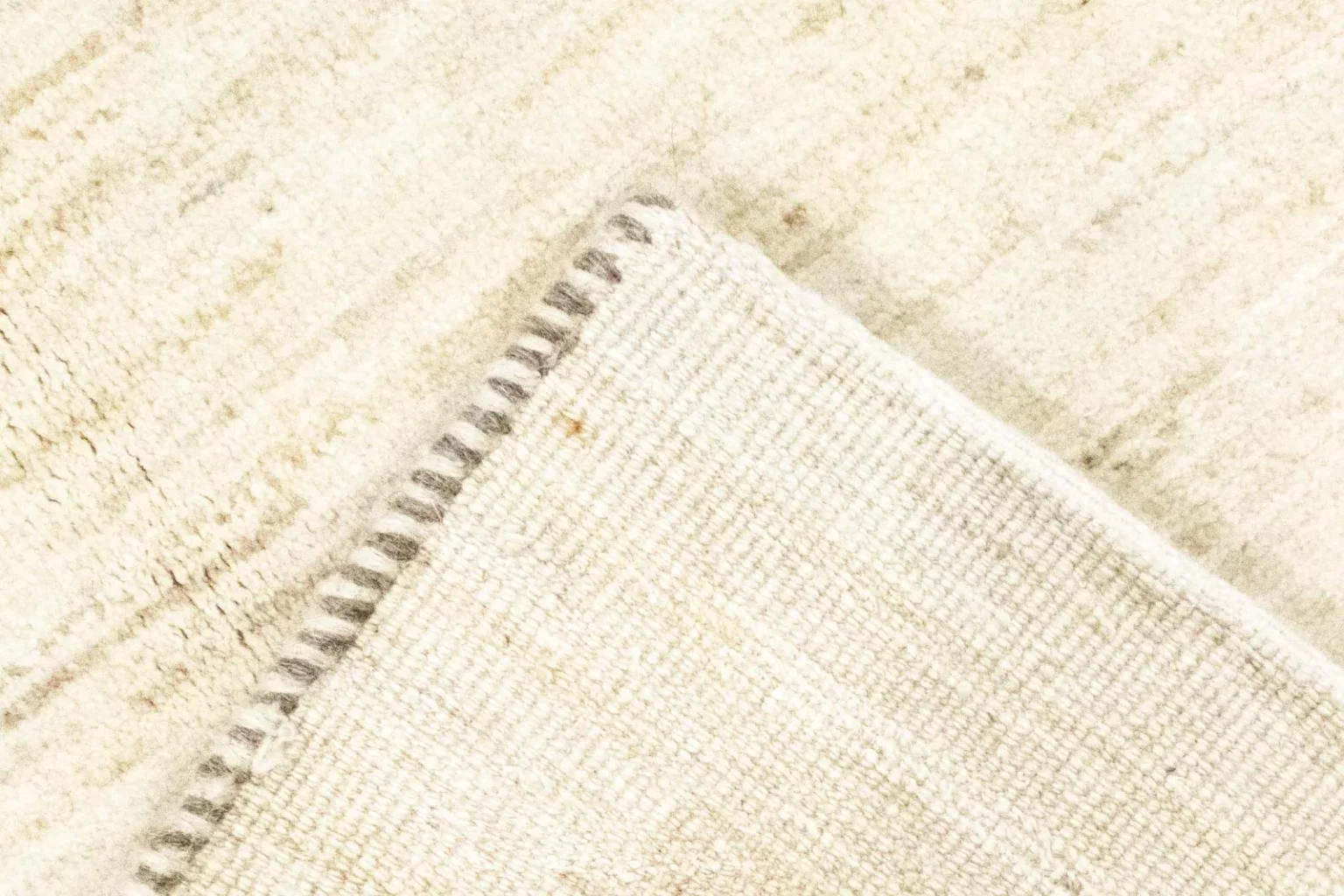
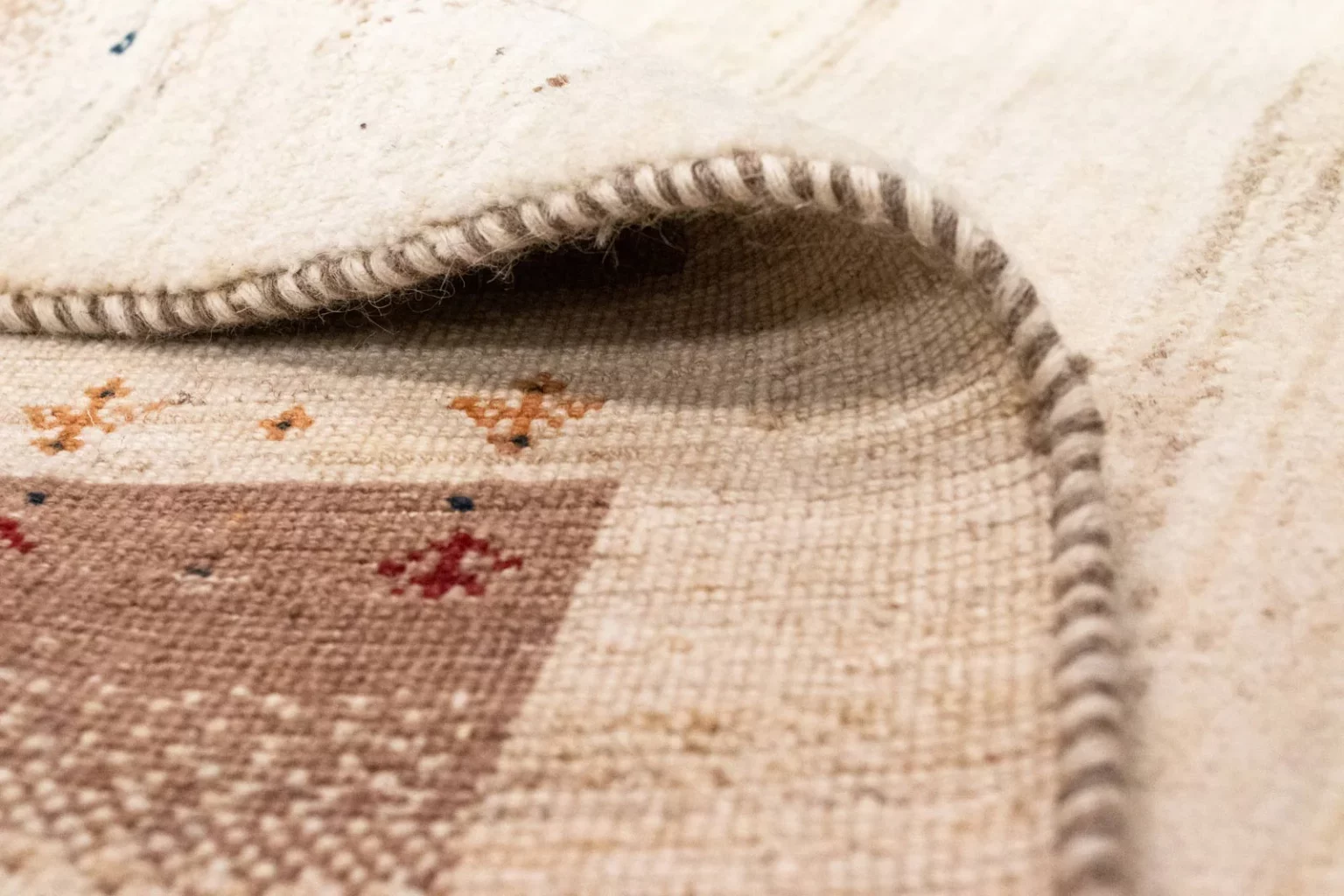
The rug is hand-knotted. In hand-knotting, individual knots are worked into the textile structure one by one. This distinguishes the rug from machine-made floor coverings and gives the construction its handmade character. The Gabbeh-Loribaft combines that traditional technique with the high knot density associated with it. The resulting surface is described as fine and detailed, while the pile remains pleasantly soft.
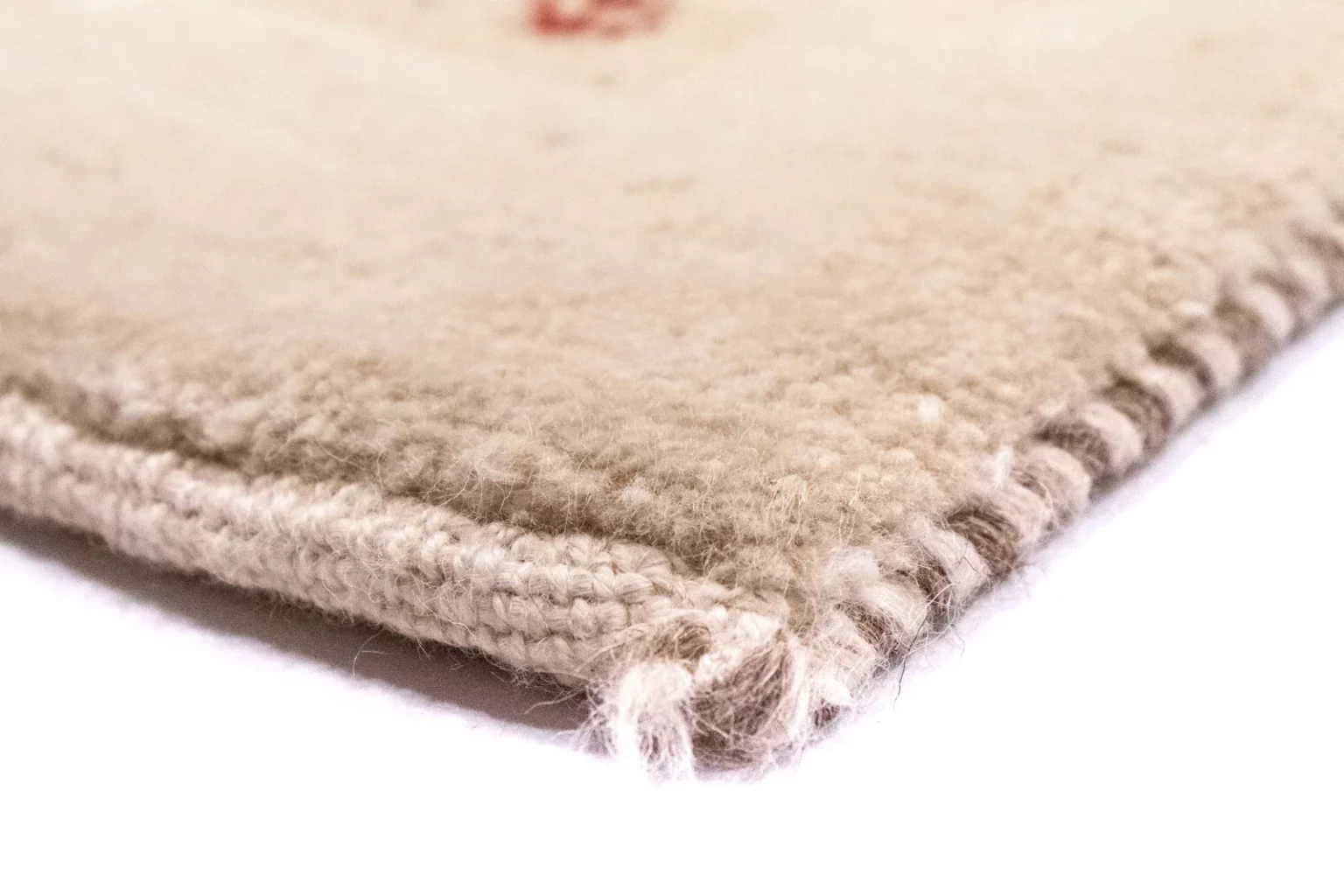
Compared with conventional Gabbeh rugs, Loribaft versions have a shorter pile. This makes them lighter and easier to handle. The surface nevertheless remains soft and comfortable. The combination of wool, hand-knotting, a fine texture and a shorter pile explains the particular character of this rug while keeping it firmly connected to the nomadic weaving tradition.
Origin and Tradition
Gabbeh-Loribaft rugs are associated with the nomadic Ghashghai peoples of Fars in south-western Iran. Fars is an Iranian province with a long history of carpet weaving and nomadic culture. The origin therefore refers to more than a location on a map. It points to a textile tradition in which rugs developed as practical objects and as forms of visual expression. Nomadic conditions influenced the choice of wool, the methods of production and the direct character of the designs.
The Ghashghai refined their techniques over generations. Knowledge was passed on within the community and included the preparation of wool, spinning, dyeing and knotting, as well as the development of motifs. In nomadic weaving, production is closely related to available materials and to the organisation of daily life. Hand-spun sheep and goat wool reflects a material base rooted in that regional setting.
Gabbeh rugs are often associated with a direct and reduced visual language. Their compositions do not necessarily follow the tightly ordered structures found in courtly or urban carpets. Large fields, simplified forms and narrative signs can stand together in a more open arrangement. Gabbeh-Loribaft adds a finer, denser construction and a shorter pile to this Gabbeh character. It is therefore a distinct expression within the broader Gabbeh tradition.
The history of these rugs is connected with a way of life in which practical use mattered. Nomadic rugs had to be suitable for everyday surroundings and had to be made with materials and skills available to the weaving community. Durable wool, hand-knotting and clear designs form one coherent system in that context. The rugs are consequently more than floor coverings: they record a tradition of skill developed and maintained over a long period.
Fars also stands within a wider landscape of Iranian carpet traditions. Bakhtiari and Qashqai rugs are likewise associated with regional materials and high knot densities, though their designs and colour ranges differ. Nain and Isfahan are known for more classical compositions and finer detailing. These comparisons show that Iranian carpets do not form a single uniform category. Gabbeh-Loribaft occupies its own place through its nomadic origin, simplified imagery and wool-based hand craftsmanship.
The transmission of technique helps explain why related regional rugs can have different visual identities even when they use similar materials. Each weaving tradition develops its own approach to colour, layout, figures and the treatment of wool. In Gabbeh-Loribaft, the relationship between nomadic origin and the finer Loribaft construction is central. The tradition remains recognisable while allowing the design to avoid a rigid, unchanging formula.
Design and Pattern
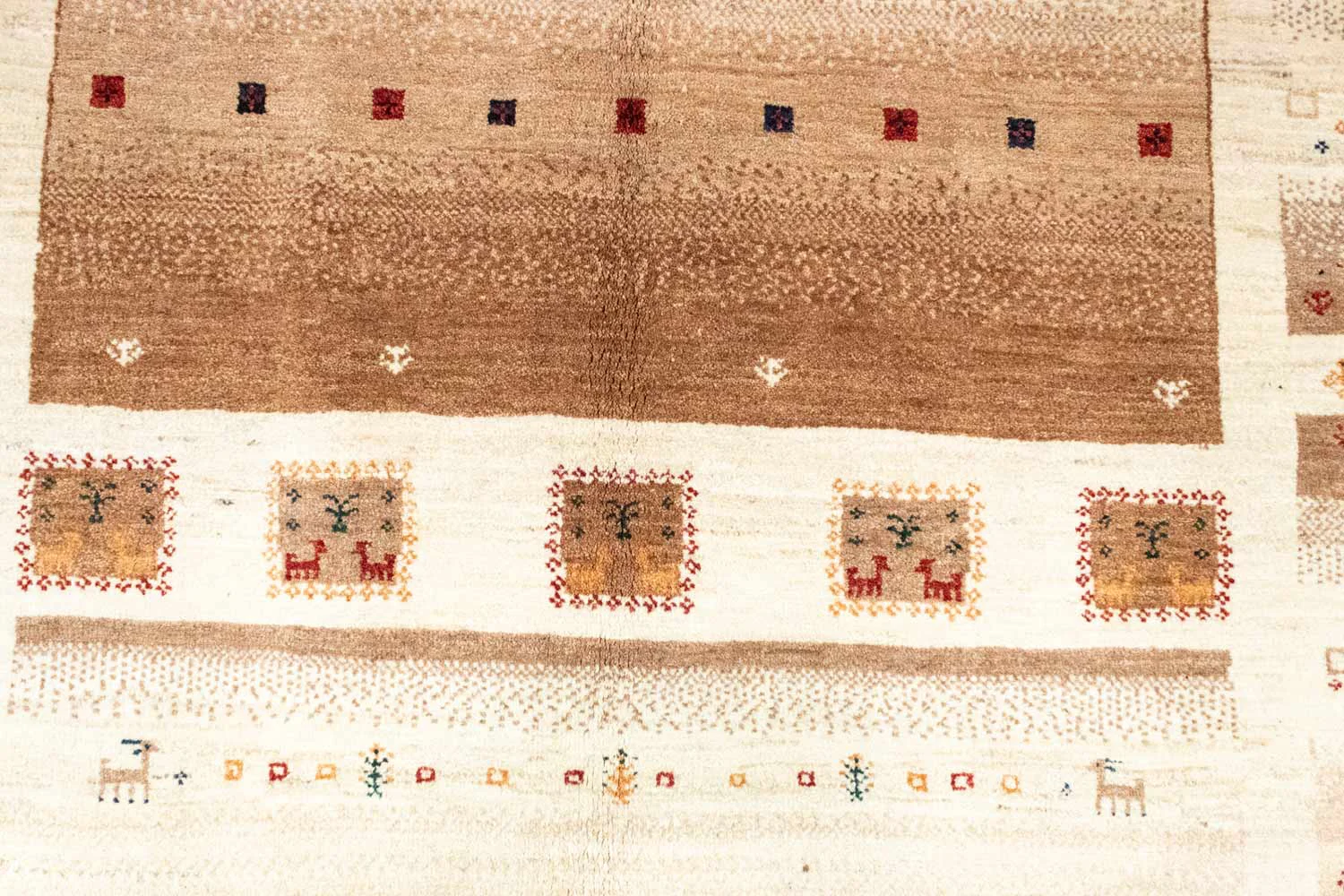
The pattern of this Gabbeh-Loribaft is described as an abstract design with large colour fields and playful figures. Its composition is therefore based less on dense, repeated ornament and more on clearly readable areas and simplified motifs. The broad fields establish the overall order of the design. The figures provide accents within that order and give the rug a playful, narrative quality.
Abstraction does not mean that every reference has been removed. Simplified shapes may recall animals and plants without attempting a naturalistic depiction. In nomadic carpet art, motifs are often developed from memory and from an inherited visual vocabulary. A figure can function as a decorative element while also referring to the world of the weavers. Its reduced form leaves room for interpretation but remains connected to the tradition in which it was created.
The large colour fields contrast with the highly detailed structures of many classical carpet compositions. They make the main divisions of the design easy to read and bring the handmade quality to the foreground. The fields can be experienced as calm areas, while the figures guide the eye across them. Together they create a pattern that appears modern and simplified without losing its connection to Iranian nomadic art.
Gabbeh-Loribaft designs are generally less formal than many traditional Persian carpets. Rugs from centres such as Nain or Isfahan often favour finely articulated ornament and a more strictly organised overall structure. Gabbeh-Loribaft offers a more immediate visual language instead. Its abstract fields and playful figures are not a rejection of tradition; they belong to a regional approach in which personal expression and practical weaving culture can coexist.
Animal and plant references can both appear in this kind of design. The product description specifically names playful figures from the animal and plant worlds. They are not presented as realistic illustrations, but as simplified signs within the composition. Their effect depends on their relationship to the colour fields, their scale and their placement. A single figure can alter the character of a field without covering the whole design in small details.
The Gabbeh design tradition allows variation. Because the composition is not dependent on one fixed ornament repeated in exactly the same way, colours, figures and fields can be combined in different arrangements. This supports the one-off character of hand-knotted rugs. For this piece, the combination of abstract designs, large colour fields and playful figures defines the stated visual identity. The design idea is clear, while its particular execution remains individual.
Special Features
A notable feature of this rug is the combination of a soft pile with the shorter pile associated with Loribaft models. The shorter pile makes the rug lighter and easier to handle, while the surface remains pleasantly soft. These characteristics are described as suitable for everyday use in living spaces, including children’s rooms where comfort and safety are priorities.
The rug is new. Its hand-knotted construction, hand-spun sheep and goat wool and abstract design are further stated characteristics. The use of natural dyes from the region adds another connection to its origin. Taken together, these features give the piece a clear identity within the Gabbeh tradition.
Regular vacuuming is recommended for care. When needed, the surface can be cleaned with a damp cloth. Direct sunlight should be avoided to help prevent the colours from fading. Because of its soft pile and durable materials, the rug is described as suitable for living rooms, children’s rooms and hallways.
FAQ
How should I care for my Gabbeh-Loribaft rug?
Vacuum the rug regularly so that loose dirt does not remain in the surface. For occasional spot cleaning, use a damp cloth when necessary. Direct sunlight should be avoided because prolonged exposure can contribute to colour fading. Gentle, consistent care supports the longevity of the hand-knotted wool surface and preserves the tactile character of the pile.
Where can Gabbeh-Loribaft rugs be used?
The soft pile and durable materials make Gabbeh-Loribaft rugs suitable for everyday use in several parts of the home. Living rooms, children’s rooms and hallways are specifically named as suitable settings. In a living room, the broad abstract design adds a defined textile element. In a children’s room, the soft pile and the focus on comfort and safety are relevant. In a hallway, the durable material has a practical role.
What distinguishes Gabbeh-Loribaft rugs from other rug types?
Gabbeh-Loribaft rugs are distinguished by their high knot density, shorter pile and unique, often abstract designs. Large colour fields and playful figures give them a simpler and more contemporary appearance than many traditionally structured Persian rugs. At the same time, their hand-knotted construction, wool materials and origin in the Ghashghai tradition of Fars keep them firmly connected to Iranian carpet making.
Additional information
| Design Style | |
|---|---|
| Color | |
| Size | |
| Shape | |
| Origin | |
| Knot Density | |
| Material |
Related products

Persian Rug Gabbeh 250 x 180 cm Cashmere Hand-knotted
€ 1118
Persian Rug Fars 292 x 206 cm Wool Hand-woven
€ 798
Persian Rug Heriz 340 x 254 cm Wool Hand-knotted
€ 1438
Persian Rug Gabbeh 270×83 cm Hand-knotted
€ 755
Persian Rug Qashqai 293 x 198 cm Wool Hand-woven
€ 798
Persian Rug Gabbeh 305×260 cm Wool Hand-knotted
€ 2307
Persian Rug Tabriz approx. 350 x 245 cm Wool Hand-knotted
€ 1280
Persian Rug Gabbeh 200 x 300 cm Cashmere Hand-knotted
€ 1323