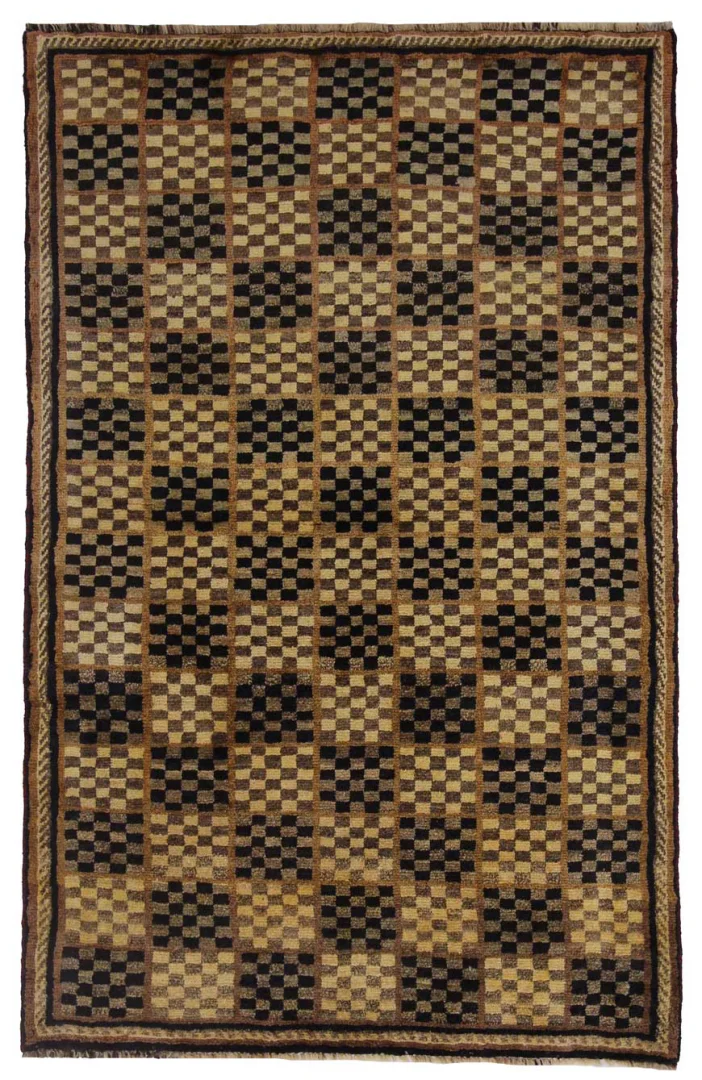
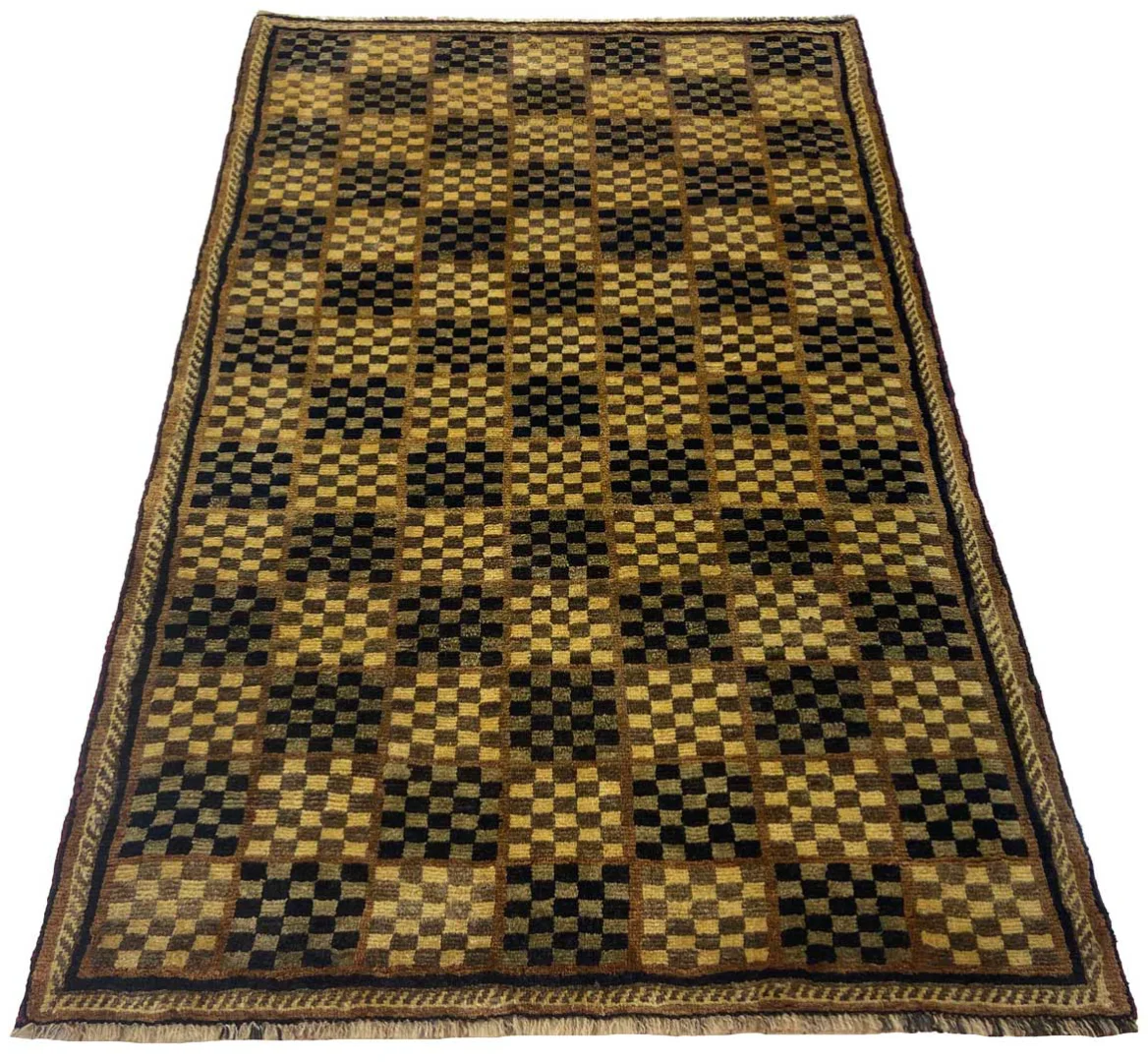
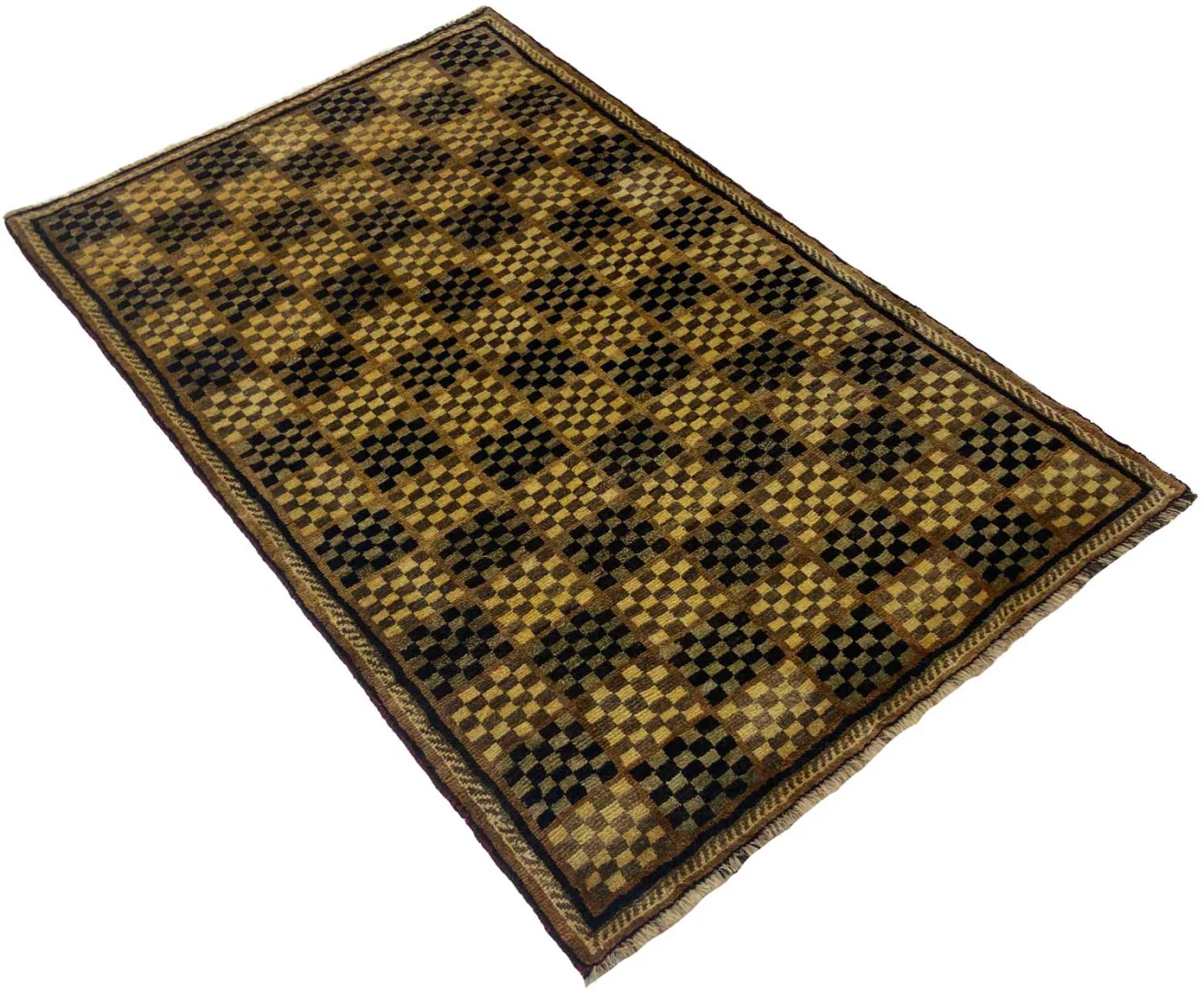
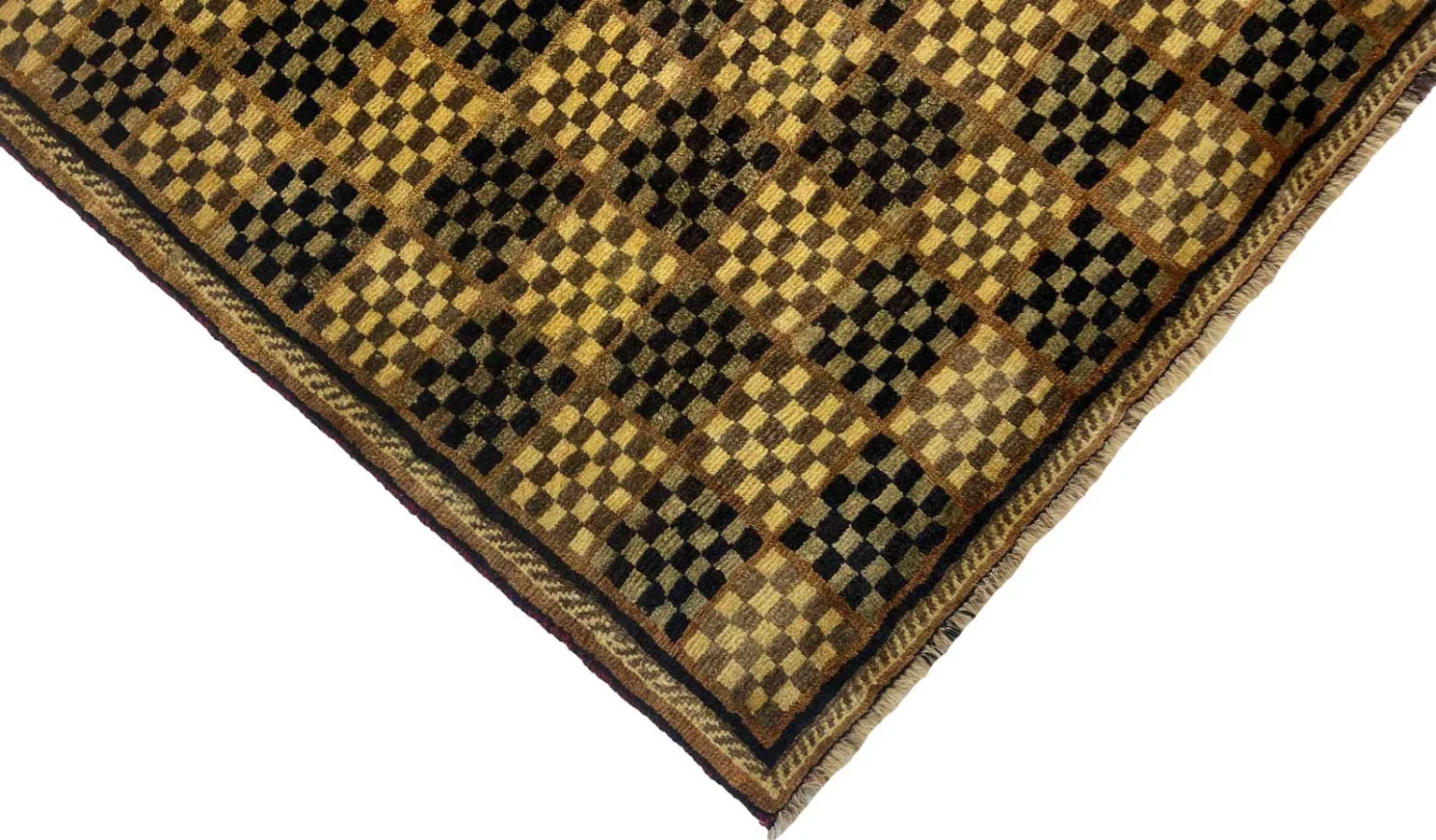
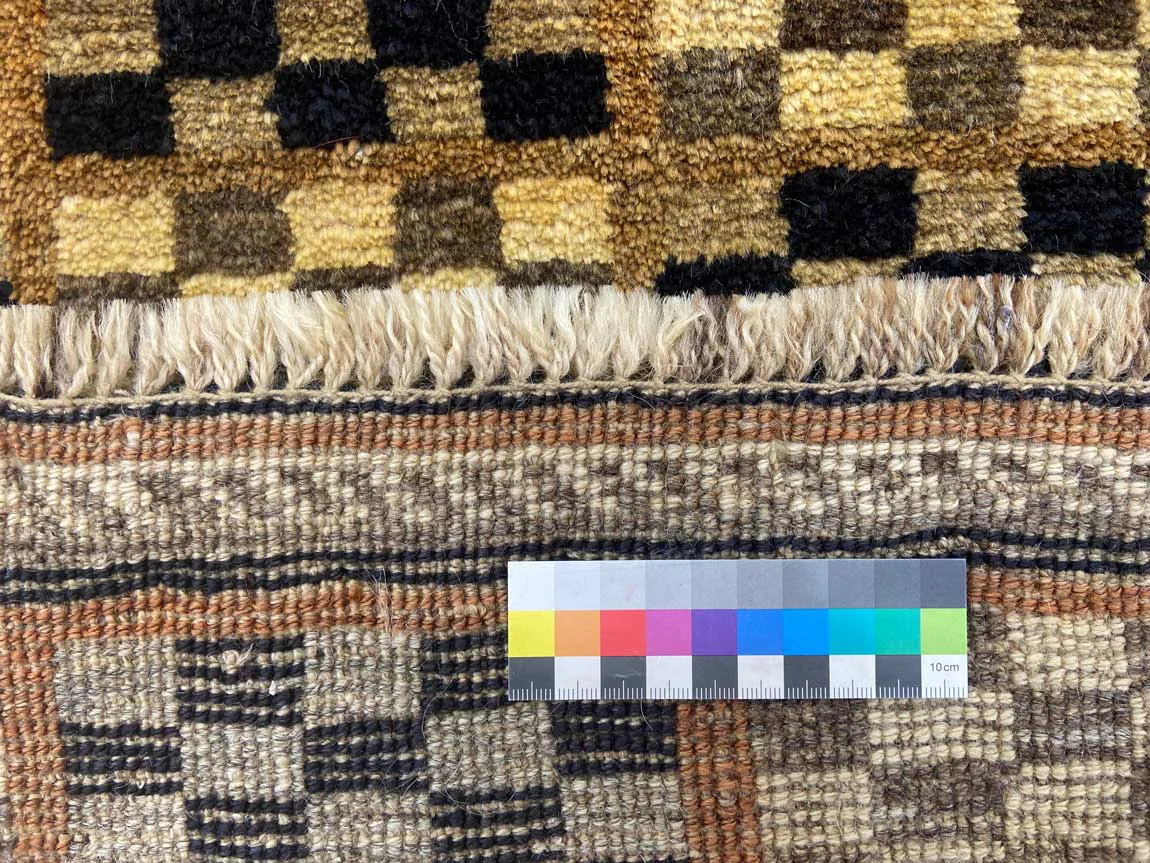
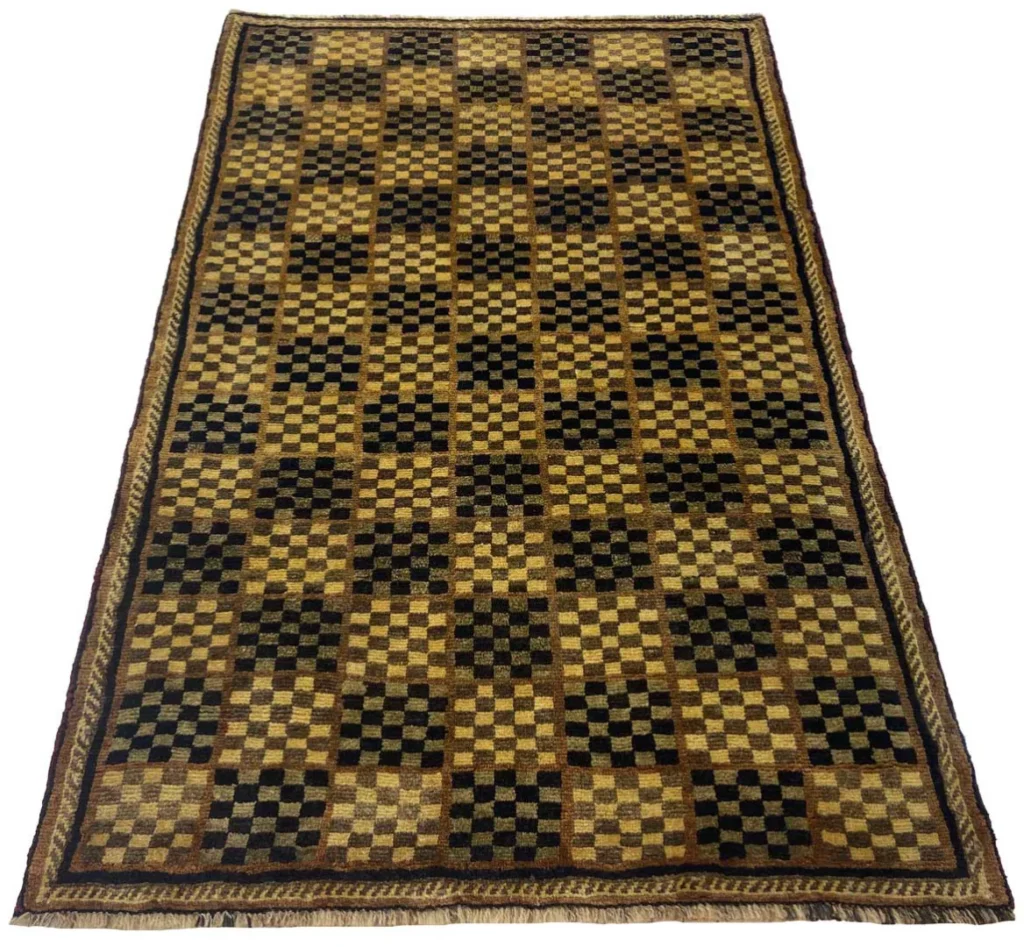
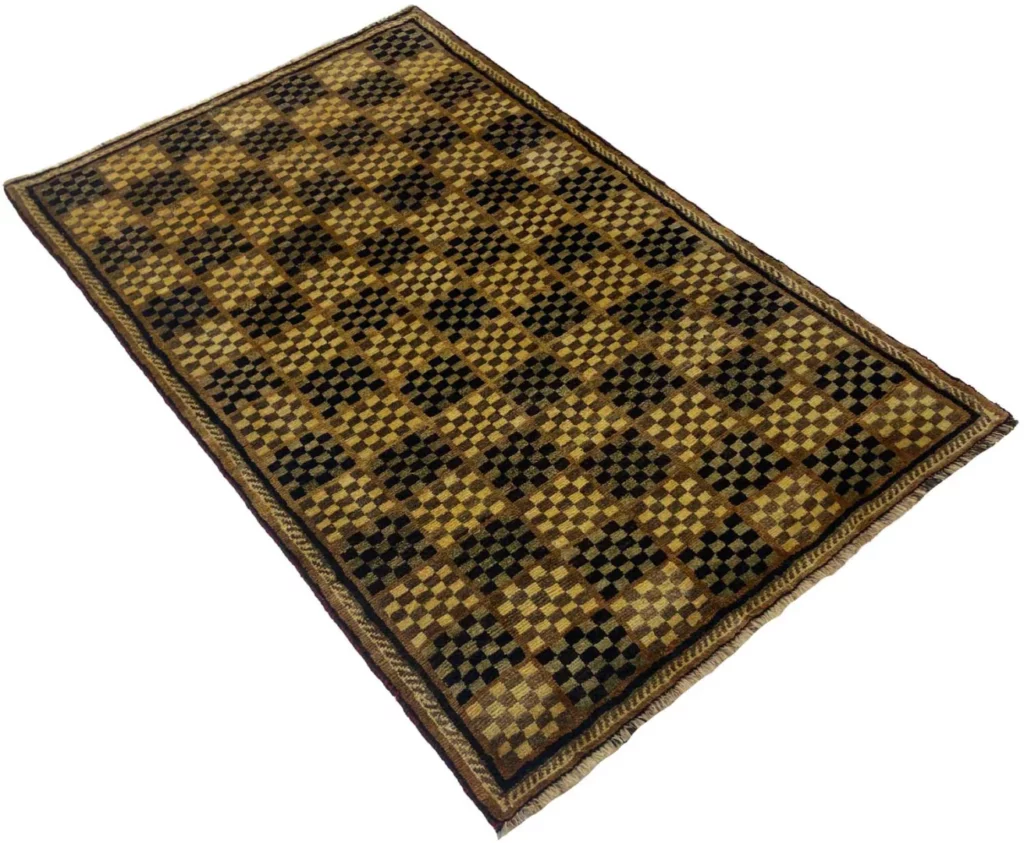
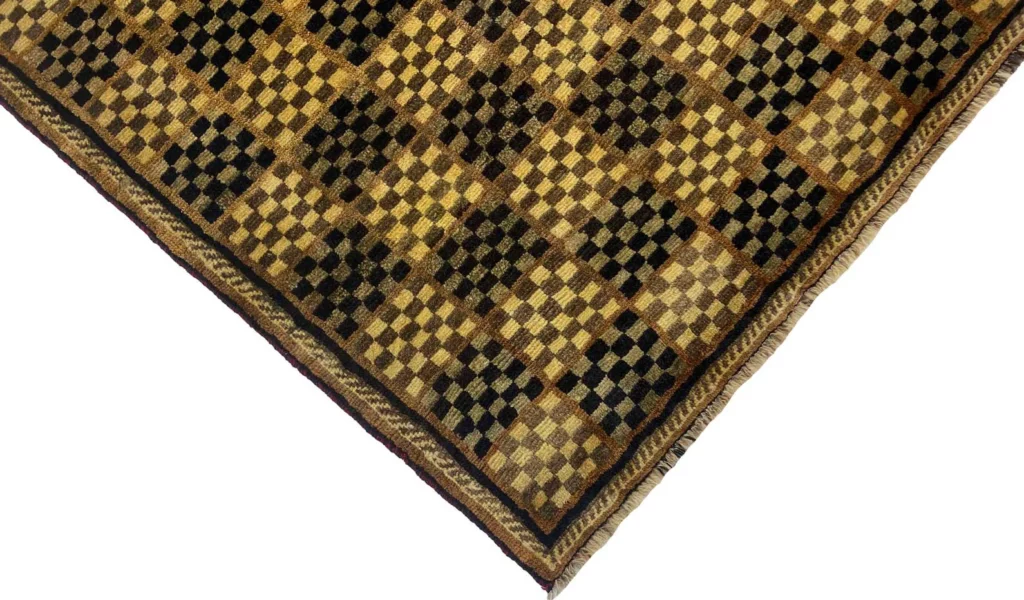
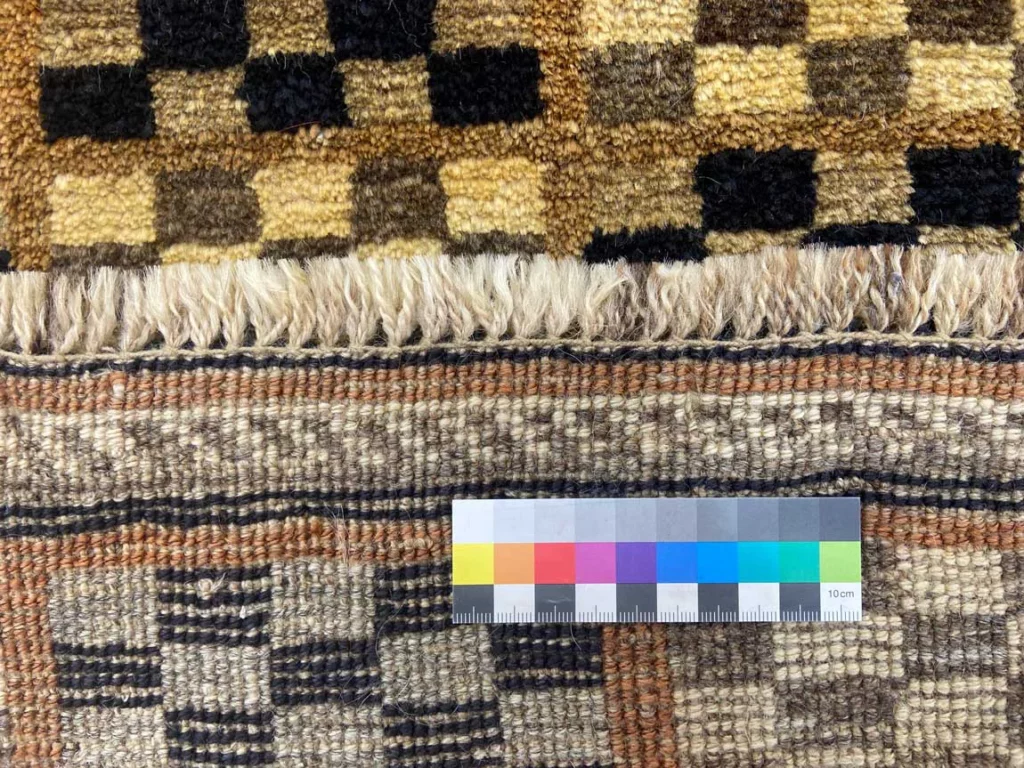
Persian Rug Gabbeh 184 x 117 cm Wool Hand-knotted
€ 799
Hand-knotted Gabbeh Persian rug | Knot density: 90,000 – 180,000 knots/m² | Material: pile shiny virgin wool | Size: 184 x 117 cm | Pattern: Unusual, imaginative designs | Condition: Very good
1 available
- ✓Free Shipping in EU
- ✓2-5 Business Days Delivery
- ✓14-Day Return Policy
- ✓Worldwide Shipping on request
 SECURE PAYMENT
 SHIPPING PARTNERS
Inventory number: 99D7BBB6
Description
Gabbeh Persian Rug
Material and Craftsmanship
This Gabbeh is hand-knotted from shiny virgin wool. The wool shapes both the tactile quality and the visual character of the surface. Its natural colouring supports the earthy yet lively palette of red, beige, grey and brown. Virgin wool is known for softness and durability. It gives the rug a pleasant surface and, with proper care, allows it to remain in use for a long time.
The knot density ranges from 90,000 to 180,000 knots per square metre. This level of workmanship is created by placing many individual knots and requires concentration throughout the making process. In hand-knotting, the design is not printed onto a finished surface by an industrial method; it is built knot by knot. The result has a distinct textile structure and an individual character.
The lustre of virgin wool takes colour clearly and can respond differently as the light changes. Red, beige, grey and brown therefore do not appear entirely static, but show varying depth across the surface. The material combines a soft feel with the resilience associated with natural wool.
Wool also has insulating properties. A Gabbeh made from virgin wool can contribute to a comfortable interior atmosphere and can be used in both winter and summer. A vacuum cleaner without a brush attachment is suitable for regular care. Marks should be dabbed with a damp cloth. Professional rug cleaning can be used when necessary.
Origin and Tradition
Gabbeh Shuli, also known as Gabbeh Fars, comes from the Fars region in southern Iran, near the historic city of Shiraz. Fars is one of the important cultural areas of Persian carpet making. The region has long been associated with nomadic communities and distinctive textile craftsmanship. In that setting, rugs developed not only as decorative objects, but also as useful textiles shaped by available materials and the experience of each community.
The nomadic weaving tradition of Fars brings practical use and visual expression together. Wool was important as a locally available material from which durable and comfortable textiles could be made. Gabbeh adds a free approach to design to this practical background. The rug does not have to follow one rigid plan; it can make the ideas of the person who knots it visible in the finished surface.
Within Persian rug making, Gabbeh Shuli represents a particularly personal way of composing a design. Classical Persian rugs are often organised through established rules of composition, including repeated borders, central medallions or regularly arranged ornaments. Gabbeh has a more open structure. Simplified forms, unusual spacing and individual relationships between colours can be brought together in one composition.
This freedom does not mean that Gabbeh is without tradition. Its appearance depends on inherited skills: selecting and preparing the wool, setting up the foundation, tying the knots and finishing the surface. Knowledge of material and technique is passed on, while the actual design may vary from one piece to another. In this way Gabbeh combines continuity in craftsmanship with individual expression.
The connection with Shiraz is important for placing this rug within the wider history of Fars. The region has been shaped by both nomadic and settled textile traditions. This variety explains why rugs from Fars cannot be reduced to one inflexible format. Alongside the technical method, the treatment of open space, colour and signs plays an important role.
Gabbeh Shuli is also associated with the name Gabbeh Fars because the region is central to its identity. The name refers not simply to a decorative look, but to a Persian rug tradition from southern Iran. Shiraz provides a historical point of reference for the cultural environment in which the Fars tradition developed.
Related forms of craftsmanship can be found elsewhere in the world of oriental rugs. Loribaft also comes from a setting where careful knotting and personal design are important, although Loribaft does not necessarily use the same priorities as Gabbeh. Kashan and Isfahan are associated with classical Persian rugs whose patterns are often more formally ordered. Nain and Tabriz likewise represent established regional traditions, but differ in their ornament and design principles. These comparisons illustrate the range of Persian rug culture without changing the Fars origin of Gabbeh Shuli.
Design and Pattern
The pattern of this rug is described as unusual and imaginative. Free composition takes priority over the strict repetition of a prescribed ornament. Shapes may therefore appear as individual signs within an open field. This creative freedom is one of the defining qualities of Gabbeh Shuli and distinguishes the type from many classical Persian rugs based on regular organisation.
The palette includes red, beige, grey and brown. Red provides a clear accent. Beige and brown create an earthy foundation, while grey adds a restrained neutral note. Together, the colours produce an impression that is lively yet grounded. The structure of the shiny virgin wool helps connect the colours across the surface.
In Gabbeh patterning, the decision of the weaver remains visible. Imaginative shapes do not have to be perfectly symmetrical or return at equal intervals throughout the field. Variations and open areas can become part of the composition. These differences give each piece its own character and prevent the design from appearing as a simple repetition of an industrial template.
The pattern tradition of Fars permits a balance between simplification and expression. A motif does not have to be rendered naturalistically in order to play a recognisable role in a rug. Its position in relation to the surrounding field can be more important than detailed depiction. The relationship between colours can also carry more weight than a highly elaborate representation. This reduced yet imaginative visual language gives Gabbeh rugs their distinctive direction.
The name Shuli is connected with a rug type that leaves room for individual ideas. Designs may appear narrative or sign-like without being tied to one standardised model. This reflects the relationship between the personal imagination of the weaver and the inherited knotting technique. The rug becomes a handmade composition whose effect comes from material, colour and pattern together.
Red, beige, grey and brown allow different visual weights within the composition. A red area may act as a focal point, while beige or brown passages provide calm. Grey elements may create transitions or balance the colour effect. This describes the palette identified for the design, not a fixed pattern formula. The particular arrangement remains part of the individual design of the one-off piece.
Compared with the more formally ordered geometric rugs associated with Kashan, Isfahan, Nain or Tabriz, Gabbeh places less emphasis on regular ornament. This does not remove its Persian identity. Here, the connection with tradition is expressed through hand craftsmanship, regional origin and the characteristic freedom of the pattern. Gabbeh Shuli therefore presents another aspect of Persian rug culture.
Special Features
This rug is a one-off piece. Its unusual and imaginative designs, the combination of red, beige, grey and brown, and the shiny virgin wool define its particular appearance. Its condition is very good. As a hand-knotted Gabbeh from the Fars region, it combines individual design with the inherited nomadic rug-making tradition of Persia.
Care should be gentle. A vacuum cleaner without a brush attachment is suitable for regular cleaning. Fresh marks should be dabbed with a damp cloth rather than treated by vigorous rubbing. If more thorough cleaning is needed, professional rug cleaning can be arranged. This gives the virgin wool appropriate treatment.
FAQ
How should I care for a Gabbeh Shuli rug?
Use a vacuum cleaner without a brush attachment for regular cleaning. This removes loose dirt without subjecting the surface to unnecessary mechanical action. Marks should be dabbed with a damp cloth as soon as possible. Avoid vigorous rubbing, which can place unnecessary stress on the surface. If a more comprehensive cleaning becomes necessary, professional rug cleaning is suitable. Gentle treatment supports the durability of the virgin wool and helps preserve the appearance of the colours.
Where do Gabbeh Shuli rugs come from?
Gabbeh Shuli rugs come from the Fars region in southern Iran, near the historic city of Shiraz. They form part of the traditional nomadic knotting craft of the region. Fars is an important historical area within Persian textile culture, where practical experience and personal, freely developed design come together. The alternative name Gabbeh Fars also reflects this regional origin.
What makes Gabbeh Shuli rugs distinctive?
Gabbeh Shuli rugs are distinguished by imaginative, unconventional patterns and the use of high-quality virgin wool. Their designs are not limited exclusively to strict geometric rules, leaving the weaver room for personal ideas. Each piece is unique and carries the personal mark of its making. For this rug, the shiny wool, the red, beige, grey and brown palette, and the very good condition are additional described characteristics.
Additional information
| Design Style | |
|---|---|
| Color | |
| Size | |
| Shape | |
| Origin | |
| Knot Density | |
| Material |
Related products

Oriental Rug Kelim 240 x 180 cm Wool Hand-woven
€ 2249
Persian Rug Gabbeh 270×83 cm Hand-knotted
€ 755
Persian Rug Qashqai 284 x 183 cm Wool Hand-woven
€ 798
Persian Rug Qashqai 288 x 193 cm Wool Hand-woven
€ 798
Persian Rug Fars 292 x 206 cm Wool Hand-woven
€ 798
Persian Rug Tabriz 388 x 295 cm Wool Hand-knotted
€ 1440
Persian Rug Fars 240 x 150 cm Cashmere Hand-knotted
€ 1118
Persian Rug Qashqai 293 x 198 cm Wool Hand-woven
€ 798