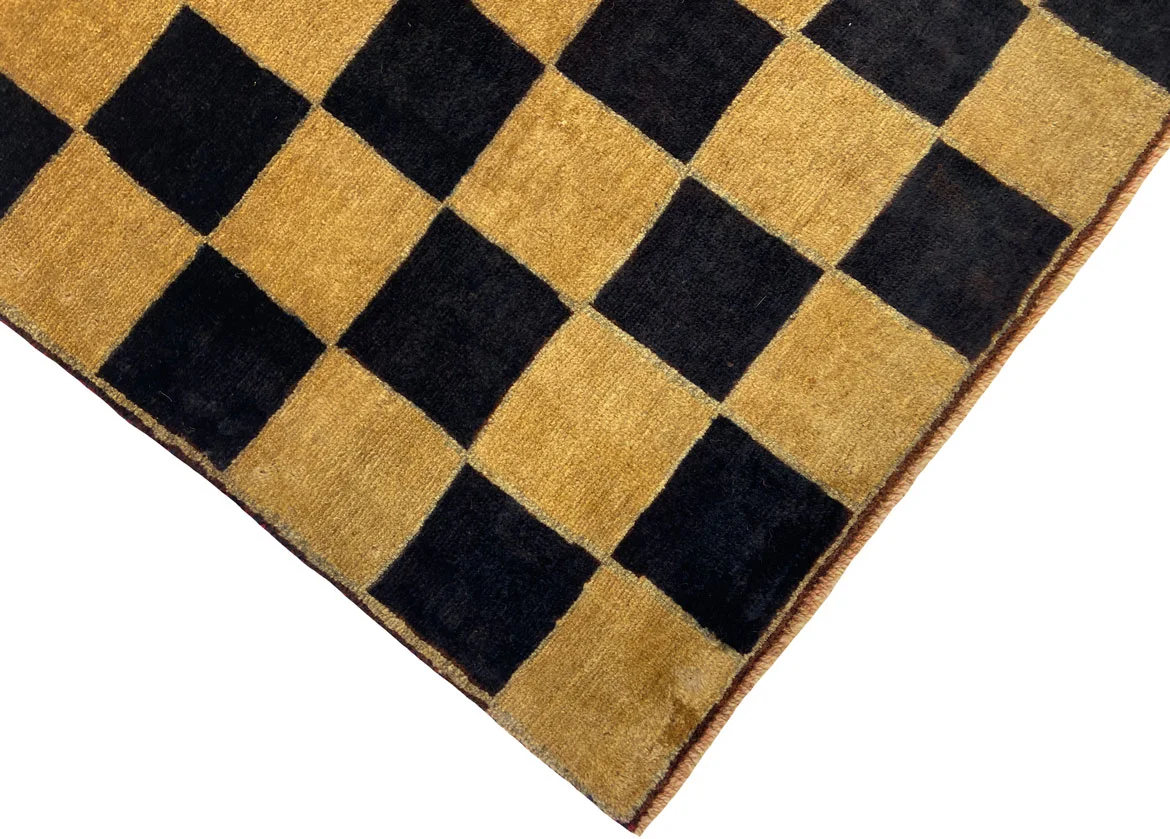
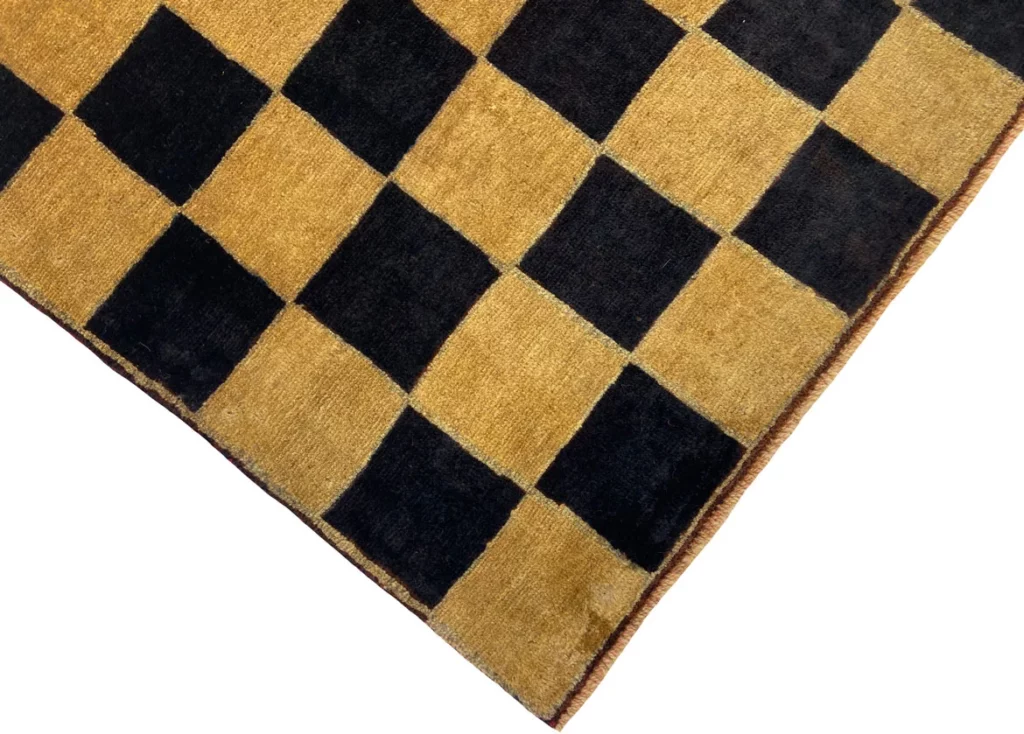
This Gabbeh-Shuli rug is hand-knotted with lustrous virgin wool in the pile. The wool gives the surface a natural sheen and a distinctive textile character. Virgin wool is traditionally valued in Gabbeh weaving for its pleasant feel and hard-wearing qualities. In a living space, it creates a surface that feels comfortable while remaining suitable for regular use.
Hand-knotting joins each individual knot to the structure of the rug. The result is not an industrially repeated image but a textile made through a manual process. The knot density of this rug is between 90.000 and 180.000 knots per square metre. This range reflects the detailed execution of the weaving and the care used to establish the designs in the virgin wool.
The lustrous wool is more than a visual detail. It contributes to the tactile quality of the Gabbeh-Shuli and supports its resistance to everyday wear. The source describes the material as easy to care for, durable and resistant to abrasion. The rug therefore combines traditional handwork with a material suited to domestic interiors. This individual rug is new.
Origin and Tradition
The Gabbeh-Shuli comes from the Fars region in southern Persia, near the historic city of Shiraz. Fars is one of the important landscapes in Persian rug culture. The region has a long connection with nomadic life, sheep keeping and textile crafts carried out by hand. In this setting, rugs are not merely decorative objects. Wool, colour and pattern are connected with everyday experience and with the cultural life of the people who make them.
Gabbeh rugs are particularly associated with nomadic communities in Fars. Their makers draw on impressions of the surrounding landscape, family life and their own cultural environment. This connection between practical use and personal expression helps explain why Gabbeh designs often appear freer than formal courtly compositions. The tradition does not require every rug to follow one identical scheme. Individual interpretation is part of the character of the type.
The location near Shiraz points to an area where several forms of Persian textile work developed alongside one another. Knotted rugs belong to this regional craft world, as do flat-woven textiles. Within it, the Gabbeh-Shuli represents a knotted form with a clear handmade presence. Its Fars origin is therefore a regional attribution, not simply a name applied to a visual style.
Gabbeh craftsmanship has been preserved through the passing of knowledge from one generation to the next. Understanding of wool, colour relationships, knotting and motif construction could remain within communities and develop over time. Small, family-run workshops are often associated with Gabbeh production. They maintain the rug-making tradition of their region while allowing room for individual design. The source also describes sustainable materials and ethical production methods as features associated with such workshops; this is background about the workshop tradition and does not add an unverified production claim about this particular rug.
Fars rugs are frequently discussed in connection with Shiraz and with nomadic life in southern Persia. This regional context helps explain the visual language of the Gabbeh-Shuli. The designs may be personal, spontaneous and influenced by immediate surroundings. Unlike a strictly repeated series pattern, the hand of the maker remains apparent in the composition. The rug thus retains a link between use, storytelling and individual textile expression.
Design and Pattern
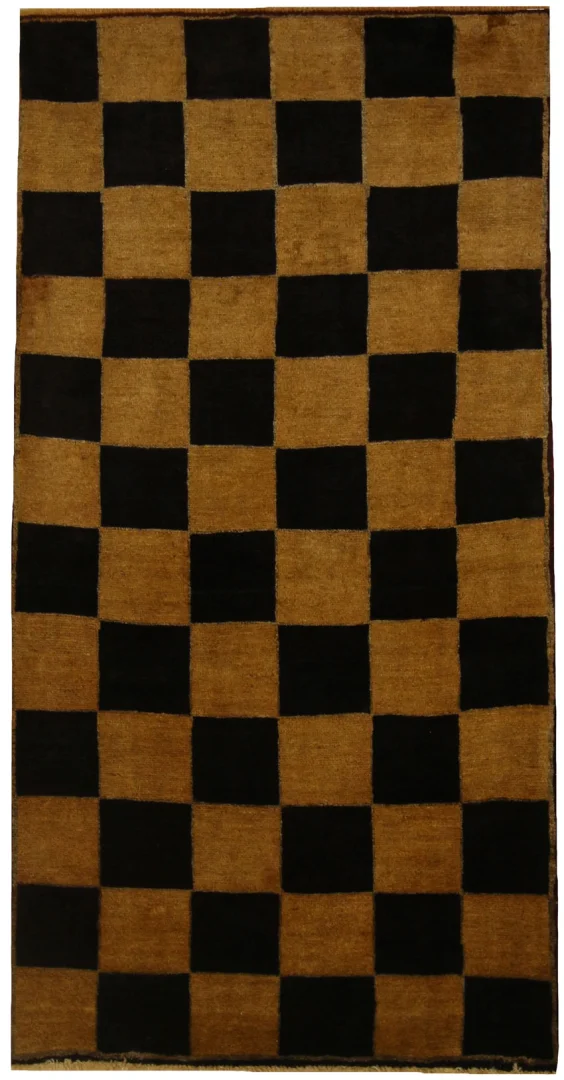
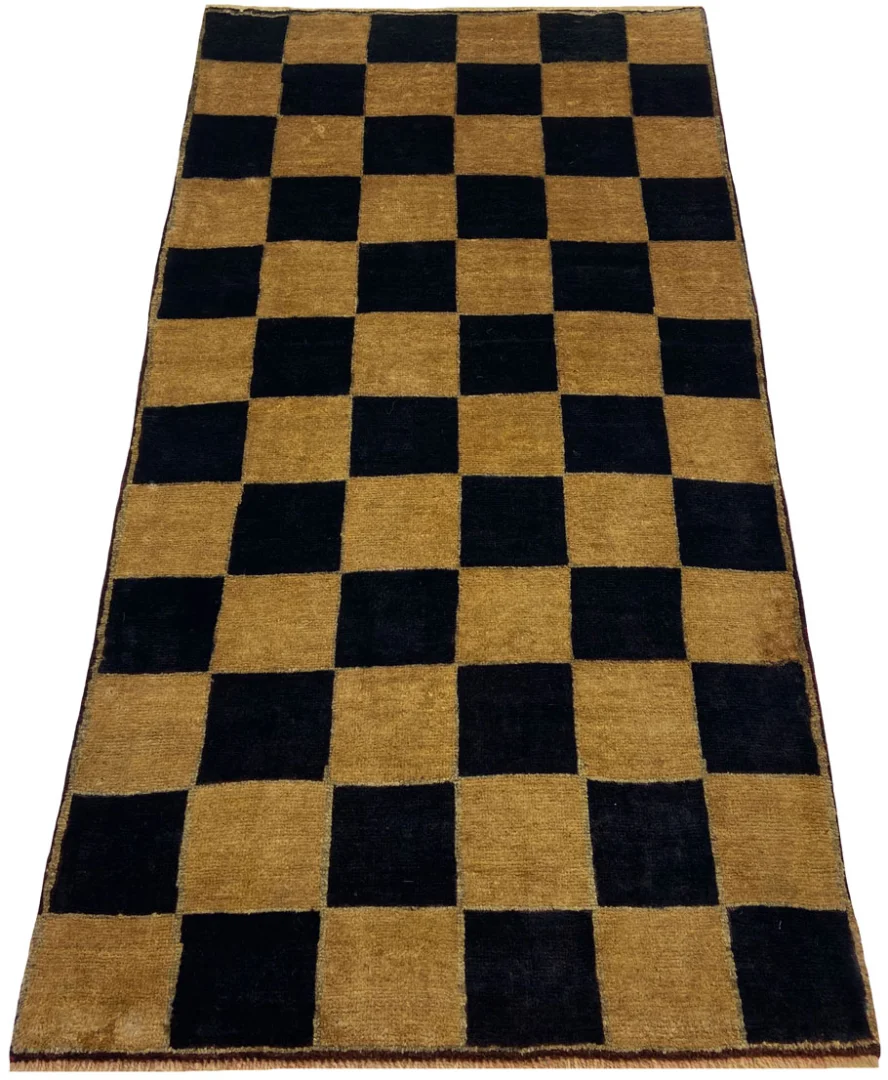
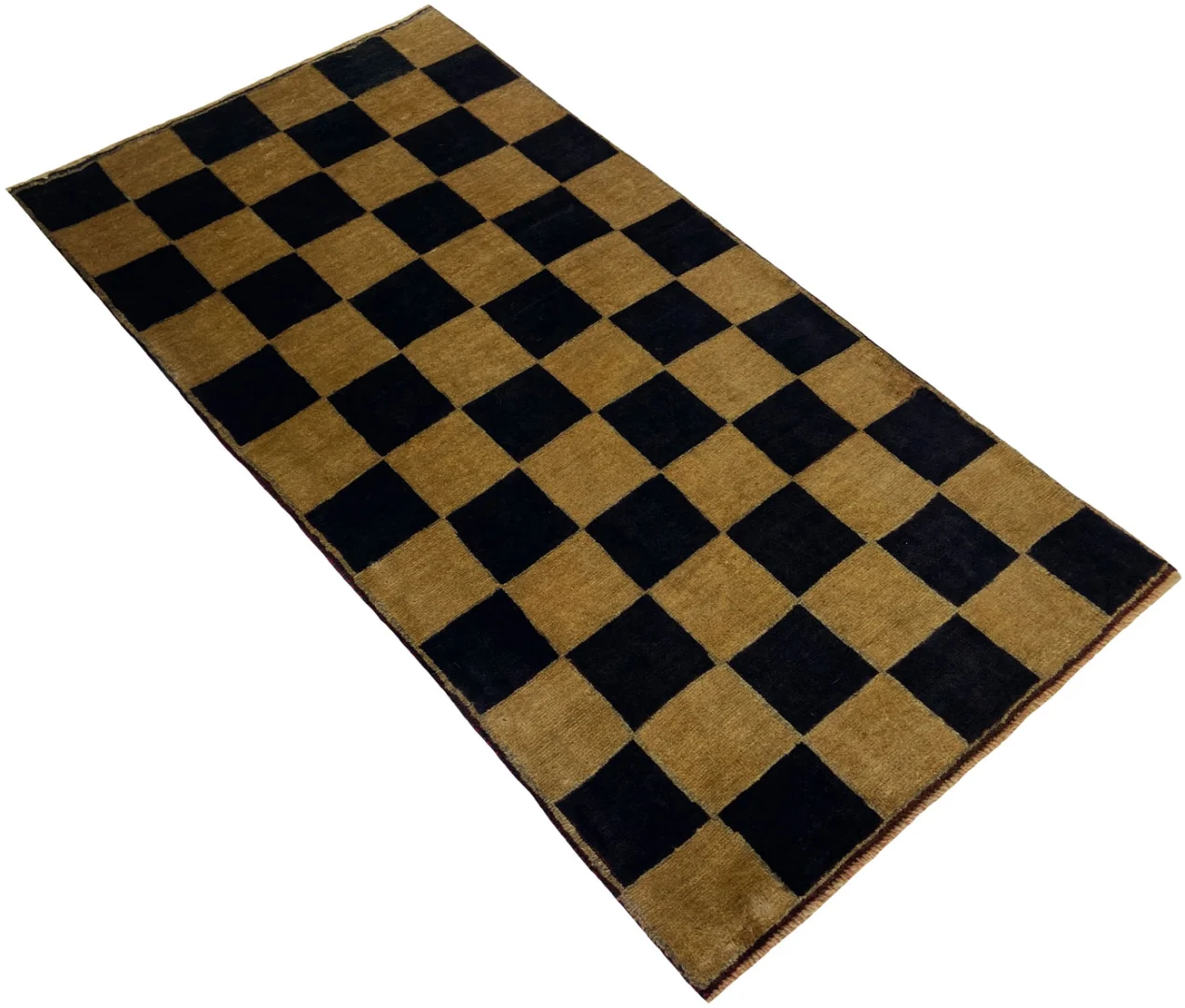
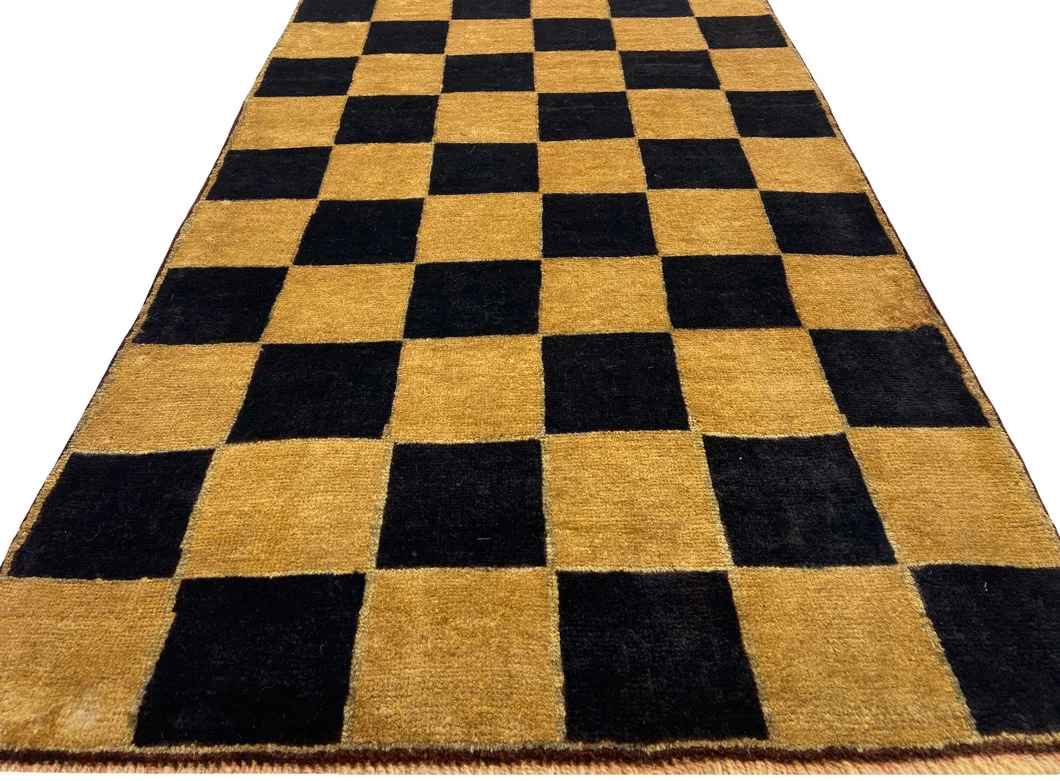
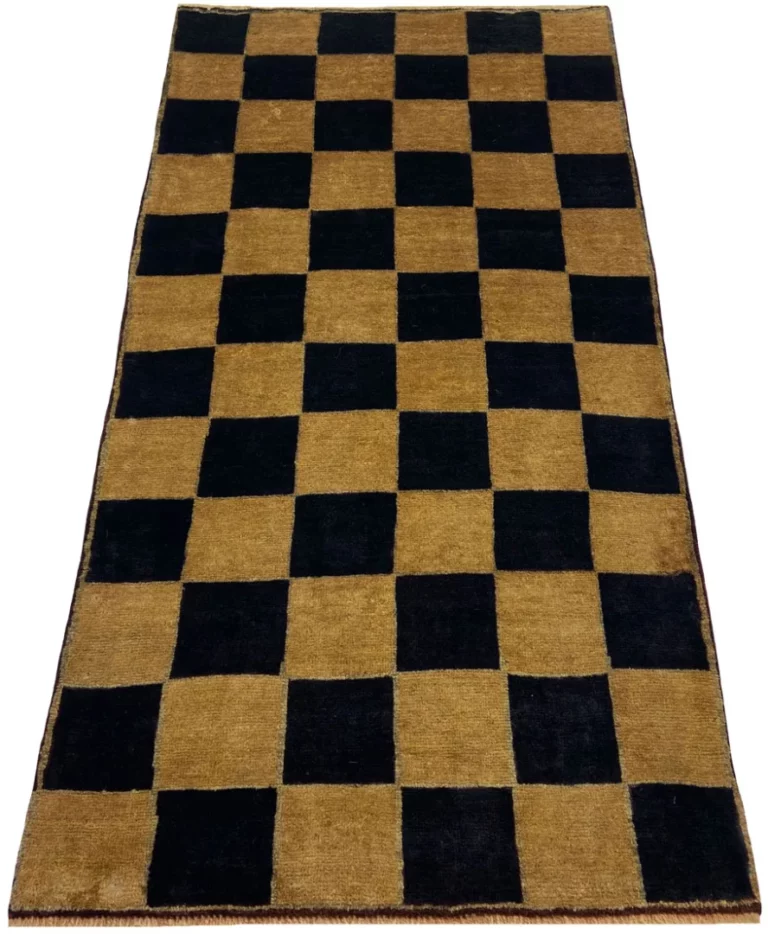
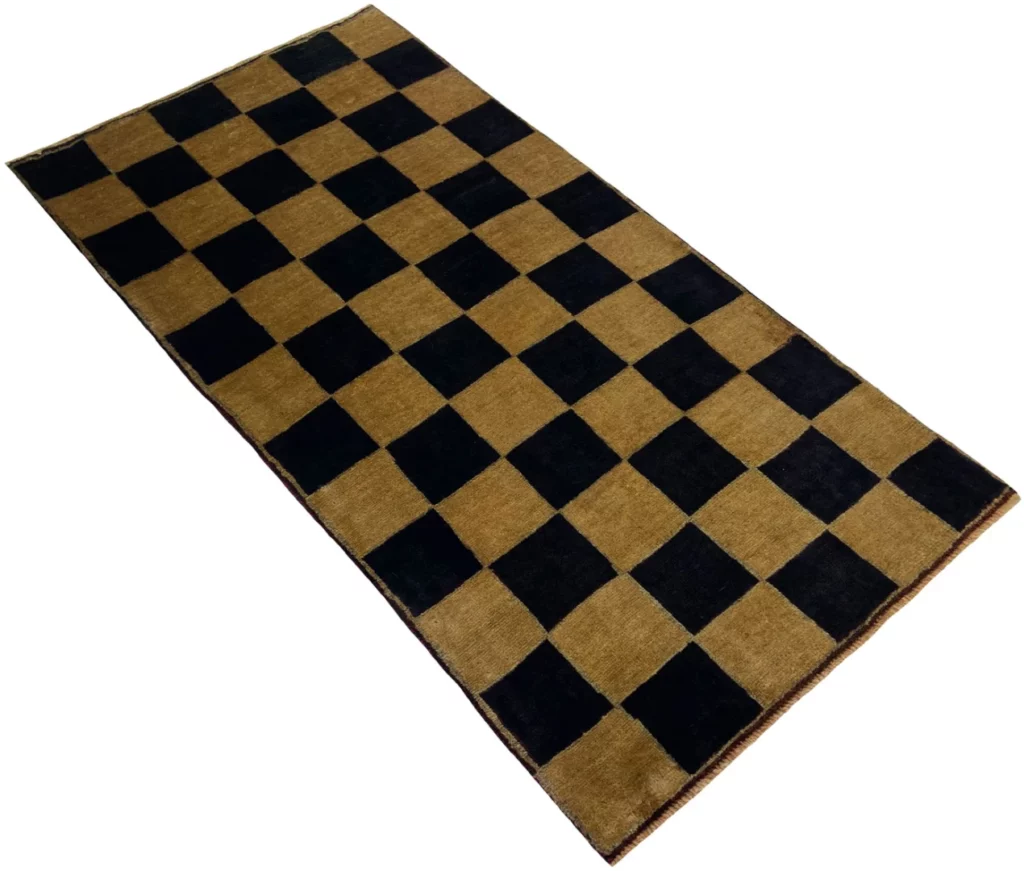
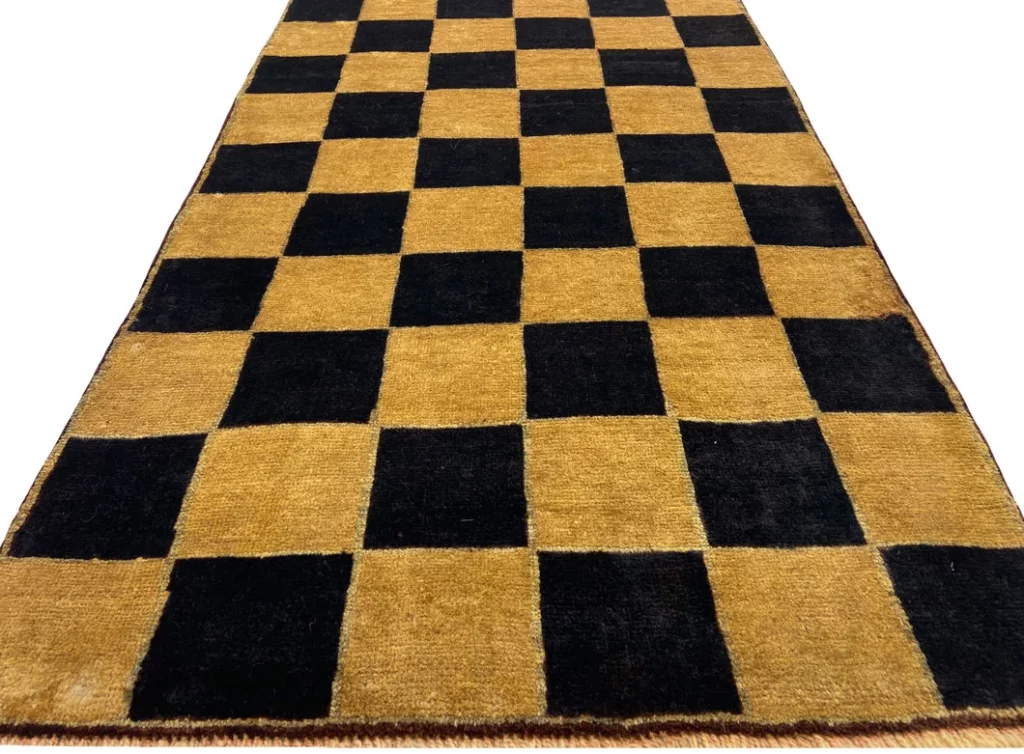
The pattern of this Gabbeh-Shuli is described as unusual and freely created. Its designs are imaginative rather than restricted to a single established sequence of ornaments. Gabbeh motifs may draw inspiration from nature and from everyday life. This gives the pattern language room to combine personal ideas with cultural influences from the weaving community.
The colours of this rug are red, beige, grey and brown. Together they form a warm yet restrained palette. Red may provide a visible accent, while beige, grey and brown balance the overall field. This combination makes the rug adaptable to both contemporary and traditional interiors. These are the colours specified for this individual rug, rather than a general colour statement about every Gabbeh.
Gabbeh-Shuli rugs are known for distinctive and imaginative patterns. Their purpose is not necessarily to fill the surface with the greatest possible number of small ornaments, but to make the central idea of the design legible. A motif may be simplified, freely positioned or drawn from daily experience. This reduced but expressive approach sets Gabbeh-Shuli apart from classical Persian rugs, whose compositions are often more complex and finely detailed.
The tradition allows a considerable degree of personal interpretation. Nature and daily life can serve as sources of ideas without requiring each design to carry one fixed symbolic meaning. As a result, Gabbeh-Shuli rugs can look very different while still belonging to the same regional tradition. Here the name describes the connection of Fars origin, hand-knotting and a free approach to pattern. It presents the rug as textile art without assigning an unsupported meaning to a particular motif.
Related Gabbeh-Fars rugs also come from the Fars region and show similarly creative designs. The Gabbeh-Shuli belongs to this regional group, where direct and individual visual expression is more important than formal symmetry intended for display. Traditional Persian rugs, by comparison, often use more structured ornament and more elaborate detail. A Kilim from the region is different in technique because it is woven rather than knotted. The Gabbeh-Shuli remains distinct through its knotting and its freely developed pattern language.
Special Features
The special character of this one-off rug comes from the combination of Fars origin, Gabbeh-Shuli design, hand-knotting and lustrous virgin wool. Its unusual, freely created designs make it an individual piece that reflects the creativity of the makers. Red, beige, grey and brown establish a warm colour foundation. The rug is new, bringing traditional handwork together with an unused condition.
The rug can be used in several domestic settings. The source names the living room, bedroom and hallway as suitable areas. Its versatile design can complement both modern and traditional furnishing styles. In a minimalist interior, the pattern can act as an independent focal element; in a rustic setting, it can work as a harmonious textile component. These uses follow from the described pattern and colours and do not imply any additional provenance.
Regular cleaning, for example by vacuuming, is recommended for care. Professional rug-cleaning services can be used when a more thorough treatment is needed. Direct sunlight should be avoided to help prevent the colours from fading. Careful handling supports the durability of the virgin wool and the hand-knotted surface.
FAQ
What makes the Gabbeh-Shuli rug special?
Its distinctive character comes from the imaginative, freely created designs, its origin in the Fars region and its hand-knotted construction. Lustrous virgin wool gives the pile a particular textile appearance. Each piece is unique and reflects the creativity of the makers. Together, these features make the rug an individual work of Persian craftsmanship.
How should I care for the Gabbeh-Shuli rug?
Regular vacuuming helps keep the surface clean. For deeper care, a professional rug-cleaning service can be used. Direct sunlight should be avoided because it can contribute to colour fading. Careful maintenance helps preserve the lustrous virgin wool and the hand-knotted structure over time.
Can the Gabbeh-Shuli rug be used in different rooms?
Yes. The description identifies the living room, bedroom and hallway as suitable locations. Its warm red, beige, grey and brown palette and its versatile pattern can work with modern as well as traditional interiors. In a minimalist room, the free design can provide an independent accent, while in a rustic setting it can become a harmonious textile element.
To provide the best experiences, we use technologies like cookies to store and/or access device information. Consenting to these technologies will allow us to process data such as browsing behavior or unique IDs on this site. Not consenting or withdrawing consent, may adversely affect certain features and functions.
Functional Always active
The technical storage or access is strictly necessary for the legitimate purpose of enabling the use of a specific service explicitly requested by the subscriber or user, or for the sole purpose of carrying out the transmission of a communication over an electronic communications network.
Preferences
The technical storage or access is necessary for the legitimate purpose of storing preferences that are not requested by the subscriber or user.
Statistics
The technical storage or access that is used exclusively for statistical purposes.The technical storage or access that is used exclusively for anonymous statistical purposes. Without a subpoena, voluntary compliance on the part of your Internet Service Provider, or additional records from a third party, information stored or retrieved for this purpose alone cannot usually be used to identify you.
Marketing
The technical storage or access is required to create user profiles to send advertising, or to track the user on a website or across several websites for similar marketing purposes.
 SECURE PAYMENT
 SHIPPING PARTNERS


