
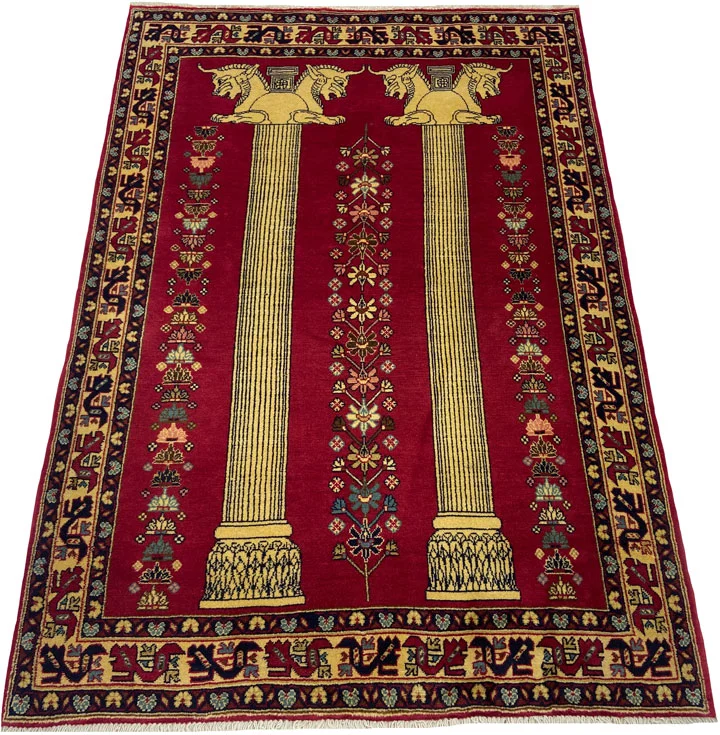
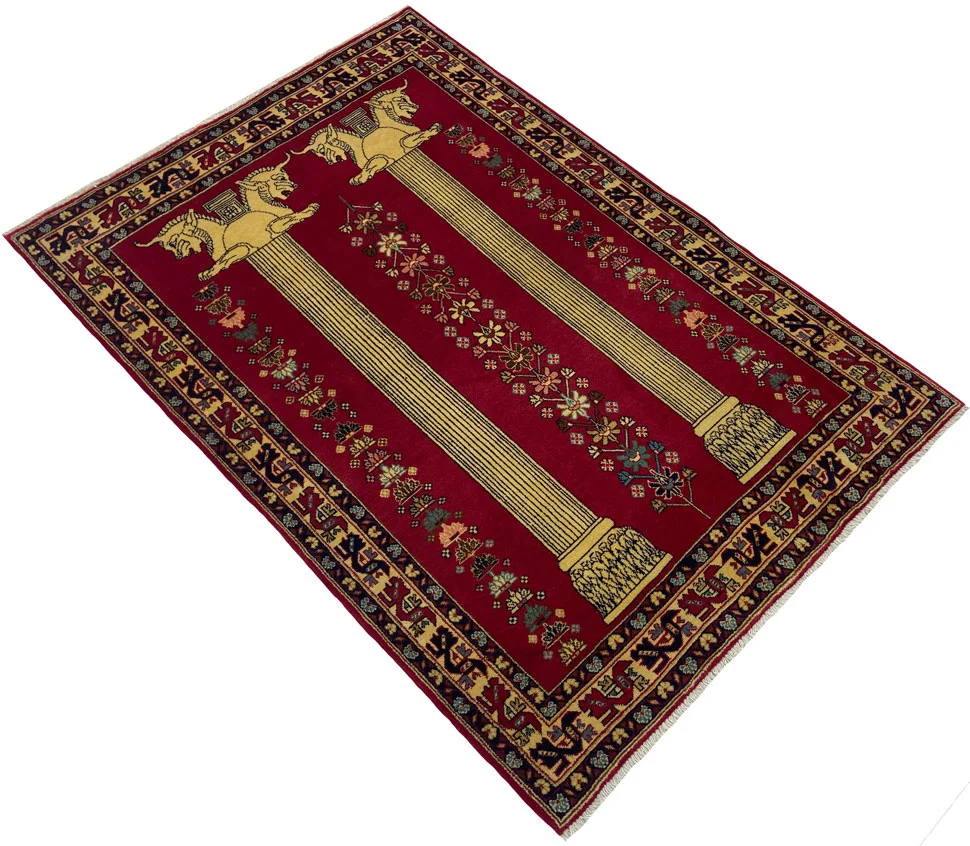
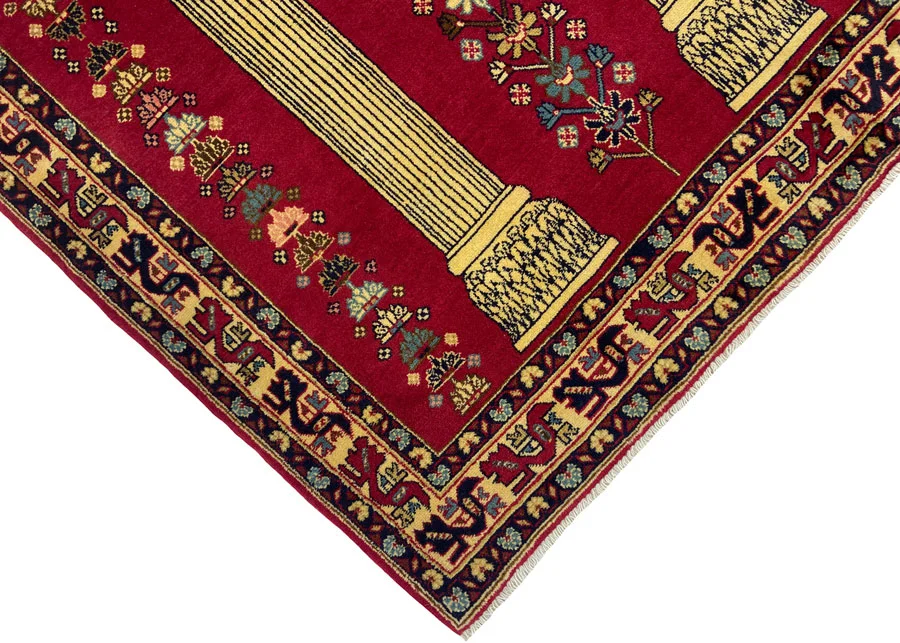
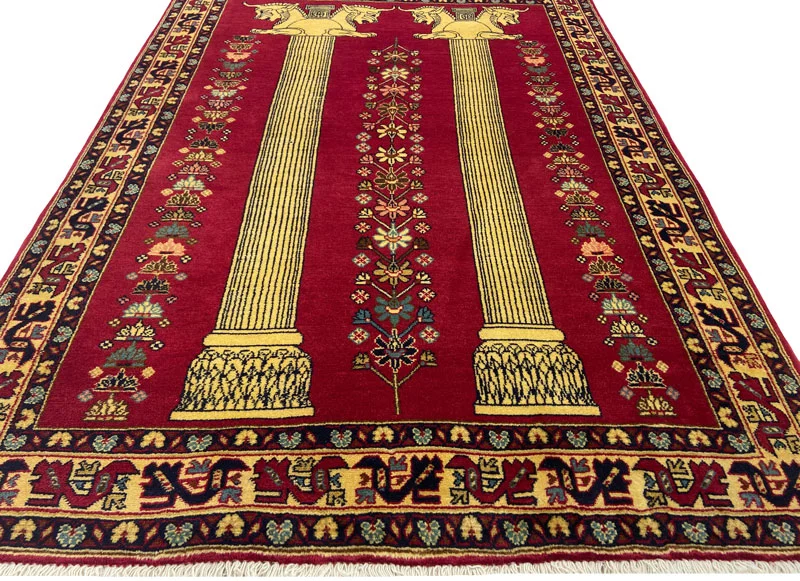
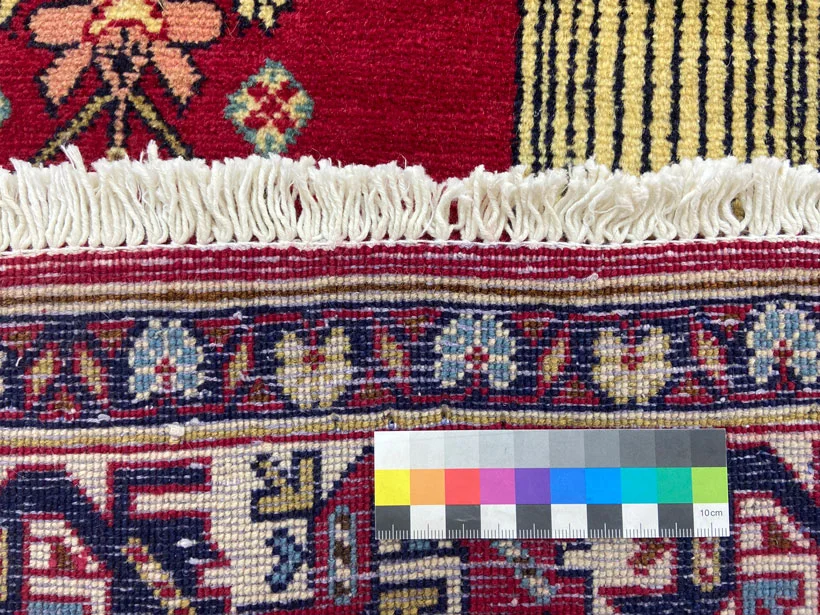
Persian Rug Gabbeh 161 x 110 cm Wool Hand-knotted
€ 976
Hand-knotted Fars Persian Rug | Knot density: 90.000 – 180.000 knots/m² | Material: pile wool | Size: 161 x 110 cm | Pattern: Unusual imaginative designs | Condition: New
Sold out
- ✓Free Shipping in EU
- ✓2-5 Business Days Delivery
- ✓14-Day Return Policy
- ✓Worldwide Shipping on request
 SECURE PAYMENT
 SHIPPING PARTNERS
Inventory number: E08D7248
Description
Fars Persian Rug
Material and Craftsmanship
This Gabbeh – Shuli is hand-knotted from lustrous virgin wool. Virgin wool is the only material specified for its construction, and it is valued for softness, durability, and resistance to wear. Its natural appearance gives the rug a distinct textile character, while the sheen of the wool contributes to the way its colours are seen. The wool is prepared through a careful, involved process that brings out the natural beauty of the fibres.
The knot density of this Gabbeh – Shuli is between 90.000 and 180.000 knots per square metre. Hand knotting allows the pattern to be built progressively, with each knot contributing to the finished textile surface. The stated density provides a detailed foundation for the work without changing its handmade character. The rug is therefore defined by the combination of individual knotting, virgin wool, and a design developed through the weaver’s craft.
Wool is both the principal material and an important part of the visual language. Its lustre supports the vivid colour arrangement, while its pleasant handle is characteristic of a woollen furnishing textile. The rug is new. Its production is intended to provide durability, and the careful manual workmanship remains one of the defining features of the Gabbeh – Shuli.
Origin and Tradition
The Gabbeh – Shuli comes from the Fars region of Iran. Fars is known for its carpet-making tradition and has produced many different types of rugs over the centuries. Regional knowledge includes the preparation of wool, the process of knotting, and the development of patterns suited to a particular weaving culture. A Gabbeh from Fars carries this regional identity through its origin, its handwork, and its connection with a long-established Persian textile tradition.
Gabbeh weaving is associated with designs that can be direct, informal, and freely composed rather than bound to one rigid arrangement. Fars contains several expressions of this wider carpet culture. Gabbeh – Fars and Shiraz rugs are also associated with the region. These names reflect the variety of weaving traditions found in and around Fars, where different approaches to colour, structure, and ornament exist alongside one another.
Tradition in Fars is sustained through practical knowledge passed on in the act of weaving. Weavers work with wool and turn it into a furnishing textile whose character depends on both technique and visual invention. For Gabbeh rugs, tradition does not mean that every design must repeat a single fixed set of motifs. It also includes the continuation of a working method in which manual skill and individual creativity meet in the finished rug.
Rugs from Fars are often associated with rustic designs. In this context, rustic refers to a visual language that does not depend on a highly formal or courtly composition. Such designs are often inspired by nature and by the everyday life of nomadic communities. This relationship between landscape, daily experience, and textile work helps explain why Gabbeh patterns can appear simple in their reading while still being freely imagined and individually shaped.
The broader carpet landscape also includes Shiraz rugs. Bakhtiari rugs from western Iran are known for strong colours and geometric patterns. These examples illustrate the range of Persian weaving traditions: some compositions are freer and more rustic, while others are organised around pronounced geometry and powerful colour contrasts. The Gabbeh – Shuli belongs to the Fars tradition and is distinguished within that setting by its imaginative, freely invented pattern language.
Fars is therefore more than a place name attached to a rug. It identifies a region where knowledge of wool, knotting, and pattern-making has developed through generations of textile work. The Gabbeh – Shuli connects that regional background with a design that leaves room for the weavers’ imagination. Its identity rests on the combination of Fars origin, hand knotting, virgin wool, and an individual approach to ornament.
Design and Pattern
The defining visual feature of the Gabbeh – Shuli is its unusual and imaginative design. The patterns are freely invented and express the creativity of the weavers. Each piece consequently has its own visual character. Instead of relying only on a strict repeated layout, the design allows forms and arrangements to emerge from the imagination involved in the weaving process.
The palette includes vivid red, beige, grey, and brown. These colours are combined harmoniously, so the composition can include clear accents as well as quieter areas and transitions. Red may provide a noticeable point of emphasis, while beige, grey, and brown can create balance within the overall image. The important feature is the relationship between the tones, not any one colour considered in isolation.
Gabbeh designs are often described as rustic, a term that points to an informal and direct mode of composition. Their imagery may draw on nature and on the daily life of nomadic communities. At the same time, the Shuli designs remain fanciful and individually conceived. This combination places the rugs between recognisable traditional references and free artistic interpretation, without reducing the pattern to a single prescribed motif.
Hand knotting is central to the appearance of the design. The pattern is not applied after the rug has been made; it is created gradually as coloured sections and individual knots form the textile. Minor variations are part of this handmade process and show how the design has been translated into woven material. The knot density of 90.000 to 180.000 knots per square metre gives the pattern work a detailed basis while preserving the character of hand production.
The four named colours can appear in different proportions within an imaginative composition. A design may therefore be led by warmer tones in one area and by more neutral shades in another. The harmonious combination keeps the palette coherent while allowing the unusual patterns to remain visible. This balance of colour and invention is a central aspect of the Gabbeh – Shuli’s design language.
Gabbeh rugs are considered not only as functional floor textiles but also as expressions of the weavers’ creativity. A rug can organise a room, connect different areas, and establish a colour relationship within an interior. The Gabbeh – Shuli adds the visual quality of a freely imagined pattern. Its design can be read as a textile image built from wool and knots, with references to regional tradition and room for individual expression.
The name Shuli identifies this particular Gabbeh expression with its unusual and imaginative designs. It does not replace Fars as the origin; it describes the character of the pattern within that Persian regional tradition. Origin, handwork, virgin wool, and colour therefore work together to define the rug: a Fars Gabbeh with an individual visual language and a lively yet harmonious palette.
Special Features
The Gabbeh – Shuli is a new, hand-knotted Persian Rug from the Fars region. Its special features are the lustrous virgin wool, the stated high knot density, and the unusual, imaginative designs. Red, beige, grey, and brown are brought together in a harmonious colour scheme. The rug combines regional tradition, manual workmanship, and an individual artistic expression.
The design makes the rug suitable for different living areas and purposes. It can bring warmth and character to a living room, bedroom, or hallway. This describes its versatile use as a furnishing textile and does not alter its Fars origin or hand-knotted construction. Its new condition and the durability associated with its careful handmade production are also part of its product profile.
FAQ
What makes a Gabbeh – Shuli rug distinctive?
Its distinctive qualities are the hand-made, unusual, and imaginative designs and the use of lustrous virgin wool. The patterns reflect the creativity of the weavers and combine red, beige, grey, and brown in a harmonious palette. The rug also has its origin in the Fars region, is hand-knotted, and has a stated knot density of 90.000 to 180.000 knots per square metre. Together these features give each piece an individual character.
How should I care for my Gabbeh – Shuli rug?
Regular cleaning is recommended. Vacuuming on a low setting helps remove dust and dirt while treating the textile surface gently. Occasional beating can supplement routine care. The rug should also be protected from direct sunlight so that its colours and visible appearance remain well preserved. Gentle, consistent care supports the long service life associated with its hand-made virgin wool construction.
Where can I buy Gabbeh – Shuli rugs?
Gabbeh – Shuli rugs can be found at specialist rug dealers and on a range of online platforms. When choosing a seller, look for businesses that offer high-quality hand-knotted rugs and clearly identify their origins. For this rug, the important product information includes its origin in the Fars region of Iran, its hand-knotted construction, and its use of virgin wool.
Additional information
| Design Style | |
|---|---|
| Color | |
| Size | |
| Shape | |
| Origin | |
| Knot Density | |
| Material |
Related products

Persian Rug Gabbeh 250 x 180 cm Cashmere Hand-knotted
€ 1118
Oriental Rug Kelim 240 x 180 cm Wool Hand-woven
€ 2249
Persian Rug Qashqai 300 x 197 cm Wool Hand-woven
€ 798
Persian Rug Qashqai 293 x 198 cm Wool Hand-woven
€ 798
Persian Rug Fars 292 x 206 cm Wool Hand-woven
€ 798
Persian Rug Tabriz approx. 350 x 245 cm Wool Hand-knotted
€ 1280
Persian Rug Qashqai 290 x 192 cm Wool Hand-woven
€ 798
Persian Rug Gabbeh 200 x 300 cm Cashmere Hand-knotted
€ 1323