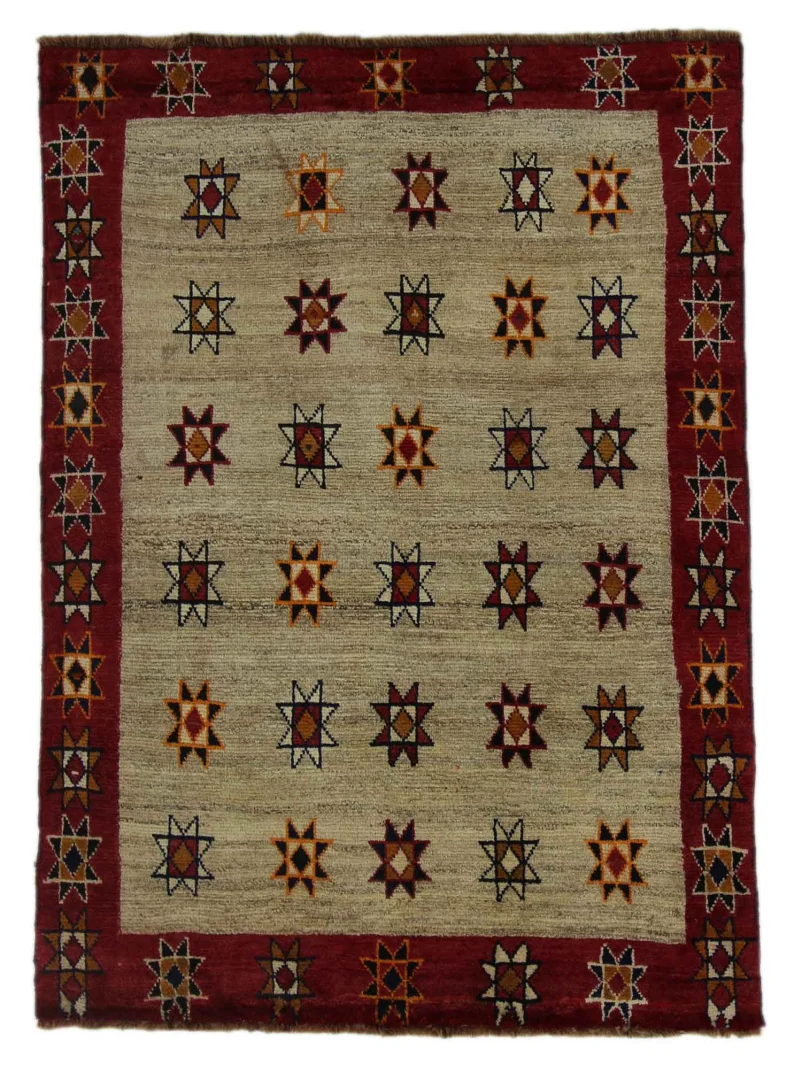
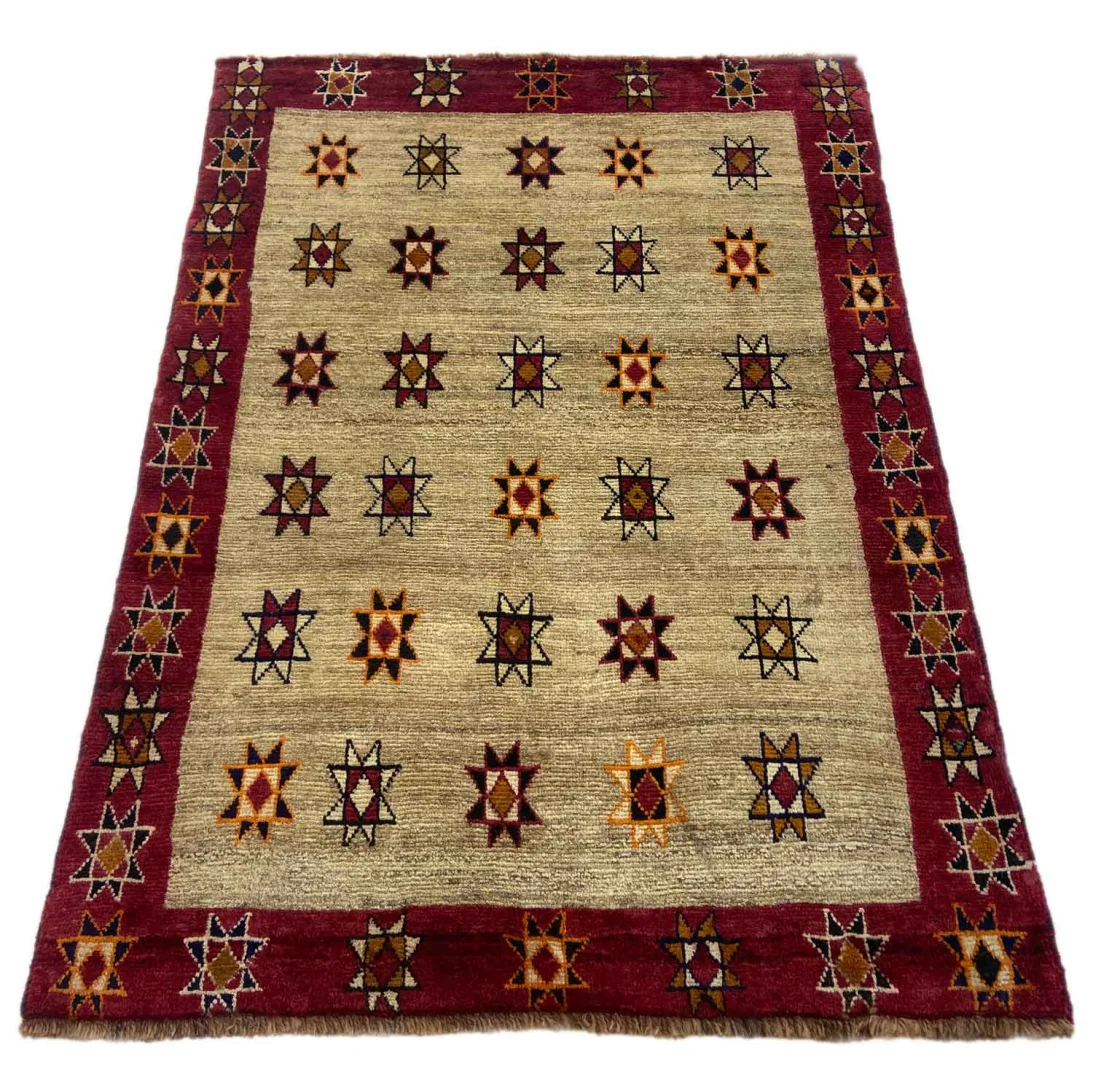
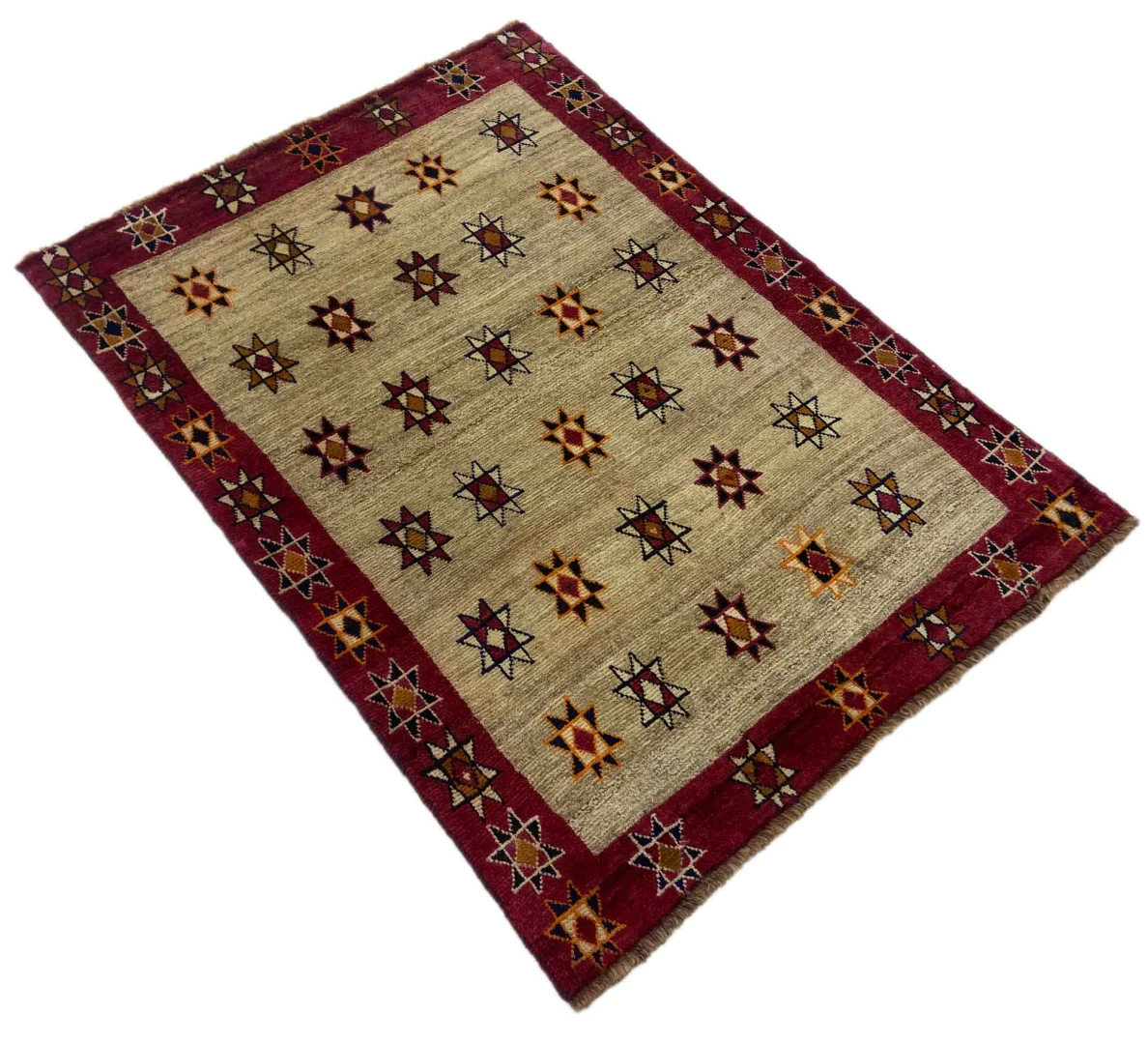
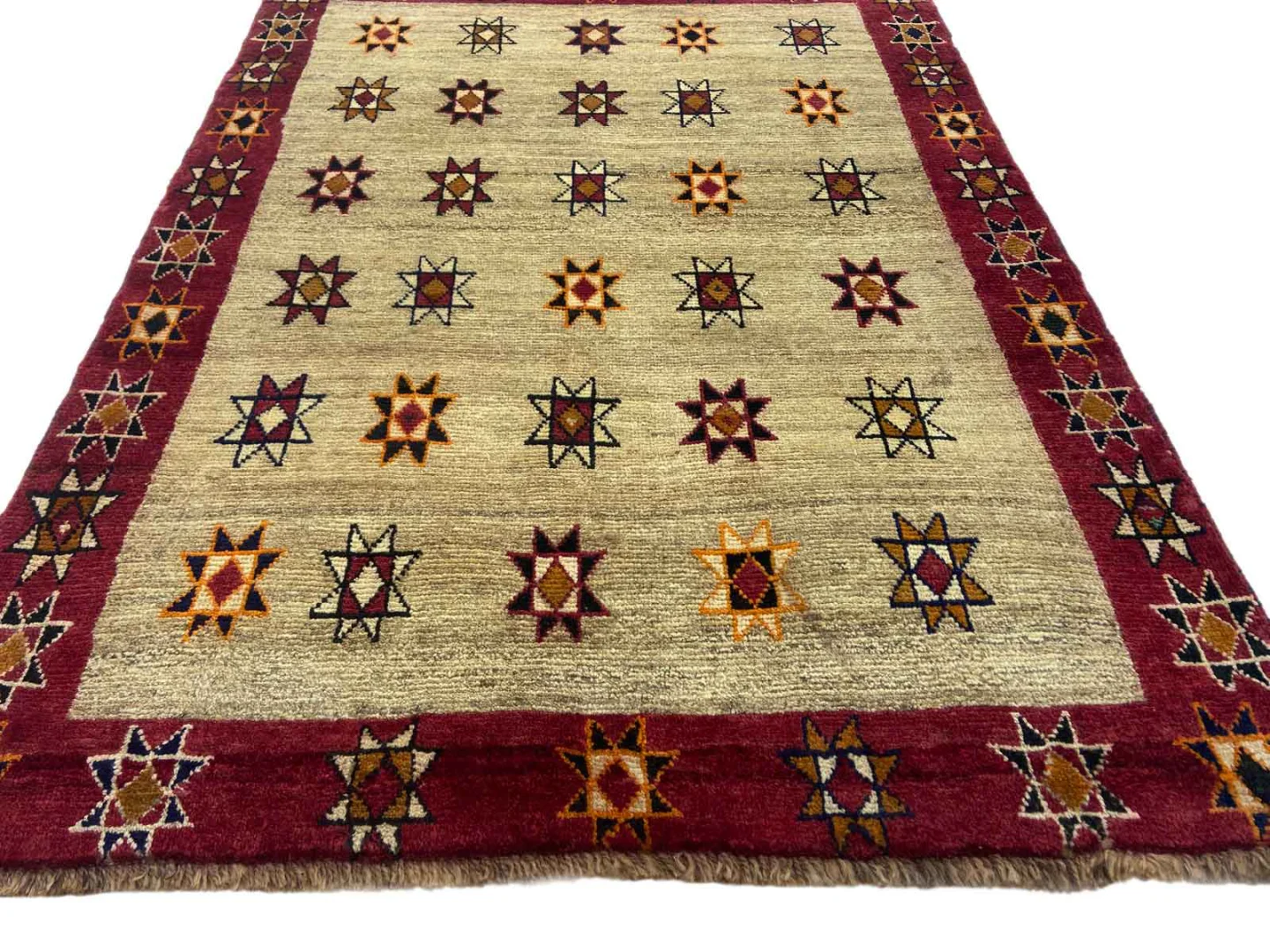
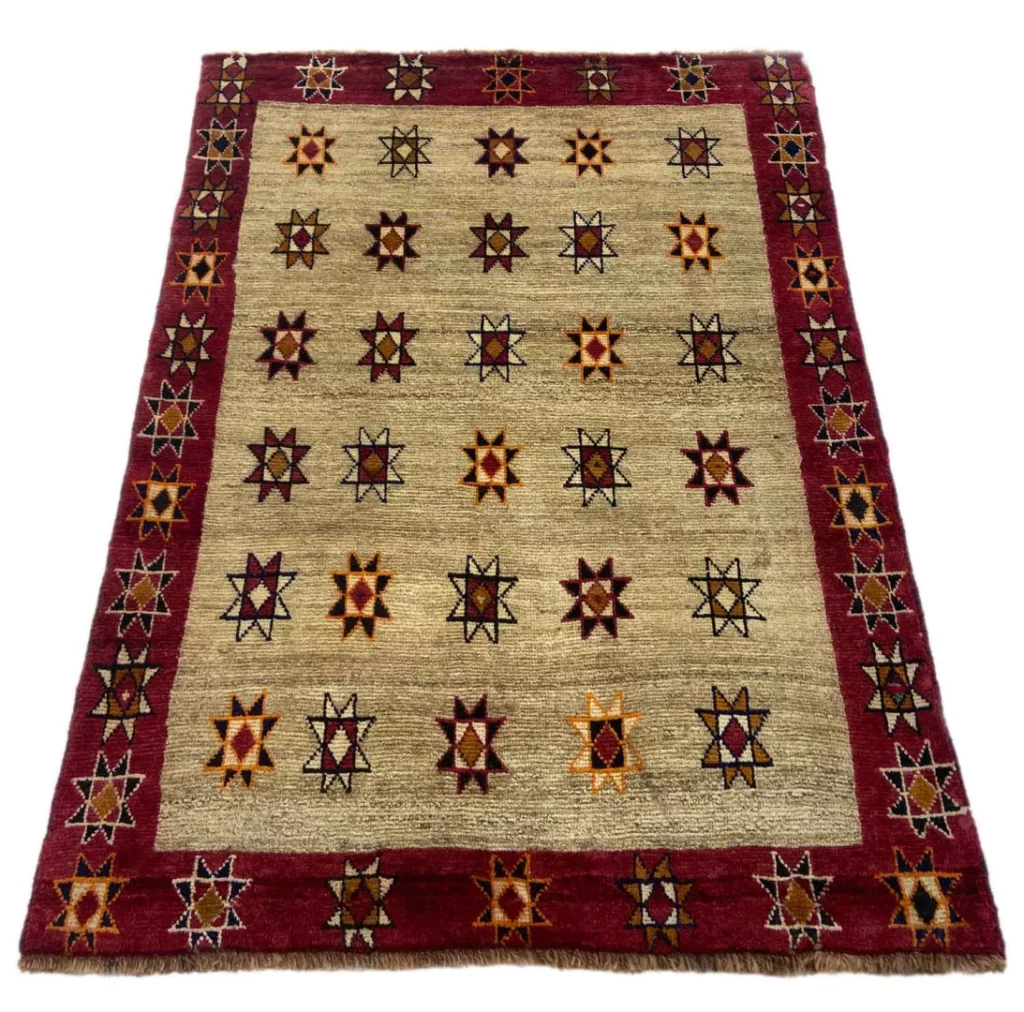
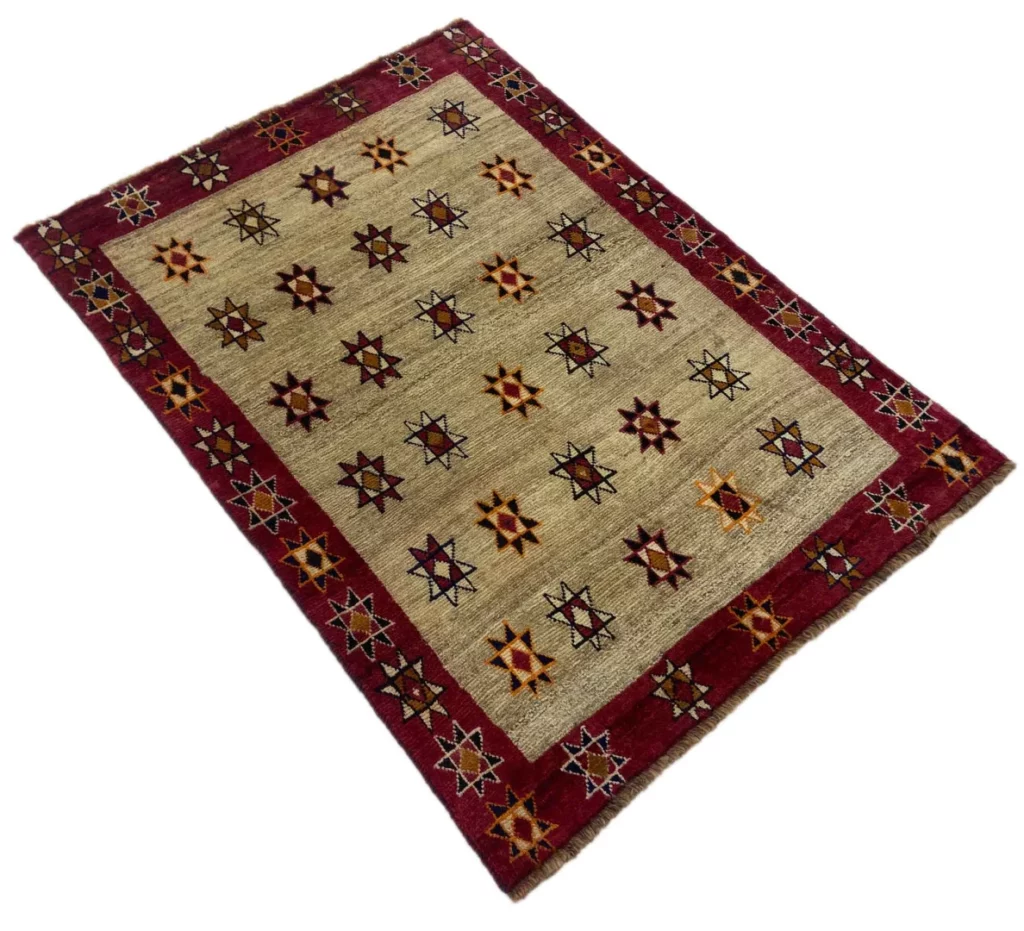
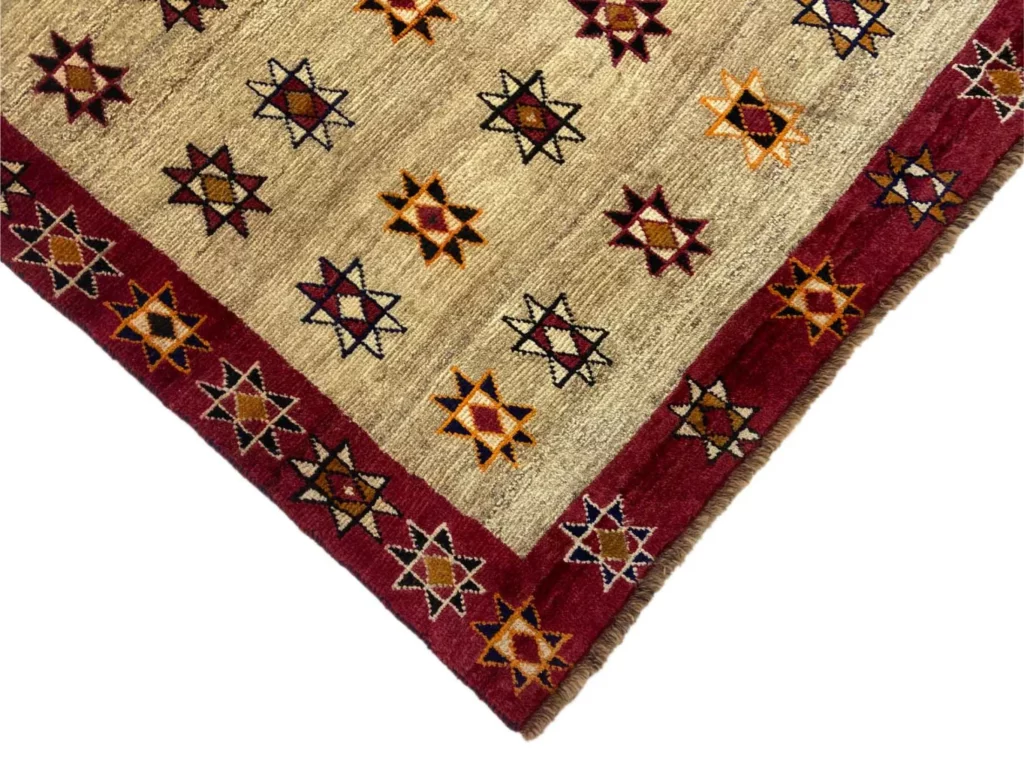
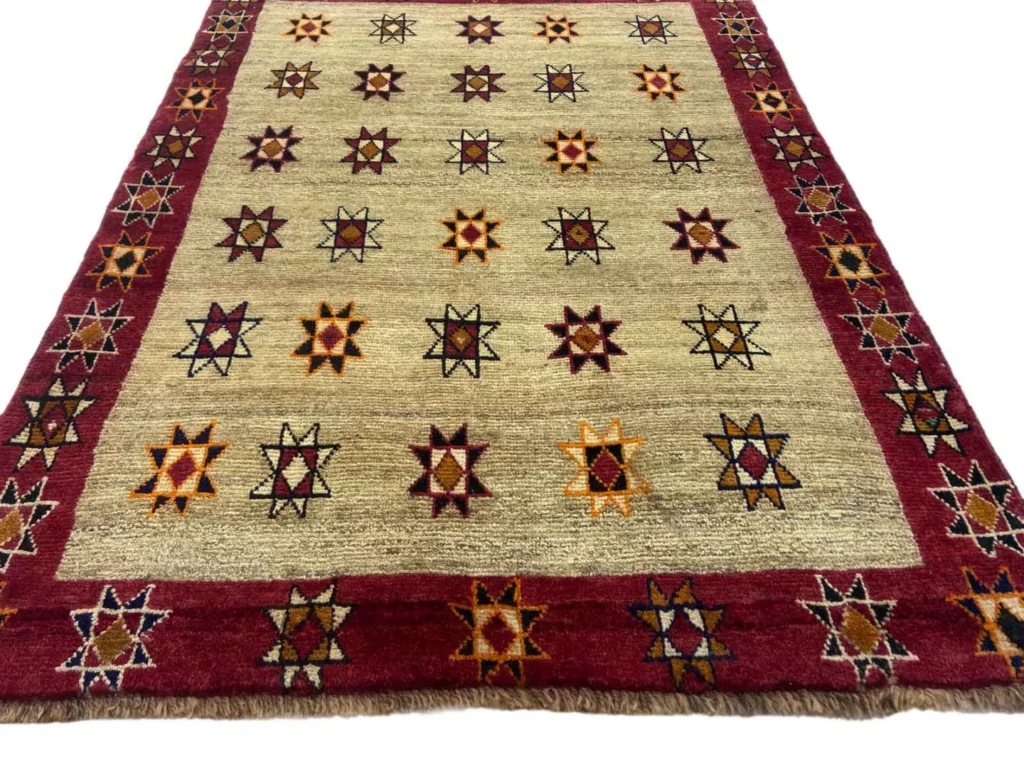
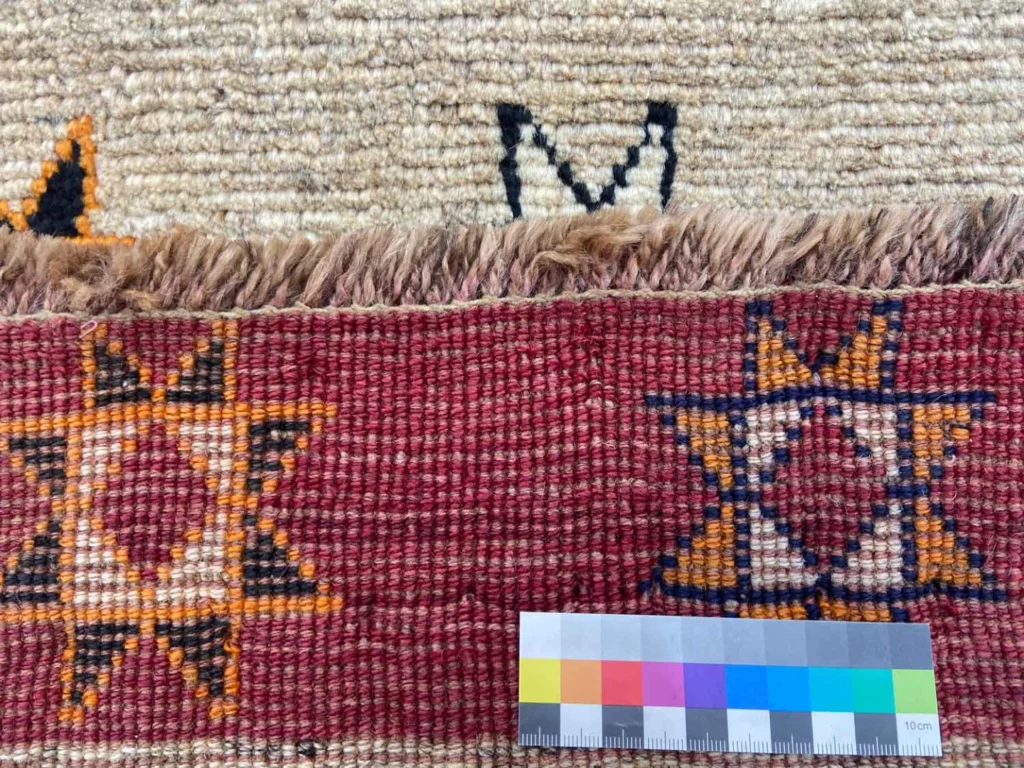
Persian Rug Gabbeh 155 x 112 cm Wool Hand-knotted
€ 710
Hand-knotted Gabbeh Persian Rug | Knot density: 90,000 – 180,000 knots/m² | Material: pile glossy virgin wool | Size: 155 x 112 cm | Pattern: Unusual, imaginative designs | Condition: New
1 available
- ✓Free Shipping in EU
- ✓2-5 Business Days Delivery
- ✓14-Day Return Policy
- ✓Worldwide Shipping on request
 SECURE PAYMENT
 SHIPPING PARTNERS
Inventory number: CF4D2BCA
Description
Gabbeh Persian Rug
Material and Craftsmanship
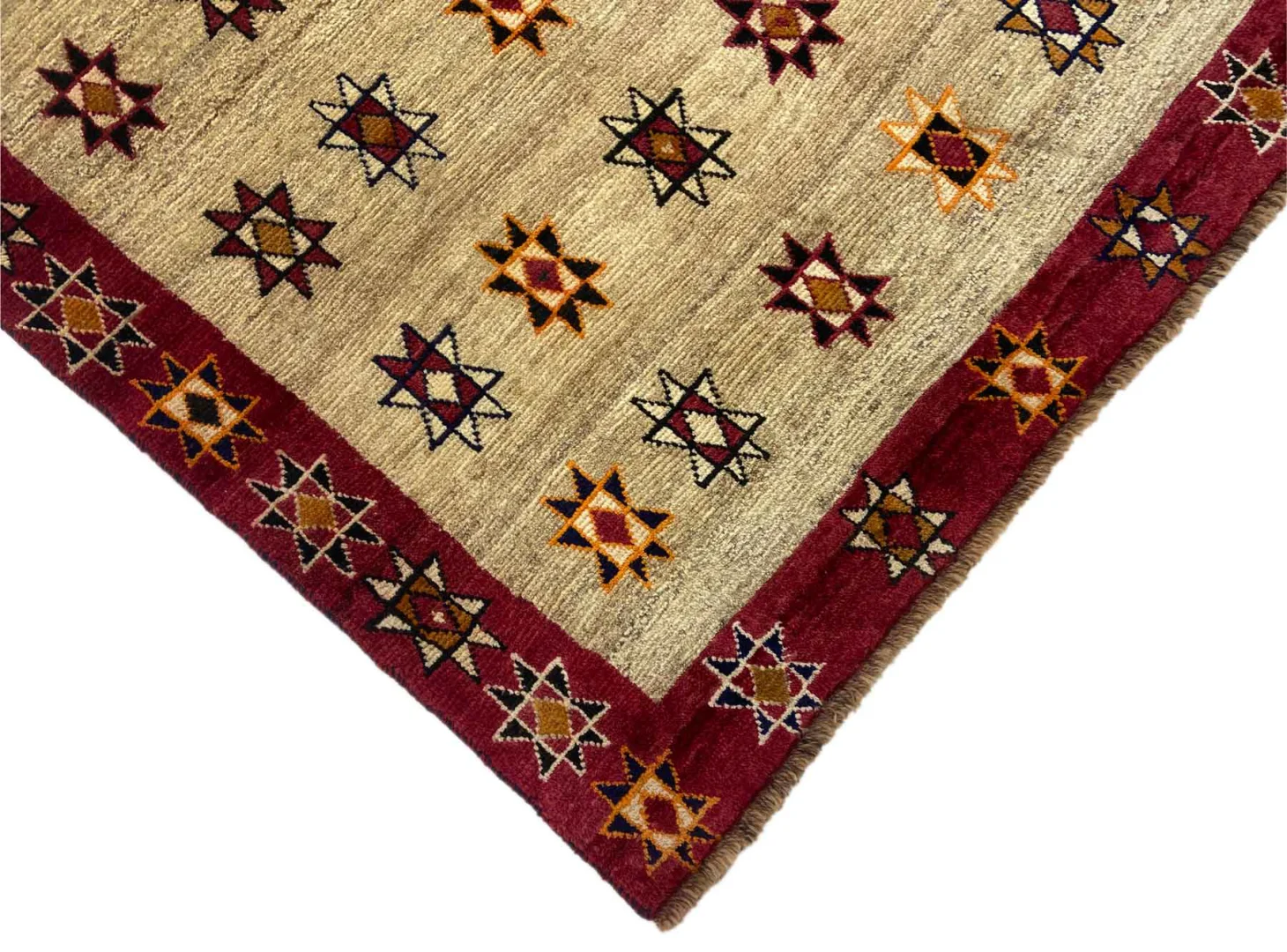
This Gabbeh – Shuli rug is hand-knotted and has a pile made from glossy virgin wool. The wool is described as both robust and soft, giving the rug a durable material character while retaining a pleasant feel underfoot. It also contributes a sense of warmth. The pile therefore affects not only the visible surface but also the way the rug is experienced in a room.
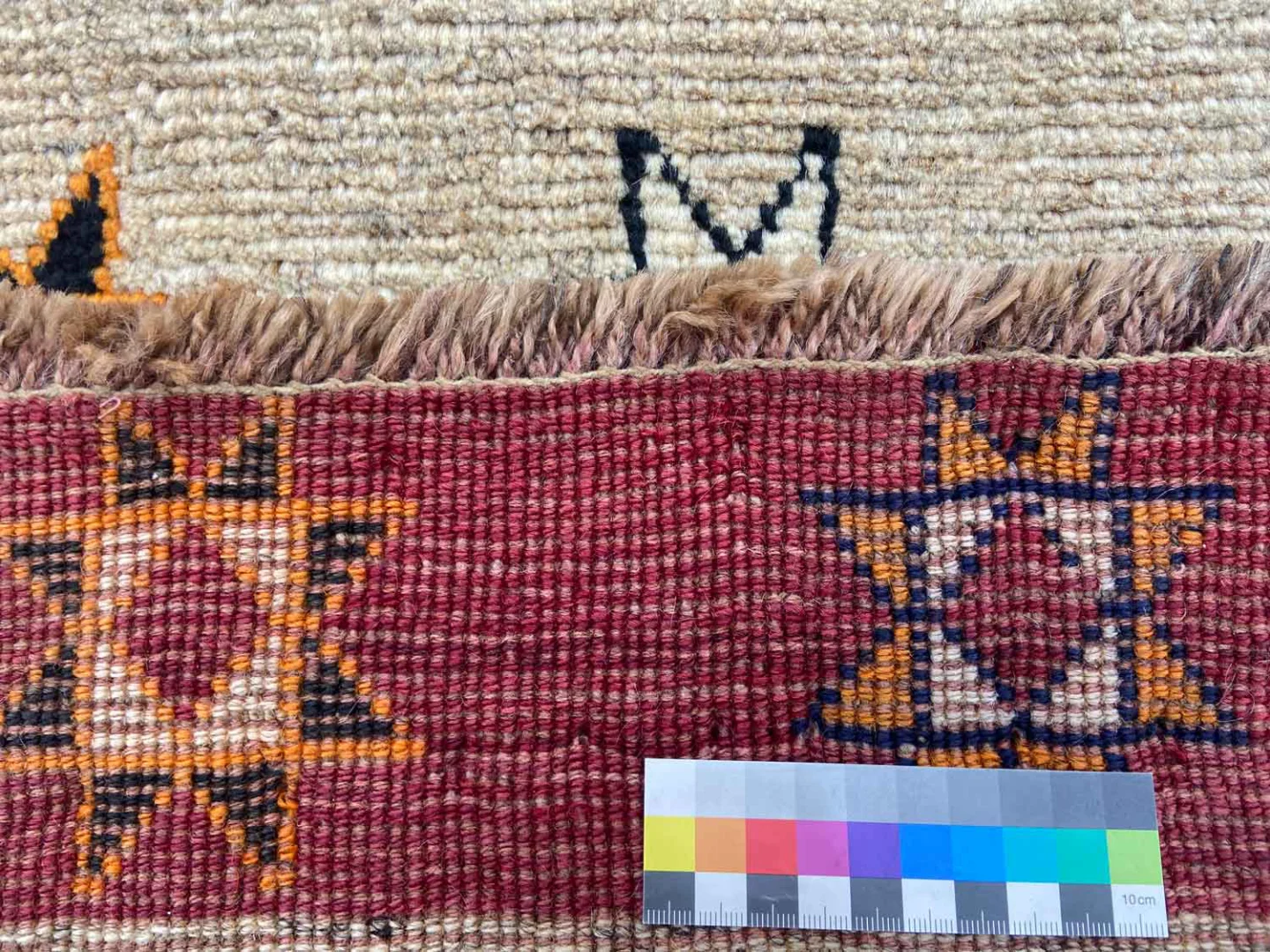
The knot density is 90,000 – 180,000 knots per square metre. This figure reflects the amount of manual work involved in building the design across the textile. With a hand-knotted Gabbeh, the visible forms are created by the knotting process rather than by an industrial print. The pattern is developed progressively in the wool, so each individual rug has its own execution.
Material and technique are closely connected in this piece. The sheen of the virgin wool brings out the stated colours and gives the surface a distinct appearance. The rug is new. Its hand-knotted Gabbeh – Shuli construction brings together the work of nomadic weavers and a free, imaginative approach to design.
Gabbeh rugs are commonly recognised for their direct visual language and individual character. Here, the central feature is the unusual, imaginative design. The wool and the stated knot density make the workmanship an important part of the description, while the pattern retains the freedom associated with the Gabbeh tradition.
Origin and Tradition
This rug comes from the Fars region in southern Iran, within the Persian cultural area. Fars is one of the landscapes closely associated with the history of Persian rugs. Shiraz, a historic city, lies in the wider region and is an important cultural point of reference. The name Gabbeh, however, identifies a rug tradition particularly connected with the rural and nomadic weaving culture of south-western Iran.
Gabbeh rugs were traditionally made by nomadic tribes. The weavers brought their practical knowledge and cultural influences into each piece. Designs could be developed from personal ideas rather than copied from one rigid pattern plan. Compared with formal urban or courtly rugs, the Gabbeh tradition allows room for personal signs, simplified forms and open arrangements. This combination of useful textile and individual expression is central to its regional identity.
Fars has long contained several different ways of life. Alongside towns and villages, mobile groups played an important role in the region’s history. Their rugs emerged from everyday craft, using inherited techniques, available materials and the weavers’ own visual language. A Gabbeh therefore does not need to follow the tightly controlled symmetry of a formal city rug. Its effect may instead come from clear shapes, open areas or freely imagined motifs.
Shiraz also gives Fars a significant cultural context. The city is associated with Persian literature, art and historical traditions. This rug is not described as a Shiraz rug, though. It is identified as a Gabbeh – Shuli from the Fars region. That distinction matters: Fars names the region of origin, while Gabbeh – Shuli describes the rug type and its design tradition.
Persian rug culture includes many regional schools that developed beside one another. Tabriz and Isfahan, for example, are known for detailed patterns and high knot densities, and their traditional designs are often more floral in character. Gabbeh from Fars follows a different path. Its defining references are imaginative freedom, colour and nomadic knotting traditions. Gabbeh – Fars is another related designation from the region, although not every Fars rug has the same appearance.
Other centres, such as Kashan and Kerman, demonstrate the breadth of Persian rug production. Kashan is associated with elaborate rugs that may combine fine wool and silk materials. Kerman is known for careful detail and high-quality materials. These comparisons help place this rug accurately: it belongs to the Fars tradition and reflects the connection between hand craftsmanship, nomadic origins and imaginative pattern making.
Design and Pattern
The design of this Gabbeh – Shuli rug is described as unusual and imaginative. It consists of freely invented designs rather than one narrowly defined ornament. The weavers translate their ideas into wool, giving each piece its own visual expression. The rug is therefore an individual work whose pattern has a distinct, one-off character.
Gabbeh designs may use simplified signs, open fields and stylised motifs. Their effect does not necessarily depend on a large number of tiny details. Instead, colour, shape and space work together. A design may appear playful, abstract or narrative. In a hand-knotted piece, these forms are built directly through the knotting process rather than applied to the surface afterwards.
The stated colours are red, beige, grey and brown. Together they form a palette of warm and restrained earth tones. Red can provide a clear accent, while beige, grey and brown create quieter transitions. The colours are described as natural and fit the rug’s Fars context. The important point is not a fixed order of colours, but the way these tones interact with the freely imagined forms.
This colour combination also supports the rug’s versatility. Red, beige, grey and brown can be placed in both traditional and contemporary interiors. In a living room, the rug can function as a clearly defined textile element. In a bedroom, the subdued earth palette can contribute to a calm setting. It is also suited to a creative workspace, where an individual pattern can sit alongside personal furnishings and artistic objects.
Gabbeh is often understood in contrast to the more intricate pattern languages of Tabriz or Isfahan. Tabriz and Isfahan rugs are known for detailed compositions that frequently include floral forms and more elaborated cultural symbols. Gabbeh places its emphasis elsewhere. Its imaginative designs do not have to follow a strict ornamental order. That openness is part of the identity of the Gabbeh tradition.
The word Shuli in the product name indicates the specific Gabbeh – Shuli designation used for this rug. The piece is described as having unusual, imaginative designs. No further interpretation of individual signs or figures is specified. The pattern can therefore be understood as an independent composition in which colour, wool and hand-knotted form work together to create the overall character.
Every piece is made as an individual work. In a Gabbeh with freely developed motifs, the personal contribution of the weavers can remain visible in the design. The rug thus stands between regional tradition and individual invention. Its pattern belongs to the Fars weaving context without aiming at a standardised series appearance. Red, beige, grey and brown provide the recognisable colour foundation.
Special Features
A defining feature of this rug is the combination of the Gabbeh – Shuli tradition with an explicitly imaginative pattern language. The designs are unusual and freely invented. This sets the rug apart from strictly arranged, heavily ornamental traditions. Its appearance reflects the creative freedom of the weavers and makes each piece an individual work.
The glossy virgin wool is another important characteristic. It combines a soft feel with the robust material quality described for the rug. Red, beige, grey and brown create a natural, earthy palette. Together with the hand-knotted technique, they connect regional tradition with an independent design approach.
The rug is new and comes from the Fars region of Iran. Its knot density of 90,000 – 180,000 knots per square metre shows the extent of the manual work. It can be used in a living room or bedroom and can also be placed in a creative workspace. The balanced colour range suits both traditional and modern interior settings.
FAQ
What makes the Gabbeh – Shuli rug distinctive?
Its unusual and imaginative designs are the main distinguishing feature. The rug is described as a one-off from the Fars region of Iran and is hand-knotted. Glossy virgin wool, the colours red, beige, grey and brown, and the nomadic Gabbeh tradition come together in an individual textile composition.
How should I care for the Gabbeh – Shuli rug?
The rug should be vacuumed regularly as part of routine care. If a more thorough cleaning is needed, professional rug cleaning is recommended. Direct sunlight should be avoided so that the colours do not fade. These measures help preserve the surface, the colour effect and the pleasant qualities of the virgin wool.
Which rooms are suitable for the Gabbeh – Shuli rug?
The rug can be used in a living room or bedroom and is also suitable for a creative workspace. Its red, beige, grey and brown palette and its imaginative designs can be combined with different interior styles. It can therefore complement a traditional setting or appear as an independent textile design element in a contemporary room.
Additional information
| Design Style | |
|---|---|
| Color | |
| Size | |
| Shape | |
| Origin | |
| Knot Density | |
| Material |
Related products

Persian Rug Qashqai 300 x 197 cm Wool Hand-woven
€ 798
Persian Rug Gabbeh 250 x 180 cm Cashmere Hand-knotted
€ 1118
Oriental Rug Kelim 240 x 180 cm Wool Hand-woven
€ 2249
Persian Rug Qashqai 290 x 200 cm Wool Hand-woven
€ 798
Persian Rug Qashqai 288 x 193 cm Wool Hand-woven
€ 798
Persian Rug Heriz ca 341 x 242 cm Wool Hand-knotted
€ 1800
Persian Rug Tabriz 388 x 295 cm Wool Hand-knotted
€ 1440
Persian Rug Qashqai 286 x 192 cm Wool Hand-woven
€ 944