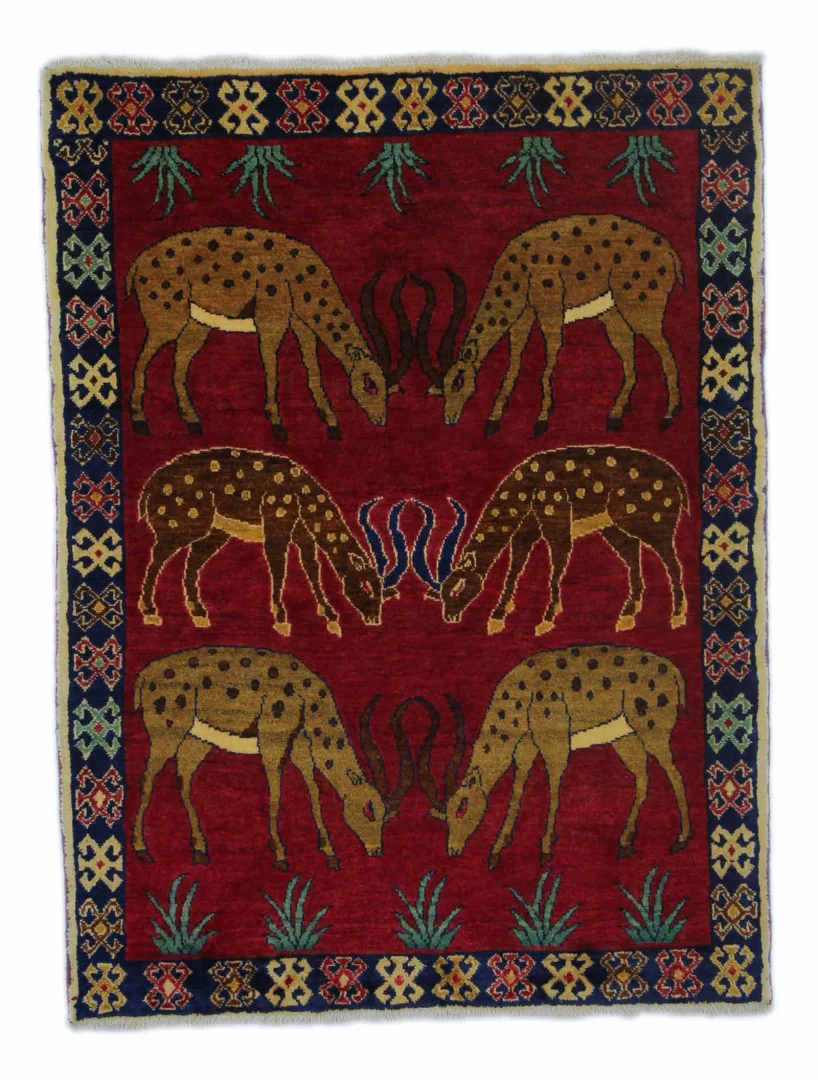
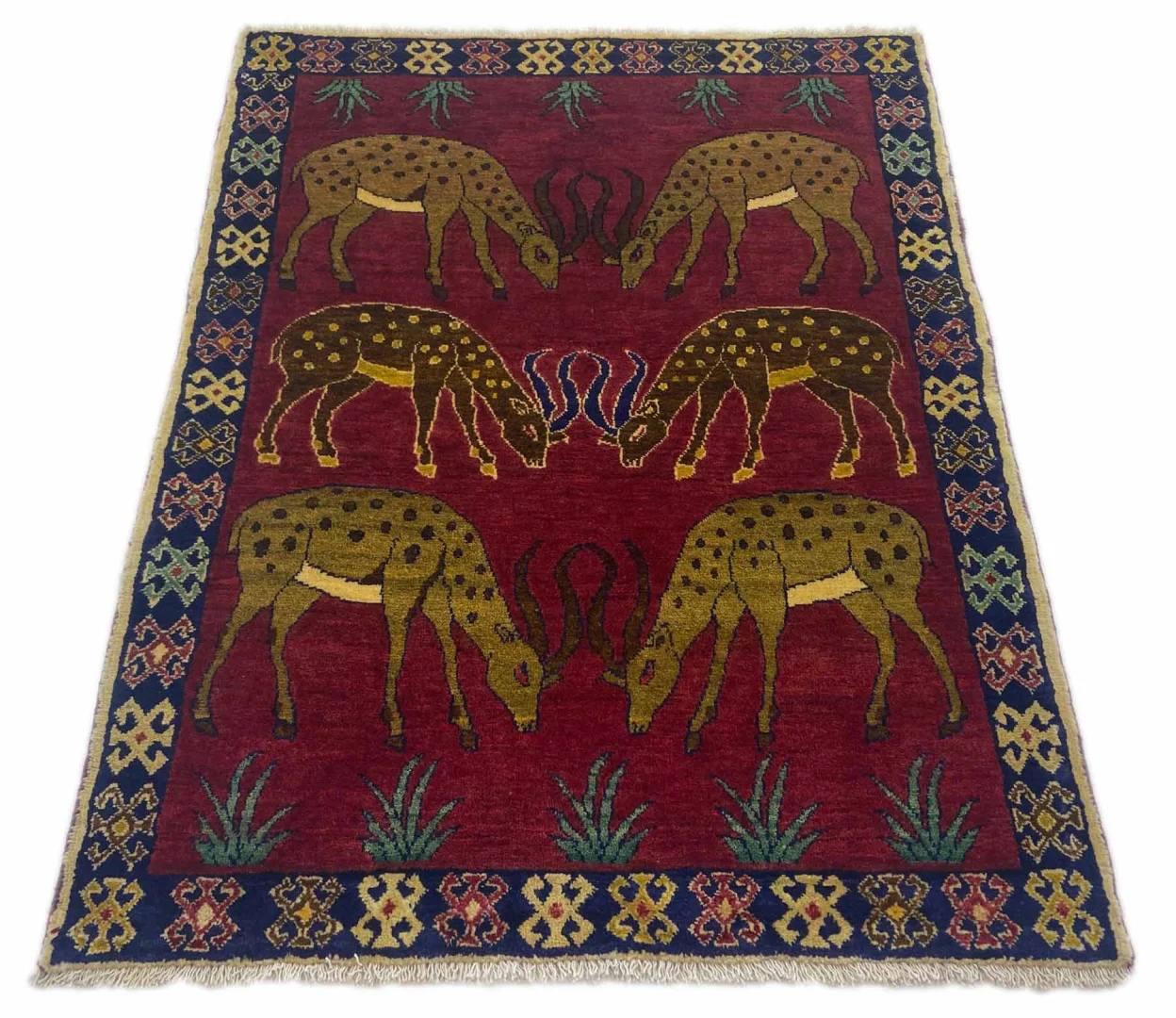
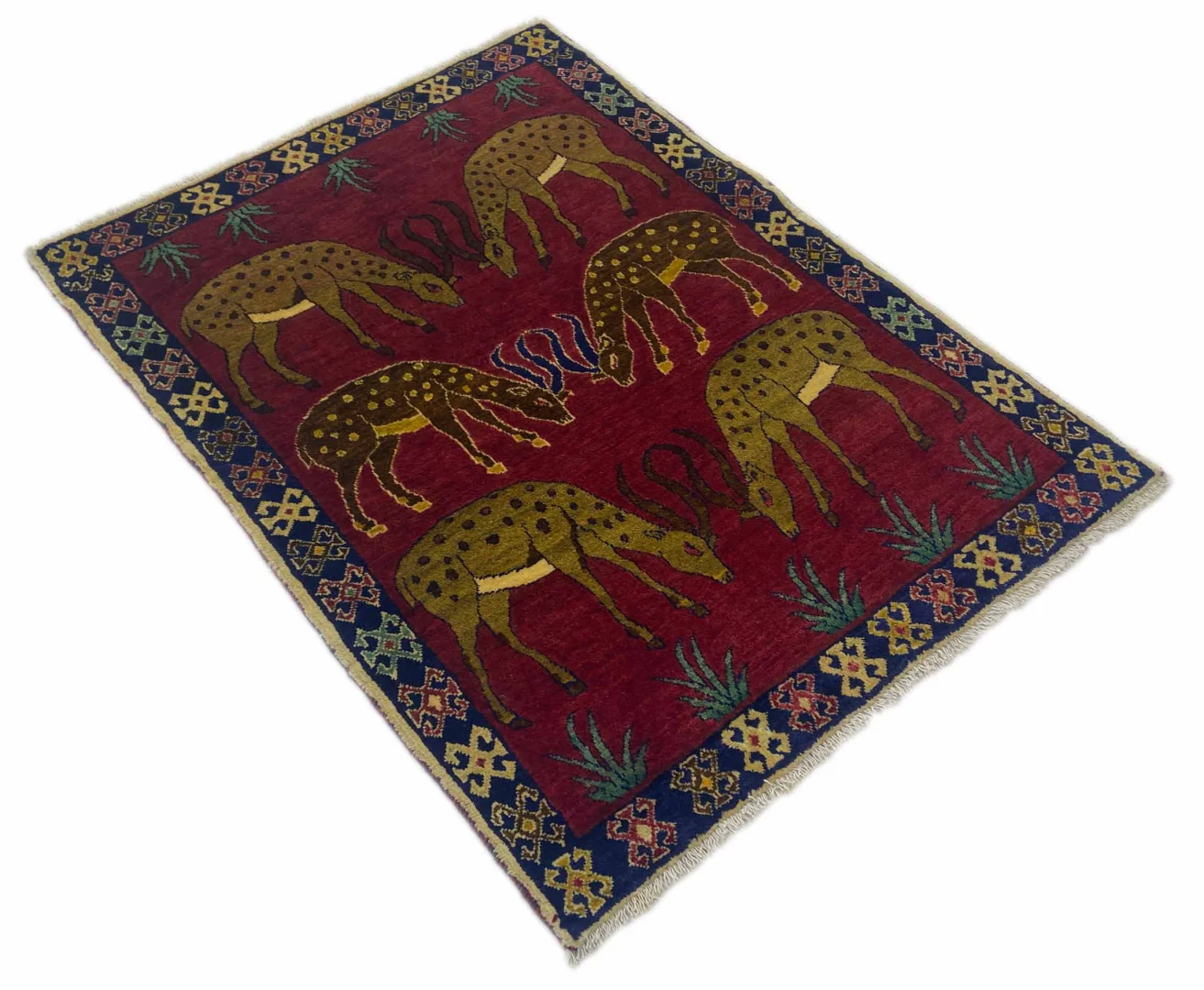
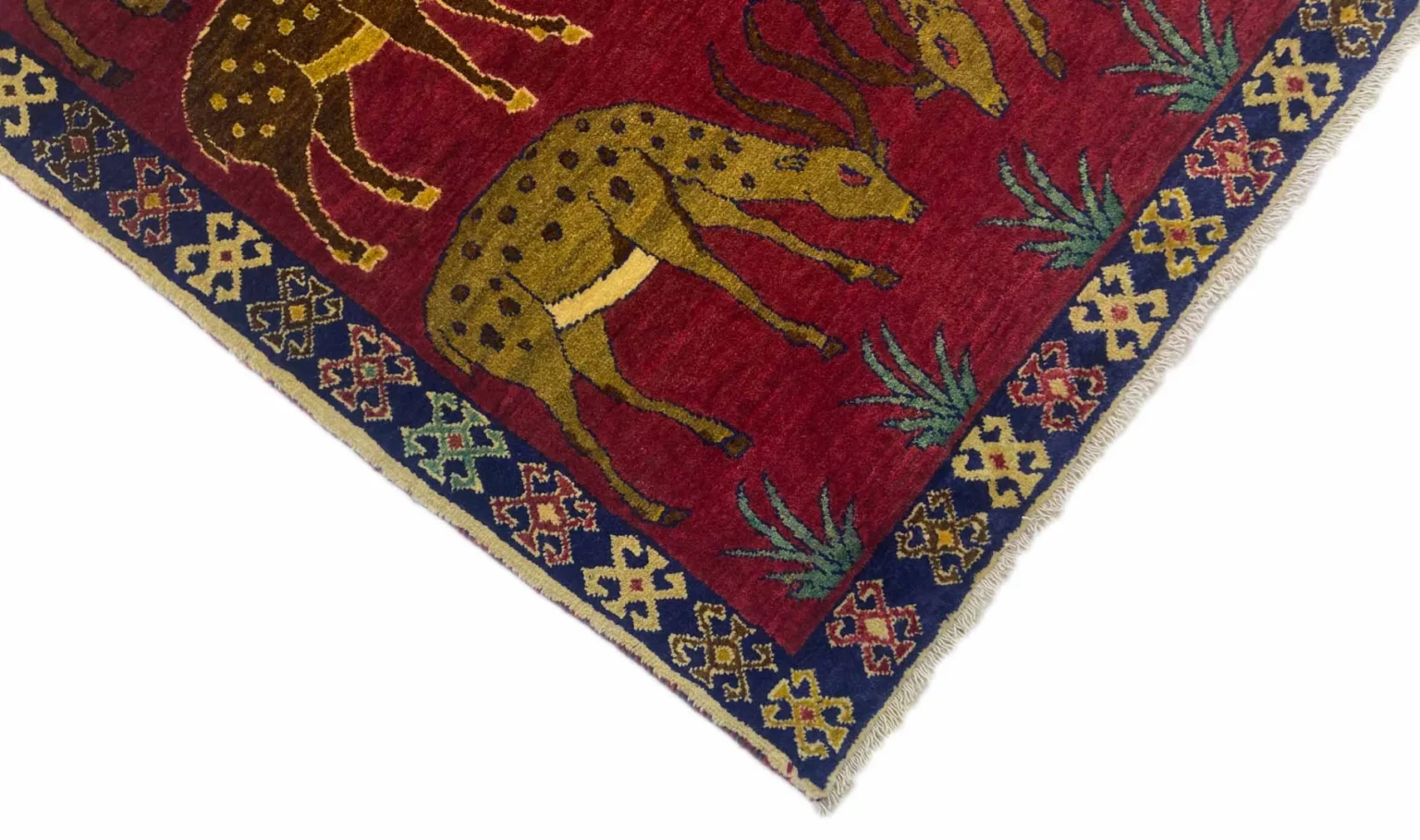
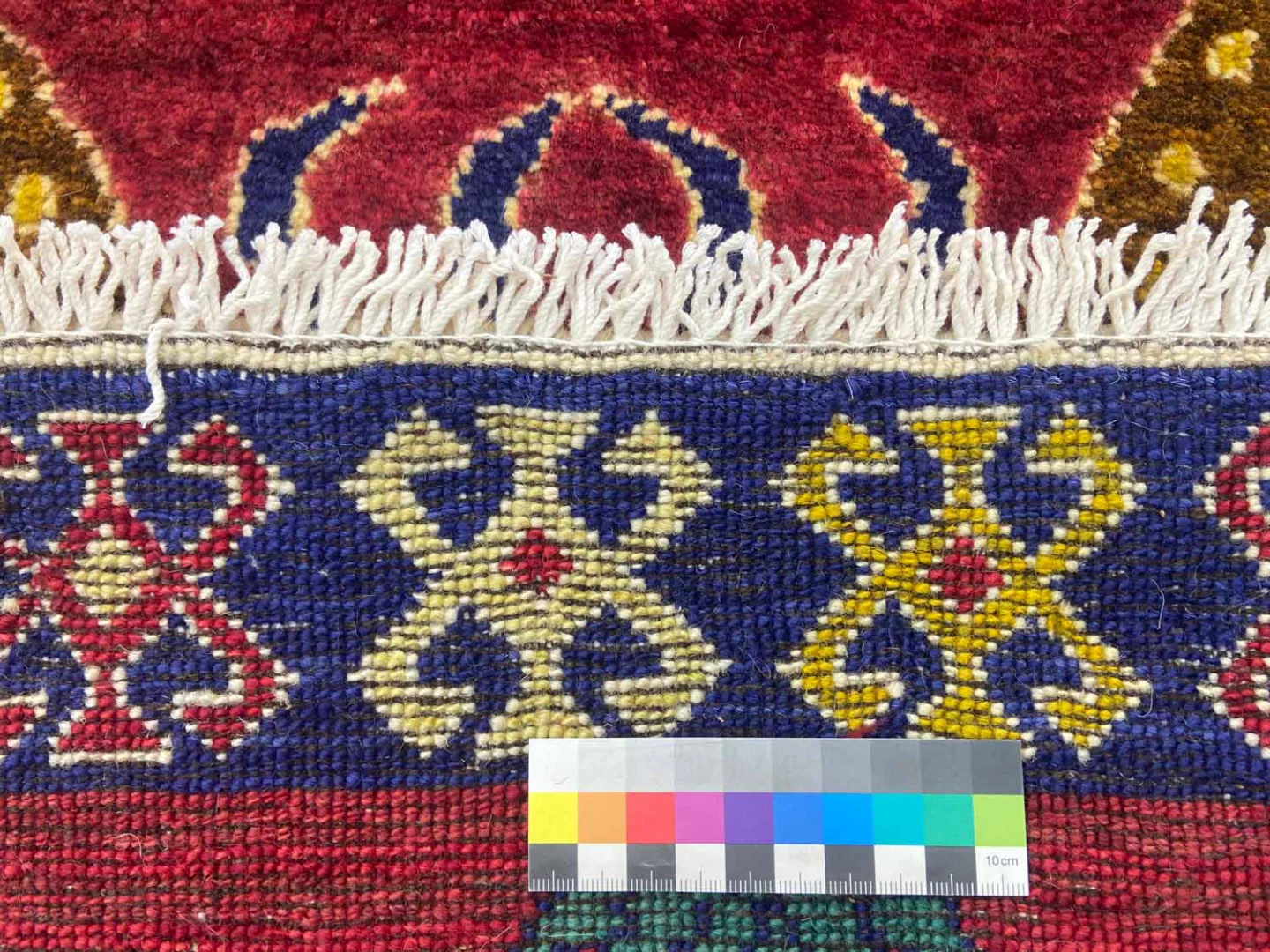
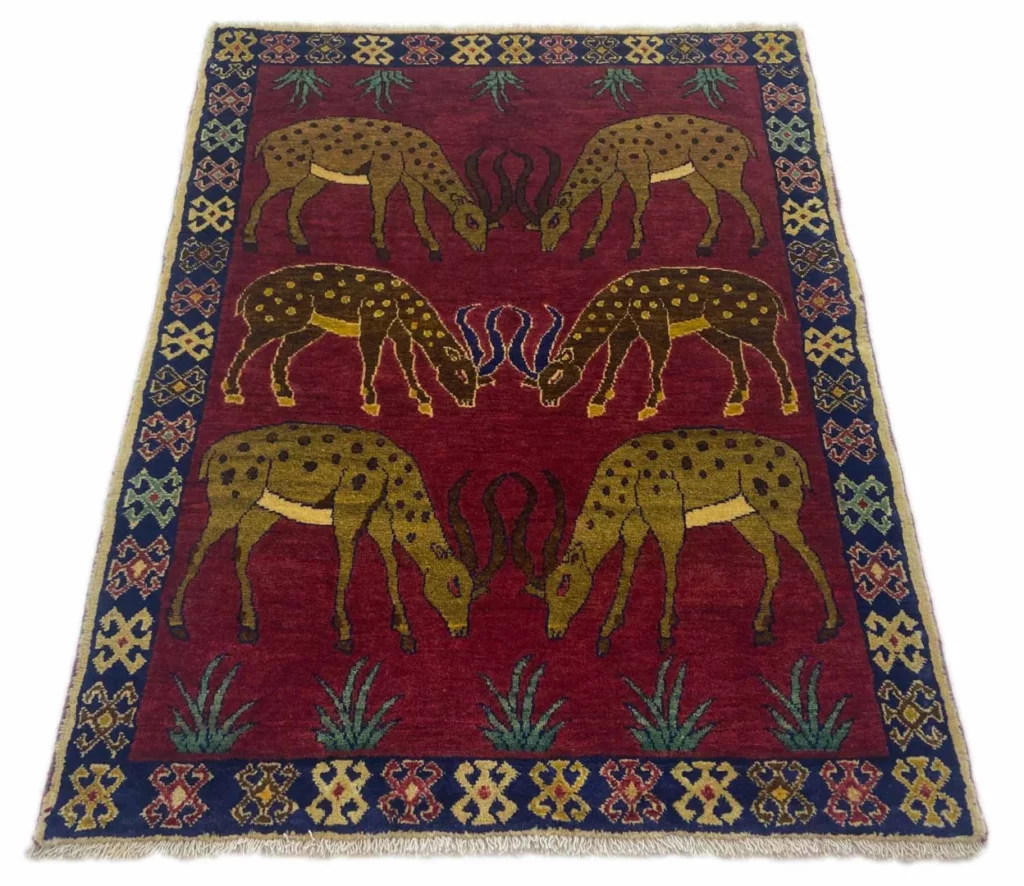
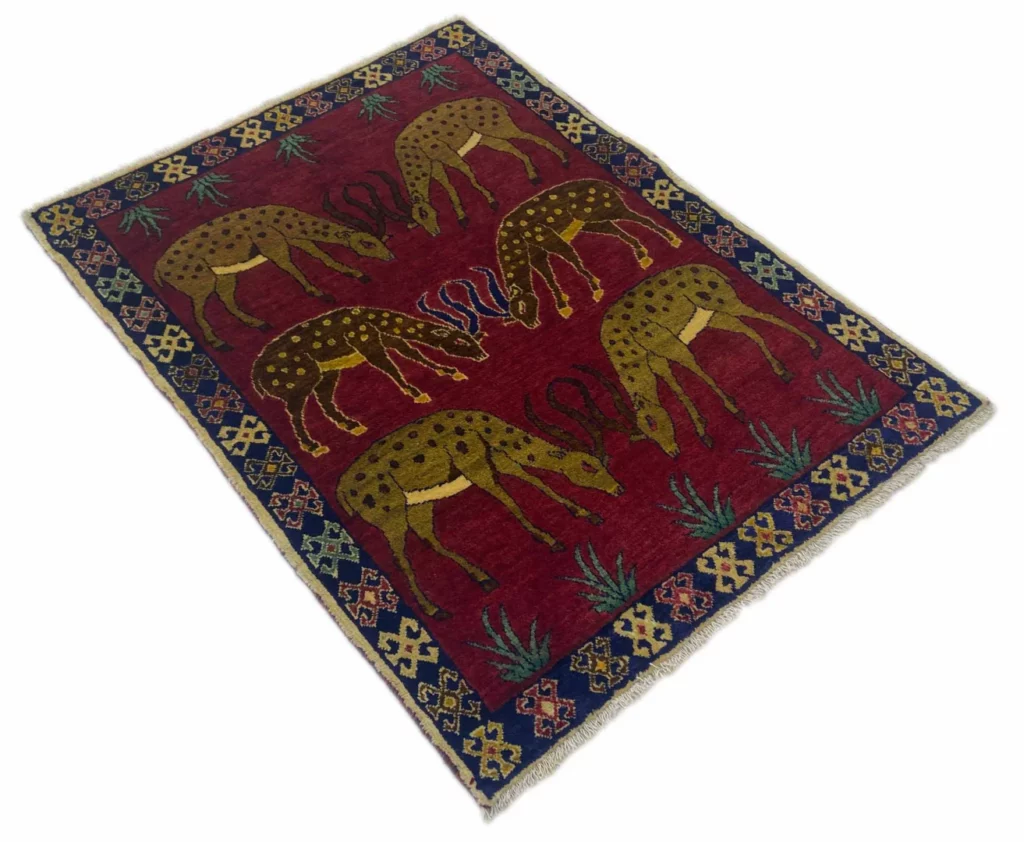
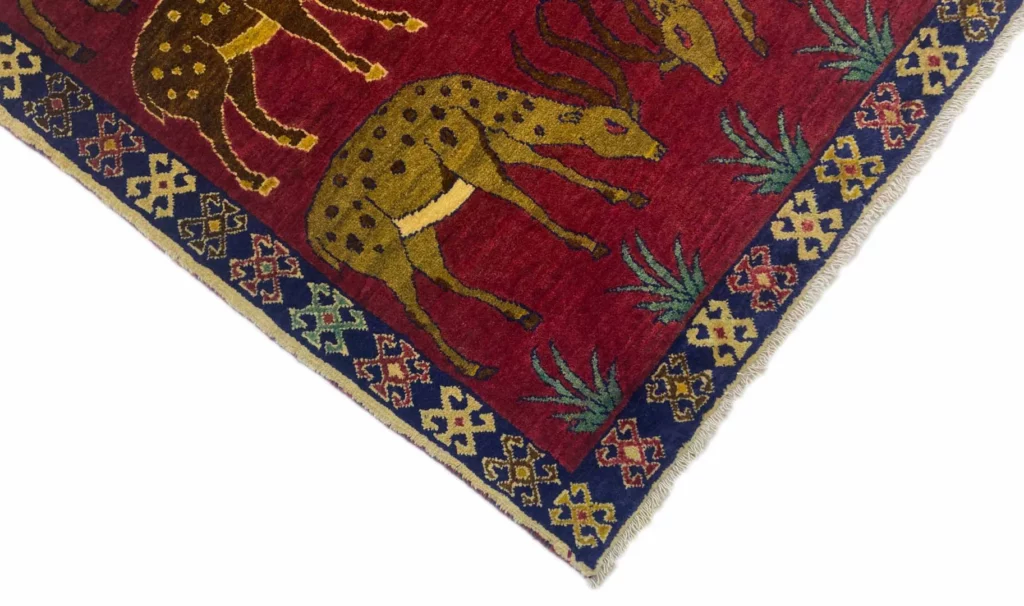
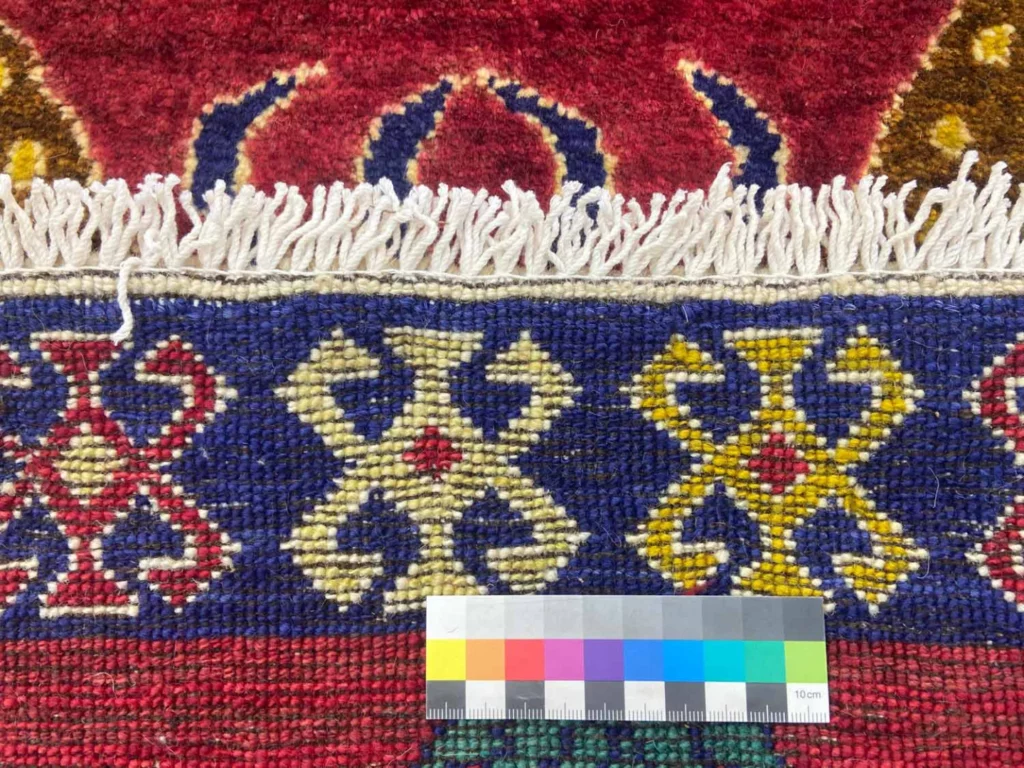
Persian Rug Gabbeh 148 x 112 cm Wool Hand-knotted
€ 660
Hand-knotted Fars Persian rug | Knot density: 90,000 – 180,000 knots/m² | Material: Pile shiny virgin wool | Size: 148 x 112 cm | Pattern: Imaginative Gabbeh Shuli designs | Colour palette: Red, beige, grey, brown
1 available
- ✓Free Shipping in EU
- ✓2-5 Business Days Delivery
- ✓14-Day Return Policy
- ✓Worldwide Shipping on request
 SECURE PAYMENT
 SHIPPING PARTNERS
Inventory number: C347F39D
Description
Fars Persian Rug
Material and Craftsmanship
This Gabbeh Shuli rug is hand-knotted with a pile of shiny virgin wool. Wool is a natural material with a tactile surface, and its subtle lustre is part of the rug’s visual character. It also gives the pile a pleasant feel underfoot. The material and the method of making belong together here: the wool provides the surface, while hand knotting creates the textile structure and allows the design to be formed directly during production.
The stated knot density is between 90,000 and 180,000 knots per square metre. This density supports a more differentiated rendering of the imaginative designs associated with Gabbeh Shuli. It is one of the rug’s specified production features alongside the handwork. Each knot is placed by hand, so the result is not a mechanically repeated surface but a textile piece shaped by an individual weaving process.
Virgin wool is valued in Persian rug making for its resilience and natural sheen. In this rug, the shiny wool pile contributes to the tactile quality and to the way the colours appear across the surface. The craft remains visible rather than being concealed beneath an overly elaborate ornamental structure. Material, knotting and pattern therefore form a coherent whole: a hand-knotted Gabbeh whose character comes from wool and from the maker’s own design work.
Origin and Tradition
The rug comes from the Fars region in southern Persia. Fars is closely associated with Persian carpet culture and with several traditions of hand-knotted rugs. The region is also connected with the textile heritage of nomadic tribes. Within this setting, carpet making developed as a practical craft as well as a form of visual expression. Wool, knotting skills and personal design decisions all have a place in that tradition.
Gabbeh rugs are traditionally linked with nomadic communities. Their history reflects knowledge passed through everyday textile work and through generations of making. Working with wool was part of a broader material culture in which useful objects could also carry a distinct visual identity. The Gabbeh form grew from this relationship between use, craft and design, and it remains known for a direct, clearly readable appearance.
Gabbeh Shuli describes a particular design approach within the wider Gabbeh tradition. Some Gabbeh rugs rely on very spare fields or simple geometric marks. Shuli rugs, by contrast, are recognised for imaginative designs invented freely by the knotters themselves. These motifs are not presented as one rigid pattern that must be reproduced without variation. The maker’s own creative contribution is part of the type, giving each composition an individual order.
Persian carpet making is based on the interaction of raw materials, technique and regional knowledge. Virgin wool is prepared and used in a detailed process that turns fibre into a hand-knotted floor textile. Understanding the material and controlling the knots are fundamental parts of the craft. In Fars, this work belongs to a regional identity shaped by long-standing textile knowledge and by the traditions associated with nomadic tribes.
Gabbeh Shuli differs from Persian rug styles that are chiefly recognised for dense floral ornament. Nain and Tabriz rugs, for example, are often associated with intricate floral compositions, while Kerman rugs are known for fine detail and Bakhtiari rugs often feature geometric designs. Gabbeh Shuli follows another path: its design is simplified in structure but remains expressive, and its motifs come from the imagination of the knotter. These contrasts illustrate the variety found within Persian carpet traditions.
The wider history of Persian rugs includes many regional languages of colour, pattern and construction. No single style represents the whole of Persia. The Fars Gabbeh belongs to a wool-based tradition in which handwork and a straightforward visual language are especially important. The designation Gabbeh Shuli identifies the rug’s place within that tradition, while the imaginative motifs show how inherited craft can leave room for individual invention.
Design and Pattern
The defining visual feature of this rug is its collection of imaginative, freely invented designs. Gabbeh Shuli is associated with motifs created by the knotters rather than with a strictly fixed ornamental programme. The pattern can therefore feel playful and unusual while remaining rooted in the Gabbeh tradition. Its character comes from the relationship between the hand-made forms, the surrounding field and the colours selected for the composition.
The designs are described as distinctive and imaginative, yet their visual language remains simplified. Their effect does not depend on filling the surface with numerous small ornaments. Instead, forms and colour areas remain legible in relation to one another. This gives the pattern an expressive clarity and explains why Gabbeh Shuli can suit interiors that prefer a less formal arrangement without giving up the presence of a hand-knotted Persian rug.
The colour palette consists of red, beige, grey and brown. Red adds warmth and concentration, beige introduces a lighter balancing tone, grey provides a neutral element, and brown reinforces the earthy character of the palette. Together these colours create a warm and welcoming impression. Their role is not to support a dense floral display, but to give the freely developed motifs a coherent and grounded setting.
Gabbeh Shuli is shaped by a balance between simplicity and expression. The pattern is less formal than the elaborate floral systems found in some other Persian rug traditions, but it is not without structure. The knotted surface gives the invented forms a textile depth, while the wool pile keeps the design connected to the physical character of the rug. The result is a pattern that can be read as abstract, playful or figurative without requiring one fixed interpretation.
Individual shapes may be viewed as imaginative signs, simplified figures or independent fields of colour. A particular symbolic explanation is not necessary for the design to work. What matters is that the motifs arise from the creative decisions of the knotter. This distinguishes them from a purely standardised pattern repeated from one manufactured item to the next. The free invention of the forms is an essential part of the Gabbeh Shuli identity.
The combination of red, beige, grey and brown can connect the rug with both rustic and contemporary interiors. This follows from the restrained range of colours and the clear pattern language, not from a claim about any particular room. Warm tones can serve as a visual link between furnishings, while the unusual designs provide an independent accent. The rug can therefore be understood as a meeting point between regional tradition and present-day interior arrangements.
Gabbeh Shuli rugs appeal to those who want the presence of a hand-knotted Persian rug without a strictly formal ornamental layout. Their designs are not random; they belong to a recognised way of using personal imagination within a textile tradition. The limited warm palette, the wool pile and the freely created motifs work together to define the appearance of this particular Gabbeh Shuli rug.
Special Features
The most distinctive feature is the combination of Gabbeh Shuli workmanship with imaginative patterns invented by the knotters themselves. This gives the rug an individual visual language. The hand-knotted construction and the pile of shiny virgin wool add a second layer of character, making the material and the making process part of the design. It is a hand-crafted textile rather than a mechanically produced floor covering.
The knot density of 90,000 to 180,000 knots per square metre is another specified characteristic. It supports the detailed development of the patterns. Red, beige, grey and brown form the stated colour palette and give the design its warm, balanced appearance. The origin in Fars places these features within a Persian tradition associated with regional craft and the textile culture of nomadic tribes.
Gabbeh Shuli rugs are available in different dimensions and can therefore be used in a range of room concepts. They are suitable for living rooms, bedrooms and hallways. In each of these settings, their practical textile role is accompanied by an independent design and a clearly identifiable cultural background. The combination of freely invented pattern, wool pile and hand knotting is what gives the rug its particular profile.
FAQ
How should I care for a Gabbeh Shuli rug?
Regular cleaning is recommended to support the rug’s long-term use. If more intensive care is needed, professional cleaning is advisable. Direct sunlight should be avoided because it can cause the colours to fade. These points are particularly relevant to a hand-knotted rug with a virgin wool pile and a colour scheme of red, beige, grey and brown.
Where can a Gabbeh Shuli rug be used?
Gabbeh Shuli rugs can be used in living rooms, bedrooms and hallways. Their warm colours and unusual, freely invented patterns can be integrated into different room concepts. The design combines Persian tradition with a simplified but expressive visual language. As a result, the rug can work in a rustic setting as well as alongside contemporary furnishings, while retaining its own recognisable character.
What makes Gabbeh Shuli rugs unique?
Their individuality comes from the imaginative patterns freely created by the knotters. Each rug can therefore have its own visual arrangement. The high knot density supports detailed pattern work, while hand knotting and the shiny virgin wool pile define the textile quality. Its Fars origin also connects the rug with Persian carpet-making tradition and with the cultural heritage of nomadic tribes.
Additional information
| Design Style | |
|---|---|
| Color | |
| Size | |
| Shape | |
| Origin | |
| Knot Density | |
| Material |
Related products

Persian Rug Gabbeh 250 x 180 cm Cashmere Hand-knotted
€ 1118
Persian Rug Gabbeh 270×83 cm Hand-knotted
€ 755
Persian Rug Heriz ca 341 x 242 cm Wool Hand-knotted
€ 1800
Persian Rug Tabriz 388 x 295 cm Wool Hand-knotted
€ 1440
Persian Rug Qashqai 300 x 197 cm Wool Hand-woven
€ 798
Persian Rug Fars 240 x 150 cm Cashmere Hand-knotted
€ 1118
Persian Rug Fars 292 x 206 cm Wool Hand-woven
€ 798
Persian Rug Qashqai 293 x 198 cm Wool Hand-woven
€ 798