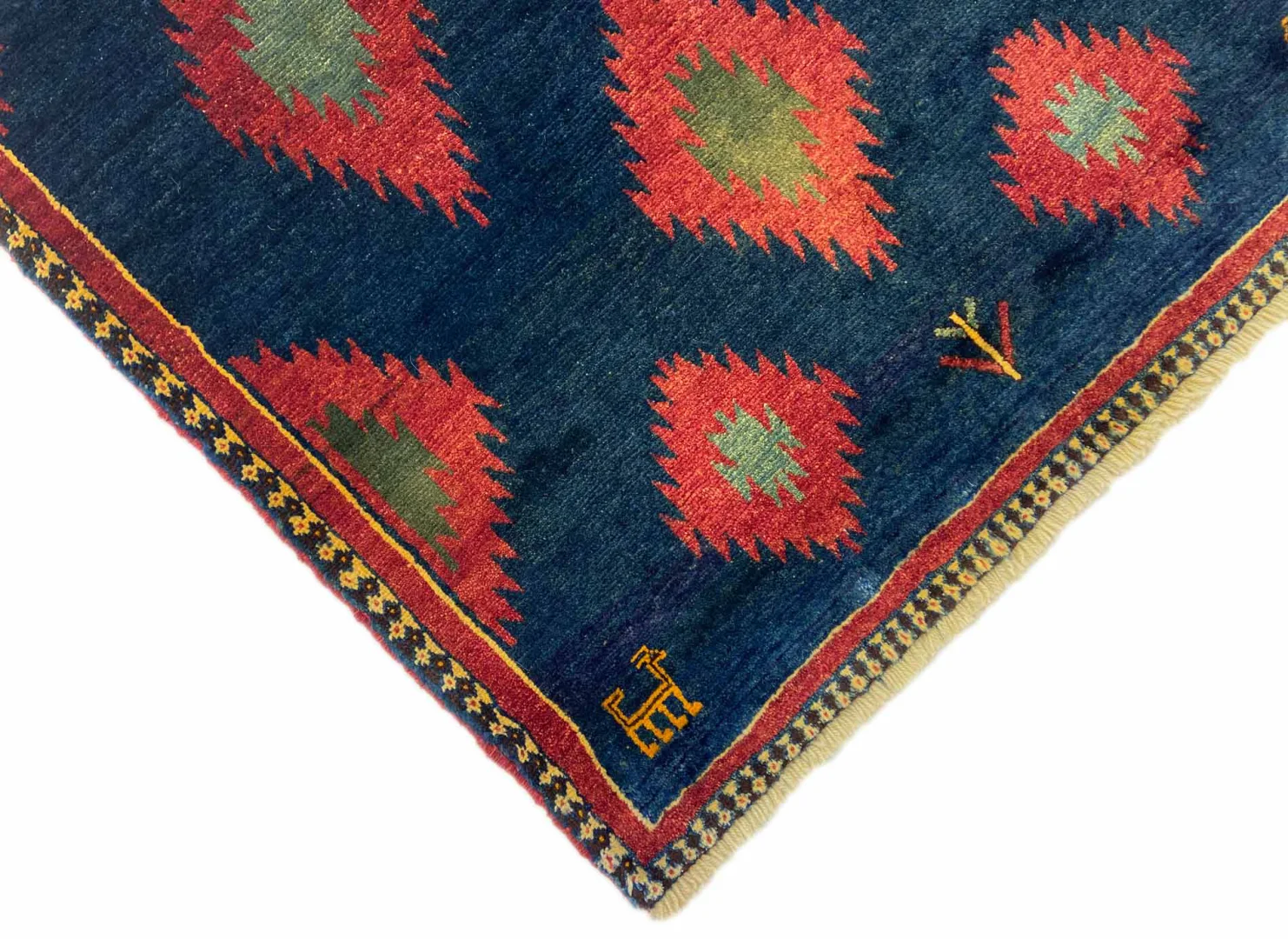
This Gabbeh – Shuli rug is made of lustrous virgin wool and is hand-knotted. The virgin wool forms the pile, giving the rug its visible and tactile surface. Its natural fibre structure catches the light and produces the sheen described for this piece. Virgin wool is the specified pile material; no other pile fibre is named in the product information.
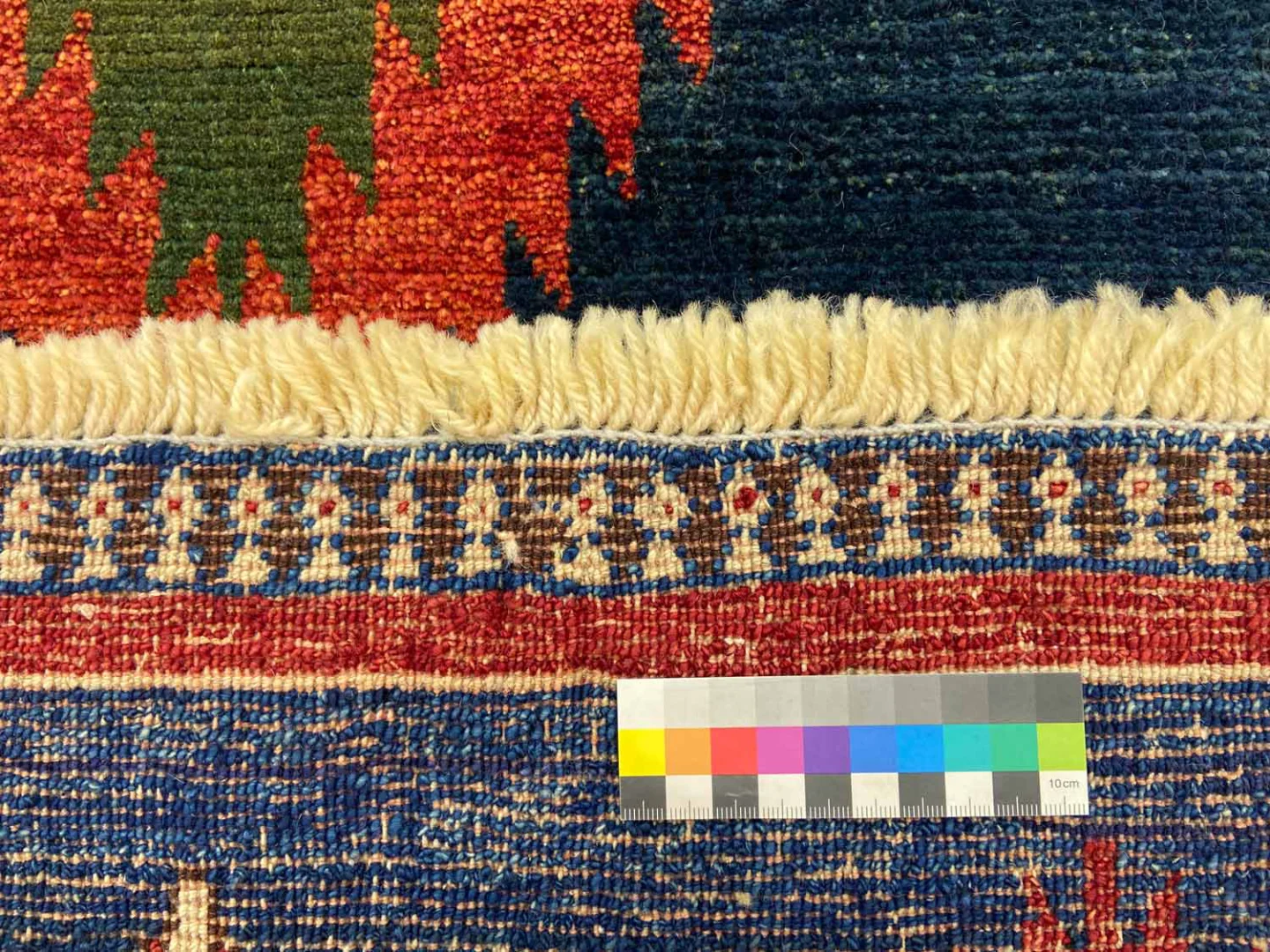
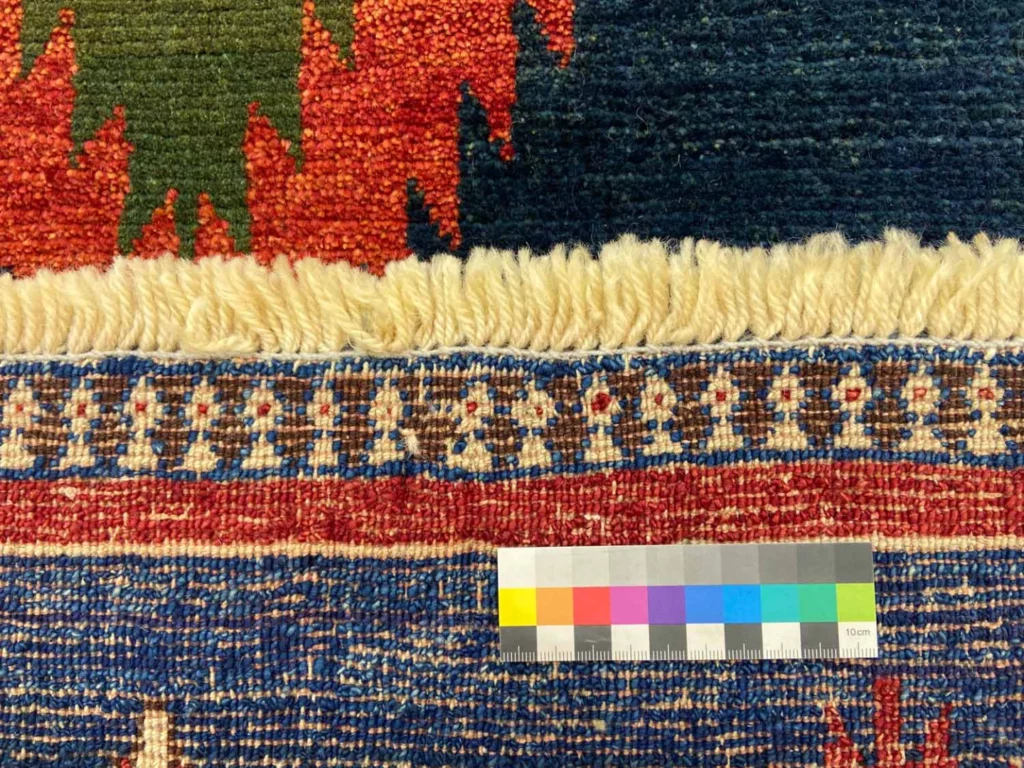
The knot density is 90.000 – 180.000 knots per square metre. This figure records the number of knots worked into a defined area and indicates the level of detail in the knotting process. In hand-knotting, the design is built knot by knot rather than printed or mechanically reproduced. Each finished rug therefore has the character of an individual textile work.
The construction is identified as hand-knotted, and the rug is described as new and artfully made. The combination of the stated wool pile, the handwork and the recorded knot density provides the essential information about its manufacture. No warp material is specified, so the material description remains focused on the lustrous virgin wool used for the pile.
Wool has long been used in rug making because it can carry colour while retaining a distinct textile surface. In this rug, the material is specifically described as lustrous virgin wool. That wording identifies both the fibre and its visual quality. The hand-knotted technique then turns the fibre into a patterned surface, allowing the unusual Shuli designs and the listed colours to be expressed through the structure of the rug.
The production description does not assign a separate material to the foundation or give a further composition. It does, however, clearly identify the rug as hand-knotted, new and artfully made. These are the relevant craft details for this individual Gabbeh – Shuli. The exact knot-density range adds a precise technical characteristic without changing the essentially handmade nature of the work.
Origin and Tradition
The rug comes from the Fars region in southern Persia. Fars is one of the historic textile areas of Persia and is associated with the cultural landscape around Shiraz. Located in the south of present-day Iran, the region has long supported varied forms of wool work and carpet making. The Fars origin places this rug within a southern Persian weaving tradition.
Gabbeh rugs are associated with the rural and nomadic carpet culture of southern Persia. The term Gabbeh describes a type of rug in which the handworked surface and the directness of the design are important. Traditional Gabbeh imagery can draw on daily life, remembered scenes, animals, plants or simplified geometric ideas. It does not necessarily follow a fixed design drawn from a single formal pattern system.
Shuli identifies a distinctive creative direction within the Gabbeh field. Many contemporary Gabbeh rugs are known for restrained fields and plain or nearly plain appearances, whereas Gabbeh – Shuli is presented through inventive and unusual designs. Its imagery may be imaginative, unexpected or surreal in character. The central principle is the weaver’s individual interpretation: a textile is made not only according to a technique but also through a personal visual idea.
Fars has a varied cultural history in which village communities, mobile groups and urban workshops developed different approaches to textile production. This variety helps explain the broad range of Persian rugs associated with the region. A Gabbeh should not be understood as a rigidly standardised pattern. Simplified forms, departures from symmetry and personal choices can all have a place within the tradition. Two rugs from the same broad Gabbeh category therefore need not look like identical serial products.
The reference to Shiraz serves as a historical and geographical point of orientation for Fars. Shiraz is an important city in the cultural history of Persia, while Fars is the stated region of origin for this rug. The origin makes it a Persian rug from southern Iran. It is useful to distinguish that origin from the design name: Gabbeh – Shuli identifies the rug type and its creative direction, whereas Fars identifies where the rug comes from.
Hand-knotted rugs from Fars unite a useful textile with a form of pictorial expression. Wool provides the working surface, while colour, spacing and form turn that surface into a composition. The regional tradition allows practical craftsmanship and individual invention to exist together. Every knot contributes to the finished field, and the final result preserves the decisions made during the making of one particular rug.
The wider Gabbeh tradition is also part of the reason these rugs appear in many different settings. Some examples have a strongly rustic appearance, while others use a more decorative or contemporary vocabulary. The Shuli direction belongs to the more freely imagined side of that spectrum. Its value as a design tradition lies in its willingness to let the weaver’s idea remain visible rather than forcing every element into a prescribed classical arrangement.
Design and Pattern
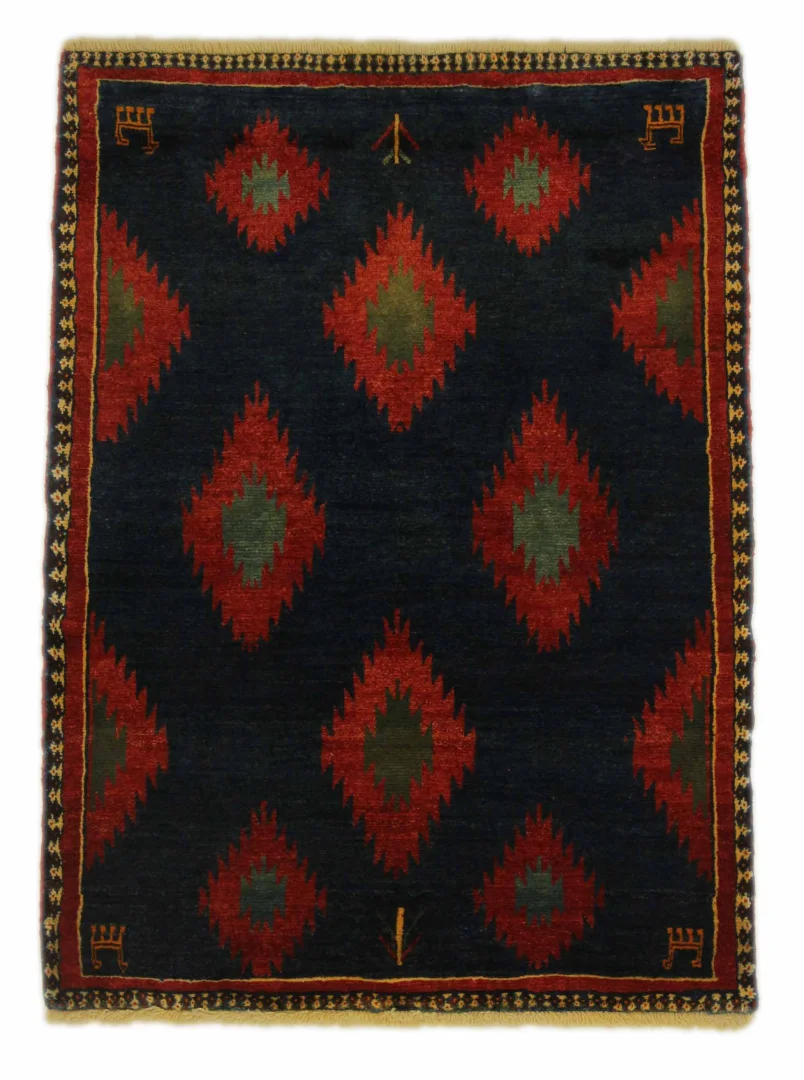
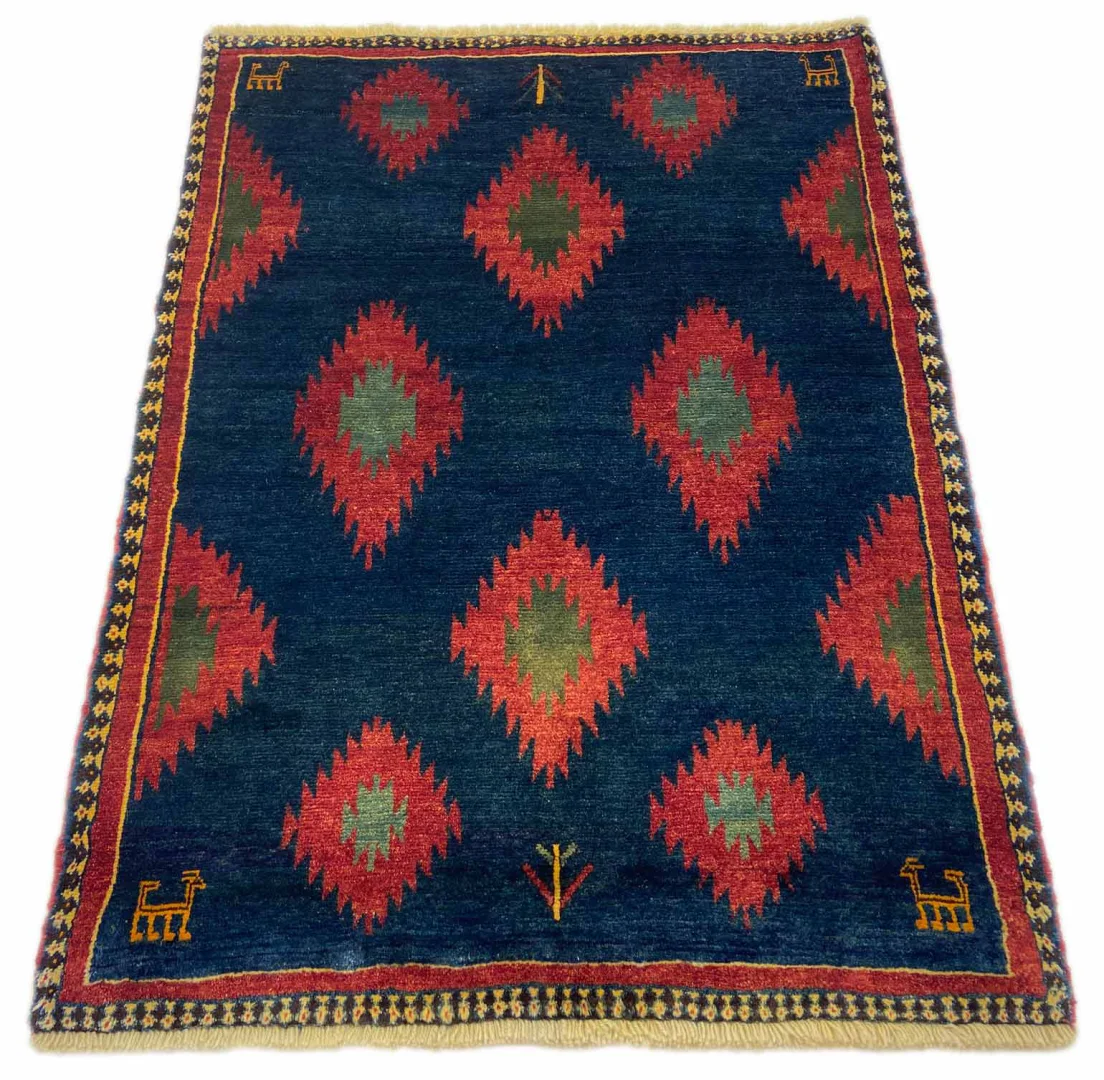
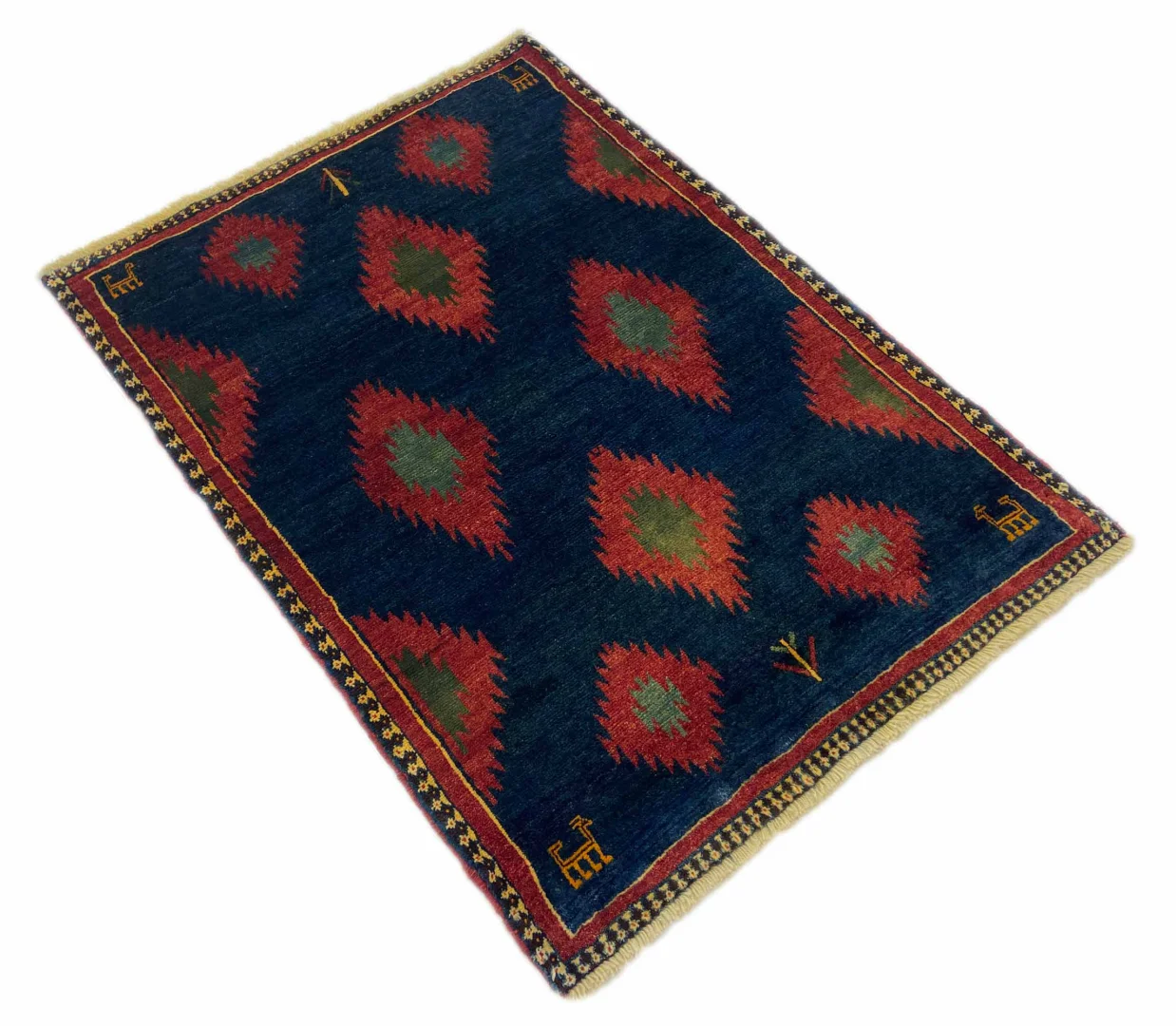
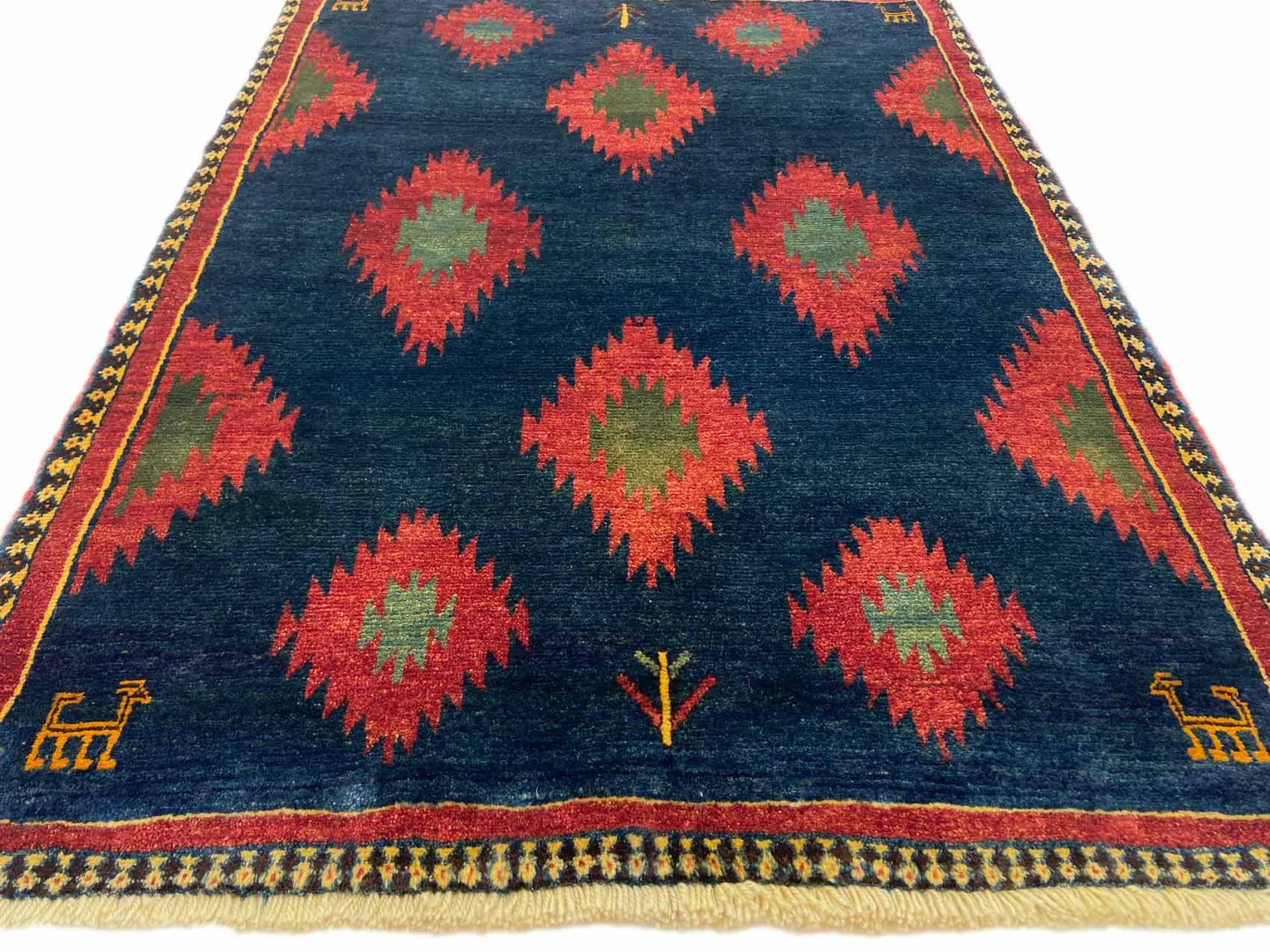
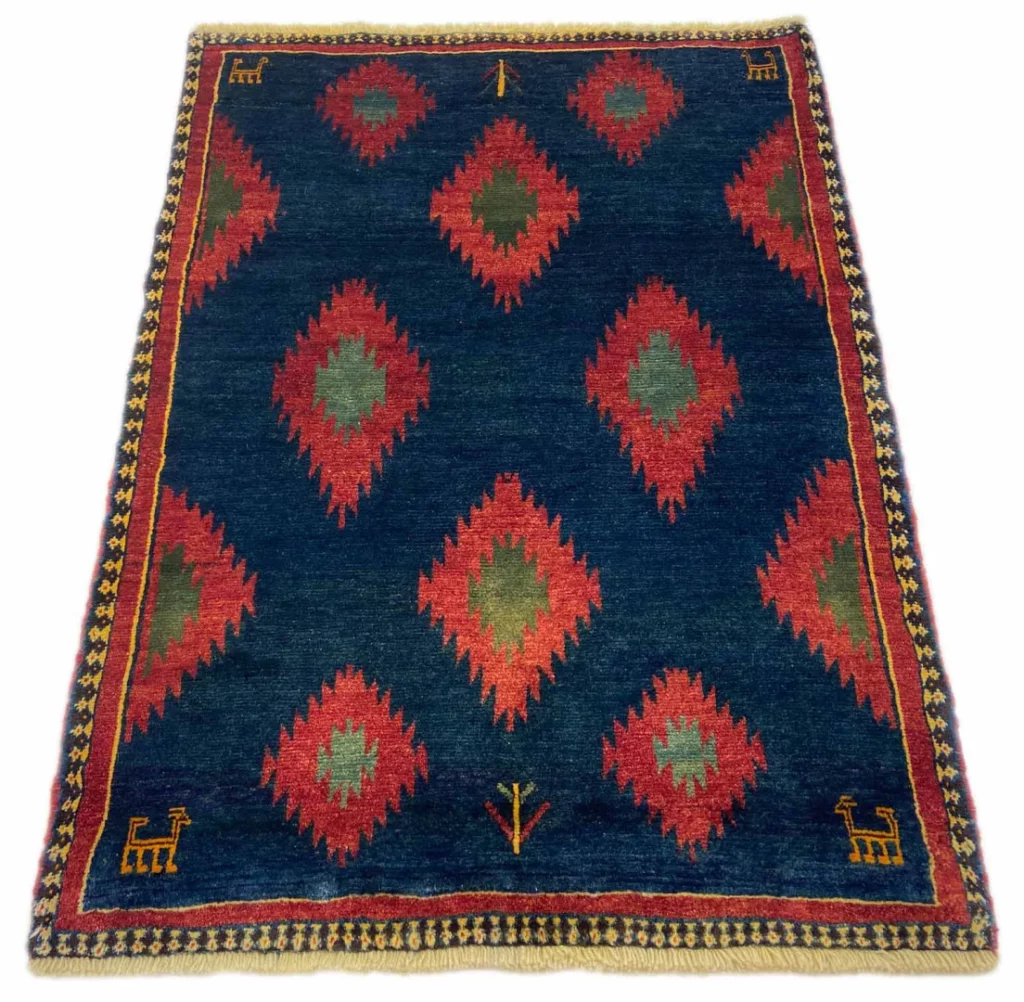
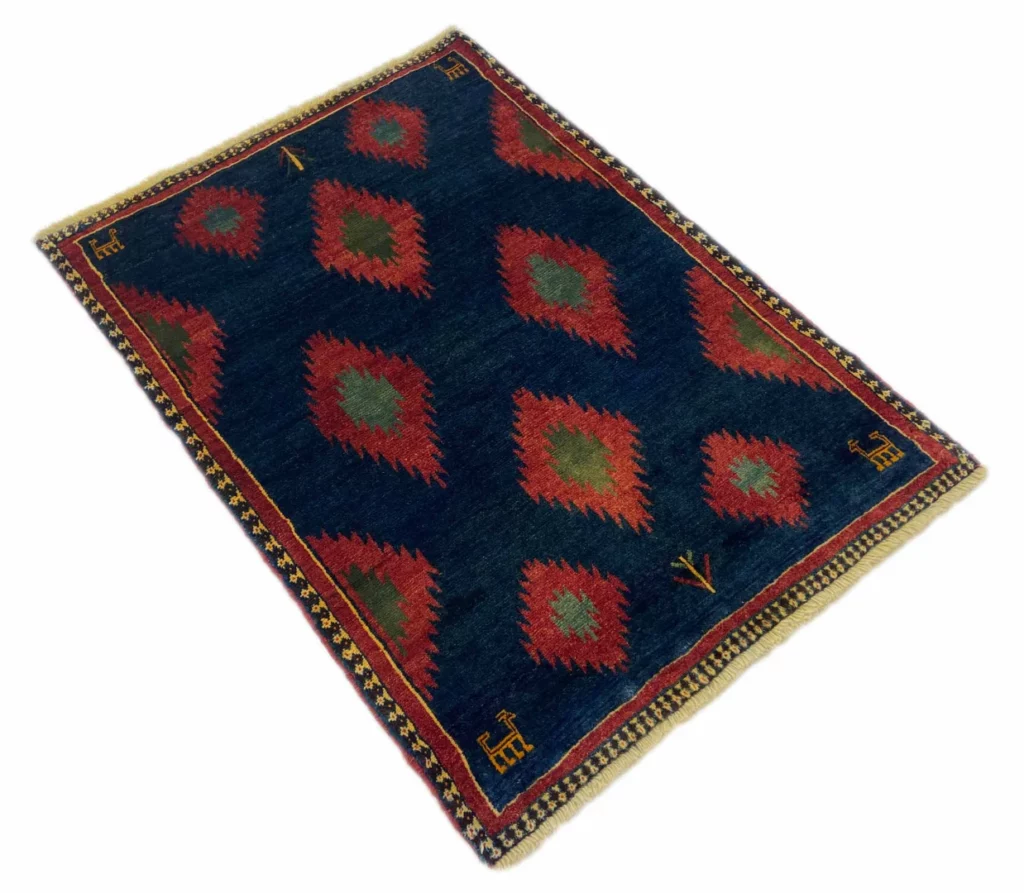
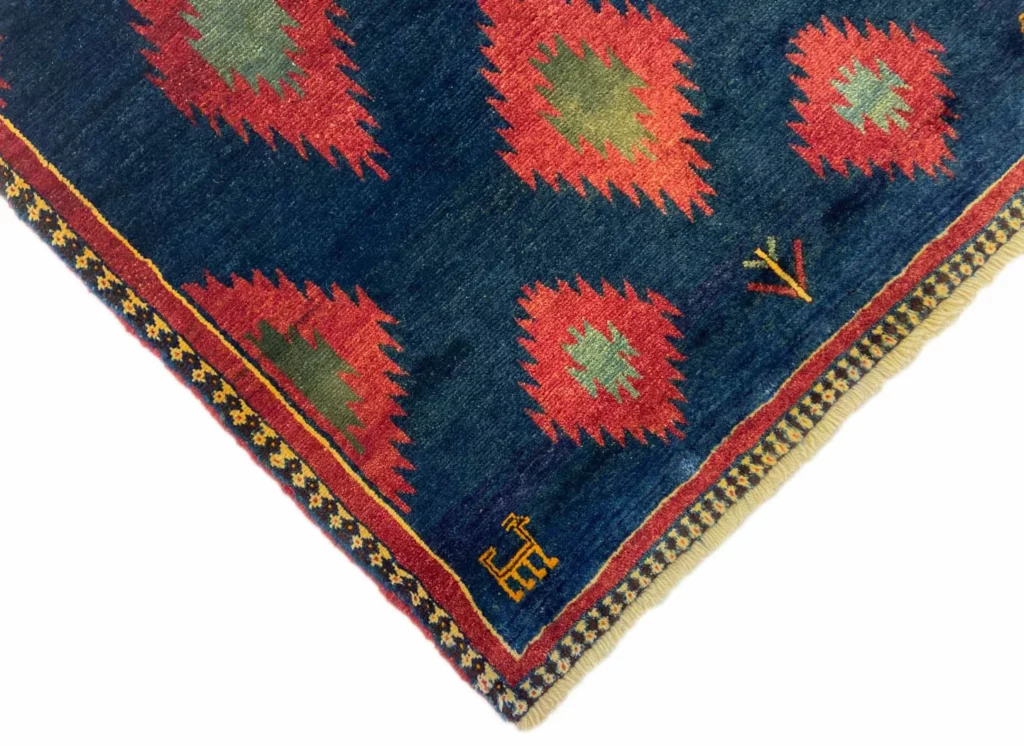
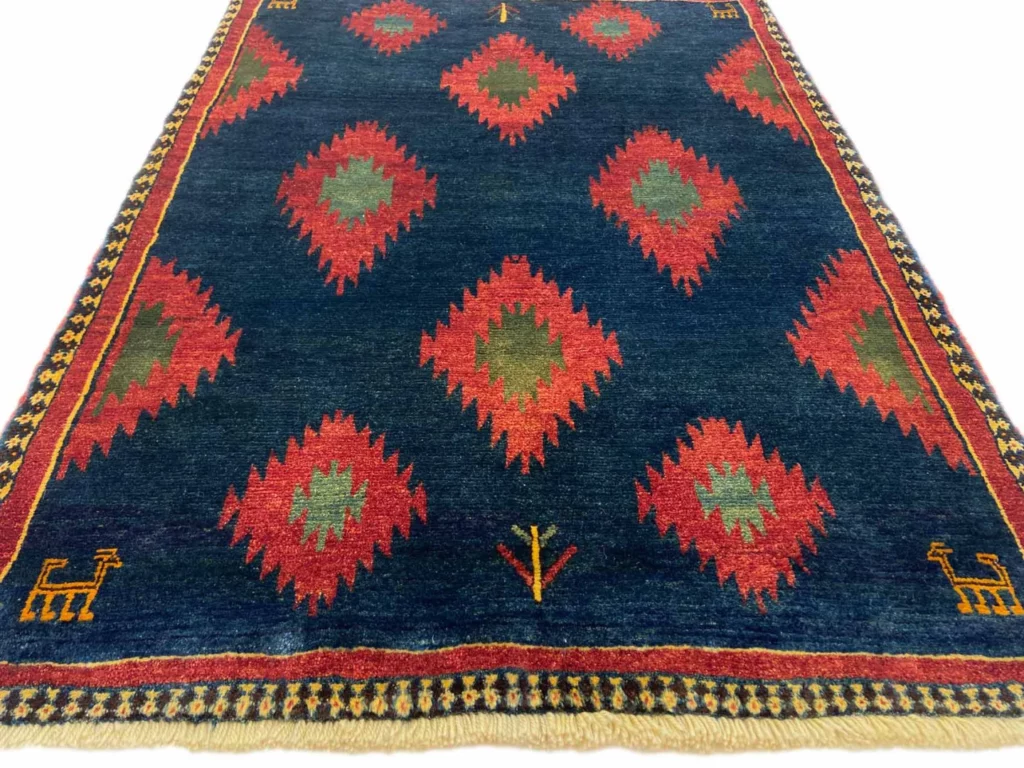
The pattern of this rug is described as freely invented and unconventional. No single medallion, formal border or fixed classical motif is specified. Instead, the design is characterised by imaginative and independent ideas. The Gabbeh – Shuli name is connected with precisely this creative approach to pattern making.
The listed colours are red, beige, grey and brown. Red can establish a strong warm presence within a composition, while beige offers a lighter and quieter counterpoint. Grey can temper the palette and create tonal variation; brown contributes an earthy note that relates naturally to the woollen surface. The source identifies these colours but does not assign each one to a particular motif, field or border.
Freely invented patterning is a central feature of the Shuli expression. It may bring together unexpected forms, irregular groupings and combinations that are not taken from a strict repeat. Unlike a fully regular pattern, a free design does not need to look exactly the same in every direction. The weaver can develop an idea directly on the textile surface, allowing the composition to remain personal and individual.
The surreal quality associated with Gabbeh – Shuli offers a different visual language from highly formal Persian designs. Traditional courtly patterns often rely on a carefully ordered medallion, scrolling vines, balanced borders or axial symmetry. A Shuli design may begin instead with an invented image or an unusual association. This does not mean that it is without structure. Its structure comes from the chosen forms, the spacing between them and the balance of the four named colours.
The lustrous virgin wool contributes to the way the design is seen. A knotted pile does not reflect light like a flat printed sheet: individual fibres and knots create a textured surface with subtle variation. Here, the sheen of the wool works together with red, beige, grey and brown and with the freely conceived imagery. Material and pattern are therefore experienced as one woven and knotted surface rather than as separate decorative layers.
The rug is described as suitable for both larger rooms and smaller living areas, with the living room, bedroom and hallway named as possible settings. These references concern placement and do not prescribe a particular interior style. The pattern remains an individual Gabbeh – Shuli composition. Its unusual designs can be read as decorative forms, imaginative scenes or simply as a distinctive arrangement of colour and line.
The source also mentions Gabbeh – Fars, Tabriz and Nain for comparison. Gabbeh – Fars is likewise associated with Fars and is described through rustic yet elegant designs. Tabriz rugs are often presented as more finely knotted and as having complex patterns and motifs. Nain rugs are associated with classical designs and high-quality materials. These comparisons provide context only; this individual rug is a Gabbeh – Shuli from the Fars region.
Within Persian rug culture, pattern names can point to a region, a design vocabulary or a particular tradition. Careful distinction is therefore important. In this case, the freely invented designs are not evidence of a Tabriz or Nain origin. The stated origin is Fars, and the stated design category is Gabbeh – Shuli. Together, those two descriptions define the rug’s place within the wider Persian carpet landscape.
Special Features
This rug brings together lustrous virgin wool, hand-knotting and an unusually imaginative design language. Its patterns are described as freely invented and unconventional, so the visual character comes from the creativity of the makers rather than from a standard repeated layout. Each Gabbeh – Shuli is an individual work. Red, beige, grey and brown provide the named colour palette for that individual composition.
The rug is new and artfully made. Its knot density is 90.000 – 180.000 knots per square metre, and it comes from the Fars region in southern Persia. The combination of origin, construction, material and Shuli design gives it a clearly defined identity within the Gabbeh tradition. Its format also allows it to be considered for several areas of a home.
Regular vacuuming is recommended as part of its care. If a stain occurs, it should be treated promptly with a damp cloth and a mild cleaning product. Chemical cleaning products should be avoided so that the colours are not damaged. These instructions complement the information about the new condition and the virgin-wool pile.
FAQ
What makes a Gabbeh – Shuli rug distinctive?
Its distinctive feature is the combination of imaginative, freely invented and unconventional designs with lustrous virgin wool. This rug is hand-knotted and made as an individual piece, allowing the creativity of the makers to remain visible. The red, beige, grey and brown palette, the Fars origin and the Shuli design direction together distinguish it from more formally patterned Persian rug types.
How should I care for a Gabbeh – Shuli rug?
Regular vacuuming is recommended to keep the rug clean. Any stain should be treated immediately with a damp cloth and a mild cleaning product. Chemical cleaning agents should not be used, since they may damage the colours. A prompt and gentle approach is therefore the recommended care method for this rug with its lustrous virgin-wool pile.
What sizes are available for Gabbeh – Shuli rugs?
Gabbeh – Shuli rugs are available in different sizes, ranging from small runners to large room rugs. This range makes it possible to choose a format for different areas within a home. The individual rug described here is recorded as a Gabbeh – Shuli measuring 145 x 109 cm.
To provide the best experiences, we use technologies like cookies to store and/or access device information. Consenting to these technologies will allow us to process data such as browsing behavior or unique IDs on this site. Not consenting or withdrawing consent, may adversely affect certain features and functions.
Functional Always active
The technical storage or access is strictly necessary for the legitimate purpose of enabling the use of a specific service explicitly requested by the subscriber or user, or for the sole purpose of carrying out the transmission of a communication over an electronic communications network.
Preferences
The technical storage or access is necessary for the legitimate purpose of storing preferences that are not requested by the subscriber or user.
Statistics
The technical storage or access that is used exclusively for statistical purposes.The technical storage or access that is used exclusively for anonymous statistical purposes. Without a subpoena, voluntary compliance on the part of your Internet Service Provider, or additional records from a third party, information stored or retrieved for this purpose alone cannot usually be used to identify you.
Marketing
The technical storage or access is required to create user profiles to send advertising, or to track the user on a website or across several websites for similar marketing purposes.
 SECURE PAYMENT
 SHIPPING PARTNERS


