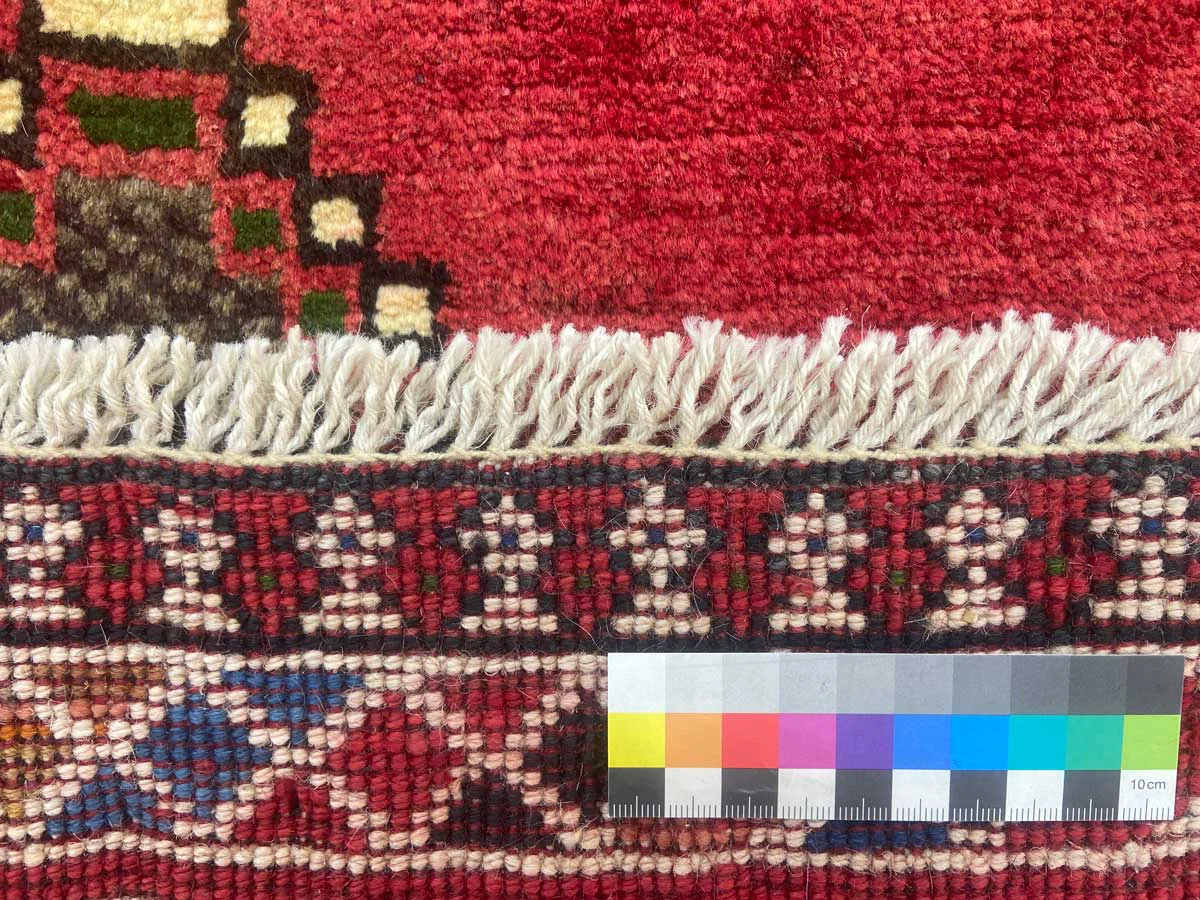
This Gabbeh Shuli is made from high-quality virgin wool. Virgin wool is wool taken from a living sheep and has long been used for textile work. In a hand-knotted rug, yarn is inserted knot by knot into the prepared structure. The visible surface is therefore created through many individual manual actions rather than through an industrially uniform process.
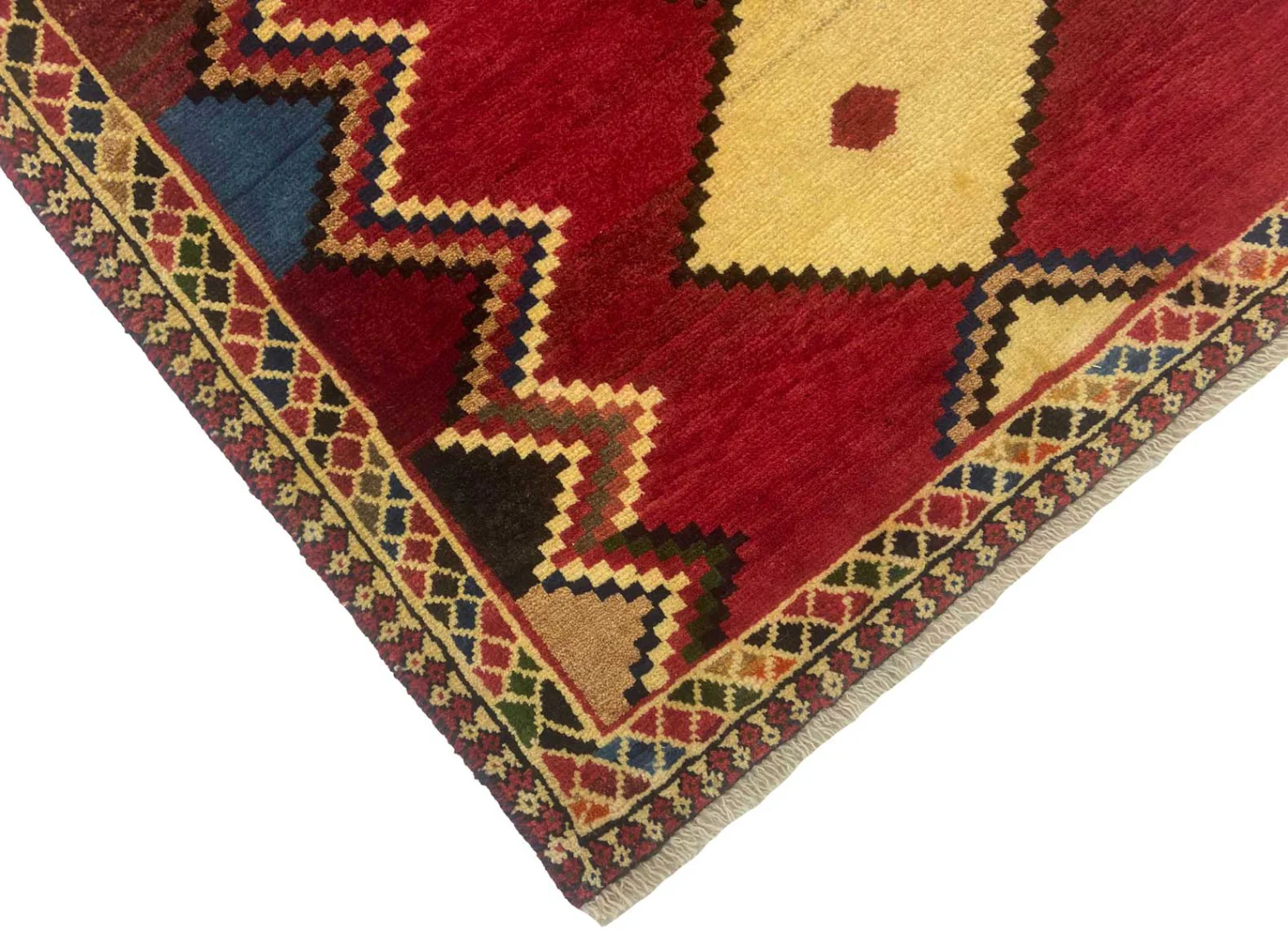
The wool is described as pleasant to the touch, durable and easy to care for. Its robust character makes this type of rug suitable for areas of the home that receive substantial use. The pile forms the surface that can be seen and felt, while the knotting provides the construction that holds the design together. Material and technique are consequently closely linked in the finished textile.
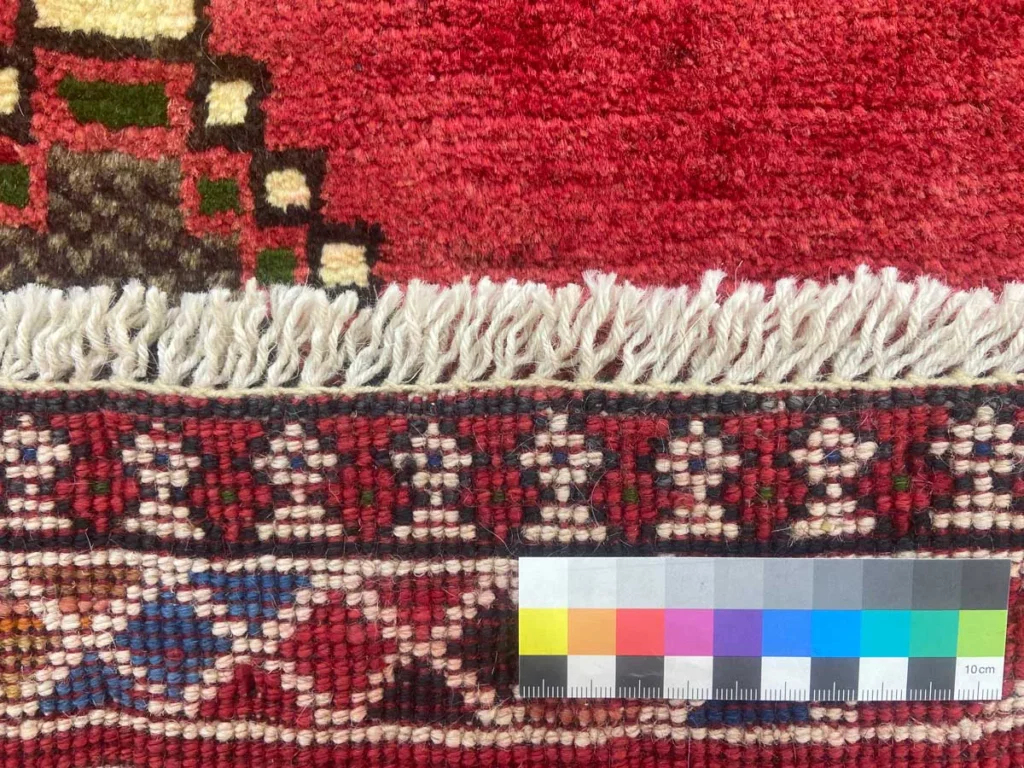
The knot density is between 90,000 and 180,000 knots per square metre. Knot density records how many knots are placed within a defined area and gives an indication of the work involved in constructing the rug. Here it is associated with the quality and craftsmanship invested in each individual Gabbeh Shuli. Every knot is made by hand, so the result is a one-off piece with a manually developed surface.
Gabbeh weaving brings together wool and a traditional knotting method. The weaver must work consistently so that the pile, colour areas and pattern become one continuous composition. In the Shuli variety, the craft is accompanied by a particularly open approach to design. The combination of resilient virgin wool, hand knotting and imaginative patterning forms the material and technical identity of this rug.
Virgin wool also provides a suitable foundation for the expressive colours named for this piece: red, beige, grey and brown. These shades are part of the rug’s described palette, while the hand-knotting gives the pattern a durable place within the pile. The source describes the result as an excellent work of art, joining a functional textile form with an artistic presentation.
Origin and Tradition
This Gabbeh Shuli comes from the Fars region in southern Persia, near the city of Shiraz. Fars has a close connection with Persian rug culture and is known for a distinctive tradition of weaving. The region’s textile heritage combines practical knowledge of wool and knotting with designs that allow the maker’s own sense of form to remain visible. A rug from this tradition is therefore both a useful object and a woven expression of regional craftsmanship.
Hand knotting in Fars depends on a sequence of manual tasks carried out over time. Yarn is prepared, knots are placed, rows are built up and the design gradually takes shape across the surface. Knowledge of these processes belongs to the wider culture of carpet making and is passed through practice. The technique is not separate from the design: the character of the finished rug depends on how the weaver translates forms and colour relationships into knots.
Gabbeh rugs from Fars are associated with a natural, direct visual language. Gabbeh Shuli represents the more expressive direction described in the source. Whereas simpler Gabbeh rugs may rely on restrained designs, Shuli examples are identified by stronger, more individual patterns. The word Shuli here identifies that design character; it does not add a different place of origin to the stated origin in Fars.
The reference to Shiraz places the rug within the cultural setting of southern Persia. Shiraz is a central point of reference for Fars and is associated with a long history of arts and craftsmanship. The regional identity of a Fars rug is not created by its name alone. It is also reflected in the use of natural materials, the continuation of hand-knotting knowledge and the way the colours and forms are assembled into a woven composition.
Fars includes other rug traditions with a comparable relationship between regional identity and handmade production. Gabbeh Fars rugs are also known for creative designs and strong colours. Their layouts are often simpler, with an emphasis on natural materials and traditional knotting methods. This variety within one region shows that Fars weaving is not limited to a single visual formula, but includes several related approaches to pattern and construction.
Kerman is another well-known centre of Persian rug production. Kerman rugs are frequently associated with floral motifs and complex designs, giving them an aesthetic different from Gabbeh Shuli. The comparison illustrates the range of Persian weaving traditions. Different places develop their own pattern languages, yet careful handwork and the importance of inherited craft knowledge connect them within the broader history of Persian carpets.
The rug offered here belongs to the Gabbeh Shuli tradition through its named type and its Fars origin. Its regional setting is Fars in southern Persia near Shiraz. That setting provides the cultural context for the use of virgin wool, traditional knotting and imaginative design. The result is a hand-knotted Persian rug with a clearly stated regional background and a pattern language that gives the maker’s creative contribution a visible role.
Design and Pattern
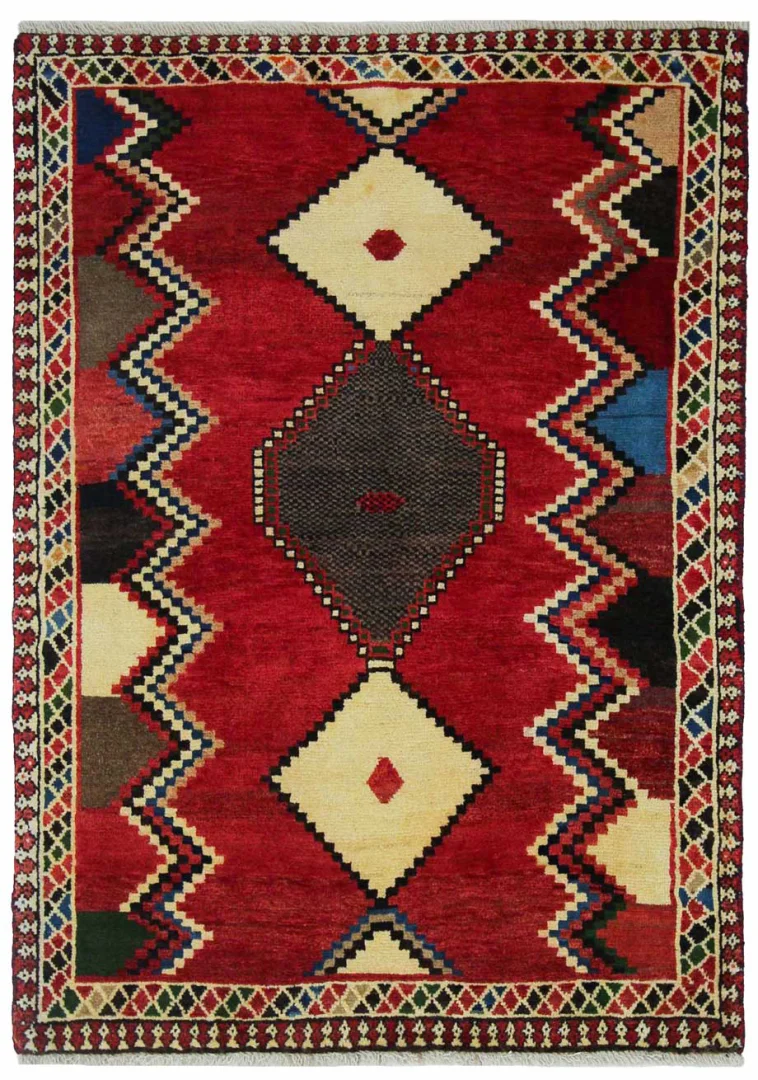
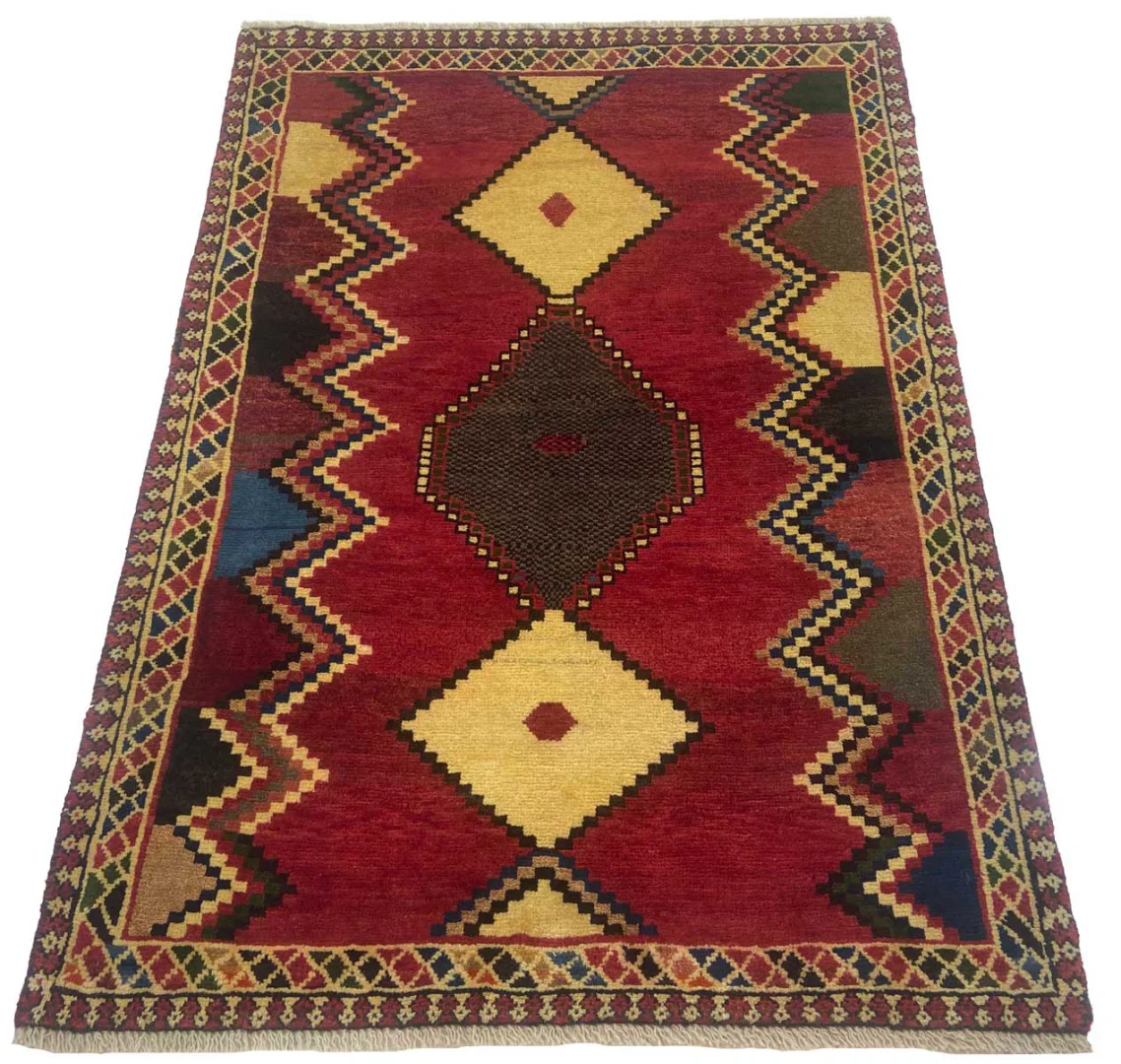
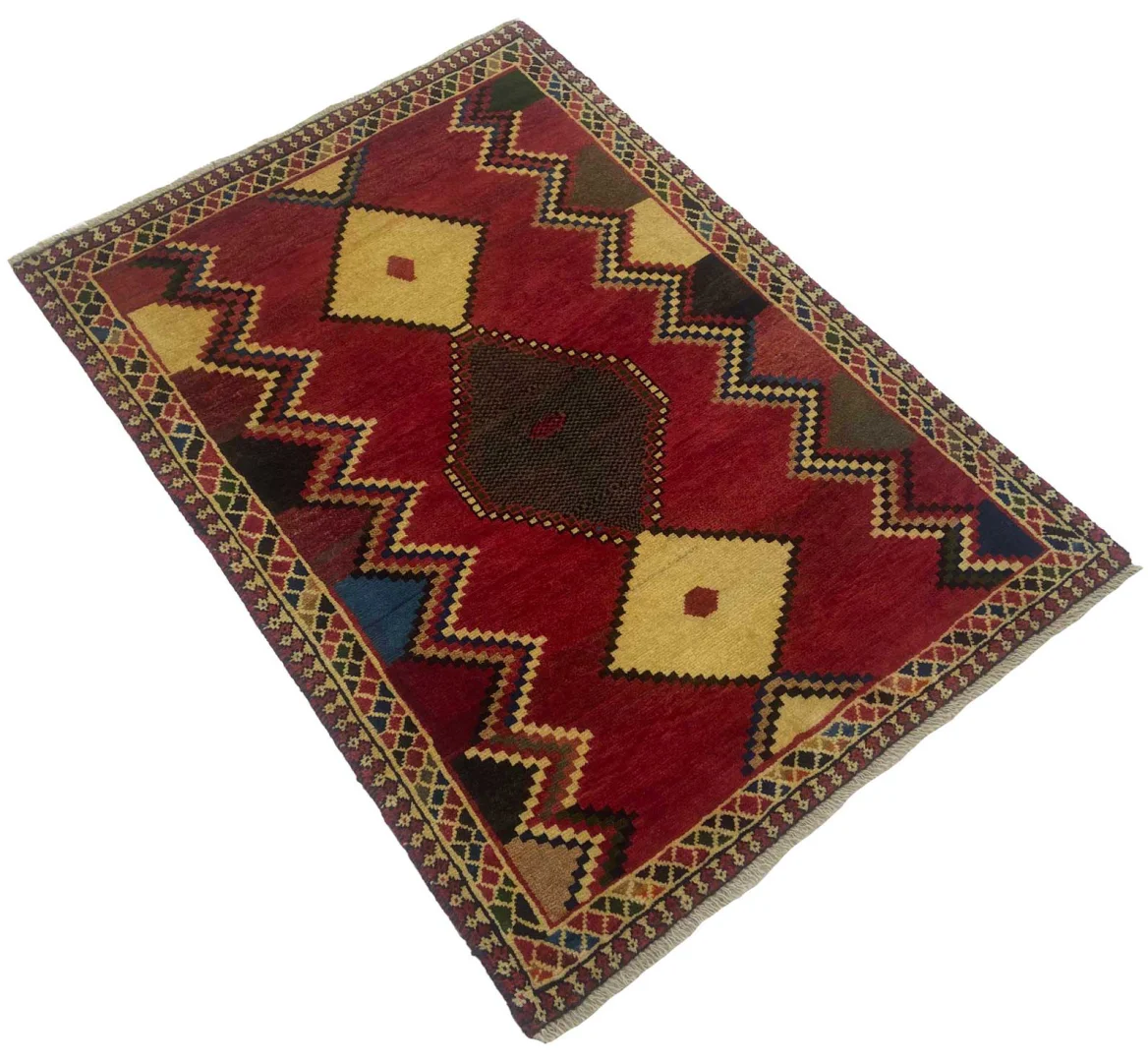
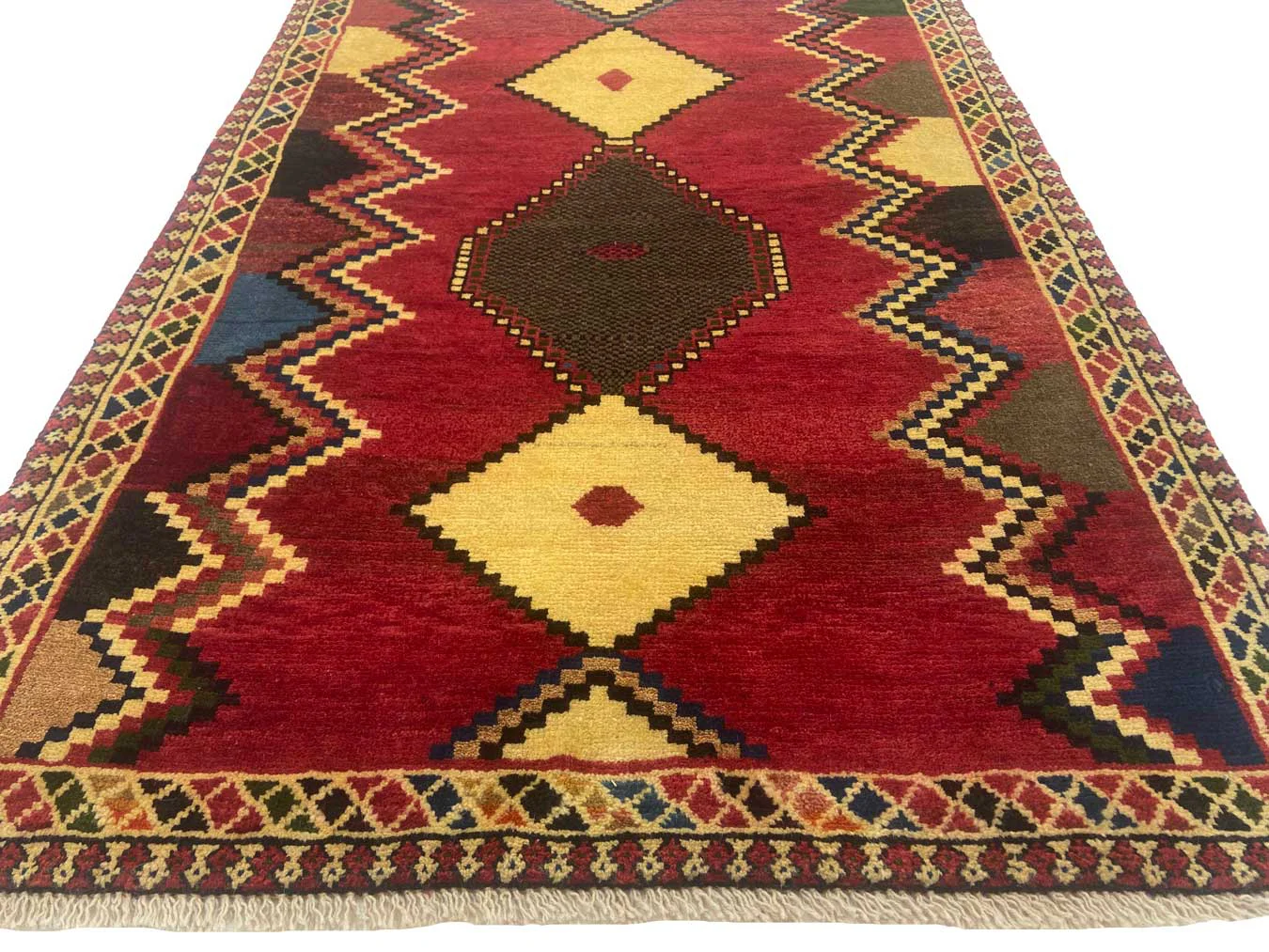
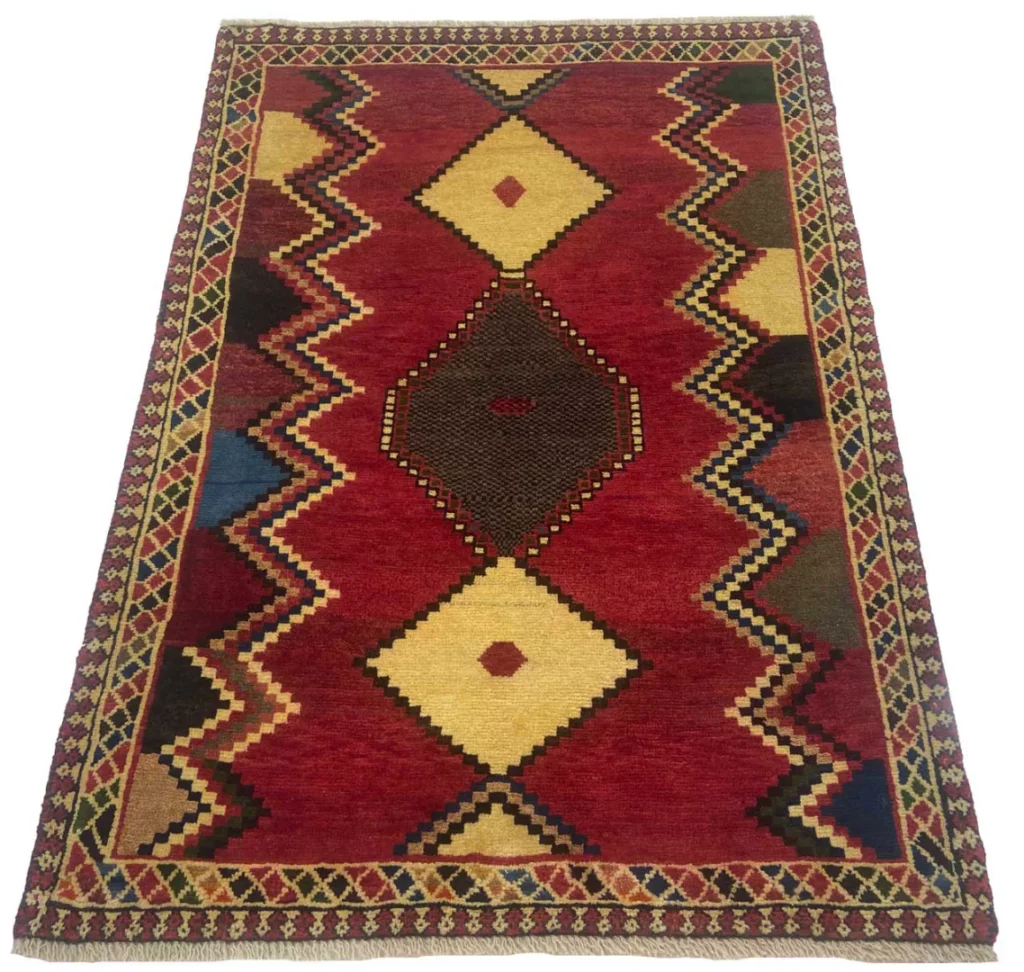
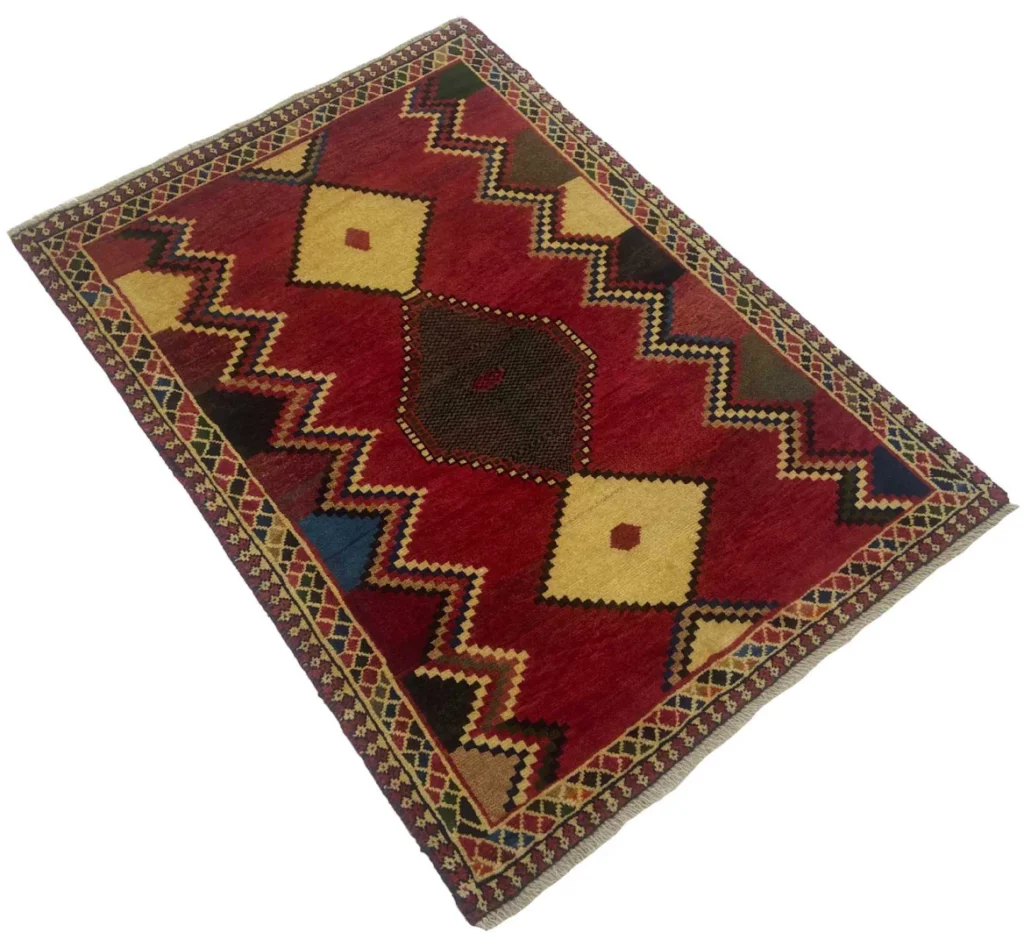
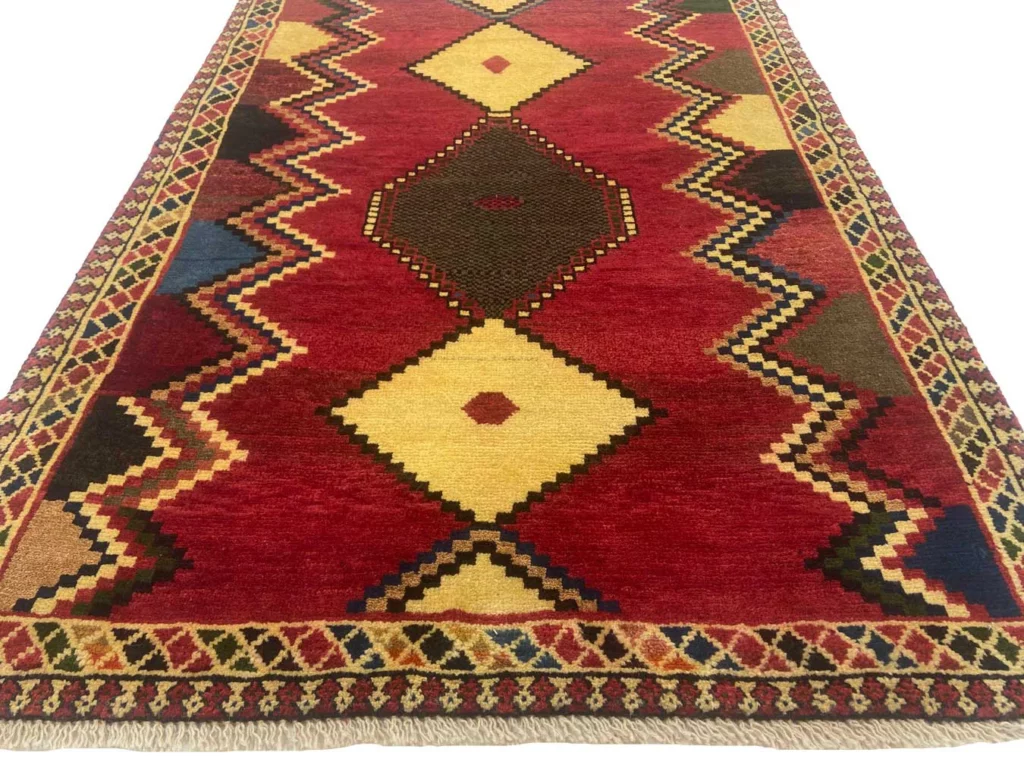
The design of this Gabbeh Shuli is described as free and imaginative. Instead of depending on a strictly repeated ornamental arrangement, the composition allows room for individual invention. Shuli rugs are characterised in the source by creative designs that reflect the weavers’ imagination. The pattern is therefore not merely a technical decoration added after construction; it is developed as part of the act of turning an idea into a woven surface.
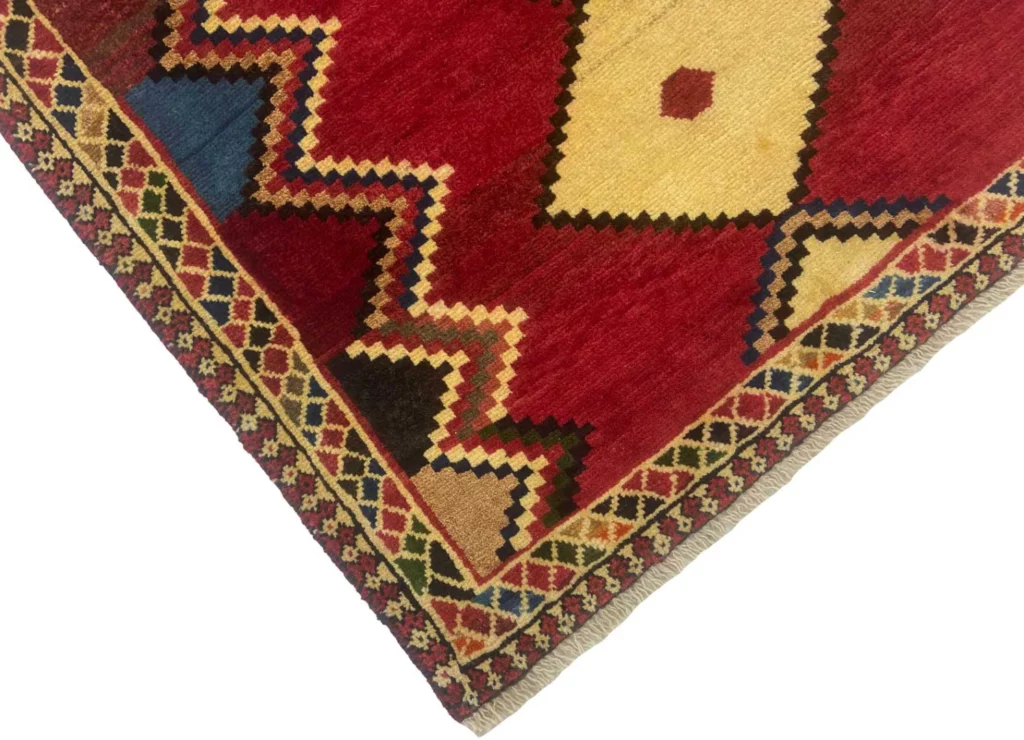
Expressive geometric forms and stylised representations of nature are named among the typical design elements of this variety. Geometric features may appear as defined areas, lines, angles or simplified figures. Nature motifs are not presented as realistic illustrations. They are reduced and stylised, with their final appearance shaped by the weaver’s handling of form, scale and colour. This gives the imagery a decorative quality while leaving room for individual interpretation.
The stated colour range consists of red, beige, grey and brown. Red provides a warm and noticeable presence. Beige introduces a light, quiet counterpoint, while grey adds a restrained neutral shade. Brown reinforces the warmer side of the palette. Together, these colours are described as harmonious and welcoming. Their effect comes from the relationship between the shades across the entire pattern rather than from any one colour in isolation.
Free Gabbeh designs differ from a strictly programmed repeat pattern. In a regular repeat, one ornament is reproduced at fixed intervals. A Shuli composition can instead be organised around individual figures, changing intervals and simplified shapes. This openness does not mean that the design lacks structure. The forms and colour fields are still balanced across the rug so that the result reads as a unified image.
The visual character rests on three connected elements. First, hand knotting fixes the pattern into the pile through a durable textile process. Second, the pattern language combines geometry with stylised nature imagery. Third, the red, beige, grey and brown palette establishes the colour relationships. Taken together, these elements account for the unusual, free and imaginative designs described for Gabbeh Shuli rugs.
Gabbeh Shuli occupies a space between practical rug and woven artwork. Its patterns can serve as a decorative focus within a room while remaining part of a functional floor textile. The design can stand out without requiring a particular interior style. Its open forms allow the rug to be read as an independent composition and also as a visual addition to existing furnishings.
The role of the weaver is especially clear in this design approach. The imagination of the makers is identified as a source of the patterns, giving each Shuli composition a personal dimension. Geometric figures and nature references become simplified signs rather than literal pictures. Their meaning and effect emerge from their position within the larger colour field and from the way the handmade knotting gives them a tangible surface.
The pattern tradition also explains why two Gabbeh Shuli rugs can share a general character without having identical compositions. The shared features are the open design approach, expressive forms, stylised natural imagery and the use of strong, warm colours. Within that framework, the arrangement of forms is created through the making process. This balance between a recognisable tradition and individual expression is central to the visual identity described for the Shuli type.
Special Features
This rug combines the Gabbeh Shuli designation with an origin in Fars and a freely imagined pattern language. It is described as an excellent work of art. That description highlights its artistic character within the group of hand-knotted rugs while leaving its practical function intact. Durable virgin wool and traditional knotting connect the decorative quality with everyday textile use.
The colour palette of red, beige, grey and brown is clearly stated, as are the expressive and imaginative designs. These characteristics distinguish the rug from simpler Gabbeh compositions. Its hand craftsmanship is also reflected in the stated knot density and in the use of virgin wool. Together, the material, technique, regional origin and design create a one-off Gabbeh Shuli with its own visual identity.
The wool is described as pleasant, long-lasting and easy to care for, making the rug suitable for more heavily used areas of the home. Its significance is not limited to resilience. The open patterning, the combination of warm and neutral colours and its connection with Fars weaving traditions are equally important. These features meet in a hand-knotted Persian rug that is both functional and artistically defined.
FAQ
What makes a Gabbeh Shuli rug distinctive?
Its distinctive quality comes from free, imaginative designs that reflect the makers’ creativity. Expressive geometric shapes and stylised nature imagery set the Shuli variety apart from simpler Gabbeh rugs. The named colours are red, beige, grey and brown, arranged in a harmonious combination. This rug is made from high-quality virgin wool, is hand-knotted and has a knot density between 90,000 and 180,000 knots per square metre. It is described as an excellent work of art.
Where are Gabbeh Shuli rugs made?
Gabbeh Shuli rugs are made in the Fars region of southern Persia, near the city of Shiraz. Fars is known for traditional carpet-knotting and for the use of natural materials. Its weaving culture combines practical knowledge of wool and knotting with distinctive regional design traditions. Within that setting, Shuli rugs are recognised for their freer and more imaginative patterns. Fars is the stated regional origin of this rug type.
Which colours are typical of Gabbeh Shuli rugs?
The typical colours named for Gabbeh Shuli rugs are red, beige, grey and brown. Red and brown provide warm tones, while beige and grey add quieter shades to the composition. Used together, they are described as harmonious and welcoming. In Shuli designs, this palette appears alongside free, imaginative patterns, geometric forms and stylised representations of nature. The colours therefore support the expressive yet balanced visual language of the type.
To provide the best experiences, we use technologies like cookies to store and/or access device information. Consenting to these technologies will allow us to process data such as browsing behavior or unique IDs on this site. Not consenting or withdrawing consent, may adversely affect certain features and functions.
Functional Always active
The technical storage or access is strictly necessary for the legitimate purpose of enabling the use of a specific service explicitly requested by the subscriber or user, or for the sole purpose of carrying out the transmission of a communication over an electronic communications network.
Preferences
The technical storage or access is necessary for the legitimate purpose of storing preferences that are not requested by the subscriber or user.
Statistics
The technical storage or access that is used exclusively for statistical purposes.The technical storage or access that is used exclusively for anonymous statistical purposes. Without a subpoena, voluntary compliance on the part of your Internet Service Provider, or additional records from a third party, information stored or retrieved for this purpose alone cannot usually be used to identify you.
Marketing
The technical storage or access is required to create user profiles to send advertising, or to track the user on a website or across several websites for similar marketing purposes.
 SECURE PAYMENT
 SHIPPING PARTNERS


