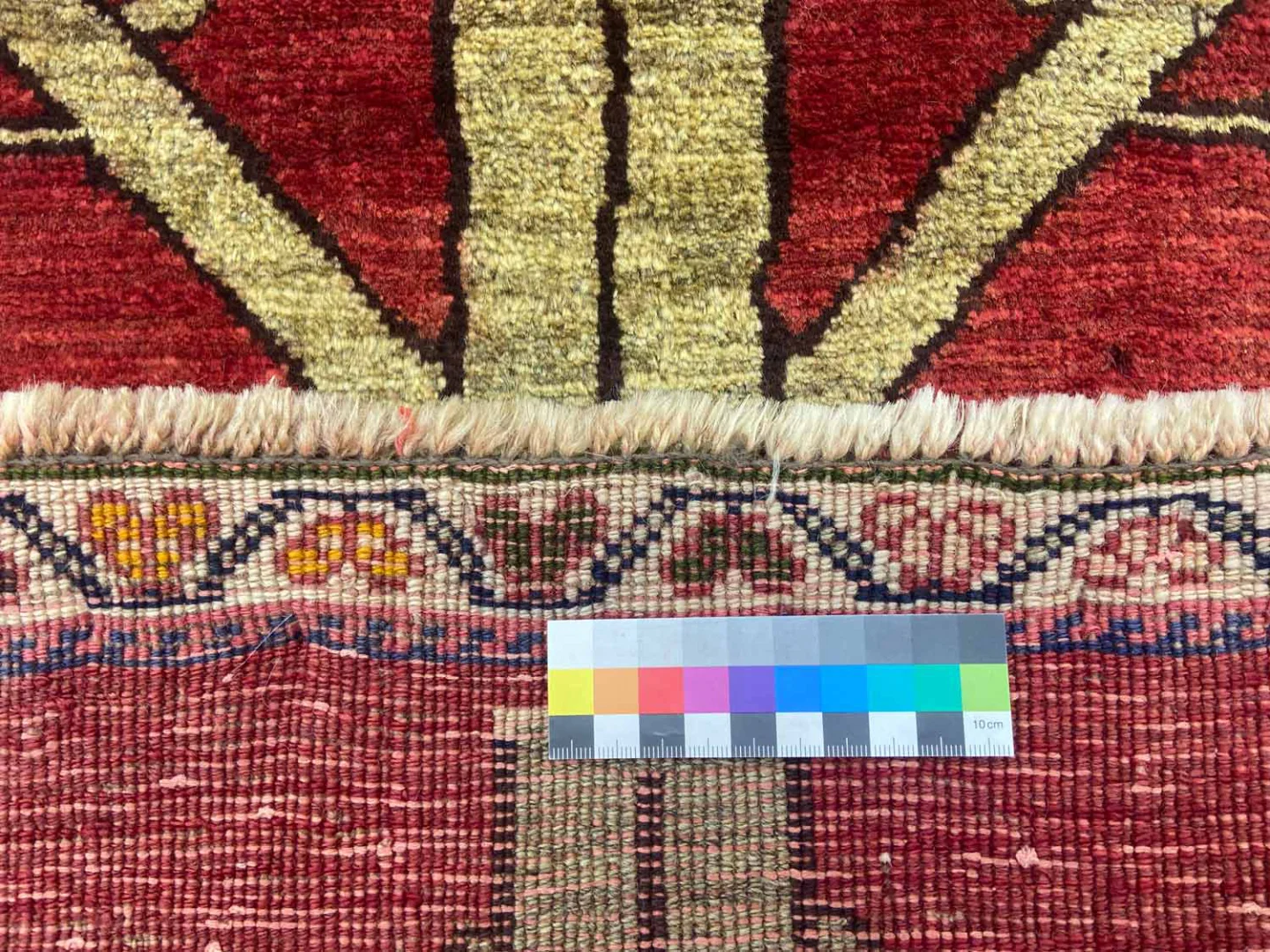
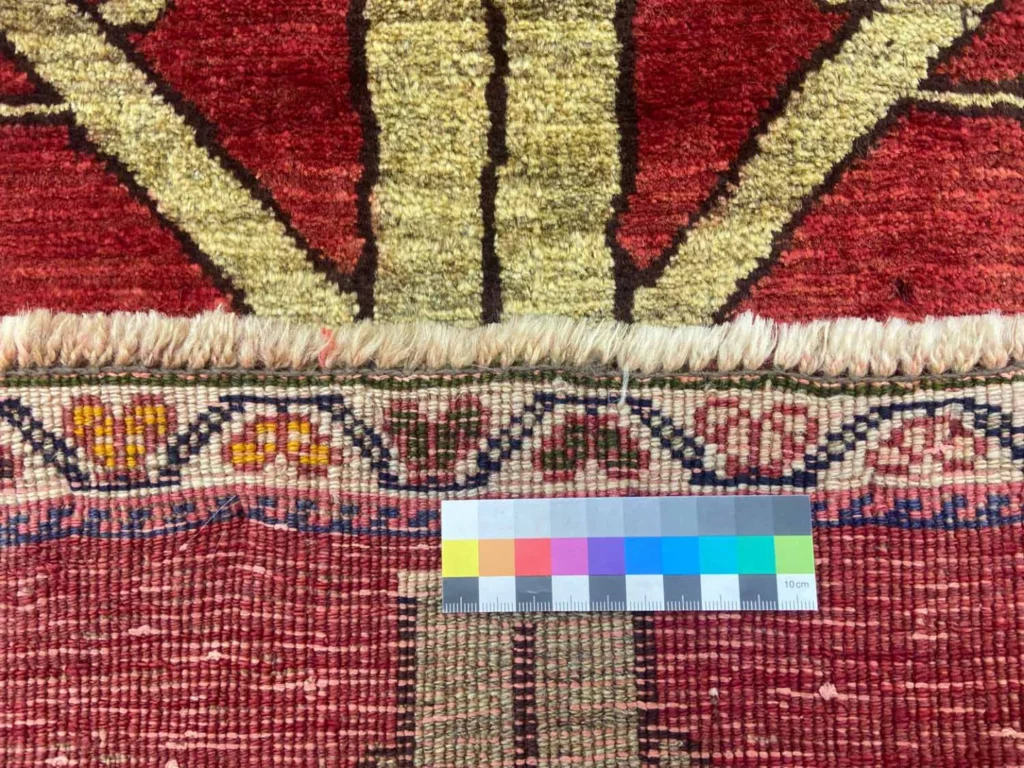
This Gabbeh Shuli is hand-knotted and made from shiny virgin wool. Its production follows a traditional form of rug making in which the pile is built knot by knot according to the intended design. The rug uses virgin wool as its pile material. This wool has a soft feel and brings natural warmth to the surface. It is also valued for durability and resilience, giving the Gabbeh Shuli a practical quality alongside its visual character.
The knot density of this rug ranges from 90.000 to 180.000 knots per square metre. This level of density supports a differentiated rendering of the imaginative design and helps individual shapes appear clearly. The lustrous quality of the virgin wool gives the colours a lively presence. Red, beige, grey and brown form the stated colour palette and create a warm, balanced overall effect.
A hand-knotted rug is not produced through a completely predetermined machine process. The knotter works through the structure step by step, building the pile while the pattern develops. In this Gabbeh Shuli, that manual process is combined with an expressive design. Virgin wool, hand knotting and the stated knot density are the central technical features of this particular rug.
Origin and Tradition
The Gabbeh Shuli comes from the Fars region in southern Persia, near the well-known city of Shiraz. Fars is one of the recognised areas of Persian rug making. Its textile tradition includes hand-knotted rugs in which wool, strong colour and an individual visual language play important roles. Gabbeh is associated with the rural and nomadic weaving traditions of Persia and is known as a distinct type of hand-knotted rug.
Gabbeh rugs are traditionally linked with direct, clearly readable forms. Their designs may range from simple fields and geometric signs to more freely imagined scenes. The Shuli form represents a more varied and visually rich expression within that tradition. It retains the connection to regional handwork while allowing the weaver’s creative approach to become more visible in the finished composition.
The area around Shiraz represents an important cultural setting in southern Persia. Different textile practices, approaches to colour and ideas about pattern exist within this wider region. Regional rugs are not necessarily made from one rigid template; individual weavers can give the same rug type a distinctive arrangement. This explains why Gabbeh Shuli rugs may differ in their visual details while remaining connected to Fars.
Persian rug making brings together knowledge of materials, practical experience and sustained manual work. Wool is prepared and coloured before it is incorporated into the rug structure, while the design takes shape during the knotting process. With a hand-knotted Gabbeh Shuli, making the rug is therefore both a technical task and a form of visual expression. The weaver’s imagination can be seen in the choice of colours, the placement of forms and the treatment of individual motifs.
Fars is also associated with other rug types, including Gabbeh Fars, which are generally somewhat simpler while still representing Persian craftsmanship. In the broader Persian rug tradition, Kashan is known for fine silk rugs, often decorated with complex floral motifs and elaborate designs. Tabriz is another recognised rug type, noted for detailed patterns and high knot density. These examples help place the Gabbeh Shuli in the wider Persian tradition, but they are not the origin designation of this rug.
Design and Pattern
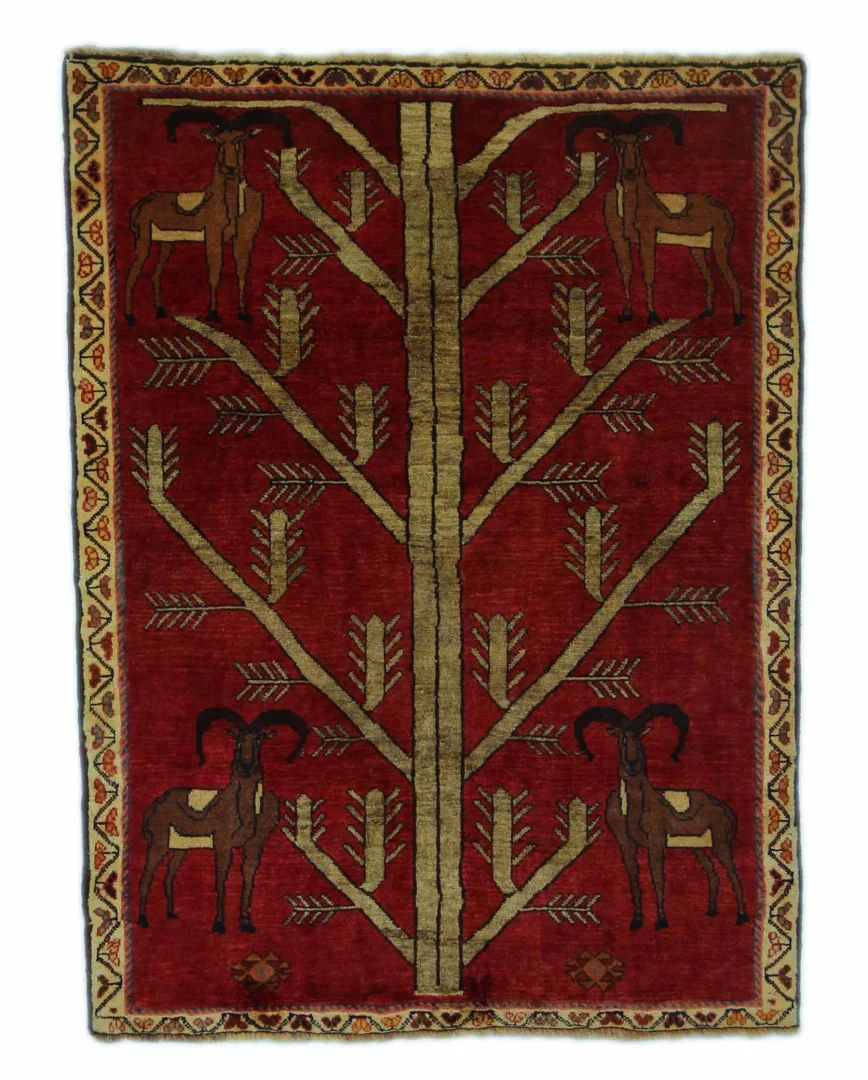
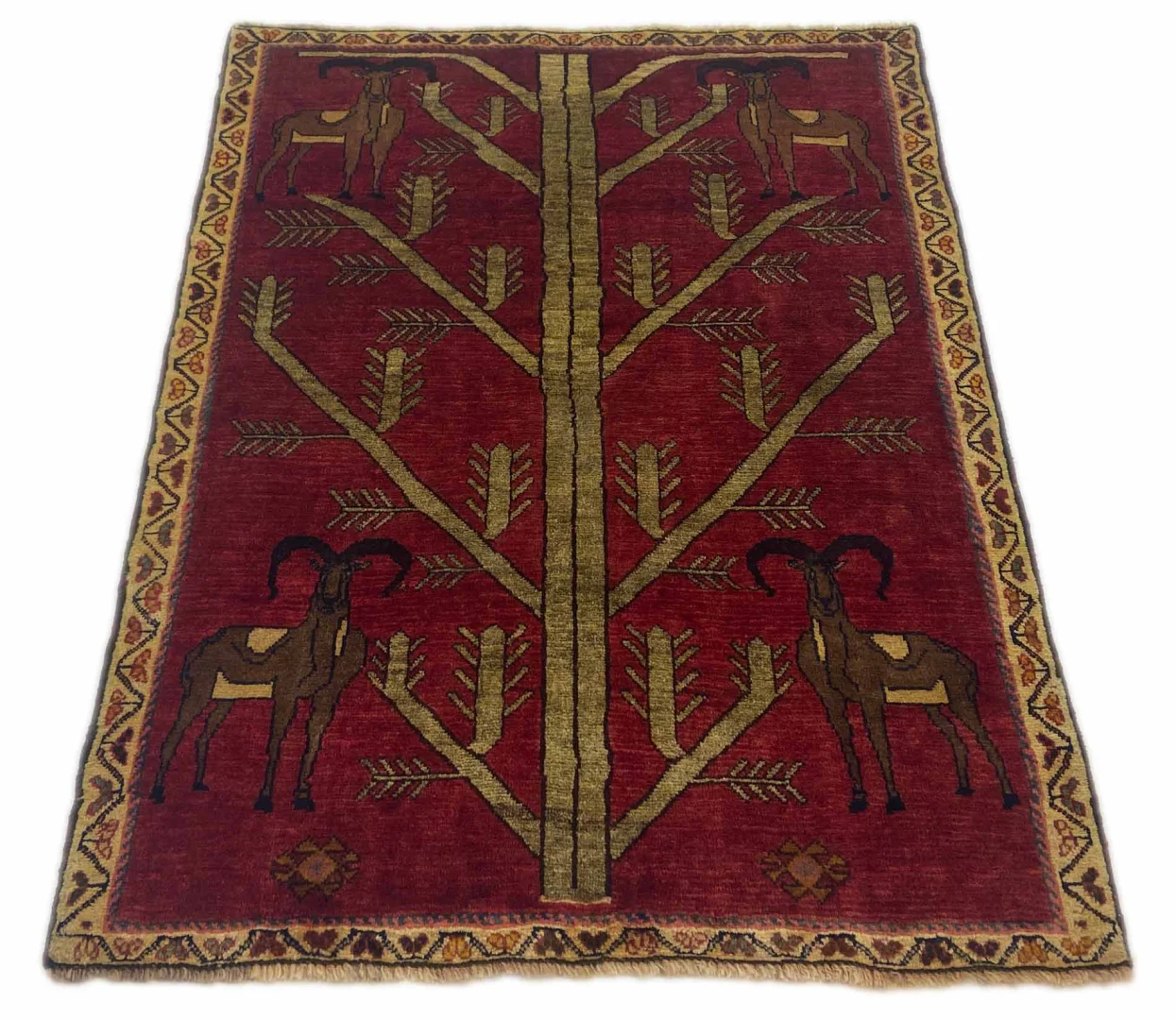
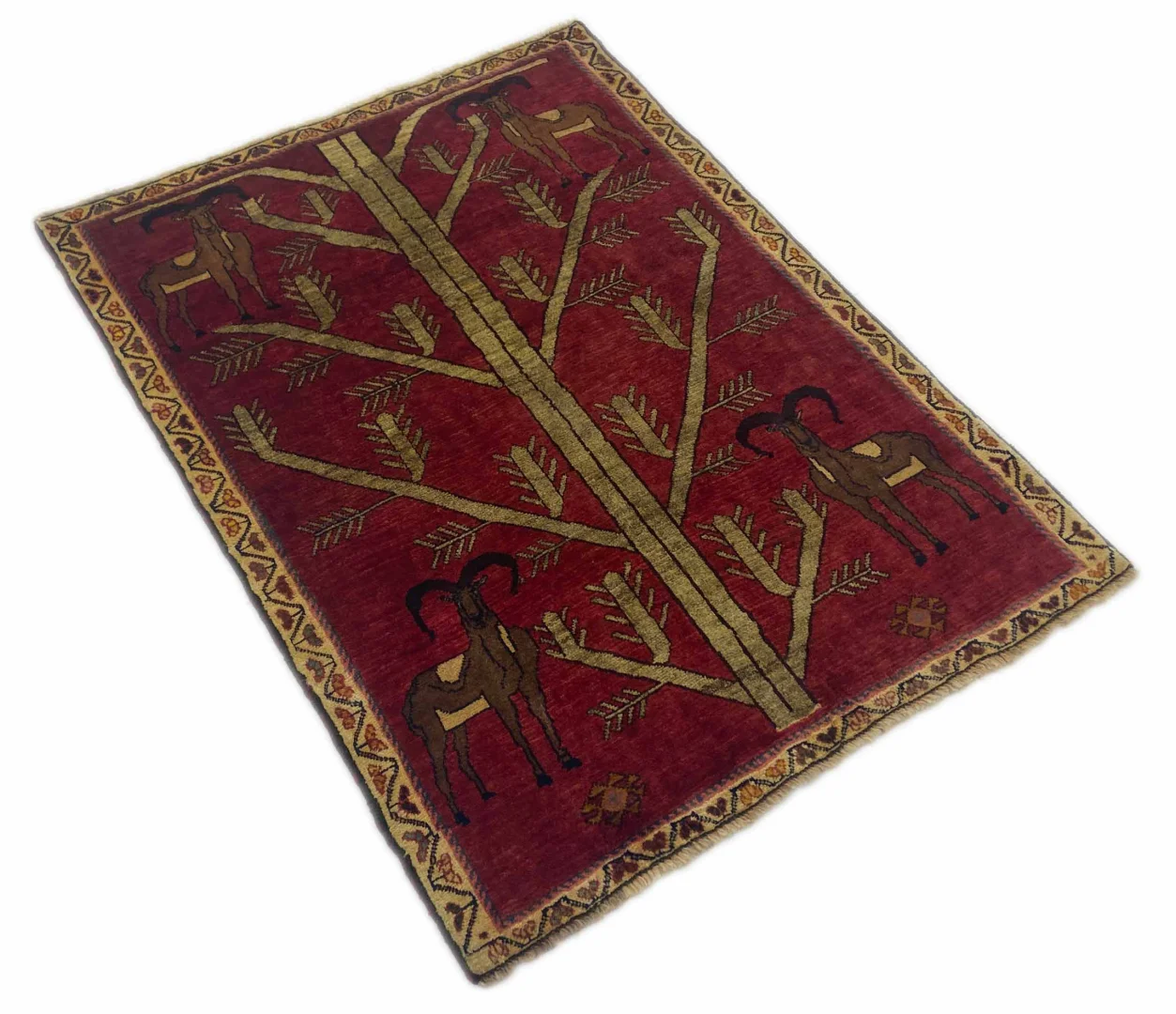
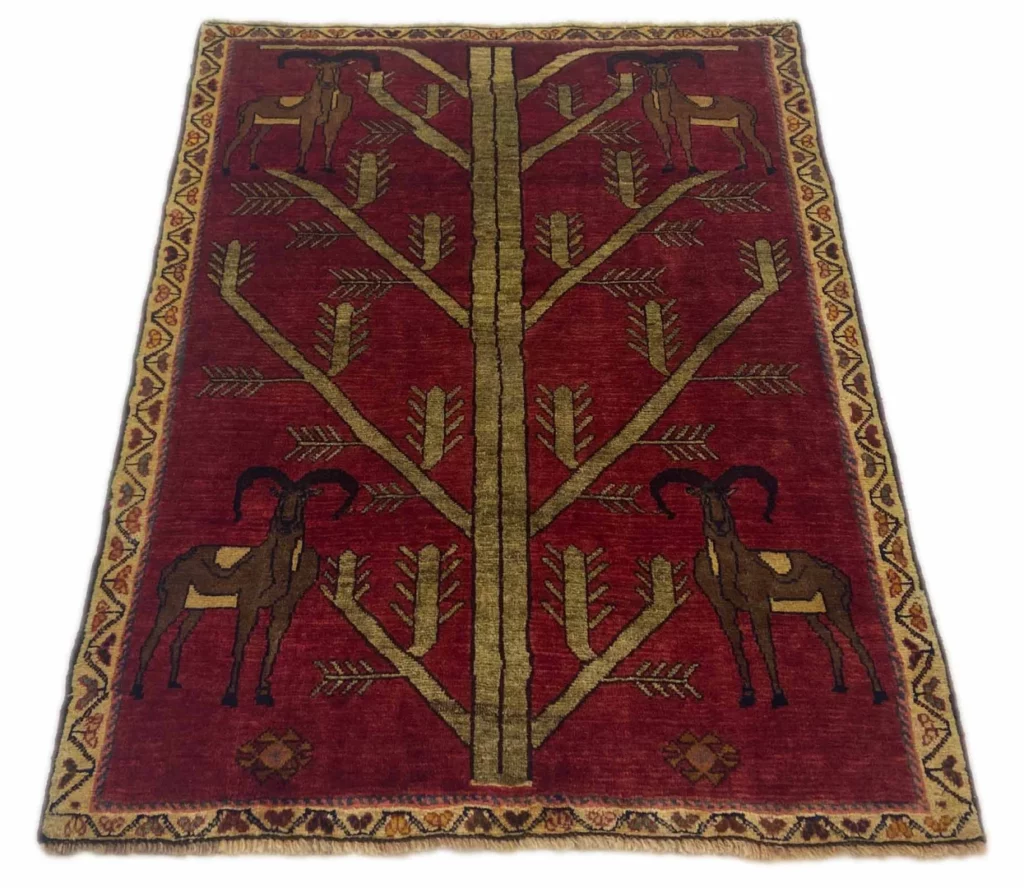
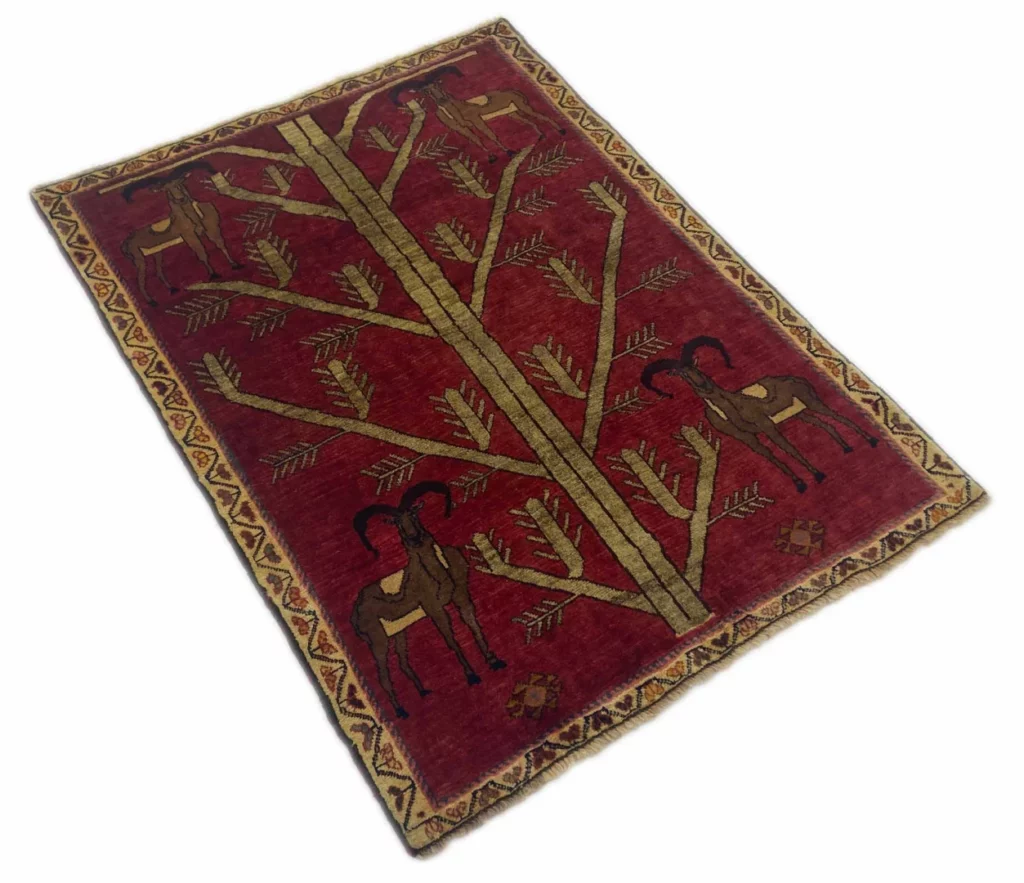
The design of this Gabbeh Shuli is described as unusual and imaginative. Rather than relying on a restrained, uniform field, it presents a varied composition with a distinct creative character. Geometric shapes may appear alongside abstract elements. This combination gives the rug its individual visual language and separates it from more simply designed Gabbeh versions.
The stated colours are red, beige, grey and brown. Red provides a strong accent, while beige introduces a light and quiet ground. Grey adds a subdued note and brown brings an earthy tone. Together, these colours create a warm and inviting atmosphere. Their effect comes from the relationship between the shades across the design, rather than from one colour acting alone.
Geometric forms give a composition structure and rhythm. Abstract designs, by contrast, leave more room for personal interpretation. A Gabbeh Shuli can bring these two approaches together. Lines, fields and signs become part of a composition that does not depend solely on a naturalistic image. The result reflects the imagination and creativity of the knotters, as described for this rug type.
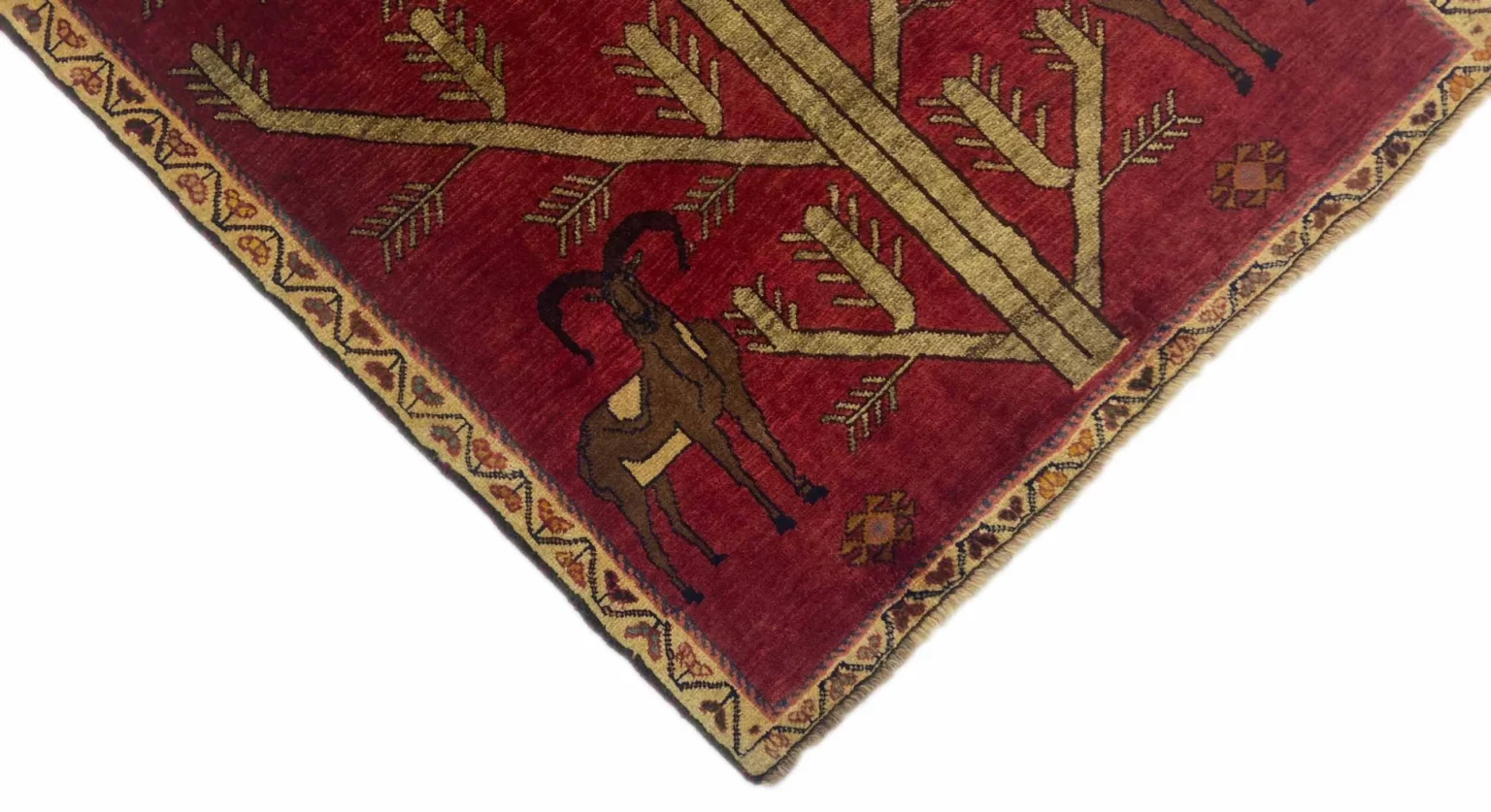
Unlike a strictly repeated pattern, an imaginative Gabbeh design can connect different visual elements in a less uniform arrangement. The eye can follow changing shapes and transitions between colours. The high knot density helps the details remain differentiated while the hand-knotted construction remains visible as the basis of the rug. The sheen of the virgin wool also gives the colours changing nuances as light moves across the pile.
A Gabbeh Shuli can be used in a living room or bedroom and can function there as an independent design element. Its palette can be combined with warm natural tones as well as neutral furnishings. The pattern is not limited to one single decorating style. Since each version has its own arrangement of forms and colours, the rug presents an individual composition within the Gabbeh tradition and carries its own visual narrative.
Special Features
This rug is new and high quality. It has a pile of shiny virgin wool and was entirely hand-knotted. Its knot density is 90.000 to 180.000 knots per square metre. As a Gabbeh Shuli, it combines its Fars origin with unusual and imaginative designs. The colours specified for it are red, beige, grey and brown.
The virgin wool provides a soft handle, natural warmth, durability and resilience. These qualities make the rug suitable for living rooms or bedrooms. Its manual construction and richly coloured design give it a distinct position within the Gabbeh tradition, while the stated knot density supports the detailed appearance of its pattern.
FAQ
How should I care for my Gabbeh Shuli rug?
Regular vacuuming is recommended as part of the rug’s care. If cleaning is required, the Gabbeh Shuli should be professionally cleaned. Direct sunlight should be avoided so that the red, beige, grey and brown colours do not fade. Careful, consistent maintenance helps preserve the surface of the shiny virgin wool and the appearance of the imaginative design over time.
Where does the Gabbeh Shuli rug come from?
The Gabbeh Shuli comes from the Fars region in southern Persia, near the city of Shiraz. It belongs to the Persian tradition of hand-knotted Gabbeh rugs. Its imaginative patterns and lively colours are key characteristics of this version. The Fars origin should be distinguished from pattern names or references associated with other Persian rug types.
Are Gabbeh Shuli rugs suitable for underfloor heating?
Yes, Gabbeh Shuli rugs are suitable for rooms with underfloor heating. They are made from wool, which provides good thermal insulation. The natural warmth of virgin wool complements this property. The rug can therefore be used in a room with underfloor heating without the heat source fundamentally affecting its suitability.
To provide the best experiences, we use technologies like cookies to store and/or access device information. Consenting to these technologies will allow us to process data such as browsing behavior or unique IDs on this site. Not consenting or withdrawing consent, may adversely affect certain features and functions.
Functional Always active
The technical storage or access is strictly necessary for the legitimate purpose of enabling the use of a specific service explicitly requested by the subscriber or user, or for the sole purpose of carrying out the transmission of a communication over an electronic communications network.
Preferences
The technical storage or access is necessary for the legitimate purpose of storing preferences that are not requested by the subscriber or user.
Statistics
The technical storage or access that is used exclusively for statistical purposes.The technical storage or access that is used exclusively for anonymous statistical purposes. Without a subpoena, voluntary compliance on the part of your Internet Service Provider, or additional records from a third party, information stored or retrieved for this purpose alone cannot usually be used to identify you.
Marketing
The technical storage or access is required to create user profiles to send advertising, or to track the user on a website or across several websites for similar marketing purposes.
 SECURE PAYMENT
 SHIPPING PARTNERS


