Persian Rug Fars Gabbeh 187 x 84 cm Virgin Wool Hand-knotted
€ 746
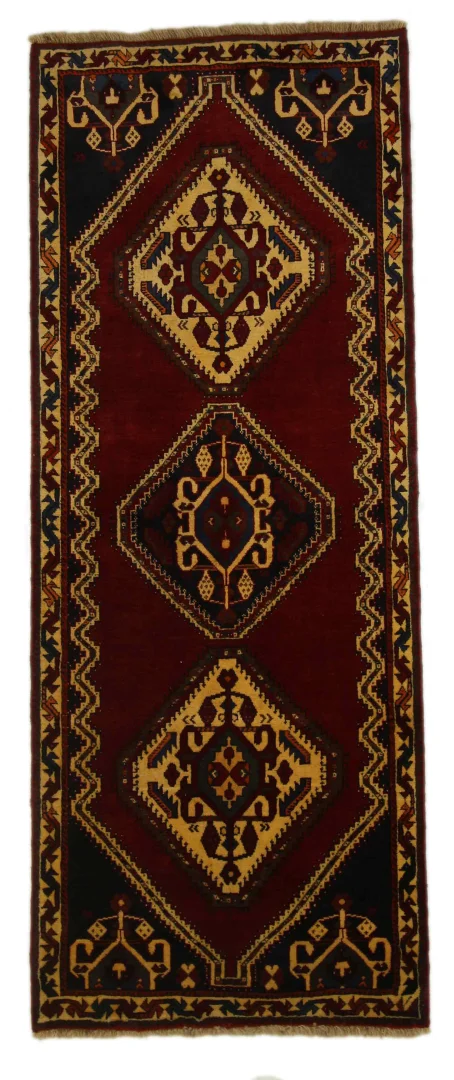
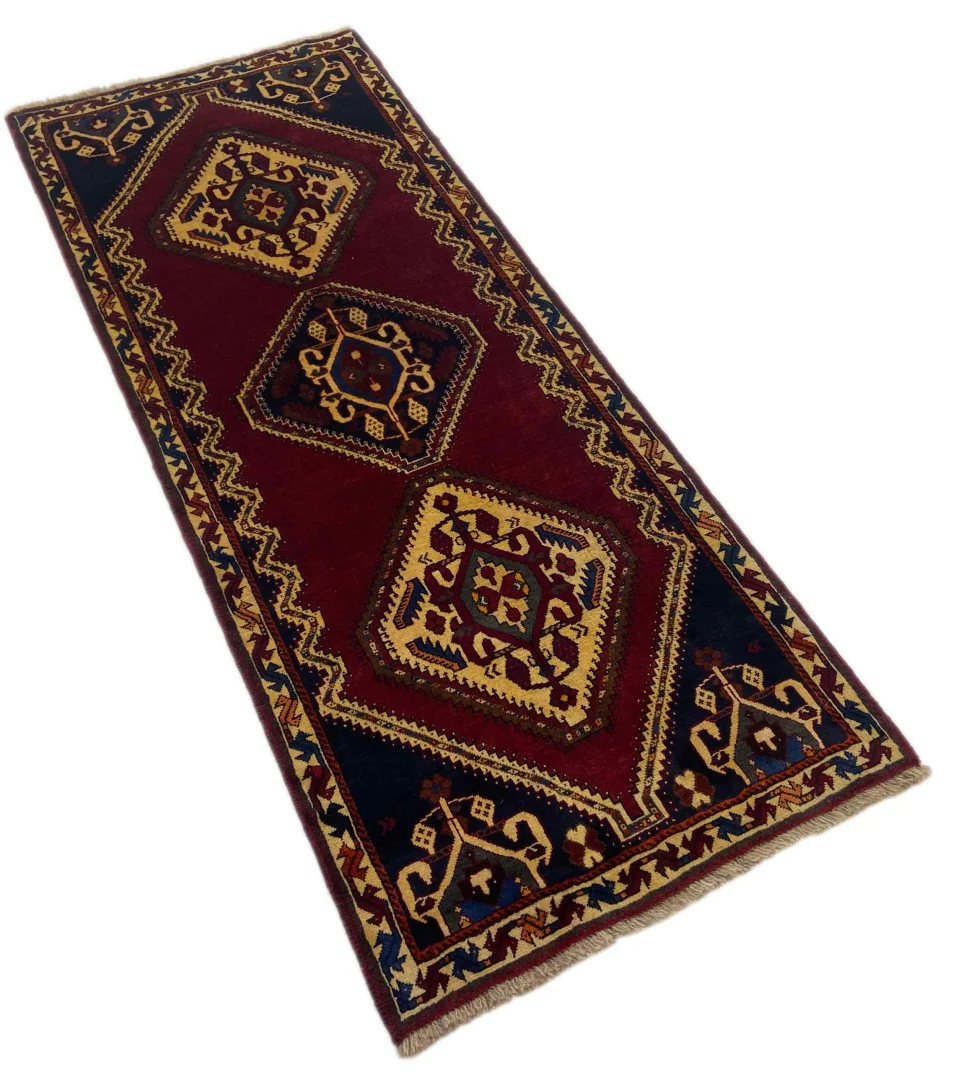
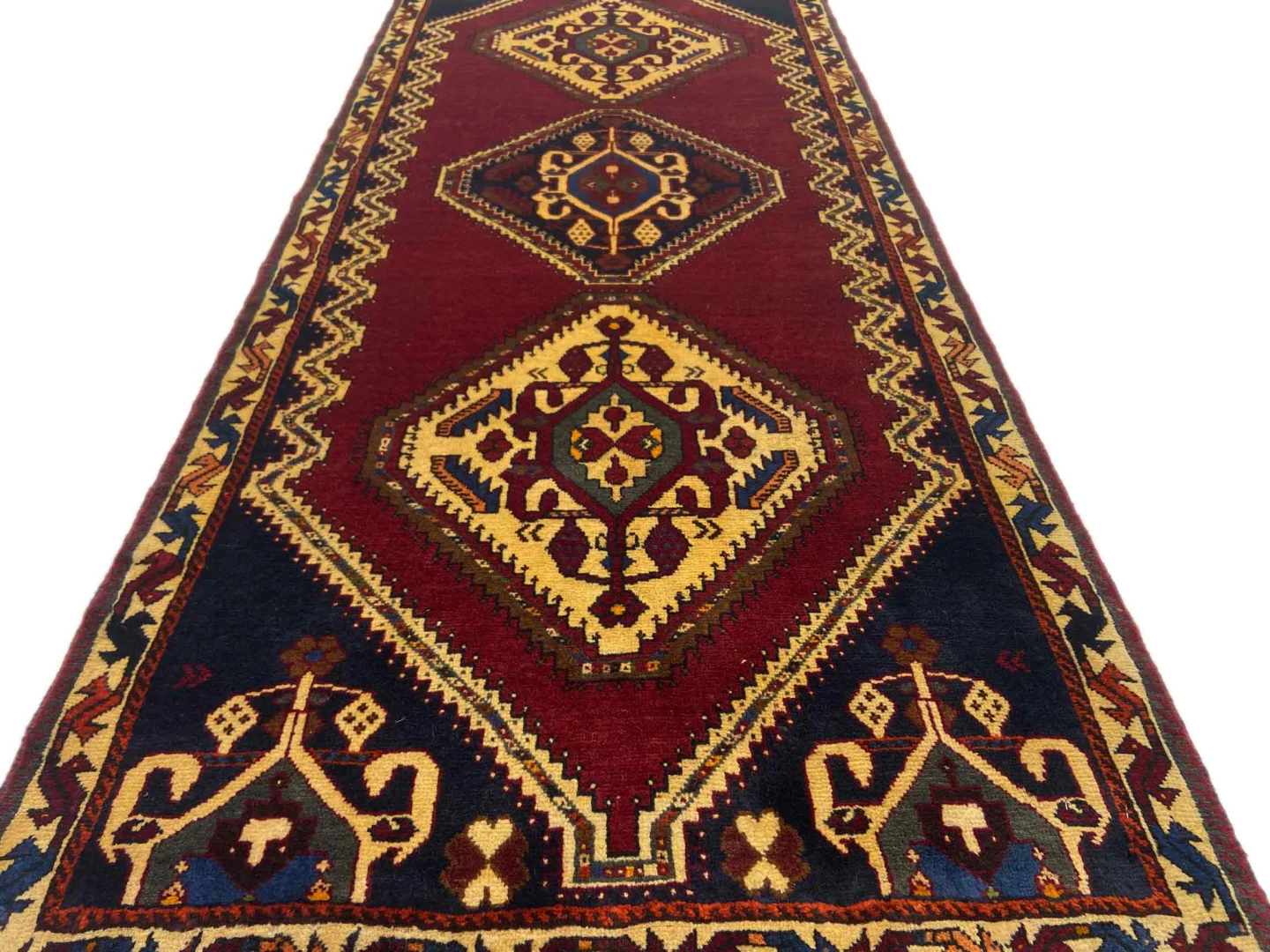
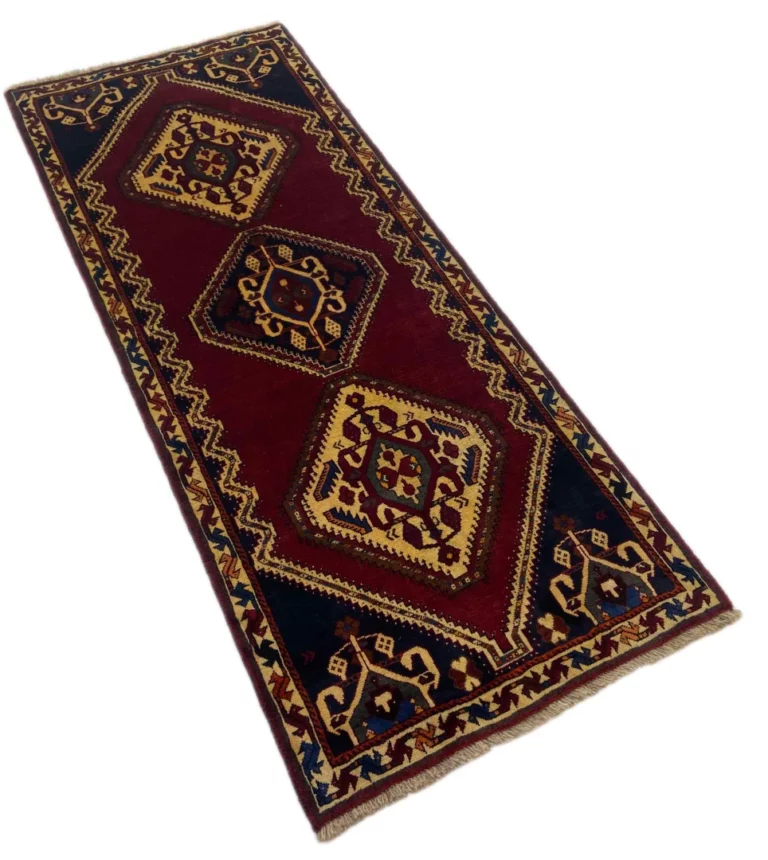
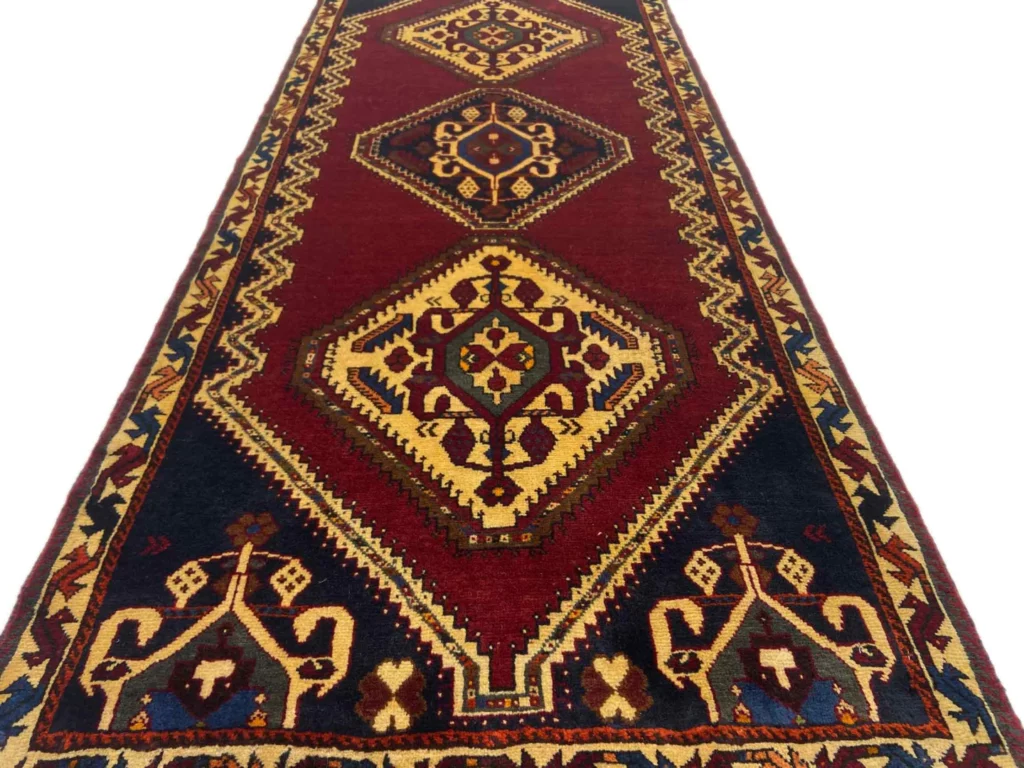
Hand-knotted Fars Persian rug | Knot density: 90,000 – 180,000 knots/m² | Material: Shiny virgin wool pile | Size: 187 x 84 cm | Pattern: Free-form, unusual designs in red, beige, grey and brown | Condition: New and unique
This Gabbeh – Shuli Persian rug is hand-knotted and made from shiny virgin wool. The wool defines both the feel and the visual character of the surface. Virgin wool is traditionally valued in Gabbeh weaving for its tactile quality and suitability for a durable textile structure. Here, the natural fibre works together with a lively surface to support the individual character associated with Gabbeh rugs.
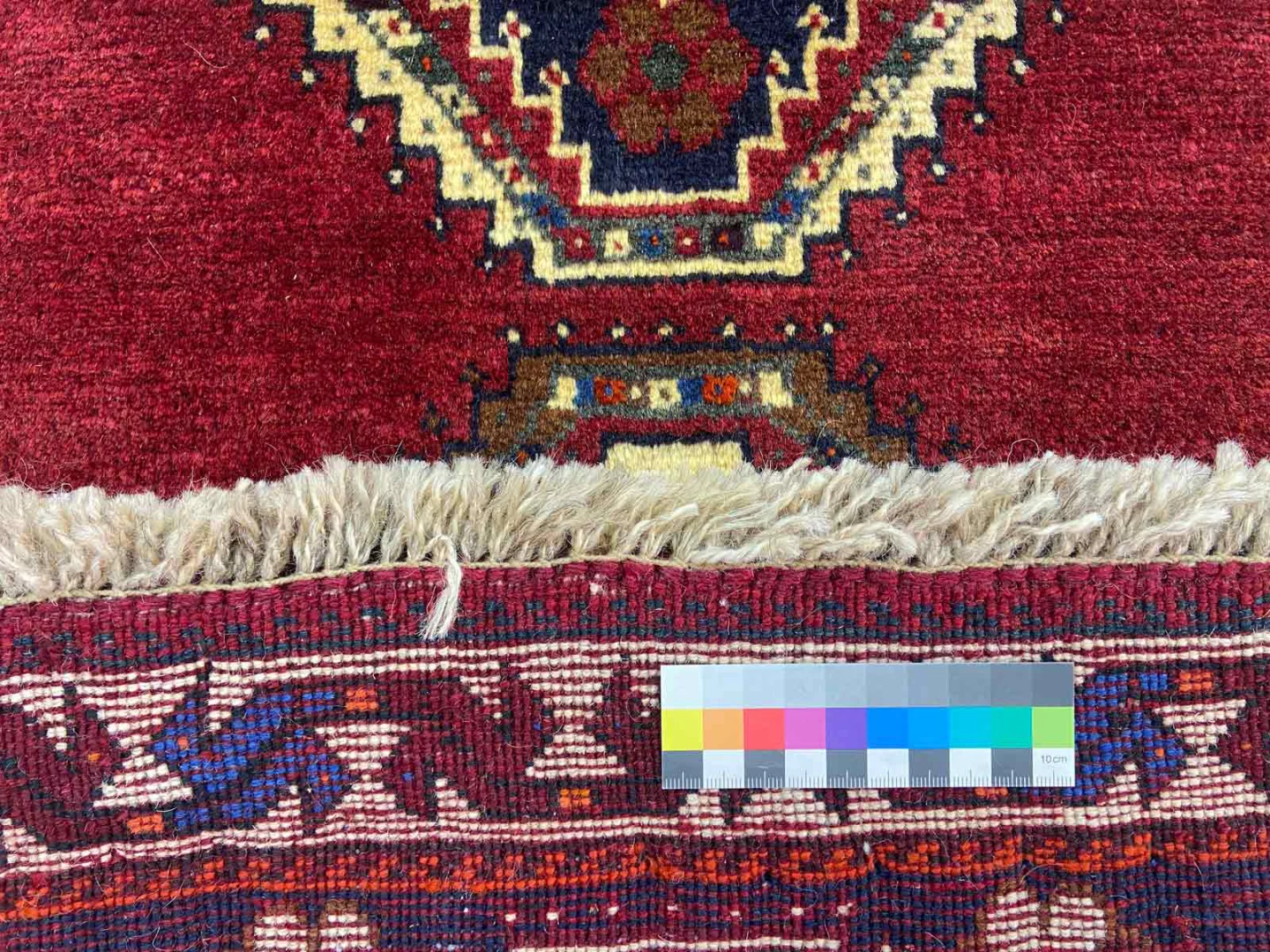
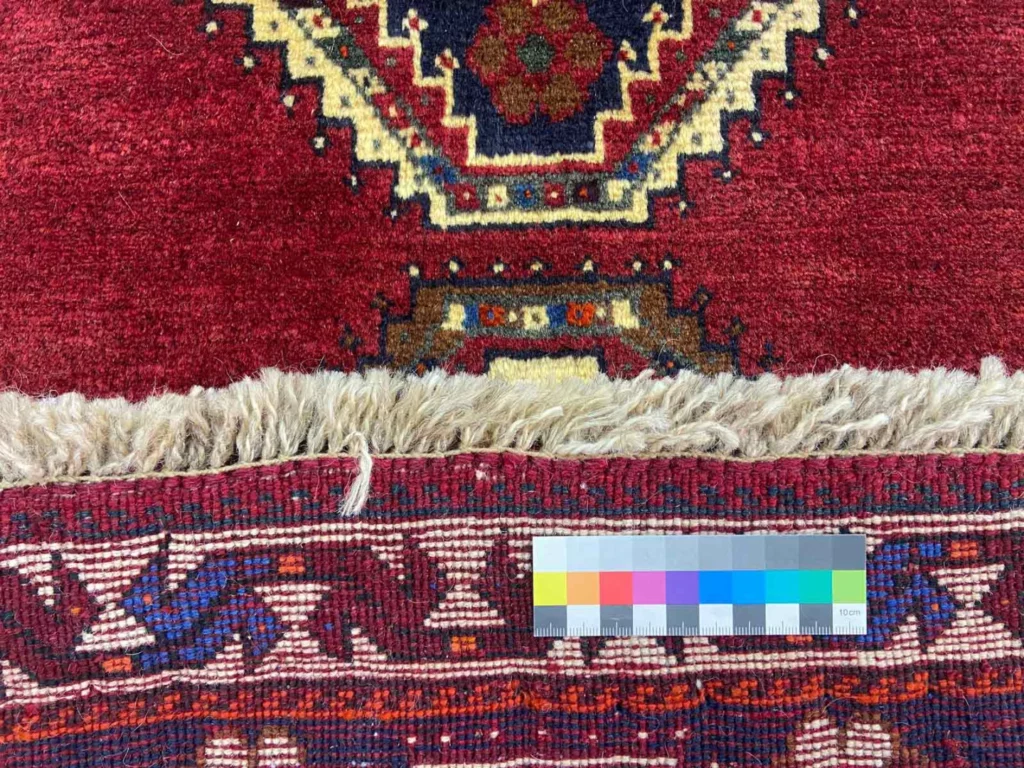
A hand-knotted rug is built knot by knot, with each row secured into the underlying structure as the work progresses. The design is therefore formed directly through the weaving and knotting process rather than printed onto a finished textile or mechanically repeated. The product data gives a knot density of 90,000 to 180,000 knots per square metre. This figure describes the number of knots used within the textile surface.
The stated pile material is shiny virgin wool. This means that the wool is new rather than reclaimed from previously used textiles. Combined with hand-knotting, it creates a surface that feels soft while retaining a firm textile presence. Gabbeh – Shuli rugs are also associated with natural colours, which complement the visual depth of wool and reinforce the connection between material, colour and handcraft.
Hand-knotting allows small variations in the way individual knots and lines meet. These are part of the nature of a handmade rug and help distinguish it from a factory-made, perfectly repeated surface. In this piece, the craftsmanship is not separate from the design: the pattern is created through the same process that gives the rug its structure.
Origin and Tradition
The rug comes from the Fars region in southern Persia. Fars is one of the important areas in Persian carpet culture and includes a range of nomadic, village and workshop traditions. Its varied landscape and long history of wool working have supported many different forms of textile production. Rugs from Fars therefore cannot be reduced to one single universal pattern; the region is known for a broad vocabulary of forms and techniques.
Gabbeh is closely connected with the nomadic and rural weaving traditions of south-western Iran. Traditional Gabbeh rugs are often recognised by their woolly texture, direct visual language and clear organisation of the field. Some are plain, while others use geometric, animal or human forms. Their designs can be simple without being empty, because colour, texture and the placement of a small number of motifs carry much of the visual structure.
The Shuli designation refers here to a freer approach within the Gabbeh tradition. Rather than following a fixed, repeated ornament, Gabbeh – Shuli rugs use invented and unusual designs. This allows the maker to divide the field in an individual way and to introduce unexpected forms or contrasts. The tradition remains rooted in hand-knotting and wool, while the composition is given more room for personal invention.
Fars also has a strong relationship with mobile and rural ways of life. For nomadic communities, wool was a readily available material that could be turned into useful household textiles. Weaving and knotting were part of practical life, but they also offered a way to express memory, observation and imagination. This background helps explain why many Fars rugs combine functional textile qualities with designs that do not depend on a rigid workshop template.
Persian Gabbeh rugs are now placed in both traditional and contemporary interiors. Their substantial wool surface and straightforward design language can sit alongside restrained furniture as well as more decorative surroundings. Their Fars origin remains important for identification, but it does not require every rug to repeat the same motif. In the Gabbeh – Shuli tradition, regional continuity and individual design exist together.
Other regional carpet forms provide useful points of comparison. Gabbeh – Fars examples may use geometric forms and strong colours. Kilims are flat-woven rather than knotted, giving them a different surface and construction. Sarouks are associated with elegant floral designs and dense knotting. These neighbouring traditions show the variety of Persian carpet production, while the Gabbeh – Shuli remains defined by its woollen hand-knotted ground and freely invented patterning.
Design and Pattern
The design of this Gabbeh – Shuli is described as free-form and unusual. Its appearance is therefore based on an individual arrangement rather than on a strictly repeated border-and-medallion scheme. Forms may vary in scale, spacing and placement across the field. The visual effect comes from the relationship between open areas, lines, shapes and colour.
Gabbeh design traditionally favours a readable, direct image structure. A field may contain isolated symbols, simplified figures or geometric elements. The forms are not required to reproduce nature literally. They can be reduced to essential outlines or transformed through memory and imagination. This gives Gabbeh its characteristic immediacy and distinguishes it from rugs whose identity depends on a tightly prescribed ornamental vocabulary.
Shuli compositions make that freedom especially visible. An invented pattern is not understood as a duplicate of one standard drawing, but as a separate textile interpretation. The maker can create a lively arrangement in which the motifs do not all follow the same rhythm. This approach joins an established Persian technique with a more open design concept and gives each rug an individual visual identity.
The colours listed for this rug are red, beige, grey and brown. Red may act as a strong accent or as a more prominent field colour, while beige, grey and brown provide quieter, earthy relationships. Together they create a warm palette with room for contrast and transition. The use of natural colours connects the visual effect to the traditional material world of Gabbeh weaving.
Colour in Gabbeh is often closely linked to the character of the wool. A broad field can make a motif easy to read, while subtle changes between related tones can give the surface depth without adding complex ornament. In a free-form Shuli design, colour placement becomes part of the invention: it can separate shapes, establish balance or give selected areas greater emphasis.
The rug’s pattern should therefore be read as a complete handmade composition rather than as a collection of isolated decorative signs. The combination of unusual forms, a warm palette and a woollen surface creates a design language that is both rooted in Fars and open to individual interpretation. This is the central distinction between the Shuli approach and more formal Persian designs based on fixed floral or geometric repeats.
Special Features
This rug is new and unique. Its special character comes from the combination of shiny virgin wool, hand-knotting and a freely invented Shuli design. Because the pattern is individually composed, each piece has its own visual expression. The listed colours – red, beige, grey and brown – reinforce that distinct character.
Gabbeh – Shuli rugs can be used as a decorative accent in a living room or as a comfortable runner in a hallway. Their textile surface provides pleasant warmth underfoot and can help soften sound within a room. The use of natural colours is also described as environmentally friendly and harmless to health. These qualities bring together decorative, tactile and practical aspects without changing the rug’s Persian identity.
FAQ
What makes this Gabbeh – Shuli rug unique?
Its uniqueness comes from the freely invented, unusual pattern and the creative freedom of the hand-knotting process. The design is not presented as a fixed duplicate of an identical ornament; it forms an individual composition. Together with the shiny virgin wool and the red, beige, grey and brown palette, this gives the rug a character of its own.
How should I care for a Gabbeh – Shuli rug?
Regular, careful vacuuming is suitable for everyday maintenance. The rug may also be beaten out occasionally. If a stain occurs, treat the area gently with a damp cloth and a mild cleaning product. Avoid vigorous rubbing so that the wool surface and the hand-knotted structure are treated with care.
Which colours are common in Gabbeh – Shuli rugs?
Red, beige, grey and brown are among the colours commonly associated with this type of rug. They may appear separately or in different combinations. Red provides a stronger accent, while beige, grey and brown create earthy, more restrained transitions. These four colours are identified for this rug as part of its freely invented design.
To provide the best experiences, we use technologies like cookies to store and/or access device information. Consenting to these technologies will allow us to process data such as browsing behavior or unique IDs on this site. Not consenting or withdrawing consent, may adversely affect certain features and functions.
Functional Always active
The technical storage or access is strictly necessary for the legitimate purpose of enabling the use of a specific service explicitly requested by the subscriber or user, or for the sole purpose of carrying out the transmission of a communication over an electronic communications network.
Preferences
The technical storage or access is necessary for the legitimate purpose of storing preferences that are not requested by the subscriber or user.
Statistics
The technical storage or access that is used exclusively for statistical purposes.The technical storage or access that is used exclusively for anonymous statistical purposes. Without a subpoena, voluntary compliance on the part of your Internet Service Provider, or additional records from a third party, information stored or retrieved for this purpose alone cannot usually be used to identify you.
Marketing
The technical storage or access is required to create user profiles to send advertising, or to track the user on a website or across several websites for similar marketing purposes.
 SECURE PAYMENT
 SHIPPING PARTNERS


