Persian Rug Fars Gabbeh 168 x 118 cm Wool Hand-knotted
€ 781
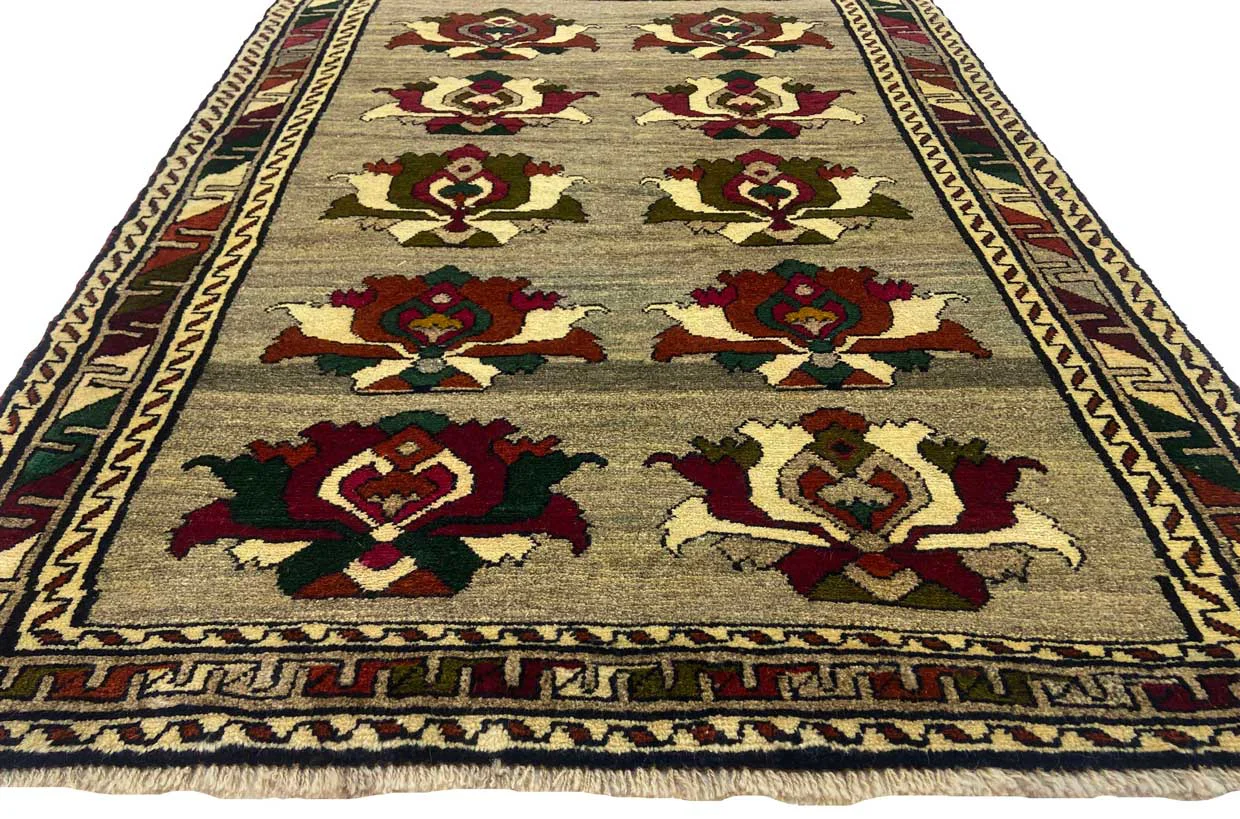
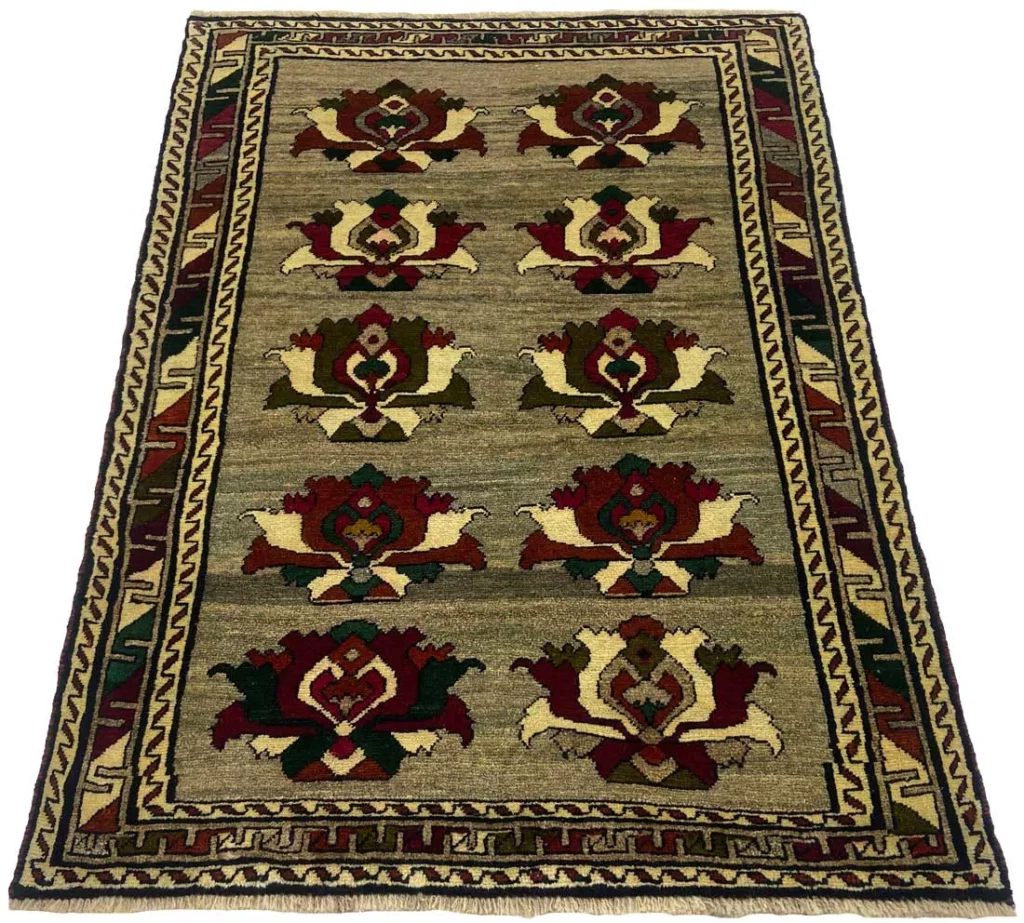
Hand-knotted Fars Persian Rug | Knot density: 90,000 – 180,000 knots/m² | Material: Shiny virgin wool pile | Size: 168 x 118 cm | Pattern: Unusual, imaginative designs | Condition: New or well preserved
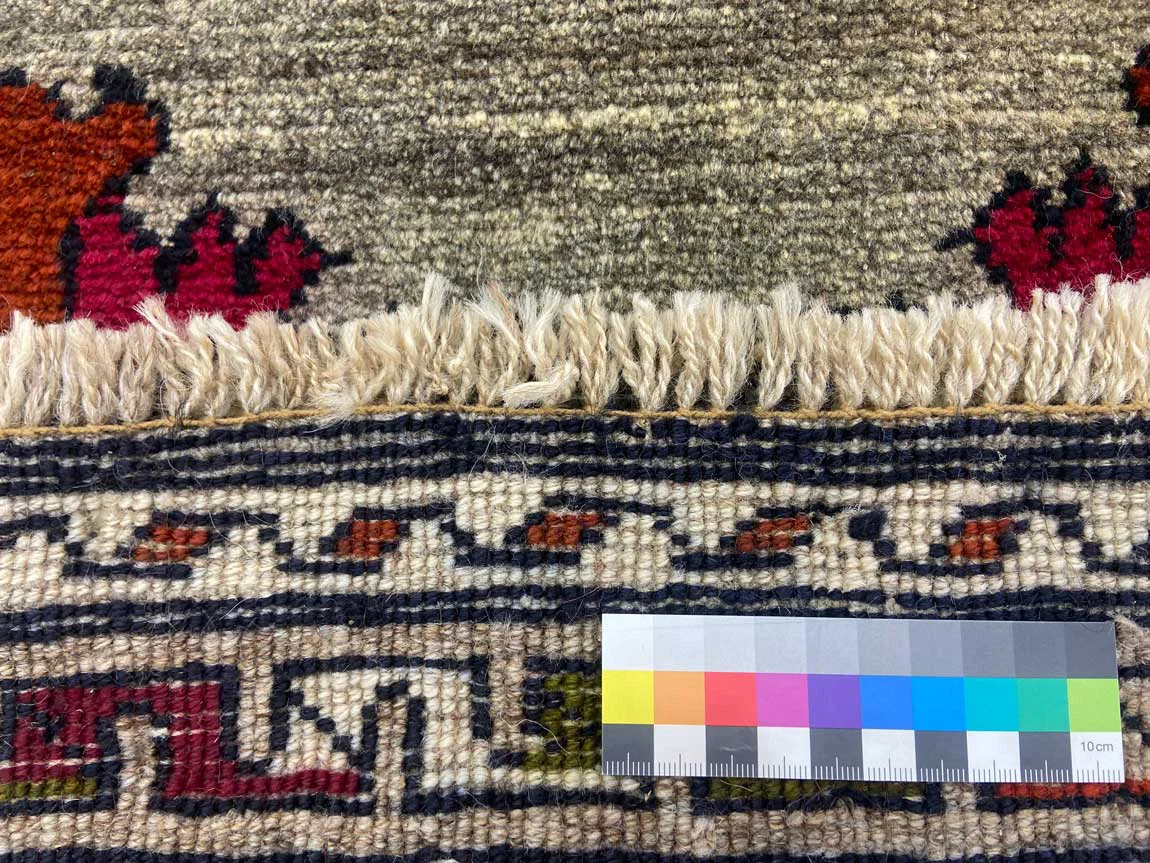
This Gabbeh – Shuli is hand-knotted with a pile of shiny virgin wool. Wool is one of the defining materials of Gabbeh weaving, valued for its soft feel and durability. Its natural lustre gives the surface a changing appearance as light moves across it. The material therefore contributes both to the tactile character of the rug and to the way its colours are perceived.
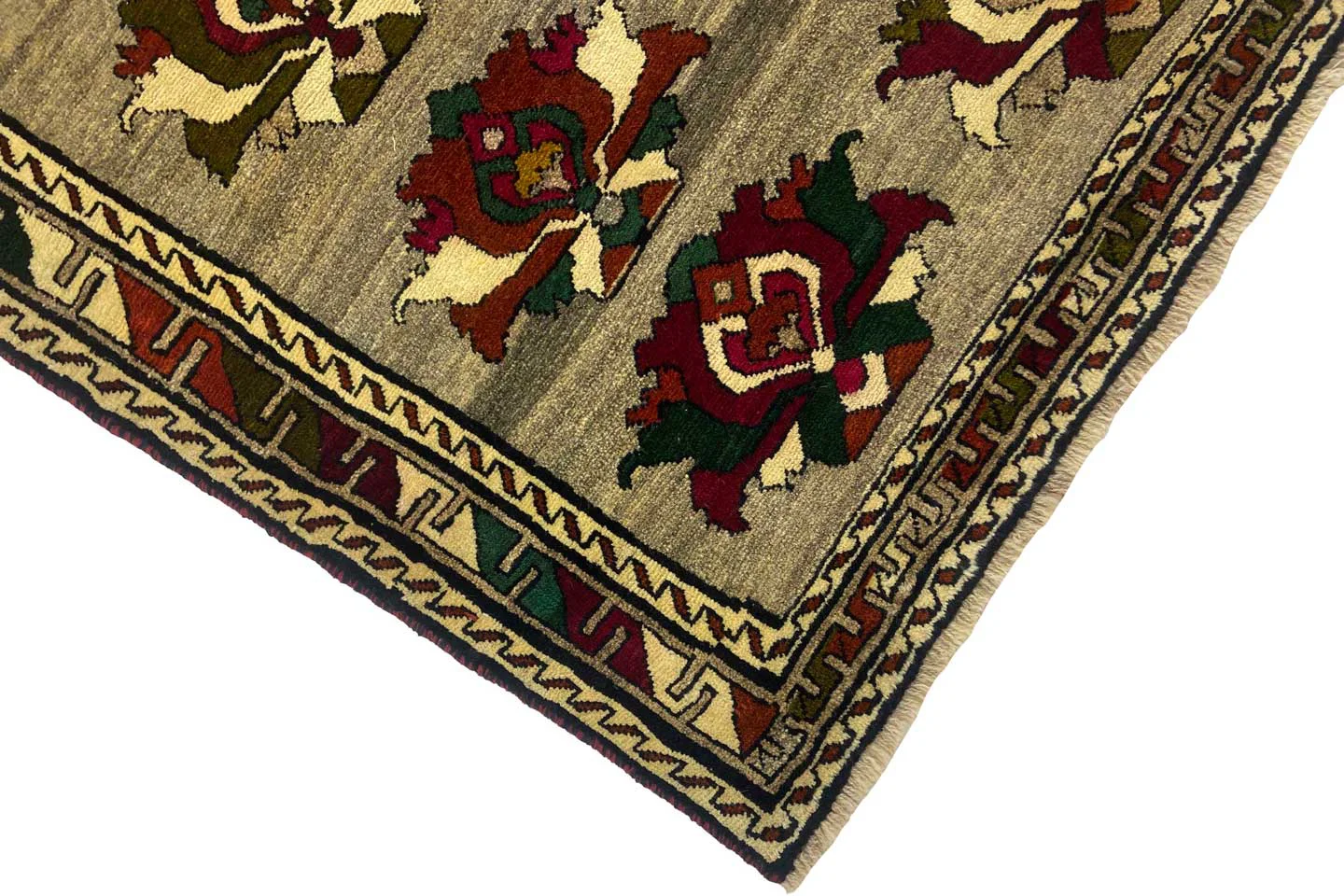
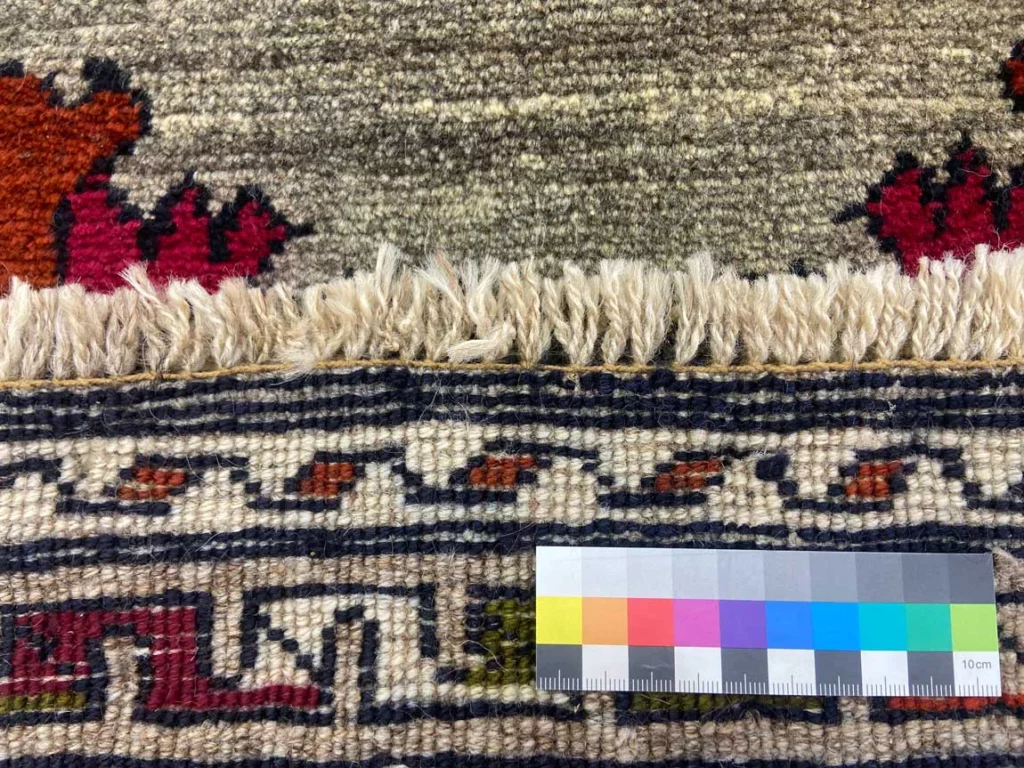
The rug has a knot density of 90,000 – 180,000 knots per square metre. A dense construction allows lines, fields and smaller pattern details to be worked with distinction. It also supports the sturdy character associated with a closely knotted rug. In hand-knotting, each knot is inserted individually as the design develops, so the finished surface records a sequence of skilled manual decisions rather than a mechanically repeated process.
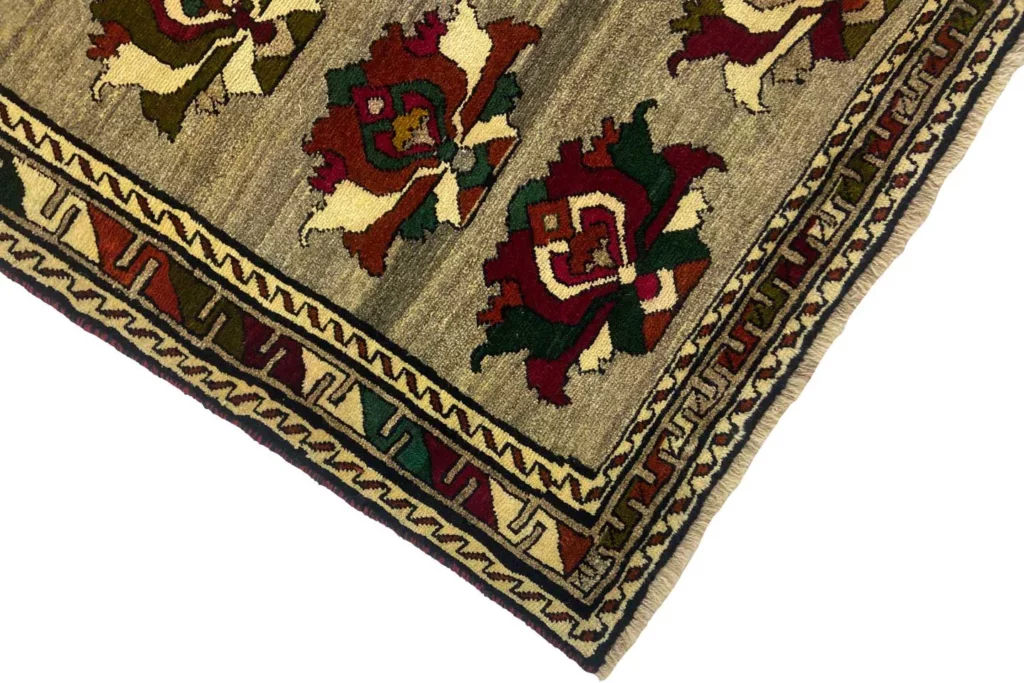
The Gabbeh – Shuli tradition combines fine virgin wool with expressive areas of colour and freely developed motifs. For this rug, the named colours are red, beige, grey and brown. The wool is prepared in a demanding dyeing process for these tones. Shiny virgin wool, dense knotting and a hand-developed pattern together define the material and workmanship of this Persian Rug.
Origin and Tradition
Gabbeh – Shuli rugs come from the Fars region in southern Iran. Fars is one of the important landscapes in Persian carpet culture and lies near the historic city of Shiraz. The region has long been associated with nomadic and rural weaving and knotting traditions. Within this setting, a carpet language developed that allows direct personal expression alongside inherited forms. It is not limited to the exact repetition of formal urban or courtly models.
Gabbeh describes a Persian rug type known for a clear and often deliberately simplified visual language. Many Gabbeh designs have an immediate quality that remains visible in the finished weave. They may include animals, people, plants, abstract signs or straightforward geometric forms. Such subjects are not necessarily rendered naturalistically. They are often reduced, arranged rhythmically and placed within a composition where the act of making remains legible.
Shuli refers to a Gabbeh direction associated with unusual and imaginative designs. The pattern can follow the weaver’s individual ideas and may depart from a strictly repeated scheme. This freedom is part of the cultural character attributed to Gabbeh – Shuli rugs. A familiar sign can be altered, combined with another form or given a different relationship to the surrounding colours. The tradition therefore joins continuity with variation rather than treating a design as an unchangeable template.
Fars weaving culture preserves a form of carpet making in which use and artistic expression belong together. A rug can serve a practical purpose while also carrying memories, observations and imagined forms from the makers’ world. The imaginative designs of Gabbeh – Shuli express this link between everyday life, regional tradition and individual interpretation. The Fars origin is consequently more than a place label: it identifies the cultural setting in which this type of Persian knotting developed.
Persian carpet traditions differ from one region to another. Gabbeh – Fars rugs from the same region are also associated with vivid colours and geometric patterns. Bakhtiari rugs from the neighbouring Bakhtiari region are known for more complex designs and the use of natural colours. Kerman rugs, by contrast, are associated with refined floral patterns, vivid colour effects and high knot densities. These comparisons illustrate the breadth of Persian weaving culture, while the origin of this individual rug remains clear: it is a Gabbeh – Shuli from Fars.
Design and Pattern
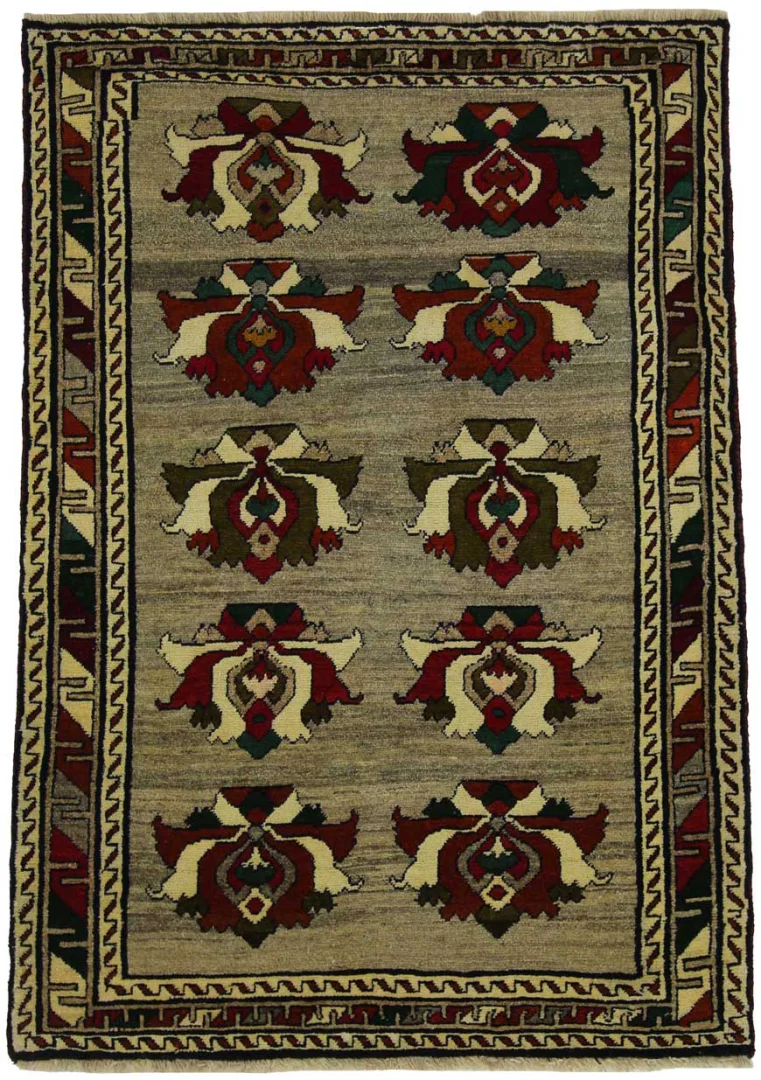
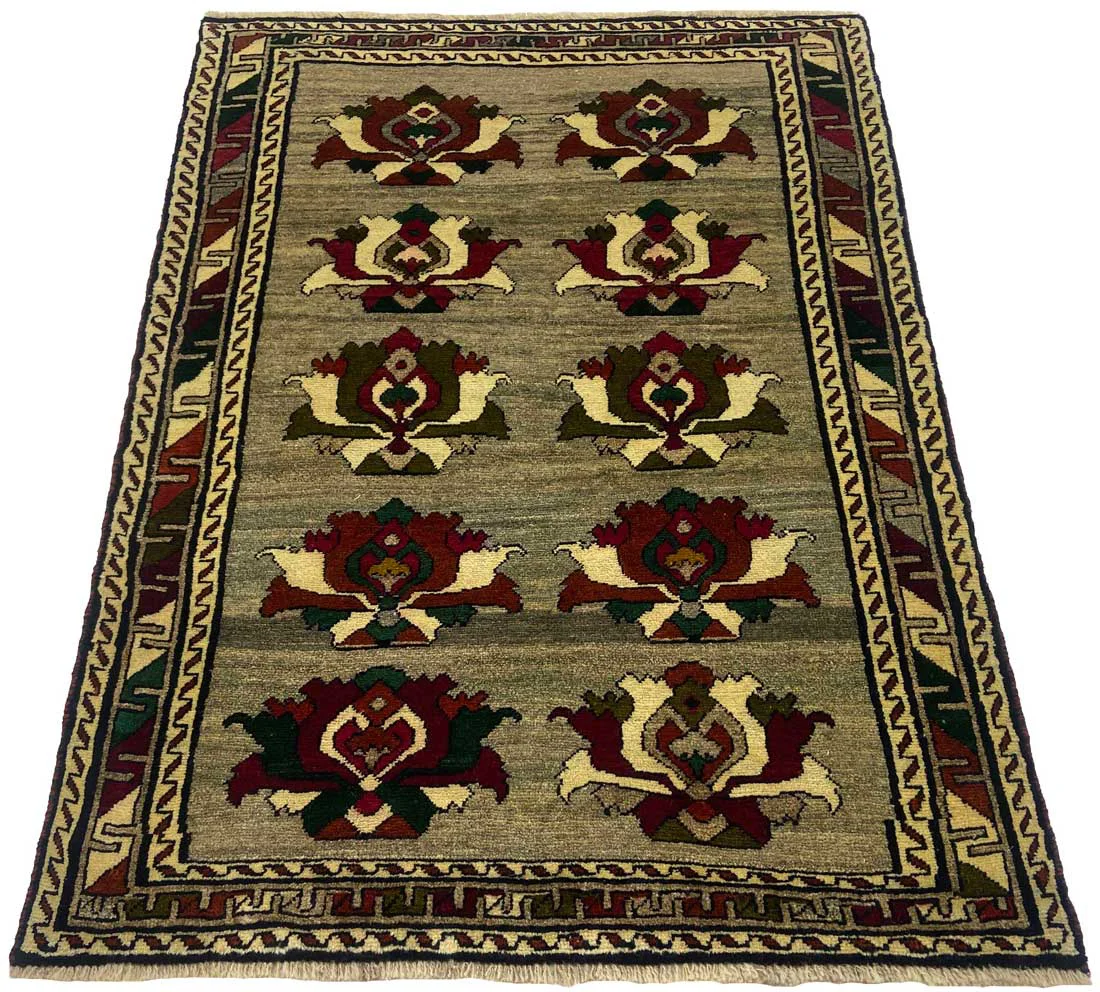
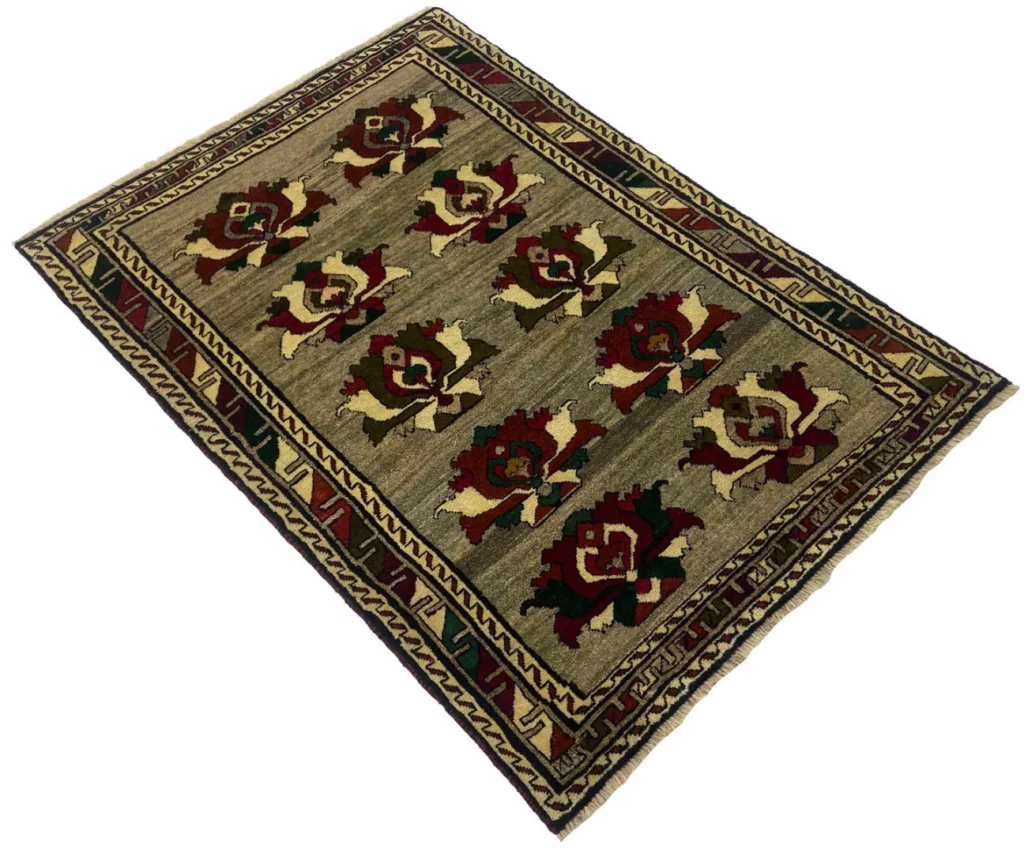
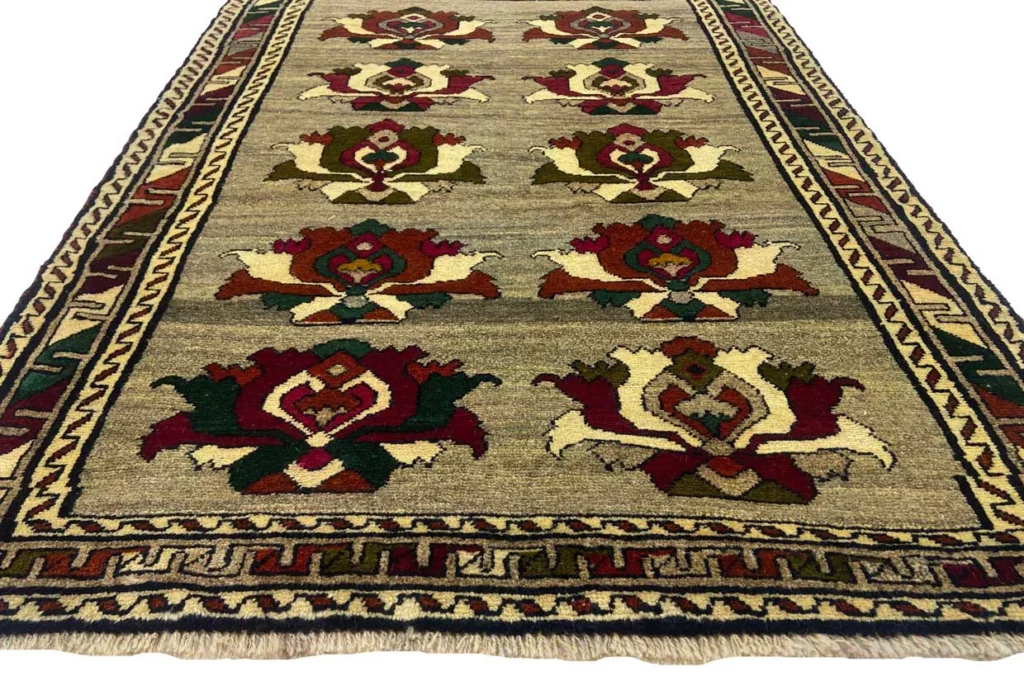
The pattern of this rug is described as unusual and imaginative. Its character therefore lies not in a single prescribed emblem but in the independent effect of the composition. Gabbeh – Shuli designs may present familiar forms in simplified shapes or combine several signs into a distinct pictorial field. They do not need to resemble a technical drawing. The hand of the weaver remains apparent in the placement, proportion and character of the motifs.
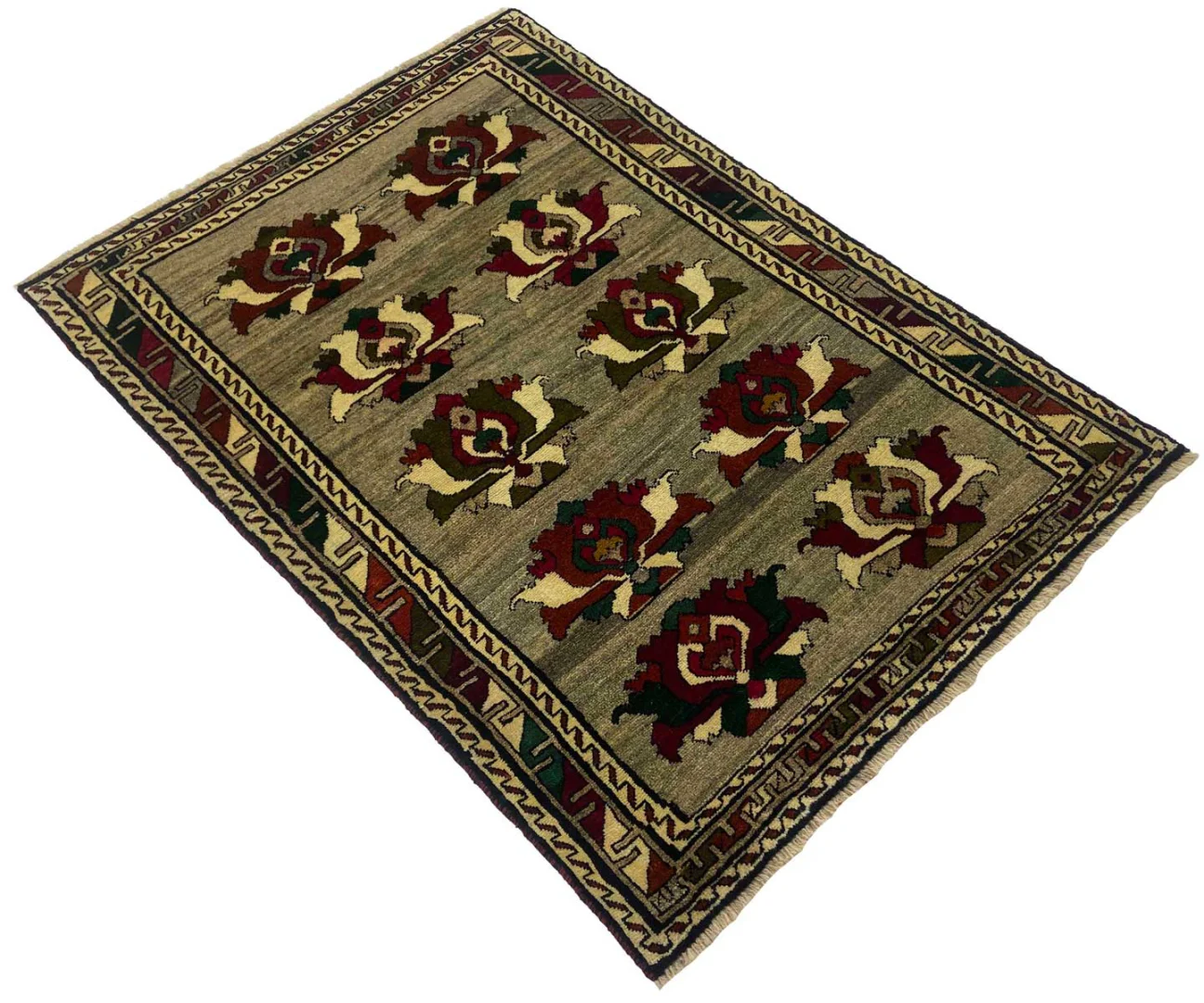
The colour palette consists of red, beige, grey and brown. Red can provide a clear accent, while beige and brown establish an earthy basis. Grey adds a quiet neutral element to the arrangement. Together, these colours create contrasts within a palette connected to the Persian rug tradition. Because the wool has a shiny quality, the same colour may appear deeper or lighter as the viewing angle and the light change.
Imaginative Gabbeh patterns often depend less on one central illustration than on the relationship between fields, lines and signs. A small simplified motif can carry as much weight as a more prominent figure. The design gains its identity through a balance of repetition and departure. In a hand-knotted rug, that balance is not produced by industrial duplication; it takes shape as the weaver translates the composition into rows of individual knots.
The Fars Gabbeh tradition links visual simplicity with a strong use of colour. Geometric elements, abstracted figures and freely formed marks can exist together without creating a naturalistic scene. Gabbeh – Shuli gives particular room to this freedom, allowing an unusual design to convey the maker’s imagination. The result retains the regional character of Fars while developing a pattern with its own distinct presence.
This type of pattern can also be used in different interior settings. The clear structure of many Gabbeh compositions can sit comfortably within a modern room, while the handmade colours and regional motifs can also accompany a more traditional setting. That versatility is a general quality of the type, not an additional claim about an unspecified interior. For this rug, the defining design facts remain its imaginative pattern and its combination of red, beige, grey and brown.
Special Features
The special features of this rug include its Fars origin, the Gabbeh – Shuli designation, hand-knotted construction and a pile made from shiny virgin wool. Its unusual, imaginative design and lively colour range are further defining elements. The dense knotting supports the detailed effect of the pattern and the rug’s sturdy character. Its condition is described as new or well preserved.
Gabbeh – Shuli rugs are made with natural materials. Their production minimises the use of chemical dyes and is intended to maximise longevity. Material choice, hand craftsmanship and lasting use are therefore treated as connected aspects of the rug type. These rugs are also described as versatile and suitable for people with sensitive skin.
FAQ
What makes the Gabbeh – Shuli special?
It brings together hand-knotting, shiny virgin wool and an unusual, imaginative design. The pattern reflects the cultural identity of the Fars region while allowing the individual ideas of the weavers to remain visible. Red, beige, grey and brown provide the stated colour character. The dense construction is another defining feature, supporting both the detail of the design and the sturdy nature associated with this Gabbeh – Shuli.
How should I care for my Gabbeh – Shuli rug?
Regular care consists of careful vacuuming. Occasional cleaning with a damp cloth can be used for minor soiling. For a thorough cleaning, a professional should be engaged. Specialist treatment helps preserve the colours and structure of the shiny virgin wool. Care should always take the hand-knotted construction and the wool pile into account rather than treating the rug like a factory-made textile.
What sizes are Gabbeh – Shuli rugs available in?
Gabbeh – Shuli rugs are available in different sizes. The range extends from small runners to large rugs intended for living spaces. This allows the type to meet differing furnishing requirements. The dimensions of this individual rug are provided in the product data; the general availability of different formats describes the rug type and does not mean that every Gabbeh – Shuli has the same dimensions.
To provide the best experiences, we use technologies like cookies to store and/or access device information. Consenting to these technologies will allow us to process data such as browsing behavior or unique IDs on this site. Not consenting or withdrawing consent, may adversely affect certain features and functions.
Functional Always active
The technical storage or access is strictly necessary for the legitimate purpose of enabling the use of a specific service explicitly requested by the subscriber or user, or for the sole purpose of carrying out the transmission of a communication over an electronic communications network.
Preferences
The technical storage or access is necessary for the legitimate purpose of storing preferences that are not requested by the subscriber or user.
Statistics
The technical storage or access that is used exclusively for statistical purposes.The technical storage or access that is used exclusively for anonymous statistical purposes. Without a subpoena, voluntary compliance on the part of your Internet Service Provider, or additional records from a third party, information stored or retrieved for this purpose alone cannot usually be used to identify you.
Marketing
The technical storage or access is required to create user profiles to send advertising, or to track the user on a website or across several websites for similar marketing purposes.
 SECURE PAYMENT
 SHIPPING PARTNERS


