Persian Rug Fars Gabbeh 150 x 103 cm Wool Hand-knotted
€ 746
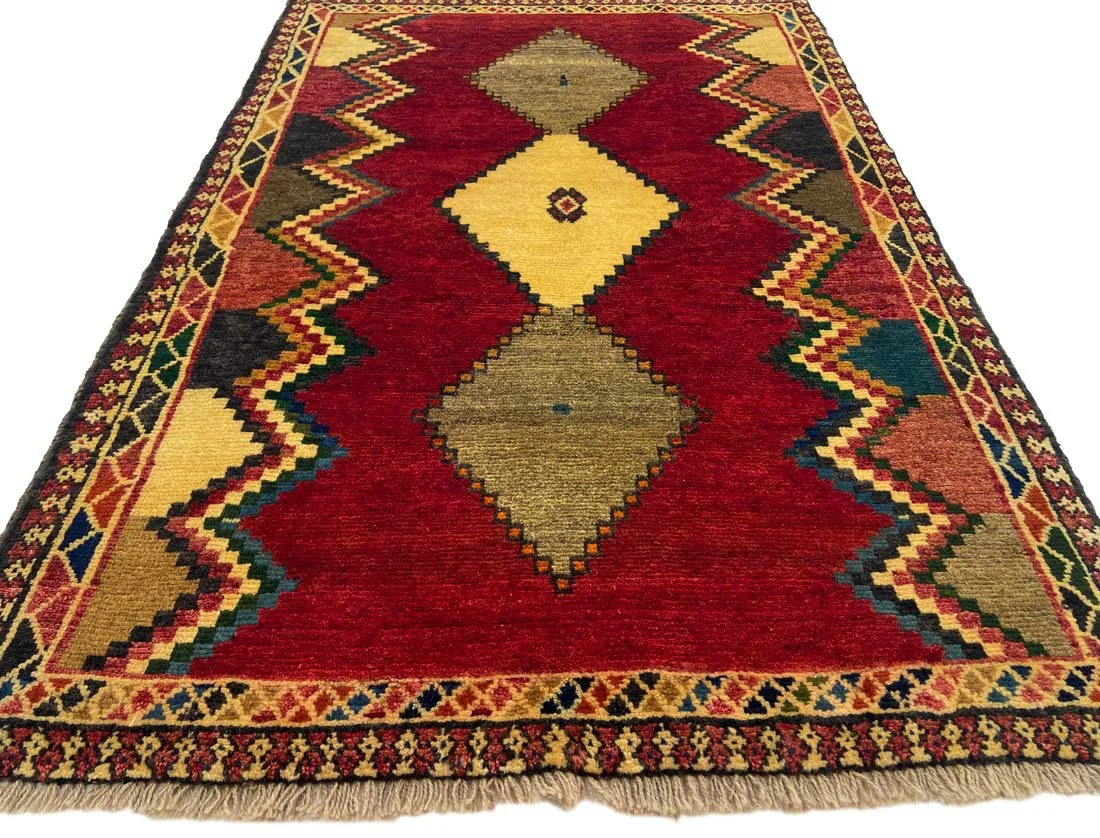
Hand-knotted Fars Persian Rug | Knot density: 90,000 – 180,000 knots/m² | Material: pile wool | Size: 150 x 103 cm | Pattern: Unusual and imaginative designs | Condition: Like new and artistically crafted
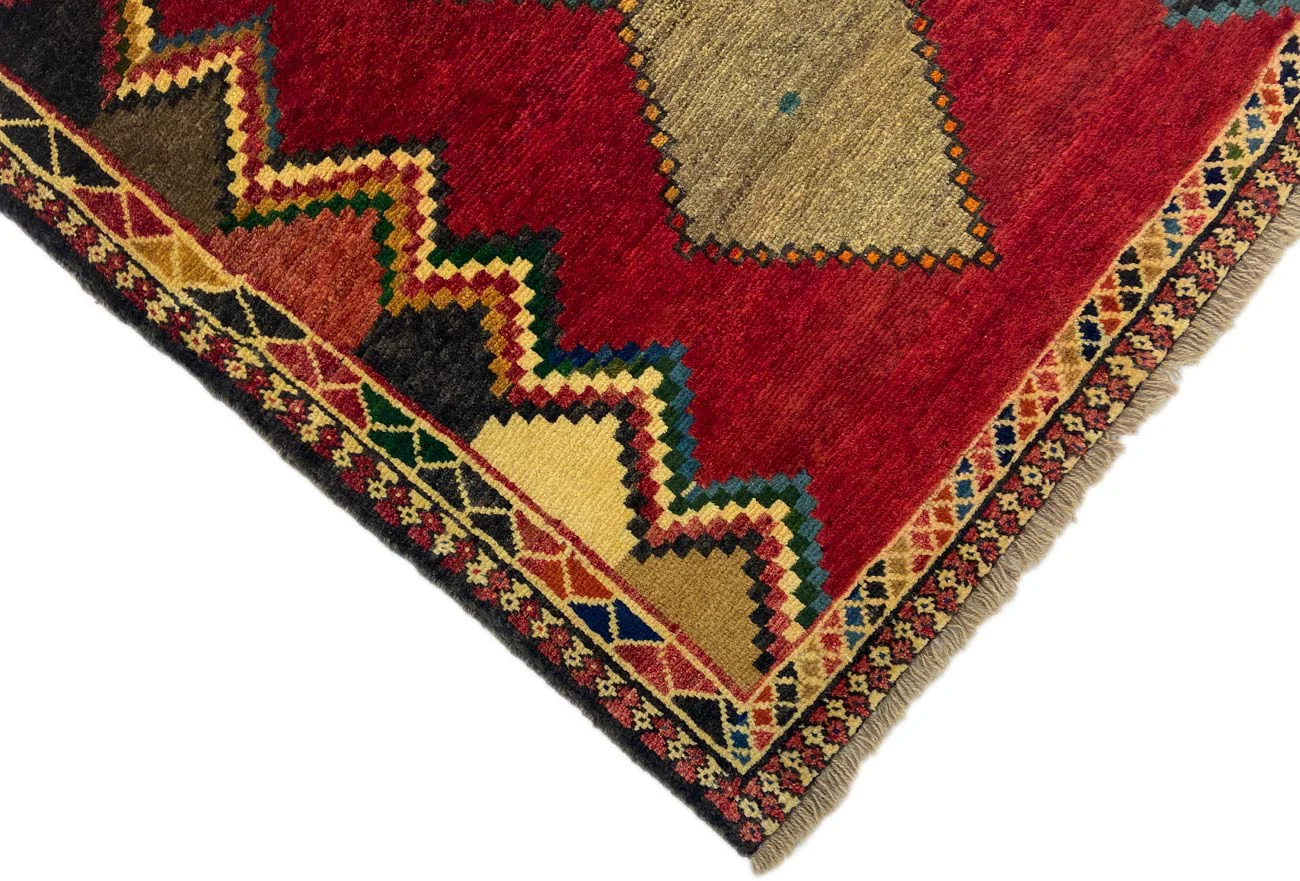
This Gabbeh-Shuli Persian rug is made from high-quality virgin wool and is hand-knotted. The wool gives the rug its tactile character, with a lustrous surface and a pleasant feel. It combines a durable material with a comfortable handle, making it suitable for use in living rooms as well as bedrooms. The pile’s woolen surface is an important part of the rug’s appearance and of the way it is experienced in a room.
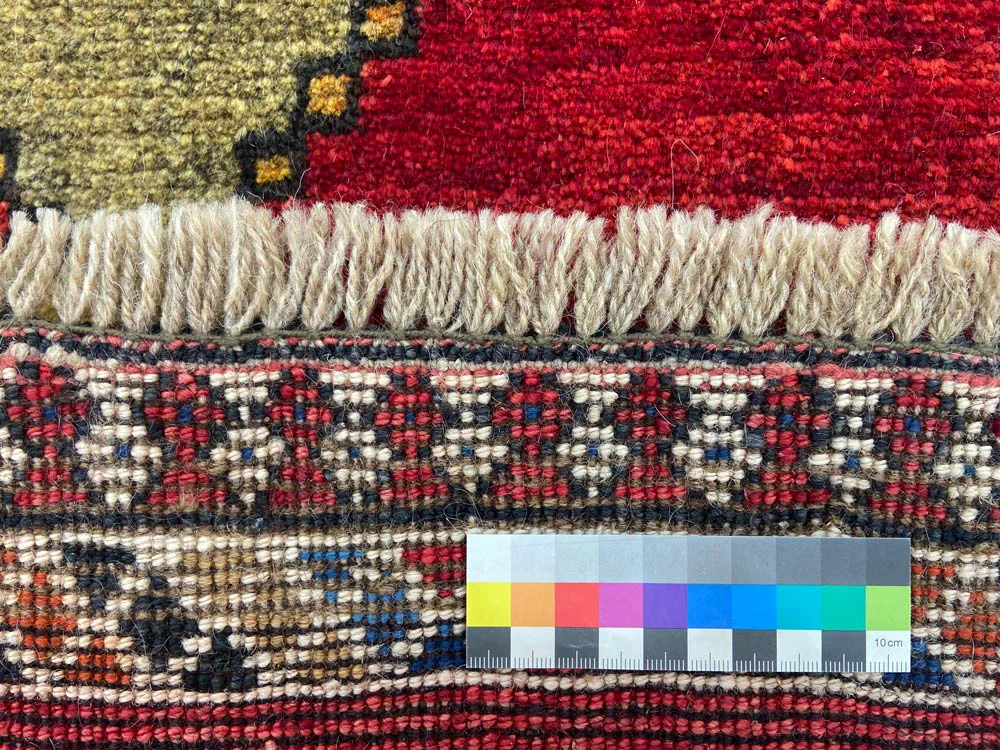
Hand-knotting means that the design is built knot by knot across the woven field. In Gabbeh-Shuli rugs, this traditional process is paired with unusual and imaginative designs. The knot density of this rug is 90,000 to 180,000 knots per square metre. That density supports a differentiated rendering of the design and is part of the rug’s technical description.
Virgin wool is valued in hand-knotted rugs for its comfortable surface and resistant qualities. Here, fibre and craftsmanship work together: the wool contributes lustre and softness, while the knotting process establishes the pattern across the rug. The result is a textile whose character comes from both its material and the practical skill involved in making it.
Origin and Tradition
The Gabbeh-Shuli comes from the Fars region in southern Iran. Fars has a longstanding place in Persian rug culture and lies near the historic city of Shiraz, which is known for its rich culture and craftsmanship. This regional setting provides the cultural background for rugs in which inherited craft methods meet individual and freely developed design.
Gabbeh rugs are associated with the tradition of Persia’s nomadic rug makers. Within that tradition, knotting is more than a technical process: it is also a way to express a maker’s view of the surrounding world. Designs can grow from lived experience, memory and established visual ideas. The imaginative character of Gabbeh-Shuli designs reflects this connection between practical making and personal creativity.
Fars contains a range of rug traditions and visual approaches. Alongside Gabbeh, the region is known for floral and geometric designs that recall the breadth of Persian weaving history. Floral forms draw on the plant world, while geometric compositions use lines, angles and repeated shapes. The variety shows how regional makers can work with different structures and pictorial languages while remaining part of a wider Persian textile heritage.
Gabbeh-Fars rugs and Luri rugs are also associated with related designs and high-quality wool. They therefore provide a regional point of comparison for this Gabbeh-Shuli. Tabriz and Isfahan rugs are likewise known for refined craftsmanship, but their patterns and techniques differ. Gabbeh rugs are often simpler and more rustic in appearance, whereas Tabriz rugs are known for more complex designs and higher knot densities. The comparison helps place Gabbeh within Persian rug culture without treating these distinct traditions as interchangeable.
The connection with Shiraz and the origin in Fars place this rug in a region where cultural heritage and textile work have long been linked. The Gabbeh-Shuli retains that regional identity while expressing it through an individual and imaginative pattern language. Fars identifies the geographic origin, while Gabbeh-Shuli identifies the rug type and its design direction. Together, they describe a rug shaped by southern Iranian tradition and by the creative character associated with Gabbeh weaving.
Design and Pattern
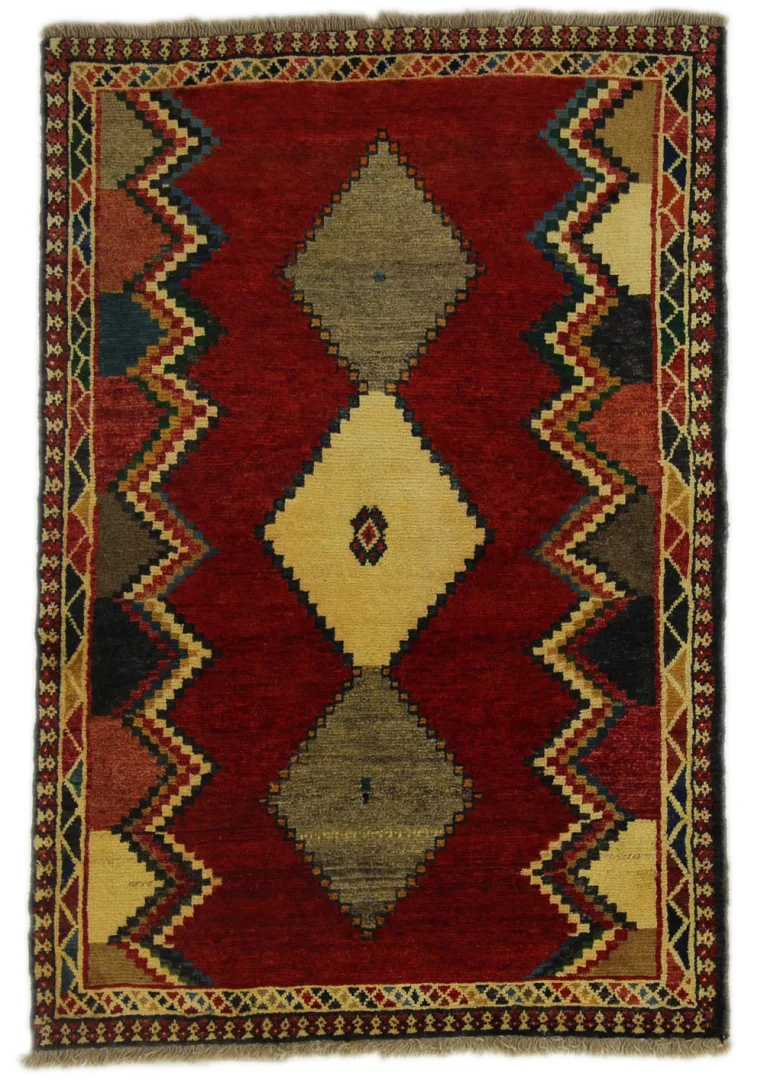
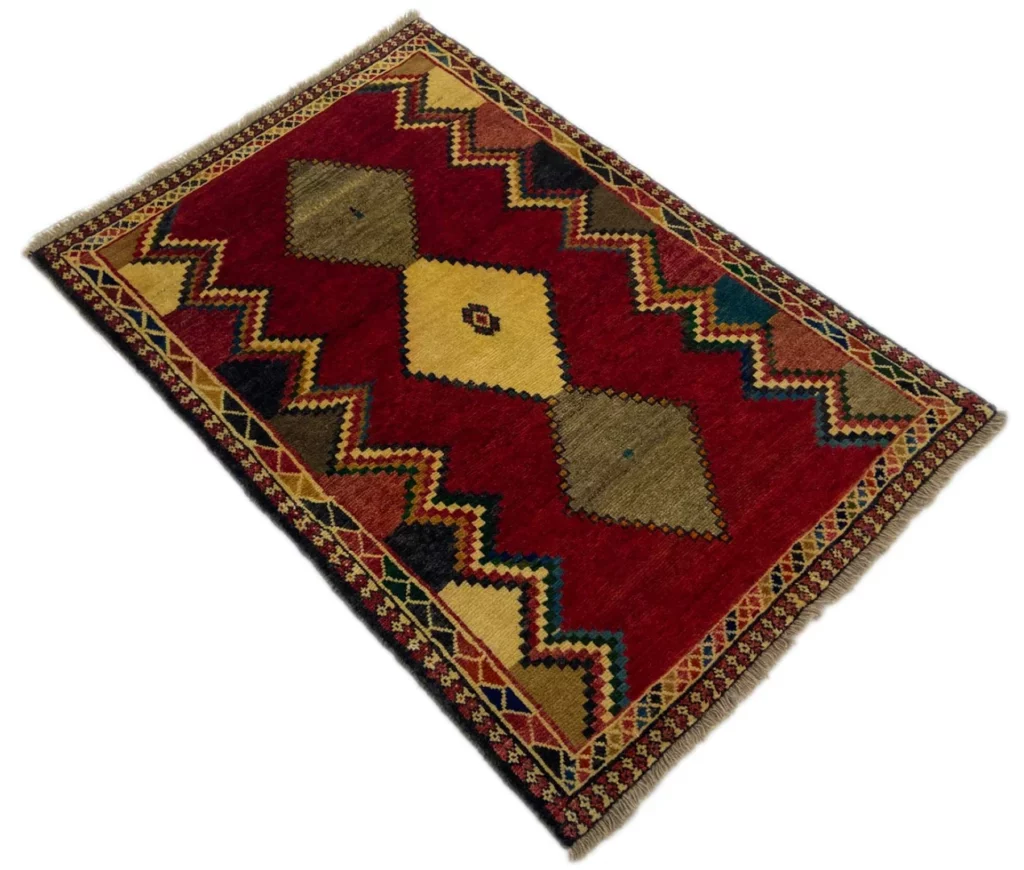
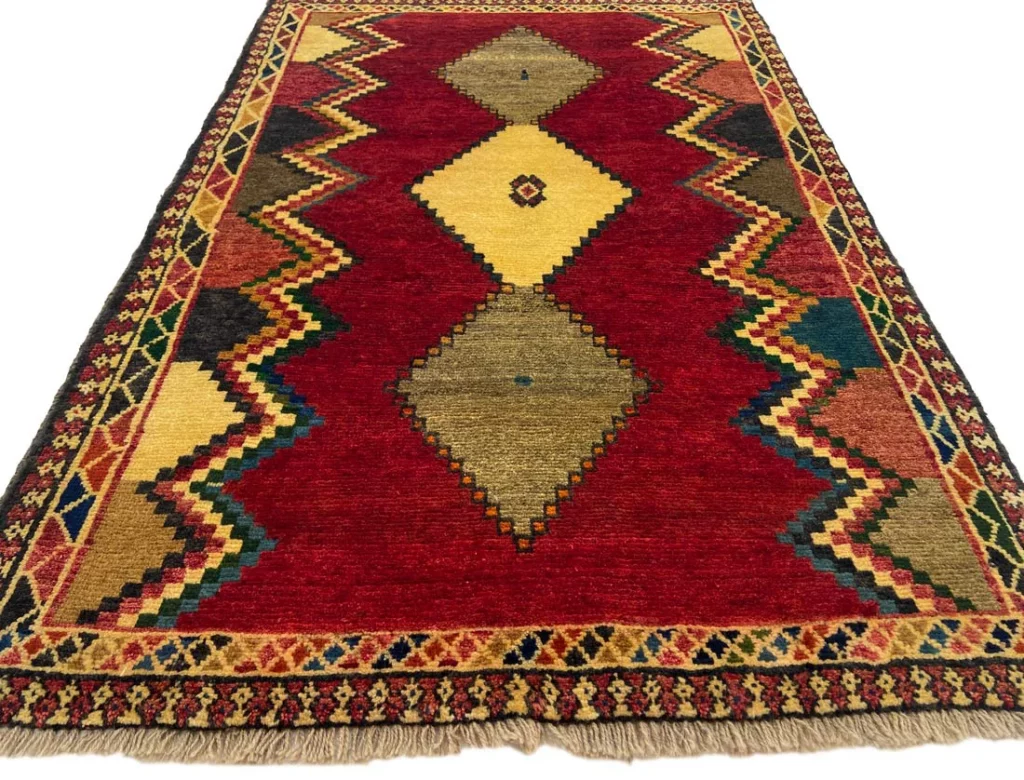
The design of this Gabbeh-Shuli is described as unusual and imaginative. It is not presented as a purely functional or strictly restrained composition, but as a visible expression of the maker’s creative approach. Gabbeh-Shuli designs can gain their character from distinctive forms, independent pictorial ideas and a personal arrangement of colour and pattern. The rug’s design consequently represents the creativity and style of the people who made it.
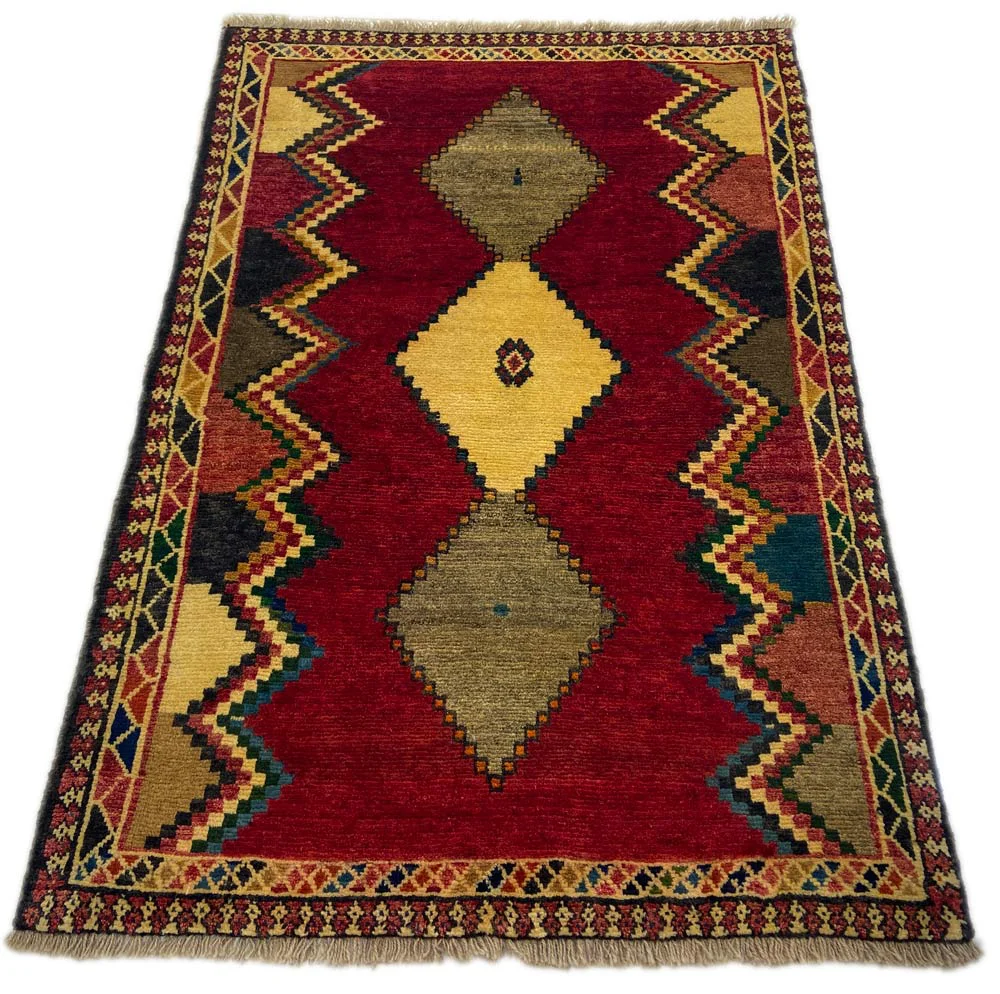
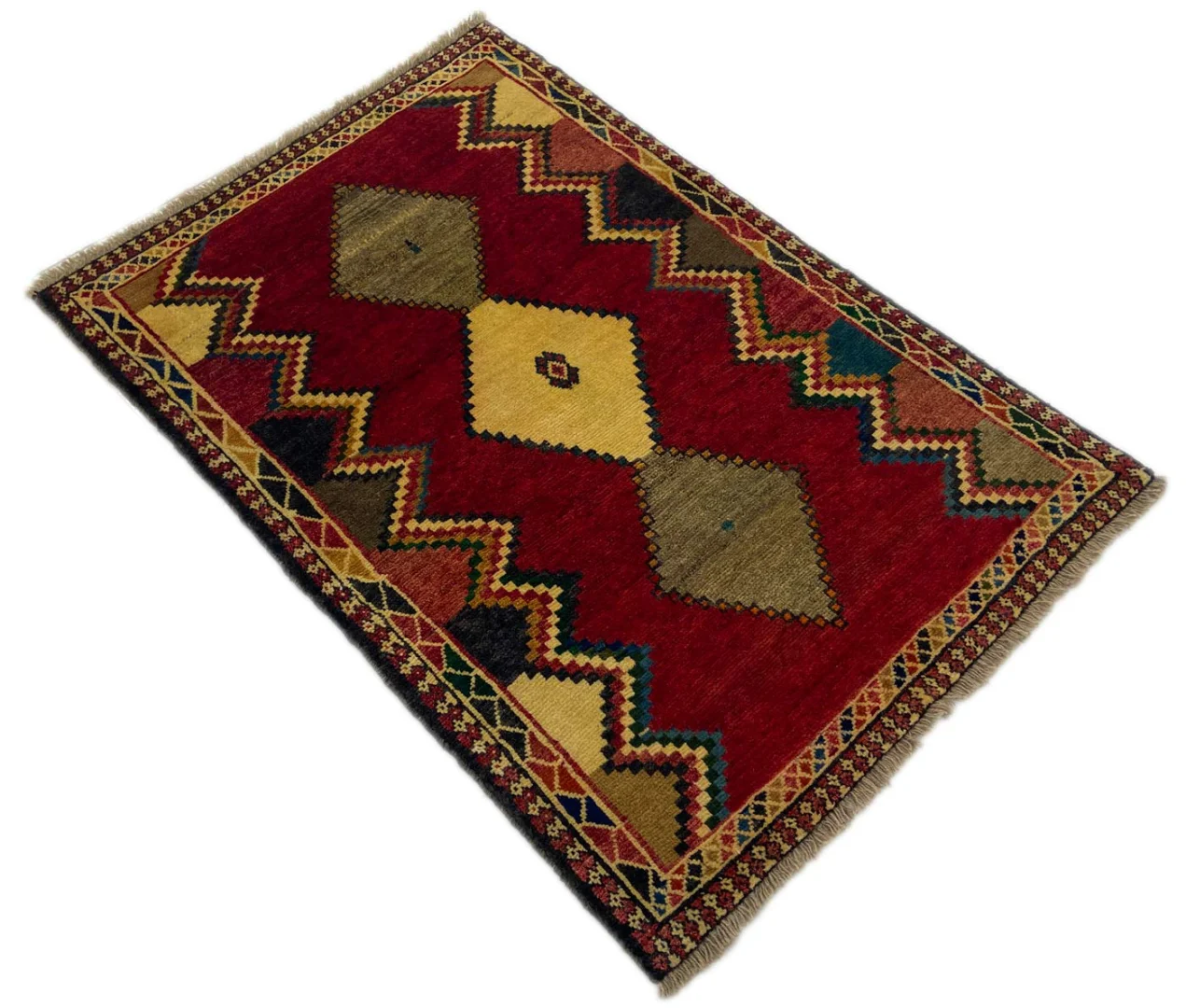
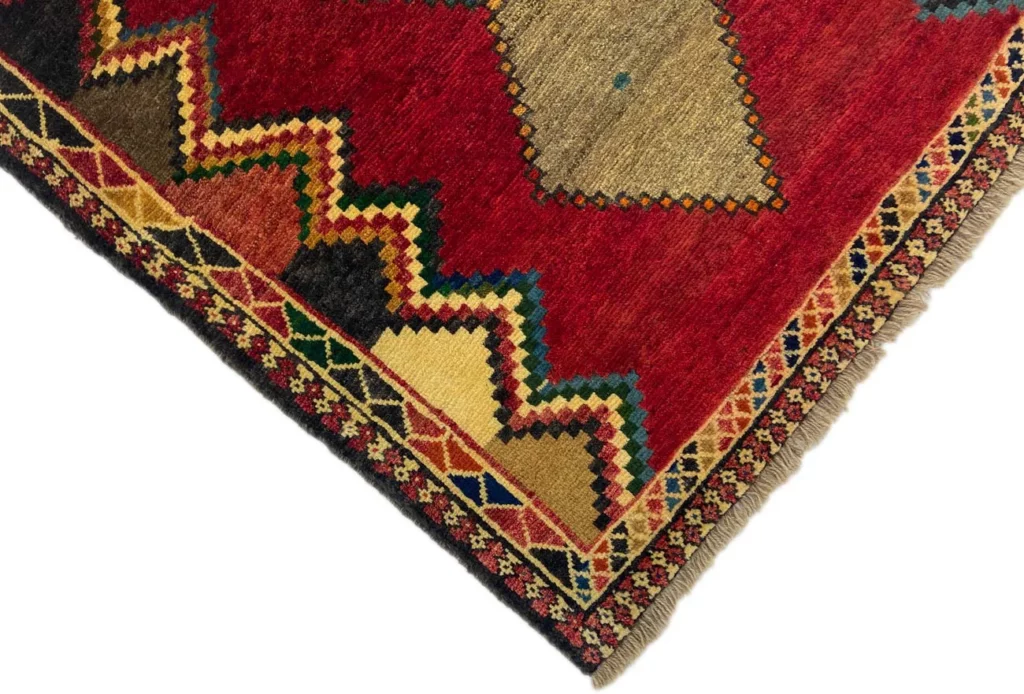
The colours associated with this rug are red, beige, grey and brown. Red introduces a deep and emphatic note, beige adds warmth, grey contributes a calm and elegant quality, and brown supplies an earthy tone. Together they create a palette that can work with both traditional and contemporary interiors. The colours are part of the rug’s stated design identity and complement its imaginative patterning.
In Gabbeh design, colour and drawing combine to form a recognisable overall image. Simple or rustic effects can appear alongside imaginative details. This balance is central to understanding the tradition: the field remains clear as a rug, while individual signs and unexpected combinations give it a distinct personality. The Gabbeh-Shuli therefore places emphasis on visual independence rather than on reproducing a single rigid ornamental scheme.
Floral and geometric patterns are also popular in the Fars region. Floral designs refer to forms from nature, while geometric designs rely on structured lines, angular shapes and repetition. The Gabbeh-Shuli is not limited to either category. Its unusual and imaginative designs express a more open form of regional Persian rug art, in which the maker’s creative interpretation remains visible within the hand-knotted surface.
The palette of red, beige, grey and brown allows the rug to act as an accent in different settings. In a traditional room, the colours can relate to Persian furnishing traditions; in a modern room, the same combination can provide a defined textile focal point. The rug can be used in a living room, bedroom or hallway, where its pattern and colour bring an artistic and cultural element to the interior.
A comparison with Tabriz makes the stylistic distinction clearer. Tabriz rugs are known for more complex designs and higher knot densities, while Gabbeh rugs are often simpler and more rustic. The Gabbeh-Shuli places its emphasis on imagination, colour and the individual character of its pattern. Its visual language is therefore different from rugs whose effect depends mainly on elaborate ornament and tightly developed formal detail.
Special Features
This one-off piece combines hand-knotting with high-quality virgin wool, a lustrous surface and a pleasant feel. Its knot density is 90,000 to 180,000 knots per square metre. As a Gabbeh-Shuli from Fars, it is defined by imaginative designs and by the colours red, beige, grey and brown.
The rug is described as like new and artistically crafted. It can be used in living rooms, bedrooms and hallways, where its pattern and colours can serve as an accent in different interior styles. Regular cleaning is recommended to remove dust and dirt. A mild rug cleaner may be used when necessary, or professional cleaning can be arranged. Direct sunlight should be avoided to help prevent the colours from fading.
FAQ
What makes the Gabbeh-Shuli Persian rug special?
Its unusual and imaginative designs, high-quality virgin wool and hand-knotted construction are central to its character. The pattern expresses the creativity and style of the makers, making each piece an individual work of textile art. The wool provides a lustrous surface and a pleasant feel. The rug also has a knot density of 90,000 to 180,000 knots per square metre. Its origin in the Fars region adds a clear connection to southern Iranian Persian rug culture, where traditional knotting and personal design expression belong together.
How should I care for my Gabbeh-Shuli rug?
The rug should be cleaned regularly so that dust and dirt are removed from the surface. If additional treatment is needed, a mild rug cleaner can be used. For more extensive cleaning, professional care is recommended. Direct sunlight should be avoided because it can cause the colours to fade. These measures help preserve the red, beige, grey and brown colour palette, the lustrous wool surface and the pleasant feel that are part of this Gabbeh-Shuli rug’s character.
Where can I use a Gabbeh-Shuli rug?
The Gabbeh-Shuli is suitable for living rooms, bedrooms and hallways. In a living room, its imaginative pattern and colours can serve as an independent accent. In a bedroom, its pleasant wool surface contributes a comfortable textile element. In a hallway, it can add a defined piece of pattern and colour. Because red, beige, grey and brown can be combined with both traditional and modern furnishings, the rug can be used in a range of interior settings.
To provide the best experiences, we use technologies like cookies to store and/or access device information. Consenting to these technologies will allow us to process data such as browsing behavior or unique IDs on this site. Not consenting or withdrawing consent, may adversely affect certain features and functions.
Functional Always active
The technical storage or access is strictly necessary for the legitimate purpose of enabling the use of a specific service explicitly requested by the subscriber or user, or for the sole purpose of carrying out the transmission of a communication over an electronic communications network.
Preferences
The technical storage or access is necessary for the legitimate purpose of storing preferences that are not requested by the subscriber or user.
Statistics
The technical storage or access that is used exclusively for statistical purposes.The technical storage or access that is used exclusively for anonymous statistical purposes. Without a subpoena, voluntary compliance on the part of your Internet Service Provider, or additional records from a third party, information stored or retrieved for this purpose alone cannot usually be used to identify you.
Marketing
The technical storage or access is required to create user profiles to send advertising, or to track the user on a website or across several websites for similar marketing purposes.
 SECURE PAYMENT
 SHIPPING PARTNERS


