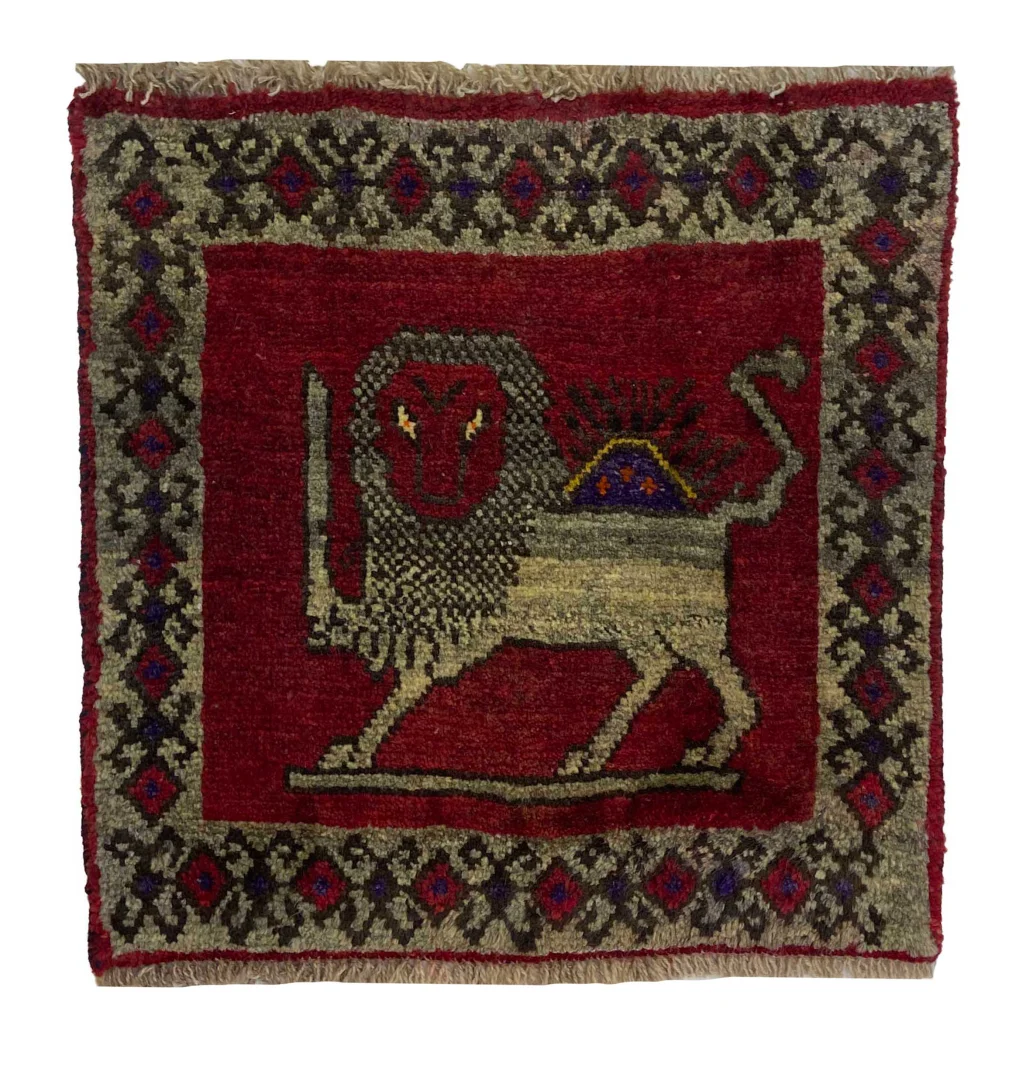
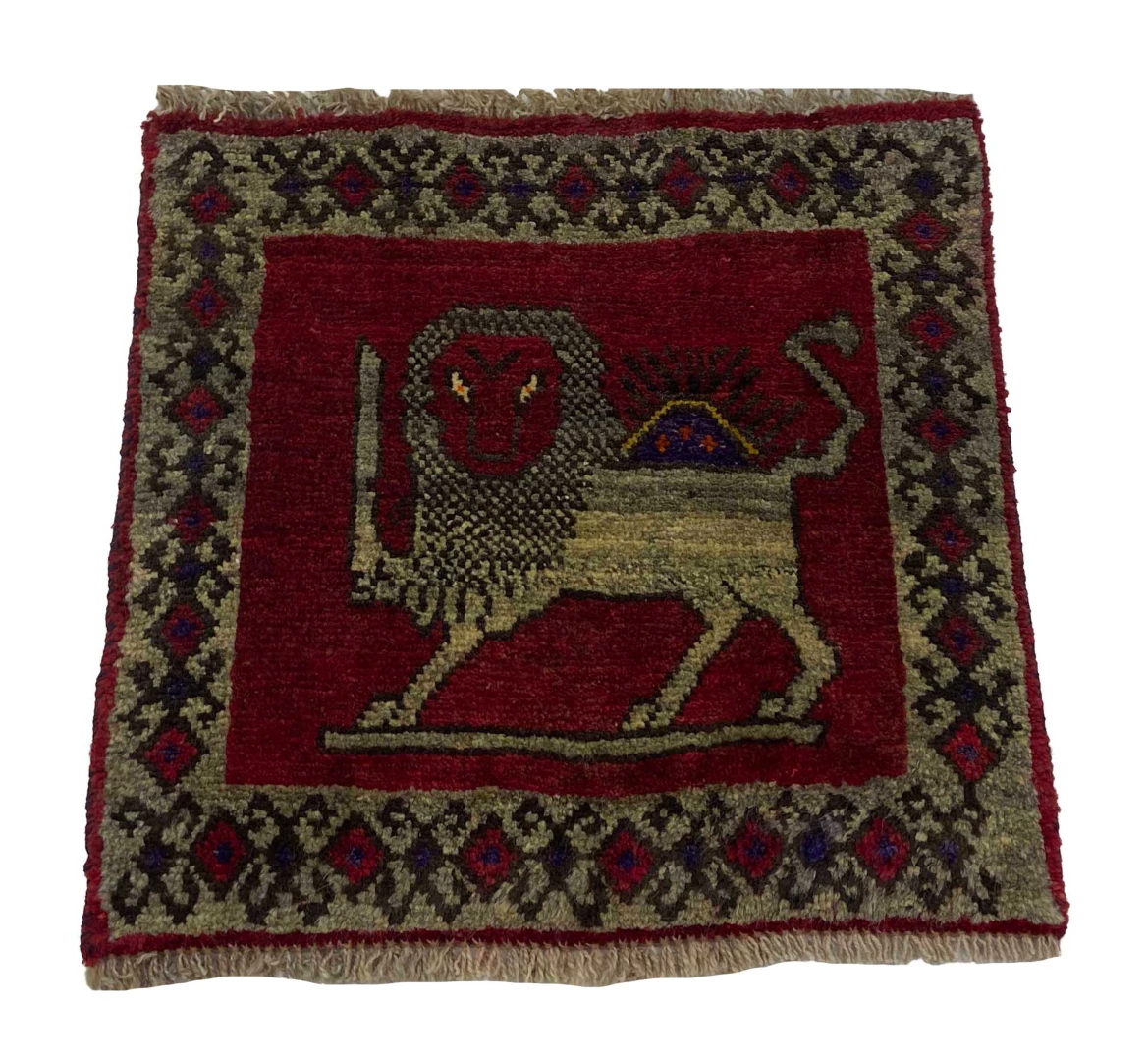
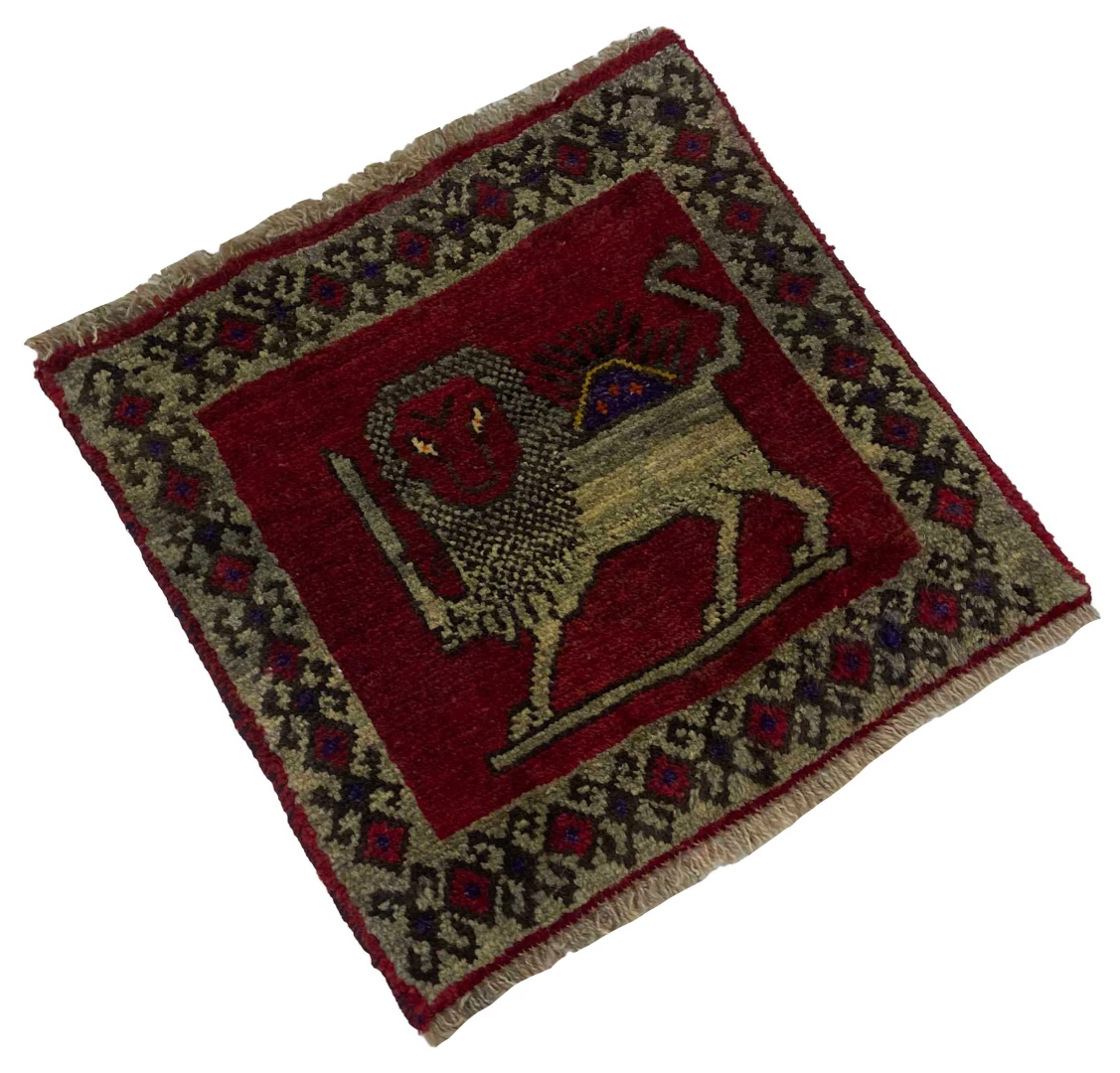

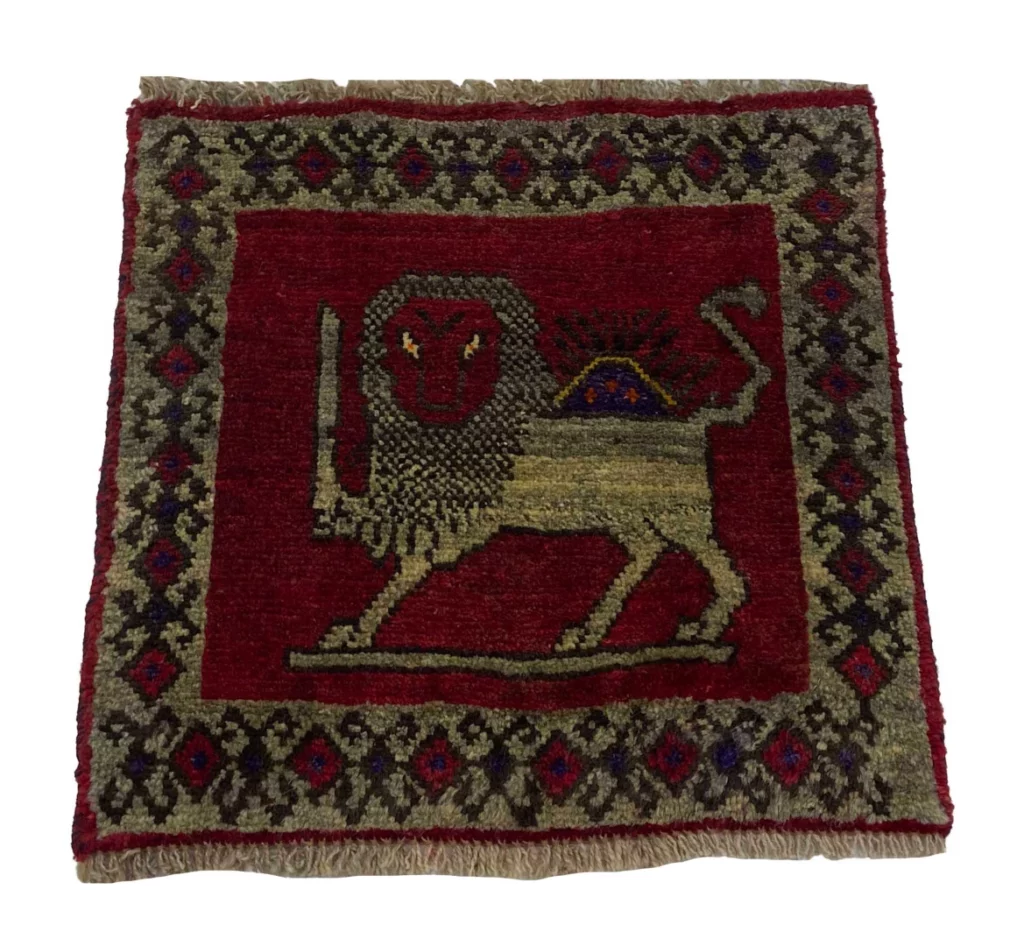
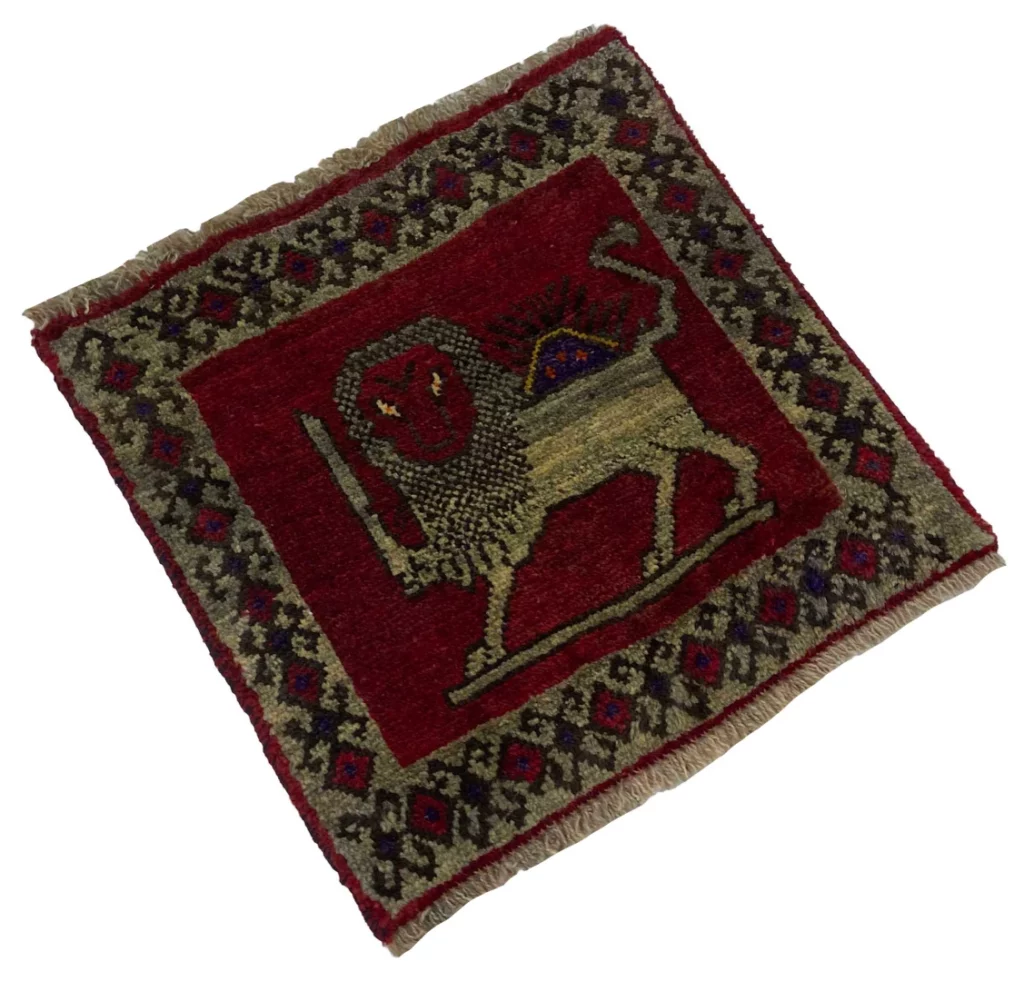
Persian Rug Fars 55 x 55 cm Wool Hand-knotted
€ 510
Hand-knotted Ghashghai Persian Rug from Fars | Knot density: 180,000 – 250,000 knots/m² | Material: pile natural wool | Size: 55×55 cm | Pattern: Geometric ornaments | Condition: High-quality workmanship
1 available
- ✓Free Shipping in EU
- ✓2-5 Business Days Delivery
- ✓14-Day Return Policy
- ✓Worldwide Shipping on request
 SECURE PAYMENT
 SHIPPING PARTNERS
Inventory number: 5AB26CED
Description
Fars Persian Rug
Material and Craftsmanship
This Ghashghai Persian rug is made from natural wool and hand-knotted. The wool forms the pile and gives the surface a natural textile feel. As a traditional rug material, wool is well suited to a tactile floor covering and contributes to the characteristic appearance of a piece made by hand.
The workmanship is described as high quality. Each knot is made manually, so the production does not follow the completely uniform rhythm of industrial manufacture. This gives the rug the distinct character of a handmade one-off. In the Ghashghai tradition, rugs are knotted without a fixed, fully predetermined plan; the design develops through the working process and combines practical knowledge with freedom of execution.
Natural wool and manual production define the material character of this rug. Wool has long been central to nomadic rug making because it is available, versatile and suitable for use as pile. Here, careful execution is expressed through the high-quality workmanship and through the clearly hand-created structure of the finished textile.
Origin and Tradition
This rug comes from southern Persia, from Fars Province, and belongs to the Ghashghai tradition. The Ghashghai are a nomadic people of the region. Their rugs are connected with a way of life in which textile work, wool and the transmission of design knowledge have an important place. A Ghashghai rug is therefore not only a floor covering but also an expression of a regional and cultural knotting tradition.
Fars is one of the recognised rug-making regions of southern Iran. The province contains varied natural environments, while the lives of nomadic groups have traditionally involved movement through these landscapes. Such surroundings influence the visual language of the rugs. Nature, mountains and travelled landscapes are not usually represented as literal views; instead, they are transformed into simplified forms that belong to an inherited decorative vocabulary.
The Ghashghai tradition is marked by independence in handcraft and by direct, intuitive composition. Working without a previously fixed plan does not mean working without skill. The forms are based on experience, memory and a repertoire of recurring motifs. Weavers know the basic shapes and arrange them as the work progresses. The regional language remains recognisable, while every individual piece takes its own course.
Iranian nomadic rugs are often considered in relation to their practical use. They were made to be useful and durable, while also expressing ideas about order, nature and community. Ghashghai rugs therefore combine geometric clarity with a lively arrangement that is not necessarily perfectly schematic. This relationship distinguishes them from strictly planned workshop patterns and helps explain their particular handmade character.
Fars can also be compared with other Persian rug traditions. Shiraz rugs likewise come from the Fars region and may show related colours or design ideas, although the range description places them generally in a lower quality category. Tabriz is known for elaborate patterns and the use of silk, while Qum is valued for fine detail and high knot densities. Isfahan is associated with refined craftsmanship and vivid colours. These comparisons clarify the character of the Ghashghai tradition without treating the different origins as interchangeable.
Design and Pattern
The design of this rug consists of geometric ornaments. Geometric forms establish a clear visual order without making the composition feel purely austere. Lines, angles, diamonds and repeated signs can be linked into a coherent whole. In Ghashghai rugs, this order emerges from the combination of inherited forms and the individual decisions made during knotting.
The ornament is closely connected with the Ghashghai visual world. Motifs may be inspired by nature, mountains and the landscapes through which nomadic groups travel. Experiences and surroundings are translated into an abstract language of form. The rug does not document a landscape literally; it offers a textile interpretation of movement, space and nature. Its geometric reduction makes these references part of a regional design tradition.
Ghashghai rugs are known for lively colours, with reds and browns often taking a leading role. Red can give a composition warmth and visual presence, while brown supports an earthy impression. Together, these colour fields can reinforce the connection with the landscape of southern Persia and with nomadic life. The colour effect remains tied to the individual handmade design and works together with the geometric ornaments to define the appearance of this piece.
The design should not be understood as an identical repetition of an industrial pattern. In a hand-knotted work, motifs are shaped by the maker’s rhythm and by decisions made as the rug develops. This is why traditional Ghashghai ornaments can appear familiar while still remaining individual. Repeated forms create continuity, while small variations preserve the evidence of handcraft.
Geometric ornament is also found in other Iranian nomadic rugs, including Bakhtiari and Lori examples. Those traditions may combine geometric and floral patterns. The comparison is stylistic only; the rug described here remains a Ghashghai from Fars. Its identification rests on its origin in southern Persia, its connection with Fars Province, its Ghashghai tradition and its geometric decoration.
Special Features
A defining feature of this piece is the combination of Ghashghai origin, natural wool and geometric ornament. The high-quality workmanship accompanies the individual character created by hand production. The rug therefore brings together a traditional material and a design language shaped by the culture and natural surroundings of southern Persia.
The handmade process, carried out without a rigidly predetermined overall plan, gives the rug its own textile handwriting. Each detail develops during the work. In this way, the regional tradition is not merely reproduced as decoration; it becomes visible in a particular one-off piece. The warm colour range described through reds and browns supports its place within the lively design vocabulary of Ghashghai rugs.
The rug can be used in a living room, dining area or bedroom. Its geometric design can be combined with both modern and traditional interiors. It can serve as a clearly defined textile element and bring the colours and ornaments of the Fars tradition into different room settings.
FAQ
What distinguishes a Ghashghai rug?
A Ghashghai rug represents the nomadic rug tradition of southern Persia, particularly Fars Province. Its defining combination is natural wool, handwork and geometric ornament. The design may draw on mountains, landscapes and nature. Lively colours, especially reds and browns, are also part of the described visual language. This piece combines those regional characteristics with high-quality workmanship and an individual hand-knotted execution.
How should the rug be cared for?
For regular care, the rug should be vacuumed gently. A careful approach to the pile helps avoid unnecessary strain on the natural wool and the handmade surface. If more intensive cleaning is needed, professional rug cleaning should be used. Direct sunlight should be avoided where possible so that the colours do not fade. Suitable care preserves the surface and the appearance of the geometric ornaments.
Where can a Ghashghai rug be used?
The rug is suitable for a living room, dining area or bedroom. Its geometric ornaments give the room a distinct textile structure, while the warm reds and browns provide a cohesive colour foundation. The pattern can be integrated into modern as well as traditional interior concepts. It can therefore serve as an independent accent or complement colours and materials already present in the room.
Additional information
| Design Style | |
|---|---|
| Size | |
| Shape | |
| Origin | |
| Knot Density | |
| Material |
Related products

Persian Rug Kashan 345 x 253 cm Wool Hand-knotted
€ 2910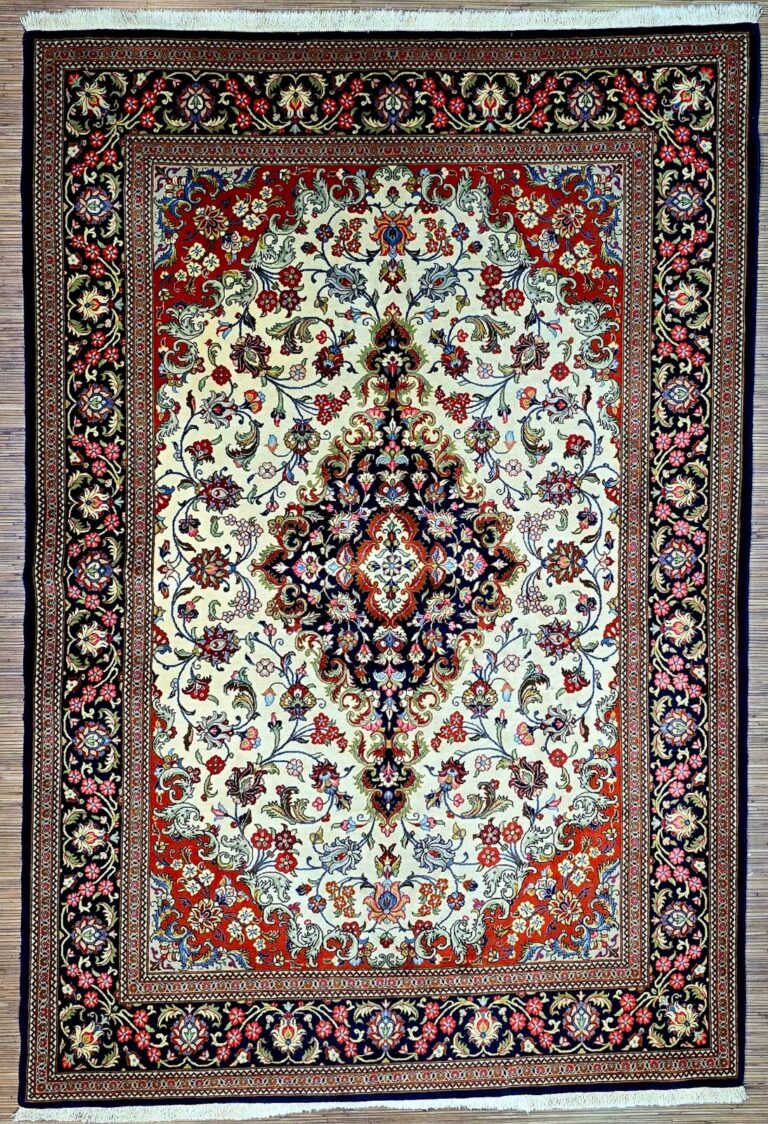
Persian Rug Qom 216 x 142 cm Wool Hand-knotted
€ 990
Persian Rug Tabriz 302 x 204 cm Wool Hand-knotted
€ 3600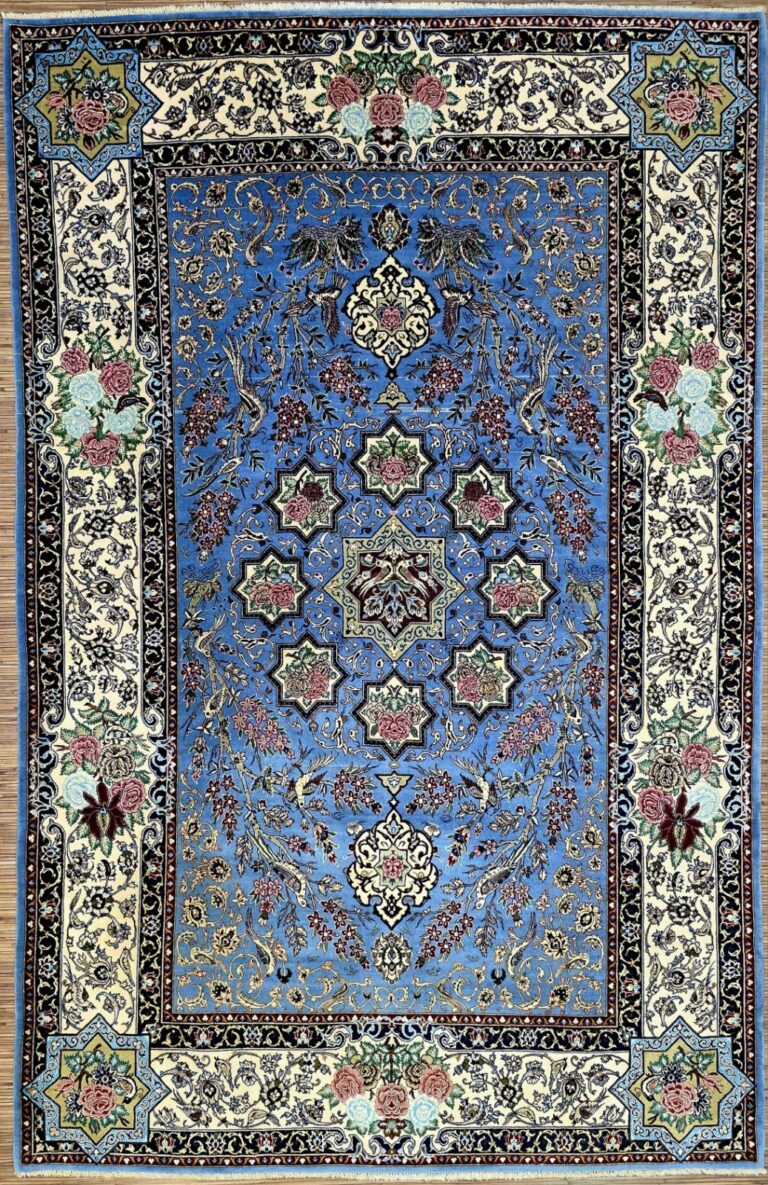
Persian Rug Isfahan 222 x 146 cm Silk Hand-knotted
€ 3905
Persian Rug Tabriz 293 x 203 cm Wool & Silk Hand-knotted
€ 3300
Persian Rug Rosenbidjar 222 x 131 cm Wool Hand-knotted
€ 1530
Oriental Rug Kashmir 285 x 185 cm Silk Hand-knotted
€ 1230
Persian Rug Farahan 235 x 154 cm Wool Hand-knotted
€ 990