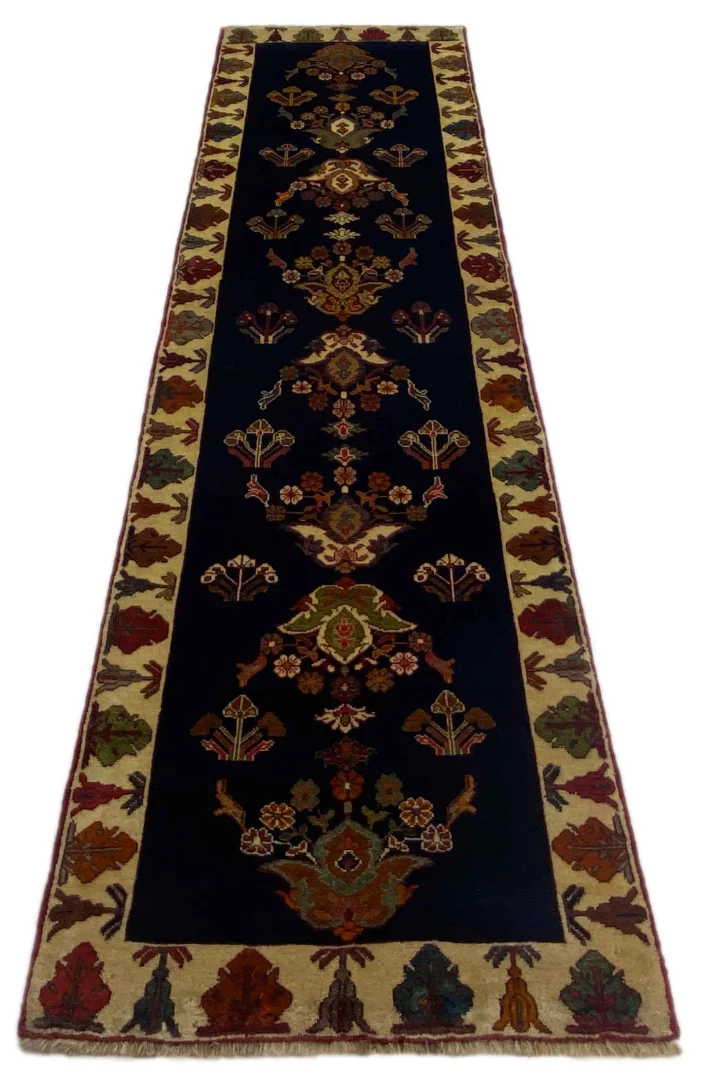
This Gabbeh Shuli is a hand-knotted Persian rug made from high-quality virgin wool. The wool forms the pile and gives the surface a soft, pleasant feel. As a natural fibre, virgin wool is known for its softness and durability, qualities that have made it an established material in rug making. In this Gabbeh Shuli, the wool is combined with careful hand craftsmanship and an individually conceived design.
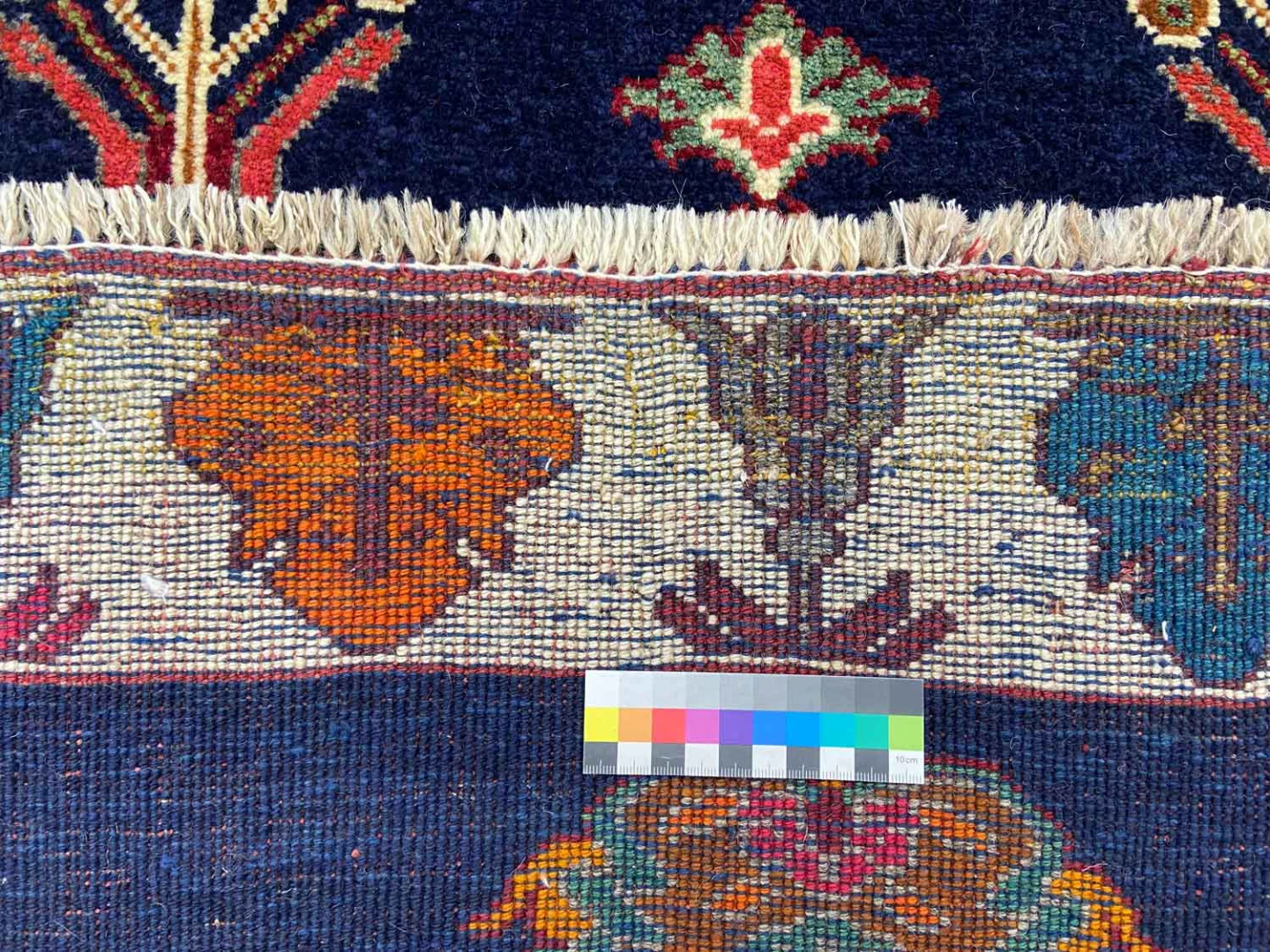
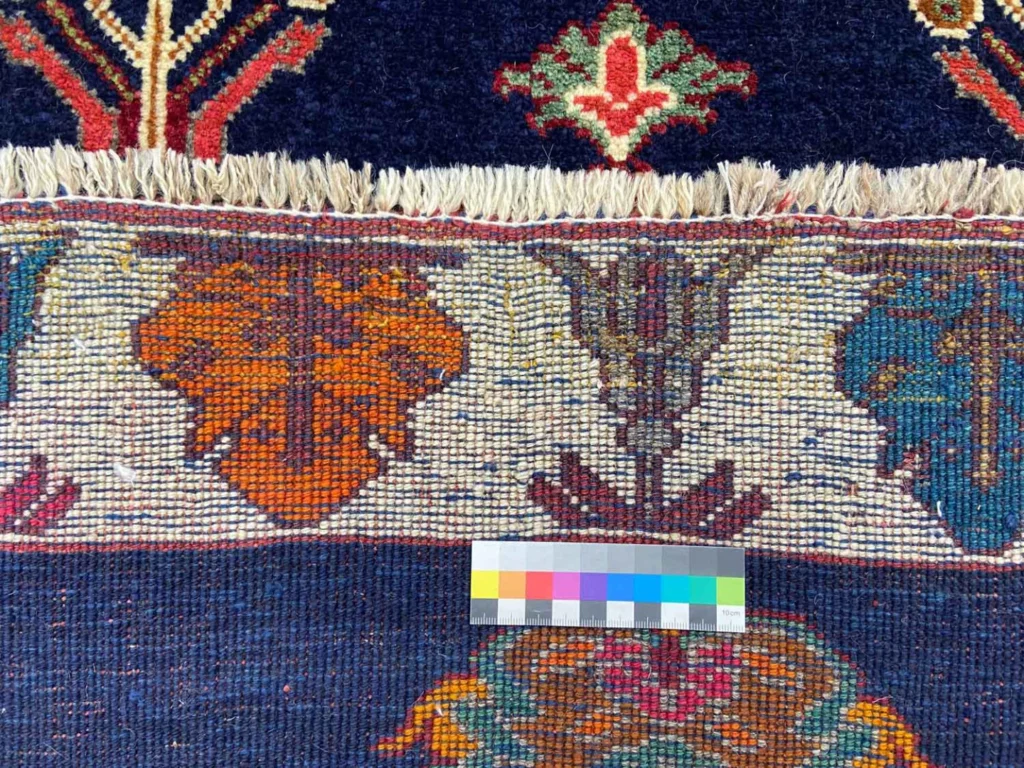
The rug has a knot density of 90.000 to 180.000 knots per square metre. This density is one of the specific characteristics stated for the piece and reflects a detailed form of hand construction. Each knot is incorporated individually into the textile structure. The resulting surface brings together the substance of the wool, the knotting technique and the visual arrangement of the pattern.
Virgin wool also contributes to the intensity of the colours. Natural materials are valued in Gabbeh production for the tactile quality they provide and for their suitability as a floor covering. The pile of this Gabbeh Shuli is explicitly described as high-quality virgin wool, so the material shapes both the feel of the rug and the way its colours appear across the design.
Origin and Tradition
The Gabbeh Shuli comes from the Fars region in southern Persia. Fars is recognised for its long tradition of rug making and for the range of rug types produced there. Within this regional culture, the Gabbeh Shuli represents a form of Persian rug making that places handwork, natural wool and an open approach to design alongside one another.
Gabbeh rugs are commonly associated with the nomadic and rural weaving traditions of southwestern Persia. In these traditions, practical use, resilient materials and a direct textile character are closely related. A design does not have to follow the tightly prescribed structure of a court carpet. It can leave room for simplified forms, personal ideas and the immediate interpretation of the weaver. Gabbeh therefore describes more than a surface appearance: it refers to a tradition in which wool, colour and motif are given a direct role.
Fars has a diverse carpet culture rather than a single uniform design language. Alongside Gabbeh, the region is also associated with rug types such as Bakhtiari and Kerman. These may be connected with other visual approaches, including more detailed drawing, floral motifs, geometric elements and lively colour arrangements. The Gabbeh Shuli belongs to this wider regional heritage while being distinguished by its free and imaginative patterning.
The materials for this Gabbeh Shuli come predominantly from Fars. The virgin wool is obtained and processed locally. This connects the material description with the stated region of origin. It also reflects a regional production practice in which available natural fibre is prepared for textile work and then turned into a hand-knotted rug.
The Fars tradition illustrates how rugs can preserve knowledge of local materials, handwork and inherited making processes. Knotting is not limited to placing individual knots. It involves preparing the wool, building the textile structure, arranging colour areas and carrying out the chosen motifs. In the Gabbeh Shuli, the freedom of the design does not replace this technical foundation. It reveals the connection between a skilled process and the creative decisions made during the work.
Regional rug traditions also show how a practical household object can carry cultural information. The choice of wool, the handling of colour and the decision to use an open pattern all belong to the vocabulary of the weaving community. Fars provides the geographical and cultural setting for this rug, while the Gabbeh Shuli designation identifies the particular type and its expressive direction. The result remains clearly rooted in Persian rug making without relying on a rigidly repeated composition.
Design and Pattern
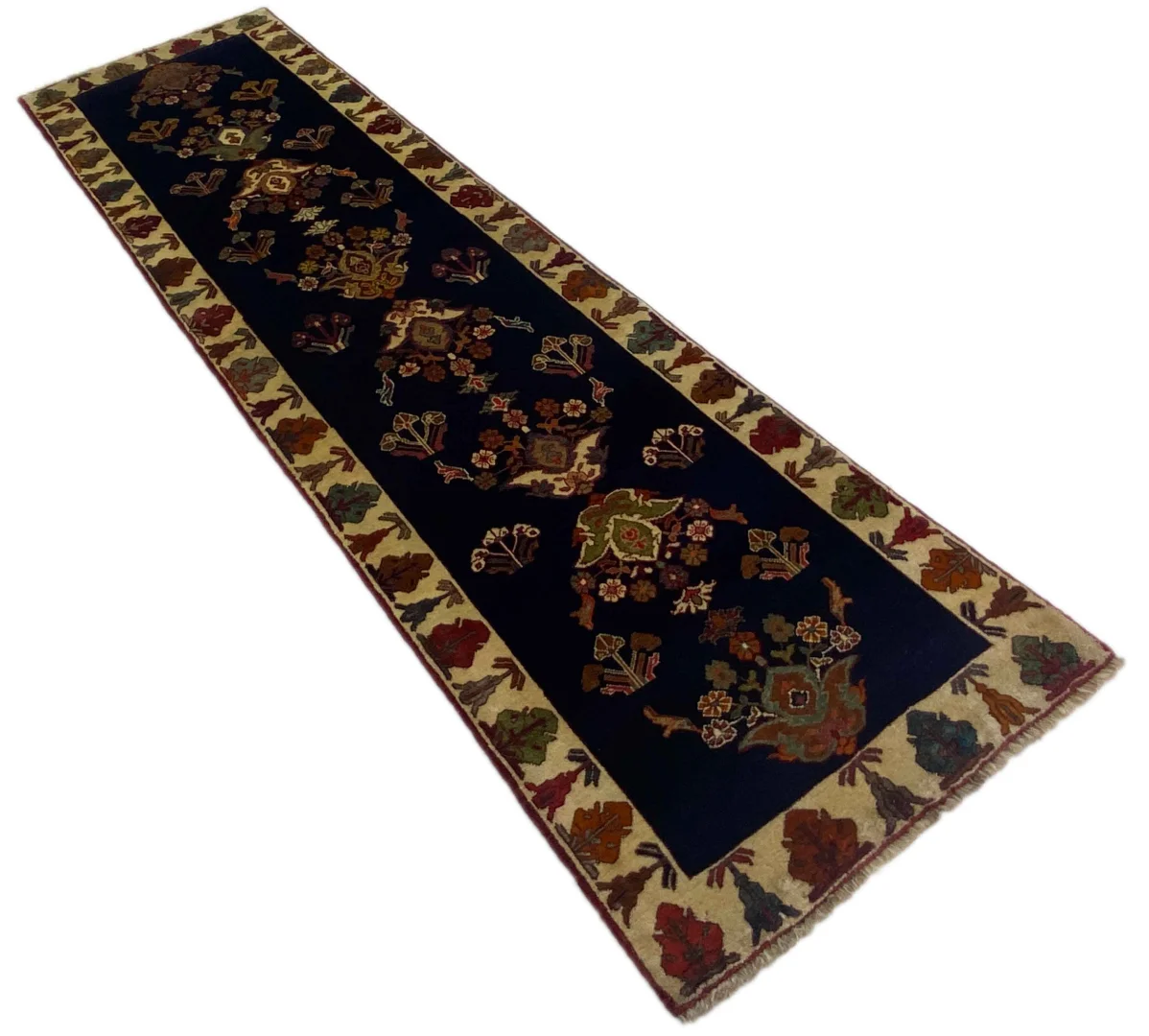
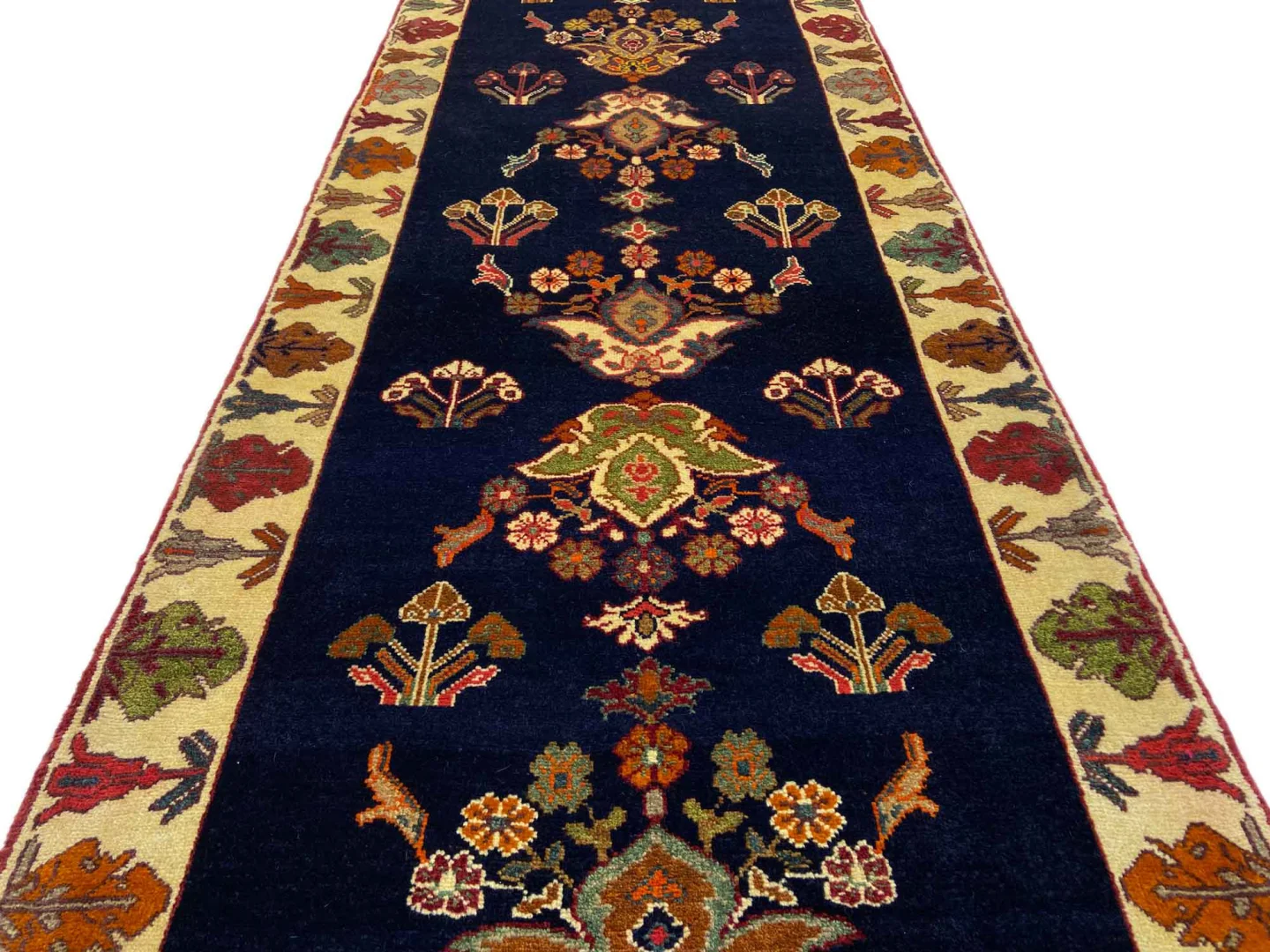
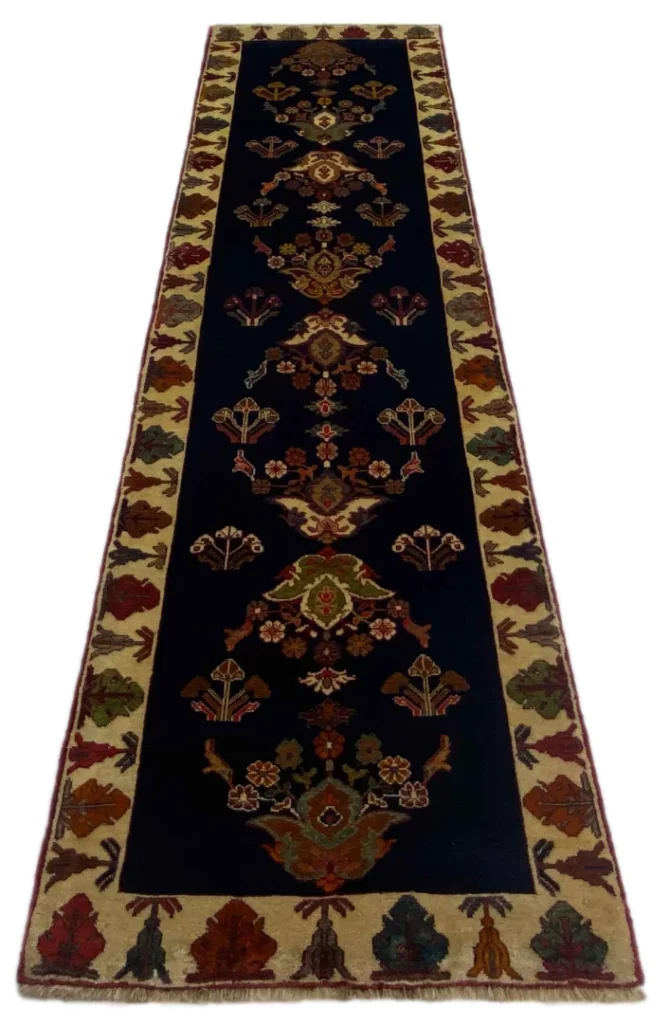
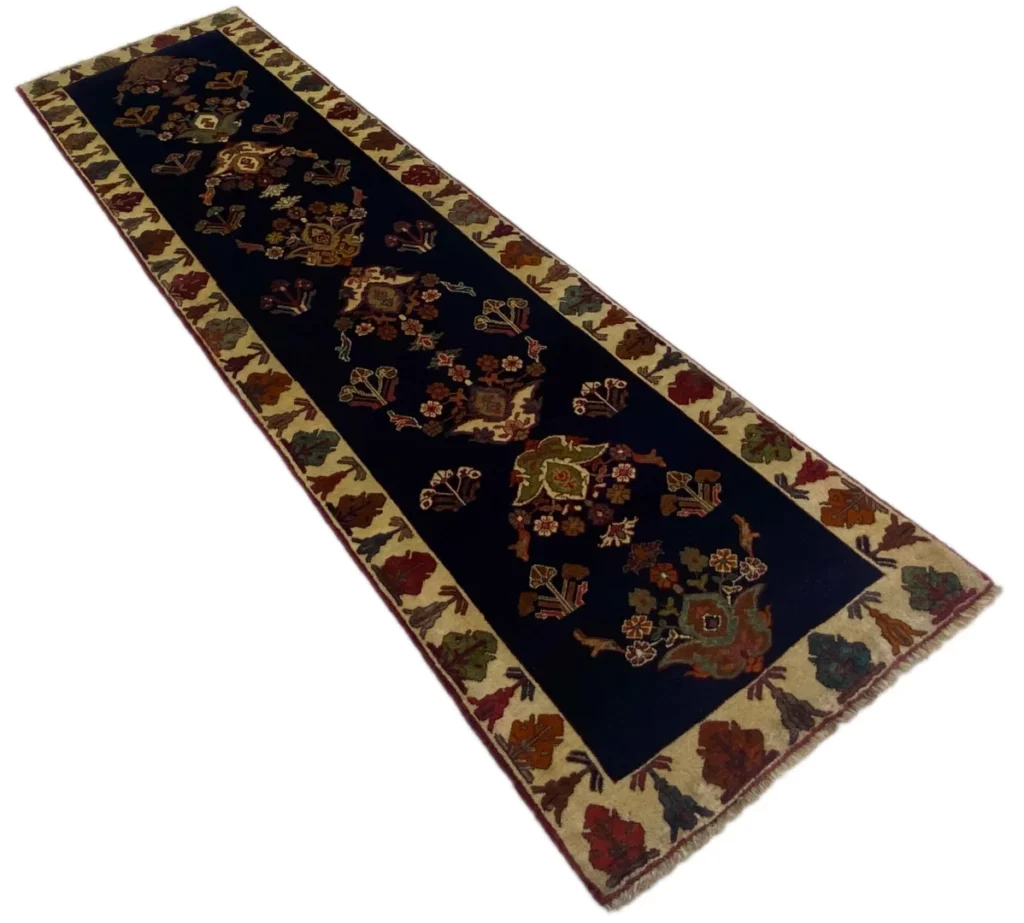
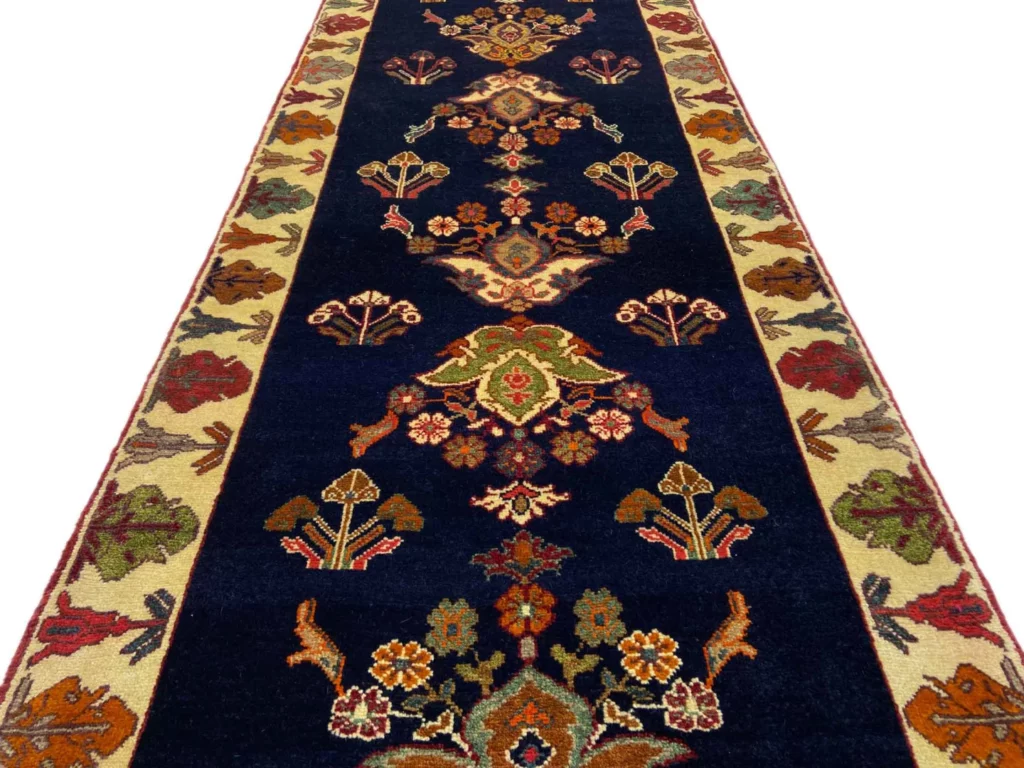
The design of this Gabbeh Shuli is described as free and imaginative. It is not presented as a strict reproduction of one fixed ornament, but as an individual composition shaped by creative ideas. The weavers create the patterns with imagination and freedom. Consequently, each piece has its own appearance and can be understood as carrying its own visual story. This individuality is a defining feature of the rug described here.
Gabbeh designs can use readily legible forms while retaining considerable creative openness. Lines, colour fields and individual motifs do not necessarily have to be joined into a densely filled overall drawing. An open arrangement gives the composition a direct visual presence. In a Shuli Gabbeh, the emphasis is therefore on the character of the design rather than on the exact repetition of a standard decorative scheme.
The colours associated with this Gabbeh Shuli include warm red, soft beige tones, elegant grey and earthy brown. Together they create a palette that combines warm accents with subdued natural shades. Red may provide a clear point of emphasis, while beige, grey and brown can establish a quieter visual ground. Their exact relationship belongs to the individual free design. The colour effect is experienced together with the texture and natural character of the virgin wool pile.
The Gabbeh approach to pattern allows decorative expression to remain clear and readable. A motif may be imaginative without being explained through a multitude of small details. The eye can first register the broad relationship between colour and form, then recognise the individual elements within it. This quality helps explain why Gabbeh rugs can sit alongside both traditional furnishings and more contemporary interiors.
Fars is also connected with rugs using floral and geometric motifs, which form part of the broader range of regional carpet expression. The Gabbeh Shuli differs from a prescribed floral or geometric layout through its freer design language. It does not simply reproduce a set composition; instead, the weavers’ creative interpretation is more visible. The rug thus remains part of Persian tradition while presenting a pattern that is specific to its own making.
The Shuli designation identifies the particular Gabbeh form represented by this rug. Combined with its Fars origin and free, imaginative designs, it describes a coherent relationship between material, technique and appearance. The surface is not merely a coloured field. It is the permanent result of an individual idea translated into wool through hand knotting, with every element dependent on the work of the person who created it.
Because the pattern is freely conceived, its character should be read as individual rather than as a claim to a standardised motif. This is important to the identity of a Gabbeh Shuli. The regional tradition supplies the material and technical background, while the pattern provides room for variation from one piece to another. The rug’s visual language is therefore connected with Fars and Gabbeh without suggesting that every rug from the region must look the same.
Special Features
This Gabbeh Shuli brings together hand-knotted construction, high-quality virgin wool and an unrestricted imaginative pattern. Its stated knot density of 90.000 to 180.000 knots per square metre is another specific feature of the piece. The origin in Fars and the local sourcing and processing of the virgin wool add a clear regional connection between the rug and its material.
The rug is described as being in excellent condition. Its colour range extends from warm red through soft beige and grey to earthy brown. This makes the design adaptable to different interior settings. As a runner, it is particularly suited to elongated areas and hallways; the living room and bedroom are also named as suitable settings.
As with every hand-knotted one-off, the precise impression of this rug comes from the relationship between fibre, knots and design. The Gabbeh Shuli can therefore be considered not only by its Persian origin and rug type, but also as an individual textile with its own pattern and material presence.
FAQ
How should I care for my Gabbeh Shuli?
Regular vacuuming helps remove loose dirt from the pile and keeps the surface clean. Direct sunlight should be avoided. If a stain occurs, use a mild soap solution and dab the affected area carefully. Rubbing vigorously is not recommended. Gentle treatment helps protect the surface and preserve the appearance of the virgin wool.
Where do the materials for the Gabbeh Shuli come from?
The materials come predominantly from the Fars region. The virgin wool is obtained and processed locally. The rug therefore has a direct connection not only to its stated region of origin but also to the natural material associated with that region. The high-quality virgin wool forms the pile and is central to the rug’s texture and craftsmanship.
Which rooms are suitable for the Gabbeh Shuli?
The Gabbeh Shuli can be used in several areas of the home. The living room, bedroom and hallway are named as suitable spaces. Its warm colours and creative patterns provide a visible textile accent in each of them. The runner format is especially appropriate for elongated areas, while the open design can be placed alongside both traditional and contemporary furnishing concepts.
To provide the best experiences, we use technologies like cookies to store and/or access device information. Consenting to these technologies will allow us to process data such as browsing behavior or unique IDs on this site. Not consenting or withdrawing consent, may adversely affect certain features and functions.
Functional Always active
The technical storage or access is strictly necessary for the legitimate purpose of enabling the use of a specific service explicitly requested by the subscriber or user, or for the sole purpose of carrying out the transmission of a communication over an electronic communications network.
Preferences
The technical storage or access is necessary for the legitimate purpose of storing preferences that are not requested by the subscriber or user.
Statistics
The technical storage or access that is used exclusively for statistical purposes.The technical storage or access that is used exclusively for anonymous statistical purposes. Without a subpoena, voluntary compliance on the part of your Internet Service Provider, or additional records from a third party, information stored or retrieved for this purpose alone cannot usually be used to identify you.
Marketing
The technical storage or access is required to create user profiles to send advertising, or to track the user on a website or across several websites for similar marketing purposes.

 SECURE PAYMENT
 SHIPPING PARTNERS


