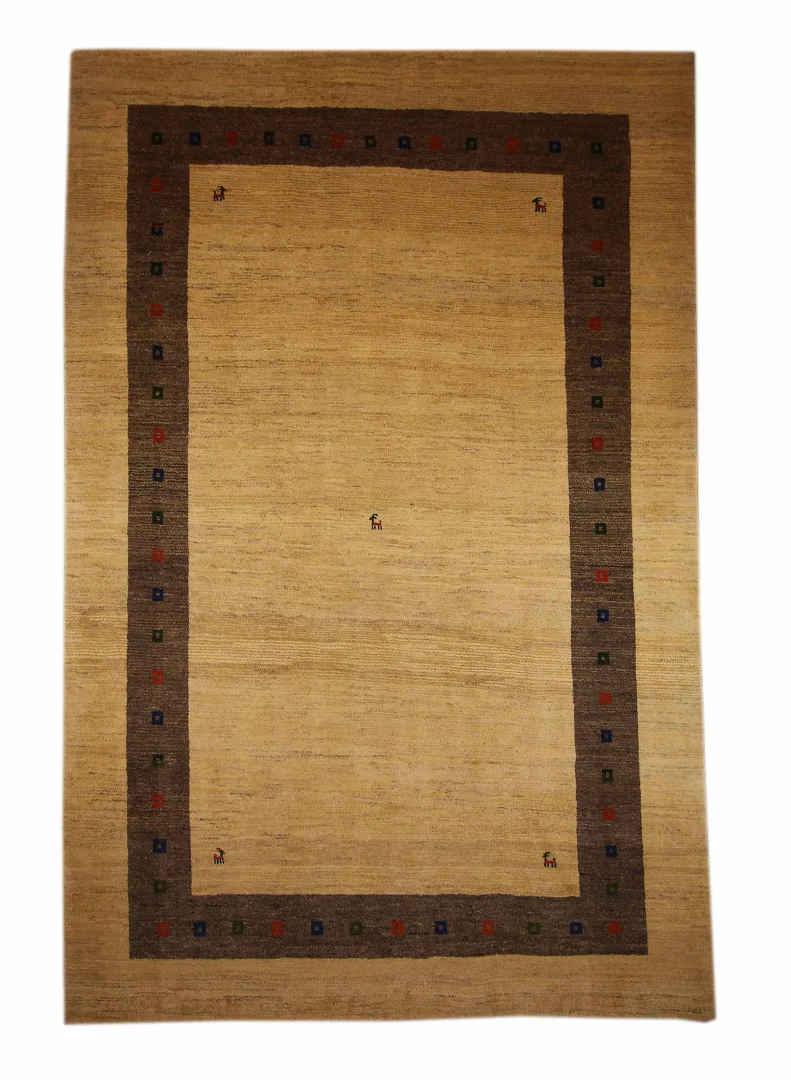
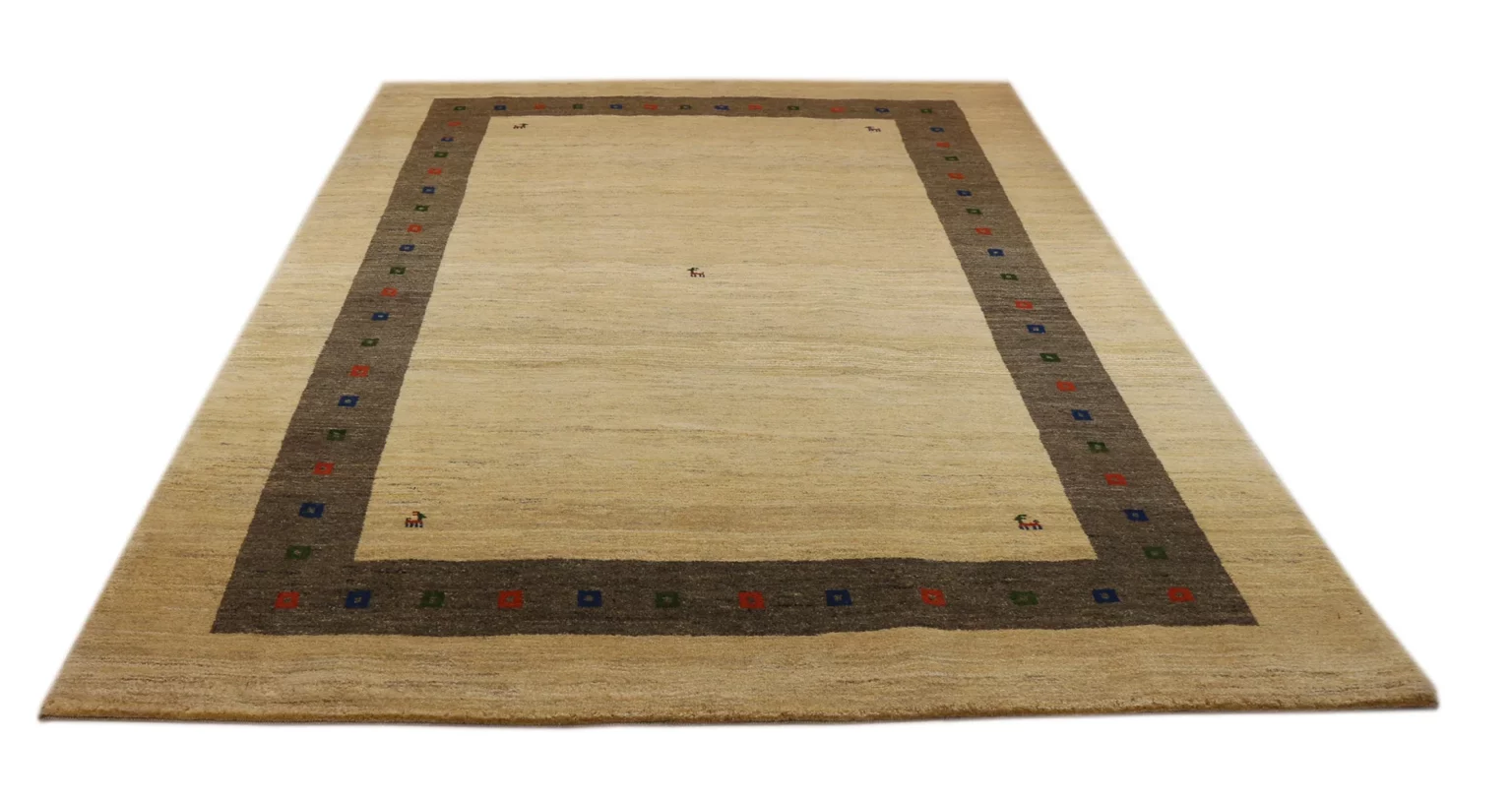
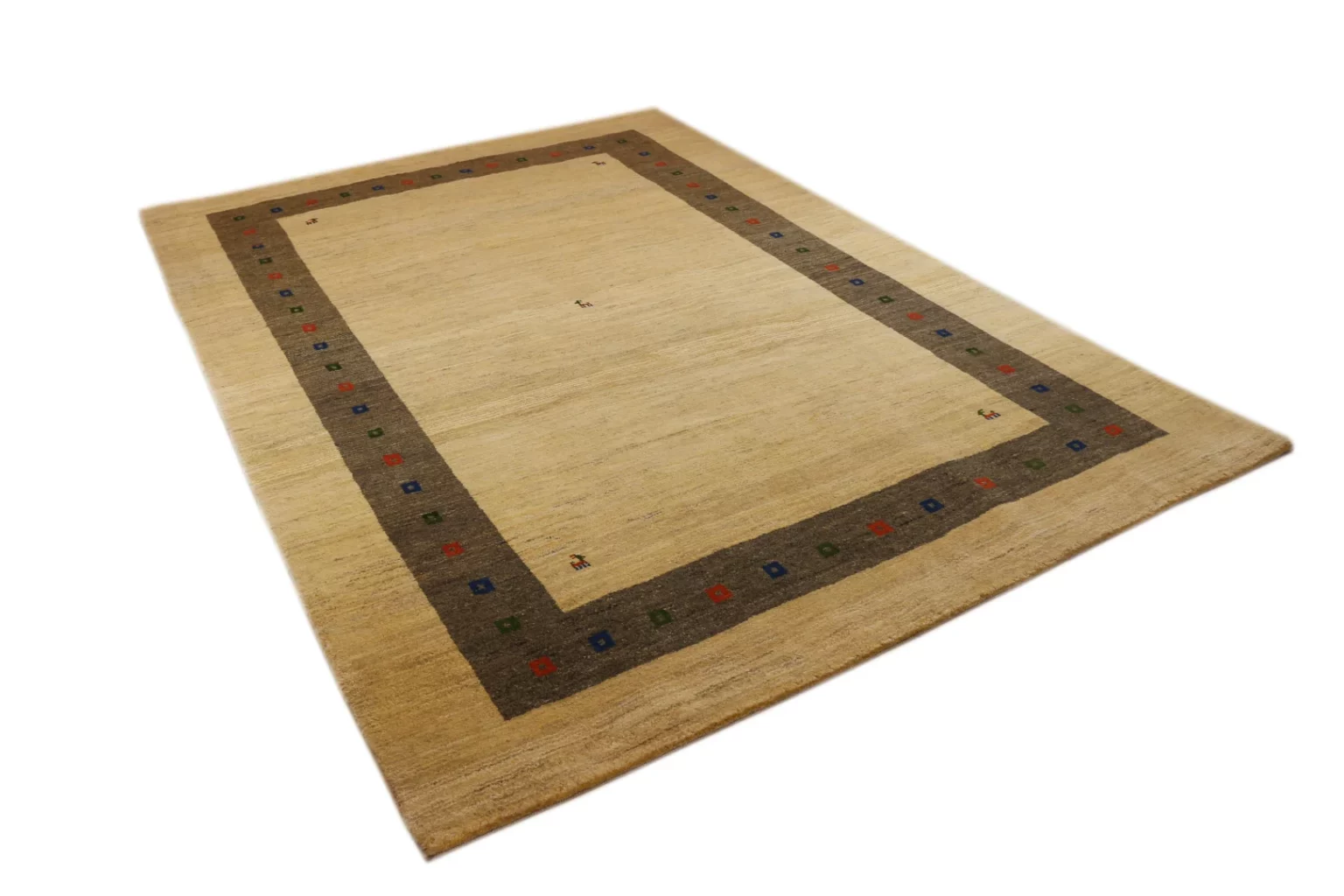
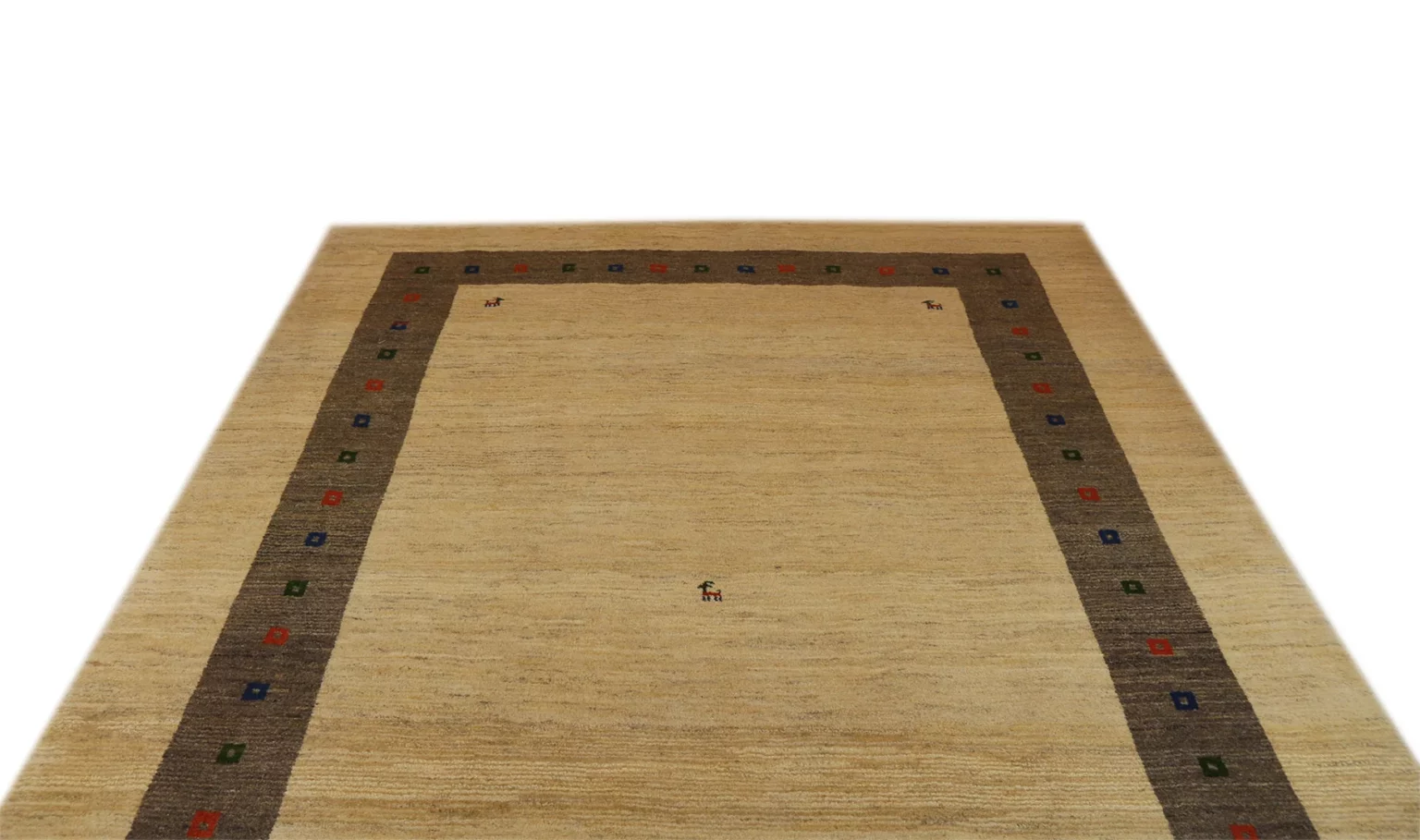
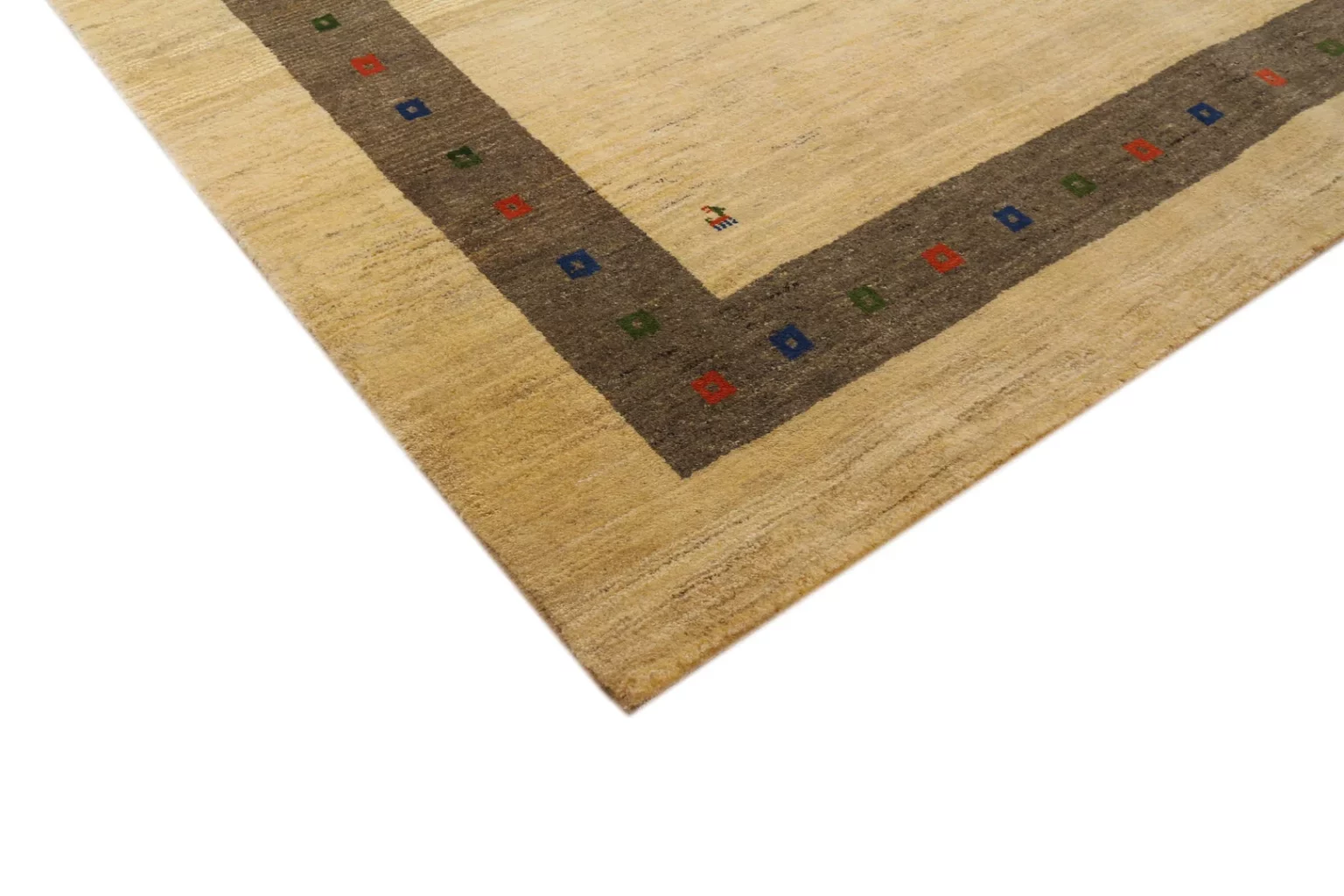
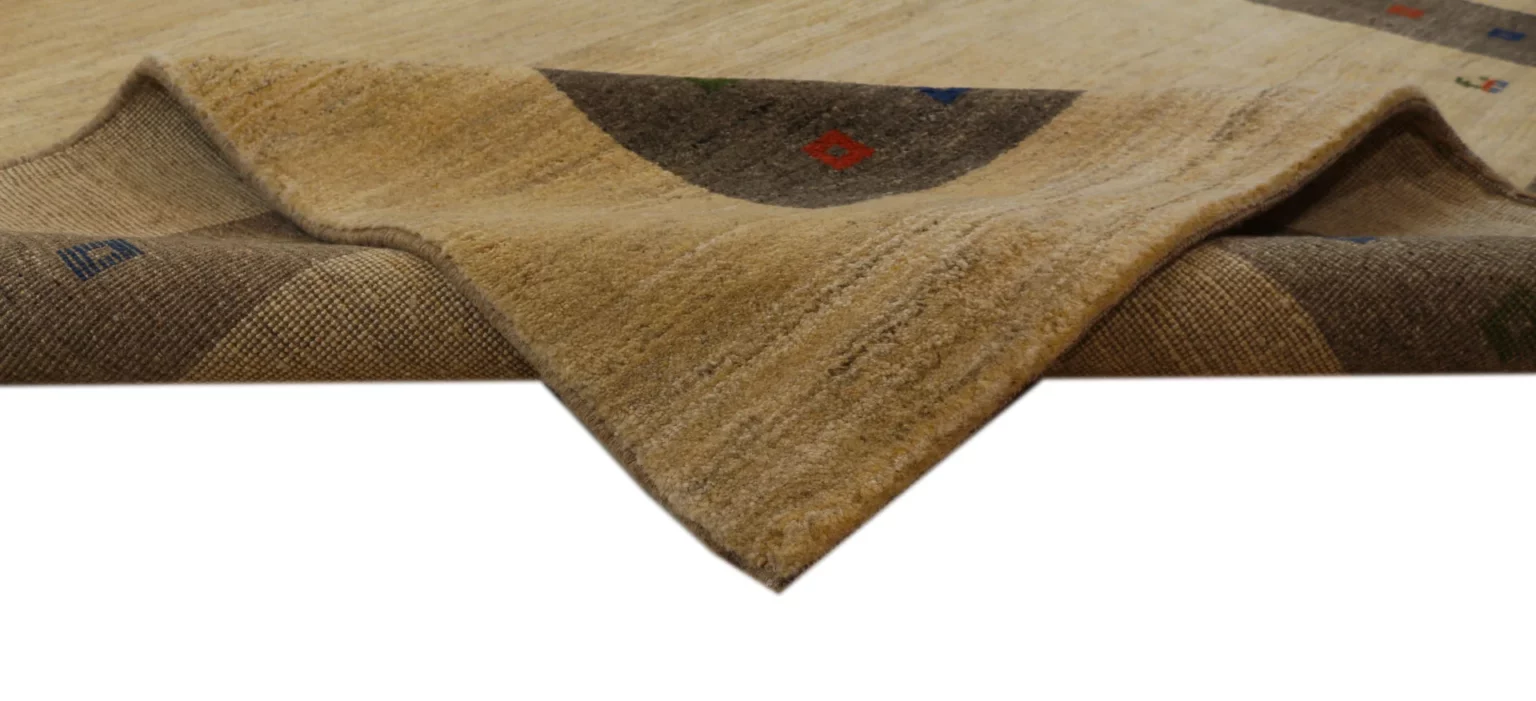
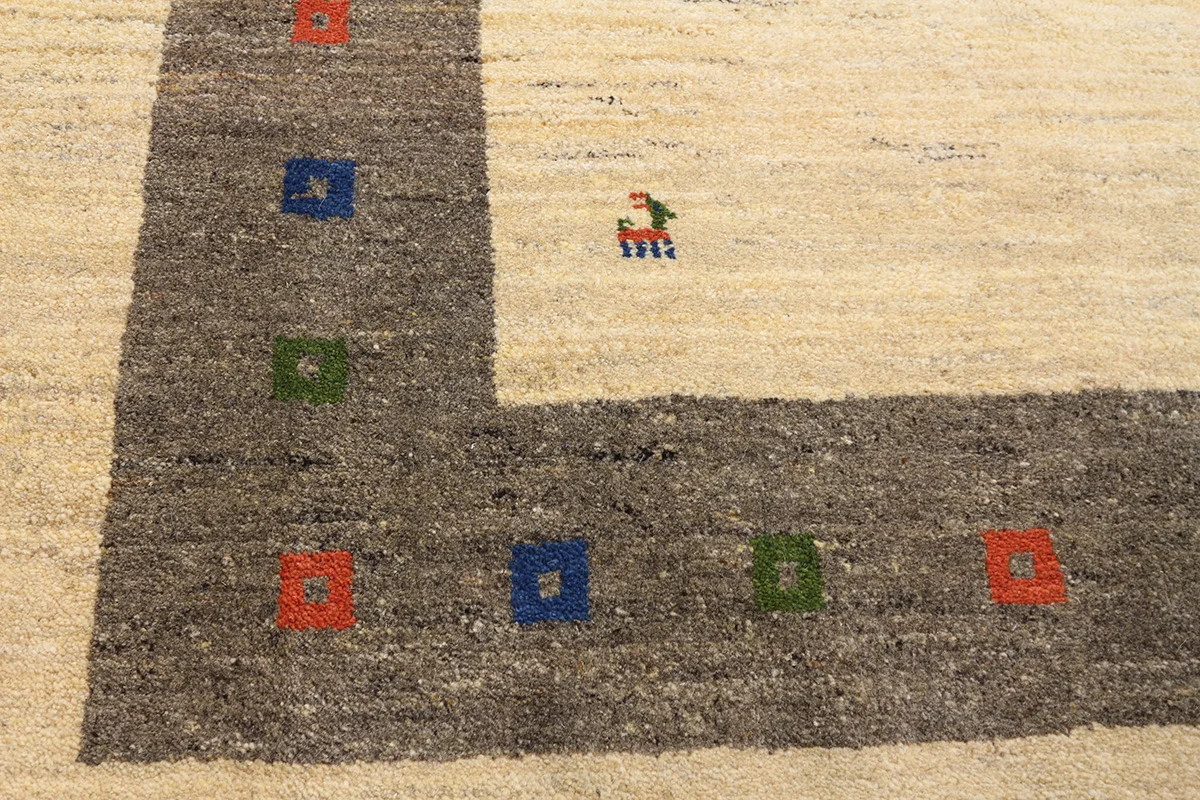
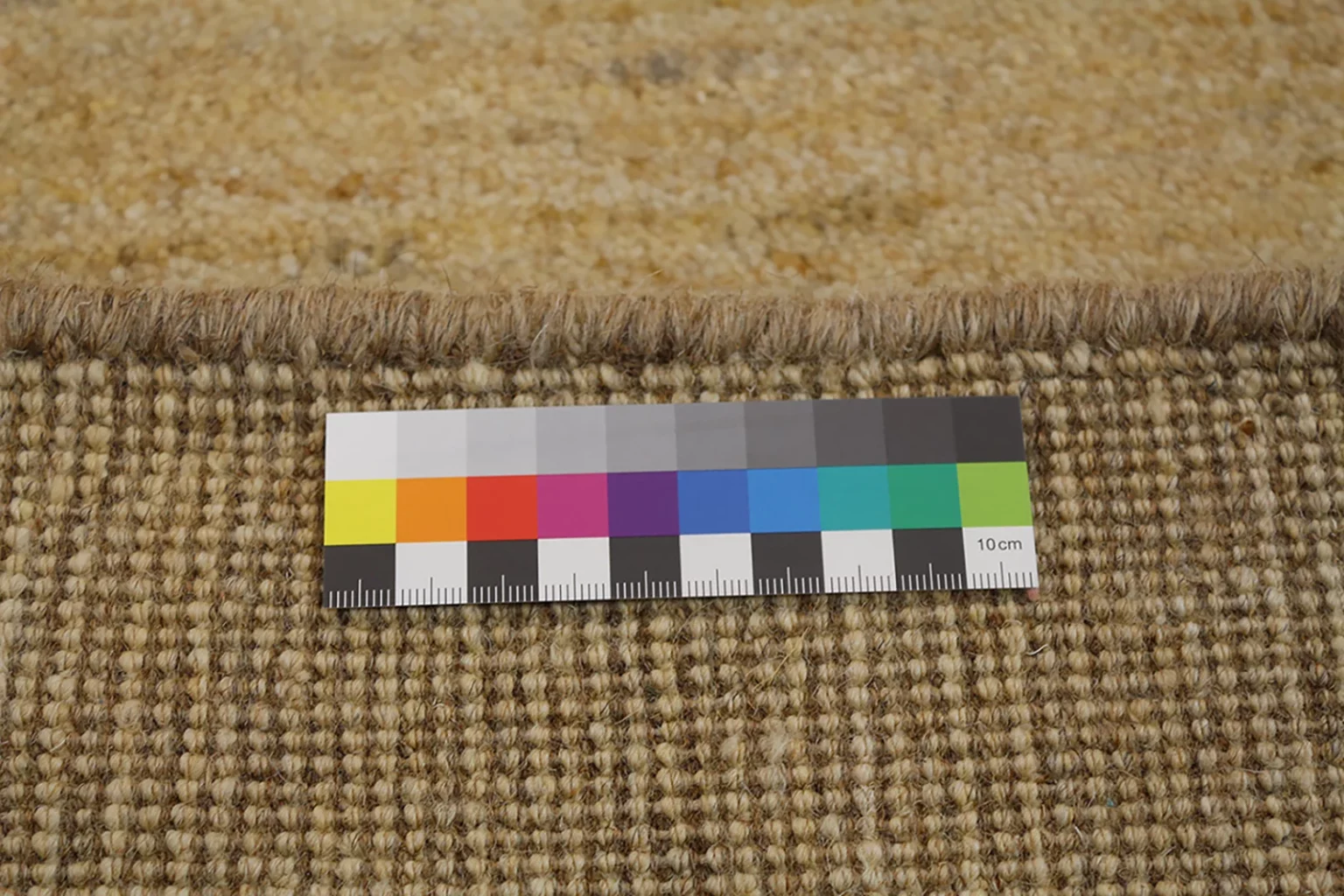
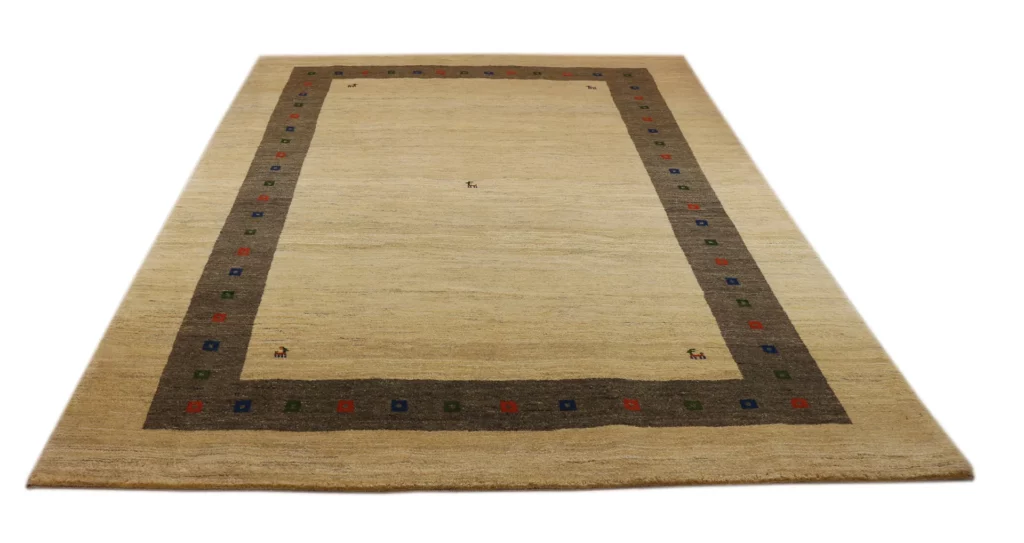
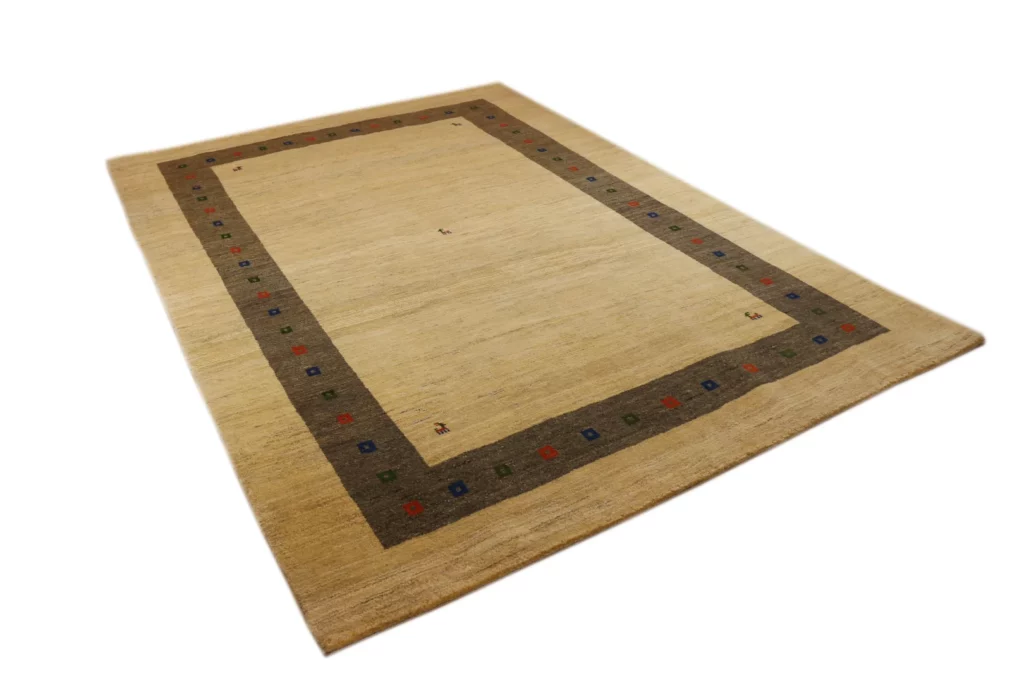
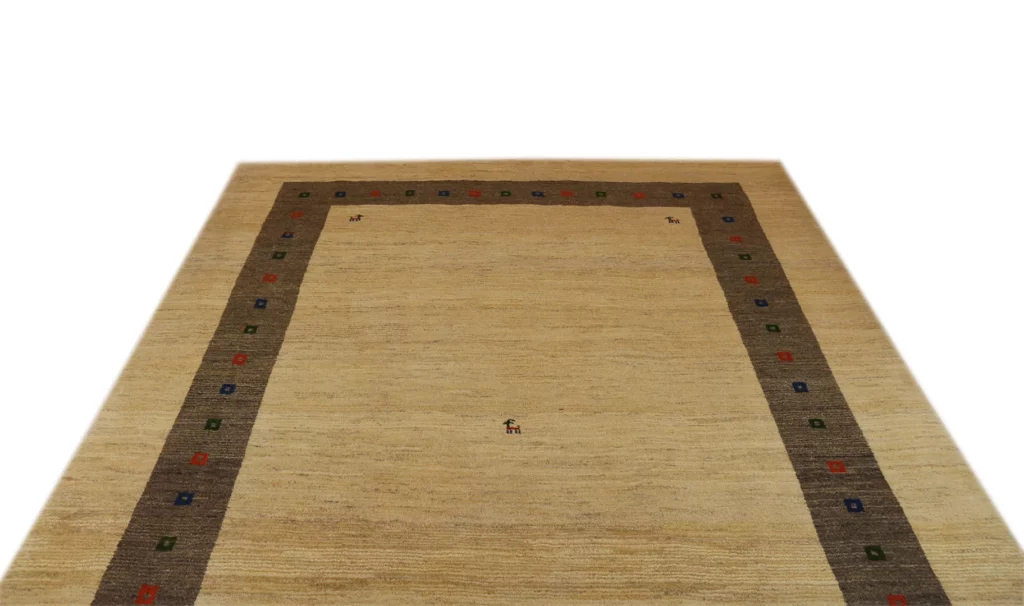
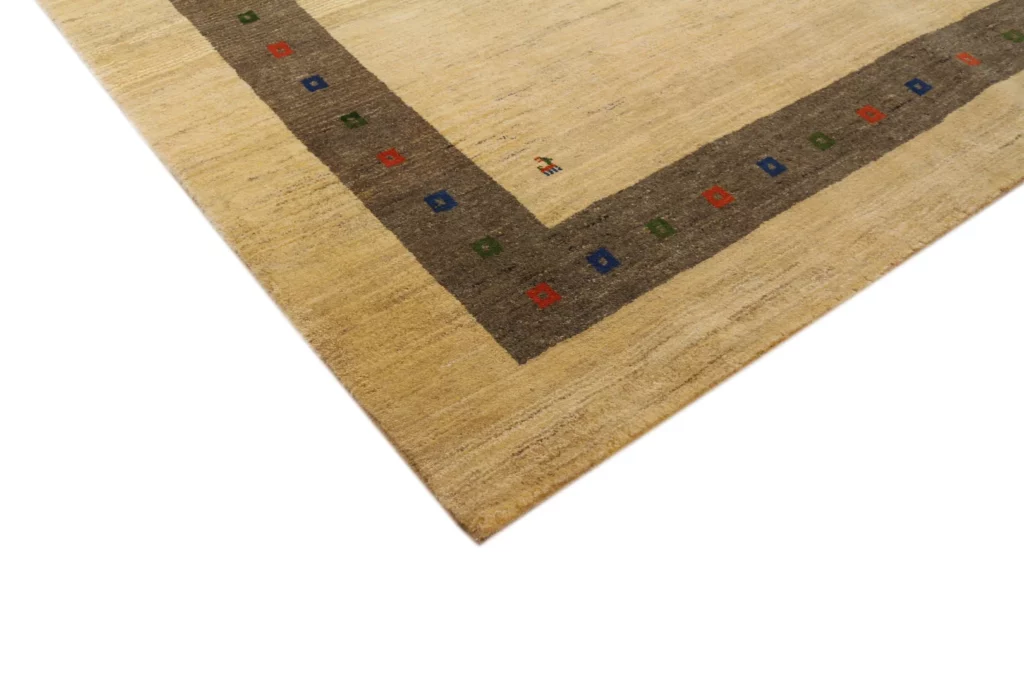
Persian Rug Fars 293 x 206 cm Wool Hand-knotted
Original price was: € 1692€ 1553Current price is: € 1553
Hand-knotted Fars Persian Rug | Knot density: 50,000 – 150,000 knots/m² | Material: Hand-spun sheep and goat wool pile | Size: 293 x 206 cm | Pattern: Abstract designs with large fields of colour and playful figures | Condition: Very good
1 available
- ✓Free Shipping in EU
- ✓2-5 Business Days Delivery
- ✓14-Day Return Policy
- ✓Worldwide Shipping on request
 SECURE PAYMENT
 SHIPPING PARTNERS
Inventory number: 4BC5C345
Description
Fars Persian Rug
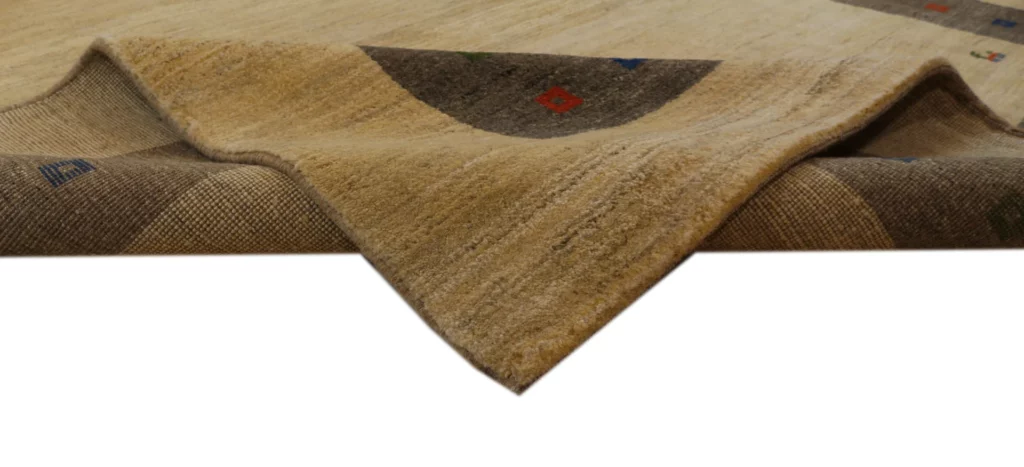
This Gabbeh Persian Rug comes from the Fars region and was made by Ghashghai nomads. Its high, soft pile is the first feature noticed on the surface. Abstract designs, broad areas of colour and playful figures give the piece a distinct visual language. The rug is hand-knotted, so it is a single handmade object rather than a uniform industrial product. Its character comes from the direct relationship between the wool, the pile and the simplified composition.
Material and Craftsmanship
The pile is made from hand-spun sheep and goat wool. This natural wool provides the soft touch associated with the rug and supports the comfortable feel of its high pile. Hand-spinning and hand-knotting are part of the material and production description of this particular piece. They also explain why a handmade Gabbeh has an individual surface and cannot be exactly duplicated by another rug.
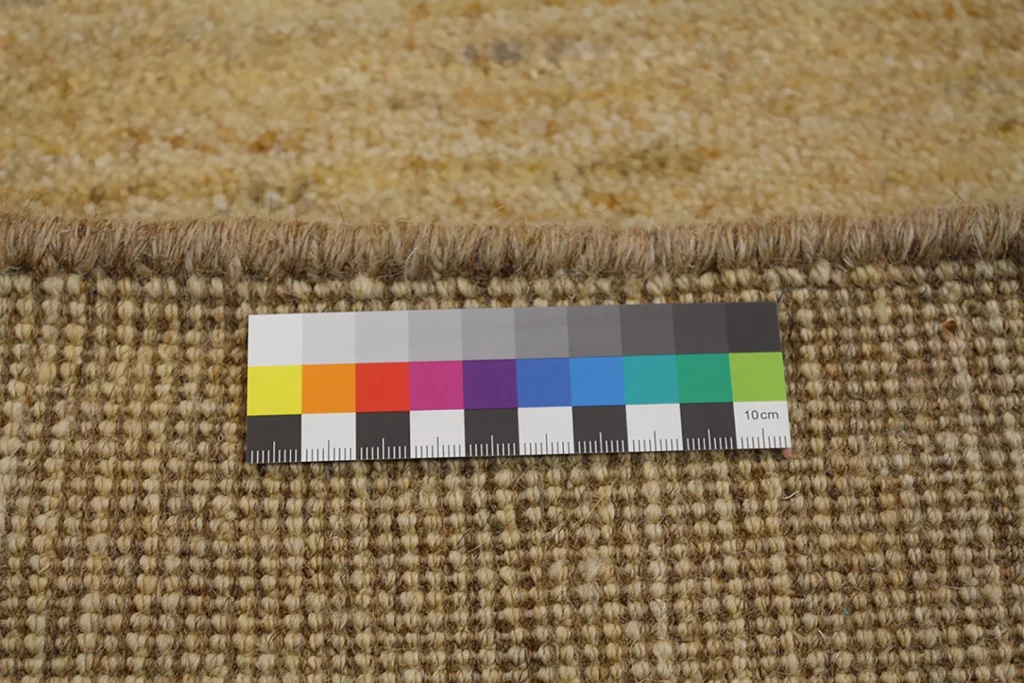
The listed knot density is 50,000 – 150,000 knots/m². Knot density records how many knots are set within a square metre and is one of the central ways of describing a rug’s construction. Here it is presented together with a high pile and hand-knotted workmanship. The result is a compact textile surface that remains soft to the touch. Wool also provides natural insulation, giving the pile a warm and comfortable presence underfoot.
The source description further characterises the wool as dirt-resistant and easy to care for. The sturdy construction is intended to withstand use, including use in areas with frequent traffic, while retaining its appearance over time. These practical qualities do not replace the visual role of the material: the softness of the pile and the strong colours work together. The hand-knotted structure gives the surface its textile depth and preserves the individual character of the piece.
Origin and Tradition
Gabbeh rugs are made chiefly in Iran and are closely associated with the country’s nomadic weaving cultures. This example is attributed to Ghashghai nomads from the Fars region. Fars, in southern Iran, has long been a setting for nomadic life and textile craftsmanship. Among the Ghashghai, knowledge of weaving and knotting has been passed through communities and generations. The rug therefore belongs to a tradition in which useful household textiles also carry a visible cultural identity.
Gabbeh weaving is generally less formal than many other Persian rug traditions. Instead of relying on an elaborate, continuous ornament, Gabbeh designs often use simplified forms, open fields and a small number of clearly legible motifs. The approach gives colour and material an important role. A design can remain spare while still expressing a person, an animal, a landscape or an everyday idea. This directness is connected with the practical setting in which nomadic textiles were produced and used.
Historically, Gabbeh rugs served everyday purposes. They could provide a floor covering, warmth and a useful textile surface within a household. Their function did not prevent them from becoming carriers of memory and visual expression. Weavers could draw on things seen in daily life, on animals and people, or on the landscape surrounding the community. Because the motifs were not required to follow one fixed scheme, individual pieces could differ considerably while remaining recognisable as Gabbeh work.
The Fars background is therefore cultural and regional rather than a claim that every Gabbeh has an identical appearance. Nomadic makers worked with available natural materials and shaped them into rugs with a clear, economical image language. Hand-spun sheep and goat wool belongs naturally to that material context. Hand-knotting also preserves the connection between production and the individual maker: the finished rug has its own balance of pile, colour fields and figures instead of being a repeated copy from a single mechanical template.
Design and Pattern
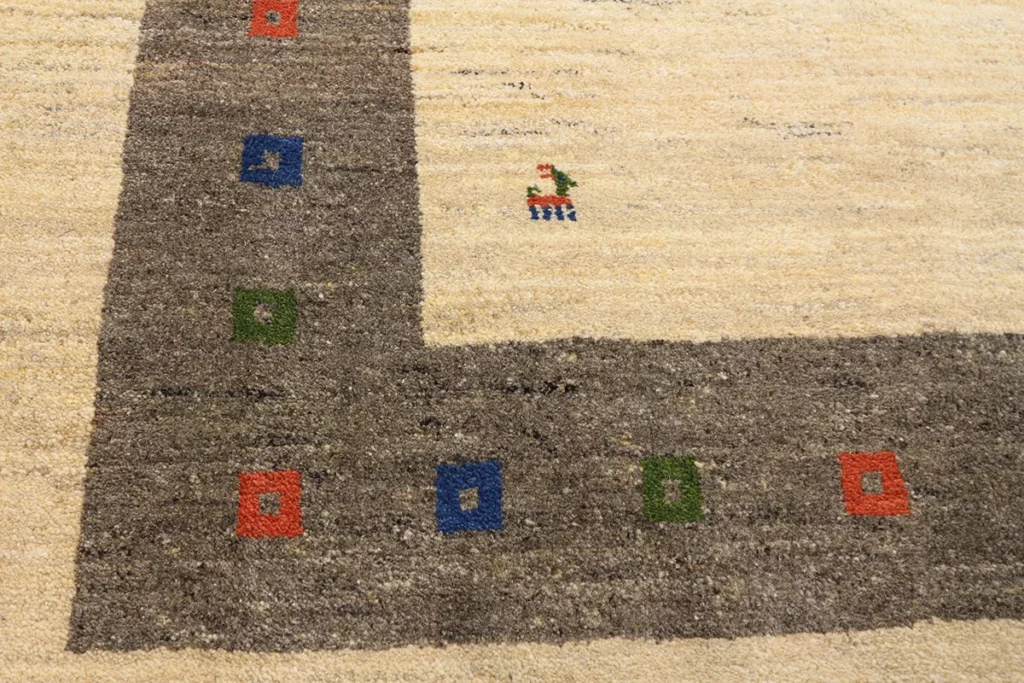
The pattern of this rug consists of abstract designs with large areas of colour and playful figures. Broad fields establish the main order of the composition, while the figures provide points of activity. The forms are simplified rather than rendered as detailed naturalistic images. They can be read as signs or visual suggestions, allowing the design to remain open while still offering recognisable points of reference.
Playful figures in Gabbeh design may recall people, animals or scenes from ordinary life without describing every feature. Their impact comes from outline, placement and contrast. A figure can consequently appear both representational and abstract. The viewer receives an idea rather than a fully prescribed story. This quality of visual openness is one reason simplified Gabbeh compositions can work in contemporary interiors without losing their connection to older nomadic design practices.
The large colour fields create pauses across the surface. They prevent the composition from becoming crowded and establish a rhythm between quiet areas and animated motifs. Clear lines and geometric suggestions may support that rhythm, while the soft pile keeps the overall impression tactile. Colour is not merely an additional decoration: it is one of the main structural elements of the design. The hand-knotted surface gives the fields and figures a woven depth that distinguishes them from printed graphics.
Gabbeh rugs are often discussed as a meeting point between practical weaving and free pictorial expression. Their designs are generally less formal and less densely ornamented than those of courtly or highly architectural Persian traditions. This rug follows that direction through its abstract composition, large colour fields and playful figures. The pattern provides a calm overall arrangement while retaining individual decorative details. Its visual effect depends on the interaction of colour, motif and the high wool pile.
Special Features
The combination of a high, soft pile, hand-spun sheep and goat wool and hand-knotted construction is a defining feature of this rug. Its listed knot density of 50,000 – 150,000 knots/m² adds a precise description of the workmanship. The abstract designs, large colour fields and playful figures give it an individual image language. Because it was made by hand, this Gabbeh is a one-off and is not exactly interchangeable with another piece.
The sturdy construction and the described practical qualities of the wool support lasting use while preserving a soft surface. The condition is stated as very good. In this way, the rug combines the usefulness of a durable textile with the individual presence of a handmade Gabbeh from Fars. Its origin, material and pattern remain clearly connected: nomadic craftsmanship, natural wool and a direct abstract design meet in one object.
FAQ
How should I care for my Gabbeh Persian Rug?
Regular vacuuming removes dust, dirt and deposits from the high pile. If a spill occurs, treat it gently with a damp cloth and a mild cleaning product. Avoid vigorous rubbing, since unnecessary friction can affect the surface. Strong chemicals should not be used on the wool. For a more extensive cleaning, a professional rug cleaner is the appropriate choice. Careful, regular maintenance helps preserve the soft handle and the appearance of the handmade pile.
Is the Gabbeh Persian Rug suitable for underfloor heating?
Yes. The Gabbeh Persian Rug is suitable for rooms with underfloor heating. Wool provides natural thermal insulation and helps distribute warmth evenly through the textile surface. The rug can therefore be used as a soft covering over a heated floor. Regular care and a clean floor remain useful in everyday use, especially because the high pile is an important part of its feel and appearance.
How can I assess the quality of a Gabbeh rug?
Knot density, materials and workmanship are important points of reference. A hand-knotted Gabbeh with a soft pile demonstrates the connection between traditional construction and a comfortable surface. The type of wool and the execution of the colours also form part of the assessment. For this rug, the stated features are hand-spun sheep and goat wool, a knot density of 50,000 – 150,000 knots/m² and hand-knotted construction. Its strong colours and sturdy workmanship provide further described characteristics.
Additional information
| Design Style | |
|---|---|
| Color | |
| Size | |
| Shape | |
| Origin | |
| Knot Density | |
| Material |
Related products

Oriental Rug Qashqai 292 x 193 cm Wool Hand-woven
€ 798
Persian Rug Gabbeh 250 x 180 cm Cashmere Hand-knotted
€ 1118
Oriental Rug Loribaft 200 x 300 cm Wool Hand-knotted
€ 1800
Persian Rug Tabriz approx. 350 x 245 cm Wool Hand-knotted
€ 1280
Persian Rug Fars 292 x 206 cm Wool Hand-woven
€ 798
Persian Rug Qashqai 286 x 192 cm Wool Hand-woven
€ 944
Persian Rug Fars 240 x 150 cm Cashmere Hand-knotted
€ 1118
Oriental Rug Kelim 240 x 180 cm Wool Hand-woven
€ 2249