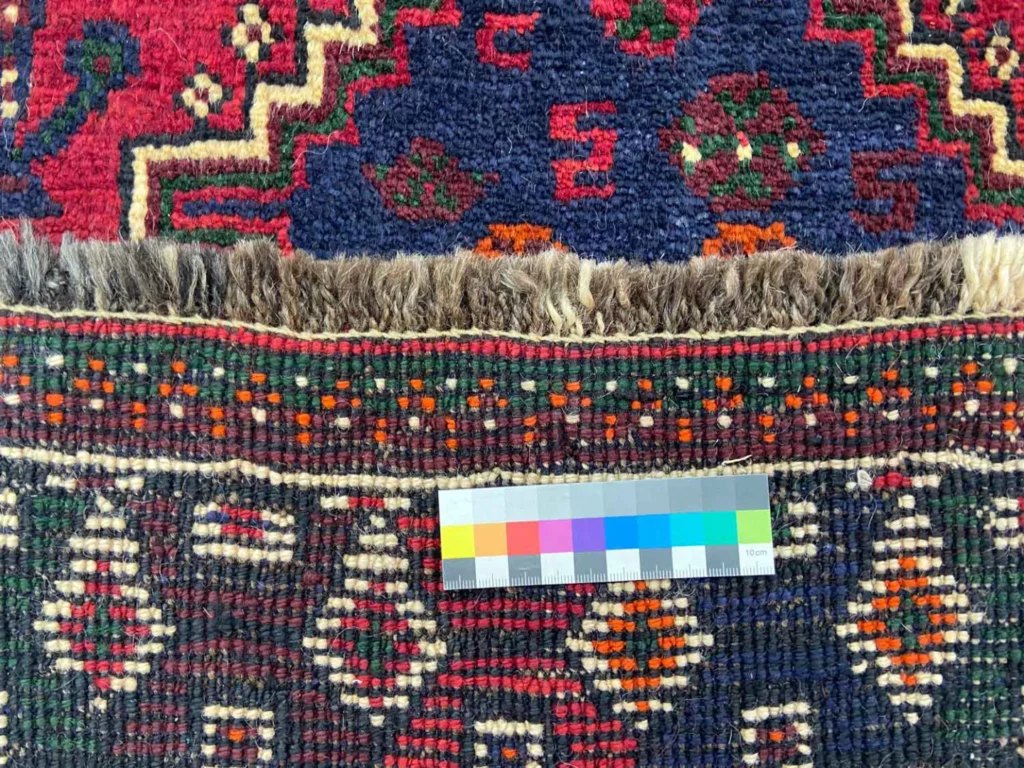
This Gabbeh Shuli is a hand-knotted Persian rug from the Fars region. Its pile is made from virgin wool. The natural fibre defines the feel of the surface and gives it the lustre described for this rug. Wool is also valued in Gabbeh weaving for its hard-wearing character, making the material an integral part of the rug’s practical and handmade identity.
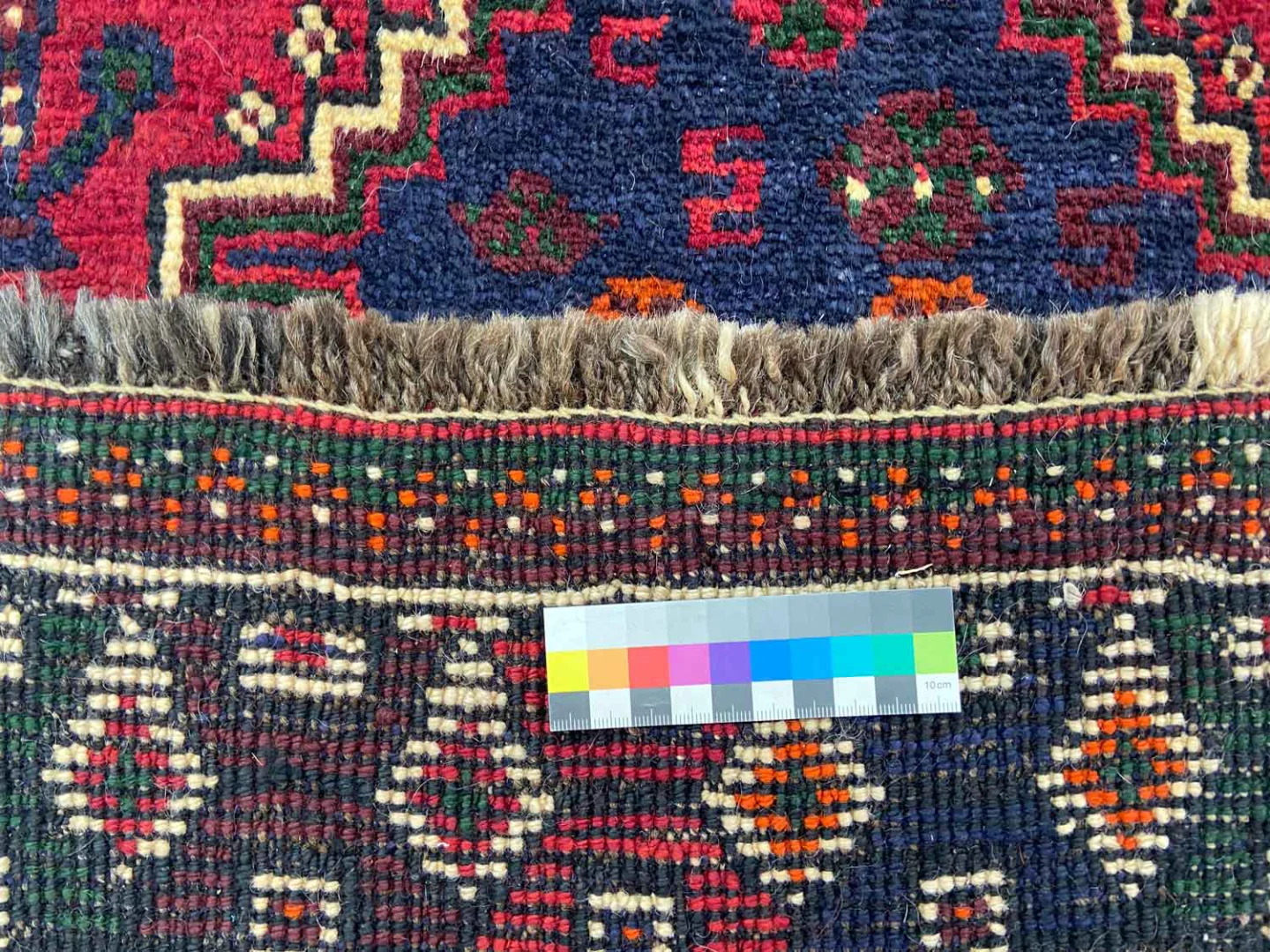
Every knot is made by hand. The result is not an identical factory-made product, but an individual rug with its own arrangement of colour and form. A knot density of 90.000 to 180.000 knots per square metre is given for this Gabbeh Shuli. Hand-knotting brings together a carefully worked textile surface and the sturdy construction associated with Gabbeh rugs.
The source describes the virgin wool as high quality. It is durable, pleasant to touch, and able to regulate warmth and absorb moisture. These properties explain the long-standing use of wool in living spaces. The natural fibre remains visibly connected to the craft process, while the new rug is described as easy to care for in everyday use.
Origin and Tradition
The Gabbeh Shuli comes from the Fars region in southern Persia. The historic city of Shiraz lies in this region and is named as a nearby point of reference. Fars is one of Persia’s important carpet-producing areas, with weaving and knotting traditions shaped by nomadic and village communities. Within this setting, practical use, natural materials, and an independent visual language developed together.
Gabbeh is a Persian rug type known for a sturdy construction and an expressive, often simplified design. Its purpose is not to reproduce a courtly pattern system with exact precision. Instead, the form combines inherited craft knowledge with freedom in the interpretation of motifs. Weavers could arrange shapes and colour fields in an individual way, allowing Gabbeh to retain a traditional identity while leaving room for personal design.
Fars has a particularly close association with Gabbeh traditions. Rugs from this cultural region are often discussed in connection with the lives of nomadic and rural communities. Their designs may draw on ideas of landscape, animals, people, and protective signs, while translating them into a simplified textile language. Individual pieces do not all use the same motifs. The differences between rugs are part of the history and character of this type of weaving.
Compared with the densely articulated layouts of many classical Persian rugs, Gabbeh designs often present a more immediately legible order. Broad fields, simplified shapes, and clear contrasts can exist side by side. The Gabbeh Shuli continues this tradition through unusual and imaginative designs. Here, Shuli identifies the Gabbeh expression described in the source and does not add a separate statement about origin.
The connection with Shiraz places this rug within an important cultural area of southern Persia. Shiraz has a long association with art, craft, and regional trade. Fars itself contains varied landscapes and communities, so its textile heritage cannot be reduced to one single style. Persian Gabbeh rugs from the region therefore share certain foundations while differing considerably in colour, motif, and individual execution.
Related rug types from the wider cultural area include Gabbeh Fars as well as Bakhtiari and Qashqai rugs. These may likewise combine creative designs with natural materials. Each type nevertheless has its own design traditions and regional associations. This rug is identified specifically as a Gabbeh Shuli from Fars. The related examples provide cultural context only and do not change the stated origin of this piece.
Design and Pattern
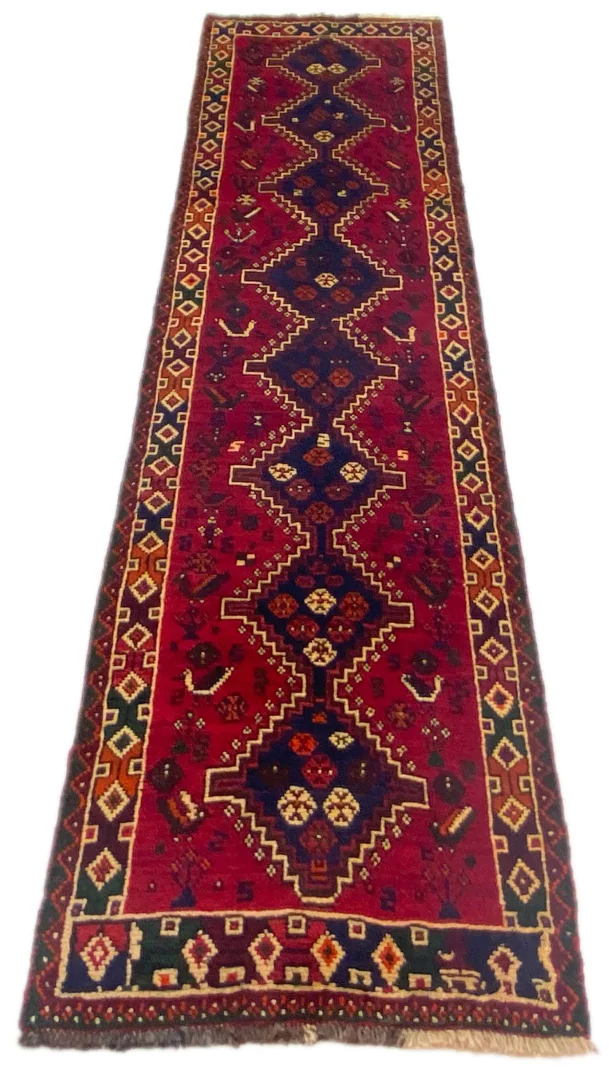
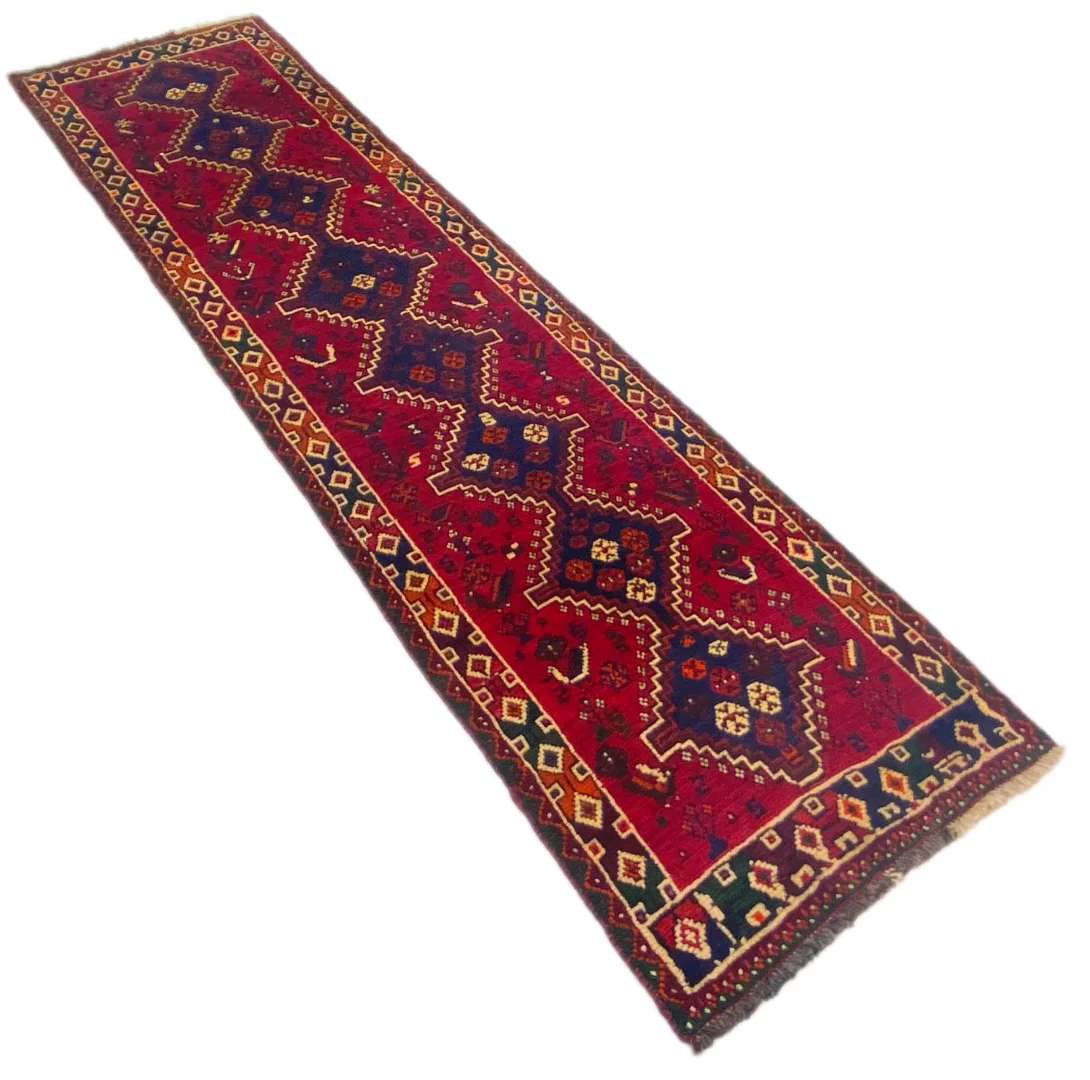
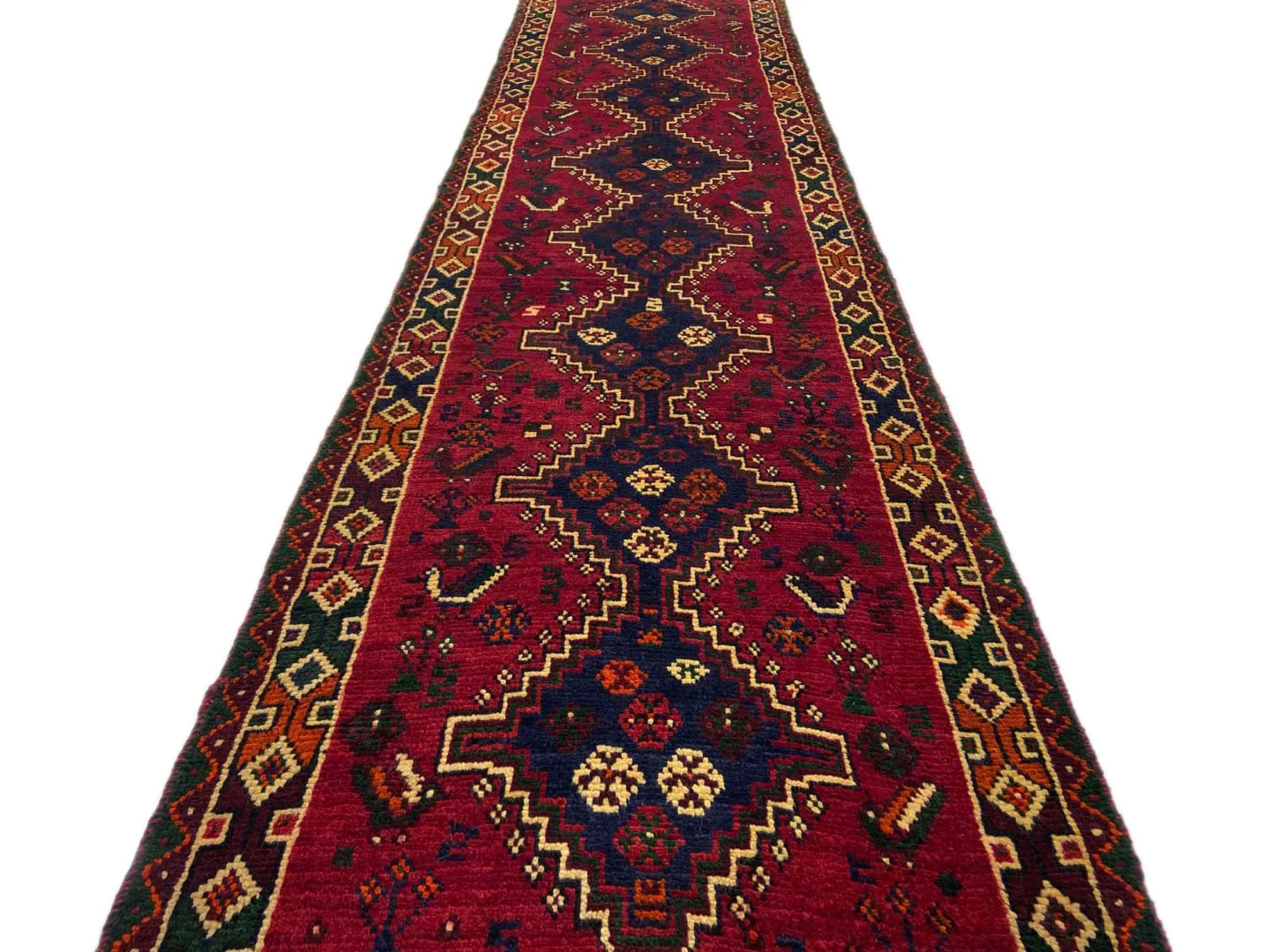
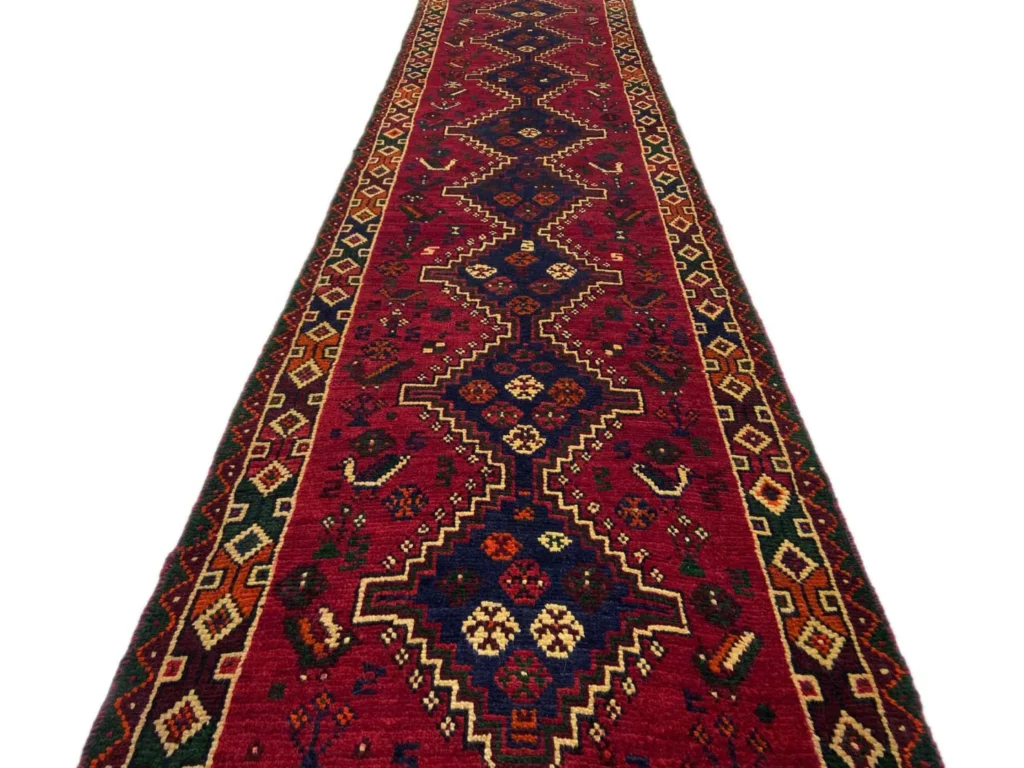
The pattern of this Gabbeh Shuli is described as unusual and imaginative. It does not follow a rigid sequence of repeated classical ornaments. Instead, freely invented designs are central to its appearance. This approach allows abstract forms, unexpected combinations, and a personal reading of the composition. The motifs do not appear to come from a single fixed pattern book; they form an independent arrangement created through the act of knotting.
Gabbeh rugs are recognised for a simple visual language that can nevertheless be strongly expressive. Simplified figures or abstract signs are not crowded with numerous small details. Individual shapes and colour fields can therefore carry more visual weight. In a Shuli Gabbeh, the departure from evenly ordered ornament can itself define the character of the design.
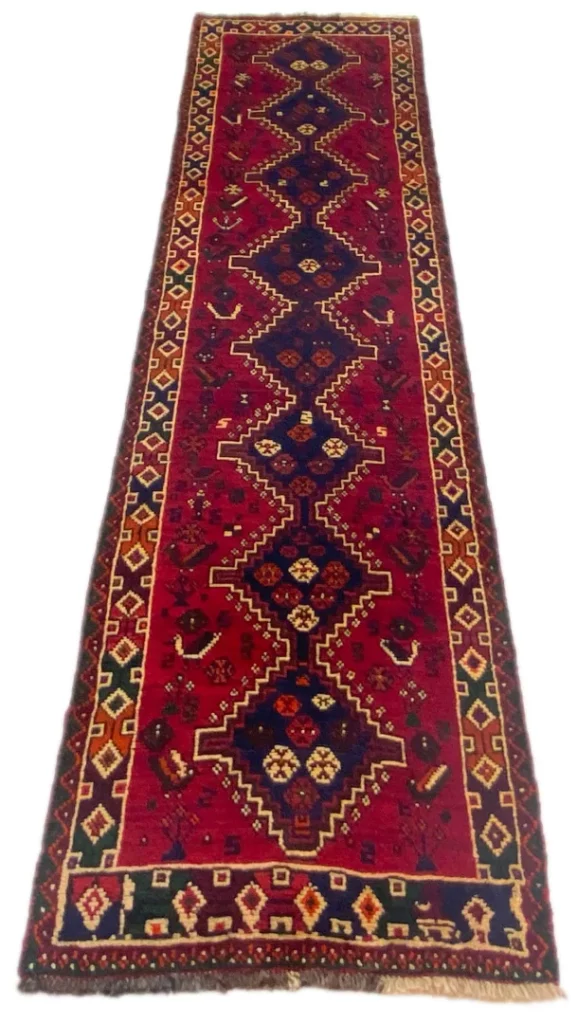
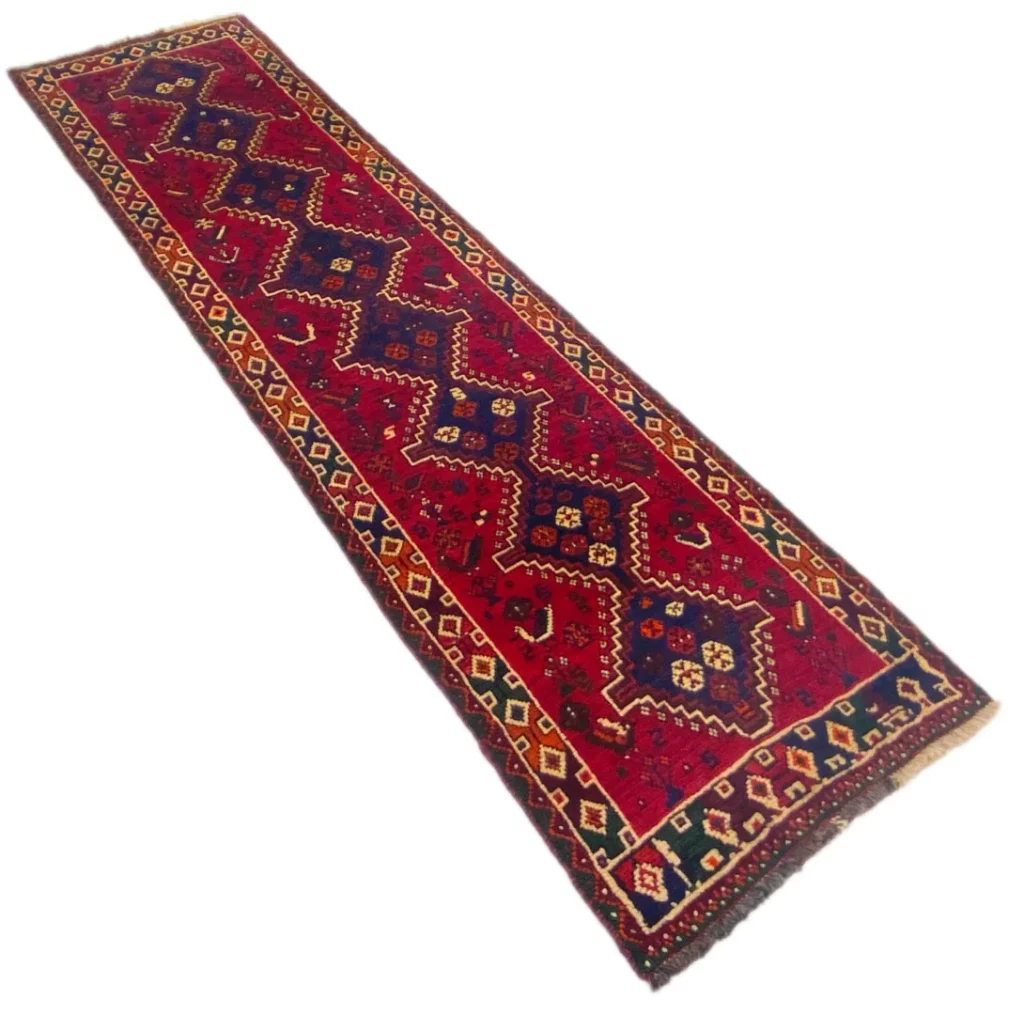
The colours named for this rug are red, beige, grey, and brown. Red can provide a vivid accent, while beige and brown establish an earthy foundation. Grey introduces a quieter counterpoint. Together, these colours bring lively and restrained tones into the same palette. They do not imply a standard layout, since the particular distribution of colour belongs to this individual hand-knotted rug.
The colour scheme works closely with the free-form idea behind the pattern. Imaginative shapes may be emphasised by clear changes between red, beige, grey, and brown. Neighbouring tones may also be combined to create gentler transitions. In a hand-knotted Gabbeh, the effect of the pattern comes from the interaction of knots, wool, and colour placement. The design is therefore part of the textile structure rather than a separate image applied to its surface.
Traditional Gabbeh compositions may recall animals, people, plants, or landscapes without depicting them naturalistically. Such subjects are often reduced to a clear and distinctive form. The Gabbeh Shuli is specifically associated here with freely invented and imaginative designs. Its description therefore focuses on individual creativity rather than assigning the rug to one particular historical ornament.
The restrained elegance of Gabbeh design can be read in both modern and traditional interiors. A quiet setting can allow the forms to stand out clearly, while a more classical room can respond to the Persian origin and warm palette. This is a general characteristic of the Gabbeh type, not a claim about a particular interior. The rug’s stated colours and unconventional pattern remain the relevant features of this individual piece.
Rugs from the Fars tradition also differ from one another because handwork permits choices in shape, colour distribution, and execution. This range of variation is part of the Gabbeh concept. The Shuli Gabbeh offered here brings together its Fars origin, an unusual imaginative pattern, and the named palette of red, beige, grey, and brown.
Special Features
This rug’s distinctive combination is its Gabbeh Shuli identity, hand-knotted construction, and imaginative pattern. It is made from virgin wool and is offered in new condition. Its stated knot density is between 90.000 and 180.000 knots per square metre. Alongside the robust Gabbeh construction, these details describe a rug intended to be durable and easy to care for.
The wool offers a pleasant feel and can regulate warmth and absorb moisture. These natural properties are useful in a living environment. Red, beige, grey, and brown create a varied yet earthy colour base. The rug’s runner format and its stated dimensions allow it to be used in different areas such as a living room, bedroom, or hallway.
Its individual approach to pattern is another defining feature. Unusual shapes and freely invented designs distinguish this Gabbeh Shuli from rugs based on strictly prescribed ornamental sequences. Because it is hand-knotted, the particular relationship between its pattern, colours, and wool surface exists as one individual piece.
FAQ
What makes the Gabbeh Shuli distinctive?
The Gabbeh Shuli combines unusual, imaginative designs with hand-knotting in high-quality virgin wool. Its free-form visual language sets it apart from Persian rugs with more formally ordered ornament. The sturdy construction, pleasant wool texture, and described easy-care character are further features of this rug type.
How should I clean and care for my Gabbeh Shuli?
For regular care, vacuum the Gabbeh Shuli without using a brush attachment. Blot stains immediately with a damp cloth rather than treating them aggressively. If more extensive treatment is needed, a professional rug-cleaning service can be consulted. This gentle method helps preserve the wool surface, colours, and pattern.
What sizes are Gabbeh Shuli rugs available in?
Gabbeh Shuli rugs are available in a range of sizes. The selection extends from small runners to larger versions intended for living rooms. This makes it possible to integrate them into different room concepts. This particular rug is listed as a runner; its exact dimensions are provided in the product details.
To provide the best experiences, we use technologies like cookies to store and/or access device information. Consenting to these technologies will allow us to process data such as browsing behavior or unique IDs on this site. Not consenting or withdrawing consent, may adversely affect certain features and functions.
Functional Always active
The technical storage or access is strictly necessary for the legitimate purpose of enabling the use of a specific service explicitly requested by the subscriber or user, or for the sole purpose of carrying out the transmission of a communication over an electronic communications network.
Preferences
The technical storage or access is necessary for the legitimate purpose of storing preferences that are not requested by the subscriber or user.
Statistics
The technical storage or access that is used exclusively for statistical purposes.The technical storage or access that is used exclusively for anonymous statistical purposes. Without a subpoena, voluntary compliance on the part of your Internet Service Provider, or additional records from a third party, information stored or retrieved for this purpose alone cannot usually be used to identify you.
Marketing
The technical storage or access is required to create user profiles to send advertising, or to track the user on a website or across several websites for similar marketing purposes.

 SECURE PAYMENT
 SHIPPING PARTNERS


