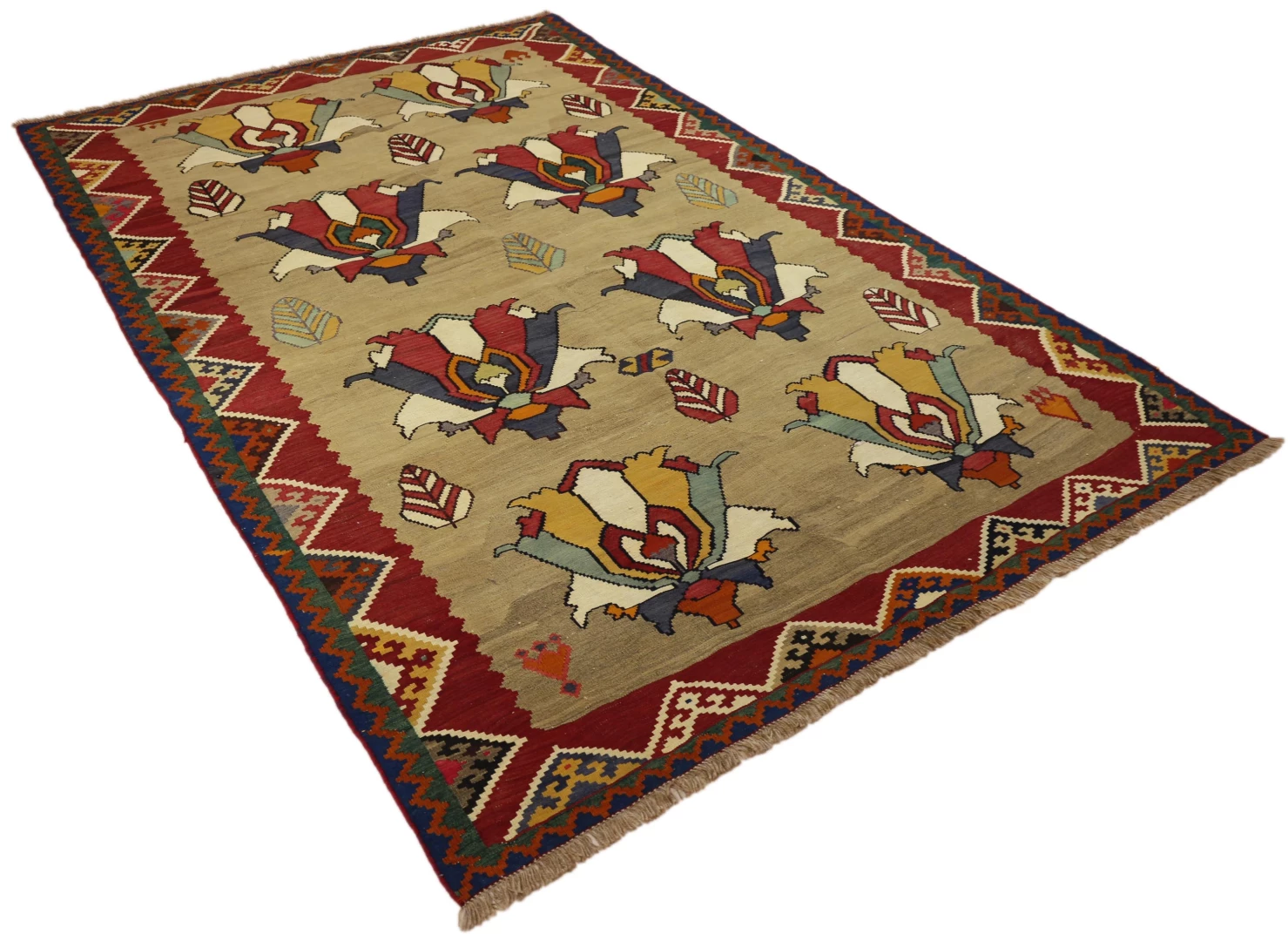
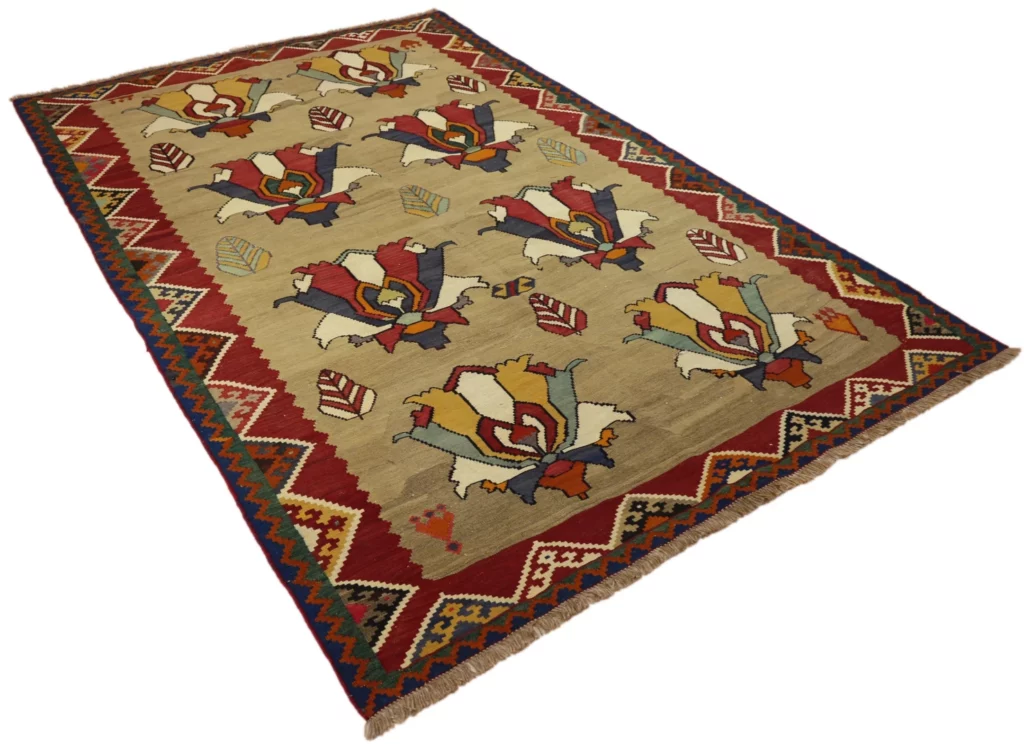
This kelim is a hand-woven Persian rug from the Fars region of Iran. Its stated material is high-quality wool. Unlike a knotted rug, a kelim has no pile. Its surface is formed directly by the interaction of warp and weft, with the coloured weft passages creating the visible textile field. The result is a flat construction rather than a surface made from upright pile fibres.
The term kelim identifies the weaving technique used here. This rug was made by hand rather than by machine. In hand weaving, the maker controls the sequence of weft insertions and the developing tension of the warp while the textile is built. The wool is the specified fibre of this piece. No pile material is listed because the source expressly describes it as a woven, pile-free rug.
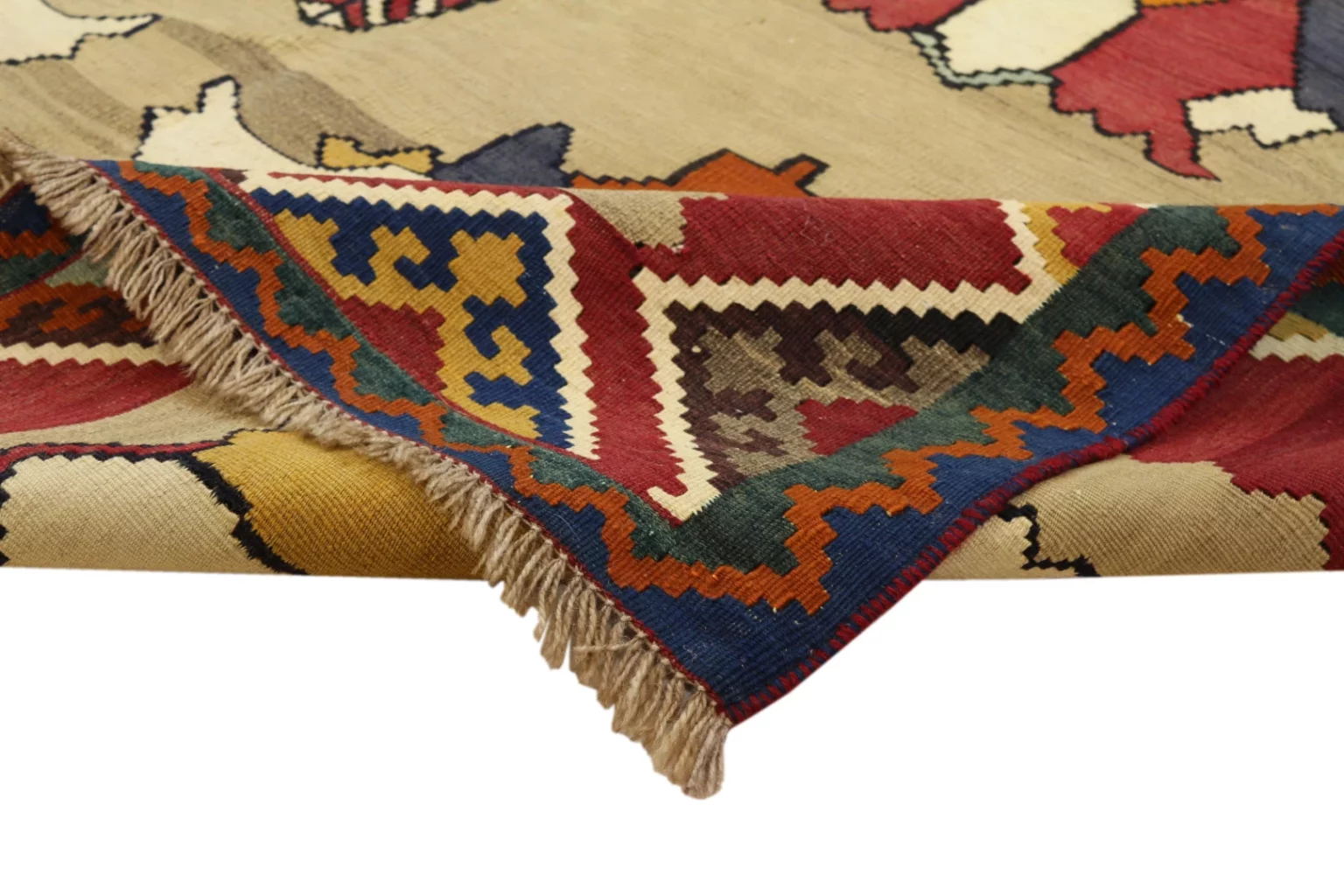
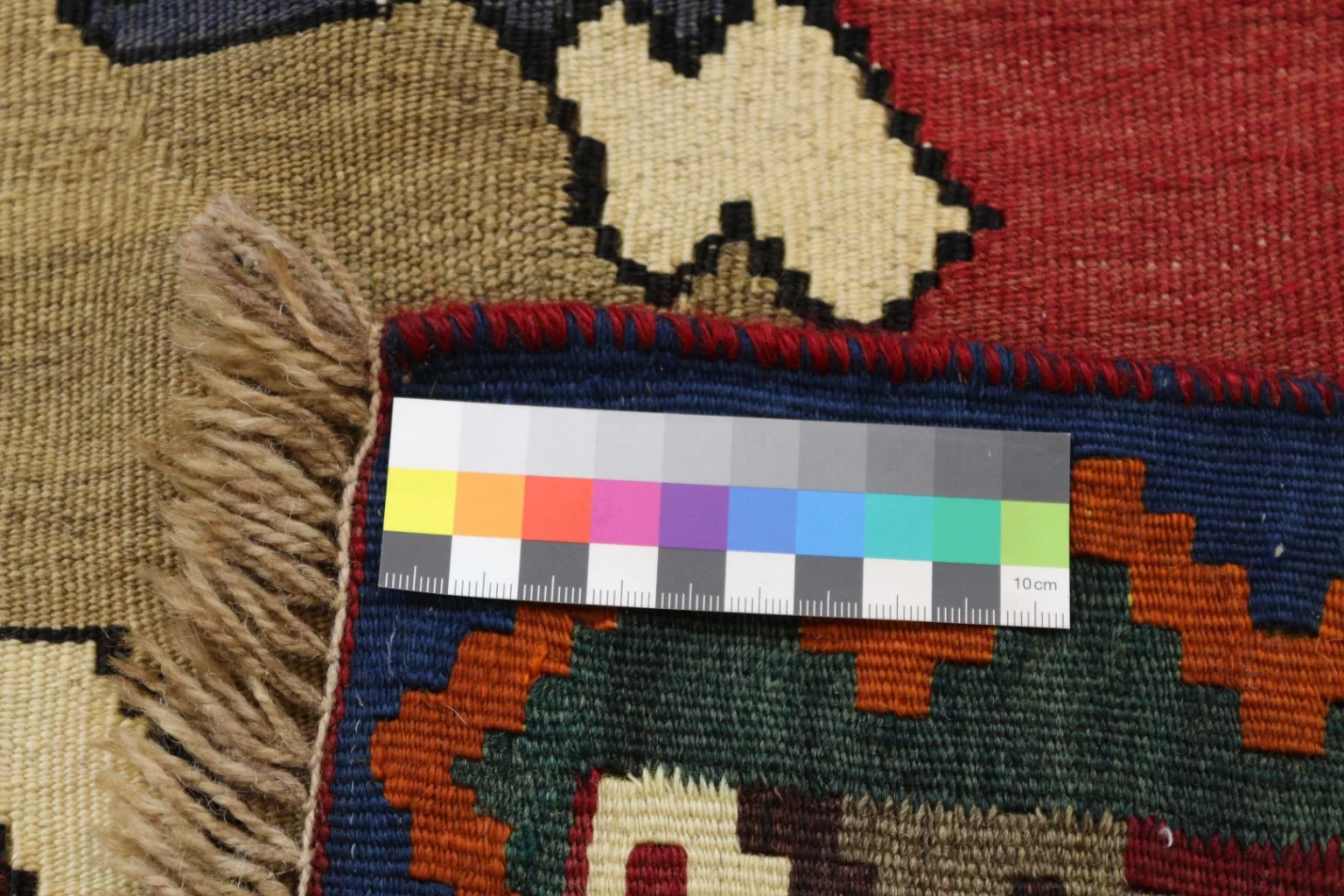
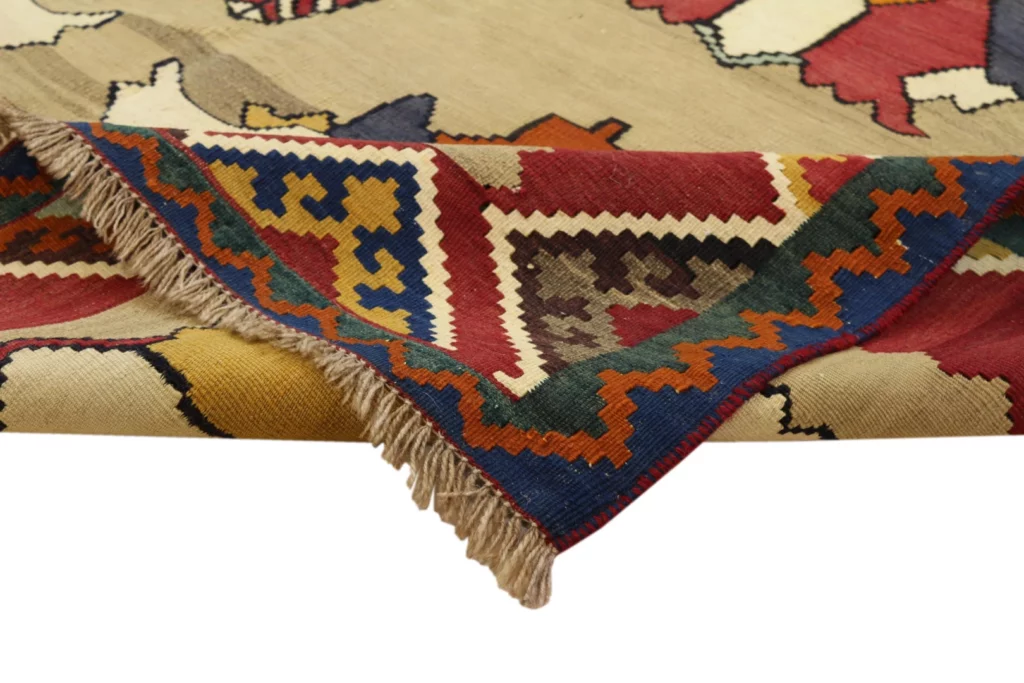
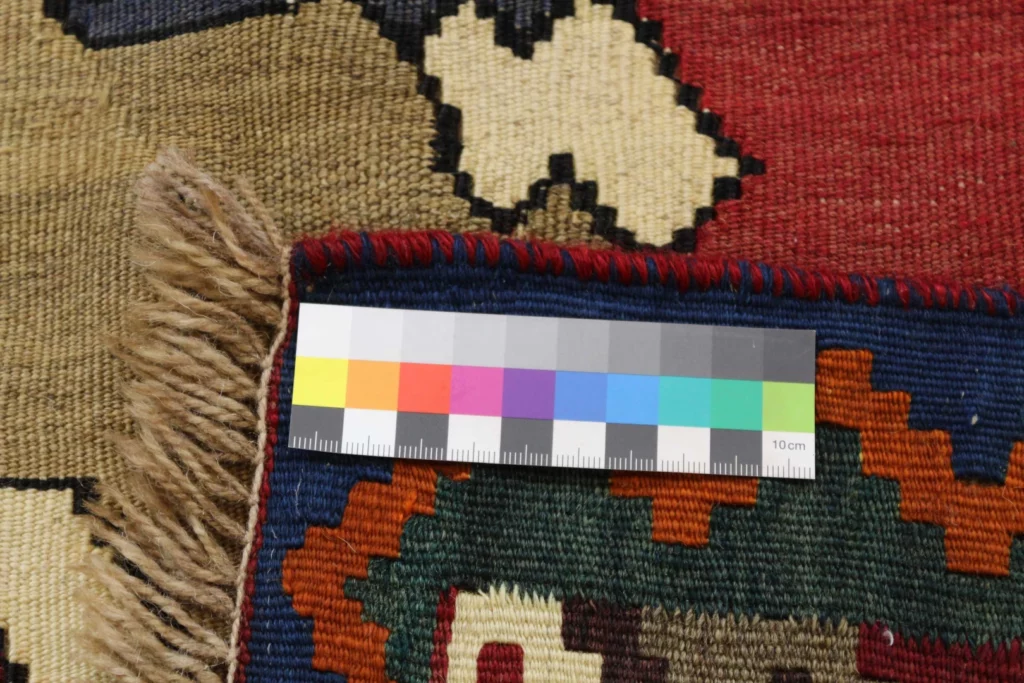
The front and back carry identical patterns. This is a stated characteristic of the individual rug and means that the reverse is not described as a plain or unfinished side. The condition is given as good. No information is provided about age, restoration, warp fibre, or knot density, so those details are not added to the description.
Origin and Tradition
The rug comes from the Fars region of Iran. Fars has an established place in the textile history of the country and encompasses a wide range of landscapes and communities. Its weaving culture has been shaped by settled groups as well as mobile and semi-nomadic traditions. For that reason, Fars is associated with a varied body of handmade textiles rather than one single uniform design language.
Weaving has a distinct position within Iranian rug making alongside knotting. A kelim is created on a loom by arranging weft threads across the warp. The warp provides the longitudinal framework, while the weft builds the surface and introduces the coloured areas. Depending on the local method, changes in colour, interlocking wefts, or narrow openings between colour sections can help form the design. The resulting textile is flat and can be used from either side when its construction and pattern allow it.
Fars should not be treated as the name of one exclusive pattern. Textiles from the region may vary in drawing, colour relationships, structure, and degree of geometric order. That regional diversity is part of Fars’s historical significance. In this case, the origin identifies an Iranian weaving context, while the individual source information identifies the object specifically as a kelim with an identical design on both faces.
Hand-woven textiles in Iran have long served both practical and decorative purposes. Depending on their form, they could be used on the floor, as coverings, or as furnishings and wall textiles. A flat weave is suited to more than one setting because it does not depend on a deep pile. The possible use of this particular rug as a wall hanging is expressly stated, placing it within the broader tradition of textiles that can be displayed as well as used.
The making of a kelim combines textile construction with pattern formation. The weaver must coordinate warp tension, weft placement, colour changes, and the edges of each woven section. The design is not printed or applied after the cloth is complete; it develops as the structure is woven. This relationship between method and appearance is central to the history of kelims in Iran and across the wider Oriental weaving tradition.
Design and Pattern
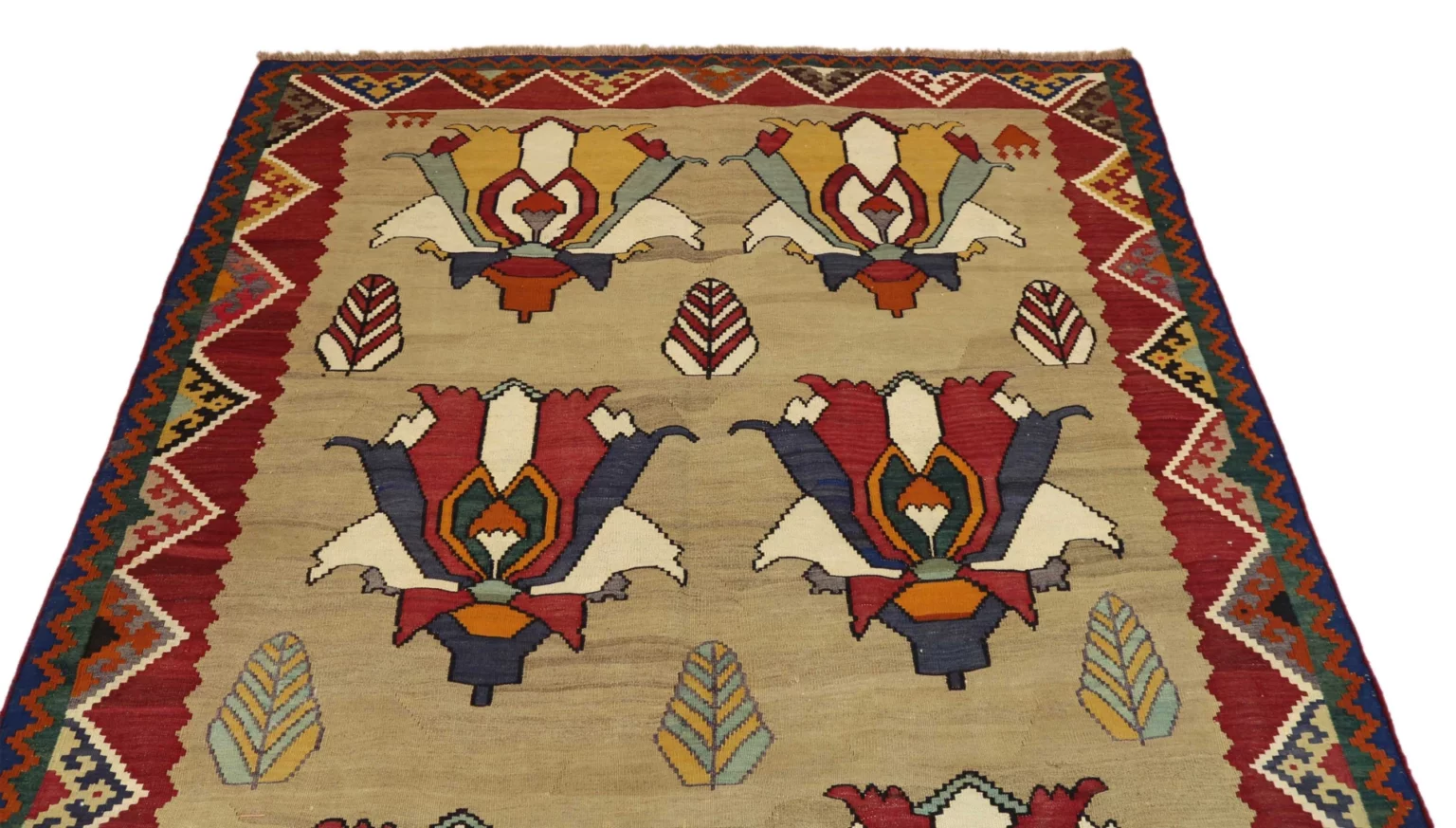
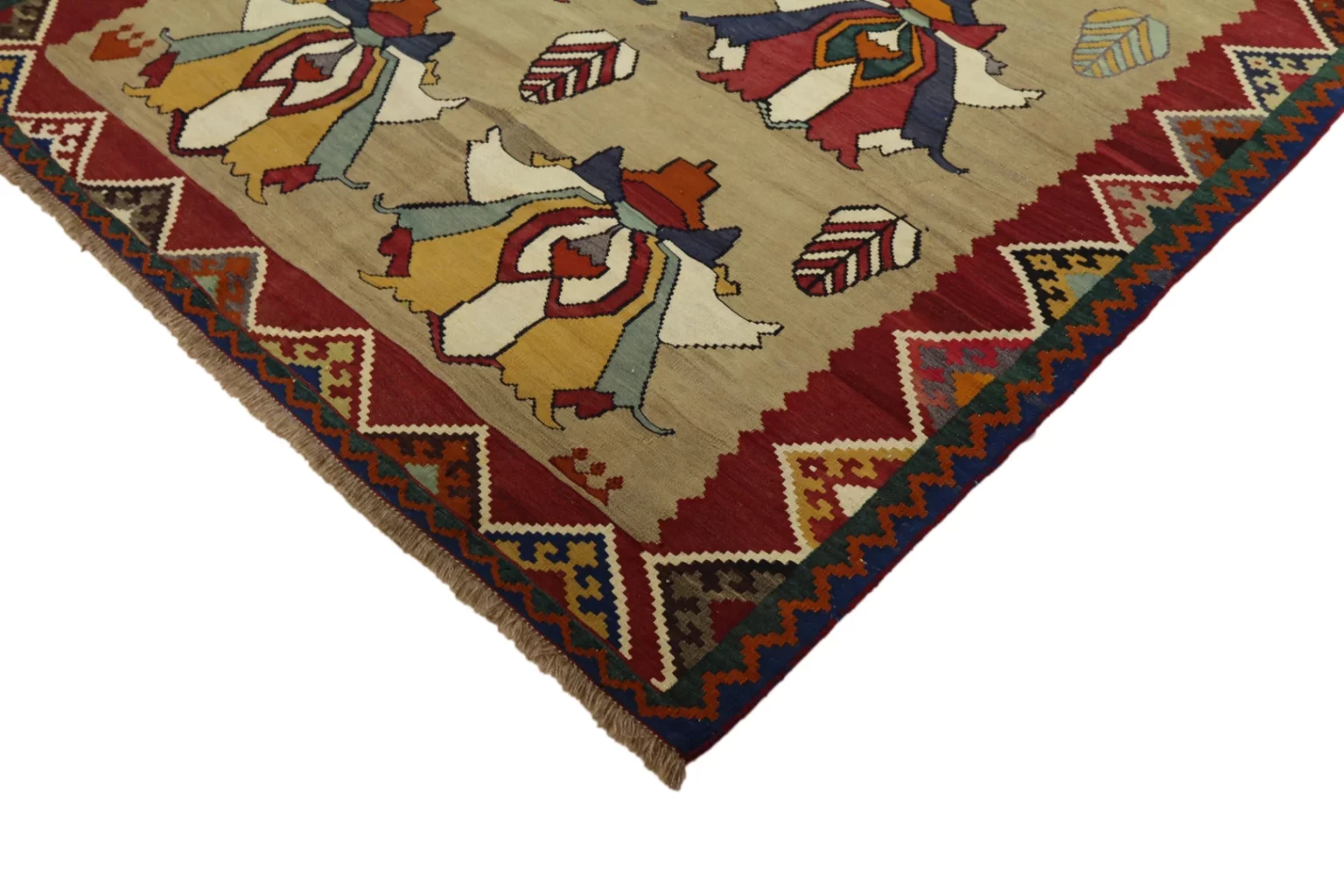
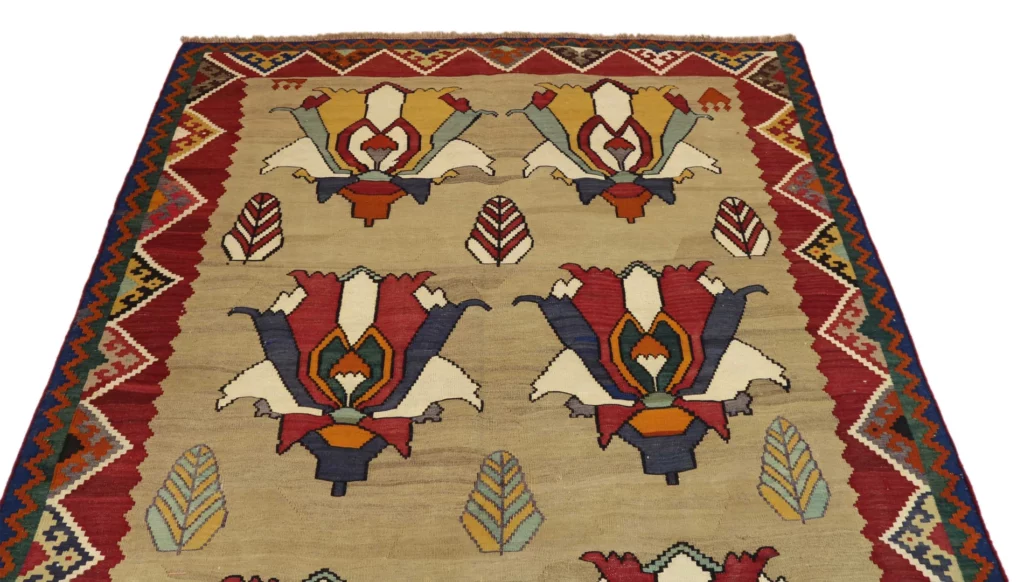
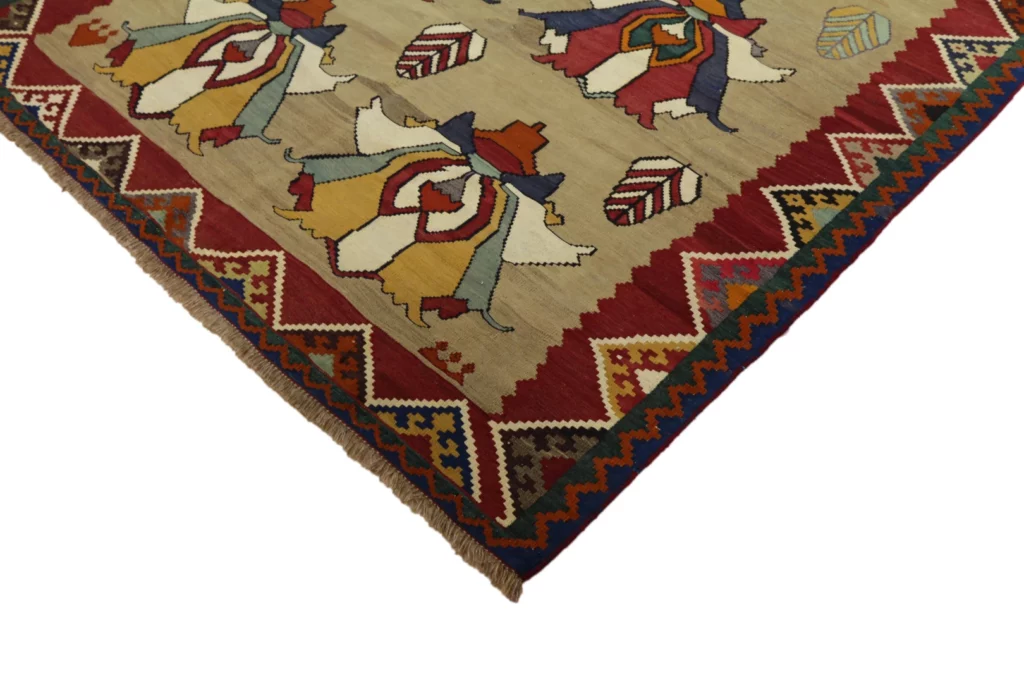
The defining design information for this rug is that its pattern is identical on the front and the back. No individual motif is named. The description does not specify flowers, medallions, borders, animals, geometric symbols, or a particular colour palette. The accurate focus is therefore the repeated pattern on both sides rather than an attributed design that has not been identified.
In a kelim, the pattern is produced within the weave itself. Coloured weft areas can meet in crisp blocks, stepped outlines, or rhythmic sequences, while changes in the direction and density of the weaving affect the way a flat design is read. Because there is no raised pile, the drawing is not separated from the structure by upright fibres. The visible pattern is part of the fabric’s construction.
The matching front and reverse are especially relevant when the textile is displayed or handled from either side. The reverse is not presented as a different backing with a separate visual role. Instead, the same pattern is found on both faces. This makes the reversible character an important feature for a wall hanging and also gives the rug a consistent appearance when viewed from different positions in a room.
Fars weaving traditions are generally varied in their treatment of line, repetition, and colour. Some regional textiles use ordered geometric rhythms, while others organise freer fields or symbolic forms. Such background helps explain the cultural setting of the rug, but it does not identify a motif on this specific piece. Since no named pattern is supplied, the description remains with the documented two-sided design.
A kelim is consequently defined not only by an image or ornament but also by the way the design is integrated into a flat textile. For this rug, the combination of hand weaving, a pile-free surface, and identical patterning on both sides provides the central design statement. No additional ornament or colour description is claimed.
Special Features
This rug has several stated features: it is a hand-woven kelim, it is made of high-quality wool, it has no pile, and its pattern is identical on the front and back. It originates in the Fars region of Iran and is described as being in good condition. These details distinguish the construction and presentation of the piece without requiring an attribution to a more specific local pattern.
Its possible use as a wall hanging is expressly included among its versatile uses. The flat weave is compatible with textile display, and the identical design on both sides means that the reverse does not present a separate pattern. No claim is made here about age, signature, rarity, restoration, or investment value because none of those details is supplied.
FAQ
What characterises this Fars Persian rug?
This is a kelim from the Fars region of Iran. It is hand-woven from high-quality wool and has no pile, so its surface is created by the weave rather than by knotted fibres. The pattern is identical on the front and back, which gives the textile a reversible visual character. Its condition is described as good. The available description does not state an age, knot density, signature, or further technical specifications.
Can the rug be used as a wall hanging?
Yes. Use as a wall hanging is expressly listed among the versatile ways to use this rug. Its flat kelim construction is suitable for textile display, and the identical front and reverse allow the design to remain consistent when the textile is viewed from different angles. Any hanging system should support the textile evenly and avoid unnecessary stress on the wool and woven edges. The source does not prescribe a specific mounting method.
What is known about its material and care?
The stated material is high-quality wool. The rug is woven and pile-free, so it should be treated as a flat-woven kelim rather than as a deep-pile knotted rug. Its condition is given as good. No individual care instructions are supplied. In general, gentle handling, protection from unnecessary moisture and abrasive friction, and cleaning by a professional familiar with wool flat weaves are sensible measures. If a cleaning treatment is required, a specialist should assess the textile before work begins.
To provide the best experiences, we use technologies like cookies to store and/or access device information. Consenting to these technologies will allow us to process data such as browsing behavior or unique IDs on this site. Not consenting or withdrawing consent, may adversely affect certain features and functions.
Functional Always active
The technical storage or access is strictly necessary for the legitimate purpose of enabling the use of a specific service explicitly requested by the subscriber or user, or for the sole purpose of carrying out the transmission of a communication over an electronic communications network.
Preferences
The technical storage or access is necessary for the legitimate purpose of storing preferences that are not requested by the subscriber or user.
Statistics
The technical storage or access that is used exclusively for statistical purposes.The technical storage or access that is used exclusively for anonymous statistical purposes. Without a subpoena, voluntary compliance on the part of your Internet Service Provider, or additional records from a third party, information stored or retrieved for this purpose alone cannot usually be used to identify you.
Marketing
The technical storage or access is required to create user profiles to send advertising, or to track the user on a website or across several websites for similar marketing purposes.

 SECURE PAYMENT
 SHIPPING PARTNERS


