
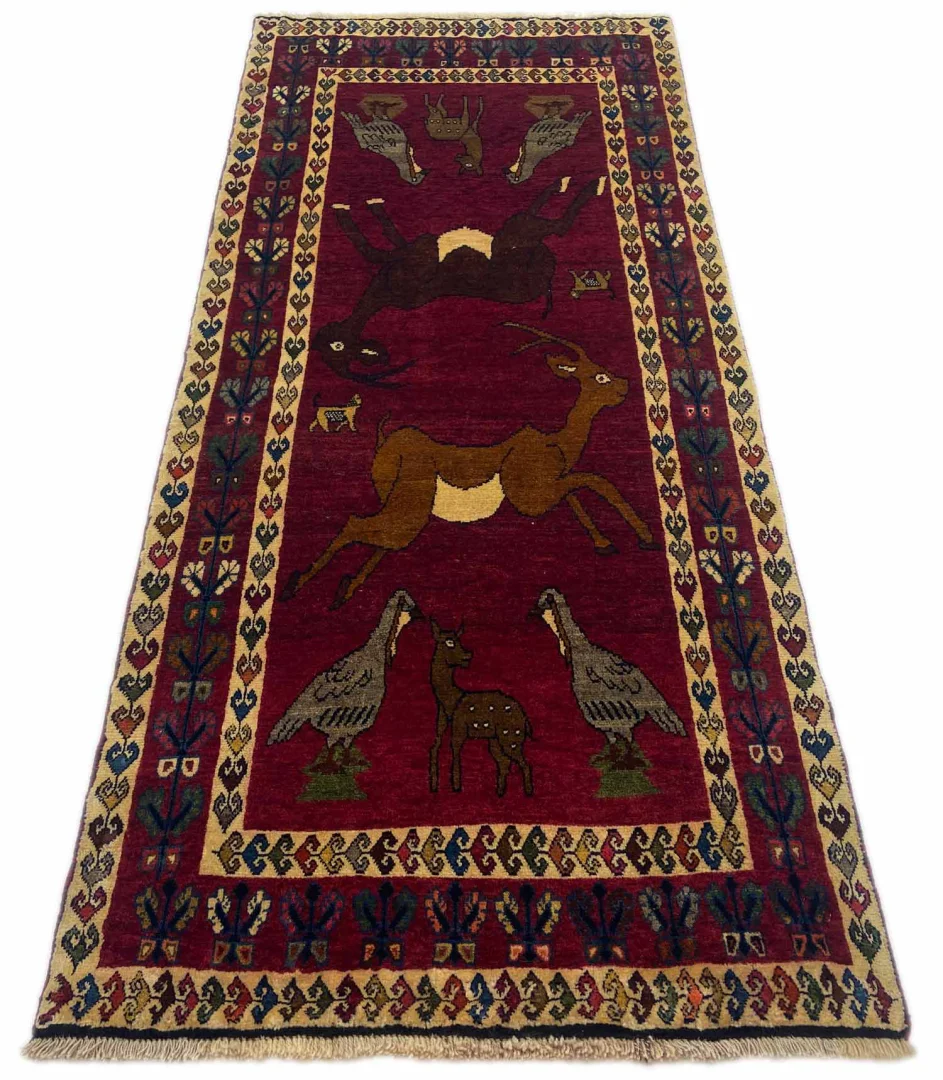
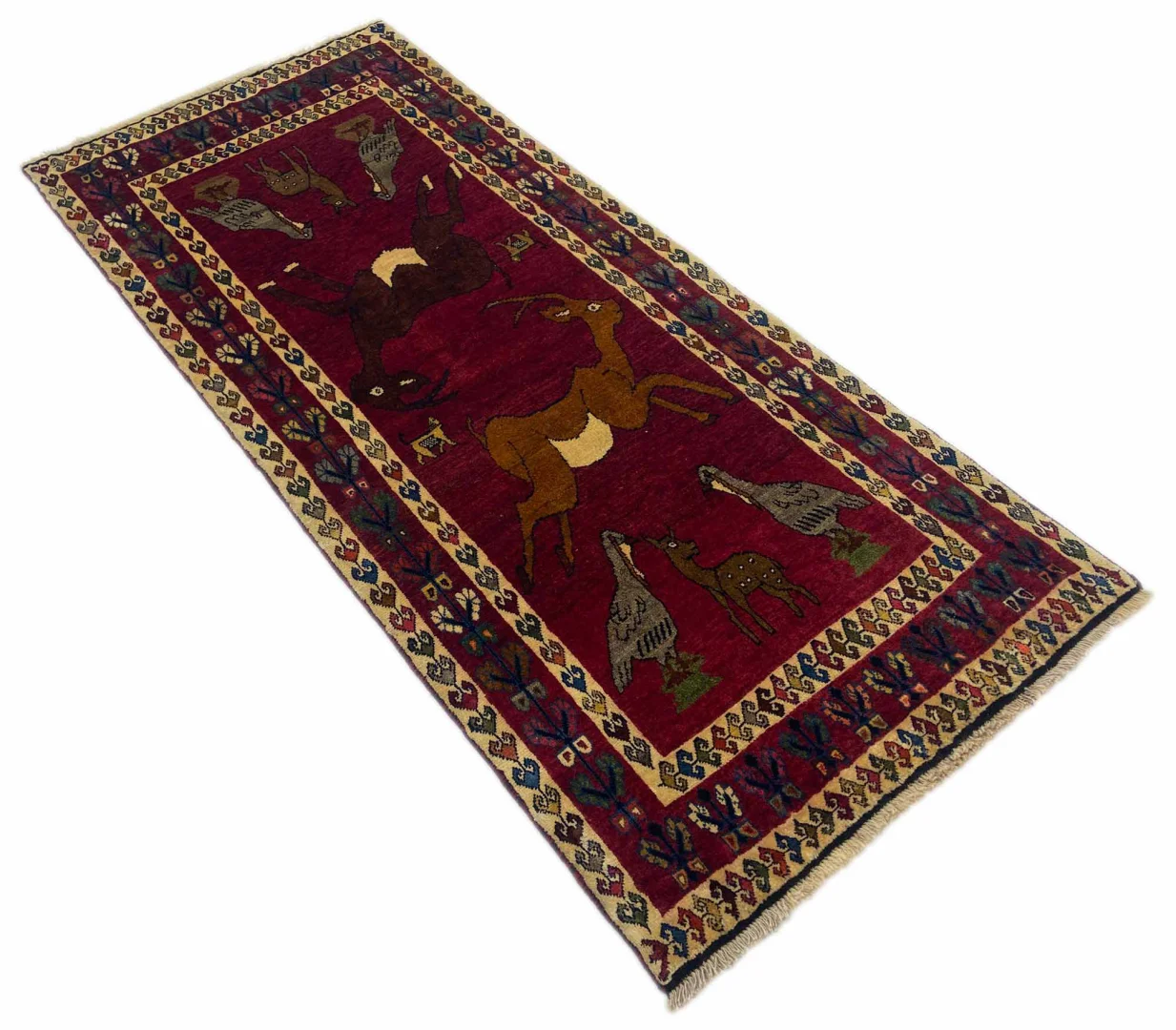
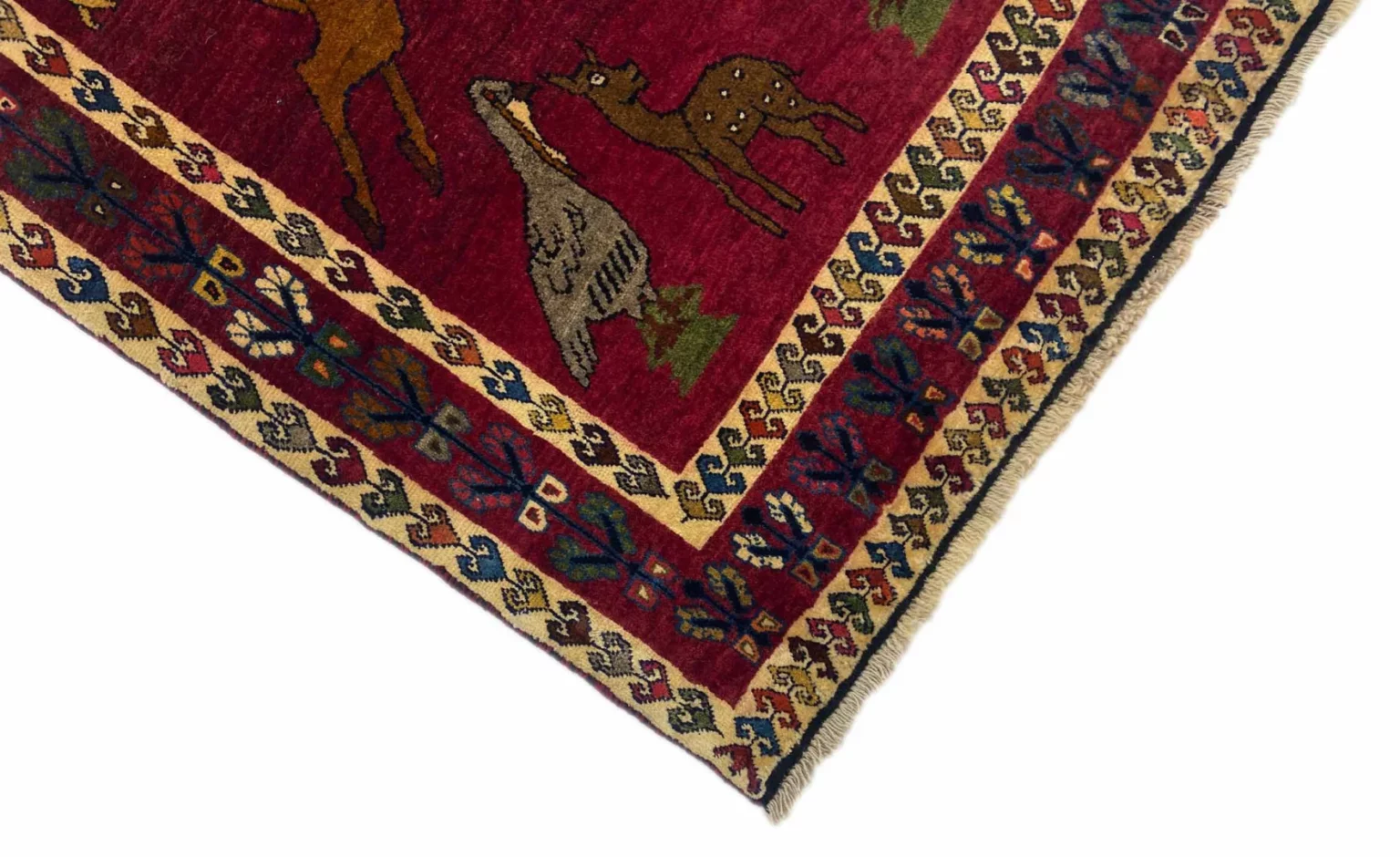
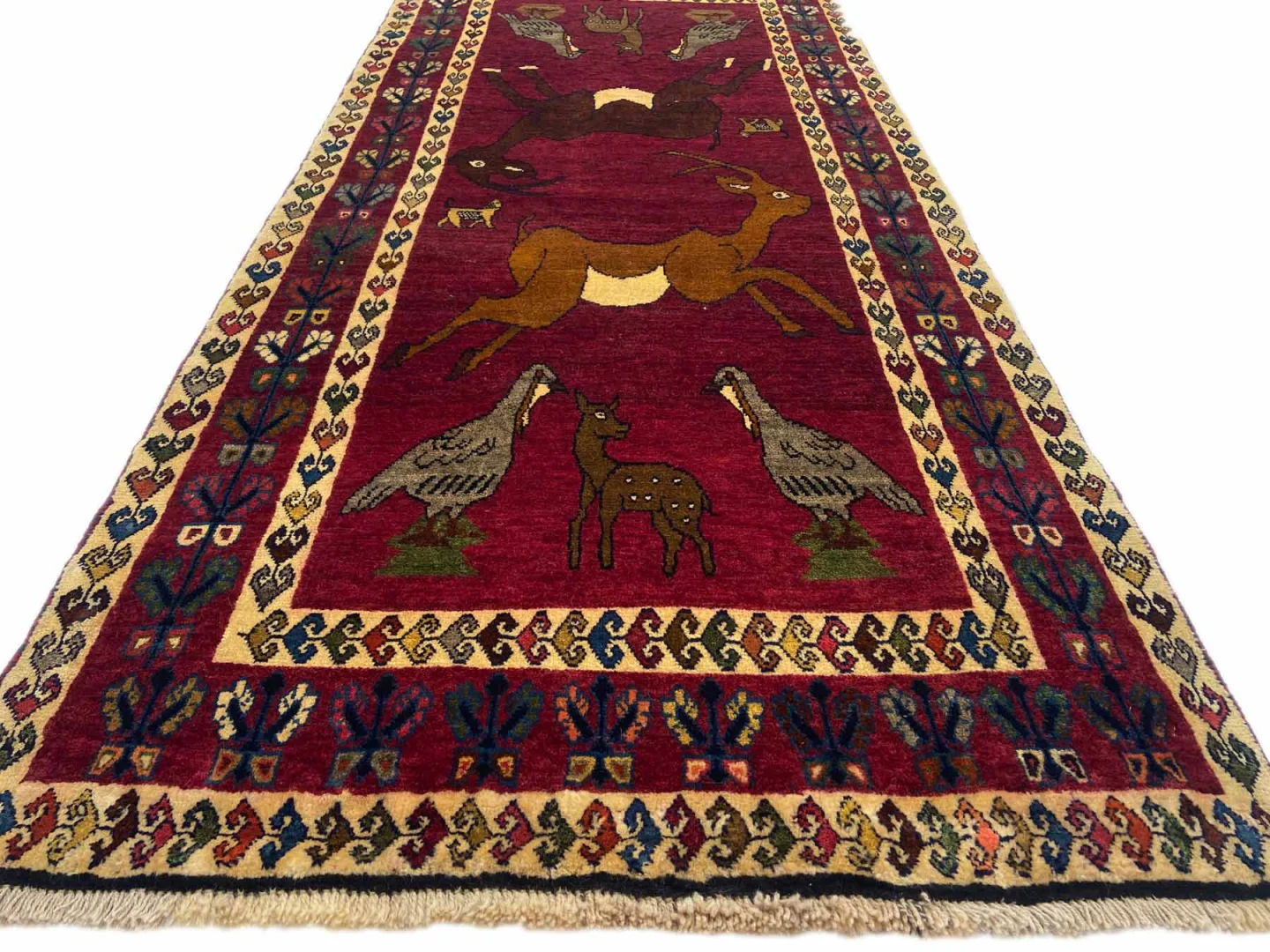
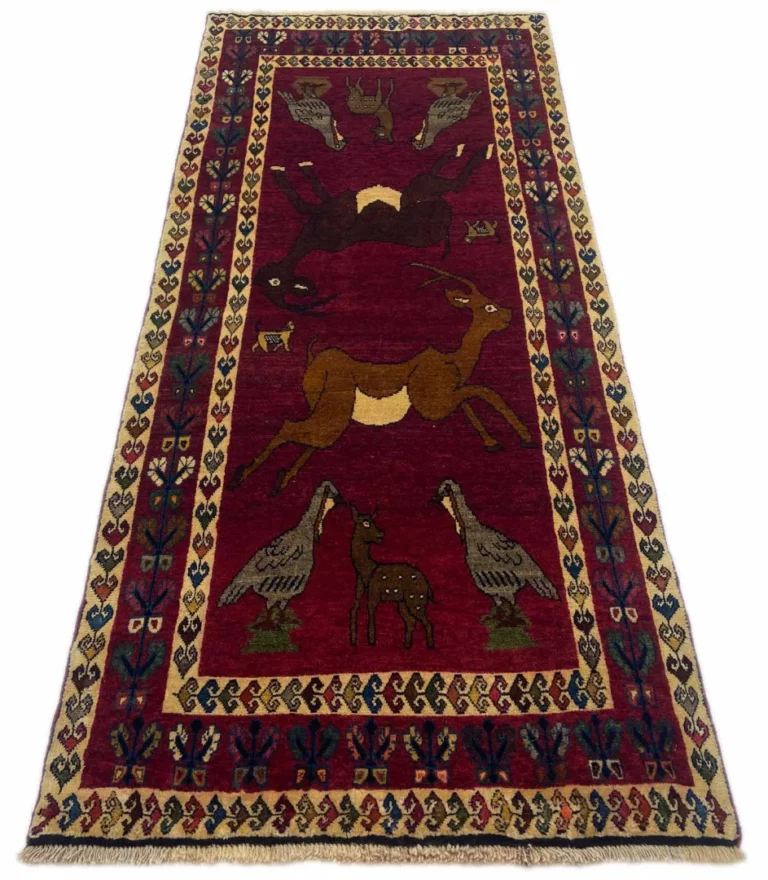
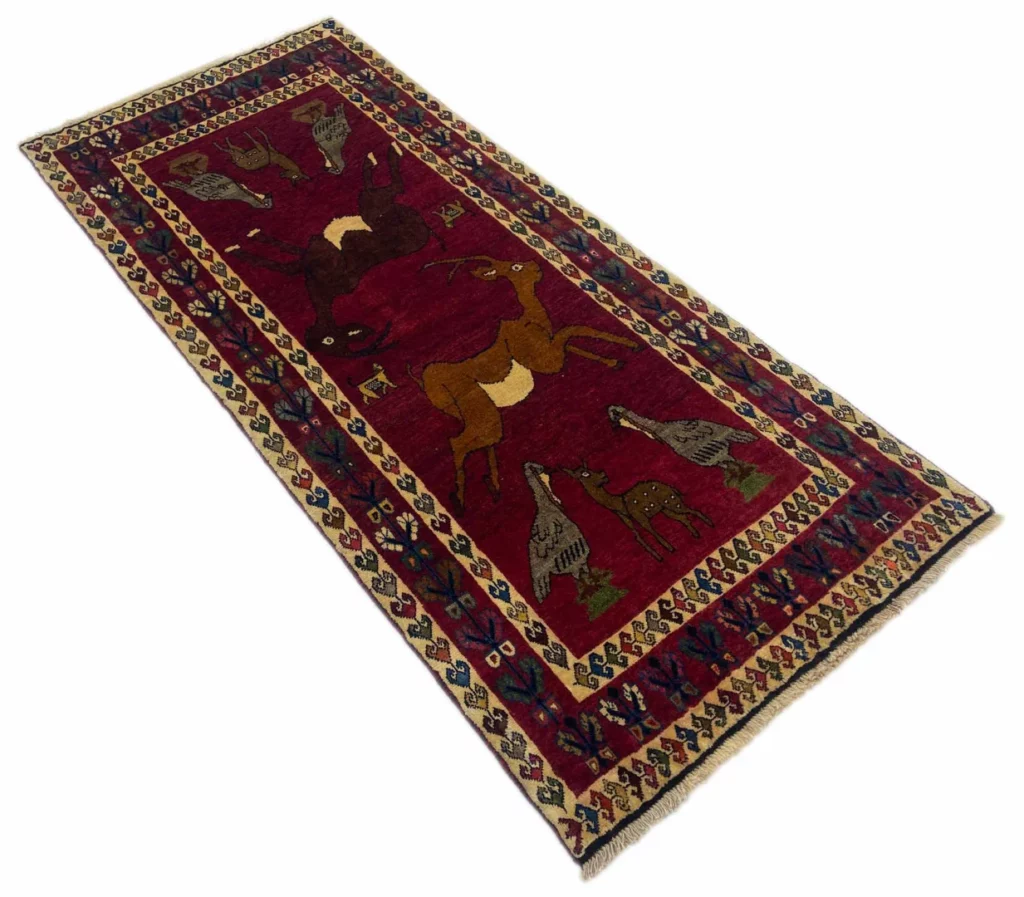
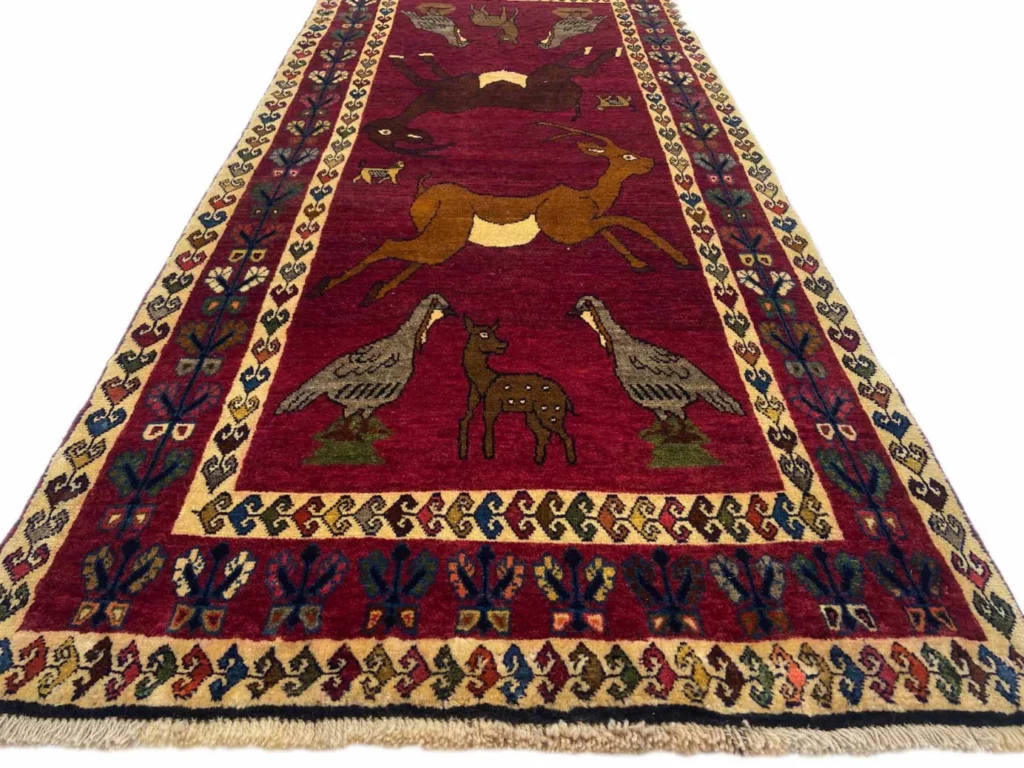
Persian Rug Fars 238 x 104 cm Wool Hand-knotted
€ 645
Hand-knotted Fars Persian Rug | Knot density: 90,000 – 180,000 knots/m² | Material: Pile shiny virgin wool | Size: 238 x 104 cm | Pattern: Imaginative and unusual | Condition: New, artistically knotted
1 available
- ✓Free Shipping in EU
- ✓2-5 Business Days Delivery
- ✓14-Day Return Policy
- ✓Worldwide Shipping on request
 SECURE PAYMENT
 SHIPPING PARTNERS
Inventory number: A591C638
Description
Fars Persian Rug
Material and Craftsmanship
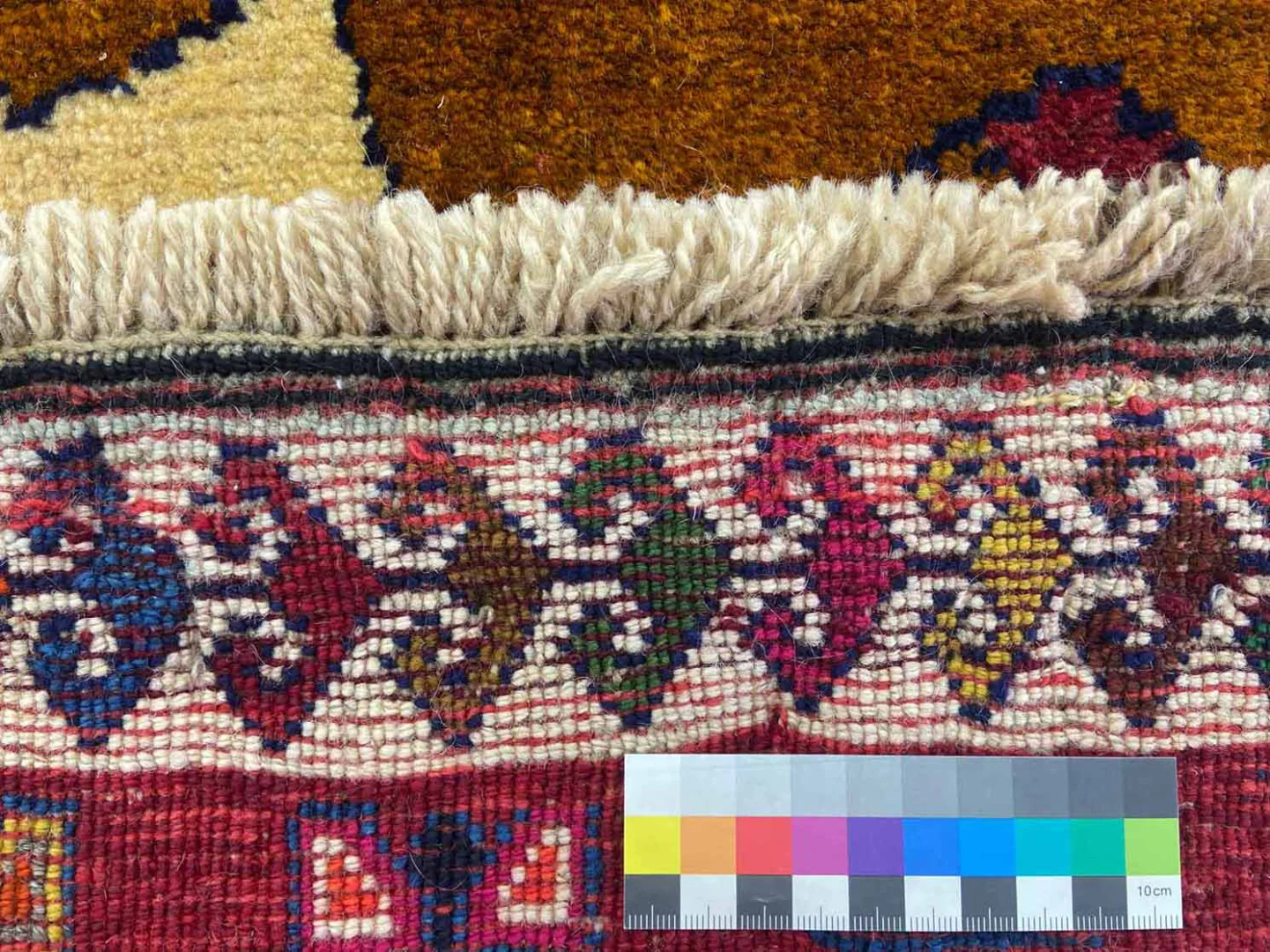
This Gabbeh-Shuli is made with shiny virgin wool. The wool forms the pile and gives the surface a gentle lustre. It also has a pleasant hand feel, so the hand-knotted construction can be appreciated both visually and by touch. Virgin wool is traditionally used for Gabbeh rugs because of its durability. It is suitable for a rug intended for everyday use while retaining a distinctive textile surface.
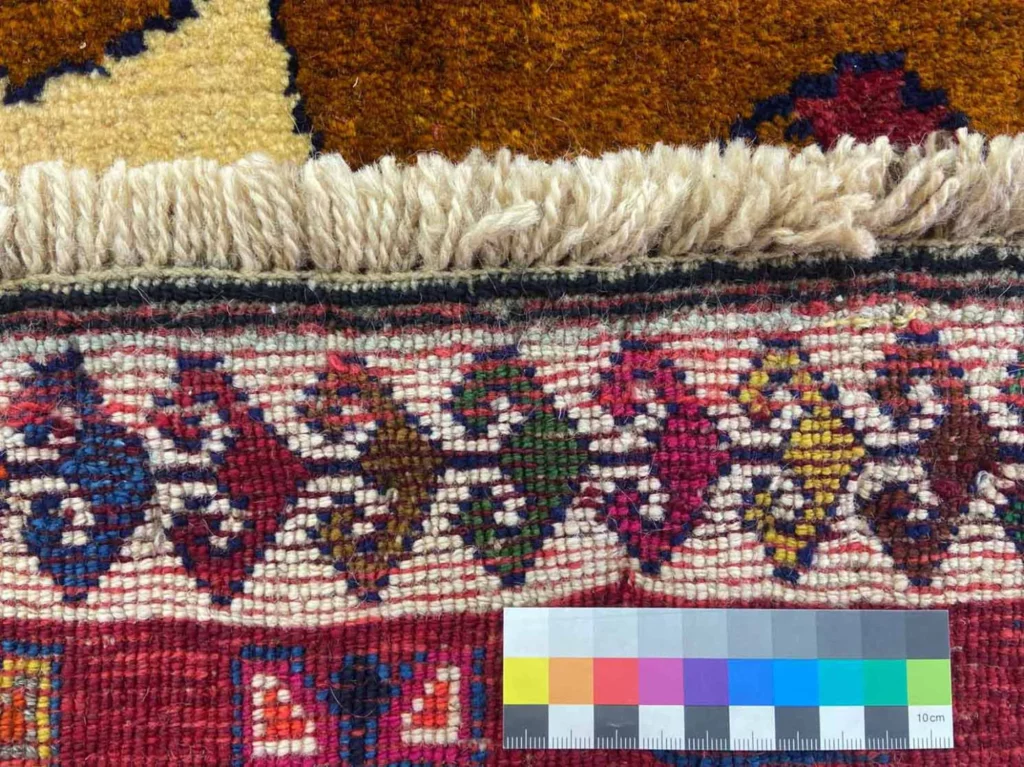
The rug is made by hand. Row by row, knotting creates an individual textile image rather than a completely mechanical repetition. In this Gabbeh-Shuli, that method is combined with freely imagined, inventive and unusual designs. The knot density is between 90,000 and 180,000 knots per square metre. Knot density indicates how many knots are set in the rug and is related to the definition of the work as well as the durability of a knotted textile.
The virgin wool is used in red, beige, grey and brown. These shades define the stated colour character and can be combined into a warm, balanced impression. The surface remains shaped by the natural effect of the wool and by the visible character of hand knotting.
Origin and Tradition
Gabbeh-Shuli Persian rugs originate in the Fars region of southern Persia. They are knotted near Shiraz. Fars is an important landscape within Persian rug culture and is closely associated with the nomadic tribes of southern Persia. Its textile tradition includes practical weavings, rugs and other handmade works in which material, function and personal design belong together.
The name Gabbeh refers to a rug tradition associated with the nomadic and rural weaving and knotting cultures of southern Iran. It is not based on one uniform pattern book used in exactly the same way everywhere. Instead, the method leaves room for personal interpretation. A Gabbeh may therefore show a quiet, reduced field or a colourful composition built around unusual ideas. This freedom of design is an important part of the tradition.
Fars lies within the cultural setting of Shiraz, a city that serves as an important reference point for the region. The connection with Shiraz places the Gabbeh-Shuli geographically in southern Persia without confusing it with a rug from another Persian province. Regional origin and inherited handwork together provide the context for this form of rug.
Nomadic rugs have traditionally been connected with the daily life of their makers. Wool takes a central role because it is a practical and durable material. During knotting, experience, inherited forms and individual ideas are brought together. In contrast to strictly formal court carpets, the resulting design can appear more direct and less restricted. This helps explain why Gabbeh rugs often have a clear visual character while varying from one piece to the next.
Several expressions exist within the broader Gabbeh tradition. Gabbeh-Fars rugs are also associated with colourful and imaginative designs. They often include geometric patterns and traditional motifs that refer to the culture and history of Iranian craftsmanship. The Gabbeh-Shuli belongs to this wider setting, while being specifically characterised by freely invented patterns.
Other Persian rug traditions show how varied regional handwork can be. Kerman rugs from the Kerman region are known for detailed patterns and a finer knot density. This comparison illustrates that Persian rugs are considered not only by origin but also by their particular design and construction. The Gabbeh-Shuli belongs to the Fars tradition and follows a freer, more expression-led approach to pattern.
Design and Pattern
The pattern of this Gabbeh-Shuli is imaginative and unusual. It is not centred on strictly prescribed ornaments, but on freely conceived designs. This gives the field an individual character. The pattern can be read as a textile drawing in which the knotter’s hand and personal interpretation remain visible. Here, Shuli identifies the described Gabbeh expression with its creative approach to design.
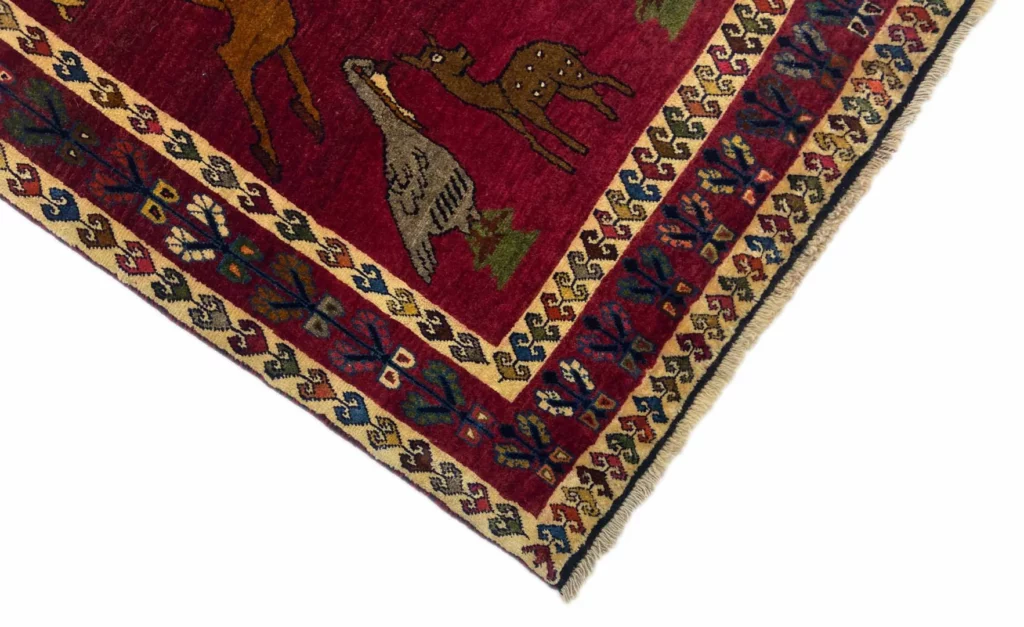
The colour palette consists of red, beige, grey and brown. Within a composition, red may provide a distinct accent, while beige, grey and brown ground and connect the design. Together, the shades create a warm colour effect. They are not separate from the pattern; they help make the imaginative and unusual overall design readable.
Gabbeh rugs are often associated with reduced or single-colour fields. Within that general image, the Gabbeh-Shuli differs through lively colours and creative designs. Its appearance is not limited to one quiet field of colour. Instead, it forms a varied image that gives priority to the knotter’s freedom of interpretation.
Gabbeh pattern traditions allow forms to be simplified, rearranged and brought together in a personal visual language. Geometric references and traditional motifs belong to the wider setting of Gabbeh-Fars rugs, while the Shuli is particularly described through imagination and free invention. Its visual effect therefore should not be equated with a strictly symmetrical classical design.
A hand-knotted rug of this kind joins design and use. The pattern is not printed as decoration onto a finished surface; it develops through the arrangement of knots and colours. Every change in the knotting contributes to the textile drawing. The result is an individual piece within a regional tradition rather than an identical item from a uniform series.
The red, beige, grey and brown colours can be combined with modern, classic or rustic interiors. This describes the design’s versatility rather than a particular room setting. Its imaginative colour and pattern arrangement can function in different interiors as a colourful or warm textile accent.
Special Features
A defining feature of this rug is the combination of shiny virgin wool, handwork and a freely imagined Gabbeh-Shuli pattern. The wool is durable and has a pleasant hand feel. Its gentle lustre complements the red, beige, grey and brown palette and reinforces the textile character of the surface.
The stated knot density of 90,000 to 180,000 knots per square metre indicates carefully executed knotting. Together with the hand-knotted construction, it makes the rug suitable for regular use. Gabbeh rugs are also regarded as easy to care for and hard-wearing, which means they can be used in areas that receive heavier foot traffic.
The rug is described as new and artistically knotted. Its origin in the Fars region, its connection with nomadic rug tradition and its imaginative design give it a clear cultural and craft context.
FAQ
How should I care for my Gabbeh-Shuli rug?
Regular vacuuming helps remove loose dirt from the pile and keeps the surface clean. Stains can occasionally be treated with a damp cloth. It is best to work gently and avoid unnecessarily soaking the wool. For a more thorough treatment, professional rug cleaning can be considered. This is especially appropriate when a mark cannot be removed through careful local treatment.
Where do Gabbeh-Shuli rugs come from?
Gabbeh-Shuli rugs come from the Fars region in southern Persia, near Shiraz. Their production is connected with the traditional craftsmanship practised by nomadic tribes. This regional setting explains the use of wool and the importance of free, imaginative designs. The Gabbeh-Shuli therefore belongs to the Persian rug tradition of Fars rather than to another area of origin.
What makes Gabbeh-Shuli rugs distinctive?
They are characterised by imaginative and unusual patterns that are not restricted to one rigid, repeated design. The use of shiny virgin wool adds a pleasant hand feel and good durability. The combination of hand-knotted workmanship, the red, beige, grey and brown colour palette, and the regional tradition of Fars makes the Gabbeh-Shuli a distinct type of rug.
Additional information
| Design Style | |
|---|---|
| Color | |
| Size | |
| Shape | |
| Origin | |
| Knot Density | |
| Material |
Related products

Persian Rug Qashqai 284 x 183 cm Wool Hand-woven
€ 798
Persian Rug Qashqai 290 x 192 cm Wool Hand-woven
€ 798
Persian Rug Qashqai 293 x 198 cm Wool Hand-woven
€ 798
Oriental Rug Qashqai 292 x 193 cm Wool Hand-woven
€ 798
Persian Rug Fars 240 x 150 cm Cashmere Hand-knotted
€ 1118
Persian Rug Tabriz 388 x 295 cm Wool Hand-knotted
€ 1440
Persian Rug Gabbeh 305×260 cm Wool Hand-knotted
€ 2307
Persian Rug Qashqai 286 x 200 cm Wool Hand-woven
€ 798