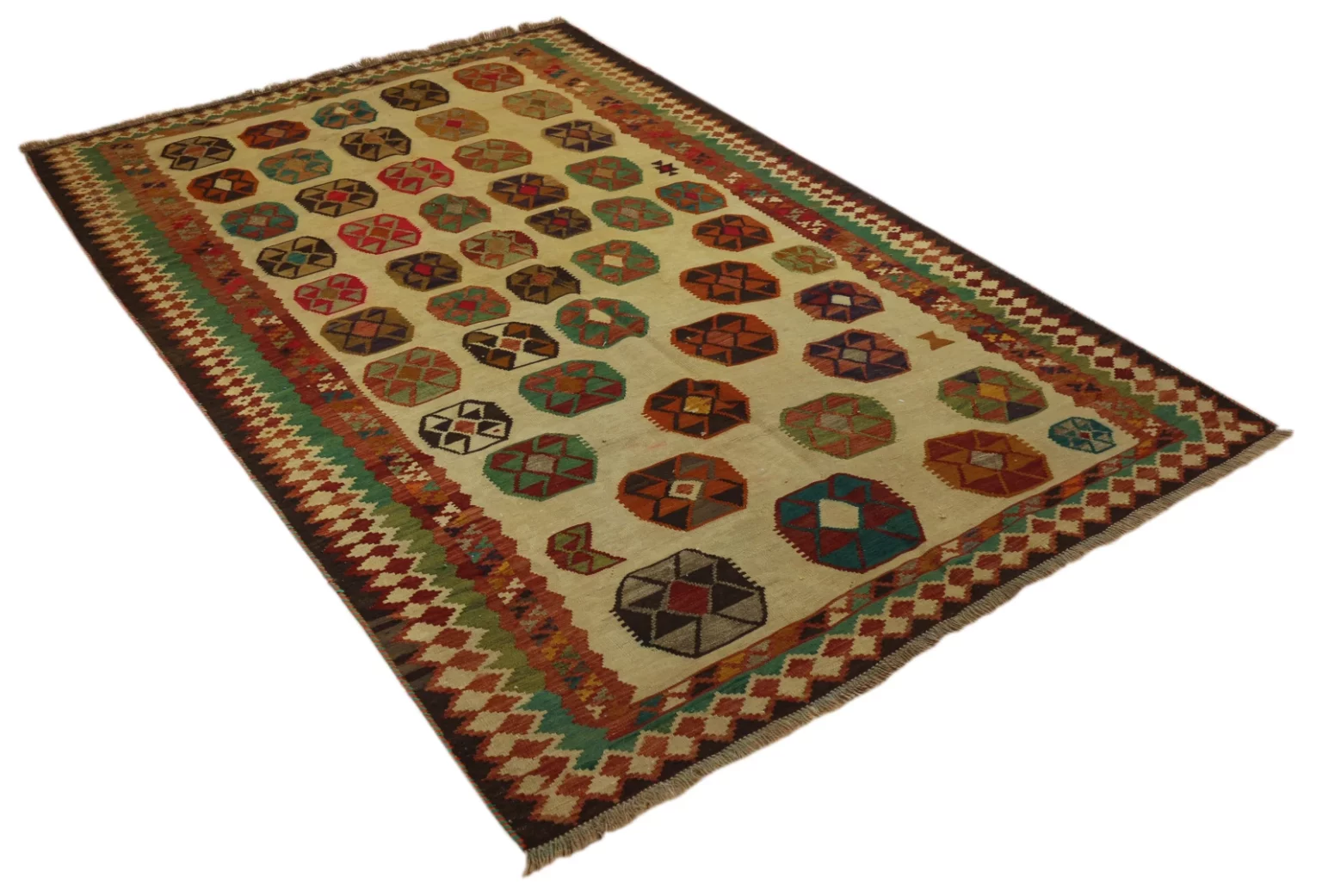
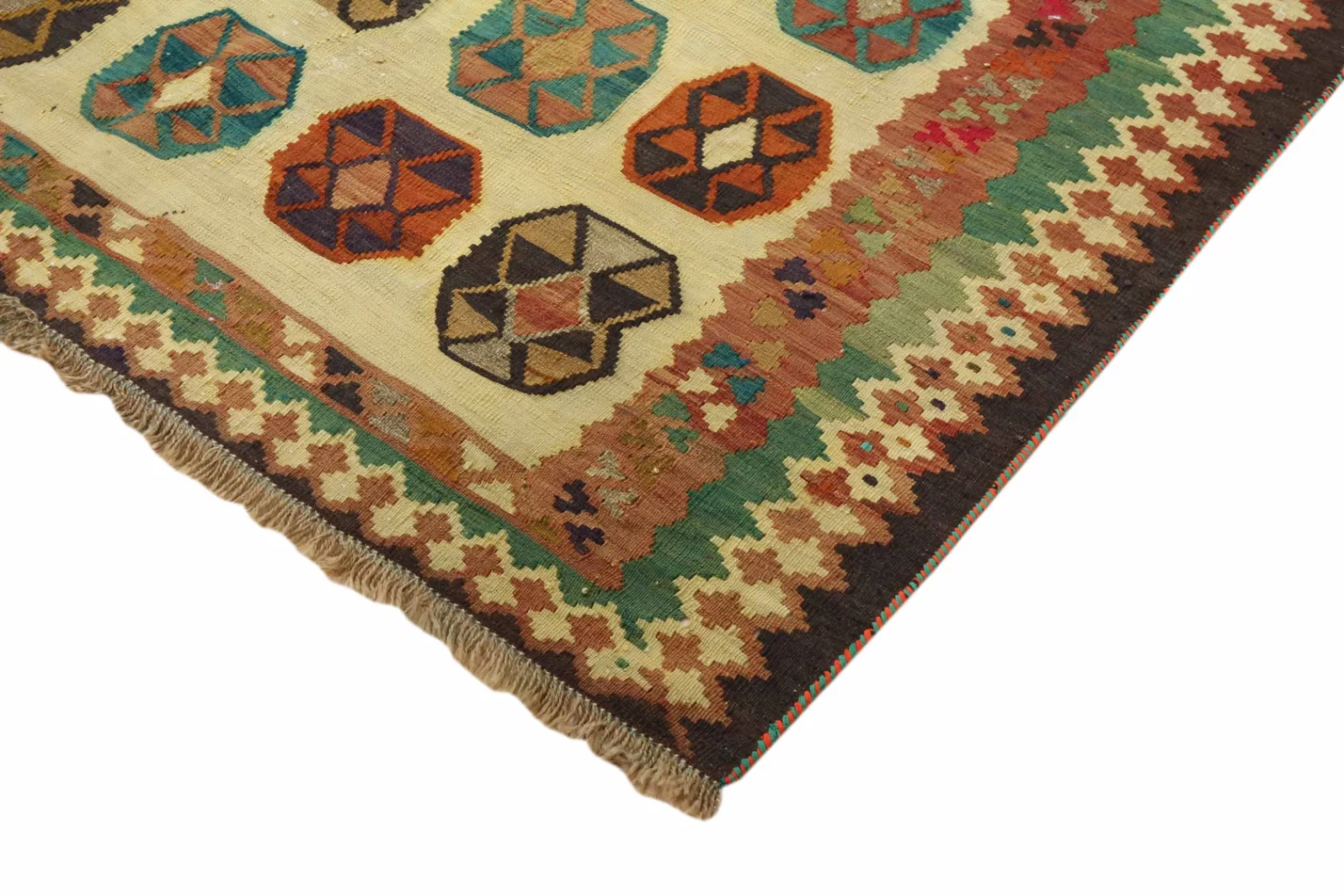
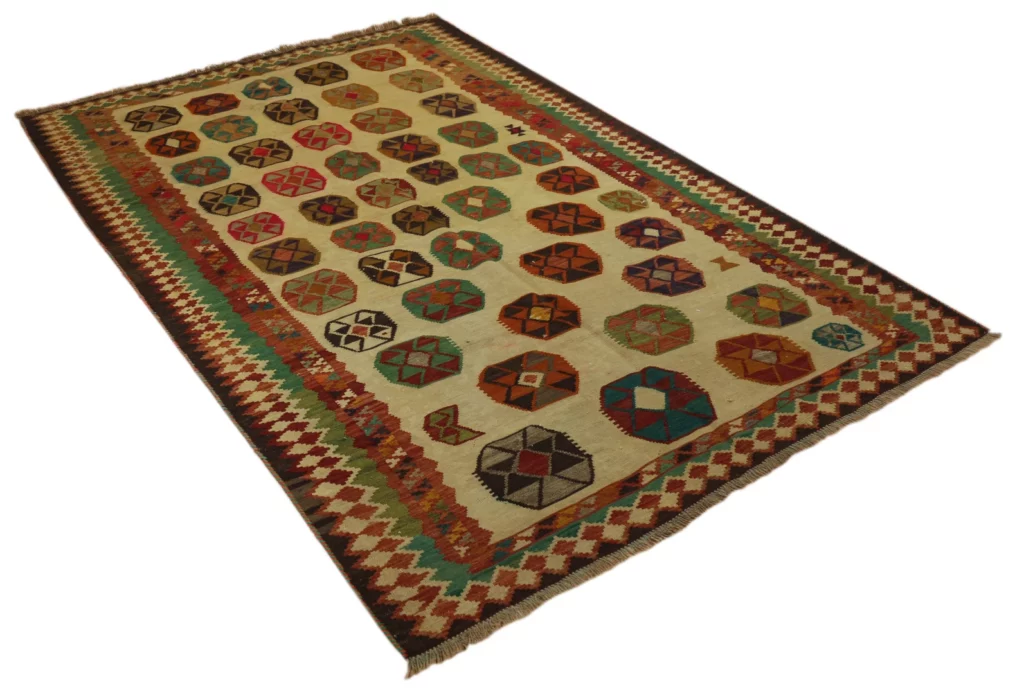
This Fars Kelim is hand-woven from wool. Unlike a knotted rug, a Kelim has no pile. Its flat surface is created by interlacing the threads during weaving, rather than by tying individual knots into a pile foundation. The term Kelim therefore identifies a flat-weaving method and structure, not a particular knot count.
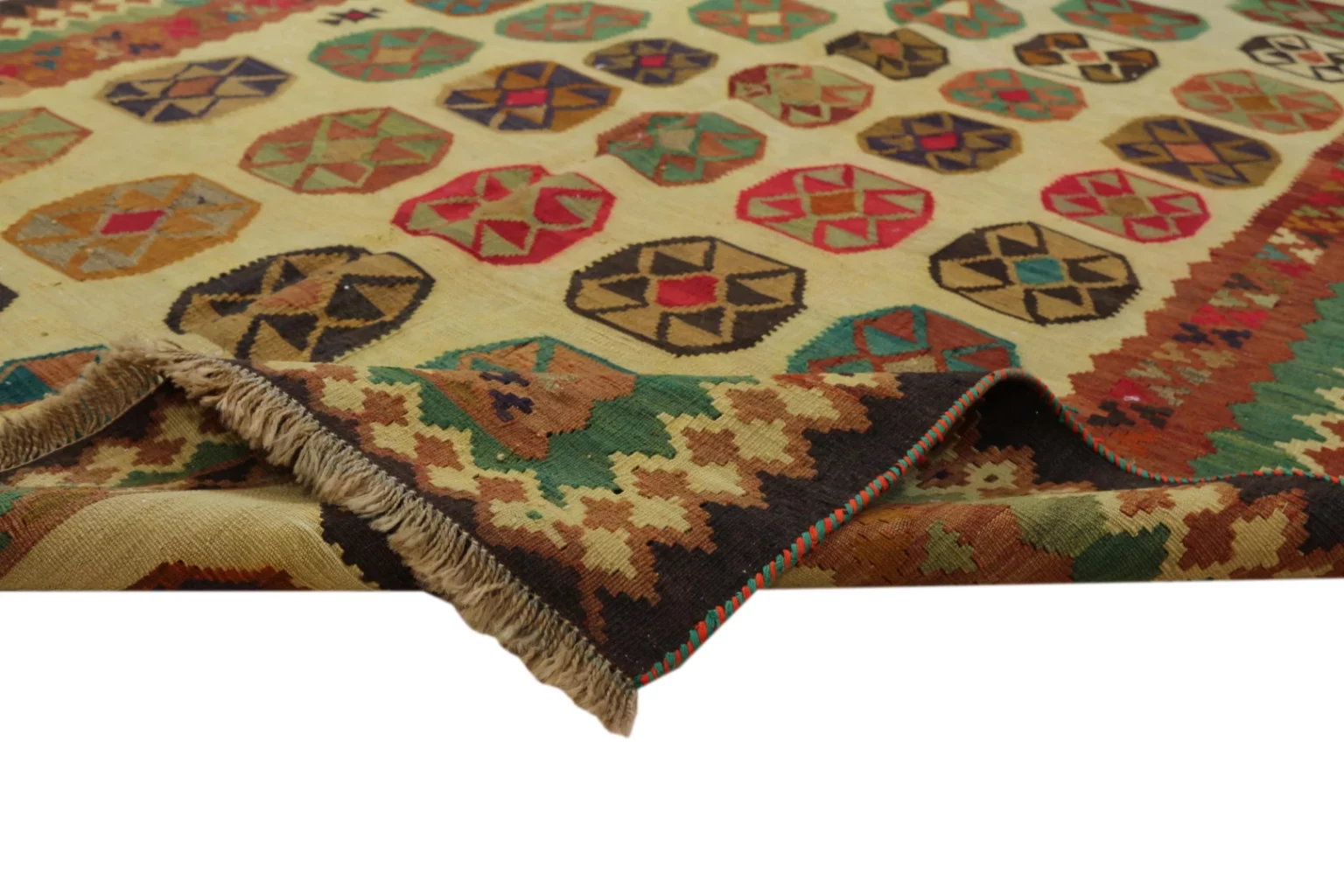
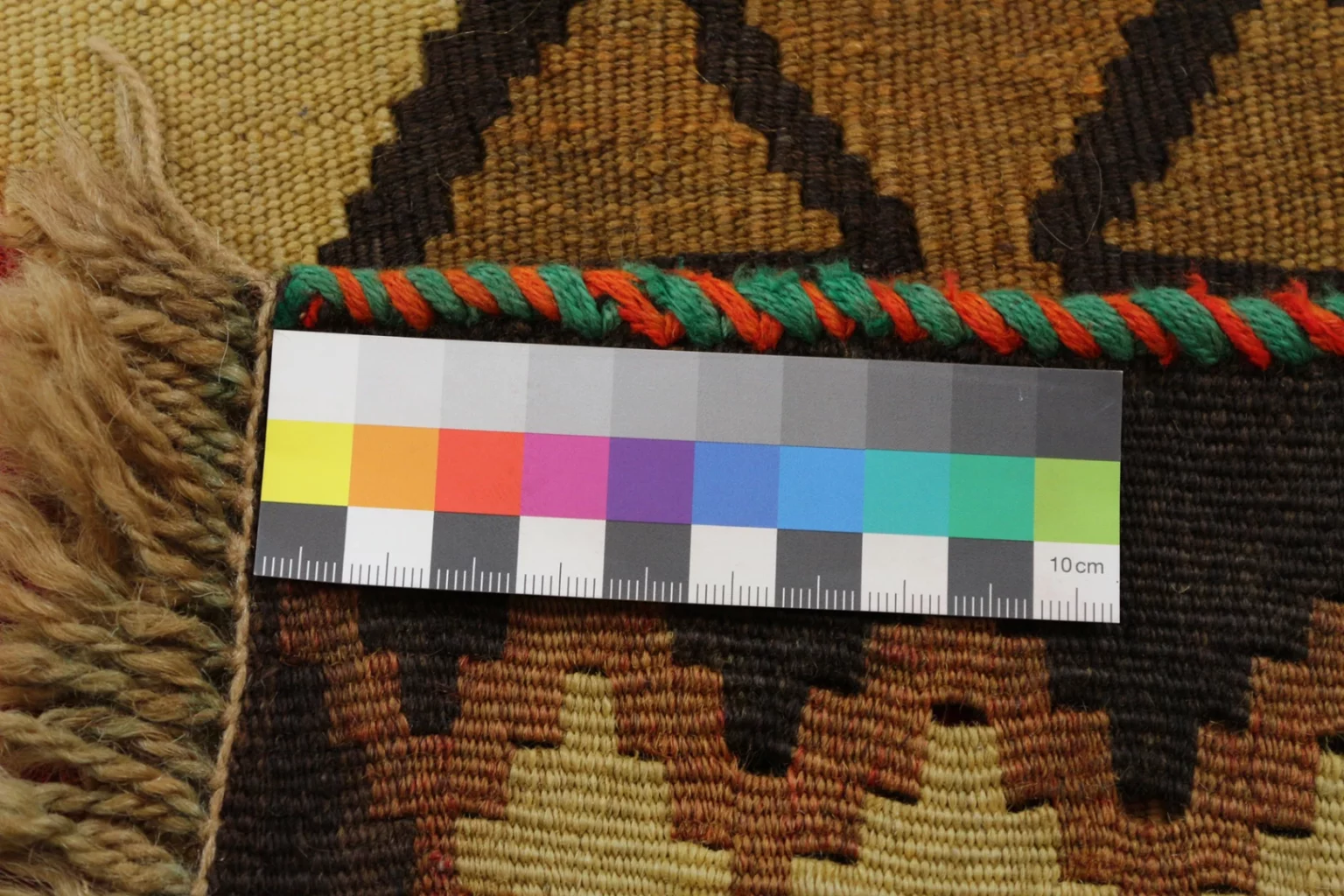
The front and back of this rug carry the same pattern. This matching treatment of both sides is a stated feature of the piece and allows the design to remain visible whichever side is presented. The material is specified as high-quality wool. No information is given about the warp, the weft, a particular weaving density, or a more detailed technical construction, so those details are not added here.
The rug is described as a handmade woven textile. This distinguishes its construction from hand-knotting, even though the original product title also contains the word hand-knotted. For the technical classification, the Kelim designation and the description of weaving without pile are decisive. Its condition is described as very well preserved.
Origin and Tradition
Fars is a region in southern Iran with a distinctive textile culture. Its weaving traditions include influences from settled village communities as well as nomadic ways of life. Flat-woven textiles such as Kelims could serve practical purposes in everyday settings. Wool and a pile-free structure made this type of textile suitable for a range of uses, while weaving knowledge was maintained within local communities.
Iranian flat weaves are made in many areas, and each region can develop its own approach to colour, layout, and ornament. Fars should not be reduced to one workshop or one fixed pattern. Depending on the community, the weaver, and the intended use, Kelims from the region may differ greatly in their structure and visual language. For this rug, Fars identifies the Iranian region of origin.
The Kelim tradition belongs to a long history of textile production that predates modern interior decoration. Flat weaves could be used as floor coverings, covers, partitions, or other household textiles. Their construction was practical for objects that needed to be moved or used in different settings. Techniques involving thread tension, colour placement, and pattern arrangement were transmitted across generations. This continuity produced a broad range of regional forms rather than one standardized design.
Fars is commonly associated with a varied weaving culture in which geometric order and freely arranged ornament can occur side by side. Some regional textiles use repeated shapes and clear divisions, while others organize the surface in a more open rhythm. Origin alone cannot establish which individual motif appears on a specific rug. The secure facts about this piece are its origin in Fars, Iran, and its flat-woven Kelim construction.
As an Iranian flat weave, this rug belongs to the wider category of Persian rugs, although that category does not require every piece to be knotted. Iranian Kelims are part of the history of Persian carpet and textile production as well. The two terms provide different information: Fars names the region, while Kelim describes the weaving technique. Together they give a more precise classification of this rug.
Design and Pattern
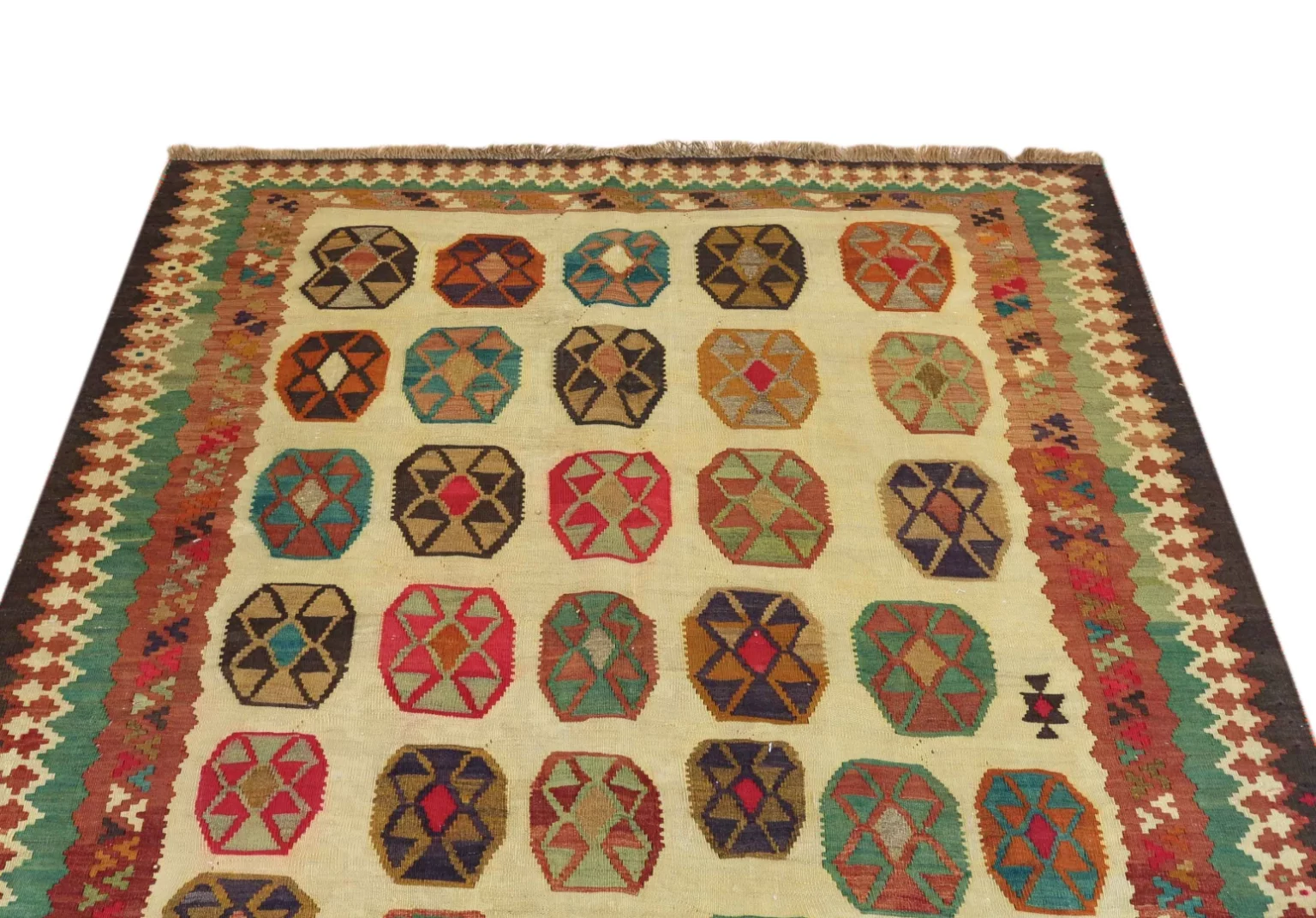
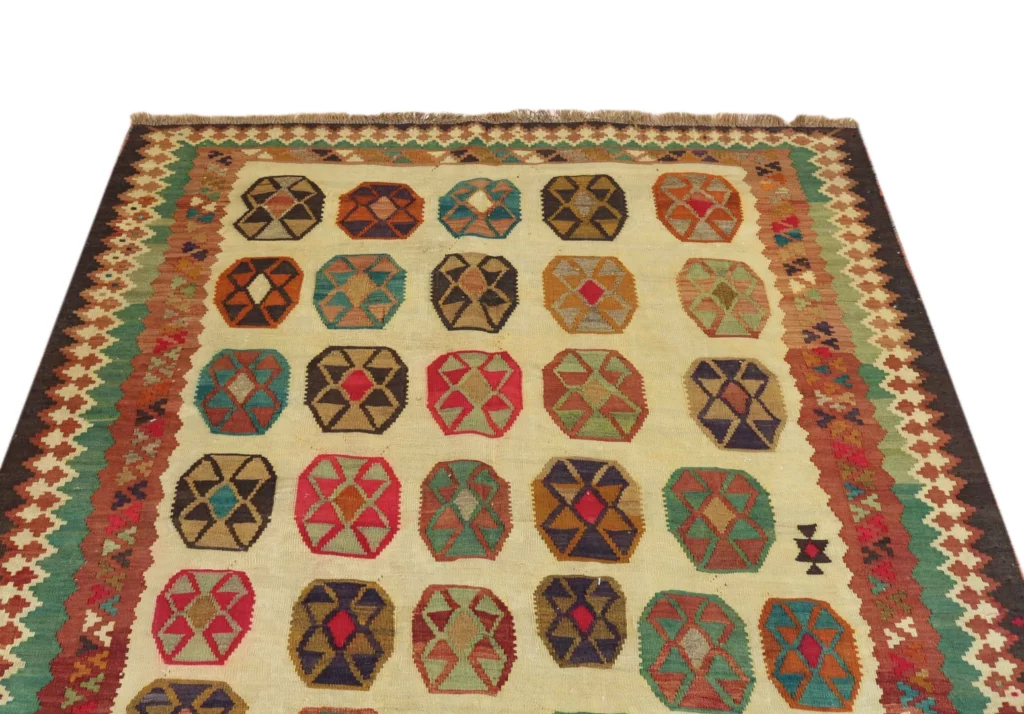
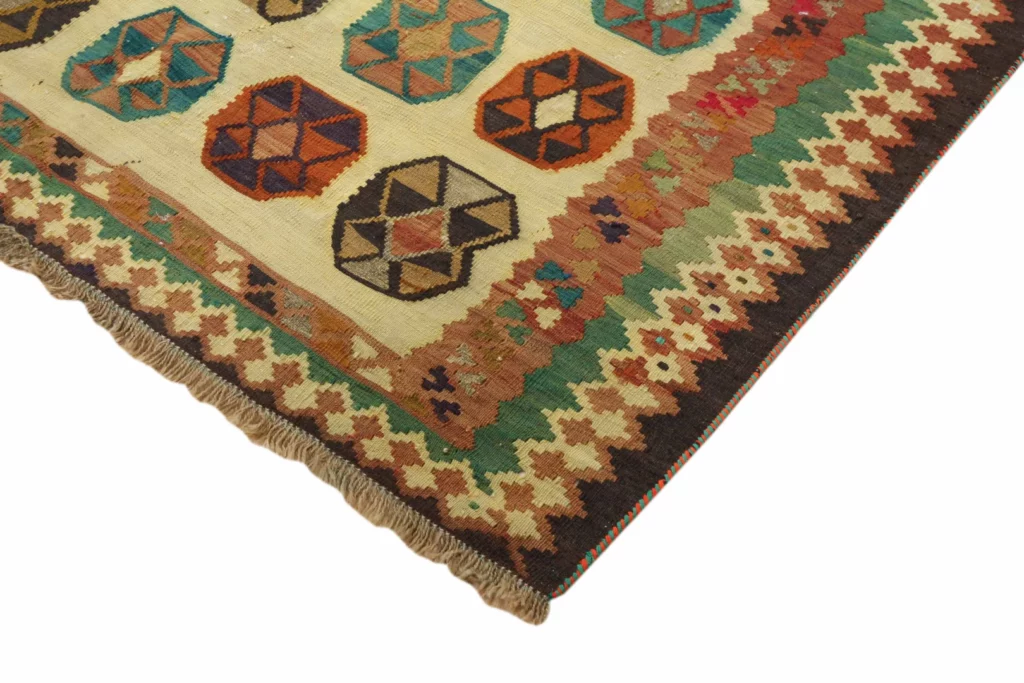
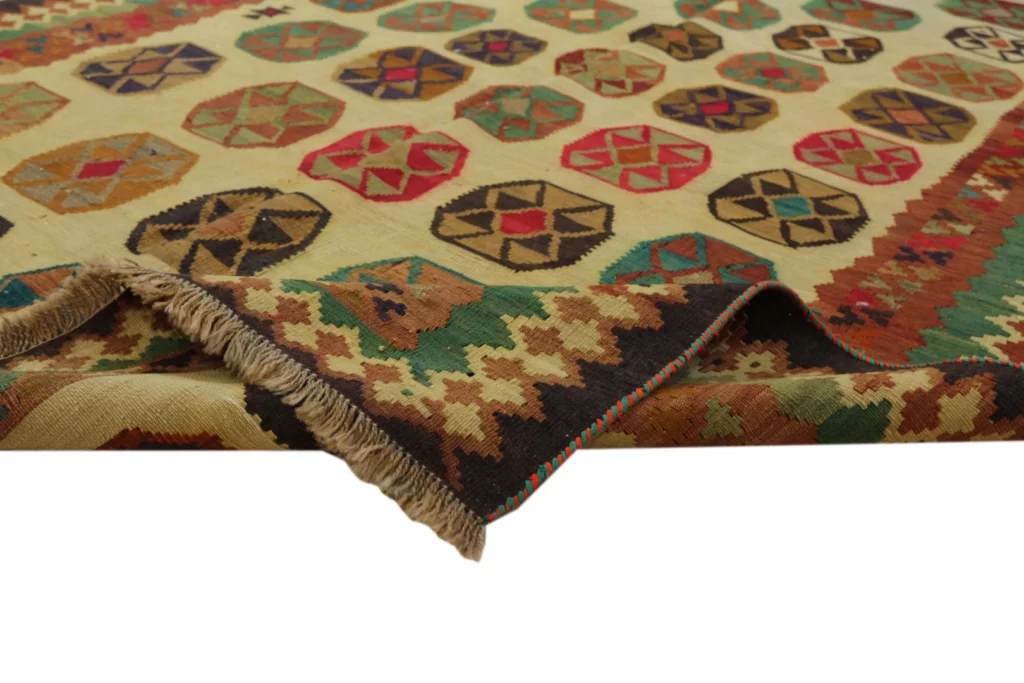
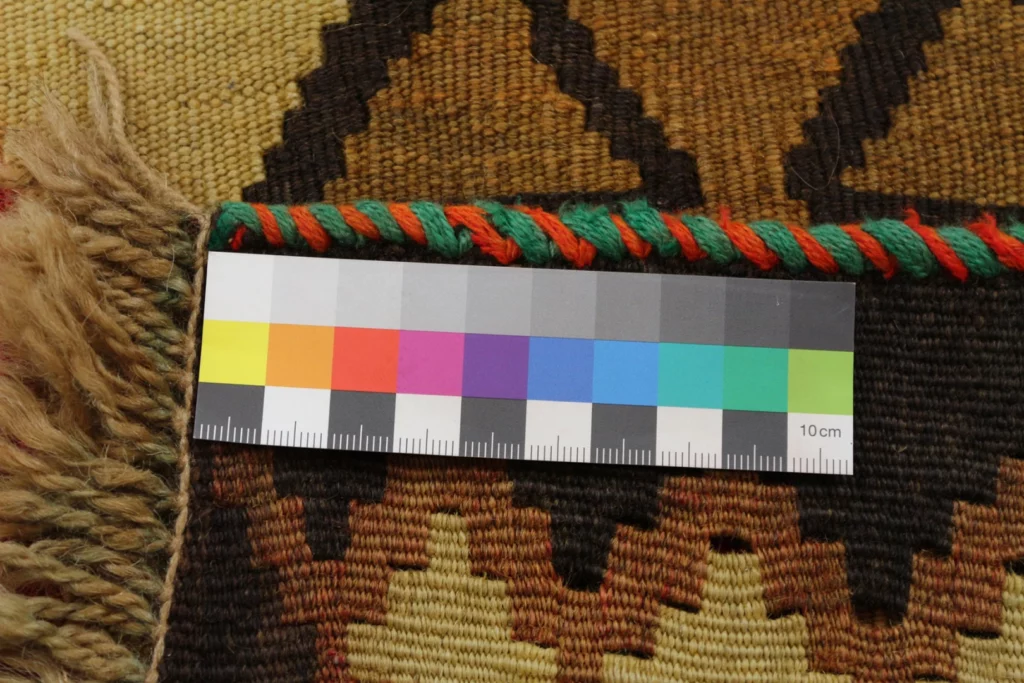
The pattern on this Kelim is identical on the front and the back. The design therefore remains the same whichever side is displayed. This is different from textiles whose reverse shows only the technical traces of construction. No specific motif, border arrangement, or colour sequence is named for this one-off piece. The appropriate design statement is consequently limited to the confirmed fact that both sides carry the same pattern.
In a Kelim, the pattern is produced through the arrangement of woven areas and colour fields rather than through rows of pile knots. Geometric shapes, lines, diamonds, bands, and stylized plant forms are generally found within the wider flat-weaving tradition. They may be repeated, placed opposite one another, or organized into larger fields. Which of these possibilities applies to an individual rug must be determined from the rug itself and cannot be inferred solely from its Fars origin.
Regional flat weaves often use a clear division of the available surface. A Kelim may have a central field with side borders, a sequence of repeating ornaments, or a more continuous arrangement across the textile. The flat construction gives many Kelims a graphic character. Small irregularities may also reflect the hand-made process. These general features explain how Kelim designs are built, but they do not replace a specific description of motifs that has not been supplied for this rug.
The matching design on both sides also affects how the textile can be displayed. It can be viewed as a woven surface without one side being designated as the only presentable face. When used as a wall hanging, normally just one side will be visible, but the identical reverse remains a notable construction feature. It indicates that the pattern belongs to the woven structure rather than being applied only to one surface.
Fars Kelims, like other Iranian flat weaves, may use restrained geometry or a more varied ornamental rhythm. The regional tradition does not impose one single visual vocabulary. For that reason, this description does not assign an unnamed motif or an unverified symbolic meaning to the rug. The factual design description is that it is a Kelim with an identical pattern on the front and back.
Special Features
The identical pattern on both sides is a notable feature of this piece. Front and back are designed alike. The rug is also described as versatile and suitable for use as a wall hanging. It can therefore serve not only as a flat textile for the floor but also as a decorative woven work displayed vertically. Its pile-free, woven form and matching sides support this alternative presentation.
The rug is very well preserved. This condition statement describes its recorded state without adding claims about age, restoration, or particular signs of wear. No date of manufacture or age is provided. There is also no information about a signature, certificate, or named workshop.
FAQ
What is a Kelim?
A Kelim is a flat-woven textile without pile. Its design is created by interlacing threads and organizing the woven colour areas, rather than by tying individual knots into a pile. This makes its construction different from that of a hand-knotted rug. This piece is described as hand-woven and made without pile. Its front and back are also stated to carry the same pattern.
Where does this Persian rug come from?
This Kelim comes from Fars in Iran. Fars has a distinct tradition of producing woven textiles, shaped by different local and regional communities. The place name describes the rug’s region of origin, while Kelim identifies its flat-weaving technique. The region alone does not establish a particular village, workshop, or unnamed ornament. The confirmed classification is an Iranian Persian rug from Fars, made as a hand-woven Kelim.
Can the rug be used as a wall hanging?
Yes. The rug is described as versatile and suitable for use as a wall hanging. Its flat, pile-free woven structure allows it to be presented as a textile decoration on a wall. Since the front and back show the same pattern, the design remains consistent regardless of which side is visible. A suitable hanging method should distribute the textile’s weight evenly and avoid unnecessary strain. No specific hanging system or mounting hardware is stated as included.
To provide the best experiences, we use technologies like cookies to store and/or access device information. Consenting to these technologies will allow us to process data such as browsing behavior or unique IDs on this site. Not consenting or withdrawing consent, may adversely affect certain features and functions.
Functional Always active
The technical storage or access is strictly necessary for the legitimate purpose of enabling the use of a specific service explicitly requested by the subscriber or user, or for the sole purpose of carrying out the transmission of a communication over an electronic communications network.
Preferences
The technical storage or access is necessary for the legitimate purpose of storing preferences that are not requested by the subscriber or user.
Statistics
The technical storage or access that is used exclusively for statistical purposes.The technical storage or access that is used exclusively for anonymous statistical purposes. Without a subpoena, voluntary compliance on the part of your Internet Service Provider, or additional records from a third party, information stored or retrieved for this purpose alone cannot usually be used to identify you.
Marketing
The technical storage or access is required to create user profiles to send advertising, or to track the user on a website or across several websites for similar marketing purposes.

 SECURE PAYMENT
 SHIPPING PARTNERS


