This Gabbeh Shuli Persian rug is hand-knotted from high-quality virgin wool. The wool forms the pile and defines the tactile character of the rug. Wool has long been used in rug making because it can be worked into a resilient pile while retaining a pleasant surface. In this piece, the natural material is combined with careful, artistic craftsmanship.
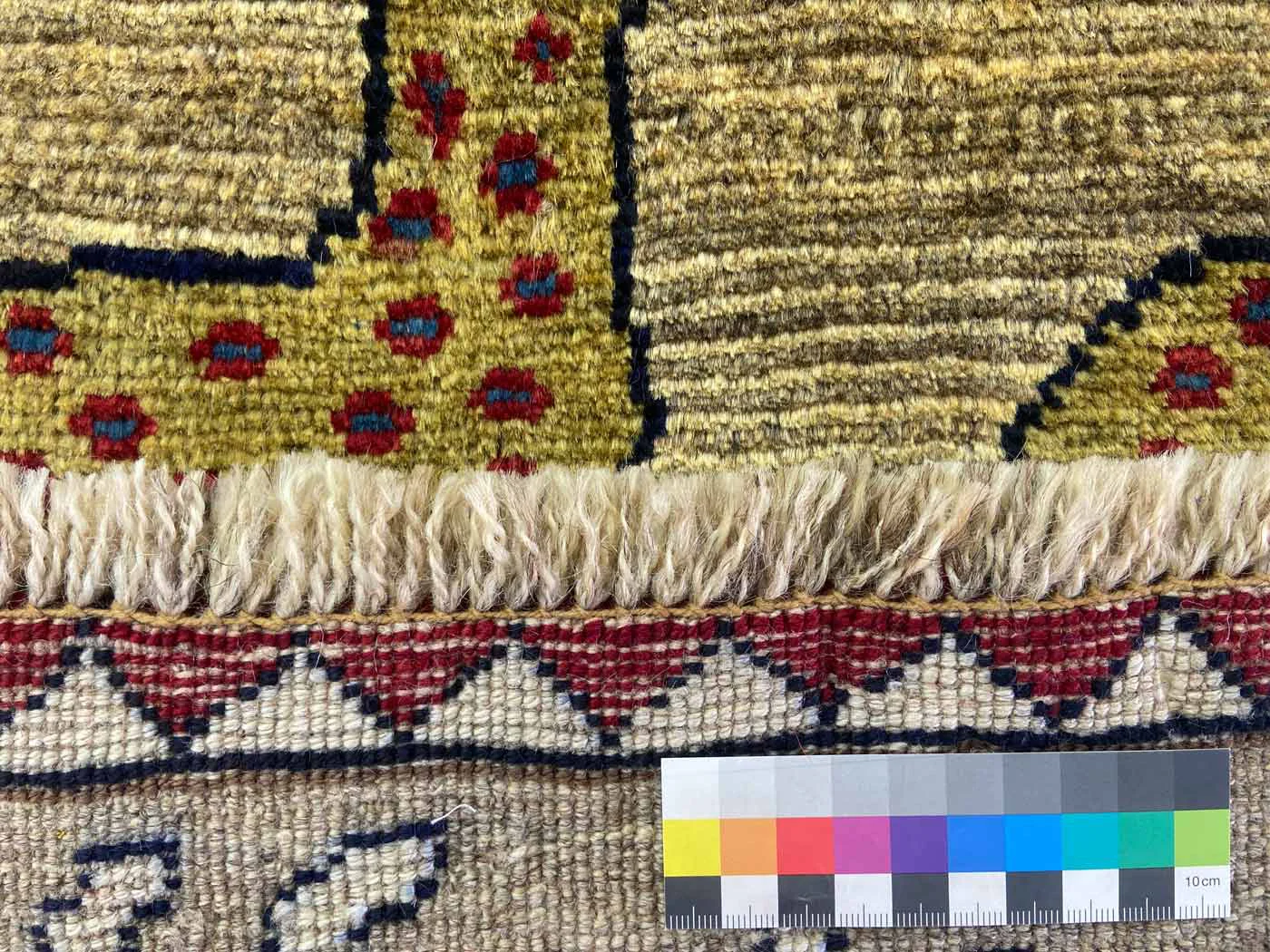
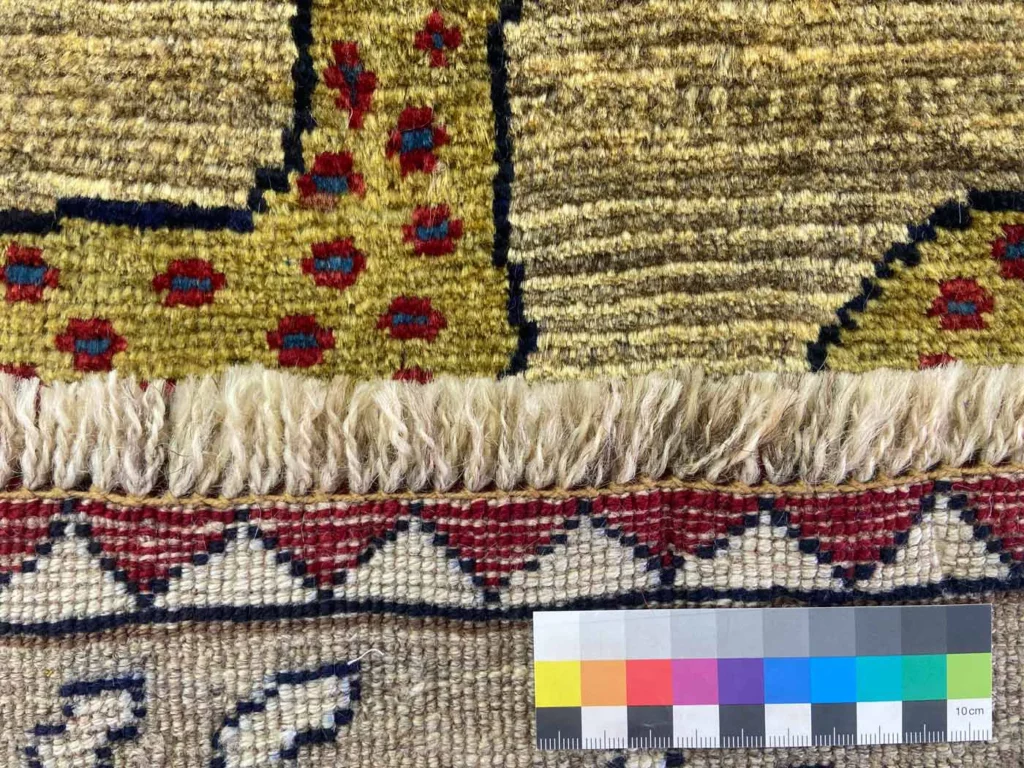
The knot density is 90.000 to 180.000 knots per square metre. This density supports a clearly developed surface and the sturdy construction associated with a hand-knotted rug. Each knot is formed individually within the structure. The result is not an industrially uniform product, but a one-off made through traditional manual work.
Virgin wool is central to the character of this rug. It provides a comfortable feel and is described as durable. The new condition and artistic workmanship are properties of this particular piece. Its hand-knotted construction makes the relationship between material, knot density and design visible in the finished textile.
Origin and Tradition
The rug comes from Fars in southern Persia. The region lies in the wider area around the historic city of Shiraz and is associated with Persian nomadic and rug-making culture. Gabbeh rugs are traditionally connected with the work of nomadic tribes. Their production represents a textile practice in which experience, knowledge of materials and inherited knotting techniques work together.
Fars is an important region for Gabbeh rugs. The name Gabbeh refers to a rug tradition whose appearance can be shaped by direct and independent design. Rather than following a strictly prescribed sequence of motifs, this tradition leaves room for the individual decisions of the weaver. The finished work therefore combines an established technique with personal expression.
Gabbeh Shuli makes this openness especially apparent. Its freely invented and unusual designs are among the stated characteristics of this type. The craft foundation remains essential: the motifs are not simply printed onto a completed surface, but are built into the rug during the knotting process. The cultural history of Fars therefore meets the creative freedom of the people who make the rugs.
Persian rug tradition includes many regional forms. Gabbeh from Fars represents an individual approach to design within this wider field. Other recognised names describe different traditions. Kerman rugs are often associated with floral and ornamental compositions, while Tabriz rugs are frequently known for detailed depictions of scenes and stories. These distinctions show that Persian rugs do not follow one single pattern system, but have developed through different regional and craft histories.
Gabbeh Fars rugs belong to the same context. They are associated with playful designs and vivid colours, and may include geometric shapes and natural motifs inspired by their surroundings. Within this tradition, Gabbeh Shuli places particular emphasis on a free and unconventional pattern idea. It retains its connection to Fars while allowing the design to express the individual nature of the knotting process.
Design and Pattern
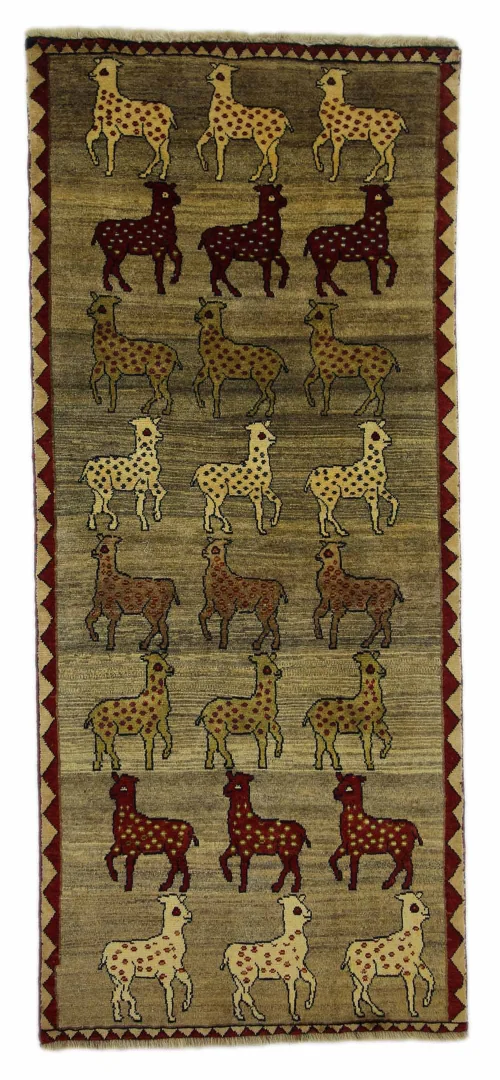
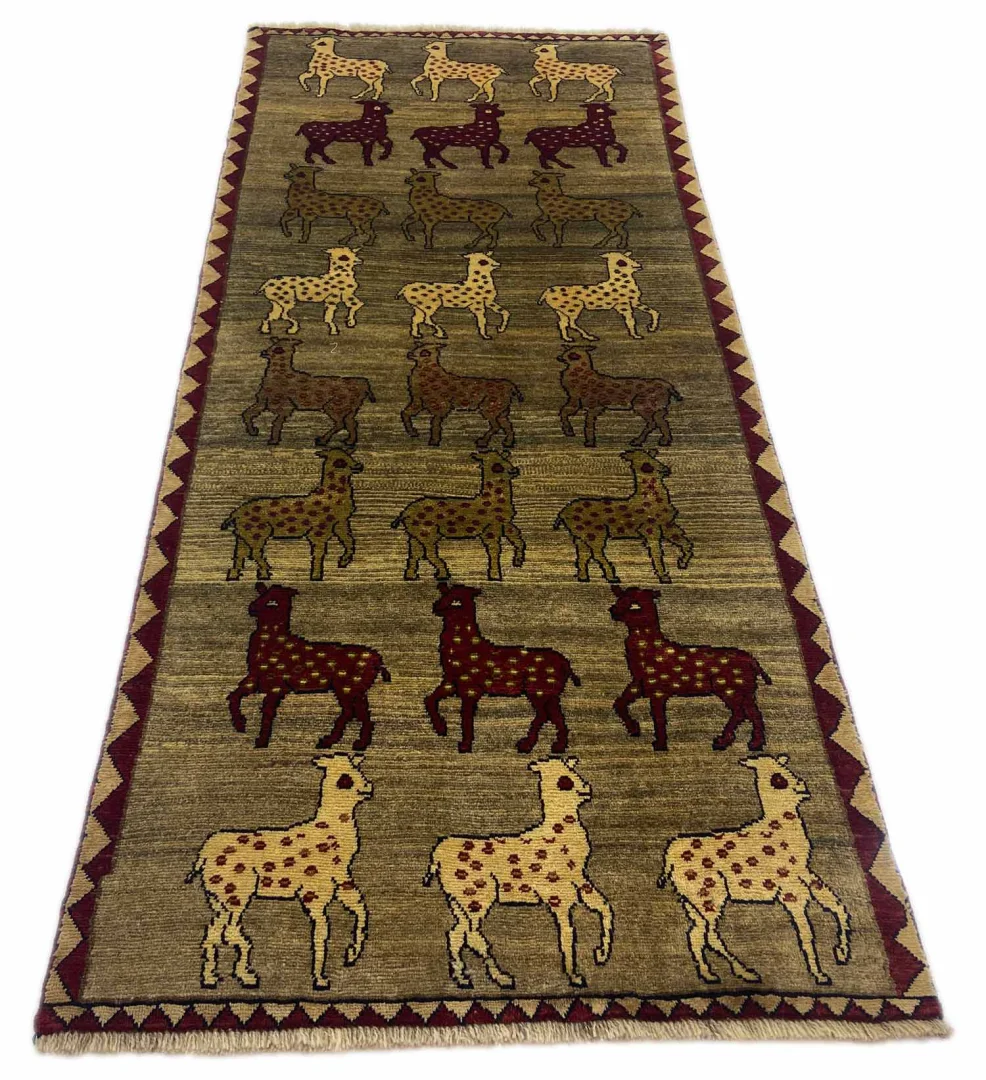
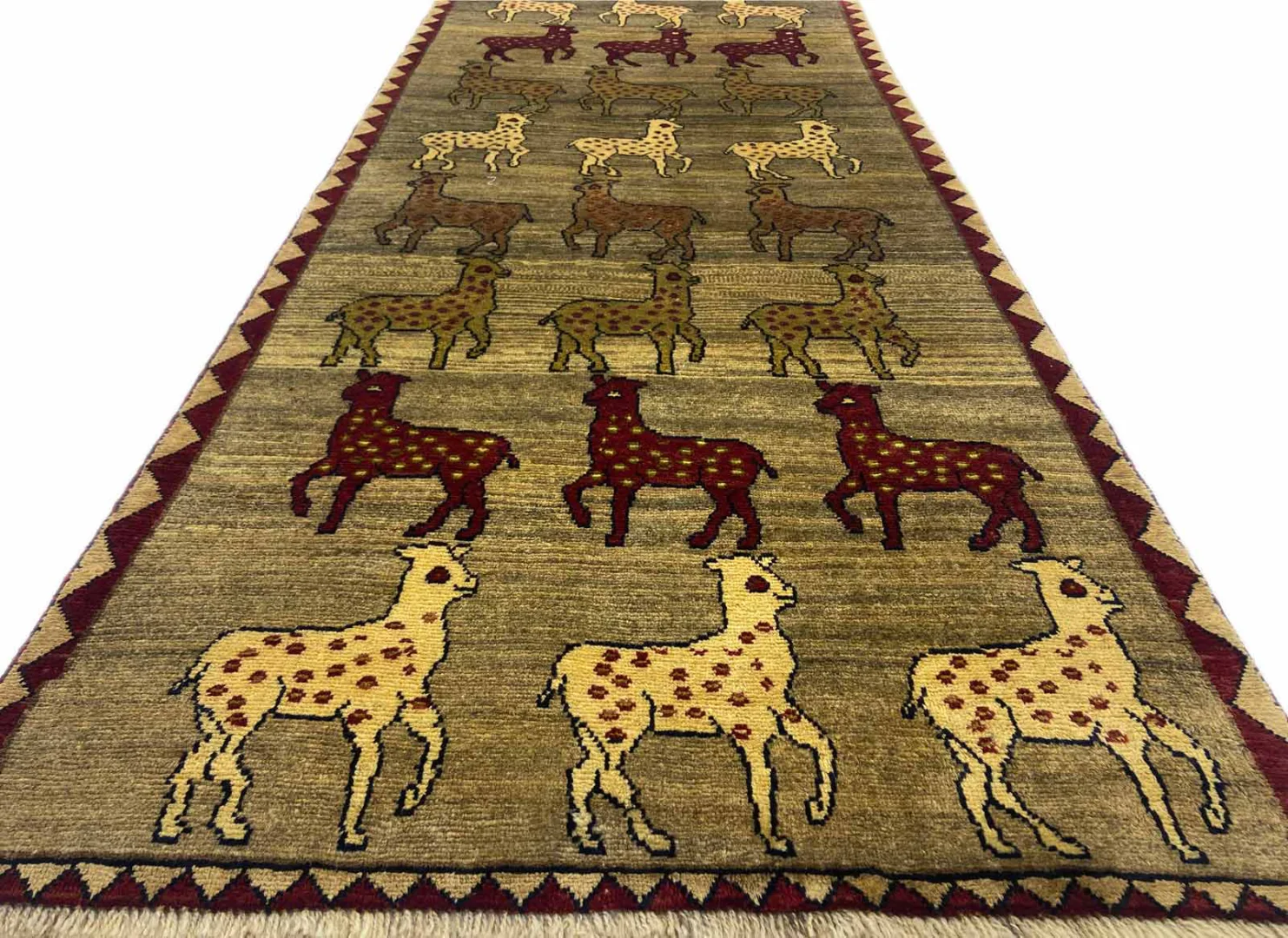
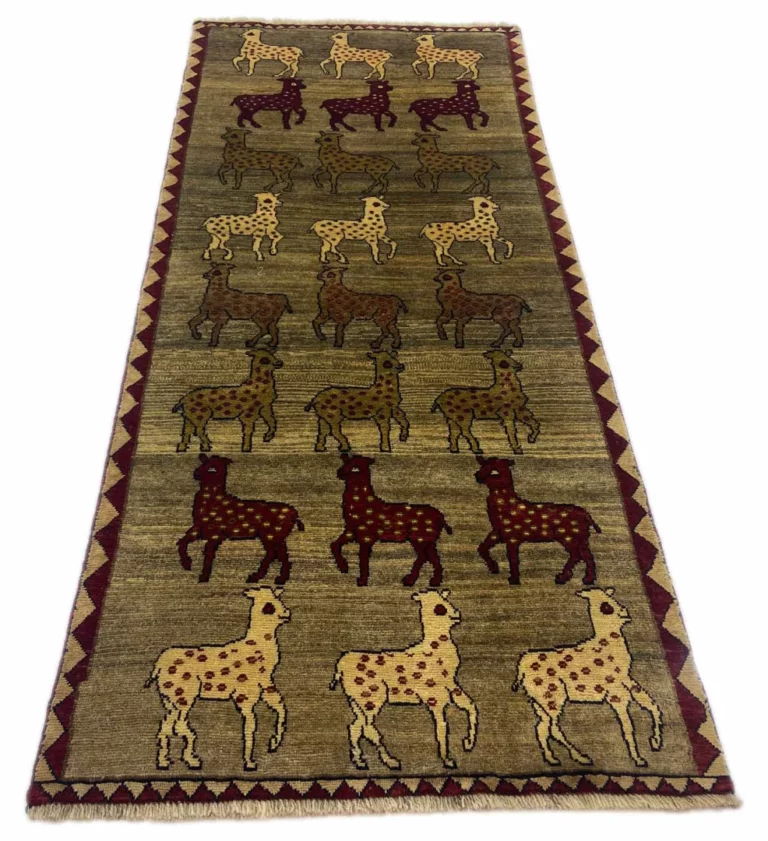
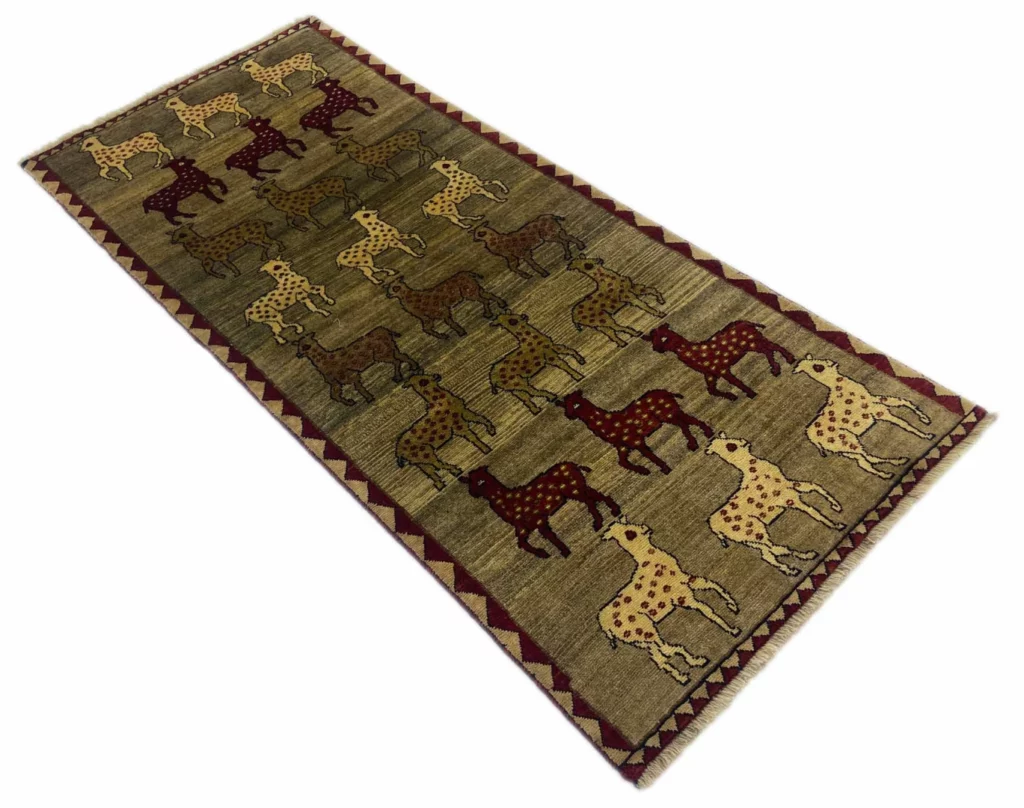
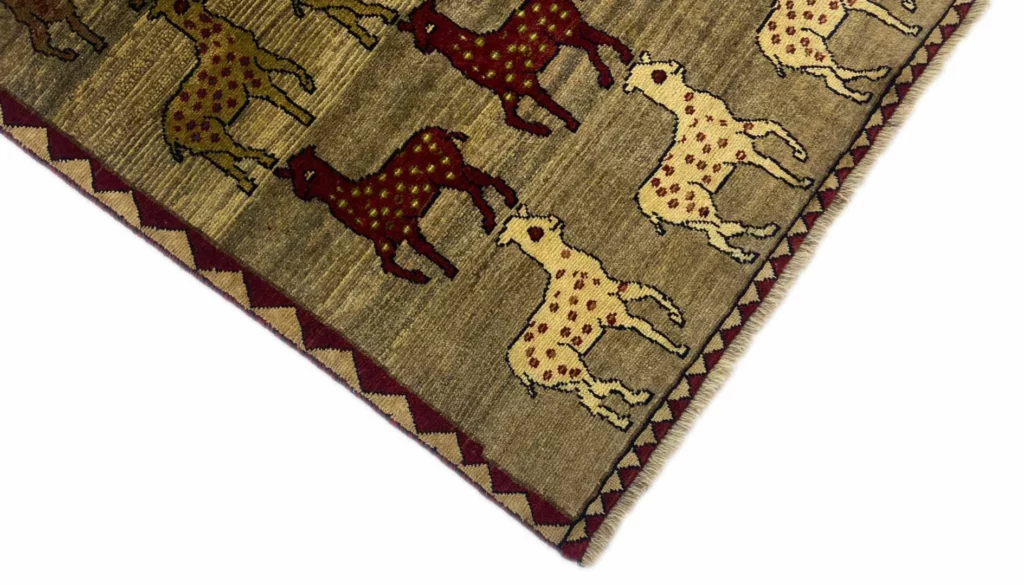
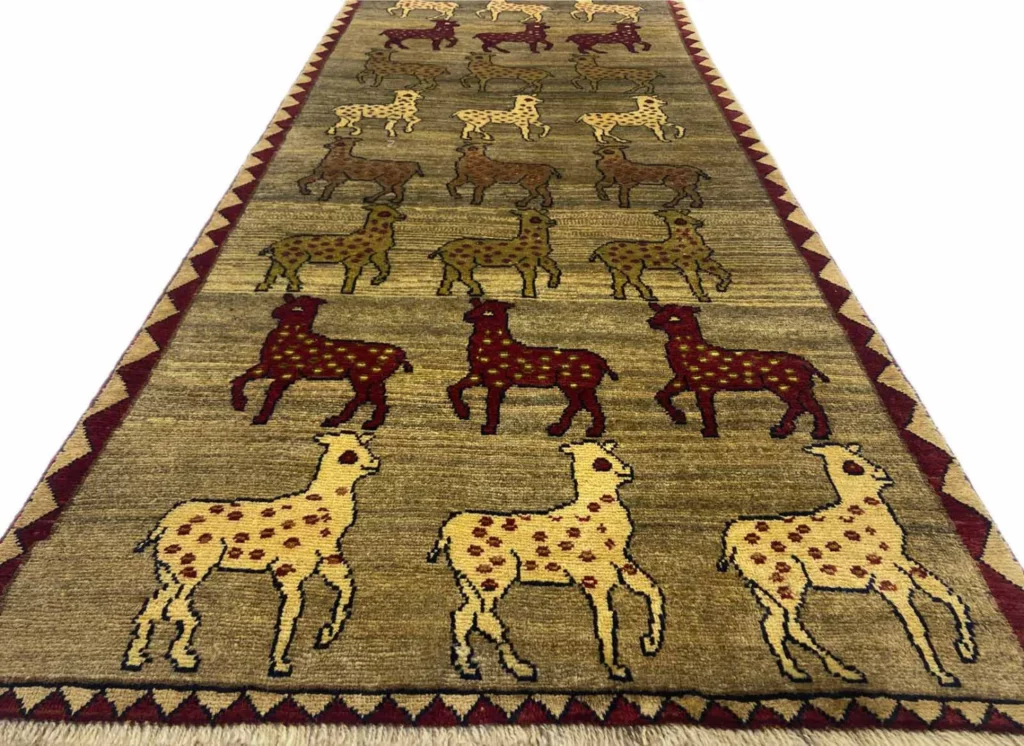
The pattern of this Gabbeh Shuli rug is described as freely invented and unusual. This means that the design is not limited to a restrained repetition of a small number of standard symbols. Gabbeh Shuli gives the weaver room to follow creative ideas. Uncommon visual concepts and independent combinations can therefore become part of the finished composition.
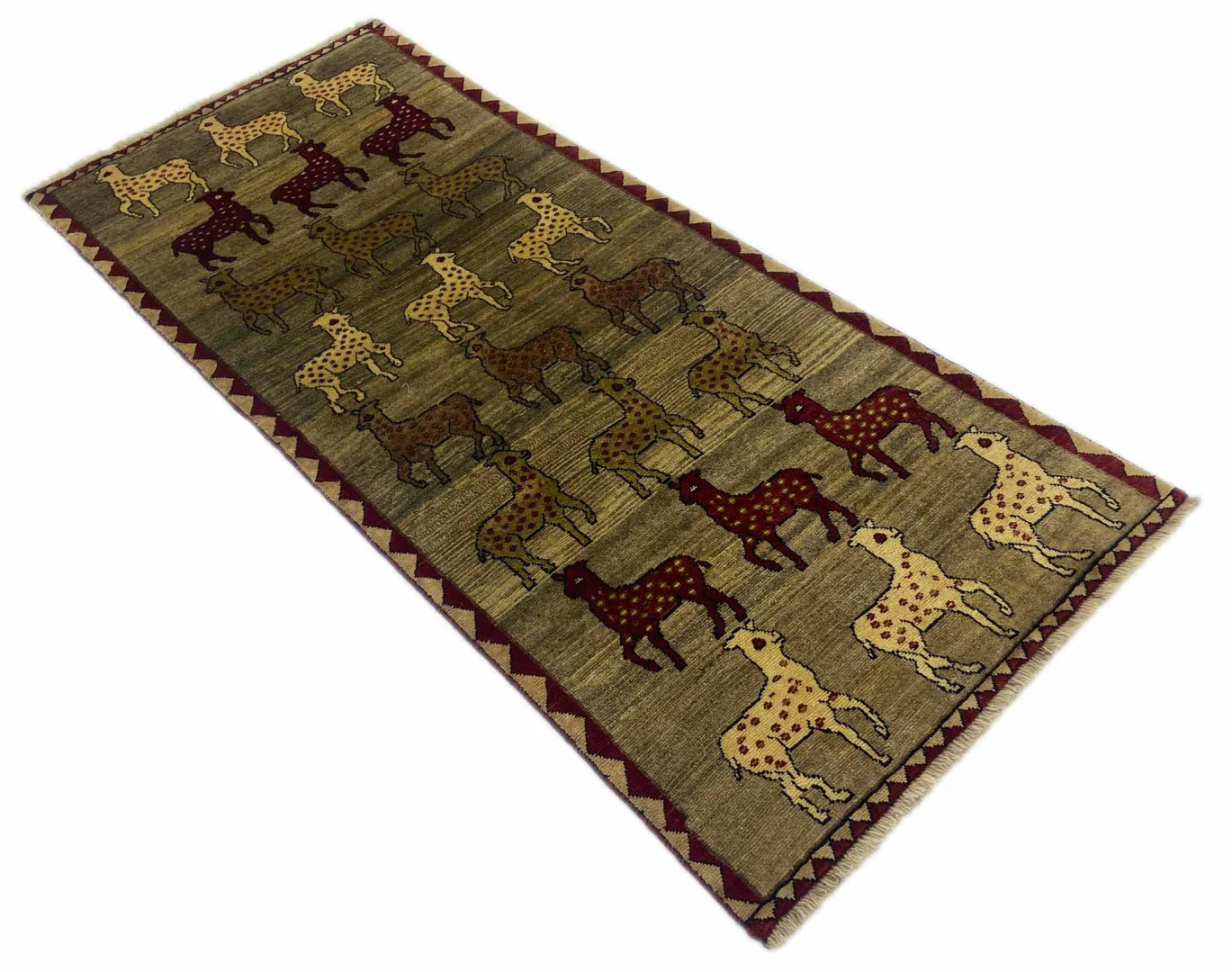
The colour range includes red, beige, grey and brown. Together, these tones create a warm yet balanced palette. Red supplies a strong accent, beige introduces a light natural note, grey provides a neutral counterpoint and brown adds an earthy shade. The named colours work together harmoniously without reducing the design to one single field of colour.
Gabbeh patterns can draw on geometric shapes and natural motifs. For Gabbeh Shuli, however, the central quality is the imaginative freedom of the design. The pattern does not need to be read as a rigidly symmetrical ornament. Its effect comes from the relationship between field, colour and individually developed forms. This makes Shuli a Gabbeh variation in which traditional knotting is joined by contemporary and unconventional design ideas.
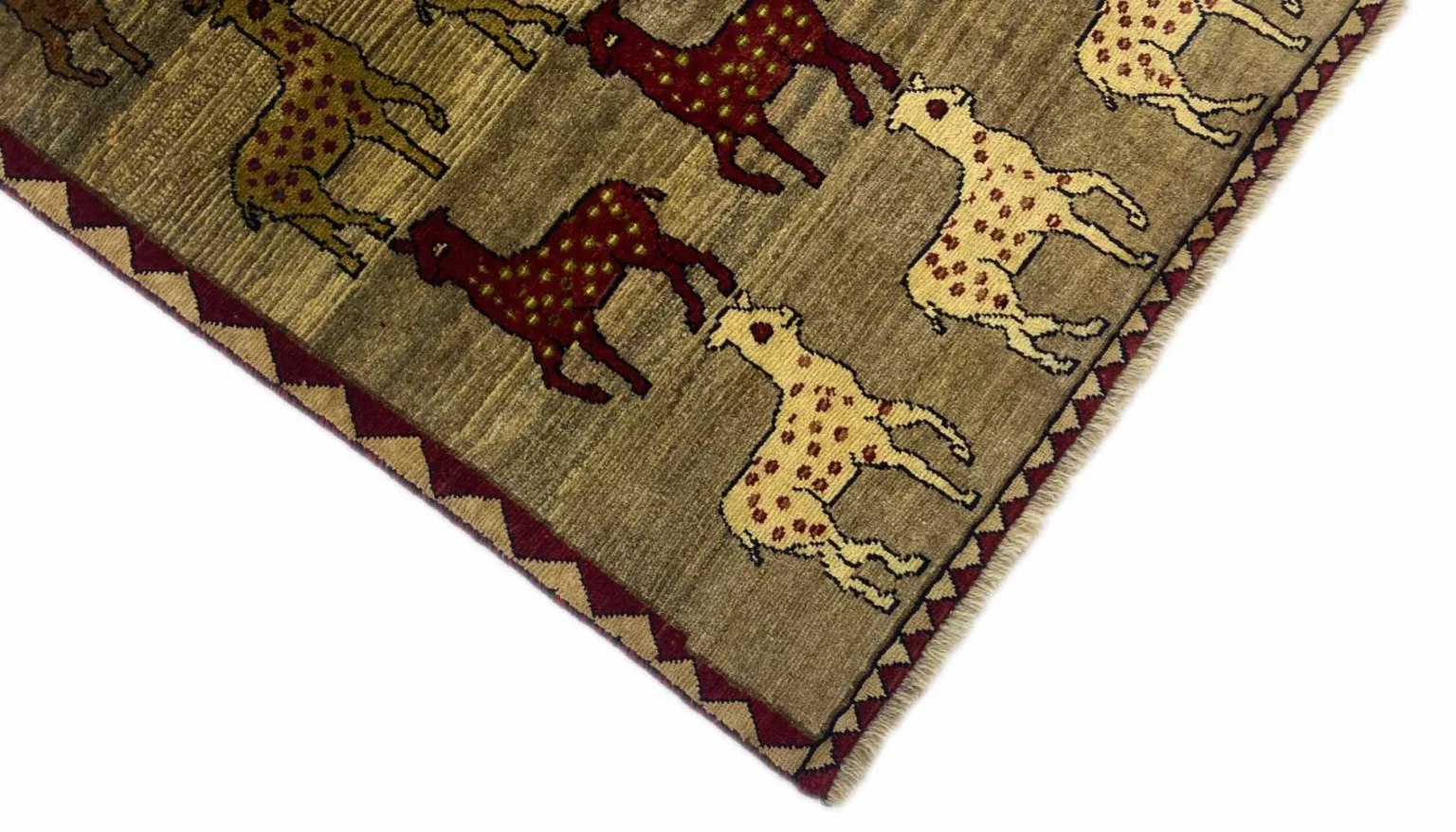
The hand-knotted construction gives the pattern a textile depth. Every area of the composition is built up through the work performed on the rug. A density of 90.000 to 180.000 knots per square metre supports differentiated execution as well as a robust structure. The pattern thus remains connected to the making of the rug: the colours and forms are part of the knotting rather than decoration applied afterwards.
In Persian rug history, designs often relate to a region’s surroundings, way of life and visual language. In Gabbeh rugs from Fars, these influences are accompanied by the immediate imagination of the weaver. Gabbeh Shuli uses that openness for unusual designs. Its red, beige, grey and brown palette belongs to a composition that connects traditional origin with contemporary interior styles.
The contrast with Kerman and Tabriz further clarifies the design character. Kerman is often linked with floral and ornamental patterns, while Tabriz is associated with detailed scenes and narrative imagery. Shuli Gabbeh follows neither of these particular emphases. It represents freely developed forms and a playful, unconventional understanding of pattern within Persian rug making.
Special Features
This one-off is distinguished by the combination of origin, material and design. It comes from Fars, is hand-knotted and made from high-quality virgin wool. Its freely invented, unusual designs are accompanied by a palette of red, beige, grey and brown. The rug is described as new and artistically crafted.
Each piece is understood as unique and carries the character of its origin together with the culture of the nomadic tribes traditionally associated with Gabbeh rugs. The recorded knot density of 90.000 to 180.000 knots per square metre adds another hand-crafted characteristic. Together, these qualities create an independent design, a sturdy structure and a clear connection to Persian knotting tradition.
FAQ
How should I care for my Gabbeh Shuli rug?
Vacuum the rug regularly as part of its care. Professional cleaning is recommended when needed. Direct sunlight should be avoided so that the red, beige, grey and brown colours are less likely to fade. Gentle, regular care helps preserve the virgin-wool surface and the appearance of the hand-knotted pattern.
Where does the wool for Gabbeh Shuli rugs come from?
The wool comes from sheep raised in the Fars region. The material used is natural virgin wool. It is known for softness and robustness, which makes it suitable for rug production. In this rug, it forms the pile and is one of the fundamental materials in its hand-knotted construction.
Why are Gabbeh Shuli rugs particularly valuable?
Their significance comes from their unique designs, high-quality materials and demanding craftsmanship. Each piece is a one-off and reflects the cultural history and traditions of the nomadic tribes. Gabbeh Shuli also adds a freely invented and unusual approach to pattern. The combination of virgin wool, hand knotting and an individual design defines its character.
To provide the best experiences, we use technologies like cookies to store and/or access device information. Consenting to these technologies will allow us to process data such as browsing behavior or unique IDs on this site. Not consenting or withdrawing consent, may adversely affect certain features and functions.
Functional Always active
The technical storage or access is strictly necessary for the legitimate purpose of enabling the use of a specific service explicitly requested by the subscriber or user, or for the sole purpose of carrying out the transmission of a communication over an electronic communications network.
Preferences
The technical storage or access is necessary for the legitimate purpose of storing preferences that are not requested by the subscriber or user.
Statistics
The technical storage or access that is used exclusively for statistical purposes.The technical storage or access that is used exclusively for anonymous statistical purposes. Without a subpoena, voluntary compliance on the part of your Internet Service Provider, or additional records from a third party, information stored or retrieved for this purpose alone cannot usually be used to identify you.
Marketing
The technical storage or access is required to create user profiles to send advertising, or to track the user on a website or across several websites for similar marketing purposes.
 SECURE PAYMENT
 SHIPPING PARTNERS


