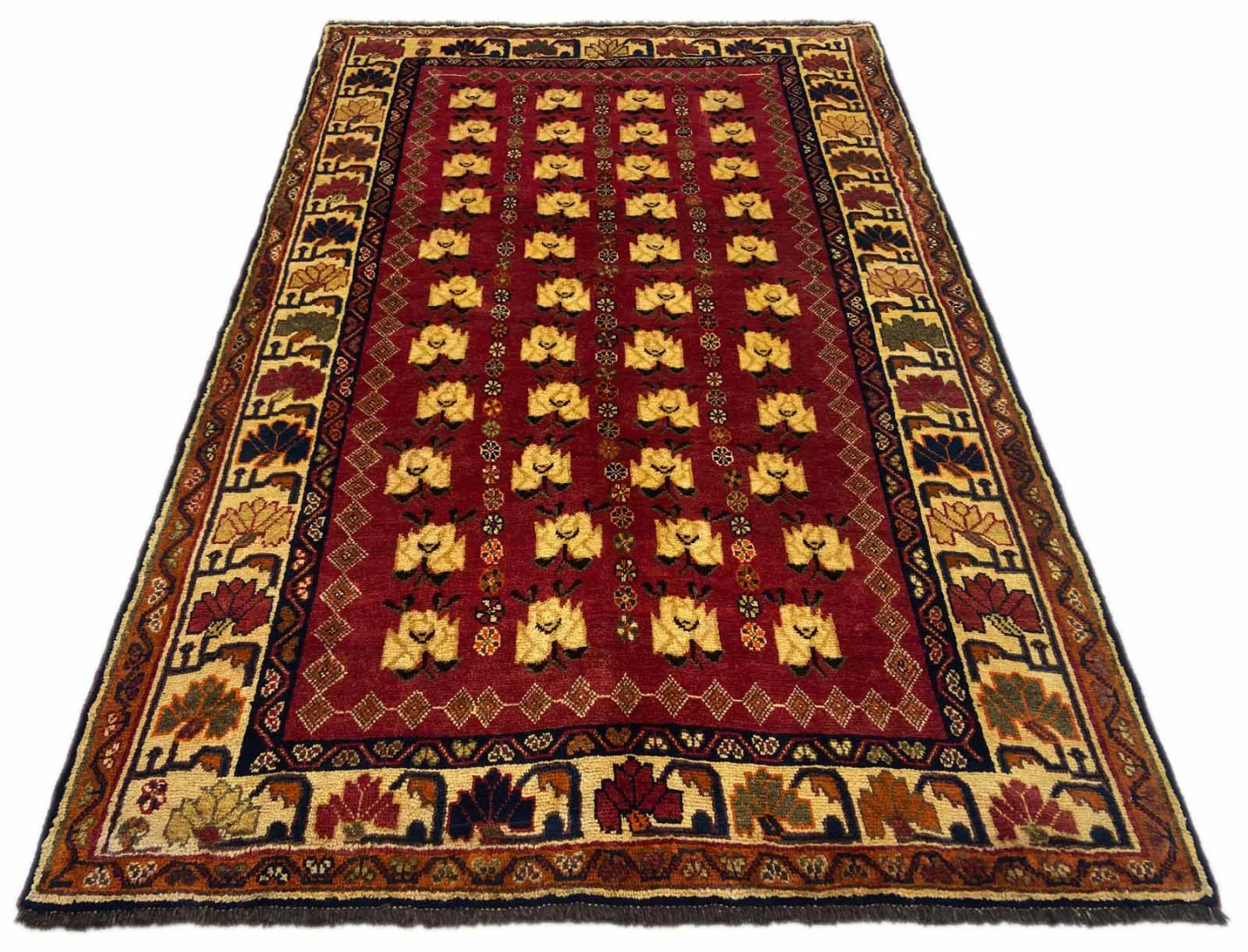
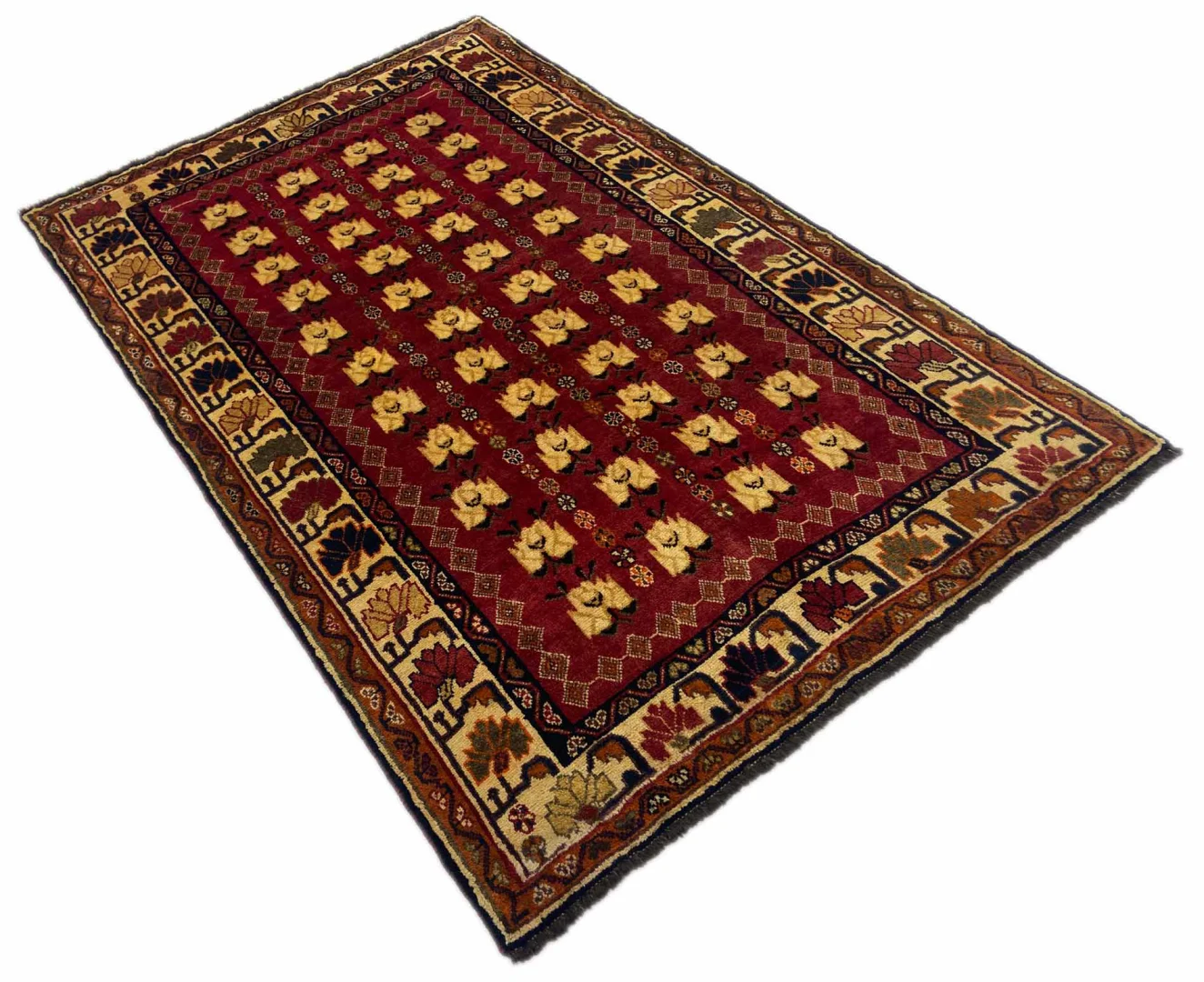
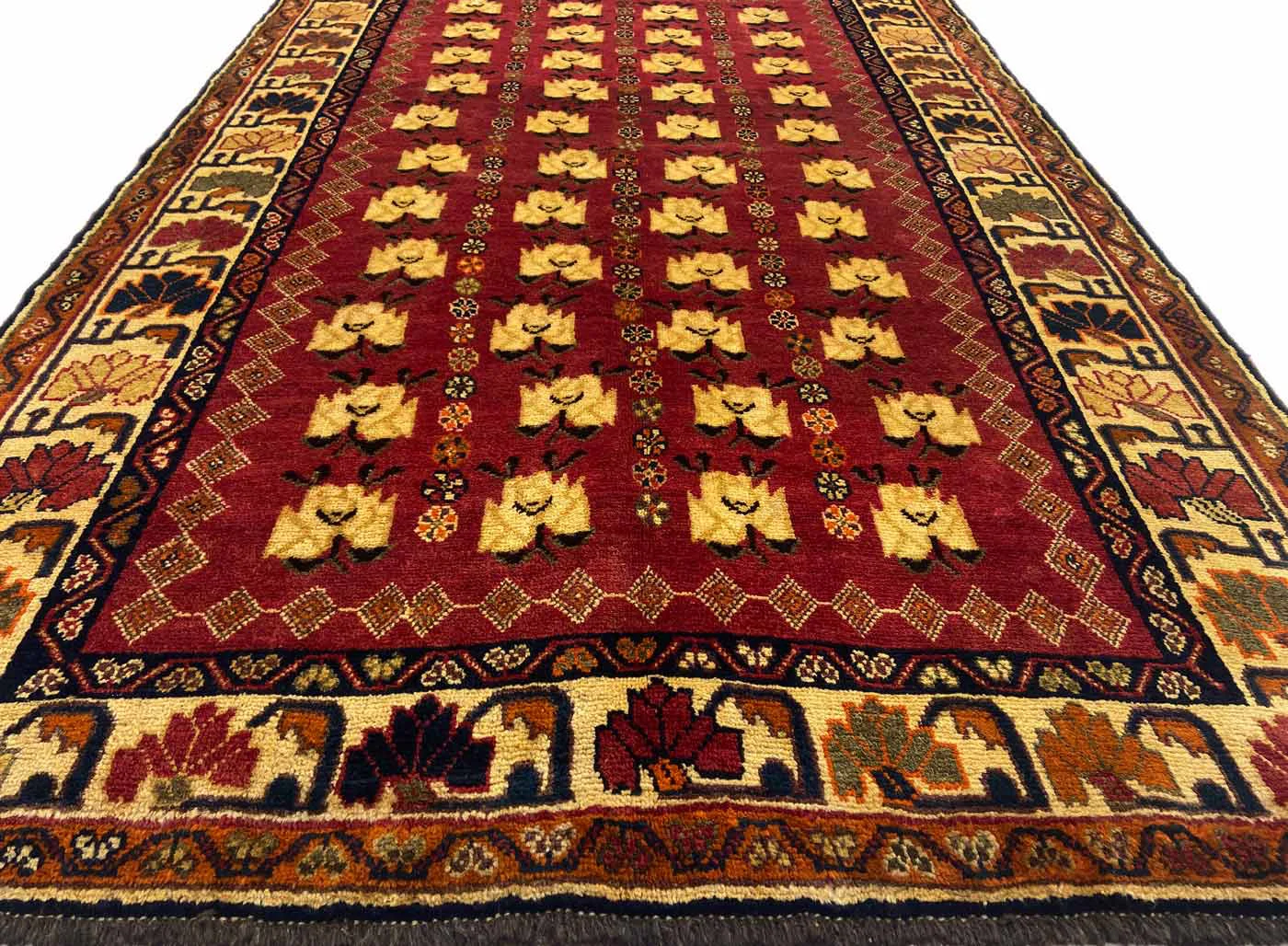
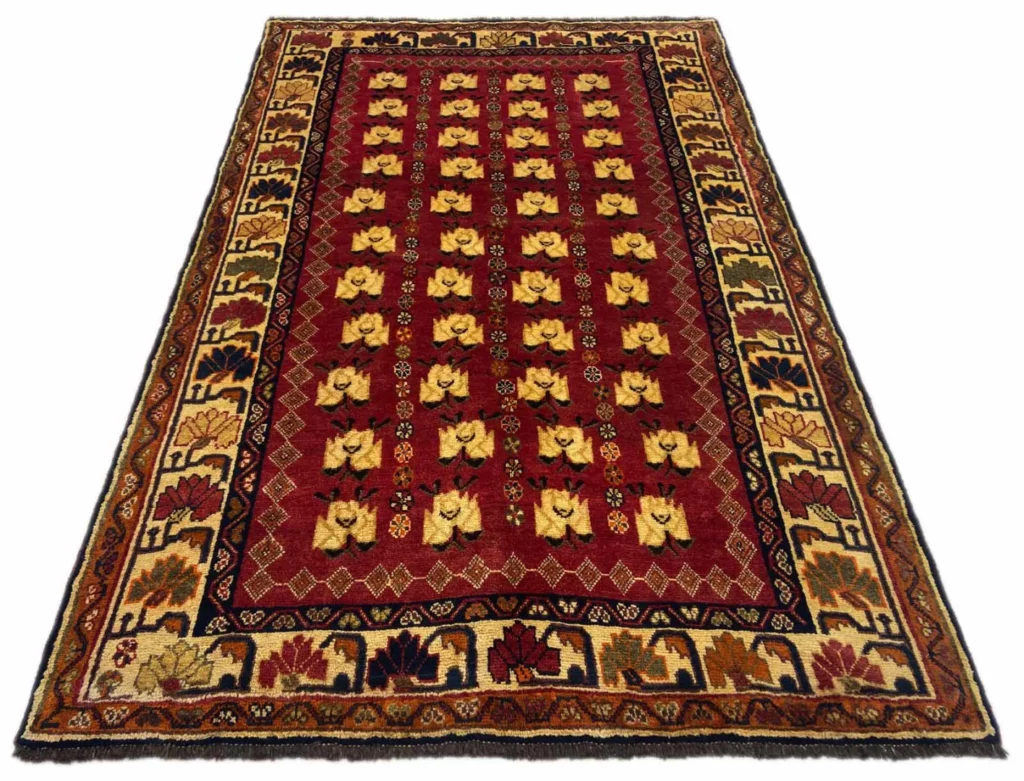
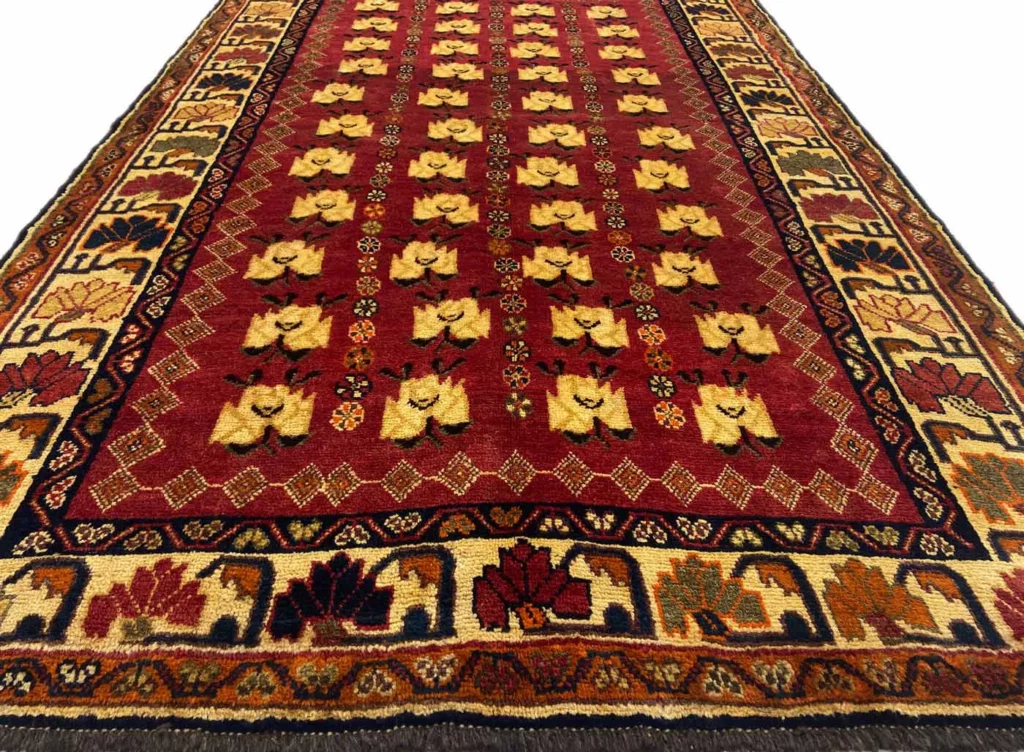
Hand-knotted Fars Persian rug | Knot density: 90,000 – 180,000 knots/m² | Material: Pile virgin wool | Size: 226 x 146 cm | Pattern: Unusual freely invented designs | Condition: New and high quality
This Gabbeh Shuli from the Fars region is made from lustrous virgin wool. The wool forms the pile of the hand-knotted Persian rug and gives the surface a silky sheen. Virgin wool is used in Gabbeh weaving for its durable, natural character and its pleasant texture. In this rug, the fibre is combined with hand knotting and an individual approach to pattern-making.
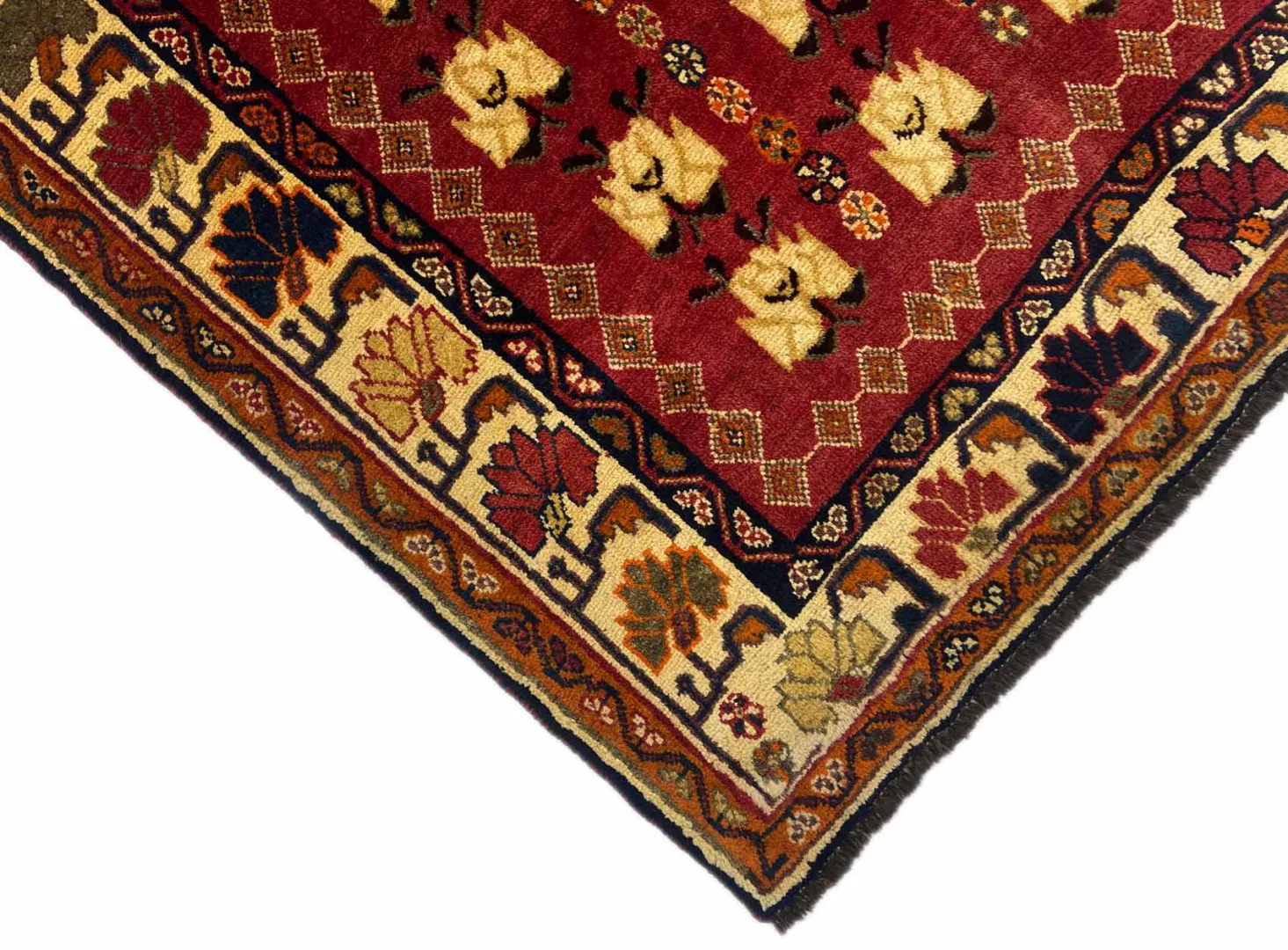
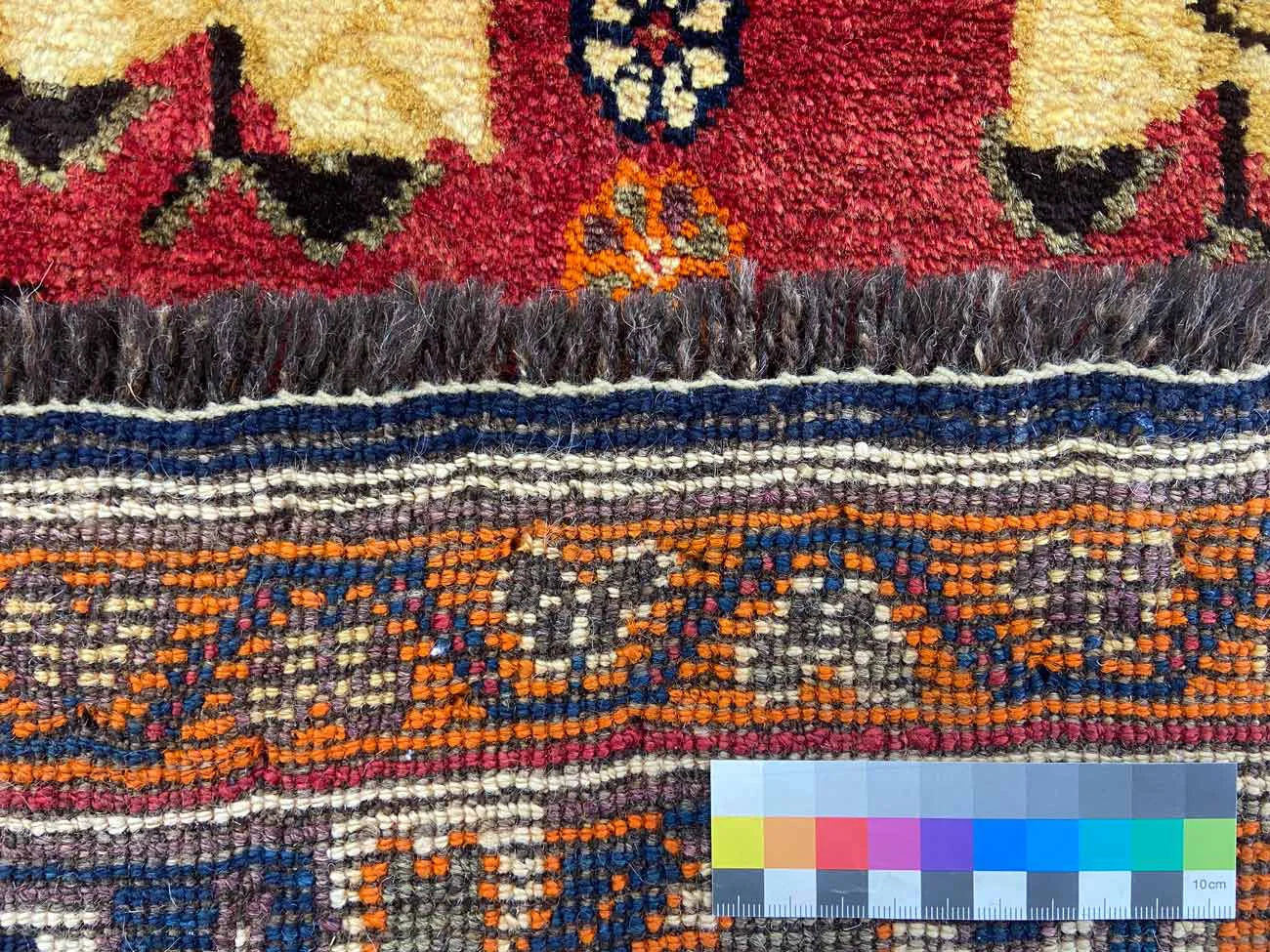
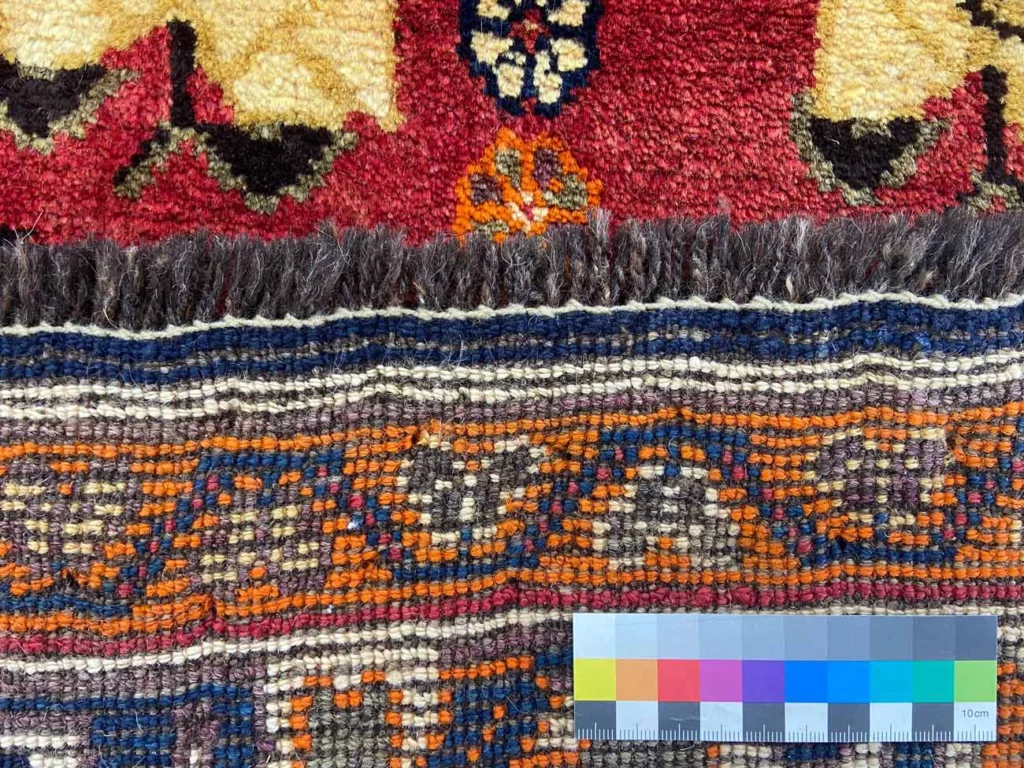
The knot density of this Gabbeh Shuli ranges from 90,000 to 180,000 knots per square metre. Dense knotting supports the definition of a design and contributes to the rug’s hard-wearing character. The knot density stated for this piece is therefore connected with both the execution of its unusual patterns and its ability to withstand intensive use. The rug is hand-knotted rather than produced as an identical machine-made surface.
Natural dyes are used for the colour scheme. The colours named for this rug are red, beige, grey and brown. Together they form a harmonious palette that works with the structure and lustre of the wool. The colouring is part of the rug’s overall hand-crafted appearance. This piece is described as new and high quality.
Hand knotting places each knot into the structure individually. The process requires experience and careful work, while also allowing the maker to interpret a design during its creation. In Gabbeh weaving, technical construction and visual freedom are closely connected. The combination of virgin wool, dense knotting and freely developed designs gives this type of rug its particular material and craft character.
Origin and Tradition
The Gabbeh Shuli comes from the Fars region in southern Iran. Fars is one of Persia’s long-established carpet regions and has a close association with nomadic and rural weaving and knotting cultures. It is situated near the historic city of Shiraz. The region’s textile traditions include several forms in which practical use, inherited handcraft and an independent visual language are brought together.
Gabbeh rugs are especially associated with a direct and personal approach to design. Instead of simply repeating one fixed pattern, the weaver has room to interpret the composition through the act of knotting. Shapes can be simplified, altered or combined freely. The result is not necessarily an identical design from one rug to the next, but an individual textile composition shaped by the maker.
This freedom is connected with the nomadic culture of Fars. Rugs served practical purposes in everyday life, while their colours, forms and construction could also express the identity and creativity of the people who made them. Knowledge of wool preparation, dyeing, knotting and pattern-making was passed on within communities. At the same time, the precise result could vary between a weaver, a family or a group. The Gabbeh tradition is formed by this balance between continuity and personal interpretation.
Fars does not have only one carpet vocabulary. Gabbeh Shuli and Gabbeh Fars are associated with the region, and Qashqai rugs are also known for their skilled workmanship and strong visual character. Qashqai designs often combine geometric forms with floral elements. They belong to the wider textile culture of Fars, although their pattern structures and colour effects can differ. The variety of rugs from the region shows that its tradition consists of several related methods rather than one uniform style.
As a historic city, Shiraz is an important cultural reference for understanding Fars. The southern Iranian region has produced textiles whose designs are closely connected with the lives and working conditions of their makers. Nomadic rugs had to function as useful, durable objects, but handcraft also provided room for colour, form and personal expression. This combination of function and interpretation remains important when Gabbeh rugs are discussed as part of the Fars tradition.
The Fars origin of this rug places its Gabbeh Shuli design within that regional Persian context. It does not mean that every rug from Fars has the same appearance. Rather, it points to an environment in which handwork, wool and independently developed patterning play a significant role. This Gabbeh Shuli brings together that regional background, an explicitly imaginative design approach and the stated colours of red, beige, grey and brown.
The history of Gabbeh rugs is often explained through their relationship with nomadic ways of life. Their significance is therefore not limited to decoration. A rug needed to be useful in everyday surroundings and durable enough for regular handling, while also carrying the individual mark of its maker. From this setting developed a visual language that can appear clear, direct and freely composed. Regional knowledge remains visible even when the individual patterns do not follow a repeated standard.
Design and Pattern
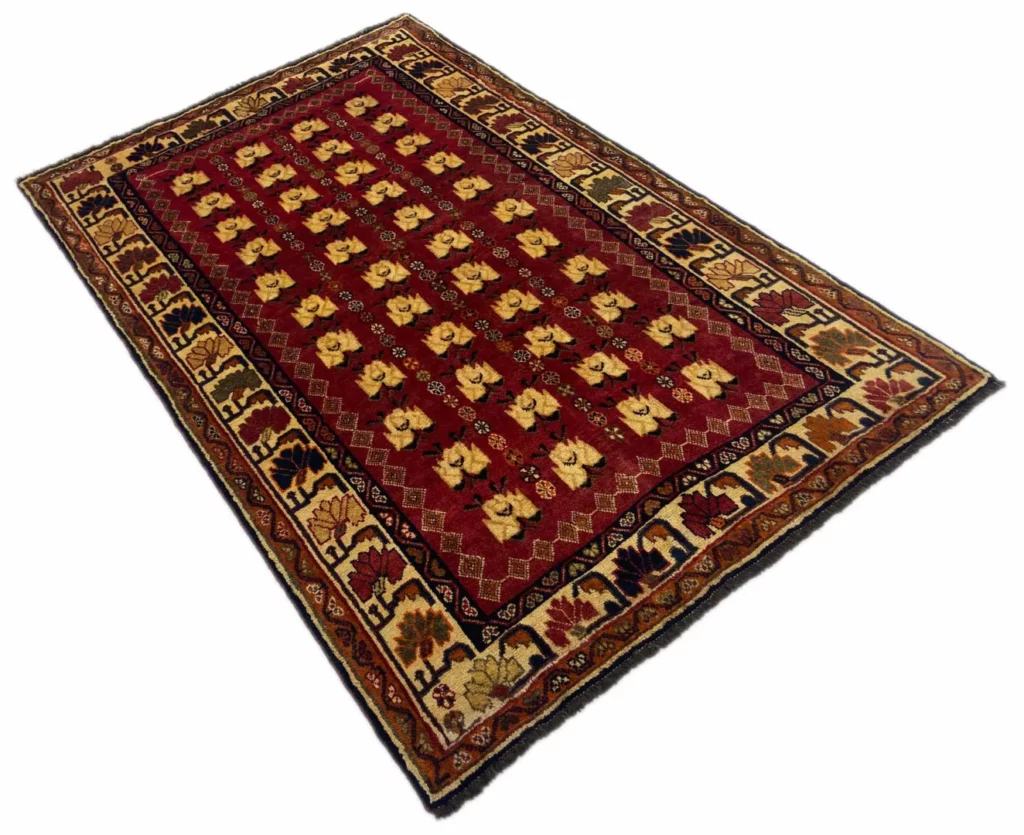
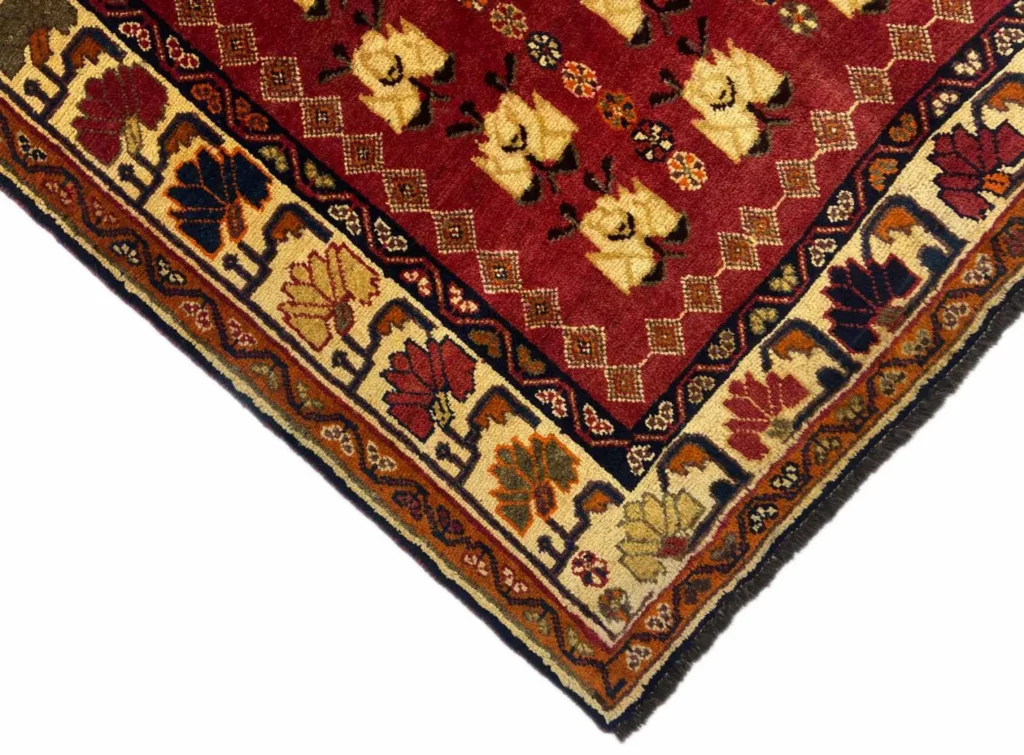
The design of this Gabbeh Shuli is defined by unusual, freely invented patterns. It is not presented as a strictly standardised design. Instead, the composition is shaped by the weaver’s creative imagination. This allows an individual visual language to emerge in each interpretation. Freedom of design is not separate from tradition here; it is one of the ways in which the Gabbeh tradition continues to connect inherited technique with personal expression.
The stated colours are red, beige, grey and brown. Red adds a warm and pronounced note, while beige and brown provide an earthy basis. Grey introduces a quieter shade into the palette. Used together, these tones create a balanced colour impression. Because natural dyes are used, the colours remain closely related to the character of the wool and the hand-made surface rather than appearing as an isolated decorative effect.
Freely invented Gabbeh patterns do not require every shape to be assigned to one fixed symbol or ornament type. Their character lies in the independent arrangement of forms and colours. A design may use simplified signs, open areas or unusual combinations developed during the knotting process. What matters is the maker’s interpretation rather than exact repetition of a prescribed pattern. This approach distinguishes the Gabbeh Shuli from rugs whose appearance depends entirely on a continuous repeat.
The pattern language reflects the cultural setting of the nomadic peoples of Fars. This should not be understood as one single symbolic system shared identically by every rug. Motifs can be influenced by regional knowledge, individual imagination and the particular working method of the maker. The resulting designs can therefore remain connected to tradition while retaining a distinct personal character.
The combination of imaginative drawing and natural tones allows the Gabbeh Shuli to be used in different interior settings. The description presents it both as a central feature in a living room and as an accent in a bedroom. Its colours and patterns can work with modern as well as traditional interiors. This versatility comes from the open design language and the combination of red, beige, grey and brown; it does not require adding a motif that is not stated for this particular rug.
Gabbeh Fars is named as a related rug type from the same region. It can share a comparable choice of material and knotting technique while showing a different range of colours or a different pattern arrangement. Qashqai rugs add another part of the regional picture through their frequent use of geometric and floral elements. The Gabbeh Shuli offered here remains distinct through its freely invented designs and its stated colour palette.
Design and technique also influence one another. Dense knotting gives the maker the opportunity to execute a pattern with greater definition, while the hand-knotted surface preserves the character of a unique textile object. The technical construction supports the readability of unusual designs without turning them into an industrially uniform pattern. This relationship between method and visual freedom is central to the way Gabbeh rugs are understood.
Special Features
The notable features of this Gabbeh Shuli are its unusual freely invented designs, lustrous virgin wool and palette of red, beige, grey and brown. Natural dyes contribute to the harmonious colour effect. Its hand-knotted construction and the stated knot density provide a durable surface that can withstand intensive use.
The wool is described as dirt-repellent, which makes the rug straightforward to care for in daily life. Regular vacuuming and occasional beating are generally sufficient to keep it in good condition. The rug is new and high quality. Gabbeh Shuli rugs are available in different sizes, allowing this type to be used either as a central feature or as a smaller accent in rooms of different proportions.
The combination of Fars origin, free pattern development and practical wool quality gives the Gabbeh Shuli its individual character. Its distinction does not depend on one standardised ornament. It lies in the interaction between handwork, material, natural dyes, regional tradition and the maker’s independent interpretation of the design.
FAQ
What makes the Gabbeh Shuli rug distinctive?
The Gabbeh Shuli stands out through its imaginative, freely invented patterns and its high-quality hand-knotted construction in lustrous virgin wool. The designs are not standardised, but shaped by the weaver’s creative interpretation. Natural dyes create the harmonious palette of red, beige, grey and brown. The virgin wool gives the surface a silky sheen, while the hand-knotted construction and dense knotting support its hard-wearing character and suitability for intensive use.
How should I care for my Gabbeh Shuli rug?
The virgin wool used for this rug is described as dirt-repellent. For routine care, regular vacuuming and occasional beating are generally sufficient to keep the rug in good condition. The surface should be treated evenly and without unnecessary strain. If heavier soiling occurs, professional cleaning can help preserve the wool structure and the effect of the natural colours. These straightforward measures make the Gabbeh Shuli practical for everyday use.
What sizes are Gabbeh Shuli rugs available in?
Gabbeh Shuli rugs are available in different sizes. This makes it possible to place them in rooms of varying proportions, either as a central feature or as a smaller accent. This particular piece has the size given in the listing. The general range of sizes available for this rug type allows it to be used in living rooms, bedrooms and other residential areas while retaining its characteristic Gabbeh Shuli design and its connection with the Fars tradition.
To provide the best experiences, we use technologies like cookies to store and/or access device information. Consenting to these technologies will allow us to process data such as browsing behavior or unique IDs on this site. Not consenting or withdrawing consent, may adversely affect certain features and functions.
Functional Always active
The technical storage or access is strictly necessary for the legitimate purpose of enabling the use of a specific service explicitly requested by the subscriber or user, or for the sole purpose of carrying out the transmission of a communication over an electronic communications network.
Preferences
The technical storage or access is necessary for the legitimate purpose of storing preferences that are not requested by the subscriber or user.
Statistics
The technical storage or access that is used exclusively for statistical purposes.The technical storage or access that is used exclusively for anonymous statistical purposes. Without a subpoena, voluntary compliance on the part of your Internet Service Provider, or additional records from a third party, information stored or retrieved for this purpose alone cannot usually be used to identify you.
Marketing
The technical storage or access is required to create user profiles to send advertising, or to track the user on a website or across several websites for similar marketing purposes.

 SECURE PAYMENT
 SHIPPING PARTNERS


