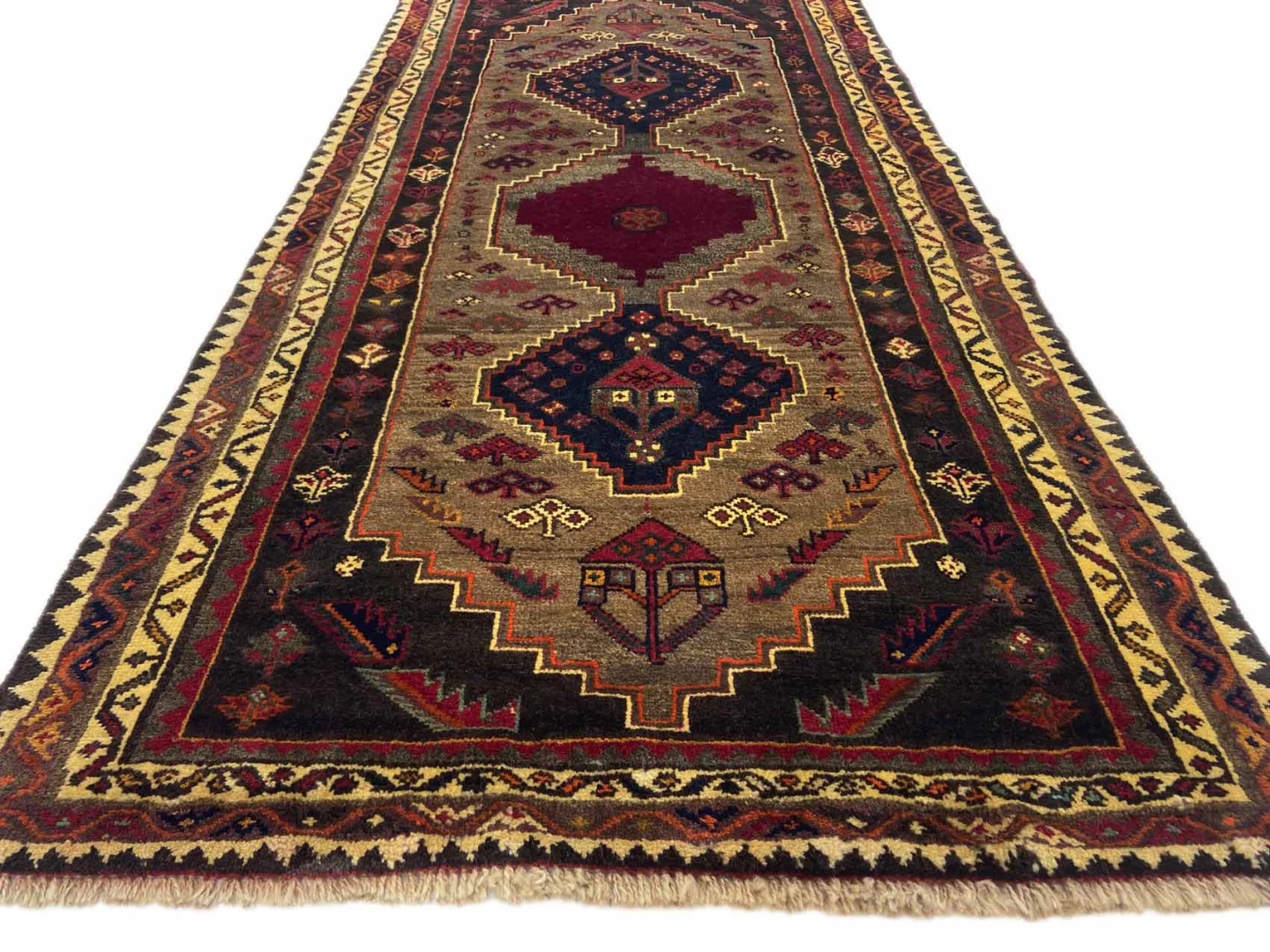
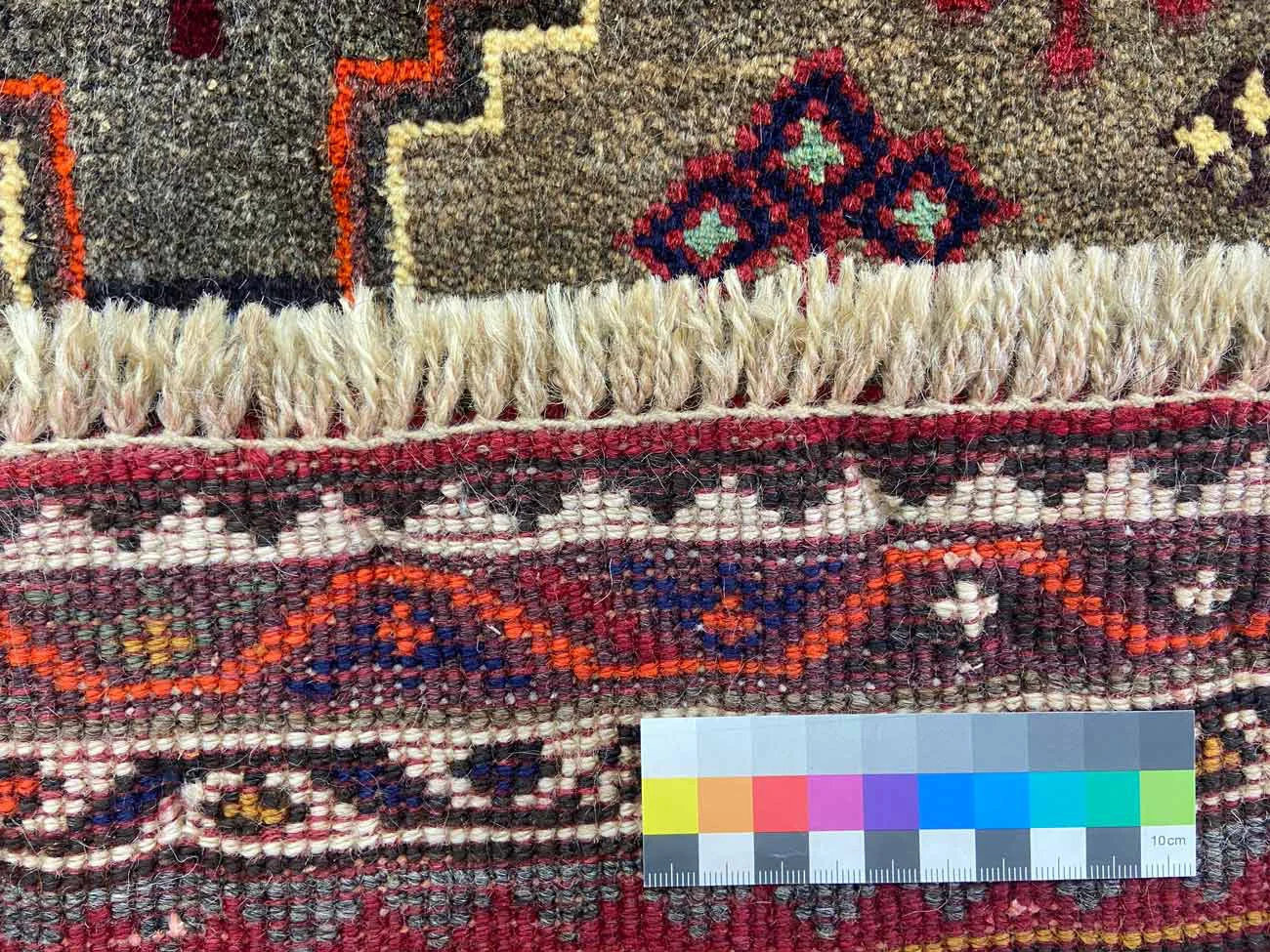
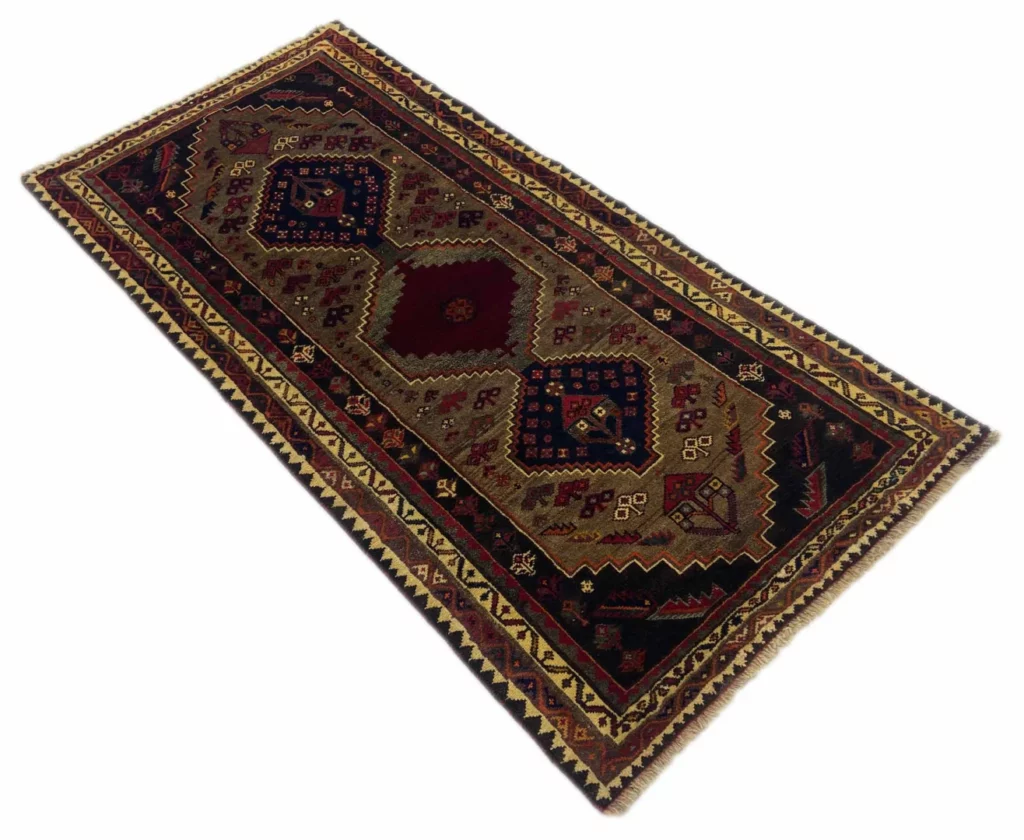
This Gabbeh Shuli is a hand-knotted Persian rug made from high-quality virgin wool. Virgin wool is one of the defining materials of the Gabbeh tradition. It gives the rug a soft feel while providing a resilient basis for everyday use. With hand-knotting, the design is built knot by knot. Every piece therefore develops its own character, even when certain colours and visual ideas recur within the same rug tradition.
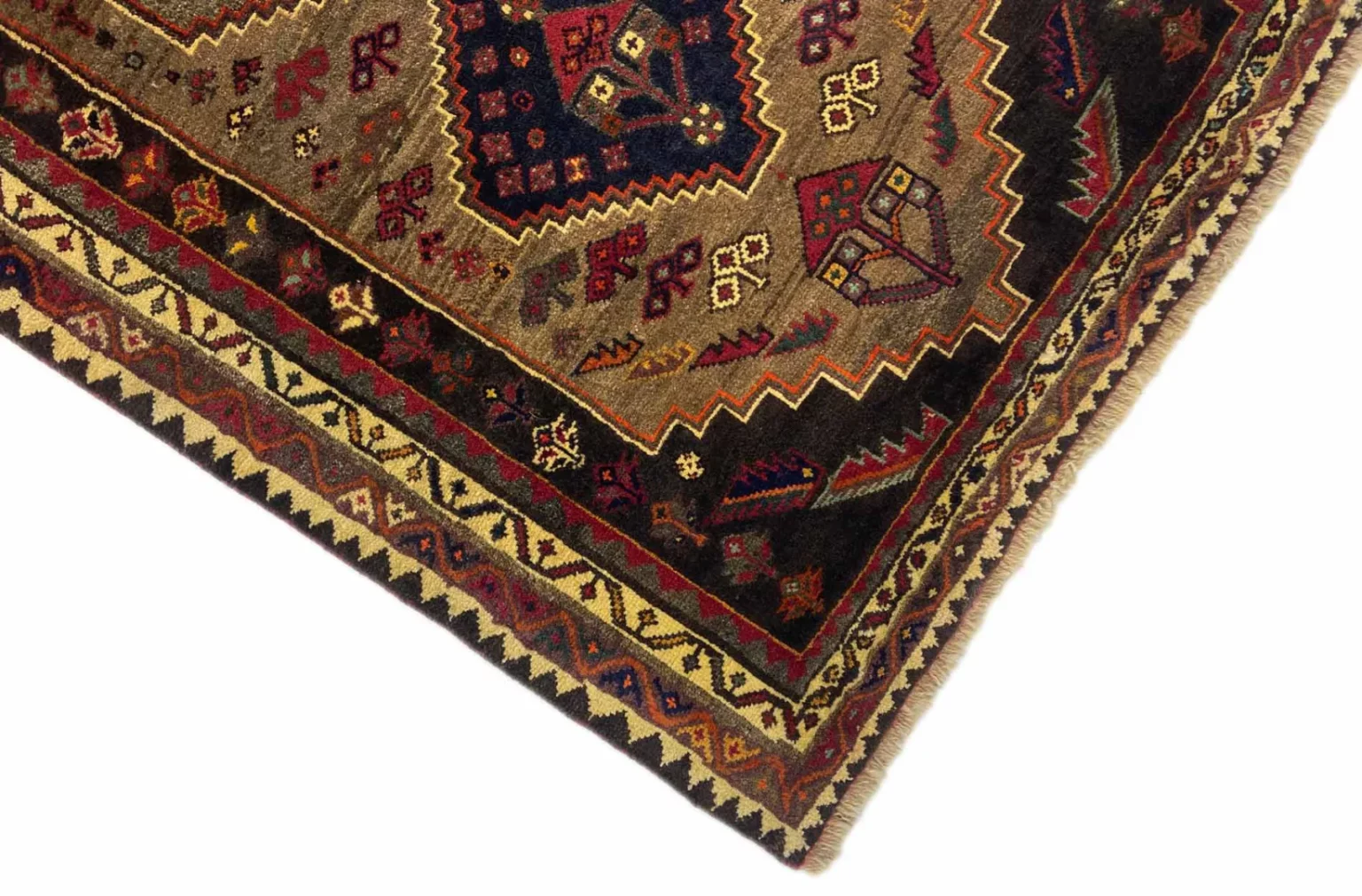
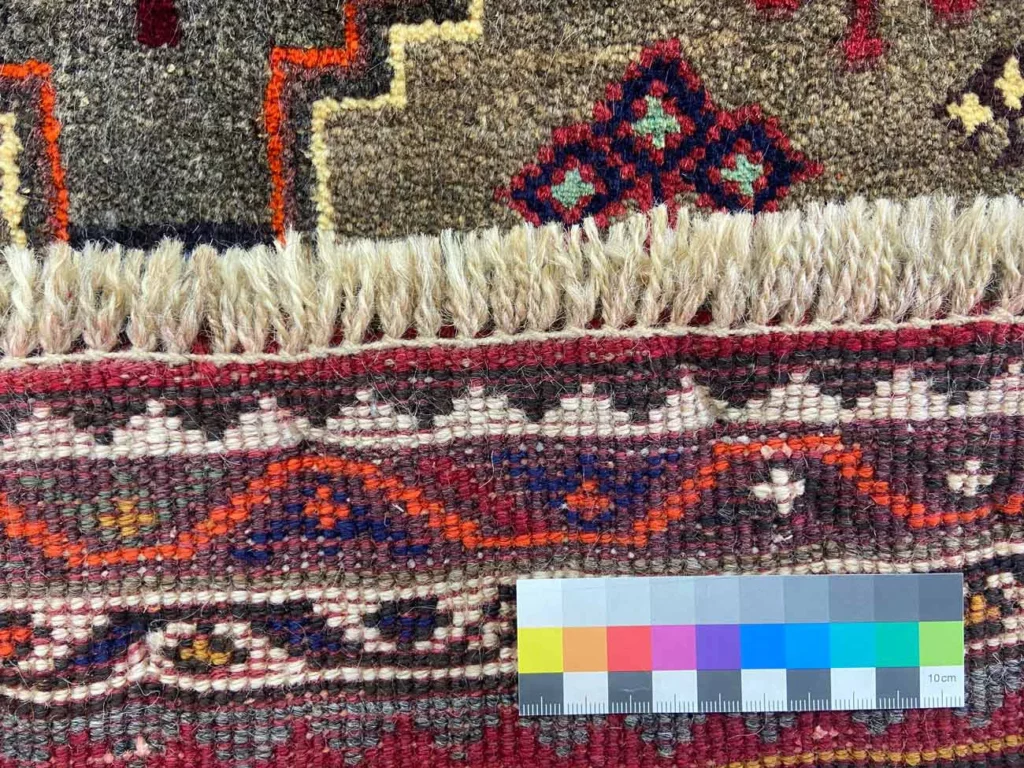
The knot density of this rug is 90.000 – 180.000 knots per square metre. Knot density records how many knots are placed within a defined area and therefore indicates the fineness of the work. The hand-made construction combines a clearly tactile surface with the strong textile presence associated with Gabbeh rugs. The focus is not industrial uniformity, but the careful work of the weaver and the relationship between wool, colour and pattern.
Virgin wool is used in hand-knotted rugs because of its pleasant surface and natural resilience. The individual character of the Gabbeh Shuli comes from the interaction of material and manual work. This is not described as a machine-reproduced design; it is a hand-knotted one-off with an imaginative pattern.
Origin and Tradition
The Gabbeh Shuli comes from the Fars region of Persia. Fars lies in southern Iran and is closely associated with the history of Persian nomadic and tribal cultures. The region is known for a varied rug production in which hand-knotted Gabbeh occupies a distinct place. Its visual language is direct and pictorial, with designs shaped by the weaver’s imagination rather than by a single rigid pattern system.
Gabbeh rugs are traditionally connected with nomadic life in Iran. Their making belongs to a culture in which textile work served practical needs while also carrying knowledge and personal expression from one generation to the next. Fars, the historic landscape around Shiraz, provides the cultural setting for several rug traditions. Techniques developed there have been passed down over generations, while the design of an individual rug can remain open and personal.
Within the broad Gabbeh family, Gabbeh Shuli represents a particularly free and imaginative direction. Many classic Gabbeh are associated with restrained or largely plain fields. Shuli versions place greater emphasis on changing colours and unusual compositions. This distinction describes a design tendency within the Fars tradition and shows how differently a hand-knotted Gabbeh can be interpreted.
Gabbeh Fars also belongs to this regional family. These rugs are hand-knotted as well and share related colour palettes and design approaches. Gabbeh Fars often appear more traditional, whereas Gabbeh Shuli offers a more modern reading of the shared heritage. The combination of inherited technique and individual pattern choice explains why Gabbeh can sit comfortably in both traditional and contemporary interiors.
The Persian rug landscape also includes established centres such as Tabriz and Isfahan. Their rugs are known for artistic motifs, differentiated patterns and weaving knowledge passed through generations. Those places are not the origin of this rug. The Gabbeh Shuli described here belongs to Fars and comes from the Gabbeh tradition rooted in that region.
Design and Pattern
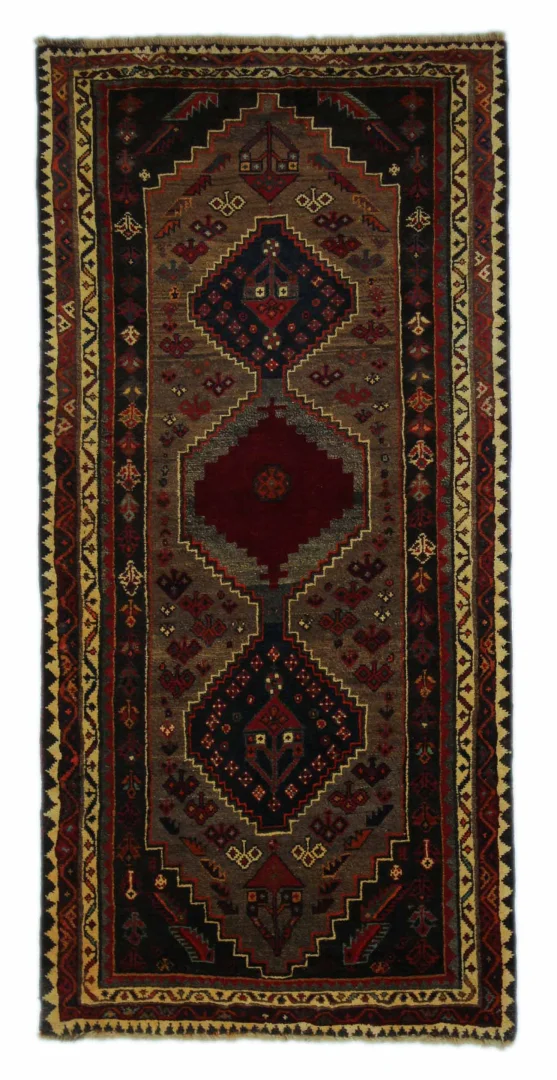
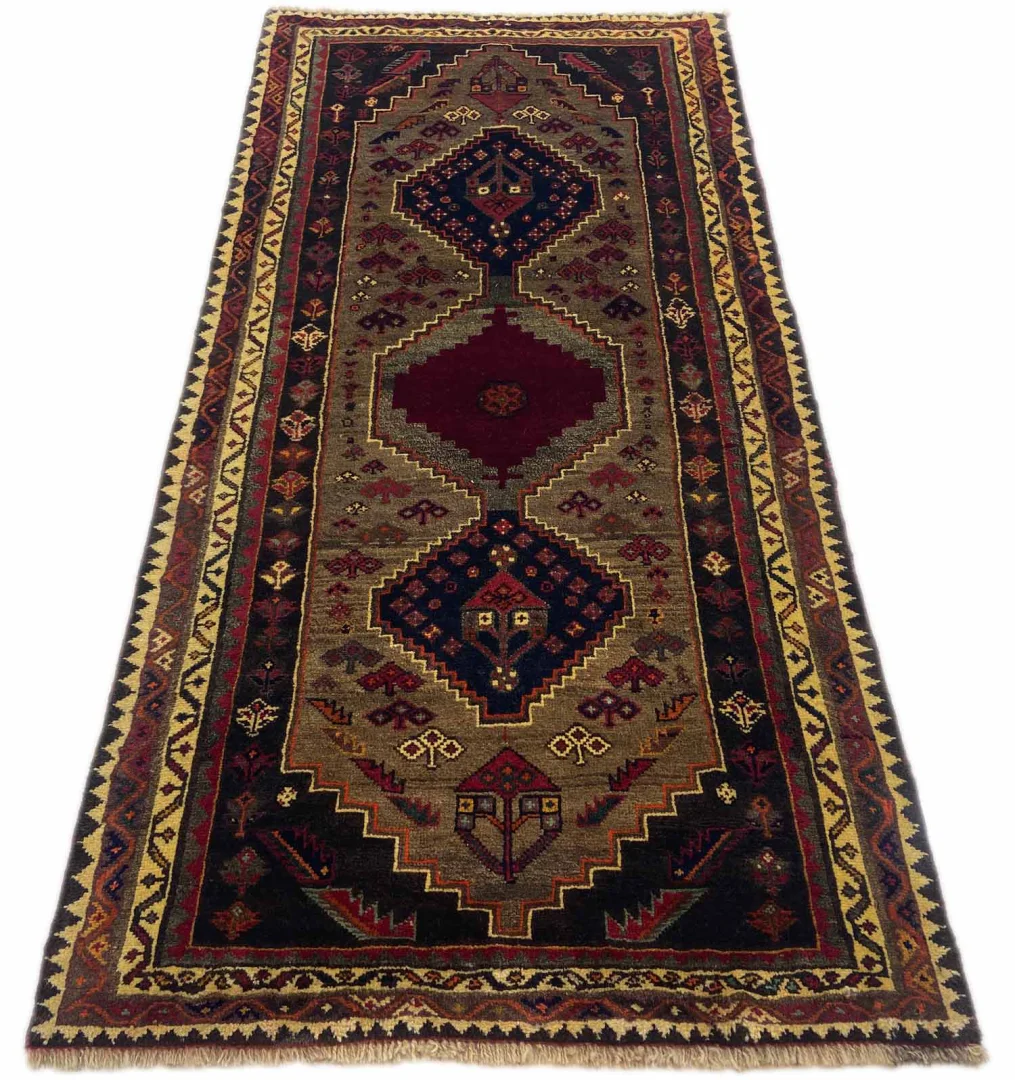
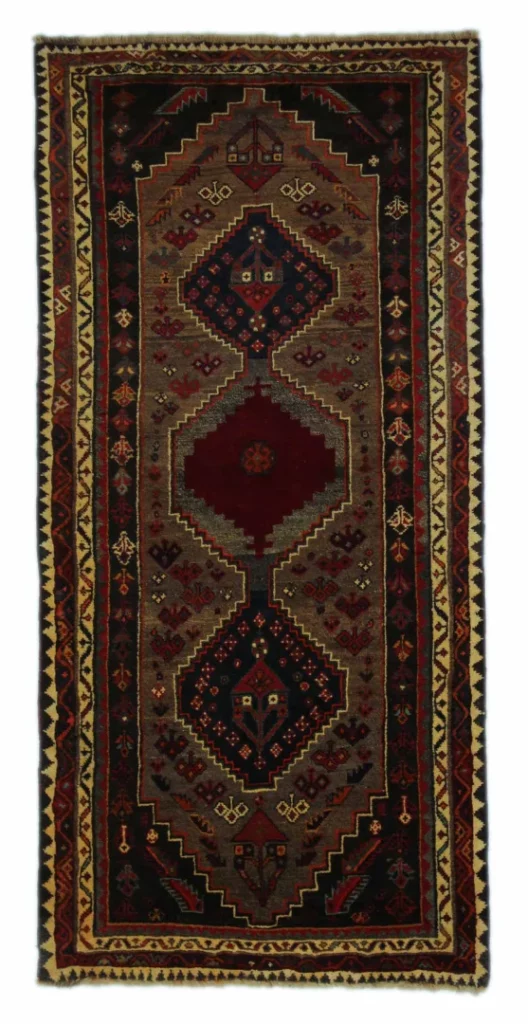
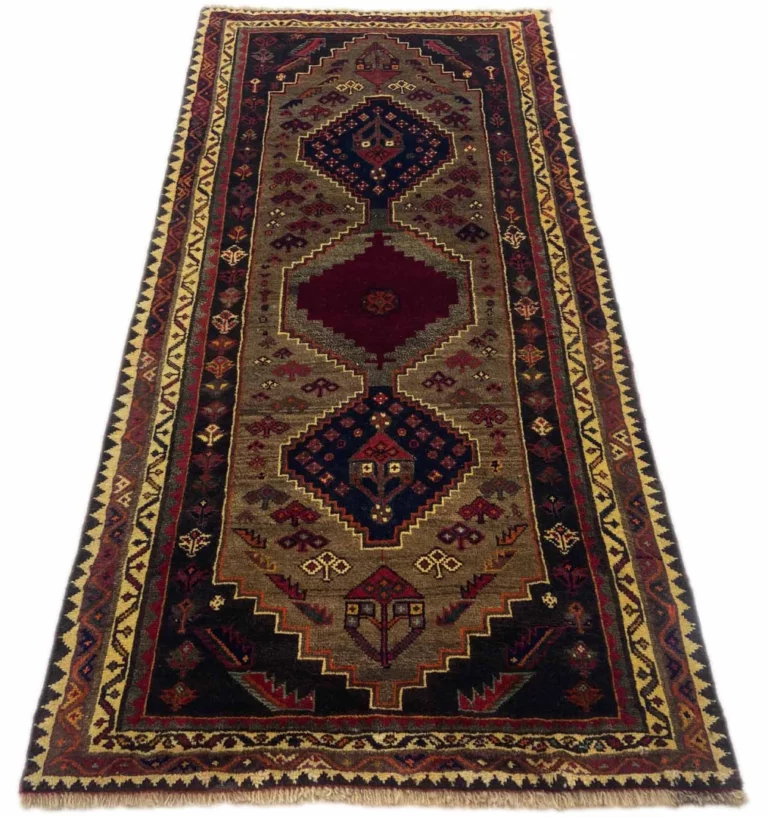
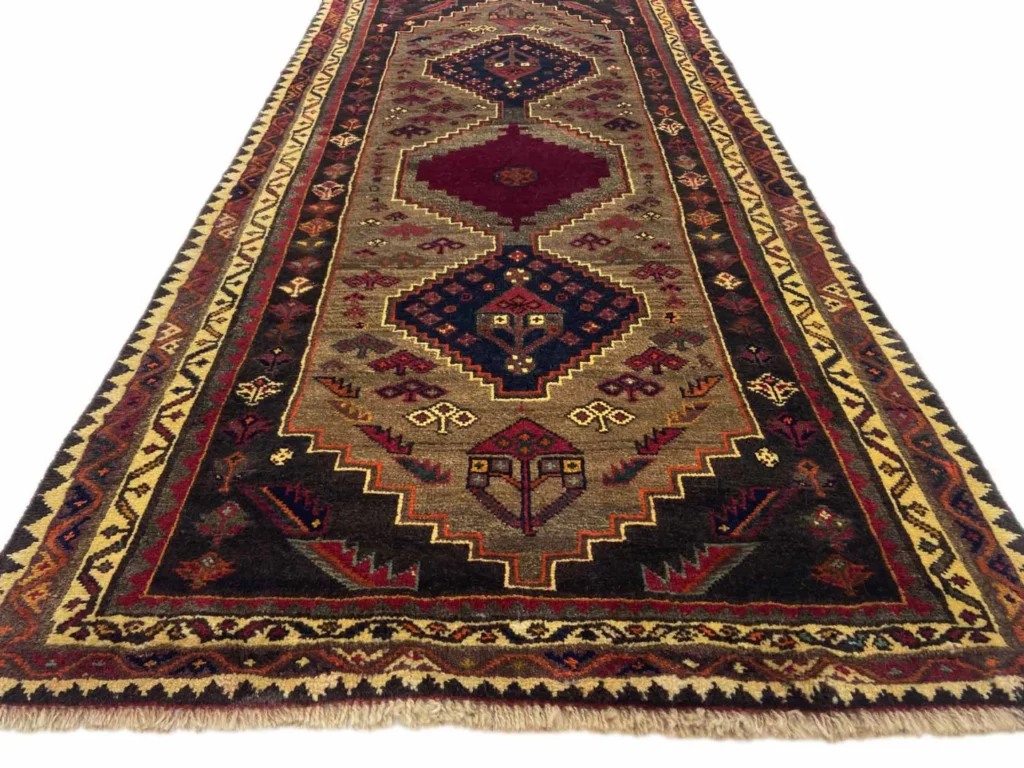
The pattern of this Gabbeh Shuli is described as unusual and imaginative. Rather than relying on a predominantly plain field, it places variety and invention at the centre of the design. The composition may bring together abstract and geometric elements with a freer pictorial language. It is not simply a strict repeated ornament; it reflects the weaver’s individual imagination and the expressive character associated with Shuli Gabbeh.
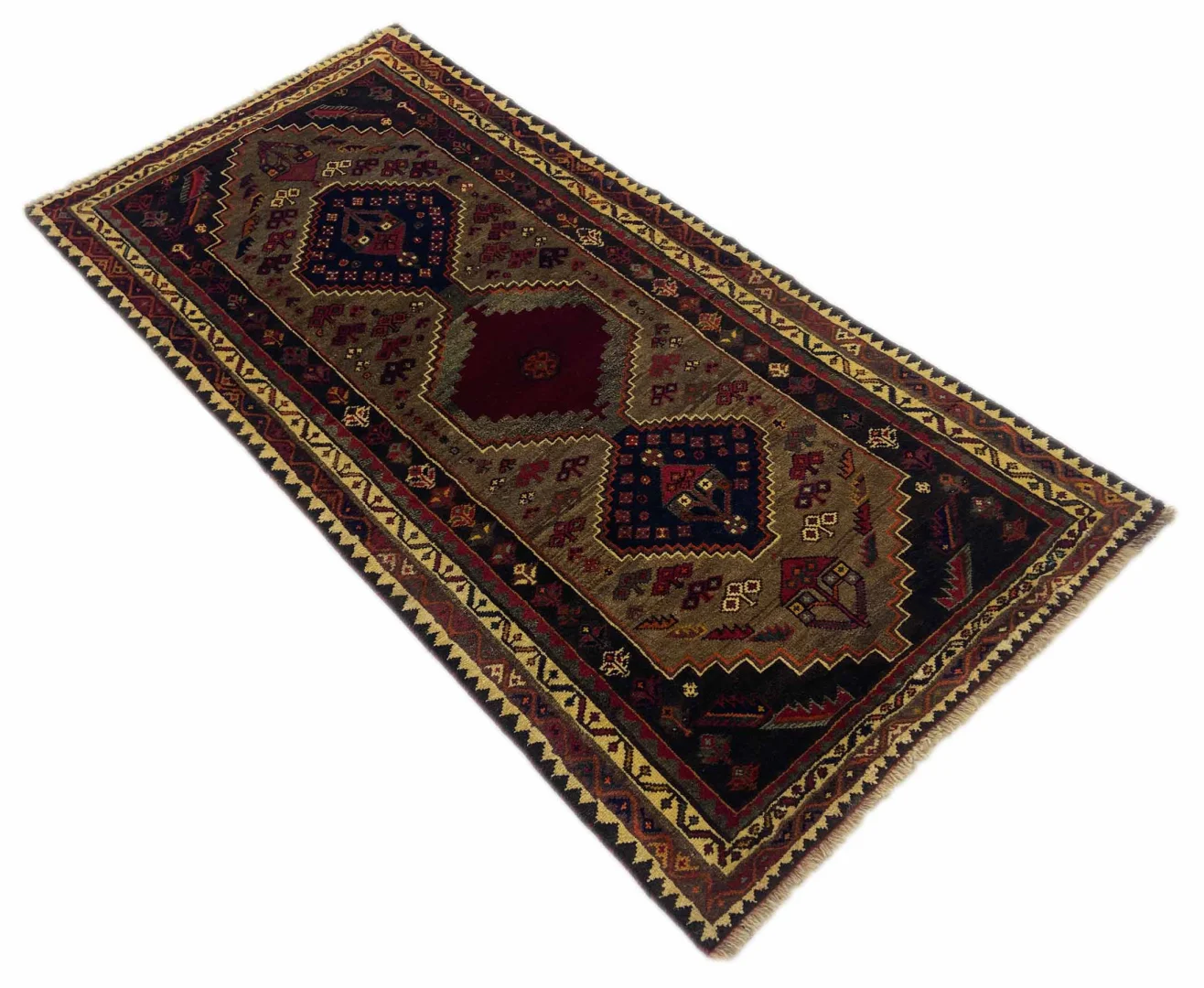
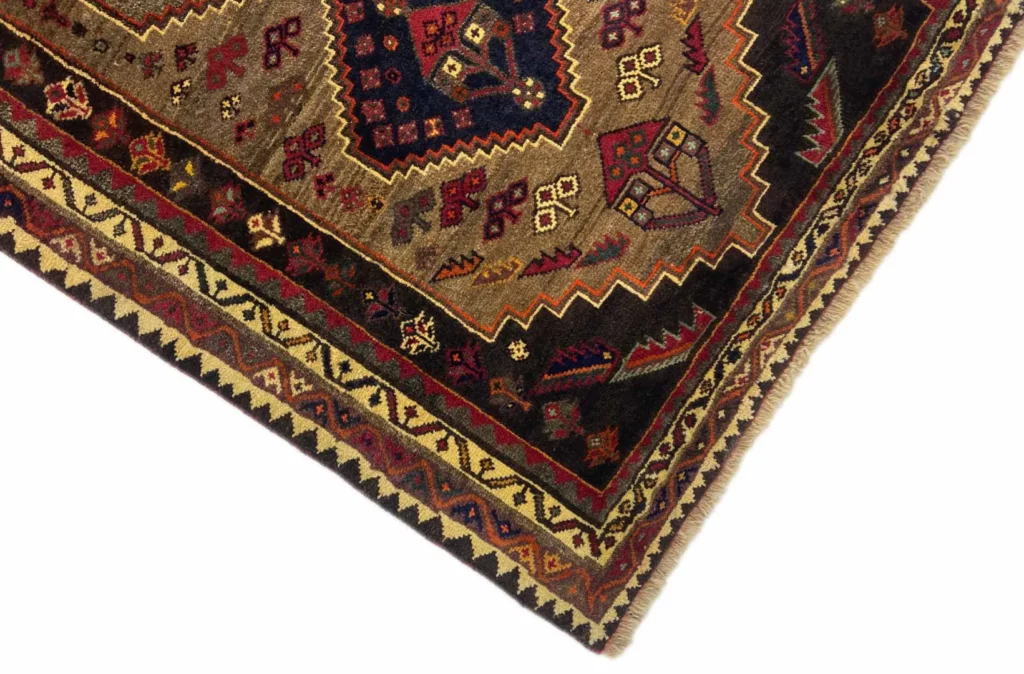
The named colours are red, beige, grey and brown. In Persian rug design, red can act as a strong accent, while beige, grey and brown provide an earthy foundation. Together, these tones allow for different types of contrast: some areas may stand out clearly while quieter sections balance the overall composition. Their effect depends on how the colours are arranged within this particular design.
Abstract and geometric forms are important tools in many Gabbeh compositions. Geometry may appear through lines, blocks, fields or simplified figures. Abstraction reduces a subject to essential contours and leaves room for personal interpretation. In Gabbeh Shuli, these elements are not merely decorative. They express the creative freedom associated with this variety and give the pattern its distinctive, contemporary character.
The designs do not represent one fixed story that can be assigned to every Shuli rug. Instead, colour, shape and arrangement create suggestive impressions. A changing field may recall a landscape, a simplified figure may suggest an animal, and a geometric sign may resemble a traditional symbol. This openness is part of the appeal of imaginative Gabbeh designs and preserves the individuality of handwork.
Unlike more formal Persian rug patterns, a Shuli design does not have to depend on a dense, symmetrical network of ornaments. Its modern interpretation can combine generous areas, clear forms and unexpected colour relationships. Regional tradition remains visible through the technique and vocabulary of the rug, while the pattern is free to take a contemporary direction. The result is a link between established craft and a design that is not limited to historical imitation.
The palette of red, beige, grey and brown can appear both distinctive and balanced. Its precise visual effect depends on the distribution of the colours across the pattern. In a hand-knotted rug, small variations in knot tension, colour application and alignment can contribute to a lively surface. These variations belong to manual production and support the individuality of the composition without changing its underlying design concept.
Special Features
This rug is distinguished by the combination of Gabbeh heritage, hand-knotting and an imaginative Shuli design. It comes from Fars, is made from high-quality virgin wool and uses red, beige, grey and brown in its stated colour palette. A knot density of 90.000 – 180.000 knots per square metre documents the fineness of the construction. Its design sets it apart from simpler Gabbeh with predominantly plain fields.
Gabbeh Shuli rugs are made in different sizes and can therefore be used in a range of living areas. The source describes applications in living rooms, bedrooms and hallways. These are general areas of use rather than a statement about a particular interior. The defining features of this one-off remain its hand-knotted structure, its wool material, its colour composition and its individual pattern.
FAQ
What makes a Gabbeh Shuli special?
Its distinctive character comes from the combination of hand-knotting, high-quality virgin wool and an unusual, imaginative design. Gabbeh Shuli rugs originate in the Fars region and differ from predominantly plain Gabbeh through livelier colours and more varied patterns. For this rug, the stated palette consists of red, beige, grey and brown. Abstract and geometric elements give the composition its individual expression.
How should I care for my Gabbeh Shuli?
Regular vacuuming is recommended for routine care. Occasional beating out can also help maintain the rug. If it becomes soiled, professional cleaning should be arranged. Specialist treatment allows the wool and colours to be handled carefully. Harsh or unsuitable cleaning methods are not appropriate for a hand-knotted wool rug because they can affect the surface and alter the way the colours appear.
What sizes are available for Gabbeh Shuli rugs?
Gabbeh Shuli rugs are available in different sizes. The range includes small runners as well as larger rugs for living rooms. This variety makes it possible to find formats for hallways, bedrooms and other living areas. The availability of different dimensions is a general characteristic of the rug type. The Gabbeh Shuli described here is one hand-knotted piece with the size specified in the product details.
To provide the best experiences, we use technologies like cookies to store and/or access device information. Consenting to these technologies will allow us to process data such as browsing behavior or unique IDs on this site. Not consenting or withdrawing consent, may adversely affect certain features and functions.
Functional Always active
The technical storage or access is strictly necessary for the legitimate purpose of enabling the use of a specific service explicitly requested by the subscriber or user, or for the sole purpose of carrying out the transmission of a communication over an electronic communications network.
Preferences
The technical storage or access is necessary for the legitimate purpose of storing preferences that are not requested by the subscriber or user.
Statistics
The technical storage or access that is used exclusively for statistical purposes.The technical storage or access that is used exclusively for anonymous statistical purposes. Without a subpoena, voluntary compliance on the part of your Internet Service Provider, or additional records from a third party, information stored or retrieved for this purpose alone cannot usually be used to identify you.
Marketing
The technical storage or access is required to create user profiles to send advertising, or to track the user on a website or across several websites for similar marketing purposes.
 SECURE PAYMENT
 SHIPPING PARTNERS


