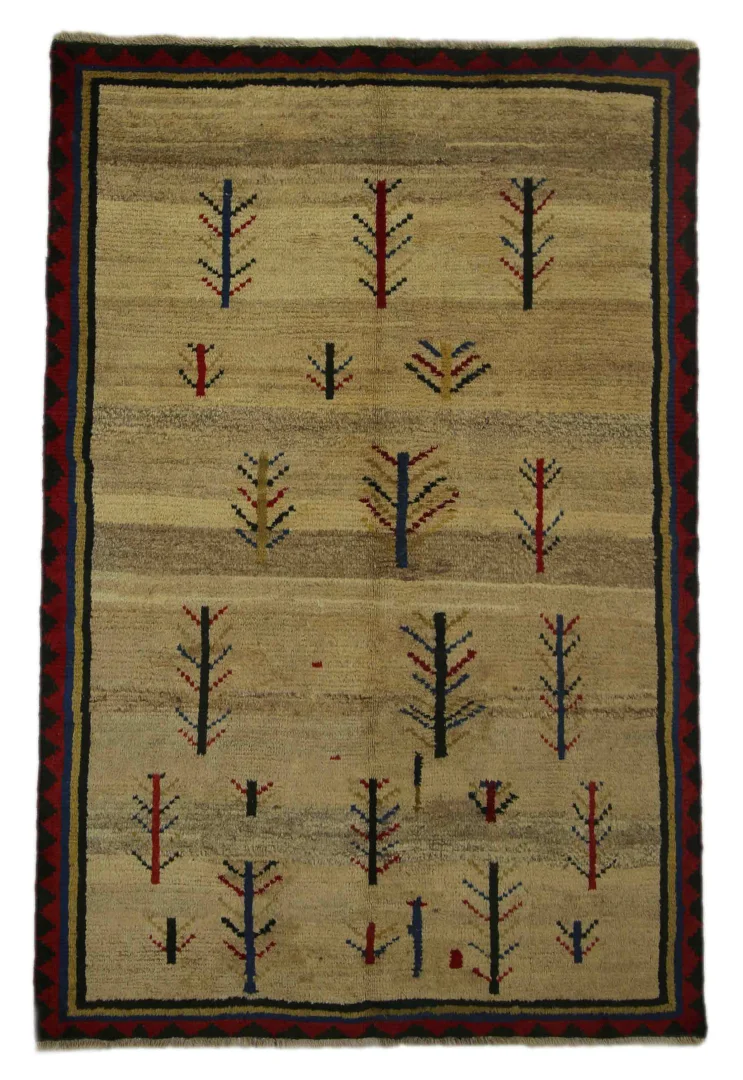
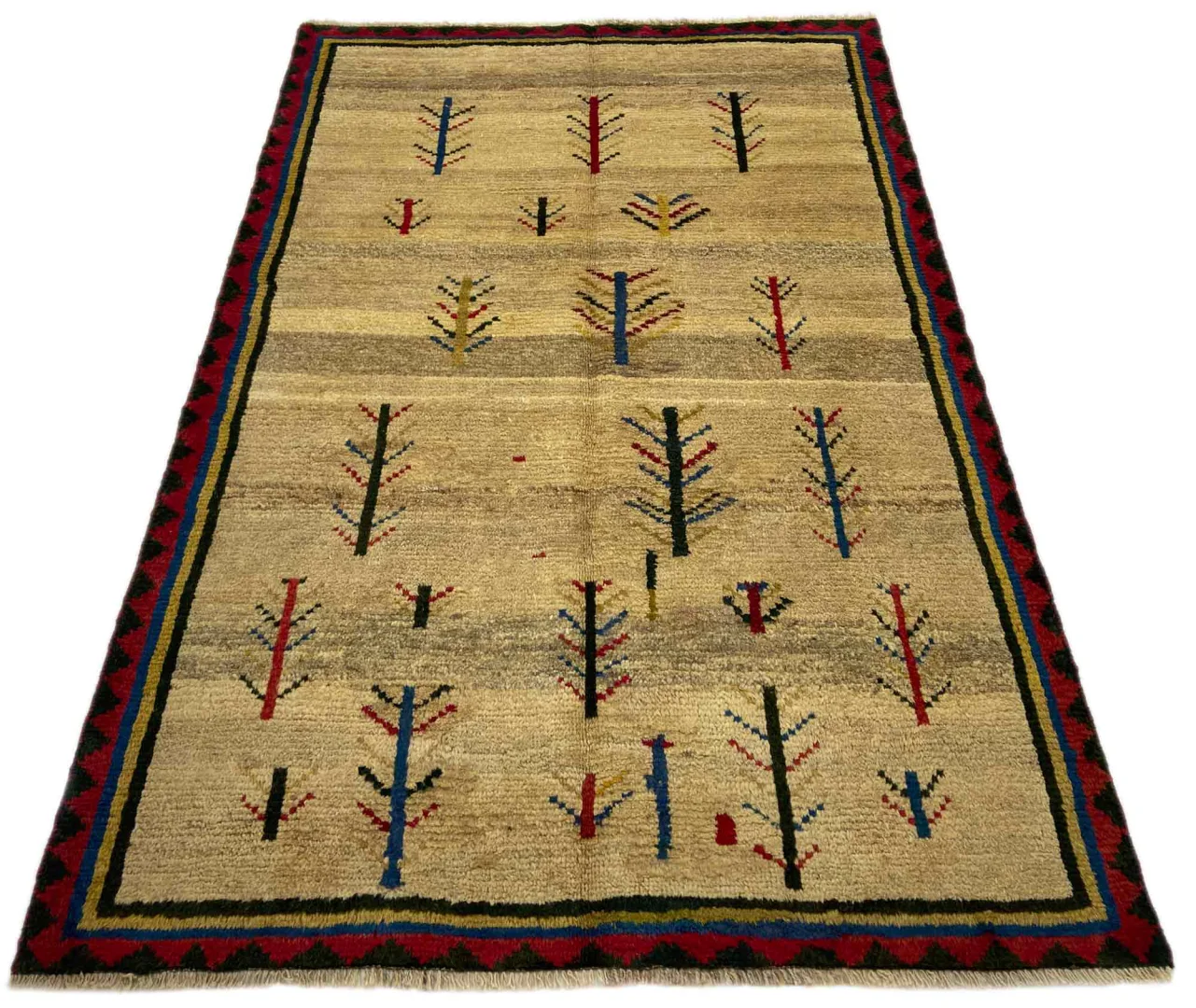
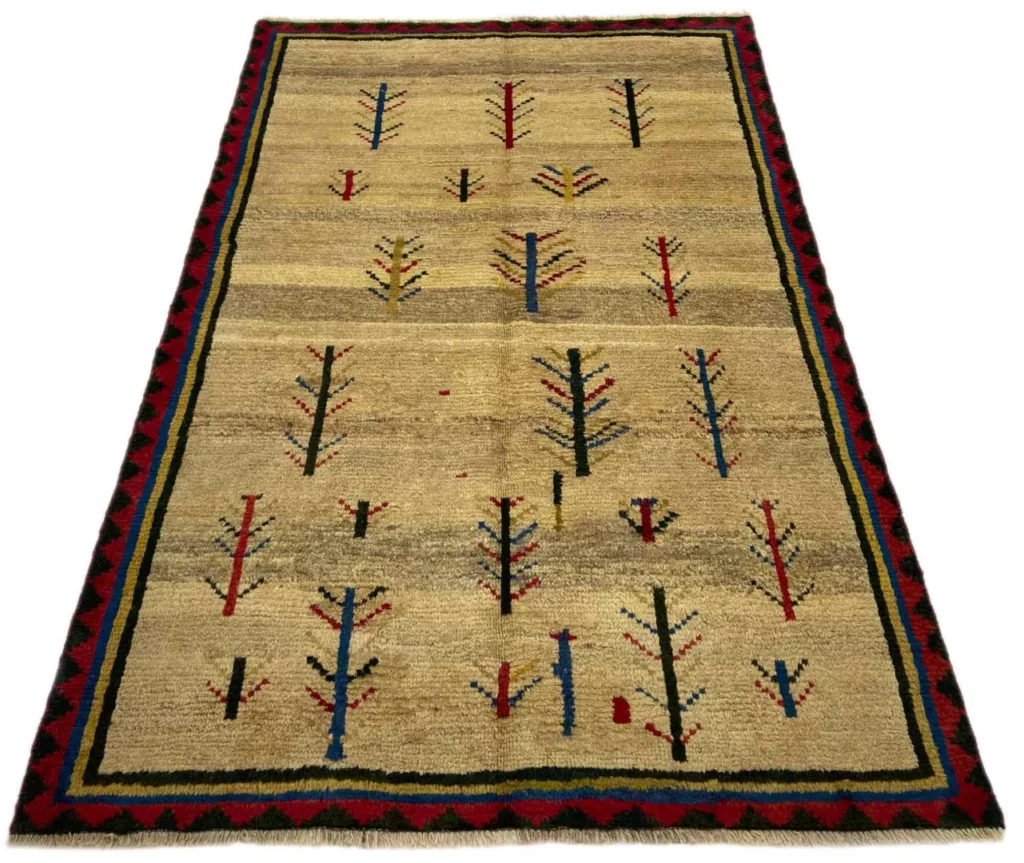
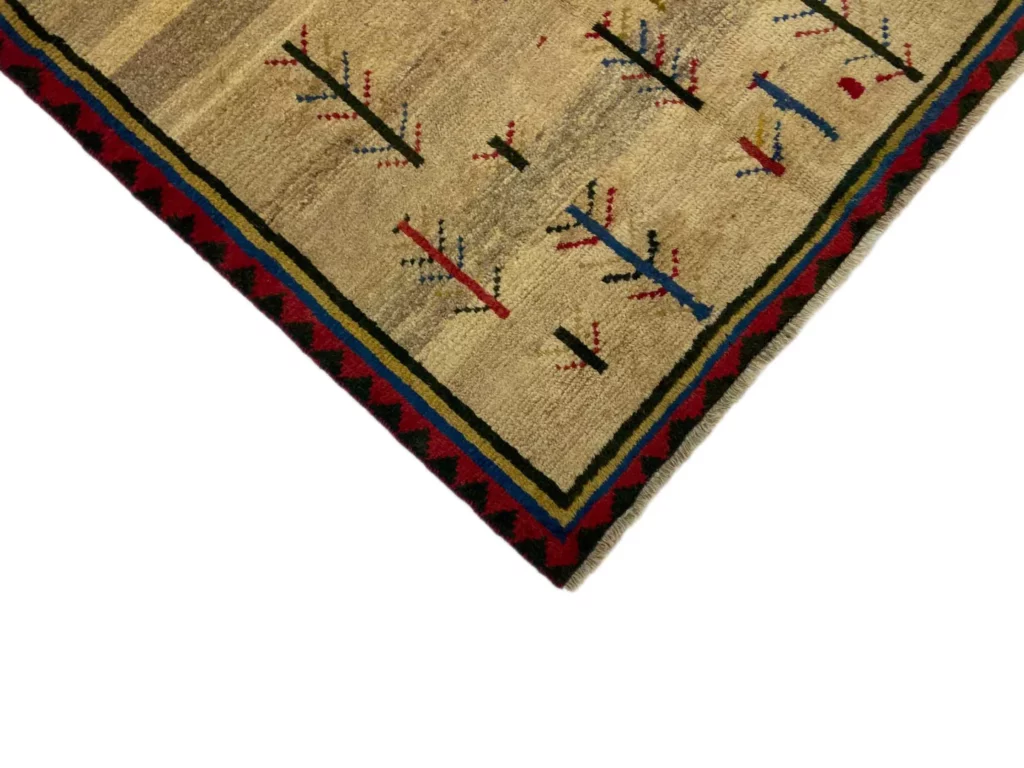
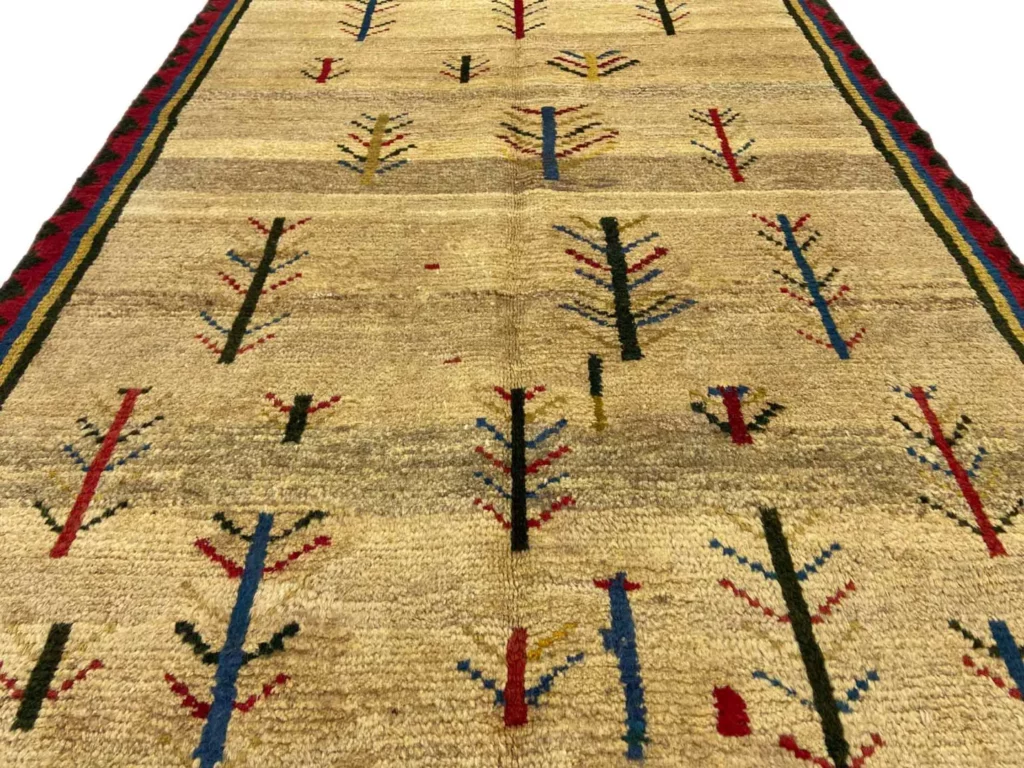
Hand-knotted Fars Persian rug | Knot density: 90.000 – 180.000 knots/m² | Material: High-quality virgin wool pile | Size: 204 x 136 cm | Pattern: Unusual, imaginative designs; red, beige, grey and brown | Condition: New and flawless
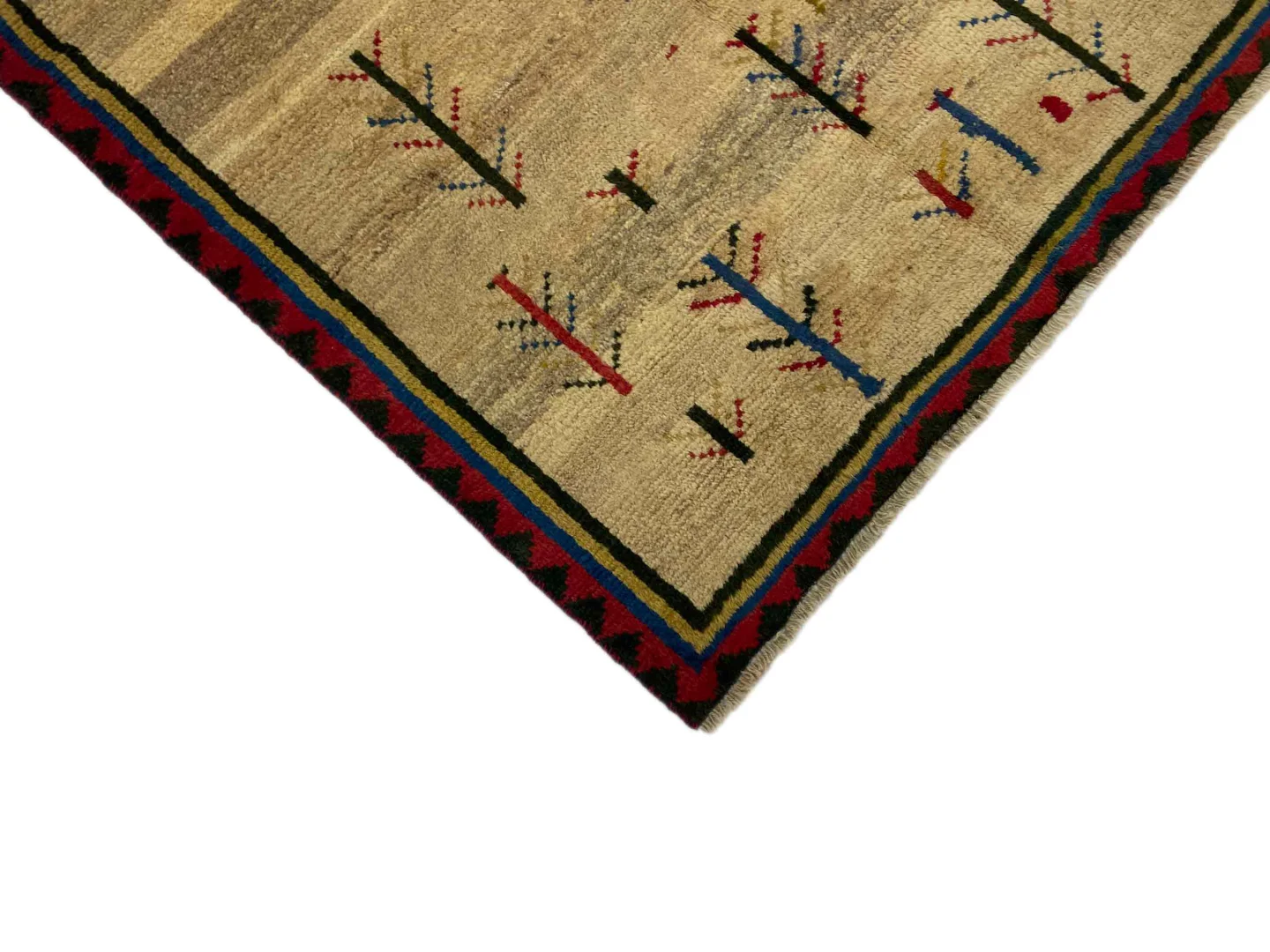
This Persian rug from the Fars region is made with high-quality virgin wool and is hand-knotted. Virgin wool is valued in oriental rug making for its pleasant feel and durable nature. Its natural surface has a tactile softness while retaining the resilience expected of a practical floor textile. Here, the wool is the principal pile material and gives the rug its characteristic hand.
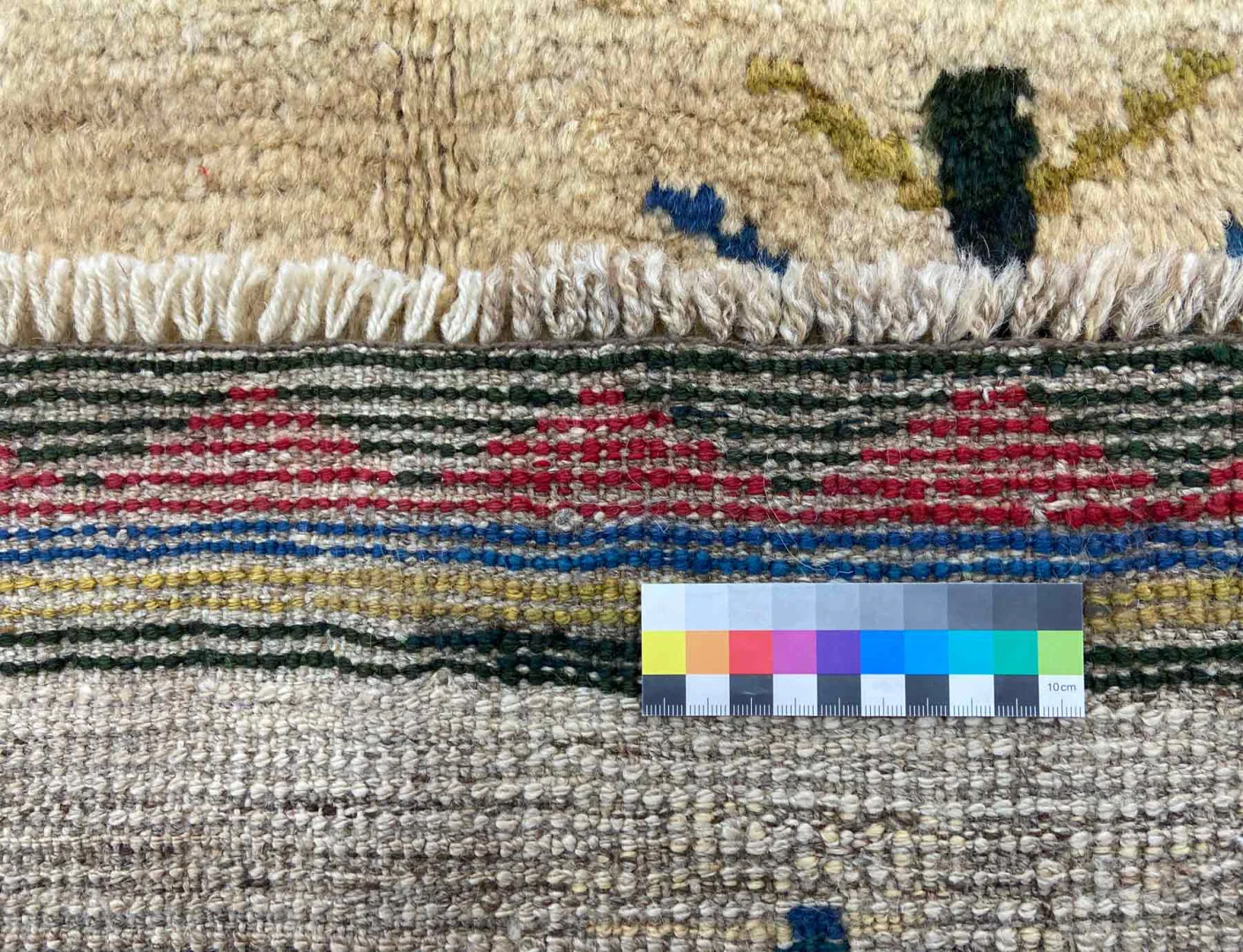
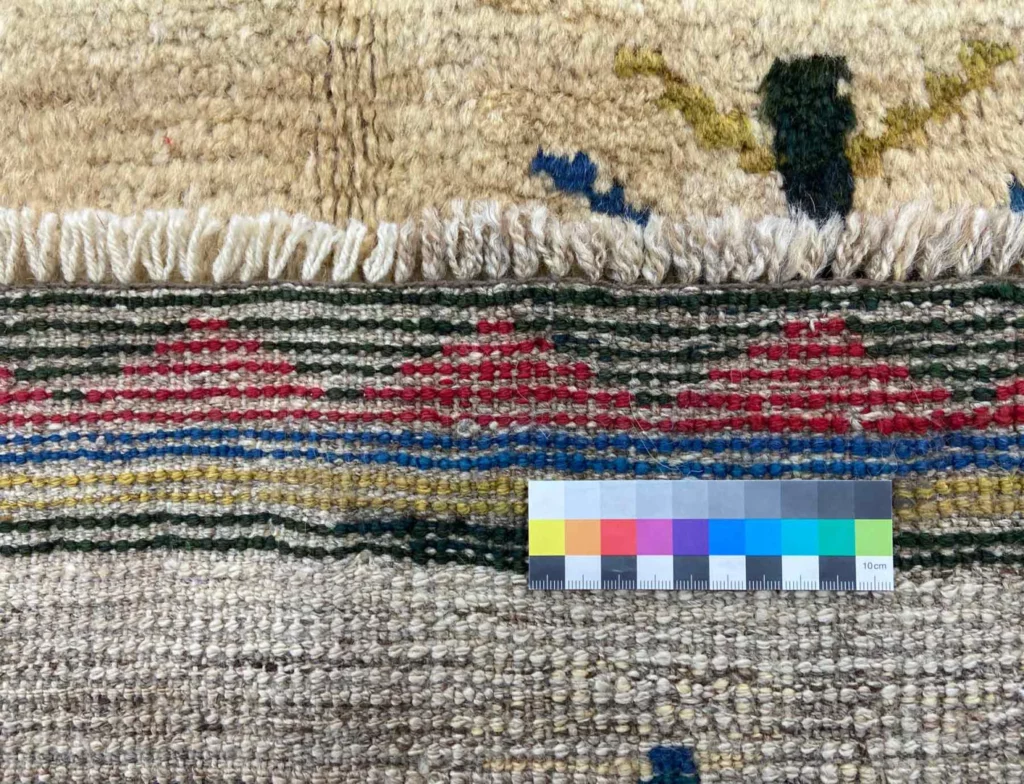
Hand-knotting gives the Gabbeh – Shuli rug an individual structure. The design is built knot by knot, so material, colour and pattern remain closely connected to the making process. The knot density of this rug is between 90.000 and 180.000 knots per square metre. This describes the number of knots within the woven field and is one of the technical characteristics specified for this particular piece.
The virgin wool combines a comfortable surface with the robustness associated with everyday use. The rug is new and flawless. Its stated material and condition are therefore clear: a hand-knotted Persian rug made from high-quality virgin wool and offered in new condition.
Origin and Tradition
The rug comes from Fars in southern Persia. Fars is one of the recognised carpet-producing regions of the country and lies in the wider area around Shiraz. The region has a distinct weaving tradition in which practical knowledge, local visual language and the use of wool meet. Fars rugs can take different forms, but their identity is consistently tied to manual production and to the transmission of skills from one generation of makers to the next.
Shiraz is a culturally important city in the region and is known for its longstanding carpet-making tradition. Around Fars, urban and rural approaches to weaving have existed alongside one another. This helps explain the range of designs associated with the region. The shared foundation is the careful handling of fibre, colour and structure, together with the patient work required to create a hand-knotted textile.
Gabbeh is understood in the Persian rug world as a distinct type of rug rather than as one single fixed pattern. Gabbeh designs may use broad fields, simplified figures or freely arranged compositions. The name Shuli is part of the designation used for this rug. It does not replace the origin: this piece is identified as a Persian rug from Fars.
The Fars tradition demonstrates how regional carpet making can remain recognisable while allowing considerable freedom in design. Alongside formally ordered ornament, there are compositions that appear to grow from the imagination of the maker. This openness is associated with the character of Gabbeh and Shuli rugs. The origin in Fars and the hand-knotted construction connect this individual rug with Persian weaving history without making its design uniform or anonymous.
In Persian carpet culture, a rug is both a useful textile and a record of making knowledge. It preserves expertise in preparing wool, combining colours and setting knots in a steady sequence. A hand-knotted Gabbeh – Shuli rug shows this relationship between use and visual expression particularly clearly. Its origin, fibre and pattern can be considered together as parts of one regional craft tradition.
The Fars background also places the rug within the wider history of Persian textiles. Regional names do not mean that every rug shares one identical appearance. Instead, they point to places where techniques, materials and design approaches have developed over time. This Fars rug retains that regional reference while presenting an unusual and imaginative composition of its own.
Design and Pattern
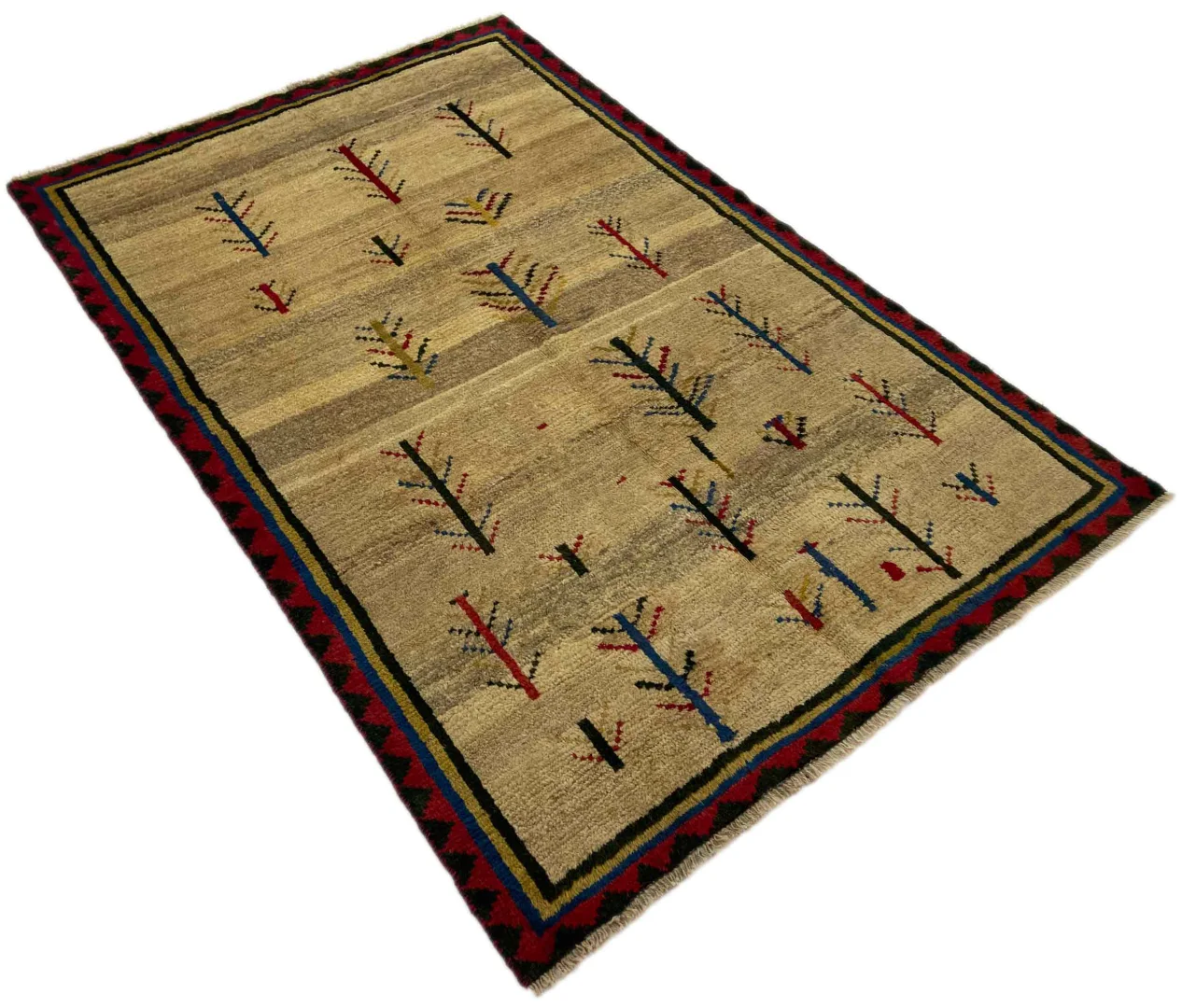
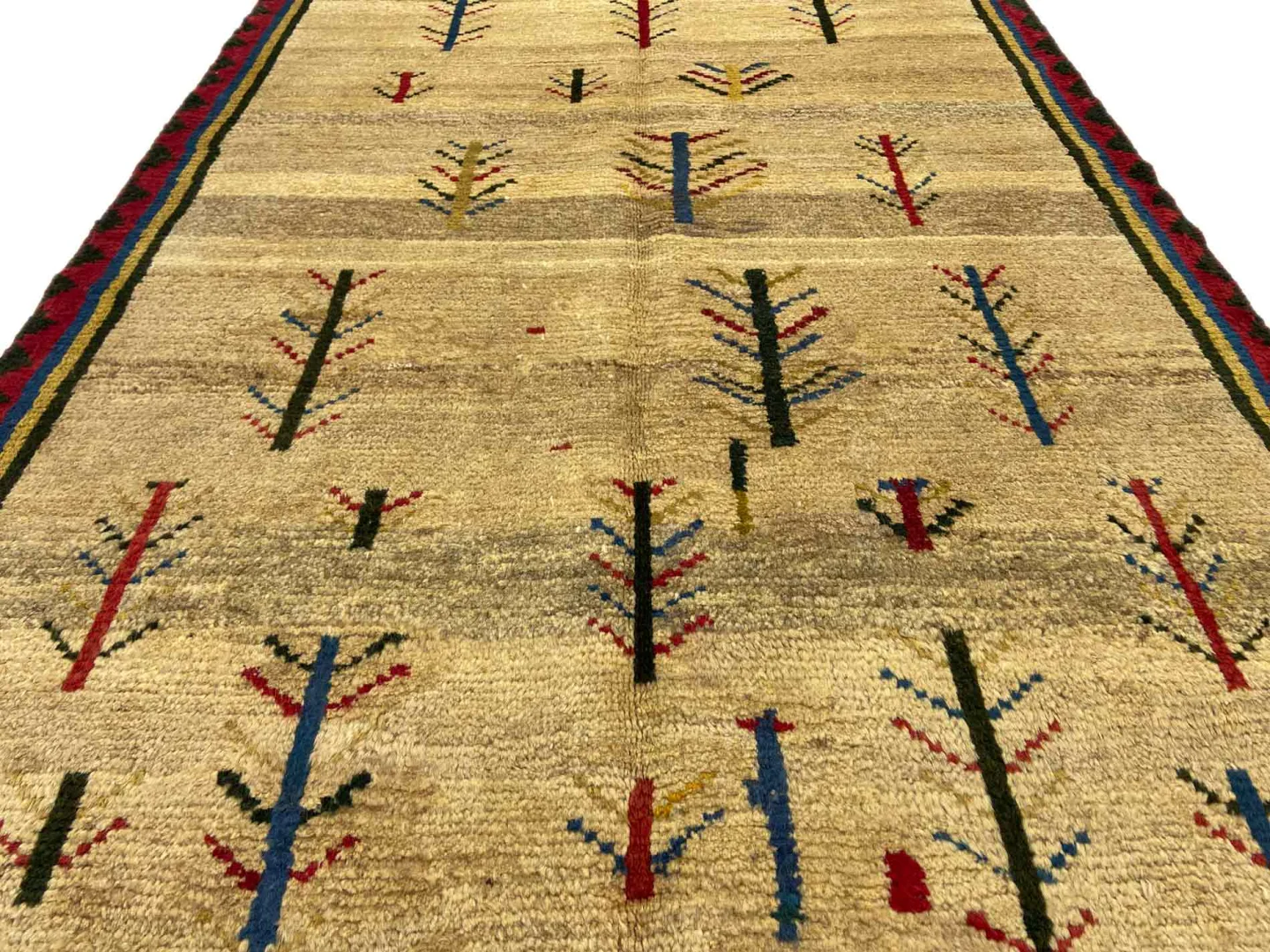
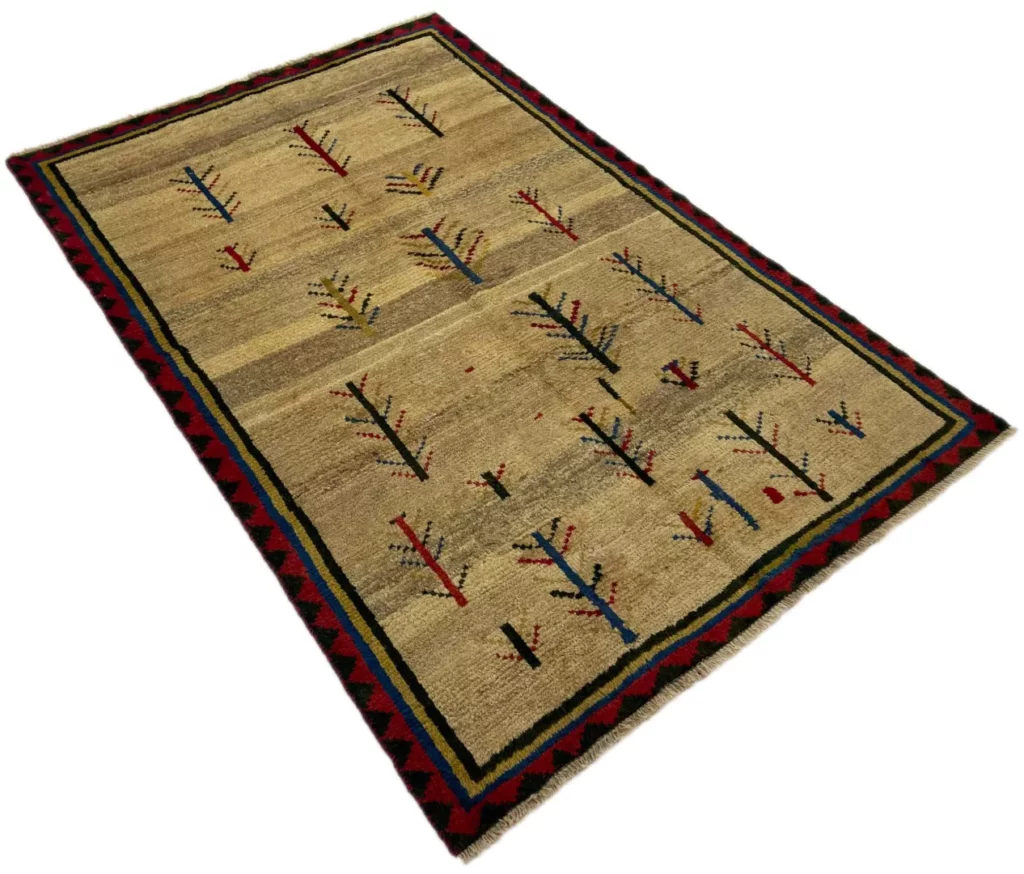
The design of this rug is described as unusual and imaginative. It is therefore presented as an individual composition rather than as a strictly standardised sequence of ornaments. The pattern reflects the creativity of the makers. In Gabbeh and Shuli weaving, such freedom can allow forms to feel direct and personal, as though they were developed from the maker’s own visual ideas rather than copied from a rigid template.
The design brings tradition and individuality together. The traditional element lies in the hand-knotted process and in the use of wool. Individuality appears in the way shapes and colours are arranged. An unusual design can give the rug a distinct decorative role while remaining connected to the regional craft of Fars. Its character comes from the balance between a familiar Persian technique and a freely conceived pattern.
The colour palette consists of red, beige, grey and brown. Red introduces a warm and noticeable note. Beige provides a lighter, quieter counterpoint, while grey and brown give the palette an earthy balance. The exact distribution of these colours belongs to the individual composition of the rug. Together, they form a versatile group of tones that can work with different interior schemes without assigning the piece to another regional style.
In a Gabbeh design, the overall field can be as important as any individual motif. Simplified or freely invented elements leave room for the eye to read the rug as a complete surface. Imaginative forms need not have one fixed interpretation. They can be understood as decorative signs, abstract figures or personal expressions of the makers. This openness is part of the appeal of the pattern language associated with Gabbeh and Shuli rugs.
The description identifies the rug as suitable for different living areas, including a sitting room, bedroom or hallway. Its colour range and individual design support these varied uses. In a living room, the pattern can define a visual focus; in a bedroom, the wool surface can accompany a calmer arrangement; in a hallway, the rug can mark a distinct passage area. The appropriate placement remains a matter of the room and its furnishing plan.
Other Persian traditions offer useful points of comparison, but they do not describe this rug. Kashan is associated with floral motifs and elaborate decoration, while Tabriz is often recognised for detailed geometric designs. Nain and Isfahan are frequently linked with high knot densities and the use of silk. This piece is different in its stated identity: it is a Gabbeh – Shuli Persian rug from Fars with unusual, imaginative designs.
The pattern can also be viewed as a record of the freedom available within a regional craft. It does not rely on a claim of a copied design or on a reference to another province. The visual statement comes from the combination of the Fars tradition, the Gabbeh – Shuli designation and the specified colours. As a one-off hand-knotted rug, it retains the marks of an individual design decision rather than presenting itself as a repeated industrial pattern.
Special Features
The defining features of this rug are its Fars origin, hand-knotted construction and high-quality virgin wool. Its unusual, imaginative pattern is worked in red, beige, grey and brown. These details give the piece an individual identity and distinguish it from rugs built around strictly repeated or formally prescribed decoration.
The rug is new and flawless. It combines this condition with a craft process in which every piece is an individual work. The designation Gabbeh – Shuli states the rug type used for the piece; the place of origin remains Fars in southern Persia. The result is a Persian rug whose material, origin, condition and design are all clearly defined.
FAQ
How should this Persian rug be cared for?
Regular vacuuming is recommended to remove loose dust and dirt from the virgin wool surface. Care should be taken not to treat the hand-knotted pile aggressively. Professional cleaning can be useful from time to time, particularly when more substantial soiling needs to be removed. Strong, direct sunlight should be avoided because prolonged exposure can cause the red, beige, grey and brown colours to fade. For difficult stains, specialist rug cleaning is the appropriate solution.
What material is used for the rug?
The pile is made from high-quality virgin wool. This natural fibre is known for its pleasant feel and its durability, and it suits the hand-knotted construction of the Gabbeh – Shuli rug. The wool shapes the tactile character of the surface and is the only pile material specified for this piece. Silk content is not stated for this rug, so it is described as a hand-knotted Persian rug in high-quality virgin wool.
Where does the Persian rug come from?
The rug comes from the Fars region in southern Persia, near Shiraz. Fars is known for its traditional carpet-making culture and its distinctive regional designs. This origin connects the rug with Persian Gabbeh traditions, while its unusual pattern gives the individual piece its own character. It is therefore identified as a Persian rug from Fars, not as a rug from any other region mentioned for comparison.
To provide the best experiences, we use technologies like cookies to store and/or access device information. Consenting to these technologies will allow us to process data such as browsing behavior or unique IDs on this site. Not consenting or withdrawing consent, may adversely affect certain features and functions.
Functional Always active
The technical storage or access is strictly necessary for the legitimate purpose of enabling the use of a specific service explicitly requested by the subscriber or user, or for the sole purpose of carrying out the transmission of a communication over an electronic communications network.
Preferences
The technical storage or access is necessary for the legitimate purpose of storing preferences that are not requested by the subscriber or user.
Statistics
The technical storage or access that is used exclusively for statistical purposes.The technical storage or access that is used exclusively for anonymous statistical purposes. Without a subpoena, voluntary compliance on the part of your Internet Service Provider, or additional records from a third party, information stored or retrieved for this purpose alone cannot usually be used to identify you.
Marketing
The technical storage or access is required to create user profiles to send advertising, or to track the user on a website or across several websites for similar marketing purposes.
 SECURE PAYMENT
 SHIPPING PARTNERS


